Category: Boom Sprayers

Main category for sprayers with horizontal booms

  • Boomless Nozzle Performance

    Boomless Nozzle Performance

    NOTE: This article has proved very popular, and subsequently we received emails with additional information. The article has now been expanded to include work performed by Dr. Bob Wolf et al.

    Part 1:

    Boomless nozzles are used for vegetative management activities where it’s not practical, or sometimes even impossible, to use a horizontal boom. Consider highway easements and ditches, railways, and infrastructure like buildings, powerline poles or fence posts. In these cases, the booms would hit uneven ground, trees and other obstacles. Enter the boomless nozzle.

    Unlike a typical flat fan nozzle, these nozzles direct spray laterally in one or two directions, creating a very wide spray pattern. Some field sprayers use a smaller version such as an off-centre or uneven fan to either extend the booms’ coverage (e.g. to get around fence posts) or give the pattern a discrete edge and not spray beyond the booms length.

    There are many varieties of boomless nozzle available, but they don’t give the same performance.

    Using a spray pattern table, Helmut Spieser and I compared coverage patterns from three popular tips:

    • The Boom X Tender
    • The Boom Buster
    • XP BoomJet

    The Boom X Tender

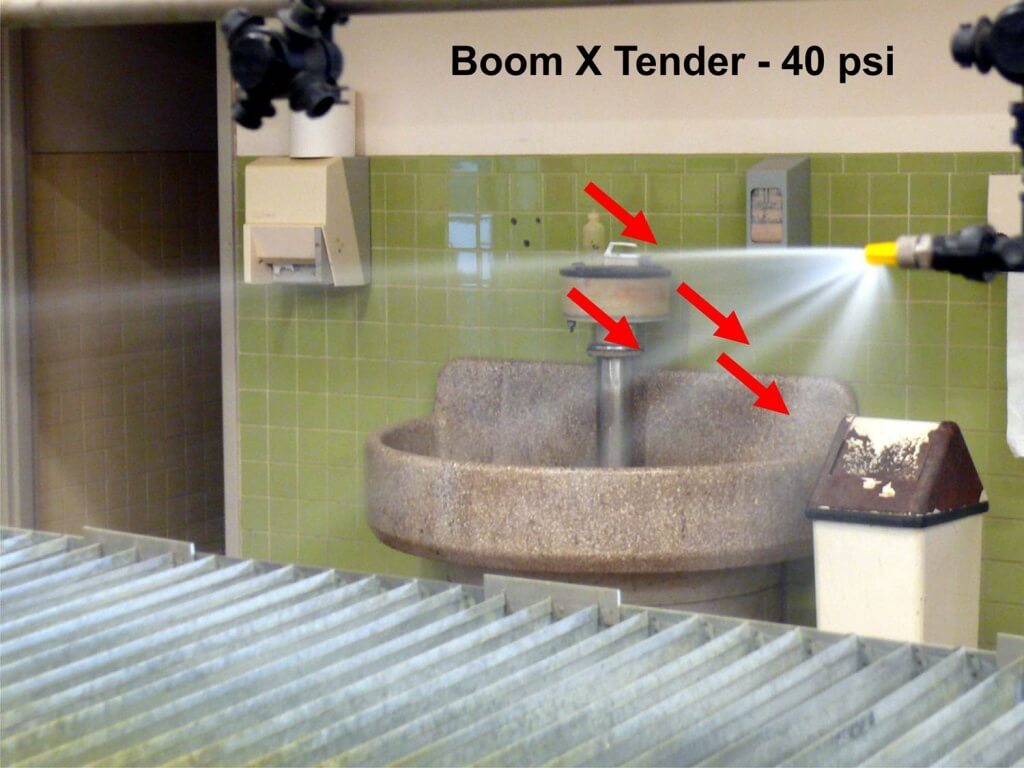
    With seven rates to choose from, this nozzle claims up to 13′ throw from tip to the edge of the swath. When we ran the tip at 40 psi we noticed a lot of inconsistency in the pattern, where it clearly had variation in flow along the swath. Note the red arrows in the image.
    2

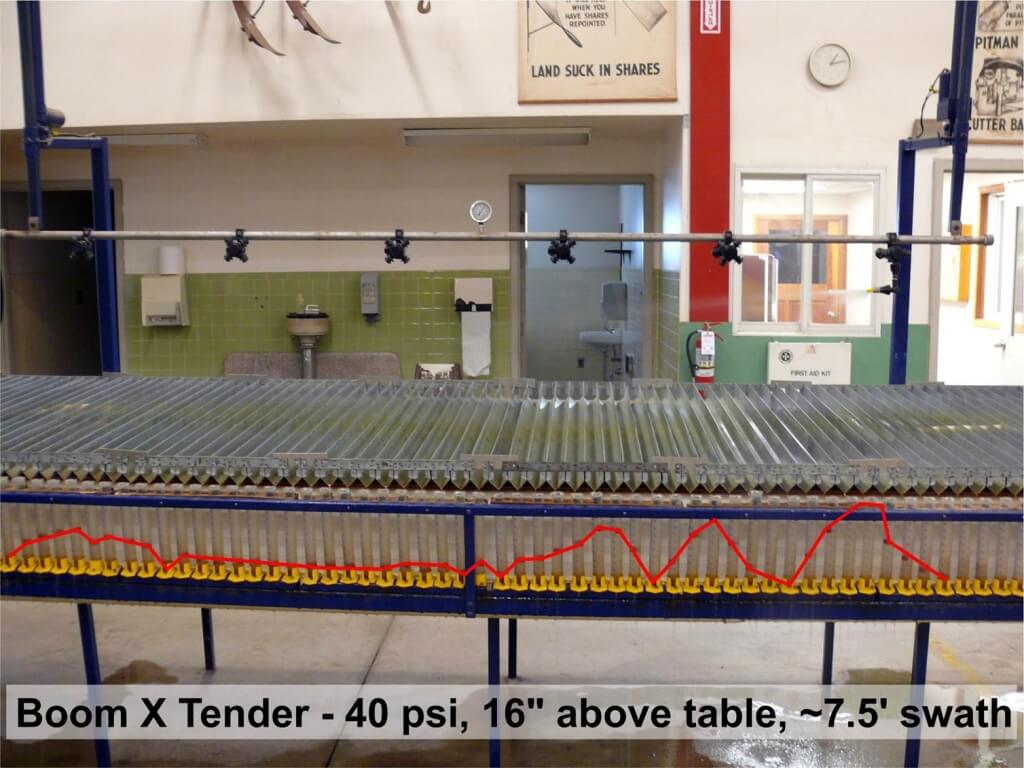
    These inconsistencies made themselves known when we observed the pattern produced on the spray table. We achieved a 7.5′ swath at 40 psi, 16″ above the table with the XT024 (yellow) tip. The coverage wasn’t very even.
    3

    The Boom Buster

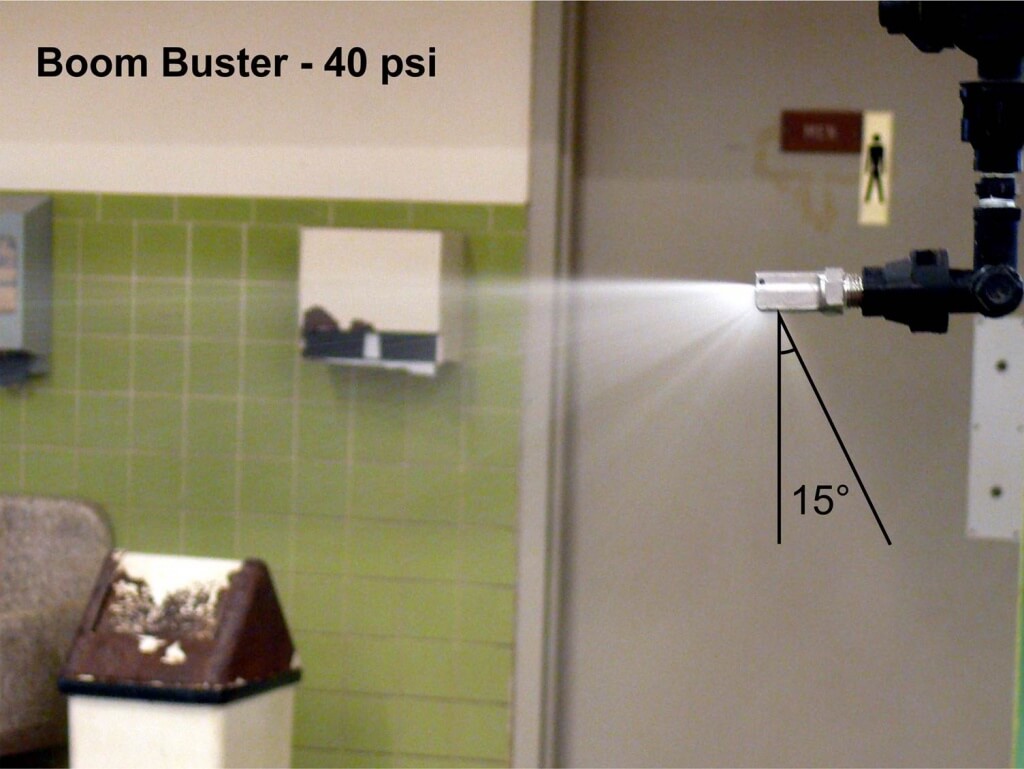
    There are fourteen nozzles to choose from, each delivering different flows and according to the manufacturer, spanning up to 31′ from the tip to the edge of the swath. An interesting feature when we ran this nozzle was that the fan extended back ~15°, which might eliminate the need for a centre nozzle if two were operated at the same time with sufficient overlap.
    4

    We achieved a 7′ swath at 40 psi, 16″ above the table and the coverage described a fairly consistent curve. It did taper at the far end, but did a respectable job. It was obvious some overlap at the 15° end would help level out the response, and when paired with a second tip facing the opposite direction, this would work well.
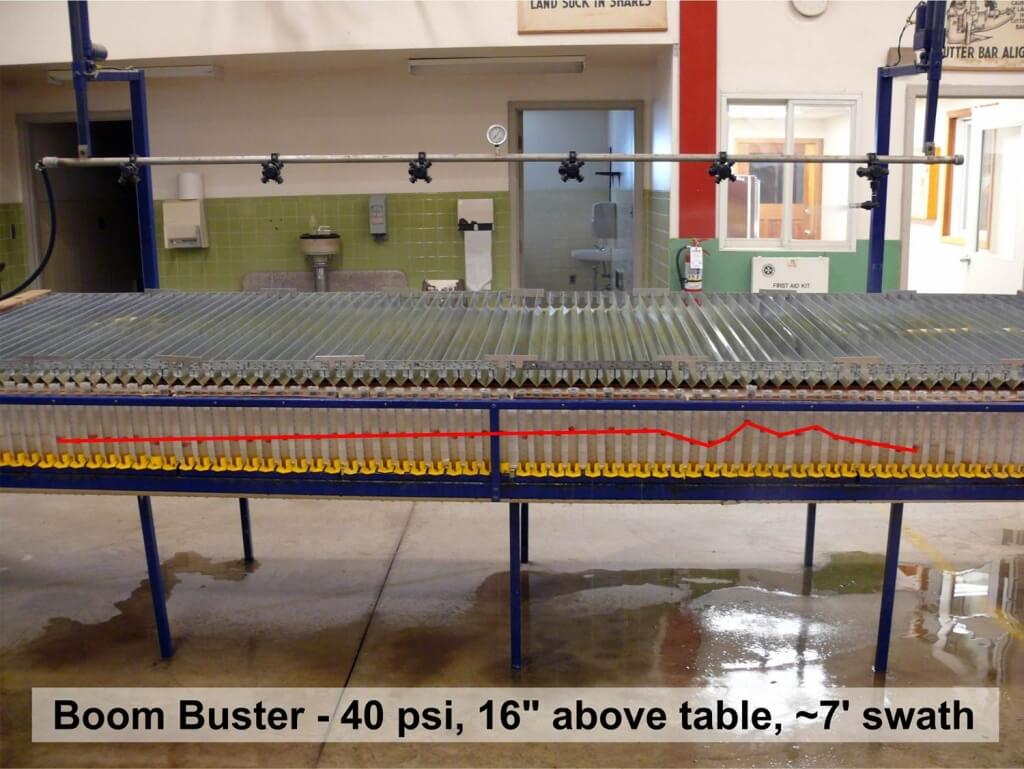
    5

    The XP BoomJet

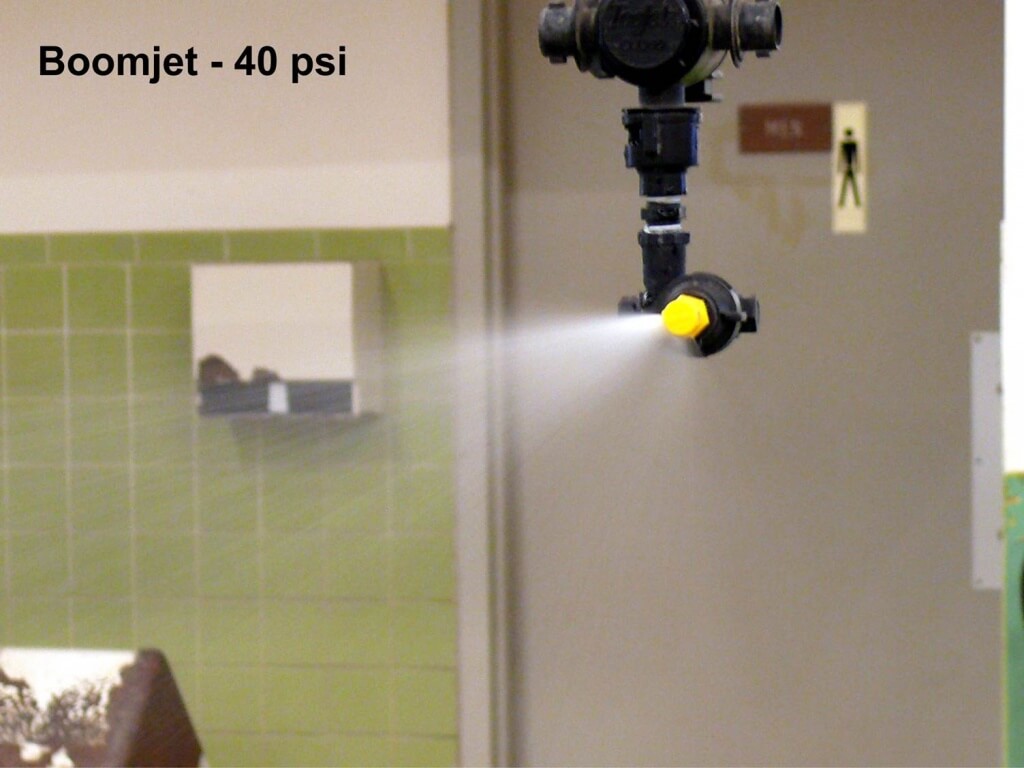
    The BoomJet mounts 90º to the swath, and with five rates to choose from claims a swath up to 18.5′ from tip to edge.
    6

    We mounted the (B) 1/4XP20L (You have to specify left or right) 16″ above the table and at 40 psi we achieved a 6′ swath. There was an odd dip in the coverage pattern not far from the tip. We suspected it might be an artifact, but after multiple attempts it persisted. Other than that dip, the pattern was quite consistent. Had we adjusted the angle to reach a 7′ swath, it may have tapered as much as the Boom Buster.

    7

    Observations

    Given the range of possible rates and swath distances, the overall consistency of the swath, the conventional nozzle mount, and the 15º overlap, Helmut and I chose the Boom Buster. The BoomJet was a close second, with a consistent pattern save the odd dip, but the 90º mount while making it possible to elongate or shorten the swath was a bit finicky and could pose a snagging risk. The Boom X Tender ranked third because of the inconsistent coverage.

    Part 2:

    Nozzle mounted on the front bumper of a County Highway Spray Truck used to spray ditches in Kansas.

    Boomless nozzles are often used on all-terrain vehicles (ATV’s) equipped with small-capacity spray tanks and they’re popular for for eliminating weeds in pastures and rangelands as well as along roadsides. In 2009, Kansas State University published a factsheet evaluating the efficacy of boomless spray nozzles and describing how they can best be used. What follows is a summary of the findings from their field trials.

    Considerations for using boomless nozzles

    1. Pick a nozzle that best fits the mode of action of the herbicide being used.
    2. Select spray width to achieve uniform distribution.
    3. Both the height of the vegetation, and the prevailing wind, will interfere with the width of the spray swath.
    4. As with any hydraulic nozzle, pressure should be optimized to achieve the desired droplet size and swath width while reducing drift potential.

    Field Trials

    Applications were tested on small (growth stage prior to jointing and 4-5 inches tall) and large (growth stage after jointing and 24-30 inches tall) wheat crops planted in 20 foot wide strips. The nozzles tested were the BoomJet (XP) , Boom X Tender (XT) , Boom Buster (BB) and the Combo-Jet (WCJ). Glyphosate and paraquat were applied a typical ATV-mounted set-up. The treatments were replicated three times and water sensitive paper was used to analyze droplet size.

    The Combo-Jet nozzle group.

    Results

    The mode of action, coverage and droplet size affected the results in both short and tall wheat. As expected, glyphosate served as the 100% control and paraquat efficacy ranged depending on the nozzle (see Graph 1). The XT gave the best performance with paraquat.
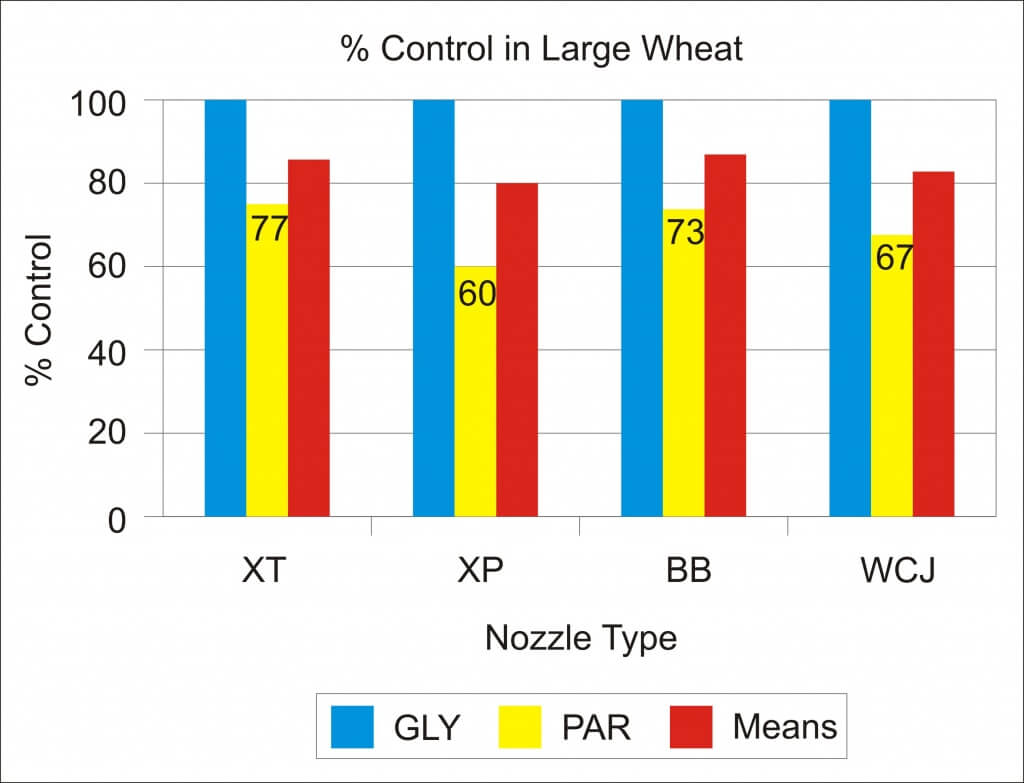
    Graph 1 - Percent Control in Large Wheat
    Graph 1 – Percent Control in Large Wheat

    Spray (control) uniformity was about equal with glyphosate, but with paraquat, on a scale of 1-10 with 10 being the highest level of control, the XT and BB tied for best (Graph 2).

    Graph 2 - Spray Uniformity in Large Wheat
    Graph 2 – Spray Uniformity in Large Wheat

    Swath width was considerably less than manufacturers claimed in the tall wheat (Graph 3). Based on width of control, the WCJ had the widest swath.

    Graph 3 - Swath Width in Large Wheat
    Graph 3 – Swath Width in Large Wheat

    Swath width was somewhat less than manufacturers claimed in the short wheat (Graph 4). Based on width of control, the XT had the widest swath.

    Graph 4 - Swath Width in Small Wheat
    Graph 4 – Swath Width in Small Wheat

    Median droplet size ranged from 684 to 799 microns (Graph 5). If we assume the preferred range for coverage/weed control is 300-500 microns, all nozzles were on the high end. It should be noted that this does reduce drift potential.
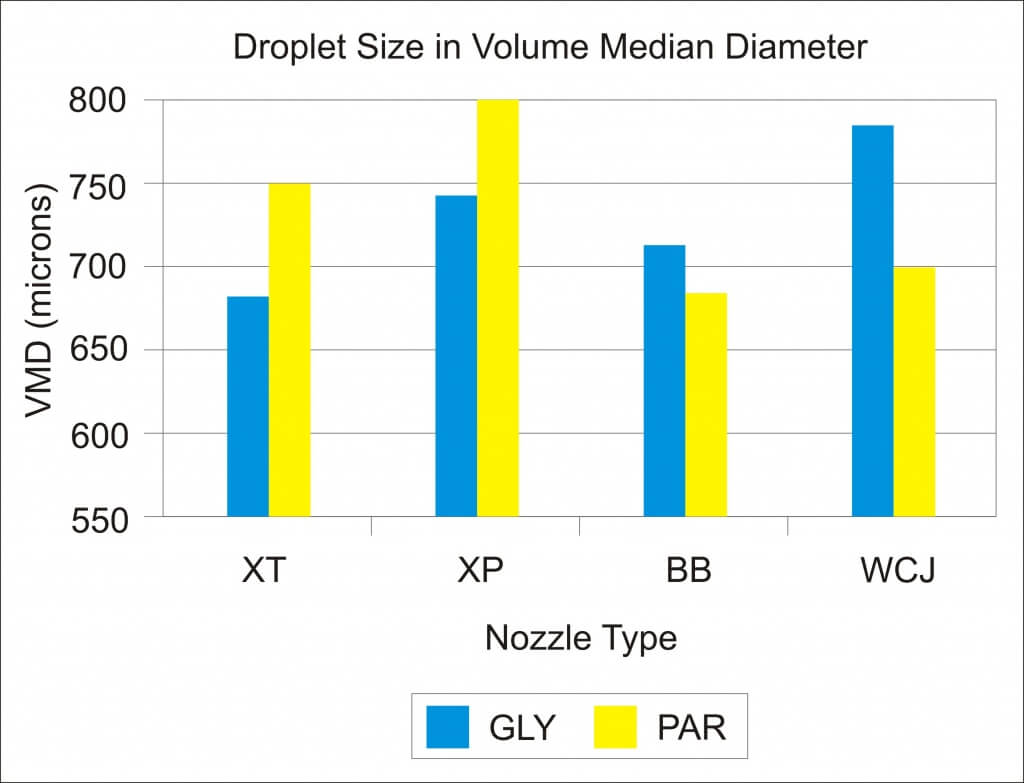
    Graph 5 - Droplet Size as VMD (microns)
    Graph 5 – Droplet Size as VMD (microns)

    Percent coverage ranged from 37.5 to 27.0 for paraquat and 28 to 21.3 for glyphostate (Graph 6).

    Graph 6 - Percent Coverage
    Graph 6 – Percent Coverage

    Observations

    The wind direction and height of the spray stream likely affected the results. To achieve the manufacturer-rated swath width, nozzles would have to be mounted higher on the ATV than is practical, and this would lead to increased drift potential. It was noted that the large orifices common to boomless nozzles made it difficult to pressurize with pumps typically used on ATV’s and a more powerful pump (e.g. a roller pump) might provide better swath width.

    While there are many parameters to consider, and counter to the lab trials performed in Part 1, the results from Part 2 suggest the Boom X Tender and Boom Buster gave better overall performance.

    Checking the Boom Buster spray pattern.

    Overall Conclusions from Part 1 and Part 2

    It can be frustrating testing nozzles. What works wonderfully one day might not be worth the materials they’re made of the next. Obviously there was no clear “winner” at the end of this article, but that’s just as well, because perhaps that’s the wrong take home message.

    Instead, remember that any nozzle can be used incorrectly. Mind the pressure, swath width and environmental conditions to get the most out of whichever nozzle you choose to use. Take time to confirm that everything is working optimally, and go back to ground-proof the results so you know what worked and what didn’t.

  • Flag the Technology – Matching Herbicide to Genetics

    Flag the Technology – Matching Herbicide to Genetics

    We like to keep things simple ’round here and this poka-yoke from Arkansas is both simple and effective. What’s a poka-yoke?

    Poka-Yoke”: a Japanese term that means “mistake-proofing”. It’s a mechanism that helps an equipment operator avoid (yokeru) mistakes (poka) by preventing, correcting, or drawing attention to human errors as they occur. Thanks, Wikipedia.

    The problem

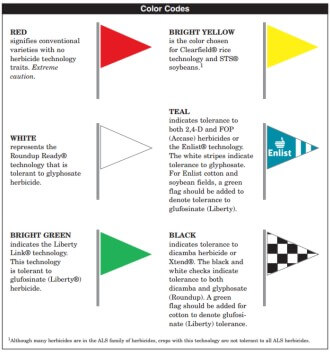
    An aerial applicator has to spray a lot of fields. They consult their work orders, the plane is loaded, they spray and repeat. However, depending on which herbicide trait was introduced to which crop, accidents can happen. Imagine the mess when you spray a crop with glyphosate… and it isn’t a glyphosate-tolerant crop? This problem promises to become more of an issue as we introduce glyphosate+2,4-D and glyphosate+dicamba-tolerant crops. It may look like the right soybean plant, but you DO NOT want to mess up by spraying the wrong chemistry on the wrong genetics! You think a bit of residue in the lines can cause trouble…

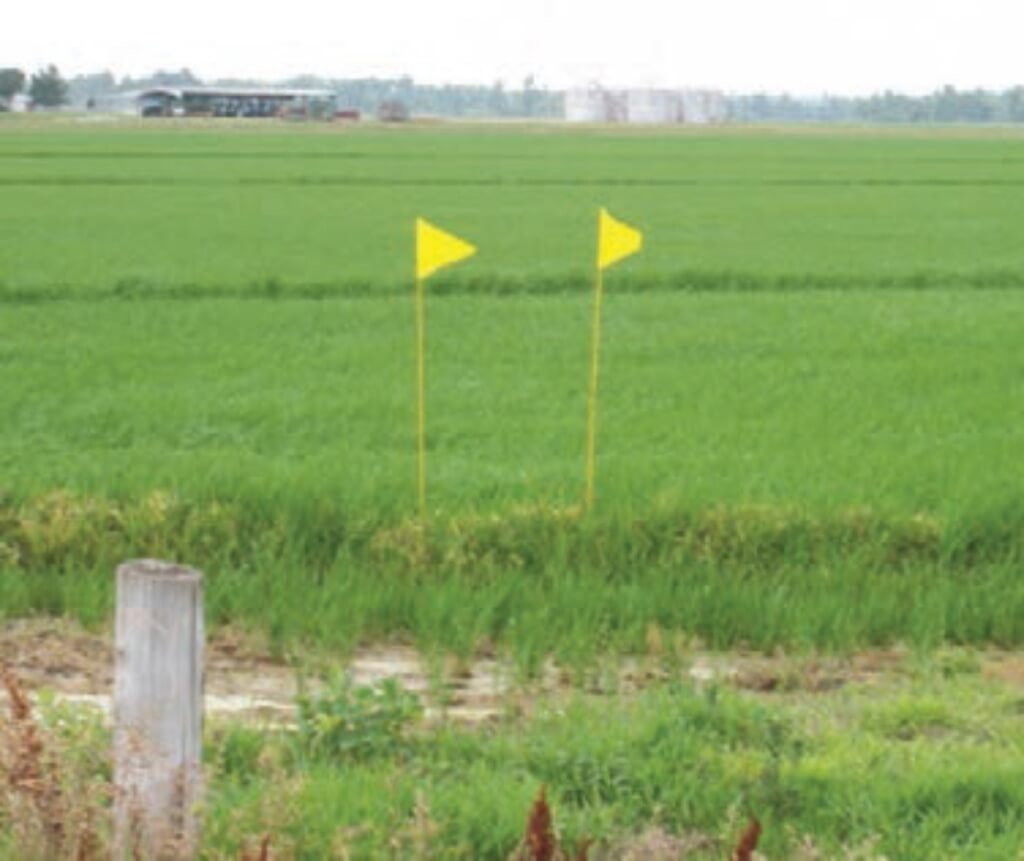
    Yellow flags designate this field as a Clearfield rice field (Photo from UofA FSA2162)
    Yellow flags designate this field as a Clearfield rice field (Photo from UofA FSA2162)

    The solution

    In 2011 the University of Arkansas came up with a “quick and inexpensive” way to prevent this from happening. They used six-foot, colour-coded bicycle flags. Each colour or pattern represented a specific herbicide tolerance, as shown here. Aerial operators were given a copy of this visual key and the growers placed a couple of appropriate flags at the edge of the field on the approach vector at planting.

    The result

    Aerial applicators got one final check before they started to spray… just in case. In 2014 the innovative people behind this concept reported that it prevented countless acres of accidentally-damaged crops. Several (honest) aerial operators admitted to pulling up just before they started to spray because they realized there was a mismatch between what was in their tank and what the field was supposed to receive.

    Corn field with glyphosate (white) and glufosinate (bright green) stacked technology. (Photo from UofA FSA2162)
    Corn field with glyphosate (white) and glufosinate (bright green) stacked technology. (Photo from UofA FSA2162)

    The challenge

    This is the kind of elegant, simple tool that we all should be using for ground rigs as well as aerial sprayers as we begin to plant more crops with stacked traits. Canada, the US, Australia, anyone using these genetics, could benefit. We should consider adopting this method, complying with Arkansas’ existing colour scheme and adding to it as required. Seed companies and agrichemical companies should find a way to bundle the flags with the chemicals and seeds for the buyer.

    Read more about the Flag the Technology method from this University of Arkansas factsheet.

    …and one more time with gusto: “poka-yoke“.

  • Sprayer Nurse Truck Designs Part 2

    Sprayer Nurse Truck Designs Part 2

    One of our recent posts highlighted some great producer designed tender systems for the sprayer.  We posted four submissions, and are continuing the series with new submissions in this post.

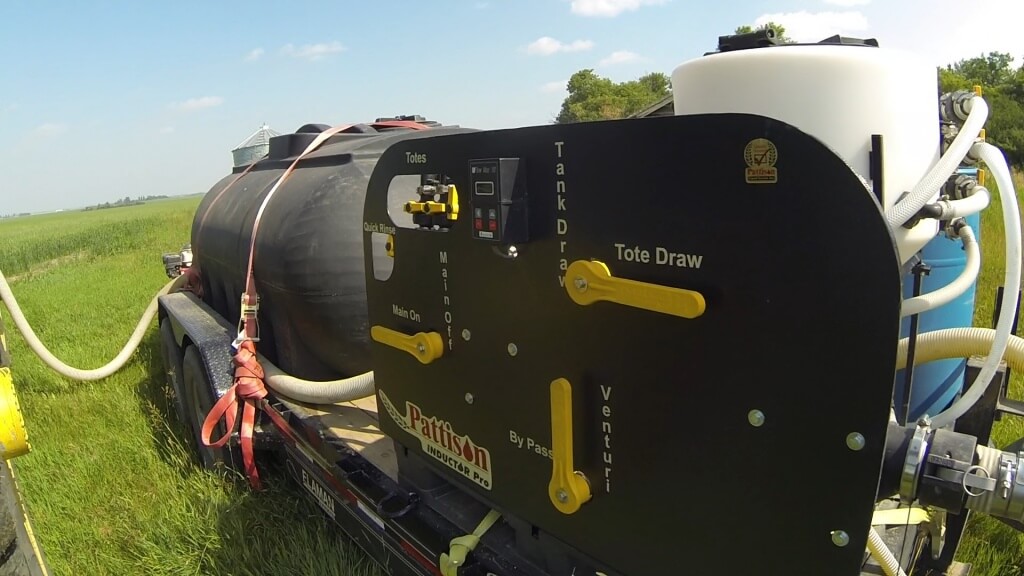
    Our fifth submission comes from the folks at Pattison Liquid Systems of Lemberg, Saskatchewan

    I recently saw Phil Lingelbach of Pattison at a sprayer clinic. Pattison has been designing and building  transfer systems for years, and have valuable experience to share.

    I asked Phil and John Young these questions about transfer system designs:

    1. Why is filling faster important? How does it reduce your operating cost?

    “Idle time costs money. Consider that trade in cost of an average high-clearance sprayer is approximately $185/hr on the meter.  So 100 hours of idle time per year is costing nearly $20,000 in reduced trade-in value.

    We also need to maximize “best spray condition” time. We know that application timing is critical to success, and need to take advantage of good weather conditions. Spraying under marginal conditions reduces the chance of good pesticide performance.

    Efficient filling can also reduce labour costs, this is a “snowball number”. Every unnecessary hour spent spraying could be used to do something more productive, in essence a wasted hour costs you two.”

    1. When designing a transfer system, what are the key considerations that separate a good from a bad system?

    “Make sure that the water pumps pushes water to the inductor system.  Do not use a water pump to pump chemical. Contamination is a huge issue with this.

    Keep your transfer system away from the rear of an open deck to minimize dust exposure.

    Front cover - Inductor Pro

    A good transfer system will be easy to clean and very user friendly, valves separated and clearly marked.

    Get the biggest, fastest pump available. Loading water after the chemical is in is key.

    Make it simple to operate, there is lots of hired help on the farm.

    Design it to keep operator from being exposed to chemical. Keep trip hazards to a minimum.

    Include fast product induction. There is no point filling water quickly and having to wait on a slow product pump.”

    IMG_20160330_111710818 resize


    1. You mentioned the speed of filling product. What flow meters are most accurate and reliable?

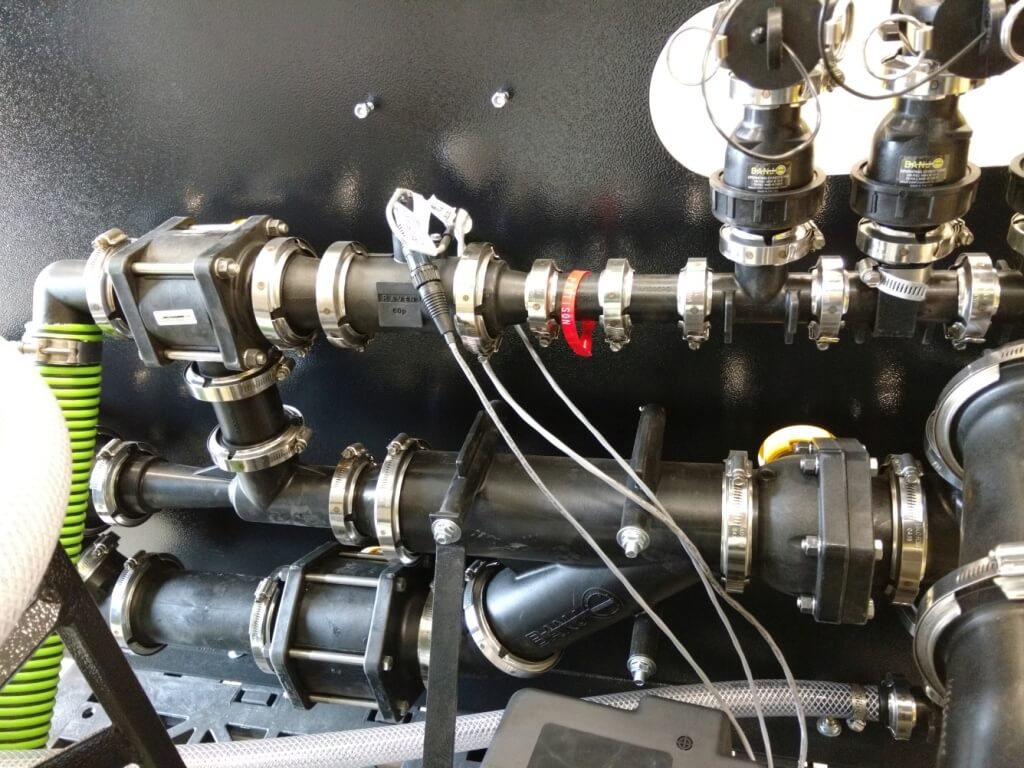
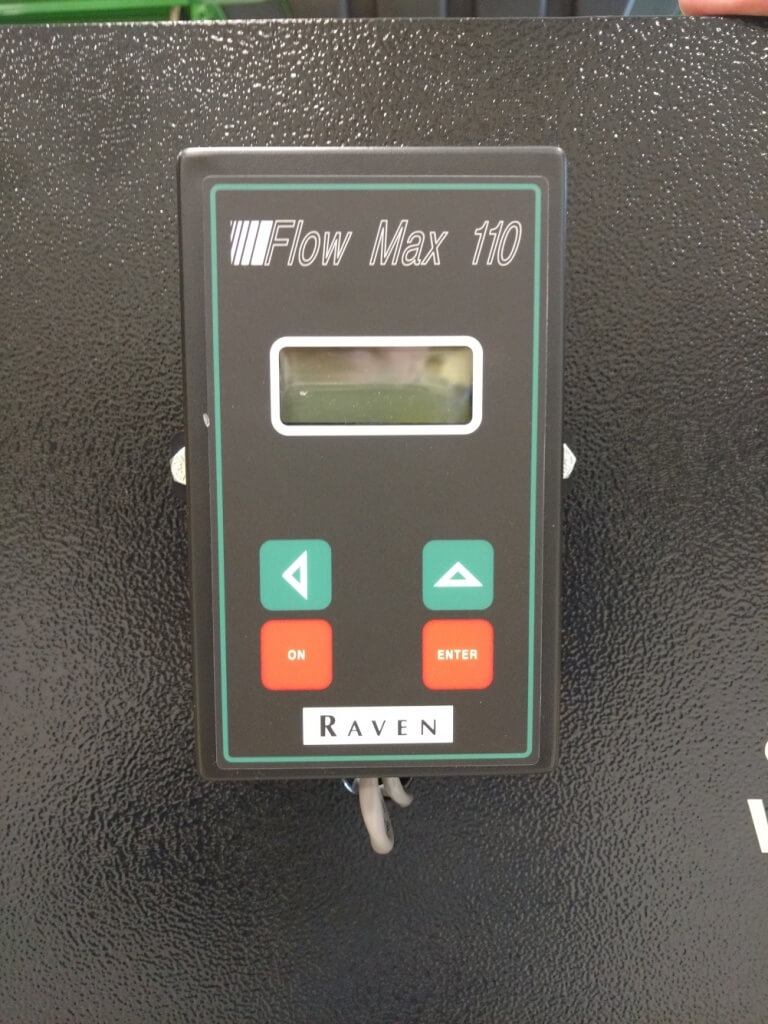
    “The Banjo Mag meters and the Raven FloMax 110 (combined with the 60P) and 221 are the most accurate that we have available, the Banjo is limited to non-petroleum based products though.

    IMG_20160330_111606467 resize

    Both the Raven 60P and Flomax 221 are turbine style meters, to be used with all ag chemicals, – 2” models.

    Banjo Mag meters should only be used with water based products – this meter is the best for measuring water when filling, comes in a 3” model.”

    1. What are the best ways to clean a transfer system? 

    “The best way to clean your jug rinse tank is THOROUGHLY!! There is no such thing as overkill when it comes to cleaning this tank, we use a tank that has no bulkhead (total drain, no bulkhead for product to get hung up on) in the drain, a rinser designed for an 800 gallon tank, and very minimal fittings for chemical to get hung up on.

    Use lots of water, when you think it’s clean, rinse it one more time!!

    All our inductor systems come with a quick attach clean water rinse system, that allows the operator to flush the complete metering/inductor system.”

    IMG_20160330_112122442_HDR resize


    1. What is usually the limiting factor when trying to fill a sprayer faster? 

    “Hose size, pump size, venturi efficiency, and planning are most critical. Consider your needs – a system should be designed specifically to the needs of the operator.”

    1. Do you need more than one inductor to handle multiple products in time?

    “Usually one will be sufficient so long as the suction line is of sufficient size and length.

    Our inductor systems are configured to handle more than one bulk product at one time. With just the turn of a valve you can switch from metering one product to another, or quickly change from metering a bulk product to handling jugs.”