
Sprayers 101 is a Canadian resource dedicated to safe, efficient and effective agricultural spraying. It features freely available content from authors around the world.
Enter a term to begin. To narrow search, add more terms separated by a space.
Browse our archive of expert-written articles, videos, lectures, apps, ePubs, and more.
Recent Articles
Spray Window – Can you plan a spray week?
Plan the day. Weigh the risks. Finish the job. Spray Window is a free browser game about planning a spray day. Each turn…

OrchardMAX 2.0
OrchardMAX won the 2016 Canadian Agri-Marketing Association’s “Certificate of Merit” in the Mobile Apps Category. OrchardMAX is a free decision-support tool that helps apple growers…
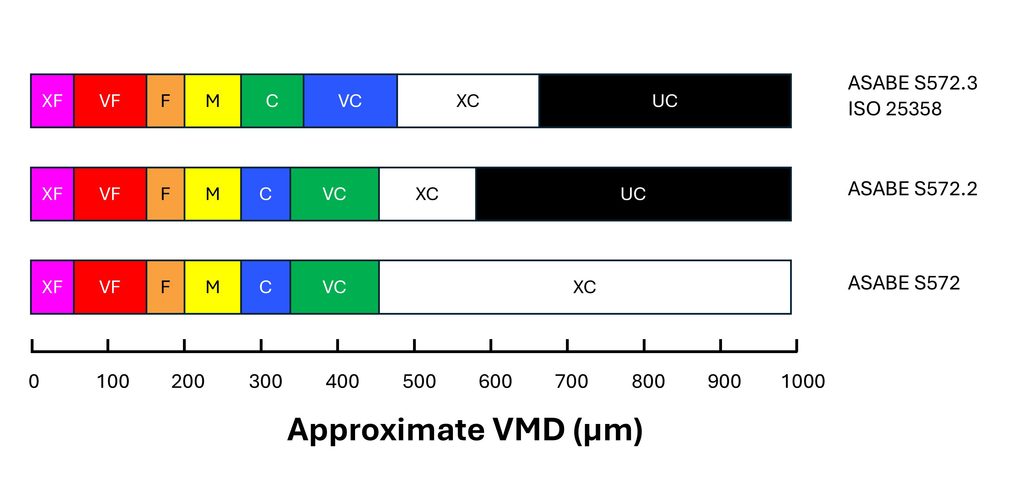
What is Spray Quality, Part 4 – An Important Change in S572.3 and ISO25358
A new version of standard ASABE S572.3 (adopted 2020) and its international equivalent, ISO 25358 (adopted 2018) addresses a limitation of the previous…
Field Sprayers
Field sprayers are the crop protection workhorses in broad acre and row crop production. From basic operation to new technology, from nozzle selection to tank mixing, if you want to learn to be more efficient and effective with horizontal booms, it’s here.
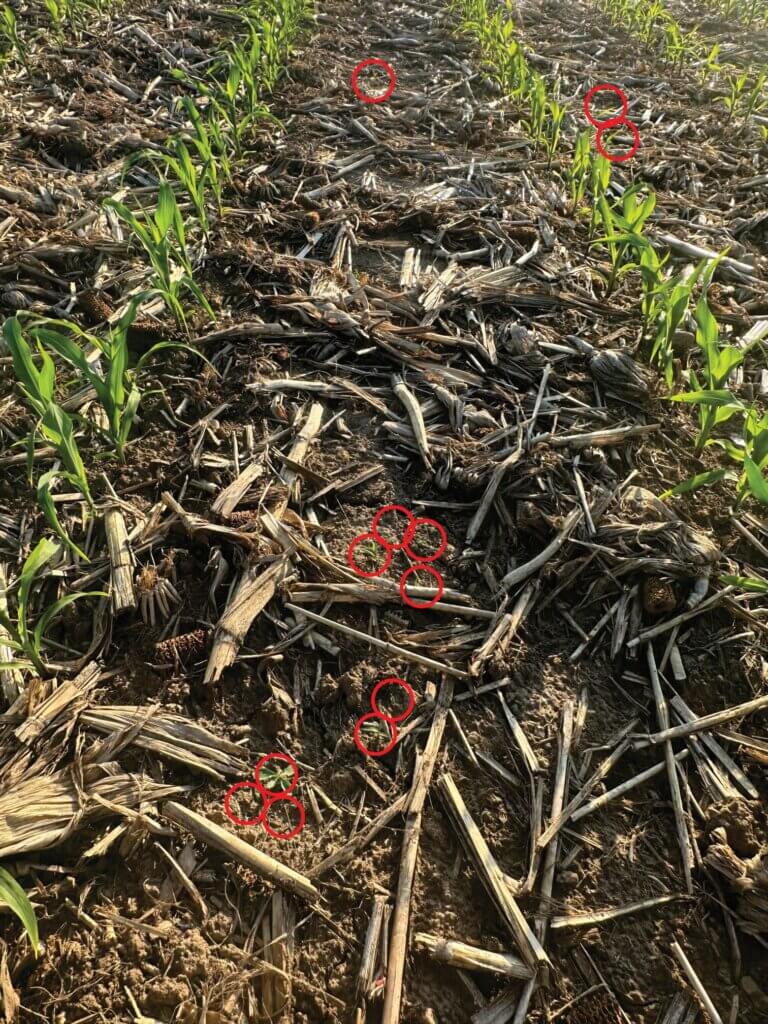
Green-on-Green in Ontario: A Custom Operator’s Experience with See & Spray Premium
In the summer of 2025, Todd Frey of Clean Field Services (Drayton, Ontario) and I participated in the Elora Weeds Tour. We discussed…
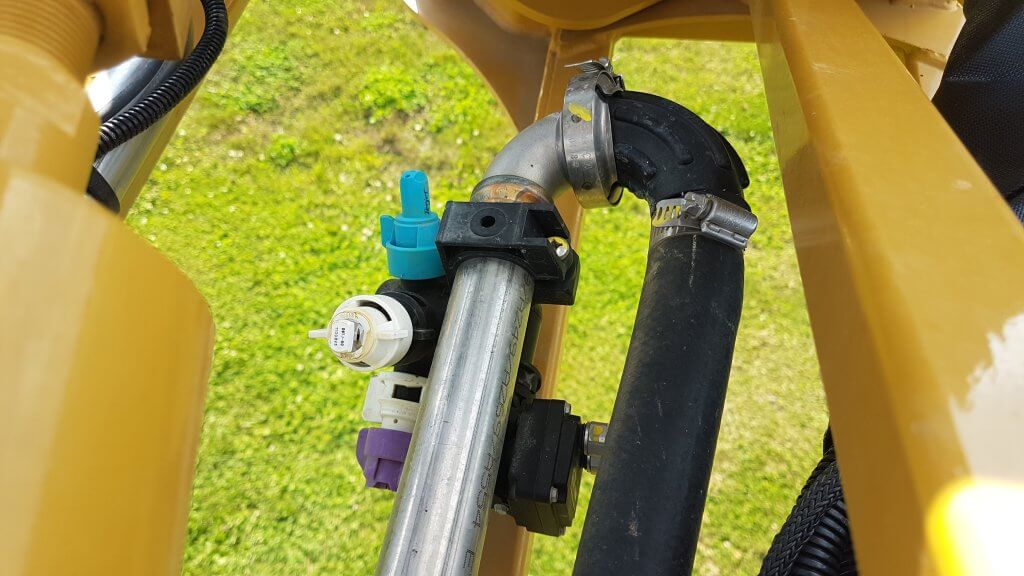
Recirculating Boom Options
If you read this site, you know we’re fans of recirculating booms. We love them for three reasons: If you’re new to the…

Broadcast Boom Nozzle Spacing
North American built boom sprayers have nozzle spacings of 20” (50 cm in the rest of the world), but other spacings such as…
Orchard and Specialty Sprayers
Specialized crops require specialized sprayers, and if you’re interested in orchards, vines, berries, vegetables, greenhouse and nursery production, this section will have what you need. Dive in to learn about calibration, optimized settings, automation and best practices for a wide array of crop protection equipment.
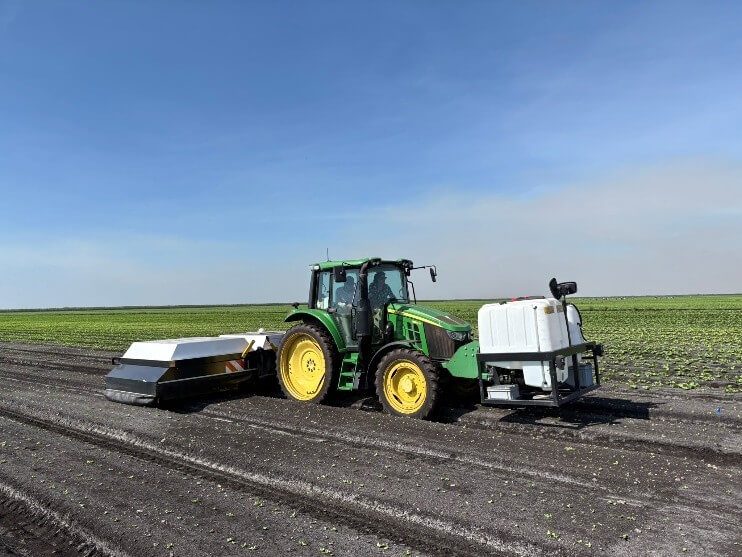
Evaluating the return on investment of optical sprayers for horticulture
Investing in an optical sprayer for horticulture is not a straightforward financial decision. Compared with a conventional boom sprayer, the upfront capital cost…

Airblast Nozzles – The Nozzling Process
Establishing an airblast nozzling solution is an involved process. We must first define the working parameters and flush out any special circumstances. Then…

Assessing Airblast Coverage
This article describes a method for assessing airblast sprayer coverage based on a protocol developed by Dr. David Manktelow (Applied Research and Technologies…
Drone Sprayers
The next chapter in aerial application can be found here. Fixed wing, quadcopters, and hybrids: Follow the evolution of remotely piloted crop protection as we explore the newest research and best practices for spraying by drone.
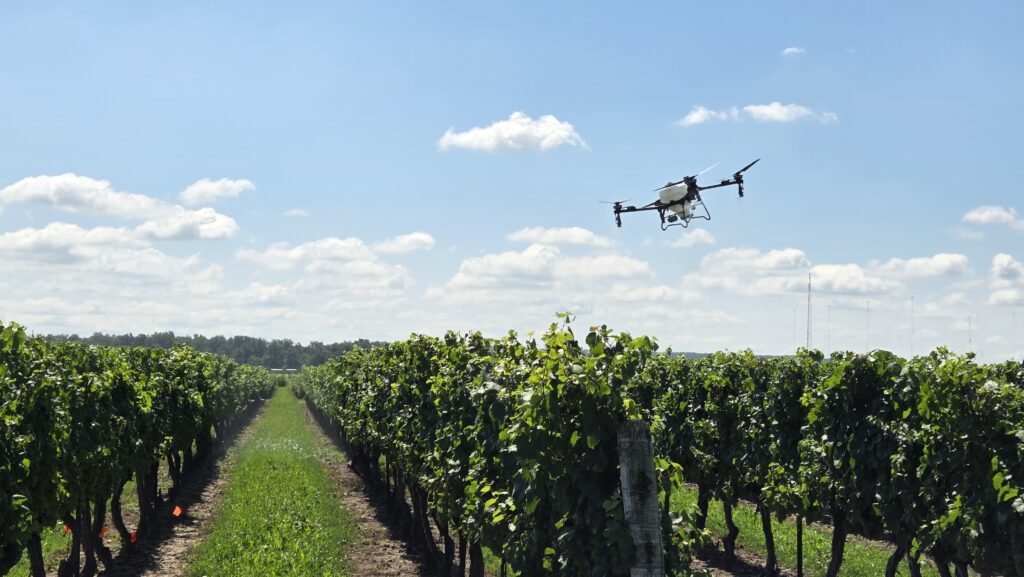
Improve your Drone Spraying Productivity
Drone operational settings such as capacity, speed, and swath width are useful figures for calculating productivity, but they only describe the airborne portion…
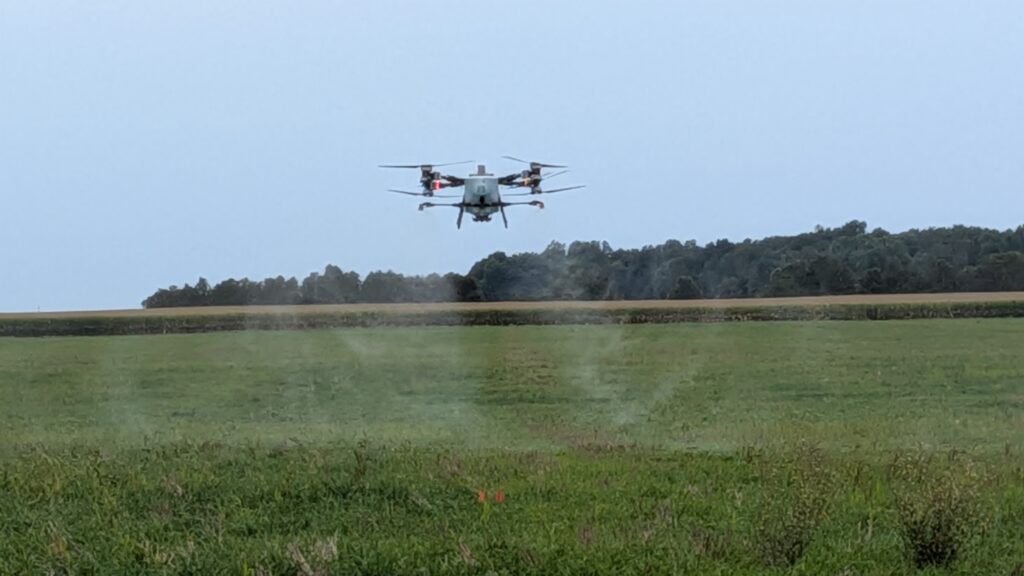
Best Management Practices for Safe and Effective Pesticide Application using Drones
(Updated Sept. 29, 2026) Remote Piloted Aerial Application Systems (RPAAS) or Unmanned Aircraft Spray Systems (UASS) are generally referred to as drones. They…
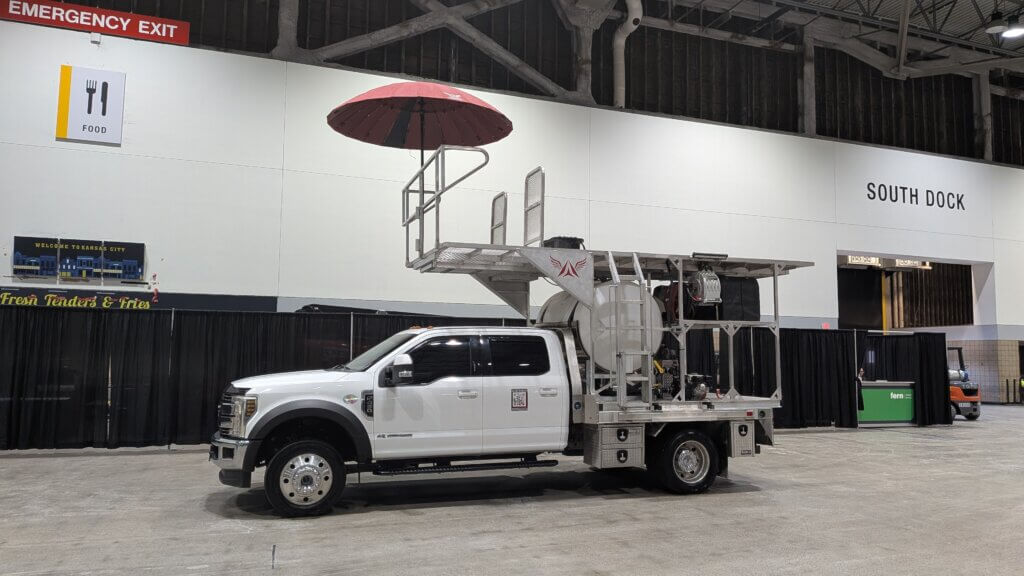
Drone Tendering – Considerations before Buying or Building
Much of this article is based on a session and tradeshow I attended at the 2026 Drone End-User Conference in Kansas City. I…

Airblast 101
Become a safer, more efficient and more effective airblast operator.
Airblast101 began in 2010 as a classroom-based workshop in Ontario. It was intended as a primer and decision-support tool for operators to become safer, more effective and more efficient.
The first textbook edition was made freely available in 2015 as an eBook and in hardcopy, in English and French. In 2020, the second edition was reimagined and expanded to make it globally relevant. Thousands of copies have been distributed worldwide.
Contact Sprayers 101
Sprayers 101 is Dr. Jason Deveau and Dr. Tom Wolf. With more than 45 years of experience in agricultural spraying, Tom and Jason have researched and presented globally on many aspects of safe, efficient and effective applications.