This 2023 article is based on work performed by Mike Schryver, BASF Technical Service Specialist.
Nitrogen is an essential nutrient required throughout a plant’s lifecycle. It is commonly applied to corn in either a granular form as urea or in a liquid form as urea-ammonium nitrate (UAN). Depending on soil type and precipitation, significant amounts of nitrogen can be lost to leaching, denitrification and volatilization as N2O (a greenhouse gas). Learn more about nitrogen in soil in this excellent overview by University of Minnesota Extension.
With the 2020 announcement of Canada’s Strengthened Climate Plan, Ontario is committed to a 30% reduction of 2020 N2O emission levels by 2030. Adding urease and nitrification inhibitors (aka stabilizers) to nitrogen fertilizer applications is an environmentally sustainable practice that reduces nitrogen losses and improves yield.
Another essential plant nutrient, Sulphur, is applied in liquid-form as ammonium thiosulphate (ATS). Primarily used to increase corn yields, high rates (approx. >10% by volume) of ATS can also inhibit urease and nitrification, albeit not as well as other nitrogen stabilizing options.
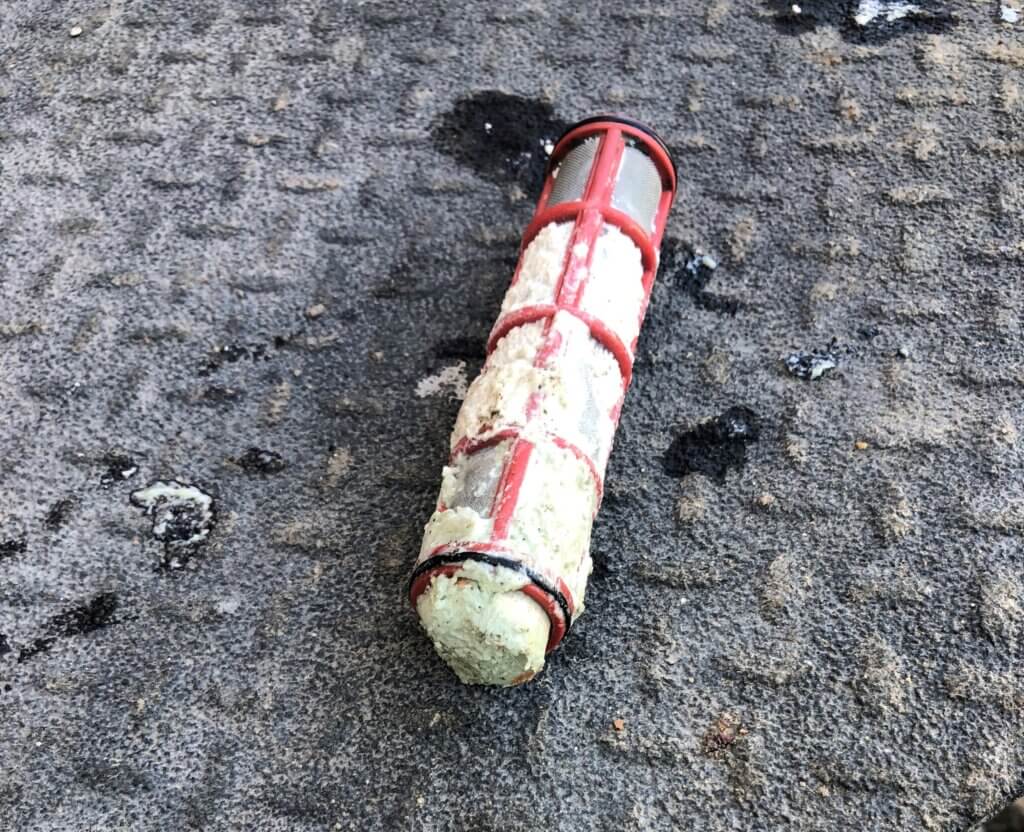
In the pursuit of productivity, UAN and ATS are often combined to serve as an herbicide carrier in corn weed-and-feed applications. However, liquid fertilizers are dense solutions that contain charged ions and exhibit a reduced capacity for solubilizing pesticides. This complicates the tank mixing process. When micronutrients like sulfur are added to nitrogen-based formulations, physical incompatibilities can arise that cause uneven applications and can even clog sprayers.
Given the known compatibility issues, questions have been raised about the best way to introduce urease and nitrification inhibitors to tank mixes of UAN, ATS and herbicide. Specifically:
Stabilizer Compatibility: What is the impact of adding nitrogen stabilizers to UAN carriers containing leading corn herbicides formulated as emulsifiable concentrates (EC) or suspension concentrates (SC)?
Mixing Order: When UAN and ATS are premixed, does their ratio, or the addition of nitrogen stabilizer affect tank mix compatibility with herbicides?
To answer these questions, we performed a series of jar tests.
Method
300 ml jars with magnetic stir bars were mixed to reflect a 10 gpa application. UAN was chilled to approx. -5°C and herbicides were added at 2x the labelled rate to simulate a worse-case scenario. Nitrogen stabilizer was added at a ratio per manufacturer’s instructions. Products were introduced at 1 minute intervals to provide sufficient time for solubilization. Jars were left to rest for at least 1 hour after mixing, and then agitated to simulate interrupted spray jobs. The solution was then poured through a 100 mesh screen to simulate a worst case scenario for sprayers that typical employ 50 mesh filters.
Herbicides
Fertilizer carriers
Stabilizers
Leading EC Herbicide
UAN: 28%
eNtrench NXTGEN (Corteva)
Leading SC Herbicide
ATS: 12-0-0-26% SU
Anvol (Koch)
Tribune (Koch)
Agrotain (Koch)
Neon Surface (NexusBioAg)
SylLock plus (Sylvite)
Excelis Maxx (Timac)
Table 1 Herbicides, carriers and stabilizers used in the study
Results
Stabilizer Compatibility
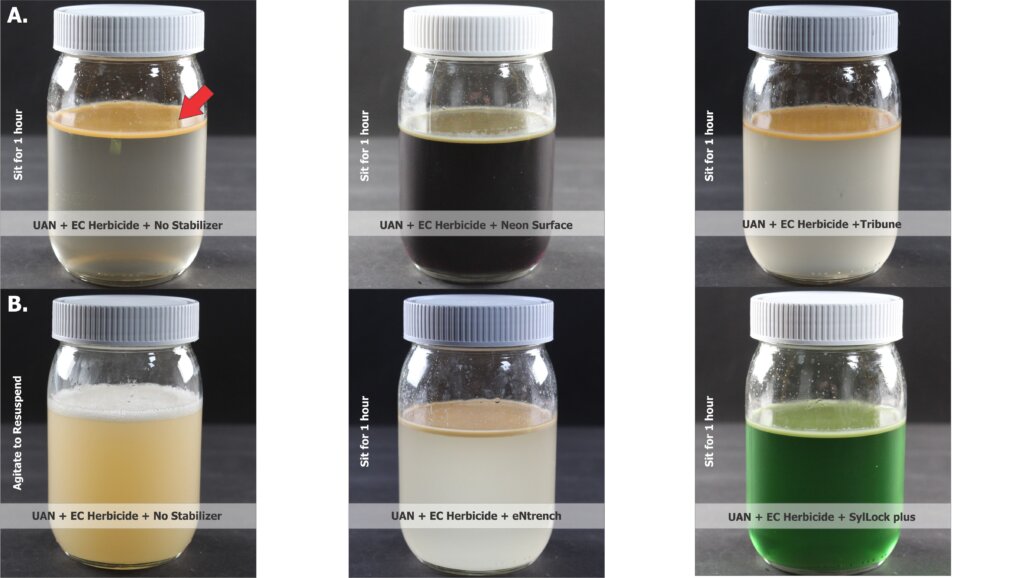
EC herbicides have active ingredients that are soluble in water and include immiscible solvents. When added at 2x label rate to chilled UAN, followed by a stabilizer, agitation created an acceptable suspension (Figure 1). The EC separated to the top of the mixture following an hour rest but was easily reintegrated. There was no appreciable residue left behind when poured through a 100 mesh screen.
Figure 1 UAN + EC Herbicide + Stabilizer after 1 hour rest. Image A is a control with no stabilizer and image B is the same control after agitation. The arrow indicates where ECs separate at the top of each jar. All products resuspended with agitation.
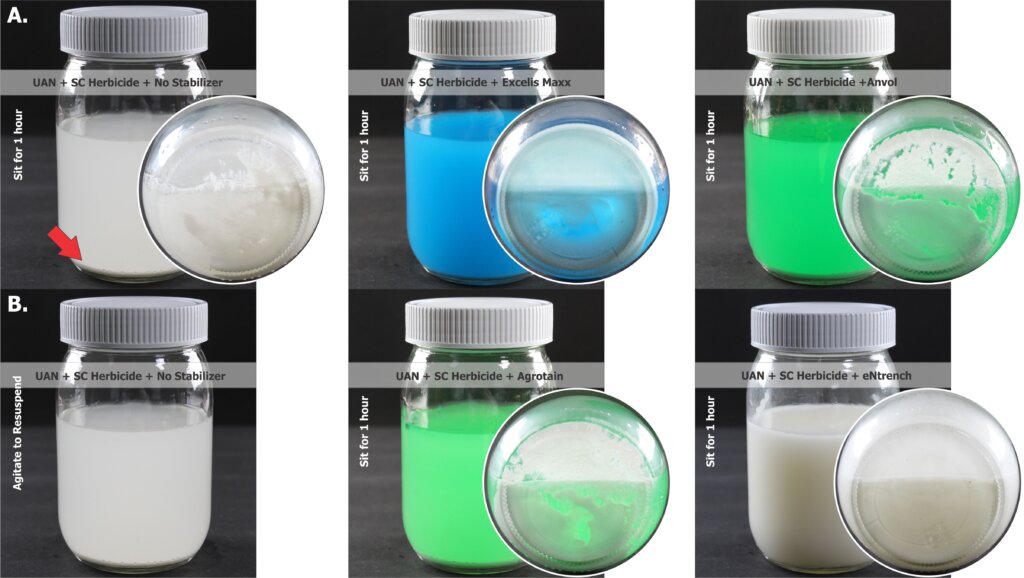
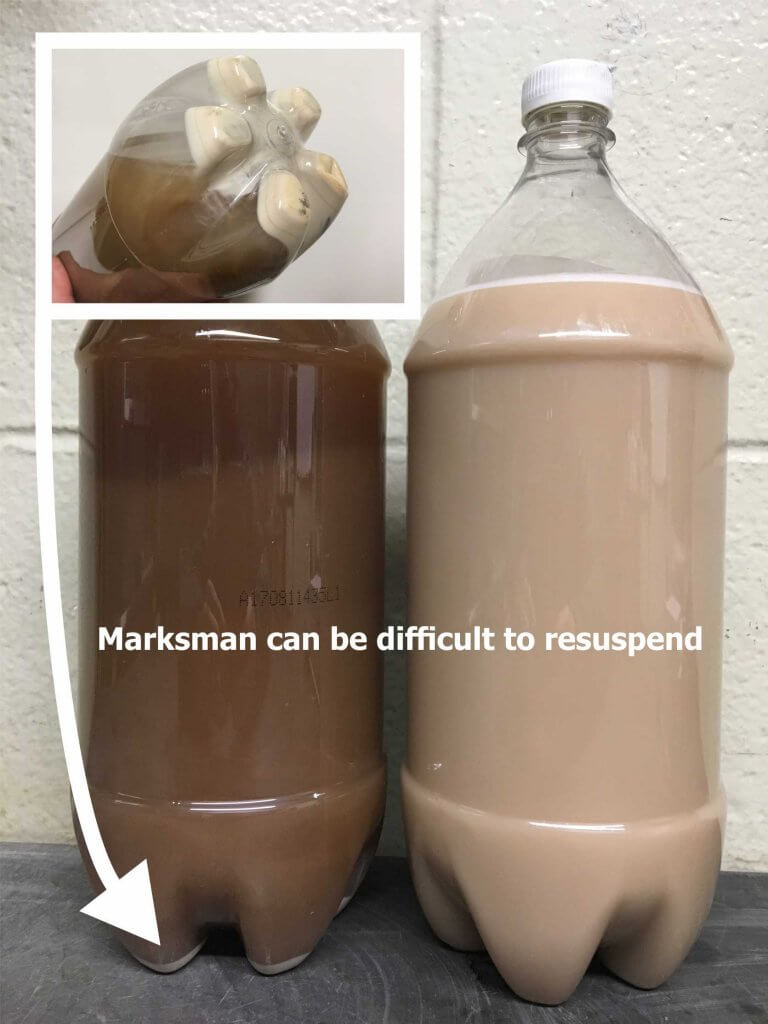
SC herbicides have active ingredients that are water insoluble, but stable in an aqueous environment. When added at 2x label rate to chilled UAN, followed by a stabilizer, agitation created an acceptable suspension (Figure 2). The SC flocculated and formed a sediment at the bottom of the mixture following an hour rest but was easily reintegrated. There was no appreciable residue left behind when poured through a 100 mesh screen.
Figure 2 UAN + SC Herbicide + Stabilizer after 1 hour rest. Image A is control with no stabilizer and image B is the same control after agitation. The arrow indicates where SCs settled, as depicted in the inset images showing the bottoms of each jar. All products resuspended with agitation.
Best Practices
Contact manufacturers and conduct a jar test to confirm compatibility
Ensure thorough agitation (with or without a stabilizer, and especially after tank has settled)
Components may separate to the top (ECs) or settle on the bottom (SCs)
Mixing Order
Mixing order was tested using chilled UAN, ATS, and EC herbicide. It is well known that ATS should be added last in the tank mix order, and mixes that include a higher load of ATS relative to UAN exacerbate tank mix issues.
This is seen in the following video where we combine 203 ml of chilled UAN, 30 ml of SC corn herbicide and 68 ml of ATS. On the left, UAN, then herbicide, then ATS mixes perfectly. However, when we start with UAN, then add ATS (which represents premixed fertilizer) then the herbicide does not suspend, and prolonged agitation does not improve the situation. The video is shown at 2x speed.
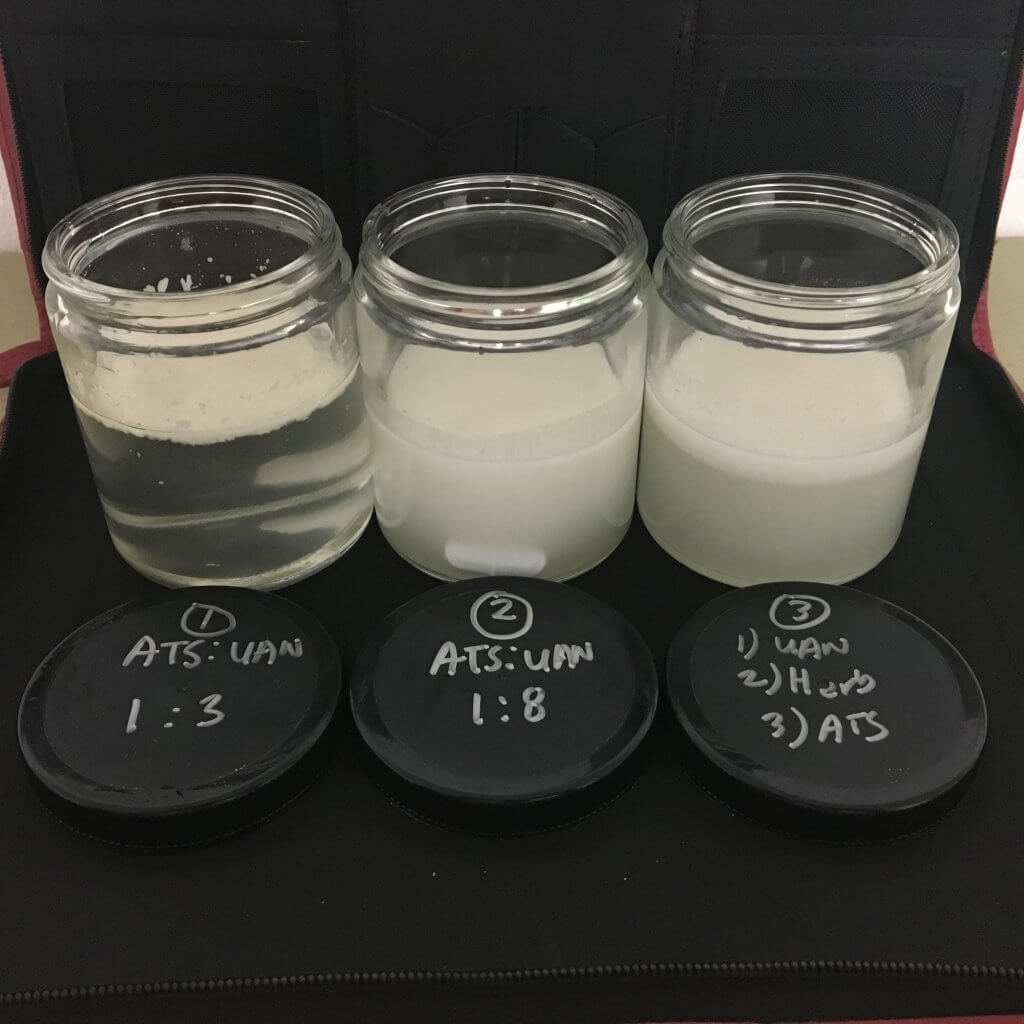
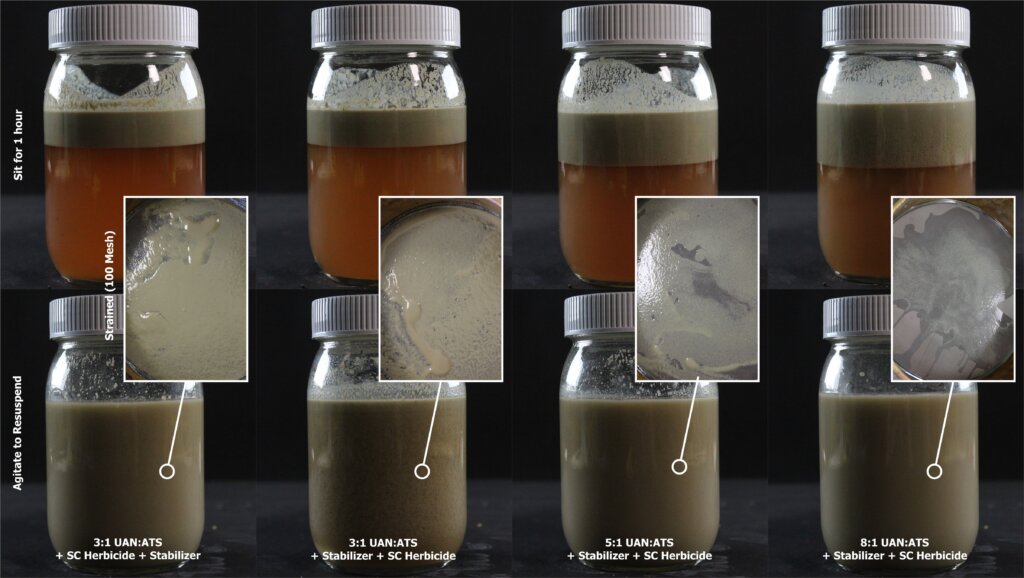
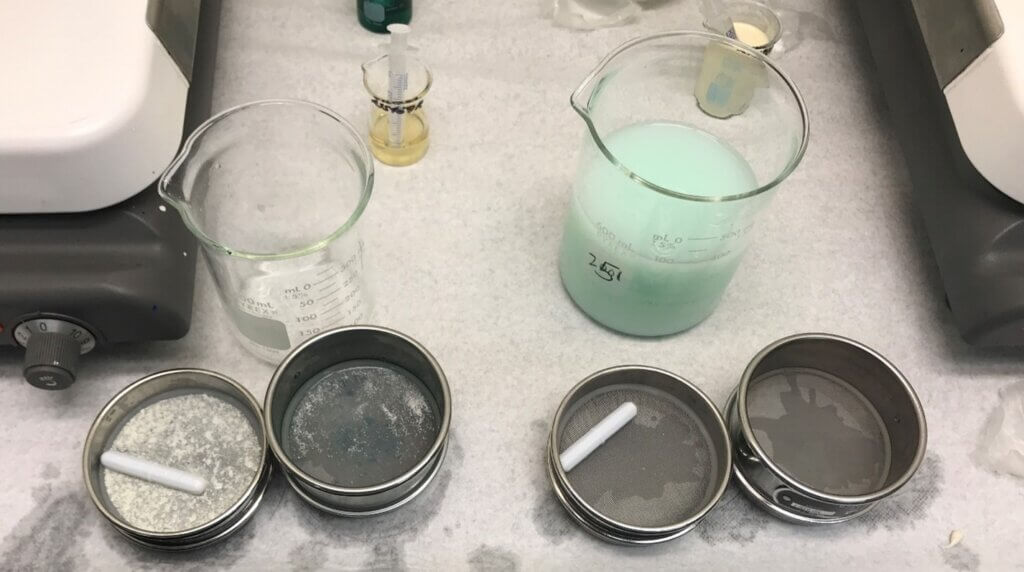
We then added a nitrogen stabilizer to the series to see if it could correct the tank mix issue arising from adding ATS immediately after UAN. This replicates the situation an operator would face when purchasing UAN and ATS premixed. We also reduced the ratio of UAN to ATS from 3:1, to 5:1 to 8:1 to establish a threshold ratio that alleviated tank mix issues (Figure 3). All solutions were poured through 100 mesh screens to capture residue (Figure 4).
Figure 3 SC Herbicide and stabilizer added to UAN and ATS premixed at different ratios. Agitated after 1 hour and poured through 100 mesh screens (inset images).Figure 4 Pouring EC jar test solutions through 100 mesh screens
Best Practices
Contact manufacturers and conduct a jar test to confirm compatibility
ATS must be added after the herbicide (EC or SC). The stabilizer can be added last, but preferably ATS is the last ingredient in the tank.
Adding stabilizer will not reverse a tank mix error arising from adding ATS prior to the herbicide.
The higher the concentration of ATS, the higher the risk of incompatibility. A 5:1 ratio of UAN to ATS failed while a ratio of 8:1 succeeded. The threshold is likely 7:1.
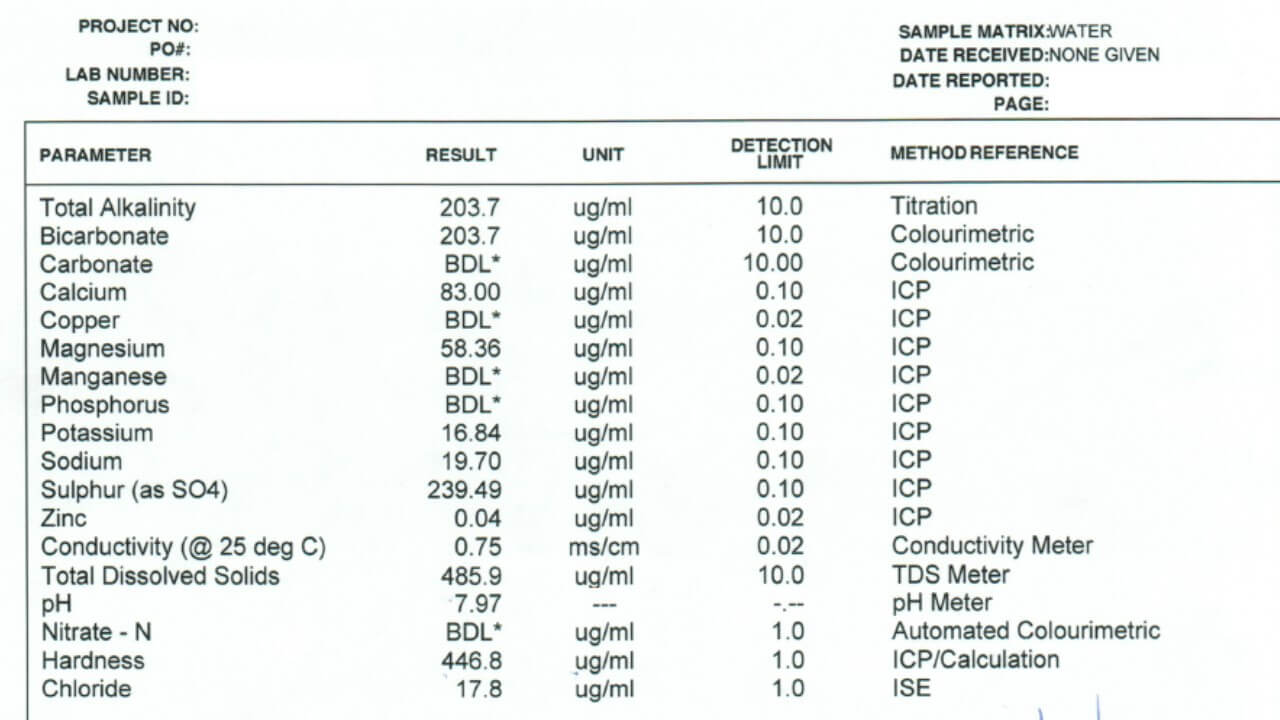
It’s common advice: Test your water before using it as a spray carrier. You dutifully sample the well or dugout and await lab results. And what comes back is a whole lot of numbers. How to make sense of it all?
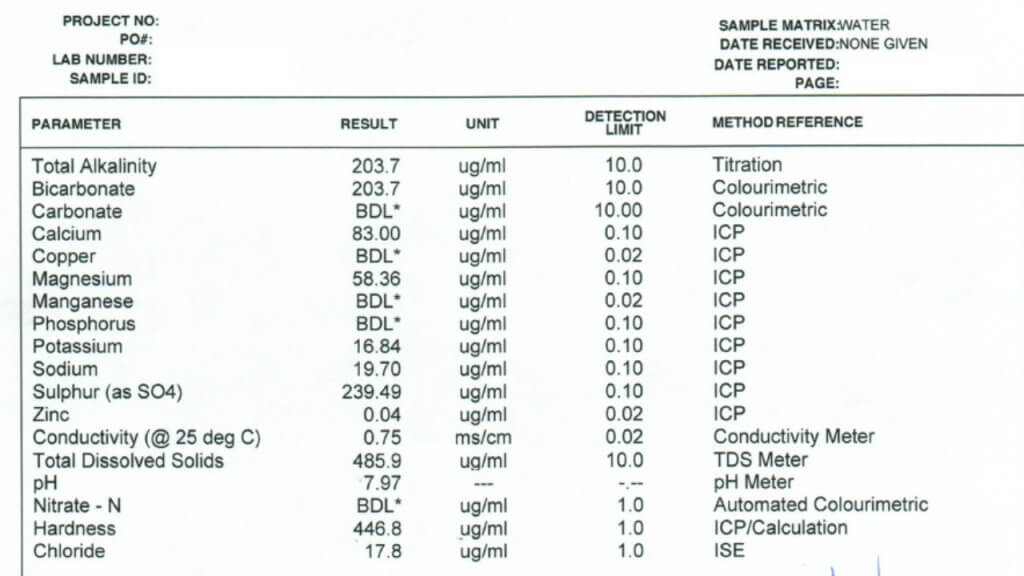
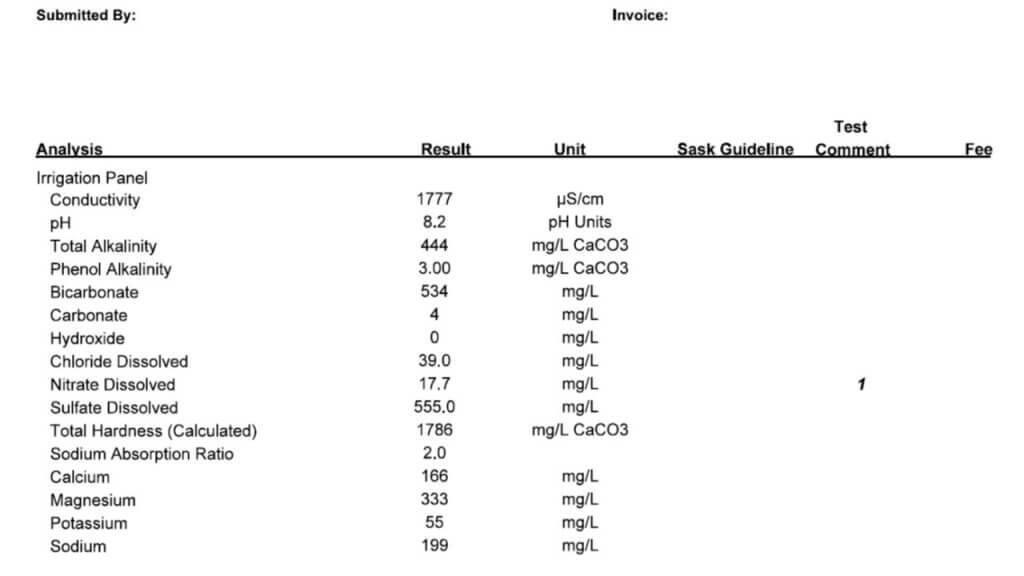
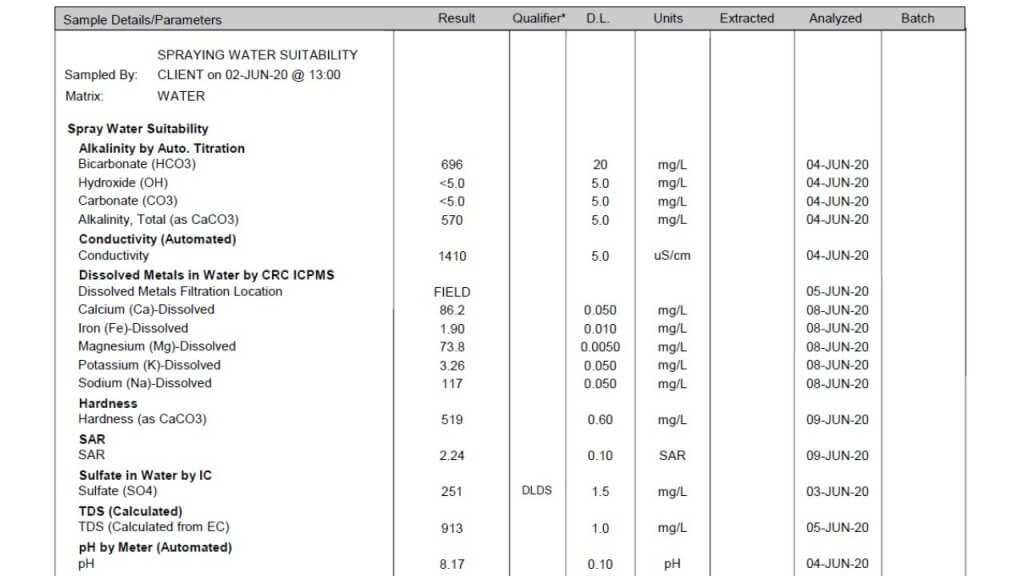
Three examples of water test results conducted by labs in Canada
All three of these tests report a large number of properties and identify specific minerals and other solutes. Which ones are important in spraying? Here is the order in which I look at the numbers.
Conductivity: This property is usually expressed as micro Siemens per cm (µS/cm) and simply identifies how many ionic solutes are in a sample (watch for alternate units such as mS/cm and convert if necessary). It doesn’t differentiate between any minerals or other molecules, and therefore has limited information. But it does tell us if there is a large or small issue with water quality. If conductivity is below 500 µS/cm, the water is probably good for spraying. If the value is around 1000 to 2000, further investigation is necessary. Some water samples return conductivity of more than 10,000 µS/cm, and it’s important to identify which salts are causing that problem.
Note that Total Dissolved Solids (TDS) are often listed, and these are related to conductivity. A common way to get TDS is to multiply conductivity by 0.65. The conversion factor depends on which salts are dissolved but the bottom line is that TDS and conductivity are closely related.
Bicarbonate: Bicarbonates are HCO3 and their concentration is measured in milligrams per Litre (mg/L), which is the same as parts per million (ppm). Bicarbonates can antagonize Group 1 modes of action and the common threshold is 500 ppm. Research at NDSU has shown that Urea -Ammonium-Nitrate (UAN or 28-0-0 liquid fertilizer) can reduce bicarbonate antagonism in some Group 1 herbicides.
Bicarbonates are negatively charged and are associated with a positive ion, often the hard water cations sodium (Na), calcium (Ca) or magnesium (Mg). As such, waters that are high in bicarbonates are often also hard.
Total Hardness (calculated): This is one of the important parameters. Hardness antagonizes most weak acid herbicides, most importantly glyphosate and g;ufosinate, and also ties up surfactants and emulsifiers which can result in problems with mixing and compatibility. Hardness is caused by metal cations, in order of strength these are iron (Fe++), magnesium (Mg++), calcium (Ca++), sodium (Na+), and potassium (K+). Of these, Mg and Ca are typically most abundant, although some water is high in Na.
The Total Hardness (ppm) reported in water tests is done by taking the most common two cations, calcium and magnesium, and using this formula: 2.497*Ca + 4.118*Mg. Note that some tests report hardness in Grains per Gallon, in this case, multiply grains by 17.1 to get ppm.
While this calculation usually gives an accurate prediction of hardness, you may need to have a look at iron and sodium as well. Iron is less common, but some well waters are high in sodium or potassium. These minerals are not captured in the Total Hardness measurement. A water test low in Total Hardness may still be high in sodium, these are typically the samples with high conductivity.
The threshold for Total Hardness depends on the herbicide, its rate, and the water volume. The most common quoted values are 350 ppm for the lower rates of glyphosate (1/2 L/acre equivalent), and 700 ppm for the higher rates. Lower water volumes increase the concentration of herbicide, and reduce the impact of water hardness or bicabonates.
pH: This parameter is a bit over-rated because it is later affected by the herbicide and adjuvant dissolved in it. There is usually no concern with pH between 6 and 8, and water is rarely outside this range. It is best not to change the pH of water unless it is required on the label for mixing, because some products require low, and others require high pH for optimum solubility. Compatibility is an ever greater concern as our tank mix complexity increases.
Water Conditioners
The most common water conditioner is ammonium sulphate [AMS, (NH4)2 SO4]. In its pure form (21-0-0-24), a concentration of 1% to 2% w/v (8 to 17 lbs AMS/100 US gallons of spray water) solves most hard water and bicarbonate issues. Be cautious of using too much AMS (>3%), when added at high concentrations to some herbicides it can burn crops.
Research has shown that AMS works in two ways: The sulphate ion binds with hard water cations, forming an insoluble precipitate that prevents the antagonistic cations from binding to, and inhibiting, the herbicide. The ammonium ion has been shown to improve cellular uptake by weak ion herbicides.
Some product labels call for UAN as an adjuvant. UAN contributes ammonium, but not sulphate ions. As a result, while it may improve herbicide performance, it does not remove antagonizing cations from the mixture.
Acids have been used to combat hard water. Most common herbicides are weak acids, and the acid constituent, usually a carboxilic acid, has a unique pKa. The pKa is the pH at which half the molecules are protonated (contain a hydrogen atom, resulting in an uncharged acid constituent) and the other half are not protonated (negatively charged). If the spray mixture has a pH below the pKa, the weak acid herbicides become protonated. This means the herbicide becomes less water-soluble, but also that it has less chance of interacting with a hard water cation. Acids that work in this way are less effective at ameliorating the effect of hard water than AMS.
A small group of acids that includes citric acid and sufphuric acid can sequester or bind with hard water cations. But they do not contribute the ammonium ion that assists in weak acid herbicide uptake.
If your water is questionable for spraying, there are four common choices:
Select a different well or dugout
If the problem is barbonates or hardness, treat water with a conditioner such as Ammonium Sulphate (AMS), available in pure form as 21-0-0-24. Some acids (citric, sulfuric) can form conjugate bases with hard water cations, removing them from solution. But the associated significant lowering of pH should be treated with an abundance of caution as it may affect solubility of some pesticides.
Reduce water volumes or increase herbicide rates.
Use a municipal treated water source or invest in a reverse-osmosis (RO) system. RO is neither cheap nor fast and requires additional investment in storage, and a way to deal with solute-enriched waste water. But it may be the best option for some.
An Ammonium Sulphate calculator, originally developed by Winfield United using data from NDSU, can be downloaded here:
Much of this article is based on a session and tradeshow I attended at the 2026 Drone End-User Conference in Kansas City. I want to acknowledge the insightful information provided by the three session speakers, as well as the ~200 audience members that asked honest questions and shared their experiences. The speakers were Mr. Chase Plumer (Owner, ProBuilt Fabrication/ProDrone Spraying & Seeding, Seymour, IN), Mr. Klaytin Hunsinger (Owner, Hunsinger Ag Solutions, Rossville, IL) and Mr. Kyle Albertson (Owner, Albertson Drone Service LLC, Benton County IN).
Tendering systems
Drone-based crop protection is a rapidly growing industry and operator experience spans from novice to veteran. It follows that tendering systems are not a one-size-fits-all proposition. The best fit will be a configuration that is budget-conscious, reflects the size and nature of the operation, and accounts for future needs.
We can categorize them by their complexity, cost and capacity.
Entry-level tendering system: A starting point
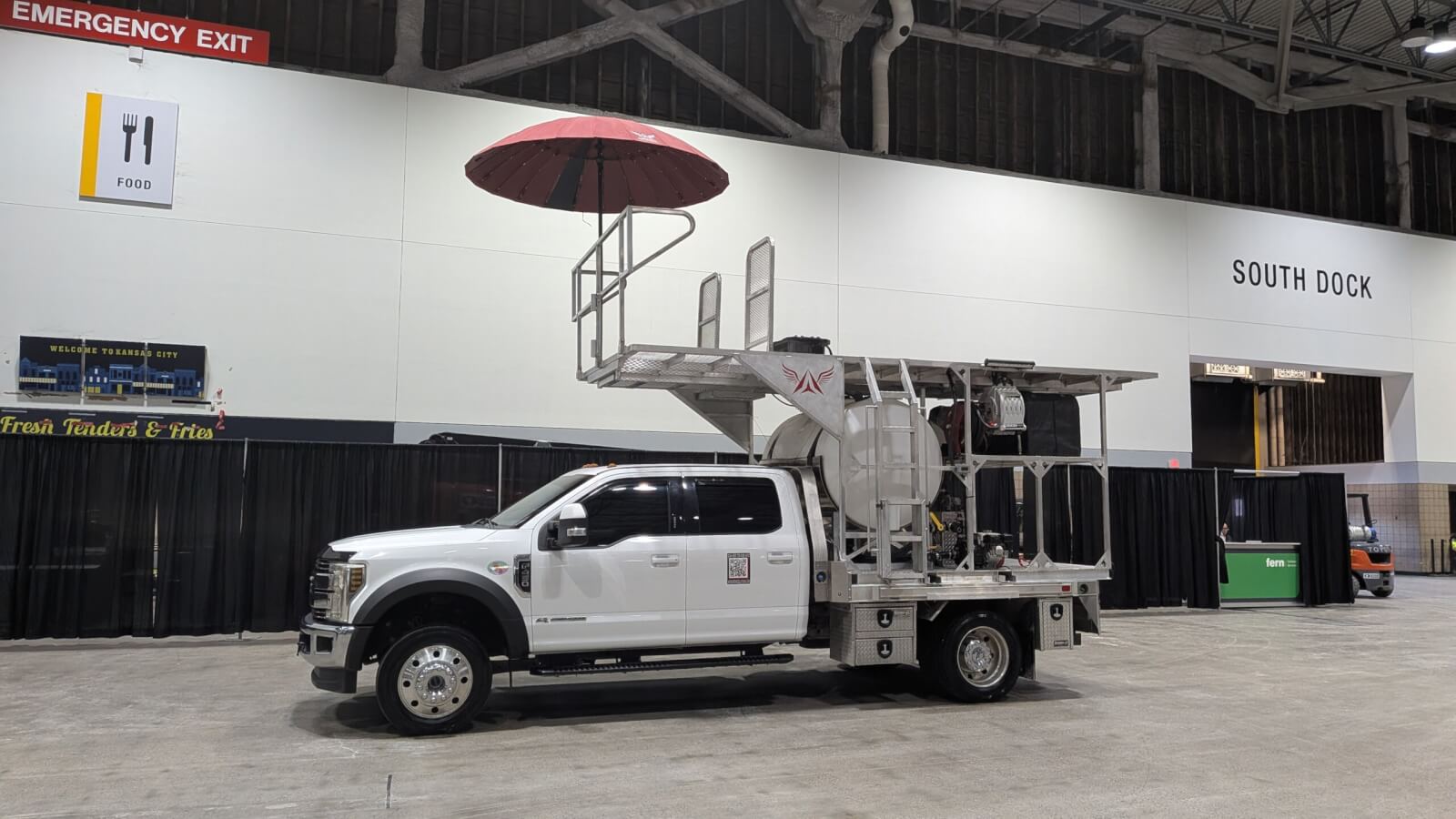
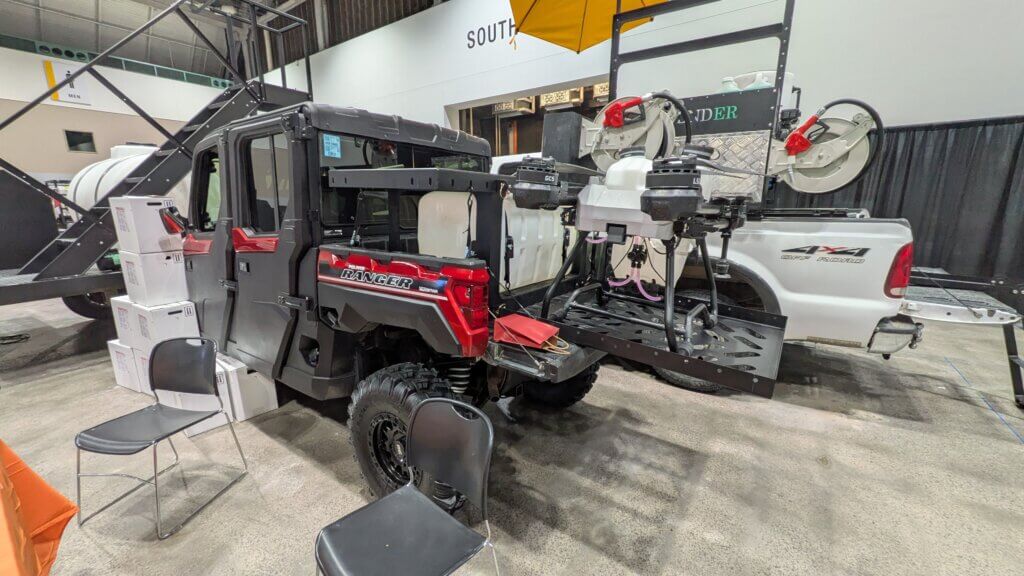
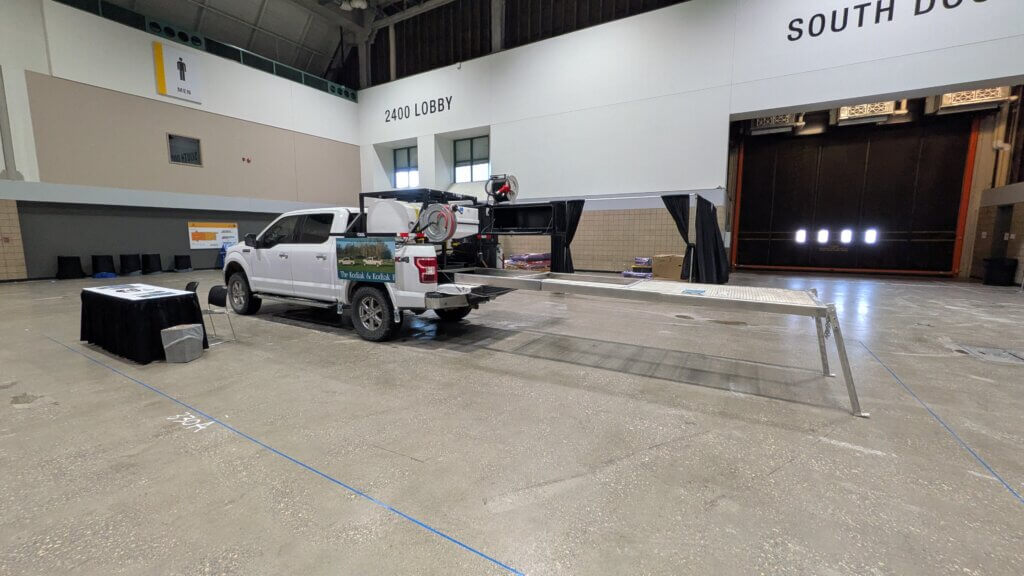
For those just getting started, focus on affordability (lower initial investment) and simplicity (basic components). Examples include skid or truck builds, which are removeable or permanent systems that either rest on a vehicle bed or are built on-and-around the vehicle. This is an operator-friendly system that is small and portable for easy access to diverse fields. It’s the least durable configuration, and not particularly efficient or upgradeable, but it will serve until you know what you really need and how you like to work.
Mid-level tender system: Second year
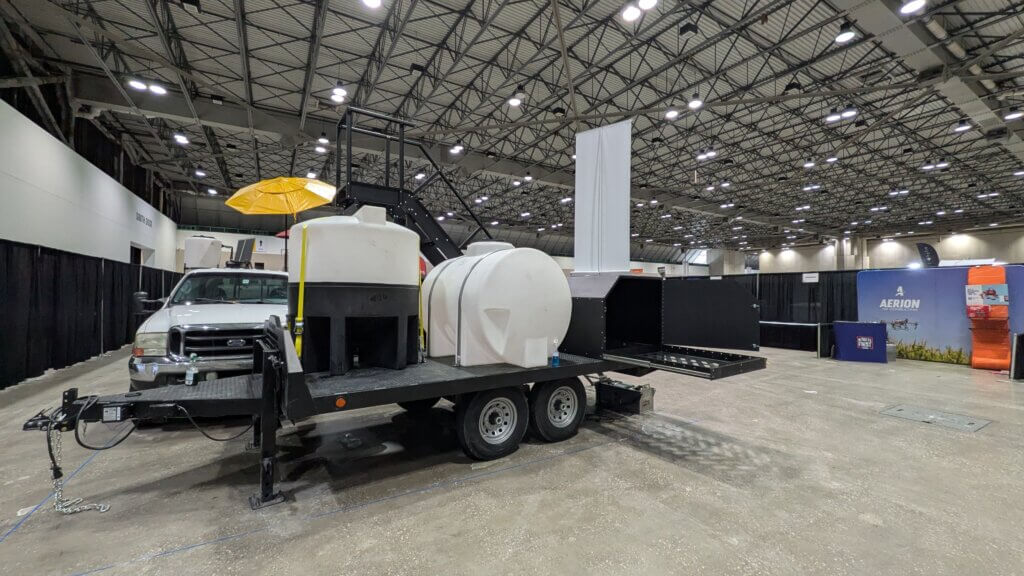
By year two, you might want a larger and more efficient configuration with additional storage and a few creature comforts to reduce operator fatigue. A truck build might suit, but this is more likely a trailed system that is still capable of being towed by a mid-sized (1/2 to 3/4 tonne) truck. Some operators feel enclosing the trailer reduces efficiency, while others appreciate the security and protection afforded by defined spaces.
A mid level system has some capacity for modification, but isn’t designed to support multiple drones, and likely won’t have enough capacity to store a day’s worth of water, chemical, or fuel. The operator may wish to detach the truck to run for supplies. Or perhaps it makes more sense to run a truck with a skid-mounted tender system that trails a second, mid-level system to divide-and-conquer, or scale up for larger projects.
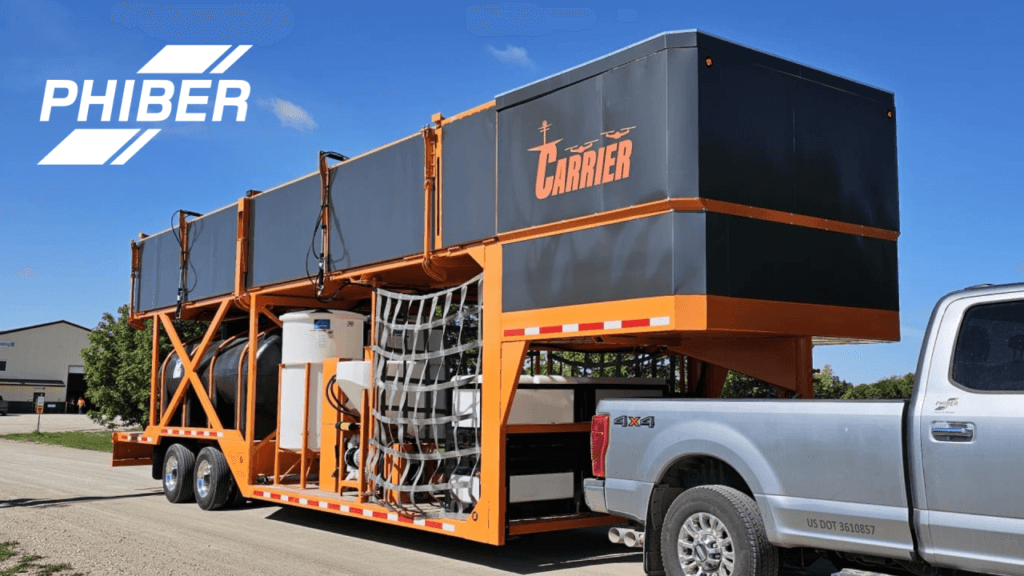
Beware going too big, too quickly. A 30-foot gooseneck can get caught on hilly terrain, where a 20-foot flat bed with a straight truck might be better suited. Small to mid-size trailers also take less time to set up and tear down. Consider performing site recon before dispatching a mid-level tender system. This is an additional step, but it allows the operator to scope out potential hazards and is ultimately more productive because it prevents tender systems getting stuck or placed in inefficient or unsafe locations. For example, if a client is “plant-out, pick-in”, the fields are hard to service because there’s no way to access them with large vehicles. Pilots become landscapers, spending valuable time clearing an operations area.
High-level tender system: Large scale and Commercial interests
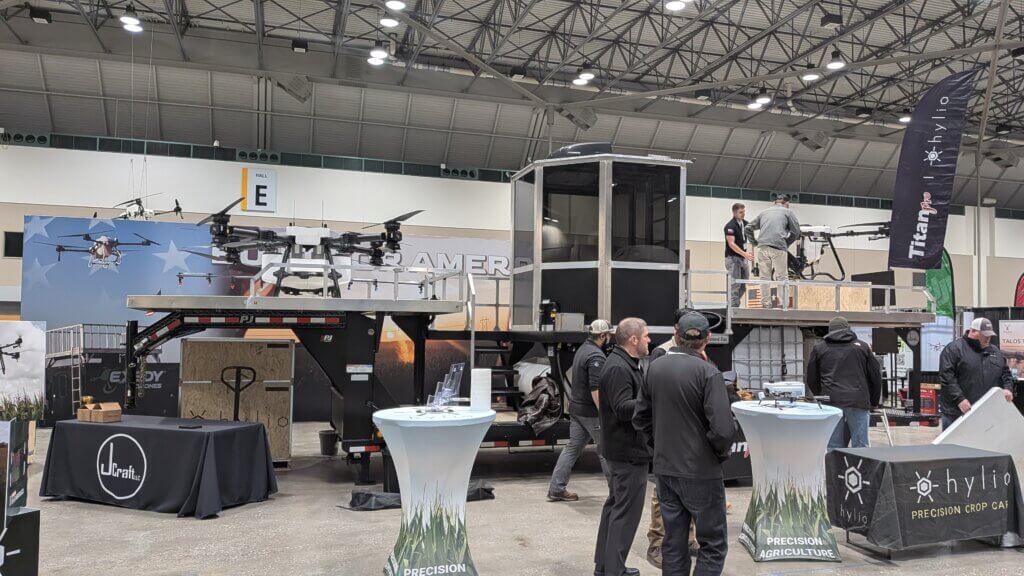
Made for efficiency, the limiting factor of this system is the drone’s productivity. This category is comprised of the largest gooseneck trailers, which may include an upper deck and enclosed areas. It has the highest capacity for water storage, can service multiple drones and has ample storage. Intended for large fields, the size of this unit can make it physically incapable of reaching smaller fields. While a one tonne truck might be able to tow it, an even larger vehicle might be more suitable. It may also be prohibitively inefficient given the time required for setup and teardown. Consider an operator that requires a 15 minute start-up and a 15 minute teardown to spray 250 acres at 50 ac/hr; At $20/ac, that’s roughly $500.00.
Fundamentally, each tendering system has the same function, so they share the same basic components. Here’s an overview of common features and considerations.
Trailer
The trailer is (literally) the foundation of most tendering systems. Operators suggest building for your current budget but planning for future needs as best you can. Trailer size should reflect the nature of the farms you will be servicing and how best to access them. You should also consider the safest and most efficient workflow on and around the trailer before committing to a layout.
Option 1 – Utility trailer
Advantages
Disadvantages
Easy to get on/off
Low ground clearance
Less expensive
Narrow footprint for accessories (e.g. conventional tanks not fitting between wheel wells)
Versatile (use for drones on season, and other tasks off season)
Narrow if planning a top flight deck
May be an insufficient trailer GVWR (Gross Vehicle Weight Rating). This is the maximum allowable total weight of a trailer when fully loaded.
Option 2 – Flatbed gooseneck trailer
Advantages
Disadvantages
More room for accessories
Much heavier. ¾ tonne truck likely not sufficient.
Better ground clearance
Hard to get into tight places (length dependent).
Higher GVWR
Set up / Tear down takes longer
Potential for top flight deck. Typically, 102” wide, so top deck can be about the same.
Option 3 – Enclosed trailer
Advantages
Disadvantages
Protection from weather and elements
Limited clearance for large drones (e.g. 24’ long, 8.5’ wide)
Increased security for equipment
Highest GVWR
Could serve as mobile workspace / office
Most expensive
Cleaner environment for charging batteries, and generators don’t need maintenance (e.g. filters changed) as often.
Can get hot inside, both for people and battery overheating. Airflow on batteries is a necessity, and fans can only cool to ambient. Drone hasn’t got time to cool between fields.
Vehicle
Based on operator discussion, it seems many have a tendency to push their trucks to the limit… or beyond it. One operator uses a ¾ tonne truck to pull a 22-foot trailer with an upper deck. Another uses a 1 tonne (aka tonner) gas F350 which struggles to pull a 30-foot trailer. Others recommended the use of a single axle semi (e.g. a Kodiac or a Kenworth T300), which even used still has ample life left in it, and at ~15 to 17,000.00 USD is cheaper than buying a truck.
Consider that if you run a two-person operation, you may want more than one vehicle. A smaller truck can be employed to run for parts or fuel, or as previously noted can be fitted with a skid mount and a 1,300 gal. poly tank to split up the duty.
Tanks
Tank size(s) will depend on how you choose to operate, how many acres you plan to do in a day, and the weight capacity of your truck and trailer. Again, there is no one solution, so consider the following scenarios before you commit.
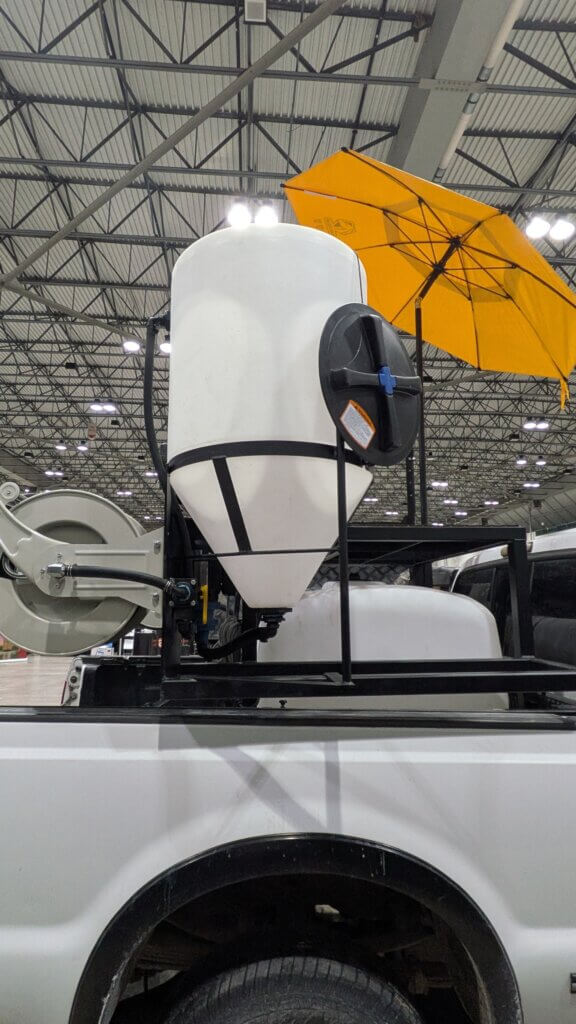
If you plan to hot load, perhaps you’ll just mix in a single, large tank. However, if you plan to switch between insecticides, fungicides and herbicides, one or two 100-gallon cone-bottom tanks with wash-down nozzles might make more sense. Then, you can carry clean water separately in a few repurposed IBC’s or go for the efficiency of a single, high-volume poly or stainless tank. Consider the most flexible and efficient arrangement.
Will you have access to water, will you have water tendered, or will you carry enough for the day? Will you fill from a 3-inch connector or suffer the lost time and fill with a garden hose? Will your truck and your trailer handle that weight, and will the vessel(s) fit between the wheel wells? Are the tanks black or shaded to prevent algae and do you have a plan to baffle the volume, so it doesn’t slosh when you drive over uneven terrain? Larger poly tanks (e.g. ~1,000-gallon tanks) have spots molded in to accept baffles, but some operators noted it’s difficult to install them after-market. Slosh suppressors such as floating balls or lengths of poly French drain can help.
Gas-powered pumps (e.g. Drummond or Predator transfer pumps) are relatively cheap, but some claim they have a high failure rate. This not only incurs downtime, but operators must deal with the chemical in the pump and lines during repair.
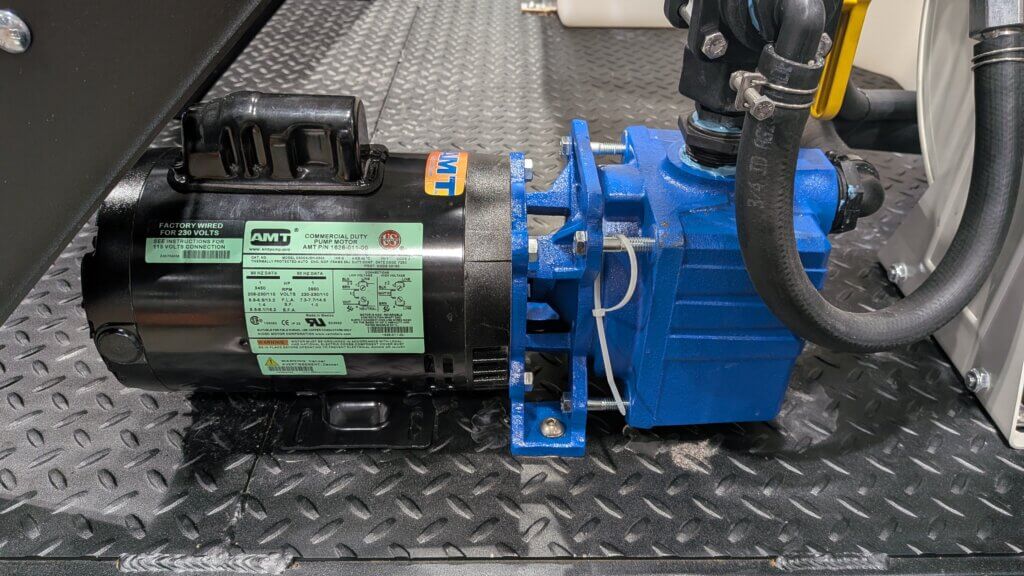
Electric may be a better choice, if only to avoid the noise and exhaust, and some operators run them continuously to recirculate chemistry when not filling a drone. Consider the horsepower, gallons per hour and head pressure, especially if you are pushing flow to an upper flight deck.
An AMT electric transfer pump on a mid-level tender system.
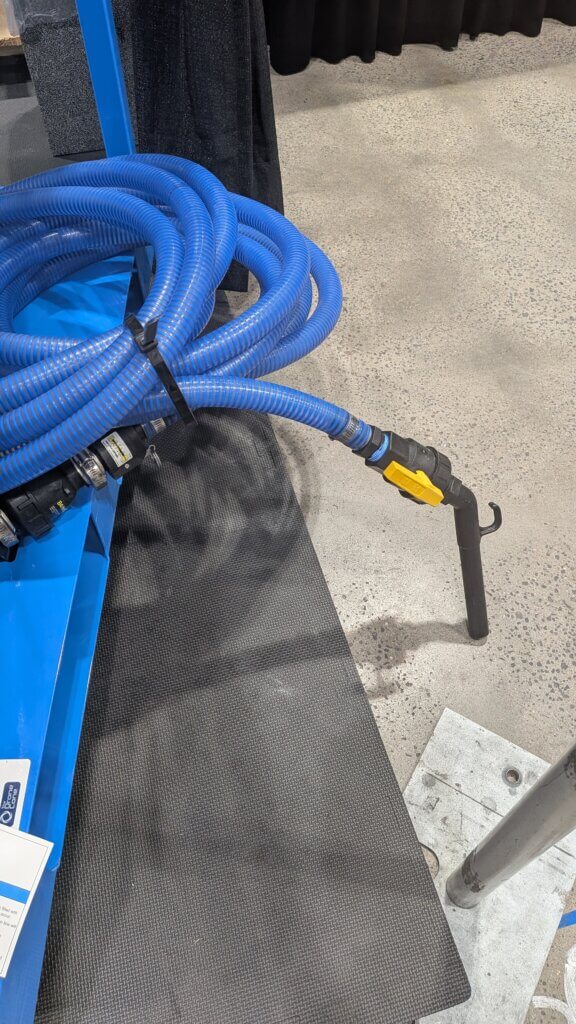
You should be able to fill a drone in about a minute. Some operators have begun increasing fill line diameter from 1-inch to 1.5-inch but feel 2-inch lines are too heavy to warrant the few seconds saved during filling. This may not be a limitation, however, if they are part of a top flight deck arrangement, and not dragged along the ground.
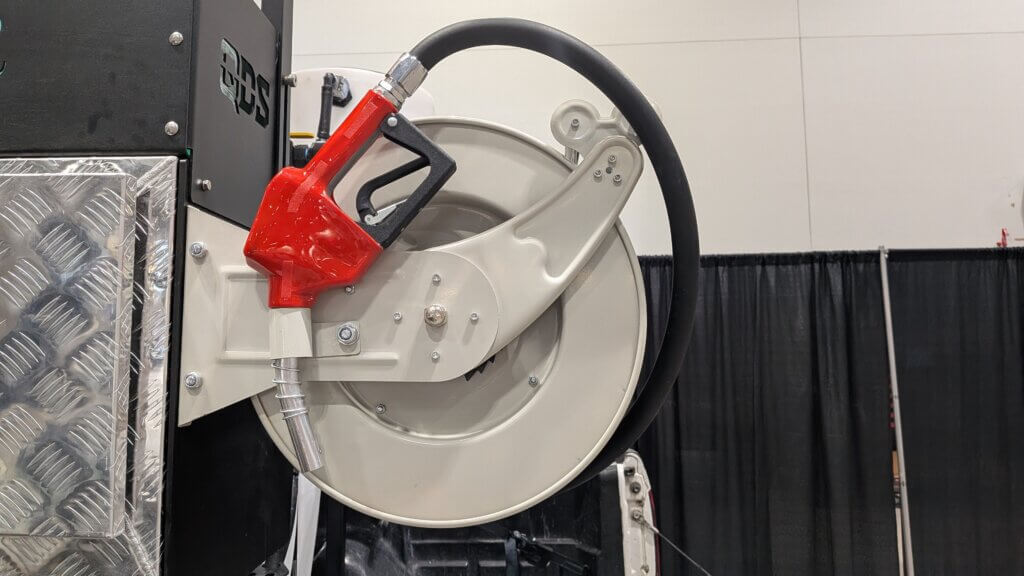
The auto shutoff function of a fuel-pump-style filler is preferred over a quarter-turn-style. The former contributes to foaming but some operators say that can be mitigated by using an anti-foam adjuvant and it’s less likely to create an overflow situation.
Perhaps a metered flow valve that shuts off once a predesignated volume has been dispensed would be a workable solution. This would preserve speed, but without foaming or potential overflows.
A loose line terminating in a quarter-turn valve fills quickly and with few bubbles, but is ultimately not ideal. It’s prone to causing overflows which increase the potential for operator exposure and cause point source contamination.A reeled hose and a fuel-pump style filler is a better approach. The hose can be recoiled to keep it from being underfoot, and the filler has a back pressure valve that shuts off when the drone is full. There is greater potential for foaming, but some suggest anti-foam adjuvants can help.
Generator
This proved to be a controversial subject at the conference. Many operators were unwilling to promote a single make or model, but the discussion resulted in some general guidance based on personal experiences. Generators will have a peak and a continuous performance rating. Ensure the sum total of all your draws does net exceed the continuous rating.
Drones are getting bigger, and the number of electrically powered devices on the trailer is increasing. Smaller operations tend to employ mobile gas generators that produce less than 10 kW. Larger operations reported using 30 kW (or more) diesel standby generators to charge two drones, plus accessories, while ensuring room for future growth.
A mobile gas generator (inverter or not) tends to be the cheaper, lighter alternative, depending on the wattage. They are a good choice for entry level systems and with regular maintenance will last longer, but are still a short-term proposition. Diesel generators tend to be more expensive, but are quieter, more fuel efficient and more reliable. A liquid propane standby generator is yet another option; Generally cheaper than diesel, consideration must be given to the weight and size of what is typically a 250-gallon propane tank.
A few points raised by operators during the discussion:
Most standby generators do not need diesel emission fluid, while mobile generators do.
Many operators prefer the durability of mobile generators over standby generators. The former is built to be moved while the later presents issues with brackets, mounts and stators.
Warranties are advisable for inversion generators, as they are not easily repaired.
Standby gas generators (10 kW continuous / 13 kW surge) may require you to downrate the battery charger, or the heat can trip the breakers. It is not advisable to bypass breakers.
Storage
Storage is often overlooked but can be critical to efficiency. For example, if you plan to spray six, 50-acre farms in a day and it takes 10 minutes for set up and 10 for tear down, that’s two hours gone. Consider what you’ll need and where you’ll need it, and place storage accordingly to minimize downtime. PPE should be located near your flight deck or filling area. You’ll also want to consider carrying spare parts, such as an electronic speed controller, motor, pump and a full set or rotors.
Batteries
Some battery chargers feature water baths, misters or air conditioning, but at bare minimum batteries should charge in the shade and in a ventilated area (e.g. not enclosed in a storage or tool box). One operator vented air from a commercial blower fan to the batteries on the top flight deck.
Connectivity
A hotspot on your cellphone doesn’t always provide reliable service. Satellite internet providers such as Starlink or Xplore (depending on your location) might be a solution. If the controller drops a direct signal to drone, it can bridge to satellite to connect to the SIM card in most drones. Operators that use this system advise it’s best to rent the hardware (if possible) so if something damages it, you get a free replacement. 100 gb of monthly roaming has proven more than enough for most operators.
Mounting solutions vary, but operators noted good experiences with companies such as Veritas Vans, which have a replacement policy. They warn against 3D printed options that tend to be produced using unsuitable filament materials. Operators that use magnetic mounts on their trucks have reported no issues. Some run wire through rear window or sliding door, and others pull the headliner down and run the power cord out through the third brake light.
Operator safety
Lastly but certainly not least, when it comes to the cost-benefit assessment of tender features, safety should always be a priority. Even simple comforts such as folding chairs combat operator fatigue, increase safety and happily also improve overall productivity. We’re none of us getting any younger.
RV awnings, umbrellas, foldable Bimini-style tops or flip-up doors provide shade. Switching to lower-decibel equipment (e.g. inverter gas generators run at about 90 decibels and electric pumps are even quieter), enclosing loud systems, or positioning them far from the filling area, reduce noise and emission exposure. Chemical drift and exposure during filling should be considered, and PPE should be used and stored in convenient locations.
Trailers that feature an upper flight deck sometimes include a central cable to tether belt harnesses. Stationary railings can help prevent falls, while a fold-up version provides clearance when backing the trailer into a shed.
The drones themselves are a hazard. Long flight decks keep landings and lift-offs at a safe distance, and a protected cockpit area improves matters. Decks with pull-out platforms or hydraulic wings can increase the operating area and can be adjusted to account for adjacent roads and the slope of the ground. A short rail around the landing area can prevent a drone from slipping off; A falling drone is expensive, but falling or sliding into an operator is a disaster. The simplest approach might be to operate on the ground.
An enclosed area for operators on a two-platform gooseneck trailer.Kodiak’s retractable flight deck on their skid-mounted system
Take home
The speakers left the session with some summary advice.
Trailer first, equipment second.
Build for today and tomorrow.
Function over form (stability, balance and access over appearance, bearing in mind that if it is a business, it can’t look terrible, either).
Efficiency from day one. Run a stopwatch (when the crew isn’t watching). Find and change the limiting factor, if it’s changeable. The right trailer improves efficiency even before the first acre is sprayed.
Thanks to the many speakers, attendees and trades people that contributed to this article. If you want to share pictures and specs for your tender system, let us know! If we get enough interest we’ll publish an article showcasing your tender systems so others can learn from your experience.
Tank mixing is the practice of combining multiple registered agricultural products in the sprayer tank for application in a single pass.
The Pros of Tank Mixing
Efficiency: If the timing makes sense, a single pass saves time and reduces trample/compaction. E.g. A “weed-and-feed” application of fertilizer and herbicide in corn.
Resistance management: Multiple modes of action help prevent resistance development and combat existing problems.
Improved performance: Labels may require adjuvants to condition carrier water or reduce drift (utility adjuvants) or to improve the degree of contact between droplets and the plant surface, or enhance product uptake or rainfastness (activator adjuvants).
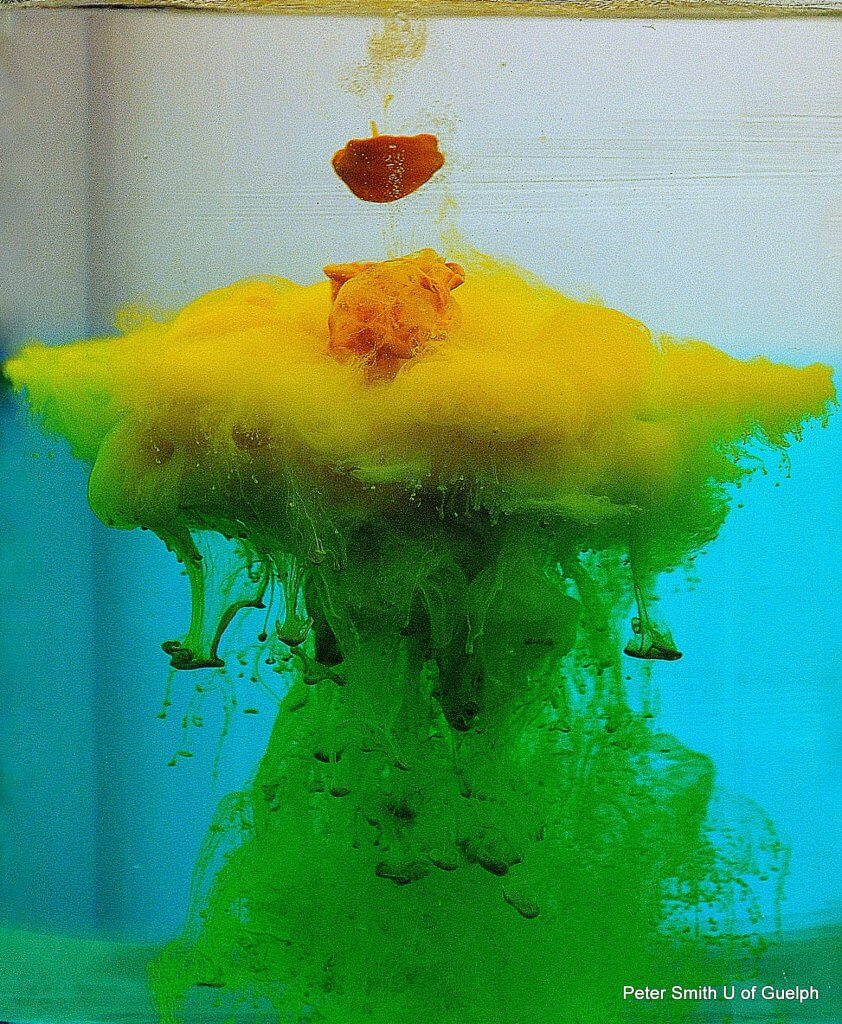
Prowl meets Roundup – A beautiful photo by Peter Smith, University of Guelph
The Cons of Tank Mixing
Tank mixing requires caution and careful investigation. Should tank mix partners prove to be incompatible, the consequences can be subtle or dramatic, but are always negative. There are two kinds of incompatibility.
1. Biological or Chemical Incompatibility
This form of incompatibility may not be immediately apparent following an application. Some level of crop damage or impaired efficacy occurs, which may impact yield or warrant an additional “clean-up” application. This is the result of product synergism or antagonism.
Synergism (Crop damage)
When products synergize, the application becomes too potent. For example, an adjuvant could affect crop retention or uptake, exposing it to more active ingredient or overwhelming crop metabolism. The result is damage to the crop we are trying to protect.
Antagonism (Reduced efficacy)
When products antagonize, the application becomes less potent. There are several examples:
pH adjusters in one product may reduce the half-life
of another product (e.g. The fungicide Captan has a half-life of 3 hours at a
pH of 7.1 and only 10 minutes at a pH of 8.2.)
Active ingredients may get tied-up on the clay-based
adjuvants in other products (e.g. glyphosate tied up by Metribuzin).
One product changes the uptake/retention of another.
For example, a contact herbicide burns weed foliage beyond its ability to take
up a lethal dose of systemic herbicide.
2. Physical Incompatibility
Physical incompatibility affects work rate and efficacy. Products form solids that interfere with, or halt, spraying. It can also make sprayer clean-up more difficult. For example, weak-acid herbicides lower the pH of the spray mix, reducing the solubility of Group 2 herbicides (i.e. imidazolinones, sulfonylureas, sulfonanilides). The oily formulation then adheres to plastic and rubber surfaces in tanks, connectors and hoses.
There are many forms of physical incompatibility:
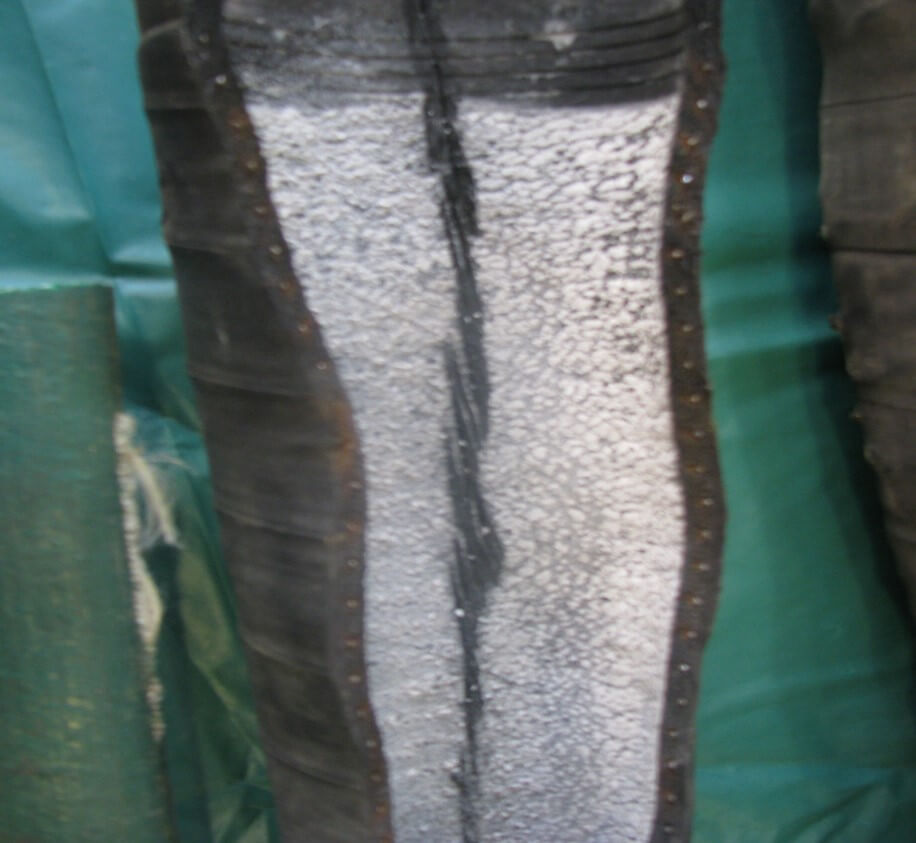
Liquids can curdle into pastes and gels that clog plumbing to such an extent that flushing cannot clear it and a manual tear down is required.
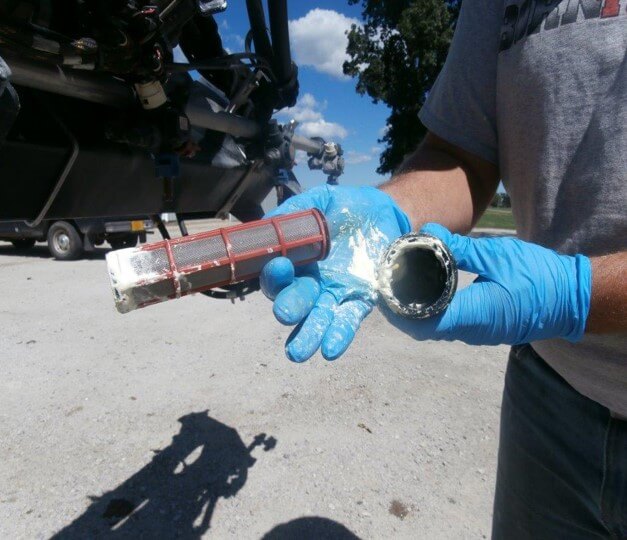
Clogged screens
Dry formulations don’t hydrate or disperse, becoming sediment that clogs screens and nozzles. Even if they are small enough to spray, they reduce coverage uniformity. For example, a dry product added behind an oil gets coated, preventing it from hydrating.
Certain product combinations may cause settling, or one partner is more prone to settling. If the sprayer sits without agitation, settled products may or may not resuspend. Even if they do resuspend in the tank, they may remain as sediment in lines.
Residue in hoses – Photo courtesy of Fred Whitford, Purdue UniversityClay-based products may or may not resuspend easily in a tank. Even then, they may not resuspend in plumbing lines.
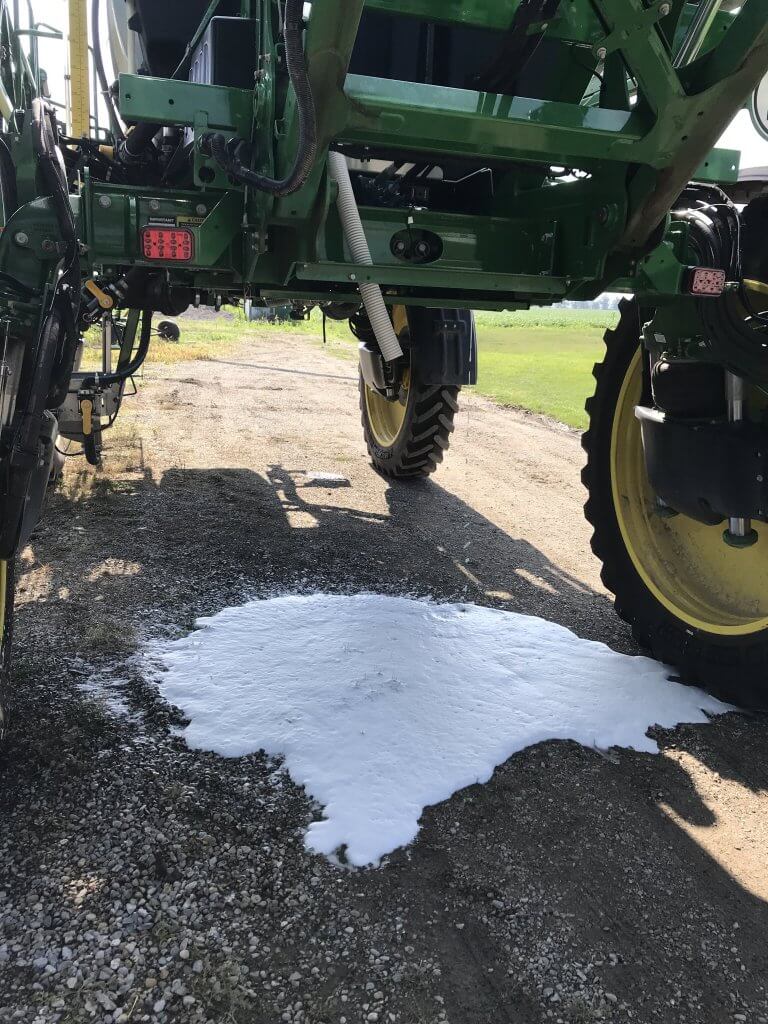
Certain product combinations may cause foaming, or one partner may be prone to foaming, causing overflows or breaking pump suction. When products foam, dry products added through the foam may swell, preventing hydration.
The Foamover Blues
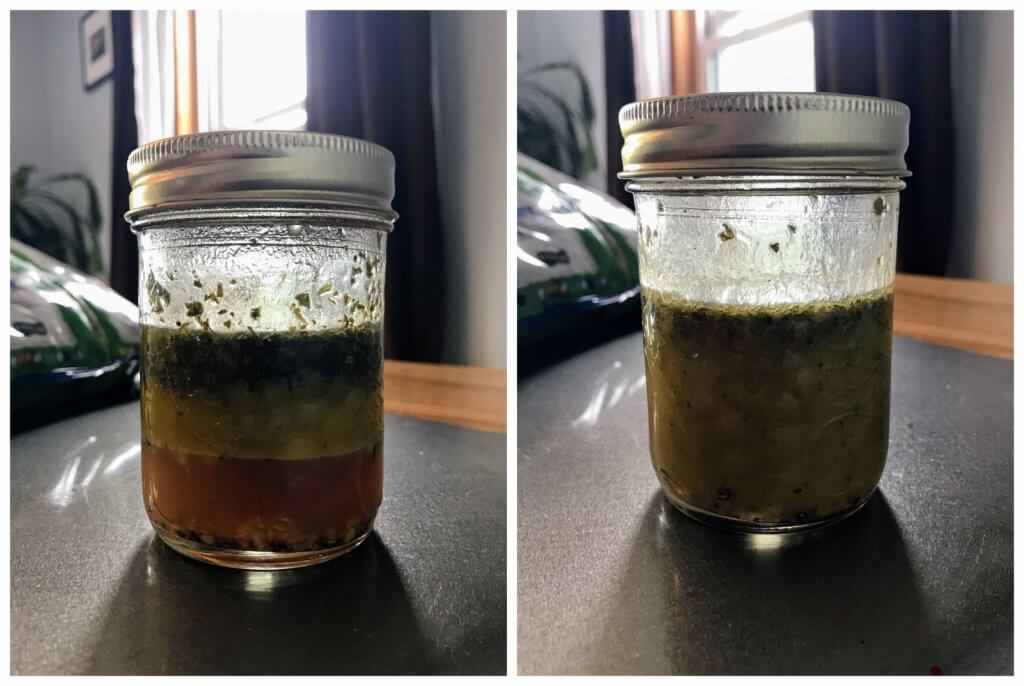
Phase separation occurs when products layer in the tank. Consider oil and water. Even with agitation, the active ingredients may not be uniformly suspended in the tank and coverage uniformity will be reduced during spraying.
Salad dressing left to rest is a great example of separation and stratification (left). Agitation helps emulsify it (right)
Due Diligence – Preventing Tank Mixing Errors
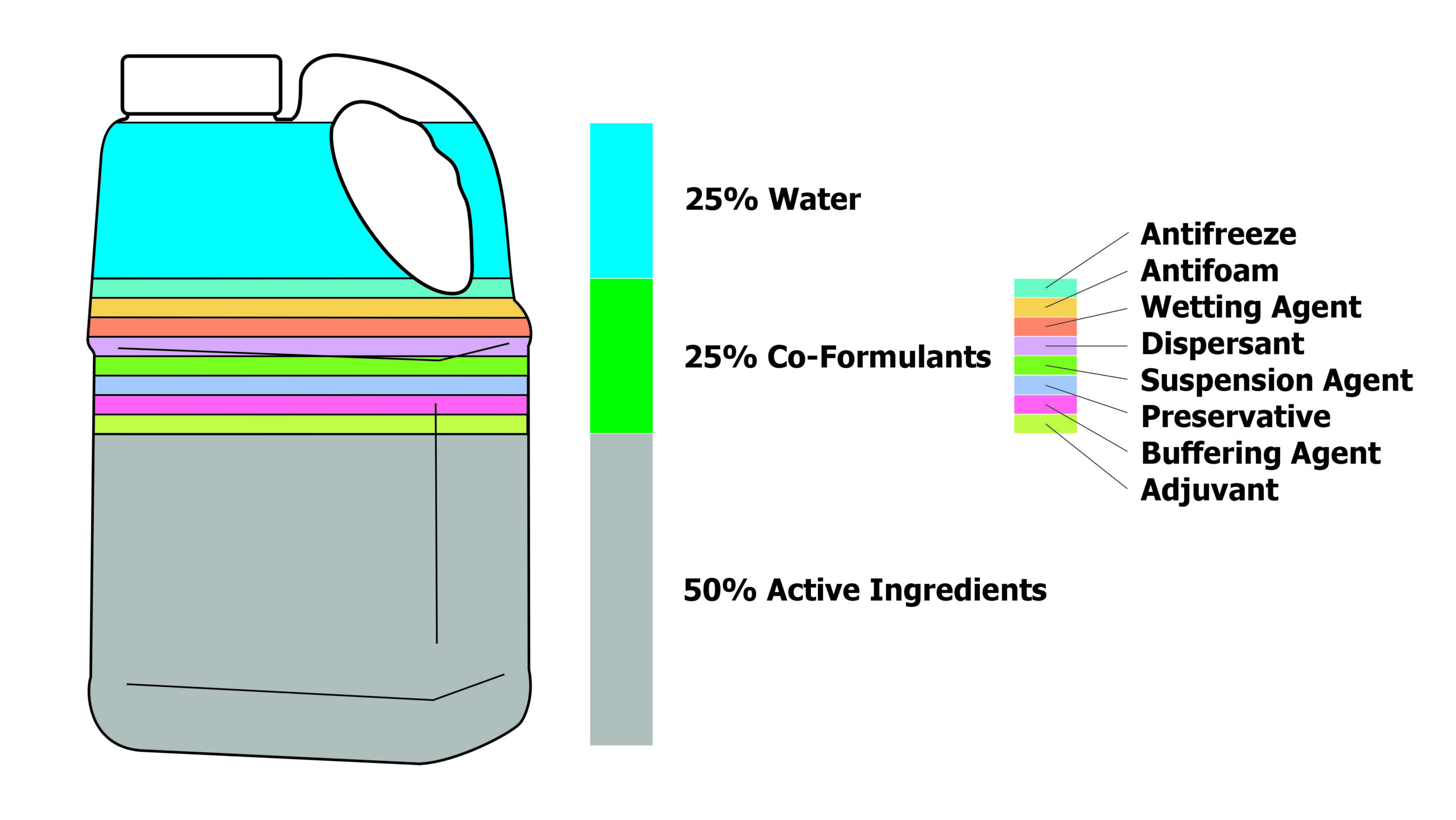
Incompatibility is often a function of the inert ingredients in pesticide formulations (e.g. thickeners, adjuvants, defoamers, stabilizers, solvents, etc.) and not the active ingredients. The more products you add to the tank, the more likely you’ll encounter an issue. It is prudent to perform a jar test to confirm physical compatibility. Remember, even if registered tank mix partners support mixing, your pace, mixing order, and water quality/temperature could cause issues.
Do not decide to try a new-to-you registered tank mix during loading. Even if you’ve used these products successfully in the past, formulations change without notice. Plan as much as possible off season when there is time to do the following:
Consult the pesticide labels
Pesticide
labels are always the first point of reference. They should be obeyed even if they
contradict conventional practices. Booklet-style labels that come with the
products are long, difficult to search and may not be up-to-date.
In Canada, it is faster and easier to go to the PMRA Label Search website and search labels in PDF format. In other countries, consult the manufacturer’s website for label information. For each tank mix partner, use <CTRL>+F to find the following keywords:
Do Not Mix
Mix
Hours
Agitation
Fertilizers
Consult manufacturer and crop advisors
You’re likely not the first to consider a certain tank mix. Learn from those that have been there already:
Consult your chemical sales representative. They
know their products best and want to see you succeed. They may have insight that
is not found on the product label.
Consult local government or academic extension
programs for an unbiased opinion.
Enlist the help of a professional crop advisor.
It is a good practice to get tank mix recommendations in writing. If something should go wrong, liability is an important concern.
If you’ve made a mess – The Reverse Jar Test
It
happens. We’ll use this real-world situation as an example:
“I mixed up a batch of MCPA 500 A and Glyphosate at ¾ recommended label rate, but then got delayed on application with a stuck drill. I came back to the sprayer and found a nasty chemical precipitate – like waxy chunks. Agitation didn’t break them down. I dumped the tank out as I didn’t want to pump it through the booms. How do I clean up the chunks in the system?”
We forwarded
this question to ag chemists Dr. Eric Spandl (Land of Lakes) and Dr. Jim Reiss
(Precision Laboratories) and developed this response:
“Wearing appropriate personal protective equipment, physically remove the “chunky” material. A lot of time can be wasted (and rinsate water created) by experimenting with various concoctions, but if you do choose to try a compatibility agent, first try it in a mason jar. If it works to dissolve the material, it can be added to the tank with water and agitated. If not, you are down to manual cleaning: hot water under pressure.”
We dubbed this process “The Reverse Jar Test”. Do not add hot water, cleaners or compatibility agents until the reverse jar test confirms success. You may create a larger problem. Of course, the best advice is to not put yourself in this position to begin with. Once again, don’t make mixing decisions at the inductor bowl – make them before ordering product.
Tank mixing regulations in Canada (January, 2025 update)
The following legislative framework is specific to Canada, so readers in other countries should consult their own regulatory authorities.
Paragraph 6(5)(b) of the Pest Control Products Act (PCPA) states that no person shall use a pest control product in a way that is inconsistent with the directions on the label. In 2020, a public consultation was held to consolidate and clarify tank mixing requirements. This led to Regulatory Proposal PRO2020-01 (Streamlined Category B Submissions and Tank Mix Labelling – July 3, 2020). Essentially, it stated that tank mixing would be allowed if there was text on the product label that specifically permitted it. This could be a specific tank mix combination, a general statement permitting mixing, or both.
A new general label statement that permits tank mixing was proposed to consolidate tank mixing information in one place on the label and allow greater flexibility in terms of tank mixing options. The prohibition against tank mixing products with the same mode of action was removed, and the reference to tank mixing with a fertilizer is now an optional component of that statement. The general label statement reads as follows:
“This product may be tank mixed with (a fertilizer, a supplement, or with) registered pest control products, whose labels also allow tank mixing, provided the entirety of both labels, including Directions For Use, Precautions, Restrictions, Environmental Precautions, and Spray Buffer Zones are followed for each product. In cases where these requirements differ between the tank mix partner labels, the most restrictive label must be followed. Do not tank mix products containing the same active ingredient unless specifically listed on this label.
In December of 2022, Health Canada released a guidance document describing the federal tank mixing policy. This document is not part of the PCPA, but is an administrative document intended to facilitate compliance by all stakeholders. Registrants have until December, 2025 to update their extension material to align with amended product labels and guidance documents. Similarly, users of pest control products will be provided the same transitional period to adjust their purchasing and production practices to align with the provisions of this document. This means the policy will be in full effect on December , 2025. After that, applicators in Canada can only apply tank mixes that appear specifically on a product label, or tank mixes of products whose labels include the new general tank mixing statement.
Summary of the guidance document
Tank mixing is not permitted when a potential tank mix partner’s label has some exclusionary statement, such as:
Forbidding mixing. E.g. “Do not mix or apply this product with any other additive, pesticide or fertilizer except as specifically recommended on this label.”
Limiting tank mixes to only those specifically listed on the product label.
During the label transition, guidance relating to tank mixing may be found under a section specific to tank mixing, and/or under other sections as in the following examples:
Directions for use: E.g. “When tank-mixes are permitted, read and observe all label directions, including rates and restrictions for each product used in the tank-mix. Follow the more stringent label precautionary measures for mixing, loading and applying stated on both product labels.”
Buffer Zones: E.g. “When tank mixes are permitted, consult the labels of the tank-mix partners and observe the largest (most restrictive) spray buffer zone of the products involved in the tank mixture and apply using the coarsest spray (ASABE) category indicated on the labels for those tank mix partners.”
Resistance Management: E.g. “Use tank mixtures with [fungicide/bactericides/insecticides/acaricides] from a different group that is effective on the target [pathogen/pest] when such use is permitted.”
If there are no directions on the labels, don’t tank mix them.
If your situation does not fit these examples, the following table (Appendix A at the bottom of the Guidance Document), lists several other examples examples of different tank mix wording scenarios for registered pest control products.
Table 1: Permissibility of tank mixing based on various combinations of label statements related to tank mixing
Product X label says
Product Y label says
Can I tank mix? (Y/N)
Nothing (silent on tank mixing)
N
General tank mix statement
Nothing (silent on tank mixing)
N
Nothing (silent on tank mixing)
General tank mix statement
N
General tank mix statement
Y
General tank mix statement
Tank mix with Product X
Y
Tank mix with Product Y
General tank mix statement
Y
Tank mix with Product Y
Nothing (silent on tank mixing)
Y
Nothing (silent on tank mixing)
Tank mix with Product X
Y
Tank mix with Product Y
Tank mix with Product X
Y
Tank mix with Product Y
Exclusionary statement (and label does not include a specific Product X tank mix)
N*
Exclusionary statement (and label does not include a specific Product Y tank mix)
Tank mix with Product X
N*
*There may be registered labels that have tank mix scenarios like this. Note that this is not allowed for new tank mix label amendments. Further, any product labels that have tank mix scenarios like this must be amended to alleviate the contradictory scenario. To do this, using the last scenario in Table 1 as an example, one of the following must occur: 1) remove the Product X tank mix from the Product Y label, 2) remove the exclusionary statement from the Product X label, or 3) add a specific tank mix for Product Y on the Product X label. Source: PMRA Guidance Document Tank Mix Labelling 2023
Tank mixing adjuvants
According to the PMRA, the rules surrounding the tank mixing of adjuvants remain the same as they have been since 2009, and are not included under the new guidance document. While the PCPA does not reference adjuvants specifically, they are prescribed to be pest control products in the regulations (Pest Control Products Regulations s.2(b)). The general reference in the PCPA that applies is s.6(5)(b).
Therefore, in the case of activator adjuvants, the label for at least one tank mix partner must specify the use of an adjuvant, and only registered adjuvants labeled for the crop and for tank mixing are permitted. For example, tank mixing the herbicide Reflex with a registered soybean oil adjuvant not labelled for the use, or with an unregistered food grade activator adjuvant, would not be acceptable. Utility adjuvants have registration numbers, but their use is not prescribed or specified on pesticide labels, leaving their use to the discretion of the operator.
For more information on Canada’s Tank Mixing Policy
In late 2022, Australia’s GRDC released a comprehensive guide on pesticide mixing and batching (within the context of the Australian agronomic environment, of course), which can be downloaded for free, here.
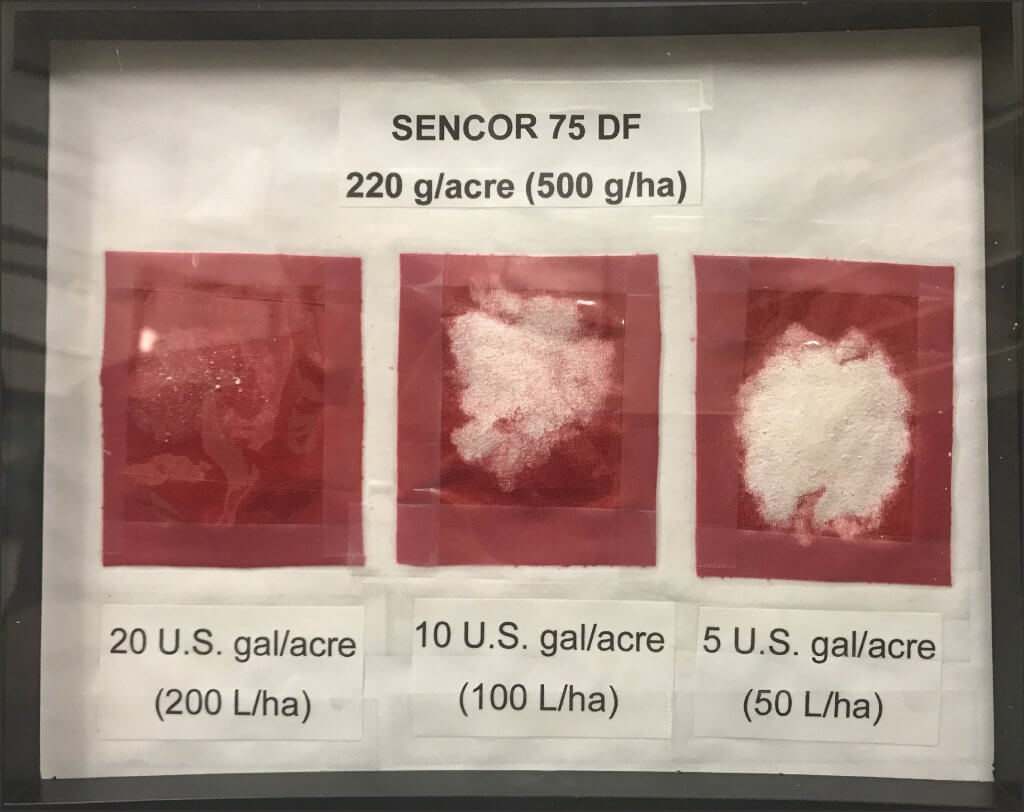
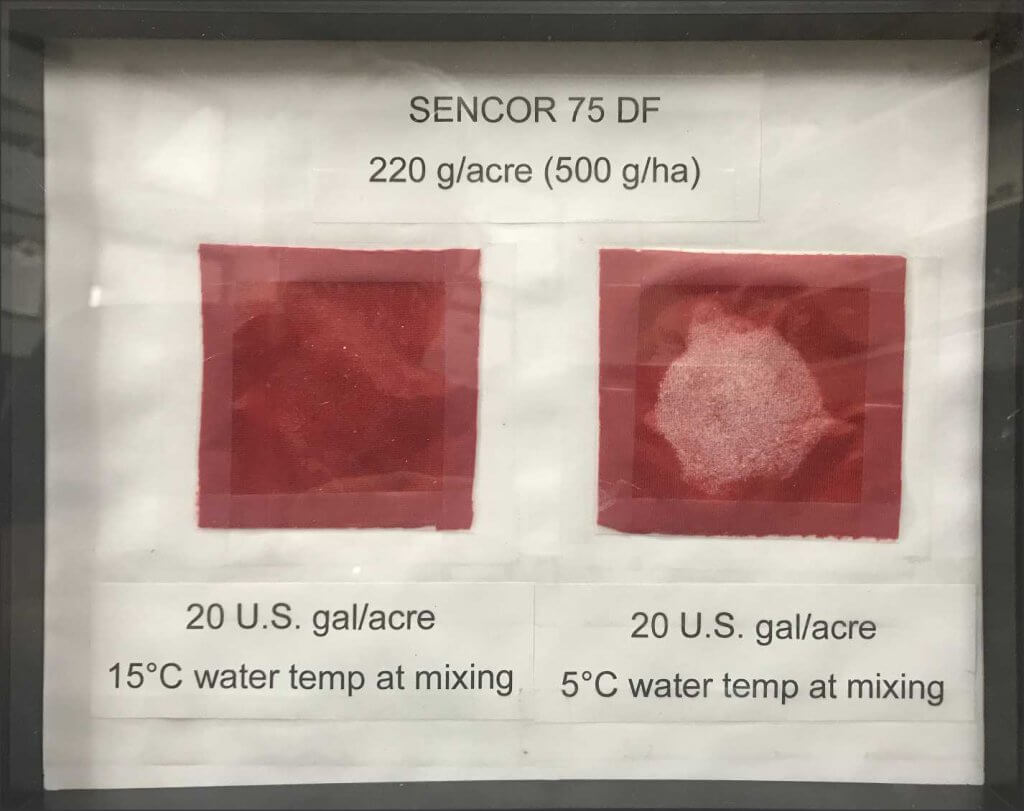
Finally, you can watch a 2021 presentation on tank mixing (below). It was delivered to a grape growing audience, but much of the content applies across agriculture. There are a few “oops” moments where I didn’t say quite what I meant. I misread the Sencor dissolution / filtration work. And, I really didn’t answer the last question about mixing herbicides. The answer should have been to consult labels and local resources, such as OMAFRA’s Crop Protection Hub. Note that any discussion of Canadian regulatory policy may have changed in light of the new 2022 Guidance Document.
This article was co-written with Mike Cowbrough, OMAFRA Weed Management Specialist – Field Crops
This work was performed with Mike Cowbrough, OMAFA Field Crop Weed Specialist.
In the early summer months, many field and specialty crop operations collect rainwater (or possibly pump water from holding ponds) into storage tanks for use as a carrier in spray applications. These tanks may be stationary, or they may be part of a nurse or tender truck that delivers both water and chemistry to the field as a means of improving operational efficiency.
In the case of translucent poly tanks, which are commonly used because of their light weight, custom shape, and low price point, light exposure will grow algae. Algal populations multiply exponentially and will clog spray filters and negatively affect filling. In response, growers use home-grown algicides such as copper sulfate, lengths of copper pipe, household bleach, chlorine, bromine, etc. They do so with little or no guidance and therefore little or no consistency. Beyond the obvious questions surrounding efficacy, it is unknown whether these adjuncts create physical or chemical incompatibilities in the tank mix. If so, there is the potential for reduced efficacy and/or crop damage.
We tested popular methods for algae control by inoculating a series of 10 L translucent plastic jugs with an algal population sourced from a southern Ontario holding pond. The population was left to acclimate and generally establish itself (aka colonize) before we introduced some form of control. Each jug was then gently stirred and emptied through a sieve for qualitative assessment.
In a parallel experiment, we introduced the same algicides to fill water and conducted spray trials. 10 L volumes were mixed with a field rate of glyphosate and sprayed on RR soybeans. Weed control was assessed and soybean yield measured for each treatment.
Algicide Efficacy Experiment
In each treatment, tap water was mixed with a micronutrient growth media (from the Canadian Phycological Culture Centre at the University of Waterloo). This was an unsterilized 10% WC(ed) solution intended to provide micronutrients for algal growth while minimizing fungal and bacterial growth.
The source algae were collected from the bottom of a holding pond from a farm in Guelph, Ontario. Algae were homogenized and equal parts added to each jug. The jugs were former 10 L pesticide containers thoroughly rinsed and sprayed with Five Star’s “Star San” non-rinse sterilizer. Tank solutions were gently bubbled (one bubble every 10-15 seconds) with air from an aquarium pump. Air was balanced using a manifold and introduced via diffusion stones at the bottom of each jug.
Algae sourced from a farm’s holding pond near Guelph, Ontario. Algae was homogenized before inoculating treatment jugs with equal parts.
Treatments
Each treatment was tap water plus growth media inoculated with algae and exposed to a natural diurnal/nocturnal cycle unless otherwise indicated.
Container was spray-painted black to exclude light
Ammonia
“Scotch Bright” copper-coated scour pad. (copper is often introduced as copper sulfate at 1 cup / 1,000 US gal. or a short length of copper pipe)
Bromine (sourced from a local pool supply store)
Treatment Number
Treatment Name
Rate (/US Gal.)
Rate (% v/v)
Rate (/10 L final volume)
1
Control (no algicide)
2
Shaded
3
*Household bleach
1/4 tsp
0.00033
3.3 mL
4
Black container
5
*Ammonia solution
1/4 tsp
0.00033
3.3 mL
6
Copper-coated scour pad
7
Bromine
1/32 ml
0.000004
0.04 g
Table 1. *Bleach and ammonia should never be added together as they produce toxic chloramine gas.
Method
On July 12, jugs were loaded with water and growth media and inoculated with algae. They were bubbled gently for one week to establish a stable algal colony. On July 19, algicides were added, or transferred to shade or black-out conditions. On August 31 (approximately six weeks later), jug contents were gently stirred and filtered through white cloth for qualitative assessment.
Building up algal population for each jug. Note air lines through lids for slow, intermittent bubbling. Algae was not moved to black container or to the shade until after the first week of acclimation.Almost six weeks after algicide was added, jug contents were gently stirred and poured through white cloth to collect algae and establish how easily the liquid passed through.
Observations
The results of all seven treatments, plus photos of the copper-coated scour pad.
(1) Control. Liquid poured slowly through cloth. Algae was still alive and healthy. It formed some clumps but was not as thick as other treatments.
(2) Shaded. Liquid poured fast and easily through cloth. Was particulate in texture rather than clumpy or gelatinous. Very little mass and entirely brown, suggesting it was dead.
(3) Household bleach. Liquid poured easily through cloth until the clump of algae sitting at the bottom of the jug came out (i.e., most algae were not suspended). Thick mat of healthy-looking algae (note profile photo #3 below). Much greener and thicker than the control (1).
(4) Black container. Liquid poured fast and easily through cloth. Algae retained a little green coloration (more than the shaded condition (2)) but was particulate and not as healthy as the control (1). We intended for this treatment to exclude all light, but it was still able to enter at the bottom where the jug wasn’t completely painted. This may have kept the algae alive.
In an oversight, the jug was not completely painted. This left a source of light at the bottom edge that may have helped sustain algae.
(5) Ammonia. Very difficult to pour liquid through the cloth (note profile photo #5 below). The only condition where a mat of algae was floating at the top of the jug rather than settled at the bottom. It was healthy, green and thick.
(6) Copper. The most gelatinous of all conditions, the liquid took the longest to pass through the cloth filter. While the algae seemed brown and dead, the gel would be very problematic during sprayer filling and spraying. Note that the copper scouring pad (shown unrinsed) has nothing growing on it.
(7) Bromine. Like the household bleach condition, liquid poured easily until the healthy mat of algae at the bottom of the jug came out (i.e., most algae were not suspended). Note profile photo #7 below.
Profile shots of treatment 3 (Bleach), 5 (Ammonia), and 7 (Bromine).
Spray Efficacy Experiment
Ideally, adjuncts added to carrier water are inert. That means they don’t reduce a herbicide’s effectiveness on susceptible weeds or increase crop injury. For example, hypochlorite (found in bleach and in chlorinated water) reduces the biological effectiveness of low concentrations of isoxaflutole (the active ingredient in herbicides such as Converge and Corvus). However, when added to higher, agriculturally-relevant concentrations, the reduction in efficacy wasn’t considered significant (Lin et al., 2003). Conversely, bromide has been added to certain herbicides to improve performance (Jeschke, 2009).
There’s precious little information about synergistic or antagonistic effects from adding bleach, ammonia, copper or bromine to herbicide carrier water. To learn more, we added each of these adjuncts to the standard rate of glyphosate (900 gae/ha – 0.67 L/ac). Using a CO2-pressurized plot sprayer, the solution was applied to <10 cm tall weeds at 150 L/ha (15 g/ac) in glyphosate tolerant soybean at the 2nd trifoliate stage of growth (Elora Research Station, Ontario).
Visual crop injury was evaluated at 7 and 14 days after application. Weed efficacy was evaluated at 14 and 28 days after application. Soybeans yields were collected using a Wintersteiger plot combine and adjusted to a moisture content of 14%.
Weed Control
All treatments provided excellent control (>90%) of the weeds emerged at the time of application. Table 2 (below) presents the % visual control 28 days after application.
Carrier Treatment (glyphosate 540 g/L at 900 gae/ha or 0.67 L/ac)
Lamb’s-quarter
Green pigweed
Witch grass
Green foxtail
1) Control
0
0
0
0
2) Shaded
100
100
100
100
3) Household bleach
100
100
100
100
3a) Household bleach – added prior to mixing
95
97
100
100
4) Black container
100
100
100
100
5) Ammonia
100
100
100
100
6) Copper-coated scour pad
100
100
100
100
7) Bromine
100
100
100
100
Table 2. Visual control of lamb’s-quarter, green pigweed, witch grass and green pigweed at 28 days after the application of glyphosate 540 g/L at 900 gae/ha mixed with various carrier treatments intended to prevent algae growth. Treatment numbers correspond with the soybean injury and yield image below.
Soybean Injury and Yield
There was no noticeable crop injury from any treatment (figure below) and yields were not significantly different from the control treatment (Table 3). However, when bleach was added prior to mixing, we did observe a trend in reduced soybean yield. We’re unable to explain this observation, but suggest it may be an unrelated issue (such as field variability). There were no obvious signs of crop injury, and the treatment provided excellent weed control.
Photographs of each plot 14 days after application. The number/letter in each inset image corresponds to treatments in Tables 2 and 3.
Carrier Treatment (glyphosate 540 g/L at 900 gae/ha or 0.67 L/ac)
Crop Injury (%)*
Avg. Yield (bu/ac)
Significance**
4) Black container
0
40.0
A
7) Bromine
0
39.6
A
2) Shaded
0
38.1
AB
3) Household bleach
0
37.6
AB
1) Control
0
37
ABC
5) Ammonia
0
36.9
ABC
6) Copper-coated scour pad
0
36.1
BC
3a) Household bleach – added prior to mixing
0
34.0
C
Table 3. Visual control of lamb’s-quarter, green pigweed, witch grass and green pigweed at 28 days after the application of glyphosate 540 g/L at 900 gae/ha mixed with various carrier treatments to prevent algae growth. *7 days after application. **Duncan’s multiple range test. Soybean yields that don’t share a letter in common are significantly different.
Discussion
We elected to use an extreme situation where a single application of algicide was applied to an established, healthy colony. It’s possible that regular applications of algicide in a volume of water with little or no algae could maintain that condition.
A treatment was considered effective if it slowed or halted algal growth, especially if it also degraded algal populations, causing them to become brown, thin, and/or particulate. Once in the spray tank, the shear forces created by circulation should disperse any dead or degraded algal masses, making it easier to pass them through filters and nozzles.
The shade treatment appeared to kill algae as well as cause degradation. Second place went to the black-out treatment, where some light was unfortunately allowed in. This would have continued to fuel photosynthesis in the unpainted portion at the bottom of the jug. Conversely, the black exterior likely raised temperatures above >20 °C, which depresses most algal growth and may have contributed to the degradation.
Copper appeared to kill the algae but also created a gel that would pose problems to filters. Unlikely to be bacterial, as copper is known to suppress bacterial growth, it could have been caused by diatoms; certain invasive species are known to form brown jelly-like material endearingly referred to as “brown snot” or “rock snot”. Alternately, and according to work by J. Rodrigues and R. Lagoa, alginate polysaccharide can form viscous aqueous dispersions (such as gels) in the presence of divalent cations (such as copper).
No treatment appeared to reduce herbicide efficacy or affect crop health. However, unexpectedly, the household bleach added prior to mixing may have reduced soybean yield. Given the limited number of replications and the single plot location, we suspect this was a field effect, unrelated to the treatment.
Take Home
Based on these results, a combination of shade and light-excluding materials (e.g. black paint) would be the ideal approach to algae control. It’s cheap, effective, and doesn’t require periodic management. Buying black tanks is a good choice, or you can paint them. What you should paint them with is a matter of debate and there’s a very good Twitter thread on the subject if you’re interested.
An Aside: Algae in Ponds and Dugouts
We didn’t test this, but the question has come up and the best we can do is share some long-standing farmer wisdom. Some have used Aquashade dye to absorb the photosynthetic wavelengths and reduce algae buildup. Reputedly it is moderately successful. Another option is adding aluminum sulfate to the pond, and with a lot of agitation it should clarify in about 48 hours. Still others have added a few square barley straw bales to the water and found it to work surprisingly well (possibly an allelopathic response). Tie a rope to them and float them in the pond.
Citations
Jeschke, Peter. 2009. The unique role of halogen substituents in the design of modern agrochemicals. Pest Manag Sci, 2010; 66: 10–27
Lin, C.H., Lerch, R.N., Garrett, H.E. and M.F. George. 2003. Degradation of Isoxaflutole (Balance) Herbicide by Hypochlorite in Tap Water. J. Agric. Food Chem. 2003, 51, 8011-8014