Tag: water quality

  • How to Interpret a Water Quality Test Result

    How to Interpret a Water Quality Test Result

    It’s common advice: Test your water before using it as a spray carrier. You dutifully sample the well or dugout and await lab results. And what comes back is a whole lot of numbers. How to make sense of it all?
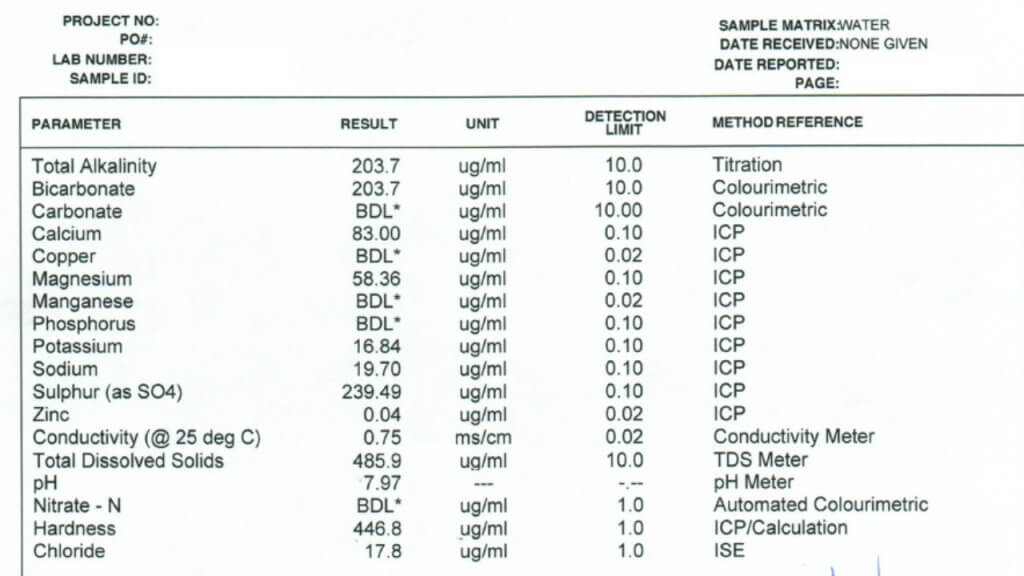
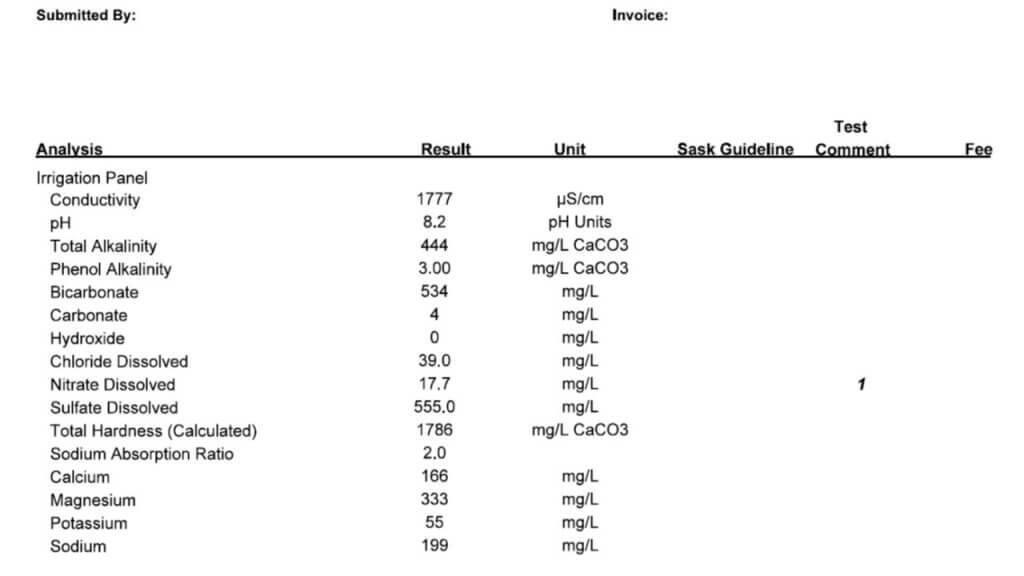
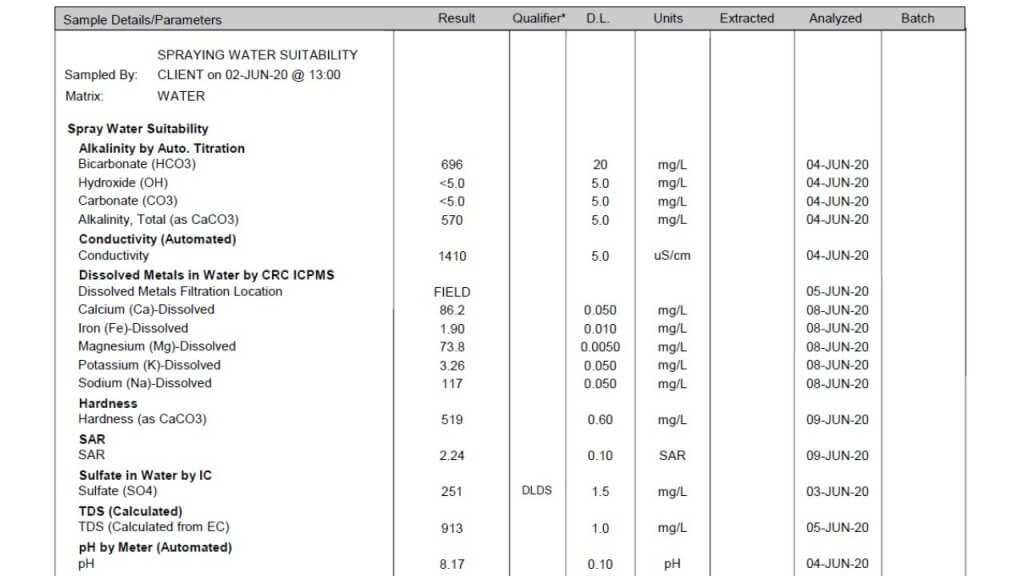
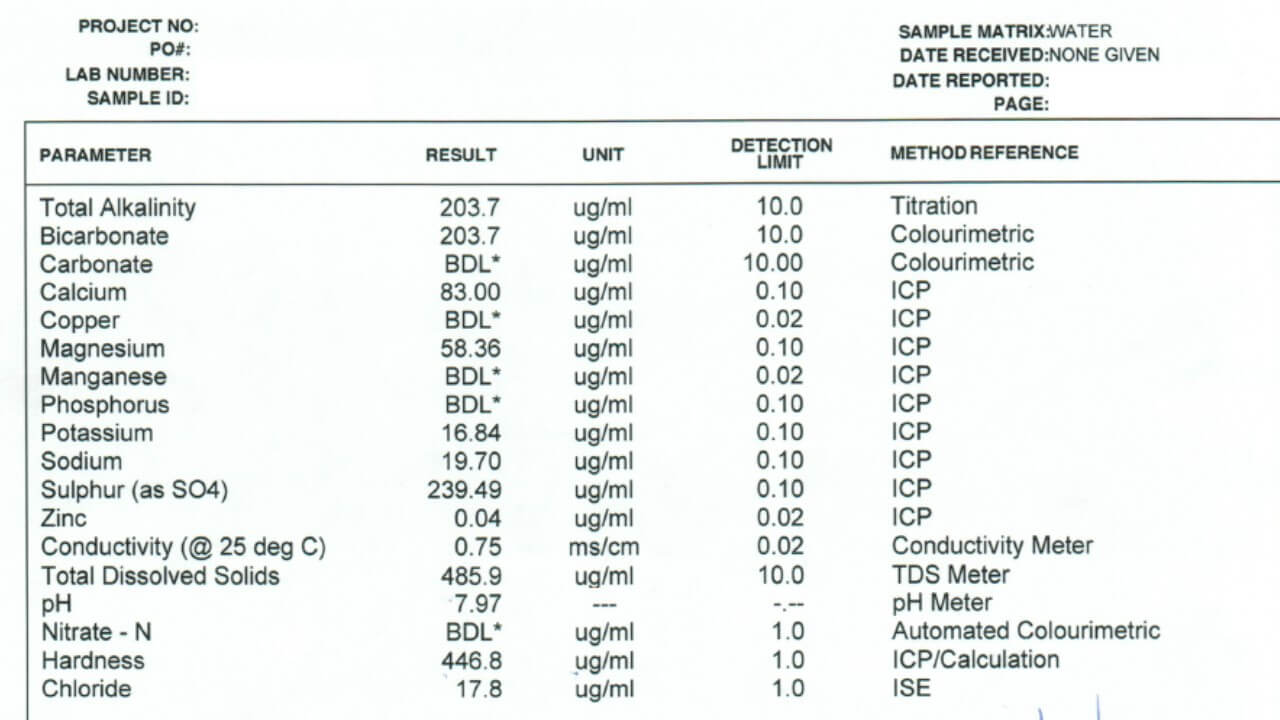
    Three examples of water test results conducted by labs in Canada

    All three of these tests report a large number of properties and identify specific minerals and other solutes. Which ones are important in spraying? Here is the order in which I look at the numbers.

    Conductivity: This property is usually expressed as micro Siemens per cm (µS/cm) and simply identifies how many ionic solutes are in a sample (watch for alternate units such as mS/cm and convert if necessary). It doesn’t differentiate between any minerals or other molecules, and therefore has limited information. But it does tell us if there is a large or small issue with water quality. If conductivity is below 500 µS/cm, the water is probably good for spraying. If the value is around 1000 to 2000, further investigation is necessary. Some water samples return conductivity of more than 10,000 µS/cm, and it’s important to identify which salts are causing that problem.

    Note that Total Dissolved Solids (TDS) are often listed, and these are related to conductivity. A common way to get TDS is to multiply conductivity by 0.65. The conversion factor depends on which salts are dissolved but the bottom line is that TDS and conductivity are closely related.

    Bicarbonate: Bicarbonates are HCO3 and their concentration is measured in milligrams per Litre (mg/L), which is the same as parts per million (ppm). Bicarbonates can antagonize Group 1 modes of action and the common threshold is 500 ppm. Research at NDSU has shown that Urea -Ammonium-Nitrate (UAN or 28-0-0 liquid fertilizer) can reduce bicarbonate antagonism in some Group 1 herbicides.

    Bicarbonates are negatively charged and are associated with a positive ion, often the hard water cations sodium (Na), calcium (Ca) or magnesium (Mg). As such, waters that are high in bicarbonates are often also hard.

    Total Hardness (calculated): This is one of the important parameters. Hardness antagonizes most weak acid herbicides, most importantly glyphosate and g;ufosinate, and also ties up surfactants and emulsifiers which can result in problems with mixing and compatibility. Hardness is caused by metal cations, in order of strength these are iron (Fe++), magnesium (Mg++), calcium (Ca++), sodium (Na+), and potassium (K+). Of these, Mg and Ca are typically most abundant, although some water is high in Na.

    The Total Hardness (ppm) reported in water tests is done by taking the most common two cations, calcium and magnesium, and using this formula: 2.497*Ca + 4.118*Mg. Note that some tests report hardness in Grains per Gallon, in this case, multiply grains by 17.1 to get ppm.

    While this calculation usually gives an accurate prediction of hardness, you may need to have a look at iron and sodium as well. Iron is less common, but some well waters are high in sodium or potassium. These minerals are not captured in the Total Hardness measurement. A water test low in Total Hardness may still be high in sodium, these are typically the samples with high conductivity.

    The threshold for Total Hardness depends on the herbicide, its rate, and the water volume. The most common quoted values are 350 ppm for the lower rates of glyphosate (1/2 L/acre equivalent), and 700 ppm for the higher rates. Lower water volumes increase the concentration of herbicide, and reduce the impact of water hardness or bicabonates.

    pH: This parameter is a bit over-rated because it is later affected by the herbicide and adjuvant dissolved in it. There is usually no concern with pH between 6 and 8, and water is rarely outside this range. It is best not to change the pH of water unless it is required on the label for mixing, because some products require low, and others require high pH for optimum solubility. Compatibility is an ever greater concern as our tank mix complexity increases.

    Water Conditioners

    The most common water conditioner is ammonium sulphate [AMS, (NH4)2 SO4]. In its pure form (21-0-0-24), a concentration of 1% to 2% w/v (8 to 17 lbs AMS/100 US gallons of spray water) solves most hard water and bicarbonate issues. Be cautious of using too much AMS (>3%), when added at high concentrations to some herbicides it can burn crops.

    Research has shown that AMS works in two ways: The sulphate ion binds with hard water cations, forming an insoluble precipitate that prevents the antagonistic cations from binding to, and inhibiting, the herbicide. The ammonium ion has been shown to improve cellular uptake by weak ion herbicides.

    Some product labels call for UAN as an adjuvant. UAN contributes ammonium, but not sulphate ions. As a result, while it may improve herbicide performance, it does not remove antagonizing cations from the mixture.

    Acids have been used to combat hard water. Most common herbicides are weak acids, and the acid constituent, usually a carboxilic acid, has a unique pKa. The pKa is the pH at which half the molecules are protonated (contain a hydrogen atom, resulting in an uncharged acid constituent) and the other half are not protonated (negatively charged). If the spray mixture has a pH below the pKa, the weak acid herbicides become protonated. This means the herbicide becomes less water-soluble, but also that it has less chance of interacting with a hard water cation. Acids that work in this way are less effective at ameliorating the effect of hard water than AMS.

    A small group of acids that includes citric acid and sufphuric acid can sequester or bind with hard water cations. But they do not contribute the ammonium ion that assists in weak acid herbicide uptake.

    If your water is questionable for spraying, there are four common choices:

    • Select a different well or dugout
    • If the problem is barbonates or hardness, treat water with a conditioner such as Ammonium Sulphate (AMS), available in pure form as 21-0-0-24. Some acids (citric, sulfuric) can form conjugate bases with hard water cations, removing them from solution. But the associated significant lowering of pH should be treated with an abundance of caution as it may affect solubility of some pesticides.
    • Reduce water volumes or increase herbicide rates.
    • Use a municipal treated water source or invest in a reverse-osmosis (RO) system. RO is neither cheap nor fast and requires additional investment in storage, and a way to deal with solute-enriched waste water. But it may be the best option for some.

    An Ammonium Sulphate calculator, originally developed by Winfield United using data from NDSU, can be downloaded here:

    An excellent resource for adjuvant and water quality topics is this addendum in the North Dakota State University Guide to Weed Control.

    Using good quality water lowers the likelihood of problems with mixing and overall performance and that pays significant dividends later.

  • The Real Story behind pH and Water Hardness

    The Real Story behind pH and Water Hardness

    Editor’s Note: Changes and updates have been made to this article since its original publication in 2019.

    The quality of water being used in the spray tank to act as the carrier for your pesticides can have significant effects on how well those pesticides will work. So it may be surprising that very few growers have had their water quality tested.

    Obviously, water that contains suspended materials such as clay, algae and other debris will block filters and possibly nozzles, making spraying very frustrating. However, there are a range of water quality variables unseen to the naked eye that can also affect pesticide performance. The two that cause the most confusion are water hardness and pH.

    Water Testing

    Knowing the quality of the water you are using is essential for effective pesticide application. Water should be initially tested by a qualified laboratory to establish an accurate baseline for your water quality. Check with your pesticide dealer or look for accredited laboratories near you.

    It is important to remember that water quality can vary over time depending on its source. Scheme or town water quality tends to vary very little, however water from surface sources such as dams, tanks and rivers will vary depending on rainfall and other factors. Groundwater can also vary over time depending on how much is being pumped and the recharge rates of the aquifer.

    At minimum, water should be tested for:

    • total hardness
    • bicarbonate (HCO)
    • salinity (electrical conductivity) or total dissolved salts (TDS)
    • pH

    Test strips can be used to quickly check water quality before and after addition of pesticides and monitor changes in water quality between laboratory tests. High-quality test strips can be purchased online from companies such as Hach. Water testing for swimming pools will not be as accurate as those from a scientific supply company. No mater the course of the paper strips, they may be hard to read when used in solutions already containing product. Alternately, and preferably, hand-held meters can be used as long as they receive regular calibration to maintain accuracy.

    Water Hardness

    Water that is considered “hard” has high levels of calcium, magnesium or bicarbonate ions. Calcium and magnesium ions have positive electrical charges that enable them to bind with negatively charged products such as weak-acid herbicides, making them less soluble. Extreme cases can lead to the herbicides settling out in the spray tank, or more commonly (and insidiously) reducing the ability of the active ingredient to be absorbed through the plant leaf. Examples of weak acid herbicides include glyphosate and amine formulations of 2,4-D, MCPA, clopyralid and diflufenican.

    It can depend on your region, but generally a water hardness above 250 to 350 parts per million (ppm) (calcium carbonate – CaCO3 equivalents) should be treated before adding weak acid herbicides.

    The cations that can cause the most trouble for pesticides include:

    • aluminum (Al3+)
    • iron (Fe3+, Fe2+)
    • magnesium (Mg2+)
    • calcium (Ca2+)
    • sodium (Na+)

    Magnesium and calcium are the most common cationic culprits of water quality problems. Aluminum can sometimes be a problem if alum (potassium or aluminum sulphate) has been used to remove (i.e. flocculate / settle-out) suspended particles such as clay from the spray water.

    Bicarbonates

    Bicarbonates can also affect herbicides such as Group 1 ‘dims’ (e.g. clethodim) and 2,4-D amine at levels greater than 500 ppm. Bicarbonates are not typically detected by standard water hardness tests and may have to be analyzed in a separate test. Be suspicious if your groundwater comes from an area with lots of limestone.

    pH

    The pH of a liquid is represented on a scale of 0 to 14, and it describes how acidic or alkaline it is, respectively. A neutral pH is about 7 whereas a pH of 2 is very acidic and a pH of 14 is very alkaline. It is important to remember that the pH scale is logarithmic, not linear. This means that a value of 6 is 10x more acidic than a pH of 7, while a pH of 8 is 10x more alkaline than 7 and 100x more alkaline than 6.

    The following table gives the pH of common materials to give a sense of perspective.

    pHSubstance
    14Sodium hydroxide (caustic soda)
    12.6Sodium hypochlorite (bleach)
    11.5Ammonia
    10.2Magnesium hydroxide (antacids)
    9.3Sodium borate (borax)
    8.4Sodium bicarbonate (baking soda)
    8.1Sea water
    7.4Human blood
    7.0De-ionised water
    6.8Tea
    6.7Milk
    6.0Rain water
    4.5Tomatoes
    4.2Orange juice
    4.0Wine & Beer
    2.8Vinegar
    2.2Lemon juice
    2.0Stomach acid
    1.0Battery acid
    0.0Hydrochloric acid

    Excessive Alkalinity

    Most recognize that a pH above 8 will reduce the effective life of certain pesticides, such as organophosphate insecticides (if you’re still allowed to spray them where you are). In certain situations, water above pH 8 can change herbicide solubility (poor mixing), reduce product stability (reduced half-life) and negatively affect droplet interaction with the leaf surface. However, the effect of high pH on herbicides is largely overstated.

    Excessive Acidity

    Glyphosate has been found to work slightly better in moderately-acidic solutions. This effect is from the precipitation of calcium compounds in the tank, preventing the formation of calcium glyphosate on the leaf surface. Excessively acidic water (pH < 5) can affect the stability of mixes (see the following image) and leads to gelling of salt-based products. It has also been found to increase the volatility of herbicides such as dicamba (this is discussed later in the article).

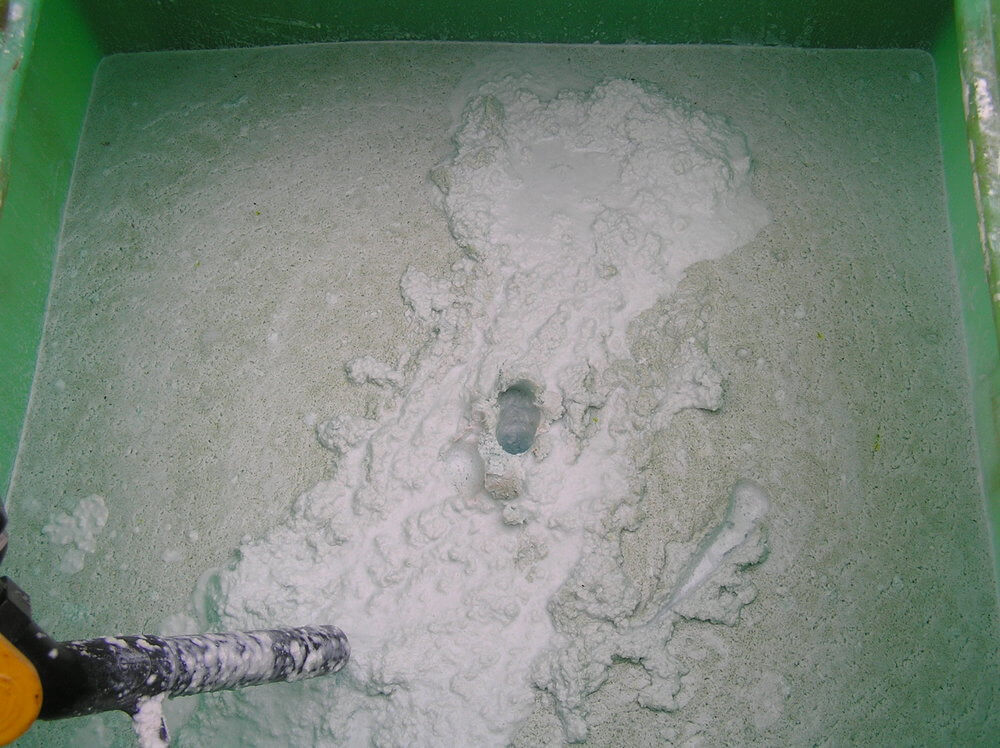
    This grower was told to drop the pH of his spray. He added citric acid and added another three products. Source: R. Buttimor

    Do I need to adjust the pH of my water?

    There are many half-truths in the marketplace about the effect of pH on pesticides. But generally:

    If the pH of the water in the spray tank is between pH 6 and 8, it’s is suitable for spraying.

    Something that is rarely discussed is that the addition of the pesticide will modify the pH of the solution. Therefore, each pesticide user needs to test the water before the addition of pesticides and then check the pH after the addition of the pesticide. They will be very different.

    The addition of glyphosate to the spray solution will drop the pH of the spray mix from 8 to less than 5. In the following figure the test strip on the right is town water which normally has a pH of about 8.5, compared with the test strip to the left which is from a 1% glyphosate (450 g/L) solution using town water, which is below a pH of 4.

    Adding glyphosate will drop the pH of the tank mix two or three units, depending on initial pH, the formulation and the rate of glyphosate. The pH following the addition of 1% glyphosate (450 g/L) is less than 4 (the yellow test strip). Town water (the blue test strip) is shown on the right.

    Research in the United States has found drift damage from dicamba continued to be a problem despite the mandating of using XC and UC spray quality. They found one cause was the addition of glyphosate to the mix, which reduced the pH of the spray solution (Table 2). Volatilization of dicamba increases with decreasing pH. Different formulations of dicamba were found to drop the spray solution pH from 7.8 to between 6.5 and 6.9, however the addition of different formulations of glyphosate dropped the spray solution to 5 or lower.

    Table 2 Effect of different formulations of dicamba and glyphosate on spray solution pH. Source: Larry Steckel

    Starting pH (water)Dicamba added (3 formulations)Glyphosate added (3 formulations)
    7.86.94.8
    7.86.54.8
    7.86.75.0

    Currently, in Australia, the recommendation for dicamba is to not add glyphosate to the mix. This will minimize pH drop and therefore reduce the volatilization of dicamba and potential off-target damage.

    There’s even more about adjusting the pH of carrier water here.

    Adjusting pH using Ammonium sulphate (AMS), Ammonium thiosulphate (ATS) and adjuvants

    The degree of bicarbonate, or alkalinity, depends on the presence of calcium and sodium, which can inhibit herbicide performance. Readings higher than 500 ppm inhibit 2,4-D-amine and MCPA-amine. Adding AMS can be effective at countering bicarb. According to Jim Reiss (former Vice President, Ag Chemistry with Precision Labs in Illinois), the following formula can be used to calculate how many pounds of AMS are required to raise the alkalinity. It involves soil testing levels of sodium, calcium, magnesium and iron, along with potassium:

    0.002 x K ppm + 0.005 x Na ppm + 0.009 x Ca ppm + 0.014 x Mg ppm + 0.042 x Fe = lbs of AMS/US gallon.

    Generally, AMS has no negative impact on mixing in a water-based carrier when added at any stage, but always follow the label if it specifies a mixing order. Especially if mixing in a fertilizer carrier instead of water. Read more about AMS here, under the “Water Conditioners” heading.

    Ammonium thiosulphate (ATS) is another option, but must be used with care. Research from Purdue University (2019) concluded that using ATS with a burndown herbicide program that relies on glyphosate or glyphosate plus 2,4-D could lower the control of weeds (e.g. barnyard grass, velvetleaf or lamb’s quarters), or cover crops.

    Adding UAN can also help neutralize the effects of bicarbonates, but be aware that adding UAN (or any sulfur) to a carrier could cause physical incompatibilities – especially when adding to a fertilizer carrier. Follow mixing order directions on the pesticide label and read more, here.

    Alternately, you might consider a mixing aid or water conditioning adjuvant to deal with bicarbonate. The following table describes the difference between using AMS and a pH adjuster (based on information from Winfield United). If you’re in doubt, speak to your crop consultant and/or pesticide dealer about the best pH adjustment method for your situation.

    AMSpH Adjuster Adjuvant
    How it worksSulfate binds to cations in water and on leaf surfacesLowers pH to prevent glyphosate binding to cations.
    pH of solutionRemains neutral (pH 5.5-7.0)Lowers pH to 5.0 or less
    Tank compatibilityCompatible with pesticides and micronutrientsOnly compatible with glyphosate and weak acid herbicides
    HerbicidesCompatible with wide range (often used with Groups 1, 9, 10 and 27)Helps glyphosate and weak acids (e.g. 2,4-D amine). Antagonizes many others (e.g. Groups 2, 27)
    FungicidesGenerally compatibleNot recommended
    Insecticides
    Generally compatible
    Not recommended

    Final Thoughts

    While we share some general best practices in this article, the standards defining the suitability of carrier water can often be region-specific. Be sure to have your water tested and interpret it within the context of local best practices before making adjustments. If an adjustment is warranted, be sure to follow the pesticide label and the water treatment product label, exactly.

    Additional Resources

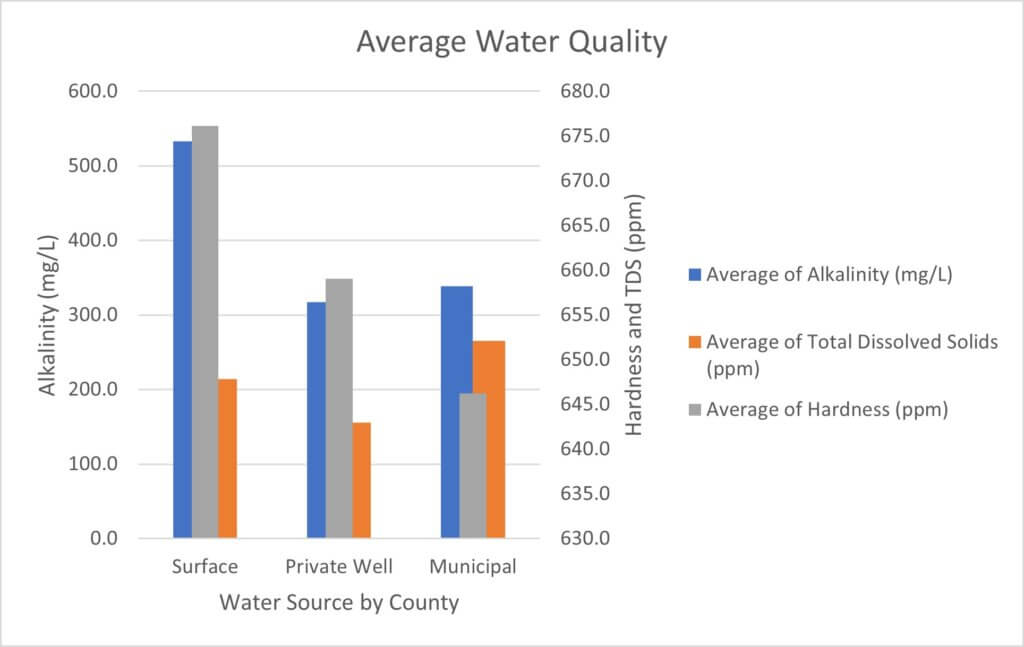
    In 2024, Ontario held a sprayer event (Spray Smart) where sprayer operators were asked to bring in their water for testing. This article discusses some of the observations made that day, and a graph of the fill water survey is presented below. Assuming no adjustments are needed for a hardness < 600 ppm, a TDS < 325 ppm and and alkalinity (esp. bicarbonate) <500 mg/L, the averaged results of the sampling indicated no adjustments were required. However, there were a few outliers that are lost in the averaging.

    For more information on how water affects spraying, consult Purdue Extension’s “Adjuvants and the Power of the Spray Droplet – PPP-107”. You can also consult Purdue’s “The Effect of Water Quality on Pesticide Performance – PPP 86”.

  • Pro Tips for Pre-Harvest and Desiccation Sprays

    Pro Tips for Pre-Harvest and Desiccation Sprays

    A version of this article was originally written by @nozzle_guy as a guest blog for Farm At Hand, and is reproduced with permission.

    One of the smartest decisions a grower could make is to consider a late-season harvest-aid application. Particularly in years with thinner stands, weeds can maintain a foothold. Late season moisture can give new life to late emerging plants or branches.  When the crop is ready to cut, this could mean all sorts of cutterbar, pickup reel, feederchain, and sieve headaches.

    A desiccant or pre-harvest herbicide application can help avoid those problems.  The challenge is to get the spray into, or through, a mature crop canopy.  Here are some pointers to do it right.

    1. Evaluate where within the canopy the spray needs to go to do its job. If you’re considering a pre-harvest herbicide, are you looking to control dandelions or buckwheat near the bottom of the canopy, or are you trying to get thistles or quackgrass, whose leaves are near the top? If you’re mostly trying to accelerate drydown with a contact product, where in the canopy are the green stems and leaves that you need to contact?
    2. Take a bird’s eye view of your canopy. That’s how the spray sees it.  If you can clearly see your target, the spray application is pretty straightforward because most droplets will make their way there easily. But if the target is obscured by a lot of foliage, or if it’s vertical, the job is much more challenging and will require some combination of more water, slower speeds, angled tips or finer sprays.
    3. To hit plant parts that you can’t see, one of the main tools is finer sprays. The smaller droplets have an easier time changing direction to get around obstacles like leaves, and they are also much more likely to be intercepted by petioles and stems, and to stick to them. This can be both an advantage and disadvantage – for example, the awns in bearded cereals are notoriously effective at capturing the smallest droplets before they can do any good further down.  If you don’t want to install a different nozzle to get a finer spray, simply increase the spray pressure of your low-drift nozzle to 80, 90, even 100 psi.  This will create enough fine droplets. But don’t expect the higher pressure to push the spray into the canopy.  Only air-assist can do that.
    4. To get more spray deeper into the canopy, slow down, add water, and point nozzles backward. The backward orientation helps offset the forward travel speed, giving the droplets a slower net forward velocity that helps their downward movement.
    5. If you’re using contact products like diquat, paraquat, saflufenacil or carfentrazone, use generous amounts of water, and slightly finer sprays. Make sure that spray drift control remains a priority and pay attention to water quality.
    6. Test your water and make sure your water doesn’t have turbidity (suspended clay or other organic matter), for glyphosate and diquat or paraquat, and hardness, for glyphosate. Aluminum sulphate can help get rid of turbidity in a pond, but it takes time (treat turbid water at least 24 to 48 h before you need it).  If treating a storage vessel, expect a layer of sediment. Ammonium sulphate (AMS) and other water conditioners can remove antagonizing hard water ions like magnesium and calcium. This is especially important as we increase water volumes with glyphosate to get better coverage. The higher water volumes give a concentration advantage to the hardness minerals.
    7. Diquat and paraquat’s mode of action benefits from being applied in the evening. The absence of the sun allows it to be taken up and slightly moved (by diffusion, not true translocation) within the leaf before morning sunlight activates it. Once activated by the sun, these products exert their activity and movement stops. If you’re not careful, the tighter window of evening-only applications could get you behind. And of course, be aware of the signs of inversions and know when to quit.
    8. Plan ahead and make sure you give yourself enough time, because to do the job right you’ll be using more water and driving a bit slower. Focus on productivity tools like a fast, efficient fill to make up the lost time.

    A good job with a pre-harvest herbicide or a harvest-aid can save many harvesting headaches, and can help dry down during less than ideal conditions. It’s another reason why the sprayer may be the most important implement on the farm.

  • Water Quality and Spray Application

    Water Quality and Spray Application

    Water is one of the main inputs into a spray operation. The amount of water applied per acre is closely related to spray coverage and pesticide performance. But water quality – a term encompassing its cleanliness and chemical composition – is also critical to the performance of pesticides. Ensuring good performance means testing water and understanding the results.

    There are four main water quality indicators related to pesticide performance:

    1. Water Hardness. Water hardness is caused by positively charged minerals, primarily calcium and magnesium, but also sodium and iron. These cations can bind to some herbicides (glyphosate is the best-known example, also 2,4-D amine), reducing its performance. Hardness is usually named “Total Hardness (calculated)”, based on the concentration of calcium and magnesium in the sample, and is expressed in ppm or mg/L of CaCO3 equivalent. Some tests refer to the older unit “Grains”, which is ppm divided by 17.  Bayer suggests that total water hardness should be below 350 ppm (20 grains) for the low rate (1/2 L/acre equivalent) of glyphosate, and below 700 ppm for the higher rates.
    2. Bicarbonate.  Sometimes referred to as alkalinity, the bicarbonate ion can inhibit herbicide activity, and also make some herbicides more difficult to mix. The most commonly affected herbicides are members of the Group 1 modes of action, products like clethodim, sethoxydim, and others, as well as MCPA amine and 2,4-D amine. Definite guidelines are hard to find because the antagonistic effect of the bicarbonate ion depends on the presence of other ions such as sodium and calcium.
    3. pH. This is a complex parameter because it is related to pesticide solubility, hard water antagonism, and pesticide degradation. In most cases, pH values between 4 and 7 are considered acceptable. But some herbicides, notably those in the Group 2 modes of action, have specific pH needs to dissolve properly. For example, the sulfonylureas (FMC products such as Refine, Express), triazolopyrimidines (Corteval products such as Frontline, Simplicity), Triazolones (Bayer products such as Varro, Velocity M3) and Sulfonylaminocarbonyltriazolinone (UPL products such as Everest) dissolve better at higher pH, whereas the imidazolinones (Odyssey, Pursuit, Ares) tend to require lower pH. Some Group 14 products such as saflufenacil (BASF products Heat, Eragon) also prefer higher pH values for solubility. Label directions are important, sometimes calling for specific adjuvants to adjust the pH prior to adding the pesticide. Some pesticides, particularly insecticides, can break down rapidly in higher pH water. The rate of breakdown is usually not of importance on a spray day but may matter if a mixed tank needs to be stored for many hours or days.
    4. Cleanliness / turbidity. Water may contain suspended solids such as clay. Glyphosate and diquat (Reglone) are sensitive to this, as these chemicals are readily adsorbed to soil particles, and turbid water can reduce their effectiveness. This is also why dust generated by the sprayer can reduce these herbicides’ performance.

    Ensuring good performance

    Select clean water sources and conduct a water test to identify possible problems. Well water is more likely to be hard than surface water. If a laboratory water test is not available, then some quick home testing can provide the necessary guidance. First, use a conductivity meter to test the electrical conductivity (EC) of the spray water. Although this test does not identify the ions present, it shows if a potential problem exists. EC values less than 500 µS/cm are considered safe. For values above 500, a hardness test is necessary to confirm the presence of antagonizing cations. Paper test strips compared to a colour scale are a quick way to determine hardness.

    If you have done a water test and want to know what all the numbers mean, have a look here.

    If the water is hard, a generally accepted solution is to add ammonium sulphate (AMS) fertilizer at rates between 1 – 3% w/v of 21-0-0-24 to the spray tank, preferably before adding the herbicide. Spray grade liquid concentrate AMS product is available from Bayer CropScience, Winfield United, and some other suppliers.  The sulphate anions tie up the hard water cations, preventing them from antagonizing the herbicide. Liquid urea-ammonium nitrate (UAN, 28-0-0) has also been shown to improve herbicide activity for some products, but because it does not contain the sulphate ion, it is not as effective as AMS.

    Certain weak organic acids can also function as water conditioners. For example, citric acid can chelate hard water ions so long as the pH is not too low, that is, the necessary dissociable groups are ionic. If the pH is very low, these groups will be protonated and the chelating action is suppressed.

    Be careful when lowering pH. It does affect the solubility of many herbicides and possibly the function of some formulations. The outcome may be an unusable tank mix.

    Caution is also advised when adding foliar fertilizer specialty products. Adding a blend of fertilizer salts, combined with associated changes in pH, can result in unpredictable interactions with pesticides and water, resulting in sticky precipitates that may be very difficult to clean out of tanks and plumbing. Ask for compatibility data, and always conduct a jar test to be sure that the planned mixture mixes as expected. A recent study shows the effects of adding herbicides to UAN and ammonium thio-sulphate (ATS) plus nitrate stabilizers, where mixing order is critical.

    Turbidity is a problem with surface waters, especially in areas of clay soils and after surface runoff. If spray water is taken from a pond, its turbidity can be reduced by adding aluminum sulphate at rates between 10 to 60 mg/L of pond water. Thorough agitation is required, and 80 to 95% removal of turbidity is achieved within 24 to 48 h (technical information here).

    Pesticide manufacturers are usually aware of potential problems when their products are used in poor quality water. Consult with your local rep to learn of know issues and solutions before spraying.

    Check out this 2022 Real Agriculture interview with Tom and Greg Dahl of Winfield United. Pan ahead to the 16 minute mark for a discussion on water quality.