Category: General Concepts

For basics category

  • Comparing Fluorescent Dyes for Spray Coverage Evaluation

    Comparing Fluorescent Dyes for Spray Coverage Evaluation

    I work in agricultural extension and I’m always on the lookout for new methods to help me achieve my goals. A big part of my job is to research and teach efficient, effective and safe crop protection practices, so it follows that I have to be able to evaluate the quality of a spray application. Fundamentally, there are two ways to do it:

    1. Wait to see if the pesticide did its job and protected the crop from weeds / bugs / disease.
    2. Don’t wait. Confirm your spray is depositing where you want it before committing to the application.

    Three guesses which approach I advocate. So, how do you check spray coverage in a way that’s quick, cheap, easy and informative? Again, there are choices, but rather than simply list them I’ll add a little insight in the form of pros and cons.

    MethodProsCons
    Water sensitive paperRelatively cheap, available, clean, easy, repeatable, supports a photographic record, simple to analyze.Does not accurately reflect coverage on plant surface, slow to place and retrieve, can be spoiled by dew, humidity and physical contact.
    Inspecting for residue / wetnessCheap and fast.Not proactive, too subjective, not repeatable, pesticide many not leave visible residue, requires re-entry soon after spraying.
    Inspecting spray pattern (e.g. shoulder check)Cheap and fast.Not proactive, not indicative of coverage, not repeatable.
    Watching for run-offJust don’t.Just don’t.
    Fluorescent dyesReflects actual, whole-canopy coverage and off-target coverage at same time.Expensive, hard to find, messy, time-consuming, hard to photograph, not repeatable, leaves unwanted residues (or can’t be used on edibles), may have to take place at night, may fade quickly… or is any of this actually true?

    I’ve never been a proponent of spraying dyes because of the reasons I listed in the table. If I already have difficulty convincing a grower to leave the sprayer or tractor cab to place and retrieve water sensitive papers, what are the odds of them mixing a messy and expensive tank of dye and waiting until twilight to see the results?

    On the other hand, dyes are compelling. Particularly if we change the perspective a little. What if we consider the use of dyes, not as a tool for a grower, but as a tool for agricultural extension or consultation (really, anyone that wants to research or teach the safe and effective use of crop inputs)? Several of the cons are minimized or even eliminated. Additionally, this new lens reveals several uses for dyes beyond spray coverage. This is not an exhaustive list:

    • Off-target (primarily drift) evaluation
    • Dermal exposure / PPE evaluation
    • Rinsate / sprayer cleanout evaluation
    • Sprayer loading / point source contamination evaluation

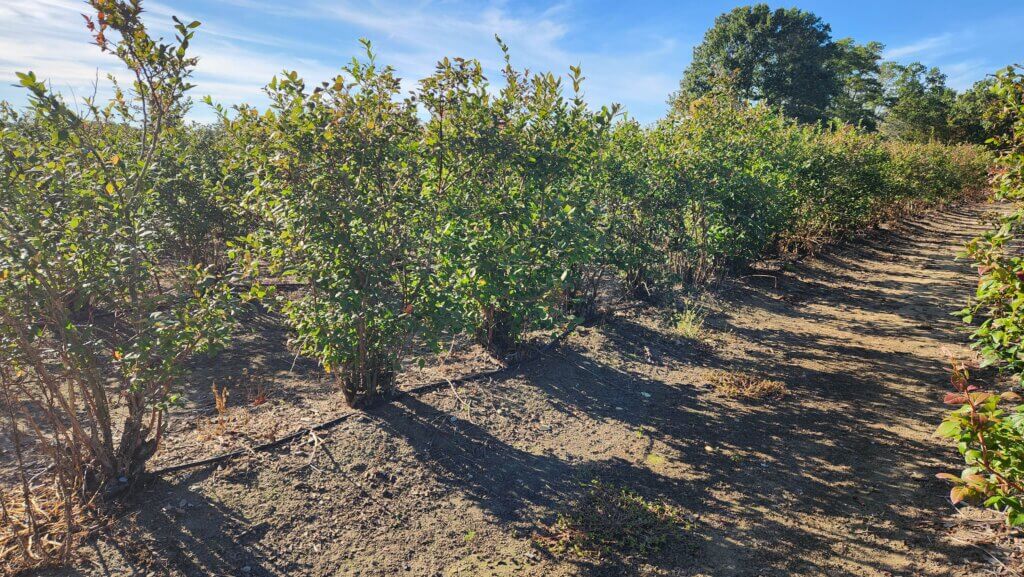
    I decided to compare a few of these dyes. I enlisted the help of a local blueberry operation. Being October, all the berries have been picked so we could spray the bushes without any risk to the fruit. Plus the sprayer was clean and the growers were curious to evaluate their spray coverage.

    Blueberry in Ontario in October.

    Having secured a location, spray equipment, and operator, I needed dyes and some criteria for choosing them. First and foremost, I chose fluorescent dyes that glowed under UV (aka black lights). My thinking was that they would be more interesting in demos, and given that we might be spraying horticultural operations, I didn’t want obvious and persistent stains on the produce. At least not something easily seen in daylight before it broke down and/or was washed away.

    My UV dye candidates had to be:

    • Moderately inexpensive.
    • Non-toxic (i.e. had an SDS that clearly permitted human exposure, were environmentally friendly and could be sprayed on edible crops).
    • Readily available in Ontario (e.g. quickly and cheaply shipped from within Canada or perhaps the US).
    • Available in formats that facilitated small volume batches (anywhere from 50 mL squirt bottles for indoor demos, up to 50 L volumes for field demos).
    • Clearly visible on plant tissue.

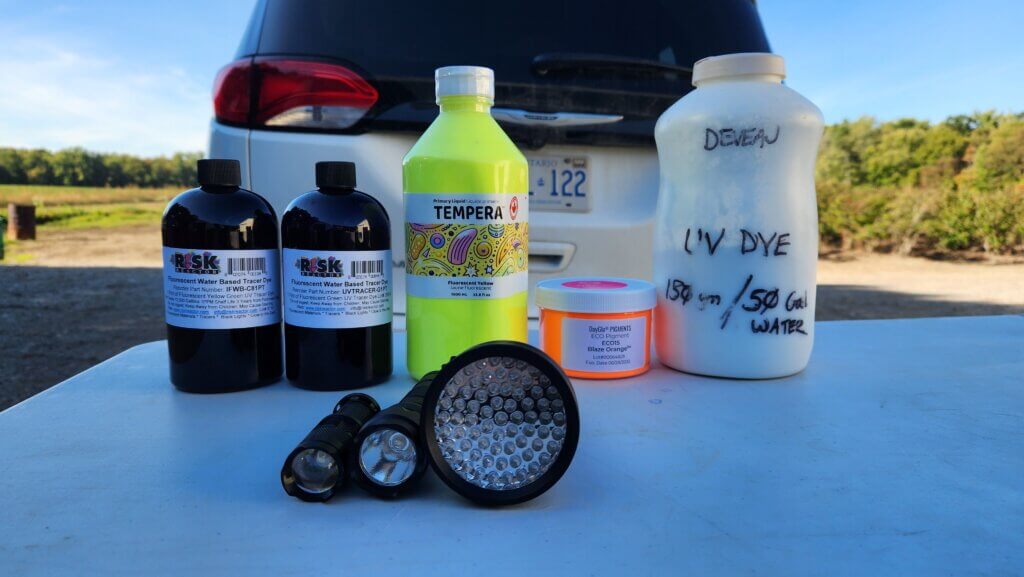
    I found five likely prospects for the study. I won’t list prices, but none of them were over $100.00 CAD. Number 3 was a free sample and number 5 was gifted to me by a colleague more than 15 years ago. I looked up the SDS for that last one and was surprised that it was relatively inert. So, I used it.

    Dye numberName of dyeCommercial sizeManufacturerLocation
    1IFWB-C81PT1 pintRisk ReactorCalifornia, USA
    2UVTRACER-G1PT1 pintRisk Reactor
    California, USA
    3Eco Pigment Blaze Orange SPL15JXSample size – 100 gramsDayGloCleveland, Ohio, USA
    4Fluorescent Yellow Tempura Paint1 literTri-Art ManufacturingKingston, Ontario, CA
    5Phosphor Powder (Zinc Orthosilicate: Manganese CAS#11-47-2)1 kgGlobal Tungsten and Powders Corp.Pennsylvania, USA

    I also purchased UV lights. When I was bequeathed the phosphor powder it came with heavy, ancient, black lights. They made an unsettling humming noise and required a power source, making them unwieldly for field work. I opted to try three battery powered versions instead. Again, I won’t list prices, but they weren’t unreasonable.

    UV flashlight numberName of lightManufacturerWavelength / wattageBatteries
    1Super TacRisk Reactor395 NM / 850 µW/cm2 at 5 inchesRechargeable battery provided
    2Mini ZoomRisk Reactor395 NM / 1 watt1 AAA
    3V3 UV Flashlight with 68 LEDsAmazon.ca395 NM / 10 watts3 AA

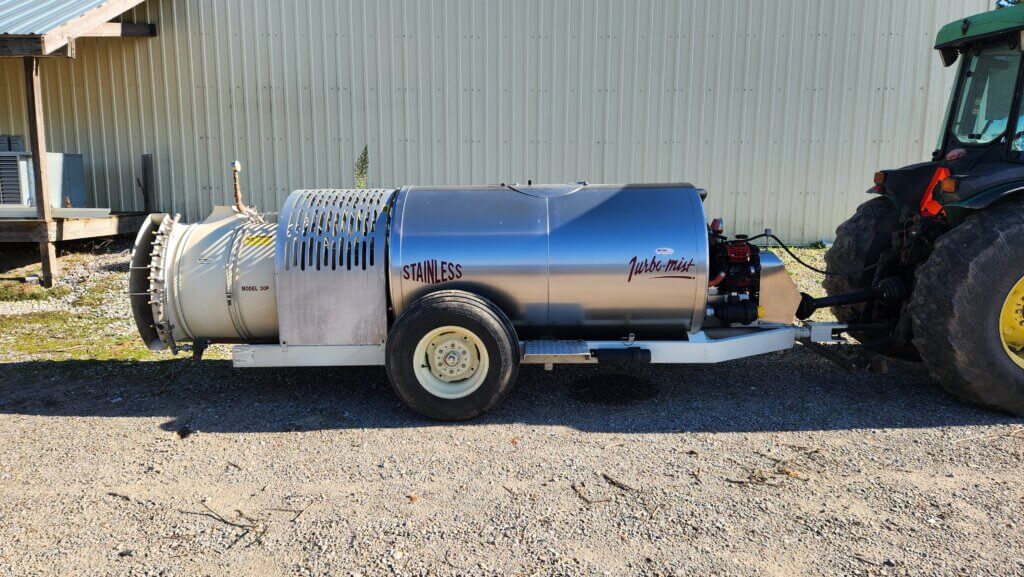
    Regarding the recipes, one of my criteria was that the dyes could be mixed in relatively small batches. I chose 50 L as the high end because the airblast sprayer we were using (Turbo-Mist 30P) could still prime when only 50 L was added to the tank. This allowed us to mix as small a batch as possible, while still having enough to spray a row of berries from both sides. We left three rows between treatments to serve as buffers.

    Turbo-Mist Model 30P before the dye-job.

    I also had to consider the nature of the dyes. The Eco Pigment (Dye 3) is a hydrophobic powder and two colleagues warned me that it was notorious for plugging filters. So, it had to be mixed with a non-ionic surfactant (NIS) to help “wet” the powder prior to adding it to the tank. In fact, NIS seemed like a good idea for all my dye candidates, so I included Activate Plus (Sollio Agriculture, Winfield Solutions) in each recipe.

    The candidates.

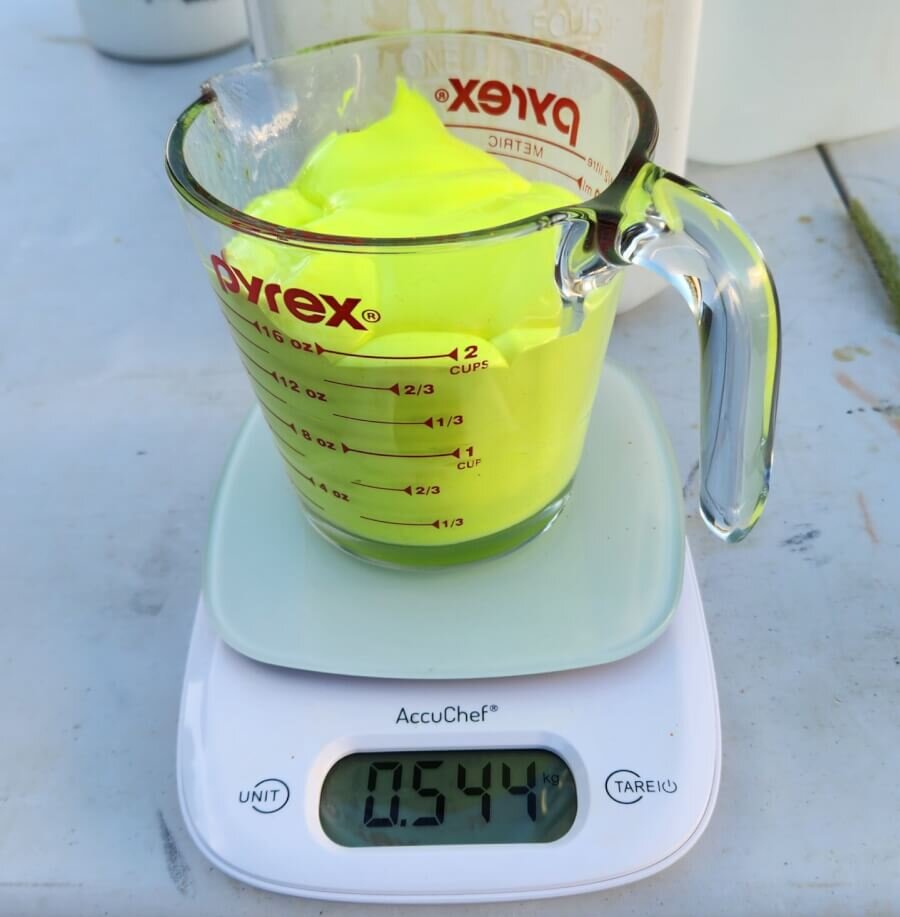
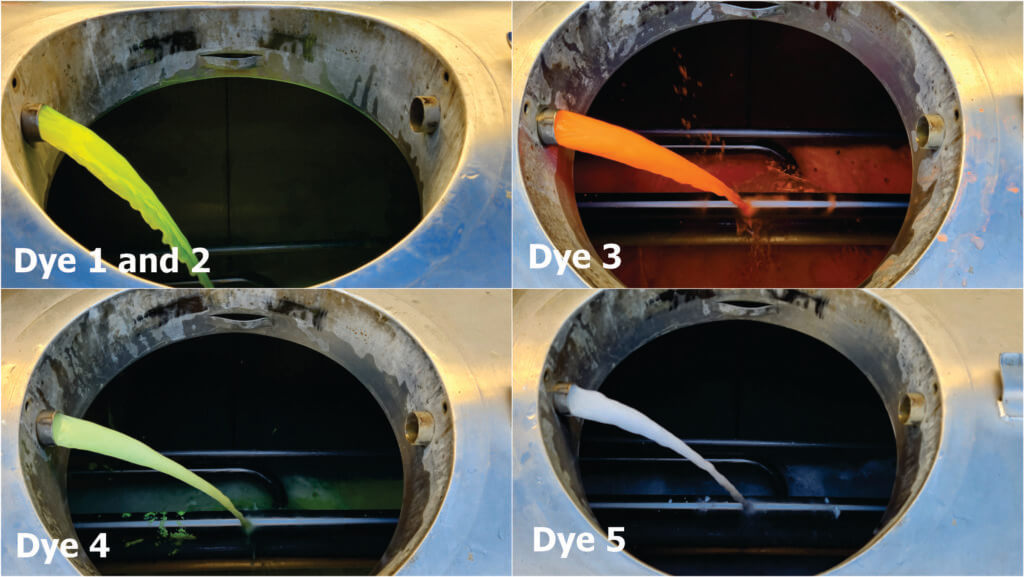
    I added the dye, NIS, and a small amount of water to a Pyrex measuring cup on a digital scale, then rinsed the cup into a final volume of 50 L while filling the tank. I didn’t always follow the advice I received, so I’ll show you the ratios I was told and (right or wrong) what I ultimately did.

    Dye numberManufacturer- or colleague-suggested ratio Amount of dyeAmount of NISAmount of water
    11 part dye : 10,000 parts water125 mL65 mL310 mL
    21 part dye : 10,000 parts water125 mL65 mL310 mL
    31 gram dye : 1 mL NIS : 200 L water65 grams65 mL425 mL
    41 part paint : 100 parts water500 mL65 mL0 mL
    51 gram dye : 1.25 L water65 grams65 mL425 mL

    It took roughly 15 minutes to fill, prime, spray, and rinse out each dye. We started at 5:00 p.m., were done at 6:15, and then waited for sunset at 7:30.

    50 L tank mixes going through circulation and paddle agitation.
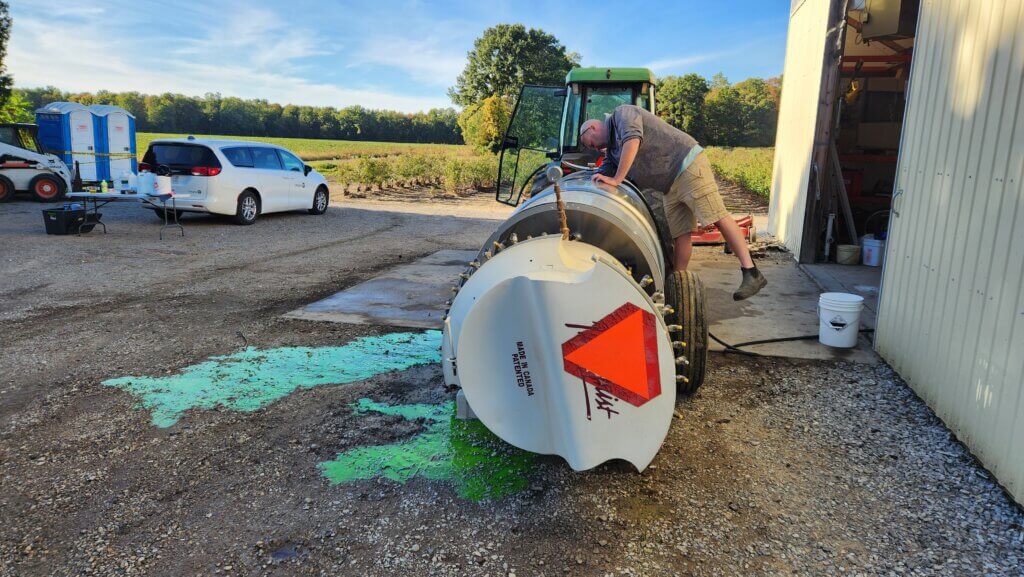
    Draining the remains and rinsing the tank. It looks terrible, but these dyes are intended for environmental projects like tracing water courses.

    We used a smartphone (Google Pixel 9a – 48 megapixel camera) to photograph each combination of dye and flashlight. It was tricky to find an angle where the black light illuminated the residue, but didn’t wash out the photo. In those cases where the dye was evident, it was always far more vibrant in person than through the lens of a camera. As for the results?

    Lets start with the lights. We found that the high wattage of Light 3 showed dye more easily. This also happened to be the cheapest light, which was a pleasant surprise.

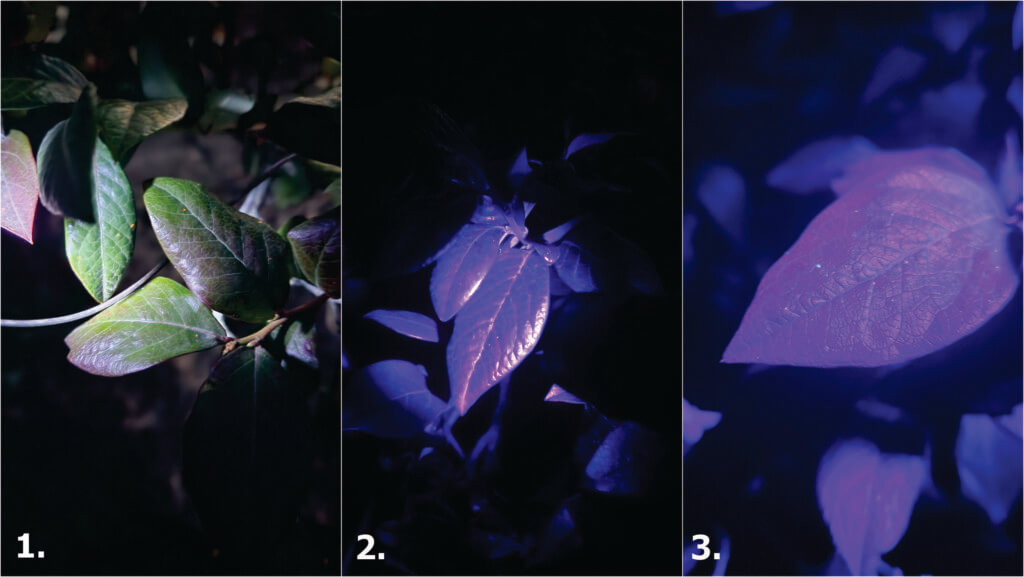
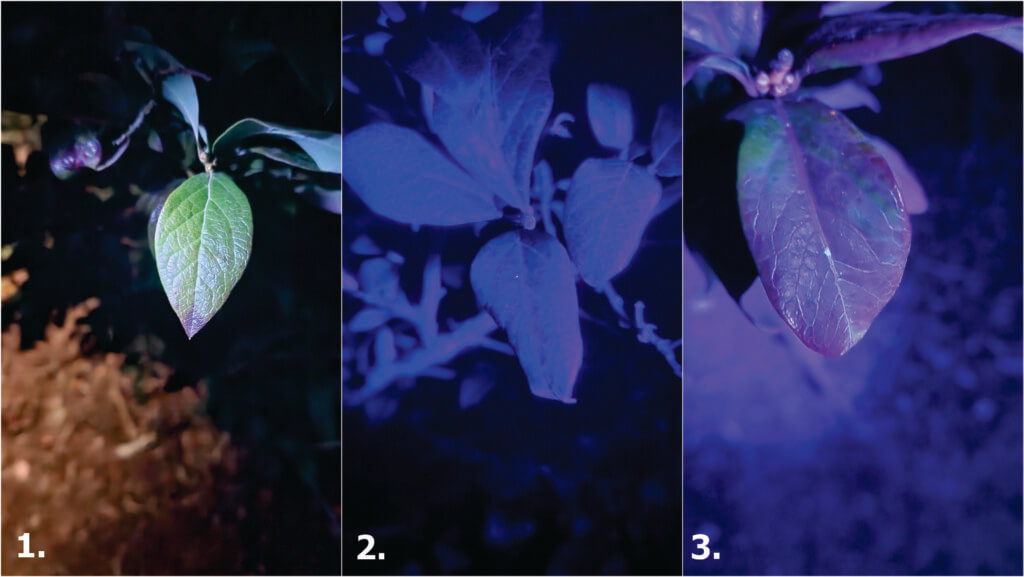
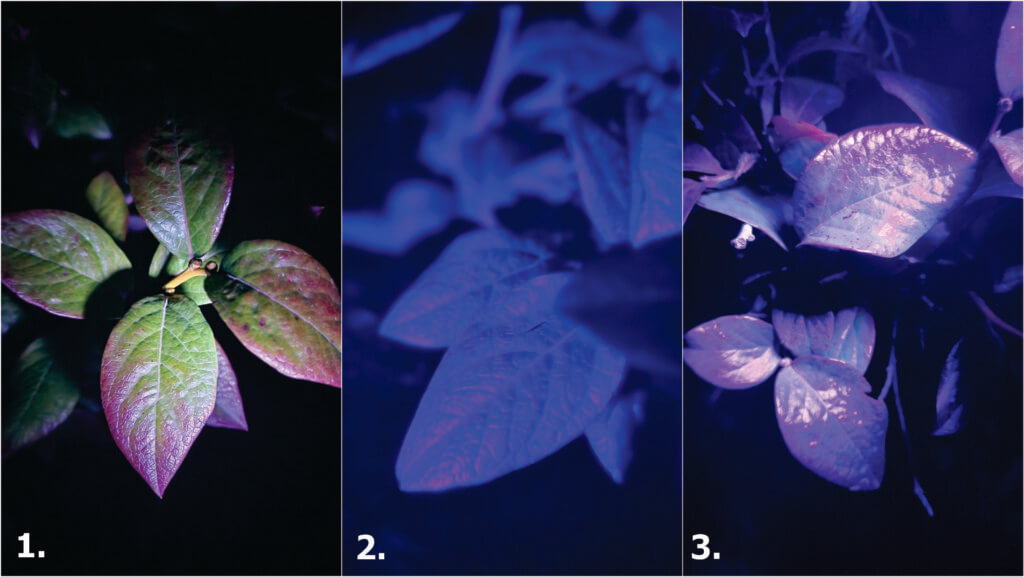
    Dye 1 and 2 were disappointing. We couldn’t see anything on the plants. This dye is intended for monitoring plumbing and water courses, and the manufacturer states that the colour will disappear if the solution is mixed with chlorine. Perhaps mixing it with city water caused it to fade, but that’s likely to happen, so these dyes failed.

    Dye 1 – Light 1, 2 and 3. A sad, single drop showed up for Light 3.
    Dye 2 – Light 1, 2 and 3. Again, a solitary deposit illuminated under Light 3.

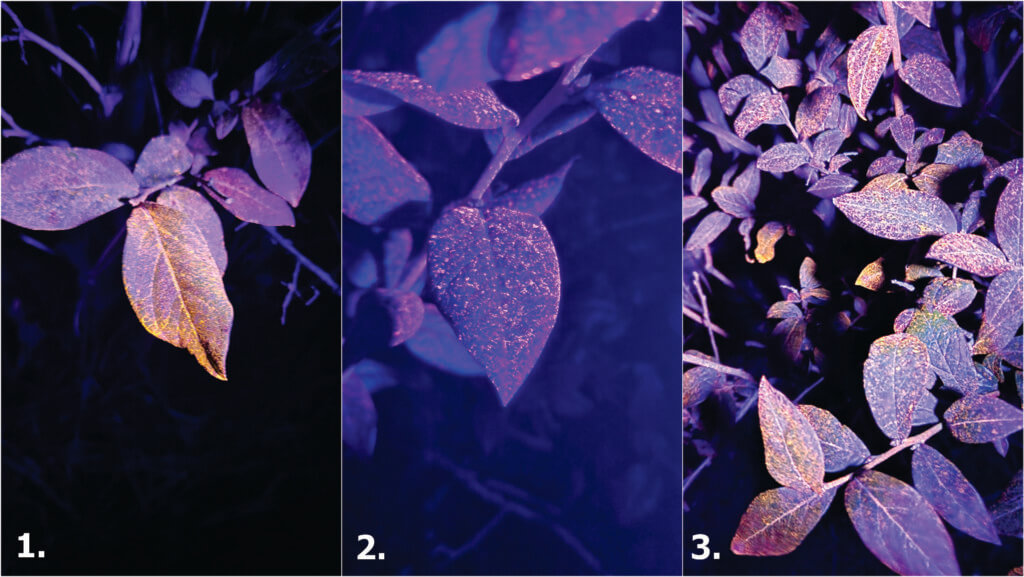
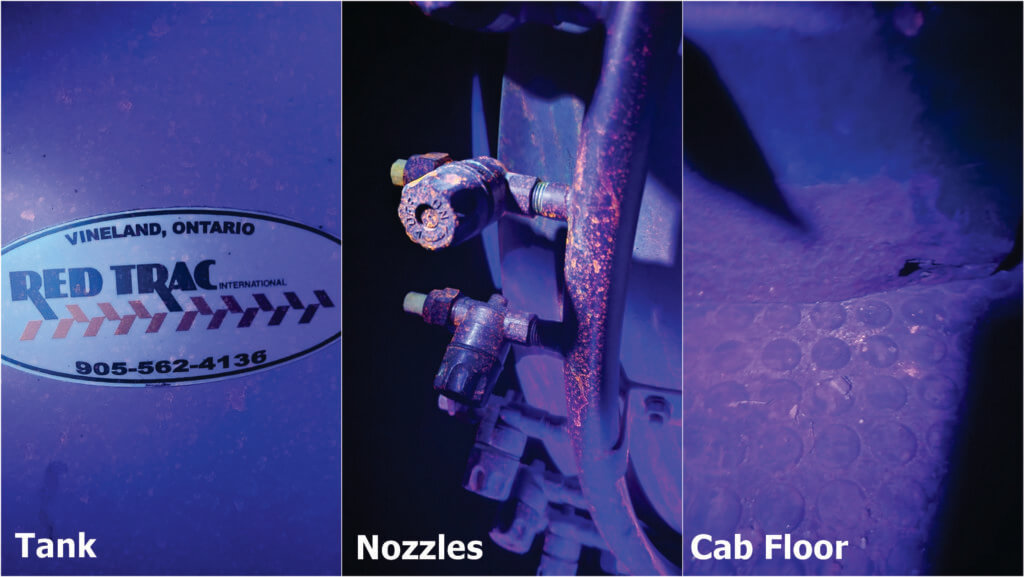
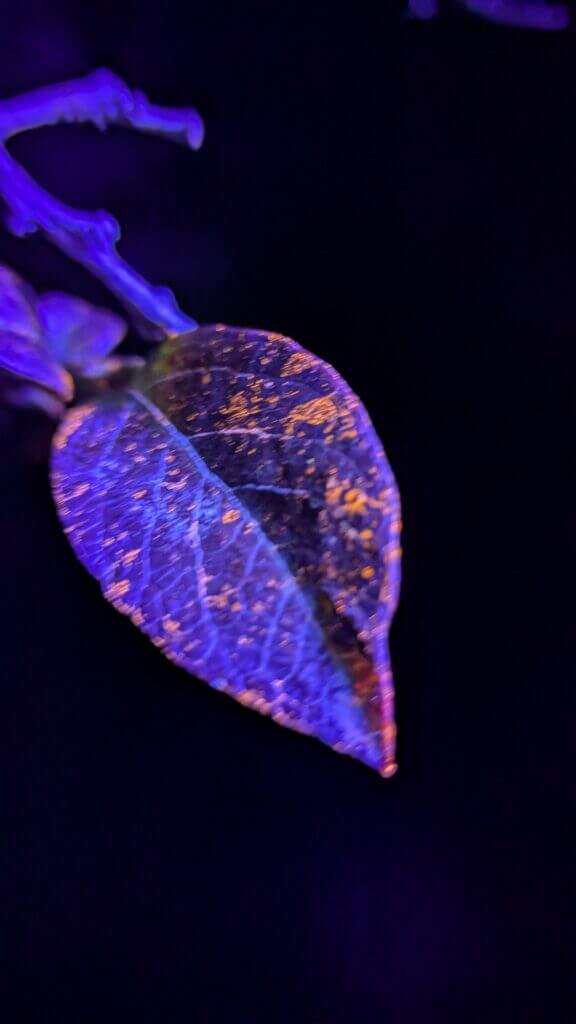
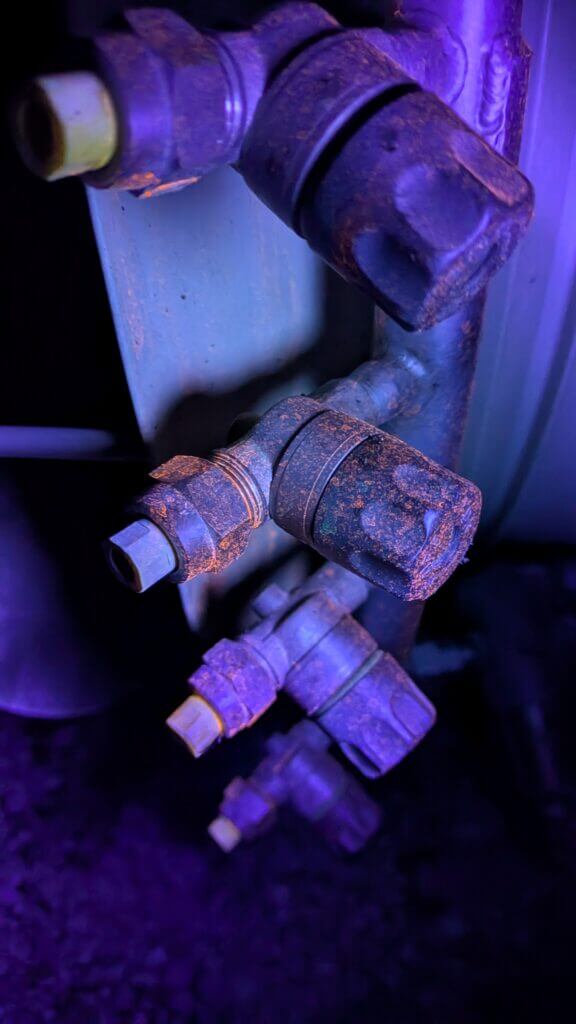
    Dye 3 was spectacular. Not only was it evident with every light source (including day light to some extent), but we were able to find it several rows downwind, on the sprayer nozzles, all over the tires and on the floor of the cab (which surprised the operator). I may have mixed this one too strong; It seemed to clump on the leaves, but perhaps that’s because they were exceptionally waxy.

    Dye 3 – Light 1, 2 and 3.
    Dye 3 showed up everywhere… whether we wanted it there or not.
    A nice close up of Dye 3 on a leaf.
    A close up of Dye 3 on the boom.

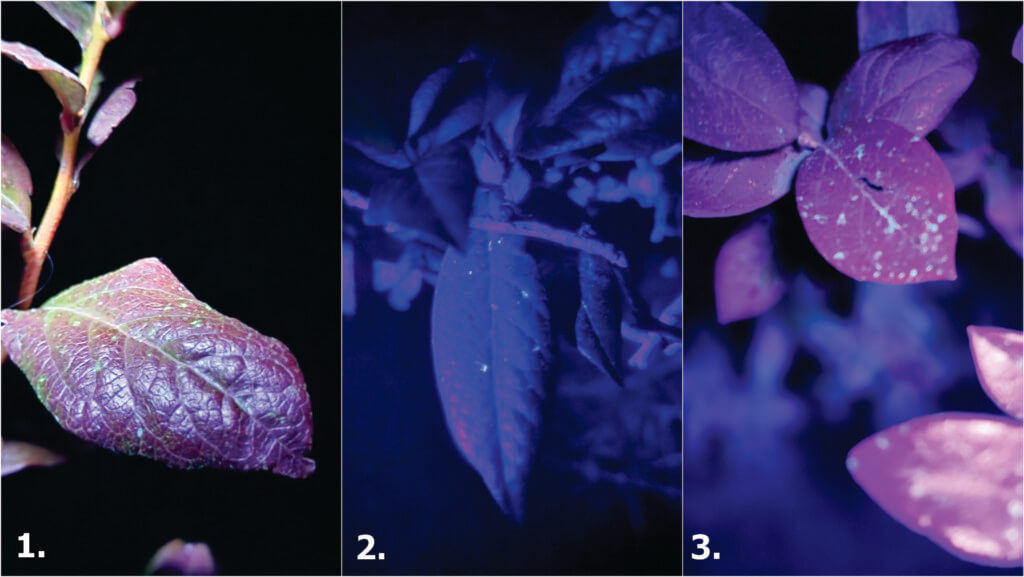
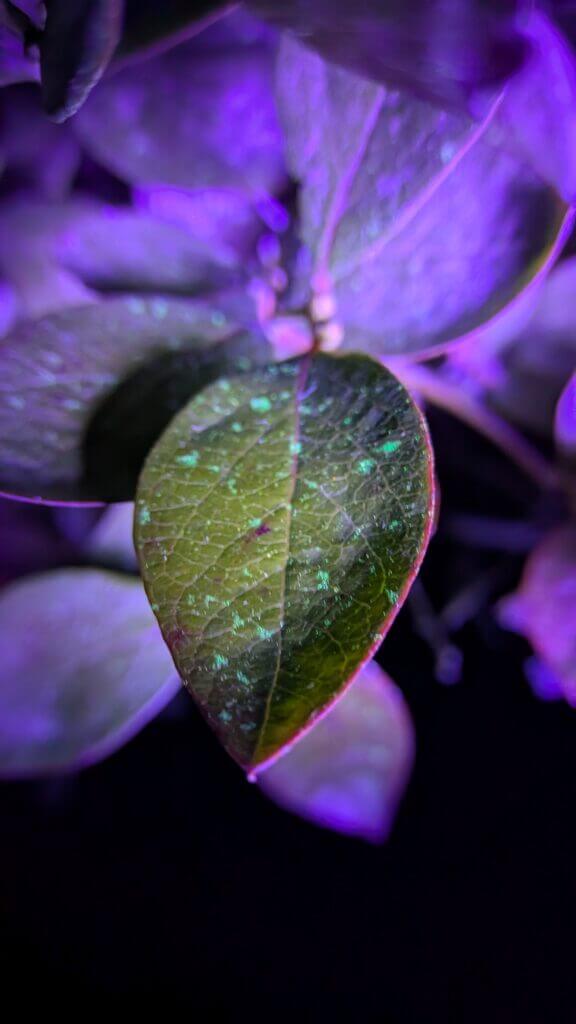
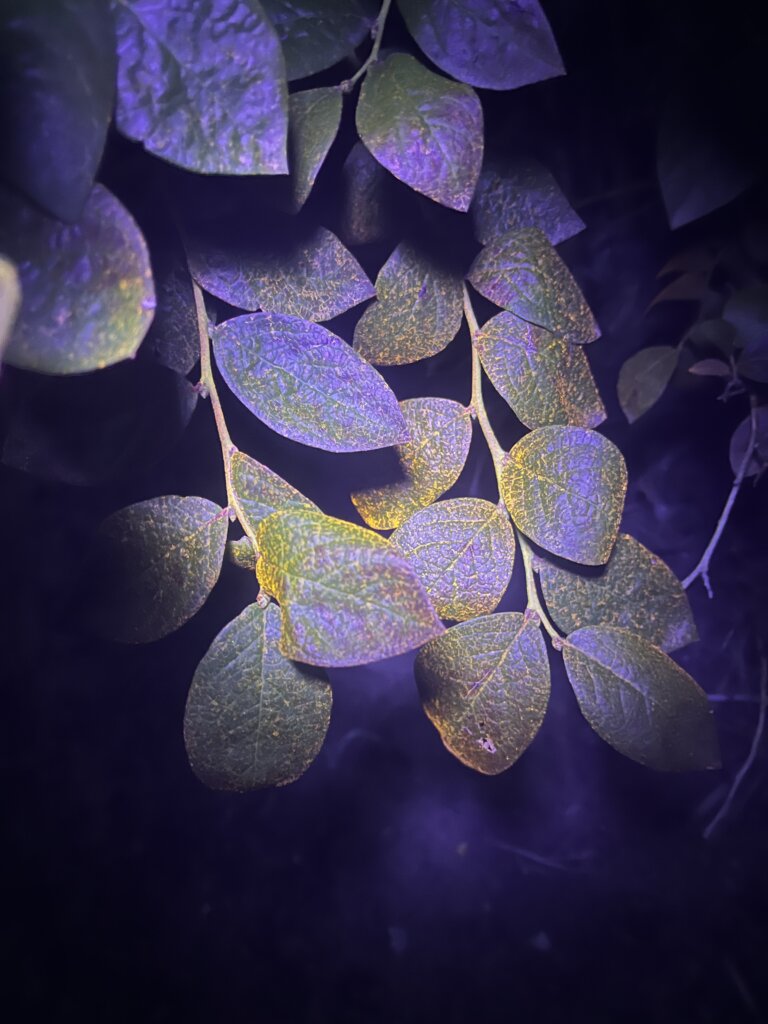
    Dye 4 came in second place. It wasn’t amazing, but it was visible. This is children’s tempera paint, used in daycares for finger painting and at universities for raves. I’ve used it in the past with mixed results, not only to spray canopies, but in classroom demos on cabbage leaves and as a surrogate tracer to hunt down where pesticide hides in sprayer plumbing. It’s OK in a pinch if you mix it at least 2x more concentrated than I did here.

    Dye 4 – Light 1, 2 and 3.
    A nice close up of Dye 4 on a leaf.

    Dye 5, like dyes 1 and 2, was a disappointment. I’ve seen it used in powder-form to demonstrate how dermal exposure can spread as you touch clothing, doorknobs, your face, and places where the occasional adjustment is required. But in a liquid solution, it wasn’t any good at all.

    Dye 5 – Light 1, 2 and 3

    Persistence

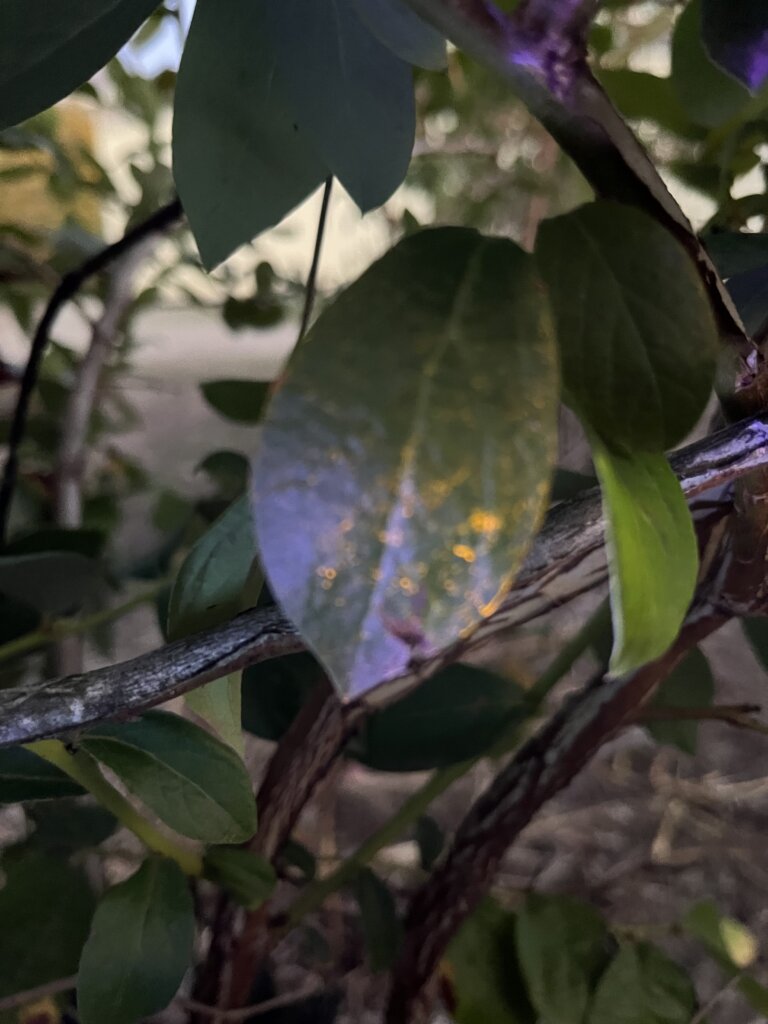
    We followed up after the application to see if the dyes would persist. Twenty four hours after application, Dye 4 (our runner-up) was gone. This was no surprise given it was a water soluble paint and wasn’t terribly showy to begin with. However, Dye 3 (our winner) was still clearly in evidence. This is a hydrophobic, micro ground powder (~0.1 micron). That’s one reason it had to be mixed with a non-ionic surfactant. The following photos shows little or no change after 24 hours and a respectable dew:

    Dye 3 after 24 hours.

    Three days after application (DAA), we had a rain event. Four DAA this (blurry, sorry) image was taken:

    Dye 3 after 96 hours and a heavy rain.

    We see that the deposits did redistribute to drip points and the overall coverage was reduced, but it was still holding on. This means it likely shouldn’t be used on any horticultural crop that isn’t going to be washed. Or at least used long before any fruit, leafy green or vegetable contacted by the powder will be harvested. Not because it is unsafe (see safety data sheet) but because of the optics to buyers.

    Conclusion

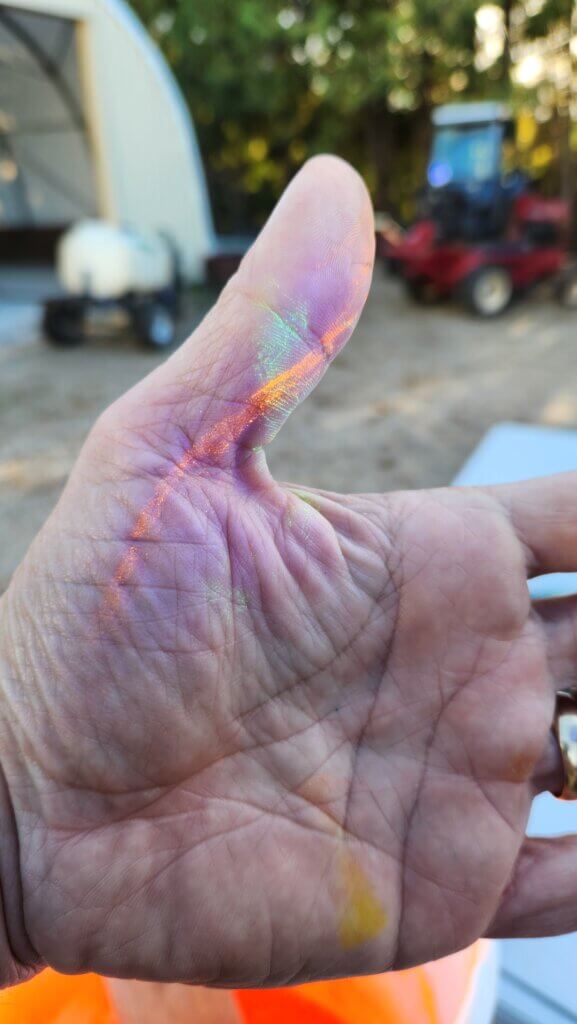
    And so, I hope you have been inspired by this process. I’ve learned that the use of dyes for education and research is potentially powerful, relatively cheap, and more accessible than I originally thought. Certainly the growers were impressed by what they could suddenly see and it’s led them to reassess some of their practices. Just bear in mind the possible persistence, and remember to wear gloves when mixing.

    Wear gloves. Trust me.

    Thanks to Mark Ledebuhr, Helmut Spieser, David Manktelow, and Ben Werling for the helpful advice. Thanks to Brandon and Jordan Falcon for use of their spray equipment and their blueberry operation.

  • Fungicides and Integrated Pest Management – An Apple Scab Case Study

    Fungicides and Integrated Pest Management – An Apple Scab Case Study

    Editor’s note: This article originally appeared in the Winter, 2025 ONCore newsletter (Volume 29, Issue 1). We thought it was an excellent description of the integrated pest management process and where fungicide spraying fits in. It’s been modified from the original version.

    Part One: Know Your Enemy

    There is no denying that product efficacy and rotational partners are critical components of effective pest management. A pest is causing damage; we need as many tools as possible to control it. Let’s consider the basics of Integrated Pest Management (IPM). The first step in effective management is understanding the pest biology.

    Figure 1. Foundations of integrated pest management

    Let’s use apple scab as a case study for the IPM process. We’ll start with a deep dive into apple scab 101 by referring to its typical life cycle. Apple scab overwinters in infected leaves on the orchard floor. During the winter and early spring, immature ascospores (primary inoculum) are protected in specialized spore sacs, called pseudothecia.

    Figure 2. Life cycle of apple scab (Image: Cornell University)

    Maturation of ascospores in the leaf litter on the orchard floor usually occurs at the same time the trees are emerging from dormancy. This means mature ascospores are present and ready to infect the first green tissue in spring. However, the percentage of mature ascospores in the orchard generally peaks when apples are at the late pink to petal fall stages of bud development.

    Once the tree breaks dormancy and green tissue is present, a primary infection occurs if the following three conditions are met:

    1. Mature ascospores are present in leaf litter in the orchard.
    2. Weather conditions favour ascospore discharge and infection.
    3. Fungicide protection is inadequate to prevent infections.

    Mature ascospores are discharged from the pseudothecia by rain and splashed up to emerging green tissue by wind. Moisture – dew or rain – is necessary for ascospore discharge and germination, as well as subsequent infection of apple tissue. Olive green, velvety lesions appear 10-28 days after infection by an ascospore, depending on temperature. The lesions initiated by ascospores result in primary infections, and in turn, produce spores called conidia.

    Conidia are spread from primary lesions by rain or wind and initiate further infections when the combination of temperature and leaf wetness enables them to germinate and become established. These are called secondary infections, and generally occur within a tree or between adjacent trees rather than at a long distance.

    The secondary cycle can be repeated many times during the growing season, whereas primary infection only continues until all overwintering spores are depleted. With frequent rainfall, the control of apple scab becomes extremely difficult as the season progresses, particularly if the disease becomes established from primary infections in the spring.

    Early season management (green tip to tight cluster) provides the greatest economic protection against loss from scab control failure. In other words, don’t wait to get fungicide protection on!

    Figure 3. Risk of primary apple scab infection and the probability of economic loss from scab control failure. (Image: Cornell University)

    Part Two: When To Strike

    Just like how understanding the biology of the pest helps to determine appropriate intervention timings, understanding how fungicides work will help determine when best to apply them and ensure maximum efficacy (aka the most bang for your buck).

    Fungicides can be divided into four categories, based on what they do:

    1. Preventative
    2. Curative
    3. Eradicant
    4. Antisporulant

    Preventative

    • Before the plant is even infected
    • Before we can see any symptoms
    • Most fungicides work preventatively
    • If fungicides work in multiple ways, often they work best preventatively

    Curative

    • Stops the mycelial growth inside the plant
    • Still can’t see any symptoms
    • Fungicides with “kickback”

    Eradicant

    • Stops the pathogen during lesion formation
    • Ok, now we can see symptoms
    • Very few fungicides work this way, even though this is how we expect them to work

    Antisporulant

    • Stops the pathogen from sporulating
    • We can see symptoms
    • Several fungicides work this way, but your crop is already infected

    In addition to the timing of a fungicide, efficacy can be affected by residues (or lack of), rains and risky gaps. A general rule of thumb often used is that 1 inch (2.5 cm) of rain removes approximately 50% of protectant fungicide residue and over 2 inches (5 cm) of rain will remove most of the residue. While systemic fungicides tend to perform better than protectant (or contact) fungicides in rainy periods, they do still require a certain amount of time prior to a rain event to be taken into the leaves – which isn’t always as easy as it sounds (see Part three).

    During conditions conducive to disease development, it is important to maintain tight intervals between fungicide applications. Most labels will have the minimum interval listed. For protectant fungicides, a tight interval program would be 5-7 days. Where possible, do not extend intervals beyond 14-21 days if there are any concerns of disease. As a fungicide application ages, the efficacy of that product is reduced.

    Spray coverage can be affected by wind in several ways:

    • Wind direction – can carry droplets away from intended target
    • Wind speed – affects how far the droplets travel
    • Consistency – wind gusts can make coverage inconsistent

    In addition to wind, spray coverage can also be affected by water volume, nozzle orientation, sprayer calibration, alternate row spraying, etc .

    Areas of the canopy that are often missed due to poor coverage are within the tree due to spray not reaching through or at the top of larger trees . Routine monitoring can miss early signs of scab infection in these parts of the tree if not done thoroughly. I saw numerous situations this year (2025) where scab lesions were overlooked.

    Part Three: Fungicide Playbook

    Let’s take a closer look at some common scab fungicides and what is meant by contact and systemic activity and how they might redistribute after application. The rest of this article refers to pesticide brands available in Canada. They may have different names in other countries.

    Figure 4. Movement of fungicide in plant: (A) contact or protectant; (B) xylem-mobile or acropetal; (C) translaminar; (D) phloem-mobile. (Adapted from K. Goldenhar, BCMAF)

    Contact (Protectant) Fungicides

    These products remain on the surface of the plant tissue and provide preventative activity only. Examples of contact fungicides include fluazinam (Allegro, Vantana), coppers, sulphurs, mancozeb (Manzate, Penncozeb, Dithane), captan (Maestro, Supra Captan) and folpet (Folpan, Follow).

    Unfortunately, because these products provide superficial coverage only, they can be prone to UV degradation or run-off and need frequent applications. Stickers/spreaders can help these stay on the plant but always refer to the label before using.

    Systemic Fungicides

    Systemic fungicides get taken up into the plant. Unlike contact fungicides, systemic fungicides tend to have longer duration and are rainfast once absorbed. However, sufficient tissue is needed for absorption so these products are best used after tight cluster in apples. How systemic fungicides move within the plant can vary:

    Xylem-Mobile

    Xylem-mobile, or acropetal fungicides move to the actively growing tips of expanding foliage and protect new growth. Examples of xylem-mobile fungicides include most Group 3 and 11s, as well as some Group 7s (e.g., fluopyram).

    Translaminar

    Translaminar fungicides move from the top of the leaf to the underside. Because of this limited movement, coverage matters. Examples of translaminar fungicides include most Group 7s as well as Cevya and Inspire Super.

    Phloem-Mobile

    Phloem-mobile, or “true” systemic fungicides move into the tissue and are carried to the roots to protect against root rots. There are no examples of phloem-mobile fungicides for apple scab. However, this group includes products such as Aliette and Phostrol which are registered for other diseases of apples. Unlike other systemic fungicides, this group has a short duration of activity (i.e., they move fast).

    Resistance Management

    Fungicides are grouped based on their mode of action, or how the product affects the disease. For example, all products in Group 3 have the same mode of action, so using one product is virtually the same as using all other products within that group. In pre-mix fungicides, both groups need to be considered in all rotation decisions.

    Figure 5. Systemic fungicides registered for apple scab in FRAC Groups 3, 7, 9 and 11

    One key strategy to good resistance management is rotating between products of different chemical groups. Figure 5 shows which fungicides belong to Groups 3, 7, 9 and 11. For instance, since Aprovia Top belongs to Group 3 and 7, it should not be followed by other Group 3 (Cevya, Fullback, Nova), Group 3+9 (Inspire Super), Group 7 (Excalia, Fontelis, Kenja, Sercadis), Group 7+9 (Luna Tranquility) or Group 7+11 (Merivon, Pristine).

    For resistance management:

    • Where possible, include at least half rate protectant fungicide.
    • Do not use products containing the same chemical group in consecutive applications.
    • Limit number of applications per group per season, where possible.
    • Apply preventatively; do not rely on systemic fungicides for post-infection activity
    • Do not use Group 3 (Nova, Fullback, Inspire Super) or Group 11 (Flint, Pristine, Merivon) fungicides after bloom for scab management as they are weak on fruit scab. Trials with Cevya have indicated good efficacy on fruit scab.
    • Research from northeastern US indicates Group 7 fungicides may be weaker on fruit scab as well.

    Part Four: Final Considerations

    In conclusion, take some time to consider the following:

    • Early intervention remains the cornerstone of effective disease management!
    • Use weather monitoring tools to time fungicide applications
    • Adjust spray schedules and product choice according to the weather
    • Dedicate time for regular orchard inspections
    • Train your team to identify symptoms early, accurately and consistently
    • Optimize your spray program
    • Protectant AND systemic fungicides
    • Rotate classes to prevent resistance
    • Select for broad-spectrum efficacy
    • Reduce overwintering inoculum


    The author gratefully acknowledges Katie Goldenhar, OMAFA Pathologist (Horticulture) for providing source material for this article.

  • Airblast Productivity and Work Rate Calculator

    Airblast Productivity and Work Rate Calculator

    There are many factors that affect the work rate of an airblast application. If an operator can improve their work rate, without compromising spray efficacy or safety, they improve operational efficiency and save money.

    But how does each variable factor in? Is it worth the cost of a tender truck and operator to fill more efficiently? Should you upgrade to a multi-row sprayer? Should your next planting have longer rows? We have a simple calculator that can help you make these decisions. You can build and compare multiple scenarios to explore the relative impact of small changes to your typical spray program. We recommend making only one change for each scenario so you can better understand the results. Print the comparison page for your records.

    Whether you’re a sprayer operator, or a manager of sprayer operators, this exercise will help you see your spray program in a whole new light. Download a copy of the Airblast Budget and Work Rate Calculator and explore your productivity. You must have Excel to run the spreadsheet, and you must permit the use of macros (you’ll be prompted to accept).

    Spoiler: It’s amazing how changes to travel speed have only a marginal impact on work rate. Often less than 60% of the total spray job is spent actually spraying!

    If you’d like to see just how productive you can be, check out this rare (possibly unique) sprayer from Ed Oxley Farms in Michigan. Built on an OXBO 7550, this sprayer is the fourth iteration of a concept developed over the last 20 years by Ed Oxley Farms and ag engineers from Michigan State University.

    Capable of spraying five rows at a time, this self-propelled beast is a hybrid wrap-around and targeting-tower system that uses CurTec spray heads equipped with tangential fans and wire-mesh basket rotary atomizers.

    That’s not dribbling – that’s purging the boom prior to spraying.

    It sprays a mere 150 L/ha (~ 15 gallons/acre) at a ripping 13 km/h (~8 mph), as seen on the Ag Leader monitor below.

    When row spacing and turn time are accounted for, that means it’s capable of covering almost 15 hectares (~40 acres) per hour.

    And, when not spraying grapes, the boom can be swapped to make it a high-clearance corn sprayer. It doesn’t get much more efficient than this.

    The following videos will show the view from inside and outside the cab. Note that the row that’s straddled is sprayed from an overhead spray head mounted to the centre rack behind the sprayer. The two adjacent rows are covered from one side from vertical spray heads mounted on the chassis. Finally, the boom holds two more overhead spray heads for the outer-most rows.

    Ideally, the boom-mounted spray heads would be suspended vertically inside the row, but it makes for such a wide turn radius that it would take too long to turn… assuming there was enough headland to allow it. They’re also swept-back to minimize the turn radius and reduce the amount of airborne spray that deposits on the sprayer itself.

    A clever design that makes a few compromises to ideal coverage in order to improve productivity. The balance works for them and this sprayer might be a sign of things to come in horticultural crop production systems. Want to see how your sprayer stacks up? Download the calculator and see where you might be able to make improvements.

  • Mode of Action and Spray Quality

    Mode of Action and Spray Quality

    The decision on which application method is best for herbicides boils down to two main factors: (a) target type and (b) mode of action. In general, it’s easier for sprays to stick to broadleaf plants on account of their comparatively larger leaf size and better wettability compared to grassy plants. There are exceptions, of course – at the cotyledon stage, broadleaf plants can be very small and a finer spray with tighter droplet spacing may be needed. Water sensitive paper is a very useful tool to make that assessment. Imagine if a tiny cotyledon could fit between deposits – that could be a miss!

    Some weeds are also more difficult to wet, and those may also need a finer spray or a better surfactant for proper leaf contact. An easy test is to apply plain water to the leaf with a spray bottle. If the water beads off or the droplets remain perched on top in discrete spheres, the surface is considered hard to wet. Most grassy weeds are hard to wet, while most broadleaf weeds are easy to wet.

    Grassy weeds are an especially difficult target because they have smaller, more vertically oriented leaves, and almost without exception are more difficult to wet than broadleaf species. All these factors call for finer sprays for effective targeting and spray retention.

    Broadleaf weeds usually have more horizontally oriented leaves which also happen to be larger. As a result, they can intercept larger droplets quite efficiently.

    There are about thirty mode of action (MOA) groups among the herbicides with about ten accounting for the majority in Canadian prairie agriculture. It’s probably an over-simplification to categorize them into just two groups – systemic and contact.  But that grouping goes a long way to making an application decision.

    Contact products (MOA Group 5, 6, 10, 14, 22, 27) must form a deposit that provides good coverage. Good coverage is an ambiguous term that basically means that droplets need to be closely spaced and cover a significant proportion of the surface area because their physiological effects occur under the droplet, and don’t spread far from there. One way to generate more droplets is to reduce droplet diameter, another is to add more water. A reasonable combination of both is ideal because simply making droplets smaller creates issues with evaporation and drift.

    Systemic products (MOA Group 1, 2, 4, 9) will translocate within the plant to their site of action after uptake. As a result, coverage is less important as long as sufficient dose is presented to the plant. In practice, this means coarser sprays and/or less water may be acceptable.

    When two factors are combined, either in a tank mix or a weed spectrum, the more limiting factor rules. Application of a tank mix or product that is active on both broadleaf and grass plants will be governed by the limitation placed on grass targets. A tank mix comprised of both systemic and contact products is governed by the limitations placed on contact products.

    A factor we should also consider is soil activity and the presence of residue. Studies have shown that soil-active products are relatively insensitive to droplet size. But if they have to travel through a layer of trash to get to the soil surface, more application volume is the best tool.

    Below are some recommended spray qualities and water volumes for use in Canada. The spray qualities listed in the table can be matched to a specific nozzle by referring to nozzle manufacturer catalogues, websites, or apps. Note that Wilger also offers traditional VMD measurements on their site, allowing users to be a bit more specific if necessary.

    Click here to download PDF

  • How to Size a Nozzle for Pulse Width Modulation (PWM)

    How to Size a Nozzle for Pulse Width Modulation (PWM)

    PWM is gaining popularity, and there is an ever-increasing number of first-time users that need to make nozzle selections for their system. We’ve written about it here, here, and here.

    Recall the PWM replaces spray pressure with Duty Cycle (DC) of a pulsing solenoid as the primary means of controlling nozzle flow. The solenoid shuts off the flow to the nozzle intermittently, between 10 and 100 times per second depending on the system. The Duty Cycle is defined as the proportion of time that the solenoid is open, and for low-frequency systems, DC is more or less linearly related to flow rate.

    The first rule of PWM nozzle selection is to understand that under average travel speeds, we’d like to see the duty cycle of the system at between 60 and 80%. This means that the nozzle solenoid is open about 2/3 of the time. This value also describes the flow rate as a proportion of the full capacity that nozzle.

    The reason for this 2/3 duty cycle rule is to enable four key features of PWM:

    1. It’s ideal for turn compensation, allowing the outer nozzles to increase their flow 20 to 40%, and the inner nozzles to decrease flow about three-fold, in accordance with boom speed.
    2. It allows speed flexibility, providing some additional speed, but more importantly, reduced speeds should conditions require it, without a change in spray pressure.
    3. It compensates for pressure changes so that spray quality can be adjusted without requiring a speed change. Less pressure reduces nozzle flow, and increasing DC recoups accordingly.
    4. It allows for customized higher flows of certain nozzles, perhaps behind wheels, to address reduced deposition in their aerodynamic wake (available on some PWM systems).

    The best tool for selecting the right nozzle size is Wilger’s Tip Wizard. This site asks for your desired average speed ( although it calls this “Max Sprayer Speed”), and reports the expected DC for a host of nozzle size solutions and pressures. It also reports maximum and minimum travel speeds and other useful information such as spray quality.

    Fig 1: The Tip Wizard is a useful tool for sizing nozzles on any PWM system. Sizing information applies to any nozzle. Spray quality information is for Wilger ComboJet nozzles only.

    Although intended for Wilger nozzles, the site’s sizing feature works for any nozzle brand. It asks the user which PWM system they have for the purpose of calculating the documented pressure drop across the solenoid.

    Fig 2: Tip Wizard results for the Wilger SR11006 tip at 10 gpa and 15 mph. Look for a solution that provides 60 to 80% Duty Cycle (DC).

    If you don’t have access to the site, a basic calibration chart can still work with a simple trick. Recall that we use the top row to identify the desired water volume, and the table’s interior values are speeds, as described here.

    Below are two solutions for someone wanting to apply 10 gpa at 15 mph without PWM. The correct choice depends on the required pressure to produce the needed spray quality.

    Fig 3: A conventional calibration chart, solving a 10 gpa application for 15 mph.

    If you want to apply the same 10 US gpa using PWM, simply solve for a larger volume that offers the right DC. For example, choosing 13 gpa will over-apply by 3 gpa, or 30%. The PWM system adjusts by running at 100-30=70% DC. If the chart doesn’t offer 13 gpa, go nearby, to 14 gpa, as we did below:

    Fig 4: By pretending to require 14 gpa instead of the actual 10 gpa, the conventional calibration chart is tricked into solving for a nozzle size that will work with PWM at 60% Duty Cycle.

    Now solve for the same target speed, 15 mph. The solution will run at 60% DC. Again, there is more than one choice, and that will depend on the spray pressure needed.

    Fig 5: Two possible solutions for achieving 10 gpa at 10 mph. An 06 nozzle at intermediate pressure or an 08 nozzle at low pressure.

    We’ve developed a template, in US or metric units, that can be customized for any water volume. Here is the same chart with 13 gpa added:

    Fig 6: A conventional calibration chart with the 13 mph speed added.

    The best solution for 10 gpa at 15 mph is the 06 size nozzle at 50 psi. This is not engraved in stone. One of the nice things about PWM is that it has inherent flexibility. Make the nozzle pressure a priority to get the correct spray quality. It really doesn’t matter whether the resulting DC is 65 or 80%, the system will still work well. Simply avoid extremes that take you below 50% or above 90%, they will limit the system’s capabilities.

    The worksheet can be downloaded below:

    It can handle any water volume or nozzle spacing by filling in the blue cells. Two additional worksheets in the file automate the process, simply enter the desired application volume, travel speed, and nozzle spacing (yellow cells), and the solution that offers the optimal duty cycle range will be highlighted in light green.