Green-on-green sprayer competes with Blue River and Bilberry
One distinguishing feature of the new agriculture is the rapid development of new technologies. Ideas move from concept to implementation at record pace, helped by an influx of talent and capital into this profitable sector.
Greeneye Technology is an example of this pace. Founded by entrepreneurs who met in the Israeli armed forces, they developed a software platform that identified crops, weeds, and other objects in agricultural fields from drone imagery. They recognized the opportunity to transition their software to a sprayer platform, and in 2017 decided to join the race, most notably competing with Blue River, Bilberry, Carbon Bee, and Xarvio, to create a green-on green spot sprayer.
Greeneye, in an amazing display of efficiency and speed, has been a commercial product for approximately one year in the US and has sold several units in Nebraska, Minnesota and Oklahoma, and next year will expand to North and South Dakota, Iowa, Illinois, Kansas and Texas. Having consulted for the company in its early years, I paid a visit to Peterson Farms Seed near Fargo, ND in early July 2023 to see the sprayer first hand at a field demo. By the way, kudos to PFS for bringing this technology to their customers to see. Have to love a business so committed to the cutting edge.
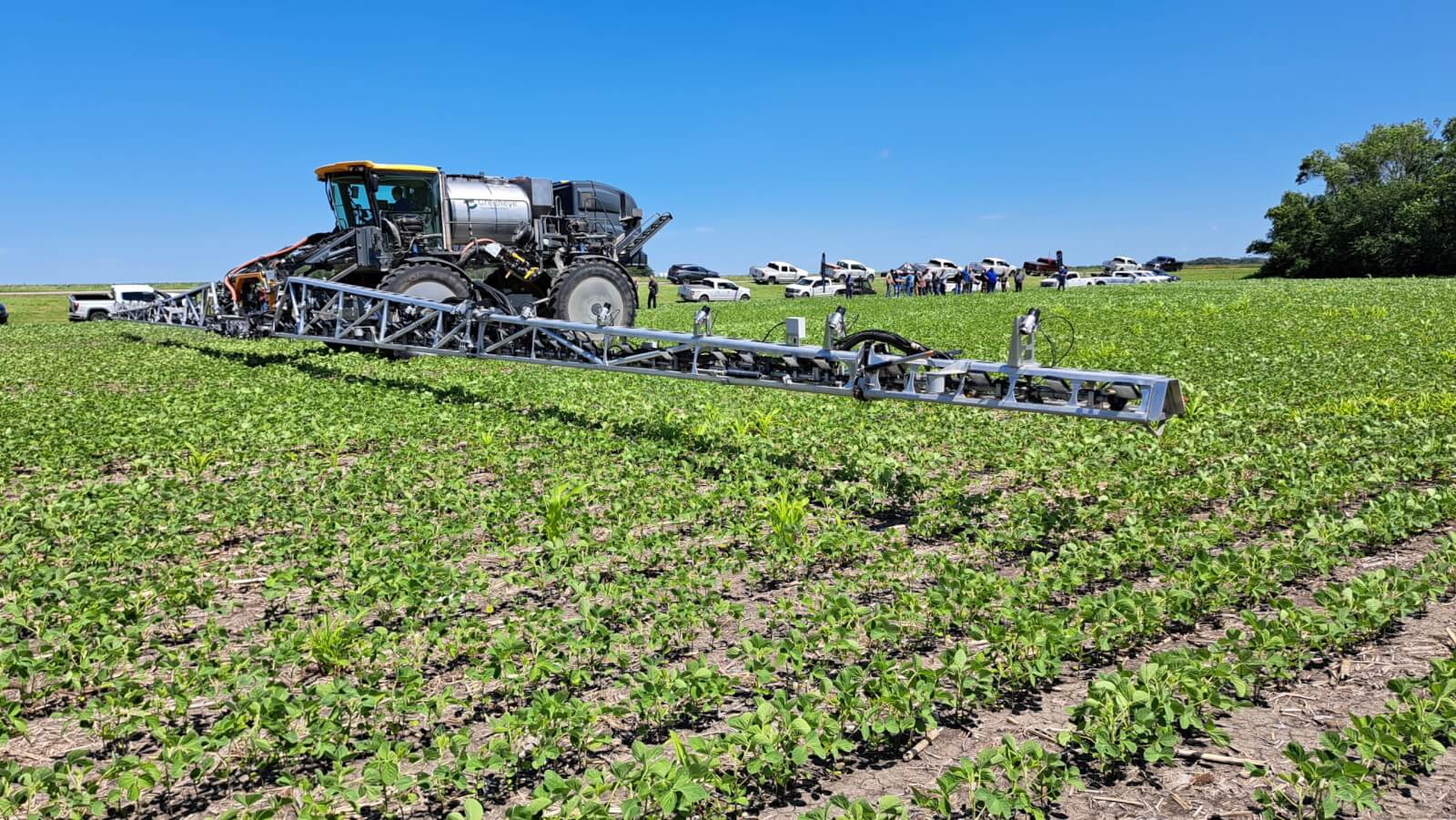
Figure 1: The Greeneye system was mounted on a Hagie STS 12 sprayer.
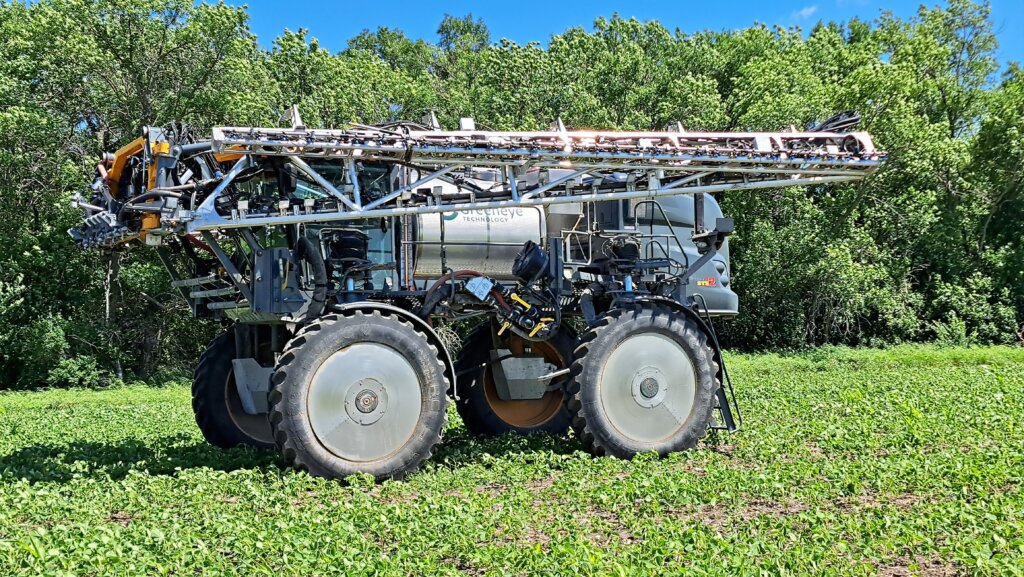
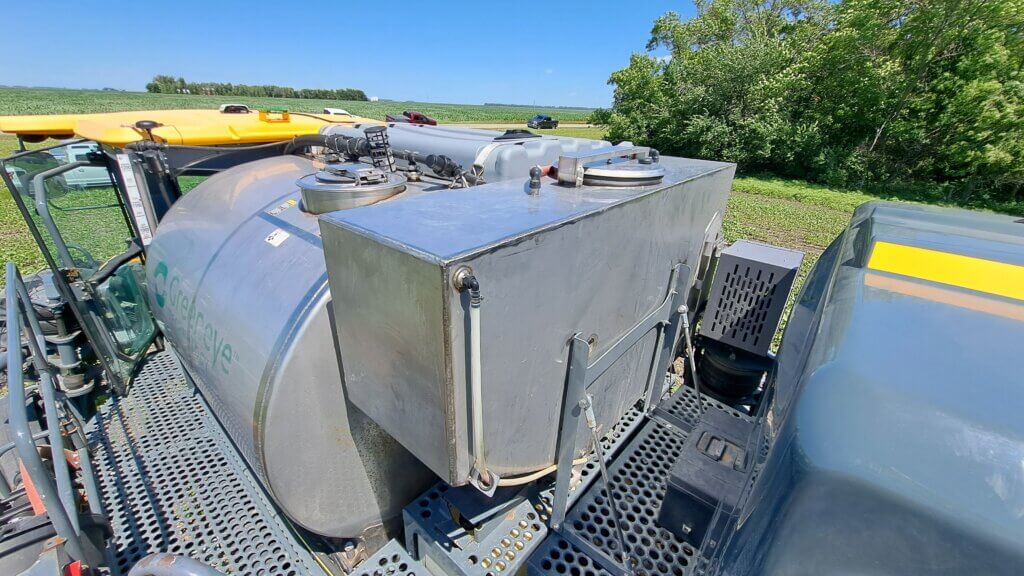
The Greeneye system was mounted on a Hagie STS 12 sprayer (1200 US gallon tank) with a custom 120’ boom manufactured for Greeneye by Millenium. Recognizing the agronomic need to broadcast pre-emergence herbicides along with a post-emergent spray, they company retained the existing plumbing system (tank, pump, wet boom) for this purpose. They added a smaller spot spray tank (240 gallons) with its own pump and wet boom for spot spraying.
Figure 2: A smaller spot spray tank was added to the Hagie. If necessary, spray mix can be pumped from the larger tank to this smaller tank.
This approach permits the flexibility of broadcasting a pre-emergent herbicide during burnoff alongside a post spot spray on emerged weeds. The agronomist in me likes this a lot. Broadcast pre-emergent herbicides are an important part of resistance management, particularly in the US.
Figure 3: The second (spot spray) boom is mounted behind the factory wet boom.
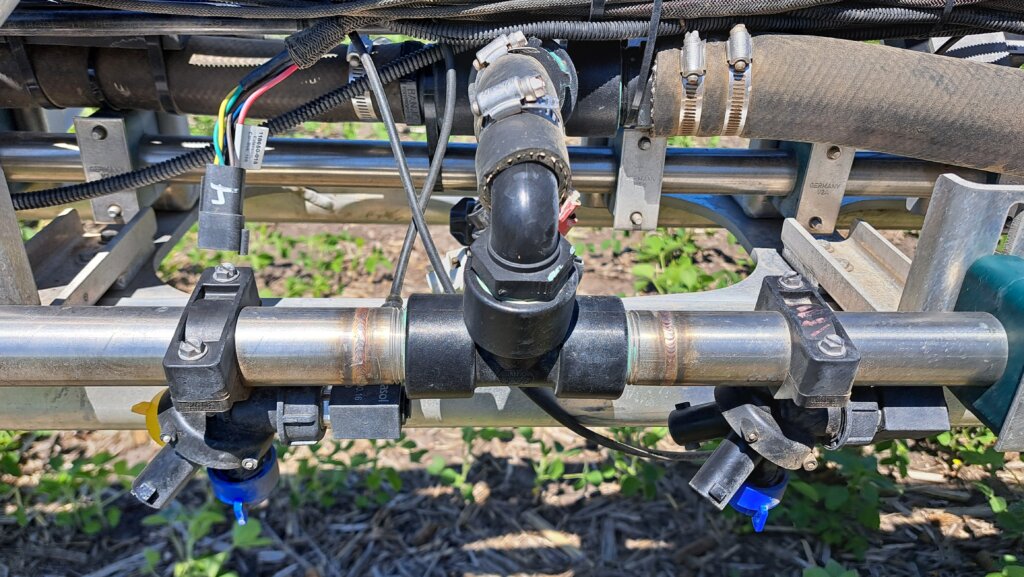
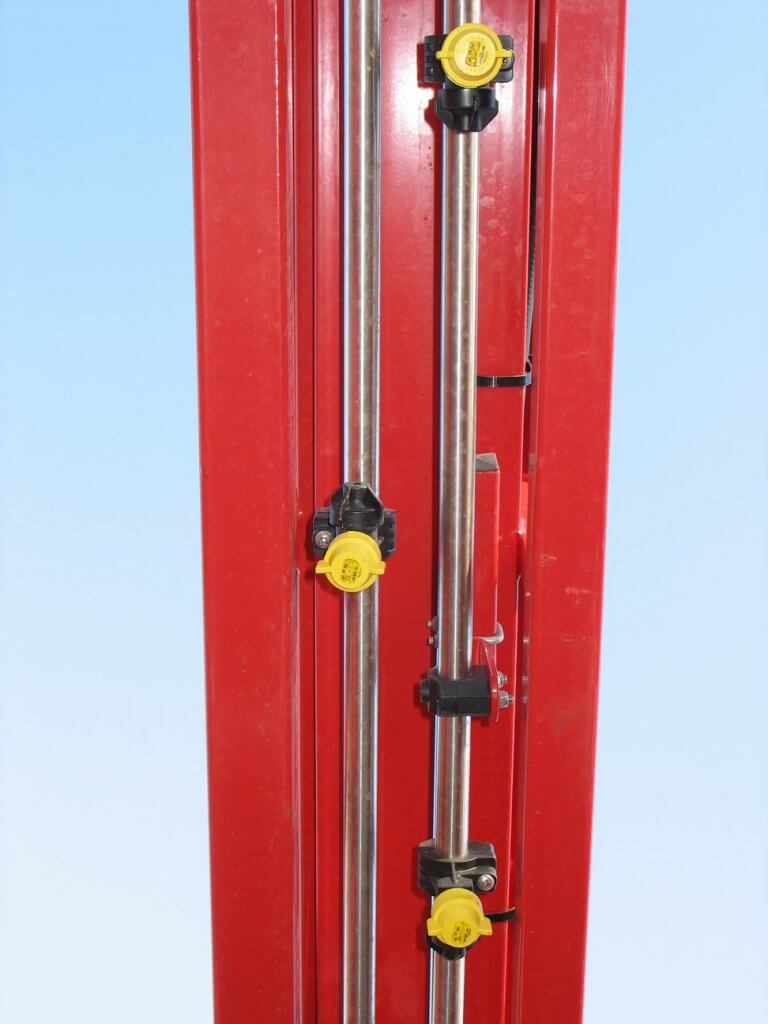
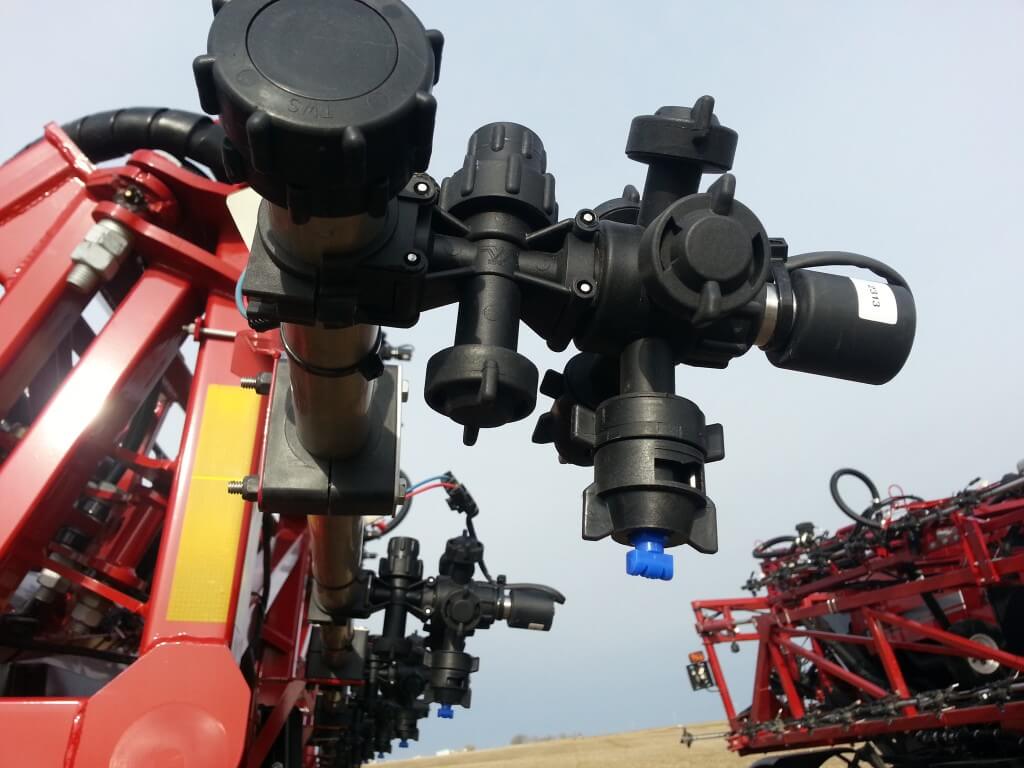
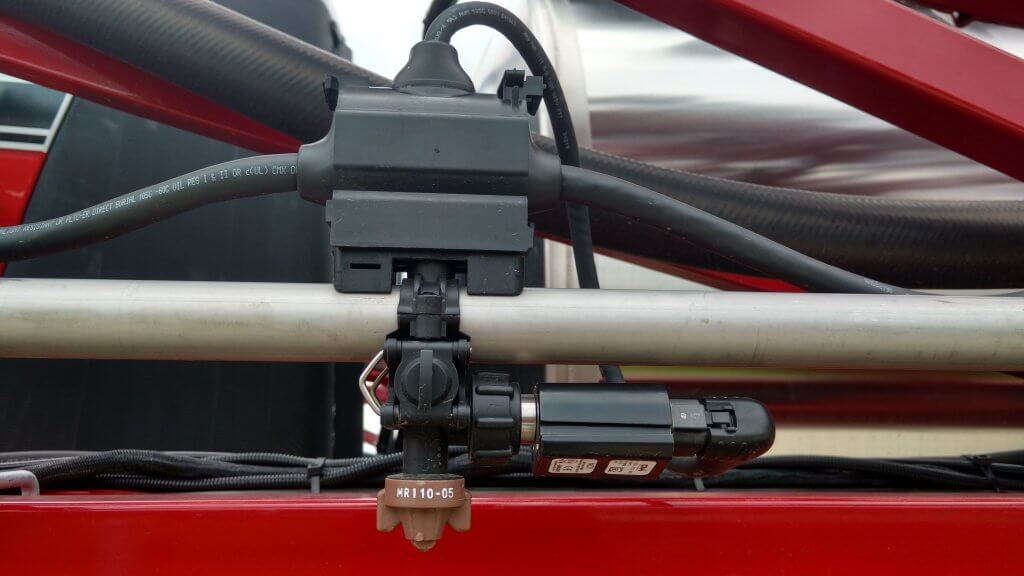
The new wet boom has a nozzle spacing of 10”, is fitted with three-nozzle-turret TeeJet bodies. The 10″ spacing allows for higher resolution of the spot spray, increasing potential savings compared to a 20″ spacing.
Figure 4: The spot spray nozzles are mounted at 10″ (25 cm) spacing.
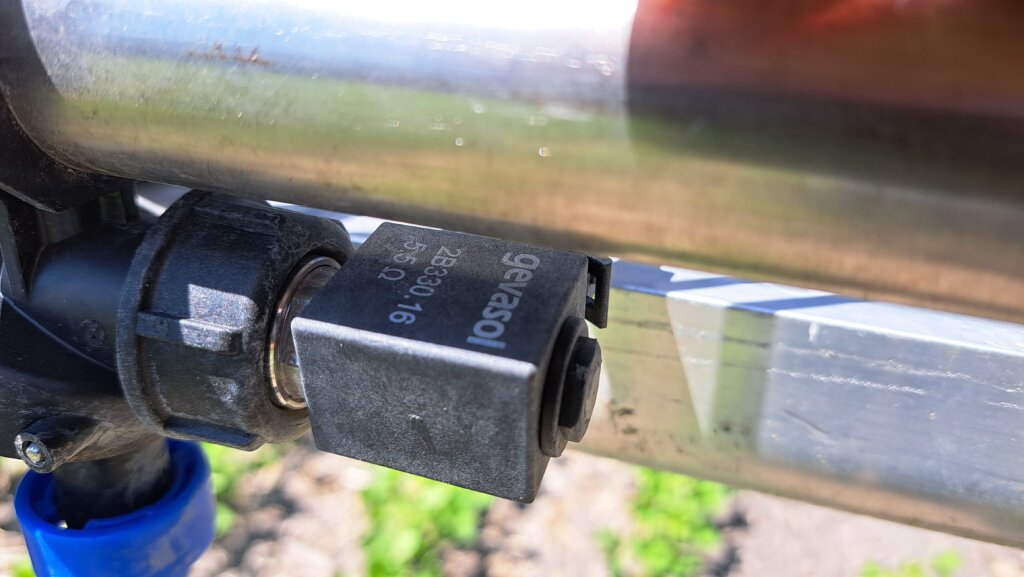
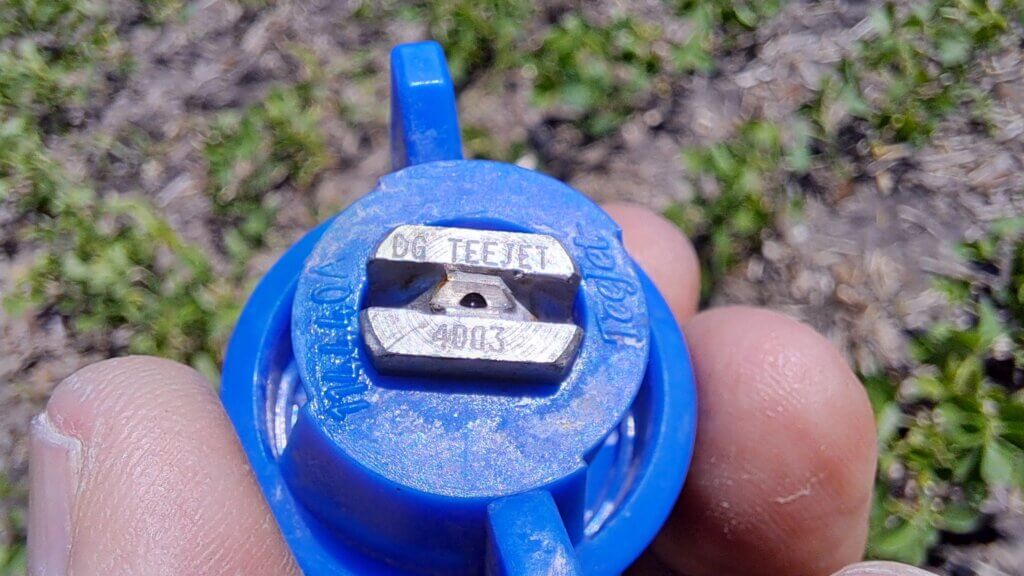
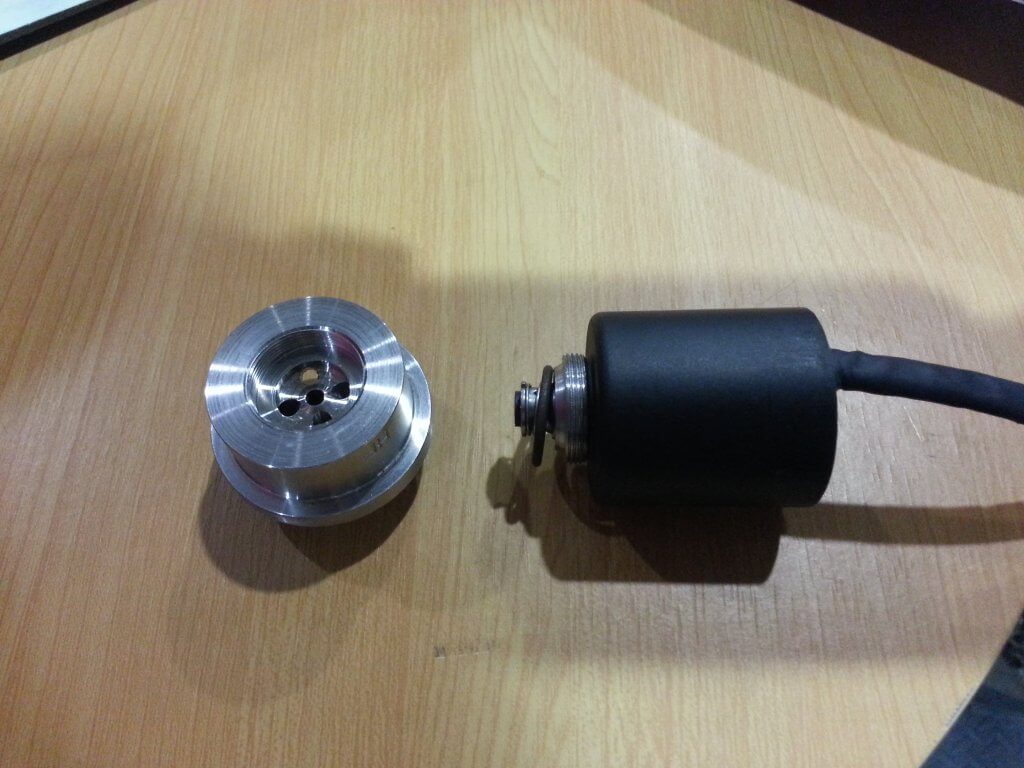
The spray was metered through custom-made TeeJet DG4003 tips using Gevasol solenoids running at a speed-dependent frequency, maximally 100 Hz, with turn compensation.
Figure 5: Solenoids activate the spray when a weed is detected in that nozzle’s lane.
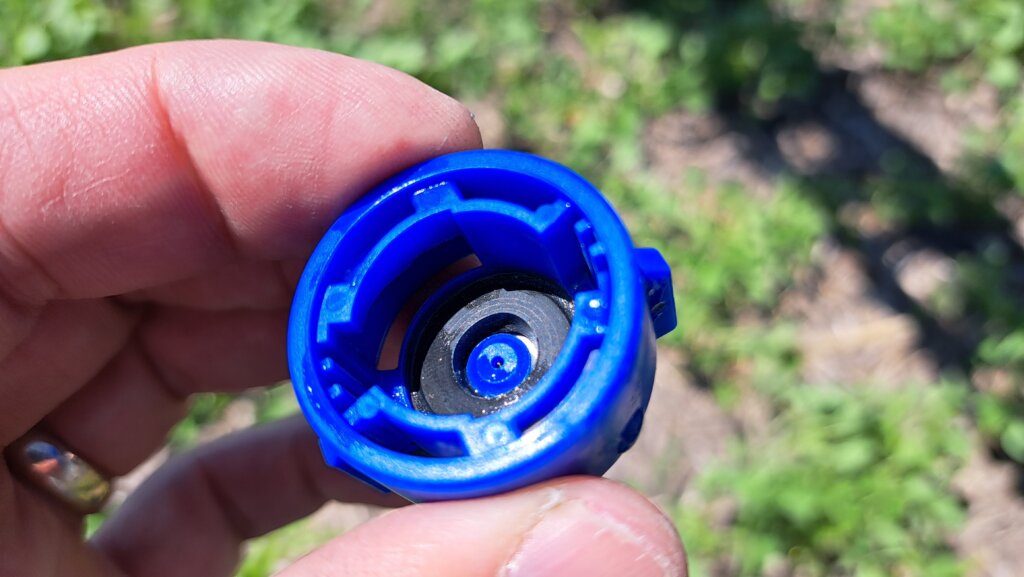
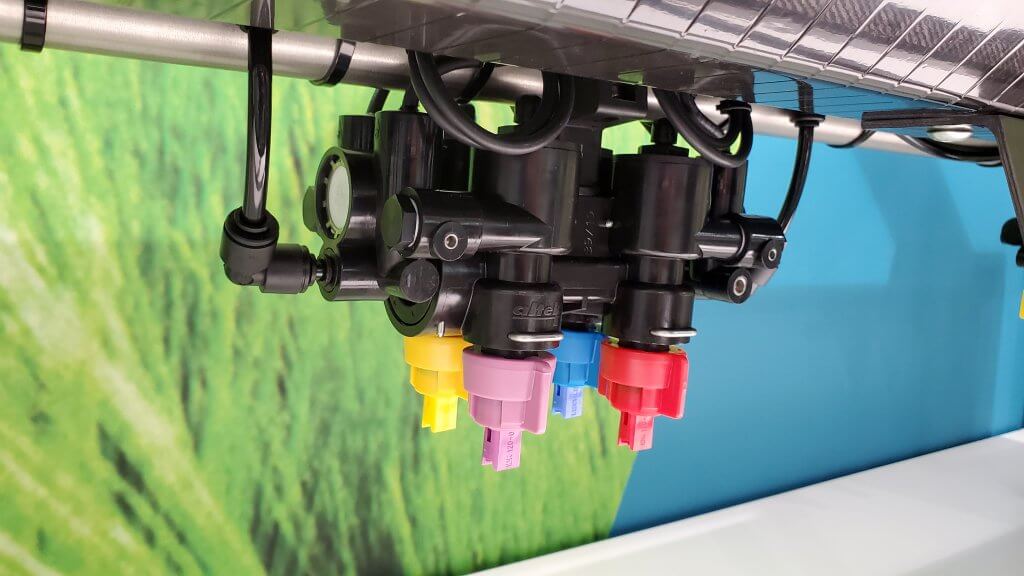
DG Nozzles use a pre-orifice to meter the flow at the rated amount, with an exit orifice slightly larger. This creates a pressure drop, resulting in a lower drift spray.
Figure 6: These Drift Guard nozzles are custom-made for Greeneye by TeeJet.
Figure 7: The blue DG pre-orifice meters the flow at 0.3 US gpm at 40 psi.
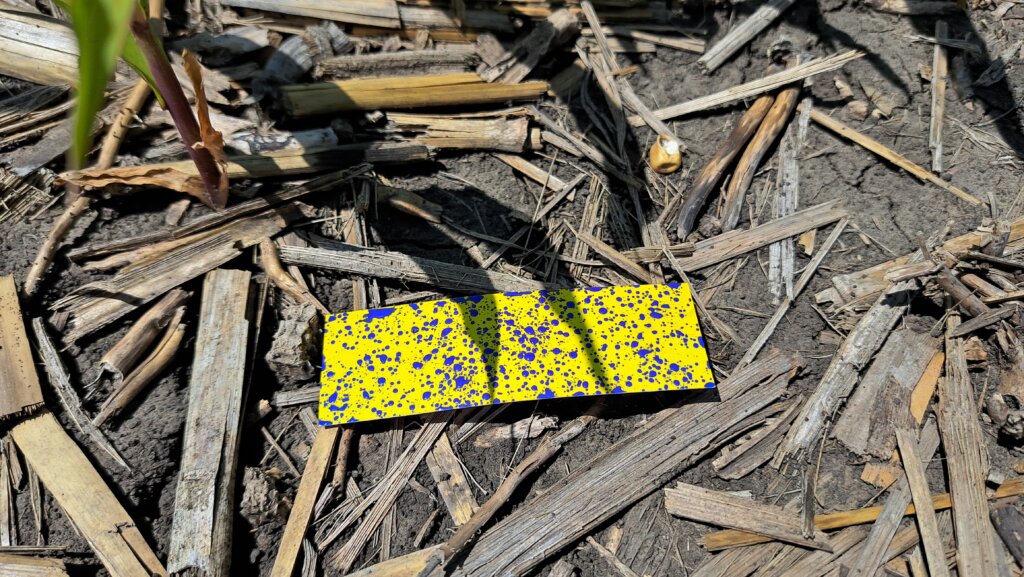
Looking at the spray quality and coverage on water-sensitive paper I thought the deposit looked just right. Spot sprays shouldn’t be too fine for risk of displacement from their intended band. We’re not seeing bundled nozzles with other spot spray systems, who leave nozzle selection to the operator. That can pose difficulties and possibly forfeit either weed control or savings.
Figure 8: The spray deposit shows adequate coverage and a good droplet size distribution for good placement accuracy.
Sectional control retains the plumbed resolution at this time, although nozzle-by nozzle resolution is in the pipeline. Cameras are mounted at 1.5 m intervals and can run up to 50 fps. Camera resolution is proprietary, but the company claims that weeds as small as ¼” diameter can be detected. In its current configuration, weed diameters of 1” are detected, leaving smaller weeds for the pre-emergent products. LED lights flash to illuminate the camera field of view, improving image consistency and permitting the system to run at night. The Greeneye system analyzes a captured image just once to make a spray decision, and does not use segmentation in its algorithm.
Figure 9: The camera and lights look ahead to provide the necessary time for the on-board computer to make the required calculations that determines the plant’s identity. Note the aspirated lens cleaner.
Like its competitors, the user can select from individual nozzle activation or, in “windy mode”, the addition of the adjacent two nozzles to create a three nozzle broadcast. The length of the band is automatically selected by the software, with no user input available. Sensitivity adjustments are currently by request to the factory, but will be available for operator control in 2024.
Greeneye provides its own cab monitor that works with the sprayer monitor on sectional control. The Greeneye monitor keeps track of the spray volume usage and provides an ongoing report to the operator.
The software is able to report back whether a detection was a grassy or broadleaf weed, a powerful piece of information for keeping track of weed patches and monitoring for emerging problems. Weed maps are already being produced as a proprietary tool, and will be generally available in 2024.
New Greeneye customers have their sprayer picked up at the yard and transported to Greeneye facility where the new boom, tank, and digital components are installed. The customer receives the converted sprayer, calibrated and ready to go.
In my judgement, the install was clean and tidy. Camera mounts are welded on, and an air jet can be used to keep the lenses dust free. Brackets for the GPU and other control boxes are unobtrusive, although the wiring does get a bit crowded in places. Everything is accessible.
Cost is $239,000 US at time of printing (July 2023). This gets the customer a Greeneye system for a 120 foot boom, a brand new aluminum boom, retrofit of the sprayer to dual tank, installation and warranty. Return on Investment (ROI) for a spot sprayer will depend on farm size and herbicide use. Based on observed savings to date, Greeneye estimates that for a farm larger than 3,000 acres the ROI would typically be less than 2 years.
Greeneye does not charge subscription fees for its algorithms. This last aspect is interesting as John Deere and Bilberry both charge for use of their algorithms on a per acre basis. John Deere, for example, charges $3/acre US for corn, and $4/acre for soybeans and cotton, each time you make a spot spray pass with See & Spray Ultimate.
Available Greeneye algorithms are for Green-on-Brown, and Green-on-Green in corn and soybeans as of July 2023. Cotton and milo will be available in 2024, and Greeneye is working on canola and wheat as well. Like Bilberry, they capture images from the cameras for use in algorithm learning, and accuracy and hit rate should be improving with time. Travel speeds of 15 mph are working well according to Greeneye.
As for performance, the proof will be in the pudding. The company in its wisdom did commission an independent evaluation at the University of Nebraska, Lincoln, and has made a summary of the university report available on its website. According to UNL, broadleaf weed control in corn with the spot sprayer was equivalent to the broadcast treatment, and grassy weed control was slightly less effective. UNL researchers noted herbicide crop injury (“Status”, dicamba + diflufenzopyr) was reduced with the spot spray. Of course, savings will be a function of weed density and the detection threshold chosen by the operator, but the addition of reduced crop injury resulting in greater yields could also be very valuable.
A recent investor and business partner is Farmers Business Network (FBN). FBN sees the opportunity for a spot sprayer to act as a scouting platform that helps evaluate the success of new pest management strategies.
Support on the ground is in the form of US staff with backgrounds in the spraying industry. Software development and digital troubleshooting remains in Israel.
Although I no longer have business links to Greeneye, I was happy to see this sprayer operating as well as it did. I remain convinced that spot sprays will be an essential part of our spraying future, for sustainability and resistance reasons. It is heartening to see these early successes and it will be interesting to see them continue to evolve.
“This year was the first year we used a growth regulator on our wheat. After heading, we noticed a wavy pattern of different plant heights between 30 and 45° to the operating direction. It was only a couple inches difference and was difficult to photograph. We sprayed 12 gpa at 9 mph using TT11005 nozzles alternating forward and back at 35 psi and a 70% duty cycle. I’ve talked to other operators in Canada and in Europe and several customers have reported seeing this pattern, no matter which model of PWM sprayer. What’s happening?”
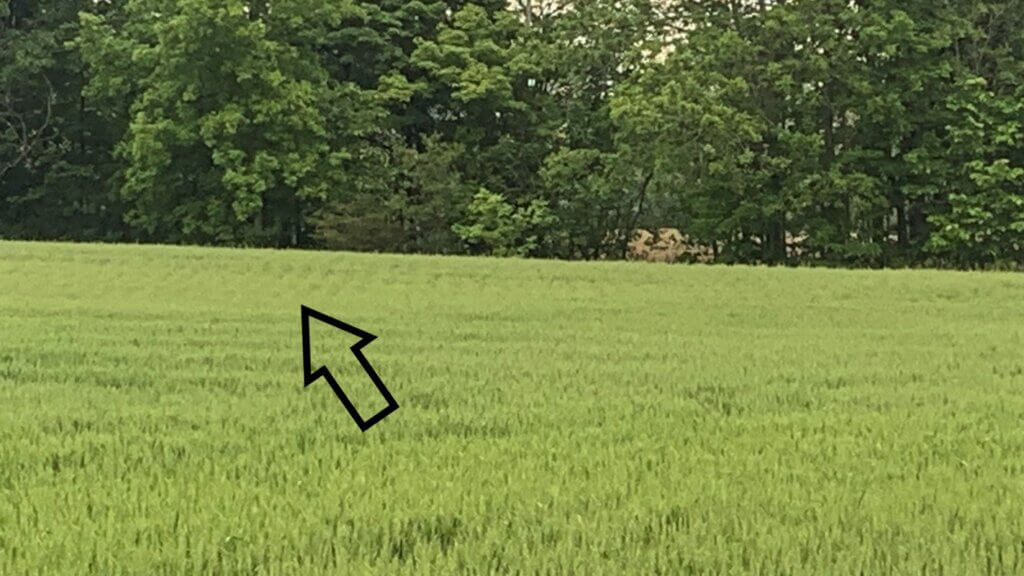
Skips in cereal that are obvious to the eye can be difficult to photograph.
The pulse width modulation is very likely responsible for the waves. We have a number of articles describing how PWM works, but here’s a brief recap of the relevant bits.
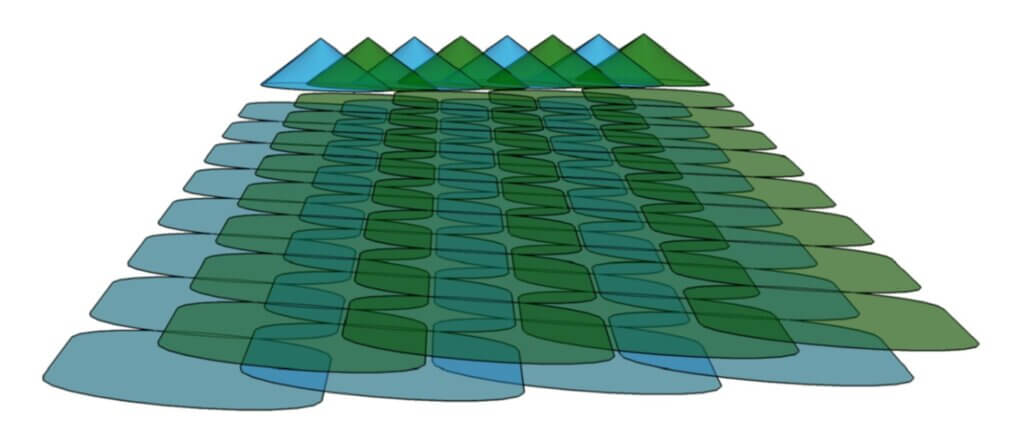
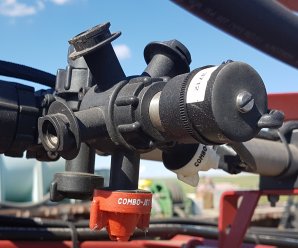
A solenoid intermittently interrupts nozzle flow with a frequency between 10 and 100 times per second (depending on manufacturer). The proportion of the time the nozzle remains open is called the Duty Cycle. Each nozzle is linked to the neighbouring nozzles so that when one pulses on, the neighbour pulses off. So although you may only have half the nozzles spraying at any moment in time, sufficient overlap ensures there are no gaps in the pattern.
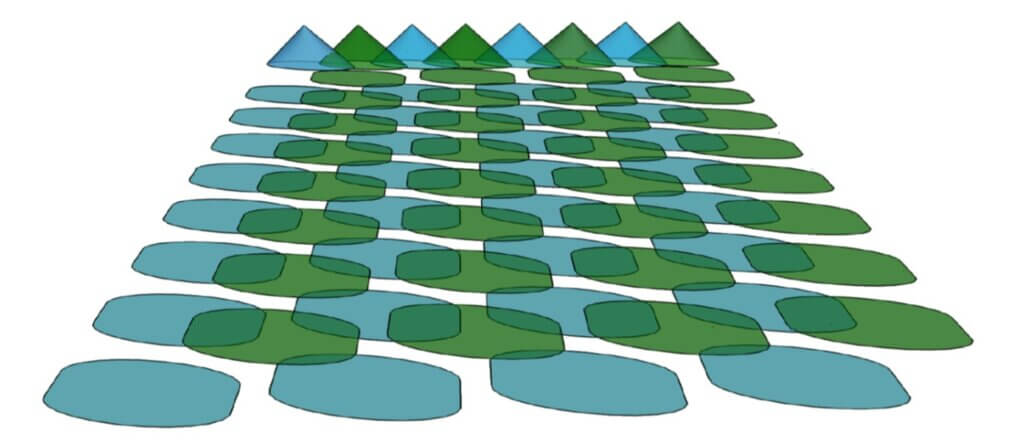
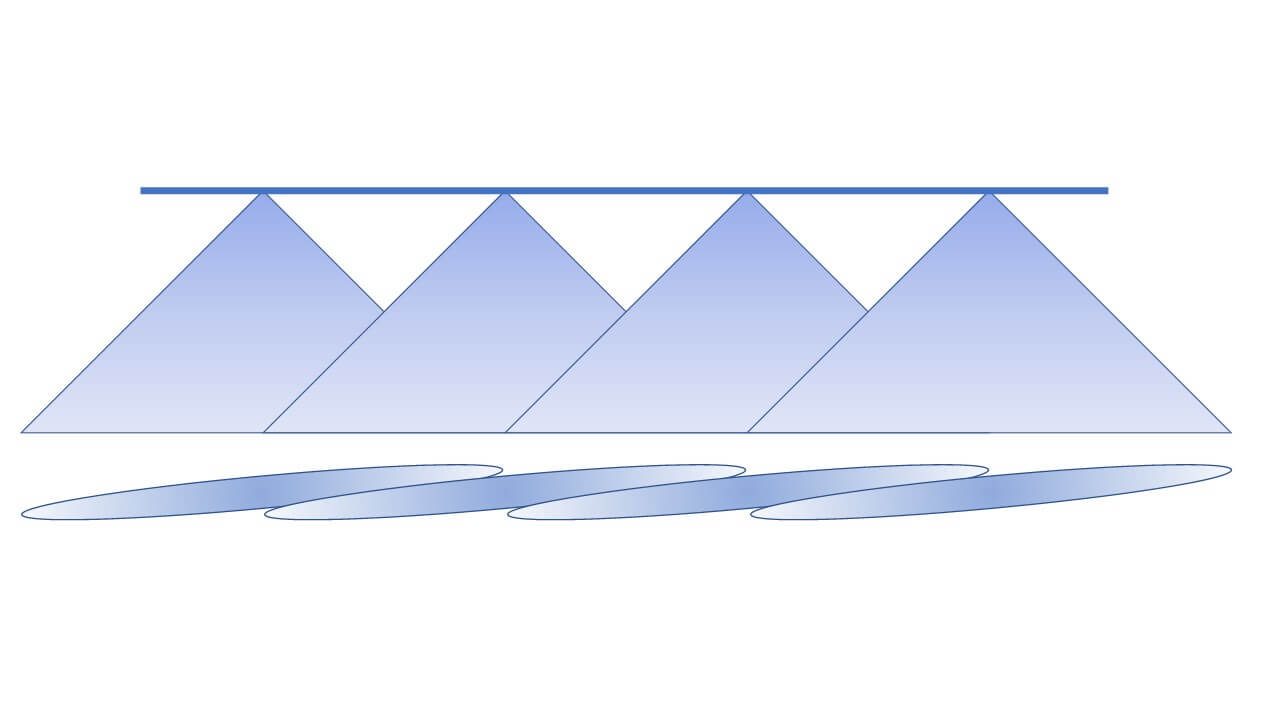
However, depending on the combination of frequency and duty cycle, it is possible to lose that overlap between nozzles. This can cause a checkerboard pattern that appears to repeat in a diagonal line. The following two images are from www.Capstanag.com and they illustrate an ideal overlapping pattern and a pattern that creates skips.
Here’s a 11008 at 10 gpa, 15 mph, 60% DC, 10 Hz, 21” boom.Here’s an 8008 tip at 5 gpa, 15 mph, 30% DC, 10 Hz, 21” boom.
We can also sometimes see skips on the outer edges of sharp turns. In that case the outer boom section can be travelling two or three times as fast as the cab. In a conventional system, this would produce under-dosing in the outer region and over-dosing closer to the cab.
Some degree of skipping may be more common than we realize. It’s only when we spray products that produce obvious visual symptoms at low doses that we can see a biological response. In the case of plant growth modifiers used to prevent lodging in cereals, we have a perfect storm situation. A region of reduced spray overlap, applied at a time when the crop is elongating rapidly, perhaps on rolling ground from an unstable boom height, can all conspire to create regions of reduced dose with striking visual symptoms.
The following list describes conditions that can increase the potential for skips, and what you can do to avoid them.
Low duty cycles. Cycles less than 60% should be avoided.
Fast travel speeds. Faster speeds may help blend the spray in the swath a little, but too fast can create gaps and increase drift potential. At high travel speeds the system is usually operating at a high duty cycle unless an especially large nozzle size has been selected. Ideally, we want to run the duty cycle at 60-80%, but there are always exceptions. For example, according to Wilger, 90-92% is fine when you run at 20 gal/ac with their “15 gal tips”.
Low booms. The lower the boom, the less overlap. Raising the boom to 24″ above the crop may help, but beware of drift.
Narrow fan angles. Nozzle angles less than 110° reduce the degree of overlap and are less forgiving if the distance between nozzle and target decreases.
Low pressure. Avoid operating at pressures below 35 PSI. Due to pressure drop at the solenoid, 40 PSI on the monitor might mean 28 PSI at the nozzle. Some nozzle tables account for solenoid-induced pressure drop and some do not. Low pressure may be insufficient to establish the full 110° pattern, and the resulting marginal overlap not only means inconsistent dose, but inconsistent droplet size because droplets are coarsest at the edge of the pattern. And, if that’s not already enough, note that air induction nozzles intended for use with PWM tend to create messy patterns at low pressures and low duty cycles.
Especially coarse spray quality. Unless the label requires it, consider using spray qualities no larger than Very Coarse, particularly at low volumes. PWM frees the operator to use pressure independent of rate, so you may be able to accomplish this without swapping nozzles.
Products that are highly dose-dependent. This one is likely unavoidable, but be aware they are the products most likely to produce obvious visual symptoms. In the case of PGR’s, we have not (yet?) seen any evidence that skips translate to reduced yield. Weed misses or sub-lethal doses of fungicide or insecticide might be another matter.
PWM is gaining popularity, and there is an ever-increasing number of first-time users that need to make nozzle selections for their system. We’ve written about it here, here, and here.
Recall the PWM replaces spray pressure with Duty Cycle (DC) of a pulsing solenoid as the primary means of controlling nozzle flow. The solenoid shuts off the flow to the nozzle intermittently, between 10 and 100 times per second depending on the system. The Duty Cycle is defined as the proportion of time that the solenoid is open, and for low-frequency systems, DC is more or less linearly related to flow rate.
The first rule of PWM nozzle selection is to understand that under average travel speeds, we’d like to see the duty cycle of the system at between 60 and 80%. This means that the nozzle solenoid is open about 2/3 of the time. This value also describes the flow rate as a proportion of the full capacity that nozzle.
The reason for this 2/3 duty cycle rule is to enable four key features of PWM:
It’s ideal for turn compensation, allowing the outer nozzles to increase their flow 20 to 40%, and the inner nozzles to decrease flow about three-fold, in accordance with boom speed.
It allows speed flexibility, providing some additional speed, but more importantly, reduced speeds should conditions require it, without a change in spray pressure.
It compensates for pressure changes so that spray quality can be adjusted without requiring a speed change. Less pressure reduces nozzle flow, and increasing DC recoups accordingly.
It allows for customized higher flows of certain nozzles, perhaps behind wheels, to address reduced deposition in their aerodynamic wake (available on some PWM systems).
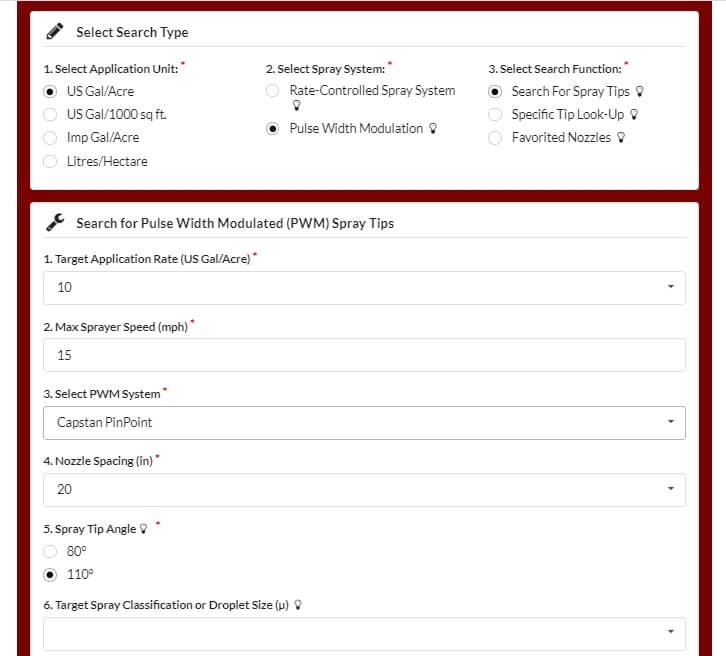
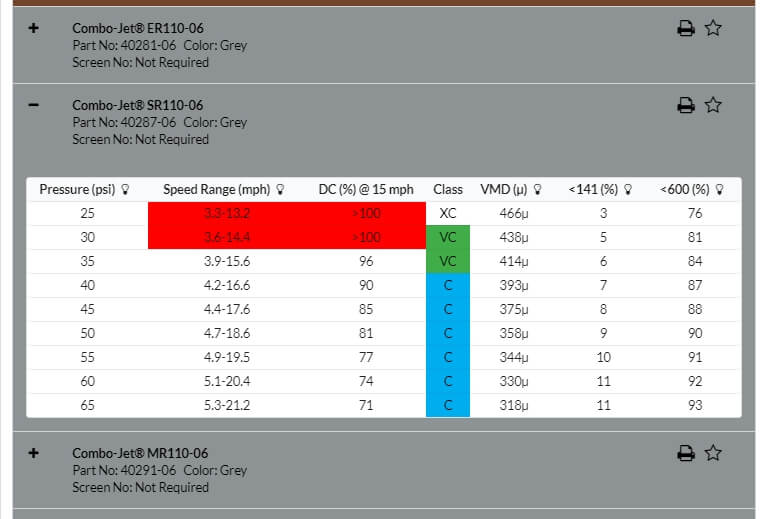
The best tool for selecting the right nozzle size is Wilger’s Tip Wizard. This site asks for your desired average speed ( although it calls this “Max Sprayer Speed”), and reports the expected DC for a host of nozzle size solutions and pressures. It also reports maximum and minimum travel speeds and other useful information such as spray quality.
Fig 1: The Tip Wizard is a useful tool for sizing nozzles on any PWM system. Sizing information applies to any nozzle. Spray quality information is for Wilger ComboJet nozzles only.
Although intended for Wilger nozzles, the site’s sizing feature works for any nozzle brand. It asks the user which PWM system they have for the purpose of calculating the documented pressure drop across the solenoid.
Fig 2: Tip Wizard results for the Wilger SR11006 tip at 10 gpa and 15 mph. Look for a solution that provides 60 to 80% Duty Cycle (DC).
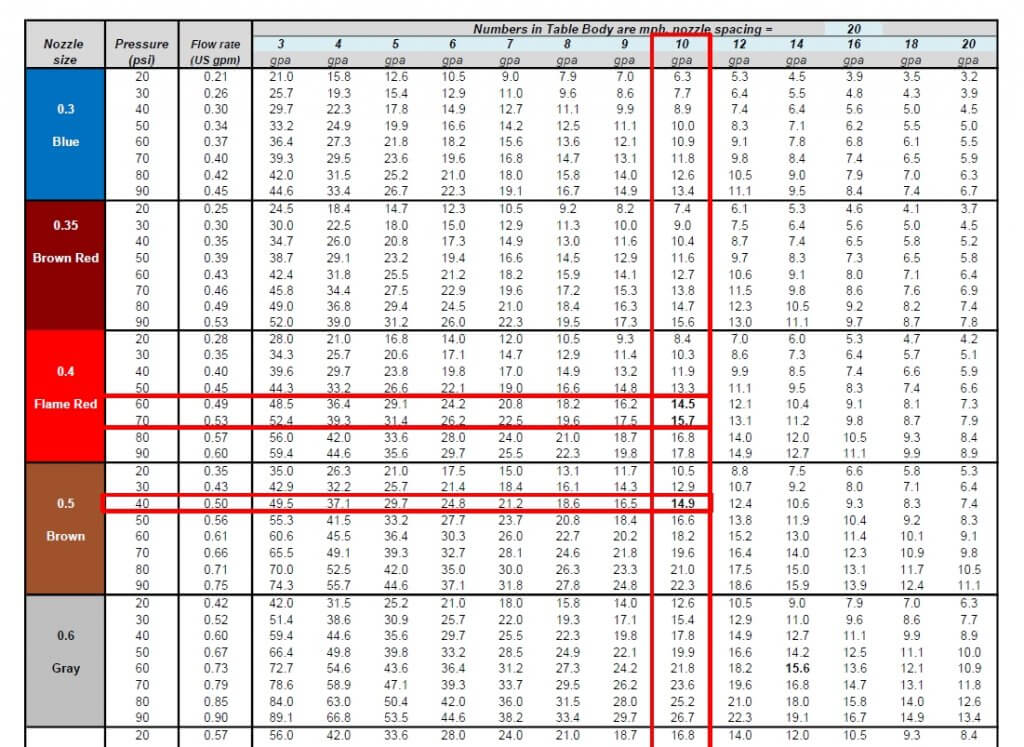
If you don’t have access to the site, a basic calibration chart can still work with a simple trick. Recall that we use the top row to identify the desired water volume, and the table’s interior values are speeds, as described here.
Below are two solutions for someone wanting to apply 10 gpa at 15 mph without PWM. The correct choice depends on the required pressure to produce the needed spray quality.
Fig 3: A conventional calibration chart, solving a 10 gpa application for 15 mph.
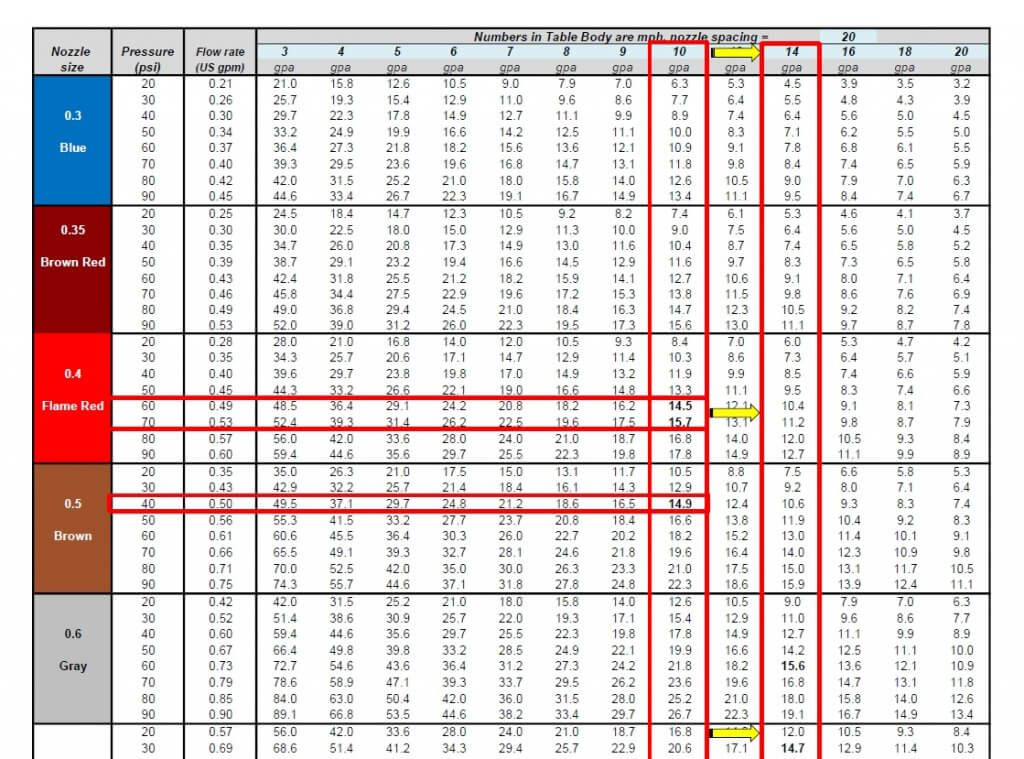
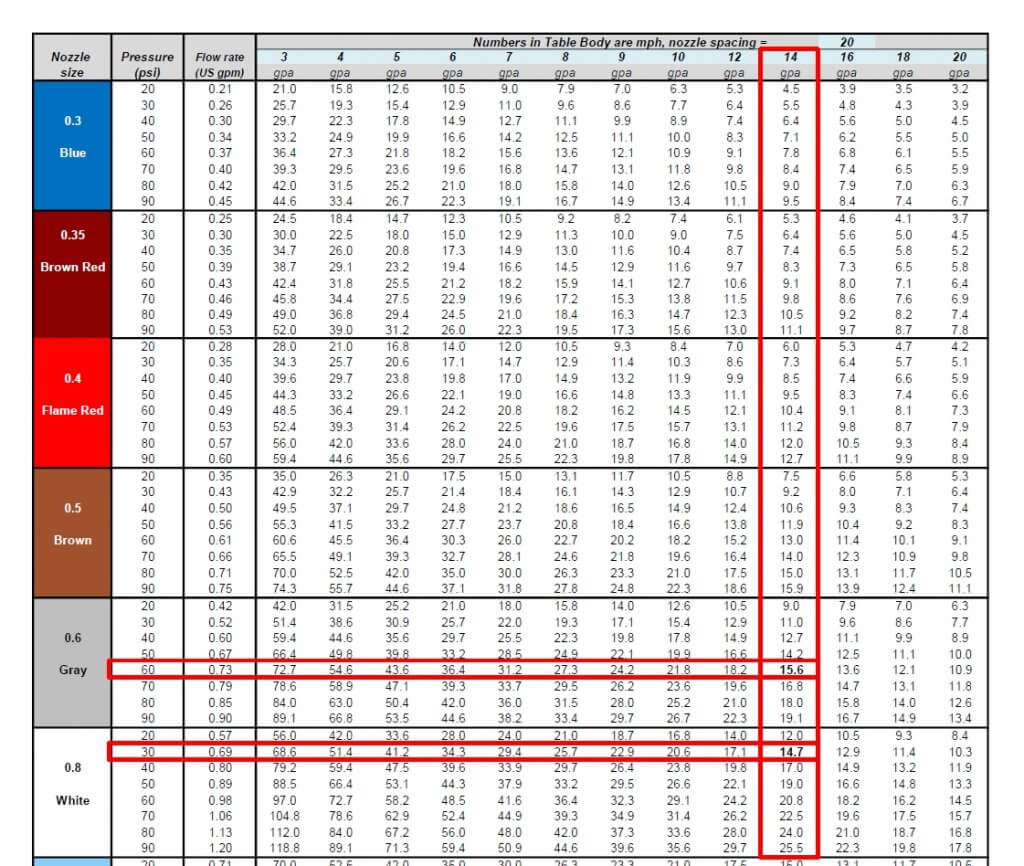
If you want to apply the same 10 US gpa using PWM, simply solve for a larger volume that offers the right DC. For example, choosing 13 gpa will over-apply by 3 gpa, or 30%. The PWM system adjusts by running at 100-30=70% DC. If the chart doesn’t offer 13 gpa, go nearby, to 14 gpa, as we did below:
Fig 4: By pretending to require 14 gpa instead of the actual 10 gpa, the conventional calibration chart is tricked into solving for a nozzle size that will work with PWM at 60% Duty Cycle.
Now solve for the same target speed, 15 mph. The solution will run at 60% DC. Again, there is more than one choice, and that will depend on the spray pressure needed.
Fig 5: Two possible solutions for achieving 10 gpa at 10 mph. An 06 nozzle at intermediate pressure or an 08 nozzle at low pressure.
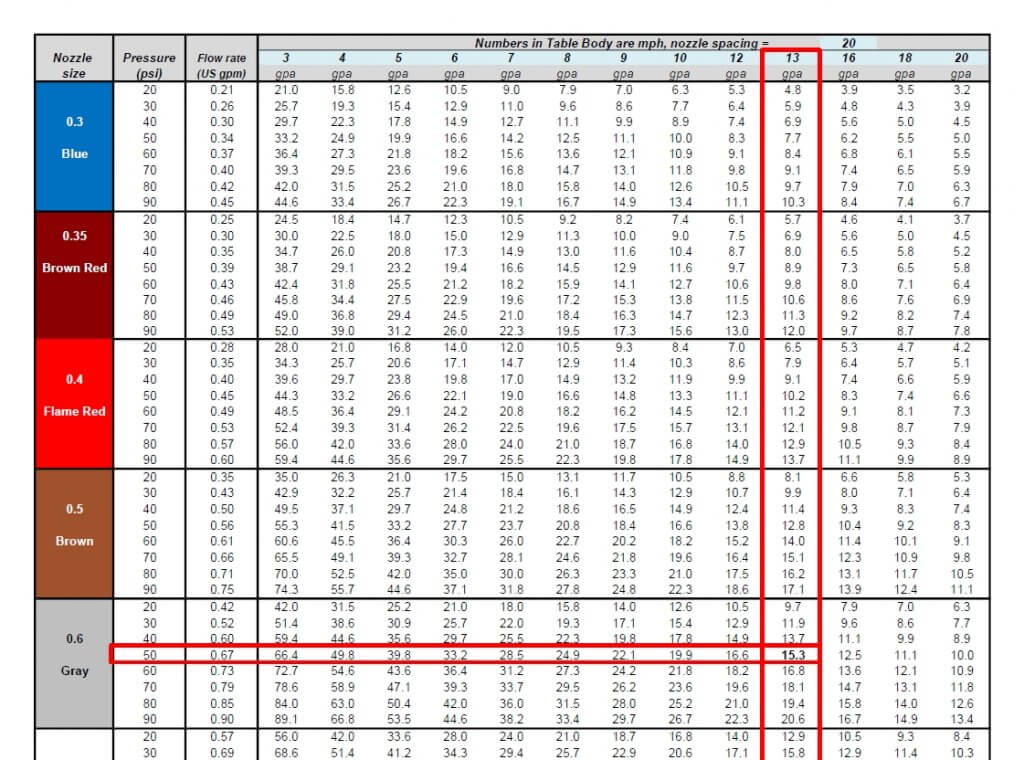
We’ve developed a template, in US or metric units, that can be customized for any water volume. Here is the same chart with 13 gpa added:
Fig 6: A conventional calibration chart with the 13 mph speed added.
The best solution for 10 gpa at 15 mph is the 06 size nozzle at 50 psi. This is not engraved in stone. One of the nice things about PWM is that it has inherent flexibility. Make the nozzle pressure a priority to get the correct spray quality. It really doesn’t matter whether the resulting DC is 65 or 80%, the system will still work well. Simply avoid extremes that take you below 50% or above 90%, they will limit the system’s capabilities.
It can handle any water volume or nozzle spacing by filling in the blue cells. Two additional worksheets in the file automate the process, simply enter the desired application volume, travel speed, and nozzle spacing (yellow cells), and the solution that offers the optimal duty cycle range will be highlighted in light green.
North American built boom sprayers have nozzle spacings of 20” (50 cm in the rest of the world), but other spacings such as 15” (37 cm) and 10” (25 cm) also exist. What are the reasons for these alternative spacings and do they offer any inherent advantages?
Why spacing matters
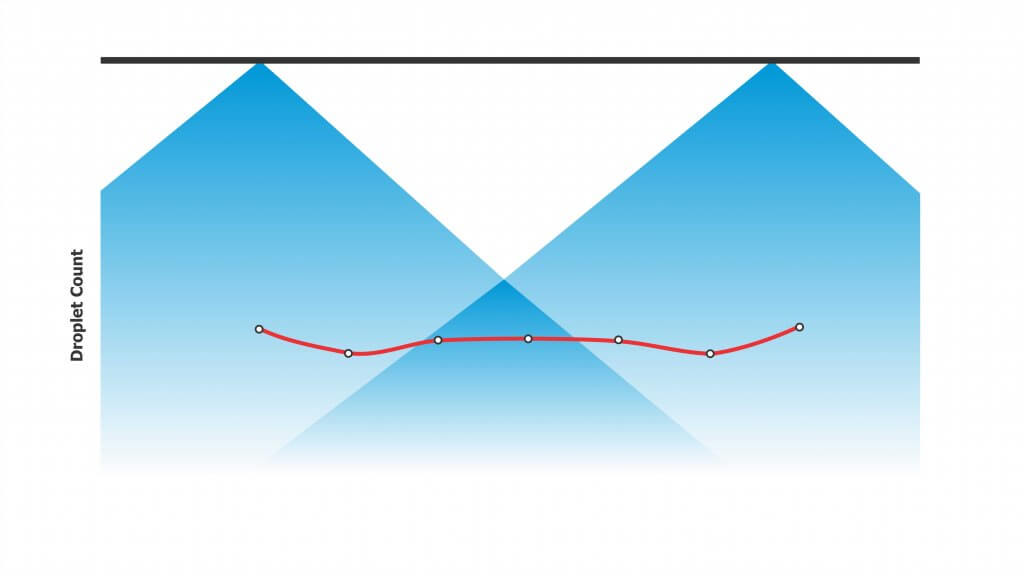
Nozzles are spaced along a boom to allow their fans (patterns) to overlap sufficiently at the target. In broadcast spraying, a uniform distribution of spray volume gives us the best chance for consistent coverage along the boom. Since flat fan nozzles produce a tapered pattern (i.e. the volume is highest in the centre and diminishes towards the edges), approximately 100% overlap (i.e. 50% from each neighbour) will produce a uniform swath.
Figure 1: Tapered flat fans that require some overlap are the default pattern type for agricultural boom nozzles. This is true of conventional and low-drift styles. Note that the flat fans are turned 15° to prevent the spray patterns from interfering with one another.
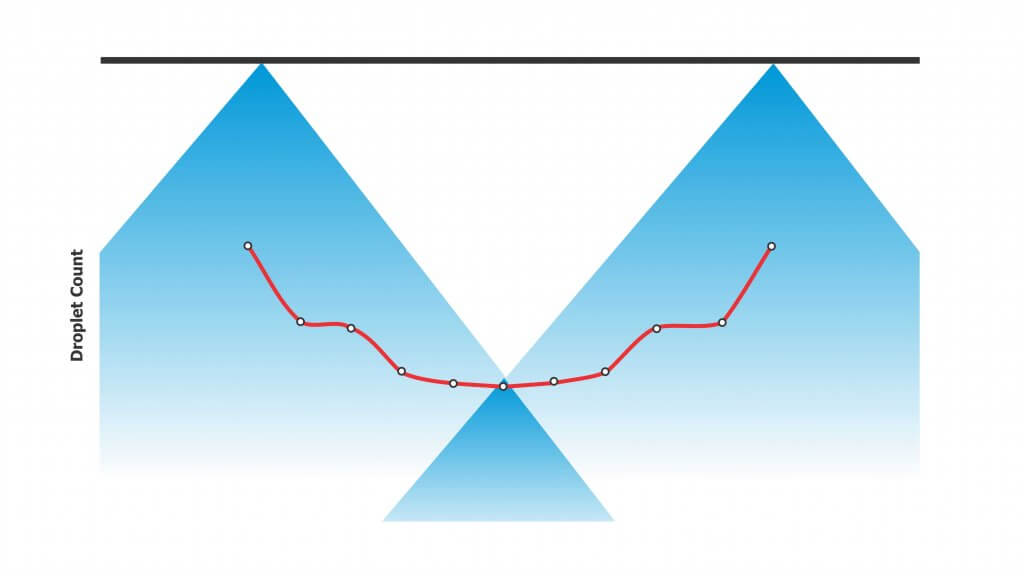
The 100% overlap isn’t just for volumetric distribution. Flat fan spray patterns tend to have more and finer droplets in the centre and fewer and coarser droplets at the edges. All droplet sizes contribute to coverage in different ways, so the overlap ensures both number and sizes are evenly distributed along the entire boom.
Figure 2: 30% overlap may achieve volumetric uniformity. But because the centre of the pattern contains the majority of the smaller droplets, low overlap may result in low coverage in the overlap regions, resulting in striping.Figure 3: Consistent droplet number distribution along the boom requires at minimum 100% overlap (50% from each neighbouring nozzle). This blends those regions of the patterns with high and low droplet densities.
The generic 20” spacing arose from long-held conventions about boom height, fan angle, and travel speed. Specifically, this spacing required a boom height of 20” to obtain good overlap of the once-dominant 80° fan angle. Combined with 0.15 to 0.3 US gallon per minute (gpm) nozzles and travel speeds of 6 to 8 mph, operators were able to apply 5 to 15 US gallons per acre (gpa) volumes. Using nozzles with smaller flow rates would generally result in nozzle blockages.
But what if we want to change any of those variables? How does this affect nozzle spacing? Figuring out the pros and cons of an alternate spacing requires a little math and some contingency management.
Boom Height Math
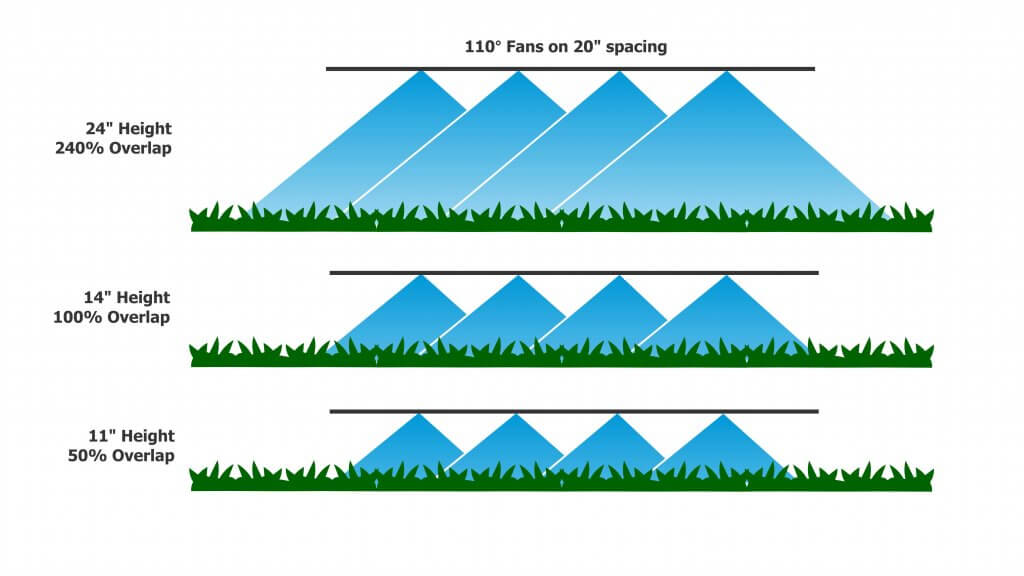
First the math. If the boom has 20” nozzle spacing and we need 100% overlap, the width of the spray pattern at target height must be two times the nozzle spacing, which is 40″. You must calculate the required fan angle and boom height to achieve this. Most nozzle catalogues have tables to help with this, or you can download a handy spreadsheet to calculate your own scenarios here.
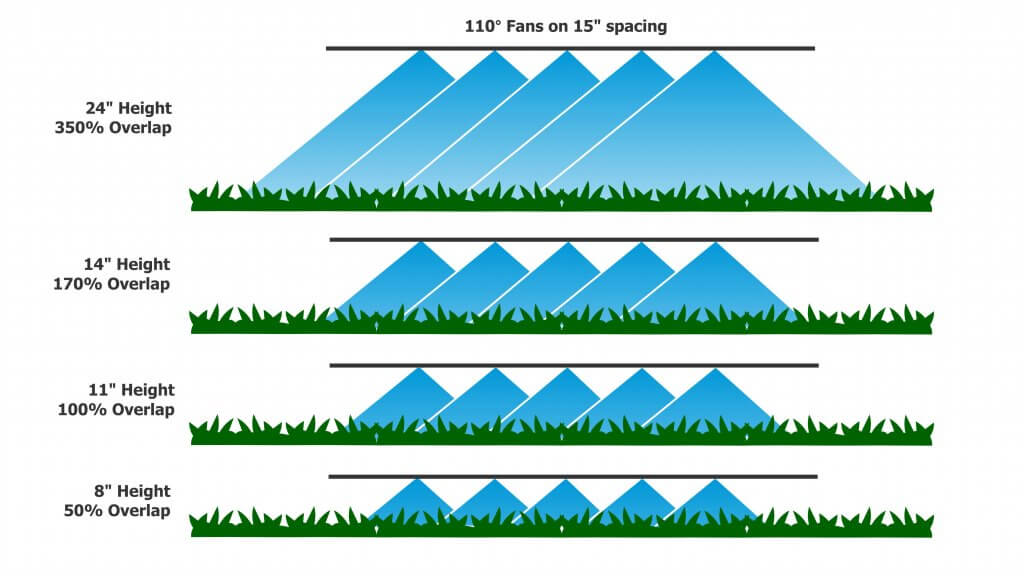
For today’s standard 110° fans, a minimum boom height of 14” is needed to achieve 100% overlap. For 15” spacing, the height is reduced to 11”. For 10” spacing, we drop to a mere 7”. However, consider that most modern suspended booms are not operated at heights less than 24” to allow for sway. At that height, there’s plenty of overlap to go around for 20″ nozzle spacing. For those booms that are able to operate at a consistent height, narrower spacings permit lower heights that will reduce drift potential significantly. Every time we halve boom height, we also halve drift potential.
Figure 4: Using 110° tips with 20″ spacing, the theoretical height at which we achieve 50% overlap is 11″ above target.
By tilting the nozzles forward or backward from the vertical, we can reduce the boom height somewhat further and still get the same overlap. For example, for 20 and 15” spacings, angling nozzles forward or backwards by 30° allows us to drop the boom another 2” closer to the target.
Contingencies
A suspended boom hardly ever stays at a uniform height; It sways up and down with field conditions, topography, etc. This is why many operators set their booms above the minimum height – to prevent striping when the boom sways low. The penalty is that this increases the distance droplets need to travel, increasing drift potential and any turbulent displacement problems arising from the moving boom.
Assuming a 110° flat fan at 24” boom height, each nozzle achieves a theoretical pattern width of about 70”, which is an overlap of 70÷20=3.4-fold or 240% on 20” nozzle spacing. Given a minimally-acceptable overlap of 50% (25% from each neighbouring nozzle), the boom could be as low as 11”. For 15” spacing, the minimum height for 50% overlap is 8”, and for 10” spacing it’s 5”. This means the narrower spray patterns gain 3” to 6” in allowed downward boom movement.
Figure 5: Using 110° tips on 15″ spacing, the height for 50% overlap is 8″ above target.
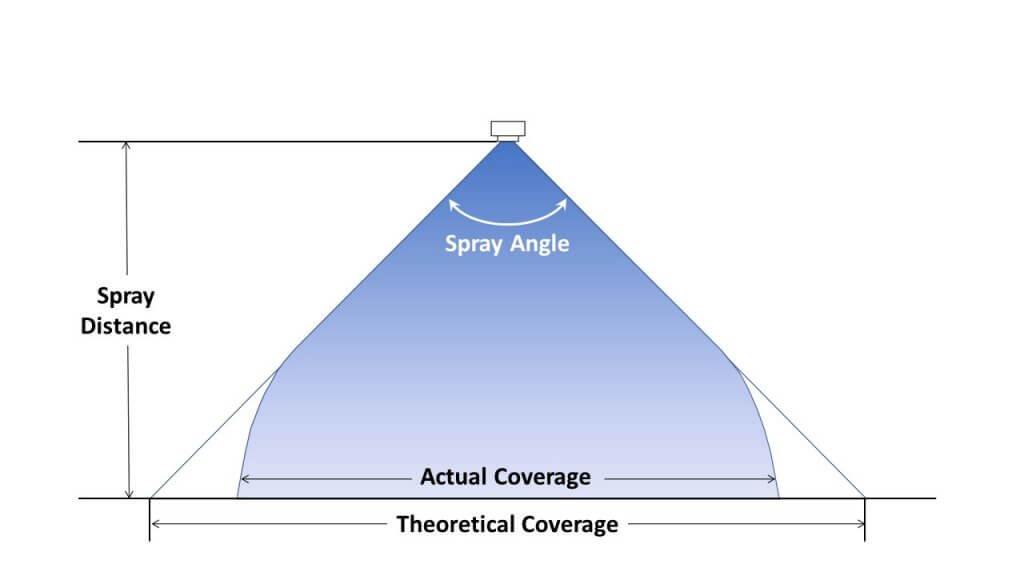
A second contingency is that spray patterns are rarely the exact value that the nozzle catalogues specify. A so-called 110° nozzle may operate at only 90°, or up to 150°, depending on the nozzle model, the spray pressure, and the tank mix. Learn more here and here. Patterns also don’t continue to grow at their rated fan angle, as droplets slow due to air-resistance and fall more vertically due to gravity. For that reason, a visual check is recommended to ensure the expected overlap is achieved.
Figure 6: Fan angles indicate initial trajectories of droplets at the edge. With distance, gravity pulls these droplets downward, narrowing the pattern width from that achieved theoretically (figure adapted from image in TeeJet catalogue).
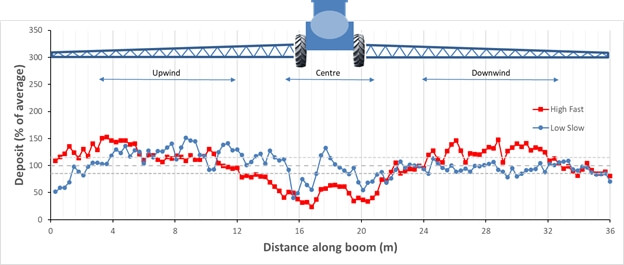
A third issue to consider is less related to boom height but nonetheless affects spray distribution. Small droplets move with air currents, and the turbulence created by large, fast sprayers creates enough turbulence to move these droplets significantly. A perfect pattern under static conditions can look quite different at a fast travel speed with a modest side wind. Low booms may help prevent some of this displacement because droplets spend less time in flight, and their average velocity is faster.
Figure 7: Spray deposition onto a 2 mm string to measure deposit uniformity for a fast travel speed and high boom and a slow speed, low boom configuration.
Flow Rate Math
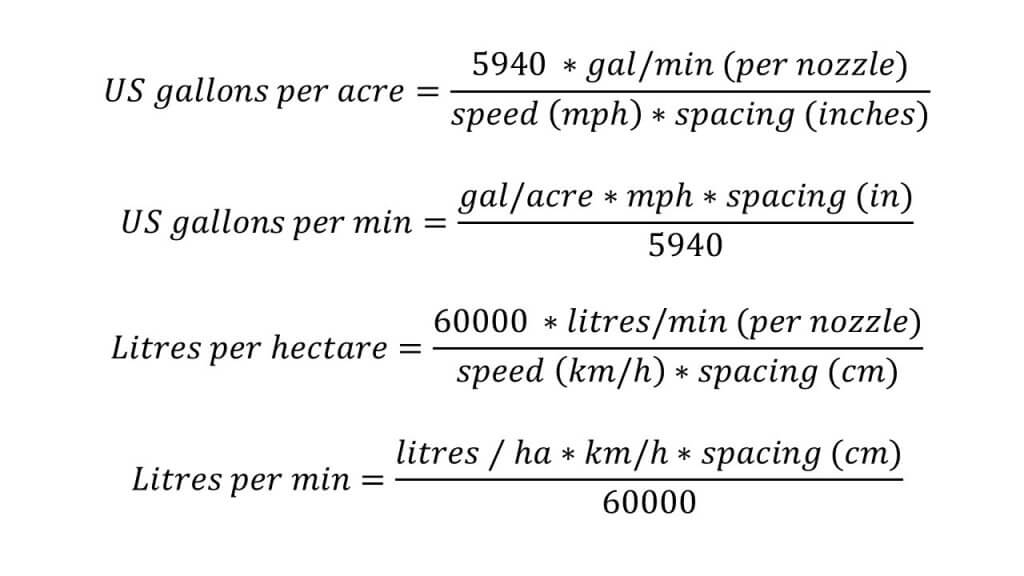
Flow rate requirements per nozzle change whenever we equip a boom at an alternate spacing. The basic formulae are shown below.
Moving from a 20″ to a 15″ spacing would require a nozzle with 0.75 of the flow rate, approximately from a 02 to 015 size, or 03 to a 025 size, or 04 to 03 size, etc.
Pulse Width Modulation
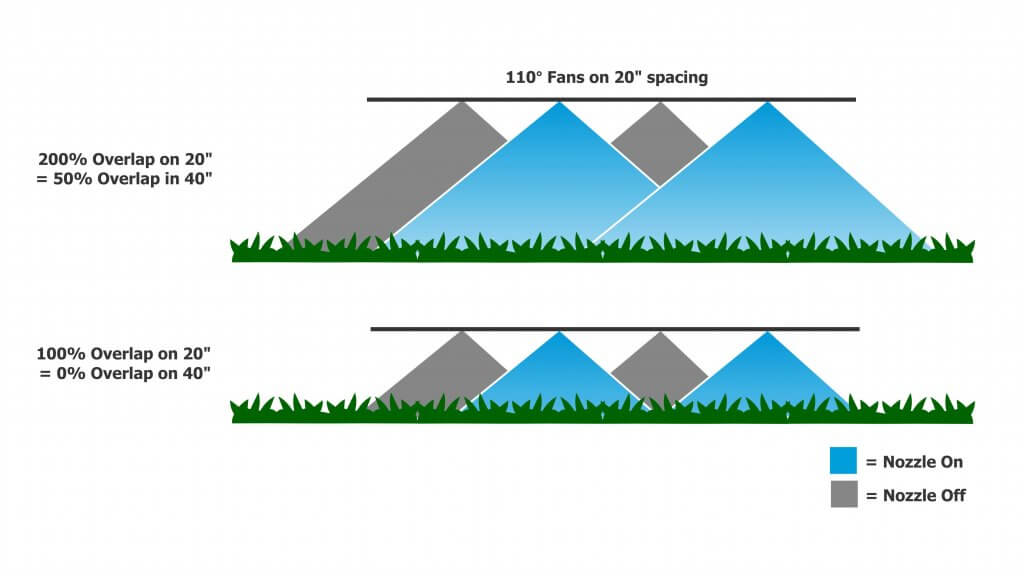
The use of Pulse Width Modulation (PWM) has increased the overlap requirement. With PWM, alternate nozzles are on a 180° timing offset from their neighbours. This means that when running >50% duty cycle, when one nozzle is temporarily off, its neighbours are on. These neighbours’ patterns must now span the gap, and 100% overlap is the absolute minimum to achieve this. PWM users therefore select the wider pattern angles and some opt for >100% overlap.
Figure 8: Pulse Width Modulated booms require 200% overlap so that the entire boom receives proper coverage when the alternate set of nozzles is off. For 110° fans at 20″ spacing, the minimum boom height would be 21″
PWM Considerations
High flows (greater than 1 US gpm at the nozzle) that are common for fertilizer top-dressing may require higher-flow PWM valves.
Narrow spacings reduce the individual nozzle flow rates and can therefore support higher application rates before triggering a larger valve requirement.
PWM valves aren’t cheap and for example 15″ spacing compared to 20″ spacing adds 24 valves on a 120′ boom.
Banding
We noted that 20” nozzle spacing is a standard because it corresponds to what has traditionally been achievable with available boom heights and spray pattern angles. But things can change.
Narrower spacings such as 15” originate with row crops and planter row spacings of 15” or 30”. These spacings exist so the spray pattern can be placed either over the top of a crop row, or in between the rows for banding. Using narrower fan angles and/or lower boom heights, together with “even” (as opposed to “tapered”) fans, banding sprays can be applied over the top of, or between crop rows. Or drop hoses can reach between the rows for top-dressing or directed sprays into the canopy.
Canopy Penetration
With narrower spacing, it can be argued that a greater proportion of the boom length has spray directed directly downward (corresponding to the centre of the pattern). Whether or not this translates into better penetration of a canopy is a fair question. In laboratory trials, use of 10” or 20” spacing did not improve penetration into a broadleaf canopy. But if the lower boom height afforded by the narrower spacing was utilized, some improvements in the deposit of angled sprays onto vertical targets was observed.
Adjusting to Narrower Spacings
As we showed earlier, use of 15” or 10” spacing booms for broadcast sprays requires a smaller nozzle size to achieve the same spray volumes as the 20” spacing. If boom height remains constant, narrower spacings result in greater pattern overlap which provides more latitude for sway. Alternately, lower boom heights can be used.
Using smaller nozzles on narrower spacing presents some challenges. Generally, smaller nozzle size means finer spray quality. If an operator wants to retain the spray quality they had on a 20″ spacing, they may opt to use lower pressure (not advisable for non-PWM systems) or swap to different nozzle design that can produce the desired spray quality at the lower flow rate.
Smaller nozzles are more prone to plugging, so that needs to be managed with filtration, filling practices and water sourcing. Be aware of the the product formulations and their requirements for filter mesh size. Most dry products specify a 50 mesh filter (or coarser). Also, check size options for nozzles. The smallest size for most nozzle models is 015, but certain PWM-specific nozzles are only available in 03 or larger.
The marriage of narrow spacings with individual nozzle shutoff can result in a versatile system capable of producing high resolution banded sprays in narrow seeded crops. For example, consider a boom with a 10” nozzle spacing spacing that matches the seeder row spacing. The operator can shift from 10” to 20” or 30” from the cab if the valve control software allows it. With accurate guidance and good boom levelling, topdressing foliar products (e.g. nutrients, fungicides) can follow the crop row precisely.
Spot Sprays
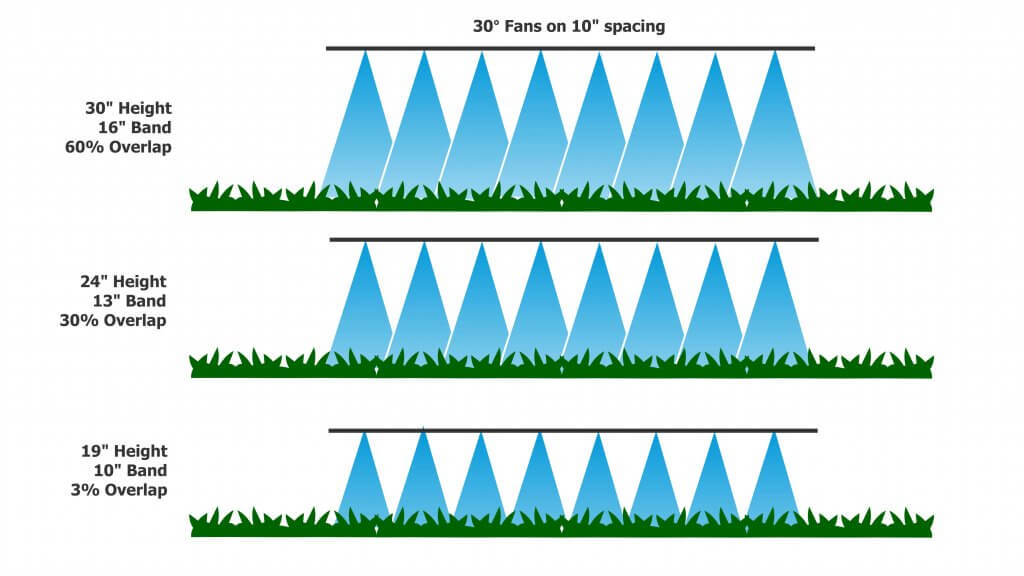
Spot sprays present a situation where compromises are needed. Some, such as WEEDit, utilize narrower nozzle spacings to allow better treatment resolution and increase product savings. Any one nozzle or sets of adjacent nozzles may be triggered by the sensor. For single nozzle activation, to preserve the value of the better resolution a uniform, narrow band of spray needs to be created. This means a 30° or 40° fan angle from a banding nozzle will be necessary. For example, a 24” boom height will result in a 13” band with a 30° fan, and an 18” band with a 40° fan. In the latter case, the dose would be diluted by 80%, wasting much of the potential savings.
Figure 10: Boom height is critical for banded sprays and for spot sprays. Too wide a pattern on a single nozzle reduces dose, too narrow creates misses.
Frequently, a patch of weeds will trigger several adjacent nozzles. Now these individual bands need to work together to create a uniform swath. This will inevitably require some overlap to avoid gaps, but too much overlap will result in bands where twice the dose will be applied. A tapered fan may suit this situation better. As a result of these varying needs, tolerances for spot spray boom height are even more strict than for broadcast spraying. More thoughts on spot spray nozzle selection are here.
Conclusions
Narrower nozzle spacings on a broadcast boom allow somewhat lower boom heights and these can in turn reduce drift and improve deposition of sprays. Lower flow nozzles will be needed with narrower spacings, requiring management of plugging and potentially a more drift-prone spray quality. The value of narrower spacings depends on the availability of booms that control sway, allowing them to operate at uniform, low heights.
There’s been a lot of talk about rate control in spraying, and one key technology is pulse-width modulated spray systems (PWM). Although PWM has been commercially available for a number of years, we are seeing new products enter the market. This article explains what PWM is and how to make it work in a spray operation.
Rate Control Primer
Modern sprayers, be they self-propelled, or tractor- or truck-drawn, experience fluctuations in travel speed. Operators speed up or slow down as conditions demand. In order to maintain a constant application volume per acre, the spray liquid flow must change in direct proportion to travel speed. The sprayer achieves this with a rate controller, a device standard on most sprayers.
The rate controller uses four pieces of information to ensure a constant application rate.
The user enters the width of the boom and the desired water application rate.
The sprayer provides travel speed information (collected from a GPS signal or a radar- or wheel-based speedometer) and liquid flow rate (collected from a flow meter on the main sprayer liquid flow line).
Using a simple mathematical formula, the rate controller calculates what the required liquid flow needs to be for any given travel speed. A typical controller changes the flow by adjusting the pump pressure. The sprayer operator keeps an eye on the spray pressure to ensure it doesn’t exceed the capabilities of either the nozzle, the plumbing, or the pump or that it does not produce an undesirable droplet size or spray pattern.
Rate Control Options
There are currently about five options for rate control on the market, and all but one rely to a degree on spray pressure to manage flow rate.
Pressure-based rate control. The most common system, it changes spray pressure as required by the travel speed. It is limited by the flow rate capacity – both high and low – of the spray nozzles installed on the sprayer and the pressure limitations of the sprayer system.
Variable rate spray nozzles. Commercial systems such as the VariTarget nozzle use a plunger in a nozzle assembly that pushes down on, and deforms a flexible nozzle cap, with spray pressure. Higher pressures result in the cap’s orifice becoming larger, facilitating more flow. This system is capable of a wider range of flows than a conventional nozzle system over the same pressure range.
Dual boom systems. The rate controller still functions as described above, but a second boom fitted with different flow nozzles is activated when the flow rate requirements can no longer be met with a single set of nozzles. For example, if the second boom contains larger nozzles, once the boom with larger flow nozzles is activated, the spray pressure drops significantly and additional speed capacity can be realized.
Dual or Quadruple nozzle bodies. A similar approach to the dual boom is available from Arag (Seletron), Hypro (Duo React), and a host of European manufacturers. These systems utilize a single boom (no duplicate boom is required) and direct the flow through one of any two or four (Arag Seletron only) nozzles, or two nozzles simultaneously. Individual nozzle section control is also possible with this approach. Similar pressure fluctuations as with a dual boom would be experienced, requiring careful selection of nozzle flow rates to avoid large pressure jumps. The same system can also be used to manually change from one nozzle to another as conditions require.
Pulse Width Modulation. PWM utilizes conventional plumbing: a single boom line and a single nozzle at each location. Liquid flow rate through each nozzle is managed via an intermittent, brief shutoff of the nozzle flow activated by an electric solenoid that replaces the spring-loaded check valve. Typical systems pulse at 10 or 15 Hz (the solenoid shuts off the nozzle 10 or 15 times per second), but some pulse at 50 and even 100 Hz. The duration of the nozzle in the “on” position is called the duty cycle (DC) or pulse width. 100% DC means the nozzle is fully on, and 20% DC means the solenoid is open only 20% of the time, resulting in the nozzle flowing at approximately 20% of its capacity. The ability to control the duty cycle is referred to as pulse width modulation.
Pros and Cons
There are two chief features of a pressure-based approach that affect the spray operation.
Pressure affects spray quality and spray patterns. Higher pressures (the result of faster travel speeds) result in finer, more drift-prone sprays, and lower pressures may, in addition to producing a coarser spray, reduce the spray’s fan angle. The resulting narrow patterns can result in less overlap and poor pattern uniformity. When the travel speed drops below a defined point, the spray flow rate is held constant to maintain the pattern; this can result in over application.
Pressure is not a very effective way of changing flow rates. Increasing the travel speed by a factor of 2 requires a pressure change of four-fold, as predicted by the square-root relationship between flow rate and pressure. As a result, a system capable of pressures ranging from a low of 30 psi to a high of 90 psi (a three-fold change in pressure) results in only a 1.73-fold change in flow rate (and travel speed). 1.73 is the square root of 3.
In comparison, PWM systems do not rely on pressure changes to effect new flow rates. Instead, the duty cycle of the system affects nozzle throughput. Boom spray pressure stays constant throughout the duty cycle range, and as a result, so does spray quality and spray fan pattern angle. In practice, the lowest duty cycles increase droplet size, and reduce fan angle, somewhat. These effects are minor and do not impact overall performance, particularly because the time spent at low duty cycles tends to be low. The operator also has the option of adjusting the spray pressure to get a desired droplet size, even “on the fly” and the PWM system will maintain the desired application rate.
A PWM system can therefore change travel speeds by about a factor of five (from 20 to 100% DC). Duty cycles less than 20%, although possible, are not recommended.
Note that the actual measured change in flow rate achieved by a PWM system is not directly related to duty cycle. The actual nozzle flow rate is greater than that predicted by a duty cycle calculation, especially for smaller nozzles and also for higher pulse frequencies.
Commercial PWM Systems
The original inventor of PWM for spraying, Dr. Ken Giles of the University of California at Davis, worked with Capstan Ag Systems to produce the Capstan Synchro, the first PWM system on the market. The Capstan product was later licensed to Case IH sprayers and named AIM Command. It was a factory option on Case sprayers from 1998 to 2016, manufactured by Capstan. The system featured a separate monitor, permitted PWM to range from 100 down to 15%, and featured an alternating pulse in which the every second nozzle pulses identically, and alternating nozzles work in a 180 degree offset. In other words, in a system operating at 50% DC, when any given nozzle is on, adjacent nozzles are off. This results in a “blended pulse” that minimizes the likelihood of skips.
In recent years, Capstan has entered the retrofit market place and the technology has been installed on many brands of sprayers at the dealer level. The hardware is identical to Case products, with some minor differences in how the software interacts with the rate controller.
Since 2012, Case has offered an enhanced version called AIM Command Pro (Capstan calls their version Pinpoint). This system offers individual nozzle sectional control as well as turn compensation. In addition, the enhanced system offers individual nozzle diagnostics that provides operational details to the sprayer operator.
In 2014, Raven introduced a system called the Hawkeye. Initially targeted at the retrofit market, the system uses an ISOBUS approach that works with the Viper 4 monitor. The electric solenoids are similar to those on the Capstan systems. The basic system (Hawkeye) features turn-compensation, but not individual nozzle sectional control. Section resolution is determined by the limits of the monitor, for example, 16 virtual sections on the Raven Viper 4. Hawkeye 2.0 HD, announced December, 2015, allows for individual nozzle on-off control. Hawkeye is available as a factory option on New Holland (called IntelliSpray), Apache, Rogator, Horsch Leeb, and Case (AIM Command HD) sprayers.
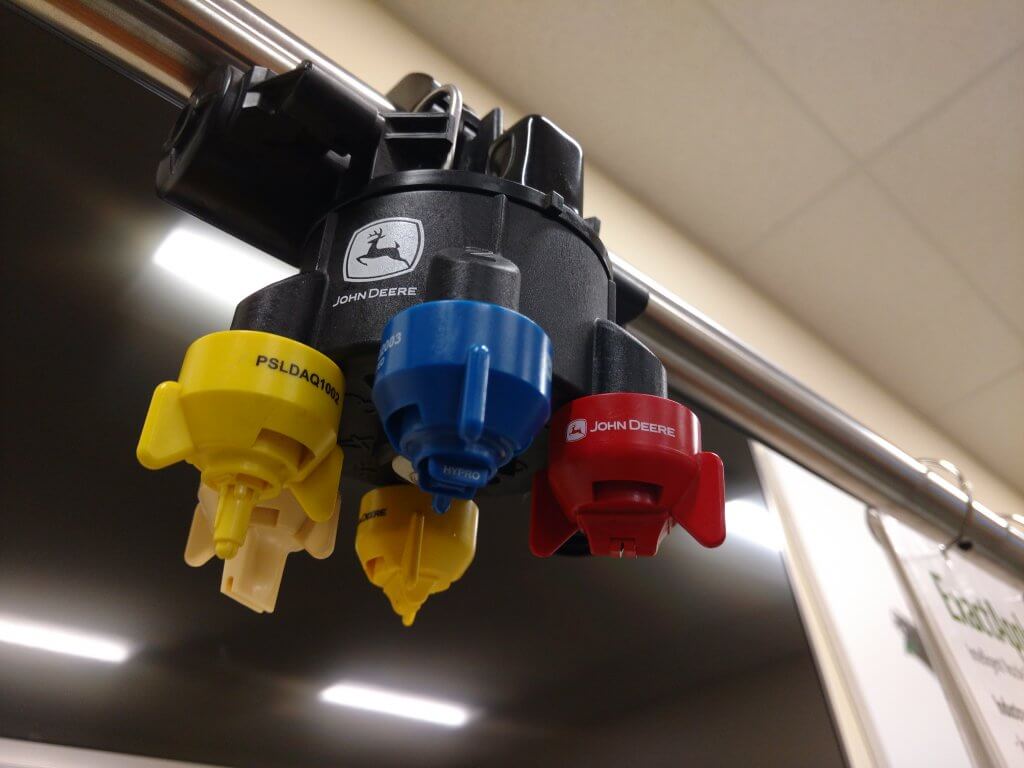
John Deere announced their PWM version in 2016. Called ExactApply, the system splits the liquid flow into two streams, one through each of two solenoids. The solenoids serve to shut off the flow, and also to control liquid flow rate, each running at 15 Hz. The body contains six nozzles on numbered feed housings, and they operate in opposite pairs.
The body is rotated manually to the preferred nozzle pair. With the longer housing in front (#4, 5, and 6) it allows for very high flows from a single nozzle only. When the shorter housing is rotated to the front, the unit will allow just the front, just the back, or both nozzle to operate.
It has three main modes.
High flow (e.g. fertilizer) capacity with the long housing in front. This nozzle can be pulsed at 30 Hz by using both solenoids.
A/B Mode. Cab-switchable nozzles in front, back, or both for rate variation, spray quality variation or other specialty uses. When pulsing is turned off, AB AutoSelect mode is available which automatically switches nozzles based on flow needs. The idea is for a smaller nozzle to be in the front (A) and to respond to travel speed changes with pressure changes (i.e., conventional pressure-based rate control). When increased speed exceeds the pressure limit of the nozzle (set by user), the unit switches to the back nozzle (B), which is slightly larger. Pressure drops immediately and faster speeds are possible. Once the the pressure reaches the user-defined maximum, both nozzles switch on, making additional speed possible.
Pulsing Mode. The front, or back, or both nozzles can be pulsed. The user can switch between these nozzles from the cab. When only one nozzle is pulsed from position #1, 2, or 3, the frequency is 15 Hz. When two are pulsed, the effective frequency would be quasi 30 Hz (15 Hz each at a 180 degree offset).
The system also features individual nozzle shutoff, turn compensation, programmable rates by nozzle, nozzle plug detection, and LED lighting. It offers higher maximum flow rates through its solenoid (up to 50 US gpa at 15 mph).
We’ve provided an in-depth overview of ExactApply here.
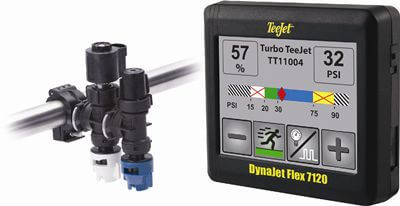
TeeJet has a system called the DynaJet Flex 7120 that uses either a monitor or Android tablet to display pressure, duty cycle, and droplet size. DynaJet is available to OEMs and to the aftermarket. The unique aspect of the TeeJet system is the ability to dynamically select different droplet sizes, and the system will maintain that droplet size across a wide range of speeds or application rates. The TeeJet system is compatible with any flow-based rate control system, and does not require a TeeJet spray control. The product is available from TeeJet dealers.
PWM systems are also available on Agrifac (StrictSprayPlus), WEEDit Quadro, and BBLeap. These systems operate at higher frequencies, up to 50 Hz for WEEDit and up to 100 Hz for Agrifac and BBLeap, as conditions require.
System Capabilities
Spray Quality: Since PWM systems can alter flow rate without affecting spray pressure, the user can select a spray pressure that meets their spray quality goals and expect this spray quality to remain constant throughout the field, regardless of travel speed.
Spray Drift Control: Although PWM does not by itself have any unique capabilities to reduce spray drift, it does make spray drift management easier. For example, the most accessible tool for reducing spray drift is to increase droplet size by reducing spray pressure. In a conventional system, the reduction of spray pressure can only be achieved with a reduction in travel speed because the lower spray pressure also reduces the overall flow rate. With PWM, the loss of flow with a reduction in spray pressure can be compensated by an increase in DC. As a result, lower pressures do not require a reduction in travel speed provided there is sufficient DC capacity in the system. Also, PWM systems use larger orifice nozzles, which naturally produce larger droplets.
Rate Control: A PWM system can be used for variable rate application. The spray volume, as determined by duty cycle, can vary as desired within its operational envelope without a change in travel speed.
Turn Compensation: AIM Command Pro, Capstan Pinpoint, Raven Hawkeye, John Deere ExactApply, Agrifac StrictSprayPlus, TeeJet DynaFlex, and WEEDit Quadro feature turn compensation capabilities. During a turn, the outside boom moves faster than the inside boom, resulting in under- and over-application. A turn-compensated system can deliver additional flow to the outside, reducing the flow towards the boom end on the inside of the turn. In practice, there are limits to this feature. For example, the system’s average DC needs to be about 60 to 70% to offer the maximum flexibility. Second, the diameter of the object being turned around should not be much smaller than the width of the boom, or else the inside boom moves too slowly in relation to the outside boom. The system’s lag must also be minimal to avoid a counteracting effect during turn initiation and completion.
Sectional Control: In a PWM system, sectional configuration is determined by wiring and software, not plumbing. All section valves remain open during operation, and sectional shutoff is effected directly at the nozzle solenoid. Individual nozzle sectional control is offered by most PWM manufacturers. This feature may provide product savings when field margins are not straight, or fields feature obstacles resulting in significant overlaps.
Shutoff response: The traditional nozzle check valve is designed to prevent nozzle dripping on boom shutoff. However, due to the presence of air pockets in most booms as well as the elastic nature of rubber hoses leading to the boom, the shutoff is delayed until the boom pressure reaches about 10 psi or nearly 1 bar. This can take up to 10 seconds, resulting in unintended overspray and other safety concerns. In a PWM system, the solenoid shuts off the flow to the nozzle instantly, and conversely, turn it on instantly as well. The boom remains fully pressurized while the nozzles are shut off, allowing the spray patterns to be fully developed upon flow resumption.
Nozzle Options
A pulsing solenoid creates short durations of low pressure inside the nozzle body, and this can result in poor performance of some air-induced tips. As a result, the PWM manufacturers have recommended that air-induced nozzles be avoided, and pre-orifice nozzles be used instead.
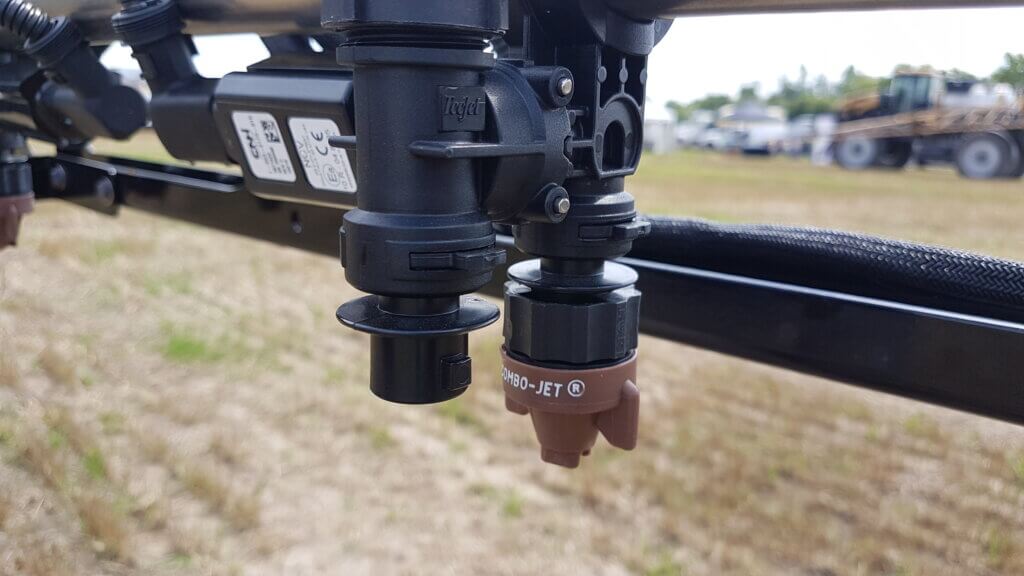
Case sprayers are equipped with a nozzle body manufactured by Wilger Industries that fits the ComboJet nozzle caps. This company offers five nozzles for PWM. In order, from finest to coarsest:
ComboJet ER
ComboJet SR
ComboJet MR
ComboJet DR
ComboJet UR
In practice, the ER and DR are rarely used in PWM systems. The MR is typically suited for lower water volume rates (3 US gpa to 6 US gpa achieved with the MR11003 or MR11004), whereas higher volumes (6 US gpa to 15 US gpa) are typically delivered using the SR tip (SR11005, SR11006, or SR11008, depending on average travel speed). In some cases, the ER nozzle is use when flow rates require 11010 or 110125 sizes. Spray pressures are typically 40 psi at the nozzle. The UR is a dicamba-specific nozzle to meet US label requirements for drift protection.
Wilger’s nozzle body can be purchased as retro fits for other sprayers. The company also offers adaptors that allow Wilger nozzles to be used on TeeJet-style bodies and vice versa, as seen below.
PWM systems operating on TeeJet style bodies are well served by TeeJet Technologies’ Turbo TeeJet nozzles. These wide-angled tips are available in sizes up to 11012 and generate suitable spray qualities at pressures ranging from 15 to 60 psi. Many operators use the Turbo TwinJet, another good option, which is available in a large selection of flow rates to 11010. Recently, TeeJet has tested and approved several air-induced nozzles for PWM, among these are the AITTJ60, the TTI, and the TTI TwinJet.
Hypro’s Guardian and 3D nozzles are well suited for PWM, but are somewhat finer than current air-induced standards. The new ULDM nozzle is Ultra Coarse, and approved for PWM despite being air-induced. Hypro also manufacture the LDM nozzle exclusively for John Deere for ExactApply, producing a spray quality similar to the well-established ULD. Most other manufacturers, including Lechler, Hardi, and others, have traditional pre-orifice flat fan nozzles that may also work. It is important to always select 110 degree fans to ensure that 100% overlap is achieved to maintain the concept of blended pulse. Limitations are in the maximum flow rates available in a specific model, many nozzles are not available in sizes larger than 05 or 06.
Agrotop (Greenleaf in the US) offer two unique PWM nozzles. The BPDF is an asymmetric twin configuration featuring two modified AirMix tips which have eliminated air-induction. The much coarser SoftDrop nozzle is intended for the dicamba market.
Arag has introduced PWM nozzles that produce Coarse or Very Coarse spray qualities, called CFLD-C or CFLD-VC nozzles. These are the a good spray quality for general use. These models are not yet offered in flow rates above 06, however.
Target a duty cycle of 70% ± 10% on average during operation. This permits the best travel speed flexibility. Say you want to apply 10 US gpa at 15 mph. In a conventional system, the 05 nozzle size could meet this flow at 40 psi. For PWM, the 06 size would operate at about 83% duty cycle (0.5/0.6 = 0.83). Assuming a minimum DC of 20%, a minimum travel speed of about 3.6 mph is possible. The 08 size would operate at 63% DC (0.5/0.8=0.63), allowing a minimum speed at 20% DC of 4.8 mph. Either option can work as long as the operator recognizes the travel speed limitations of both. Remember that the actual flow rate change is not directly related to duty cycle. Expect to see higher flows than calculated, especially for the smaller flow rate nozzles.
Calculate the travel speed range. The travel speed range of any nozzle selection and water volume can easily be calculated. The maximum travel speed is limited by the capacity of the selected nozzle and pressure at 100% DC. The minimum travel speed can be assumed to be 20% of that value, at which the system would be operating at 20% DC. Assuming a user selected the 08 nozzle size at 40 psi in the above example, the maximum travel speed can be read from a traditional calibration chart, 24 mph. The minimum would be one fifth of that, 4.8 mph. Capstan has charts that show the theoretical travel speed range (assuming a direct relationship between DC and flow). For Raven and TeeJet, the charts were developed using actual flow measurements. These reveal that actual flows are greater than predicted, especially for smaller nozzles.
Consider the pressure drop across the solenoid. The pressure drop depends on the total flow through the solenoid, it varies from 3 to 5 psi for 04 flow rates to 5 to 13 psi for 08 flow rates for the Case, Capstan, and Raven products. If targeting 40 psi spray pressure, set the pressure to 40 psi plus these values. Traditional spray charts do not account for pressure drop across the PWM solenoids. When using a Capstan Ag system, always refer to the tip charts from Capstan Ag Systems, Inc. at capstanag.com, (or here) and when using a TeeJet system, refer to the charts at www.teejet.com. Both show the pressure drop at various flow rates. Raven’s tip chart is in their operator’s manual.
Common Questions
Will the pulsing of the spray create skips in control? This is very rarely the case, usually only when a mistake in nozzle selection has been made. Skips are more likely with a combination of low duty cycles, fast travel speeds, low booms, narrow fan angles, and extremely coarse sprays. At normal field speeds, the system is usually operating at a high duty cycle unless a nozzle size which is far too large has been selected. At boom heights above 20 inches and Medium to Very Coarse sprays, there is enough blending of the spray cloud from the nozzle to the target to remove any skips in coverage. We can see skips on the outer edge of a boom during a sharp turn, when duty cycle is taken from the tractor unit speed (slow during a turn) and the outer edge of the boom is travelling at two to three times that speed. A conventional system would see similar under-application under these conditions.
Does the droplet size really stay constant throughout the Duty Cycle range? At low duty cycles, we have seen a slight increase in the droplet size, and also a slight decrease in the fan angle. This could be because the longer off-phase reduces the internal pressure in the nozzle body, resulting in an effectively lower pressure. These changes are not significant in their magnitude. It remains important to avoid the lowest duty cycles (travel speeds) for prolonged periods.
Can I do all my spraying with one nozzle? A PWM system offers the advantage of maintaining consistent pressure over a wide range of travel speeds for any given water volume. When moving to a new water volume that is more than 25 to 30% different, a different flow nozzle is recommended. Keeping the same nozzle for two volumes can technically work, but at the cost of limiting the travel speed range for one or both volumes. A typical PWM user has three nozzles, one each for low, intermediate, and high water volume needs assuming similar travel speed ranges. Some choose to use the same nozzle for intermediate and high water volumes, on the assumption that the high volumes is in maturing canopies and travel speeds will be reduced as a result.
Does PWM reduce drift? PWM does not reduce drift in any special way. Drift is related to droplet size, which is controlled by nozzle choice and operating pressure. A conventional system will use low-drift nozzles that maintain reasonably low drift sprays over their pressure range. But at high speeds, high pressures will be used and that can increase drift potential. In a PWM system, high speed does not increase pressure, offering a more consistent amount of drift. However, even at the same pressure, higher speeds increase drift potential because more drift-prone droplets are pulled from the spray plume. Some users of PWM may drive faster than they should simply because they avoid the pressure spike. Fast travel speeds remain a poor practice from a drift perspective.
Is the system prone to breakdowns? PWM has been on the market for about 15 years with Case and Capstan and has proven to be robust. The solenoids themselves have a good wear life, but do require replacement from time to time. Inside the solenoids, a poppet seal can wear over time, requiring fairly inexpensive and easy replacement. As with all electronics, regular inspection of the wiring harness to ensure no abrasion or pinching is required.
Additional Help
One of the more useful websites for PWM users is the Tip Wizard by Wilger (www.wilger.net). It is geared towards selecting the right nozzle for Case AIM Command, which uses the proprietary Wilger nozzle bodies and caps. The website helps users to select nozzles that match their volume, speed, and droplet size requirements.
Once a user understands the basic principles of the system, any conventional calibration chart can be used to identify the needed size nozzle. A user simply needs to choose a nozzle that is about 30 to 40% larger in flow rate, to allow the system to run at approximately 70% DC on average.
Wilger also produces a smartphone app, Tip Wizard, that offers much of the same features as their website for selecting tips.
Capstan (www.capstanag.com) produces a useful calibration table that identifies the pressure drop for various nozzles and pressures, as well as travel speed ranges for these nozzles when applying a range of water volumes.
Raven Industries offers information on the Hawkeye on their website (ravenprecision.com). The company offers useful videos on their youtube channel that illustrate installation procedures.
TeeJet Technologies has DynaJet information on their website (www.teejet.com). The site contains have product information, installation and operator manuals, application rate charts, and drop size information.
Troubleshooting and Maintenance
The main hazard for the PWM solenoids is contaminants. Granules can become lodged on the poppet seal surface, reducing the metering accuracy. Regular inspection of screens, and occasional removal and disassembly of the solenoids to expose the poppet is recommended.