Tag: air-assist

  • The Micothon M2 – The Benefit of Air-assist Spraying in a Vegetable Greenhouse

    The Micothon M2 – The Benefit of Air-assist Spraying in a Vegetable Greenhouse

    I’ve experienced a few spectacular failures trying to build niche sprayers. Until now, I haven’t had a reason to write much about them. But I decided the contrast, and confession, would be a fun way to set the scene for a discussion about an excellent niche sprayer.

    Failed Attempts

    First, the ill-fated “Hops Sprayer”. We used an adjustable ladder to position 20 feet of arborist guns between hop rows. The nozzles could be raised and engaged to match the growing crop canopy. While it left decent coverage on the adaxial surfaces, we quickly realized it needed air-assist to get under the leaves and battle high winds at the top of the trellis. It’s since been cannibalized for parts, and the rusted remains haunt me whenever I drive by the outdoor storage area at our ag research station.

    The Hops Sprayer. A 3 point hitch, vertical boom that could adapt to match canopy height.

    Later, encouraged by a minor success ducting a backpack mist blower with PVC and Coroplast, I tried building an air-assisted spray cart for a floriculture operation. It featured commercial, high-volume radial fans paired with hollow cone nozzles positioned in front of the air outlets. With respect to GreenTech and Croplands Equipment in Australia, I tried to build a bargain-basement SARDI-style head.
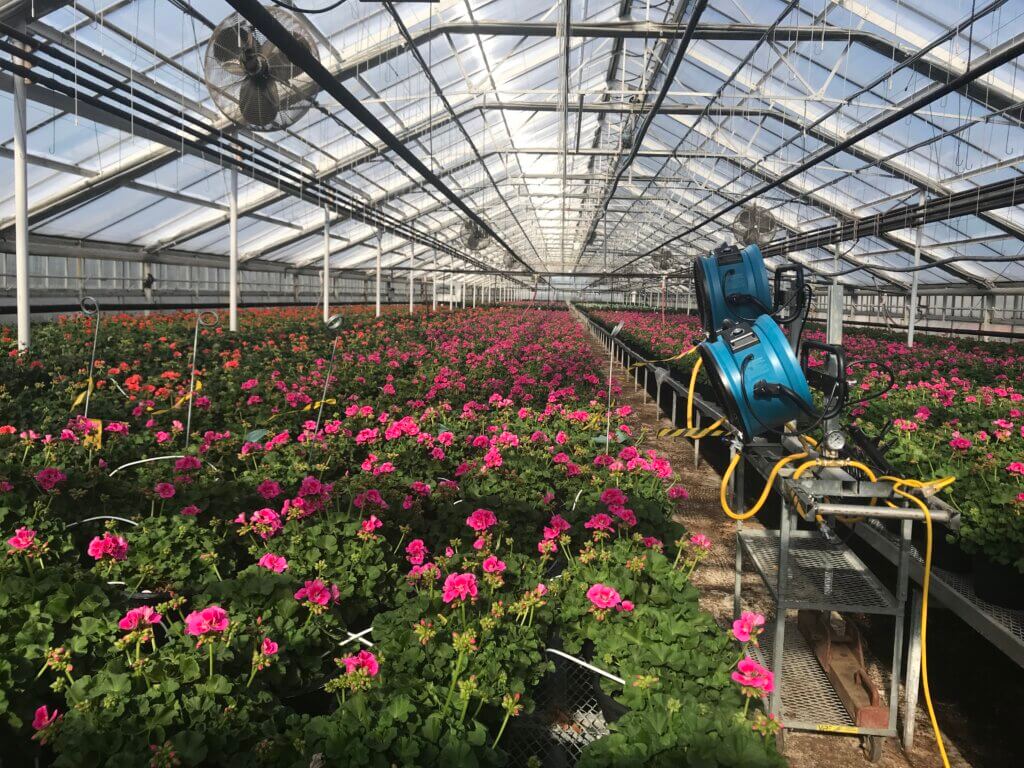
    When it wasn’t threatening to tip over, it managed decent coverage over almost 2 meters. Almost.

    As it turns out there’s a very good reason engineers use computational fluid dynamics to design air-assisted sprayers. We were ultimately beaten by an uneven greenhouse floor crowded with obstacles, a stiff canopy of geraniums, and the inverse square law, which states: “The farther away an object is from an effect, the less change can be observed in the object”. This rig now has a new life circulating hot air in a boiler room.

    And I once built an air-assisted, tow-behind sprayer to spray troughs of tabletop, hoop house strawberries. That unit laid down an excellent, uniform spray on all foliar surfaces, but it was frustrating to use. There was almost no clearance in the hoop house, which changed height with the topography, and the alternator couldn’t keep the battery sufficiently charged to run the pump and fans. I felt we could overcome these small difficulties, but sadly the operator ended this experiment halfway through the season. I can only assume the sprayer is now an interesting piece of lawn sculpture.
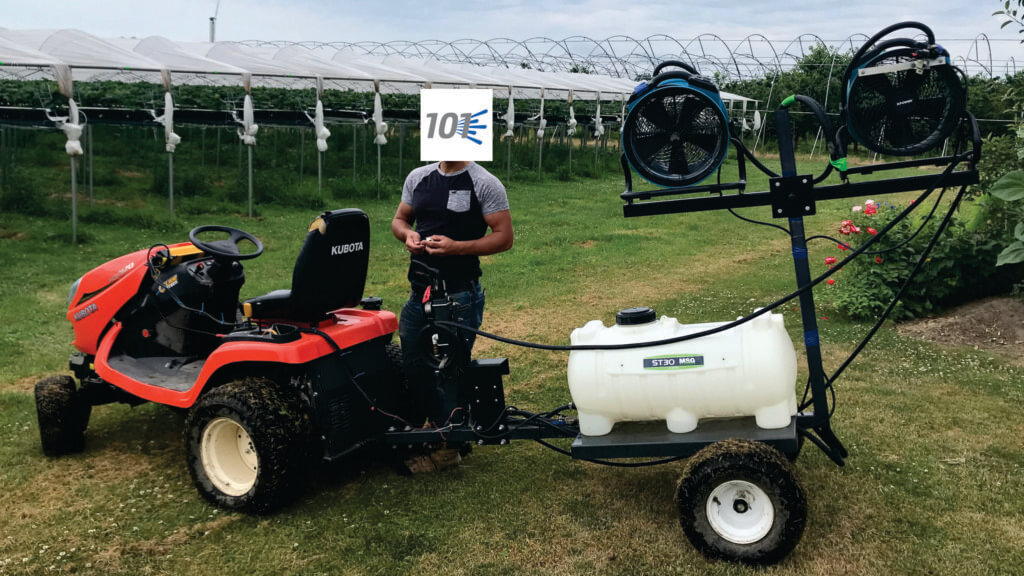
    This sprayer had potential, but limited resources prevented it from getting beyond the beta stage.

    The Micothon M2

    Despite my inability to build a decent air-assisted sprayer, I have always maintained that air-assist is the secret sauce for efficient, uniform spray coverage. Lucky for me, Great Lakes Greenhouses (GLG) agreed. No stranger to innovation, the company recently purchased a first generation, air-assisted Micothon M2 greenhouse sprayer and invited me to come see it. This was a proper sprayer designed by engineers, and not a delusional plant physiologist, so I was excited to assess and calibrate it. This article will describe what we learned and perhaps in some small way, validate my failed attempts.
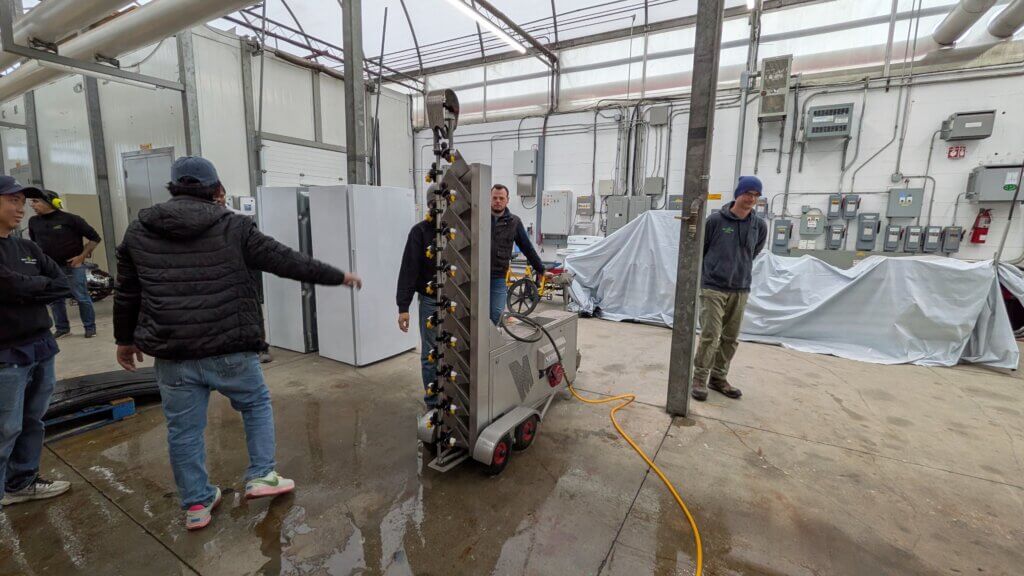
    A quick walk around before we got to spraying.

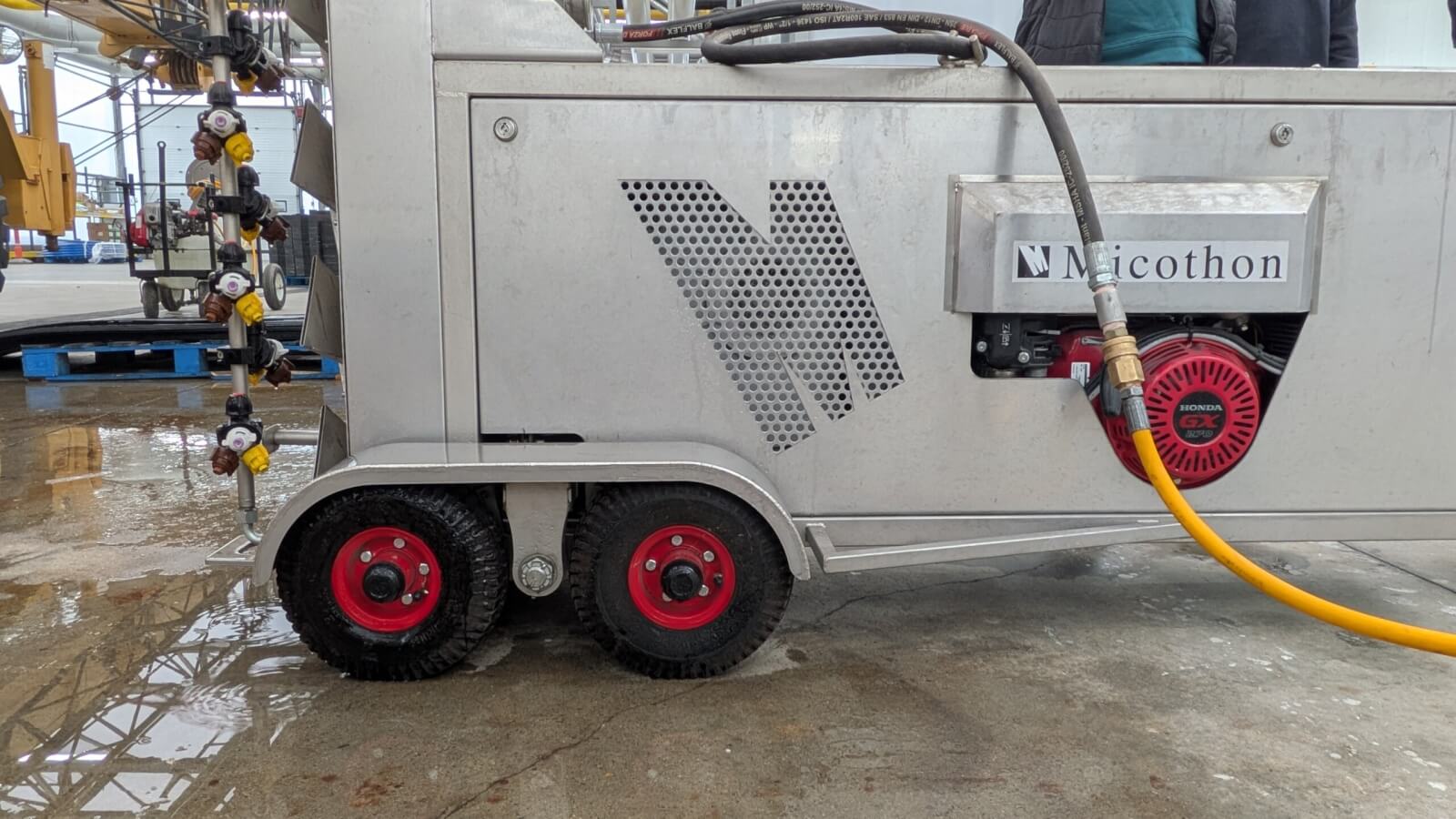
    The M2 features a vertical boom design supported by a portable tender unit, but that’s where the similarities to a classic “tree” sprayer end. Rather than riding on the hot water pipes, or tipping onto two wheels like a hand cart, this version rides on self-leveling wheels. It is drive-assisted but still has to be guided by an operator, like a self-propelled walk-behind lawn mower.

    Drive-assist, self-levelling wheels.

    The mast features 18, three-position nozzle turrets (nine to a side). GLG requested a bespoke spring-loaded break-away section at the top of the boom. This allowed the top nozzles to “duck” under an annoying section of greenhouse infrastructure that would have otherwise prevented it from being positioned between the rows.
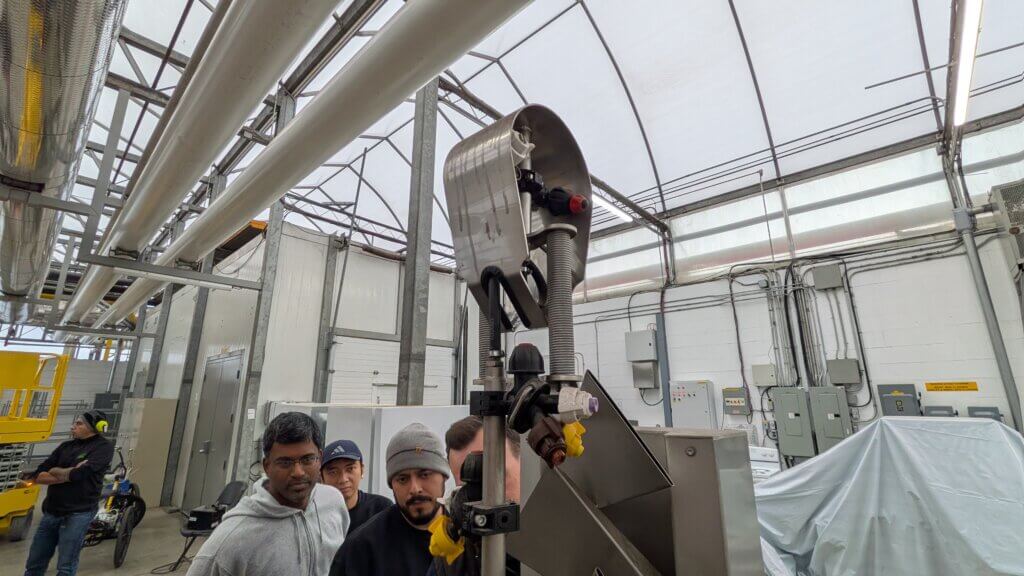
    A spring-loaded, break-away boom section (with guard) to prevent impact damage.
    The break-away section in action.

    The air is generated by a centrifugal fan powered by a Honda motor. The air travels up the ducted mast to a manifold of narrow air outlets. When the sprayer is moving, the air outlets precede the nozzles, which initially seemed wrong as the spray would be released outside the air stream. But, upon closer inspection, we saw that the air outlets are not only angled up by 45 degrees but are also angled back so the air can transect the spray.
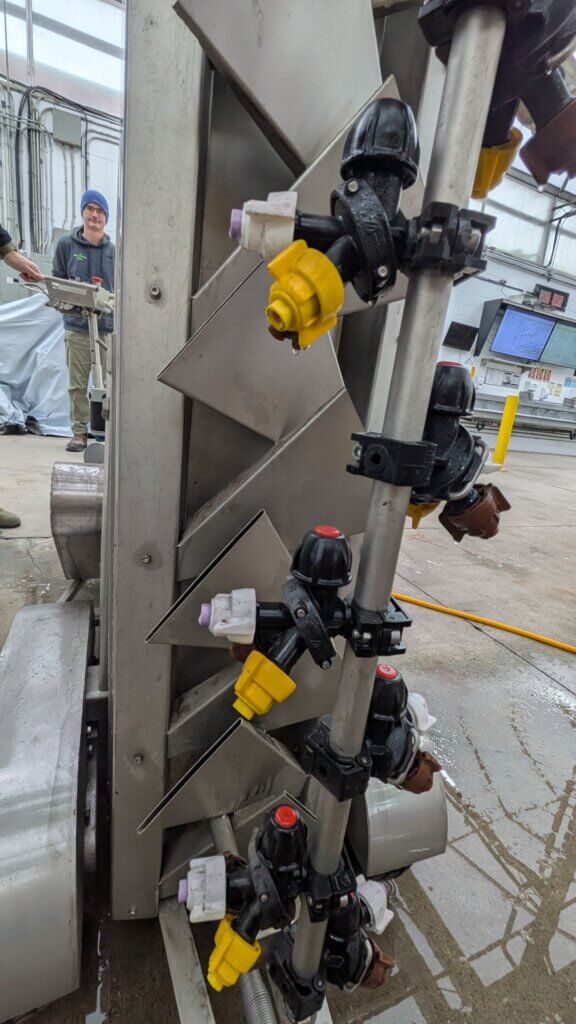
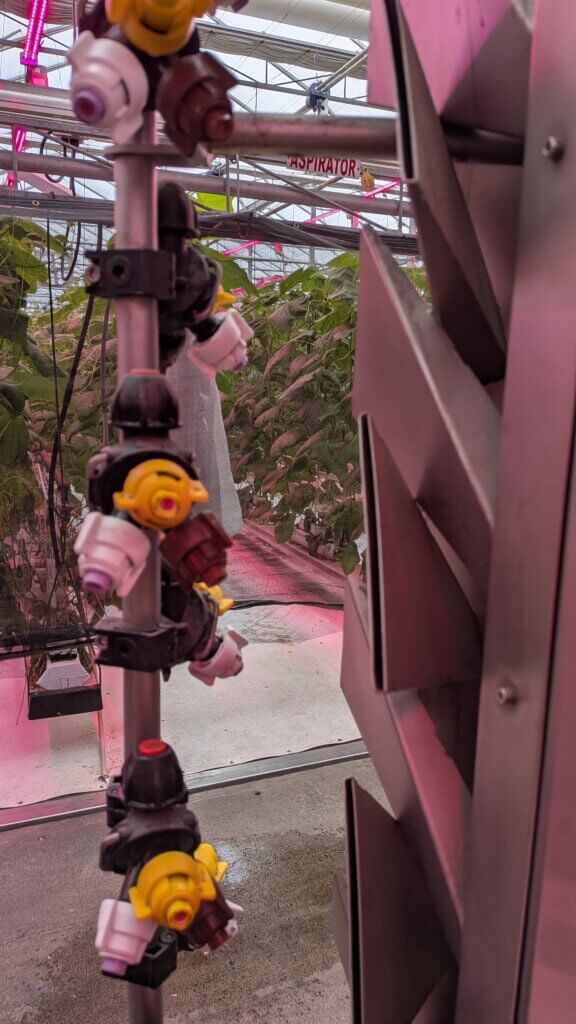
    Air outlets and nozzles – front view.
    Air outlets and nozzles – side view.

    It was suggested that the blade of air acts like an airfoil, creating an area of low pressure and sucking small droplets into the airstream. This is Bernoulli’s principle and it describes how wings create lift. Personally, I think it behaved more like a Venturi. I’m open to debate since, as evidenced by my attempts at building a sprayer, I’m no engineer. What matters is that we didn’t see any droplets hanging in the air as the sprayer passed. It works.

    Calibration and Optimization

    We followed the same greenhouse sprayer optimization protocol I’ve outlined in this article. Go give it a quick read and come back so I won’t have to reiterate why we took the steps we did.

    Travel speed and air settings

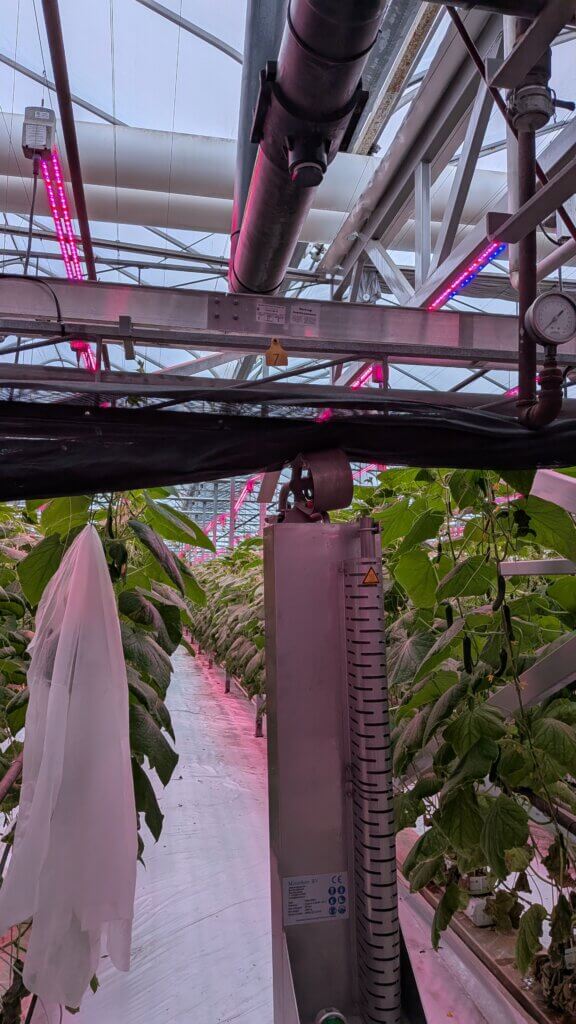
    The sprayer was set to speed “3” of a possible “5”, as recommended by Micothon. Travel speed dictates dwell time, which is the duration the air is focused on the target. Observers stood in the drive alley and in the two adjacent alleys to see how the air moved leaves. The upward angle of the outlets combined with the volume produced by the centrifugal fan wafted and twisted leaves on their petioles. This created sufficient movement throughout the canopy, but not so much that it caused the canopy to louver shut. It was a Goldilocks situation so there was no need to alter anything.
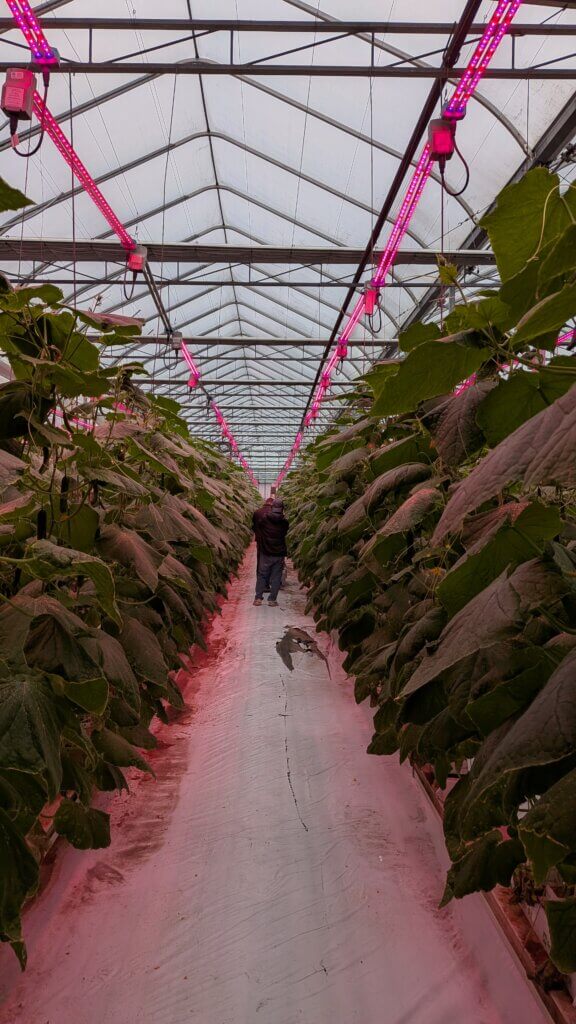
    Preparing to guide the Micothon M2 through the cucumbers under red LED lights. This image gives perspective of canopy height, density and the sprayer clearance.

    Pressure and nozzles

    The tender system regulator was set to 41.5 bar (600 psi) and that pressure dropped to 5.5 bar (80 psi) according to the gauge on the sprayer. While we didn’t test it, I’m certain the pressure at the furthest (aka highest) nozzle would have been closer to 5 bar (~70 psi). With observers in place, we started spraying water using the Albuz 025 (lilac) hollow cone tips.

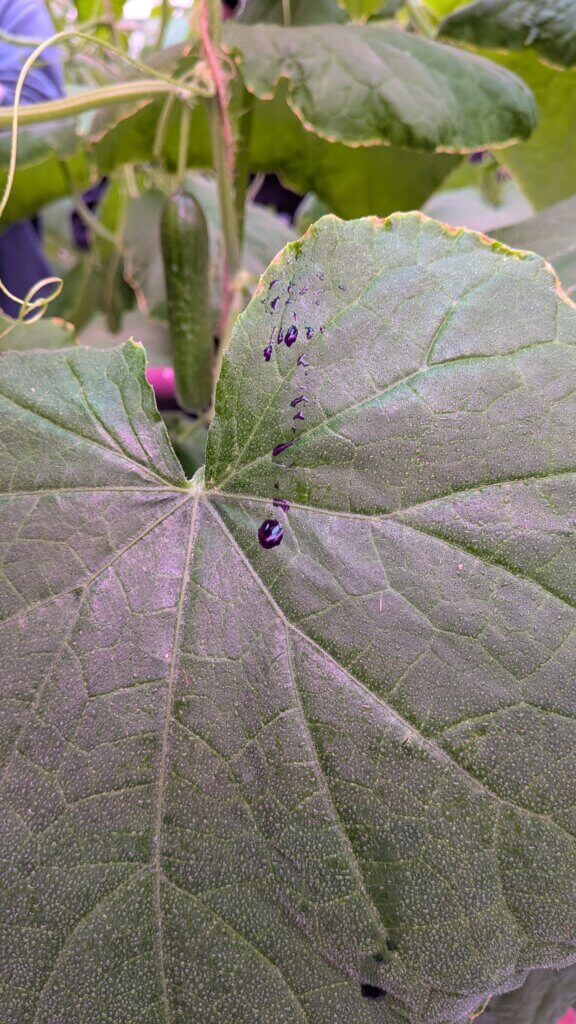
    We saw the highest nozzle positions were spraying over the canopies and did not need to be on. We also saw drip points form at the tips of the leaves and the bottom of the cucumbers. There was evidence of yellowed (possibly damaged) tissue at the leaf tips, suggesting they were often sprayed to drip. This is wasteful and tends to redistribute deposits in undesirable ways. While it’s hard to avoid on the waxy, vertical cucumbers, it can be prevented on the leaves.
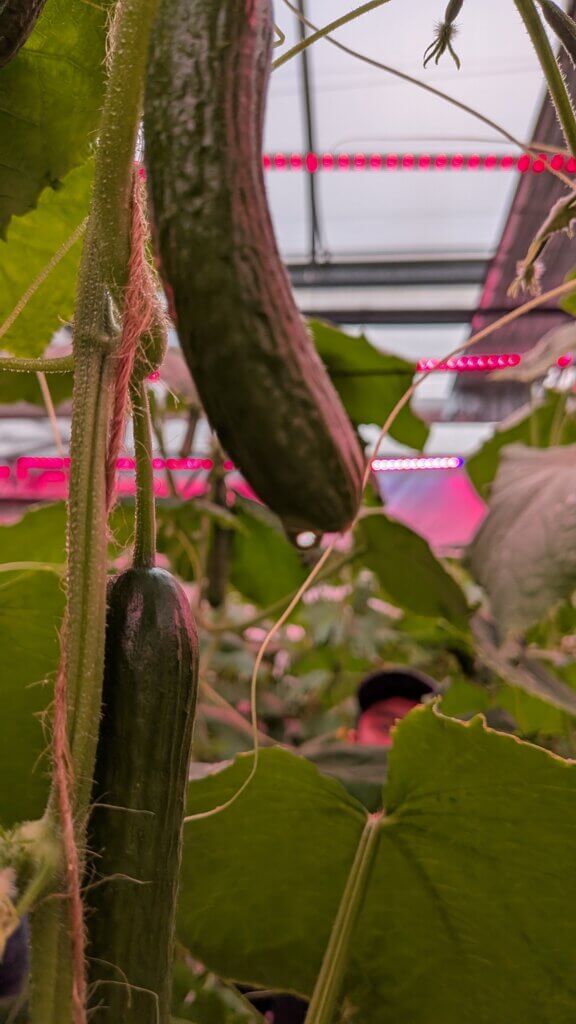
    Note the drip point formed at the bottom of the fruit. This is hard to avoid, but can at least be minimized.

    We turned off the top nozzles, swapped to Albuz 02 (yellow) hollow cones, moved to an unsprayed canopy and tried again. Effectively this was a 20% cut in water and product, but there were no more drips on leaves and less evidence of coalescing deposits. The cucumbers still had drip points, but without an adjuvant that was the best we could do. That’s assuming there would be value in spraying the fruit in the first place – these sprays were targeting the foliage.

    Coverage

    With the subjective part of the assessment complete, it was time to quantify spray coverage. Water sensitive papers were oriented co-planar with the leaves and essentially parallel to the ground. We clipped them 2-3 cm below the leaves by affixing them to the petioles. This way they would move with the leaf and represent a very challenging target (reminiscent of a sucking insect on the abaxial leaf surface).
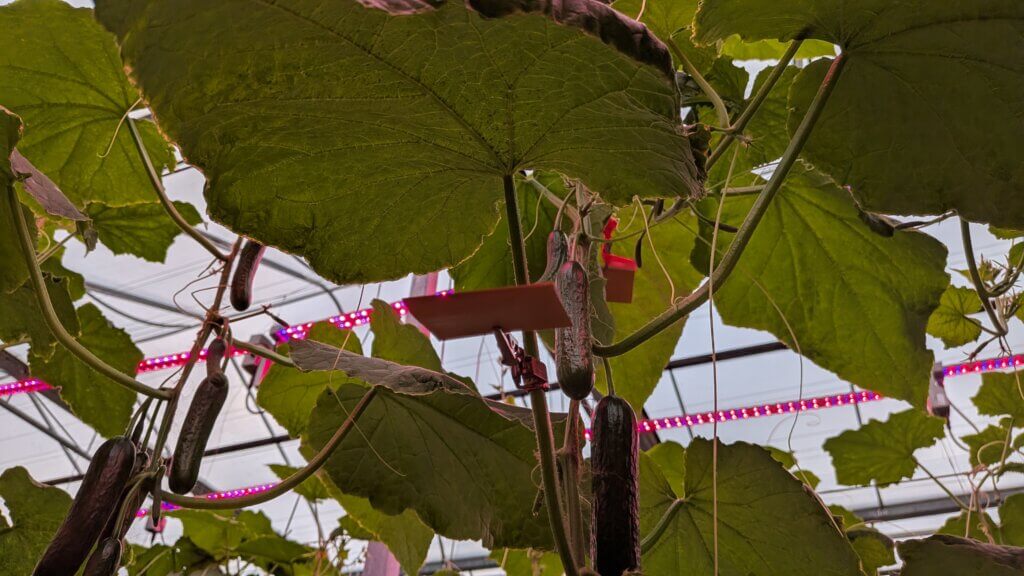
    This is a difficult target to hit. The spray must get up between the leaf and upper side of the water sensitive paper, which is not in line-of-sight of the nozzle.

    We divided the canopy into quarters, placing one target in each section. This spanned the height of the canopy, but we also positioned them along the canopy depth: One on each of the four plants in the row. This left us with a diagonal cross-section. Read it again – you’ll get it.

    Then we sprayed the row from one side and inspected the results. We saw excellent coverage on the abaxial surfaces of the two plants closest to the sprayer. We expected that. But we were pleasantly surprised to see the spray got in under the umbrella-like leaves and deposited on the adaxial surfaces. This was not line-of-sight for the nozzles, and there wasn’t much room between the paper and the underside of the leaves, so this was clearly the result of air-assisted droplets.

    There was also respectable coverage on the two plants on the far side of the row. These targets were greatly improved once we travelled down that alley and saw the cumulative coverage. This is why you should (almost) never perform alternate row spraying.

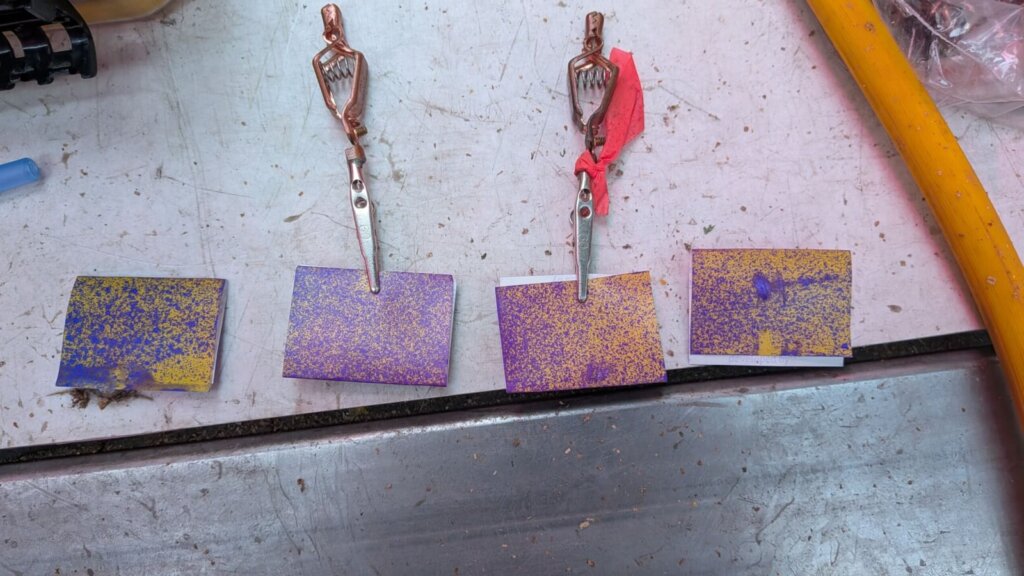
    Abaxial side of the water sensitive papers. From left to right, papers ascended from the lower quarter of the nearest plant to the upper quarter of the farthest plant in the row.
    Adaxial side of the water sensitive papers. From left to right, papers ascended from the lower quarter of the nearest plant to the upper quarter of the farthest plant in the row.

    Compared to a tree

    Since I was in the neighbourhood, we decided to see what a conventional, hydraulic tree could do by way of comparison. Frankly, there was none.

    A typical greenhouse tree. Note the 1/4 turn drain near the pressure gauge, the lack of check valves, and the uneven distribution of the nozzle positions (i.e. more at the top) likely intended to direct more flow higher in the canopy.

    The tree was nozzled with Albuz 04 (red) hollow cones angled upwards. There were only a few check valves, so it leaked when it was turned off and had to be drained at the end of each row using a quarter turn valve. Coverage was generally excessive (i.e. coalesced droplets and lots of run-off) and non-uniform (we randomly missed both adaxial and abaxial surfaces).
    Run-off was so pronounced that it washed the dye off the water sensitive papers.

    We re-nozzled to my favourite load out: TeeJet TwinJet fans alternating back and forth by 45 degrees from centre. Using 03’s (blue), we observed improved uniformity, but still saw misses and suspected we were still using too much water. When leaves are drenched they get heavy, causing them to hang lower and obscure the other parts of the plant. This is the contradiction that limits a strictly hydraulic system: Pressure motivates droplet movement, so you need slightly larger drops and more volume. However, too much water causes run-off and weighs leaves down, obscuring the rest of the canopy. Catch 22.

    I proposed getting a set of 02 (yellow) tips in the hopes there would still be enough spray for better uniformity. I hope they tried it.

    A few beefs about the M2

    There’s always room for improvement. Before you think I’m selling these sprayers, here are a few observations from the owners and from what we saw that day. No deal breakers, just some nice-to-haves:

    • The diesel exhaust from both the sprayer and the tender cart is not ideal. Applicators wear respirators, and the greenhouse fans tend to dilute the exhaust, but a battery system (perhaps like a drone) would be preferable to power the drive electrically.
    • There was a latency with the self-leveling wheels and with air build-up in the tower portion of the sprayer. You simply need to be patient before you start down a row.
    • The tower section gets hot to the touch, likely because of the position of the exhaust pipe.
    • The alternator on board recharges the battery, but if you let it sit the battery is depleted (sounds like the same trouble I had with my sprayer, which is somehow gratifying).

    I’m sure you’re asking “How much?”

    Well, at the time of writing, it was almost $70,000.00 CDN, but don’t judge it too harshly! Bear in mind that our assessment saw a reduction of 20% water and crop protection product that would otherwise have ended up on the greenhouse floor. Not only is that a big savings in water and inputs, but it’s fewer refills and it produced far better spray coverage that a hydraulic system. While improved coverage is not always linked to improved efficacy, they certainly go hand in hand. And when we’re considering “softer”, biorational greenhouse chemistries, improved coverage is the best bet we have for pest control.

    All in all, this was an excellent sprayer that I hope is the first of many to grace Ontario’s greenhouses.

    Thanks to Great Lakes Greenhouses for the invitation, and thanks to all the other grower cooperators (names withheld to protect the innocent) that took a risk on building budget, niche sprayers with me. Sometimes, you just have to throw money at it.

  • The Ideal Sprayer (an open letter to sprayer manufacturers)

    The Ideal Sprayer (an open letter to sprayer manufacturers)

    Today’s sprayer has to excel at a lot of things. It has to have capacity and low weight. It has to go fast but be comfortable. It needs wide booms that stay level over complex terrain. It has to deliver the right spray volume at the right spray quality for the job. It has to be easy to fill and easy to clean. And of course, it has to be reliable, affordable, and come with dealer support.

    We’ve definitely made progress in many of these areas. But the overall package still leaves lots of room for improvement and doesn’t address some issues that are of importance to applicators. Is it time for a reset?

    Let’s say cost is no object. Here’s where I think the industry could go.

    Focus on spray delivery

    Spraying is done to protect crops. We need to do it without harming the environment while being economical with the inputs. These three tenets make up the Application Triangle, sometimes known as the 3 Es of spraying: Efficacy, Environment, Efficiency. The triangle represents the need for balance. A gain in one or two areas often requires a loss in another. That’s why there has never been a so-called “silver bullet” in spraying.

    Priority 1: Only spray when and where required.  Site specific treatments and IPM have been slow to make their way to the spraying world partly because of the low cost of inputs, but also because of difficulties defining and mapping areas that require different rates or products. The machine learning revolution is changing that. Green on Brown or Green on Green sensing can do more than save inputs. They can generate maps that document the change of weed patches over time, identifying priority areas and threshold densities and flagging problems early.

    Priority 2: Integrate air assist. Air carries small droplets towards the target, protecting them from displacement by travel-induced or ambient winds. Once there, air can improve target interception and retention. It has to be done right, though, as improper adjustment can result in the opposite outcome. The reason it’s high on this list is because it improves efficacy and environmental protection at a modest cost.

    Priority 3: Improve droplet size control.  Nozzle design has improved, but the overall range of spray qualities that is achievable for any specific nozzle remains narrow. Sprays can be made finer or coarser with spray pressure, but this has implications for pattern uniformity. Twin Fluid nozzles currently offer the widest range of spray qualities, allowing one nozzle to do it all. We simply need greater droplet size flexibility on the spray boom.

    Priority 4: Use nozzle-specific rate control.  At minimum, a sprayer needs a system that allows for individual nozzle rate control within a wide window, say 4:1. This allows consistent dosing over a wide speed range, turn compensation, or local adjustments to dose for specific (sensed) canopy conditions. By layering direct injection at the nozzle on top of this, the sprayer can change rate and volume independently. Being able to spray the right amount in the right spray quality at the right volume, where needed completes the opportunity created by pest and canopy sensing.

    Create better infrastructure

    The backbone of the sprayer, the frame, drivetrain, boom, tank, pump, and plumbing, are responsible for carrying and delivering the spray liquid. Poor management of these variables results in an unproductive, heavy machine.

    Priority 1: Prepare booms for future.  A limiting factor in sprayer performance is boom width and stability. Consistent and low boom heights are the cornerstone of good application, ensuring uniform distribution, reducing drift potential, and improving targeting within the canopy. But perhaps as importantly, stable booms are essential for accurate optical spot spraying and any other sensing tasks that will rise in importance. Set a standard for sway, say target height plus or minus 10 cm along the width of the boom, 90% of the time. Do the same for yaw. Accommodate brackets for sensors and wiring harnesses when designing the boom fold.

    Priority 2: Improve plumbing.  Poorly executed sprayer plumbing causes waste and decontamination headaches. Although rubber hoses attached to plastic fittings provide a very versatile and generic building block, they generate and hide countless niches in which pesticide mixtures or active ingredient residue can accumulate. A simplified design that incorporates more engineered stainless steel tubing, smooth directional and dimensional transitions, interior surfaces that don’t accumulate residues and generate more efficient flows – all these would improve many aspects of the spray operation. It needs to be goal oriented – i.e., zero waste in priming and cleaning, guaranteed decontaminated after a rinse cycle. Draining on the ground should not be necessary.

    Priority 3: Save weight. Weight causes compaction and eats fuel. Advanced materials or techniques can save weight while preserving strength. Savings can be applied to capacity. We need to explore advanced materials and trussed or exoskeletal designs (see “Aerodynamics”).

    Priority 4: Consider aerodynamics in chassis and boom design. Wind blowing past a tractor, tank or boom, or counter-rotating air from wheels creates turbulence that displaces small droplets within it, reducing uniformity. Cleaner air makes it easier to use smaller droplets, easier to implement air assist or any other drift-reducing technology. This is no small task, as air can come from any direction. But as units become larger and travel faster, this effect can’t be ignored. Monocoque designs that use aerodynamic exteriors to carry machine weight may provide an answer.

    Provide quality control

    Spraying can be a guessing game, hence the terms “Spray and Pray”. We don’t know the outcome for days or weeks, depending on the mode of action, and by the time the result is known, it is too late to do anything if it’s unsatisfactory. But we can do better in assuring some sort of standard.

    Priority 1: Confirm pressure, flow, and patterns at nozzles. The average sprayer has one flow- and one pressure-sensor. It can confirm the flow of the entire spray boom but cannot do that at the nozzle level. PWM has helped, by inferring flow from duty cycle. But actual liquid flow, and its pressure, remain unverified at the spray tip. A visual inspection of the pattern is necessary, and this is not only impractical but also wasteful and potentially hazardous.

    Priority 2: Characterize canopy. If we knew the crop canopy was dense or sparse, we could adjust the water volume or rate of the product accordingly. LiDAR (Light Detection and Ranging) can characterize the physical structure of an object that would indicate density or porosity for which a dose (or droplet size, or air) adjustment may be necessary. This is not some future technology. The iPhone 12 Pro has it. Even RGB image processing could do something very similar.

    Priority 3: Confirm coverage and drift.  Say we’ve characterized the canopy and adjusted the atomization to suit. Is it having the intended impact? We will need a way to verify that the settings of the sprayer result in the required canopy penetration and coverage, even drift, on-the-go. We would need sprayer-mounted sensors that see spray deposits or an airborne spray cloud. The verification must be fast enough to make corrections during the spray operation. This kind of quality control provides the feedback loop to the first priority, spray delivery. It creates a perfect environment for machine learning and continuous improvement.

    Priority 4: Improve user interface.  The complexity of modern equipment monitors is great if you’re familiar with their features. But if you’re a new user or less comfortable with layers of screens and buttons and warning beepers, navigating the monitor can be a game stopper. Can we have beginner modes? Or a system where the monitor more actively engages with the user, asking questions or reminding a novice of key settings? The friendliness of the interface is a sleeper issue, it seems less important at first look but can over-ride many equipment features because of the power of a positive user experience.

    I challenge sprayer manufacturers to conceptualize and show us the ideal sprayer they’re working towards. The perfect unit may never reach us, as this proposal is rife with technological and cost barriers. But it is nonetheless important to identify priorities and identify possible ways to meet them. As we creep towards the solution with incremental improvements, recall that its not the size of the step that matters, it’s the direction.

  • Categorizing air-assist sprayers by air-handling design

    Categorizing air-assist sprayers by air-handling design

    Air handling systems

    Air handling systems can be specialists or generalists; some are designed to do one thing very well while others are more adaptable but not as precise. Fan type plays a big role in determining a sprayer’s abilities. Their native characteristics make them better suited to certain scenarios.

    This may seem contradictory, but we are not saying that the fan alone defines or limits the entire sprayer. Fans operate within a larger, engineered air handling system. Also, the operator has control over how that sprayer is configured and used. This means it is equally important to consider how the air exits the sprayer – not just the fan type that generated it.

    Fan types

    • Radial fans: Radial fans produce high volumes of moderately turbulent air, and relatively low static pressures. They are often associated with fixed vanes and straighteners inside the fan housing to reduce initial turbulence.
    • Turbines: Turbines may look like radial fans but they’re designed to spin faster and they have blades designed to compress air. They are used in sprayers that have ducts, towers, cannons, or other more complex volutes.
    • Straight-through axial fans: These fans produce high volumes of the most turbulent air. With their comparatively short throw and wide air wash, they should be positioned close to the target.
    • Tangential (aka Cross-flow) fans: Tangentials produce the most laminar air, forming a very high volume, low velocity jet sometimes called a “curtain” or “knife”. They have a comparatively long throw and rely on the canopy to induce turbulence.
    • Centrifugal (aka Squirrel cage) fans: Centrifugal fans have a side-discharge arrangement that turns air 90 degrees. They can produce high pressures and are nearly always paired with an air-shaping volute.

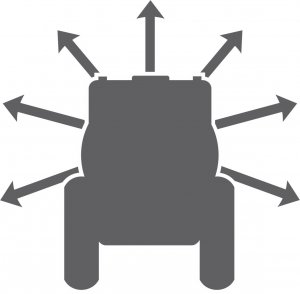
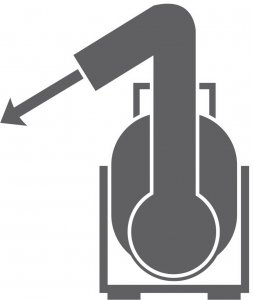
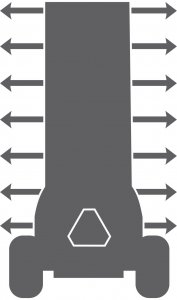
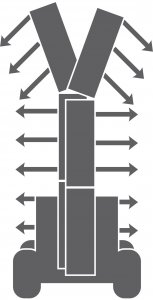
    We are proposing defining air-assist sprayers for perennial crops according to their air handling systems. Ultimately, the defining characteristic of each design is the net vector of the air they generate. We have provided silhouettes for clarity, but these generic designs are not intended to imply a manufacturer.

    Low profile radial

    The oldest and perhaps most recognizable air handling design, the Low Profile Radial (LPR) sprayer generates air in a radial pattern from one or more axial fans or a volute connected to some other fan style. This is the classic airblast sprayer.

    Defining characteristics

    • Wide range of adjustable air energies from virtually zero to high.
    • Minor adjustability of air vectors via deflectors and moveable outlets.
    • Net air movement is lateral and upward.

    Cannon

    The Cannon (CN) sprayer generates and channels air through a single volute and delivers the spray as a compact, point-source jet. 

    Defining characteristics

    • High air energy characterized by high velocity and low volume.
    • Extensive adjustability of air vector via a vertical duct with positional outlet and deflector(s).
    • Usually a single-sided sprayer used to spray over and through multiple rows.

    Fixed tower

    The Fixed Tower (FT) sprayer generates air from one or more axial fans, multiple straight-through radial or tangential fans. It may employ flexible tubes, tapered bags or solid ducts to redirect air laterally from a fixed central tower. It may feature additional flexible ducts or adjustable deflectors at the top of the tower to spray over and beyond the adjacent rows. 

    Defining characteristics

    • Wide range of adjustable air energies from virtually zero to high.
    • Minor adjustability of air vectors via deflectors and moveable outlets.
    • Net air movement is lateral compared to LPR sprayers.

    Targeting tower

    Similar to the FT, the Targeting Tower (TT) sprayer can focus air vectors with a wider range of adjustability, shaping the lateral air output more precisely to the canopy. TT generates air from one or more radial fans or multiple tangential or straight-through axial fans. It may employ flexible tubes or solid ducts to redirect air generally laterally. 

    Defining characteristics

    • Medium to high air energy.
    • Moderate to high adjustability of air vectors. Airflow can be subdivided into individually-adjustable sections.
    • When the tower exceeds canopy height, net air movement is lateral to slightly downward.

    Wrap-around

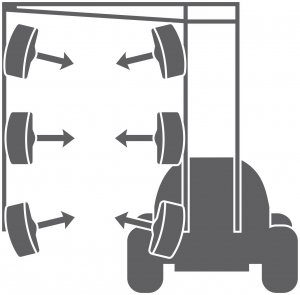
    The Wrap-Around (WA) sprayer surrounds the target rows with air sources. This creates multiple converging and/or opposing airflows within the row. 

    Defining characteristics

    • Straight-through axial fan systems are either electric or hydraulic with a wide range of air energies.
    • Low to high adjustability of air vector via deflectors, moveable air outlets, or fan position adjustments. May also have an adjustable frame.
    • Net air movement is ideally neutral to slightly downward.

    Summary

    In adopting this system of classification, we believe the process of optimizing sprayer configuration and calibration can be made less complicated. A universal language facilitates clear communication between growers, industry and consultants/specialists.

    We acknowledge that there may be rare sprayers that don’t fit these categories. There are commercial examples of air-assist sprayers that combine features from these air-handling designs (e.g. hybrids of LPR and FT designs)… but let’s keep things simple.