Tag: water

  • Grandpa used pesticides on my property 50 years ago. Should I be concerned about contamination of my well?

    Grandpa used pesticides on my property 50 years ago. Should I be concerned about contamination of my well?

    Occasionally, I receive a question or concern about impacts from the previous use of pesticides on a property. These concerns could be categorized as historical or legacy concerns from the use of pesticides over 40 or 50 years ago. This article provides some context for these past concerns and some options for follow up for the current property owner.

    There are several good sources of information that can help a farmer minimize the risks associated with current use of pesticides. While the current use of pesticides is not the focus of this article, a list of some of these resources can be found in the appendix for further reading. These are specific to Ontario, Canada, but your region should have similar resources.

    How common is pesticide contamination of well water?

    In an extensive project that collected water samples from 1,290 private wells throughout Ontario in the 1990s, University of Guelph and Waterloo University researchers found that most of the problems with well water were related to bacteria; approximately 1/3rd of well water did not meet the standard for coliforms and E. coli followed by nitrates (14% exceeded guidelines). It important to state that these problems are NOT related to previous or current pesticide management! Of the 1,290 wells sampled, water samples from six of the wells did show pesticide residue levels above the interim maximum level established at the time of publication for this study. The text below is copied from the published scientific article that discusses the findings for bacteria, nitrates, pesticides, and petroleum derivatives in the water well sample for this study.

    “About 40% of the nearly 1,300 wells tested contained one or more of the target contaminants above the maximum acceptable concentration (Table 4). Bacteria were the most widespread form of contamination with about 34% of wells having more than the maximum number of coliform bacteria (faecal coliforms, or E. coli, or total coliforms) permissible in drinking water. Some 14% of the wells contained NO -N concentrations above the 10 mg/L limit and about 7% of the wells were contaminated both with bacteria and nitrate. Six wells contained pesticide residues above the interim maximum acceptable concentration (IMAC). One contained alachlor, one contained metolachlor, and the remainder contained more than 5 µg/L of atrazine, or the total concentration of atrazine plus deethylatrazine exceeded 5µg/L . Records -1 showed that a spill caused the one well to be contaminated with metolachlor. None of the wells tested contained detectable petroleum derivatives.”

    -Goss, M.J, Barry, D.A.J. and Rudolph, D.L.  Contamination in Ontario Farmstead Domestic Wells and its Association with Agriculture 1. Results from Drinking Water Wells. 1998.

    While this study is almost 30 years old, there are a couple of key takeaway messages here that are still valid today.  For all Ontarians that rely on private wells for their drinking water, samples should be taken for free testing through your local Health Unit for bacterial contamination.  This should be done regularly, at least once or twice per year.  Based on the study results, other contaminants are less likely to be found in your drinking water but water samples can be tested for these other potential contaminates including pesticides for a fee; see section below on “where can I send my water samples to test for pesticides”.

    What are some other sources of information about previous pesticide use on a property?

    The best source of information is likely the person who was responsible for previous pesticide management on the property; typically, this is the farmer. The farmer may be able to recall the type of pesticide products used or at least give an indication of previous cropping practices and livestock husbandry which can provide some indication to the type of products that may have been used. In addition, the farmer may be able to provide an indication where/how products were stored and mixed and application practices. But a word of caution here: some farmers might be hesitant to answer questions “out of the blue” about the past management practices with pesticides because of liability concerns. 

    In some cases, the Ministry of Environment, Conservation and Parks (MECP) may be helpful with this type of inquiry. MECP oversees the Pesticides Act in Ontario and as such they might be aware if there are any local legacy or historical issues with pesticides spills or pesticide contamination of groundwater in your area. Some lawyers involved in real estate transactions will query the local District MECP office to see if there have been any environmental orders filed related to a specific property prior to finalizing a sale. 

    What are some additional considerations when thinking about the historical use of pesticides on a property?

    Based on the information from the 1990 water well study mentioned above, pesticide contamination appears to be a rare occurrence; 6 samples out 1,290 indicated some presence of pesticide residual in the samples. If there were problems with previous management, it may relate:

    1. Improper storage of pesticides
    2. Poor techniques with the mixing or handling of pesticides
    3. Disposal of empty pesticide containers, or
    4. Equipment malfunction such as improperly closed valve on a sprayer

    Concerns related to storage or mixing and handing can help to focus in on a specific area(s) on the farm. For example, if it is known or there is a strong belief that the pesticides were stored in “the old shed” or that pesticides were routinely mixed in the sprayer while filling from the tap beside the barn and there is a well near this area, then testing of a water sample for pesticides may provide some peace of mind.

    If we test our well water for pesticides, what pesticides do we test for?

    Because there are many different chemical formulations for current and past pesticides, the lab will ask which class or type of chemicals that you want the water analyzed for. Asking for the lab to analyze for many different types of pesticides will increase the lab cost substantially. 

    Having some background on the property can be helpful here. For example, if the concern is from the 1960s and 70s and the crop rotation on the property at time was hay-cereals-corn, then a couple of the commonly used pesticides at that time were atrazine (corn) and 2,4-D (cereals). 

    While this background information may help to narrow down the focus to fewer pesticides and save money on lab analysis, it should be noted that there were multiple pesticide formulations used 50 years ago so if the testing is narrowed too much, you might miss the pesticide(s) that was actually used on the farm at that time. There is a trade-off here by narrowing down the number of pesticides and keeping lab costs lower versus an increased risk of not analyzing for right pesticide. 

    Where can I send my water samples to test for pesticides?

    There are several private labs that can analyze water samples for pesticide residues for a fee. Depending on the number of parameters (i.e. the number of pesticides) that you ask to be analyzed for will be a major factor in how much the analysis cost. 

    The Ontario Groundwater Association, the association that represents well drillers in Ontario, has a link to a water testing program called “My Water Quality” and one of its water testing packages will test for approximately 20 different pesticide residues in water. The cost for this testing package is $998 per sample at the time of writing this article in the winter of 2025.

    Some concluding thoughts

    It is understandable that rural residents relying on wells for their drinking water may be concerned about the quality of the water coming out of their taps. Bacteria contamination is the most common problem found with private well water and fortunately, you can test your private well water for free through your local health unit. 

    There is limited data on pesticide contamination of water well in Ontario and based on this limited information, it appears to be a rare problem, thankfully! However, if you are still concerned about the impacts of pesticide use and management in the past on your property, there are private laboratories that will test your water for a fee. For some people, paying the fee for this type of testing may allow them more peace-of-mind the next time that they turn on the tap.

    Appendix

    The following links will help Ontario farmers and landowners understand and manage the risk associated with current pesticide use and management on their properties. Again, for readers outside Ontario, there should be similar resources in your area.

    Ontario.ca and search “Pesticide contamination of farm water sources

    Learn how to avoid contaminating any well or surface water source by properly mixing, loading or applying pesticides and what to do if a spill should occur. This technical information is for Ontario producers.

    Ontario.ca and search “Assessing the potential for ground water contamination on your farm

    Learn about a risk assessment procedure to select best management practices to reduce groundwater contamination. This technical information is for Ontario producers.

    Ontario Pesticide Education Program and Grower Pesticide Safety Course

    The Ontario Pesticide Education Program supports Ontario farmers and pesticide vendors to achieve pesticide safety certification and training. Renewal is every 5 years.

  • Evaluating Methods for Controlling Algae in Carrier Water Storage Tanks

    Evaluating Methods for Controlling Algae in Carrier Water Storage Tanks

    This work was performed with Mike Cowbrough, OMAFA Field Crop Weed Specialist.

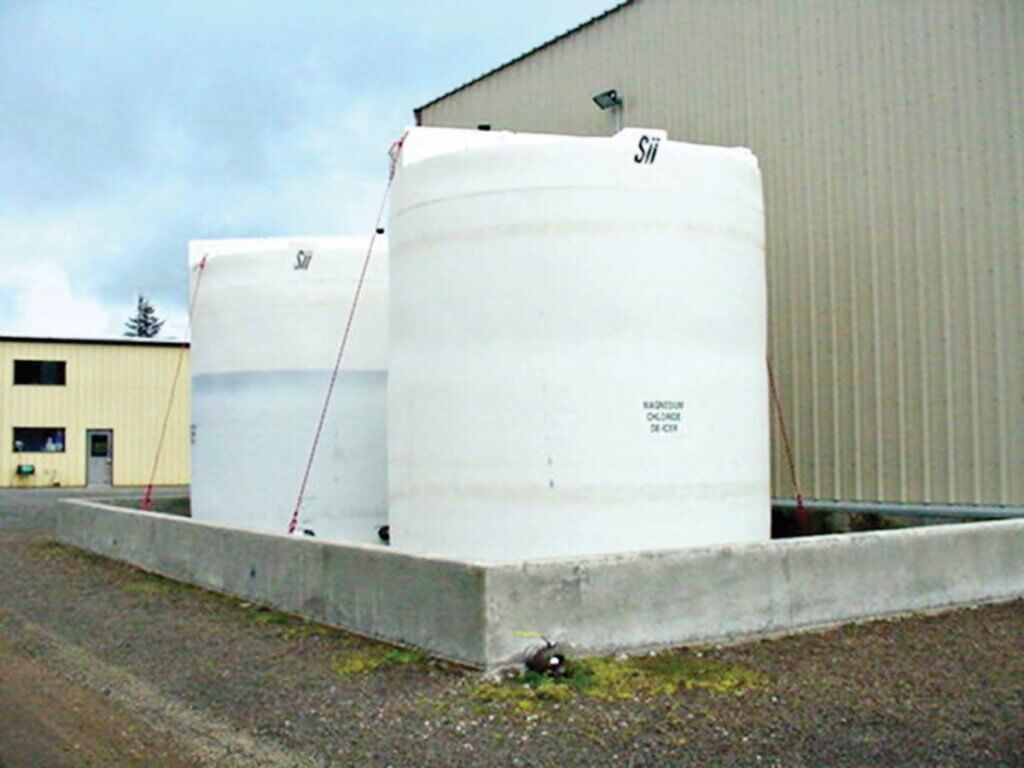
    In the early summer months, many field and specialty crop operations collect rainwater (or possibly pump water from holding ponds) into storage tanks for use as a carrier in spray applications. These tanks may be stationary, or they may be part of a nurse or tender truck that delivers both water and chemistry to the field as a means of improving operational efficiency.

    Poly tanks. Source: Purdue Extension publication PPP-77 “Poly Tanks for Farms and Businesses“.

    In the case of translucent poly tanks, which are commonly used because of their light weight, custom shape, and low price point, light exposure will grow algae. Algal populations multiply exponentially and will clog spray filters and negatively affect filling. In response, growers use home-grown algicides such as copper sulfate, lengths of copper pipe, household bleach, chlorine, bromine, etc. They do so with little or no guidance and therefore little or no consistency. Beyond the obvious questions surrounding efficacy, it is unknown whether these adjuncts create physical or chemical incompatibilities in the tank mix. If so, there is the potential for reduced efficacy and/or crop damage.

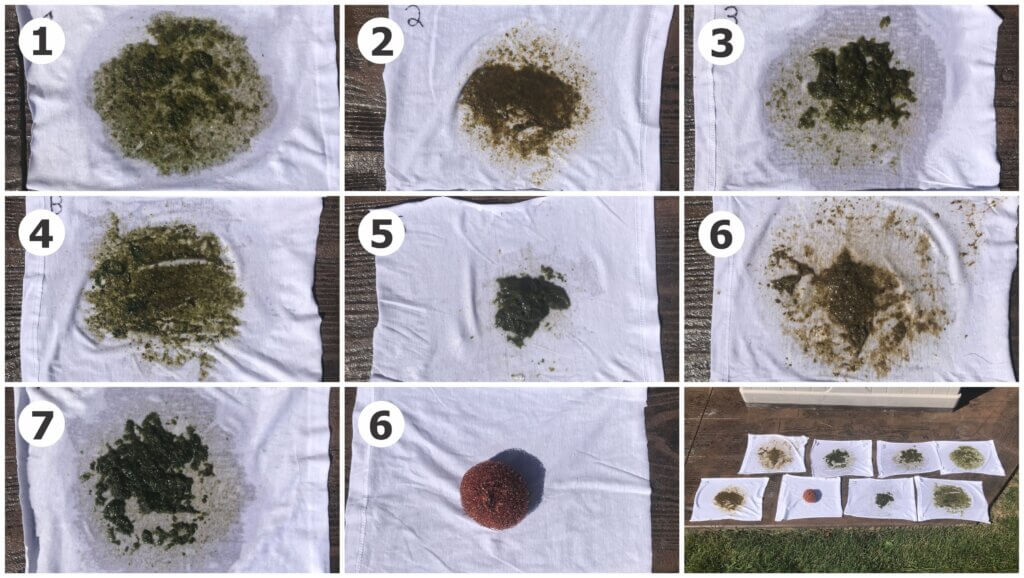
    We tested popular methods for algae control by inoculating a series of 10 L translucent plastic jugs with an algal population sourced from a southern Ontario holding pond. The population was left to acclimate and generally establish itself (aka colonize) before we introduced some form of control. Each jug was then gently stirred and emptied through a sieve for qualitative assessment.

    In a parallel experiment, we introduced the same algicides to fill water and conducted spray trials. 10 L volumes were mixed with a field rate of glyphosate and sprayed on RR soybeans. Weed control was assessed and soybean yield measured for each treatment.

    Algicide Efficacy Experiment

    In each treatment, tap water was mixed with a micronutrient growth media (from the Canadian Phycological Culture Centre at the University of Waterloo). This was an unsterilized 10% WC(ed) solution intended to provide micronutrients for algal growth while minimizing fungal and bacterial growth.

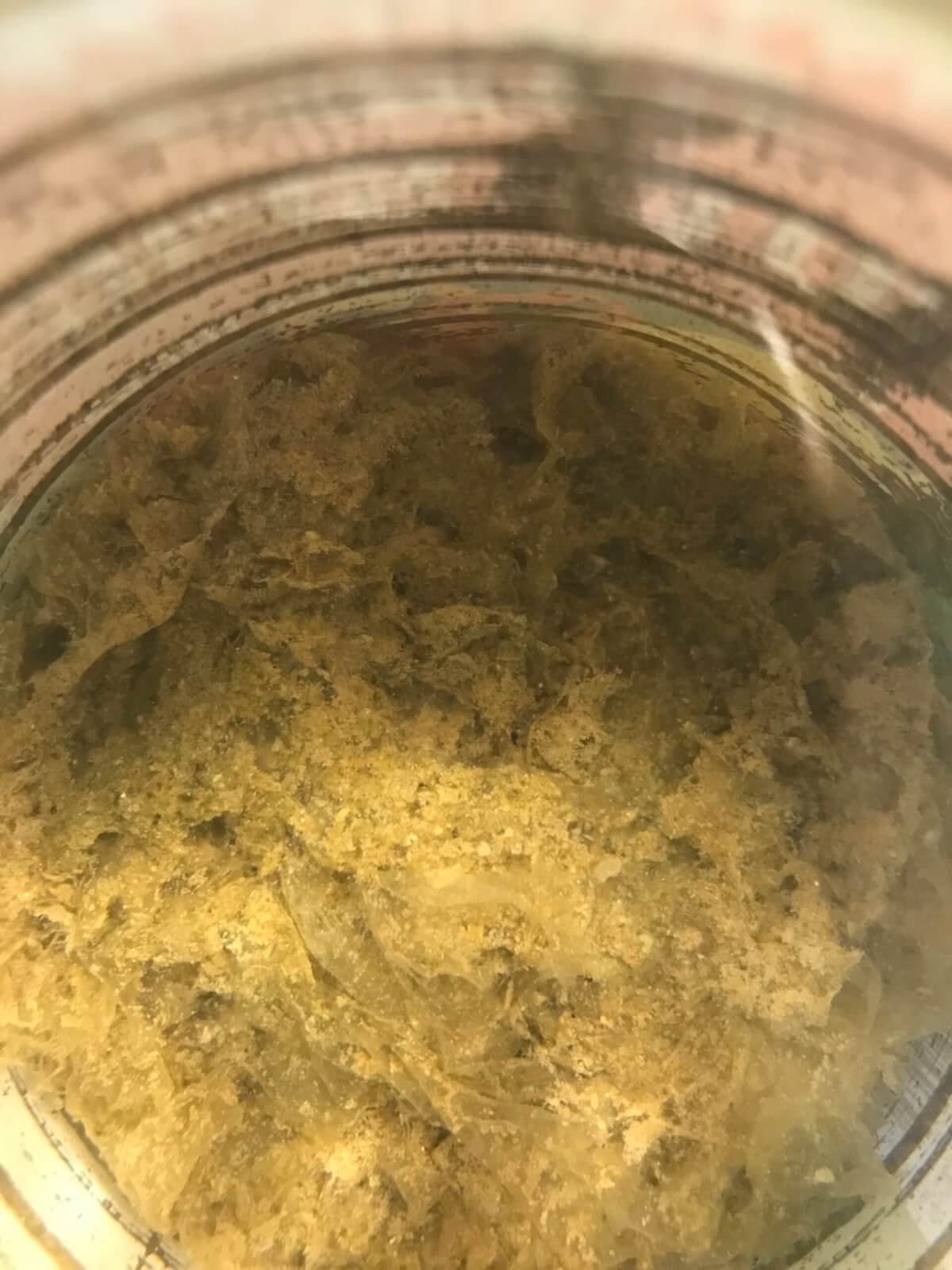
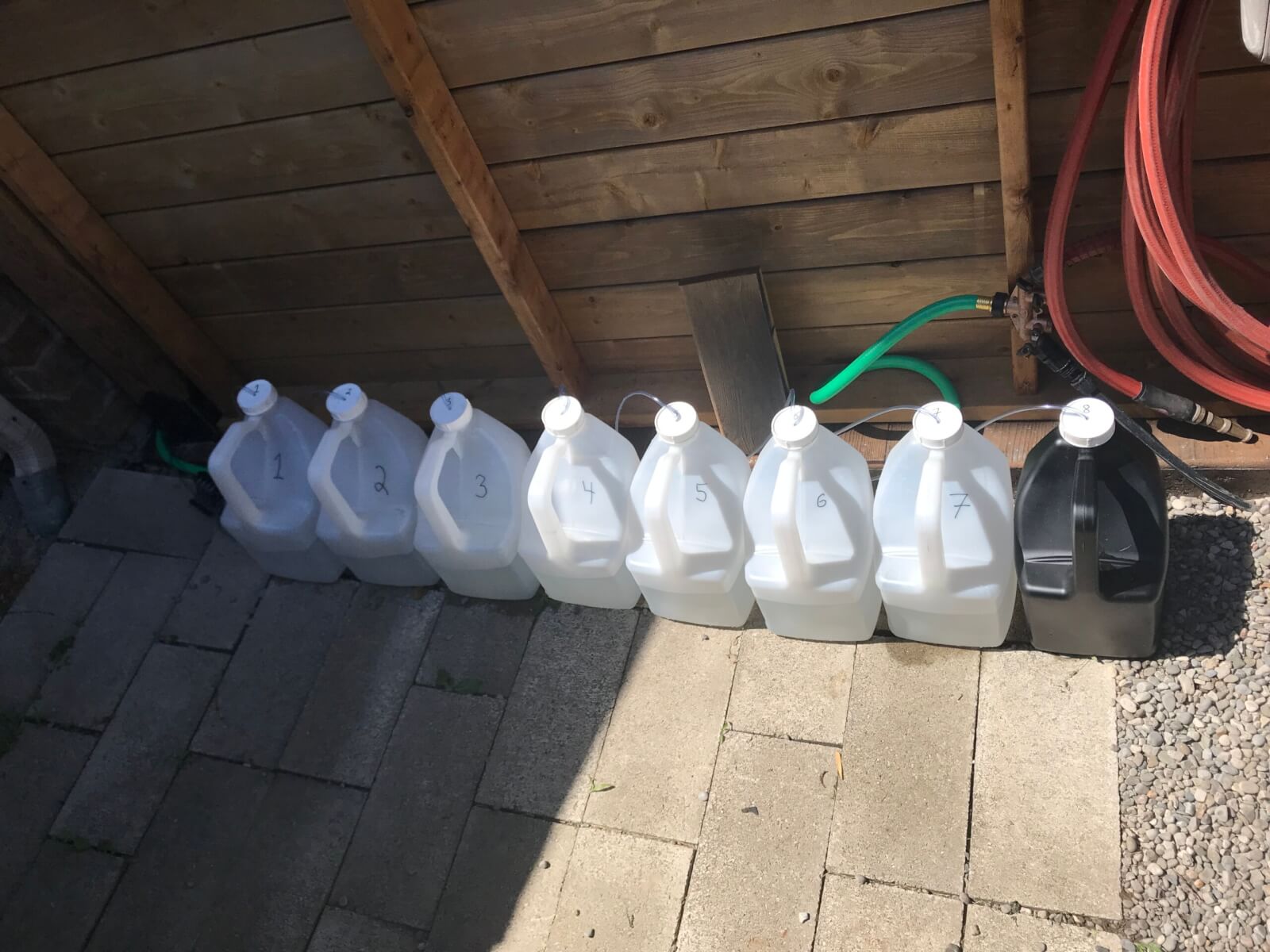
    The source algae were collected from the bottom of a holding pond from a farm in Guelph, Ontario. Algae were homogenized and equal parts added to each jug. The jugs were former 10 L pesticide containers thoroughly rinsed and sprayed with Five Star’s “Star San” non-rinse sterilizer. Tank solutions were gently bubbled (one bubble every 10-15 seconds) with air from an aquarium pump. Air was balanced using a manifold and introduced via diffusion stones at the bottom of each jug.

    Algae sourced from a farm’s holding pond near Guelph, Ontario. Algae was homogenized before inoculating treatment jugs with equal parts.

    Treatments

    Each treatment was tap water plus growth media inoculated with algae and exposed to a natural diurnal/nocturnal cycle unless otherwise indicated.

    1. Control (no algicide)
    2. Left in a shaded area (no direct sunlight)
    3. Household bleach (approximately 5.25% sodium hypochlorite)
    4. Container was spray-painted black to exclude light
    5. Ammonia
    6. “Scotch Bright” copper-coated scour pad. (copper is often introduced as copper sulfate at 1 cup / 1,000 US gal. or a short length of copper pipe)
    7. Bromine (sourced from a local pool supply store)
    Treatment NumberTreatment NameRate
    (/US Gal.)
    Rate
    (% v/v)
    Rate
    (/10 L final volume)
    1Control (no algicide)
    2Shaded
    3*Household bleach1/4 tsp0.000333.3 mL
    4Black container
    5*Ammonia solution1/4 tsp0.000333.3 mL
    6Copper-coated scour pad
    7Bromine1/32 ml0.0000040.04 g
    Table 1. * Bleach and ammonia should never be added together as they produce toxic chloramine gas.

    Method

    On July 12, jugs were loaded with water and growth media and inoculated with algae. They were bubbled gently for one week to establish a stable algal colony. On July 19, algicides were added, or transferred to shade or black-out conditions. On August 31 (approximately six weeks later), jug contents were gently stirred and filtered through white cloth for qualitative assessment.

    Building up algal population for each jug. Note air lines through lids for slow, intermittent bubbling. Algae was not moved to black container or to the shade until after the first week of acclimation.
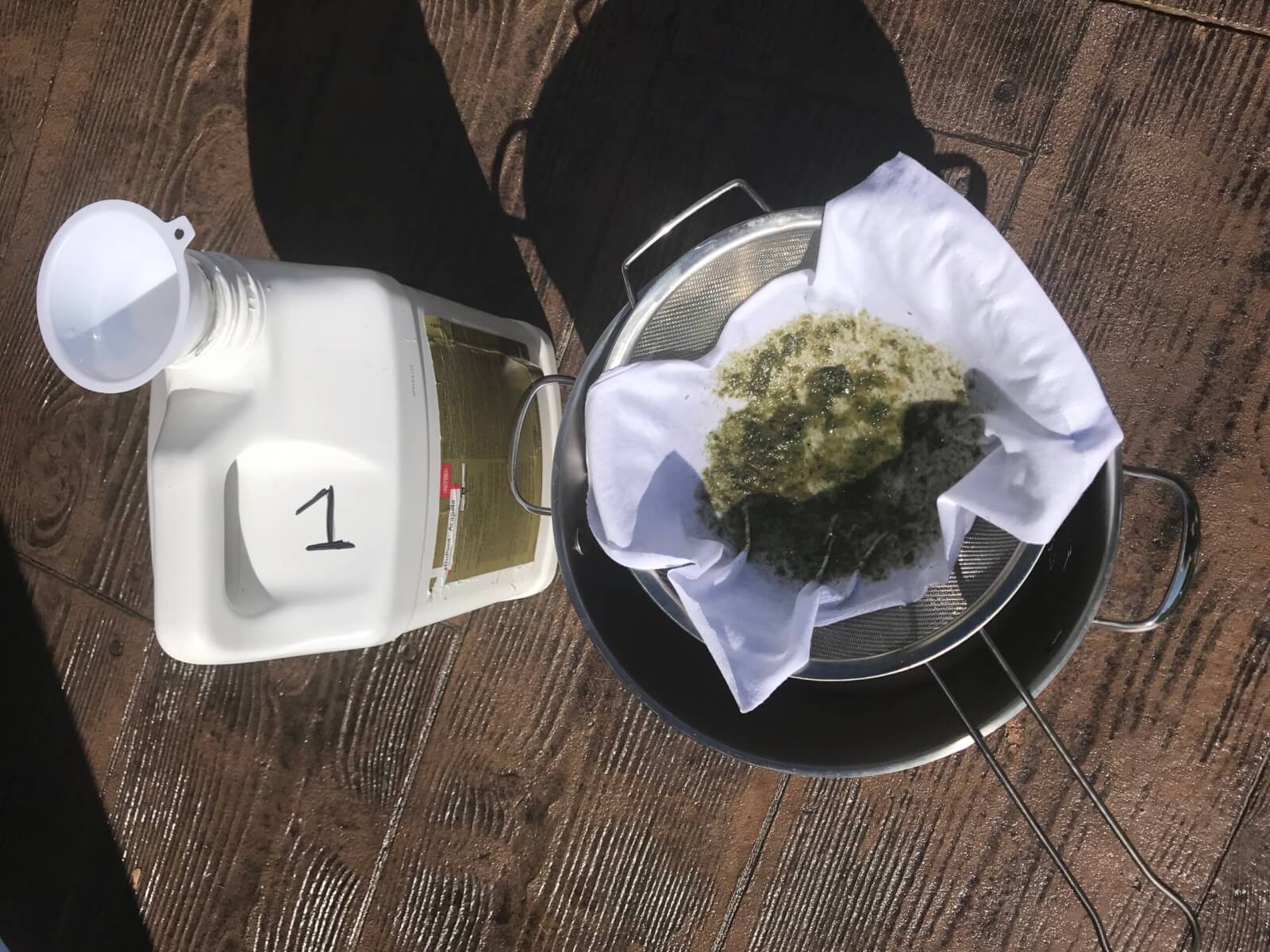
    Almost six weeks after algicide was added, jug contents were gently stirred and poured through white cloth to collect algae and establish how easily the liquid passed through.

    Observations

    The results of all seven treatments, plus photos of the copper-coated scour pad.

    (1) Control. Liquid poured slowly through cloth. Algae was still alive and healthy. It formed some clumps but was not as thick as other treatments.

    (2) Shaded. Liquid poured fast and easily through cloth. Was particulate in texture rather than clumpy or gelatinous. Very little mass and entirely brown, suggesting it was dead.

    (3) Household bleach. Liquid poured easily through cloth until the clump of algae sitting at the bottom of the jug came out (i.e., most algae were not suspended). Thick mat of healthy-looking algae (note profile photo #3 below). Much greener and thicker than the control (1).

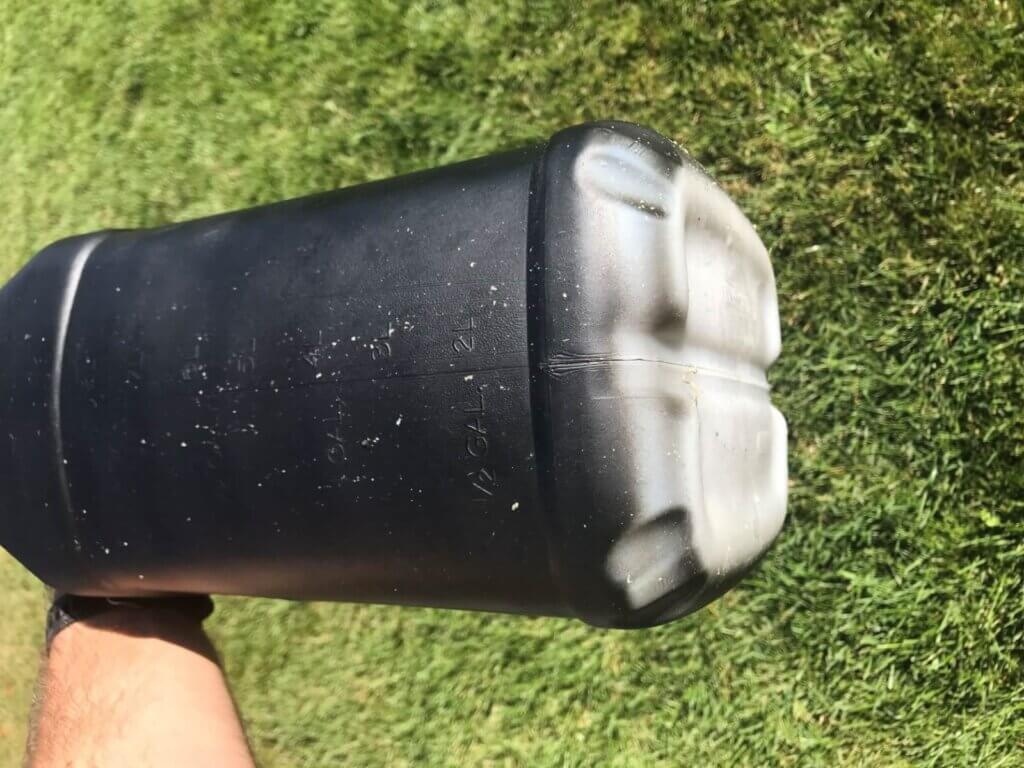
    (4) Black container. Liquid poured fast and easily through cloth. Algae retained a little green coloration (more than the shaded condition (2)) but was particulate and not as healthy as the control (1). We intended for this treatment to exclude all light, but it was still able to enter at the bottom where the jug wasn’t completely painted. This may have kept the algae alive.

    In an oversight, the jug was not completely painted. This left a source of light at the bottom edge that may have helped sustain algae.

    (5) Ammonia. Very difficult to pour liquid through the cloth (note profile photo #5 below). The only condition where a mat of algae was floating at the top of the jug rather than settled at the bottom. It was healthy, green and thick.

    (6) Copper. The most gelatinous of all conditions, the liquid took the longest to pass through the cloth filter. While the algae seemed brown and dead, the gel would be very problematic during sprayer filling and spraying. Note that the copper scouring pad (shown unrinsed) has nothing growing on it.

    (7) Bromine. Like the household bleach condition, liquid poured easily until the healthy mat of algae at the bottom of the jug came out (i.e., most algae were not suspended). Note profile photo #7 below.

    Profile shots of treatment 3 (Bleach), 5 (Ammonia), and 7 (Bromine).

    Spray Efficacy Experiment

    Ideally, adjuncts added to carrier water are inert. That means they don’t reduce a herbicide’s effectiveness on susceptible weeds or increase crop injury. For example, hypochlorite (found in bleach and in chlorinated water) reduces the biological effectiveness of low concentrations of isoxaflutole (the active ingredient in herbicides such as Converge and Corvus). However, when added to higher, agriculturally-relevant concentrations, the reduction in efficacy wasn’t considered significant (Lin et al., 2003). Conversely, bromide has been added to certain herbicides to improve performance (Jeschke, 2009).

    There’s precious little information about synergistic or antagonistic effects from adding bleach, ammonia, copper or bromine to herbicide carrier water. To learn more, we added each of these adjuncts to the standard rate of glyphosate (900 gae/ha – 0.67 L/ac). Using a CO2-pressurized plot sprayer, the solution was applied to <10 cm tall weeds at 150 L/ha (15 g/ac) in glyphosate tolerant soybean at the 2nd trifoliate stage of growth (Elora Research Station, Ontario).

    Visual crop injury was evaluated at 7 and 14 days after application. Weed efficacy was evaluated at 14 and 28 days after application. Soybeans yields were collected using a Wintersteiger plot combine and adjusted to a moisture content of 14%.

    Weed Control

    All treatments provided excellent control (>90%) of the weeds emerged at the time of application. Table 2 (below) presents the % visual control 28 days after application.

    Carrier Treatment
    (glyphosate 540 g/L at 900 gae/ha or 0.67 L/ac)
    Lamb’s-quarterGreen pigweedWitch grassGreen foxtail
    1) Control0000
    2) Shaded100100100100
    3) Household bleach100100100100
    3a) Household bleach – added prior to mixing9597100100
    4) Black container100100100100
    5) Ammonia100100100100
    6) Copper-coated scour pad100100100100
    7) Bromine100100100100
    Table 2. Visual control of lamb’s-quarter, green pigweed, witch grass and green pigweed at 28 days after the application of glyphosate 540 g/L at 900 gae/ha mixed with various carrier treatments intended to prevent algae growth. Treatment numbers correspond with the soybean injury and yield image below.

    Soybean Injury and Yield

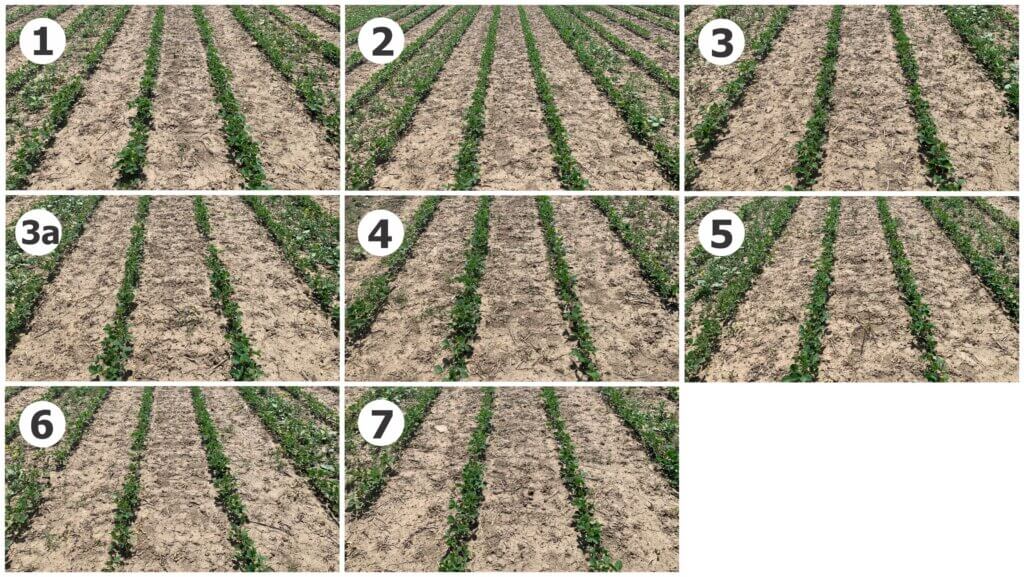
    There was no noticeable crop injury from any treatment (figure below) and yields were not significantly different from the control treatment (Table 3). However, when bleach was added prior to mixing, we did observe a trend in reduced soybean yield. We’re unable to explain this observation, but suggest it may be an unrelated issue (such as field variability). There were no obvious signs of crop injury, and the treatment provided excellent weed control.

    Photographs of each plot 14 days after application. The number/letter in each inset image corresponds to treatments in Tables 2 and 3.
    Carrier Treatment
    (glyphosate 540 g/L at 900 gae/ha or 0.67 L/ac)
    Crop Injury
    (%)*
    Avg. Yield
    (bu/ac)
    Significance**
    4) Black container040.0A
    7) Bromine039.6A
    2) Shaded038.1AB
    3) Household bleach037.6AB
    1) Control037ABC
    5) Ammonia036.9ABC
    6) Copper-coated scour pad036.1 BC
    3a) Household bleach – added prior to mixing034.0 C
    Table 3. Visual control of lamb’s-quarter, green pigweed, witch grass and green pigweed at 28 days after the application of glyphosate 540 g/L at 900 gae/ha mixed with various carrier treatments to prevent algae growth. *7 days after application. **Duncan’s multiple range test. Soybean yields that don’t share a letter in common are significantly different.

    Discussion

    We elected to use an extreme situation where a single application of algicide was applied to an established, healthy colony. It’s possible that regular applications of algicide in a volume of water with little or no algae could maintain that condition.

    A treatment was considered effective if it slowed or halted algal growth, especially if it also degraded algal populations, causing them to become brown, thin, and/or particulate. Once in the spray tank, the shear forces created by circulation should disperse any dead or degraded algal masses, making it easier to pass them through filters and nozzles.

    The shade treatment appeared to kill algae as well as cause degradation. Second place went to the black-out treatment, where some light was unfortunately allowed in. This would have continued to fuel photosynthesis in the unpainted portion at the bottom of the jug. Conversely, the black exterior likely raised temperatures above >20 °C, which depresses most algal growth and may have contributed to the degradation.

    Copper appeared to kill the algae but also created a gel that would pose problems to filters. Unlikely to be bacterial, as copper is known to suppress bacterial growth, it could have been caused by diatoms; certain invasive species are known to form brown jelly-like material endearingly referred to as “brown snot” or “rock snot”. Alternately, and according to work by J. Rodrigues and R. Lagoa, alginate polysaccharide can form viscous aqueous dispersions (such as gels) in the presence of divalent cations (such as copper).

    No treatment appeared to reduce herbicide efficacy or affect crop health. However, unexpectedly, the household bleach added prior to mixing may have reduced soybean yield. Given the limited number of replications and the single plot location, we suspect this was a field effect, unrelated to the treatment.

    Take Home

    Based on these results, a combination of shade and light-excluding materials (e.g. black paint) would be the ideal approach to algae control. It’s cheap, effective, and doesn’t require periodic management. Buying black tanks is a good choice, or you can paint them. What you should paint them with is a matter of debate and there’s a very good Twitter thread on the subject if you’re interested.

    An Aside: Algae in Ponds and Dugouts

    We didn’t test this, but the question has come up and the best we can do is share some long-standing farmer wisdom. Some have used Aquashade dye to absorb the photosynthetic wavelengths and reduce algae buildup. Reputedly it is moderately successful. Another option is adding aluminum sulfate to the pond, and with a lot of agitation it should clarify in about 48 hours. Still others have added a few square barley straw bales to the water and found it to work surprisingly well (possibly an allelopathic response). Tie a rope to them and float them in the pond.

    Citations

    Jeschke, Peter. 2009. The unique role of halogen substituents in the design of modern agrochemicals. Pest Manag Sci, 2010; 66: 10–27

    Lin, C.H., Lerch, R.N., Garrett, H.E. and M.F. George. 2003. Degradation of Isoxaflutole (Balance) Herbicide by Hypochlorite in Tap Water. J. Agric. Food Chem. 2003, 51, 8011-8014

  • Assessing Water Sensitive Paper – Part 3

    Assessing Water Sensitive Paper – Part 3

    This is the final part of our three-part article discussing methods for digitizing and processing water sensitive paper. You can read part one here and part two here.

    Morphological operations

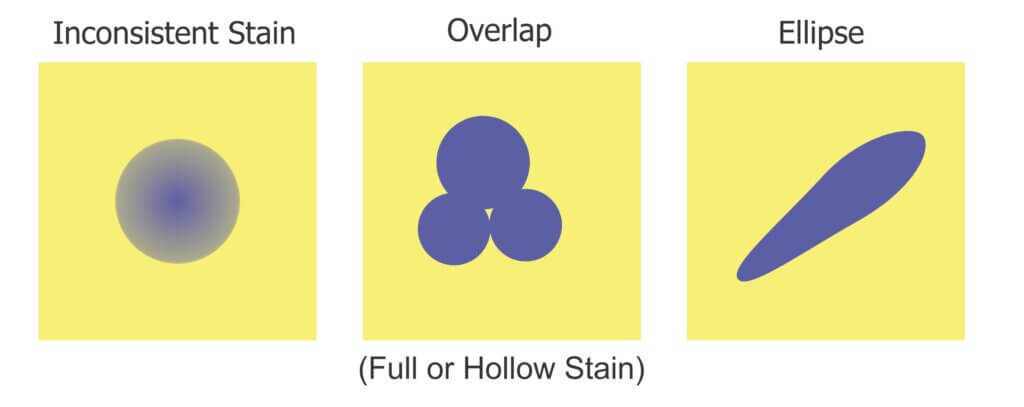
    We can now move on to the larger shapes, or “morphology” of the objects in our binary image. Our goal is to quantify deposits by interpreting these shapes. Once again, these operations are powerful processing tools, but we must acknowledge three overriding limitations:

    1. Inconsistent stains

    Sometimes deposits do not create a consistent blue colour – they can get lighter or take on a greenish-yellow hue towards the perimeter of the stain. During thresholding, the outer edge can be accidently eroded, leaving behind an object with a jagged edge. This may lead us to underestimate the percent area actually covered. In the case of tiny stains, it might eliminate them entirely and lead us to underestimate deposit density.

    2. Overlaps

    It can be difficult to determine if an object represents a stain from a single droplet or is the result of multiple, overlapping deposits. This becomes significant when the surface of the WSP exceeds ~20% total coverage. The resulting objects may or may not have hollow centres where droplets do not overlap entirely. Misidentifying overlaps leads us to falsely conclude that an object is the result of a single, coarser droplet rather than multiple finer droplets.

    3. Ellipses

    Non-circular stains are formed when droplets scuff along the surface. Two droplets with the same volume encountering a paper at different angles can create stains with significantly different areas. We may wrongly conclude that the droplets that created them were coarser than they truly were. One approach is to use Feret’s Diameter (aka Caliper Diameter) by measuring the widest spans on the X and Y axes and taking the average. Another approach is to interpret the ellipse as a series of circular stains. Or we can decide to only acknowledge these objects when calculating percent area covered, but omit them when calculating deposit density or predicting original droplet size. Each strategy is a compromise, so it is important to be consistent and transparent when reporting results.

    Three common problems when analysing water sensitive paper.

    We’ll explore two morphological operations that can help us separate fact from fiction: Granulometry and Dilation-and-Erosion. We’re introducing these operations as part of the processing and detection step, but they may also overlap with the measurement step in our three-step process.

    Granulometry

    We can estimate the range of object sizes and get a sense of how they are distributed on the paper by filtering or “sieving” the image. Imagine pouring a mixture of sand and rocks through a series of ever-finer sieves. Doing so allows you to separate particles based on size exclusion. A granulometry function compares each object to a series of standardized objects with decreasing diameters. This isolates objects of a similar size and bins them in that size range. This is a powerful operation, but accuracy is lost when stains overlap to form larger objects. In this case, we move on to Dilation and Erosion.

    Dilation and Erosion

    Think of dilation as adding pixels to the boundary of an object. This makes tiny objects bigger, fills in any interior holes and can cause objects to merge. The number of pixel-wide dilations required to make objects contact one another can be used as a measure of deposit density.

    Erosion removes pixels from the outer (and sometimes inner) boundaries of an object. This eliminates tiny artifacts that may not actually represent stains. It can also split non-circular objects into multiple parts before shrinking them into multiple nuclei (aka centroids). These last-remaining points are not necessarily the centre of a stain, but the pixels furthest away from the original boundary.

    When a non-circular shape has more than one nucleus, they likely represent individual droplets that combined to form the larger stain. We can then use these nuclei to measure deposit density, such as in a Voronoi partition which triangulates each nucleus in relation to the two closest neighbours.

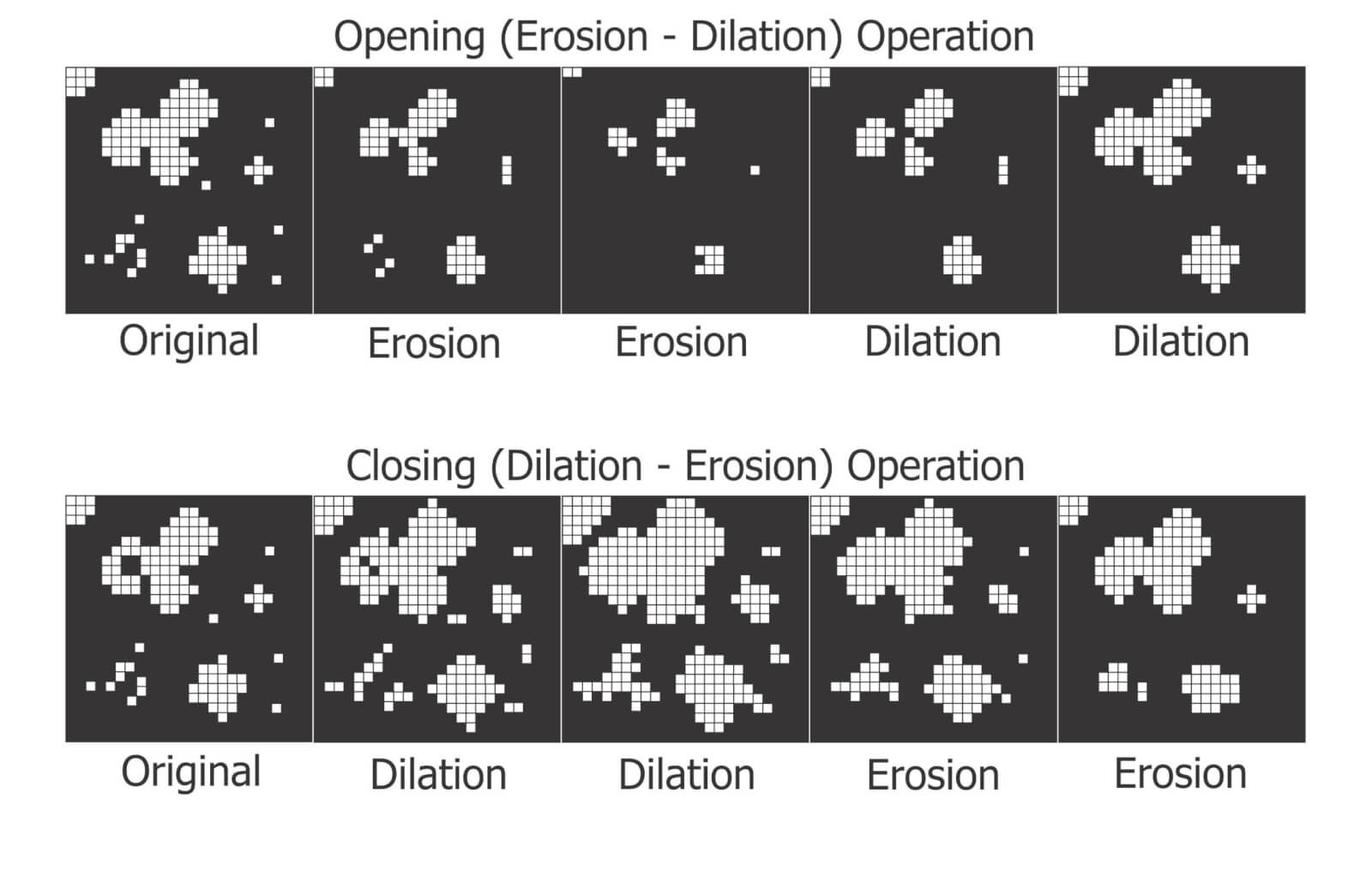
    Many image processers use both these operations sequentially. When an image is eroded and then dilated (a process called “Opening”), smaller objects are removed, leaving the area and shape of remaining objects relatively intact. Dilating and then eroding (a process called “Closing”) fills in small holes and merges smaller objects, once again leaving the area and shape of remaining objects relatively intact. We can use both of these functions to help smooth an image prior to measurement.

    (Top) Opening operations erode and then dilate the image. Moving left to right, the smaller objects tend to disappear. (Bottom) Closing operations dilate and then erode the image. Moving left to right, smaller objects either disappear or merge and holes are filled in

    Distance Transformations

    Distance transformations are advanced operations specifically used to separate objects that are densely packed. While not typically used when analyzing WSP, distance transformations are another means of identifying object nuclei. They are another means for teasing apart objects that are likely the result of overlapping deposits and then mapping their relative sizes and positions.

    Measurement

    The calculation of the area covered by deposits is straightforward. The pixels belonging to objects (the deposits) and those belonging to background are summed and then the fraction is converted to percent area covered. Research has shown that the image resolution does not significantly impact percent coverage assessments and has suggested that all image analysis software tends to produce similar results (+/- 3.5% observed when the same threshold was applied to multiple papers). This is acceptable because it’s within the variability inherent to spraying.

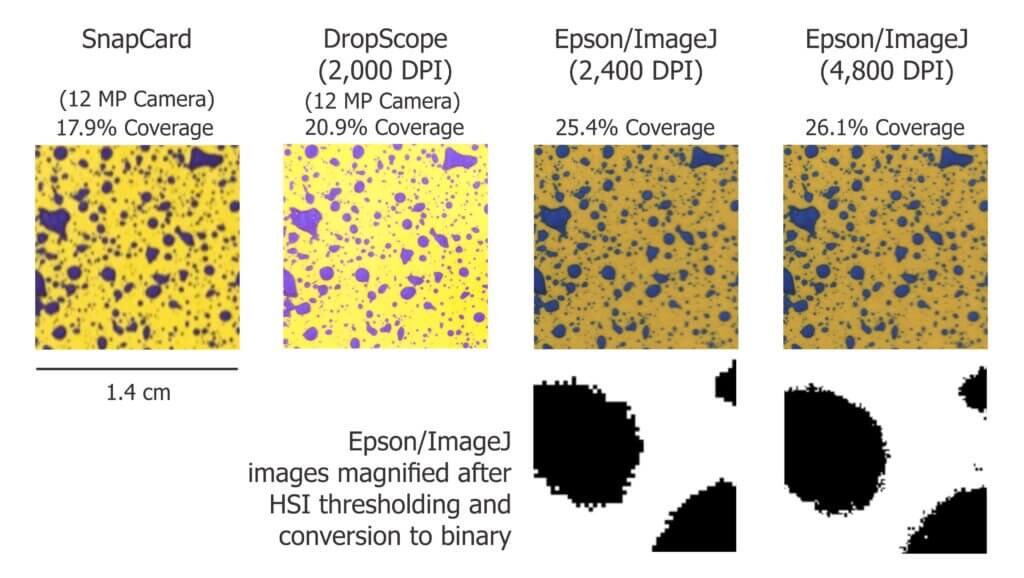
    We ran a similar experiment wherein we analyzed the same piece of WSP using four methods. Here are a few facts about the software we used:

    • DropScope produces images between 2,100 and 2,300 DPI. Currently, it ignores ellipses and doesn’t count anything spanning less than ~35 µm (3 pixels).
    • We set ImageJ to ignore any object spanning less than 3 pixels, which at 2,400 DPI was 30 µm in diameter.
    • We are unaware of Snapcard’s processing methods except that the software was benchmarked using ImageJ. Developers note it will underestimate the percent area covered if the image is out of focus. (Note: As of 2026, this app may no longer be supported by the GRDC).

    The images shown in the figure below were cropped from screenshots produced by each method. The actual ROI analyzed was ~3 cm2 for SnapCard, 3.68 cm2 for DropScope and 2.0 cm2 for both Epson/ImageJ methods. Our results indicate an +/- 4% difference in percent area coverage. This variability reflects the results of a 2016 journal article that compared SnapCard with ImageJ and other leading analytical software. That study claimed no statistically significant difference in percent coverage detected (standard deviations were about 20%). However, the ImageJ results tended to trend several percent higher than SnapCard. We saw this as well. And so, while resolution may not have a significant impact on percent area covered, there does appear to be some correlation.

    Percent area covered as reported by three image analysis systems. Only a minor difference was observed when resolution was doubled using the Epson/ImageJ method.

    Resolution definitely affects deposit counts. Particularly in applications that employ finer droplets. Consider the difference between detecting or missing 1,000 30 µm diameter objects. It may only amount to a fraction of a percentage of the surface covered, but +/- 1,000 objects on a 2 cm2 area is significant in terms of deposit density.

    Output

    Once a WSP image (or set of images) has been scanned, pre-processed, processed and measured, we will receive some manner of output. Some software packages create an attractive report with images, graphs and key values. These reports include percent coverage and many provide droplet density. Deposits may be binned by size, or spread factors are used to calculate the original droplet diameters and even estimate the volume applied by area. Other software packages provide raw data that can be imported into a statistical program or spreadsheet program like Excel for further analysis. Some software packages provide both.

    How far can we take this?

    Blow-by-blow data analysis is beyond the scope of this document, but how much weight should we give to coverage data obtained using WSP? The answer depends on the metric in question, but in all cases we must first acknowledge the three overriding caveats. Take it as said that they apply to everything that follows:

    1. Different brands (and even different production runs) of WSP can produce significantly different coverage metrics. When conducting experiments, use a single brand of WSP. Better still, use papers from the same production batch whenever possible.
    2. The same of piece of sprayed WSP can produce significantly different results depending on the software and protocol used to analyze it. When conducting experiments, use the same software and assessment protocol and be transparent about the process when communicating results.
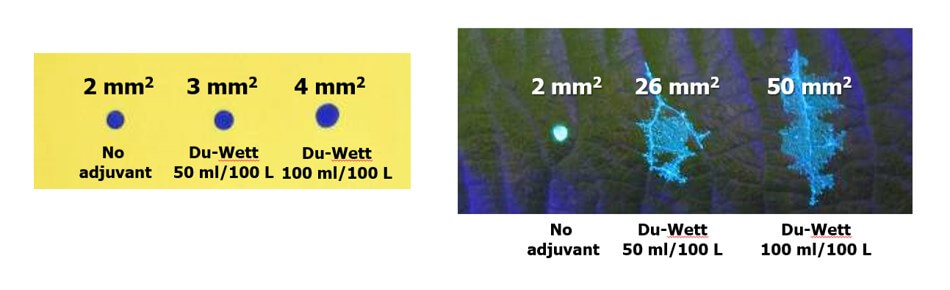
    3. WSP coverage may not reflect the coverage achieved on an actual plant tissue surface. It is suitable as a relative index (I.e. papers can be compared to papers, but not to tissues) but the spread factor changes with surface wettability and the surface tension of the liquid sprayed. Note the differences in percent area covered in the following experiment with an organosilicone super-spreader:
    Difference in deposit spread on water sensitive paper versus a leaf surface using an organosilicone super-spreader and UV dye. The same volume was applied in each case and while the area increased two-fold on WSP it increased ~10-fold on an actual leaf. Image reproduced from work by Robyn Gaskin, Plant Protection Products, New Zealand.

    Recall that we started this document by listing the four pieces of information commonly sought using WSP. They were listed in order of reliability, and now we can explain why.

    • The percent surface area covered: We have established that this is the most reliable piece of data. Droplets do not spread on WSP the way they do on plant surfaces, so it will underestimate actual coverage. The results vary by analytical method, but it’s likely not dependent on resolution and still falls within the variability inherent to spraying. This metric gives us valuable and actionable information. We can say whether or not we hit a target, and evaluate whether a sprayer change resulted in more or less deposit.
    • The density of deposits on the target area: We have established that that there are limits to the reliability of this metric. It is affected by the analytical method used and can be greatly underestimated when resolution is poor or when deposits overlap in high numbers. Also, it will never reliably reflect deposits under 30 µm. Nevertheless, under controlled conditions this information does have value and is of great interest in enquiries about drift and contact fungicides.
    • The size of the droplets that left the stains: This metric is highly questionable except under controlled conditions. The many assumptions about surface tension, droplet speed, and droplet evaporation make it impossible to make definitive statements about spray quality. Finer droplets are greatly underestimated in this equation. Therefore, while there may be some value in using WSP as a relative index, this metric is a crude indication at best.
    • The dose applied to the target surface: This metric has not been discussed up to this point, but is quickly and easily dismissed. Let’s assume that a droplet with a high concentration of an active ingredient will leave a stain that is the same area as another droplet with a lower concentration. This will lead some to suggest that as long as the original concentration is known, we can back-calculate the dose (which is the amount of active on a given area). However, one droplet has the same volume as eight droplets that are half it’s diameter. This cubic relationship means that if they all deposit, the larger droplet will cover roughly 1/2 the surface area as the eight smaller droplets. Therefore, the smaller droplets spread the same amount of active over a greater area. Spread factor muddies this a bit, but ultimately it means that dose cannot be estimated from area covered. Dose is better assessed using collectors that permit the residue to be removed, such as Petri dishes, Mylar sheets, pipe cleaners, alpha cellulose cards, or glass slides.

    And so, the image analysis process described here is powerful and effective when used with water sensitive paper as long as the limitations are acknowledged. The same process can also be used with dyes and specialized collectors such as Kromekote to permit even greater resolution. But that’s another story.

    References (Further reading)

    Bankhead, P. 2014. Analyzing fluorescence microscopy images with ImageJ.

    Cunha, J.P.A.R., Farnese, A.C., Olivet, J.J. 2013. Computer programs for analysis of droplets sprayed on water sensitive papers. Planta Daninha, Viçosa-MG. 31(3): 715-720.

    Ferguson, J.C., Chechetto, R.G., O’Donnell, C.C., Fritz, B.K., Hoffmann, W.C., Coleman, C.E., Chauhan, B.S., Adkins, S.W. Kruger, G.R., Hewitt, A.J. 2016. Assessing a novel smartphone application – SnapCard, compared to five imaging systems to quantify droplet deposition on artificial collectors. Computers and Electronics in Agriculture. 128: 193-198.

    Ledebuhr, M. 2016. Small Drop Sprays.

    Marçal, A.R.S., Cunha, M. 2008. Image processing of artificial targets for automatic evaluation of spray targets. Trans. of the ASABE. 51(3): 811-821.

    Moor, A., Langenakens, J., Vereecke, E., Jaeken, P., Lootens, P., Vandecasteele, P. 2000. Image analysis of water sensitive paper as a tool for the evaluation of spray distribution of orchard sprayers. Aspects of Applied Biology. 57.

    Panneton, B. 2002. Image analysis of water‐sensitive cards for spray coverage experiments. Applied Eng. in Agric. 18(2): 179‐182.

    Salyani, M., Zhu, H., Sweeb, R.D., Pai, N. 2013. Assessment of spray distribution with water-sensitive paper. Agric. Eng. Int.: CIGR Journal. 15(2): 101-111.

    SnapCard website. University of Western Australia and the Department of Primary Industries and Regional Development, Western Australia. (Note: As of 2026, may no longer exist).

    Syngenta. 2002. Water‐sensitive paper for monitoring spray distributions. CH‐4002. Basle, Switzerland: Syngenta Crop Protection.

    Turner, C.R., Huntington, K.A. 1970. The use of a water sensitive dye for the detection and assessment of small spray droplets. J. Agric. Eng. Res. 15: 385-387.

  • Disease Control in Berry Crops

    Disease Control in Berry Crops

    In the spring of 2016, the Ontario Berry Growers Association (OBGA) conducted a survey of its membership to poll how fungicides were being applied. The results were very interesting.

    Fungicide basics

    Generally, fungicides registered for berry crops are contact products, so coverage and timing are very important. The fungicide has to be distributed evenly on the target before disease has a chance to infect the crop. That means the sprayer operator must be aware of the susceptibility of the crop to the level of disease pressure to ensure timing is appropriate. While kickback and post-application distribution of pesticide residue is sometimes possible, sprayer operators should not rely on it. The following table outlines application recommendations for a fungicide commonly used in Ontario. It combines labelled information and provincial recommendations and is representative of most fungicides.

    Summer-fruiting and Fall-bearing Raspberry / Blackberry Highbush Blueberry Day-neutral and June-bearing Strawberry
    Labelled rate 2.5 kg/ha 2.25 kg in 1,000 L/ha2.75-4.25 kg in 1,000 L/ha
    Diseases (Labelled and Ontario provincial recommendations) Anthracnose fruit rot, Spur blight, Leaf spot, Botrytis grey mouldAnthracnose fruit rot, Shoot blight (Mummy berry), Botrytis twig and/or blossom blightCommon leaf spot, Botrytis grey mold
    Crop staging Bloom, Pre-harvest, HarvestFirst bloom, Fruit ripeningFlower bud, First bloom, 7-10 days after bloom, Pre-harvest, Through to fall
    As of 2016

    The spray target

    The applicator reading the recommendations should be considering the best way to get the fungicide to the target. But, what is the target, and what is the best way to apply it? It seems the recommendations raise as many questions as they answer:

    • With the possible exception of blueberry, this fungicide can be applied through much of the growing season (especially when it’s been a wet season). That means the crop staging is highly variable.
    • The primary target is blossoms, but depending on the disease, leaves and stems are also important.
    • The label states a volume of carrier (i.e. 1,000 L/ha) for strawberry and blueberry, but not the cane fruit. It does not specify highbush blueberry versus the sessile, ground cover variety.

    So, this means is the sprayer operator has to spray crops with highly variable physiology (e.g. bush, cane or sessile row crops), onto very different targets (e.g. leaves, canes, stems, flowers) throughout much of the season as the crop canopies grow and fill. This is a very challenging spray application. It would be wrong to suggest a single spray quality, water volume or sprayer set-up to efficiently accomplish all these goals (more on that later). The first consideration is the application equipment itself.

    The application equipment

    Berry growers employ a variety of sprayers to protect berries. Without considering models or optional features, there are three fundamentally different styles: Airblast, backpack and boom. According to the survey, the following table shows which sprayers are used in which berry crop in Ontario. Approximately 60 growers responded, and many grow more than one variety of berry and use more than one style of sprayer.

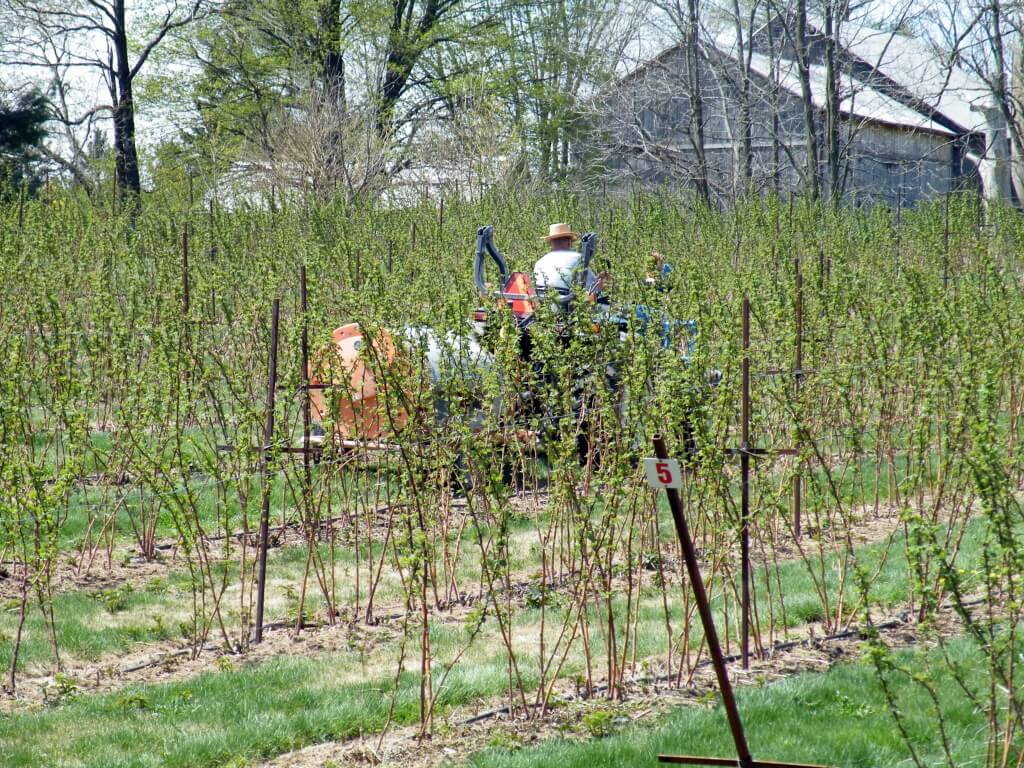
    Jacto airblast in raspberry
    Jacto airblast in raspberry
    Airblast SprayerBackpack or Wand SprayerVert. or Hor. Boom SprayerTotal
    Highbush blueberry 8109
    Day-neutral Strawberry 302124
    June-bearing Strawberry503237
    Raspberries & Blackberries211729
    Total37260

    So, generally, cane and bush berries are sprayed using airblast sprayers and strawberries using horizontal booms. The survey didn’t specify features such as air-assist on booms, or whether or not those booms are trailed or self-propelled. The type of, and features on, any given sprayer dictate the limits of what an operator can adjust to improve coverage.

    Water volume

    Respondents also reported on how much carrier (i.e. water) they used to spray fungicide on their crops. Given Canada’s propensity to report volumes in many different forms, I have converted all values into the most common units: L/ha, US g/ac and the dreaded L/ac:

    nL/ha ± std (max./min.) US g/ac ± std (max./min.) L/ac ± std (max./min.)
    Highbush Blueberries7534.2 ± 340.1 (1,000/150)57.1 ± 36.4  (106.9/16)216.2 ± 138 (404.7/60.7)
    Day-neutral Strawberries22418.5 ± 192.2 (1,000/224.5)44.7 ± 20.6 (106.9/24)169.4 ± 77.8 (404.7/90.8)
    June-bearing Strawberries33403.1 ± 235.1 (1,000/50)43.1 ± 25.1 (106.9/5.3)163.1 ± 95.1 (404.7/20.2)
    Raspberries & Blackberries27450.1 ± 279.4 (1,200/50)48.1 ± 29.9 (128.3/5.3)182.1 ± 113.1 (485.6/20.2)
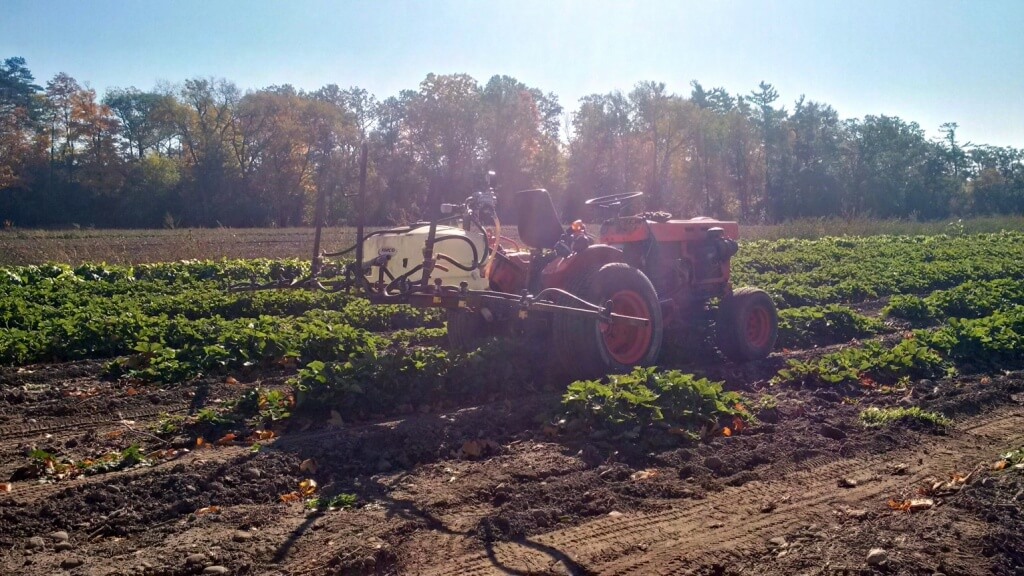
    Trailed horizontal boom in strawberry
    Trailed horizontal boom in strawberry

    There appears to be a lot of variability in the volumes applied, but on the whole, very few are using the 1,000 l/ha indicated in the fungicide recommendations. The ~430 l/ha overall average is no surprise; labelled volumes are quite often higher than what sprayer operators use. In some cases, high label volumes are warranted because the product requires a “drench” application to totally saturate the target, or to penetrate very dense canopies. Conversely, a high label volume might reflect outdated practices if that label hasn’t kept up with current cropping methods or application technology. Sometimes label volumes are suspiciously large, round numbers that suggest they are intended to encompass a worst-case scenario (e.g. a large, unmanaged crop with high disease pressure and a less-than-accurate spray application). In the particular case of crops sprayed with an airblast sprayer, it is very difficult for a label to accurately predict an appropriate volume due to the variability in crop size, density and plant spacing. This has led to methods to interpret labels, such as crop-adapted spraying.

    The disparity between label language and grower practices is not entirely the fault of the label. Most sprayer operators don’t want to carry a lot of water because more refills prolong the spray day. In situations where the crop has reached a critical disease threshold, or bad weather has compressed the spray window, sprayer operators sometimes reduce the volumes in the belief that “getting something on” trumps “good coverage”. Perhaps that’s true, but insufficient volumes greatly reduce coverage. This can be further exacerbated when operators do not account for the increase in crop size and density over the season, or the impact of hot dry weather on droplet evaporation.

    Improving coverage

    So, is there an ideal sprayer set up and volume? As previously alluded, the variability in crop staging, crop morphology, target location and spray equipment make a single recommendation impossible. But that doesn’t mean there aren’t diagnostic tools and a few simple rules to help a sprayer operator determine a volume to suit their particular needs. Much can be accomplished with these three things:

    • Water-sensitive paper
    • A modest selection of nozzles and a nozzle catalogue
    • An open-minded sprayer operator willing to spend a little time and reconsider traditional practices
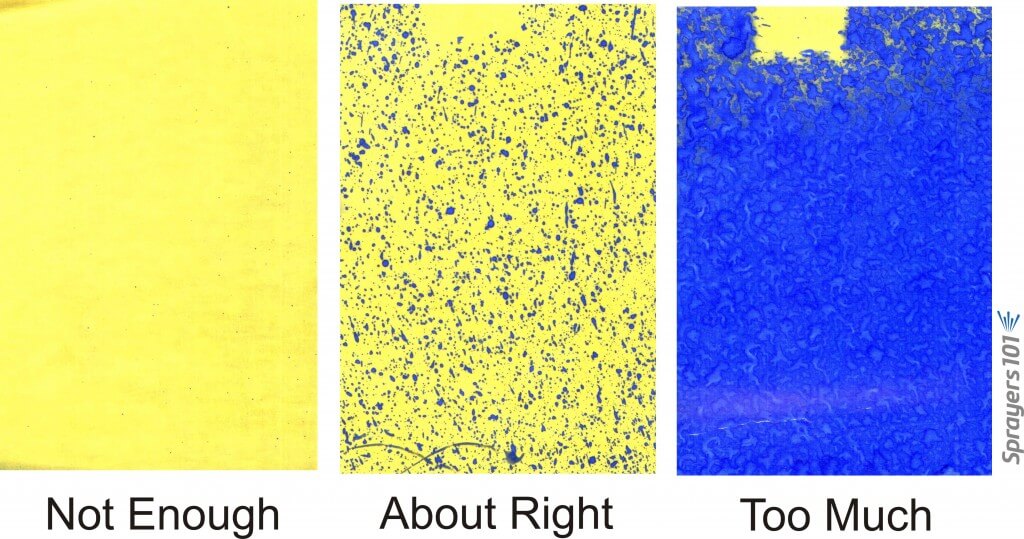
    Rule-of-thumb fungicide coverage on water-sensitive paper.
    Rule-of-thumb fungicide coverage on water-sensitive paper.

    Water-sensitive paper is placed in the canopy, oriented to represent the target (e.g. leaf, bloom, etc.). It is important to put multiple papers in at least three plants to ensure the coverage reflects a typical application. The paper changes colour when it’s sprayed and this provides valuable and immediate feedback. Did the spray go where it was supposed to go and did it distribute throughout the target? If so, then the operator now knows that they can safely focus on timing rather than targeting. If not, a little diagnosis is required:

    1. Were targets completely drenched? If so, there is too much coverage. Operators can drive faster (if possible, and as long as it doesn’t create drift), reduce operating pressure (if possible, and as long as the nozzle is still operating in the middle of its registered range), or change nozzles to lower rates (as long as spray quality is constant).

    2 .Were targets only partially covered, as if a leaf obstructed part of the target and created a shadow? This mutual-shading is the bane of spraying dense canopies. One possible solution lies in understanding droplet behaviour: Coarser sprays generally mean fewer droplets and they move in straight lines. Therefore, when they hit a target, they might splatter or run-off, but typically their journey is over. If the spray is too Coarse, a slightly Finer spray quality increases droplet counts and may help droplets navigate around obstacles and adhere to more surfaces. Sprays that are too Fine will not penetrate dense canopies without some form of air assist. They slow very quickly and tend to drift and evaporate before they get deep enough into a canopy to do any good. A Medium droplet size is a good compromise because it produces some Fines and some Coarser drops – the best of both worlds.

    Increasing volumes and reconsidering spray quality often helps, but there might be other options. If using air assist, there are tests that can confirm the air volume and direction are appropriate. Another solution might lie in canopy management (where pruning bushes and canes can help spray penetration immensely). Still another might lie in the use of adjuvants to improve droplet spread on the target.

    3. Were targets missed entirely, or coverage is consistent but sparse? The operator is likely not using enough water, and/or the spray quality is too fine. It has been demonstrated time and again that higher volumes improve coverage, but operators can try any of the options listed previously for partially-obstructed coverage. All the reasoning is the same.

    Conclusion

    Spraying fungicides effectively requires an attentive sprayer operator. Timing and product choice are very important, but when it is time to spray the sprayer operator should diagnose coverage with water-sensitive paper, and be willing to make changes to the sprayer set-up to reflect changing conditions. Thanks to the OBGA for sharing the survey data.