Tag: tank

  • Sprayer Cleanout and Cleaner Selection

    Sprayer Cleanout and Cleaner Selection

    Editor’s Note: Changes have been made to this article since its original publication in 2015.

    When in-crop spraying is around the corner, sprayer tank clean out is an important topic to address on your farm. Many farms have done the same clean-out routine for years and not had any issues with contaminating residues in the tank resulting in crop damage. Although the old saying “If it ain’t broke, don’t fix it” definitely has some merit, in this case it is good to question whether your cleanout routine is adequate. When you consider the way chemicals have changed over the years, especially the higher reliance on oily surfactants in modern chemicals, it makes sense why we need to pay attention to spray tank cleanout.

    The goal of cleaning the tank is to remove and dilute the previous chemical formulation as much as possible to prevent buildup and carryover of residues which can cause crop damage on non-target crops.

    Safety First

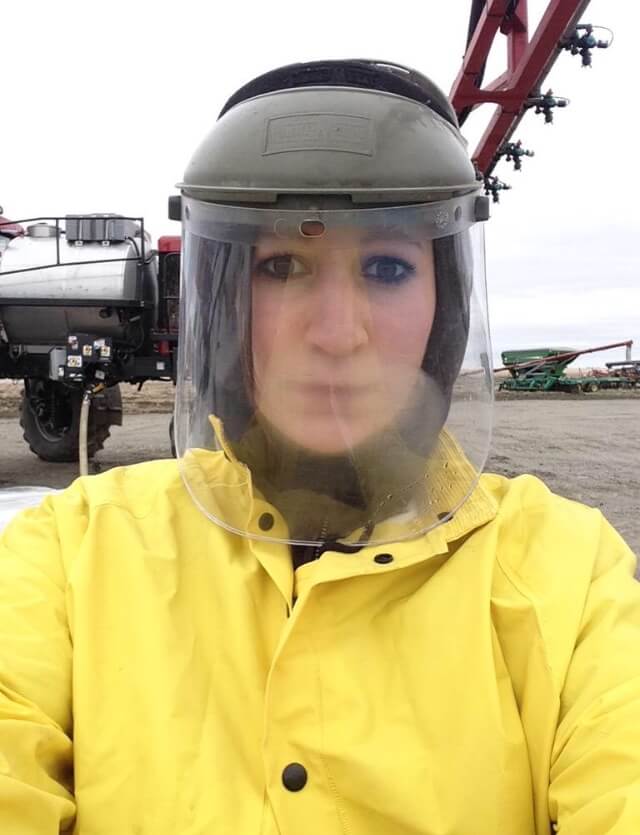
    Always wear safety gear before working around chemicals. Although it can be a hassle, we all know that it is no fun spilling chemical on your clothes and skin. What’s even worse is smelling it all day in the sprayer cab. I use a long waterproof coat, a plastic face shield to prevent back splash when spiking jugs, and of course rubber gloves (No judgment on me looking like a total dork please:).

    Safety First - Are you looking at my headgear? Are you!?
    Safety First – Are you looking at my headgear? Are you!?

    1 – Get the Previous Product Out of the Tank ASAP

    In my experiences spraying, I have always tried to get the previous product out of the tank as soon as possible. Spraying the extra product out of the tank is the safest and most environmentally responsible way to rid your tank of left over product. Dr. Tom Wolf of AgriMetrix Research and Training, states that spraying a crop twice is usually safe, as all herbicides must be registered to be sprayed at twice the rate in order to be registered by the Pest Management Regulatory Agency (PMRA). If one lets the product sit in the tank overnight before beginning the cleanout, there is more time for product to congeal and adhere to the tank and plumbing components.

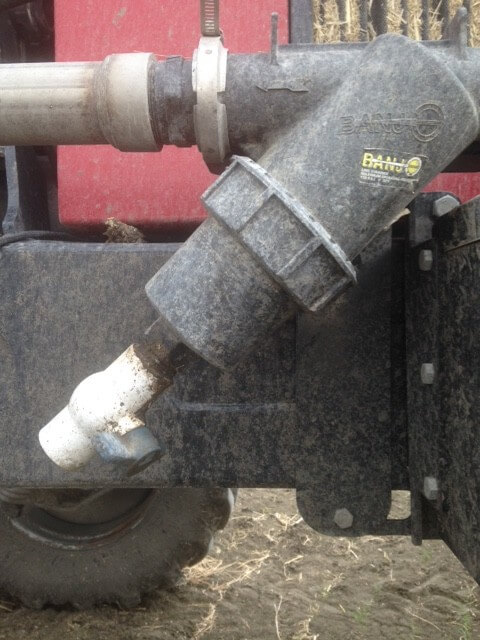
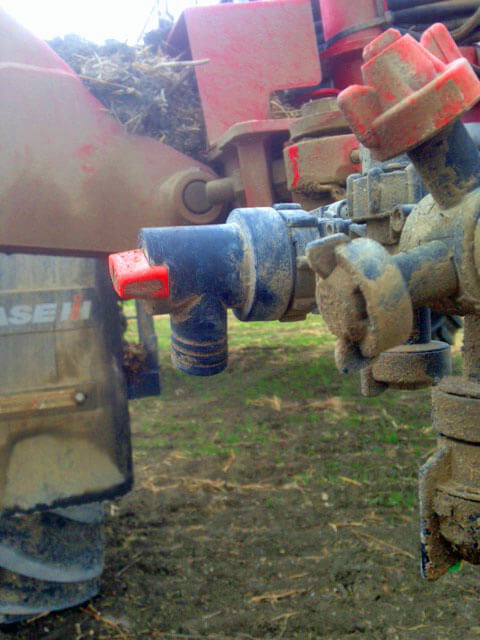
    Ball valve on main filters.
    Ball valve on main filters.

    I open the valve ends on my filters to empty the buildup in the bottom of the filter canister. There is often chemical residue or green slime from dug-out water in here. Next I like to go along my booms and empty out all the chemical product within the boom plumbing. Our farm runs a Patriot 4420 sprayer, with valves on each boom section to empty out product. Usually I will go to the sprayer and tip the boom ends up so that gravity allows all of the product to drain out. Then I raise the centre rack, and tip end of booms down to force the product to drain out the other way. You would be amazed at how much product comes out by doing this both directions!

    Valves on each nozzle.
    Valves on each nozzle.
    Tipping the boom ends up with the centre rack down.
    Tipping the boom ends up with the centre rack down.

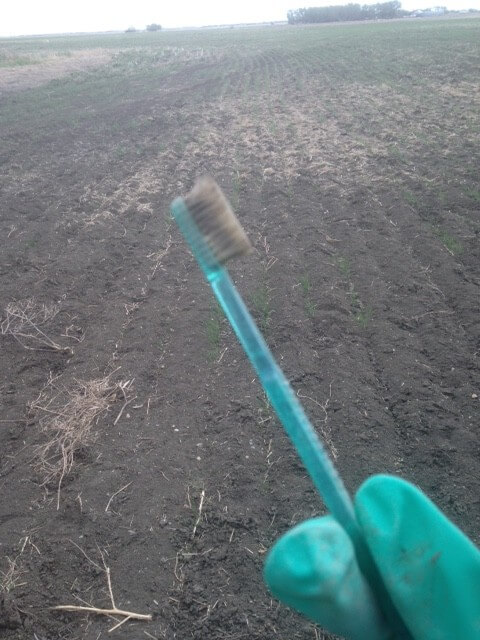
    While the tank is empty and no pump is running, I will remove all the filters on the sprayer, and grab the handy dandy toothbrush – this is the most valuable tool in filter cleanout! This brush is just small enough to get it in the centre of the filter and scrub all of the residue and gunk out of the filters. A pail filled with rinsing solution is an easy way to clean filters and nozzles.

    Possibly the most important cleaning tool. Don't put it back in the bathroom afterwards.
    Possibly the most important cleaning tool. Don’t put it back in the bathroom afterwards.

    2 – Begin Rinsing Process

    I used to always put about 1,000 gallons of water to our 1,200 gallon tank, thinking that a larger volume would clean all areas of the tank better, but I’ve since changed my thinking. Research has shown that two or three smaller rinses *aka triple rinsing) is more effective for rinsing the tank than one large volume rinse. I always crank the agitation up to high and allow the cleaning solution to agitate for as long as possible.

    Nowadays I try to do three 400 gallon rinses.

    1st RinseCleaning product plus 400 gallons water
    2nd RinseCleaning product plus 400 gallons water
    3rd Rinse400 gallons of just water to rinse, and run through plumbing system to check nozzles and for leaks

    Many labels Recommend leaving the rinsing solution in the tank and lines overnight. This will allow more chemical deposits to loosen up. If an operator is forced to speed up the tank cleaning process due to limited time, they must understand that there are risks involved in doing a less thorough tank cleaning.

    Cleaning Products

    Detergent or ammonia? Check the label. If the label doesn’t specify, you can consult this table from Winfield United.

    Detergent CleanerAmmonia
    Solution contains an adjuvantSulfonylureas (SU’s)
    Solution contains a milky looking component (an Emulsion or EC)Thiencarbazone – methyl
    GlufonsinateFlucarbazone
    Imi’s (Group 2)Dicamba
    Simplicity

    Detergent (e.g. All Clear)

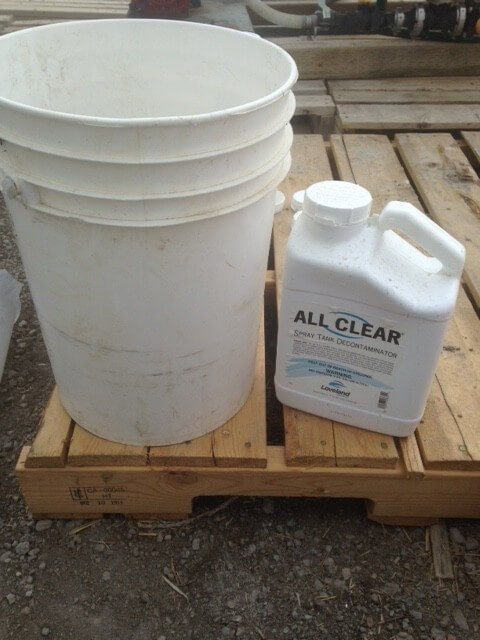
    This detergent cleaner is specifically designed to remove pesticide deposits and other debris, including oily substances from booms, filters, and nozzles. Use All Clear (or other detergent cleaner) if the solution is milky-looking (called an emulsion), which means it is oil-based.

    • Label rate is 0.25 L of All Clear/100 L of water.
    • If you are adding 400 gal of water, you will only need 3.78 L of cleaning product.
    • Decontamination rate is double this: 7.57 L of cleaning product. Use this rate if you have had residue issues, or to do a more thorough cleaning.

    pH Increaser (aka Ammonia; e.g. Flush)

    This is an ammonia based cleaning solution. This product is used to raise the pH to increase solubility of most Group 2 products (from FMC, Bayer, and Corteva but not BASF). Flush contains 7% ammonia. Use Flush (or other ammonia based cleaner) for most cleaning, but especially for Group 2 products listed above, such as Varro, and Velocity M3, Express, Refine, Muster, and Spectrum.

    • Label Rate is 0.50 L of Flush/100 L of water.
    • If you are adding 400 gal of water, you will need exactly 7.57 L of cleaning solution.
    A pail and detergent are "must-haves" during sprayer cleanup.
    A pail and detergent are “must-haves” during sprayer cleanup.

    Combo Products

    Alternately, some solutions raise pH without ammonia. FS Rinseout is sodium hydroxide based, not ammonia based. It is a high alkaline solution that elevates and holds the pH combined with strong surfactants to help clean the tank. Another is CleanOut, which uses potassium hydroxide and disodium metasilicate, a detergent. In both cases they are both pH increases and detergents.

    3 – Draining the Rinse Solution

    After I have ensured all nozzles are working correctly, and there are no leaks in the system, I drain out all of the rinse water, fold in the booms, and get ready to fill the tank with chemical solution for spraying!

    More Information

    Learn where residue can hide. This video was filmed for the Environmental Farm Plan with the nice people at Clean Field Services in Drayton, Ontario. Hardly the height of our acting careers, but good messaging nonetheless.

  • Evaluating Methods for Controlling Algae in Carrier Water Storage Tanks

    Evaluating Methods for Controlling Algae in Carrier Water Storage Tanks

    This work was performed with Mike Cowbrough, OMAFA Field Crop Weed Specialist.

    In the early summer months, many field and specialty crop operations collect rainwater (or possibly pump water from holding ponds) into storage tanks for use as a carrier in spray applications. These tanks may be stationary, or they may be part of a nurse or tender truck that delivers both water and chemistry to the field as a means of improving operational efficiency.

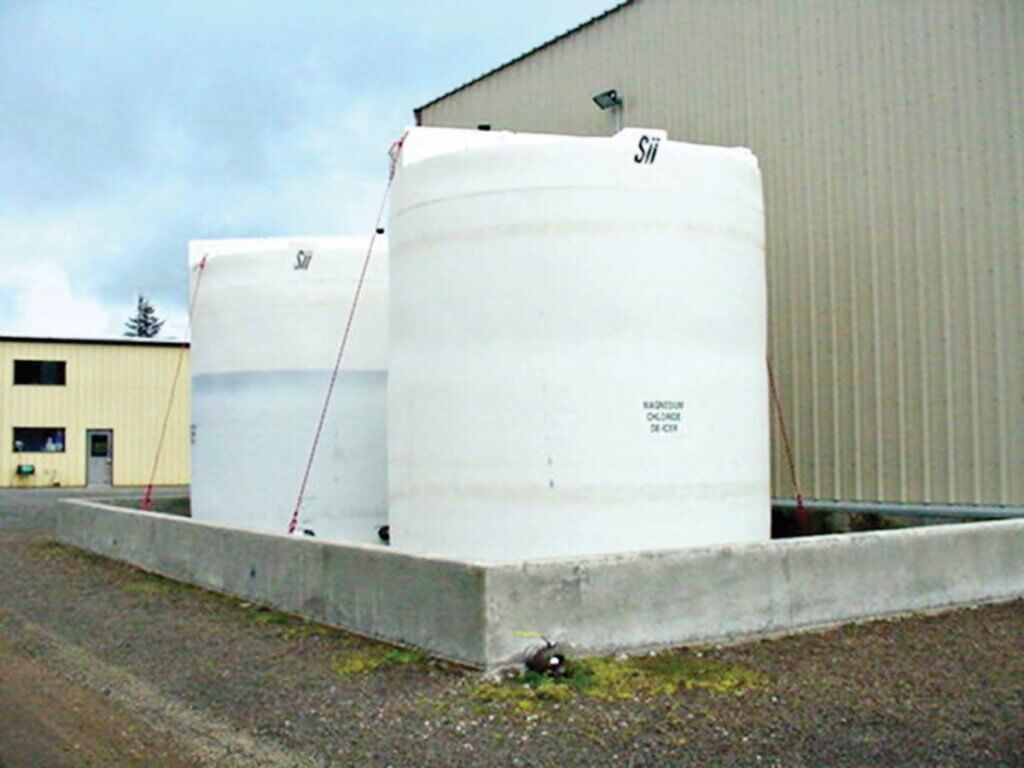
    Poly tanks. Source: Purdue Extension publication PPP-77 “Poly Tanks for Farms and Businesses“.

    In the case of translucent poly tanks, which are commonly used because of their light weight, custom shape, and low price point, light exposure will grow algae. Algal populations multiply exponentially and will clog spray filters and negatively affect filling. In response, growers use home-grown algicides such as copper sulfate, lengths of copper pipe, household bleach, chlorine, bromine, etc. They do so with little or no guidance and therefore little or no consistency. Beyond the obvious questions surrounding efficacy, it is unknown whether these adjuncts create physical or chemical incompatibilities in the tank mix. If so, there is the potential for reduced efficacy and/or crop damage.

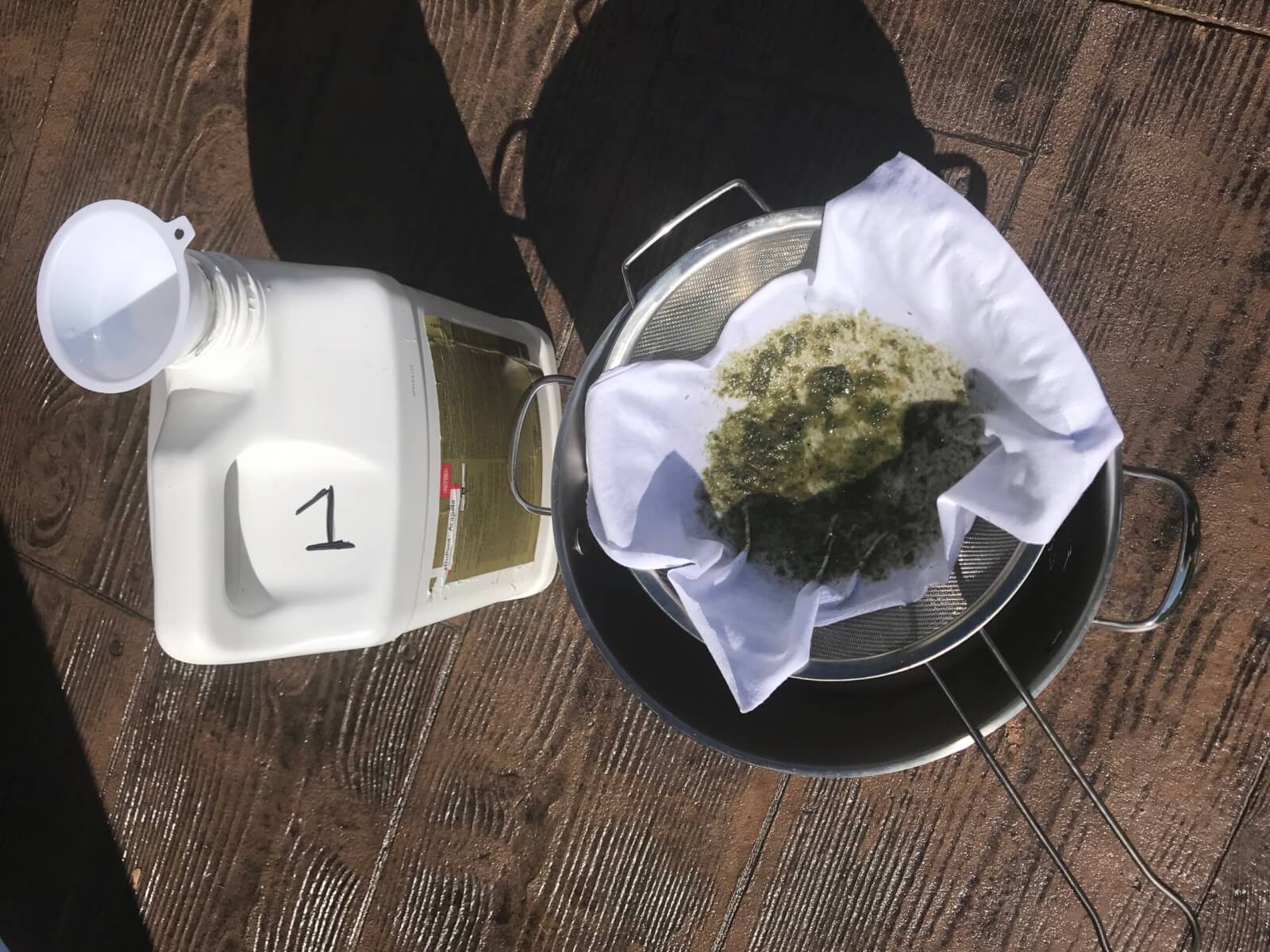
    We tested popular methods for algae control by inoculating a series of 10 L translucent plastic jugs with an algal population sourced from a southern Ontario holding pond. The population was left to acclimate and generally establish itself (aka colonize) before we introduced some form of control. Each jug was then gently stirred and emptied through a sieve for qualitative assessment.

    In a parallel experiment, we introduced the same algicides to fill water and conducted spray trials. 10 L volumes were mixed with a field rate of glyphosate and sprayed on RR soybeans. Weed control was assessed and soybean yield measured for each treatment.

    Algicide Efficacy Experiment

    In each treatment, tap water was mixed with a micronutrient growth media (from the Canadian Phycological Culture Centre at the University of Waterloo). This was an unsterilized 10% WC(ed) solution intended to provide micronutrients for algal growth while minimizing fungal and bacterial growth.

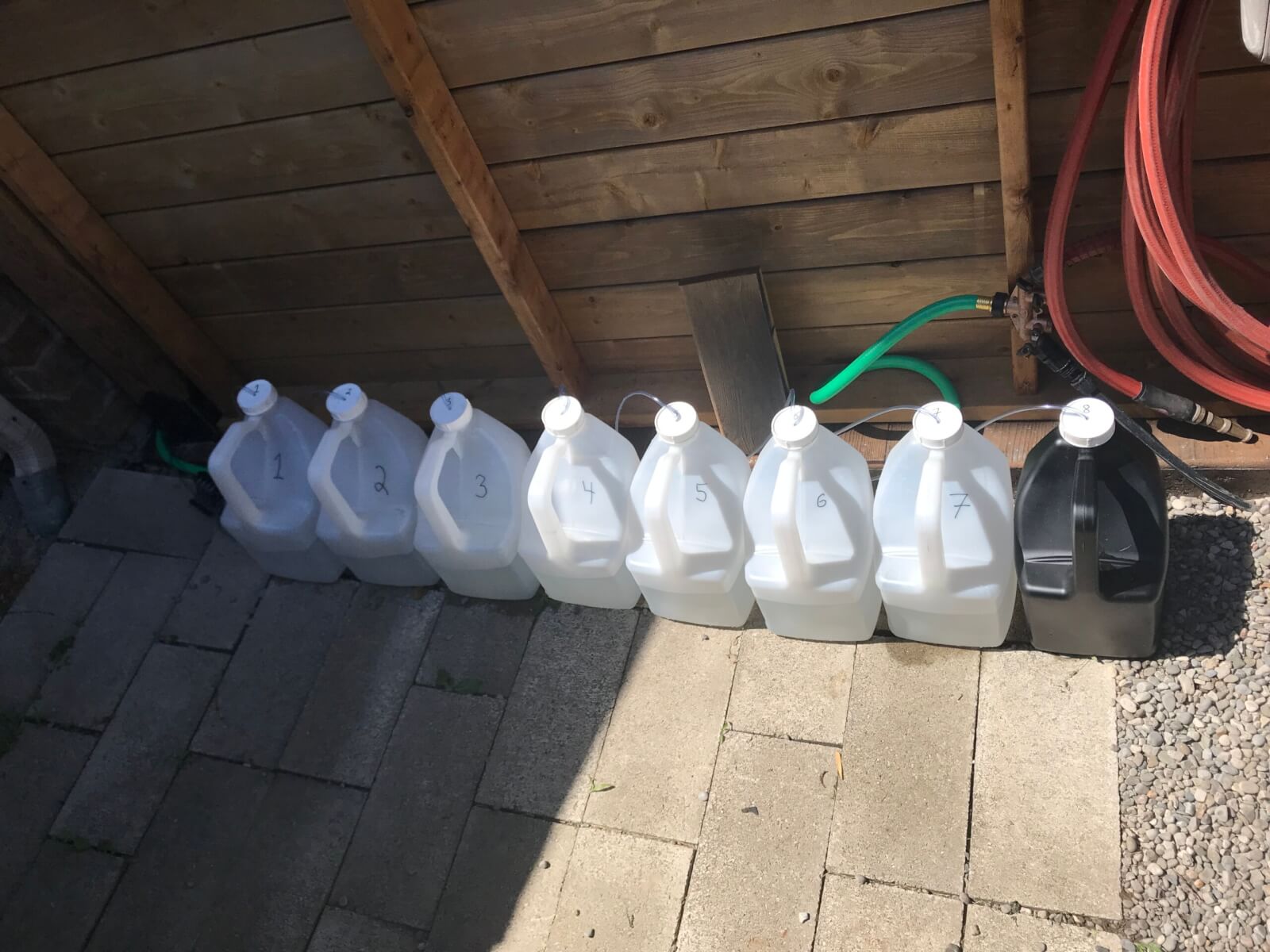
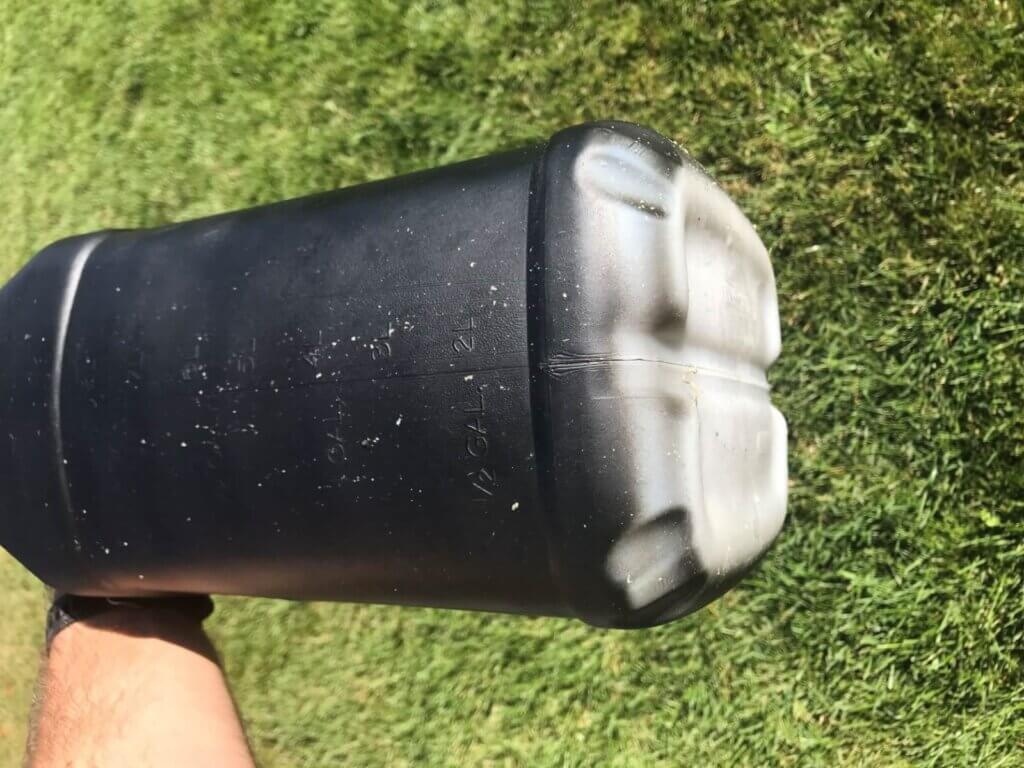
    The source algae were collected from the bottom of a holding pond from a farm in Guelph, Ontario. Algae were homogenized and equal parts added to each jug. The jugs were former 10 L pesticide containers thoroughly rinsed and sprayed with Five Star’s “Star San” non-rinse sterilizer. Tank solutions were gently bubbled (one bubble every 10-15 seconds) with air from an aquarium pump. Air was balanced using a manifold and introduced via diffusion stones at the bottom of each jug.

    Algae sourced from a farm’s holding pond near Guelph, Ontario. Algae was homogenized before inoculating treatment jugs with equal parts.

    Treatments

    Each treatment was tap water plus growth media inoculated with algae and exposed to a natural diurnal/nocturnal cycle unless otherwise indicated.

    1. Control (no algicide)
    2. Left in a shaded area (no direct sunlight)
    3. Household bleach (approximately 5.25% sodium hypochlorite)
    4. Container was spray-painted black to exclude light
    5. Ammonia
    6. “Scotch Bright” copper-coated scour pad. (copper is often introduced as copper sulfate at 1 cup / 1,000 US gal. or a short length of copper pipe)
    7. Bromine (sourced from a local pool supply store)
    Treatment NumberTreatment NameRate
    (/US Gal.)
    Rate
    (% v/v)
    Rate
    (/10 L final volume)
    1Control (no algicide)
    2Shaded
    3*Household bleach1/4 tsp0.000333.3 mL
    4Black container
    5*Ammonia solution1/4 tsp0.000333.3 mL
    6Copper-coated scour pad
    7Bromine1/32 ml0.0000040.04 g
    Table 1. * Bleach and ammonia should never be added together as they produce toxic chloramine gas.

    Method

    On July 12, jugs were loaded with water and growth media and inoculated with algae. They were bubbled gently for one week to establish a stable algal colony. On July 19, algicides were added, or transferred to shade or black-out conditions. On August 31 (approximately six weeks later), jug contents were gently stirred and filtered through white cloth for qualitative assessment.

    Building up algal population for each jug. Note air lines through lids for slow, intermittent bubbling. Algae was not moved to black container or to the shade until after the first week of acclimation.
    Almost six weeks after algicide was added, jug contents were gently stirred and poured through white cloth to collect algae and establish how easily the liquid passed through.

    Observations

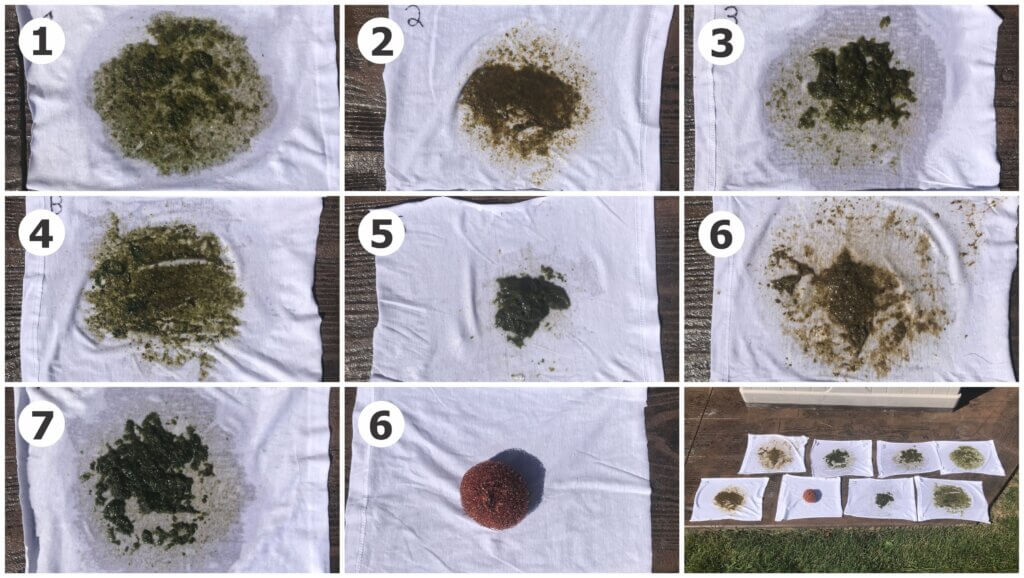
    The results of all seven treatments, plus photos of the copper-coated scour pad.

    (1) Control. Liquid poured slowly through cloth. Algae was still alive and healthy. It formed some clumps but was not as thick as other treatments.

    (2) Shaded. Liquid poured fast and easily through cloth. Was particulate in texture rather than clumpy or gelatinous. Very little mass and entirely brown, suggesting it was dead.

    (3) Household bleach. Liquid poured easily through cloth until the clump of algae sitting at the bottom of the jug came out (i.e., most algae were not suspended). Thick mat of healthy-looking algae (note profile photo #3 below). Much greener and thicker than the control (1).

    (4) Black container. Liquid poured fast and easily through cloth. Algae retained a little green coloration (more than the shaded condition (2)) but was particulate and not as healthy as the control (1). We intended for this treatment to exclude all light, but it was still able to enter at the bottom where the jug wasn’t completely painted. This may have kept the algae alive.

    In an oversight, the jug was not completely painted. This left a source of light at the bottom edge that may have helped sustain algae.

    (5) Ammonia. Very difficult to pour liquid through the cloth (note profile photo #5 below). The only condition where a mat of algae was floating at the top of the jug rather than settled at the bottom. It was healthy, green and thick.

    (6) Copper. The most gelatinous of all conditions, the liquid took the longest to pass through the cloth filter. While the algae seemed brown and dead, the gel would be very problematic during sprayer filling and spraying. Note that the copper scouring pad (shown unrinsed) has nothing growing on it.

    (7) Bromine. Like the household bleach condition, liquid poured easily until the healthy mat of algae at the bottom of the jug came out (i.e., most algae were not suspended). Note profile photo #7 below.

    Profile shots of treatment 3 (Bleach), 5 (Ammonia), and 7 (Bromine).

    Spray Efficacy Experiment

    Ideally, adjuncts added to carrier water are inert. That means they don’t reduce a herbicide’s effectiveness on susceptible weeds or increase crop injury. For example, hypochlorite (found in bleach and in chlorinated water) reduces the biological effectiveness of low concentrations of isoxaflutole (the active ingredient in herbicides such as Converge and Corvus). However, when added to higher, agriculturally-relevant concentrations, the reduction in efficacy wasn’t considered significant (Lin et al., 2003). Conversely, bromide has been added to certain herbicides to improve performance (Jeschke, 2009).

    There’s precious little information about synergistic or antagonistic effects from adding bleach, ammonia, copper or bromine to herbicide carrier water. To learn more, we added each of these adjuncts to the standard rate of glyphosate (900 gae/ha – 0.67 L/ac). Using a CO2-pressurized plot sprayer, the solution was applied to <10 cm tall weeds at 150 L/ha (15 g/ac) in glyphosate tolerant soybean at the 2nd trifoliate stage of growth (Elora Research Station, Ontario).

    Visual crop injury was evaluated at 7 and 14 days after application. Weed efficacy was evaluated at 14 and 28 days after application. Soybeans yields were collected using a Wintersteiger plot combine and adjusted to a moisture content of 14%.

    Weed Control

    All treatments provided excellent control (>90%) of the weeds emerged at the time of application. Table 2 (below) presents the % visual control 28 days after application.

    Carrier Treatment
    (glyphosate 540 g/L at 900 gae/ha or 0.67 L/ac)
    Lamb’s-quarterGreen pigweedWitch grassGreen foxtail
    1) Control0000
    2) Shaded100100100100
    3) Household bleach100100100100
    3a) Household bleach – added prior to mixing9597100100
    4) Black container100100100100
    5) Ammonia100100100100
    6) Copper-coated scour pad100100100100
    7) Bromine100100100100
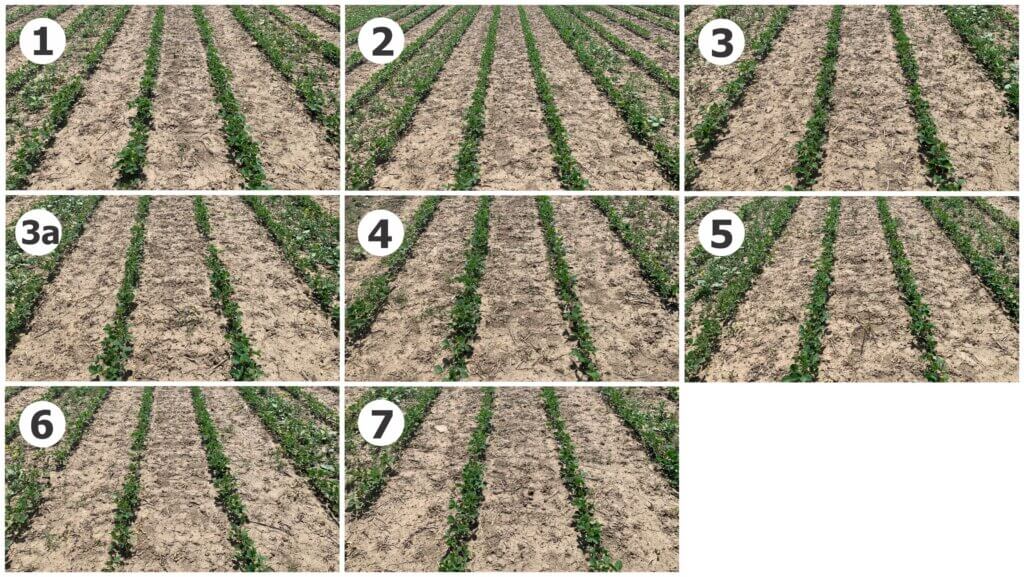
    Table 2. Visual control of lamb’s-quarter, green pigweed, witch grass and green pigweed at 28 days after the application of glyphosate 540 g/L at 900 gae/ha mixed with various carrier treatments intended to prevent algae growth. Treatment numbers correspond with the soybean injury and yield image below.

    Soybean Injury and Yield

    There was no noticeable crop injury from any treatment (figure below) and yields were not significantly different from the control treatment (Table 3). However, when bleach was added prior to mixing, we did observe a trend in reduced soybean yield. We’re unable to explain this observation, but suggest it may be an unrelated issue (such as field variability). There were no obvious signs of crop injury, and the treatment provided excellent weed control.

    Photographs of each plot 14 days after application. The number/letter in each inset image corresponds to treatments in Tables 2 and 3.
    Carrier Treatment
    (glyphosate 540 g/L at 900 gae/ha or 0.67 L/ac)
    Crop Injury
    (%)*
    Avg. Yield
    (bu/ac)
    Significance**
    4) Black container040.0A
    7) Bromine039.6A
    2) Shaded038.1AB
    3) Household bleach037.6AB
    1) Control037ABC
    5) Ammonia036.9ABC
    6) Copper-coated scour pad036.1 BC
    3a) Household bleach – added prior to mixing034.0 C
    Table 3. Visual control of lamb’s-quarter, green pigweed, witch grass and green pigweed at 28 days after the application of glyphosate 540 g/L at 900 gae/ha mixed with various carrier treatments to prevent algae growth. *7 days after application. **Duncan’s multiple range test. Soybean yields that don’t share a letter in common are significantly different.

    Discussion

    We elected to use an extreme situation where a single application of algicide was applied to an established, healthy colony. It’s possible that regular applications of algicide in a volume of water with little or no algae could maintain that condition.

    A treatment was considered effective if it slowed or halted algal growth, especially if it also degraded algal populations, causing them to become brown, thin, and/or particulate. Once in the spray tank, the shear forces created by circulation should disperse any dead or degraded algal masses, making it easier to pass them through filters and nozzles.

    The shade treatment appeared to kill algae as well as cause degradation. Second place went to the black-out treatment, where some light was unfortunately allowed in. This would have continued to fuel photosynthesis in the unpainted portion at the bottom of the jug. Conversely, the black exterior likely raised temperatures above >20 °C, which depresses most algal growth and may have contributed to the degradation.

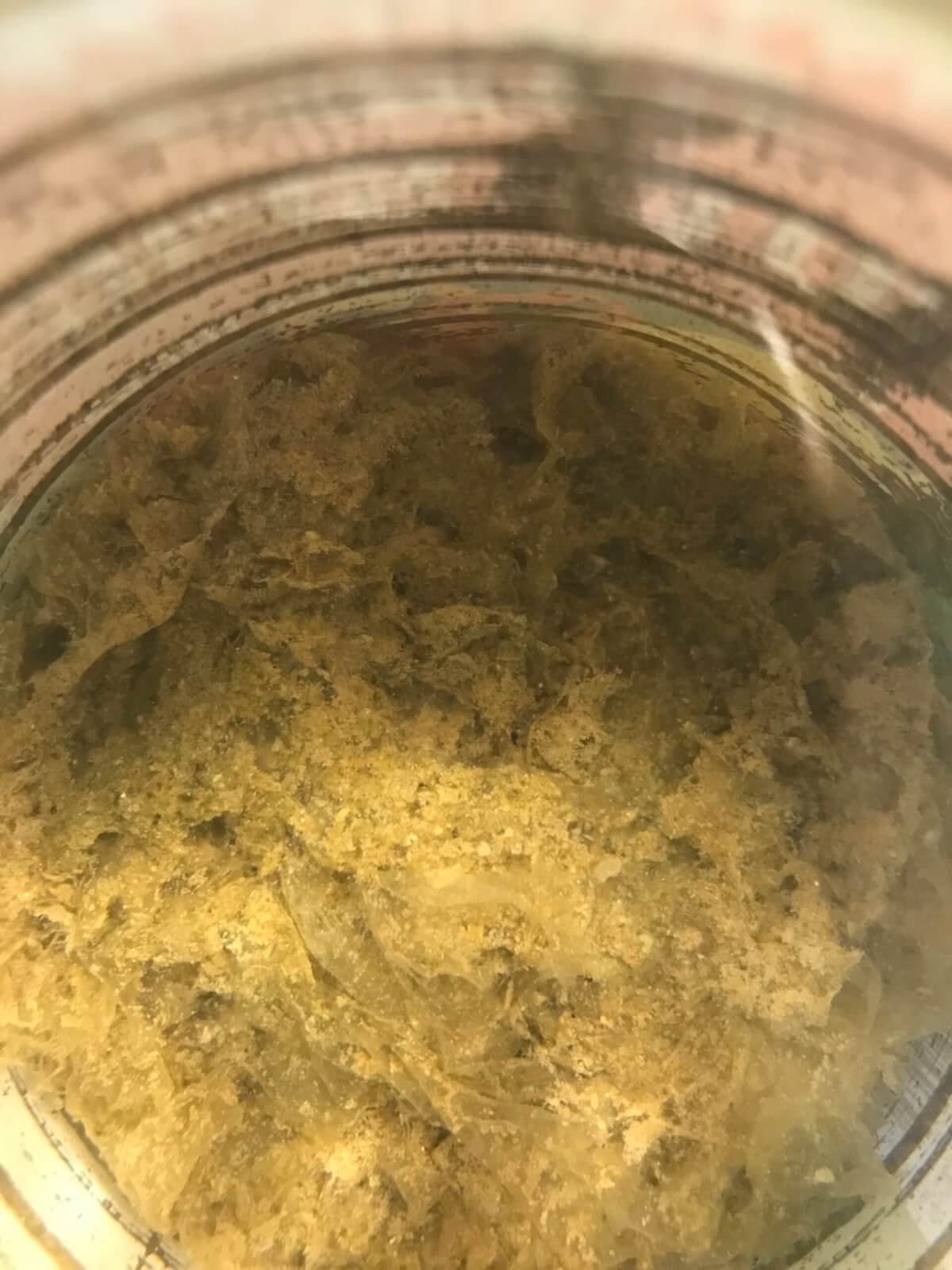
    Copper appeared to kill the algae but also created a gel that would pose problems to filters. Unlikely to be bacterial, as copper is known to suppress bacterial growth, it could have been caused by diatoms; certain invasive species are known to form brown jelly-like material endearingly referred to as “brown snot” or “rock snot”. Alternately, and according to work by J. Rodrigues and R. Lagoa, alginate polysaccharide can form viscous aqueous dispersions (such as gels) in the presence of divalent cations (such as copper).

    No treatment appeared to reduce herbicide efficacy or affect crop health. However, unexpectedly, the household bleach added prior to mixing may have reduced soybean yield. Given the limited number of replications and the single plot location, we suspect this was a field effect, unrelated to the treatment.

    Take Home

    Based on these results, a combination of shade and light-excluding materials (e.g. black paint) would be the ideal approach to algae control. It’s cheap, effective, and doesn’t require periodic management. Buying black tanks is a good choice, or you can paint them. What you should paint them with is a matter of debate and there’s a very good Twitter thread on the subject if you’re interested.

    An Aside: Algae in Ponds and Dugouts

    We didn’t test this, but the question has come up and the best we can do is share some long-standing farmer wisdom. Some have used Aquashade dye to absorb the photosynthetic wavelengths and reduce algae buildup. Reputedly it is moderately successful. Another option is adding aluminum sulfate to the pond, and with a lot of agitation it should clarify in about 48 hours. Still others have added a few square barley straw bales to the water and found it to work surprisingly well (possibly an allelopathic response). Tie a rope to them and float them in the pond.

    Citations

    Jeschke, Peter. 2009. The unique role of halogen substituents in the design of modern agrochemicals. Pest Manag Sci, 2010; 66: 10–27

    Lin, C.H., Lerch, R.N., Garrett, H.E. and M.F. George. 2003. Degradation of Isoxaflutole (Balance) Herbicide by Hypochlorite in Tap Water. J. Agric. Food Chem. 2003, 51, 8011-8014

  • Loading a Sprayer? Add Time and Patience!

    Loading a Sprayer? Add Time and Patience!

    What’s the most underused active ingredient when creating a proper tank mixture in a sprayer?

    Patience.

    Spray season is never long enough. The days which are most conducive to spraying are hard to come by. Therefore, the ingredient we need the most when spraying as well as tankmixing is patience. Without it, we are setting ourselves up for failure.

    Successful bakers will tell you that patience mattered when perfecting their most decadent creations. By taking their time, adding ingredients slowly and mixing them carefully, those professionals create stunning masterpieces.

    We can achieve a masterpiece as well, if we remember to slow down and apply the same principles.

     1. Take your time

    • Take 7-10 minutes between product additions to a spray mixture (especially dry formulations). Have a mini-vacation after each addition! This time allows each product to dissolve into solution and you can complete your spray records!
    • Extra time allows pesticides to be fully integrated into the spray solution before another product is added, which could impede either formulation from mixing successfully.
    • Each ingredient must be uniformly mixed before adding the next component. E.g. A soluble powder must be completely dissolved before adding the next item.

    2. Add ingredients slowly

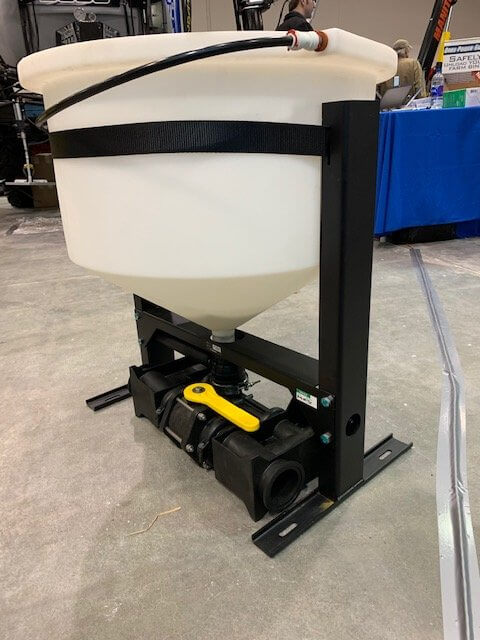
    • Add products, one at a time, in the mix cone or inductor. If you’re adding product directly via shuttles and dedicated lines, the same principle applies.
    • Rinse mix cone or inductor and lines with clean water between product additions.
    Tank, cone or inductor, mix products one at a time and rinse between additions.
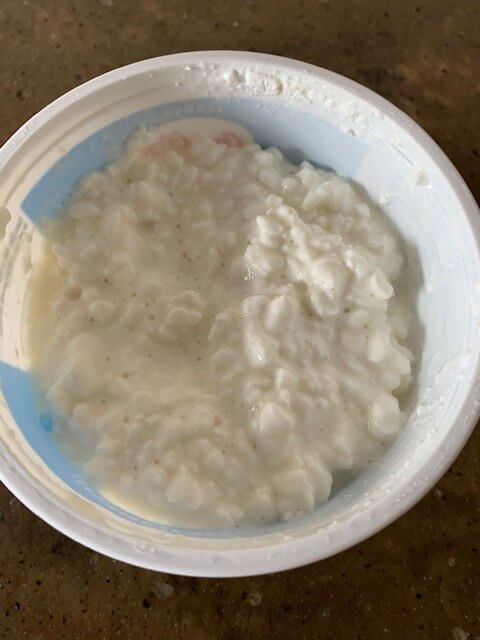
    Anything resembling cottage cheese in your spray mixture is not a spray masterpiece.
    • Never “stack” ingredients on top of each other in the mix cone or inductor. Much like oil and water don’t mix, chem-on-chem doesn’t mix either. Active ingredients need water in order transition into solution. It’s vital to not pile products into a mix cone or inductor where they can form cottage cheese instead of a liquid solution.
    • In my neighborhood, 3″ fill lines are not uncommon. They are a source of time savings when filling but they also bring additional cautions. Be aware of the problems over agitation can bring to what might have been a successful tankmix.

    3. Mix carefully

    • Start with sprayer tank 1/3-1/2 full to allow enough water to create a great solution.
    • Pre-slurry dry flowables in warm water whenever possible. Yes, it takes additional time and effort but it can prevent having to wash out individual nozzles and strainers later. Or worse, there’s the possibility that the tiny grains of an active ingredient that did not blend into the solution may cause injury to a off target crop.
    • Mix ingredients in the right order! Typically, crop protection products have a mixing order specified on their labels. Read the label and be familiar with the correct formulations you are currently spraying.
    • Adjuvants are added in the same sequence as pesticides, e.g., ammonium sulfate is a soluble powder, oil adjuvants are emulsifiable concentrates; and most surfactants are solutions.
    • Within each group, it is common practice to add the pesticide before the adjuvant, e.g., a soluble-powder pesticide before ammonium sulfate.

    Final thoughts

    Taking the extra 30 minutes now to load the sprayer carefully will save you the potential of 4 hours of having to clean out an entire tank later!

  • Sprayer Loading and the Jar Test

    Sprayer Loading and the Jar Test

    This article was co-written with Mike Cowbrough, OMAFRA Weed Management Specialist – Field Crops

    The time and attention spent during sprayer loading is a worthy investment. It ensures that the products in the tank perform as intended and reduces the chance of physical incompatibilities.

    The label

    Pesticide labels are always the first point of reference. Labelled mixing instructions should be obeyed even if they contradict conventional practices (see Mixing order, below). Consult this article on tank mix compatibility for more information on how to quickly and easily consult labels for each of your tank mix partners.

    The carrier

    Typically, the carrier is water. Water plays a very important role in tank mixing that is often underappreciated. Take some time to read Les Henry’s 2016 Grainnews article called “The Coles Notes of Water Chemistry“. You can also read about pH and water hardness. It should be noted that pH and the resultant hydrolysis that can affect product half-life is typically an insecticide issue (not fungicide or herbicide). The famous example is Captan, which has a half-life of 32 hours at pH 5, but only 10 minutes at pH 8. Michigan State did a great summary (in 2008 and on US product formulations) which you can find here.

    Finally, learn how to read a water quality report, here.

    Carrier volume

    Products dissolve better in higher volumes. The sprayer tank (vat, inductor, etc.) should be at least ½ full or water before adding the first product. In the case of a fertilizer carrier, it may look like water, but it contains high levels of salts that tie up free water and reduce solubility. For fertilizers, a higher initial volume of ¾ full is required.
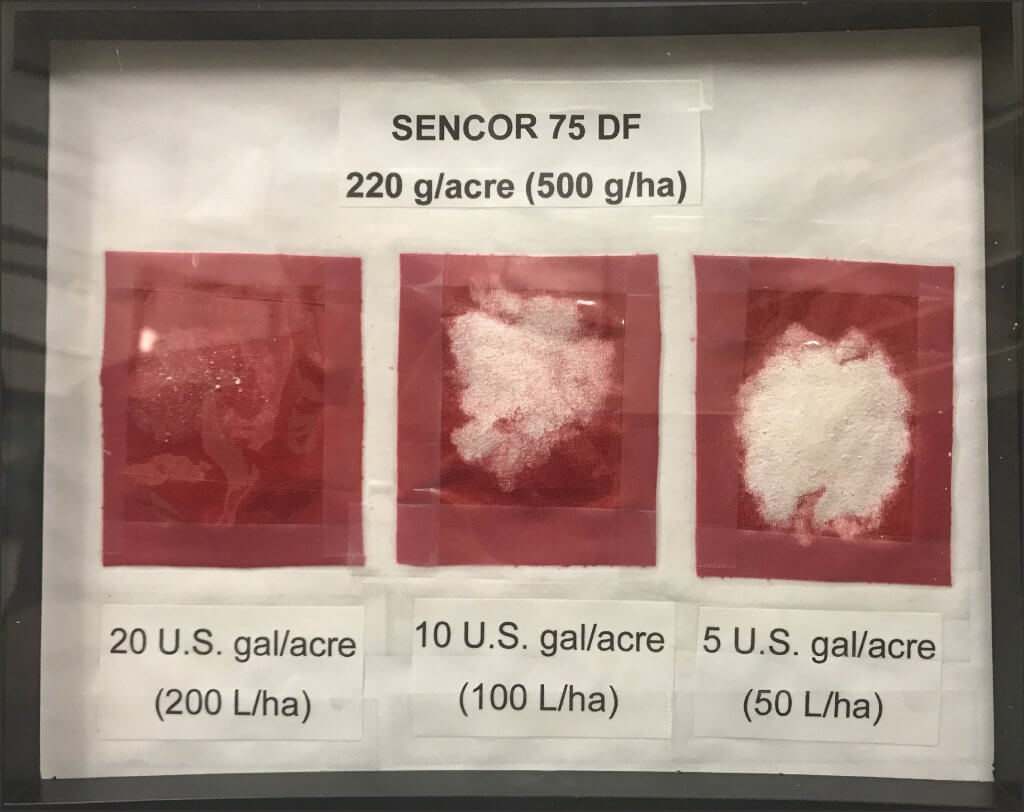
    Note the undissolved residue collected on these swatches of red material. Products dissolve faster and better in higher carrier volumes.

    The incomplete dissolution of products can leave hard-to-clean residues, plug fluid lines, and result in a non-uniform application that reduces efficacy. The risk of incompatibility is greater with low carrier volumes and high product rates (especially dry formulations). This is a common problem in regions that use low water volumes to apply multiple tank mix partners.

    Carrier and product temperature

    Both carrier and product temperature affect mixing. Imagine mixing sugar in hot tea versus iced tea – more sugar dissolves more quickly in hot liquid. Here are three common temperature-related issues:

    • Dry formulations and liquid flowables take more time to disperse (consider using a pre-mixed slurry).
    • Emulsified concentrates and oil might form gels rather than milky blooms.
    • Water soluble packages might not dissolve completely and could plug filters and nozzles – or clog the pump intake.
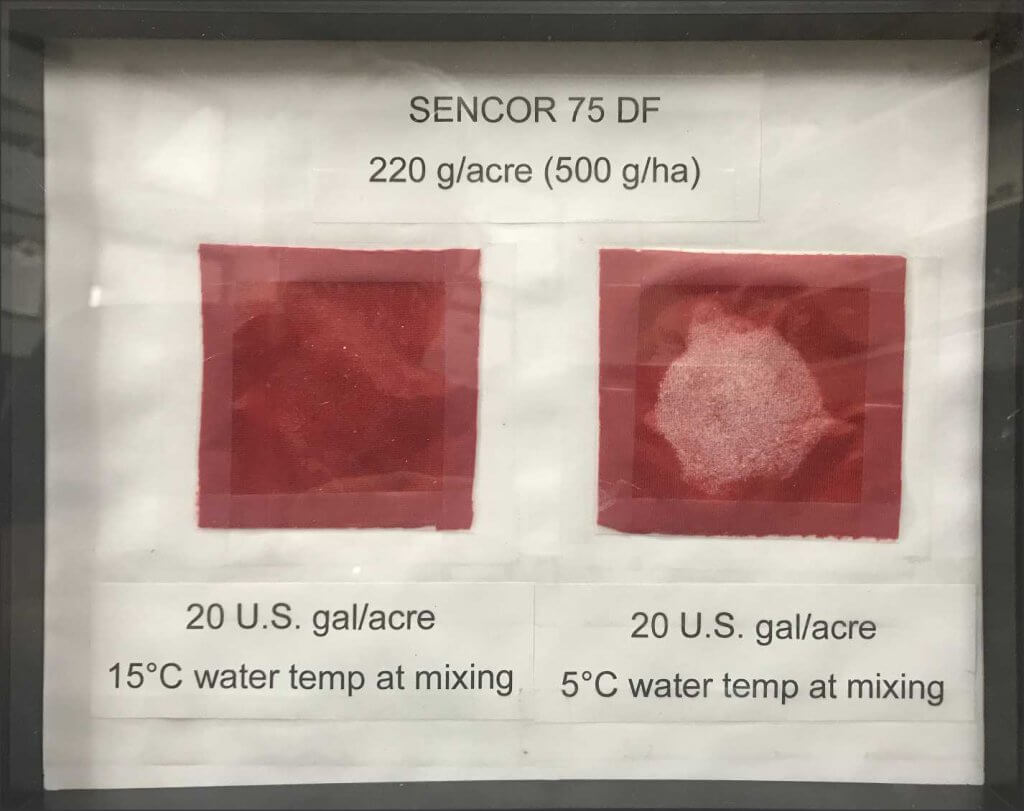
    Note the undissolved residue collected on these swatches of red material. Products dissolve faster and better when carrier and products are warmer.

    Note: Water and fertilizer are very different carriers. Beware of carrier-specific incompatibilities

    Agitation

    Agitation should be on-going during mixing and spraying. When agitation is too low, products may not disperse or suspend and can settle out. In the case of leaving a sprayer overnight without agitation, settled product may or may not resuspend. See this article.

    When agitation is too aggressive (e.g. full agitation when tank is less than half full) product can foam, causing overflows or breaking pump suction during spraying. Over agitation can also cause dispersed products (e.g. emulsifiable concentrates) to separate and cause clumping that looks like curds.

    Note: When agitating, the surface of the carrier should be closer to a simmer than a rolling boil.

    Pace

    Products may require more than five minutes between additions. This is especially important when carrier or product is cold, or when adding dry products. When products are added too quickly, they will not entirely disperse or suspend, which could result in a physical incompatibility with subsequent additions. Learn more about the importance of time and patience during loading.

    While efficient sprayer loading is an excellent opportunity to improve your work rate, complicated tank mixes still require time between additions. To save some time, sprayer operators pre-hydrate dry products in a smaller tank or use an extra tank to pre-mix whole loads and simply transfer them over.

    Note: Even when dry products appear to be dissolved, they may not be. Be patient

    Product formulation

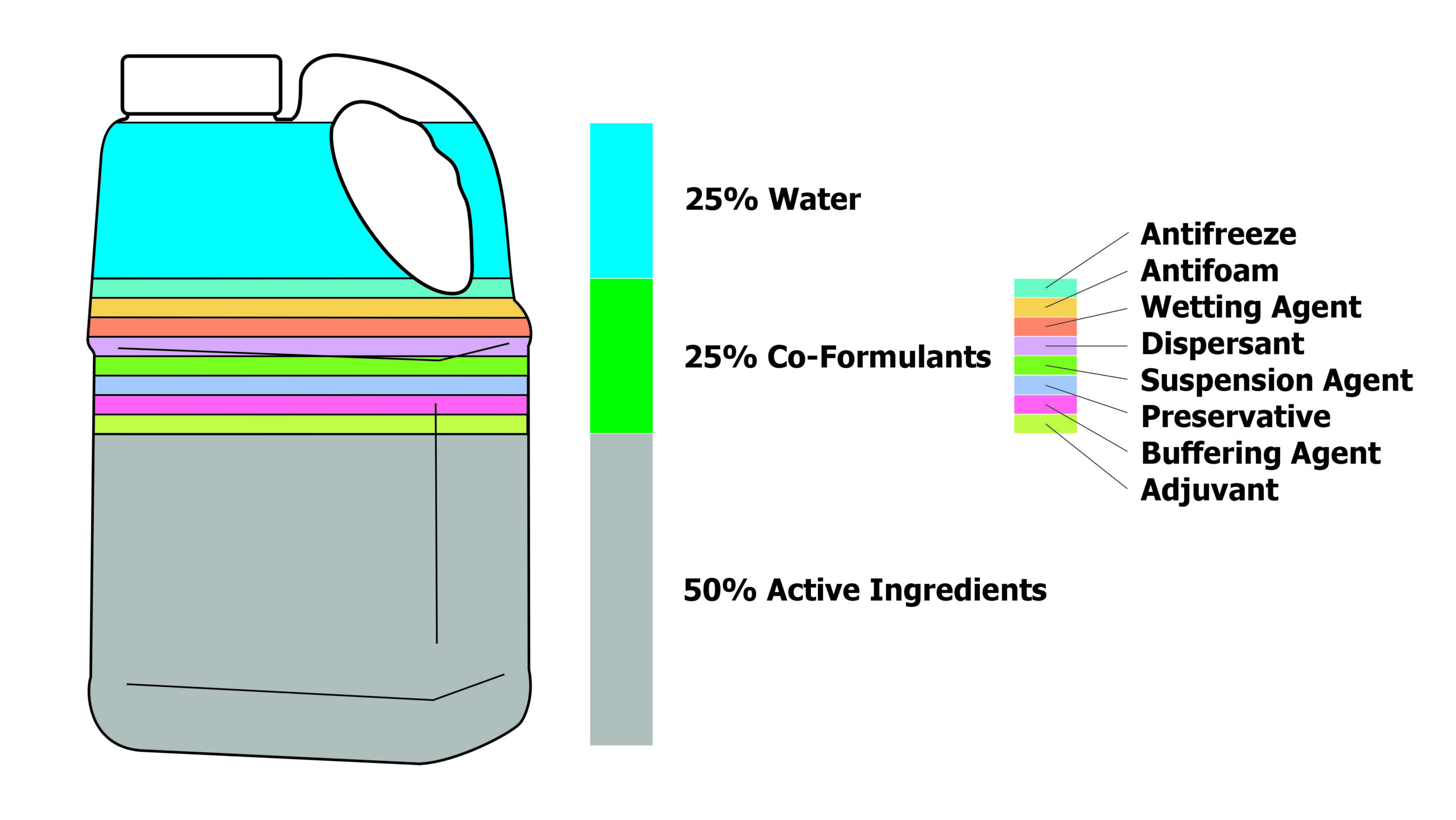
    Product formulation is a complicated science. In the 1950’s a formulation might have three active ingredients and an inert filler. See the historic formulation index card shared by Dr. M Doug Baumann (formally with Syngenta, Honeywood). Today, a product can include ~40 ingredients with formulation testing lasting two to four years! The more products you add to the tank, the higher the risk of antagonism.
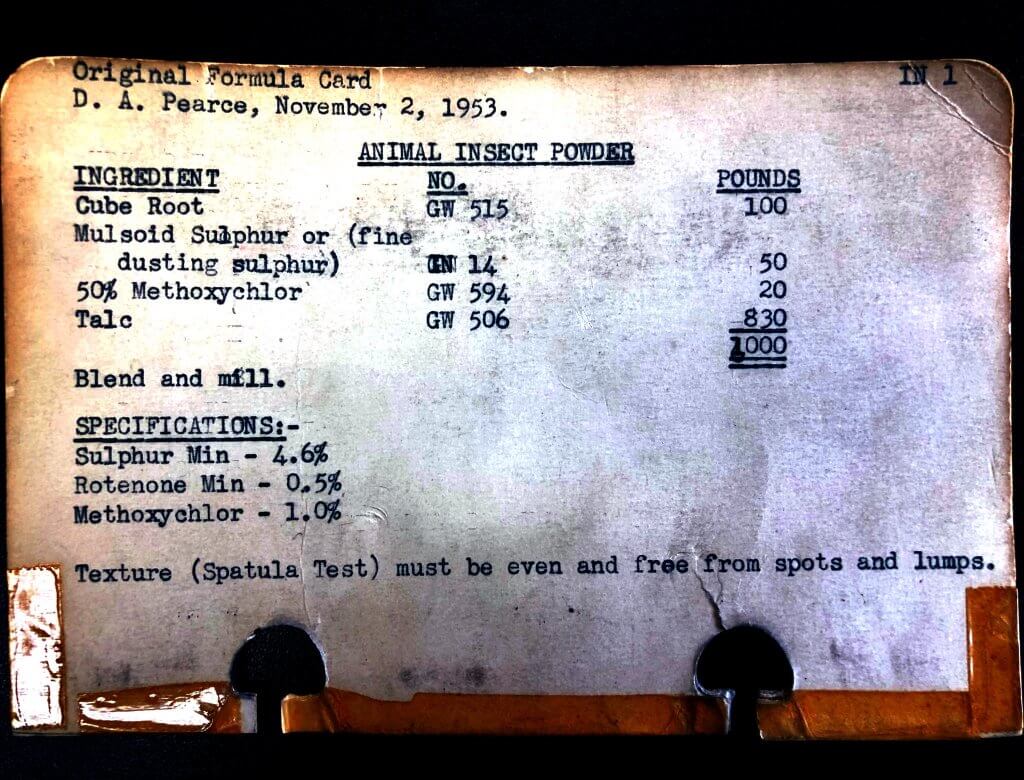
    Note: If you experience physical incompatibility during loading, don’t blame the last product you put in the tank!

    Mixing order

    The order in which you add tank mix partners is critical. There are several acronyms around to help you decide on your mixing order. Here are the top three:

    • W.A.L.E.S. (Wettable powders, Agitate, Liquid flowables, Emulsifiable concentrates, Surfactants).
    • BASF’s W.A.M.L.E.G.S. (Wettable powders, Agitate, Microencapsulated suspensions Liquid flowables, Emulsifiable concentrates, high-load Glyphosates, Surfactants)
    • A.P.P.L.E.S. (Agitate, Powders soluble, Powders dry, Liquid flowables and suspensions, Emulsifiable concentrates, Solutions)

    W.A.L.E.S. is not broken. In fact, formulation chemists expect it to work ~95% of time. Generally, soluble liquids are forgiving and can be added early or late. It’s the dry formulations and emulsifiable concentrates that require more care. When there are exceptions to the order, they are clearly indicated on the pesticide label.

    W.A.L.E.S. is, perhaps, a bit simplistic. Products that fall within each “letter” have their own preferred mixing order that isn’t specified by the acronym. What follows is an expanded generic mixing order.

    • Water-Soluble Bags (WSB) – Allow them to fully dissolve and disperse.
    • Wettable Powders (WP)
    • Water Dispersible Granules (WDG, WG, SG)
    • Agitation to allow dry products to mix and disperse.
    • Liquid Flowables (F, FL): Including, in order, Suspension Concentrates (SC), Suspo-emulsions (SE), Capsule Suspensions (CS/ZC), Dispersible Concentrates (DC), Emulsions in water (EW).
    • In order: Emulsifiable Concentrates (EC): Microemulsifiable Concentrates (MEC) and Oil Dispersions (OD).
    • In order: Solutions (SN), Soluble Liquids (SL), Liquid Fertilizers and Micronurients (when not already premixed with fertilizer).
    • NOTE: Regarding adjuvants, always follow the label. If the label is silent, most water conditioning utility modifiers (e.g. compatibility agents, anti-foamers) should be added before pesticides. However, drift retardant utility modifiers are added dead last. Activator adjuvants like Non-Ionic Surfactants (NIS) and Crop Oil Concentrates (COC) tend to be added after pesticides, but are sometimes added based on their formulation, falling into order just like pesticides. Again, read the label.

    An example

    Micronutrients like sulfur (e.g. ATS) added to nitrogen-based formulations (e.g. UAN) can cause physical incompatibilities. This became a problem during “weed-and-feed” applications in Ontario corn, and thanks to the efforts of the pesticide manufacturer, we worked out a solution.

    What follows is not only a good example of why mixing order is critical, but why growers should get into the habit of performing jar tests. Learn more about a real-world ATS example here.
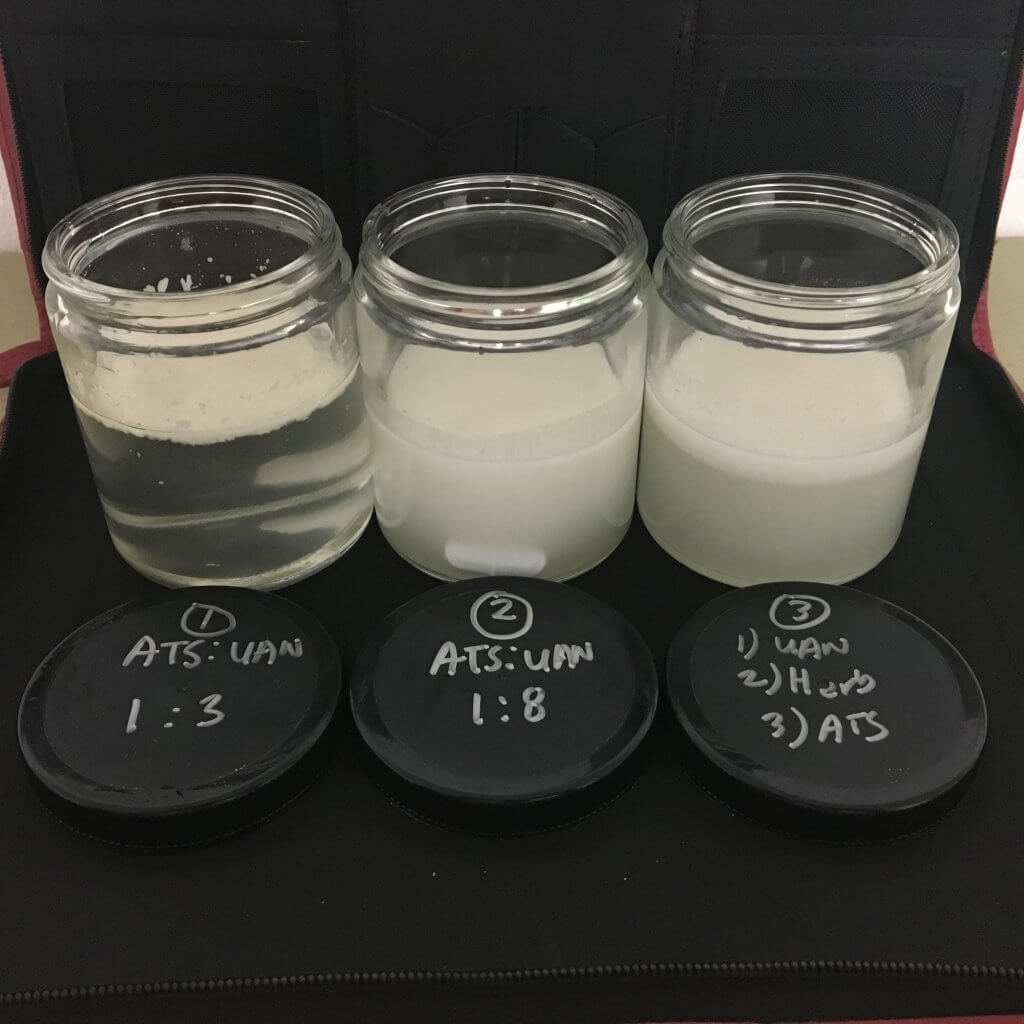
    Left: ATS and UAN premixed, followed by Primextra created curds.
    Centre: UAN, followed by low-load ATS followed by Primextra worked.
    Right: UAN followed by Primextra followed by high-load ATS worked.

    Small-plot mixing order

    Mixing errors are just as likely in small plot work as in commercial sprayers. Watch this short video case study describing mixing order for Elevore and glyphosate.

    The jar test

    Performing a jar test is like filling a sprayer in miniature. Follow all the same rules as filling your sprayer. Always wear personal protective equipment when performing a jar test. Do so in a safe and ventilated area, away from sources of ignition.

    1. Read all product labels. Know the product formulation (which affects mixing method and order). Look for information about the influence of carrier pH, hardness and any requirement for adjuvants. Defer to label instructions should they differ from these mixing steps.
    2. Shake any liquid products. This ensures the active ingredient and inert ingredients are thoroughly mixed.
    3. If using water as a carrier, add 250 ml to a 1 litre glass jar. For oil or fertilizer, add 375 ml.
    4. Agitate (stir) between additions. In a sprayer, agitation should continue throughout the mixing process.
    5. Add products in order (see Mixing order, above). Scale back the weights/volumes used to match the concentration intended for an actual sprayer tank (e.g. 1 kg product in a 1,000 litre sprayer tank is 0.5 g product in a 500 ml jar test). In a sprayer, you would flush an inductor with water between additions.
    6. Wait and check. Dry products and water-soluble packets must fully disperse and/or dissolve before adding the next product. Several factors affect the duration, but 3-5 minutes is typical. If testing water-soluble packets, include a ~1cm2 cutting of the PVA packaging.
    7. Top up the carrier to 500 ml.
    8. Measure pH using a digital meter (litmus papers may not be readable). This is best done after all products are added to account for their impact on pH and buffering capacity. If required, pH adjusters can be added at the end of mixing to ensure the solution is in the range required by the label.
    9. Let the solution stand in a ventilated area for 15 minutes and observe the results. If the mixture is giving off heat, these ingredients are not compatible. If gel or scum forms or solids settle to the bottom (except for the wettable powders) then the mixture is likely not compatible.

    Note: jar test will only reveal physical incompatibility between products – it will not reveal any other form of antagonism.

    Compatibility kits

    When performing a jar test you must maintain the same product-to-carrier ratio as in a full-sized sprayer tank. This math is made easier with commercial compatibility kits such as the one from Precision Laboratories (below).
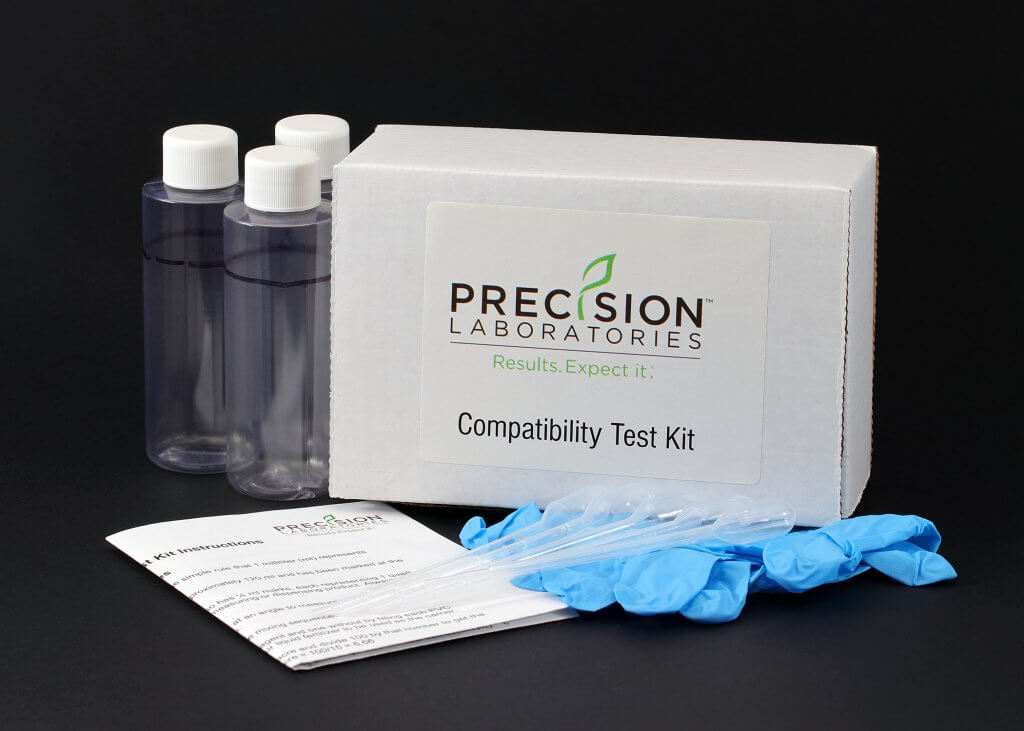
    Compatibility Test Kit: Five pipettes, three bottles, gloves, instructions. ~$10.00. (Photo: Precision Laboratories)

    Such kits contain a few plastic “jars” and disposable micropipettes. By following the instructions included with the kit, you can easily reduce large labelled volumes (e.g. 1 kg of product in 1,000 litres) of multiple products to small volumes at the same ratio. In this case we assume the final volume would have been 1,000 L, and so we reduce all the quantities accordingly to get 500 ml. The following mixing order is provided as an example.

    OrderIngredientQuantity for 500 ml or 500 g of product labeled for 1,000 L of final spray volume
    1Compatibility agents5 ml (1 teaspoon)
    2Water soluble packets, wettable powders and dry flowables. Include a 1cm2 cutting of PVA packaging.15 g (1 tablespoon)
    3Liquid drift retardants5 ml (1 teaspoon)
    4Liquid concentrates, micro-emulsions and suspension concentrates5 ml (1 teaspoon)
    5Emulsifiable concentrates5 ml (1 teaspoon)
    6Water-soluble concentrates or solutions5 ml (1 teaspoon)
    7Remaining adjuvants and surfactants5 ml (1 teaspoon)

    Records and delayed reactions

    Keep detailed records of what you mixed and how you mixed it. This is important for traceability (e.g. CanadaGAP) and for tracking successes and failures for next year.

    The jar test itself can become a valuable record if it’s labelled and left in the chemical shed. You will see if products separate, precipitate or form residues. This may indicate if you can let a tank mix sit overnight or if it will require special attention during rinsing.

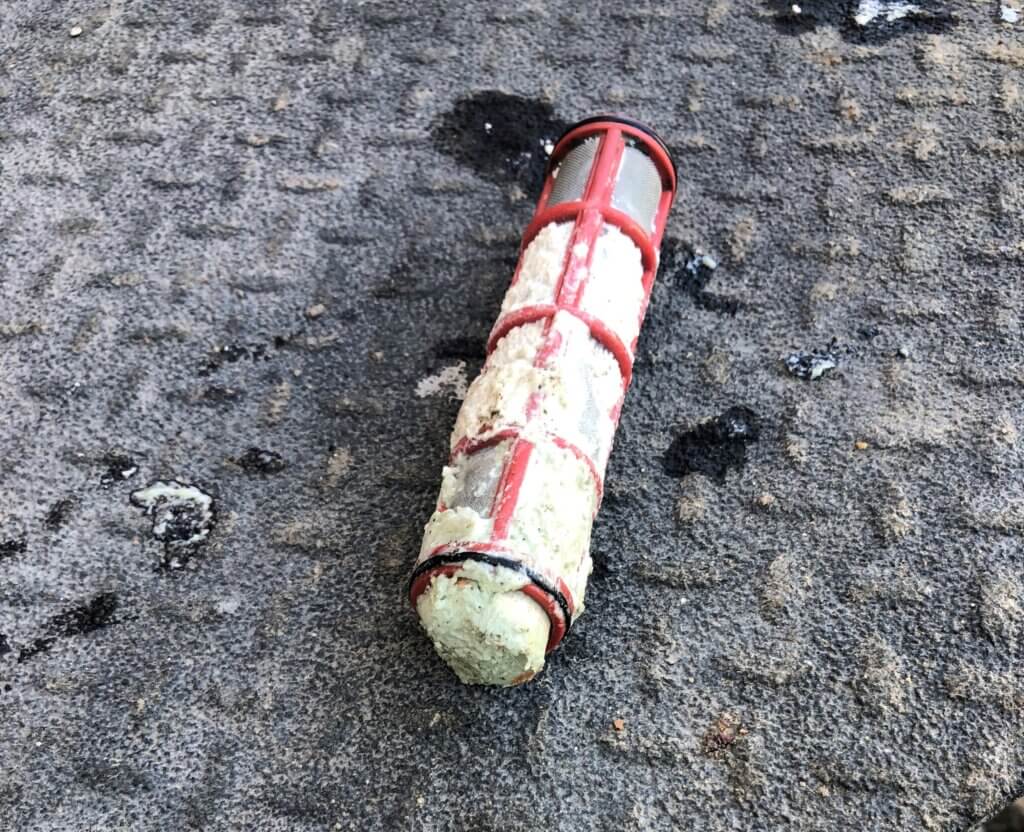
    For example, a grower tank-mixed Enlist with Manzinphos, which seemed to mix and spray with no issues until they were rained out and had to park the sprayer with 100 gallons of tank mix still in the system. The mixture turned to “lard”, plugging up all of the lines, filters, and the pump. They had no choice but to disassemble the sprayer and dig some of the substance out with screwdrivers (see the picture of the filter below). Perhaps if they had run a jar test and left the jar overnight this problem could have been avoided.

    Some physical incompatibilities are not immediately apparent. This occurred overnight while the partially-full sprayer waited out a rain event.

    Closed transfer

    As a brief mention, an expansion of closed transfers systems for loading pesticides is on the horizon in North America. Manufacturers of these systems claim they will make loading more efficient, reduce operator exposure and reduce point-source contamination. Depending on the design, however, the operator may not be able to open pesticide containers to obtain samples for jar testing. This would be a great loss.

    For more information

    Learn more about physical and chemical incompatibility in our article on Tank mix compatibility. Be sure to download a copy of Purdue University’s 2018 “Avoid Tank Mixing Errors”. It is an excellent reference.

  • Choosing a New Tank, Burn-off Tank Mixes & Nozzle Swapping – Tips with Tom #11

    Choosing a New Tank, Burn-off Tank Mixes & Nozzle Swapping – Tips with Tom #11

    • How often do you test spray-water quality and what do you do if you’ve got hard water?
    • If you’re looking to replace your spray tank, is stainless still the way to go?
    • What about double nozzles — are they really the bee’s knees?

    The questions surrounding these aspects of spraying come up very often.

    Tom Wolf recaps some key aspects of water volume and water quality you may not have considered, plus we get that answer on when a stainless steel tank might be the right choice.

    Moving on to nozzles and overall spray operation tweaks, Wolf summarizes the reasons for moving to double (or twin-fan) nozzles in some scenarios, plus offers some insight into where your time may be best spent on improving your fill transfer set up.