Sprayer math can be intimidating, but the effort gives solid value. When combined with a calibrated sprayer you reap the following benefits:
Determine how much spray mix is required to apply the intended rate.
Estimate how much crop protection product must be ordered for the season.
Populate spray records which allow you to review practices, respond to enquiries and satisfy traceability requirements.
There are many ways to perform sprayer math, and you need only look to local pesticide safety courses, industrial catalogues, and extension resource centres for examples. If you’re already comfortable with your current method, don’t mix and match with others. Sprayer math is a series of related calculations that employ constants to keep the units straight. It’s all or none.
Walkthrough
Let’s start with the classic, US Imperial formula for calculating the sprayer output. We’ll weave in Metric, later. This base formula can be adjusted to allow you to solve for any factor, as long as you’re only missing one piece of information. Turns out your high school teacher was right – you DO need algebra.
GPM = [GPA x MPH x W] ÷ 5,940
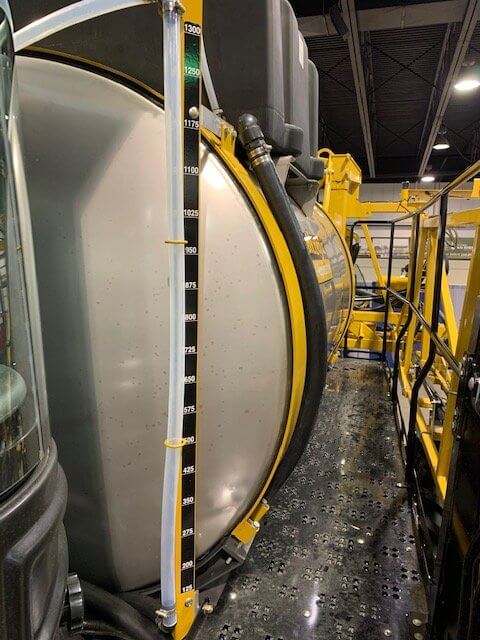
In this case, you can determine an output rate (GPM – gallons per minute). You’ll need to know your target volume (GPA – gallons per acre), your average travel speed (MPH – miles per hour) and your nozzle spacing (W – which is width in inches). The number “5,940” is a constant that handles all the unit conversions. If you divide the GPM by the number of nozzles on your sprayer (assuming they are all the same rate), you can hone in on the ideal nozzle size.
But, as we noted earlier, you can do a lot more with sprayer math than just pick the ideal nozzle size. The rest of this article includes examples of both Metric and US Imperial formulae, but watch out for unit conversions. If at any time you don’t see the units you’re looking for, you can consult our unit conversion tool.
Grab your calculator – it’s math time!
Don’t be intimidated. With a little practice, sprayer math gets easier and it’s always worthwhile. The real trick is navigating unit conversions.
Step 1 – How large is the area you need to spray?
Multiply the length of the area you plan to spray times the width. If you are using metres, then divide the product by 10,000, which is the number of m2 in a hectare (ha). For feet and acres, divide by 43,560 which is the number of ft2 in an acre (ac):
Step 2 – How much product is needed to spray the area?
Consult the rate(s) shown on the label. In Canada, rates are often based on planted area (E.g. hectares). In Australia and New Zealand, they may be based on row length (not covered in this article). If you measure your area in acres, you’ll have to convert the rate by multiplying by a constant: 0.4.
Now multiply the area you want to spray (step 1) by the rate (step 2).
Step 3 – How far can you go on a full tank?
You know your sprayer output (determined through calibration) so you divide that into your tank size. Watch your units:
Step 4 – How much pesticide per tank?
Multiply the area that can be sprayed per tank (Step 3) by the pesticide rate (Step 2). Again, watch your units:
Step 5 – How much area is left to spray?
Just subtract what you’ve already sprayed from the total area.
Step 6 – How much pesticide in the last, partially-full tank?
Multiply the area you have left to spray (Step 5) by the pesticide rate (Step 2). Yes, watch your units:
Step 7 – How much spray mix will I need for the partial tank to finish spraying the total area?
Multiply the area you have left to spray (Step 5) by the sprayer output (determined through calibration). Guess what? Watch your units:
Sample problems
Time to test your knowledge. Let’s suppose you want to apply a product rate of 3 L/ha to your blueberries. You calibrate your sprayer and determine your output to be 50 L/ha. Your tank holds 400 L of spray mix. Your planting is 500 m long and 200 m wide.
Q1 – How large is the area you need to spray?
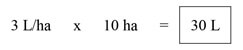
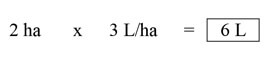
Q2 – How much product is needed to spray the area?
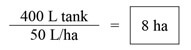
Q3- How much area can be sprayed on one tank?
Q4 – How much product should be added to a full tank?
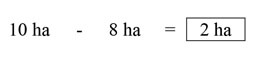
Q5 – After the tank is empty, how much area is left to spray?
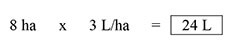
Q6 – How much product to add to the last, partially full tank?
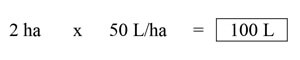
Q7 – How much spray mix will be needed to finish spraying?
Tank mix calculator
You might feel we buried the lead by adding this calculator to the end of the article. It’s important for a sprayer operator to understand the math required to interpret labels and calculate tank mixes, so hopefully you read and understood the process before you got here. And now that you have, this is a very helpful tool. Try it online, or download a standalone version.
Notable exceptions
Certain situations aren’t covered in this article. If you are spraying a greenhouse, the math is different. If you are performing a banded application, the math is different. And, if you’re an airblast operator trying to reconcile why a pesticide label uses planted area rather than canopy volume for its rates, you’re in for some additional reading.
The time and attention spent during sprayer loading is a worthy investment. It ensures that the products in the tank perform as intended and reduces the chance of incompatibilities.
The label
Pesticide labels are always the first point of reference. Labelled mixing instructions should be obeyed even if they contradict conventional practices (see Mixing order, below). Consult this article on tank mix compatibility for more information on how to quickly and easily consult labels for each of your tank mix partners.
The carrier
Typically, the carrier is water, and understanding its role in pesticide performance is another article (or several). We’ve provided some links here for further reading.
You can also read about pH and water hardness. It should be noted that pH and the resultant hydrolysis that can affect product half-life is typically an insecticide issue (not fungicide or herbicide). The famous fungicide example is Captan, which has a half-life of 32 hours at pH 5, but only 10 minutes at pH 8. Michigan State did a great summary (in 2008 and on US product formulations) which you can find here.
Finally, learn how to read a water quality report, here.
Carrier volume
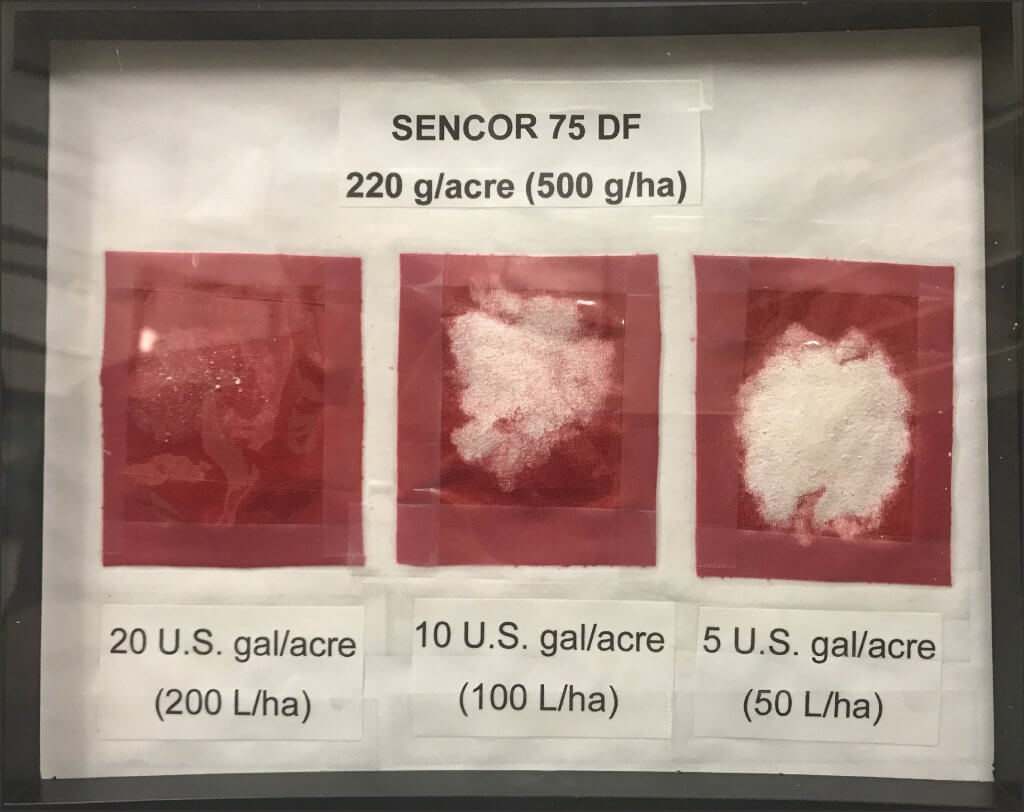
Products dissolve better in higher volumes. The sprayer tank (vat, inductor, etc.) should be at least ½ full or water before adding the first product. In the case of a fertilizer carrier, it may look like water, but it contains high levels of salts that tie up free water and reduce solubility. For fertilizers, a higher initial volume of ¾ full is required.
Note the undissolved residue collected on these swatches of red filter material. Products dissolve faster and better in higher carrier volumes.
The incomplete dissolution of products can leave hard-to-clean residues, plug fluid lines, and result in a non-uniform application that reduces efficacy. The risk of incompatibility is greater with low carrier volumes and high product rates (especially dry formulations). This is a common problem in regions that use low water volumes to apply multiple tank mix partners.
Carrier and product temperature
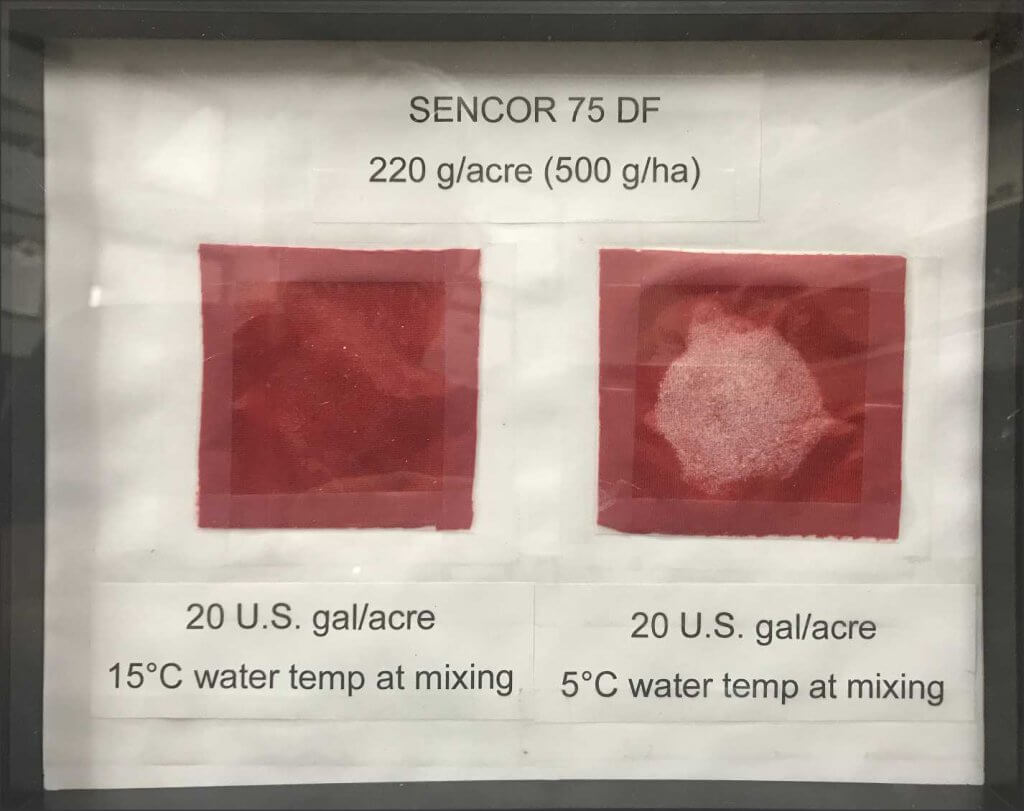
Both carrier and product temperature affect mixing. Imagine mixing sugar in hot tea versus iced tea – more sugar dissolves more quickly in hot liquid. Here are three common temperature-related issues:
Dry formulations and liquid flowables take more time
to disperse (consider using a pre-mixed slurry).
Emulsified concentrates and oil might form gels
rather than milky blooms.
Water soluble packages might not dissolve completely
and could plug filters and nozzles – or clog the pump intake.
Note the undissolved residue collected on these swatches of red filter material. Products dissolve faster and better when carrier and products are warmer.
Note: Water and fertilizer are very different carriers. Beware of carrier-specific incompatibilities
Agitation
Keep agitation running throughout mixing and spraying. Aim for a “simmer” on the liquid surface rather than a “rolling boil.”
Low agitation can cause products to settle, making them difficult or impossible to resuspend later. Conversely, aggressive agitation (especially in half-full tanks) can cause foaming, pump suction loss, or product separation / clumping.
Pace
Adding products too quickly can cause product separation / clumping or poor suspension, leading to tank mix incompatibilities. While loading quickly improves operational efficiency, complex mixes require patience; Sometimes over five minutes between additions, especially in cold water or when using dry products.
To save time without sacrificing quality, consider pre-hydrating dry products or using a separate nurse tank to pre-mix loads for quick transfer. Remember: even if dry products look dissolved, they may still need more time.
Product formulation
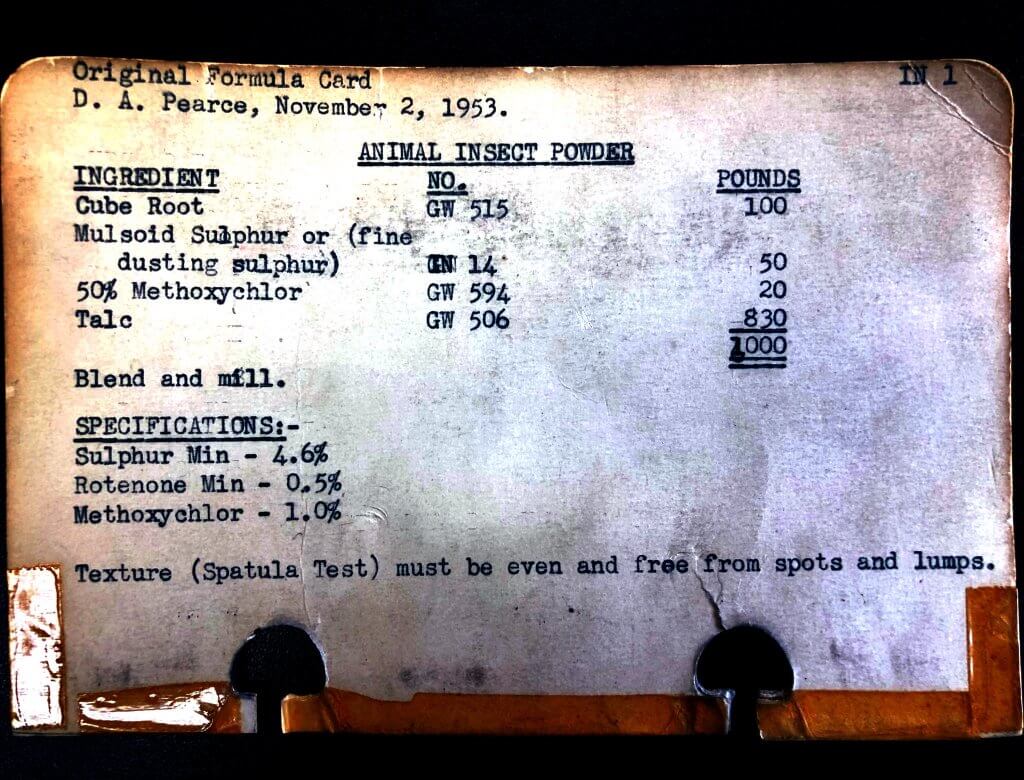
Product formulation is a complicated science. In the 1950s a formulation might have three active ingredients and an inert filler. See the historic formulation index card shared by Dr. M Doug Baumann (formally with Syngenta, Honeywood).
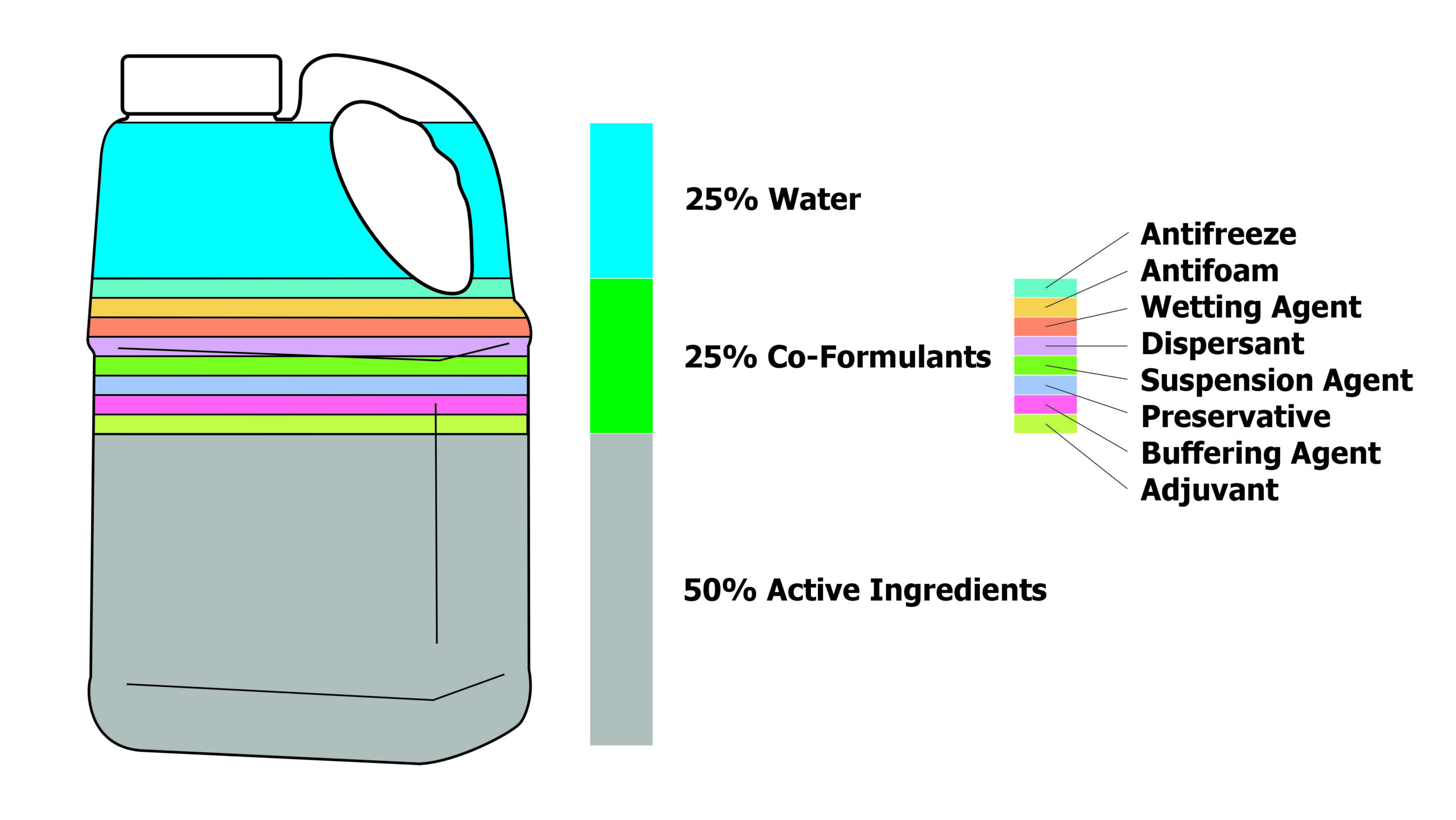
Today, a product can include as many as 40 ingredients with formulation testing lasting two to four years! Generally, only 25% of the volume is water, 50% is active ingredients and the remaining 25% is co-formulants. This is why the more products you add to the tank, the higher the risk of antagonism. This is also why operators should carefully consider the cost benefit of generics, which may include the active ingredient, but do not tend to include the co-formulants.
Illustration based on a slide by Dr. Samantha Francis, Formulation & Application Technology Lead at the Syngenta Honeywood Research Facility.
Mixing order
Tank mixing order is critical for chemical compatibility. While common acronyms like w.w.w.W.A.L.E.S., W.A.M.L.E.G.S., and A.P.P.L.E.S. serve as reliable guides 95% of the time, always defer to the pesticide label for specific instructions.
Expanded generic mixing order:
Water: Fill tank 1/2 full (or 3/4 if fertilizer carrier).
Agitation
Water-Soluble Bags (WSB): Allow to fully dissolve.
Water Conditioners (e.g. anti-foamers, compatibility agents): Add before pesticides.
Activator Surfactants (e.g. NIS, COC): Add after pesticides or by formulation type along with pesticides.
Drift Retardants: Add last.
Examples of mixing errors
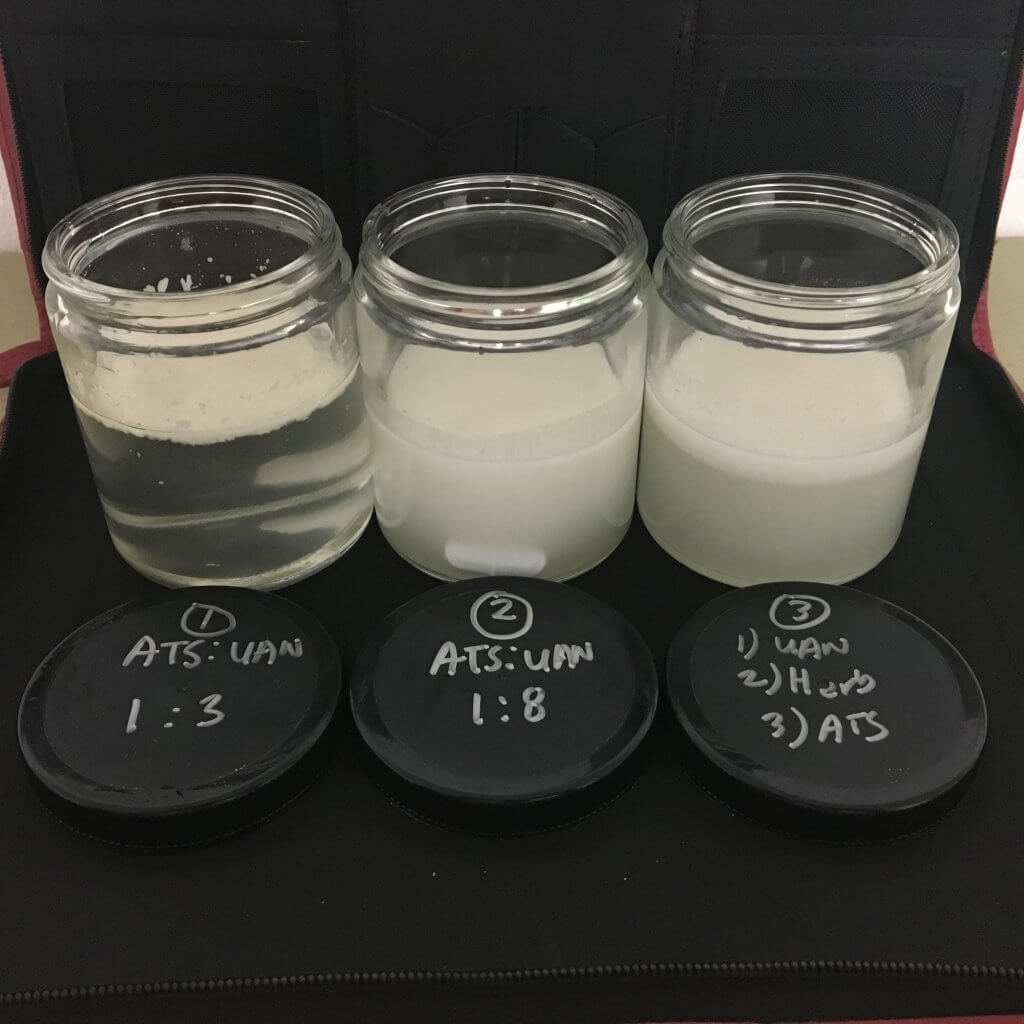
Micronutrients like sulfur (e.g. ATS) added to nitrogen-based formulations (e.g. UAN) can cause physical incompatibilities. This became a problem during “weed-and-feed” applications in Ontario corn in the late 2010s, and working with the registrants, we found a solution.
What follows is not only a good example of why mixing order is critical, but why growers should get into the habit of performing jar tests. Learn more about a real-world ATS example here.
Left: ATS and UAN premixed, followed by Primextra created curds. Centre: UAN, followed by low-load ATS followed by Primextra worked. Right: UAN followed by Primextra followed by high-load ATS worked.
Mixing errors are just as likely in small plot work as in commercial sprayers. Watch this short video by Mike Cowbrough describing his experience with mixing order for Elevore and glyphosate.
The jar test
A jar test is a small-scale version of tank mixing used to check for physical incompatibility. Always wear PPE and work in a well-ventilated area away from ignition sources.
Jar test steps:
Prepare: Read all labels for formulation details, water quality requirements (pH/hardness), and mixing order. Shake liquid containers to ensure consistency.
Initial Carrier: Fill a 1-litre glass jar with 250 ml of water (or 375 ml if using oil/fertilizer).
Add Products in Order: Add chemicals following the standard mixing sequence, stirring constantly. Scale rates to match your tank concentration (e.g., 1 kg per 1,000 L equals 0.5 g in a 500 ml test).
Wait and Observe: Allow 3–5 minutes between additions—especially for dry products—to ensure full dispersion. If testing water-soluble bags, include a small piece of the film.
Final Volume & pH: Top the jar up to 500 ml with your carrier. Check the pH with a digital meter and add adjusters if required by the label.
Evaluate: Let the jar stand for 15 minutes.
The mix is likely incompatible if it generates heat, forms gels or scum, or if solids settle out (excluding wettable powders). Note: Jar tests only identify physical issues; they do not guarantee biological efficacy or crop safety.
Compatibility kits
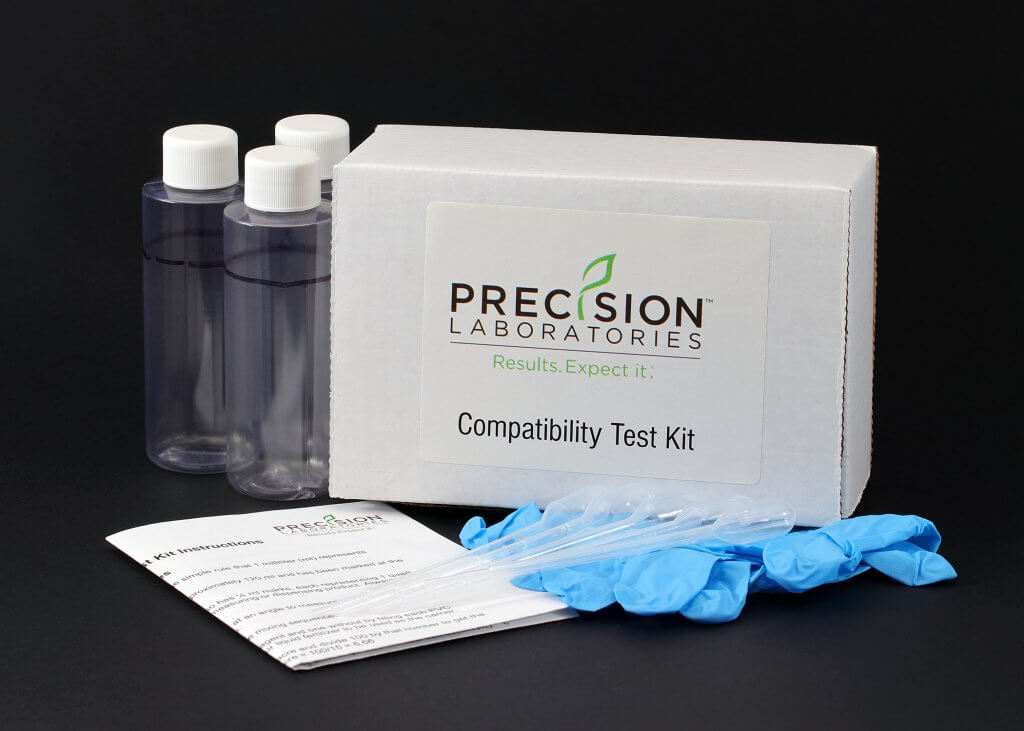
When performing a jar test you must maintain the same product-to-carrier ratio as in a full-sized sprayer tank. This math is made easier with commercial compatibility kits such as the one from Precision Laboratories (below).
Compatibility Test Kit: Five pipettes, three bottles, gloves, instructions. ~$10.00. (Photo: Precision Laboratories)
Such kits contain a few plastic “jars” and disposable micropipettes. By following the instructions included with the kit, you can easily reduce large labelled volumes (e.g. 1 kg of product in 1,000 litres) of multiple products to small volumes at the same ratio. In this case we assume the final volume would have been 1,000 L, and so we reduce all the quantities accordingly to get 500 ml. The following mixing order is provided as an example.
Order
Ingredient
Quantity for 500 ml or 500 g of product labeled for 1,000 L of final spray volume
1
Compatibility agents
5 ml (1 teaspoon)
2
Water soluble packets, wettable powders and dry flowables. Include a 1cm2 cutting of PVA packaging.
15 g (1 tablespoon)
3
Liquid drift retardants
5 ml (1 teaspoon)
4
Liquid concentrates, micro-emulsions and suspension concentrates
5 ml (1 teaspoon)
5
Emulsifiable concentrates
5 ml (1 teaspoon)
6
Water-soluble concentrates or solutions
5 ml (1 teaspoon)
7
Remaining adjuvants and surfactants
5 ml (1 teaspoon)
Records and delayed reactions
Maintain detailed mixing records for traceability and to track performance. These records help you replicate successes and avoid future failures.
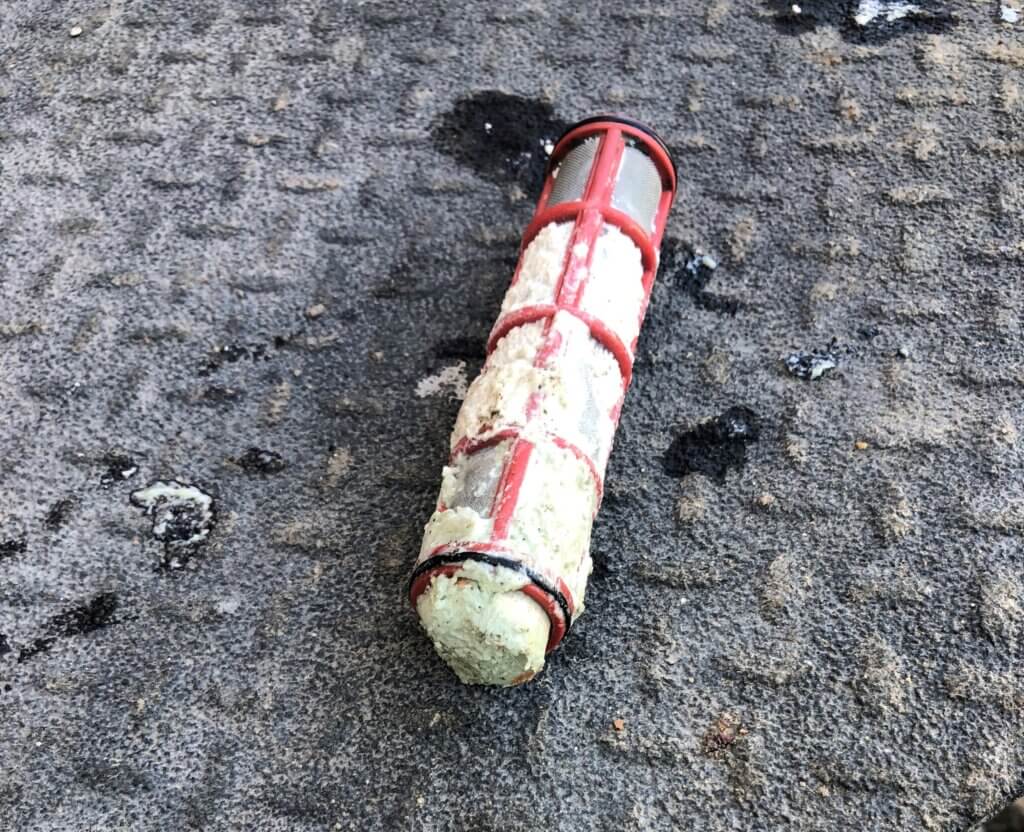
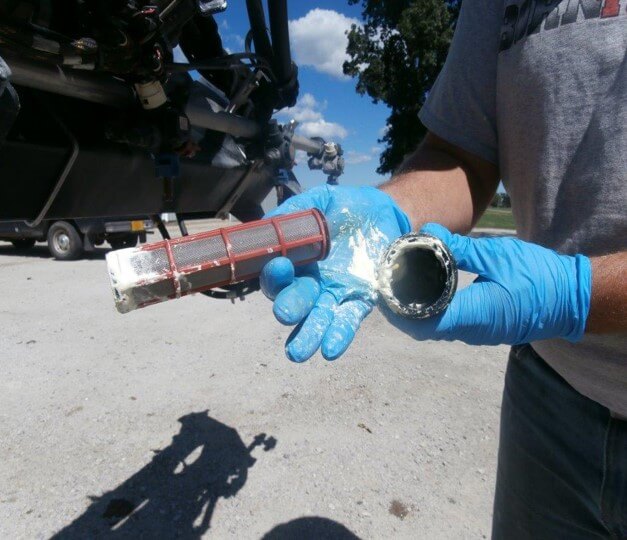
Labelled jar tests are also valuable; by leaving them in the chemical shed overnight, you can see if products separate or solidify over time. This indicates whether a mix can safely sit in the sprayer or if it requires immediate rinsing. For example, one grower’s Enlist and Manzinphos mix appeared fine until it sat during a rain delay. It turned into “lard,” clogging the entire system and requiring a manual teardown. They even had to dig some of the substance out with screwdrivers (see the picture of the filter below). An overnight jar test likely would have predicted this problem.
Some physical incompatibilities are not immediately apparent. This occurred overnight while the partially-full sprayer waited out a rain event.
Closed transfer
As a brief mention, an expansion of closed transfers systems for loading pesticides is on the horizon in North America. They have great potential to make loading more efficient, reduce operator exposure and reduce point-source contamination. Depending on the design, however, the operator may not be able to open pesticide containers to obtain samples for jar testing. This would be a great loss.
For more information
Learn more about physical and chemical incompatibility in our article on Tank mix compatibility. Be sure to download a copy of Purdue University’s 2018 “Avoid Tank Mixing Errors”. Finally, if you have questions about a specific product, contact the manufacturer, who have likely already performed the testing with common tank mix partners and can advise you.
This article was co-written with Mike Cowbrough, OMAFA Weed Management Specialist – Field Crops
This article was co-written with Jennifer Llewellyn, former OMAFA Nursery Crop Specialist
With more and more bio-rational products on the market, crop protection methods may require reassessment. Certain products require exacting water quality, cannot tolerate residues, and have half-lives that are both time- and temperature-critical. We’ve been getting questions about sprayer compatibility with some of these new products, so it seemed like a good opportunity to recycle this article from 2013.
Many horticultural commodities, such as turfgrass and nursery crops, include the application of live nematodes as part of their annual IPM program. We performed preliminary research into the claim that a grower’s nematode applications were becoming less effective. In the course of the investigation it was discovered that the nematode concentration (i.e. dose) sampled from the spray nozzle was diminishing over the course of the application.
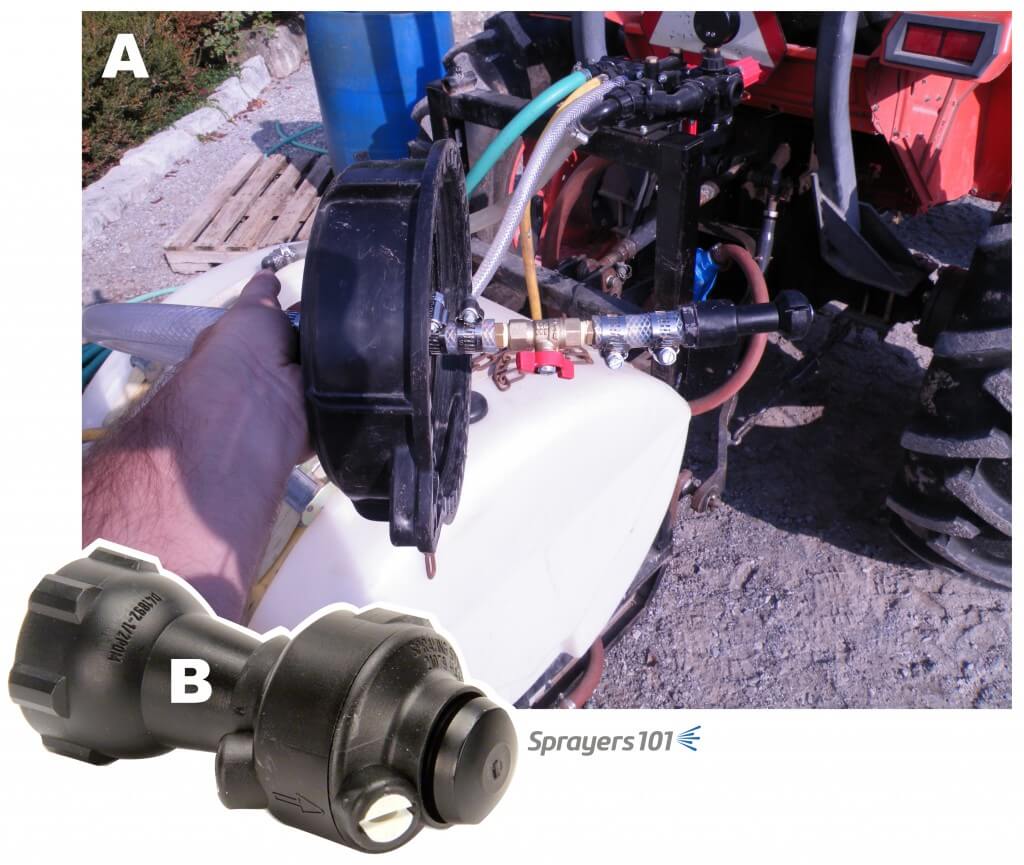
(A) Tank-rinse assembly mounted through tank lid with a flow-regulating valve. (B) Close up of tank-rinse nozzle.
After eliminating potential sinks in the sprayer’s plumbing (e.g. filters, strainers, etc.) it was hypothesized that the nematodes were adhering to the interior of the poly tank. If this was the case, the concentration would drop as the level of spray mix dropped. To test the hypothesis, we installed a tank-rinse nozzle to sparge the inner walls of the tank throughout the application and to re-suspend any stranded nematodes.
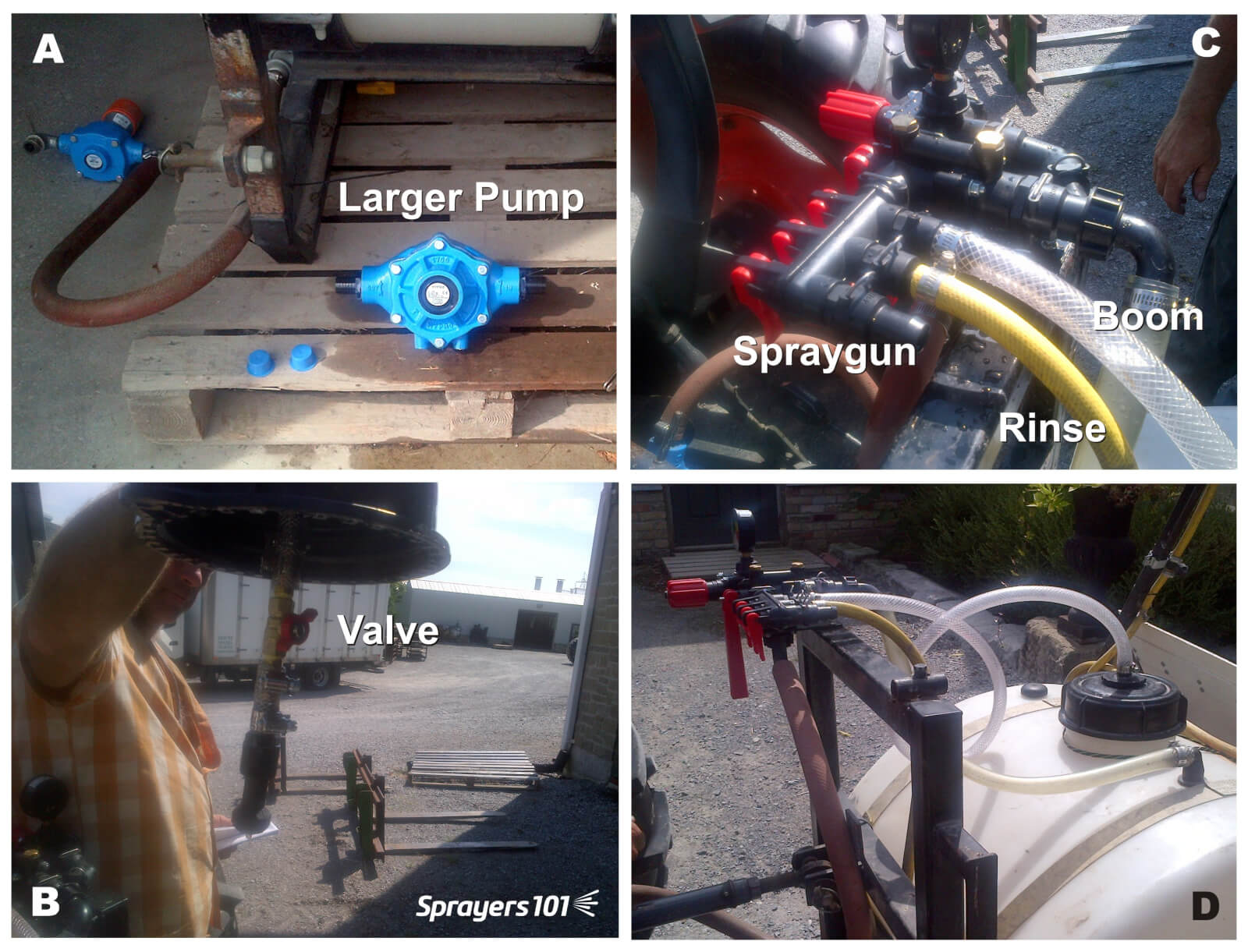
A high capacity roller pump (Pentair series 1700C) was installed to operate the tank-rinse nozzle (Pentair Proclean Tankwash) during spraying. It was installed through a bulkhead fitting in the tank fill lid. During testing it was discovered that the tank-rinse nozzle shunted too much flow and pressure to maintain flow to the spray gun. A valve was installed behind the tank-rinse nozzle to restrict flow to the point where it gently rinsed the inner walls of the tank, restoring flow and pressure to the spray gun.
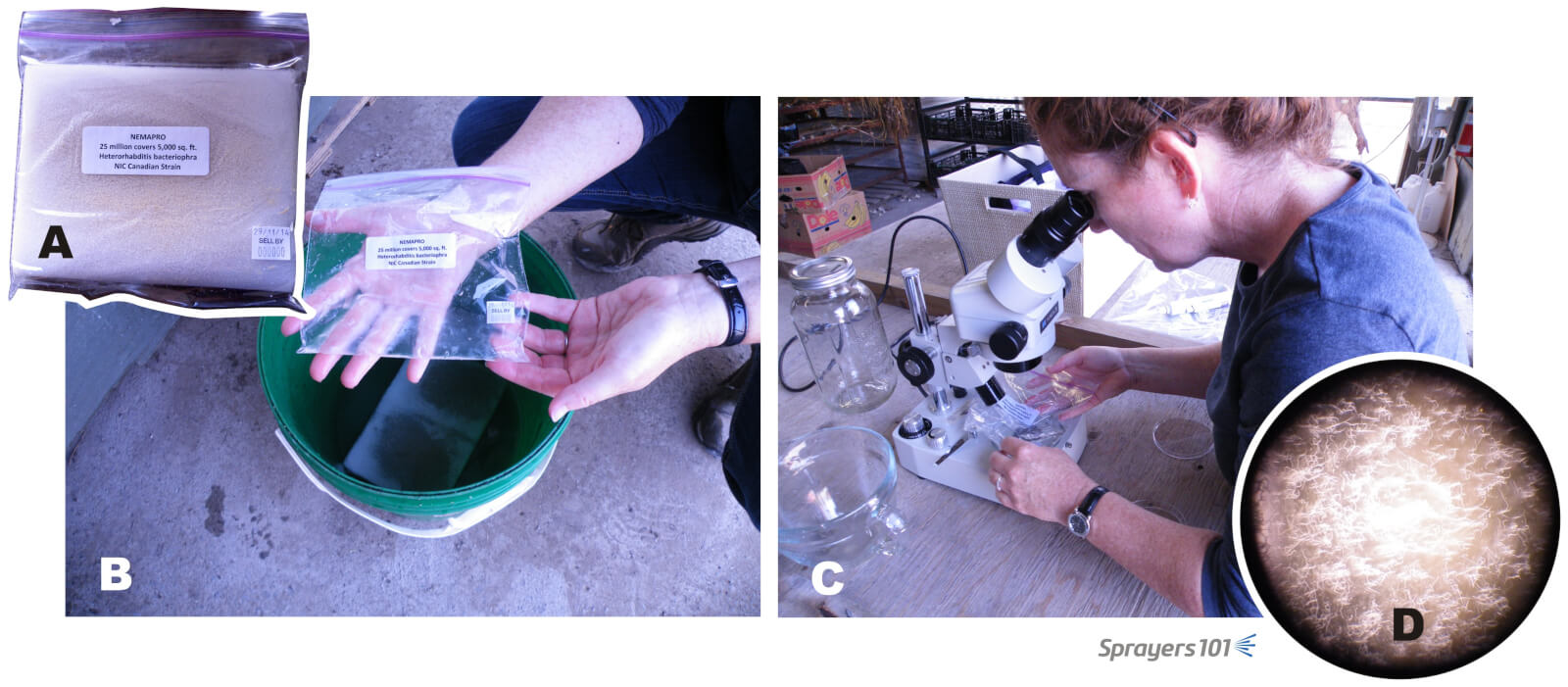
(A) Installing a high-capacity roller pump. (B) Tank-rinse nozzle, with valve, installed through tank lid. (C) Control manifold installed to plumb the return, the tank-rinse nozzle, spray gun and boom. (D) The entire installed system.(A) Nematodes, as-shipped, in a sponge. (B) Suspending nematodes for tank mixing. (C) Counting nematodes. (D) Undiluted, healthy nematodes in a stock solution via microscope ocular.
The 200 L tank was inoculated with a stock solution containing 25 million nematodes (125 nematodes / ml). 20 L of the spray solution was sprayed into a bucket every 10 minutes, whereupon 1 L of spray solution was immediately removed and 1 ml volumes were sub-sampled for counting.
In the first trial, nematode counts continued over a period of 2 hours and viability dropped by ~40%. It was assumed the damage was caused by prolonged circulation through the roller pump. In subsequent trials, the sampling duration reduced to 10 minutes (more realistically reflecting the time it took the grower to apply 200 L in the field). The tank was rinsed and re-inoculated for each trial. 1 ml samples were drawn from the spray gun, which operated continuously, with and without the tank rinse nozzle in operation.
Univariate analysis confirmed data normality and a GLM procedure was conducted for analysis of variance. Results indicate that nematode concentration dropped by ~15% without tank-rinse with minimal nematode damage observed. With the tank-rinse nozzle engaged, the concentration still declined slightly, but significantly less (<5%) (see graph below).
Nematode concentration over time for each condition.
The results suggest that a tank-rinse system that sparges the tank walls preserves nematode concentration throughout an application and may lead to more efficacious applications.
Horticultural Crops Ontario, Ground Covers Unlimited, Pentair (Hypro) and Nemapro are gratefully acknowledged for making this research possible.
Tank mixing is the practice of combining multiple registered agricultural products in the sprayer tank for application in a single pass.
The Pros of Tank Mixing
Efficiency: If the timing makes sense, a single pass saves time and reduces trample/compaction. E.g. A “weed-and-feed” application of fertilizer and herbicide in corn.
Resistance management: Multiple modes of action help prevent resistance development and combat existing problems.
Improved performance: Labels may require adjuvants to condition carrier water or reduce drift (utility adjuvants) or to improve the degree of contact between droplets and the plant surface, or enhance product uptake or rainfastness (activator adjuvants).
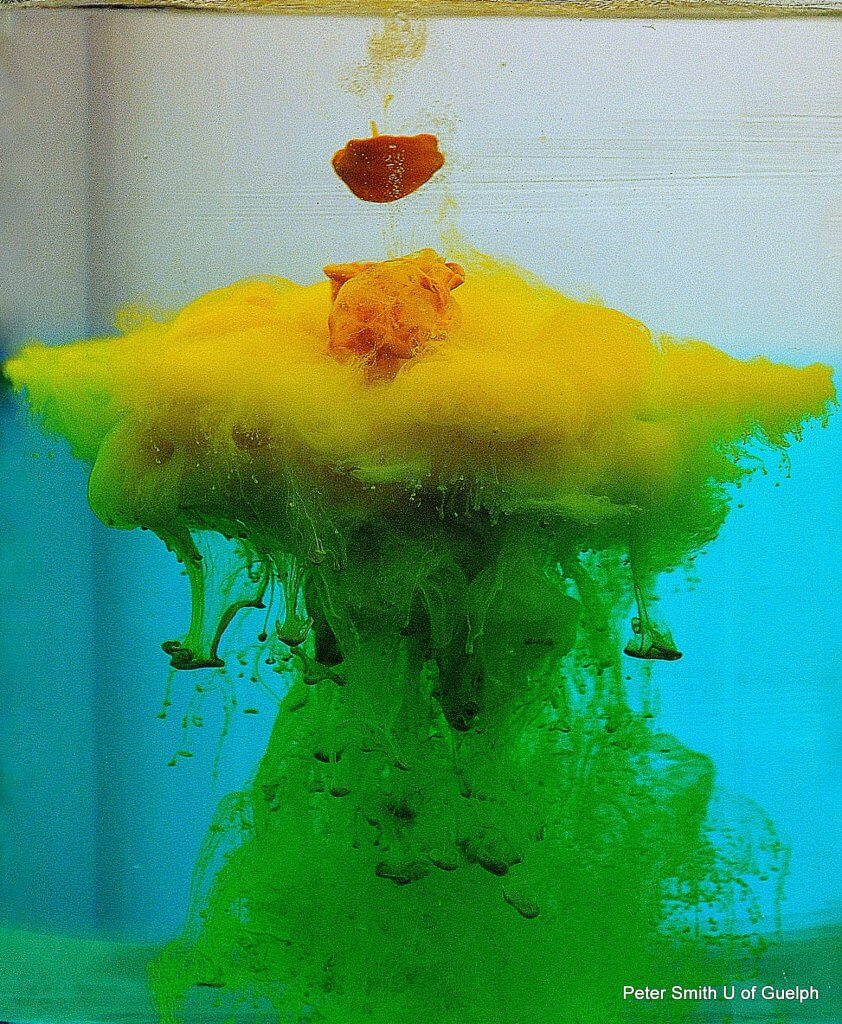
Prowl meets Roundup – A beautiful photo by Peter Smith, University of Guelph
The Cons of Tank Mixing
Tank mixing requires caution and careful investigation. Should tank mix partners prove to be incompatible, the consequences can be subtle or dramatic, but are always negative. There are two kinds of incompatibility.
1. Biological or Chemical Incompatibility
This form of incompatibility may not be immediately apparent following an application. Some level of crop damage or impaired efficacy occurs, which may impact yield or warrant an additional “clean-up” application. This is the result of product synergism or antagonism.
Synergism (Crop damage)
When products synergize, the application becomes too potent. For example, an adjuvant could affect crop retention or uptake, exposing it to more active ingredient or overwhelming crop metabolism. The result is damage to the crop we are trying to protect.
Antagonism (Reduced efficacy)
When products antagonize, the application becomes less potent. There are several examples:
pH adjusters in one product may reduce the half-life
of another product (e.g. The fungicide Captan has a half-life of 3 hours at a
pH of 7.1 and only 10 minutes at a pH of 8.2.)
Active ingredients may get tied-up on the clay-based
adjuvants in other products (e.g. glyphosate tied up by Metribuzin).
One product changes the uptake/retention of another.
For example, a contact herbicide burns weed foliage beyond its ability to take
up a lethal dose of systemic herbicide.
2. Physical Incompatibility
Physical incompatibility affects work rate and efficacy. Products form solids that interfere with, or halt, spraying. It can also make sprayer clean-up more difficult. For example, weak-acid herbicides lower the pH of the spray mix, reducing the solubility of Group 2 herbicides (i.e. imidazolinones, sulfonylureas, sulfonanilides). The oily formulation then adheres to plastic and rubber surfaces in tanks, connectors and hoses.
There are many forms of physical incompatibility:
Liquids can curdle into pastes and gels that clog plumbing to such an extent that flushing cannot clear it and a manual tear down is required.
Clogged screens
Dry formulations don’t hydrate or disperse, becoming sediment that clogs screens and nozzles. Even if they are small enough to spray, they reduce coverage uniformity. For example, a dry product added behind an oil gets coated, preventing it from hydrating.
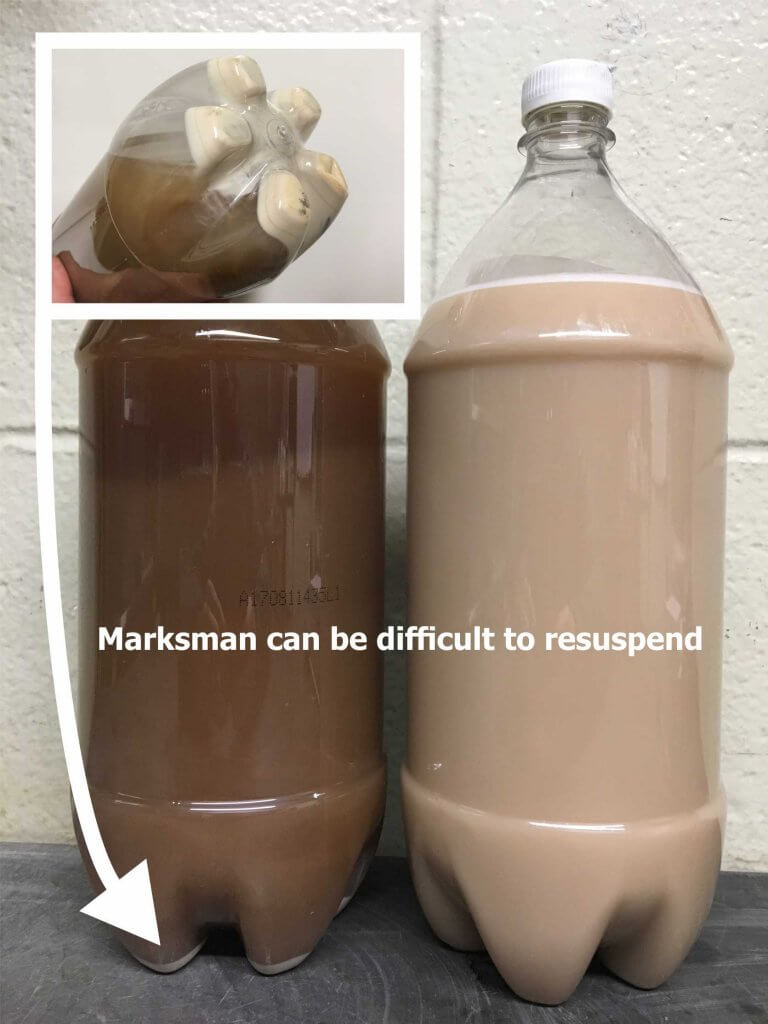
Certain product combinations may cause settling, or one partner is more prone to settling. If the sprayer sits without agitation, settled products may or may not resuspend. Even if they do resuspend in the tank, they may remain as sediment in lines.
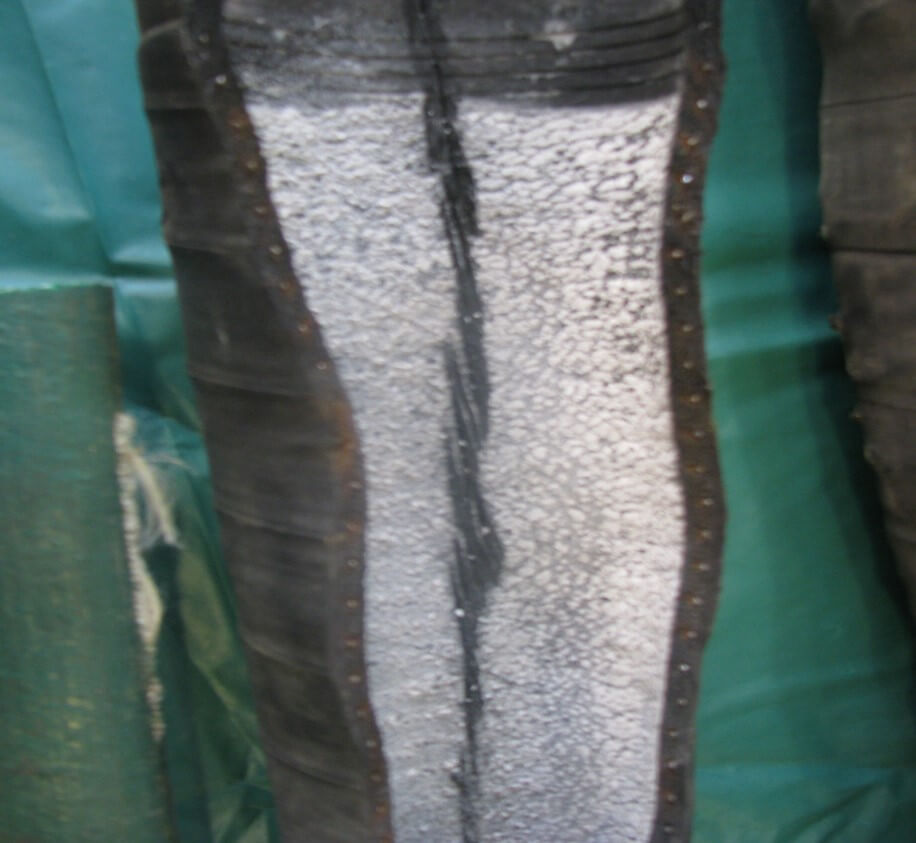
Residue in hoses – Photo courtesy of Fred Whitford, Purdue UniversityClay-based products may or may not resuspend easily in a tank. Even then, they may not resuspend in plumbing lines.
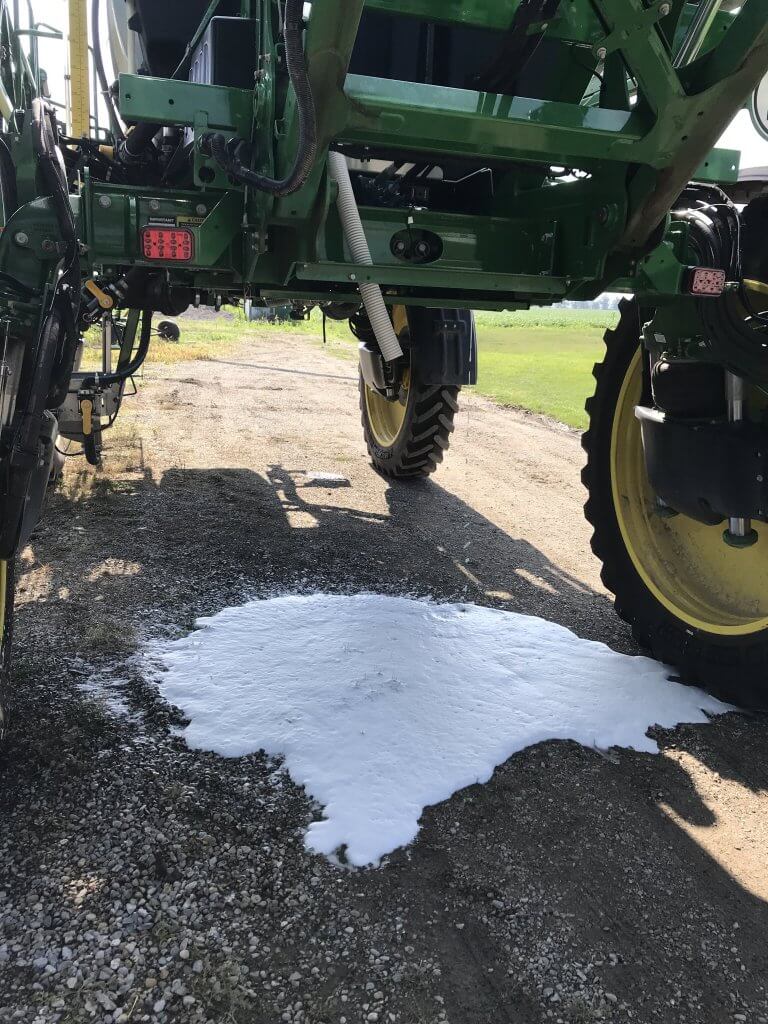
Certain product combinations may cause foaming, or one partner may be prone to foaming, causing overflows or breaking pump suction. When products foam, dry products added through the foam may swell, preventing hydration.
The Foamover Blues
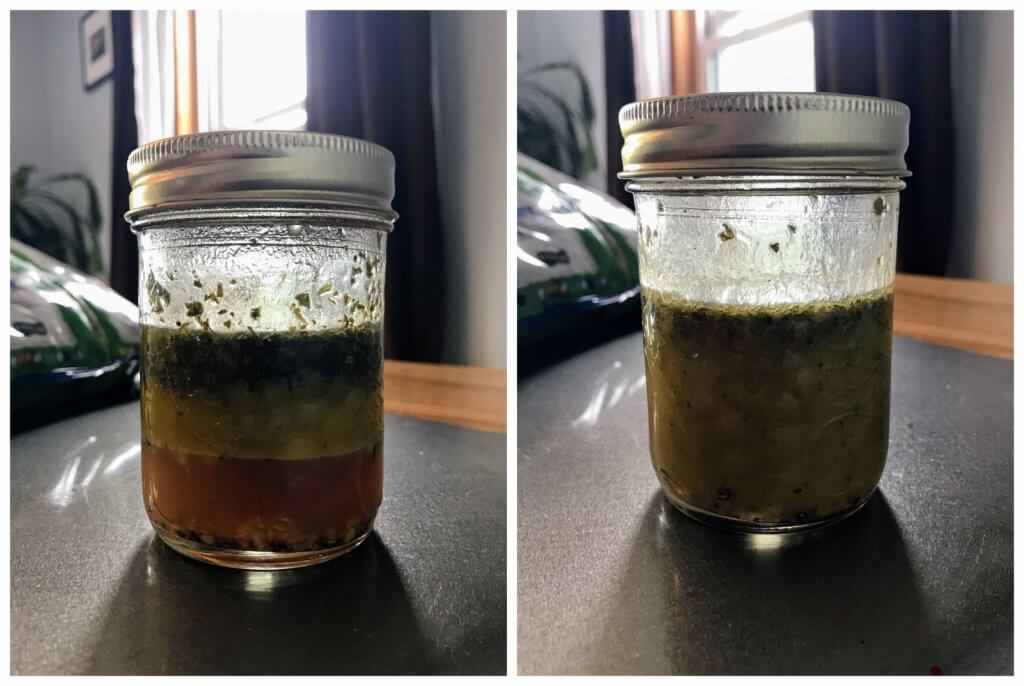
Phase separation occurs when products layer in the tank. Consider oil and water. Even with agitation, the active ingredients may not be uniformly suspended in the tank and coverage uniformity will be reduced during spraying.
Salad dressing left to rest is a great example of separation and stratification (left). Agitation helps emulsify it (right)
Due Diligence – Preventing Tank Mixing Errors
Incompatibility is often a function of the inert ingredients in pesticide formulations (e.g. thickeners, adjuvants, defoamers, stabilizers, solvents, etc.) and not the active ingredients. The more products you add to the tank, the more likely you’ll encounter an issue. It is prudent to perform a jar test to confirm physical compatibility. Remember, even if registered tank mix partners support mixing, your pace, mixing order, and water quality/temperature could cause issues.
Do not decide to try a new-to-you registered tank mix during loading. Even if you’ve used these products successfully in the past, formulations change without notice. Plan as much as possible off season when there is time to do the following:
Consult the pesticide labels
Pesticide
labels are always the first point of reference. They should be obeyed even if they
contradict conventional practices. Booklet-style labels that come with the
products are long, difficult to search and may not be up-to-date.
In Canada, it is faster and easier to go to the PMRA Label Search website and search labels in PDF format. In other countries, consult the manufacturer’s website for label information. For each tank mix partner, use <CTRL>+F to find the following keywords:
Do Not Mix
Mix
Hours
Agitation
Fertilizers
Consult manufacturer and crop advisors
You’re likely not the first to consider a certain tank mix. Learn from those that have been there already:
Consult your chemical sales representative. They
know their products best and want to see you succeed. They may have insight that
is not found on the product label.
Consult local government or academic extension
programs for an unbiased opinion.
Enlist the help of a professional crop advisor.
It is a good practice to get tank mix recommendations in writing. If something should go wrong, liability is an important concern.
If you’ve made a mess – The Reverse Jar Test
It
happens. We’ll use this real-world situation as an example:
“I mixed up a batch of MCPA 500 A and Glyphosate at ¾ recommended label rate, but then got delayed on application with a stuck drill. I came back to the sprayer and found a nasty chemical precipitate – like waxy chunks. Agitation didn’t break them down. I dumped the tank out as I didn’t want to pump it through the booms. How do I clean up the chunks in the system?”
We forwarded
this question to ag chemists Dr. Eric Spandl (Land of Lakes) and Dr. Jim Reiss
(Precision Laboratories) and developed this response:
“Wearing appropriate personal protective equipment, physically remove the “chunky” material. A lot of time can be wasted (and rinsate water created) by experimenting with various concoctions, but if you do choose to try a compatibility agent, first try it in a mason jar. If it works to dissolve the material, it can be added to the tank with water and agitated. If not, you are down to manual cleaning: hot water under pressure.”
We dubbed this process “The Reverse Jar Test”. Do not add hot water, cleaners or compatibility agents until the reverse jar test confirms success. You may create a larger problem. Of course, the best advice is to not put yourself in this position to begin with. Once again, don’t make mixing decisions at the inductor bowl – make them before ordering product.
Tank mixing regulations in Canada (January, 2025 update)
The following legislative framework is specific to Canada, so readers in other countries should consult their own regulatory authorities.
Paragraph 6(5)(b) of the Pest Control Products Act (PCPA) states that no person shall use a pest control product in a way that is inconsistent with the directions on the label. In 2020, a public consultation was held to consolidate and clarify tank mixing requirements. This led to Regulatory Proposal PRO2020-01 (Streamlined Category B Submissions and Tank Mix Labelling – July 3, 2020). Essentially, it stated that tank mixing would be allowed if there was text on the product label that specifically permitted it. This could be a specific tank mix combination, a general statement permitting mixing, or both.
A new general label statement that permits tank mixing was proposed to consolidate tank mixing information in one place on the label and allow greater flexibility in terms of tank mixing options. The prohibition against tank mixing products with the same mode of action was removed, and the reference to tank mixing with a fertilizer is now an optional component of that statement. The general label statement reads as follows:
“This product may be tank mixed with (a fertilizer, a supplement, or with) registered pest control products, whose labels also allow tank mixing, provided the entirety of both labels, including Directions For Use, Precautions, Restrictions, Environmental Precautions, and Spray Buffer Zones are followed for each product. In cases where these requirements differ between the tank mix partner labels, the most restrictive label must be followed. Do not tank mix products containing the same active ingredient unless specifically listed on this label.
In December of 2022, Health Canada released a guidance document describing the federal tank mixing policy. This document is not part of the PCPA, but is an administrative document intended to facilitate compliance by all stakeholders. Registrants have until December, 2025 to update their extension material to align with amended product labels and guidance documents. Similarly, users of pest control products will be provided the same transitional period to adjust their purchasing and production practices to align with the provisions of this document. This means the policy will be in full effect on December , 2025. After that, applicators in Canada can only apply tank mixes that appear specifically on a product label, or tank mixes of products whose labels include the new general tank mixing statement.
Summary of the guidance document
Tank mixing is not permitted when a potential tank mix partner’s label has some exclusionary statement, such as:
Forbidding mixing. E.g. “Do not mix or apply this product with any other additive, pesticide or fertilizer except as specifically recommended on this label.”
Limiting tank mixes to only those specifically listed on the product label.
During the label transition, guidance relating to tank mixing may be found under a section specific to tank mixing, and/or under other sections as in the following examples:
Directions for use: E.g. “When tank-mixes are permitted, read and observe all label directions, including rates and restrictions for each product used in the tank-mix. Follow the more stringent label precautionary measures for mixing, loading and applying stated on both product labels.”
Buffer Zones: E.g. “When tank mixes are permitted, consult the labels of the tank-mix partners and observe the largest (most restrictive) spray buffer zone of the products involved in the tank mixture and apply using the coarsest spray (ASABE) category indicated on the labels for those tank mix partners.”
Resistance Management: E.g. “Use tank mixtures with [fungicide/bactericides/insecticides/acaricides] from a different group that is effective on the target [pathogen/pest] when such use is permitted.”
If there are no directions on the labels, don’t tank mix them.
If your situation does not fit these examples, the following table (Appendix A at the bottom of the Guidance Document), lists several other examples examples of different tank mix wording scenarios for registered pest control products.
Table 1: Permissibility of tank mixing based on various combinations of label statements related to tank mixing
Product X label says
Product Y label says
Can I tank mix? (Y/N)
Nothing (silent on tank mixing)
Nothing (silent on tank mixing)
N
General tank mix statement
Nothing (silent on tank mixing)
N
Nothing (silent on tank mixing)
General tank mix statement
N
General tank mix statement
General tank mix statement
Y
General tank mix statement
Tank mix with Product X
Y
Tank mix with Product Y
General tank mix statement
Y
Tank mix with Product Y
Nothing (silent on tank mixing)
Y
Nothing (silent on tank mixing)
Tank mix with Product X
Y
Tank mix with Product Y
Tank mix with Product X
Y
Tank mix with Product Y
Exclusionary statement (and label does not include a specific Product X tank mix)
N*
Exclusionary statement (and label does not include a specific Product Y tank mix)
Tank mix with Product X
N*
*There may be registered labels that have tank mix scenarios like this. Note that this is not allowed for new tank mix label amendments. Further, any product labels that have tank mix scenarios like this must be amended to alleviate the contradictory scenario. To do this, using the last scenario in Table 1 as an example, one of the following must occur: 1) remove the Product X tank mix from the Product Y label, 2) remove the exclusionary statement from the Product X label, or 3) add a specific tank mix for Product Y on the Product X label. Source: PMRA Guidance Document Tank Mix Labelling 2023
Tank mixing adjuvants
According to the PMRA, the rules surrounding the tank mixing of adjuvants remain the same as they have been since 2009, and are not included under the new guidance document. While the PCPA does not reference adjuvants specifically, they are prescribed to be pest control products in the regulations (Pest Control Products Regulations s.2(b)). The general reference in the PCPA that applies is s.6(5)(b).
Therefore, in the case of activator adjuvants, the label for at least one tank mix partner must specify the use of an adjuvant, and only registered adjuvants labeled for the crop and for tank mixing are permitted. For example, tank mixing the herbicide Reflex with a registered soybean oil adjuvant not labelled for the use, or with an unregistered food grade activator adjuvant, would not be acceptable. Utility adjuvants have registration numbers, but their use is not prescribed or specified on pesticide labels, leaving their use to the discretion of the operator.
For more information on Canada’s Tank Mixing Policy
In late 2022, Australia’s GRDC released a comprehensive guide on pesticide mixing and batching (within the context of the Australian agronomic environment, of course), which can be downloaded for free, here.
Finally, you can watch a 2021 presentation on tank mixing (below). It was delivered to a grape growing audience, but much of the content applies across agriculture. There are a few “oops” moments where I didn’t say quite what I meant. I misread the Sencor dissolution / filtration work. And, I really didn’t answer the last question about mixing herbicides. The answer should have been to consult labels and local resources, such as OMAFRA’s Crop Protection Hub. Note that any discussion of Canadian regulatory policy may have changed in light of the new 2022 Guidance Document.
This article was co-written with Mike Cowbrough, OMAFRA Weed Management Specialist – Field Crops
What’s the most underused active ingredient when creating a proper tank mixture in a sprayer?
Patience.
Spray season is never long enough. The days which are most conducive to spraying are hard to come by. Therefore, the ingredient we need the most when spraying as well as tankmixing is patience. Without it, we are setting ourselves up for failure.
Successful bakers will tell you that patience mattered when perfecting their most decadent creations. By taking their time, adding ingredients slowly and mixing them carefully, those professionals create stunning masterpieces.
We can achieve a masterpiece as well, if we remember to slow down and apply the same principles.
1. Take your time
Take 7-10 minutes between product additions to a spray mixture (especially dry formulations). Have a mini-vacation after each addition! This time allows each product to dissolve into solution and you can complete your spray records!
Extra time allows pesticides to be fully integrated into the spray solution before another product is added, which could impede either formulation from mixing successfully.
Each ingredient must be uniformly mixed before adding the next component. E.g. A soluble powder must be completely dissolved before adding the next item.
2. Add ingredients slowly
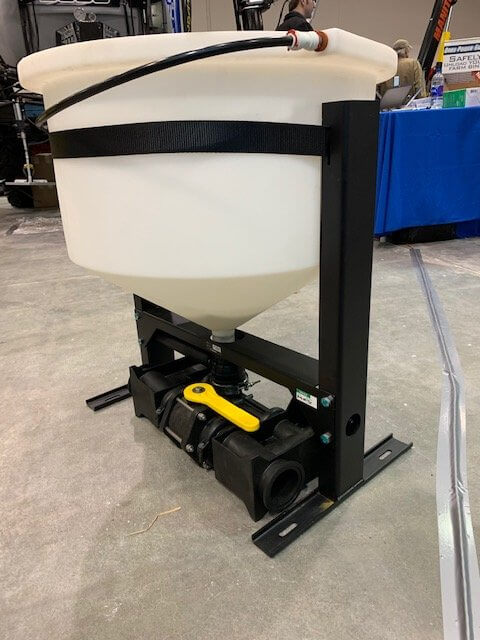
Add products, one at a time, in the mix cone or inductor. If you’re adding product directly via shuttles and dedicated lines, the same principle applies.
Rinse mix cone or inductor and lines with clean water between product additions.
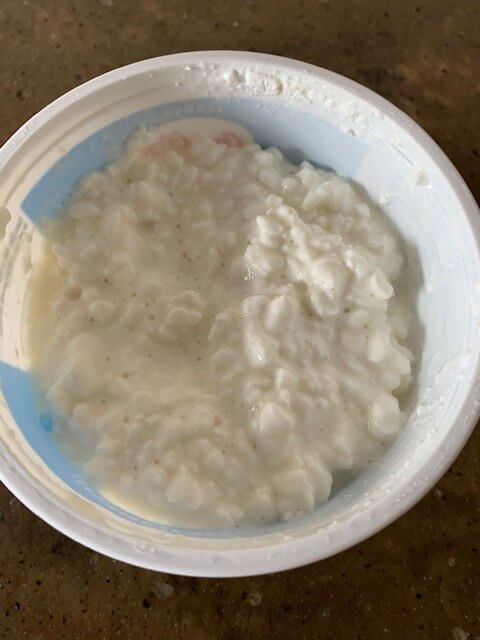
Tank, cone or inductor, mix products one at a time and rinse between additions.Anything resembling cottage cheese in your spray mixture is not a spray masterpiece.
Never “stack” ingredients on top of each other in the mix cone or inductor. Much like oil and water don’t mix, chem-on-chem doesn’t mix either. Active ingredients need water in order transition into solution. It’s vital to not pile products into a mix cone or inductor where they can form cottage cheese instead of a liquid solution.
In my neighborhood, 3″ fill lines are not uncommon. They are a source of time savings when filling but they also bring additional cautions. Be aware of the problems over agitation can bring to what might have been a successful tankmix.
3. Mix carefully
Start with sprayer tank 1/3-1/2 full to allow enough water to create a great solution.
Pre-slurry dry flowables in warm water whenever possible. Yes, it takes additional time and effort but it can prevent having to wash out individual nozzles and strainers later. Or worse, there’s the possibility that the tiny grains of an active ingredient that did not blend into the solution may cause injury to a off target crop.
Mix ingredients in the right order! Typically, crop protection products have a mixing order specified on their labels. Read the label and be familiar with the correct formulations you are currently spraying.
Adjuvants are added in the same sequence as pesticides, e.g., ammonium sulfate is a soluble powder, oil adjuvants are emulsifiable concentrates; and most surfactants are solutions.
Within each group, it is common practice to add the pesticide before the adjuvant, e.g., a soluble-powder pesticide before ammonium sulfate.
Final thoughts
Taking the extra 30 minutes now to load the sprayer carefully will save you the potential of 4 hours of having to clean out an entire tank later!