Tag: adjuvant

  • Sprayer Cleanout and Cleaner Selection

    Sprayer Cleanout and Cleaner Selection

    Editor’s Note: Changes have been made to this article since its original publication in 2015.

    When in-crop spraying is around the corner, sprayer tank clean out is an important topic to address on your farm. Many farms have done the same clean-out routine for years and not had any issues with contaminating residues in the tank resulting in crop damage. Although the old saying “If it ain’t broke, don’t fix it” definitely has some merit, in this case it is good to question whether your cleanout routine is adequate. When you consider the way chemicals have changed over the years, especially the higher reliance on oily surfactants in modern chemicals, it makes sense why we need to pay attention to spray tank cleanout.

    The goal of cleaning the tank is to remove and dilute the previous chemical formulation as much as possible to prevent buildup and carryover of residues which can cause crop damage on non-target crops.

    Safety First

    Always wear safety gear before working around chemicals. Although it can be a hassle, we all know that it is no fun spilling chemical on your clothes and skin. What’s even worse is smelling it all day in the sprayer cab. I use a long waterproof coat, a plastic face shield to prevent back splash when spiking jugs, and of course rubber gloves (No judgment on me looking like a total dork please:).
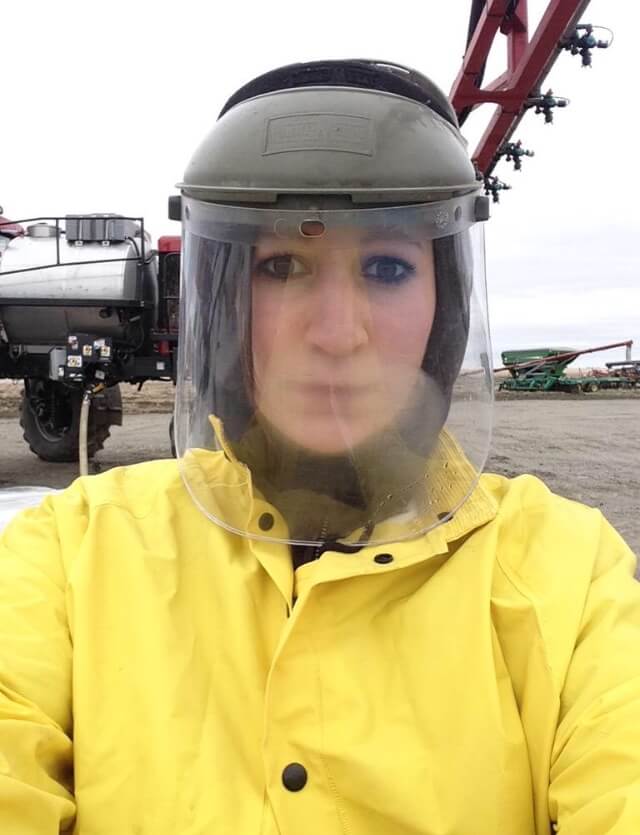
    Safety First - Are you looking at my headgear? Are you!?
    Safety First – Are you looking at my headgear? Are you!?

    1 – Get the Previous Product Out of the Tank ASAP

    In my experiences spraying, I have always tried to get the previous product out of the tank as soon as possible. Spraying the extra product out of the tank is the safest and most environmentally responsible way to rid your tank of left over product. Dr. Tom Wolf of AgriMetrix Research and Training, states that spraying a crop twice is usually safe, as all herbicides must be registered to be sprayed at twice the rate in order to be registered by the Pest Management Regulatory Agency (PMRA). If one lets the product sit in the tank overnight before beginning the cleanout, there is more time for product to congeal and adhere to the tank and plumbing components.
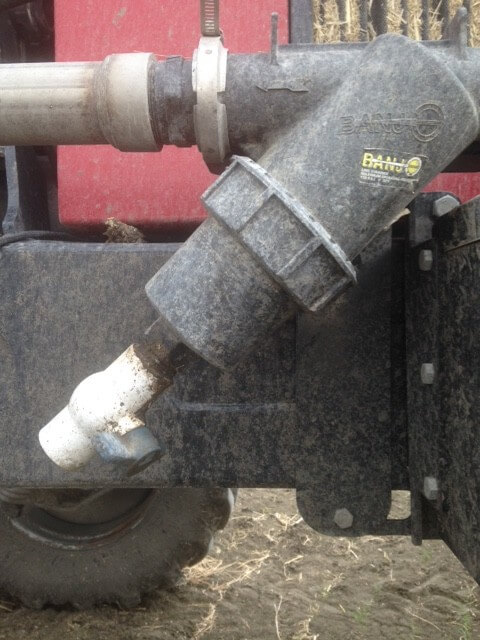
    Ball valve on main filters.
    Ball valve on main filters.

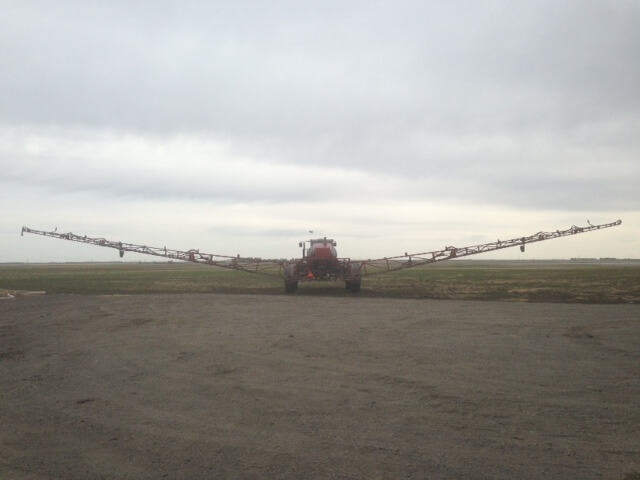
    I open the valve ends on my filters to empty the buildup in the bottom of the filter canister. There is often chemical residue or green slime from dug-out water in here. Next I like to go along my booms and empty out all the chemical product within the boom plumbing. Our farm runs a Patriot 4420 sprayer, with valves on each boom section to empty out product. Usually I will go to the sprayer and tip the boom ends up so that gravity allows all of the product to drain out. Then I raise the centre rack, and tip end of booms down to force the product to drain out the other way. You would be amazed at how much product comes out by doing this both directions!
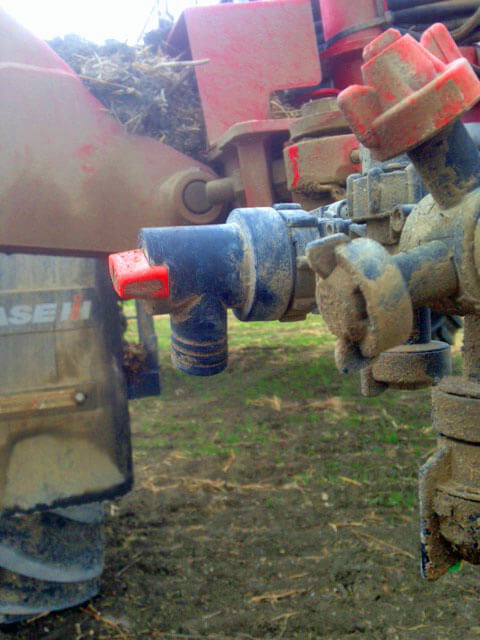
    Valves on each nozzle.
    Valves on each nozzle.
    Tipping the boom ends up with the centre rack down.
    Tipping the boom ends up with the centre rack down.

    While the tank is empty and no pump is running, I will remove all the filters on the sprayer, and grab the handy dandy toothbrush – this is the most valuable tool in filter cleanout! This brush is just small enough to get it in the centre of the filter and scrub all of the residue and gunk out of the filters. A pail filled with rinsing solution is an easy way to clean filters and nozzles.
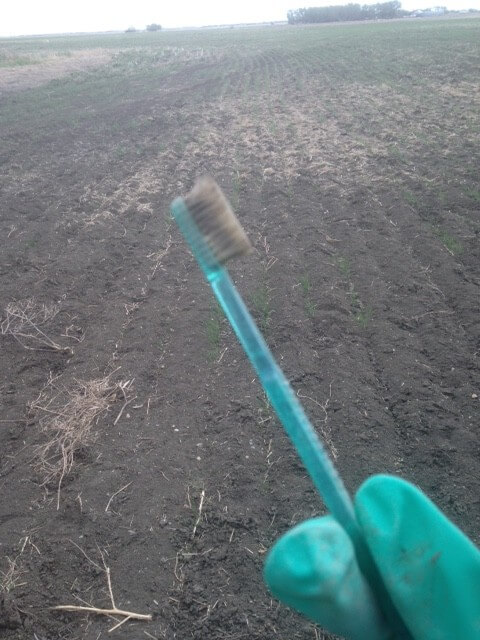
    Possibly the most important cleaning tool. Don't put it back in the bathroom afterwards.
    Possibly the most important cleaning tool. Don’t put it back in the bathroom afterwards.

    2 – Begin Rinsing Process

    I used to always put about 1,000 gallons of water to our 1,200 gallon tank, thinking that a larger volume would clean all areas of the tank better, but I’ve since changed my thinking. Research has shown that two or three smaller rinses *aka triple rinsing) is more effective for rinsing the tank than one large volume rinse. I always crank the agitation up to high and allow the cleaning solution to agitate for as long as possible.

    Nowadays I try to do three 400 gallon rinses.

    1st RinseCleaning product plus 400 gallons water
    2nd RinseCleaning product plus 400 gallons water
    3rd Rinse400 gallons of just water to rinse, and run through plumbing system to check nozzles and for leaks

    Many labels Recommend leaving the rinsing solution in the tank and lines overnight. This will allow more chemical deposits to loosen up. If an operator is forced to speed up the tank cleaning process due to limited time, they must understand that there are risks involved in doing a less thorough tank cleaning.

    Cleaning Products

    Detergent or ammonia? Check the label. If the label doesn’t specify, you can consult this table from Winfield United.

    Detergent CleanerAmmonia
    Solution contains an adjuvantSulfonylureas (SU’s)
    Solution contains a milky looking component (an Emulsion or EC)Thiencarbazone – methyl
    GlufonsinateFlucarbazone
    Imi’s (Group 2)Dicamba
    Simplicity

    Detergent (e.g. All Clear)

    This detergent cleaner is specifically designed to remove pesticide deposits and other debris, including oily substances from booms, filters, and nozzles. Use All Clear (or other detergent cleaner) if the solution is milky-looking (called an emulsion), which means it is oil-based.

    • Label rate is 0.25 L of All Clear/100 L of water.
    • If you are adding 400 gal of water, you will only need 3.78 L of cleaning product.
    • Decontamination rate is double this: 7.57 L of cleaning product. Use this rate if you have had residue issues, or to do a more thorough cleaning.

    pH Increaser (aka Ammonia; e.g. Flush)

    This is an ammonia based cleaning solution. This product is used to raise the pH to increase solubility of most Group 2 products (from FMC, Bayer, and Corteva but not BASF). Flush contains 7% ammonia. Use Flush (or other ammonia based cleaner) for most cleaning, but especially for Group 2 products listed above, such as Varro, and Velocity M3, Express, Refine, Muster, and Spectrum.

    • Label Rate is 0.50 L of Flush/100 L of water.
    • If you are adding 400 gal of water, you will need exactly 7.57 L of cleaning solution.
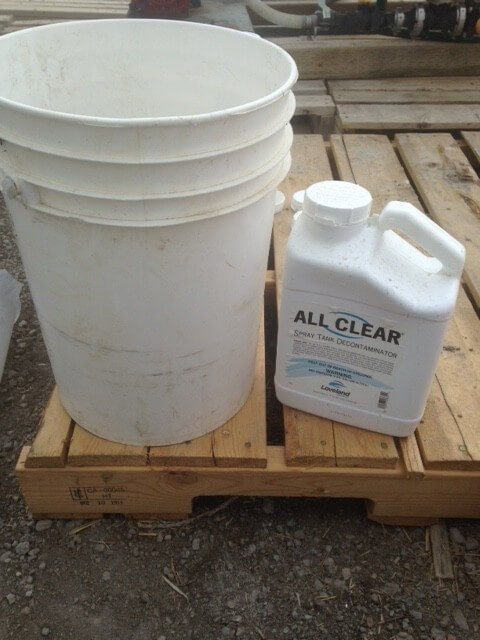
    A pail and detergent are "must-haves" during sprayer cleanup.
    A pail and detergent are “must-haves” during sprayer cleanup.

    Combo Products

    Alternately, some solutions raise pH without ammonia. FS Rinseout is sodium hydroxide based, not ammonia based. It is a high alkaline solution that elevates and holds the pH combined with strong surfactants to help clean the tank. Another is CleanOut, which uses potassium hydroxide and disodium metasilicate, a detergent. In both cases they are both pH increases and detergents.

    3 – Draining the Rinse Solution

    After I have ensured all nozzles are working correctly, and there are no leaks in the system, I drain out all of the rinse water, fold in the booms, and get ready to fill the tank with chemical solution for spraying!

    More Information

    Learn where residue can hide. This video was filmed for the Environmental Farm Plan with the nice people at Clean Field Services in Drayton, Ontario. Hardly the height of our acting careers, but good messaging nonetheless.

  • Think Before Adding Adjuvants

    Think Before Adding Adjuvants

    It’s odd to begin an article by suggesting the reader consult another, but Dr. Tom Wolf wrote a great summary about adjuvants for SaskPulse in 2023 and you can and should download it here. While I’m at it, also grab this article by Rich Zollinger, Emeritus Extension Weed Scientist, North Dakota State University.

    OK, back to the article at hand. An adjuvant is “any substance in a formulation or added to the spray tank to modify the biological activity or application characteristics”. This means they have an array of functions, such as masking pesticide odor, conditioning carrier water, improving mixing and reducing drift (Utility modifier adjuvants). They can also improve the degree of contact between droplets and the plant surface, or enhance product uptake or rainfastness (Activator adjuvants which include a subset of products referred to as Surfactants [SURFace ACTive agENTS]).

    For example, this short video was filmed in 2015 to demonstrate how a sticker surfactant reduces runoff and how a penetrant surfactant can help a product pass through a waxy plant surface. This video was filmed and edited by former OMAFA summer student, Victoria Radauskas.

    Generally, pesticides already come preformulated with the requisite inerts, which include the utility modifier and activator adjuvants that ensure ease of use and optimal product performance. But sometimes the pesticide label requires the operator to add a particular name brand or category of adjuvant. In this case, the pesticide does not include the adjuvant because it might negatively impact product stability, increase bulk and/or increase expense.

    Canada is seeing an increase in the number of adjuvants for purchase (particularly utility modifiers). Claims of improved performance make it tempting to reflexively and proactively throw them in the mix. The grower is free to use any adjuvant provided it is registered for use on the crop and in combination with the pesticide being applied. You can learn more about the regulatory realities in our tank mix article.

    We suggest that adding any adjuvant is an optional last step in optimizing a sprayer’s performance. Dialing in all other aspects tend to reap the greatest rewards. Here are a few general guidelines when using surfactants in horticultural crops:

    • Do not use penetrant surfactants (including oils) with copper, sulphur or captan fungicides.
    • Do not use penetrant surfactants with contact or surface pesticides.
    • Stickers may impede the movement of systemic products.
    • Stickers may prevent redistribution to newly emerging leaves early in the growing season (but they may be desirable during wet springs).
    • Deposition utility modifiers may negatively affect canopy penetration when employing multi row or alternate row traffic patterns.
    • Spreaders are more likely to incur runoff so adjust volumes accordingly.

    Additional Resources

    The following video presentation was recorded for a 2021 adjuvant conference in Argentina. It’s a primer to introduce what adjuvants are and why we might consider using them. You’ll note that I speak slowly during the presentation – that’s because it was being translated and I wanted to make that process as easy as possible. Also, I think I mistakenly said captan was an insecticide – in fact it’s a fungicide. Oops.

    And here’s a 2022 interview from Real Agriculture’s “The Agronomists” featuring Tom Wolf of Agrimetrix, and Greg Dahl of Winfield United. For the adjuvant-related part of the conversation, you can pan ahead to the six-minute mark.

    And here’s a 2025 interview from Real Agriculture’s “The Agronomists” featuring Jason Deveau and and Austin Anderson of Helena.

  • Controlling Cercospora Leaf Spot in Sugarbeets

    Controlling Cercospora Leaf Spot in Sugarbeets

    Download the 2023 publication from Crop Protection here.

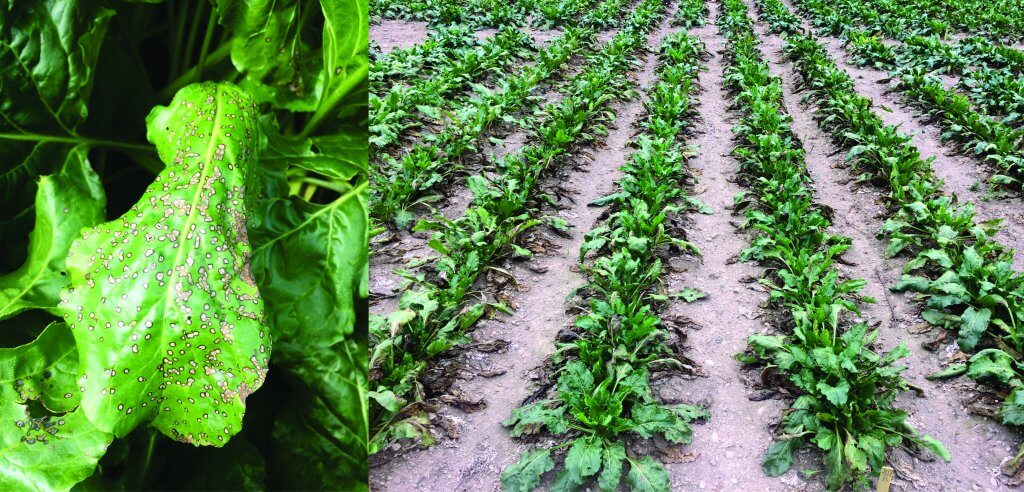
    Cercospora leaf spot (CLS), caused by the fungal pathogen Cercospora beticola, is one of the most damaging foliar diseases affecting sugarbeet (Figure 1) (Khan et al. 2008). Growers rely on broad-spectrum contact fungicides because they are less likely to cause fungicide resistance (OMAFRA 2020). However, these fungicides are usually less effective than other fungicides (Trueman & Burlakoti 2014), and require frequent reapplications (Thind & Hollomon 2018) and good coverage to be effective (Prokop & Veverka 2006; Roehrig et al. 2018).

    Figure 1. Cercospora leaf spot on sugarbeet.

    We evaluated practices intended to improve the efficacy of Manzate® Pro-Stick™ (Mancozeb) by improving deposition and penetration into the sugarbeet canopy. Practices included different nozzle types (Shepard et al. 2006; Dorr et al. 2013), carrier volumes (Armstrong-Cho et al. 2008; Roehrig et al. 2018; Tedford et al. 2018) and the addition of InterLock®. InterLock is a spray adjuvant made with modified vegetable oil (MVO), vegetable oil and a polyoxyethylene sorbitan fatty acid ester emulsifier. It is intended to reduce the number of drift-prone, fine droplets without compromising the volume median diameter (WinField® 2019).

    Research

    In 2019 and 2020, InterLock and carrier volume were assessed to evaluate effects of:

    1. InterLock on Manzate Pro-Stick efficacy at different carrier volumes.
    2. InterLock on spray deposition and penetration within the sugarbeet canopy.

    Objective 1: InterLock on Manzate Pro-Stick efficacy at different carrier volumes

    Four replicated field trials were conducted at two sites, Dealtown (2019) and Ridgetown (2019 and 2020). Treatments were evaluated using four carrier volumes: 115, 235, 350, and 470 L ha-1 (12, 25, 37, and 50 gpa) and applied on a 14-day schedule.

    Results

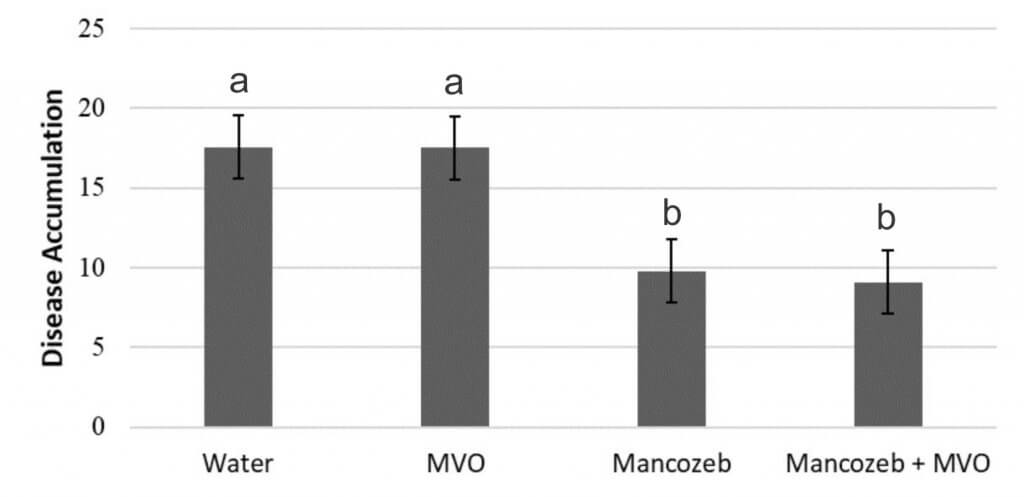
    • Adding InterLock to Manzate Pro-Stick did not reduce disease accumulation over the season (Figure 2a) or improve beet and sugar yield or sugar quality compared to applications of Manzate Pro-Stick alone (data not shown).
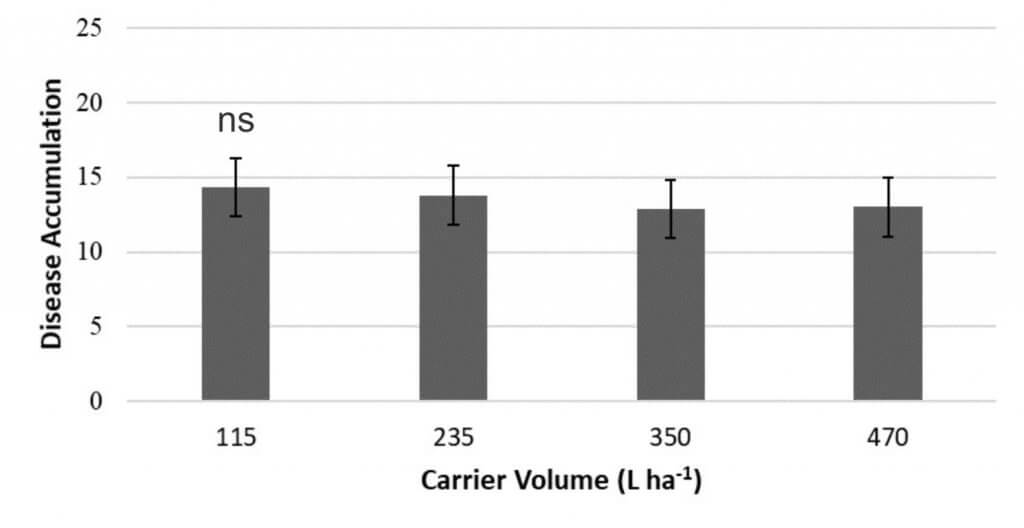
    • Carrier volume did not affect disease accumulation (Figure 2b).
    Figure 2a. Disease accumulation (standardized area under the disease progress stairs; sAUDPS) (±SE) for fungicide treatments applied to sugarbeets in Ridgetown and Dealtown ON 2019, and in Ridgetown 2020. Bars followed by the same letter are not significantly different at p ≤ 0.05, Tukey’s HSD, ns= not significant.
    Figure 2b. Disease accumulation (standardized area under the disease progress stairs; sAUDPS) (±SE) for carrier volume applied to sugarbeets in Ridgetown and Dealtown ON 2019, and in Ridgetown 2020. Bars followed by the same letter are not significantly different at p ≤ 0.05, Tukey’s HSD, ns= not significant.

    Objective 2: InterLock on spray deposition and penetration within the sugarbeet canopy

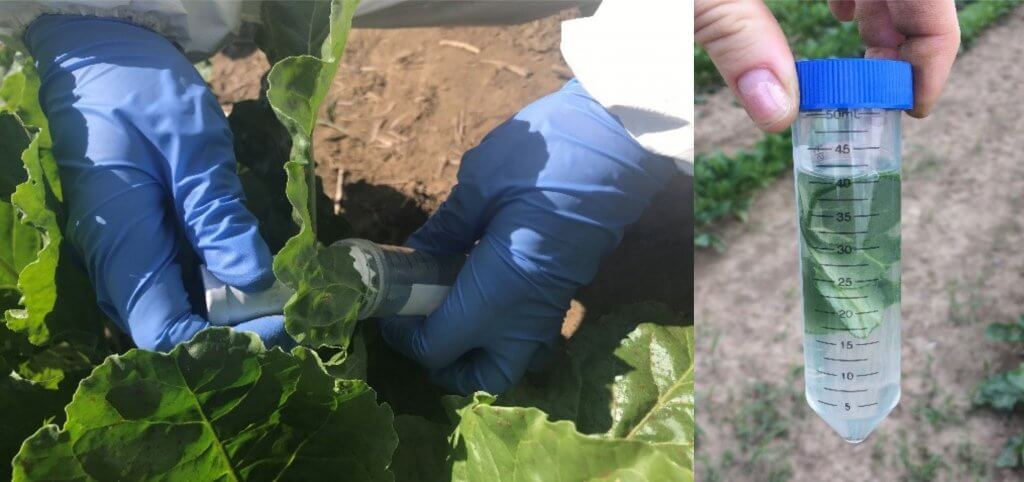
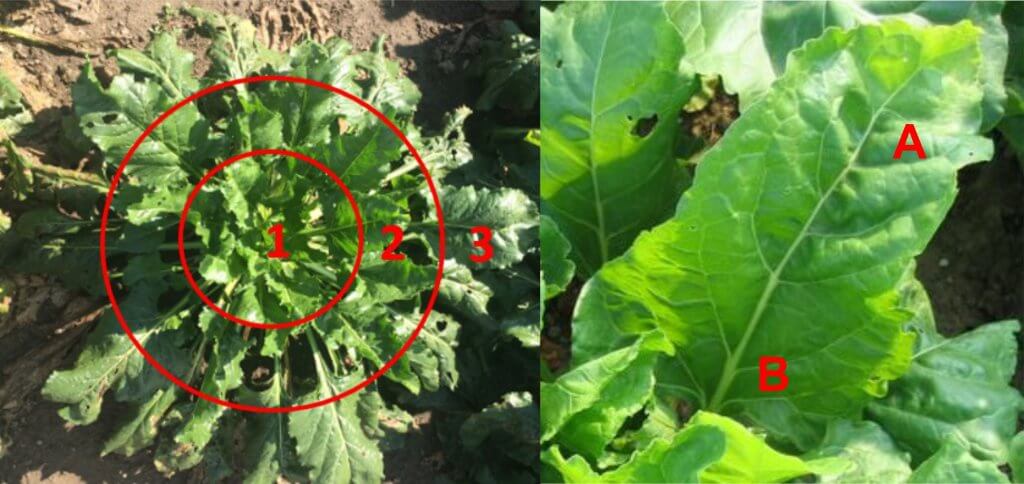
    Deposition was evaluated using Rhodamine WT dye recovery. The amount of dye recovered for a treatment (µL AI/ g leaf tissue) was used to make assumptions about treatment deposition in the sugarbeet canopy. To assess spray deposition, samples were taken from six canopy locations (Figure 3 and 4).

    Figure 3. Leaf sample collection from sugarbeet canopy.
    Figure 4. Leaf samples were taken from a) three canopy locations 1= inner, 2= mid, 3= outer from b) two leaf locations each A= tip, B= base.

    Three sets of replicated experiments were conducted in Ridgetown (2019 and 2020) to evaluate the effect of InterLock on canopy deposition when 1) mixed with Manzate Pro-Stick, 2) using three different nozzle types, and 3) using three carrier volumes.

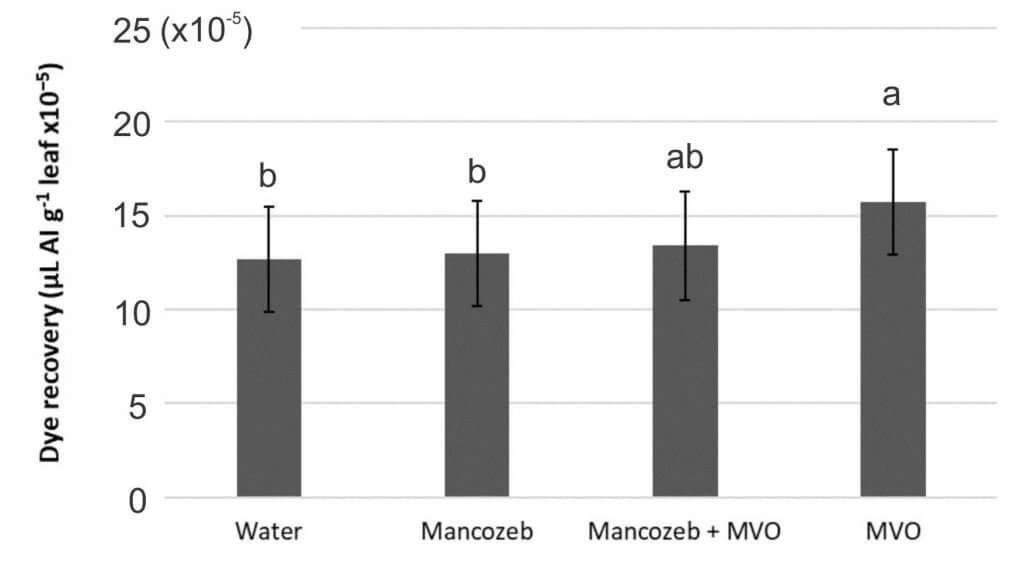
    In the first study, four programs (Manzate Pro-Stick + InterLock, Manzate Pro-Stick alone, InterLock alone, and water) were evaluated for dye recovery.

    Results

    • Deposition was improved for the InterLock only treatment compared with water, but when InterLock was applied with Manzate Pro-Stick the deposition was the same as Manzate Pro-Stick applied alone (Figure 5). It is possible that the fungicide formulation or active ingredient had an antagonistic effect with InterLock, though we cannot determine that from this study.
    Figure 5. Effect of program on mean Rhodamine WT active ingredient (µL per gram of dry leaf) (±SE) recovered from six locations in a sugarbeet canopy at the 13 (Trial 1) and 16 (Trial 2) leaf stage in Ridgetown, ON 2019. Bars followed by the same letter are not significantly different at p ≤ 0.05, Tukey’s HSD.

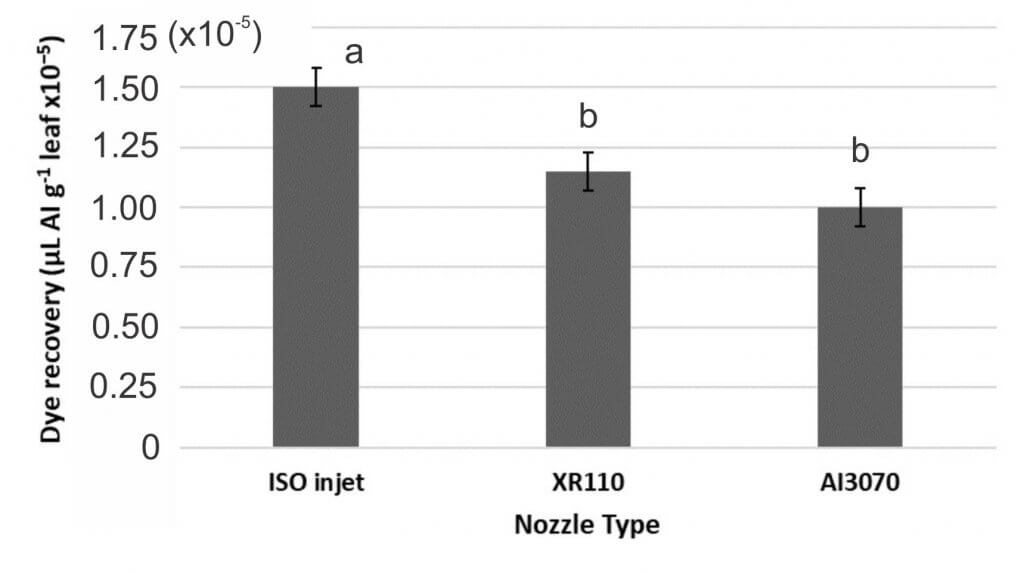
    In the second study Manzate Pro-Stick + InterLock and Manzate Pro-Stick were applied using three different nozzle types at ~40 psi:

    • The Hardi ISO Injet is an air inclusion 110° flat fan that produces a Very Coarse spray quality.
    • The TeeJet XR110 is a conventional 110° flat fan that produces a Medium spray quality.
    • The TeeJet AI3070 is an air inclusion, dual flat fan (30° and 70° spray angles) that produces a Coarse spray quality.

    Results

    • Adding InterLock did not affect deposition and did not alter the performance of any nozzle type (data not shown).
    • Deposition among nozzles did differ, with the ISO injet nozzle providing improved deposition compared to the XR110 and AI3070 nozzles (Figure 6).
    Figure 6. Effect of nozzle type on mean Rhodamine WT active ingredient (µL per gram of dry leaf) (±SE) recovered from six locations in a sugarbeet canopy at the 15 (Trial 3), 18 (Trial 4), and 19-22 (Trial 5) leaf stage in Ridgetown, ON 2019 and 2020. Bars followed by the same letter are not significantly different at p ≤ 0.05, Tukey’s HSD.

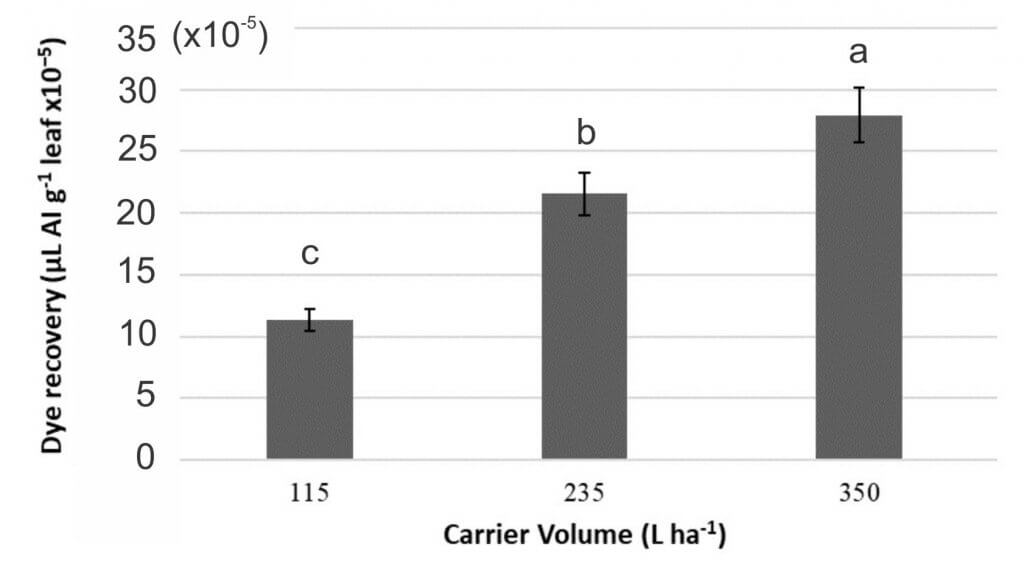
    In the third study, Manzate Pro-Stick + InterLock and Manzate Pro-Stick were applied using three carrier volumes: 115, 235, and 350 L ha-1.

    Results

    • The addition of InterLock had no effect on deposition, regardless of carrier volume (data not shown).
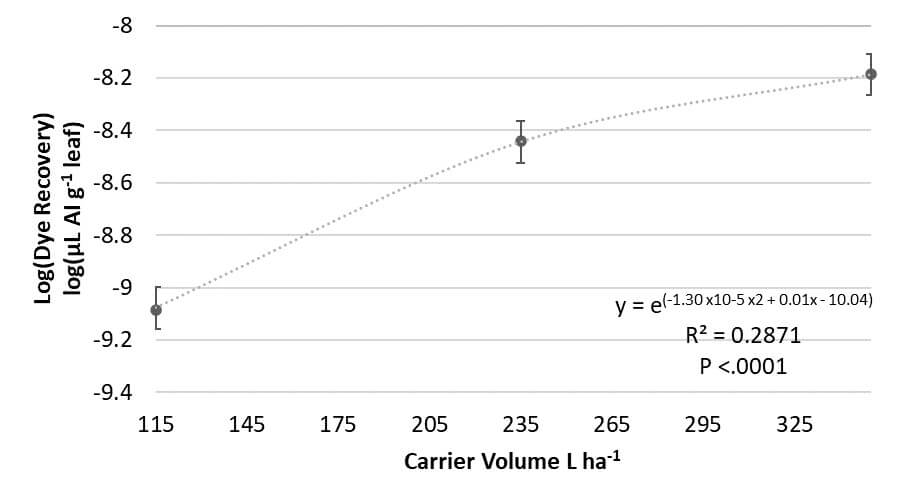
    • Deposition increased with increasing carrier volume (Figure 7a). A regression analysis determined a curvilinear relationship between carrier volume and deposition, predicting that deposition would increase with increased carrier volume until a maximum carrier volume was reached (Figure 7b). Many studies indicate that at exceptionally high carrier volumes coverage can be reduced primarily due to run-off.
    • Even though increased carrier volume improved fungicide deposition, increased volume did not improve fungicide efficacy for CLS management (Objective 1 efficacy trials).
    Figure 7a. Effect of carrier volume on mean Rhodamine WT active ingredient (µL per gram of dry leaf) (±SE) recovered from six locations in a sugarbeet canopy at the 20 and 23 leaf stage in Ridgetown, ON 2020 (Trial 6 & 7). Bars followed by the same letter are not significantly different at p ≤ 0.05, Tukey’s HSD.
    Figure 7b. Regression of carrier volume (115, 235, 350 L ha-1) and mean Rhodamine WT active ingredient (±SE) recovered from six locations in a sugarbeet canopy at the 20 and 23 leaf stage in Ridgetown, ON 2020 (Trial 6 & 7). Data analysis was performed on the log normal scale, means and SE presented have not been back-transformed.”

    Canopy location was an important factor in all experiments

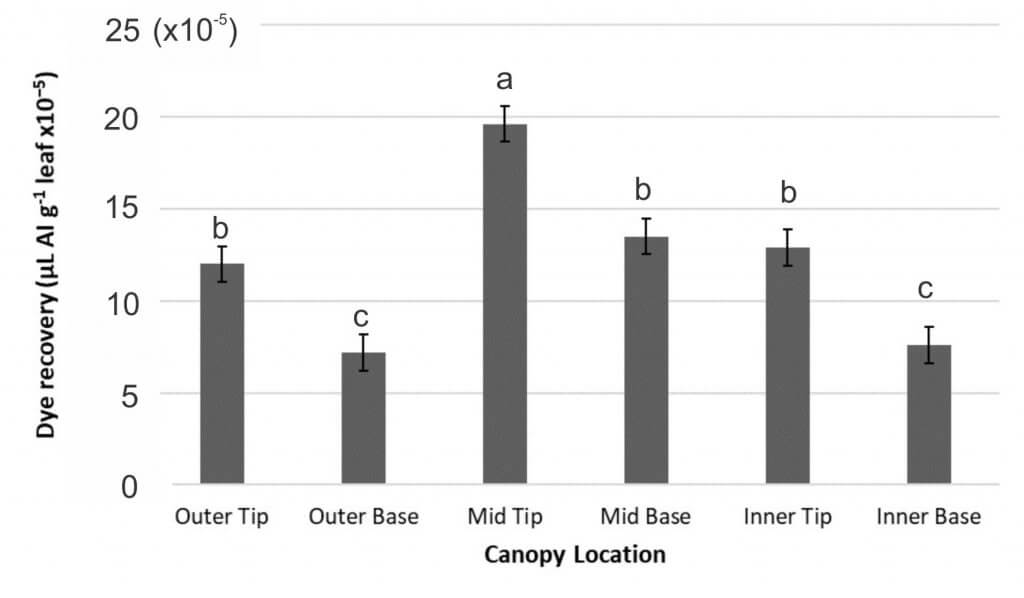
    The least deposition was always found in the outer and inner canopy from the base of the leaf, and in the outer canopy from the tip of the leaf (Figure 4), suggesting that these locations are the most challenging to achieve spray deposition. An example from the nozzle type experiment is shown in Figure 8. One of the proposed benefits of InterLock is for improved spray penetration, but in the current study, InterLock did not improve penetration of Manzate Pro-Stick into any of the harder to reach canopy locations.

    Figure 8. Effect of canopy location on mean Rhodamine WT active ingredient (µL per gram of dry leaf) (±SE) recovered from six locations in a sugarbeet canopy treated with InterLock and different nozzle types at the 15-22 leaf stage in Ridgetown, ON, 2019 and 2020 (Trials 3, 4 & 5). Bars followed by the same letter are not significantly different at p ≤ 0.05, Tukey’s HSD.

    Conclusion

    Adding InterLock to Manzate Pro-Stick did not improve deposition in any field experiment regardless of the nozzle type or carrier volume used. Further, using InterLock with Manzate Pro-Stick did not improve fungicide efficacy for CLS management. However, we cannot determine from this study if InterLock would improve deposition, penetration, or fungicide efficacy using other fungicide products.

    Despite findings of improved disease management with the use of larger carrier volume, fungicides are sometimes still applied with smaller carrier volumes of 100 L ha-1 or less (Armstrong-Cho et al. 2008; Roehrig et al. 2018) to save time and reduce the cost of application. In this experiment, increased carrier volume improved deposition but did not improve fungicide efficacy of Manzate Pro-Stick for CLS management. There is the potential that using increased carrier volume may be more beneficial in years with a greater disease severity, and may thus be worthwhile to growers, as has been observed in previous research on Cercospora leaf spot in Ontario (Tedford et al. 2018).

    See the full thesis here.

    This research was sponsored from the Canadian Agricultural Partnership, Ontario Agri-Food Innovation Alliance, Ontario Sugarbeet Growers’s Association, and the Michigan Sugar Company.

    References

    Armstrong-Cho C, Wolf T, Chongo G, Gan Y, Hogg T, Lafond G, Johnson E, and Banniza S. 2008. The effect of carrier volume on Ascochyta blight (Ascochyta rabiei) control in chickpea. Crop Prot. 27: 1020-1030.

    Dorr GJ, Hewitt AJ, Adkins SW, Hanan J, Zhang H, and Noller B. 2013. A comparison of initial spray characteristics produced by agricultural nozzles. Crop Prot. 53: 109-117.

    Khan J, del Rio LE, Nelson R, Rivera-Varas V, Secor GA, and Khan MFR. 2008. Survival, dispersal, and primary infection site for Cercospora beticola in sugar beet. Plant Dis. 92: 741-745.

    Ontario Ministry of Agriculture, Food, and Rural Affairs (OMAFRA). 2020. Vegetable Crop Protection Guide, Pub 838. Sugarbeets. Queen’s Printer for Ontario, Toronto.

    Prokop M, and Veverka K. 2006. Influence of droplet spectra on the efficiency of contact fungicides and mixtures of contact and systemic fungicides. Plant Protect. Sci. 42: 26-33.

    Roehrig R, Boller W, Forcelini CA, and Chechi A. 2018. Use of surfactant with different volumes of fungicide application in soybean culture. Eng. Agr. Jaboticabal 38: 577-589.

    Shepard D, Agnew M, Fidanza M, Kaminski J, and Dant L. 2006. Selecting nozzles for fungicide spray applications. Golf Course Manag. 74: 83-88.

    Tedford SL, Burlakoti RR, Schaafsma AW, and Trueman CL. 2018. Optimizing management of Cercospora leaf spot (Cercospora beticola) of sugarbeet in the wake of fungicide     resistance. Can. J. Plant Pathol. 41: 35-46.

    Thind TS, and Hollomon DW. 2018. Thiocarbamate fungicides: Reliable tools in resistance management and future outlook. Pest Manag. Sci. 74: 1547-1551.

    Trueman CL, and Burlakoti RR. 2014. Evaluation of products for management of Cercospora leaf spot in sugarbeet, 2014. Plant Disease Management Reports. 9: FC009.

    WinField United. 2019. InterLock. [Internet]. [cited 2019 Feb 25].

  • Adjuvants in the airblast tank

    Adjuvants in the airblast tank

    Spray adjuvants are tank mix additives that either physically or chemically influence the efficacy, consistency or safety of pesticides. For example, adjuvants can improve the handling characteristics of a spray solution (e.g. water conditioners, de-foamers, emulsifiers). They can improve uptake into a target plant and/or improve the amount of contact between spray droplet and target surface (e.g. non-ionic spreaders). They can also modify droplets to reduce the potential for wastage from drift or run-off (e.g. anti-drift additives, stickers).

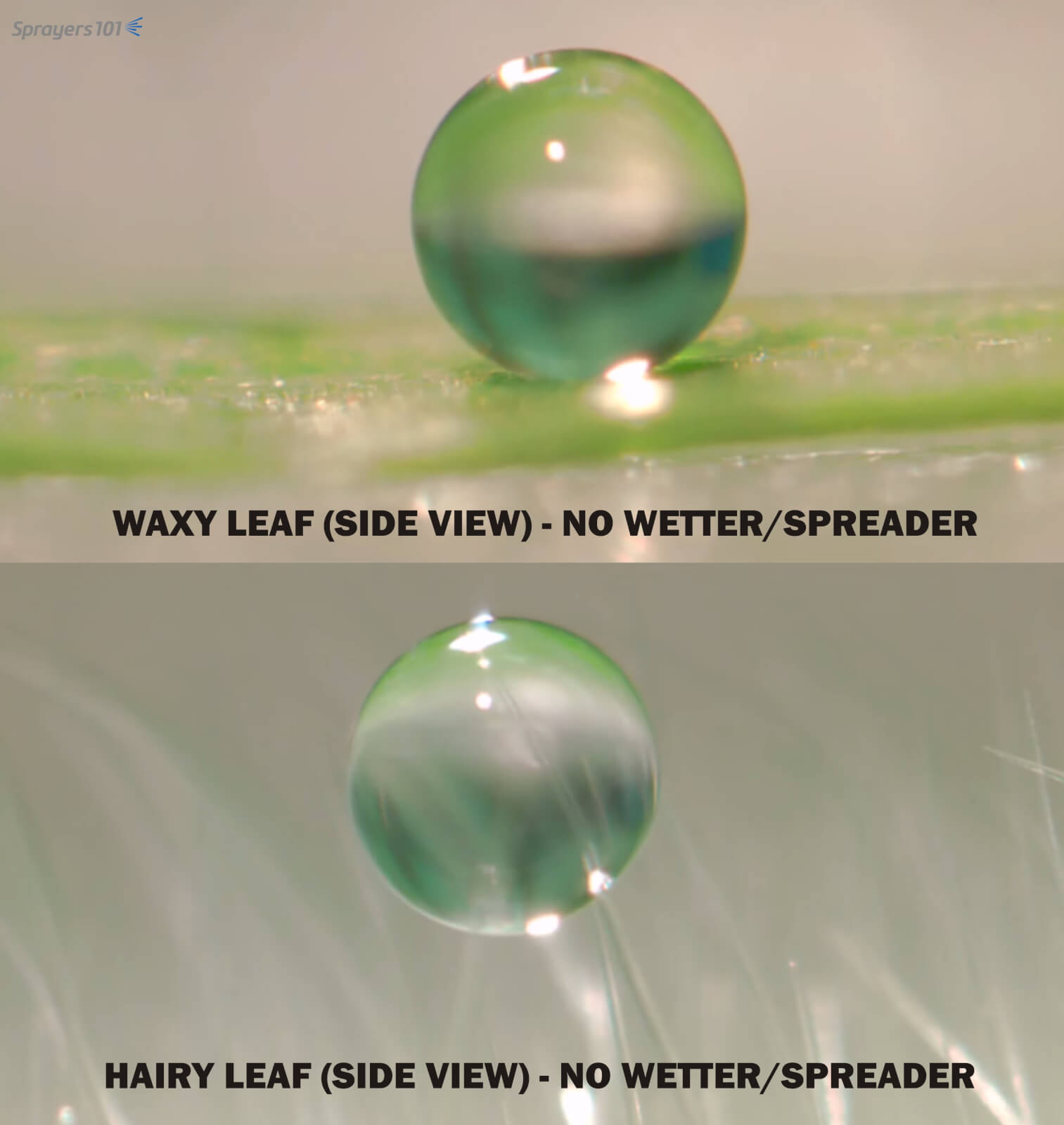
    Note how little of the droplet contacts a waxy leaf (above). This hydrophobic reaction between water and wax can be overcome using a non-ionic spreader. Similarly, note how the droplet gets hung up on the trichomes (hairs) on a leaf before it reaches the leaf surface (below). Again, a non-ionic spreader would reduce droplet surface tension allowing it to splash onto the leaf. Photo Credit – Dr. H. Zhu, Ohio.
    Note how little of the droplet contacts a waxy leaf (above). This hydrophobic reaction between water and wax can be overcome using a non-ionic spreader. Similarly, note how the droplet gets hung up on the trichomes (hairs) on a leaf before it reaches the leaf surface (below). Again, a non-ionic spreader would reduce droplet surface tension allowing it to splash onto the leaf. Photo Credit – Dr. H. Zhu, Ohio.

    Some pesticide labels require the use of adjuvants in the tank mix for the pesticide to work correctly. They are not formulated with the product because of expense, bulk, or product stability, and must be added during loading. In order for a pesticide to work as advertised, it is important to include any adjuvants required by the label. In some cases, we are encouraged to use adjuvants to improve an application, even though they are not on the label.

    There are potential benefits to introducing some unlabelled adjuvants, but there are also potential problems. The difficulty is that unless someone tests a specific tank mix combination for a specific crop, the results cannot easily be predicted. For example, when a tank mix is incompatible, an adjuvant could cause phytotoxicity, create more drift when used with the wrong nozzle, deactivate or enhance a tank partner, and/or potentially reduce spray coverage.

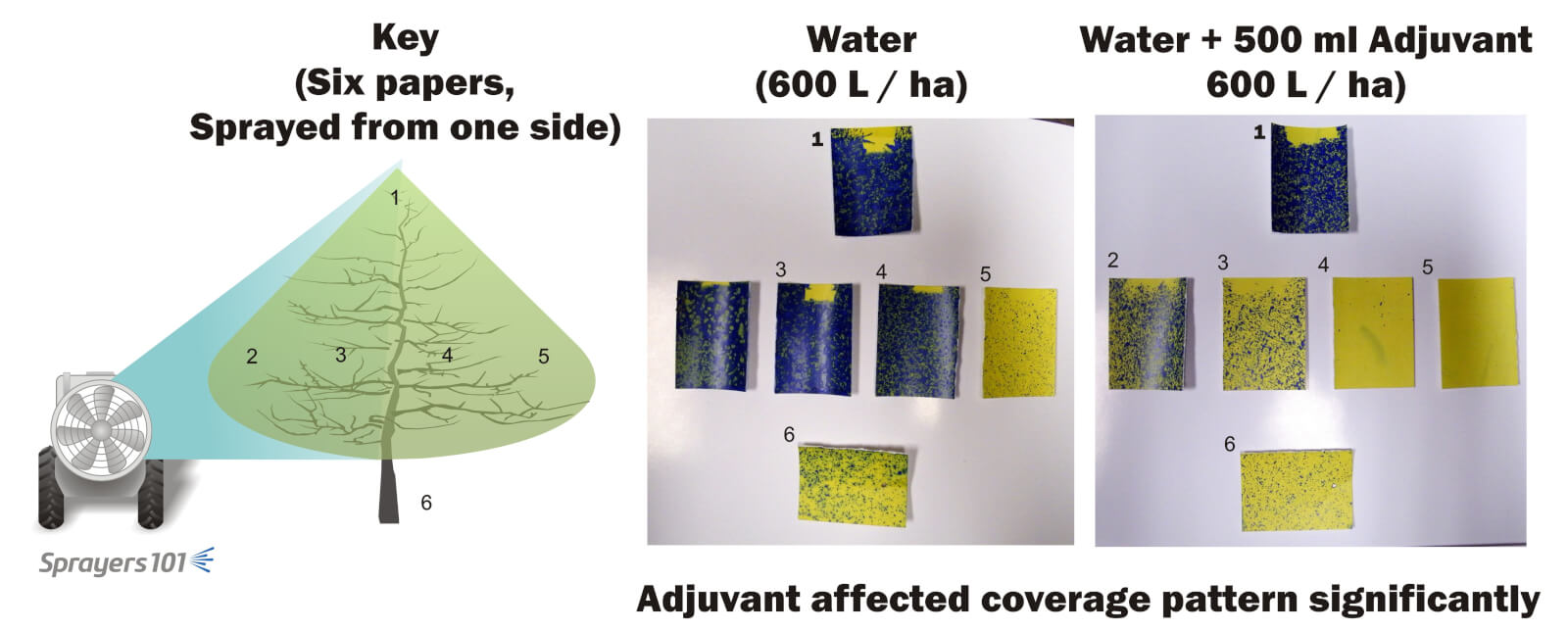
    We once conducted a trial to test a deposition utility modifier intended to reduce run-off and drift. Water-sensitive papers were placed in the canopies of a 40 year old McIntosh orchard, which was then sprayed from one side in late May. The papers in the left panel (dilute control) were sprayed with 600L/ha (~60 g/ac.) of water. Those in the right panel (adjuvant) were also sprayed with 600L/ha but included the label rate of 500 ml of adjuvant. The water-plus-adjuvant reduced drift and runoff, as advertised, but did not penetrate as deeply into the canopy or spread on the papers, which is a concern if the operator was performing alternate-row middle spraying or needed better coverage (e.g. for mites). It was an unexpected side effect.

    For better or worse, even small amounts of adjuvants can have a significant effect on spray coverage. Always test spray coverage when using a new adjuvant in a tank mix.
    For better or worse, even small amounts of adjuvants can have a significant effect on spray coverage. Always test spray coverage when using a new adjuvant in a tank mix.

    We also investigated the use of an anti-drift adjuvant in airblast sprayers, which you can read about here.

    There is no simple answer regarding unlabelled adjuvants; there are too many possible product/adjuvant/plant combinations. If you intend to experiment with an adjuvant, perform a jar test to test for physical incompatibility. Then spray a small volume of the tank mix on a few trial plants to ensure there are no unexpected chemical issues (e.g. phytotoxicity or inactivating tank mix partners) or coverage issues.

    It is highly recommended that every sprayer operator have a copy of Purdue Extensions’ 2015 “Adjuvants and the Power of the Spray Droplet – PPP-107”. This comprehensive handbook describes of how water quality and adjuvants affect the performance of pesticide applications. I consult it regularly.

    Here are two videos from Dr. H. Zhu, USDA-ARS Ohio, showing how adjuvants that affect surface tension can help improve the level of contact between spray droplet and target surface.

  • Evaluating an Anti-Drift Adjuvant in an Airblast Sprayer

    Evaluating an Anti-Drift Adjuvant in an Airblast Sprayer

    Most pesticides are either pre-formulated with the required adjuvants, or the label specifies their addition. However, compelling claims by manufacturers create interest in tank mixing additional adjuvants to improve some aspect of pesticide performance. In a previous article we advised caution when using adjuvants in airblast sprayers (see here). Specifically, we stated that unless an adjuvant has been tested with airblast equipment, do not assume it will perform as it does in a boom sprayer. In the last year, we’ve received a lot of questions about anti-drift adjuvants, so we decided to test one of the more popular products.

    2016_orchard_spraying

    The Adjuvant

    According to the manufacturer, InterLock is a vegetable oil-based adjuvant intended to improve deposition, canopy penetration and drift reduction from both aerial and ground applications. Independent research has validated its ability to reduce the population of Finer droplets produced by a nozzle without shifting the entire droplet spectrum into a Coarser category. As such, InterLock is used extensively in aerial and field sprayer applications, but we wanted to explore its fit in airblast applications.

    There are fundamental differences in how an airblast sprayer functions compared to a field sprayer. An airblast sprayer operates at pressures considerably higher than field sprayers, and many use paddle agitation to churn tank mixes. Further, droplets are entrained by air and can be carried several meters before reaching their target. So, does the collective impact of paddle agitation, droplet shear and the increased opportunity for evaporation affect the adjuvants performance?

    The Trials

    Water sensitive cards were distributed throughout target trees in an apple orchard. We elected to use two models of airblast sprayer to eliminate the chance of sprayer-specific results. Both models applied either water or water-and-adjuvant. So, the four treatments were:

    Hol Sprayer: Water
    Hol Sprayer: Water-and-Adjuvant
    Turbomist: Water
    Turbomist: Water-and-Adjuvant

    Weather Conditions

    On the afternoon of May 30, 2016, the crosswind was 6-11 kmh (3.7-6.8 mph), the temperature was 27 ˚C (80.5 ˚F), and the relative humidity was ~50%. While warm, conditions were reasonable for spraying.

    Orchard and Targets

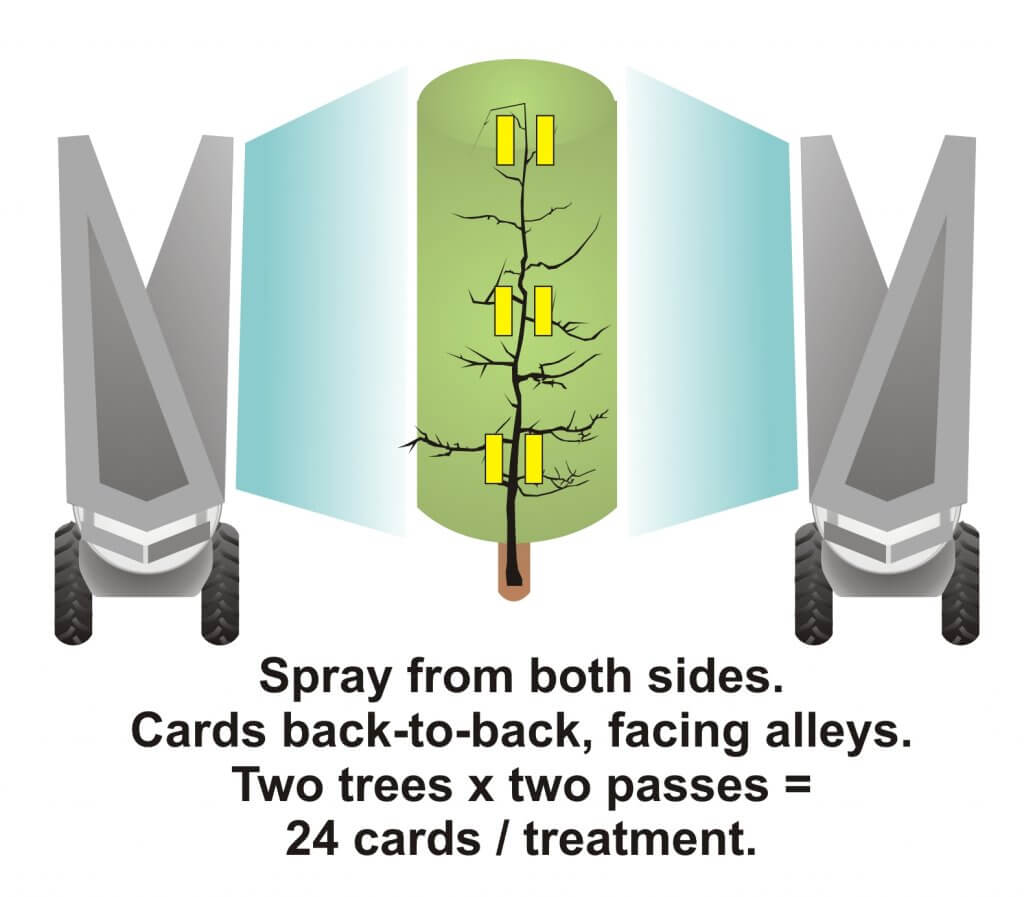
    We worked in high-density Honeycrisp apples planted in 2008 on M.26 rootstock. Row spacing was 5 m (16’), average canopy width was 1.2 m (4’) and average height was 3.3 m (11’). Water sensitive cards were located at the top, middle and bottom of each target tree, close to trunk. In each location, the cards were placed back-to-back with sensitive sides facing the alleys.

    We placed cards in two trees in the same row, and the sprayer passed down both sides to complete the application. We performed this twice per treatment. That’s four trees per treatment representing a total of 24 cards (comprised of eight per position).

    Sprayers

    As previously mentioned, we used two models of airblast sprayer. In both designs, nozzle bodies are outside the airstream, causing additional shear as nozzles spray into the air on an angle.

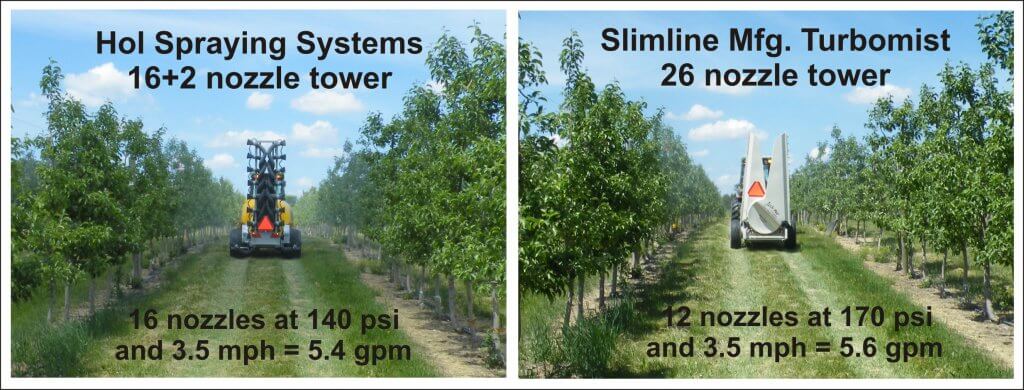
    A Hol sprayer with tower operated at 9.6 bar (140 psi) and driven at 5.6 kmh (3.5 mph). The sprayer was calibrated and spray was distributed to match the canopy. Nozzles were TeeJet AITX 8004s and TXR 80015’s spraying 10.2 l/min. (2.7 gpm) per side for a total rate of approximately 500 l/ha (53.5 gpa).

    A Turbomist with tower was operated at 11.7 bar (170 psi) and driven at 5.6 kmh (3.5 mph). The sprayer was calibrated and spray was distributed to match the canopy. Nozzles were TeeJet AITX 8004s and TXR 8002’s spraying 10.6 l/min. (2.8 gpm) per side for a total rate of approximately 500 l/ha (53.5 gpa).

    2016_hol_turbo_interlock

    Spray mix

    Sprayers were filled with water for the control trials, and then dosed with the equivalent of 250 ml per 500 L (8.5 oz in 132 US gal.) of spray mix, per manufacturer’s recommendation. We ensured lines were primed and sprayer was up to speed before spraying.

    Analysis

    Water sensitive cards were scanned and digitized to compare coverage and median droplet size using DepositScan software (created by Dr. Heping Zhu, USDA ARS, Ohio). Water sensitive cards have a limitation when quantifying average droplet size: once a card exceeds about 30% coverage, too many droplets overlap and their combined profile is wrongly counted as a single droplet. This can skew droplet size analysis.

    For the sake of an accurate comparison, we selected subsets of the overall data; we analyzed only those cards with 40% coverage or less, then refined our comparison to those cards with 30% or less, and finally cards with 20% or less. In each subset, the data remained fairly robust because they included at least one card from each canopy position (i.e. top, middle, low) and three from each treatment.

    In the following tables, the range of droplet sizes is represented by DV0.1, DV0.5 and DV0.9 in µm. Basically, this is the span of droplet diameters from the smallest 10%, to the median to largest 10% in microns. The standard error of the mean and the number of papers are also indicated.

    Data subset 1: Cards with 40% coverage or less

    Avg. DV0.1 (µm) ±SEMAvg. DV0.5 (µm) ±SEMAvg. DV0.9 (µm) ±SEM
    HolAdjuvant: 255±33 (n=8)
    Water: 254±24 (n=12)
    Adjuvant: 664±137 (n=8)
    Water: 736±114 (n=12)
    Adjuvant: 1,175±223 (n=8)
    Water: 1,391±204 (n=12)
    TurbomistAdjuvant: 252±38 (n=8)
    Water: 258±31 (n=9)
    Adjuvant: 545±86 (n=8)
    Water: 697±141 (n=9)
    Adjuvant: 964±168 (n=8)
    Water: 1,175±237 (n=9)

    Data subset 2: Cards with 30% coverage or less

    Avg. DV0.1 (µm) ±SEMAvg. DV0.5 (µm) ±SEMAvg. DV0.9 (µm) ±SEM
    HolAdjuvant: 221±30 (n=6)
    Water: 189±22 (n=6)
    Adjuvant: 553±127 (n=6)
    Water: 495±118 (n=6)
    Adjuvant: 1,007±245 (n=6)
    Water: 969±235 (n=6)
    TurbomistAdjuvant: 240±42 (n=7)
    Water: 192±22 (n=5)
    Adjuvant: 502±86 (n=7)
    Water: 433±89 (n=5)
    Adjuvant: 912±184 (n=7)
    Water: 759±187 (n=5)

    Data subset 3: Cards with 20% coverage or less

    Avg. DV0.1 (µm) ±SEMAvg. DV0.5 (µm) ±SEMAvg. DV0.9 (µm) ±SEM
    HolAdjuvant: 163±19  (n=3)
    Water: 172±28 (n=4)
    Adjuvant: 371±107 (n=3)
    Water: 472±176 (n=4)
    Adjuvant: 617±137 (n=3)
    Water: 904±315 (n=4)
    TurbomistAdjuvant: 240±78 (n=4)
    Water: 192±22 (n=5
    Adjuvant: 439±140 (n=4)
    Water: 433±89 (n=5)
    Adjuvant: 691±189 (n=4)
    Water: 759±187 (n=5)

    Conclusions

    In the first subset (i.e. 40% coverage or less) there was no trend to suggest the sprayer model made any difference in coverage. Nor did there appear to be any change in the droplet spectra produced by water or water-plus-adjuvant. In particular, there was no apparent increase in the DV0.1 when adjuvant was used, which we would expect to see if the Finest droplets produced by the nozzle were made Coarser. We hoped that by further subdividing the data to cards with 30% coverage or less, and then 20% coverage or less might resolve some trend, but there were no significant differences to speak of.

    These trials are not drift studies, so we cannot say that the adjuvant has or doesn’t have an effect on particle drift. However, according to the water sensitive cards, there is no apparent impact on droplet size or deposition. This suggests that some property of airblast application has reduced or negated the benefit of using the adjuvant. As such, the use of InterLock in an airblast sprayer cannot be recommended. It supports our position that unless an adjuvant has been tested with airblast equipment, you should not assume it will perform as it does in a boom sprayer.

    Thanks to Winfield for the educational donation of InterLock, to TeeJet for the nozzles and to Provide Agro for use of the Hol sprayer. Special thanks to Donald Murdoch of the University of Guelph for operating the sprayers.