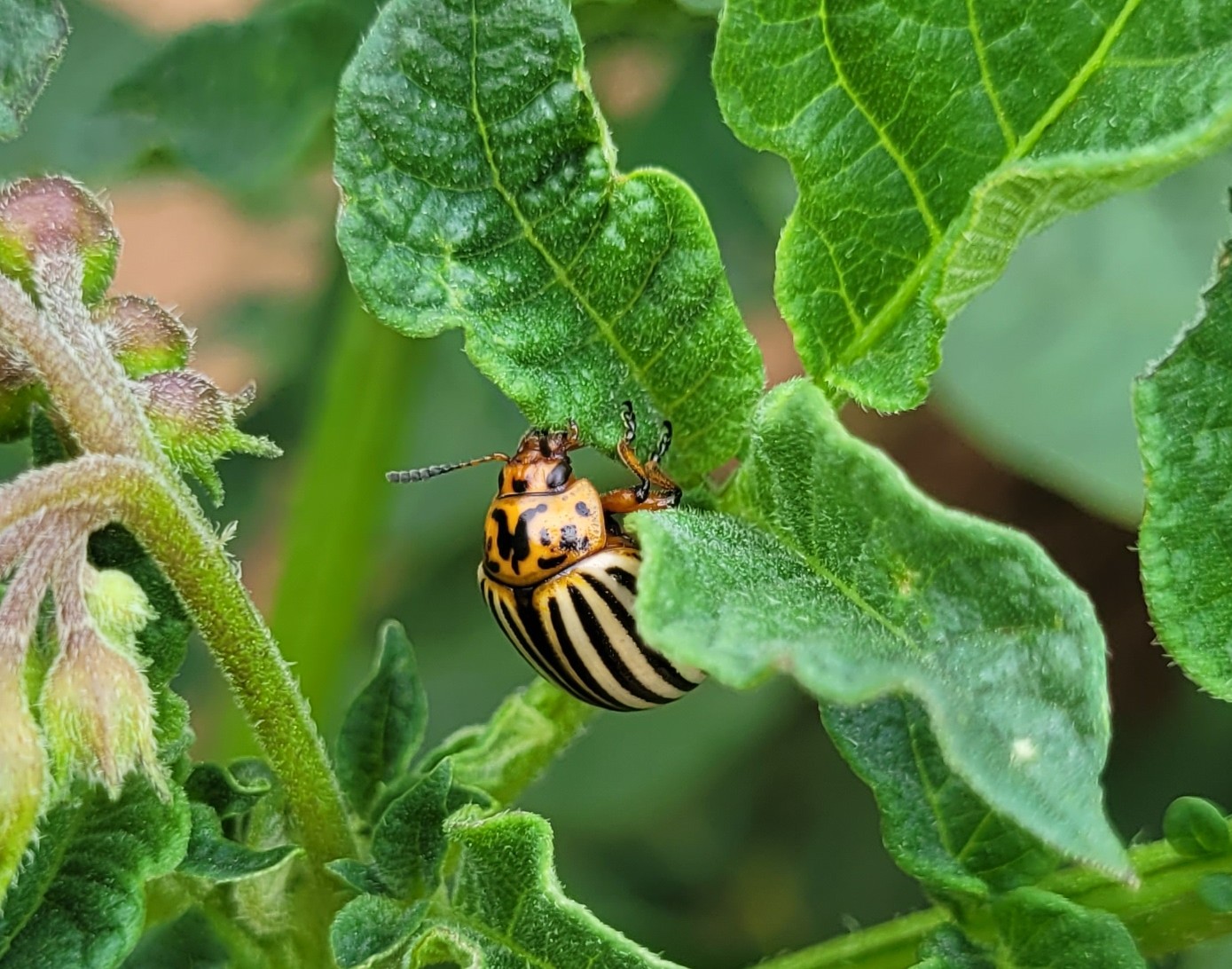
Colorado potato beetle (or CPB) is one of the most destructive insect pests in potato production. Heavy infestations of CPB can defoliate potato fields in a matter of days if not sprayed with effective insecticides. For years, Canadian potato growers have largely depended on in-furrow, systemic neonicotinoid insecticides (Titan, Actara) to control CPB populations. Unfortunately, rates of CPB resistance to this group of insecticides have increased rapidly in the last decade, with CPB populations in some parts of Canada now fully resistant to neonicotinoid chemistries. At the same time, growers have been seeing increased CPB resistance to some of the foliar-applied insecticides as well. This was documented in several provinces in research conducted by AAFC as part of the National Potato Cluster project from 2018-2023.
Colorado potato beetles feed primarily on potato plants and other members of the nightshade plant family. They overwinter as adults in the soil and in crop residue, often in hedgerows and grassy field margins. They generally emerge in late May and early June in Prince Edward Island, moving into potato fields to feed and lay eggs. CPB can have multiple generations per year if not effectively controlled. In areas of high density of potato acreage (like PEI), crop rotation is not an effective control strategy if there are other potato fields near your field. Areas of high potato acreage and short crop rotations also appear to be where we see accelerated rates of insecticide resistance.
“Perimeter spraying” for CPB has been used to some degree in Prince Edward Island for several years. As CPB adults move into the field from the field margins, populations are usually high in perimeter of the field early in the season, before moving further into the field if not effectively controlled. Some fields can be effectively perimeter-sprayed, especially rectangular fields without irregular field shapes and fields with sufficiently wide non-planted headlands. However, perimeter spraying strategies with ground sprayers is difficult or not possible on most PEI potato fields due to field shape, insufficient headland area, or sprayer limitations. In addition, growers employing this perimeter strategy need to do a spray pass with only insecticide instead of tank mixing with preventative fungicides or foliar nutrition products, which is the norm in Prince Edward Island.
With all of this in mind, employing a Remotely Piloted Aircraft System (RPAS) or drone to apply insecticides in other the areas of the field where Colorado potato beetles have been observed may help to overcome many of the limitations faced by using a ground sprayer. Irregular field margins and small headlands are no longer a barrier to application. Instead, the operator can choose to spray a certain perimeter width around the entire field and/or “hot spots” of beetles identified by crop scouts.
To demonstrate the applicability of drone-based insecticide spraying for CPB, I collaborated with Chad Mooney of AgronomAI, an agronomist and drone pilot in eastern Prince Edward Island as well as Dr. Jason Deveau with OMAFA and Sprayers101. A potato field in Huntley, PE was identified as a candidate for this demonstration after both traditional crop scouting as well as analysis by the AgroScout scouting platform, which uses canopy-level drone imagery and AI image processing to identify CPB and generate geo-referenced “heat maps” of insect populations.
On July 28th, 2026, I visited this field early in the morning along with my Junior Agronomist, Christine Parsons to conduct beetle counts and identify areas of the field for the trial. The western and southern edges of the field had consistently high beetle counts, averaging approximately 100 beetles (adults and larvae combined) per 100 plants, exceeding the threshold for insecticide control. Beetle populations were much lower in the easternmost field margin and were virtually zero in the interior of the field.
Coverage Patterns
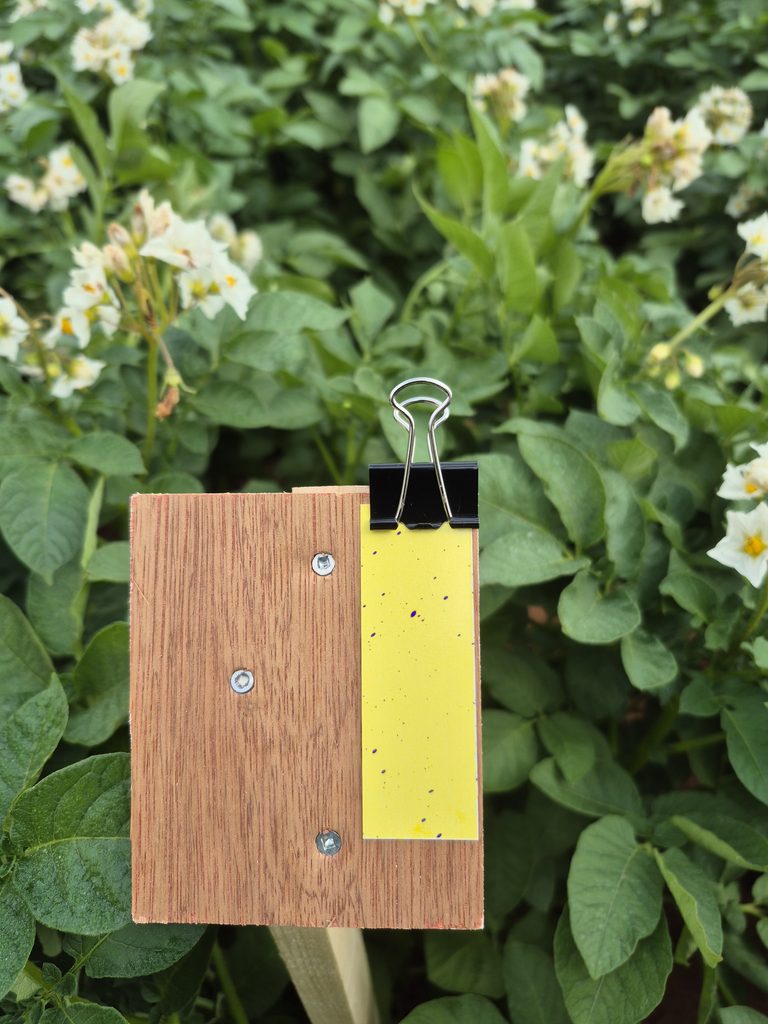
Prior to insecticide application, six wooden posts with platforms for water sensitive paper (WS paper) (Figure 1) were placed in the field and were sprayed by the drone with water alone at different heights, micron sizes and water volumes. Each post (with WS paper affixed by bulldog clip) was placed in the middle of a potato row, with the wooden platform (at a 45 degree angle) facing in the same direction as the drone travelled. WS papers were approximately 6 inches higher than the top of the potato plant canopy. Posts were spaced every two rows (6 feet apart), representing a total span of 30 feet; however, the drone was programmed to an effective pass width of 22 feet.
Figures 2-7 demonstrate the coverage patterns seen at different combinations of water volume, droplet size, and application height, with percent coverage (blue) listed below each paper strip. Percent coverage was calculated using the Claude AI agent.
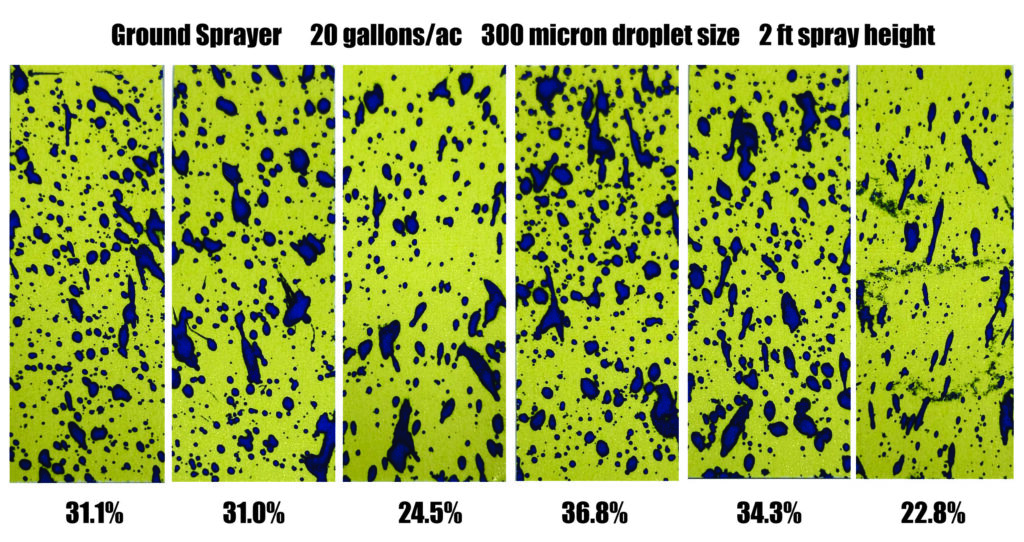
Figure 2 shows, as expected, percent coverage from the ground sprayer was the highest in the demo, averaging 30.1%. The pattern is relatively consistent across the width of the test area.
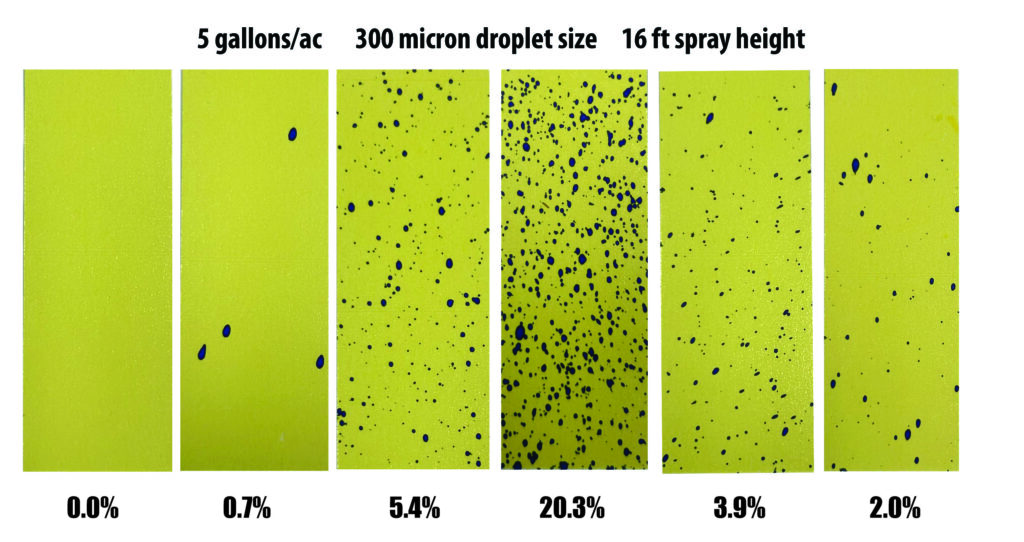
For this pass, figure 3 show deposition was close to zero at the edges of the 30-foot experimental area. This was to be expected, as the pass width programmed into the drone was 22 feet. Coverage in the middle of the pass was respectable (~20%) on one paper, but rapidly declined to ~5% on either side. Average percent coverage across all strips was 5.4%, but the average after omitting the two outermost strips was 7.8%.
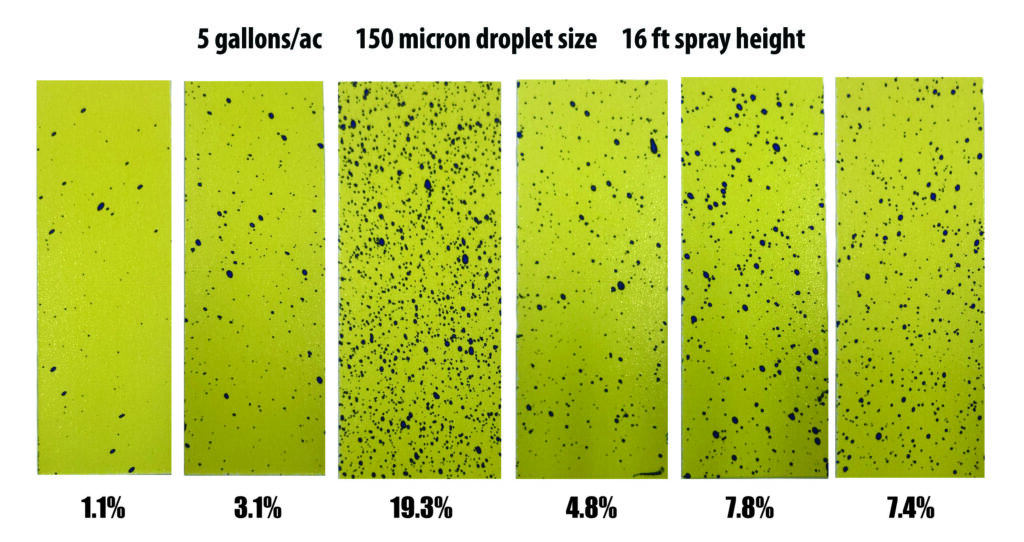
When decreasing droplet size to 150 microns, figure 4 shows percent coverage in the very middle of the sprayer pass did not appreciably decrease, but coverage directly on either side of the middle of the pass did not improve markedly. More drift was evident on the margins of the 30 foot demo area compared to the previous pass at 300 micron droplet size. Average percent coverage across all strips was 7.2%.
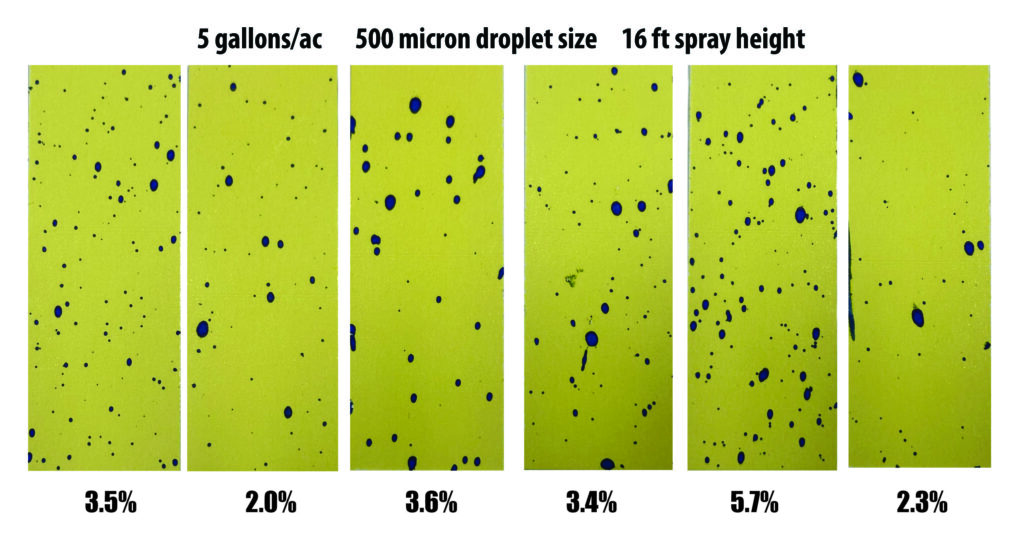
When increasing the droplet size to 500 microns, figure 5 shows the percent coverage and distribution pattern was quite similar across all 30 feet of the demo area. Average coverage was 3.4%, with a much tighter range than at the two small micron sizes with the same water volume and application height.
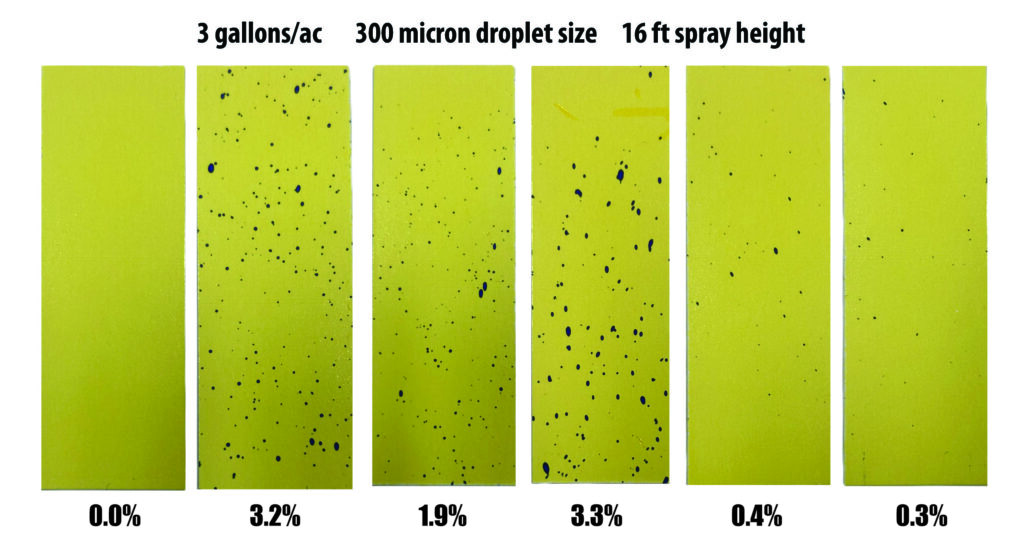
Figure 6 shows that in this pass, we reset the micron size to 300 and kept the application height at 16 feet, but we reduced the water volume to 3 gal/acre. The strips at the outside of the 30 foot demo area were close to zero (similar to 5 gal/acre) but the percent coverage in the middle of the sprayer pass were much lower. Average coverage across all six strips was 1.5% and was 2.2% when removing the two outside strips.
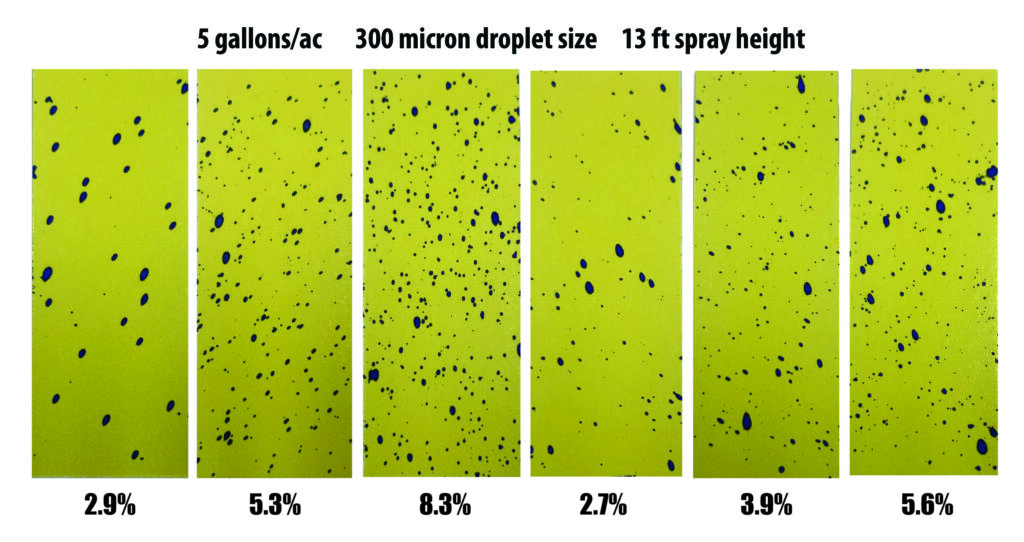
For our final pass, figure 7 shows we reset water volume to 5 gallons/acre and kept micron size at 300, but lowered the drone height to 13 feet above ground level. This produced a slightly more dispersed and erratic coverage pattern compared to 16 feet, less concentrated in the middle of the spray pass. Average coverage was 4.8%.
While it would require more replications with more combinations of water volume, sprayer height and droplet size to arrive at the optimum combination for leaf coverage, it does appear from this demonstration that coverage was significantly reduced at the lower water volume. Coverage also appeared to be reduced (with more drift) at the 500 micron droplet size. More work is needed to arrive at the optimum sprayer height and droplet size, which may also depend on the type of product applied.
Insecticide Efficacy
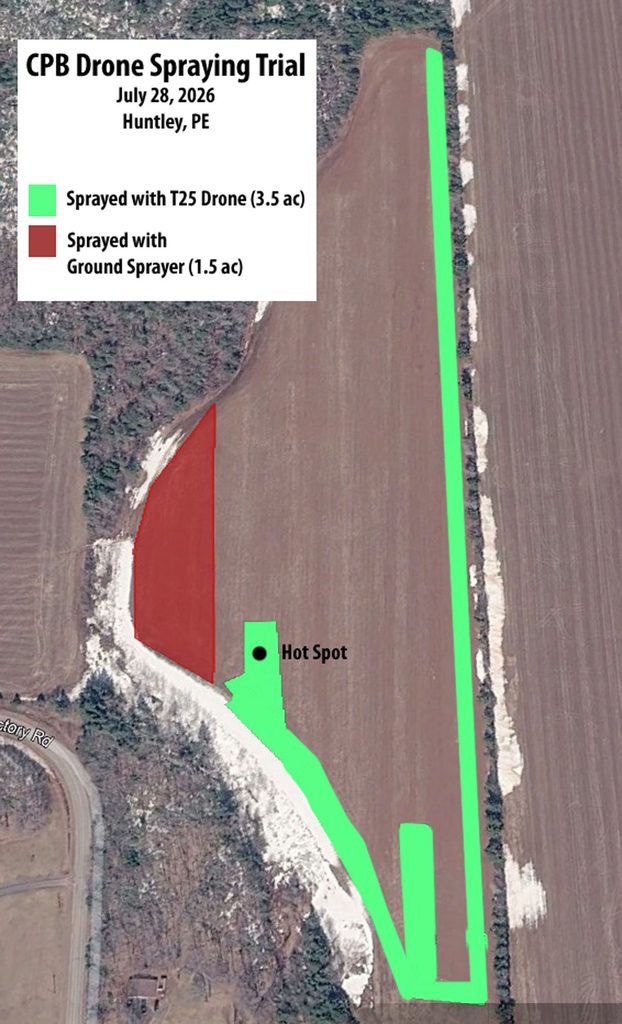
The treatment areas are graphically represented in Figure 8. The westernmost corner of the field was designated as our control treatment, which was sprayed with a self-propelled ground sprayer with a water rate of 20 US gallons per acre. The southern and eastern field margins were then sprayed with a DJI Agras T25 at a water rate of 5 US gallons per acre. Sprays were applied between 9:30 and 10:30 am with windspeeds under 5 km/hr. There was a heavy dew that morning but no recent rainfall.
The insecticide used was Vayego (tetraniliprole), a Group 28 diamide which works both on contact with Colorado potato beetles but also has good levels of residual control. It comes in a liquid formulation and has aerial application on the label. In local studies it has proven effective as a foliar CPB control option. Counts provided in figure 9.
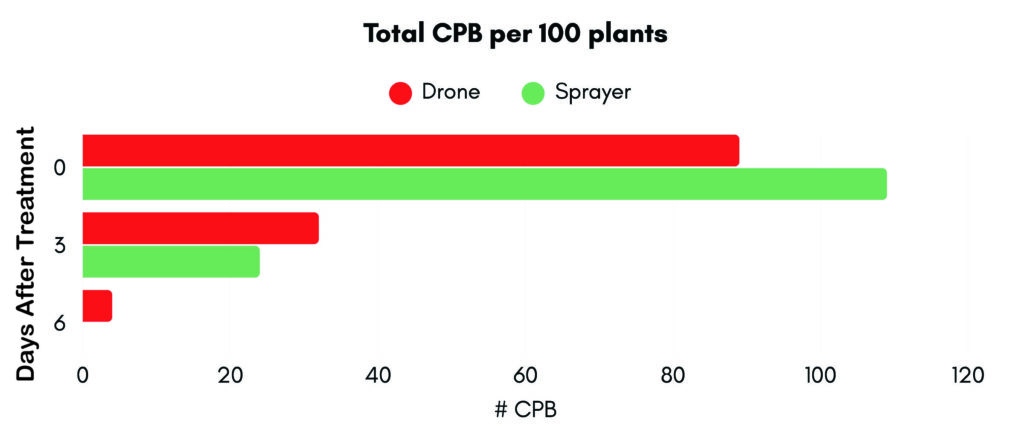
Prior to spraying CPB populations were similar in the areas sprayed by the drone (89) and the ground sprayer (109). Three days after spraying, CPB counts had reduced 64% in the drone sprayed region and 78% in the ground sprayer region. After six days, an average of only 4 larvae were found in the drone sprayed region (96% reduction), while no adults or larvae were found in the ground-sprayer region (100% reduction).
After six days, the level of insect control was very similar between the drone and ground sprayer. Neither of these areas of the field required additional insecticide application through the rest of the growing season. Follow up AgroScout reports based on drone imagery showed only a few CPB present in parts of the field that were not previously treated my insecticide, but under a threshold level that would necessitate insecticide application. No CPB were detected in either of the treated areas as late as August 24th.
Summary
From this case study, there appears to be a usage case for applying approved insecticides by drone for the control of Colorado potato beetle. More work should be undertaken to identify the optimum water volume, droplet size and drone height/speed.
If potato growers are able to employ a perimeter-spraying strategy when CPB larva just start to feed and when populations are confined to field margins or isolated hot spots, there is the potential to significantly decrease costs. In this demo trial, approximately 15% of the total field area was sprayed. Not only does this represent significant savings in time and diesel fuel from filling and operating a ground sprayer, but the savings in insecticide costs are substantial. In this demo, spraying 35% of a 15 acre field reduced insecticide costs by 65%. For larger fields, the percentage of the field that would need to be sprayed in a perimeter-spraying strategy would be proportionally smaller, increasing the amount of savings. If a 500 acre potato farm was able to reduce the number of acres sprayed for CPB to 75 (15% of total), that would equal $12,750 in reduced insecticide costs (at $30/acre product cost), in addition to labour and fuel savings.
Acknowledgements
The author would like to thank the following people:
- Christine Parsons, Junior Agronomist, PEI Potato Board for assistance with data collection.
- Chad Mooney, AgronomAI for provision of drone sprayer services.
- Craig Wallace, Wallace Properties for providing the demo field and insecticide.
- Stephanie McNeill for scouting services.
- Dr. Jason Deveau, OMAFA for advice in demo trial design and data collection.
- Dan Ulrick for constructing our custom-made and designed platforms for affixing water sensitive paper.