Travel is an amazing teacher. It exposes assumptions and replaces them with real life experiences.
On a recent trip to New Zealand, I learned a valuable lesson in sprayer productivity. I had long talked about wider booms being a key factor, being an easy change that allowed more area to be covered per pass. I had assumed large fields, large tanks, and fast fills as part of that system, and validated it with calculations and observations.
During that trip, I learned that things look really different when the landscape dictates certain limitations. In places like New Zealand, fields tend to be smaller, as expected, with the longest run averaging 300 m or so. Sprayers are also smaller capacity, with trailed sprayers typically fitted with a 24 m boom and a 3000 L tank. Mounted sprayers, commonplace on the North Island, may have smaller tanks and booms, with 2000 L and 18 m width a reasonable average. Self propelled sprayers are not common on farms, but custom applicators use them.
Tender systems (called bowsers) are also rare. Most applicators return to the farm yard, or another nearby water source, to fill. A single filled sprayer can often do that entire field, so moving to a new field and re-filling are part of the same workflow.
Some very interesting things happened when such a scenario was analyzed.
We used a newly re-vamped Productivity Calculator (below) to make the calculations.
Some basic configurations were assumed. All sprayers travelled 15 km/h when spraying, and turned in one headland at 8 km/h. The tank remainder that necessitated a re-fill was set at 5% of tank volume. Tank cleaning was assumed to be required every four tanks, taking 60 minutes. Sprayers were typically refilled in the farm yard or a nearby water source, requiring a ferry (transport) time of 15 minutes each way.
The first scenario was the base configuration, from which one factor was changed in each iteration to examine the magnitude of the change. With the 24 m boom, 3000 L tank, 200 L/ha application volume, a field length of 300 m, a loading time of 30 minutes, and a loading location that required a 30 minute round trip, net productivity was 8.0 ha/h. 22% of engine hours were spent spraying, the remainder was lost to turning at the end of a run, driving to the loading location, loading the sprayer, and cleaning it. We will call that the spraying efficiency.
Because wider booms are successful in improving productivity in western Canada, we examined the practice for smaller farms. Increasing the boom width from an average 24 m to 36 m yielded the first surprise. Productivity only increased to 8.5 ha/h (7%), and spraying efficiency was reduced to 16%. The problem appeared to be that the wider boom dispensed with the tank contents faster, requiring more frequent filling. And that of course was the big time user, accounting for 60% of the engine hours.
The next step was to examine a larger tank (5000 L), keeping the original 24 m boom. This change yielded big results, with productivity jumping to 11.1 ha/h, a 33% increase from the base condition. The larger tank reduced the frequency of filling, and that reduced its drag. Spraying efficiency jumped to 31%.
Another way to achieve a lower filling frequency is to lower the amount of water applied. This is a bit risky, as water volume is likely to most important variable that ensures good spray success, especially when dealing with dense, high yielding crop canopies. In cases where canopy penetration isn’t an issue, and systemic products can be used, less water may be an option. A modest decrease from 200 to 150 L/ha was tested.
Again, a large jump in productivity was observed, from the base of 8.0 ha/h to 9.7 ha/h, about 21%, resulting in 27% spraying efficiency.
What if fields were merged, or shelterbelts removed, resulting in longer spray passes? These would reduce the time lost to turning, which had been 8% of engine hours for the 300 m pass. We decided to test a 600 m pass. But while it reduced the proportion of time spent turning to 4%, overall productivity barely nudged to 8.3 ha/h. That’s a 4% improvement, not worth removing any trees over.
One of the biggest game-changers in sprayer productivity has been the 3” transfer pump and efficient product induction systems. Reducing fill time from 30 to 15 minutes did have a large effect here too, increasing productivity to 9.3 ha/h, a 16% increase from the base. There remain inefficiencies in the system, such as the time spent with partial jugs that require measuring. A faster pump doesn’t address these. But perhaps a closed transfer system can.
With the travel time associated with a home fill being such a large time consumer, introducing a field-based tendering system was expected to have a large impact. We combined this with a fast fill because a proper tender unit would have the larger pump. And the results were impressive, a jump to 13.7 ha/h. That’s a 72% increase from the base scenarios, boosting spray efficiency to 38%.
The final scenario involves two large changes. A new, larger sprayer with a 5000 L tank and 36 m boom, combined with a fast fill tendering system. And the results were equally large, boosting productivity to 19.8 ha/h, more than doubling the performance of the base condition (a 148% improvement). Spraying efficiency did not increase further from the fast-filling tendering system alone, because the faster filling was accompanied by the faster emptying of the wider boom.
What is the value of this study? For one thing, we learned that a change that works in one geographic area may not work in another. For these smaller field scenarios, the benefit of a wider boom was undermined by the long downtime during fills. And obtaining a tender system when a single sprayer fill can cover a whole field wasn’t a slam dunk like it is elsewhere, where a field often requires several fills.
Does a producer actually need to spray everything faster? The answer will depend on each farm. A general observation we’ve made is that the windows of opportunity for spraying are getting narrower. Restrictions on wind speed or temperature leave fewer hours in a day to get the spraying done. The risk of falling behind is lurking. And that means that application may not get done when they’re most effective. Disease may have progressed. Weeds will have grown. Crop safety may be challenged. Being even a little more productive can help mitigate all those risks.
If nothing else, it’s critical for an applicator to know where the time goes. Use the calculator. Only then can you be strategic about correcting a problem.
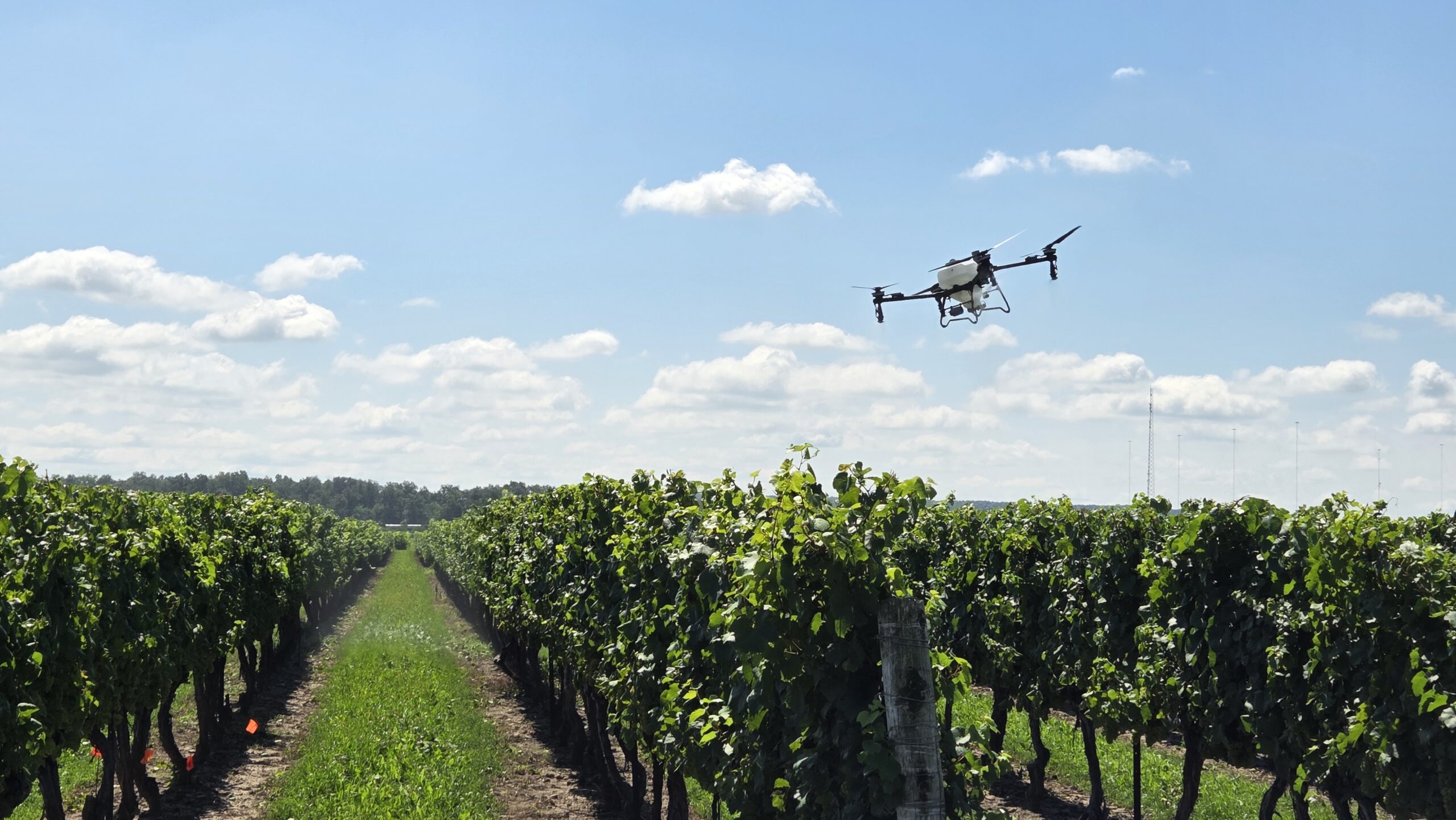
Drone operational settings such as capacity, speed, and swath width are useful figures for calculating productivity, but they only describe the airborne portion of the job. A commercial application business must also transport water, mix product, charge batteries, and establish an efficient staging area that is both safe for operators and maintains drone connectivity. If any of these functions fall behind, productivity suffers.
We consulted several mission records to develop a productivity calculator that can model a range of scenarios. We assumed a shuttle (back-and-forth) flight pattern to apply successive spray swaths for uniform coverage of a treatment area.
How to use
In this, version 3.0 of our drone productivity calculator, we’ve expanded the functionality to include several tendering options. If you are uncertain what the variables mean, consult this handy instruction manual to walk you through the process.
Use it as a planning tool, or simply as a way to explore the impact of different operational settings on mission productivity. We propose adjusting variables one at a time to determine their effect. You can then compound the effect by changing another, or return to the base value and choose another variable to manipulate. In this way you can explore the relative influence of each variable on the overall job.
Which factors matter most?
The relative impact of each operational setting (or the geometry of the target area) on productivity is situation-specific. Nevertheless, here are some generic observations:
While swath width and flight speed play a role, both are limited by the agronomic realities of the job. So, while you can change them in the calculator, it does not follow that the results of the application will be successful.
Water rate (e.g. L/ha) has an impact on productivity, but once again there are agronomic considerations. Too low a volume can compromise product efficacy and contribute to off target drift, and quite often the minimum volume is stipulated on the product label.
The drone’s tank capacity depends on the model, but maxing it out may not be the best option. Some large drones suffer reduced battery life and slower acceleration when filled completely. Note that when the user forces a refill/battery swap, there will be spray mix left in the drone. It is prudent to minimize this residual by not overfilling the drone in the first place.
The ferrying distance between where the drone empties and the staging area a critical productivity factor, so minimizing it is a reasonable objective. Doing so can mean additional sorties, which require additional refills and battery swaps. Small improvements here compound into big impacts, but pay close attention to see if the additional sorties are worth the time savings.
The number of operators have a significant effect on productivity. If a solo operator has to retrieve additional water, or move the tender truck to a new location, the drone isn’t spraying.
Batteries – A potentially limiting factor
The calculator assumes that a sufficiently charged battery is ready whenever the drone returns to the tender, so battery charging does not extend the entered refill and battery-swap time.
In practice, flight endurance can change dramatically with payload. For example, a heavily loaded aircraft may fly for only a few minutes, while the same aircraft may remain airborne much longer with an empty tank. Repeated short, high-load sorties may therefore consume charged batteries faster than they can be recharged.
If the battery inventory, chargers, generator capacity or electrical supply cannot keep pace, the crew may eventually have to wait for batteries, reducing actual productivity below the calculator’s estimate. Additional batteries, higher-capacity charging equipment or improved generator capacity may be required to sustain the projected workflow.
Thanks to Mike Verhoog (Drone Spray Canada) and Dr. Michael Reinke (Michigan State) for discussions contributing to the design of this model.
Much of this article is based on a session and tradeshow I attended at the 2026 Drone End-User Conference in Kansas City. I want to acknowledge the insightful information provided by the three session speakers, as well as the ~200 audience members that asked honest questions and shared their experiences. The speakers were Mr. Chase Plumer (Owner, ProBuilt Fabrication/ProDrone Spraying & Seeding, Seymour, IN), Mr. Klaytin Hunsinger (Owner, Hunsinger Ag Solutions, Rossville, IL) and Mr. Kyle Albertson (Owner, Albertson Drone Service LLC, Benton County IN).
Tendering systems
Drone-based crop protection is a rapidly growing industry and operator experience spans from novice to veteran. It follows that tendering systems are not a one-size-fits-all proposition. The best fit will be a configuration that is budget-conscious, reflects the size and nature of the operation, and accounts for future needs.
We can categorize them by their complexity, cost and capacity.
Entry-level tendering system: A starting point
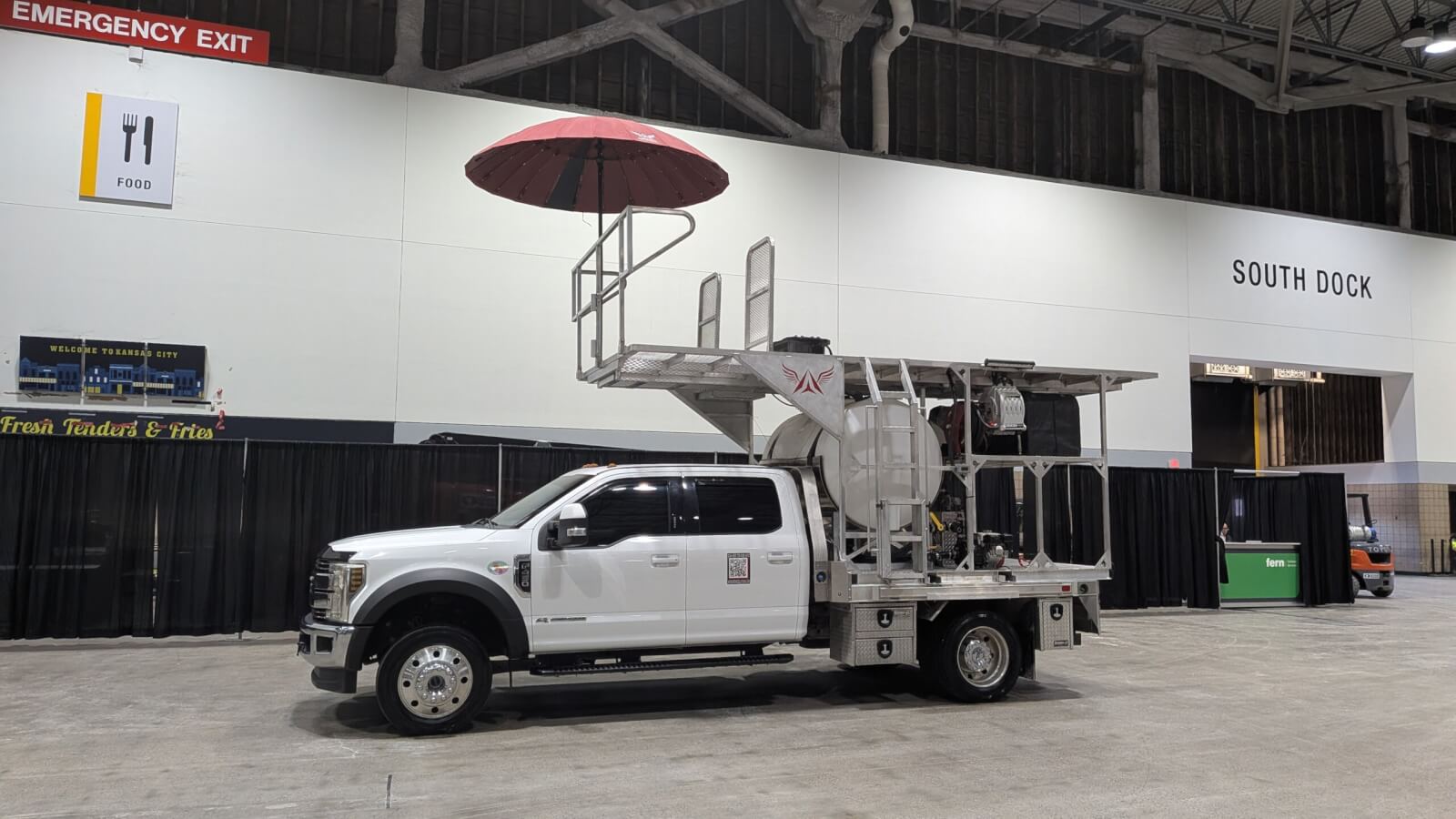
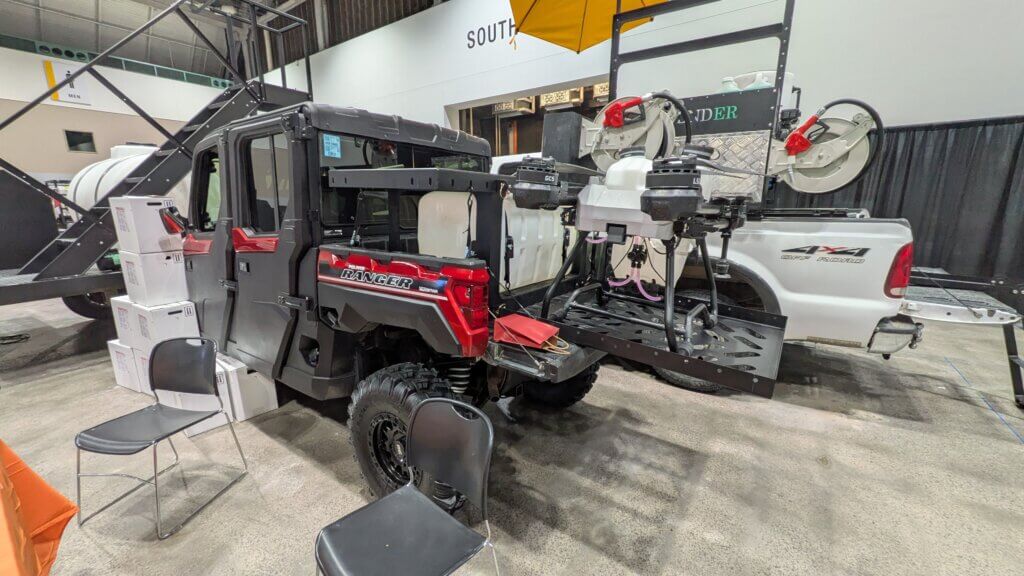
For those just getting started, focus on affordability (lower initial investment) and simplicity (basic components). Examples include skid or truck builds, which are removeable or permanent systems that either rest on a vehicle bed or are built on-and-around the vehicle. This is an operator-friendly system that is small and portable for easy access to diverse fields. It’s the least durable configuration, and not particularly efficient or upgradeable, but it will serve until you know what you really need and how you like to work.
Mid-level tender system: Second year
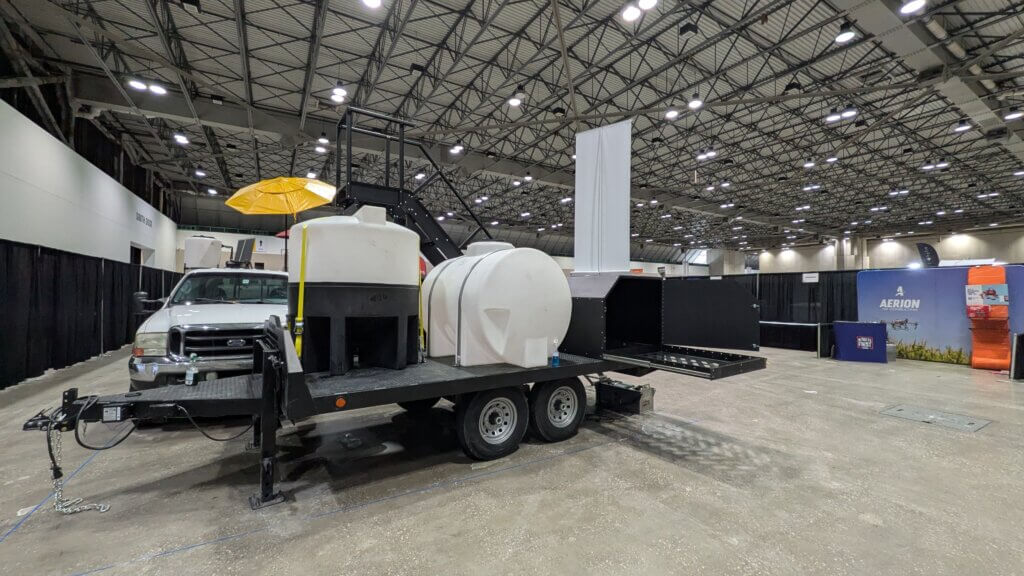
By year two, you might want a larger and more efficient configuration with additional storage and a few creature comforts to reduce operator fatigue. A truck build might suit, but this is more likely a trailed system that is still capable of being towed by a mid-sized (1/2 to 3/4 tonne) truck. Some operators feel enclosing the trailer reduces efficiency, while others appreciate the security and protection afforded by defined spaces.
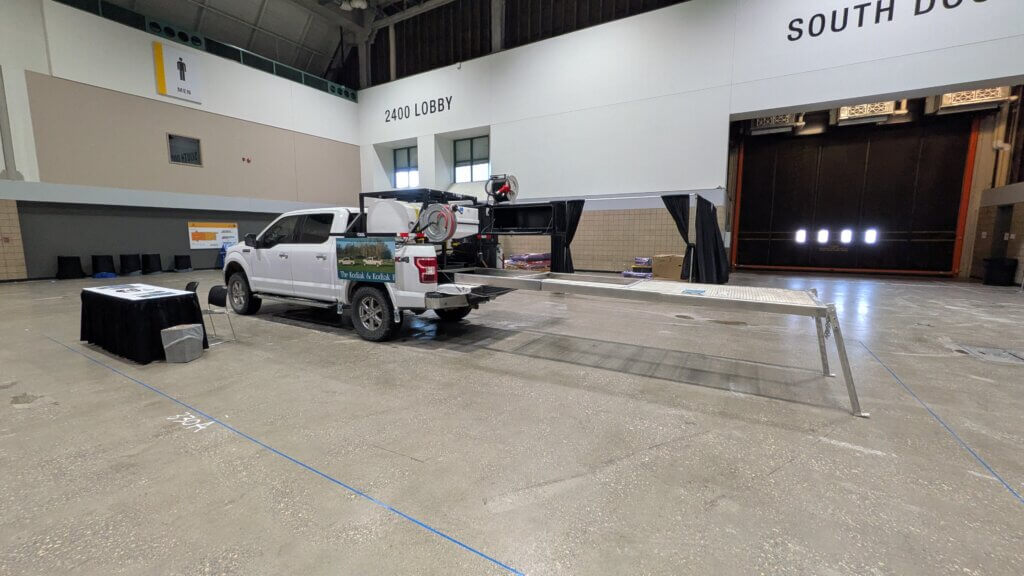
A mid level system has some capacity for modification, but isn’t designed to support multiple drones, and likely won’t have enough capacity to store a day’s worth of water, chemical, or fuel. The operator may wish to detach the truck to run for supplies. Or perhaps it makes more sense to run a truck with a skid-mounted tender system that trails a second, mid-level system to divide-and-conquer, or scale up for larger projects.
Beware going too big, too quickly. A 30-foot gooseneck can get caught on hilly terrain, where a 20-foot flat bed with a straight truck might be better suited. Small to mid-size trailers also take less time to set up and tear down. Consider performing site recon before dispatching a mid-level tender system. This is an additional step, but it allows the operator to scope out potential hazards and is ultimately more productive because it prevents tender systems getting stuck or placed in inefficient or unsafe locations. For example, if a client is “plant-out, pick-in”, the fields are hard to service because there’s no way to access them with large vehicles. Pilots become landscapers, spending valuable time clearing an operations area.
High-level tender system: Large scale and Commercial interests
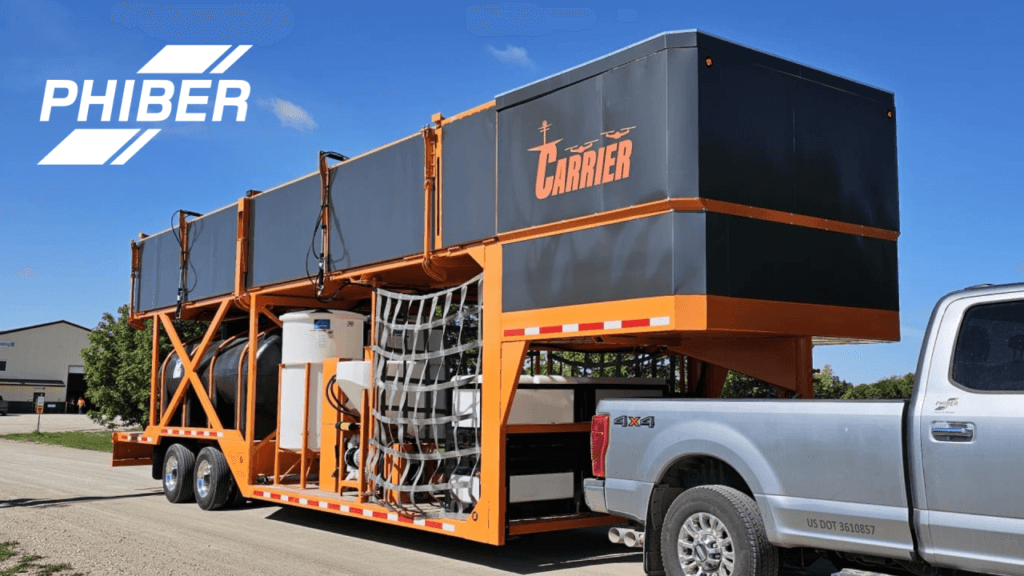
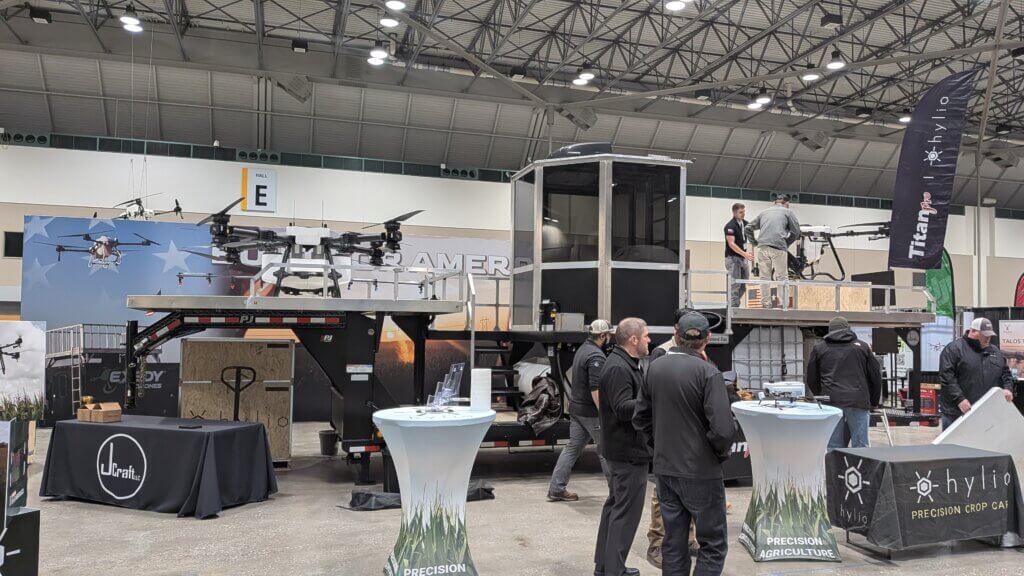
Made for efficiency, the limiting factor of this system is the drone’s productivity. This category is comprised of the largest gooseneck trailers, which may include an upper deck and enclosed areas. It has the highest capacity for water storage, can service multiple drones and has ample storage. Intended for large fields, the size of this unit can make it physically incapable of reaching smaller fields. While a one tonne truck might be able to tow it, an even larger vehicle might be more suitable. It may also be prohibitively inefficient given the time required for setup and teardown. Consider an operator that requires a 15 minute start-up and a 15 minute teardown to spray 250 acres at 50 ac/hr; At $20/ac, that’s roughly $500.00.
Fundamentally, each tendering system has the same function, so they share the same basic components. Here’s an overview of common features and considerations.
Trailer
The trailer is (literally) the foundation of most tendering systems. Operators suggest building for your current budget but planning for future needs as best you can. Trailer size should reflect the nature of the farms you will be servicing and how best to access them. You should also consider the safest and most efficient workflow on and around the trailer before committing to a layout.
Option 1 – Utility trailer
Advantages
Disadvantages
Easy to get on/off
Low ground clearance
Less expensive
Narrow footprint for accessories (e.g. conventional tanks not fitting between wheel wells)
Versatile (use for drones on season, and other tasks off season)
Narrow if planning a top flight deck
May be an insufficient trailer GVWR (Gross Vehicle Weight Rating). This is the maximum allowable total weight of a trailer when fully loaded.
Option 2 – Flatbed gooseneck trailer
Advantages
Disadvantages
More room for accessories
Much heavier. ¾ tonne truck likely not sufficient.
Better ground clearance
Hard to get into tight places (length dependent).
Higher GVWR
Set up / Tear down takes longer
Potential for top flight deck. Typically, 102” wide, so top deck can be about the same.
Option 3 – Enclosed trailer
Advantages
Disadvantages
Protection from weather and elements
Limited clearance for large drones (e.g. 24’ long, 8.5’ wide)
Increased security for equipment
Highest GVWR
Could serve as mobile workspace / office
Most expensive
Cleaner environment for charging batteries, and generators don’t need maintenance (e.g. filters changed) as often.
Can get hot inside, both for people and battery overheating. Airflow on batteries is a necessity, and fans can only cool to ambient. Drone hasn’t got time to cool between fields.
Vehicle
Based on operator discussion, it seems many have a tendency to push their trucks to the limit… or beyond it. One operator uses a ¾ tonne truck to pull a 22-foot trailer with an upper deck. Another uses a 1 tonne (aka tonner) gas F350 which struggles to pull a 30-foot trailer. Others recommended the use of a single axle semi (e.g. a Kodiac or a Kenworth T300), which even used still has ample life left in it, and at ~15 to 17,000.00 USD is cheaper than buying a truck.
Consider that if you run a two-person operation, you may want more than one vehicle. A smaller truck can be employed to run for parts or fuel, or as previously noted can be fitted with a skid mount and a 1,300 gal. poly tank to split up the duty.
Tanks
Tank size(s) will depend on how you choose to operate, how many acres you plan to do in a day, and the weight capacity of your truck and trailer. Again, there is no one solution, so consider the following scenarios before you commit.
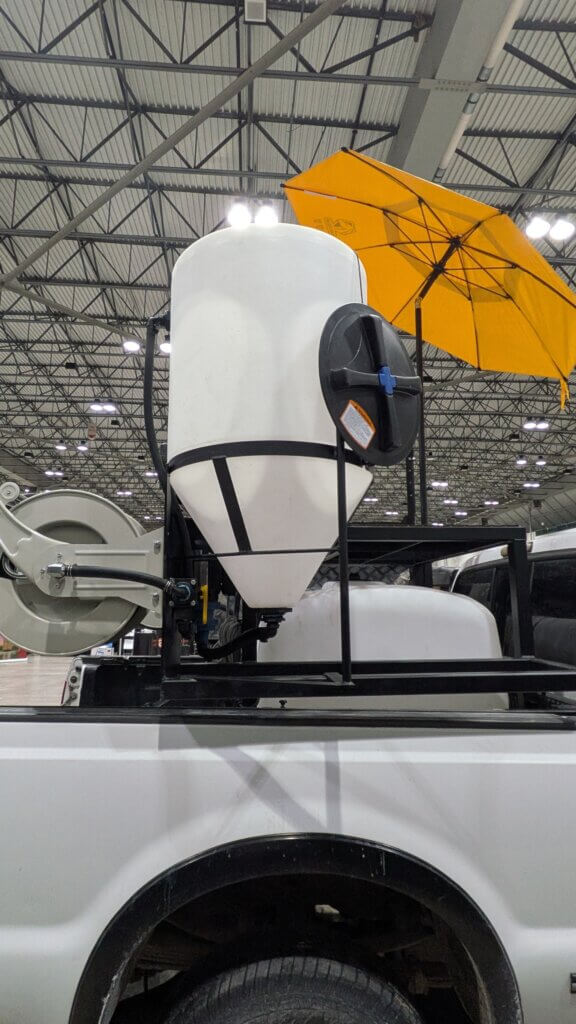
If you plan to hot load, perhaps you’ll just mix in a single, large tank. However, if you plan to switch between insecticides, fungicides and herbicides, one or two 100-gallon cone-bottom tanks with wash-down nozzles might make more sense. Then, you can carry clean water separately in a few repurposed IBC’s or go for the efficiency of a single, high-volume poly or stainless tank. Consider the most flexible and efficient arrangement.
Will you have access to water, will you have water tendered, or will you carry enough for the day? Will you fill from a 3-inch connector or suffer the lost time and fill with a garden hose? Will your truck and your trailer handle that weight, and will the vessel(s) fit between the wheel wells? Are the tanks black or shaded to prevent algae and do you have a plan to baffle the volume, so it doesn’t slosh when you drive over uneven terrain? Larger poly tanks (e.g. ~1,000-gallon tanks) have spots molded in to accept baffles, but some operators noted it’s difficult to install them after-market. Slosh suppressors such as floating balls or lengths of poly French drain can help.
Gas-powered pumps (e.g. Drummond or Predator transfer pumps) are relatively cheap, but some claim they have a high failure rate. This not only incurs downtime, but operators must deal with the chemical in the pump and lines during repair.
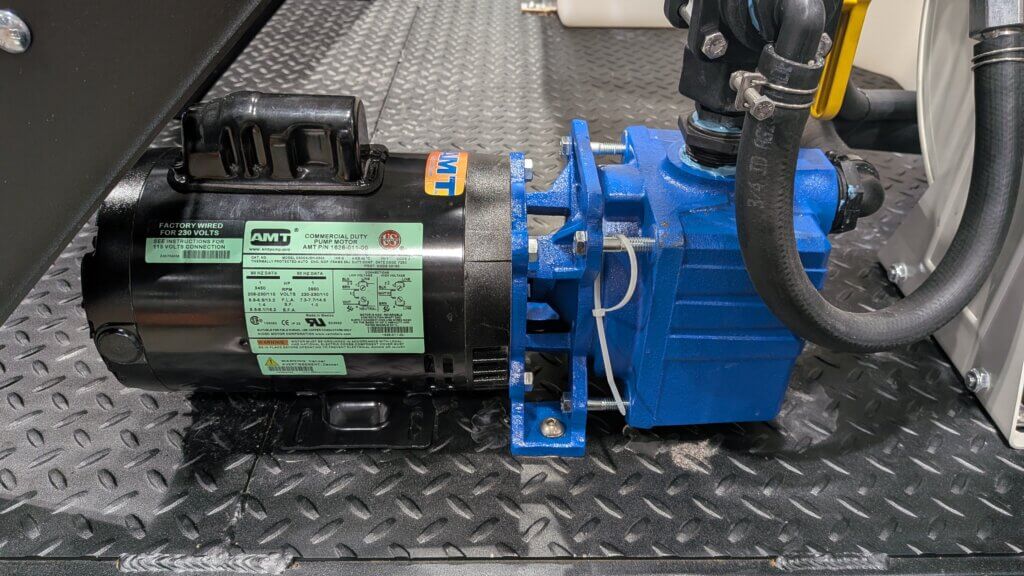
Electric may be a better choice, if only to avoid the noise and exhaust, and some operators run them continuously to recirculate chemistry when not filling a drone. Consider the horsepower, gallons per hour and head pressure, especially if you are pushing flow to an upper flight deck.
An AMT electric transfer pump on a mid-level tender system.
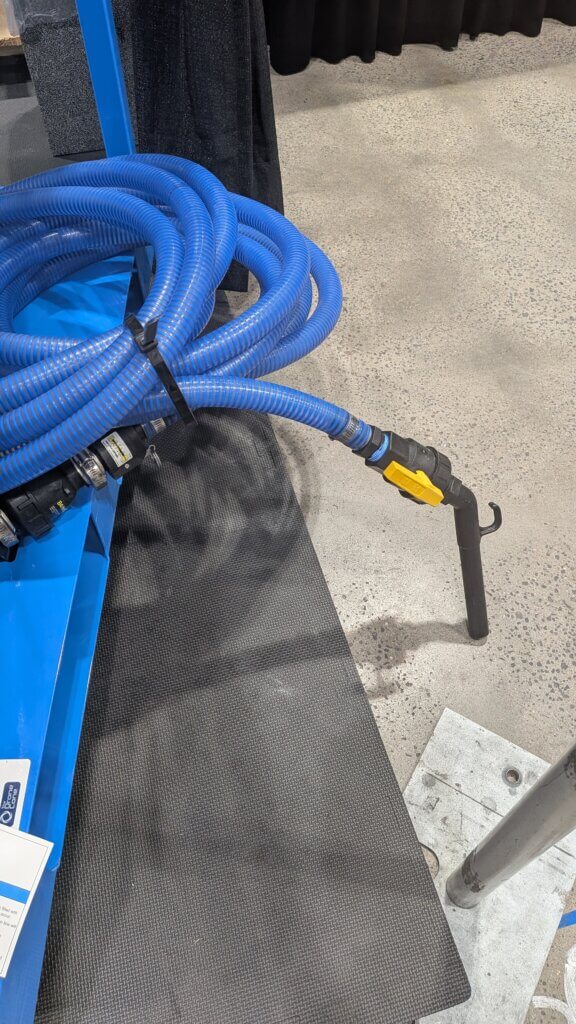
You should be able to fill a drone in about a minute. Some operators have begun increasing fill line diameter from 1-inch to 1.5-inch but feel 2-inch lines are too heavy to warrant the few seconds saved during filling. This may not be a limitation, however, if they are part of a top flight deck arrangement, and not dragged along the ground.
The auto shutoff function of a fuel-pump-style filler is preferred over a quarter-turn-style. The former contributes to foaming but some operators say that can be mitigated by using an anti-foam adjuvant and it’s less likely to create an overflow situation.
Perhaps a metered flow valve that shuts off once a predesignated volume has been dispensed would be a workable solution. This would preserve speed, but without foaming or potential overflows.
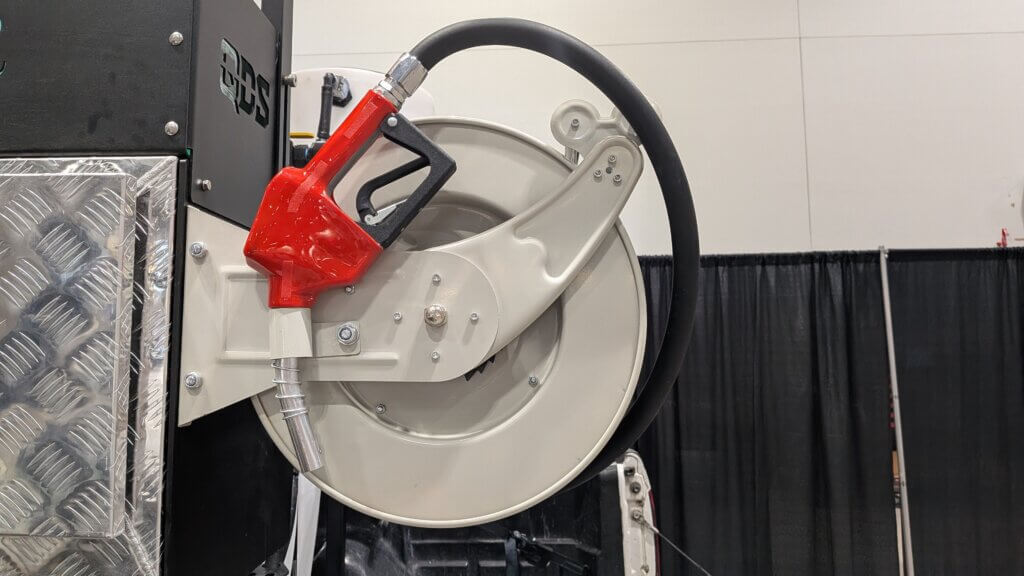
A loose line terminating in a quarter-turn valve fills quickly and with few bubbles, but is ultimately not ideal. It’s prone to causing overflows which increase the potential for operator exposure and cause point source contamination.A reeled hose and a fuel-pump style filler is a better approach. The hose can be recoiled to keep it from being underfoot, and the filler has a back pressure valve that shuts off when the drone is full. There is greater potential for foaming, but some suggest anti-foam adjuvants can help.
Generator
This proved to be a controversial subject at the conference. Many operators were unwilling to promote a single make or model, but the discussion resulted in some general guidance based on personal experiences. Generators will have a peak and a continuous performance rating. Ensure the sum total of all your draws does net exceed the continuous rating.
Drones are getting bigger, and the number of electrically powered devices on the trailer is increasing. Smaller operations tend to employ mobile gas generators that produce less than 10 kW. Larger operations reported using 30 kW (or more) diesel standby generators to charge two drones, plus accessories, while ensuring room for future growth.
A mobile gas generator (inverter or not) tends to be the cheaper, lighter alternative, depending on the wattage. They are a good choice for entry level systems and with regular maintenance will last longer, but are still a short-term proposition. Diesel generators tend to be more expensive, but are quieter, more fuel efficient and more reliable. A liquid propane standby generator is yet another option; Generally cheaper than diesel, consideration must be given to the weight and size of what is typically a 250-gallon propane tank.
A few points raised by operators during the discussion:
Most standby generators do not need diesel emission fluid, while mobile generators do.
Many operators prefer the durability of mobile generators over standby generators. The former is built to be moved while the later presents issues with brackets, mounts and stators.
Warranties are advisable for inversion generators, as they are not easily repaired.
Standby gas generators (10 kW continuous / 13 kW surge) may require you to downrate the battery charger, or the heat can trip the breakers. It is not advisable to bypass breakers.
Storage
Storage is often overlooked but can be critical to efficiency. For example, if you plan to spray six, 50-acre farms in a day and it takes 10 minutes for set up and 10 for tear down, that’s two hours gone. Consider what you’ll need and where you’ll need it, and place storage accordingly to minimize downtime. PPE should be located near your flight deck or filling area. You’ll also want to consider carrying spare parts, such as an electronic speed controller, motor, pump and a full set or rotors.
Batteries
Some battery chargers feature water baths, misters or air conditioning, but at bare minimum batteries should charge in the shade and in a ventilated area (e.g. not enclosed in a storage or tool box). One operator vented air from a commercial blower fan to the batteries on the top flight deck.
Connectivity
A hotspot on your cellphone doesn’t always provide reliable service. Satellite internet providers such as Starlink or Xplore (depending on your location) might be a solution. If the controller drops a direct signal to drone, it can bridge to satellite to connect to the SIM card in most drones. Operators that use this system advise it’s best to rent the hardware (if possible) so if something damages it, you get a free replacement. 100 gb of monthly roaming has proven more than enough for most operators.
Mounting solutions vary, but operators noted good experiences with companies such as Veritas Vans, which have a replacement policy. They warn against 3D printed options that tend to be produced using unsuitable filament materials. Operators that use magnetic mounts on their trucks have reported no issues. Some run wire through rear window or sliding door, and others pull the headliner down and run the power cord out through the third brake light.
Operator safety
Lastly but certainly not least, when it comes to the cost-benefit assessment of tender features, safety should always be a priority. Even simple comforts such as folding chairs combat operator fatigue, increase safety and happily also improve overall productivity. We’re none of us getting any younger.
RV awnings, umbrellas, foldable Bimini-style tops or flip-up doors provide shade. Switching to lower-decibel equipment (e.g. inverter gas generators run at about 90 decibels and electric pumps are even quieter), enclosing loud systems, or positioning them far from the filling area, reduce noise and emission exposure. Chemical drift and exposure during filling should be considered, and PPE should be used and stored in convenient locations.
Trailers that feature an upper flight deck sometimes include a central cable to tether belt harnesses. Stationary railings can help prevent falls, while a fold-up version provides clearance when backing the trailer into a shed.
The drones themselves are a hazard. Long flight decks keep landings and lift-offs at a safe distance, and a protected cockpit area improves matters. Decks with pull-out platforms or hydraulic wings can increase the operating area and can be adjusted to account for adjacent roads and the slope of the ground. A short rail around the landing area can prevent a drone from slipping off; A falling drone is expensive, but falling or sliding into an operator is a disaster. The simplest approach might be to operate on the ground.
An enclosed area for operators on a two-platform gooseneck trailer.Kodiak’s retractable flight deck on their skid-mounted system
Take home
The speakers left the session with some summary advice.
Trailer first, equipment second.
Build for today and tomorrow.
Function over form (stability, balance and access over appearance, bearing in mind that if it is a business, it can’t look terrible, either).
Efficiency from day one. Run a stopwatch (when the crew isn’t watching). Find and change the limiting factor, if it’s changeable. The right trailer improves efficiency even before the first acre is sprayed.
Thanks to the many speakers, attendees and trades people that contributed to this article. If you want to share pictures and specs for your tender system, let us know! If we get enough interest we’ll publish an article showcasing your tender systems so others can learn from your experience.