Tag: water volume

  • Question of the Week: Fine Sprays for Fungicides?

    Question of the Week: Fine Sprays for Fungicides?

    The following question arrived from one of our prairie clients last week:

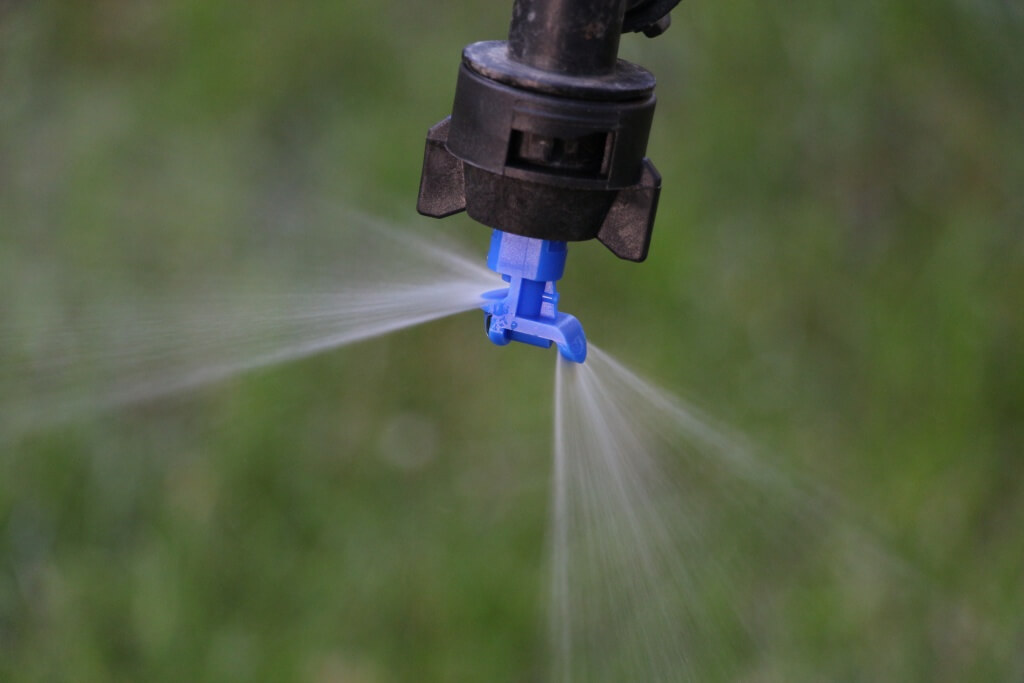
    “A retailer is promoting the use of hollow cone nozzles to be used on field sprayers (20” spacing) to apply fungicides which he claims out-perform any regular and twin fan tips. Claims:

    • create an extra fine droplet for maximum coverage on the canopy
    • use less water, less time spent filling
    • apply at 3.5 gpa
    • add vegetable oil to reduce drift

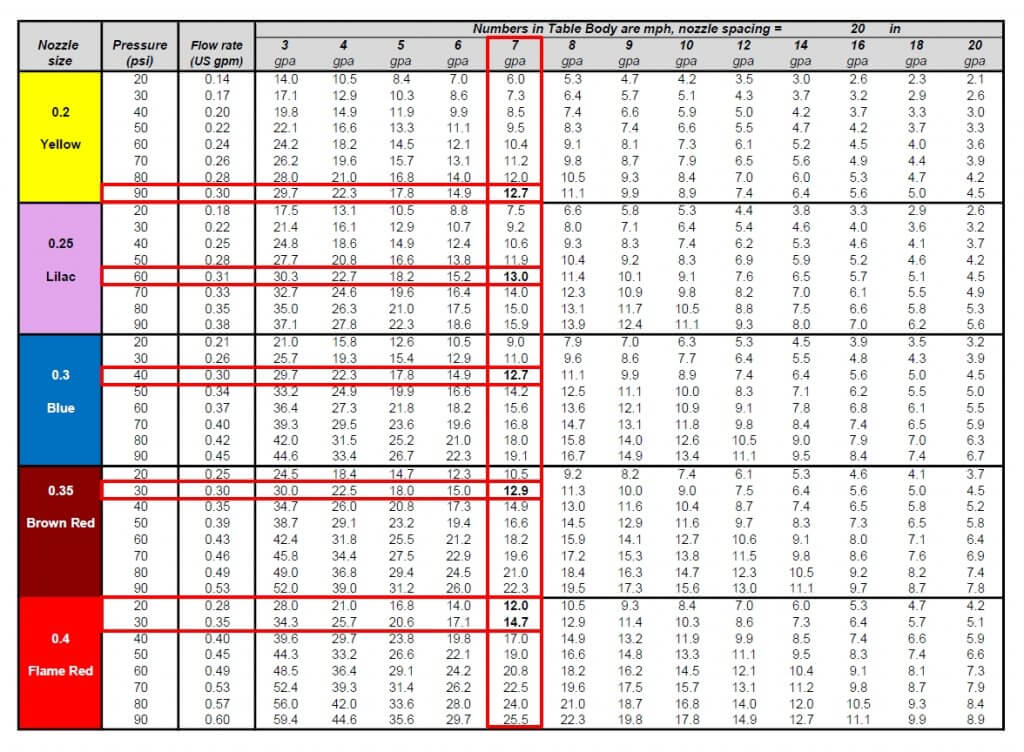
    “So his direction to a specific customer was to use the TEEJET CONEJET TXA8001VK nozzle at  80 psi – travelling at 10 – 12 mph to achieve a 3.4 gpa application rate with a ‘very fine’ droplet size.

    “What are your thoughts?”

    Here’s how I answered (edited for clarity):

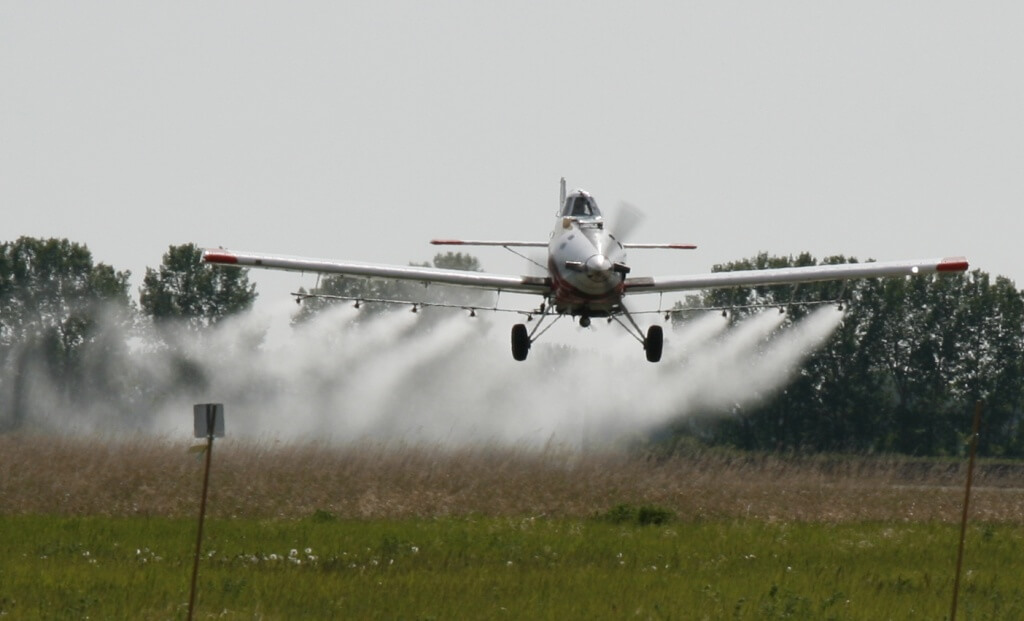
    That recommendation sounds familiar – it originates from a consultant with experience in South America, where this idea is promoted to improve (aerial) spray productivity.

    I fundamentally disagree with his approach. Adopting and promoting it is not only illegal (contravenes every modern label’s water volume and spray quality requirements), it also puts a generation’s worth of stewardship efforts on drift management at risk.

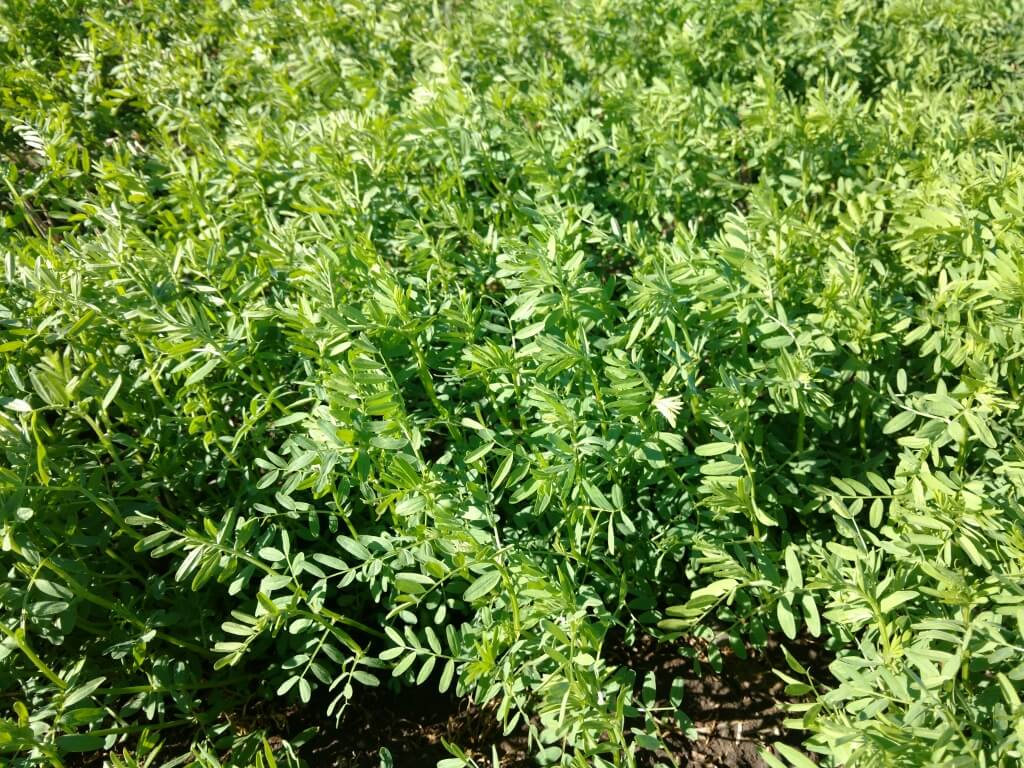
    To be balanced, let’s explore the attractiveness of this approach. Finer sprays do provide superior coverage and save water. Every child knows this. Finer sprays also go places in the canopy where the coarser sprays can’t, for example very dense lentil canopies.

    Over the years, we’ve explored the performance of fine fungicide sprays in canola, pulses, and cereals in research trials with the U of S and AAFC. To our surprise, droplet size played only a small role in fungicide performance. Water volume was much more important. Droplet size management with pressure through a low-drift nozzle was enough to get the best disease control.

    The main drawbacks of very fine sprays are:

    1. The fine droplets evaporate to dryness very quickly, in seconds. As they shrink, their drift potential is increased even more, and once dry, the remaining particles work much less well. The proponent corrects for this by adding an oily adjuvant as an evaporation retardant. With oil, the fines remain liquid much longer. Although many products become more effective this way, they also become more phytotoxic and less safe for the applicator and bystander. Completely off label, completely risky for crop safety, unknown effects on MRLs, extremely unsafe for the environment and humans. Remember when people dissolved 2,4-D ester in diesel, back in the 40s and 50s and sprayed it with their brass 6501 tips? That’s what this is.
    2. Cone nozzles are designed for airblast sprayers and do not produce good pattern overlaps for boom sprayers. The proponent of this method actually recommends that the boom be raised to overcome the bad patterns and to (believe it or not) simulate aerial application. If this were done, the spray would be re-distributed by air-currents and come down wherever the wind blows it. Probably far away.  The concept of on-target, uniform application, the practice that makes product use acceptable, and the thing we try to achieve with flat fans at a low boom height, is completely lost.
    3. Producers will not have the support of pesticide manufacturers should a performance issue arise. Even worse, if regulators find out about this off-label practice, significant fines (fines for fines, get it?) can be charged under the Pest Control Products Act.
    4. Airborne spray drift with an air-induced spray like the AirMix, GuardianAir, AIXR and the like, applying 10 gpa, is about 1% of the applied amount, measured at 5 m downwind of the downwind edge of the swath in a 20 km/h wind. We’ve never measured hollow cone drift from a boom sprayer, but when we used a flat fan at 5 gpa, drift increased to about 8% of applied. I’d guess a high pressure hollow cone would easily double or triple that. Illegal and irresponsible.
    5. Travel and boom turbulence is a part of faster travel speeds. This would affect the finer droplets much more than the coarser ones, as we can imagine. It’s similar to drift. With a low-drift spray, the proportion of the total spray volume that is “fine”, say less than 150 microns, is about 5%. For a very fine hollow cone, it might by 50 to 75%. So a much greater proportion of the sprayed dosage would be susceptible to uncontrollable movement. This could be good, when turbulence redirects the spray to places that are unreachable by larger droplets. Or it could be bad, as turbulence pushes droplets away from an important target, creating a miss. On balance, bad. Very bad.

    These types of recommendations are concocted by people who want to tell a unique story that is popular with some. Their approach differentiates them from the rest of the crowd, an old and effective marketing trick. But these proponents do not have the best interests of the industry in mind.

    Our individual and collective agricultural practices must be respectful of others. Of safety. Of the law. Of the environment. We have lots of opportunities to make shortcuts…nobody’s watching most of the time. But that doesn’t make it right. It’s certainly not in ag’s long-term interest.

    When considering our agricultural practices, imagine describing them to a young non-farming person. Can you justify your actions? Do your practices make you proud? If not, you have work to do.

    Here’s a task: If your boom sprayer has nozzles that produce very fine sprays, take them off and throw them in the garbage. Might sound radical, but it’s the right thing to do.

  • Exploding Sprayer Myths (ep.8): Volume

    Exploding Sprayer Myths (ep.8): Volume

    In this episode of Exploding Sprayer Myths, we lay out four steps to determining the most appropriate spray volume required to achieve good coverage.

    1. Understand how the product works
    2. Understand the target
    3. Understand droplet behaviour
    4. Understand the plant canopy

    Joined by show-stealing Dr. Doug Baumann, and with the help of a lot of caffeine, we learn that there’s no silver bullet to choosing a spray volume.

    Special thanks to Syngenta, Honeywood, and to Real Agriculture.

  • Deciding on the Right Way to Spray

    Deciding on the Right Way to Spray

    “What is the right way to apply this pesticide?” It’s one of the classic questions. Applicators know that spray method determines the efficacy of the application as well as its environmental impact. And it has to use time and water resources efficiently to make sense.

    To answer the question properly, we need to take things one step at a time.

    1. Canopy: To start, we need to look at the canopy that our application will go into. If it’s an early season spray into a seedling crop, then the canopy won’t be much of a barrier. Lower water volumes can be possible. Droplet size will only depend on the target type and the pesticide mode of action.
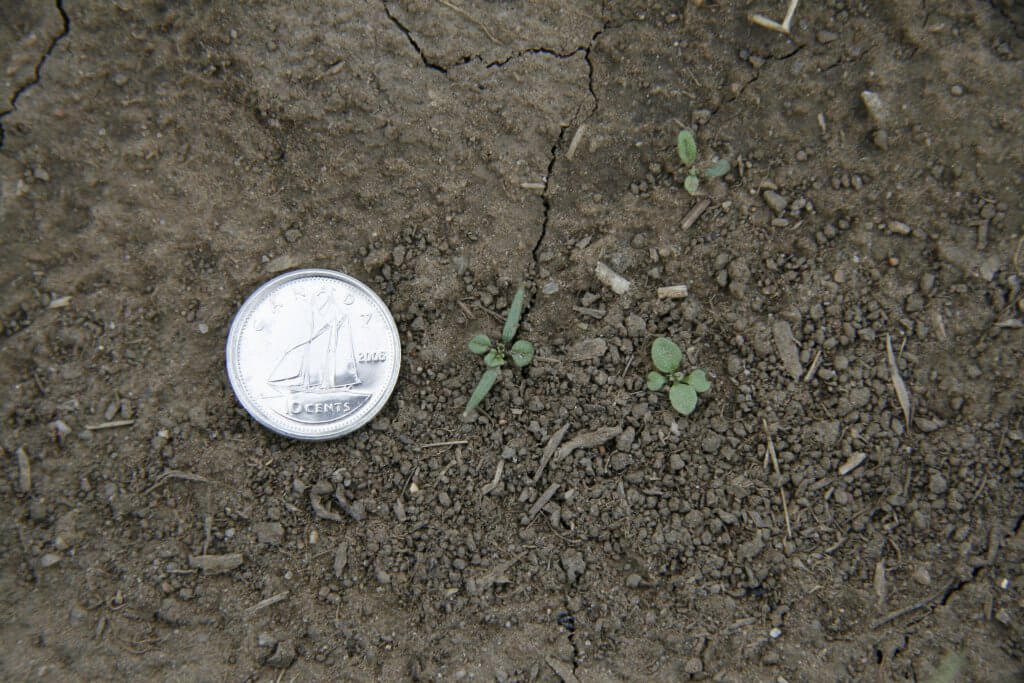
    Small weeds require more smaller droplets to secure effective targetting

    If it’s a later application into the bottom of a maturing canopy, the foliage may intercept the spray before it reaches the target area. More water will likely be needed, and droplet size may become more critical for getting the spray to its destination. Dense canopies are a real challenge and lower-canopy deposition usually benefits from finer sprays because the small droplets can turn corners better.

    Dense canopies are very difficult for a spray to penetrate. Higher water volumes and smaller droplets are the key tools that help.

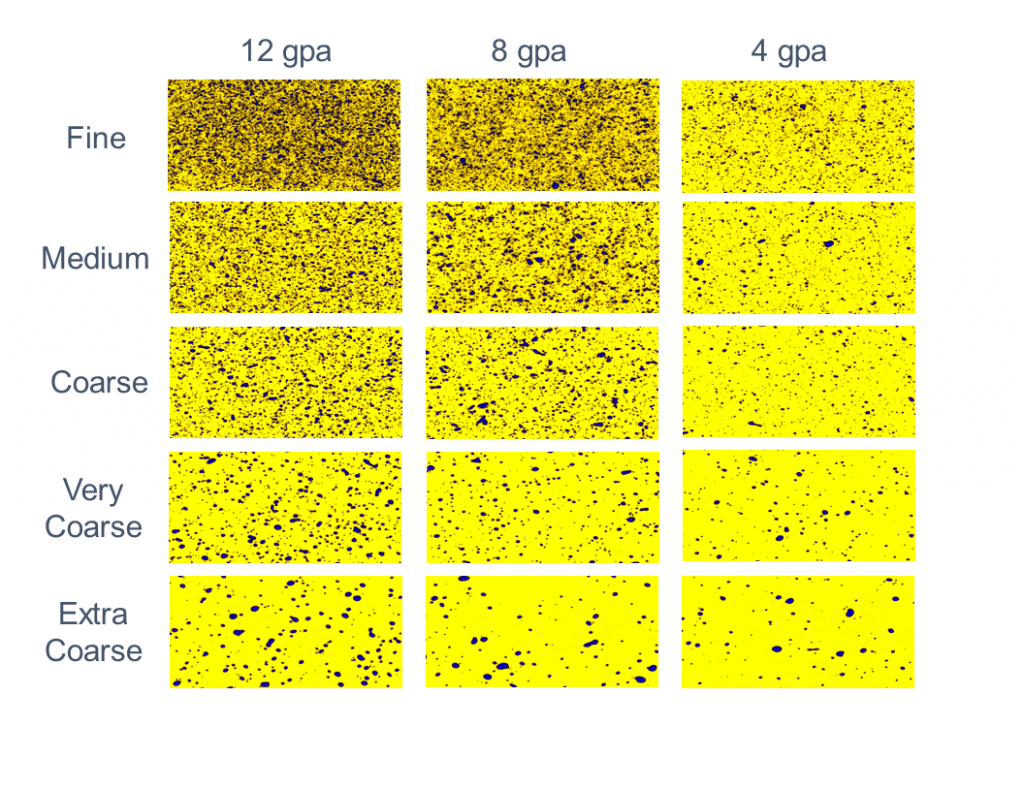
    2. Water Volume: Regardless of canopy, the range of application possibilities will depend on the water volume and spray quality combination. It’s math: assuming some constant amount of coverage on each leaf, more layers of foliage will require more water. Using less water volume will make it necessary to use finer sprays to keep droplet numbers constant. More water will allow coarser sprays. This decision has implications for drift, and by extension, affects the number of hours we can spray in a day. More drift tolerance means better application timing and overall productivity.

    The tradeoffs between water volumes and droplet sizes are seen in this figure. Once a certain threshold of coverage has been reached, a further increase in coverage may not provide any additional control.

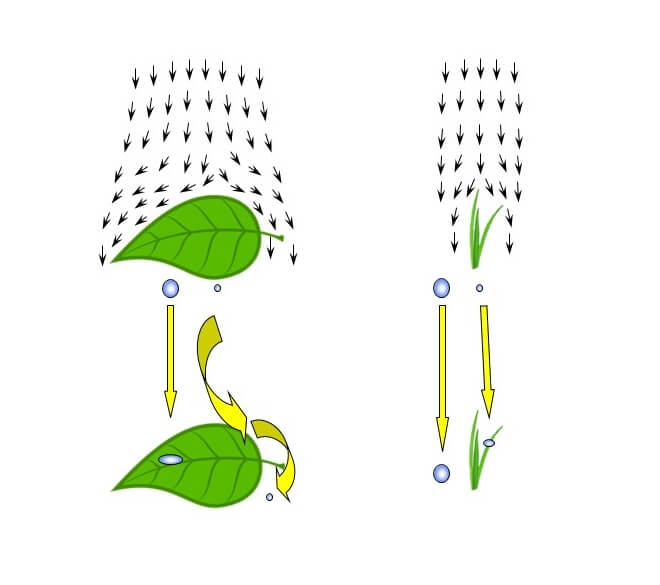
    3. Target Type and Droplet Behaviour: Whatever spray we use, the target plant or insect needs to intercept, collect, and retain the spray droplet. This is where the fun begins. Target leaves may be vertical or horizontal, large or small. Their waxy surface may be easy-to-wet or difficult-to-wet. The general rules of thumb are that larger, more horizontal and easy-to-wet surfaces are better suited for coarser sprays – these are intercepted more efficiently and stick readily. That is a reason why most broadleaf weeds and crops are very compatible with low-drift sprays.

    Large targets (left) are most efficient at intercepting larger droplets (provided droplet bounce is not a problem) because smaller droplets may evade capture. Smaller targets are usually missed by larger droplets but are very capable of capturing smaller droplets.

    On the other hand, smaller, vertically oriented and difficult-to-wet plants require finer sprays for effective targetting. Larger drops tend to miss these targets or bounce off them. Most grassy, and some broadleaf weeds (especially at early growth stages) fall into this category.

    4. Mode of Action: There are nearly 30 modes of action on the herbicide world, and another ten modes for insecticides and fifteen for fungicides. The effect of droplet size and water volume on their uptake and translocation varies, and it’s probably not correct to generalize too much. There is one notable product, glyphosate. For this product, research has consistently shown that large droplets and more concentrated mixtures provide better uptake. But we’ve also seen problems when this is over-done, causing localized toxicity and limiting translocation.

    With many products, we’ve sometimes seen better performance with finer sprays due to improved coverage, yet at other times less performance due to rapid evaporation. On the whole, it’s probably still fair to say that contact modes of action require finer sprays and higher water volumes, even if there is the occasional exception. And systemic products can typically handle coarser sprays. We’ve always been surprised just how coarse we seem to be able to push the system before any loss of efficacy.

    What does it all mean? In spraying, we need to accommodate a lot of diversity. The average application is broad-spectrum, targeting large and small broadleaf and grassy plants. Many sprays are tank mixes of several modes of action. It’s impossible to prescribe a specific spray for each situation. We need a little bit of everything. And the spray should not be drift-prone. It’s easy to see that we need to aim for the middle to accommodate everything.

    The traditional flat fan nozzle, either in its conventional or low-drift form, generates a wide range of droplet sizes that can range from 5 µm to about 2000 µm. If we need fine droplets, they’re there. If we need larger droplets, they’re also there. The proportion of the total spray volume in each specific size fraction depends on the nozzle choice and size, the spray pressure, and the adjuvant mix in the tank. Overall, the system is very robust, and although it requires some tweaking, a well chosen average spray can achieve most tasks well enough.

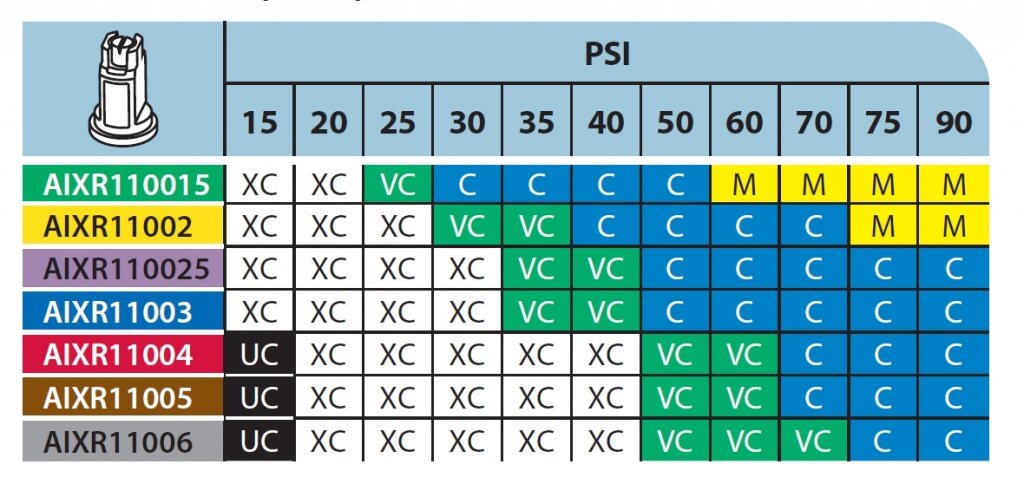
    A typical spray quality chart shows the expected spray quality for a range of nozzle sizes and pressures. Spray quality measurements follow standards set by the ISO and ASABE, these change from time to time and therefore charts tend to become outdated.

    Our research has repeatedly shown that a Coarse spray is a good starting point that does most things well. It is acceptable to move into a Very Coarse or coarser category provided water volumes are also raised, and provided the target types and modes of action are suited for this change.

    It is rarely necessary to spray finer than Coarse, and when this is done, we recommend against spraying finer than a Medium spray. There is simply no advantage from product performance, and drift risk becomes unacceptable.

    Tweaking the System. In order to maximize the performance of your spray, and the efficiency of your overall spray program, here is some advice:

    1. Know the spray quality of your nozzles, and their response to spray pressure. Manufacturers publish this information in their catalogues and on-line. Make this your homework assignment.
    2. Use the coarsest spray that you can afford to. This will make the application safer, it will widen the weather window, and it will simply let you get more done in a day or a season. Coarse sprays work.
    3. Use spray pressure and water volume to fine tune the application for a specific purpose. If using a contact product, you can keep the same nozzle you used for a systemic product. Apply more water or use more spray pressure to generate more droplets.
    4. Do not skimp on water. Higher water volumes tend to make an application more uniform, robust, and crop-safe. Spray coverage improves. Canopy penetration improves. Coarser sprays are possible. The only exception to this rule is glyphosate, which works better in lower water volumes. But with higher glyphosate rates and more tank mixing, even that exception is disappearing.
    5. Learn as much as you can about how your pesticides work and where they need to be in your canopy. Apply your knowledge to select optimal water volumes and spray qualities.
    6. Be wary of people who advise very low water volumes in conjunction with fine sprays. They want to appeal to your need for efficiency, but do so at the cost of consistency and environmental stewardship. Plus these types of applications are illegal for many of our products.
  • Fungicide Application in Cereal, Pulse, and Oilseed Crops

    Fungicide Application in Cereal, Pulse, and Oilseed Crops

    Get ready for a busy fungicide season. If your growing conditions have been good, your crop is dense and vigorous, and soil moisture is adequate, you have yield potential to protect.  A bit of moisture and warm temperatures at a critical time, and disease is likely to develop.

    Before we delve into how to apply fungicides, let’s review the basics.

    1. There is no substitute for an informed decision about whether to spray or not. Seek the advice of a professional to make sure you understand your crop’s genetic susceptibility to disease, the conditions conducive to its development, and the parts of the plant canopy that are affected and therefore need protection. How much yield or seed quality is actually at risk? What do the disease forecasts say for your area?
    2. Identify the best fungicide product for your disease situation. Consider inherent efficacy, but also the longevity of the protection and the fungicide’s off-target toxicity (less toxic products can be sprayed in windier conditions without harming susceptible ecosystems). Remember that most fungicides are not curative and must be present on the plant foliage before infection takes place. Also remember that most fungicides are not easily translocated and are at best “locally systemic”. This means that fungicide deposit must cover the plant part that requires protection with an adequate droplet density. If the fungicide is systemic, these deposits must be absorbed through the plant cuticle and will only migrate a small distance within the plant tissue, usually in the transpiration stream, from the point of application.
    3. Make proper timing the priority. Disease control is usually only effective if the fungicide is applied in a narrow time frame in which the crop or disease is at a certain developmental stage. A great application at the wrong time is less valuable than mediocre application at the right time. The use of low-drift nozzles should be considered an agronomic tool that permits the correct staging even under marginal wind conditions.

    Let’s now review the major highlights of fungicide application in the major cereal and oilseed crops.

    Wheat

    In wheat, the early growth stagings for foliar fungicides are usually done to protect from leaf spot diseases such as tanspot, septoria nodorum blotch and septoria tritici blotch. Because these diseases are trash-borne, they tend to migrate up from the bottom to the top and good canopy penetration of the spray is important.

    IMG_20160621_170305406

    Better canopy penetration can be achieved the following ways:

    • Higher water volumes. This is probably the most powerful tool in an applicator’s arsenal. More water usually delivers higher doses of active ingredient deeper into the canopy, and whatever dose does get deposited will be present in higher droplet densities. So in short, for any given spray quality (droplet size), more water provides better coverage. We all intuitively know this.
    • Slower travel speeds. Moving slower imparts less of a forward velocity on the spray cloud, particularly in the larger droplets. As a result, these droplets move more vertically.  In the case of a cereal canopy, more of the spray will reach the lower leaves. The finer droplets in the cloud tend to deposit with the wind direction regardless of travel speed.
    • Backward pointed nozzles. If a droplet moves backwards at the same speed as the spray boom moves forwards, then it is basically standing still relative to the crop. It will have a greater chance of moving down towards the lower canopy than a droplet that’s moving forwards. The latter droplet will likely be intercepted by something vertical, like a wheat head or stem.

    A single nozzle oriented back, applying a water volume that is at least 10 to 15 US gpa, will be sufficient to get good canopy coverage for leaf spot and rust protection.

    Fusarium Headblight (FHB), caused by Fusarium graminearum, is a special case. It infects the wheat head at anthesis, and fungicide must be present on the head, at the glumes where the anthers emerge, at the time of infection. So we have a relatively large vertical target that is at the very top of the canopy.  Initial work at North Dakota State University, followed up by work at AAFC in Saskatoon and the University of Guleph at Ridgetown, found the following:

    • Angled sprays are essential. Field and lab studies showed that angled sprays were much more effective at depositing the fungicide on heads than vertical sprays. Backward pointed angled sprays provided additional help at targetting the other side of the wheat head. Twin nozzles are available from most manufacturers.
    IMG_9079
    • Use Coarse sprays when angling.  Angled and twin sprays have their challenges.  The angle at which the spray is released dissipates quickly, particularly for smaller droplets. As a result, more aggressive angles and coarser droplets were found to be more effective. Larger droplets were able to maintain their initial trajectory for a longer distance, increasing the chance that the droplet hit the head from the side rather than passing it by vertically.
    •  Maintain low boom heights. Even coarse sprays are deflected by air resistance and will eventually stop moving in the direction they were first emitted. In fact, this happens within a short distance.  Low booms, less than 25″ if possible, help.
    • Watch wind speed and direction. Field observations show that even a moderate wind can over-ride the application practices described above, resulting in most of the spray deposited on the windward side of a target regardless of its initial release.
    • Awns intercept small droplets. Many of our modern wheat cultivars are awned, and these fine structures are excellent collectors of small droplets. In early studies with durum, we found a large proportion of the spray volume on awns, where it served no useful purpose. The best way to minimize this awn interception is to ensure coarse sprays and sufficient water, no less than 10 gpa.
    wheat with water droplets credit David McClenaghan

    It’s important to maintain realistic expectations with FHB. Fungicide chemistry is improving but still offers only suppression. Crop staging is variable. Excellent application practices place the odds more in favour of disease control, but can’t change these facts.

    Pulse Crops

    Lentils and peas are increasingly important crops. They appear spindly in their early stages of development and are poor weed competitors. But under the right conditions, lentils soon form an impressive set of leaflets that creates one of the most impenetrable barriers in our cropping systems.

    Here are some pointers for fungicide application in pulse crops:

    • Understand the disease in your crop. Do you need to protect stems (anthracnose), leaves and stems (ascochyta complex, mycosphaerella), or senescing leaves or flowers (sclerotinia)? This is where the spray needs to go.
    • Understand the time of disease development.
      • Trash-borne diseases like anthracnose and ascochyta will start at the bottom of a lentil canopy, and early treatment before canopy closure will be important to arrest or at least delay disease development as long as possible.
      • Late season diseases like sclerotinia and botrytis push the application timing towards a closing or closed canopy. Success of such sprays is more elusive because of the rapid development of new biomass.
    • Take a bird’s eye view of the canopy.
      • If you can see the target you need to spray, the job is pretty straightforward and conventional water volumes and nozzles will work.
      • If the targets are hidden from view, it will take more water and slower travel speeds to get the required coverage. Consider the higher end of the recommended water volumes (15 gpa in most cases), slower travel speeds (10 mph).
    • IMG_20160620_082718907
      • When a canopy has many layers of cascading leaves, it is very difficult for a spray to get past these “umbrellas”. We’ve observed many times that a leaf is a very effective shield for anything below it.  Large droplets have a hard time changing direction because of their mass and resulting momentum.  But small droplets, especially those below 100 microns, can move with slight changes in air movement and get around these obstacles. Use higher pressures (to generate the finer sprays) or select finer nozzles to improve canopy penetration.
    • Look at the size of the plant part you need to target. Large targets like leaves can capture almost any droplet size, but small targets like petioles or vertical targets such as stems may benefit from finer sprays, especially if they’re hidden in the canopy.

    Generally speaking, dense pulse canopies will require higher water volumes and finer sprays than their cereal counterparts. Although twin fan nozzles have not been shown to provide an advantage in our studies on chickpeas, higher water volumes proved very effective at improving deposition and disease control.

    Canola

    Canola has two main diseases for which foliar sprays are used. A small number of producers choose herbicide timing for control of blackleg. Because the crop canopy is small and the spray targets are exposed, general herbicide application guidelines (Coarse sprays from a venturi nozzle, 7 – 10 US gpa) will provide good targeting and adequate coverage.

    461635974_1bce7d1eaa_z

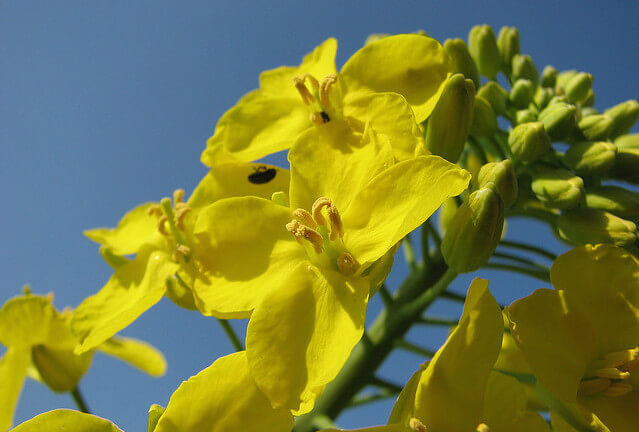
    Sclerotinia control requires that the spray reaches buds and petals of canola that is between 20 and 50% flowering. Work at AAFC in Melfort compared conventional and low-drift sprays at two pressures, and showed that droplet size had no effect on disease control. In fact, the Fine spray produced by hollow cone nozzles at high pressure did not significantly improve sclerotinia control compared to a venturi nozzle at its recommended pressure of about 60 psi.

    Subsequent lab work showed that the proportion of the applied spray that was retained by petals and buds was statistically identical for all tested sprays.

    Water volumes may need to be increased for modern canola hybrids that have significant biomass at flowering. Such cultivars may grow over 1.5 m tall and present a large range of canopy positions in which buds and petals appear. As with the other crops, when a spray needs to cover more area, and especially when this area presents itself in layers, more water volume is appropriate.

    Fine Sprays for Coverage

    Conventional wisdom says that fungicides require finer sprays for coverage and best effect. This is certainly true in some cases, particularly where the leaf area index is high and leaves are arranged in cascading layers. But it’s time to retire this notion as general advice and adhere to research results for guidance. For FHB, the recommended angled sprays benefit from being applied in coarser, not finer sprays. And in pulses and canola, research showed that there was no benefit from finer sprays. In fact, finer sprays can impair proper timing because of their propensity for drift and rapid evaporation under dry conditions.

    Modern coarse sprays produced by air-induced nozzles are less susceptible to these environmental conditions and therefore offer an important advantage: they allow for better timing accuracy. For this reason, I view them not so much as drift control tools, but rather as agronomic tools.

    There is a downside to the coarser sprays – they do require more water. Volumes should always be above 10 US gpa, and many recommendations go to 15 gpa if the canopy is dense.  In some cases, 20 gpa may be beneficial. These higher volumes are a reasonable price to pay to protect a valuable crop, and we certainly have the equipment to make this price bearable.

    Aerial Application

    Aerial application is an important way to apply fungicides.  An aircraft’s chief advantage is to cover large areas with no crop trampling, and can do so even in wet conditions. As a result, they offer the timing advantage we so often mentioned in this article.

    Aerial Rotary atomizer

    A producer hiring an aircraft for spraying ought to have a conversation with the pilot and discuss water volume and droplet size. Aircraft, out of practical necessity, apply less water and distribute it in finer sprays to offer the required coverage. Although this has been shown to be effective, it creates drift and evaporation potential. It is worthwhile to ask for higher water volumes if it means that the spray can be applied somewhat coarser, creating less drift.

    _MG_4778

    The rotary atomizers on many aircraft produce fairly uniform droplet sizes and do a good job of eliminating the larger droplets. This makes even more droplets available for coverage. However, even with this technology spray drift still matters and all steps to prevent it should be taken. This means using larger average droplet sizes and increasing water volumes accordingly to their label recommendations.

  • The Case for Low-Drift Sprays

    The Case for Low-Drift Sprays

    This article was written by Tom Wolf for “PEI Potato News Magazine”, a publication of the Prince Edward Island Potato Board (http://peipotato.org/). It is reprinted with permission.

    PEI Potato News Magazine

    “Should I be using low-drift nozzles?” It seems like a simple question with an obvious answer. We all want to reduce spray drift, and this easy-to-use technology is the fastest way to get there.

    And yet, the question is more complicated than it first appears. Yes, all applicators want to reduce drift, but many worry about the coarse sprays produced by low-drift nozzles. As a spray volume is divided into coarser (i.e. larger) droplets, there are fewer of them, and that can reduce coverage. It’s a legitimate concern.

    Let’s start with our shared value first – the desire to reduce spray drift.

    Given the economic, environmental and health impacts of spray drift, the importance is hard to over-state.  That’s why spray drift management is a primary concern of our federal regulators whose job is to protect the public interest. It’s also a concern for the neighbours who have a right to keep unwanted products off their property, whether it’s residential or agricultural.

    Fig 1 (XR8004 40 psi)

    Conventional flat fan nozzles (XR8004) operating at 40 psi

    Fig 3 (XR8004 40 psi drift)

    Glyphosate drift with 20 km/h side wind, XR8004 40 psi

    Fig 2 (TD11004 60 psi)

    Low-drift nozzles (TD11004) operating at 60 psi

    Fig 4 (TD11004 60 psi)

    Glyphosate drift with 20 km/h side wind, TD11004 60 psi

    For these reason, managing drift should be a foremost concern for applicators. The technology is vital to the crop production industry, and if we don’t take care of the issue, someone else will take care of it for us. That’s not the best path.

    Much has been written about how to reduce drift. The key points are:

    • choosing days with better weather,
    • lowering booms and travel speeds,
    • watching spray pressure,
    • protecting the spray with shields,
    • using coarser spray qualities on the whole.

    Of these, the most economical and practical is using coarser sprays via low-drift nozzles. Engineered to emit fewer fine droplets, they are proven to reduce drift by anywhere from 50 to 95% compared to a standard flat fan of the same size.  When it comes to reducing drift, they work.

    When these tips first hit the mainstream as “pre-orifice” nozzles in the late 1980s, and later as “venturi” nozzles in the mid 1990s, we were impressed with their ability to reduce drift. And the obvious question was, what about product efficacy? Can fewer, larger droplets do the job? The answer, to our initial surprise, was yes.

    In the late 1990s, the crop protection industry (including governments, universities, and the private sector), participated in studies throughout Europe, Australasia, and North America looking at low-drift spray performance. In Canada alone, we conducted over 100 studies and concluded that pesticide efficacy was not harmed when a properly adjusted low-drift nozzle was used.  A surprising result showed that fungicides did not seem to need finer sprays, contrary to popular opinion, as long as water volumes were sufficient to provide adequate coverage.

    As we did more and more studies, it became apparent which points were critical:

    • When using venturi nozzles, spray pressure had to be increased from the industry standard of 40 psi to about 70 psi. This is because of a venturi nozzle’s two-stage design. The high pressure compensated for an internal pressure drop inside the nozzle. Sprays remained low-drift, but patterns and overall efficacy were better at this higher pressure.
    Fig 5 (XR8002 40 psi)

    Spray pattern of conventional spray (XR8002, 40 psi)

    Fig 6 (ULD 60 psi)

    Spray pattern of low-drift spray (ULD12002, 60 psi)

    Fig 7 (XR8002 40 psi)

    Spray deposit of conventional spray (XR8002, 40 psi. ~10 gpa)

    Fig 8 (ULD 60 psi)

    Spray deposit of low-drift spray (ULD12002, 60 psi, ~10 gpa)

    • Spray pattern overlap needed to be greater with low-drift sprays – a full 100%. In other words, the edge of one nozzle’s spray pattern should reach the middle of the adjacent nozzles’ patterns. The pattern width at target height was now twice the nozzle spacing and this ensured good distribution of not only the spray volume, but droplet numbers, along the boom.
    Pattern Overlap
    • We needed to pay attention to the target plant architecture and leaf surface properties. Plants such as grasses (with vertical surfaces and difficult-to-wet leaves) often had less spray retention with coarser sprays. Low-drift nozzles worked, but we couldn’t go as coarse in these cases. Careful selection of low-drift nozzles as well as more attention paid to operating pressure solved these issues.
    • Our minimum water volumes had to increase slightly to compensate for the fewer drops produced by low-drift sprays. This was especially true for contact modes of action where too few droplets-per-area reduced performance. Using an Extremely Coarse spray at a very low water volume was asking for trouble.

    Much of my efforts in recent years have been to advise applicators just how coarse they can safely go without harming product performance. This involves things we’ve touched on in this article, like water volumes, modes of action in the tank mix, target plant or canopy architecture, growing conditions, and the like. We’ve arrived at a few rules of thumb, like those above, but as always, it’s dangerous to oversimplify and there are always new situations to grapple with.

    While we were learning how to tweak low drift nozzles to get them to perform, we also learned there were significant advantages to using coarser spray qualities.

    1. Foremost, there was an immediate reduction in drift. One applicator told me years ago that switching to a low-drift spray removed a huge burden of worry from him, and that alone was worth it.
    2. Low-drift sprays made it easier to spray on-time, even if weather conditions were marginal for conventional sprays. The result: the timely removal of weeds, or the correct staging of fungicides and insecticides. This has paid large dividends in terms of protected yield.
    3. Coarser sprays can protect product performance from some adverse conditions, such as days with high evaporation rates. On such days, fine sprays evaporate to dryness so quickly that uptake can be limited. Larger drops stay liquid longer, with more uptake the result.
    4. Directed sprays, be they banded sprays or twin fan nozzles for fungicides, make more sense from coarser nozzles. The reason is that these coarser sprays go where they’re pointed, whereas fine sprays lose their path in wind or through travel-induced deflection, very quickly.
    5. We also learned about the air-entrainment that coarser sprays can produce. Large droplets dragged air with them, and smaller droplets could hitch a ride in their wake. This provided a form of air-assistance that reduced drift and carried small droplets into the canopy. Finer sprays had a harder time producing this type of drag, and sustaining it in the canopy.

    When we analyzed the droplet size spectrum of coarse and fine sprays, we confirmed that the total number of droplets produced by any given volume of water had been reduced. Not a surprise. But two things struck us.

    First, even though the average size of droplets in coarse sprays were very large, they still contained a population of small droplets.  In fact, if you counted every single droplet in the spray, the vast majority were small and they were still taking care of coverage.

    Second, the critical amount of coverage (measured as the percent of the surface area covered by spray deposits) that was necessary for a given product to work was lower than what we’d been aiming for. In other words, we didn’t need as much coverage as we thought we did, and any excess didn’t actually add to product performance in most cases.

    We later analyzed the relationship between spray coverage and herbicide performance and found that the uniformity of the deposits was actually more important than the amount of coverage per se. So, if we focussed on proper overlap and spray pressure there was greater benefit than increased coverage alone. Deposit uniformity has become our research focus of late.

    So, should you be using low-drift nozzles? By adopting the changes in pressure, overlap, and water volume outlined above, and paying more attention to the plant architecture and pesticide mode of action, we’ve been very successful in implementing low-drift sprays in all field crops. In my view, we can safely retire Fine sprays for all field crop pesticides. This means conventional flat fan nozzles, hollow cone nozzles, and the like. Get rid of them.  All they do is add drift potential.

    It’s safe to adopt low-drift sprays. Research and experience from the field prove that they work. Low-drift sprays should be viewed as an agronomic tool that improves application timing and accuracy.  And with less drift, we show that agricultural practice can be both efficient and environmentally responsible. That’s going to be a very important story to tell, now and in the future.