Author: Cesar Cappa

  • Evaluating the return on investment of optical sprayers for horticulture

    Evaluating the return on investment of optical sprayers for horticulture

    Investing in an optical sprayer for horticulture is not a straightforward financial decision. Compared with a conventional boom sprayer, the upfront capital cost is substantially higher, often by an order of magnitude, and most commercial systems require an annual software or service subscription to operate. Despite these barriers, adoption is accelerating, and many growers who have made the investment report very positive outcomes.

    To help clarify when and where this technology makes financial sense, I developed a calculator to estimate the return on investment (ROI) of optical sprayers under a range of production scenarios. The goal of this tool is not to promote the technology, but to provide growers and advisors with a structured way to evaluate whether it fits their specific operation.

    Note: This calculator was designed for onion and carrot production in Ontario, Canada. Model parameters can easily be adjusted reflect other production systems. However, if you need assistance making these changes you can contact me by email.

    New versions may be uploaded as the calculator evolves through experience and based on user feedback, so check back. You can download Version 1.1 (April, 2026), HERE.

    How to use the calculator

    At first glance, the calculator may appear overwhelming because it requires a fair amount of information to be entered. This is the minimum data required to reflect real-world conditions while avoiding an oversimplification that could lead to misleading conclusions. Cells shaded in yellow are meant for user input. All other values are calculated automatically based on those inputs.

    For convenience, the calculator is pre-filled with generic values derived from grower discussions and informal benchmarks. These default numbers are meant only as placeholders and to provide general reference. They are not sufficiently accurate on their own to support financial decisions.

    Users should replace all default values with operation-specific data whenever possible. As with any economic model, the quality of the output depends entirely on the quality of the inputs.

    The calculator is organized into three spreadsheets (see tabs at bottom).

    1. Introduction

    This tab provides general instructions and contact information. No data entry is required.

    2. Sections Explained

    This is a reference tab that explains each section of the calculator in detail. It is intended to help users understand how different inputs affect the results and the intention of each section (small table) withing the sheet. No values should be entered here.

    3. Calculation Sheet

    This is the main working tab. All data entry occurs here. To prevent accidental changes that could break formulas, the sheet is protected. For most input fields, a brief explanation is provided immediately to the right of the cell. In the results section, short interpretations are often included, such as: “Decrease of 36% ($101,250/year) in hand-weeding cost with optical sprayer.” Within this tab, scenario tables are also provided. These tables are designed to illustrate how different acreages of the two crops analyzed affect each of the calculated financial indicators.

    Insights from scenario testing

    Even using rough approximations, several consistent patterns emerge from adjusting the calculator inputs:

    Herbicide savings alone rarely justify the investment

    In high-value horticultural crops, herbicide costs are often a relatively small portion of total production costs compared with labor, equipment, and the overall value of the crop. In many cases, any reduction in herbicide expenditure is largely offset by increased tractor hours resulting from slower operating speeds and narrower effective spray widths typical of optical sprayers.

    Labor savings can be decisive

    When the technology results in meaningful reductions in hand-weeding, the financial impact can be substantial. This is especially true in crops such as onions, where hand-weeding is both costly and difficult to source reliably. In these situations, labour savings alone can drive a favorable ROI.

    Yield protection may outweigh cost savings

    Several growers report stand losses and weakening associated with herbicide phytotoxicity as a major production risk. By limiting spray exposure to crop plants, optical sprayers can significantly reduce or even eliminate this issue. In high-value systems, relatively small yield gains resulting from improved crop safety can translate into revenue increases large enough to justify the technology, even if other savings are modest.

    Scale matters

    When evaluating advanced sprayer technologies, scale becomes a decisive factor. The high capital investment and ongoing service fees may be difficult to justify for small, and in some cases, even medium-sized operations.

    What about herbicide resistance?

    The long-term implications of optical sprayers for herbicide resistance management are still uncertain. Recent research from the University of Arkansas has raised concerns in field crop systems, suggesting that poorly optimized optical spraying can result in short term gains, but these can be outweighed over time by higher weed escape rates compared with broadcast applications. If these escapes are allowed to grow and set seed, rapid seedbank replenishment and accelerated resistance development may occur.

    This highlights an important limitation of short-term ROI calculations. A single-year economic benefit may look attractive, but if the system allows even a small number of weeds to consistently escape and reproduce, the long-term consequences can be severe.

    On the other hand, optical sprayers may eventually enable new resistance-management strategies. It is possible that new active ingredients, higher labelled rates, or novel use patterns could be registered specifically for targeted spraying in horticultural crops that would not be feasible with broadcast applications. Such developments could significantly improve resistance management tools. As always, it is essential to remember that the label is the law: only registered products and rates may be used, regardless of perceived crop safety.

    ROI implications beyond herbicide spraying

    Optical sprayers can deliver value beyond herbicide applications, even though weed control is their primary use. These additional uses may improve overall ROI. However, because their economic impact is still difficult to quantify, they have not been included in the calculator.

    Depending on the model, additional value-generating capabilities can include:

    • Creation of weed maps: Some systems can generate weed maps automatically while spraying, at no additional operational cost. These maps can support future management decisions.
    • Application of fertilizers and other pesticides: Although optimized for herbicides, optical sprayers may also be used to apply other inputs, such as fertilizers or non-herbicide pesticides.
    • Crop thinning: Certain manufacturers have developed algorithms for automated crop thinning, particularly in crops like lettuce.

    Conclusion

    Even using approximate inputs, it is clear why optical sprayer adoption is expanding rapidly in Canada.

    • For medium to large-scale operations, the ROI can be highly attractive, and the range of potential benefits continues to grow.
    • As the technology matures, more equipment options are emerging to serve a wider diversity of crops and farm sizes.
    • Manufacturers are introducing wider and more flexible platforms, and Ontario-based companies are actively developing alternative machines and service-based business models that may better suit smaller operations.

    It is difficult to argue that optical spraying is a passing trend. While it’s not a universal solution and must be implemented carefully, the technology is clearly here to stay. It will reshape weed management and production economics over the long term.
  • Ecorobotix’s ARA Sprayer: A targeted sprayer that’s finding its place in Ontario vegetable fields

    Ecorobotix’s ARA Sprayer: A targeted sprayer that’s finding its place in Ontario vegetable fields

    Targeted spraying is a technology that enables the site-specific application of plant protection products and liquid fertilizers based on sensor readings. Some of the latest machines incorporate computer vision and processing capabilities that can distinguish between different types of weeds and crops based on multiple adjustable criteria.

    The Swiss-made ARA Sprayer by Ecorobotix, has recently generated significant interest among Ontario growers. This article provides a technical overview of the machine, including a detailed explanation of its main features and capabilities.

    The Sprayer

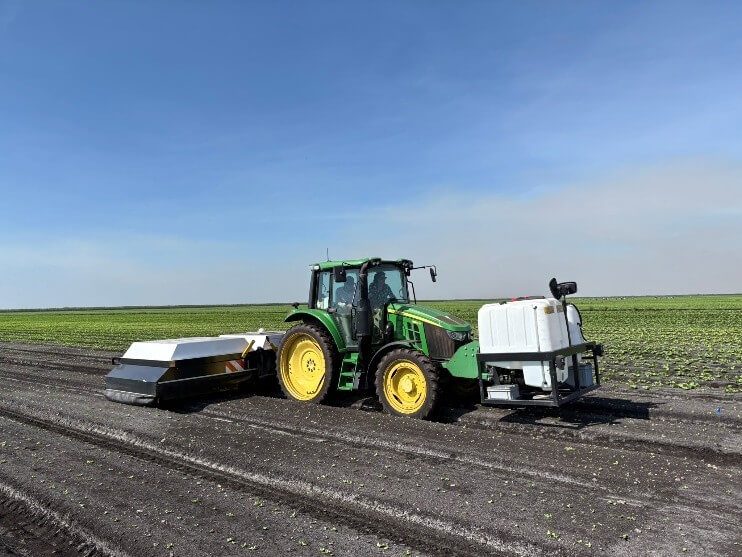
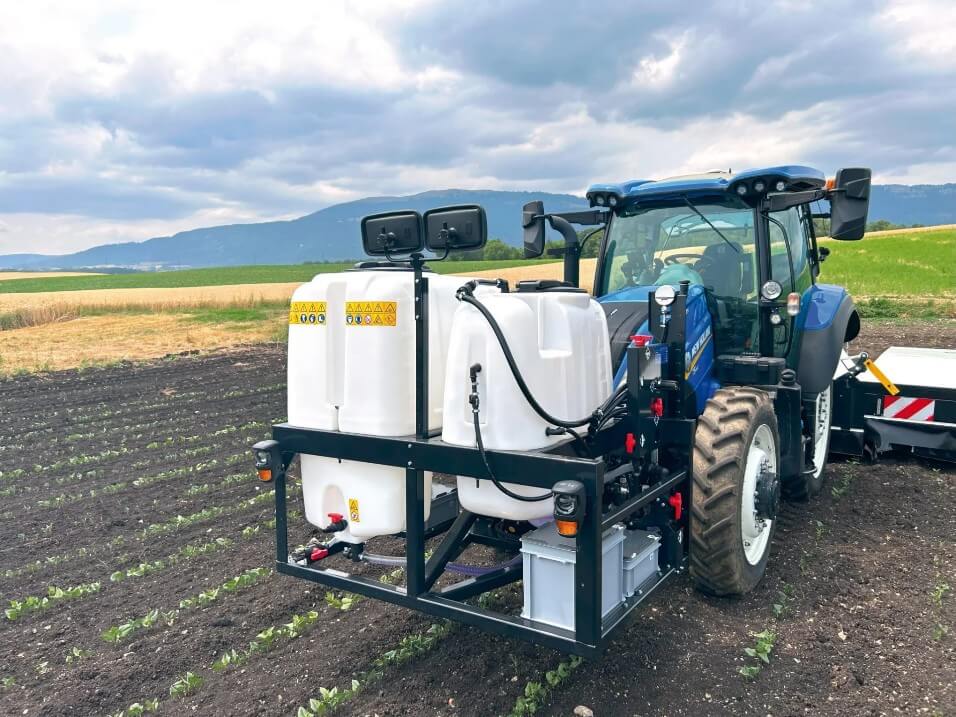
    The sprayer is a two-component system, mounted directly onto the front and back of a tractor. The front unit consists of two separate tanks: one dedicated to the chemical solution and the other to fresh water, which can be used for rinsing or refilling the chemical mixture tank. The front component also includes the pump and processing unit (Figure 1).

    Figure 1- Front-mounted unit.

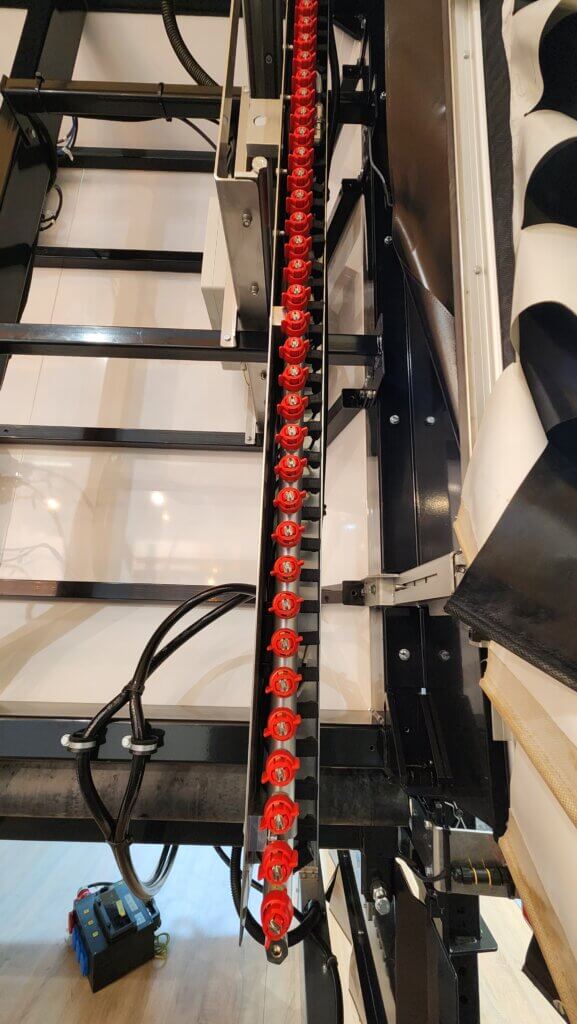
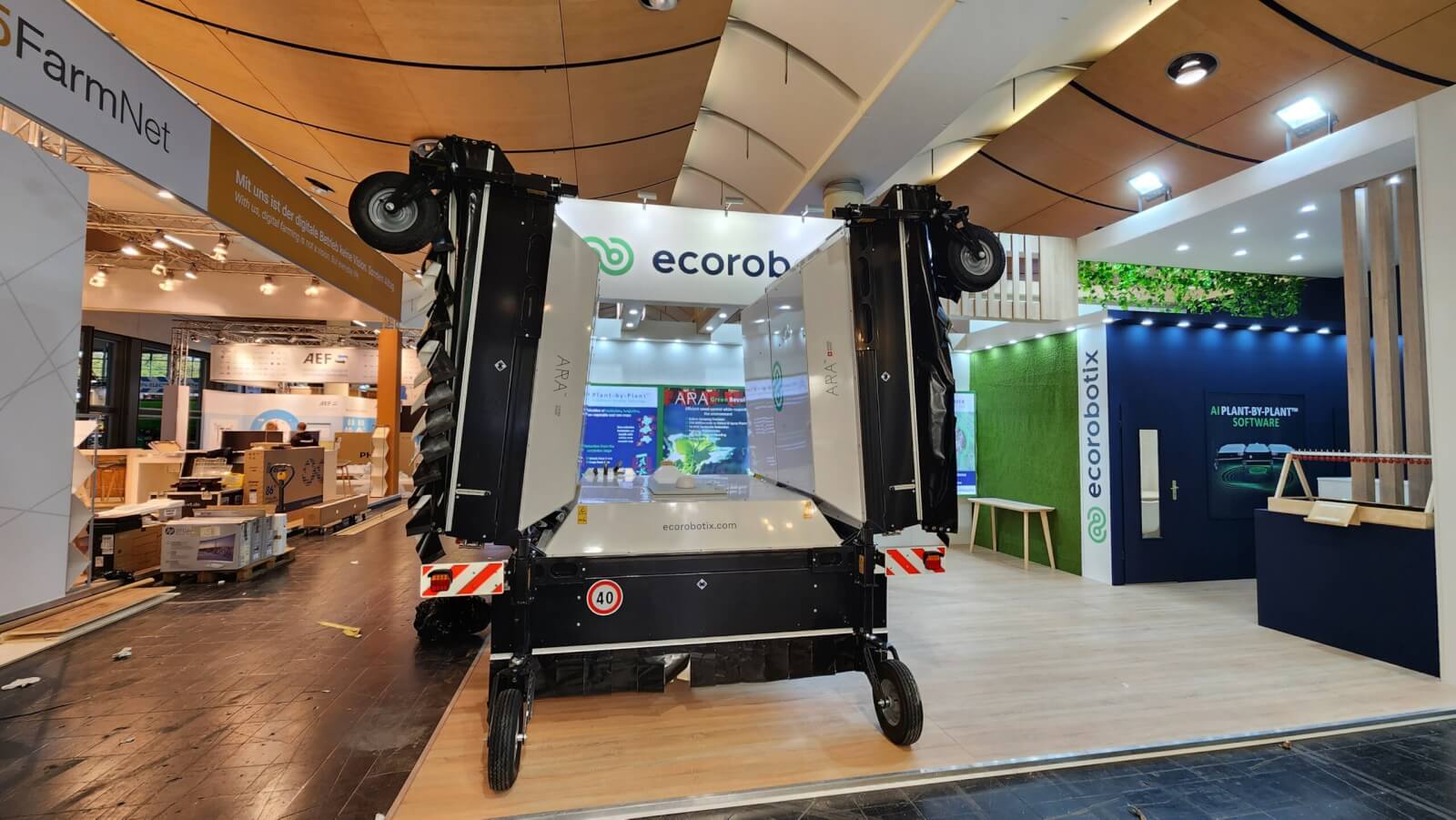
    The boom section is mounted via three-point hitch to the rear of the tractor (Figure 2). The shrouded boom folds for transport and storage and features 156 individually controlled nozzles (Figure 3).

    Figure 2- Rear unit deployed.
    Figure 3- Closeup of the boom.

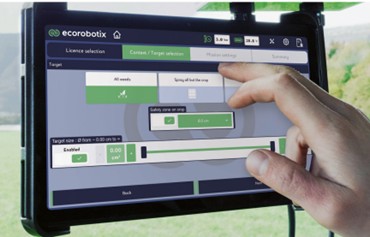
    The unit can be controlled and monitored from a tablet or smartphone connected through the machines’ own Wi-Fi. External data connection through internet is only required for occasional maintenance and updates but not for regular field operations. Regardless of the complexity embedded in the smart operating system, the interface is intuitive and easy to manage. Most of the parameters are automatically optimized by the software (Figure 4).

    Figure 4- Tablet interface.

    Capabilities

    Since the intelligent vision system acts as the central controller for each individual nozzle, it enables a wide range of operating modes and potential applications. Depending on user needs, the system can process information and respond in various ways. The following list outlines the currently available and tested features, which may be expanded in the future.

    Banded Spraying

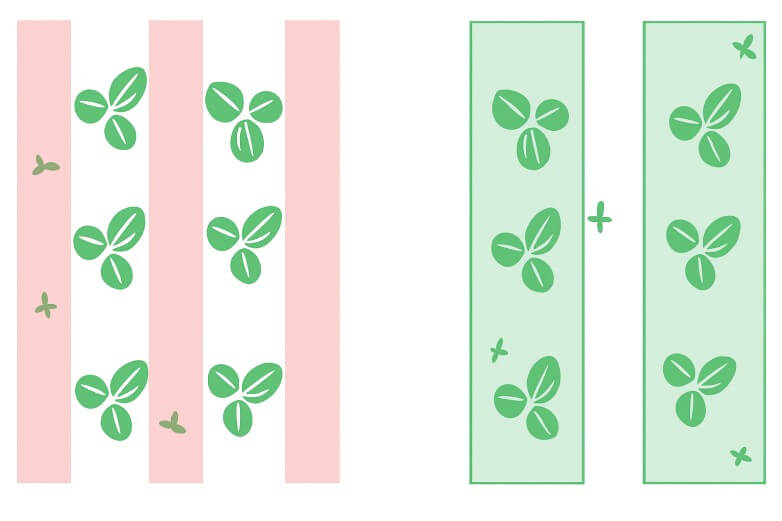
    In this mode, parallel bands of variable width are sprayed, which might include or exclude the crop (Figure 5), depending on the objective. The lines are defined based on AI detecting a planting pattern, which will lead to the automatic definition of the spraying swaths.

    Figure 5- Banded application options: in-row or inter-row.

    Size-Exclusive Spraying

    This option allows targeting the spray based on the plant size. It can either be used to:

    • Detect and spray weeds larger than a small emerging crop.
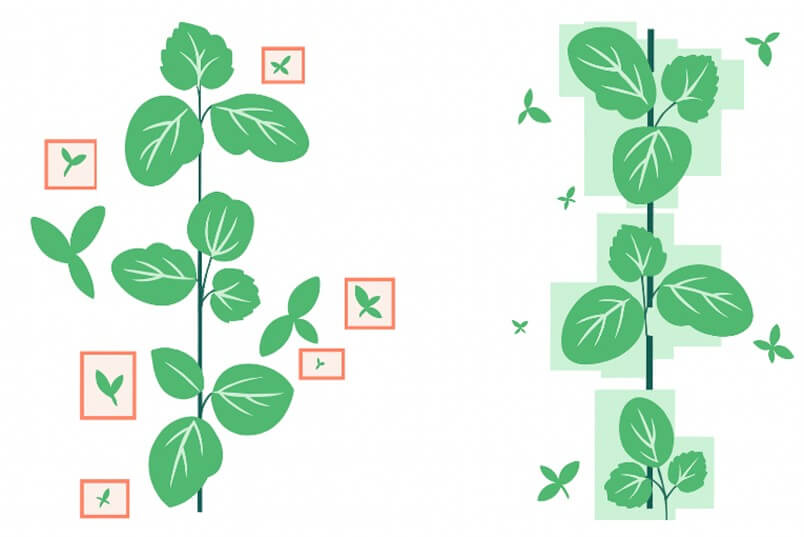
    • Detect smaller emerging weeds in an advanced-stage crop. Weeds similar in size or larger than the crop will be missed in this case. (see figure 6 – left).
    • Spray only the crop with fertilizers or pesticides when no-specific algorithm has been developed to differentiate it from the weeds. The crop must be significantly larger or smaller than the weeds for this mode to work efficiently. (see figure 6 – right)
    Figure 6- Only plants smaller (left) or larger (right) than a specified target are sprayed.

    Green on Brown Spraying

    The machine will spray all detected green material (Figure 7). This is particularly useful for improving chemical use efficiency in stale seedbed and insecticide applications. It also offers an interesting option to reduce the risk of herbicide carryover in pre-plant, post-weed-emergence control, especially when weed cover is low and the product may persist in the soil long enough to affect the crop.

    Figure 7- Green on brown spray.

    Green on Green Spraying (Six Scenarios)

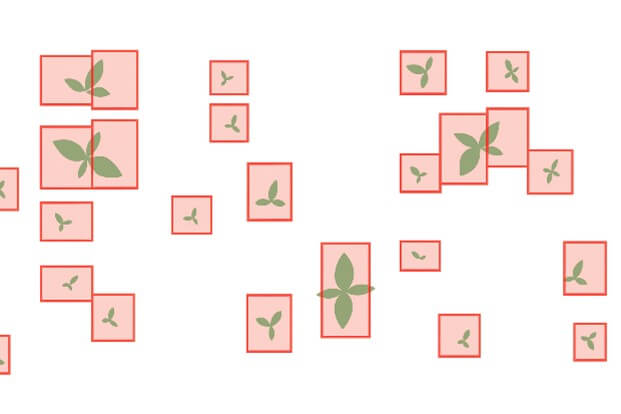
    The vision system and processing capabilities can identify the crop, distinguish it from weeds, and selectively target either, regardless of plant size. Additionally, a variable safety buffer can be defined to determine how close a spray can be applied to the nearest crop leaf. If this feature is inactive, any overlapping weeds will be sprayed, even if the herbicide contacts the crop. If active, the sprayer will avoid targeting weeds that are closer than the defined safety buffer distance, which can be set up to 16 cm (6.3”).

    The parameters can be configured to cover six difference scenarios:

    1. Selective herbicides when no safety buffer is required

    All weeds will be sprayed, regardless of their proximity to the crop. If they’re very close, the crop might receive part of the spray (Figure 8). This mode is suitable for selective herbicide applications.

    Figure 8- Herbicide application with zero safety buffer.

    2. Non-selective herbicides when the contact with crop canopy should be minimized

    In this case, depending on the potential damage caused by the chemical contacting the crop, a variable buffer can be programmed. Only weeds that can be sprayed while maintaining the defined buffer distance from the crop will be targeted (Figure 9). Inevitably, weeds in very close proximity or overlapping with the crop will be missed.

    Figure 9- Weed target spray with a safety buffer.

    3. Crop-targeted spray

    The machine will detect the crop and will not spray anything else (Figure 10). This can be useful for insecticide or foliar fertilizer applications.

    Figure 10- Crop-targeted spray.

    4. Application of weed pre-emergence herbicides post-crop-emergence

    In this case the entire surface, except the crop canopy is sprayed (Figure 11). It can be utilized to spray herbicides with soil residual activity post crop emergence.

    Figure 11- Pre-emergent herbicide application excluding the crop/

    5. Monocots vs dicots weeds differentiation

    This mode is limited only to onion fields for now. It can be configured to spray only monocots weeds (grasses, sedges) or only dicots weeds (broadleaf). This can be useful to increase the efficiency of post-emergence broadleaf or grass selective herbicide applications.

    6. Specific weeds targeted

    In this mode only the target weeds will be sprayed. As of now, it’s only available for thistles, docks, and common ragwort. It can be used when a specific herbicide is used to target hard-to-control species.

    Speed and Accuracy

    For all applications, the company claims to have a spray accuracy of 6 cm by 6 cm (2.4”x2.4”). The speed of operation will be dependent on the weed size. The larger the weed size, the lower the recommended speed to allow for an optimal spray coverage of the weeds, increasing the treatment efficacy. The speed operating range is 0 to 7.2 km/h (0-4.5 mph).

    Weed coverage or density does not affect the maximum recommended speed, as the machine can process images at such high rates that it is capable of scanning and spraying 100% of the area when moving at full speed. In other words, the processing unit does not need to slow down to detect, differentiate, and target weeds, even when they are present at very high densities.

    Ecorobotix claims the machine can cover 2.8-3.2 ha (7-8 acres) per hour under typical conditions and can run 24/7 independent of light conditions.

    Crop Portfolio

    As of August 2025, the company has developed the following algorithms for specific crop recognition:

    Vegetable Crops:

    • onion
    • carrot
    • lettuce
    • endive/chicory
    • beans
    • spinach
    • broccoli (beta)
    • cauliflower (beta)
    • leek (beta)
    • other cabbages (beta)
    • potatoes
    • sweet corn

    Field Crops:

    • sugar beet
    • rapeseed (canola)
    • corn
    • soy (beta)
    • cotton (beta)
    • wheat (beta).

    For the crops not listed, the equipment can still be used but not with the features that required crop identification for targeted sprays.

    Technical Specifications

    • Minimum weed size required for weed detection: 4 x 4 mm.
    • Maximum plant height: 40 cm.
    • Minimum crop size for proper identification: at least two true leaves.
    • Minimum tractor power: 90 HP
    • PTO: 540 RPM, 4 HP (3 kW) max
    • Three-point hitch: cat 2 front and back.
    • Weight:
      • Front unit: 705 lb or 320 kg (empty), 2,645 lb or 1,202 kg (full)
      • Rear unit: 2,257 lb or 1025 kg
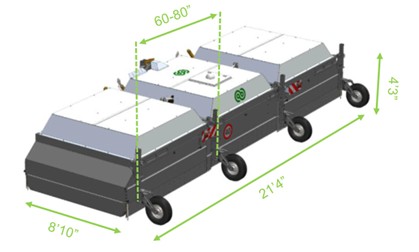
    • Dimensions (Figure 12):
      • Front unit: 5’7” x 4’7” x 5’7” (W x D x H)
      • Rear unit: 21’4” x 8’10” x 4’3” (W x D x H)
    Figure 12- Dimensions.

    Cost of Purchase and Operation

    At the time of writing, the purchase cost for a complete unit is around $300,000 USD, depending on the algorithms purchased and shipping fees. In the following years, there is an annual fee associated with the operating system maintenance and development. The basic subscription includes algorithms for three crops, as well as access to all beta-stage models currently in development. Additional crop algorithms can be purchased. For accurate pricing, contact their Canadian partner, Univerco.

    According to the manufacturer, the equipment does not require regular replacement of expensive components beyond standard sprayer preventative maintenance. While some components are standard and readily available, the company also keeps a regular stock of specialized parts at its warehouse in Pasco, WA, available for immediate shipping. Comprehensive service and maintenance support is provided locally by Univerco.

    Testimonial

    Wendy Zhang is the head agronomist for Keejay farms. She oversees more than 5,000 acres of diverse vegetable crops, predominantly carrot and onions. In her own words, the machine is “easy to operate, very accurate, and fast enough for a large-scale farm.” She also highlighted substantial savings on chemicals and the significant advantage of being able to safely spray close to the crop using products that cannot be broadcasted due to the risk of unacceptable crop damage.

    The most important benefit, she says, is the ability to apply treatments very close to the crop canopy, using effective rates and chemistry without compromising crop safety. No other practical tool offers this capability. A clear demonstration of its effectiveness is that no other spray equipment is currently being used for their large onion operation.

    The Grower Magazine published an excellent article about this machine, featuring other grower testimonials.

    Thanks to Olivia Soares de Camargo, Business Development Manager at Ecorobotix, for providing much of the information used in this article.