Category: General Concepts

For basics category

  • How to evaluate airblast coverage

    How to evaluate airblast coverage

    Note: While there’s nothing wrong with this article, a more recent article on this subject can be found here.

    It’s nearing the end of a long morning of spraying and you just want to get it done. As the tank empties and you watch the last of the spray cloud waft through the row, you’re thinking about rinsing out and moving on… but did the spray land where you wanted?

    How do you really know if you hit the target?

    Maybe you’re content with the occasional “shoulder checks” you made from the cab while spraying. Perhaps you stop at the end of the row and get out of the tractor to look for wet foliage during.
    Maybe you plan to return once the product is dry and look for white residue.

    Taken with the sprayer operator’s smart phone, here’s the over-the-shoulder view of an early-morning spray application from the cab. You can’t see coverage, but gaps in the spray will show if nozzles are plugged. You can also check to see if you are overshooting or blowing through the target. Photo Credit – C. Hedges, ON.
    This early morning “shoulder check” was photographed by the operator using his smartphone.  You can’t see coverage, but gaps in the spray will show if nozzles are plugged. You can also check to see if you are overshooting or blowing through the target. Photo Credit – C. Hedges, ON.

    These are all good feedback practices, but a more accurate method is the use of water-sensitive paper, which turns from yellow to blue wherever spray touches it. You can easily see the distribution of the spray and the overall area covered, and it can be quantified so you can compare one sprayer set-up to another, or see the impact of weather, or even the effects of nozzle choice, pressure and  water volume.

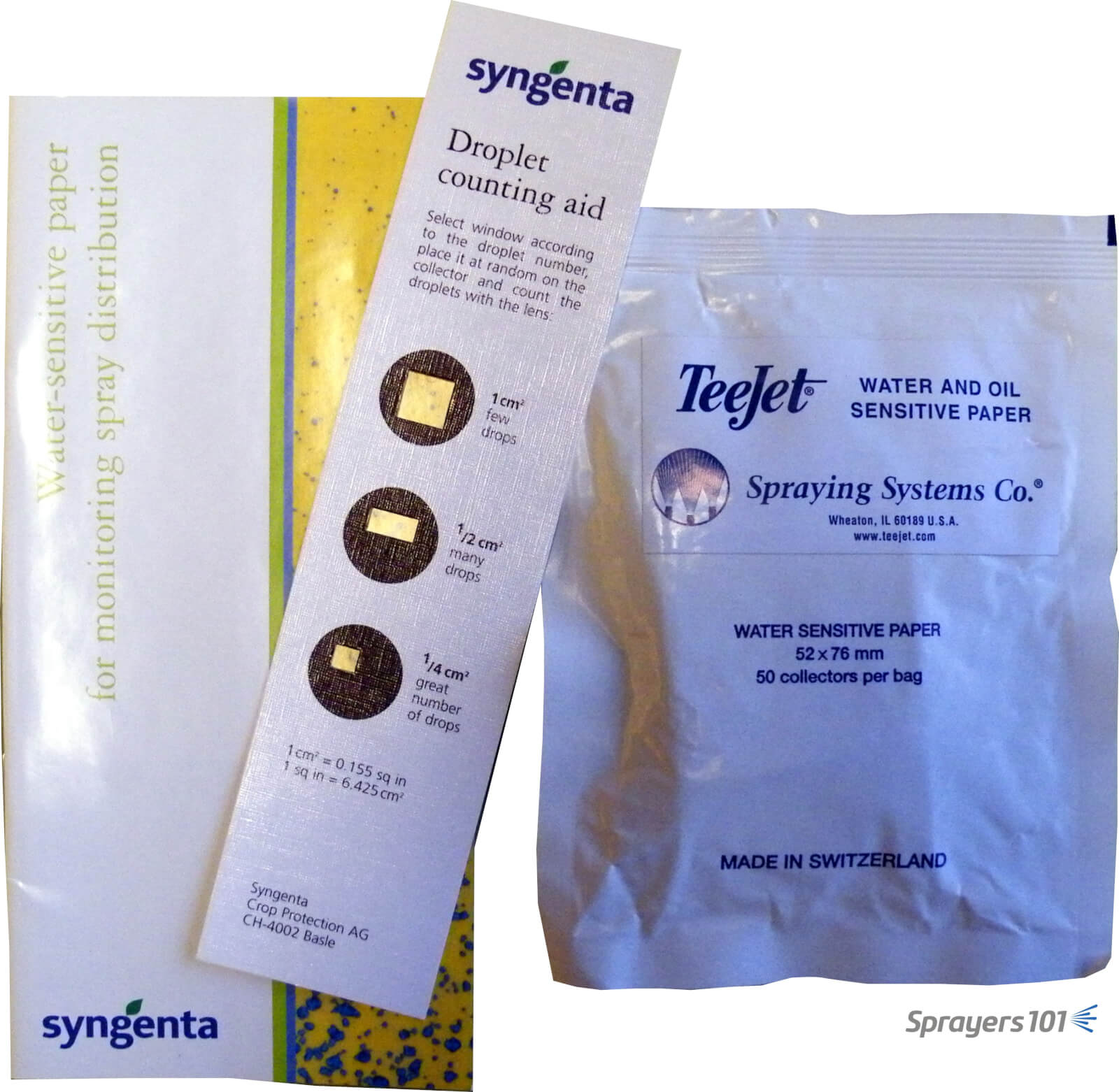
    Water- (and oil-) sensitive paper: Cheap, simple and available on-line or in person from your favourite sprayer equipment store.
    Water- (and oil-) sensitive paper: Cheap, simple and available on-line or in person from your favourite sprayer equipment store.

    Draw a map

    Begin by creating a simple drawing of the tree, cane, bush,vine, etc. you wish to spray. Label the drawing with unique numbers that correspond to where you are going to place the papers. Write the numbers on the back of each paper so you can see where they came from after they are collected. You should also note the pass number, so you can differentiate between each sprayer setup and corresponding pass. You might make a change and want to see how it affects coverage, and it’s very easy to mix up the papers if you haven’t record everything clearly. Plan to do this for at least two plants upwind from the sprayer to ensure you will get an accurate representation of average coverage. Be sure to wear disposable gloves and avoid dew so the papers don’t react prematurely.

    Create a simple drawing of the target. Number positions on the drawing that correspond to where you plan to place the papers.
    Create a simple drawing of the target. Number positions on the drawing that correspond to where you plan to place the papers.

    Distribute the papers

    It is critical to distribute the papers evenly throughout each target canopy. They should be placed in key locations where pest damage has been an issue in the past (e.g. scab at the top of a tree, or spotted-wing drosophila at the bottom-centre of highbush blueberry), or anywhere coverage is notoriously difficult. Our preference is to place them at the top, centre and bottom of a tree canopy as well as laterally from the outer edge of the canopy beside the sprayer moving in towards the trunk.

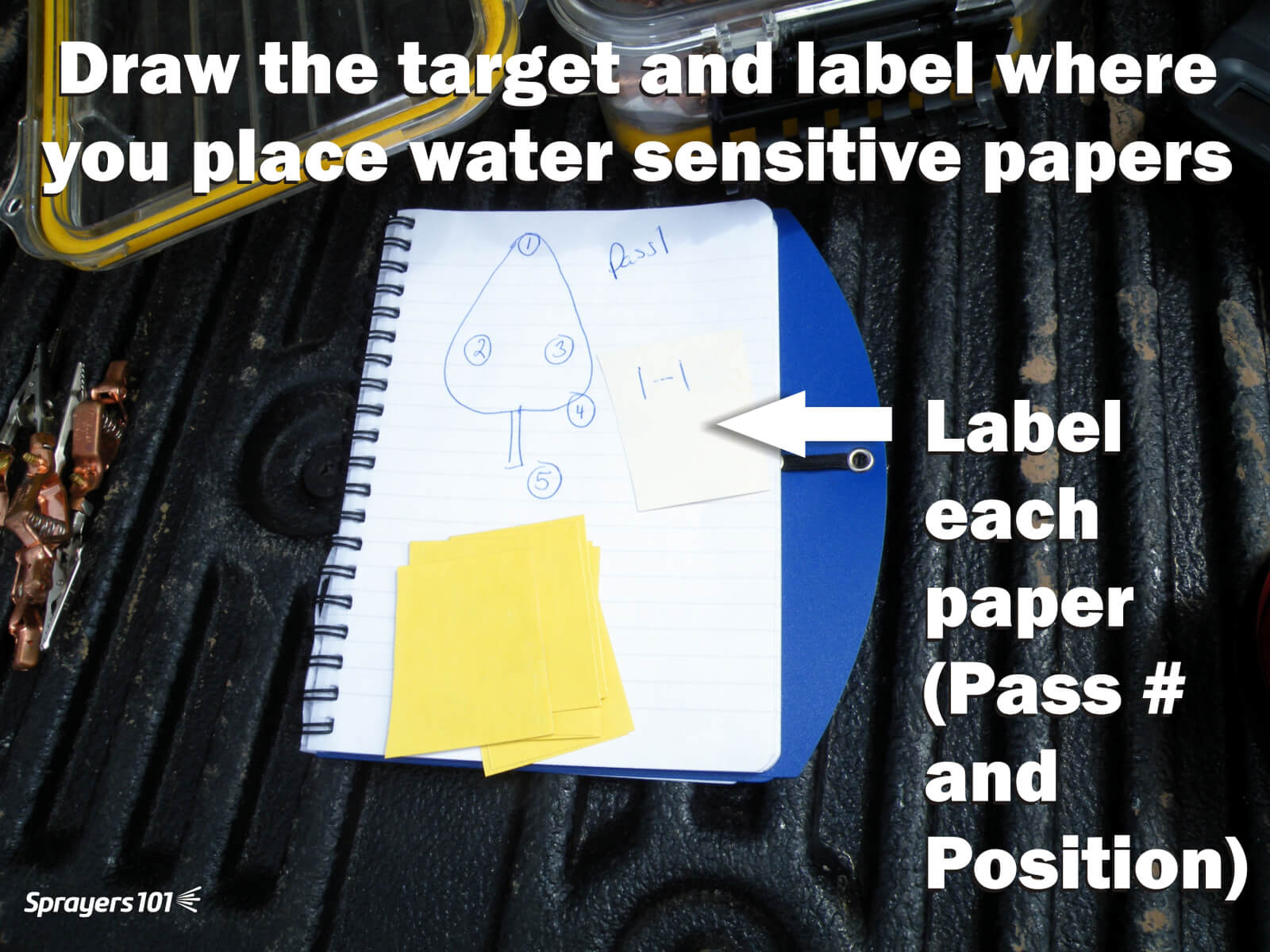
    Number positions on the drawing that correspond to where you plan to place the papers. Label the papers as well so you know where they came from. Consider writing the pass number and the position (e.g. 1-1 would be Pass 1, Position 1) so you can evaluate the changes to the sprayer settings from pass to pass. (Figure 60) Later, all the information from the calibration can be entered into your spray records, like in this example.
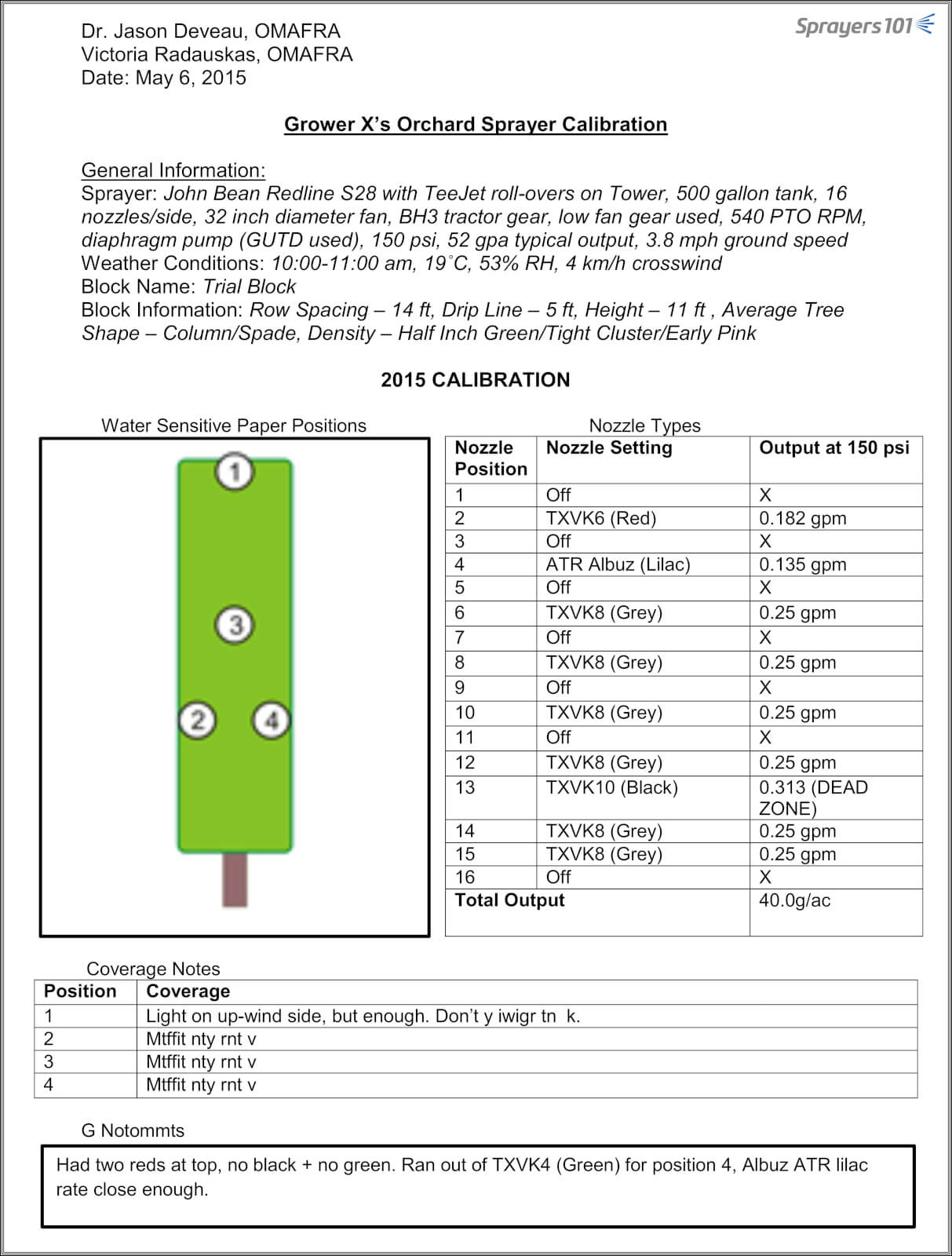
    Number positions on the drawing that correspond to where you plan to place the papers. Label the papers as well so you know where they came from. Consider writing the pass number and the position (e.g. 1-1 would be Pass 1, Position 1) so you can evaluate the changes to the sprayer settings from pass to pass. Later, all the information from the calibration can be entered into your spray records, like in this mock-up.

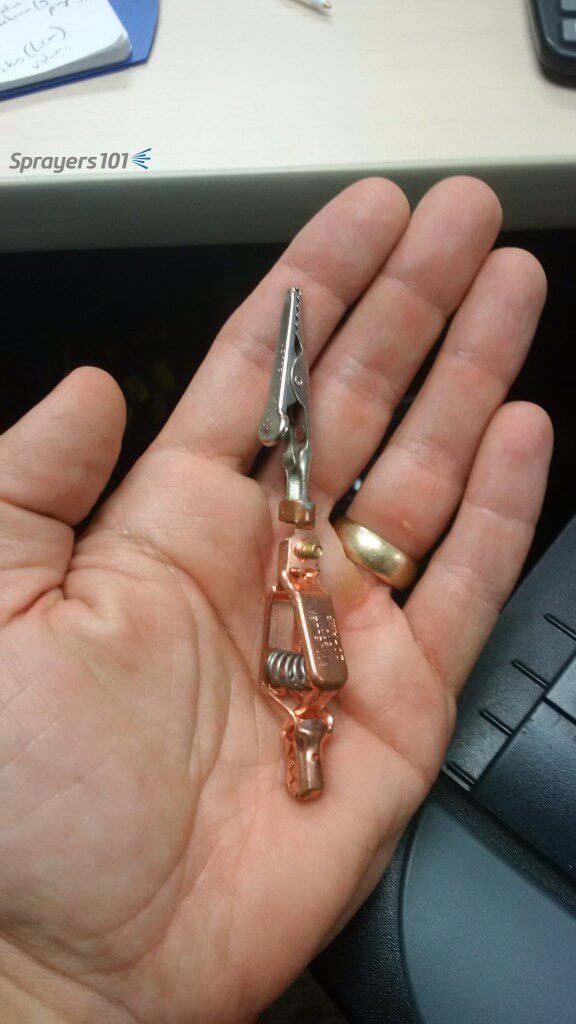
    We use spring-back paper clips attached to alligator clips at 90 degrees to attach the papers to small branches. You can also staple them to the upper or lower face of the leaves (as long as they don’t cause leaf to droop). You can wrap them around stems for panoramic coverage or to monitor drenches. They can be stapled the trunk to show if spray is aimed into the canopy or being wasted. You can even skewer to the ground using wire flags to to illustrate poor lower-nozzle positioning and/or canopy run-off. Put them wherever you want to know about spray coverage!

    This home-made double-ended alligator clip holds papers at right angles. One end for the paper, the other end to a twig or wire flag.
    This home-made double-ended alligator clip holds papers at right angles. One end for the paper, the other end to a twig or wire flag.

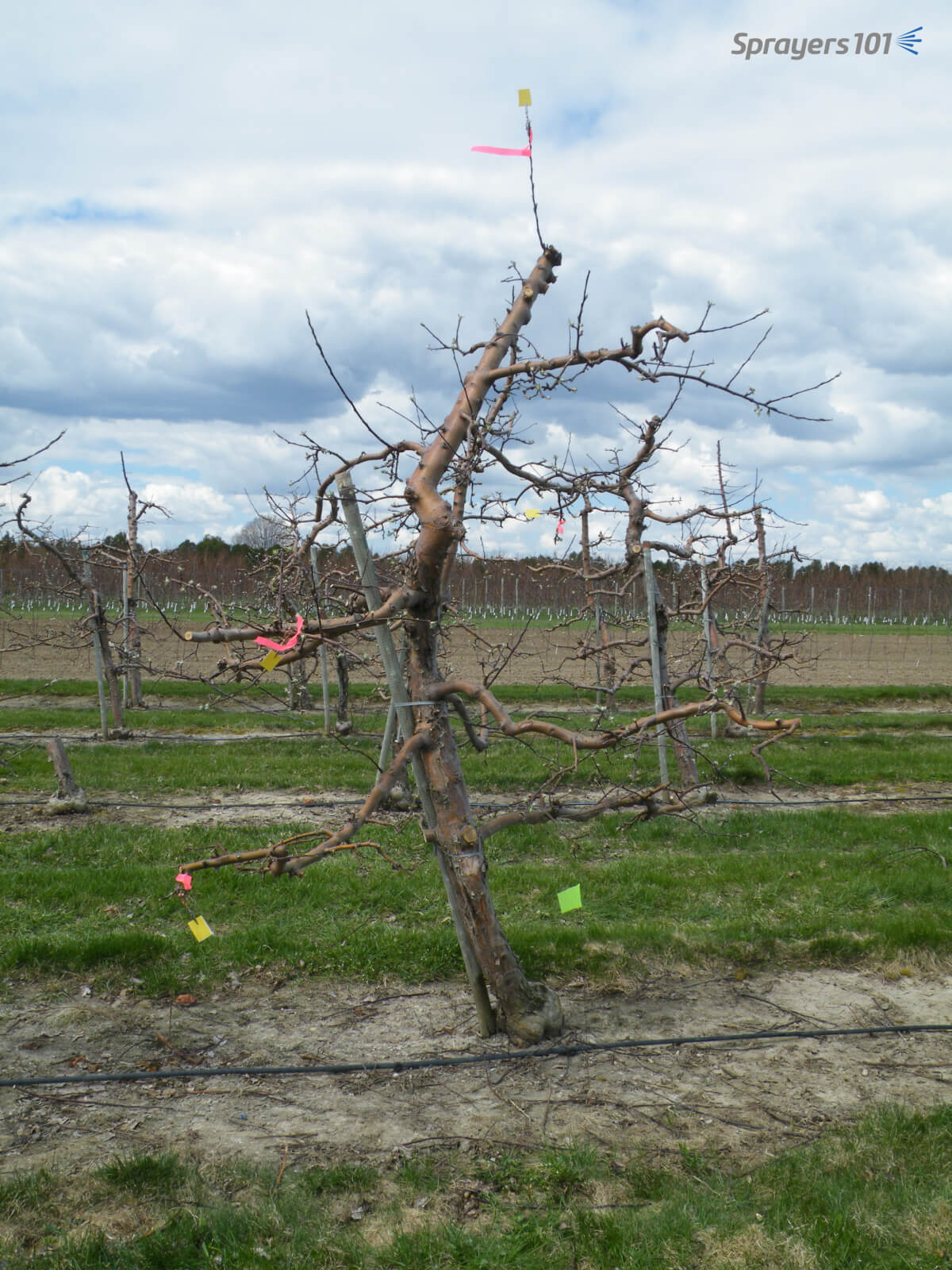
    We typically orient them facing the alleys so their sensitive faces are square to the sprayer as it passes. We often use two in each location, oriented back-to-back facing each alley so you can resolve coverage from both sides. The important part is to ensure you are consistent. Mark the location in the canopy with some colourful flagging tape so you can find the papers after you spray, and if you wish to replace them with fresh papers to evaluate another pass, orient them the same way to make the comparison fair.

    Water-sensitive papers located in five positions in an Empire apple tree. Two papers were pinned back-to-back in each position, distributed evenly throughout the canopy, facing the alleys. One paper was located at the lowest branch to determine if the lowest nozzle position needed to be on. Another paper was pinned to the ground face-up under the tree to show any excessive waste. Be creative, but be consistent from pass to pass.
    Water-sensitive papers located in five positions in an Empire apple tree. Two papers were pinned back-to-back in each position, distributed evenly throughout the canopy, facing the alleys. One paper was located at the lowest branch to determine if the lowest nozzle position needed to be on. Another paper was pinned to the ground face-up under the tree to show any excessive waste. Be consistent from pass to pass.

    Spray, check and spray again

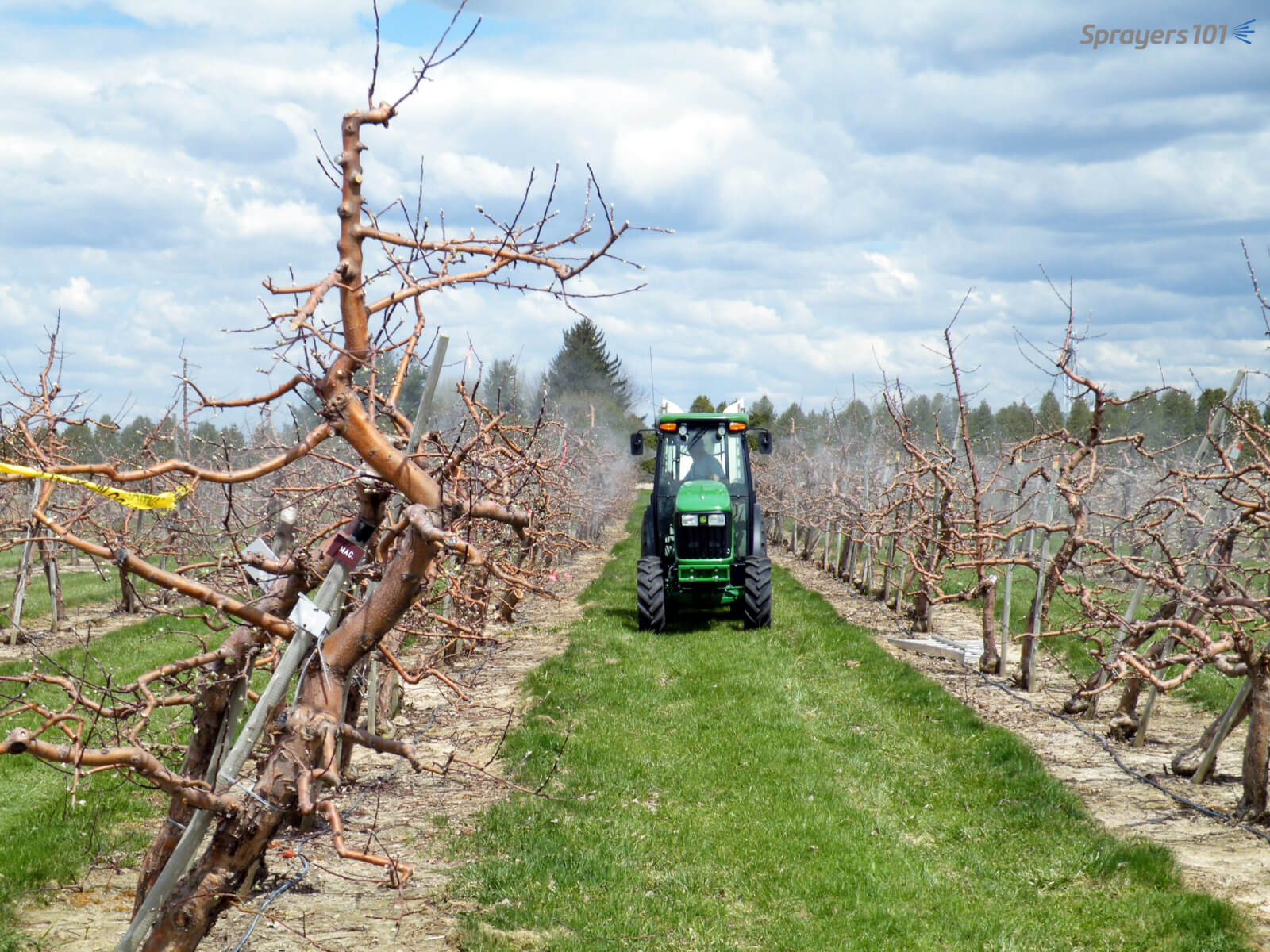
    Once the papers are in place, pass by on one side with both booms open (as you would normally spray). Be sure to start spraying well before passing the target, and keep spraying afterwards to ensure the resultant coverage represents an actual application. It is very informative to get out of the cab and examine the papers before passing by on the other side. You can learn a lot about how the wind is affecting the spay.

    Once papers are in place, pass by spraying with both booms open to emulate a typical spray day. Be sure to start spraying well before passing the target, and keep spraying afterwards to ensure the resultant coverage represents an actual application. It can be very informative to examine coverage at this point to see how wind is affecting the spray. Then, pass by on the other side to complete the application.
    Once papers are in place, pass by spraying with both booms open to emulate a typical spray day. Be sure to start spraying well before passing the target, and keep spraying afterwards to ensure the resultant coverage represents an actual application. It can be very informative to examine coverage at this point to see how wind is affecting the spray. Then, pass by on the other side to complete the application.
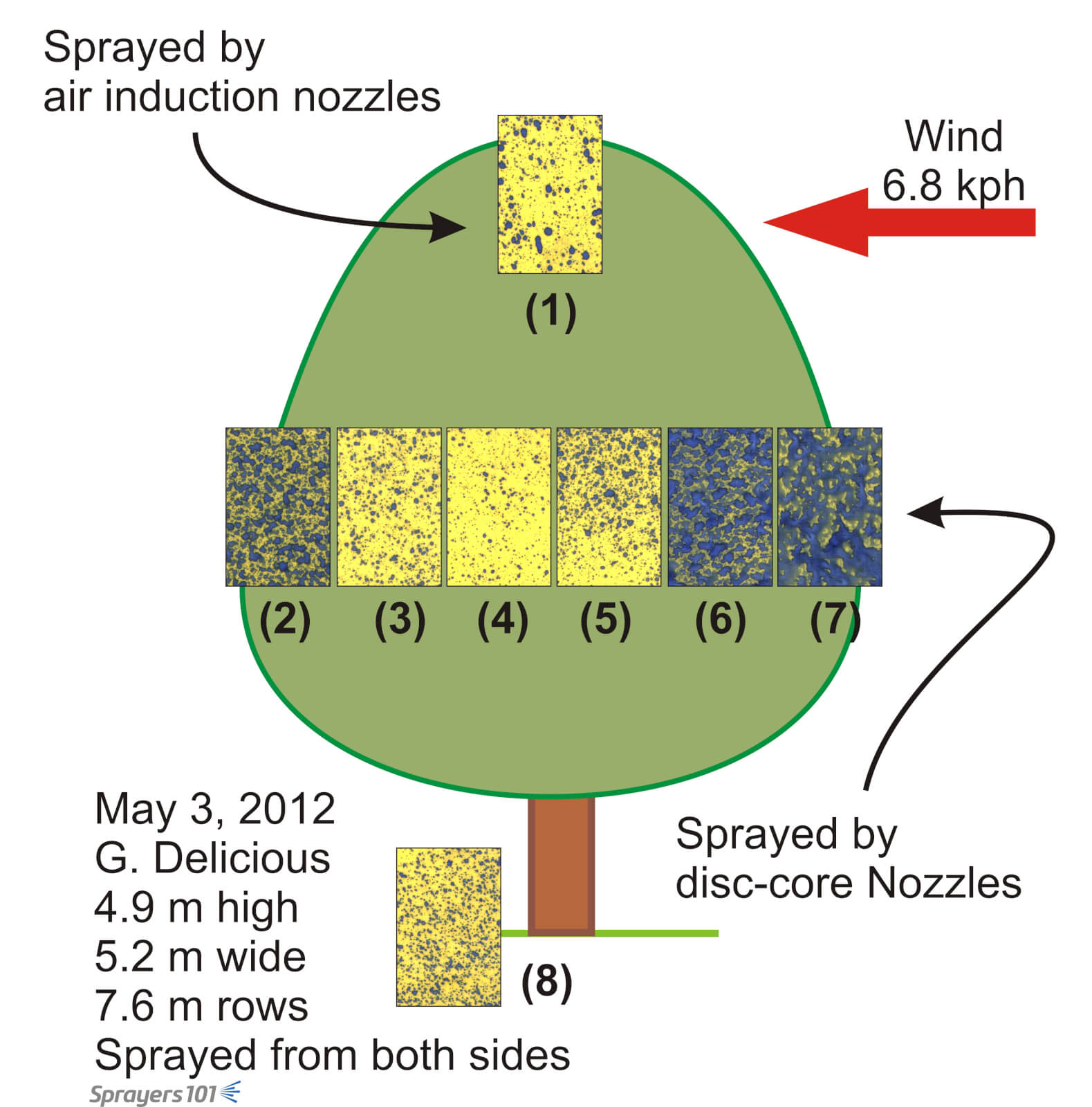
    An example of the coverage obtained on water-sensitive papers placed throughout an apple tree canopy, and on the ground beneath it.
    An example of the coverage obtained on water-sensitive papers placed throughout an apple tree canopy, and on the ground beneath it.

    Interpret the patterns

    You might notice the outer portions of larger canopies receive more spray than the inside. This is hardly surprising given that spray must pass through the outside to get to the inside. As a result, inner papers often receive proportionally less spray and should be the basis for determining if you have sufficient spray coverage. This is also why the label recommendation of “spraying to the point of runoff” is unhelpful: the outer portion of wide, dense canopies often begin to drip before the inner portion receives sufficient coverage. Further, how do you spray to the point of runoff? How do you know when to stop before it’s too late? Label language can be frustrating…

    When water-sensitive paper is sprayed to the point of run-off, the blue dye will drip. This is fine for a drench (dilute) application, but excessive for a typical concentrated application like foliar fungicides and insecticides.
    When water-sensitive paper is sprayed to the point of run-off, the blue dye will drip. This is fine for a drench (dilute) application, but excessive for a typical concentrated application like foliar fungicides and insecticides.

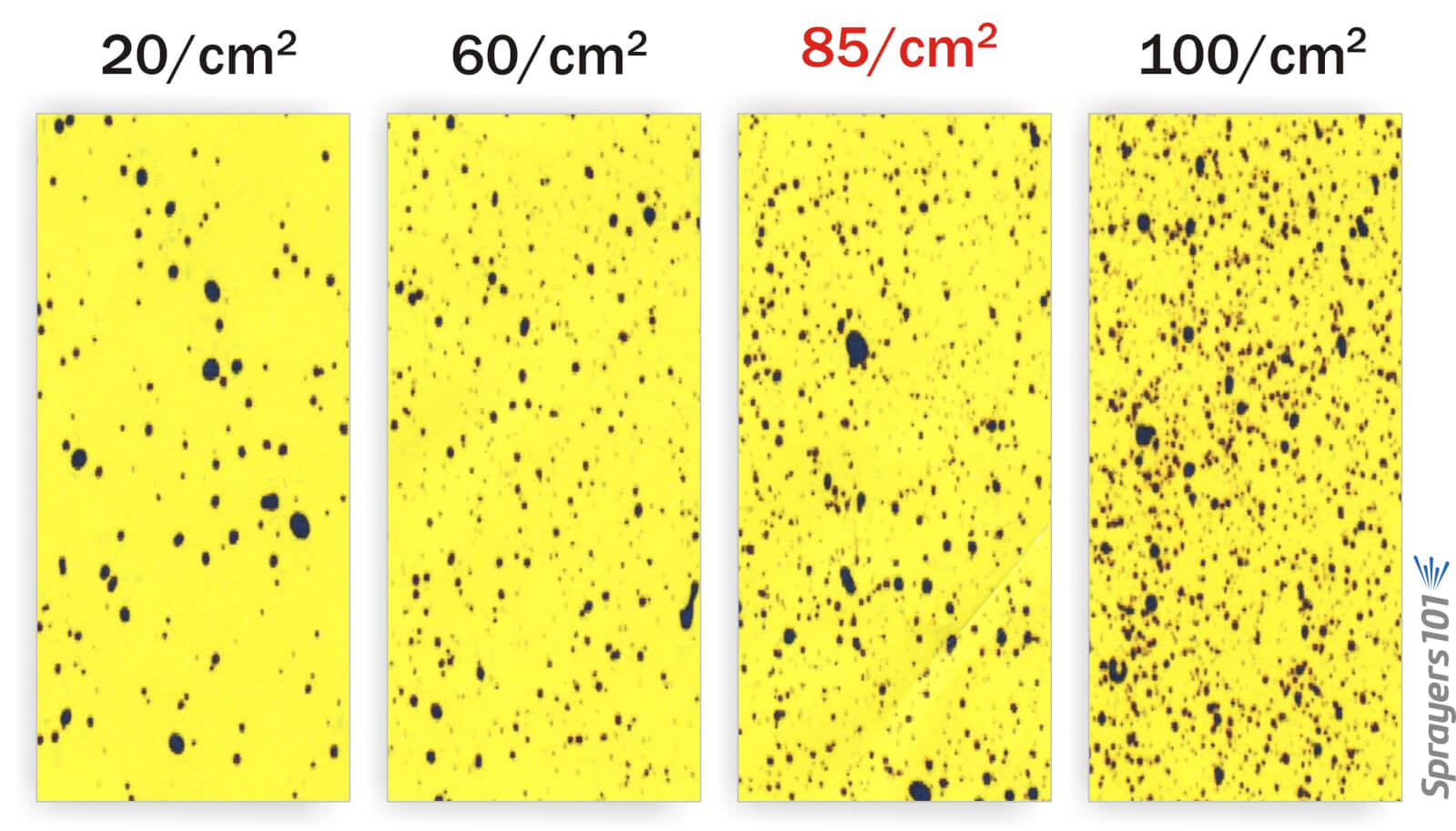
    When assessing coverage, don’t follow the droplet counts in the small guide that comes with the paper sensitive paper kit – they haven’t been updated for a very long time and are more appropriate for field crop applications – not airblast applications. Research and experience suggest that 85 discrete fine/medium-sized droplets per square centimetre and a total coverage of 10-15% should be sufficient for most foliar insecticides and fungicides. Remember, this is only a suggested threshold and in the case of coarser sprays, focus more on even distribution and the 10-15% coverage.

    It’s debatable, but 85 fine/medium-sized drops per square centimetre and about 10-15% total surface covered represents adequate airblast spray coverage for most foliar applications. It is less applicable for applications made with very coarse droplets, because there are fewer of them and they generally cover more area. In this case, focus more on the even distribution of spray and the 10-15% coverage. The extreme example of this is a drench (dilute) application of oil where total saturation is the goal.
    It’s debatable, but 85 Fine/Medium-sized drops per square centimetre and about 15% total surface covered on a minimum 80% of all papers represents adequate airblast spray coverage for most foliar applications. It is less applicable for applications made with Coarse/Very Coarse droplets, because there are fewer of them and they generally cover more area. In this case, focus more on the even distribution of spray and the 15% coverage. An extreme example of this is a drench (dilute) application of oil where total saturation is the goal. Conversely, ultra-low volume applications employ Very Fine droplets and a better metric is uniform, high droplet density rather than area covered.

    Make a change and try again

    There’s no easy way to define a threshold between sufficient and insufficient spray coverage. When you retrieve and examine the papers, think about how the product is intended to work: “Is it a contact, trans-laminar or locally systemic pesticide? What are the odds that an insect or spore will come in contact with residue? Will I be spraying again soon (e.g. fungicide) and will the spray already on the leaves have residual activity?” Regarding that last thought, protectant fungicide applications are often layered, so what one spray misses, the next will catch. Quite often, “sufficient coverage” is less than most sprayer operators think.

    If you are content with the coverage, record your sprayer settings to use them again in that block (in similar weather, and assuming the crop canopy doesn’t change significantly before the next spray day). If you are not content, make a change to the sprayer to improve matters, reset the papers, and go again. It can take time and some effort to get it right, but improved coverage and reduced waste are ample financial reward for your efforts.

    Other methods of evaluating coverage

    It should be noted that while water-sensitive paper is versatile, cheap and easy to use, it has its shortcomings. Placement and orientation of the paper is very important; it’s easy to hit papers on the outside of the canopy with the sensitive-side facing the sprayer. It’s considerably harder when they are at the very centre of the canopy, or hiding behind fruit. When the thin edge of the paper is oriented to the spray (i.e. oriented facing the ground), it presents very little surface and can be difficult to hit.

    Use enough air to only just ruffle the leaves. This exposes all surfaces, however briefly, to the spray. Too much air will align leaves with the spray, exposing only their thin edge and making coverage difficult. Too much air may also cause leaves to shingle (overlap), and create shadows like on the grape leaves shown here.
    Use enough air to only just ruffle the leaves. This exposes all surfaces, however briefly, to the spray. Too much air will align leaves with the spray, exposing only their thin edge and making coverage difficult. Too much air may also cause leaves to shingle (overlap), and create shadows like on the grape leaves shown here.

    Further, the papers won’t show the finest droplets (<50 µm), so there may be spray even though you can’t see it. Taken collectively with the product’s mode of action (i.e. contact or locally systemic), and any possible re-distribution by rain or dew, spray coverage becomes a good indicator for protection, but it isn’t definitive. While coverage is a good indicator, improved coverage does not always mean improved efficacy.

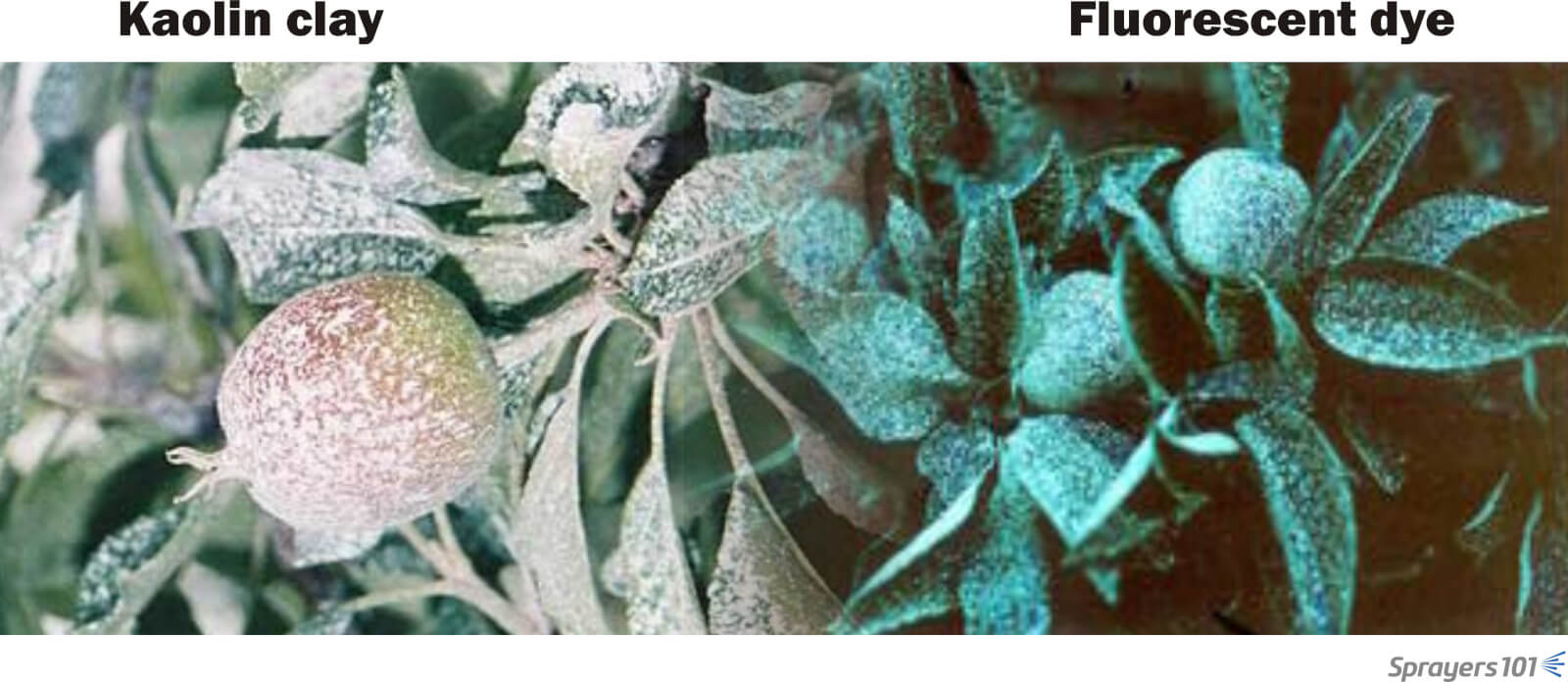
    Some sprayer operators use other methods to confirm their coverage. Kaolin clay is an inert compound that leaves white residue when dry. Red, yellow or green water-soluble, food-grade dyes will also indicate coverage. Even fluorescent dyes such as phosphorus can be sprayed at night and illuminated under black lights.

    Kaolin clay and fluorescent dies sprayed into fruit canopies give a lot of information about sprayer coverage, but are relatively inconvenient compared to water-sensitive paper.
    Kaolin clay and fluorescent dies sprayed into fruit canopies give a lot of information about sprayer coverage, but are relatively inconvenient compared to water-sensitive paper.
    Red food-grade dye sprayed from a horizontal boom to demonstrate downwind drift onto a white target. This was a messy experiment and my hands, and the sprayer, were pink for a long time afterwards. Photo Credit – J. McDougall, Ontario.
    Red food-grade dye sprayed from a horizontal boom to demonstrate downwind drift onto a white target. This was a messy experiment and my hands, and the sprayer, were pink for a long time afterwards. Photo Credit – J. McDougall, Ontario.

    Take home

    These methods give the sprayer operator a lot of information because they land on the actual target, not a piece of paper hung in the canopy. But, they require a lot of time and effort and are typically out of reach for most operators. Further, they do not allow multiple applications on the same canopy to compare the effect of sprayer settings on coverage – once the target is sprayed, it’s sprayed.

    No matter which method you choose to use, understanding how changes to you sprayer, or the impact of weather, affect coverage is a critical piece of information. Operators should make an effort to evaluate spray coverage. Here are a few videos describing the process:

    Using water-sensitive paper for airblast coverage diagnostics – thanks to Penn State, Univ. New Hampshire and Chazzbo Media (2014).

    Checking water-sensitive paper in an orchard. Tower is spraying only water during a calibration run (2013).

  • Operator Safety: How to Avoid Pesticide Hazards

    Operator Safety: How to Avoid Pesticide Hazards

    A Veteran Applicator’s Questions about Pesticide Handling

    Time and again, after years of working with dozens of different chemicals, I would wonder to myself “How dangerous is this chemical?”, “Is glyphosate as safe as they say it is?”, “How do I find out what type of safety gear I need while handling this chemical?”

    Beyond the agrichemical dealer, ag. consultants, and university or government ag. extension specialists, a quick internet search reveals many sources of pesticide information. Collectively they identify the active ingredient(s) in formulated products, they detail which pests are best controlled by the pesticide, and they provide instruction for application. But it’s more difficult to find consistent, practical information about safe pesticide handling. Sometimes it’s excessive to the point of being impractical (try finding actual “chemical proof” gloves), and sometimes it’s minimal and vague – it depends where you look. No matter the level of precaution, pesticide safety is time consuming and involves some fussing, but it is the hallmark of responsible pesticide use. Just as we ensure that we are applying “safe rates” when spraying chemicals, we must also ensure we are respecting our own well-being while handling chemicals.

    In Canada, the Pest Management Regulatory Agency (PMRA) is charged with protecting human health and safety by monitoring pesticides that are sold in this country. According to the Federal Pest Control Products Act all pesticides sold in Canada must be registered with the PMRA. There’s a very nice overview of how that process works here. It is during this registration process that pesticide handling precautions are identified for the label. Further classification may take place under provincial acts.

    All pesticides are designed to disrupt, repel, control or kill living organisms, but when it comes to safe handling, insecticides receive the most attention. This is because herbicides and fungicides target biochemical pathways that only exist in plants or fungi. However, most pesticides can be hazardous if they are not handled correctly. The handling precautions that appear on the label are based on five factors.

    Five factors that affect handling precautions:

    1. Pesticide Family

    This factor is the broadest way to categorize potential risk to the handler. Generally, herbicides and fungicides are considered safer than insecticides, but there are notable exceptions. Do not rely solely on the pesticide family when making decisions on pesticide handling.

    2. Pesticide Mode of Action

    The mode of action gives further detail into how a pesticide should be handled. Modes of action that inhibit biochemical pathways that exist in the target pest, but not in mammals (people, in particular), have lower acute toxicities. Examples include herbicides that inhibit enzymes involved in amino acid synthesis or in photosynthesis – these enzymes do not exist in mammals. However, once again, there are always exceptions. Do not rely solely on mode of action when making decisions on pesticide handling.

    3. Pesticide Formulation & Route of Entry

    Pesticide formulation affects how a product can potentially be absorbed into the body. Emulsifiable Concentrates (ECs), for example, have higher rates of absorption than solutions or dry products. When it comes to the route of entry, dermal contact is considered safer than inhalation or ingestion. However, not all parts of your skin are created equal, and the point of dermal contact on the body matters a great deal.

    4. Pesticide Toxicity

    Taken collectively, the first three factors form the overall toxicity of the pesticide. The level of toxicity cannot be predicted – it has to be tested. The LD50 (defined below) values that are reported for a pesticide come from standardized experiments such as animal feeding. Although the chosen species (usually white rats for mammalian endpoints) are known to be similar to humans in their response, there is still the possibility of error. Nevertheless, toxicity forms an important basis for establishing handling precautions.

    5. Operator Exposure

    People handle toxic substances every day. Household bleach, for example is surprisingly toxic, and yet it can be readily found on kitchen shelves in many homes. The risk of being harmed by a toxic product can only be determined by the likelihood of exposure. While it is possible someone might accidentally consume a hazardous dose of bleach, it’s improbable. Exposure does not just refer to a single exposure to a substance – repeated exposures to small doses of a toxic substance can have a cumulative effect. The goal when handling any pesticide is to minimize exposure, but it becomes even more critical when that pesticide is highly toxic. Together, exposure and toxicity form the basis for risk.

    Risk = Hazard x Exposure

    Studies have shown that exposure is greatest for handlers of agricultural pesticides during the mixing and loading phase of spraying. During this phase, the risk to the handler may be increased due to:

    • physical stress
    • the denial of risk
    • a negative opinion of personal protective equipment (PPE)

    The main method of pesticide exposure is dermal, and many of the surfaces on a piece of equipment are already contaminated.

    Health effects of pesticides: Acute and Chronic

    Acute: short term

    High exposure, resulting in immediate reaction due to a high dosage of pesticide exposure. The severity depends on the toxicity of the molecule and entry into the body (dermal, oral, eyes, etc.). The most common acute reaction is skin irritation, although in certain cases respiratory, digestive, and neurological systems may be affected. Organophosphate (e.g. Lorsban, Malathion) and carbamate (e.g. Sevin, Lannate) insecticides inhibit the cholinesterase enzyme, which is found in humans and affects nerve function. Frequent users of these insecticides undergo regular blood tests to ensure their levels are normal.

    Chronic: long term

    Chronic affects are more prolonged as they are usually due to lower doses of pesticide exposure over a longer period of time. Although some rare cancers and disruption of the reproductive system have shown to be related to this type of exposure, when the general population and farming population have been compared in studies, the farming population has shown an under-representation in the majority of cancers. In the cases were reproductive malfunctions were observed, a different cause of the malfunction, such as genetic offset, was most often observed in these situations. However, cancer types such as skin cancer and brain cancer were overrepresented in the farming community. A study in France has shown that the onset of neurological disorders in Agriculture communities shows a strong connection between Parkinson’s disease and exposure to pesticides.

    Label Information

    The majority of information needed to safely handle pesticides is found on the label. Pesticide labels are legal documents, meaning they can be enforced by the federal government. The problem is that most sprayer operators rarely look at the label as they are not very reader friendly and easy to skim through. Most pesticide boxes even have the recommended rate, or acres/case on the side of the box now, so there is even less reason to look at the label.

    LD50– the dose of pesticide in mg per kg of the test animals body weight that is lethal to 50 percent of the group of test animals.  For example, if the pesticide has an acute oral LD50 value of 1000 mg/kg, and the test animals each weigh 1 kg, then 50 percent of the animals would die if they each ate 1000 mg of pesticide at once.  A 100 kg animal would need to ingest 100,000 mg (100 g) of the pesticide for the same effect.  LD50 is often expressed by the route of entry – dermal, inhalation, acute oral (ingestion) are the main examples.

    Degree of Risk and Hazard Symbols
    Degree of Risk and Hazard Symbols

    The appropriate PPE for a job is determined by two factors

    1. The Hazard Rating (above) incorporates the minimum protection generally required for a substance with the rating.
    2. The Label Recommendations will usually give the additional specific protective clothing and equipment needs for an applicator.

    Degree of Exposure

    This increases as the length of each pesticide application increases. As the number of pesticide applications increases, the time between exposures decreases. If an operator becomes exposed to spray, dust or fumes the degree of exposure increases. Essentially, more protective wear is needed as the degree of exposure becomes greater.

    Knowledge

    This encompasses all of the above information. In order for a pesticide applicator to avoid injury or the chances of adverse effects on the body, a pesticide applicator must be knowledgeable about pesticides. It can be overwhelming for an applicator to sort through all of the information on the label or on-line regarding pesticides. So much so, that most often applicators avoid the information altogether. Ongoing training and learning will ensure that they are effective in their work. Many aspects of pest control change continuously, as new studies are conducted on the effects of pesticide exposure.

    The Material Safety Data Sheet (MSDS) is available for all pesticides registered, and these are usually linked on manufacturers’ websites. It can be eye-opening what types of toxicity tests are done, and what the results are.

    Denial that pesticides can potentially cause harm is also a major flaw in the behaviour of applicators. Maintaining a safe work environment and practicing personal safety will reduce the chances of an applicator experiencing serious injury throughout their farming career.

    Unknowns

    There is very little certainty in toxicology. For one, most testing is done using acute oral and dermal dosing. Basically, toxicologists expose test animals to the neat active ingredient and watch what happens. There is a lot of missing information – what about formulant like solvents, and surfactants? What about synergies in tank mixes? Some, but not all of these, undergo testing. We also have much less information on chronic (long-term) effects, and can only simulate these in quasi long-range tests. In addition, toxicological methodologies and statistical approaches can vary, and we should not be surprised that some reports disagree, and that there are outright conflicts between toxicologists and epidemiologists (scientists that study patterns of health in populations). Regulators are aware of these shortcomings and often use safety factors to account for them. But those of us that use these products regularly, the message is simple: be cautious, and protect yourself.

    Avoid Cross-Contamination

    Disposable nitrile gloves are the product of choice for handling pesticides. But one of the most common problems with the use of gloves is cross-contamination. You’re handling product with your gloves on, touching containers, hoses, valves, and couplers. When you’re done, you climb back into the cab where you take off your gloves. Later, someone climbs up into the cab to talk to you, using the railing and operating the door handle without gloves. Guess what’s on their hands? Even later, you put away the hose without gloves and return to the sprayer. Now it’s on the steering wheel and all the levers. There are a few solutions:

    • Double-glove so you can take the dirty outside glove off and still be protected.
    • Wipe down surfaces that you might touch with gloved or bare hands daily.
    • If using non-disposable gloves, avoid lined gloves and rinse the insides out daily.

    Learn More

    If you would like to learn more about pesticide safety, or to obtain pesticide application training, the Pesticide Applicator Licence can be obtained from the Ministry of Agriculture. This course offers in depth, valuable safety information for applicators, as well as general knowledge for pesticide applicators. The Pest Management Regulatory Agency provides workers, employers, and the general public with a wide range of pesticide information. The PMRA can be contacted from anywhere in Canada toll free at: 1-800-267-6315

    Download this Quick Reference Guide for commonly used herbicides. Print, laminate and post it at the fill station or pesticide storage area for easy reference.

    Sources

  • Debunking Sprayer Myths

    Debunking Sprayer Myths

    Reproduced from an article written by Angela Lovell for Grainews, 2014

    “The fundamental challenge of spraying is that it’s a compromise game,” said Tom Wolf of Agrimetrix Research and Training. “As operators and advisors we need to always balance the opposite needs of coverage, efficacy and drift.”

    Wolf, in a presentation at the recent Manitoba Agronomists Conference in Winnipeg, sees a trend towards more fungicide use on farms across western Canada and technology that purports to make application more efficient. These trends include wider booms, faster speed capability, complex monitors, auto boom heights and bigger tanks.

    As much as technology is a great thing, it’s still the operator that is the single most important part of any spray operation, so it’s important to make sure that he or she isn’t going out to the field with any conventional beliefs that simply aren’t correct.

    The challenge with spraying is to control pests without harming you neighbour’s crops or the environment and over the years Tom Wolf has developed some pretty good ideas about how to do that and has had to dispel more than one popular myth about spraying.

    Myth # 1: More pressure forces the spray into the canopy.

    “There’s an element of truth to this but it’s forcing spray downward is the least thing that pressure does,” says Wolf. Spray pressure is primarily used to change spray flow rate. If you increase the pressure you will need to travel faster to allow the carrier volume to stay constant, and faster travel speed actually works against canopy penetration. Another important change is that spray quality will become finer with higher pressure. Finally, droplet velocity will initially increase, but even at higher pressure, small droplets still move slowly by the time they reach the canopy. “If you want to force a fine spray into the canopy, the best way to do that is to lower your boom, slow down, and increase the carrier volume,” says Wolf.

    Myth # 2: Higher water volumes lead to run off.

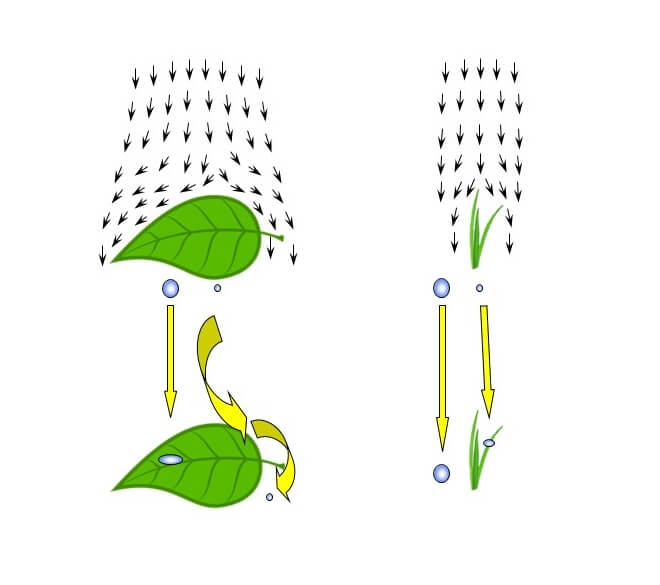
    There are two things that govern run off; droplet size and surface morphology of the leaf surface. “Anyone who says that anything more than 3 gallons/acre runs off the leaf surface is not telling you the whole picture,” says Wolf. “We’ve been unable to induce runoff from up to 200 US gpa in our tests, even using hard-to-wet grasses like green foxtail. Don’t be afraid of water. It’s a very good way of covering the canopies. Water gives you flexibility to use coarser sprays and that allows you to spray when it’s windier.”

    Myth # 3: Spray drift is no issue for fungicides and insecticides

    Aquatic organisms are extremely sensitive to most fungicides and insecticides. We might not see this effect, but it has a definite impact on our environment. It’s important to observe the buffer zones shown on product labels, which can vary depending on the product, the application method and the specific environment.

    Myth # 4: Faster travel speeds save time and boost productivity

    Wolf suggests evaluating this on a field by field basis. At faster speeds you lose control of the spray cloud and the finest droplets will go wherever the wind goes. Other problems with higher speeds are canopy penetration, pattern uniformity and pressure management. If you have an 800 gallon tank with an 80 ft boom and you are going 12 mph at 10 gallons/ac and your fill rate is 50 gallons per minute you are going to do about 84 acres/hour not including turns. If you go faster – 18 mph – you can do 110 acres/hour. But if you increase your fill speed, thereby decreasing the time spent filling you can increase productivity just as much. If you also increase your boom width you also increase productivity. “All I am asking is you don’t just look at travel speed to improve your productivity,” says Wolf.

    Myth # 5: Double nozzles produce more droplets and improve coverage

    “It’s the droplet size and water volume that drives the droplet numbers produced. It doesn’t matter how many nozzles produce this size,” says Wolf. Although some double nozzles produce finer droplets and therefore improve coverage, others actually produce coarse sprays which may decrease coverage. Pay attention to droplet size first – nozzle manufacturers publish spray qualities from their products. You can increase coverage from a single nozzle simply by increasing the spray pressure so yo produce a finer spray.

    Myth # 6: Calm early mornings have the lowest drift risk

    This is one of the biggest myths out there, says Wolf, and it’s all because of a condition called an inversion, which usually occur during clear nights, and which linger into the early morning hours. Under normal sunny daytime conditions, air currents rise, fall and disperse spray clouds rapidly but under inversion conditions they don’t. This can lead to severe drift issues, even significant distances away from the treated field.

    Under sunny daytime conditions, air temperature cools with height and that allows for thermal turbulence to disperse the spray cloud. On clear nights, the temperature increases with height (the opposite temperature profile, therefore called an “inversion”), and this prevents air from mixing. As a result, the spray cloud will not disperse.

    Assume that the atmosphere is inverted on clear summer nights, extending into a few hours after sunrise. Producers should never spray when an inversion is present, and a good indication might be if fog or smoke hangs in the air and not dispersing.

    Myth # 7: A rate controller calibrates the sprayer

    “Even with a $400,000 sprayer, the rate controller still relies on a single flow meter that sits at the back of the sprayer and measures the total flow to the boom. The operator has no idea where that total flow is going,” says Wolf. As a result, there is still no substitute for individual nozzle calibration. There are various new tools on the market to assist with that but they still need to be done individually.

    Myth # 8: If I mess up agronomic decisions, I can correct that with a good spray application

    A spray application has to be on time to be truly effective, says Wolf. In efficacy studies where yeield was measured, spraying herbicides “on time” (=early) produced a yield advantage over spraying just one week later, even with a spray quality that was so coarse that it resulted in relatively poor weed control. “If it’s breezy, use a low drift nozzle. This allows you the opportunity to spray on time,” he adds.

    Myth # 9: Ammonia is a good general purpose tank cleaner

    Ammonia raises pH and some chemicals like sulfonylurea products dissolve better at a higher pH. But if you have an oily emulsifiable concentrate (EC) formulation, either as a product or adjuvant, a soapy cleanout product will be needed. “Liberty exposes poor tank cleanout because the adjuvant in Liberty is such an excellent cleaner,” says Wolf. After use of an oily product, the use of a wetting agent such as AgSurf will assist in removing oily residue and many soap-based commercial cleaners are available.

    Myth # 10: There is an optimal nozzle that does it all

    “Right now a sprayer costs approximately 100,000 times more than the nozzle and the nozzle is still the part that makes you happy or sad,” says Wolf. “If we inverted the investment trend and said ‘let’s build a better atomizer’ there would be an optimal nozzle right now. But although we’ve made progress with low-drift nozzles recently, the industry still looks for inexpensive, simple ways to atmozie sprays.”

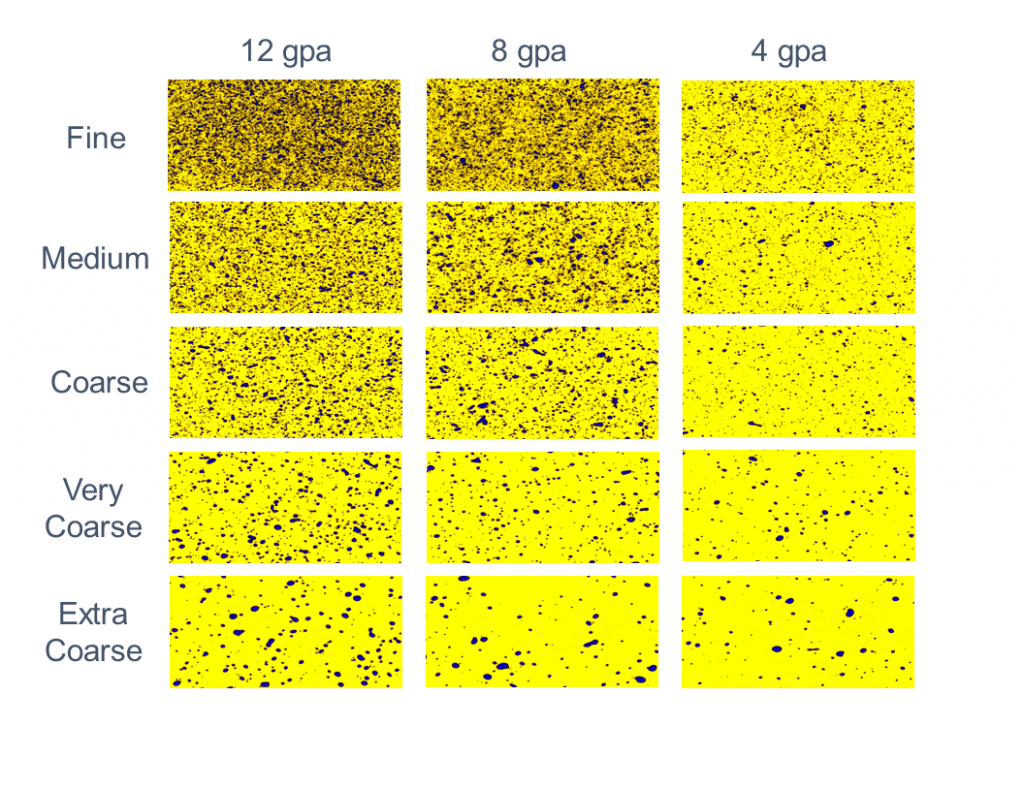
    Spray quality is the language that is used when selecting nozzles. All manufacturers publish spray quality charts for their nozzles that also give recommended pressures to produce different spray qualities using a particular nozzle type. Spray qualities are colour coded and generally speaking the hotter (redder) the colour code the more drift-prone (finer) the spray. There are many nozzle choices and designs and typically grassy targets and contact products require nozzles that will produce Medium to Coarse spray quality. For broadleaf targets and systemic products a Coarse to Very Coarse spray quality can be used successfully. Selecting the right nozzle to produce the quality of spray required is important, says Wolf who recommends Coarse as a general purpose spray quality.

  • Increase Sprayer Productivity Without Driving Faster

    Increase Sprayer Productivity Without Driving Faster

    Timing trumps most things in crop protection. A great spray applied at the wrong time isn’t nearly as valuable as a mediocre spray at the right time. So how do we improve our ability to get things done at the right time?

    Often, we try to win races by driving faster. In our last article, we looked at driving speed and concluded that faster speeds can lead to more drift and less uniform deposition. Driving slower can be viewed as a sort of insurance policy: You may not notice the benefits right away, but on days when that extra bit of performance is required, you’re covered.

    So how do you get the job done quickly if you can’t drive faster?  To answer, we have to look to other opportunities for boosting productivity.

    Recently, we built a model to capture all the elements of a normal spray operation that affect timeliness. These were:

    • travel speed
    • boom width
    • tank size
    • water volume
    • field length
    • number of headlands
    • turning speed
    • fill time

    First, we identified a reasonable base condition. For the sprayer, that was a travel speed of 14 mph, a 90’ boom, an 800 gal tank, a 10 gpa water volume, and a 20 minute fill time. Then, we set up a typical field situation, which was spraying a half-mile run on a quarter with two sprayed headlands and a turning speed of 8 mph. Finally, we changed one factor at a time to determine its relative importance.

    Before we discuss the results, let’s make it clear that just because changing some of these factors improves productivity doesn’t mean we’re recommending them! For example, adequate water volume remains an important input that improves coverage and permits the use of low-drift sprays. Larger tanks increase compaction and take more power, and so forth.

    Here’s what we found:

    All productivity values were expressed as acres per engine hour. For this reason, our numbers will be lower than what a typical sprayer monitor reports, most of which calculate acres per spraying hour.

    For the base condition, the sprayer spent 15% of its driving time turning, and 37% of its on-field time stationary (i.e. filling).  For every hour spent on the field, less than half the time (48%) was spent spraying. This resulted in an average productivity of 82 acres/h.

    Increasing the spray speed to 18 mph increased average productivity to 93 acres/h, but it also increased the proportion of time spent turning and loading, resulting in just 40% of the field time spent spraying.

    Decreasing the loading time from 20 to 10 minutes reduced the proportion of field time spent stationary to 23%, covering 100 acres/h at 14 mph. Surprisingly, this was the productivity-winner, resuling in 62% of on-field time spraying.

    We discovered other powerful productivity factors, and chief among them was boom width. A 33% increase in boom width from 90’ to 120’ gave a productivity boost to 94 acres/h, close to the same result as increasing the travel speed to 18 mph earlier. Similar side effects occurred: more time turning, and a greater proportion of time filling, as we saw with faster travel speeds.

    Boom width seems to have some room for growth.  Many smaller European counties use wider booms than we do in North America, for example.  With gps guidance and large fields, we have excellent conditions for their implementation.

    Two other factors that had similar effects to fill time were water volume and tank size. Less water and larger tanks increased productivity by decreasing the fill frequency, with effects similar in magnitude to speeding up the fill time. Decreasing the water volume from 10 to 5 gpa increased productivity to 100 acres/h by decreasing the proportion of time the sprayer was stopped from 37% to 23%. Increasing from an 800 to a 1,200 gallon tank increased productivity to 94 acres/h, again by decreasing the proportion of time spent filling to 28%.

    Taken together, a sprayer with a 120’ boom, a 1,200 gal tank, applying 10 gpa and filling in 10 min had an average productivity of 132 acres/h. And this was achieved without driving faster than 14 mph. If you can string two quarters together and drive a whole mile before turning, that number rises to 145 acres/h, a surprisingly large 13 acres/h gain.

    The perspective of minimizing downtime extends to other tasks, too:

    • Be more prepared for the job by reviewing the product label in advance, noting the correct mixing order.
    • Keep extra nozzles, clamps, and nozzle bodies in the cab.
    • Don’t clean plugged nozzles, replace them.
    • Use low-drift nozzles so a small increase in wind doesn’t shut you down.
    • Ensure all the products needed are on the tender truck (e.g. pesticide, adjuvant, tank cleaner, anti-foamer, etc.).
    • Consider switching to 3” plumbing (pump rates of 300 – 400 gpm are possible).
    • Make sure your inductor won’t be the limiting factor. For example, product pumps can be awfully slow when the product is cold. It might be worthwhile to explore a venturi system.

    Speeding up the fill process is a good idea, but be careful with certain products. Dry materials such as the sulfonyl ureas (e.g. Refine, Express SG, etc.) and some fungicides (e.g. Astound, etc.) require time to hydrate in water so they mix properly. Some operators pre-hydrate these in a smaller tank, while others get an extra tank to pre-mix whole loads and simply transfer them over.

    Also think about the time spent cleaning the sprayer. Thoroughness is important, but perhaps there are efficiencies to be gained there as well, like never letting a sprayer sit after spraying. We’ve written about continuous rinsing, for example, to improve cleaning speed and effectiveness.

    So, the quicker we can spray, while ensuring a quality job, the more effective our crop protection practices will be. We encourage you to use our to determine your best configuration.

    Got a productivity tips to share? Let us know! And remember: In spraying, the race is won in the pits.

    Factor

    Base

    Drive Faster

    Fill Faster

    Spray Wider

    Less Water

    Bigger Tank

    New Sprayer

    Travel Speed

    14 mph

    18 mph

    14 mph

    14 mph

    14 mph

    14 mph

    14 mph

    Fill time

    20 min

    20 min

    10 min

    20 min

    20 min

    20 min

    10 min

    Boom Width

    90 ft

    90 ft

    90 ft

    120 ft

    90 ft

    90 ft

    120 ft

    Water Volume

    10 gpa

    10 gpa

    10 gpa

    10 gpa

    5 gpa

    10 gpa

    10 gpa

    Tank Size

    800 gal

    800 gal

    800 gal

    800 gal

    800 gal

    1200 gal

    1200 gal

    Field Length

    0.5 mile

    0.5 mile

    0.5 mile

    0.5 mile

    0.5 mile

    0.5 mile

    0.5 mile


    Time Turning

    15%

    19%

    15%

    20%

    15%

    15%

    20%

    Time Loading

    37%

    42%

    23%

    42%

    23%

    28%

    19%

    Time Spraying

    48%

    39%

    62%

    38%

    62%

    57%

    61%

    Acres/h

    82

    93

    100

    94

    100

    94

    132