Air handling systems can be specialists or generalists; some are designed to do one thing very well while others are more adaptable but not as precise. Fan type plays a big role in determining a sprayer’s abilities. Their native characteristics make them better suited to certain scenarios.
This may seem contradictory, but we are not saying that the fan alone defines or limits the entire sprayer. Fans operate within a larger, engineered air handling system. Also, the operator has control over how that sprayer is configured and used. This means it is equally important to consider how the air exits the sprayer – not just the fan type that generated it.
Fan types
Radial fans: Radial fans produce high volumes of moderately turbulent air, and relatively low static pressures. They are often associated with fixed vanes and straighteners inside the fan housing to reduce initial turbulence.
Turbines: Turbines may look like radial fans but they’re designed to spin faster and they have blades designed to compress air. They are used in sprayers that have ducts, towers, cannons, or other more complex volutes.
Straight-through axial fans: These fans produce high volumes of the most turbulent air. With their comparatively short throw and wide air wash, they should be positioned close to the target.
Tangential (aka Cross-flow) fans: Tangentials produce the most laminar air, forming a very high volume, low velocity jet sometimes called a “curtain” or “knife”. They have a comparatively long throw and rely on the canopy to induce turbulence.
Centrifugal (aka Squirrel cage) fans: Centrifugal fans have a side-discharge arrangement that turns air 90 degrees. They can produce high pressures and are nearly always paired with an air-shaping volute.
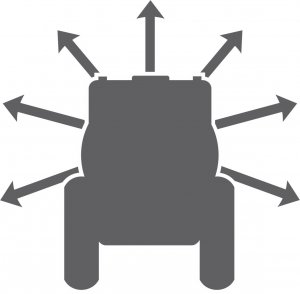
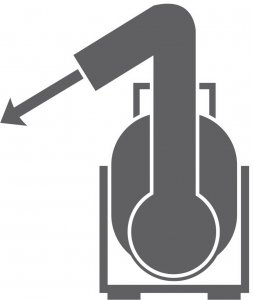
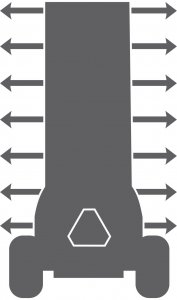
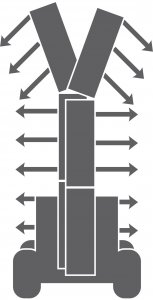
We are proposing defining air-assist sprayers for perennial crops according to their air handling systems. Ultimately, the defining characteristic of each design is the net vector of the air they generate. We have provided silhouettes for clarity, but these generic designs are not intended to imply a manufacturer.
Low profile radial
The oldest and perhaps most recognizable air handling design, the Low Profile Radial (LPR) sprayer generates air in a radial pattern from one or more axial fans or a volute connected to some other fan style. This is the classic airblast sprayer.
Defining characteristics
Wide range of adjustable air energies from virtually zero to high.
Minor adjustability of air vectors via deflectors and moveable outlets.
Net air movement is lateral and upward.
Cannon
The Cannon (CN) sprayer generates and channels air through a single volute and delivers the spray as a compact, point-source jet.
Defining characteristics
High air energy characterized by high velocity and low volume.
Extensive adjustability of air vector via a vertical duct with positional outlet and deflector(s).
Usually a single-sided sprayer used to spray over and through multiple rows.
Fixed tower
The Fixed Tower (FT) sprayer generates air from one or more axial fans, multiple straight-through radial or tangential fans. It may employ flexible tubes, tapered bags or solid ducts to redirect air laterally from a fixed central tower. It may feature additional flexible ducts or adjustable deflectors at the top of the tower to spray over and beyond the adjacent rows.
Defining characteristics
Wide range of adjustable air energies from virtually zero to high.
Minor adjustability of air vectors via deflectors and moveable outlets.
Net air movement is lateral compared to LPR sprayers.
Targeting tower
Similar to the FT, the Targeting Tower (TT) sprayer can focus air vectors with a wider range of adjustability, shaping the lateral air output more precisely to the canopy. TT generates air from one or more radial fans or multiple tangential or straight-through axial fans. It may employ flexible tubes or solid ducts to redirect air generally laterally.
Defining characteristics
Medium to high air energy.
Moderate to high adjustability of air vectors. Airflow can be subdivided into individually-adjustable sections.
When the tower exceeds canopy height, net air movement is lateral to slightly downward.
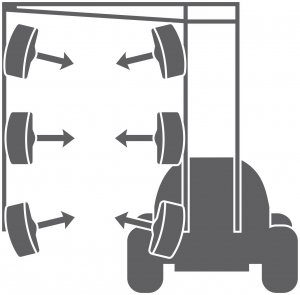
Wrap-around
The Wrap-Around (WA) sprayer surrounds the target rows with air sources. This creates multiple converging and/or opposing airflows within the row.
Defining characteristics
Straight-through axial fan systems are either electric or hydraulic with a wide range of air energies.
Low to high adjustability of air vector via deflectors, moveable air outlets, or fan position adjustments. May also have an adjustable frame.
Net air movement is ideally neutral to slightly downward.
Summary
In adopting this system of classification, we believe the process of optimizing sprayer configuration and calibration can be made less complicated. A universal language facilitates clear communication between growers, industry and consultants/specialists.
We acknowledge that there may be rare sprayers that don’t fit these categories. There are commercial examples of air-assist sprayers that combine features from these air-handling designs (e.g. hybrids of LPR and FT designs)… but let’s keep things simple.
This article is based on a presentation by Dr. Melanie Filotas, who delivered it as part of the 2019 agriculture summer student orientation day.
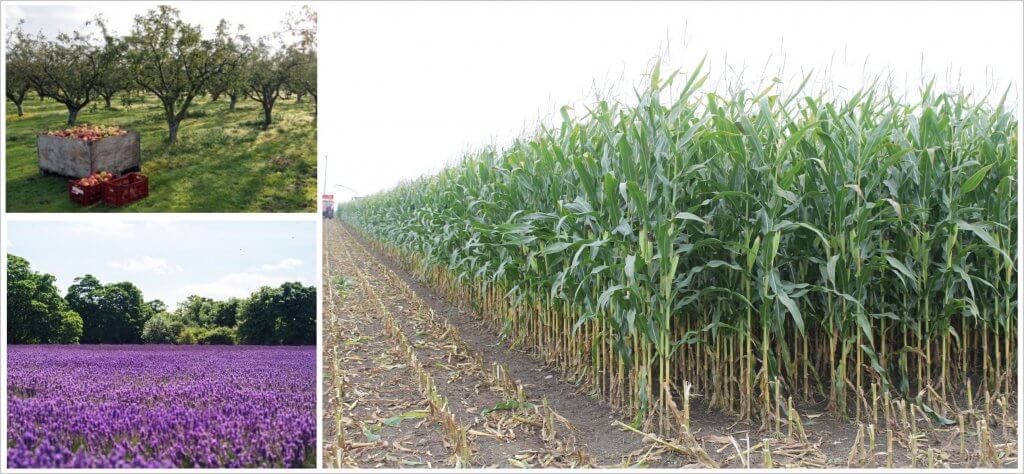
Most crops are sprayed with organic or synthetic pesticides at some point during the growing season. Use caution before entering any area where crops are grown (e.g. corn field, nursery, greenhouse, orchard etc.). Always confirm that it is safe to enter.
Most crops receive some form of chemical input during growth. Be aware of what has been applied.
Even organic operations apply controlled products that may make it unsafe to enter for a period of time.
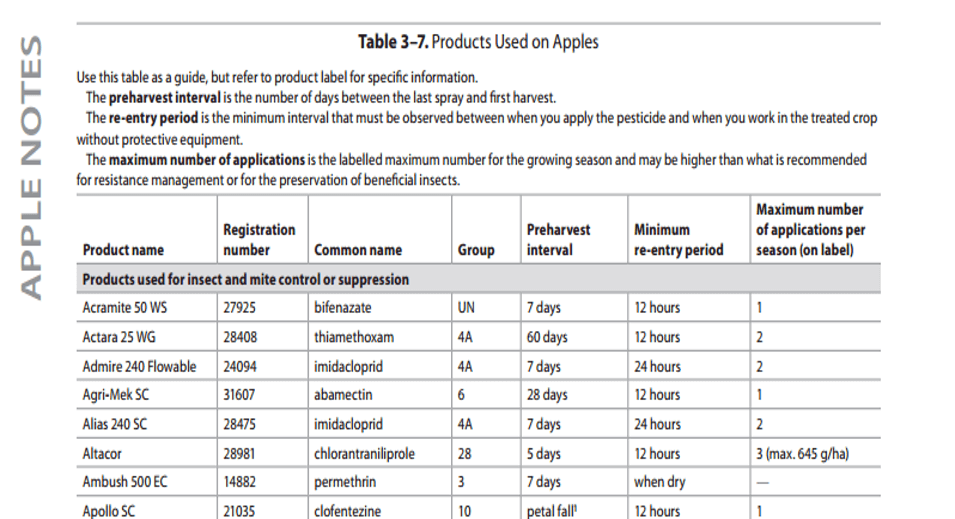
You can be exposed to pesticides if you enter a treated area before pesticide residues break down and vapours dissipate. The minimal time that must elapse before being permitted to enter is called the Restricted Entry or Re-entry Interval (REI).
REIs are data-driven and established by the federal government. They are defined as: “The period of time that agricultural workers, or anyone else, must not do hand labour in treated areas after a pesticide has been applied.” Hand labour can be any task involving substantial contact with treated plants, plant parts or soil, including planting, harvesting, pruning, and scouting.
Things you should know about REIs:
REIs can range from one hour to several days
If a pesticide label does not indicate a REI, the default is 12 hours
REIs can vary with the product, crop and type of activity (e.g., scouting, harvesting, etc.)
REIs can change over time so always refer to the most recent label
If a tank mix (multiple products) was applied, observe the most restrictive REI
Before visiting an operation to work in the field:
Tell your supervisor where you will be that day
Ask the grower or spray applicator what was sprayed. Records may be posted, but verbal confirmation is preferred
Look up the REI for the product on the crop you will be entering
Check with your supervisor on any products with special instructions beyond the REI
Do not enter the field until the REI has ended. Pesticide REIs can be found in local production guides, or on pesticide labels.
Local production guides summarize REIs.Local production guides list REIs by crop, by product applied, and by activity.
Miscommunication can sometimes happen. Learn to recognize the signs of spraying. When in doubt, leave the planted area and call the grower to confirm or call your supervisor.
In some cases you can look for fresh tracks in the operation, but be aware they may not have been made by a sprayer
Some products have a distinctive odour
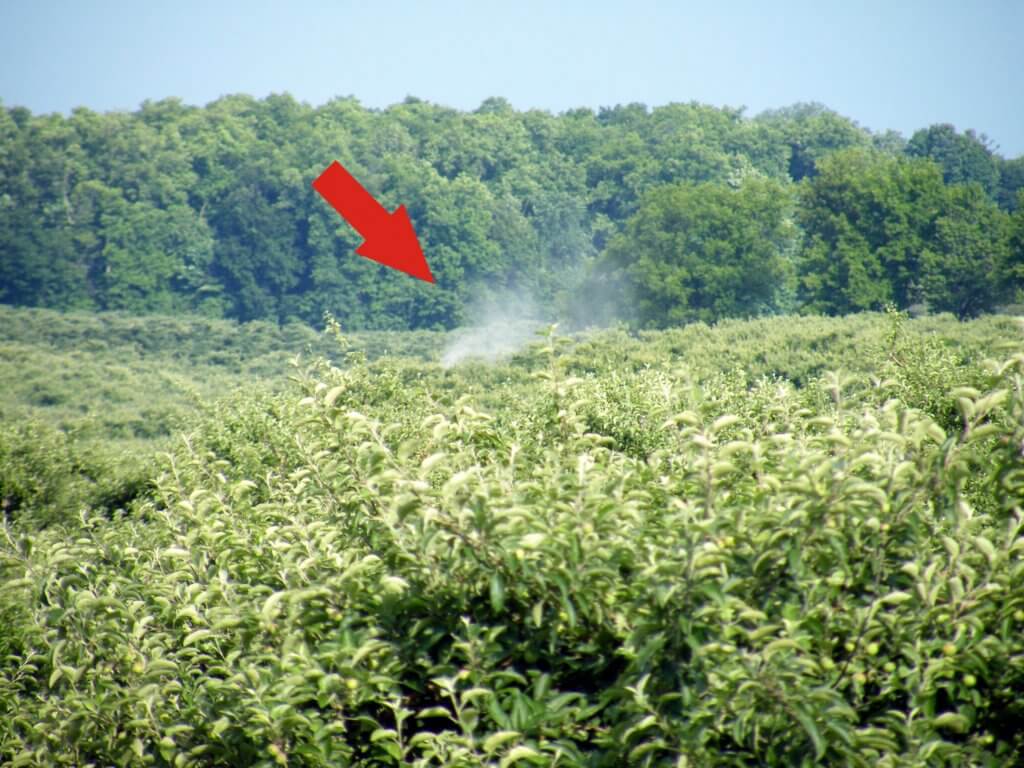
It can be difficult to see a sprayer operating, particularly in orchards, but they can be heard. Do not wear earbuds or headsets while in a production area
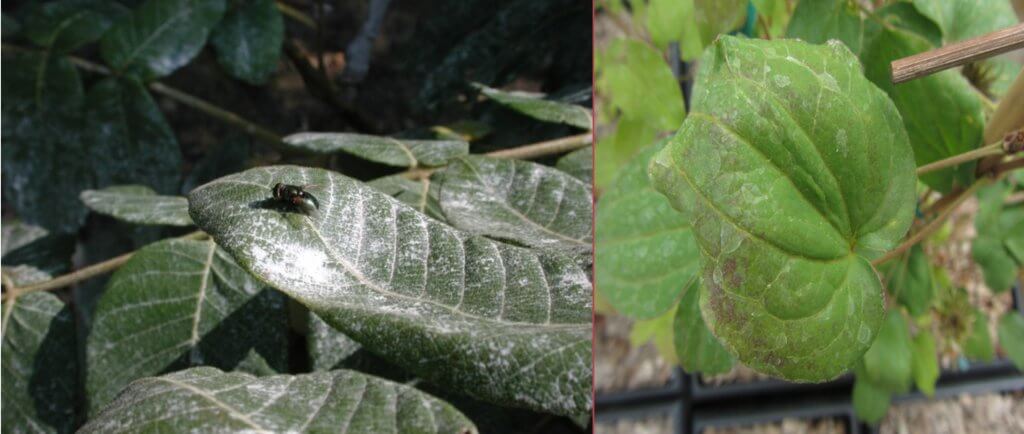
Look for foliar residue. This is an indicator, but does not always mean it is unsafe to enter
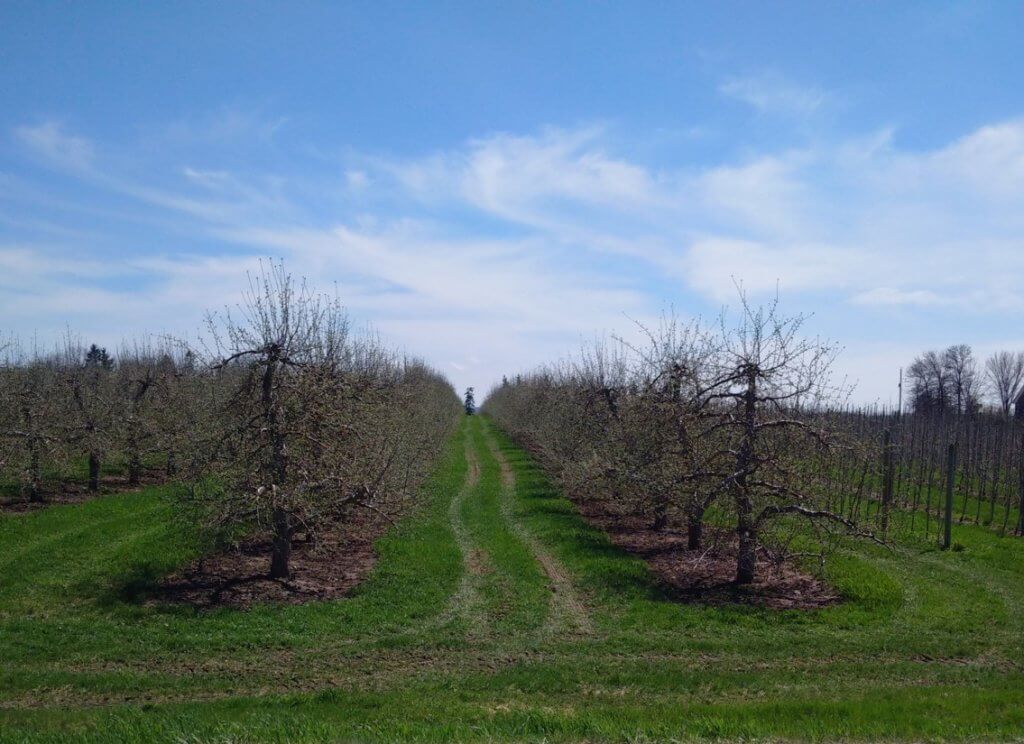
Fresh wheel tracks may indicate recent spraying.
Some products have a distinctive odour.
It may be difficult to see a sprayer operating in the vicinity, such as in this orchard. However, they can often be heard. Do not wear a headset or earbuds in a production area.Residue on leaves may indicate a recent application, as in the left photo. However, it could also be unrelated. On the right is calcium magnesium precipitation from irrigation water. (Photo credit [right]: Jennifer Llewellyn)
There are many potential symptoms of pesticide exposure: headache, fatigue, irritation of the skin, eyes, nose or throat, loss of appetite, dizziness, nausea or vomiting, diarrhea, decreased muscle coordination, and blurred vision. Each product has a Material Safety Data Sheet (MSDS) that will provide details on exposure symptoms and treatments.
While sometimes confused with symptoms arising from sun stroke or dehydration, if you suspect pesticide exposure it is always best to be prudent and get medical help immediately. Contact your local poison centre or 911.
Summer work in crop production can be rewarding and enjoyable, but always use caution and be safe.
This short article is a reminder for sprayer operators to respect the possibility of tipping a sprayer. Every spring I catch wind of someone tipping over. When I can ask the operator questions I start with “Is everyone alright?” and “Was the sprayer full?“. Hopefully the answers are “Yes” and No“, but not always.
The following factors are always involved:
Driving too fast. Usually entering a field at road speed.
Entering the field on a downhill slope and/or catching a pothole or soft shoulder.
Turning in a tight radius, usually 180 degrees. This is made worse when the sprayer is towed.
Sprayer is not completely full and “slosh” changes the centre of gravity.
Narrow tires and a narrow base.
Fortunately the sprayer wasn’t damaged and the spill was minor.A tight turn at high speed coupled with a depression in the entryway and tank slosh was enough to tip the unit. They had it righted and hauled out soon after. No one was hurt.
I’ve heard as many cases involving seasoned operators as new operators. The next few pictures are of a veteran operator’s sprayer carrying 28%/ATS. Just like the images above, a tight turn at high speed sloshed the load just as a deep pot hole caught the outside front wheel. This sent the sprayer into a lane of traffic before it tipped back and over into the field. No one was hurt.
Fortunately for the operator, the spill was contained in their field (not the road or ditches). The 90′ boom had to be cut off before the sprayer could be towed back to the yard to be sold off as parts. While the operator has looked at the bright side (an opportunity to upgrade) it has left them relying on a custom operator for spring spraying and making a hasty in-season equipment purchase.
Lost a tire during the tow back to the yard.Crumpled boom after having to be cut from the sprayer.Not the way anyone wants to see their sprayer.
Major Spill
What follows are generic steps for what to do if there is a major spill. Always defer to the process outlined by your regional authority.
If you do tip the sprayer, first protect yourself, then others, then animals in that order.
Stop any exposure by removing clothing and washing as best you can.
Stop people from entering the area.
If it is safe to do so, try to prevent the spill from spreading.
Contact your local spill centre. In Ontario, the Spills Action Centre will receive calls 24 hours a day at 1-800-268-6060. Consult with your municipality for their spill reporting contact numbers.
Take home
Of course we’d rather avoid this problem altogether. Be sure to slow down before turning into a field. Take the turn as gradually as possible. Remember that soft spring ground and new pot holes can become serious obstacles – consider scouting the entry before the first spray or at minimum getting out of the cab and checking before entering.
Herbicide resistance has been called the number one threat to conventional herbicide-based weed management strategies.
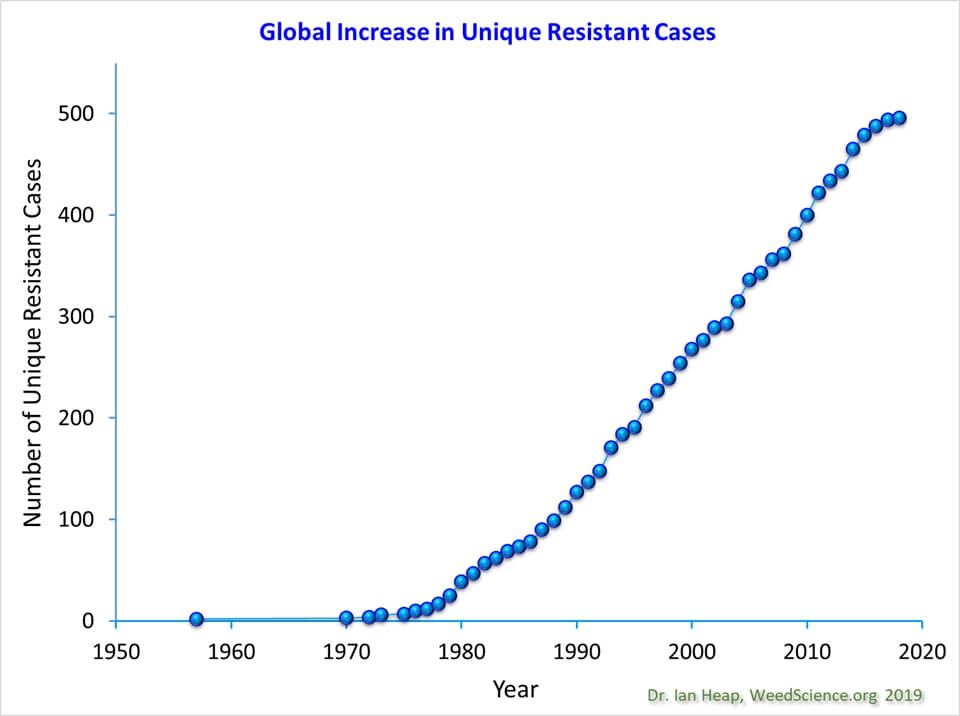
Since the 1970s, the number of cases of herbicide resistant weeds has shown a linear increase both globally (currently at about 500 documented unique weed species x mode of action cases) and within Canada (at about 70 such cases), according to the herbicide resistance website WeedScience.org. The rate of increase has been constant, and there is not yet any reason to believe that growth in the number of cases will slow.
Figure 1: Growth of global herbicide resistance cases (Source: WeedScience.org)
By using herbicides, we select for weed biotypes that, for some reason, can tolerate the product. Mutations which confer herbicide resistance are rare, but present at very low levels in most weed populations. Repeated use of the same mode of action will increase the relative frequency of the resistant biotype until it becomes noticeable, and shortly thereafter, problematic.
The best-known forms of resistance involve single-gene mutations that alter herbicide target sites (target sites might be enzymes that produce essential plant cell building blocks) so that herbicide binding is reduced, resulting in reduced control. As a result, the target pathway keeps working, and the plant grows normally after herbicide application. Other forms of resistance involve the overproduction of the target enzyme by the plant, mechanisms that either metabolize or sequester the herbicides, or changes in uptake of the herbicide. The main mechanisms are summarized in this table:
Table 1: Mechanisms of herbicide resistance*
Resistant Class
Mechanism
Target Site
Target site mutation
Increased gene copy number
Enzyme over-expression
Non Target-Site
Enhanced metabolism
Differential uptake
Differential redistribution
Sequestration
Delayed germination
Rapid necrosis / defoliation
*Source: Bo AB, Won OJ, Sin HT, Lee JJ, Park KW. 2017. Mechanisms of herbicide resistance in weeds. Korean Journal of Agricultural Science 44:001-015.
The simple act of using a herbicide can select for resistance to that herbicide. While we can’t predict or prevent resistance entirely, we can slow its onset by reducing the frequency of herbicide use, for example by integrating cultural controls such as crop rotation, seeding rate, cultivar competitiveness, and other factors into our agricultural systems.
A powerful option to slow resistance development is to reduce our reliance on a single mode of action, either by rotating modes of action in successive sprays, or, more importantly, by tank mixing multiple effective modes of action (MEMoA) whenever we make an application.
Let’s not kid ourselves. The recent discovery of glyphosate (e.g. Roundup) -resistant wild oats in Australia, and glufosinate (e.g. Liberty) -resistant ryegrasses in several countries is sobering. Relying more on these herbicides will only increase selection pressure.
If we decide to use herbicides, we need to look at the situation from the perspective of delaying the onset of resistance. What we’re trying to do is buy some time, so that new strategies can be developed.
How can spray application methods slow the onset of resistance?
The use of herbicides will continue to select for resistance. The best we can hope to achieve within a herbicide system is to delay that eventuality.
To better understand our options, we need to talk about a specific type of herbicide resistance called polygenic resistance. This refers to accumulation of additive genes of small effect over time, a process that is more efficient in plants that share genetic material among plants in a population, i.e., they outcross.
Outcrossing plants receive genetic material from others, increasing their genetic diversity, and therefore their ability to adapt.
In a field, a population of any specific weed may contain some individuals that have slightly greater tolerance to a herbicide than others. If we apply a slightly lower than label herbicide dose to those individuals, they might survive the application and eventually cross with other survivors and set seed. Their offspring may be as tolerant or even more tolerant than their parents. If this repeats itself over successive generations, the additive effects build until finally, low-level resistance becomes full-blown resistance and even label rate herbicides no longer work. This resistance isn’t a single gene mutation, it’s simply an accumulation of tolerance due to several genes which impact how much of the herbicide active ingredient reaches the target site.
In a recent study at the University of Arkansas, susceptible Palmer amaranth (P. amaranth has both male and female plants and is therefore an obligate outcrosser) was treated with a range of dicamba doses to identify individuals that survived the higher doses. The researchers allowed the survivors to cross, and then grew out their seed, then repeating the procedure. After just three generations, the experiment produced individuals with a three-fold increase in LD50 (compare LD50 at P0 (111) to P3 (309) in Table 2). Recall that LD50 refers to the dose required to observe 50% of the full effect.
Table 2: Dicamba doses (g ae/ha) required for 50% (LD50) and 90% (LD90) control of Palmer amaranth populations selected following sublethal doses of dicamba in the greenhouse.*
Herbicide resistance cannot be prevented if herbicides are applied.
To prevent polygenic resistance, we need to apply the full label rate and avoid repeated sublethal doses, so that all weeds are killed;
We need to apply Multiple Effective Modes of Action (MEMoA) whenever possible so that when one fails, the others have its back;
How can this be achieved?
Prevent application practices that result in less effective dosing. Larger weeds, or weeds growing in difficult environmental conditions, may require higher herbicide doses. Early application is helpful because small weeds are easier to control. In addition, crop canopy shading at later staging leads to dose reduction and increases dose variability. Spraying under windy conditions also reduces dose, and can increase deposit variability. For some herbicides such as glyphosate or diquat, the dust generated by wind or fast travel speeds can reduce effectiveness.
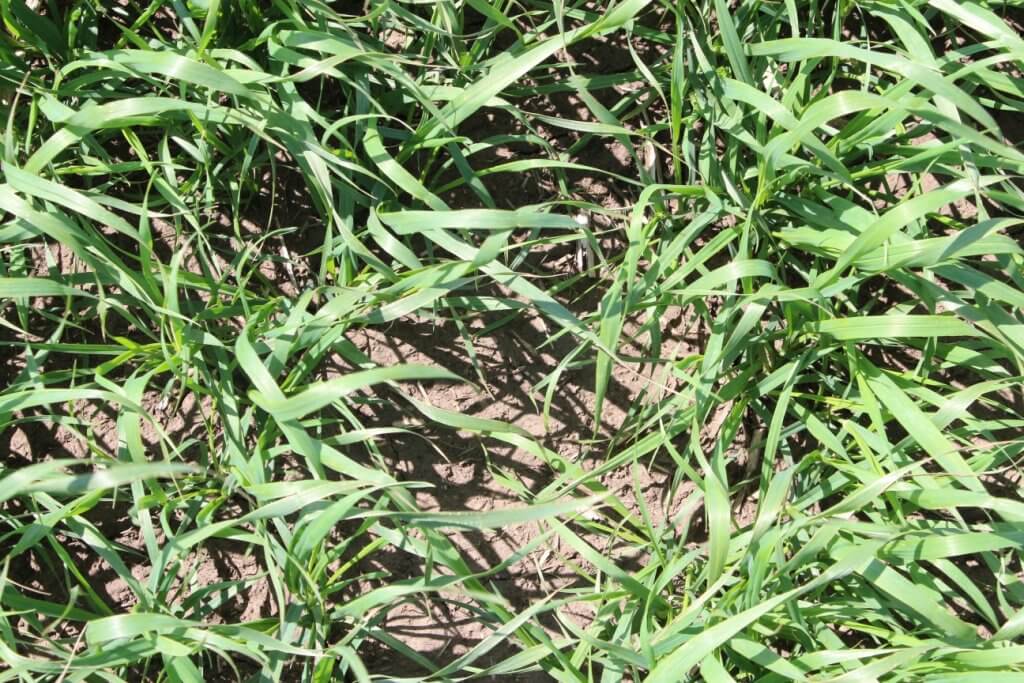
Figure 2: Smaller, exposed weeds require lower doses to controlFigure 3: Crop canopies provide valuable competition to help suppress weeds, but they can also intercept spray, reducing the dose received by weeds.
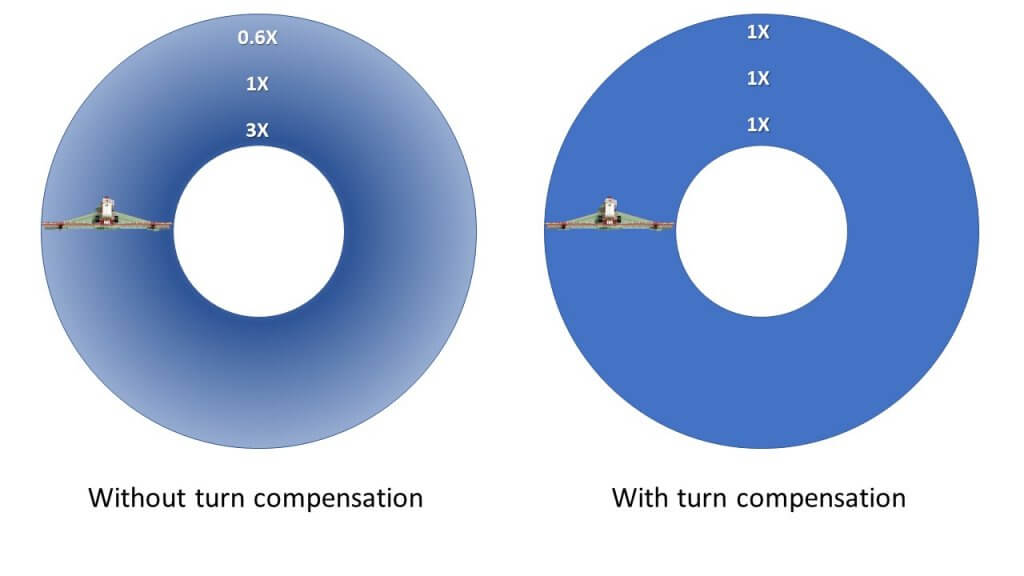
Get Pulse Width Modulation (PWM) with turn compensation. If your sprayer makes the same turn around the same feature year after year, then the outer boom region will under-dose the same part of the field over and over. This is the breeding ground for polygenic resistance. Look for this in field corners, around water bodies or tree bluffs, rock piles, etc.
Figure 4: PWM correction of under-dosing during a turn
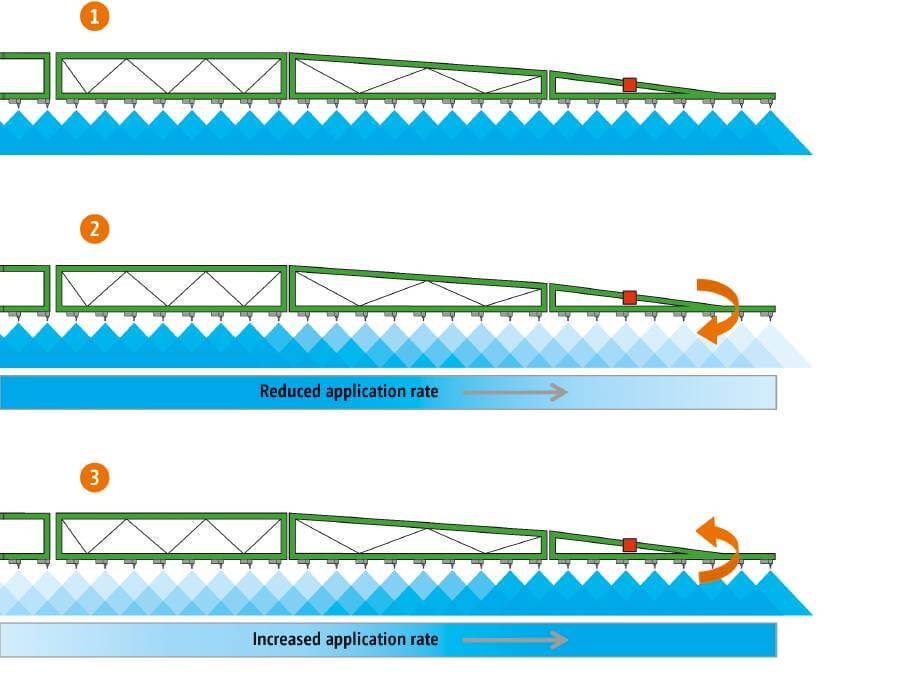
Prevent boom sway and yaw. Boom movements result in uneven application, which results in lower control. Pull-type sprayers with supporting wheels are best, but these are becoming rare. Suspended boom performance depends on the manufacturer and the levelling technology they use. However, boom movement is usually more consistent with slower travel speeds.
Figure 5: Boom yaw causing over- and under-application (Source: Farmonline.com.au)
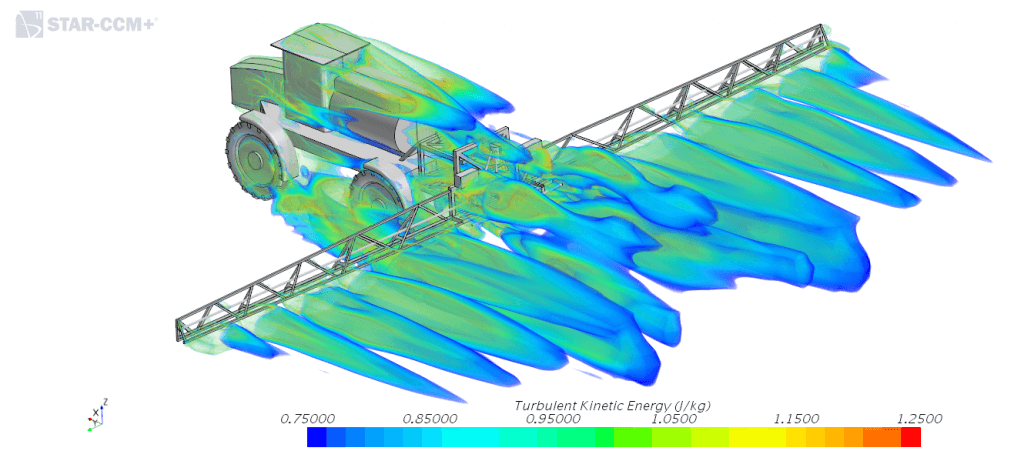
Minimize air turbulence. Large sprayers, and those moving at fast speeds, create aerodynamic turbulence that can displace spray. The main problem spots are wheels, in whose tracks measurably less spray is deposited. The exact dynamics of turbulence is still unknown, but we do know that its magnitude can be reduced with slower travel speeds.
Figure 6: Turbulence due to sprayer speed (Source: Dr. Hubert Landry, PAMI)
Consider spot spraying. The use of optical spot spray equipment, such as the new WEEDit Quadro, or Trimble’s WeedSeeker II, save product during burnoff or post-harvest. These savings can make the use of more elaborate, expensive tank mixes containing multiple effective modes of action, affordable.
Avoid spray drift. Field margins that harbour weeds rarely receive a full dose of herbicide. Exposing these weeds to spray drift won’t kill them. But it will, over time, select for weeds that are more able to tolerate the herbicide.
Implications
Aside from specific technology such as PWM, improved booms, or a spot sprayer, the most effective fix for variable application doses is slower travel speed.
While this may seem problematic when timing is critical and greater productivity is required, there is a way to drive more slowly and still get more done. We simply need to look at productivity differently.
We tend to equate productivity with speed. Travel speed. But a spray day is filled with many hours of non-spray time – filling, cleaning, transporting, repairing, fueling, record-keeping, etc. How much time is lost to these activities depends on the operation, but for everyone, it’s useful to do time accounting.
Record how a spray day’s time is spent. Pay attention to activities during which you can save time without much expense.
Action
Actual Time
Target Time
Fuelling, lubing
Loading jugs and totes
Checking label (rates, rainfastness…)
Filling tender tanks
Loading sprayer (in yard)
Transport to field
Entering field data into monitor
Checking, recording weather
Checking for pest, stage
Changing nozzles
Spraying load
Unplugging / replacing nozzles
Replacing nozzle body
Making turn
Filling sprayer
Getting sprayer unstuck
Driving to tender truck
Waiting for tender truck
Spraying out tank remainder
Cleaning tank
Cleaning filters
Flushing boom ends
Loading sprayer (in field)
TOTAL
On any given spray day, less time spent filling, or transporting, is credited to spray time. Our analysis shows that time lost to driving slower can more than be made up with these changes. The productivity gain gives more opportunity to spray under more ideal conditions that save yield and also ensure more uniform application.
Using productivity analysis, spraying can become more uniform and help delay the onset of resistance.
Note: The assistance of Dr. Charles Geddes, Research Scientist at AAFC Lethbridge, in drafting this article is appreciated.
In this episode of Exploding Sprayer Myths we reduce a complicated best practice to black and white… literally. Watch as Jason and Tom get a creepy lesson in the do’s and do not’s of no-spray areas. Under the watchful eye of Dr. Jim Todd (OMAFRA Industrial Crops Specialist and Rod Serling cos-player), brace yourself as you enter The Buffer Zone.
Learn more about how vegetative filter strips mitigate runoff on this Health Canada webpage.
Thanks to the staff at the Simcoe Resource Station and to RealAgriculture for making this video possible.
And if you’re curious about the kitchen-appliance cameo, you’ll have refer back to earlier episodes.