What’s the only surefire way to know whether or not the sprayer is applying product at the rate you’ve specified? Can you let the cab monitor set it and forget it? After the Question of the Day, Tom moves on to the very important decision of choosing a new sprayer.
What’s your goal? Getting more acres sprayed correctly and at the right time.
Tom offers perspective on seven factors that should play into sprayer selection, but sometimes don’t (new paint and machines that go BING! are very distracting), and how to weigh the pros and cons of each category.
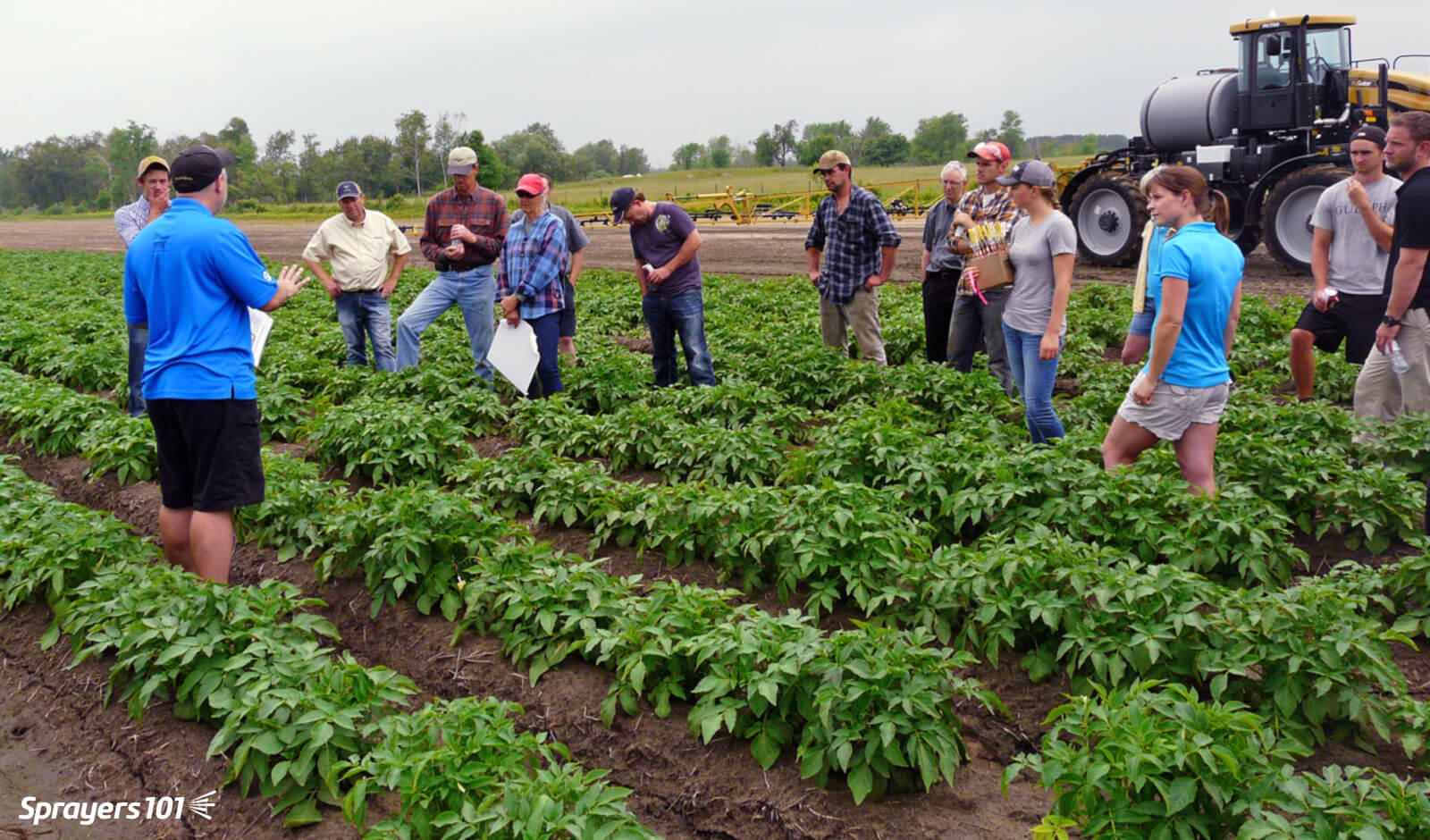
In June, 2014, 30 growers attended a spray coverage demonstration in a potato field in Alliston, Ontario. Our goal was to explore three questions:
What is the effect of droplet size on coverage?
What is the effect of volume on coverage?
What is the effect of spray angle on coverage?
This certainly wasn’t a scientific experiment. Spray demos are a great foil for discussing droplet behaviour and teaching operators how to diagnose spray coverage. Take the “results” with a grain of salt.
Discussing spray coverage in Alliston, Ontario (2014).
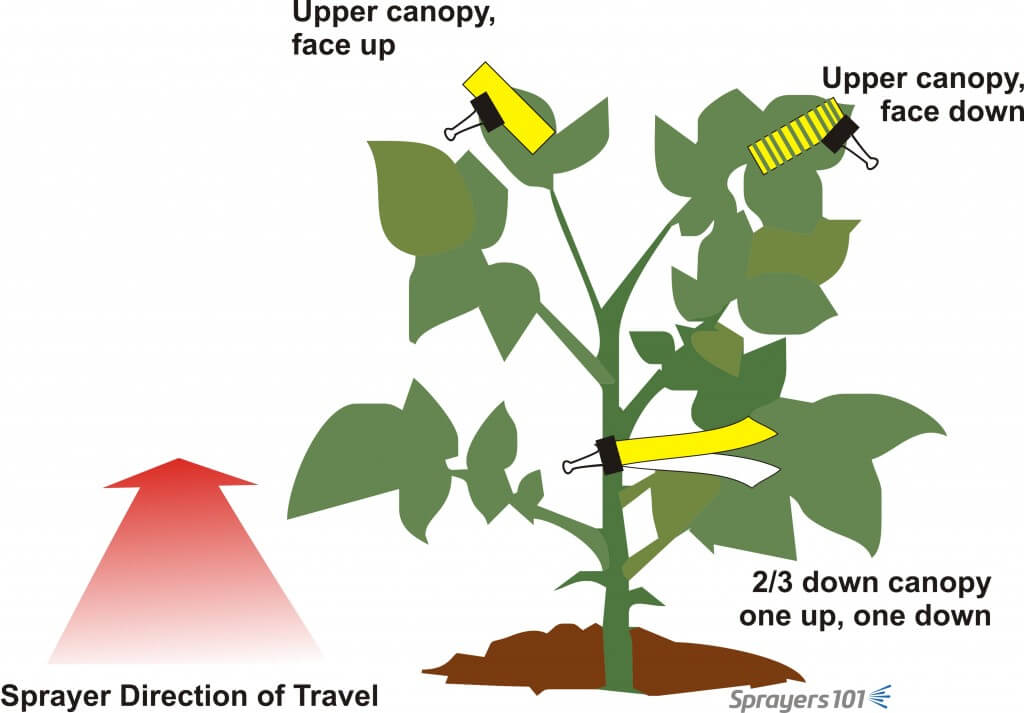
In order to see spray coverage, we placed water sensitive paper in the potato canopy (see below). Water sensitive paper turns from yellow to blue when it is contacted by water. Normally, we use a digital scanner to quantify spray coverage. However, it was a very humid day and this made it difficult for the scanner to discern spray from background. We decided to assign a qualitative value to the papers based on coverage. Low (or no) coverage got a score of zero. Moderate coverage (enough to offer good control) received a score of one. Papers with excessive coverage (anything more than moderate) received a score of two. Did I mention this wasn’t a scientific experiment?
The location of water-sensitive papers in the potato plant canopy. Two plants were papered for each nozzle.
Droplet Size
To answer the first question, we compared coverage from two hollow cone nozzles. The TeeJet TXR80028, which creates a fine/medium droplet size, and the TeeJet AITX8002VK, which is air-induced and creates a Coarse/Very Coarse droplet size. In both cases the boom was approximately 50 cm (20 in) above the top of the crop, travelling at 10 km/h (6.2 mph) and spraying about 110 L/ha (~11.5 gpa).
Generally, Coarse droplets tend to move in a straight line, and are not as easily deflected by moderate wind or travel speed. Conversely, Fine droplets slow very quickly and move erratically depending on the forces acting on them.
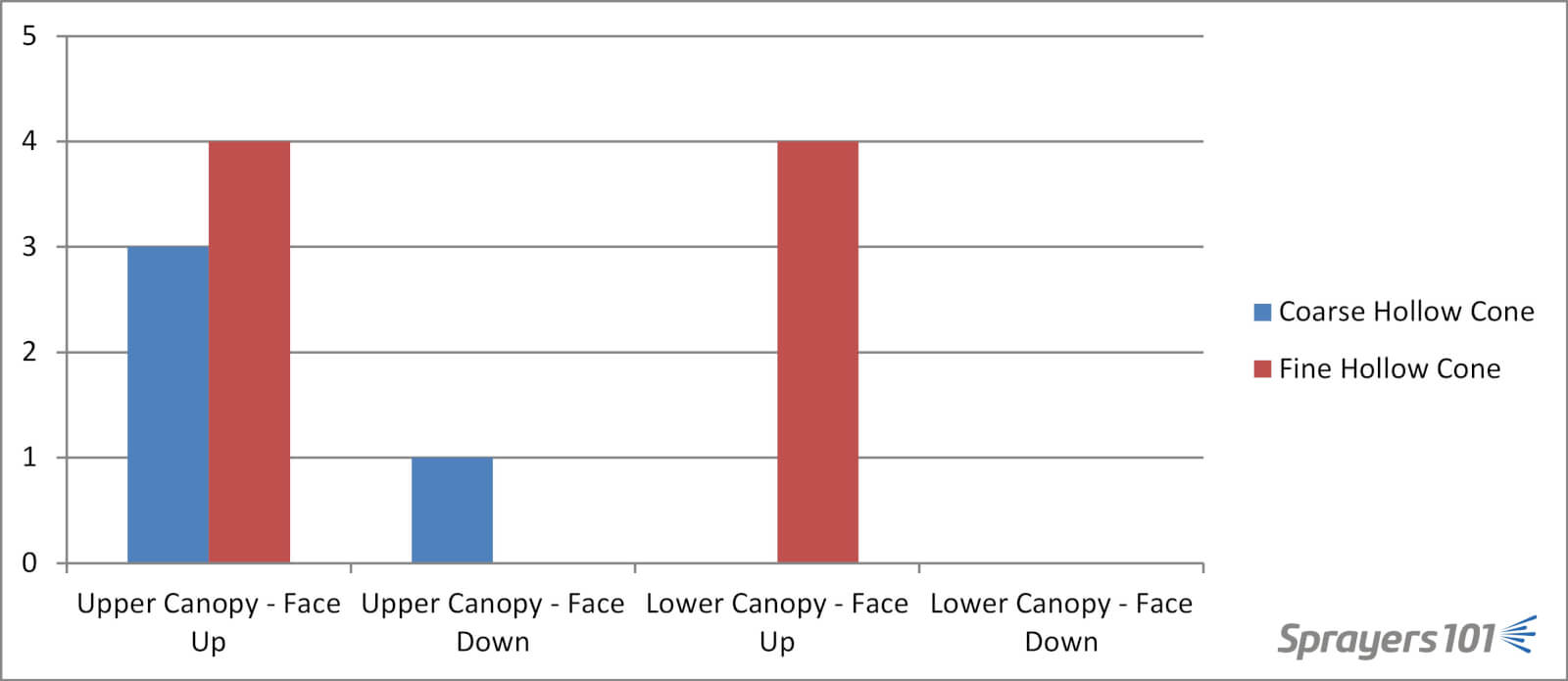
Graph 1 – Droplet size comparison. Cumulative spray coverage achieved in four positions, on two plants per nozzle. Low-to-no coverage = 0. Moderate coverage = 1. High-to-excessive coverage = 2.
Graph 1 shows the coverage results in each position. We see that finer droplets appear to penetrate the canopy more than the coarser droplets. We also see that under-leaf coverage was difficult to achieve overall. It’s possible the small amount of coverage achieved on the under-side of the top scaffold of leaves is the result of Coarse droplets bouncing… but if that’s the case, why wasn’t there any coverage on the upward-facing leaves inside the canopy? Write me – I’m open to ideas. In any case, redistribution is erratic and should not be relied on.
This graph may appear to favour smaller droplets, but be aware that Fine droplets are prone to drift and evaporation and should not be used without making every effort to prevent off-target movement. Shrouds, low ambient wind, and slower ground speed can help. To my mind, the best drift-mitigating option that still allows the use of finer droplets is an air-assist option on the boom, which would also improve under-leaf coverage. I’ve seen it in field tomato, soybean and even field corn. It’s disappointing that there aren’t more self-propelled sprayers in Ontario that offer this feature.
Volume
To answer this question, we compared coverage from Syngenta’s potato nozzles. They aren’t generally available in North America, but we got a few for the sake of the demo. The VP04 (gold) was operated at 1.5 bar (22 psi) and sprayed 135 L/ha (~14.4 gpa). The VP05 (Orange) sprayed 180 L/ha (~19.2 gpa) at the same pressure. The boom travelled at 10 km/h (6.2 mph) at approximately 50 cm (20 in) above the top of the crop.
Generally, raising the volume-per-hectare translates to improves coverage, but at some point there is a diminishing return. Imagine comparing coverage between 1 L/ha and 100 L/ha – there would be a big difference. Now imagine comparing 500 L/ha to 1,000 L/ha – probably not much difference, because drenched is drenched.
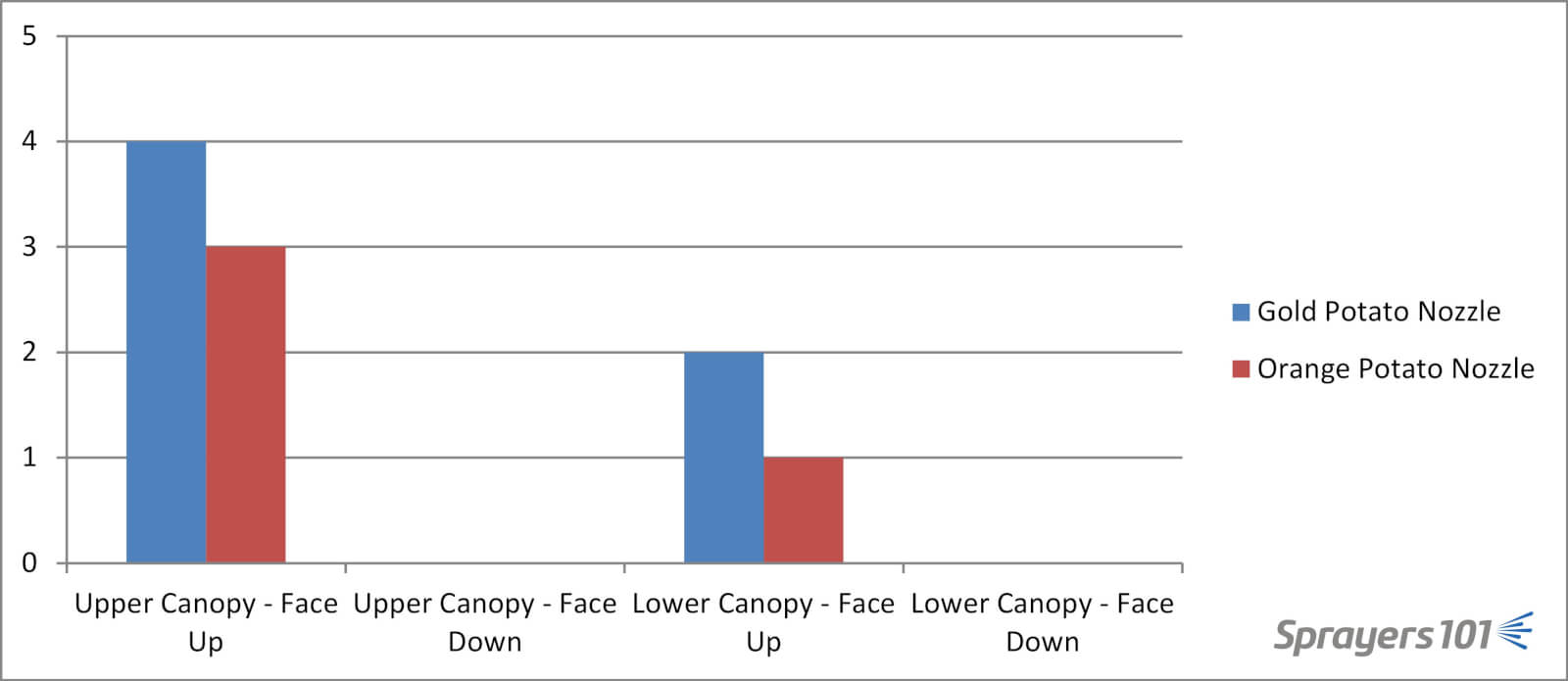
Graph 2 – Spray volume comparison. Cumulative spray coverage achieved in four positions, on two plants per nozzle. Low-to-no coverage = 0. Moderate coverage = 1. High-to-excessive coverage = 2.
According to Graph 2, the higher volume did not improve coverage. In fact, the lower volume appears to have superior coverage, but it’s likely not significant. Remember, there are no error bars here because there’s no statistical analysis – it’s not a scientific study. It’s possible that at this stage of growth, our 150 L/ha was close to the threshold of diminishing return.
Once again, note the absence of under-leaf coverage. Truly, the more I spray vegetable and row crops with conventional nozzles on a horizontal boom, the more I think under-leaf coverage can only be achieved by Bigfoot riding the Loch Ness Monster while wielding Harry’s wand. Without directed sprays from drops (aka pendant nozzles, drop hoses, etc.) or some means of redistribution (e.g. air assist or even maybe electrostatics) droplets will not reliably change direction.
Spray Angle
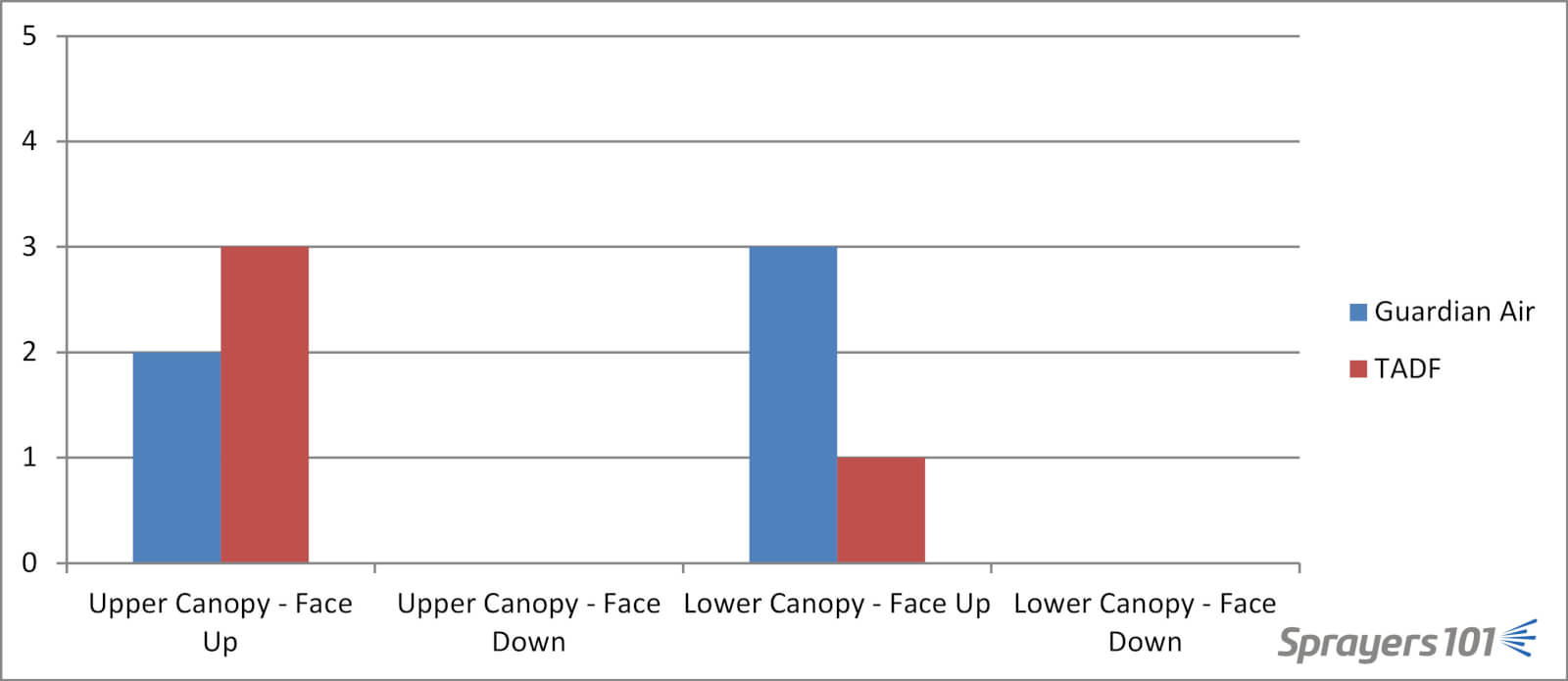
To answer this question, we used Hypro’s Guardian Air nozzle (GA11003), which is a 110° wedge-shaped flat fan that we alternated between 15° forward and 15° backward on the boom. We compared it to Greenleaf’s TADF nozzle (a blue and yellow 02), which is an asymmetrical, 110° twin-fan tip, where one fan is at 50° and has a higher flow compared to the second fan at 10°. We also alternated these nozzles on the boom to take advantage of what became four different angles of attack. Both tips sprayed 100 L/ha (10.9 g/ac) from a boom travelling 10 km/h (6.2 mph) and about 35 cm (~14 in) from the top of the canopy.
Graph 3 – Spray angle comparison. Cumulative spray coverage achieved in four positions on two plants per nozzle. Low-to-no coverage = 0. Moderate coverage = 1. High-to-excessive coverage = 2.
Graph 3 shows a lot of spray impacting on the surface of the canopy, with moderate penetration to the upward-facing leaves in the inner canopy. The angled spray may have helped a little, but no more than the finer droplets from hollow cones. While others like it, my personal experience in soybean, field tomato and ginseng has shown that the spray angle does not have much bearing on crop penetration in a broadleaf canopy. Perhaps if the canopy is sparse… but not in dense canopies. This shouldn’t be a surprise because angled sprays are best suited to vertical targets, such as wheat heads. Graph 3 seems to bear this out.
Now, since I ran this last demo, I’ve learned that I really didn’t use the twin fan nozzles optimally. In order to keep the outputs comparable, the rate controller operated the TADF’s at about 30 psi. That pressure is fine for something like glyphosate, but for contact products 60 psi to 120 psi is preferable to put the droplets in the medium range and keep them moving at the right angle.
A lot of people like the asymmetrical nozzles in broad leaf crops, so if they’re working for you that’s great. Carry on! As for me, I’m hoping to run a more stringent experiment in the future to satisfy myself.
Take Home
So, as I’ve pointed out a few times, this comparison of nozzles and spray variables isn’t definitive. It was only a subjective demonstration. Further, coverage doesn’t necessarily imply efficacy: Just because you have more coverage doesn’t mean you didn’t already have enough to do the job.
Caveats aside, however, there are a few points to be made:
Smaller droplets penetrate dense canopies better than larger droplets, as long as they survive to arrive.
Under-leaf coverage is difficult to achieve without some form of mechanical assistance – e.g. directed application from drops, air-assist, electrostatics, etc.
Higher volumes result in improved coverage, but only to a certain point. Volume should reflect the stage of growth.
At the moment, I’m unconvinced that spray angles impact (dense) broad leaf canopy penetration. There are, of course, many other learned and experienced opinions for spraying vegetables.
In 2013 we ran a sprayer coverage demonstration in a ginseng garden in Norfolk County, Ontario. The goal was to encourage growers to reconsider their spray operation with an eye to coverage. We performed a down-and-dirty comparison between simple disc-core nozzles and the considerably more expensive Arag Microjets. Opinions were mixed, but we were confident the humble disc-core could do the job.
One grower took the day to heart.
Having experienced Alternaria infection (likely due to frost damage) in the outer rows, he decided to buy a few packages of water sensitive paper and put his spray boom to the test. Multiple ground speeds, nozzle choices, pressures, spray volumes and even nozzle orientations were tested. This led him to what we will call “ideal coverage” from what may be the perfect ginseng boom.
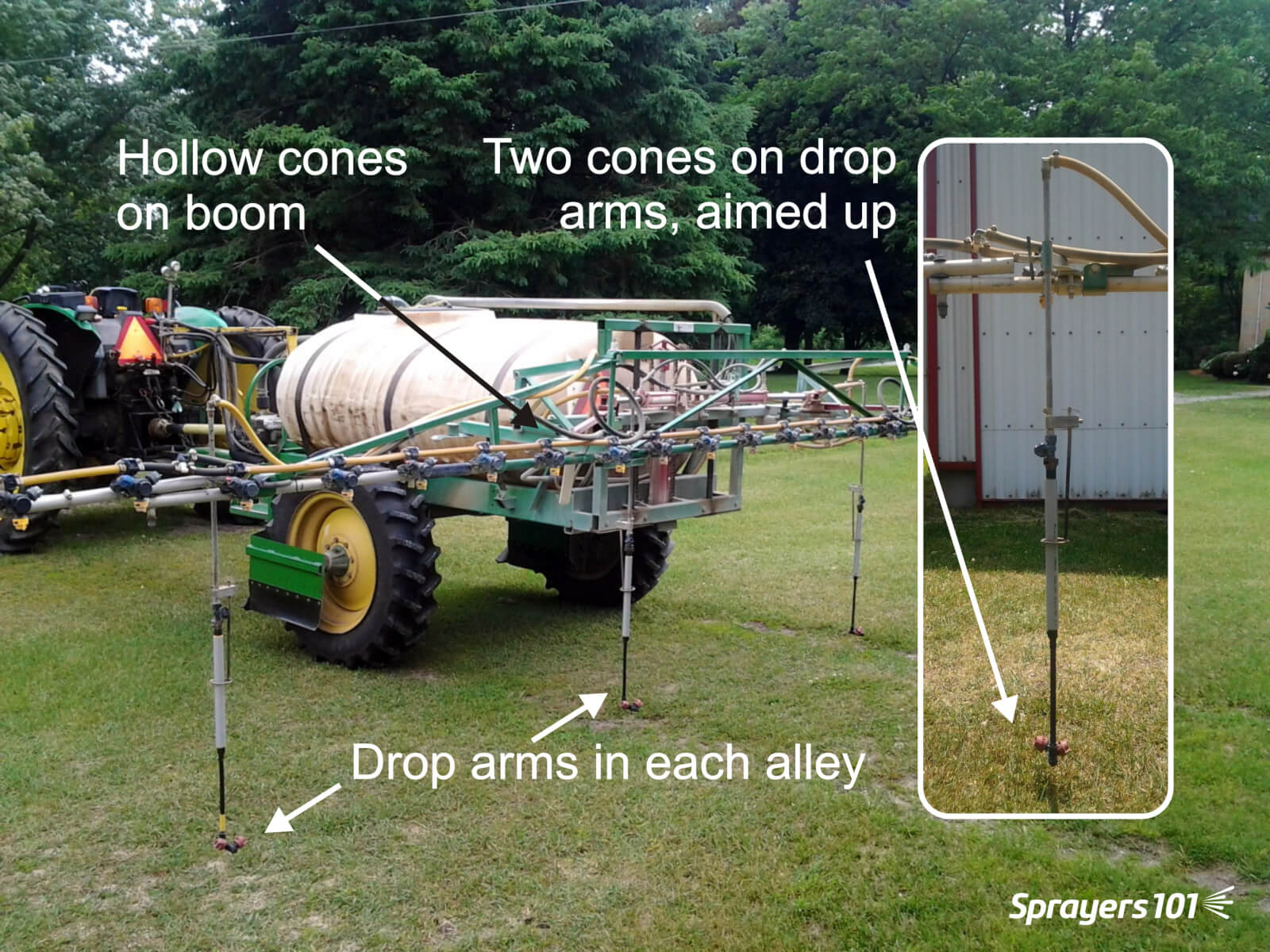
Possibly the “perfect” ginseng spray boom. 25 hollow cones and four drop arms sporting 2 full cones apiece.
On June 15th, the temperature was about 22 °C, winds were light and humidity was about 40%. The nozzle arrangement was 24 D4-45’s (hollow cones) on the horizontal booms, spaced every 50 cm (20 inches). The grower built four drop arms, hung over each alley (not just behind the wheels) with twin bodies that each held two D5-35’s (full cones), for a total of eight dropped nozzles.
His output was ~1,000 L/ha (115 US gallons per acre) and he sprayed at ~14 bars (200 psi) and he was travelling at ~7.2 kilometers per hour (4.5 miles per hour).
Compared to traditional methods, that’s low pressure and low volume for ginseng. The ground speed was reasonable given the art of negotiating a sprayer under a shade structure. Collectively, this is a savings in fuel, water and pesticide.
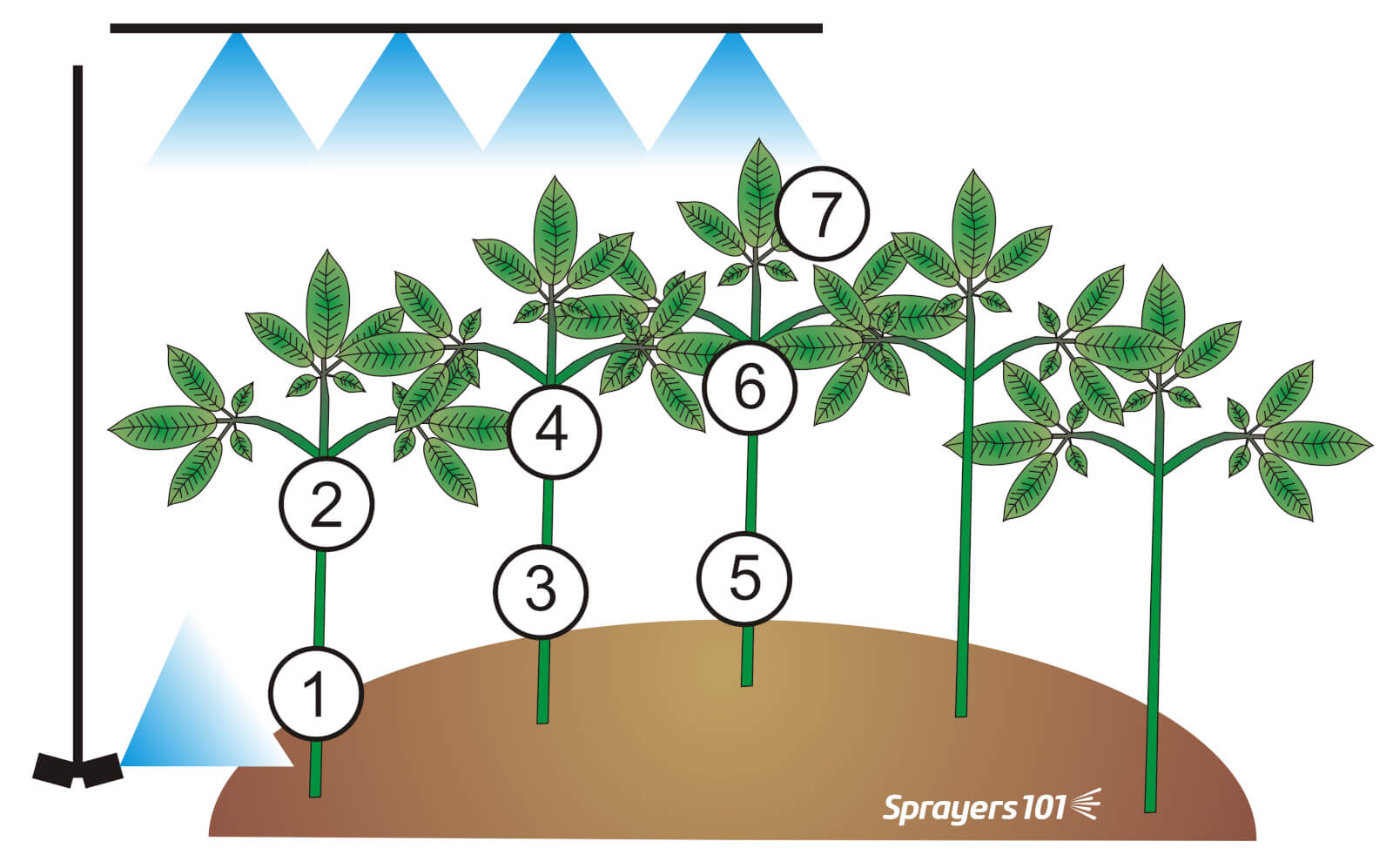
Positions for water sensitive papers.
Water sensitive papers were placed in seven positions (see image below) in a three-year old garden. In each position, the papers were folded so the paper wrapped around the stems and could show coverage facing each alley. They were placed on the stems just above the ground and just below the canopy on three plants. The seventh card was folded over the uppermost leaf, to show coverage on the adaxial (top), and abaxial (underside) of the leaf.
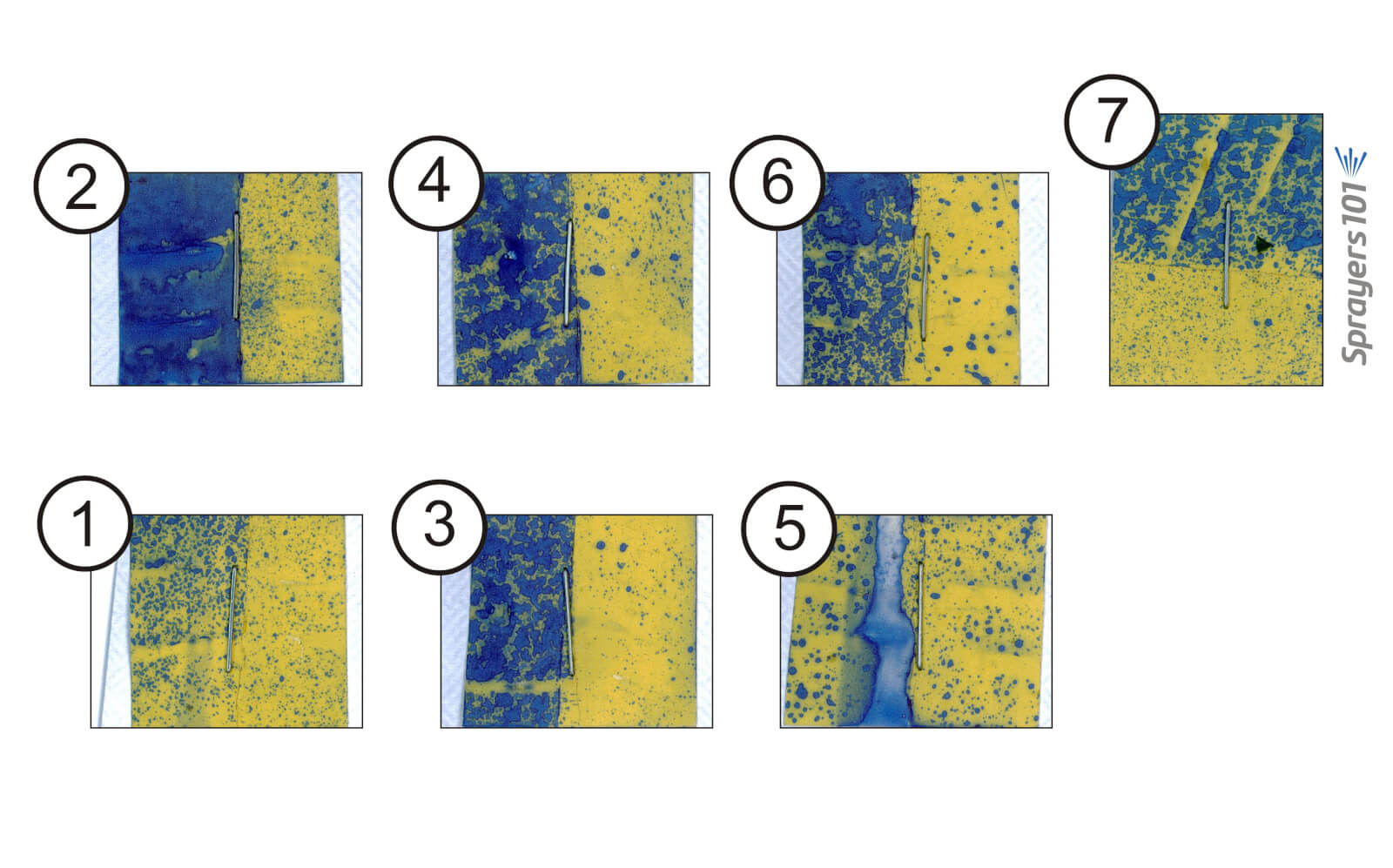
Water sensitive papers corresponding to the numbered positions in the earlier illustration. Cards were folded around the stems to face each alley (Cards 1-6) and around the top leaf for surface and under-leaf coverage (Card 7). There are some drenches, but no misses.
The coverage was excellent. A completely blue card represents a drench, which isn’t necessary but can be difficult to avoid when trying to spray all surfaces in a dense canopy. The rest of the papers show a high droplet density which tends to lead to an effective application. Ideally, hope to see 10-15% coverage and >85 droplets per cm2. This is a difficult or even impossible prospect for abaxial coverage, but we achieved it (note the lower half of card 7).
The trick, you ask? The full cones on the drop arms are aimed so the bottom of the cone is parallel with the ground (essentially, aimed up about 30°). That creates a cloud of spray moving under the canopy, improving the odds of contact on all surfaces. It is important to not spray the cone into the ground or the raised mound, and to spray in from both sides.
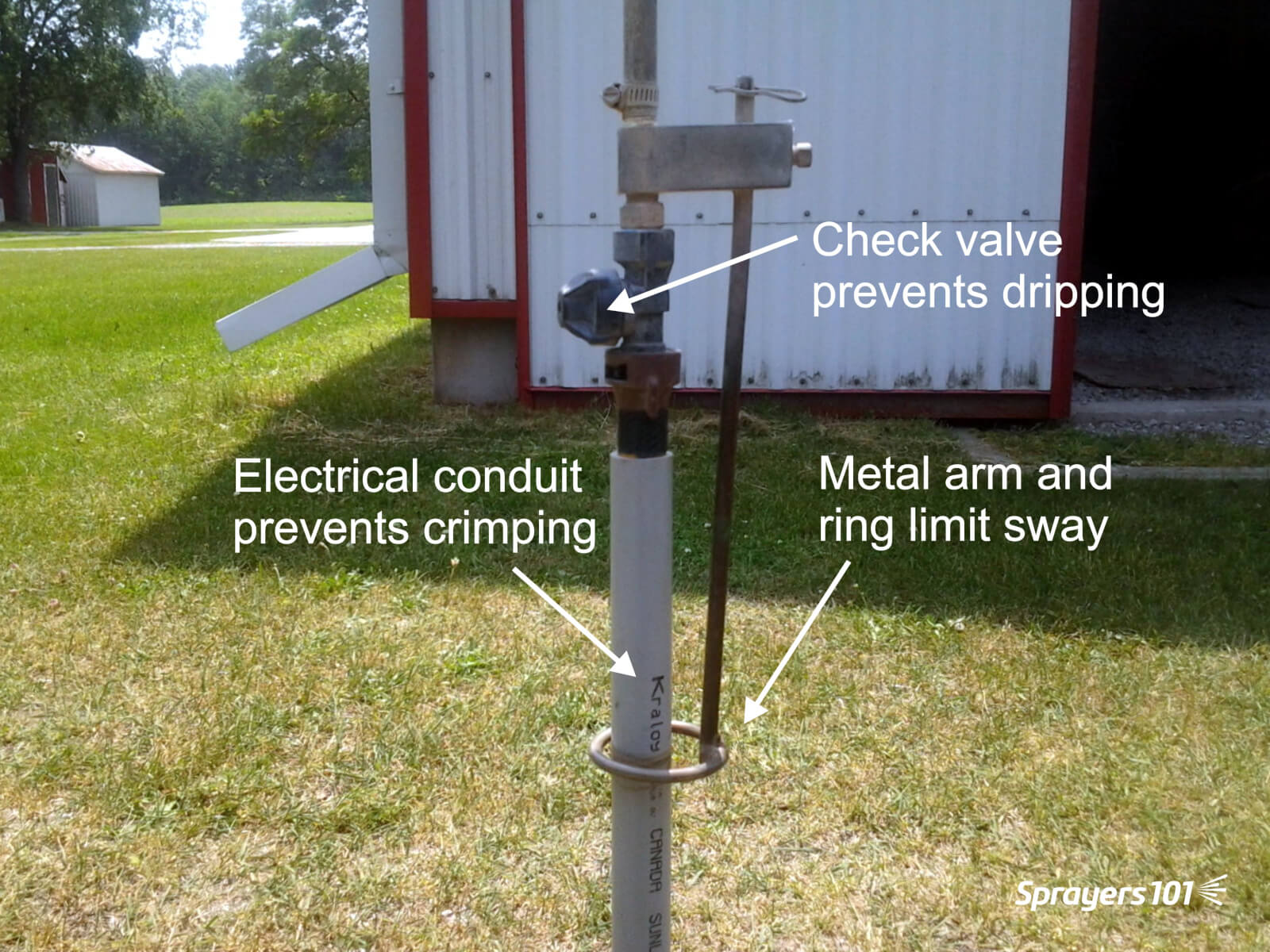
The improved drop arm
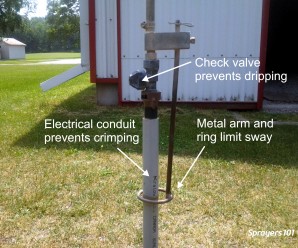
The drops themselves have been modified so they are flexible enough to move through an overgrown 3rd or 4th year garden (yes, there will be some leaf damage), but are also stiff enough not to sway. This was accomplished by sliding a sheath of electrical conduit over the drop arm and using a metal stabilizing arm that terminates in a ring around the conduit.
With the right timing and product choice this method of spraying will be hard to beat. And it’s cheap! It’s going to save fuel and wear because of lower pressures, and save spray mix because he can go a lot farther on a tank spraying only 1,000 L/ha.
For more information, check out the OMAFA research article describing the original research that set us on the path of drop leg technology.
Special thanks to Richard Klosler of Michael Klosler Farms Ltd. for sharing his great boom design.
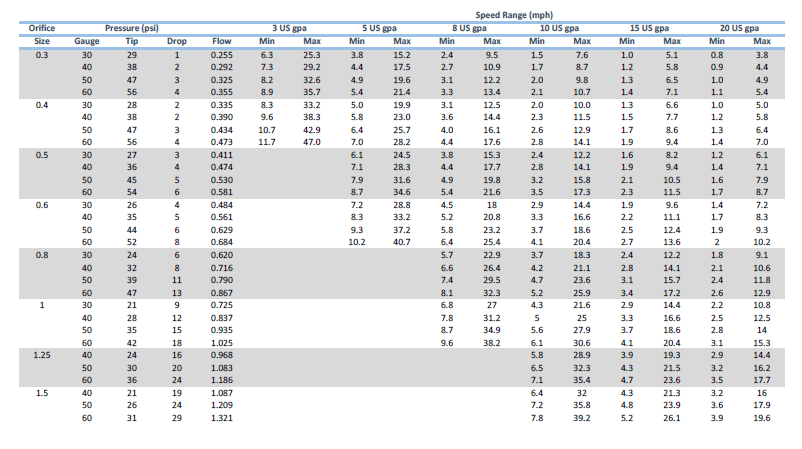
Pulse-width Modulated flow control allows you to change travel speed by a factor of about five without a change in spray pressure. This chart shows which nozzle flow rates to use. Note the significant pressure drop across the Capstan solenoid. This value must be added to the cab spray pressure, as explained here.