We’ve heard it often: calibrate your nozzles to be sure your boom output is uniform across its entire width. The downside of poor uniformity is obvious: strips of over- or under-application causing problems with pest control or crop tolerance. A graduated cylinder held for 30 s under each nozzle is the approach of choice. Several electronic versions exist to make the job easier, for example the Spot On.
But there’s more to the story. Nozzle calibration only ensures volumetric uniformity from nozzle to nozzle. It serves to identify worn, plugged, or damaged nozzles, and little else.
After release, the spray is atomized and distributed across a wider area with a properly developed pattern. An operator adjusts boom height or spray pressure to generate proper overlap for a given fan angle at the target height. Unfortunately, the uniformity of this pattern can’t be measured with a graduated cylinder, so we’ve traditionally used a “patternator”, a flat collector placed under a few nozzles that uses a series of channels to show the peaks and valleys of the volumetric distribution. Both calibration and patternation are done with a stationary spray boom. Nozzle manufacturers employ both methods to ensure their products meet international uniformity standards before marketing.
A spray patternator determines the uniformity of a stationary boom’s spray distribution (Photo: TeeJet)
Burt even that isn’t enough. We can have good volumetric distribution but still have inconsistent coverage in places. To identify those regions, we need a way to measure small amounts of spray deposit under a moving boom, ideally in the canopy we intend to treat. Here we have a few options. We can place a tracer (dye, salt, etc.) in the tank, and collect spray on small collectors placed throughout the area to be treated. We collect the samples, wash them, and analyze the solvent for the tracer. This requires special equipment and takes time. It’s useful, but only measures dose, not droplet size or density.
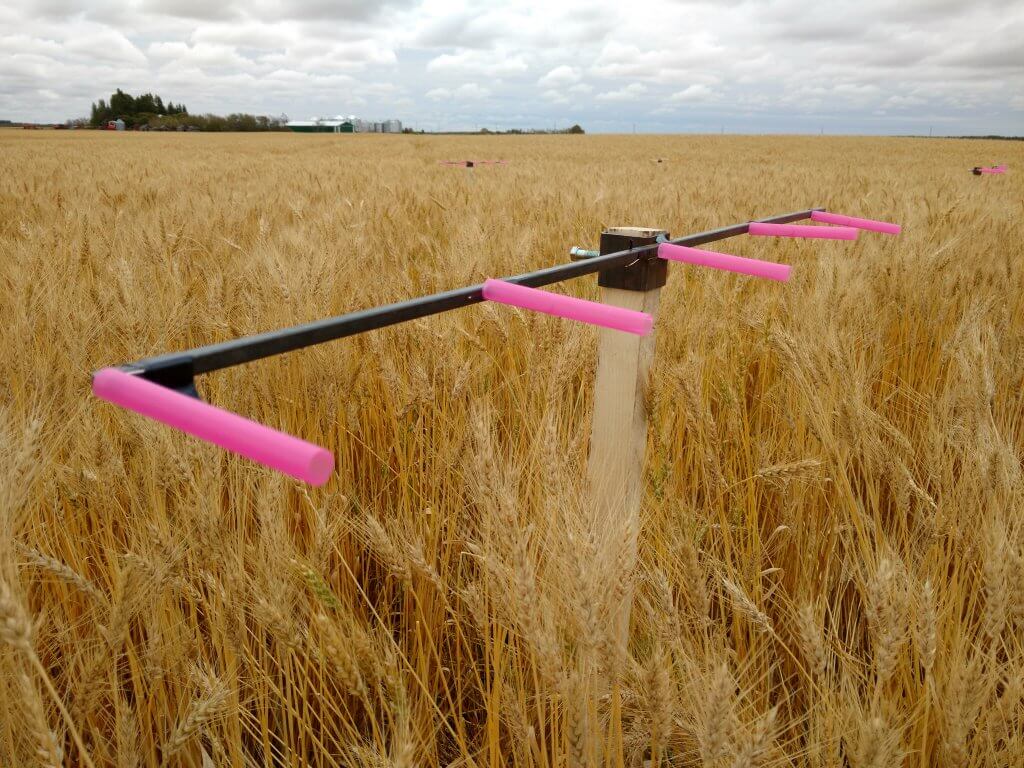
Plastic straws can act as collectors of sprays under field conditions.
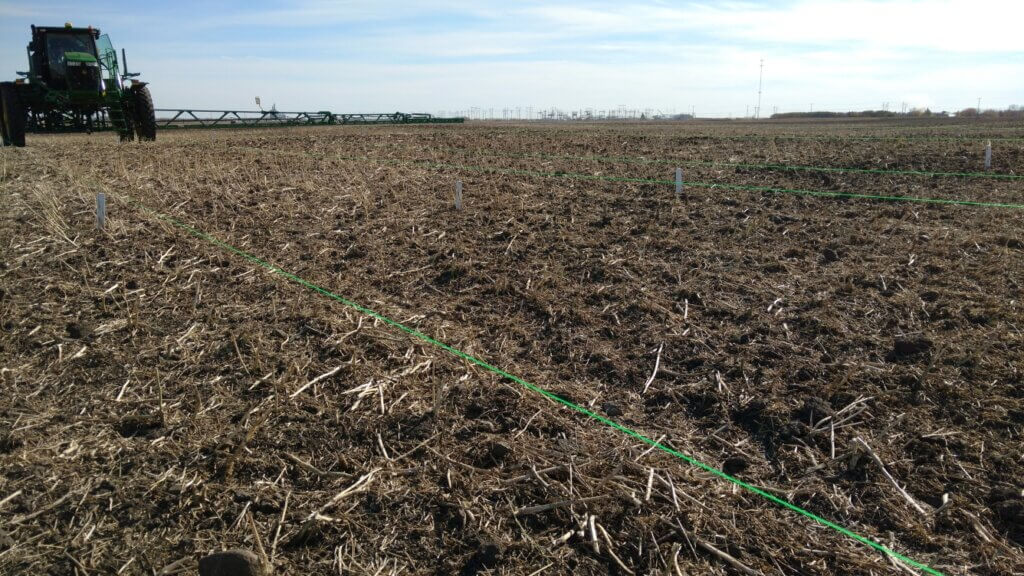
Monofilament strings can be used to collect spray over long distances.
A faster way is to use water-sensitive paper, about which we’ve written here and here. Using WSP is fast and easy, and it can provide additional information such as the number of droplets per unit area, or the total percent of the area covered, or even the size of the deposits, with the right equipment. We call this “coverage”, and believe this to be one of the two components of good pest control (the other being “dose”, the total amount of material deposited). Because the world isn’t fair, WSP isn’t great at quantifying dose.
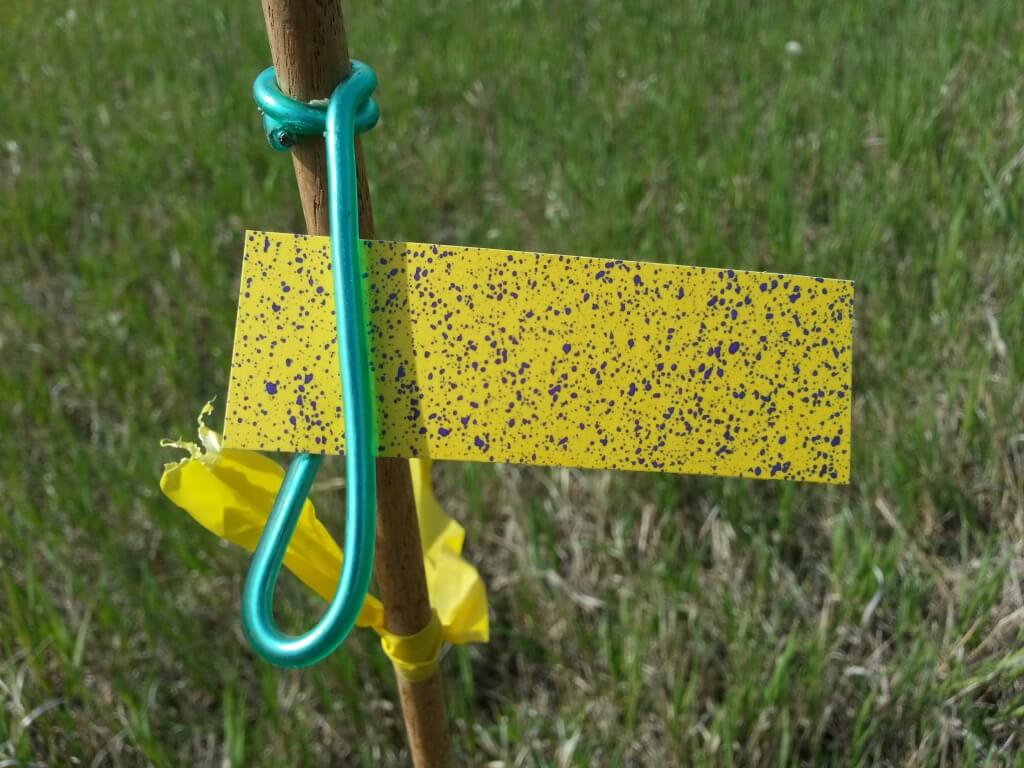
Water-Sensitive paper provides a quick visual indication of the deposit, not just amount but also qualitative aspects such as droplet size and distribution.
The industry has done a good job of identifying the dose required for good control, and this is reflected in the rate recommendations on a label. But there are a few gaps. They don’t tell us, for example, what “good coverage” is, despite often telling us to “ensure” it.
Back to Deposit Uniformity
We quantify deposit uniformity by calculating the Coefficient of Variation (CV) of a series of measurements. The CV is defined as the standard deviation of these measurements, expressed as a percent of the mean value.
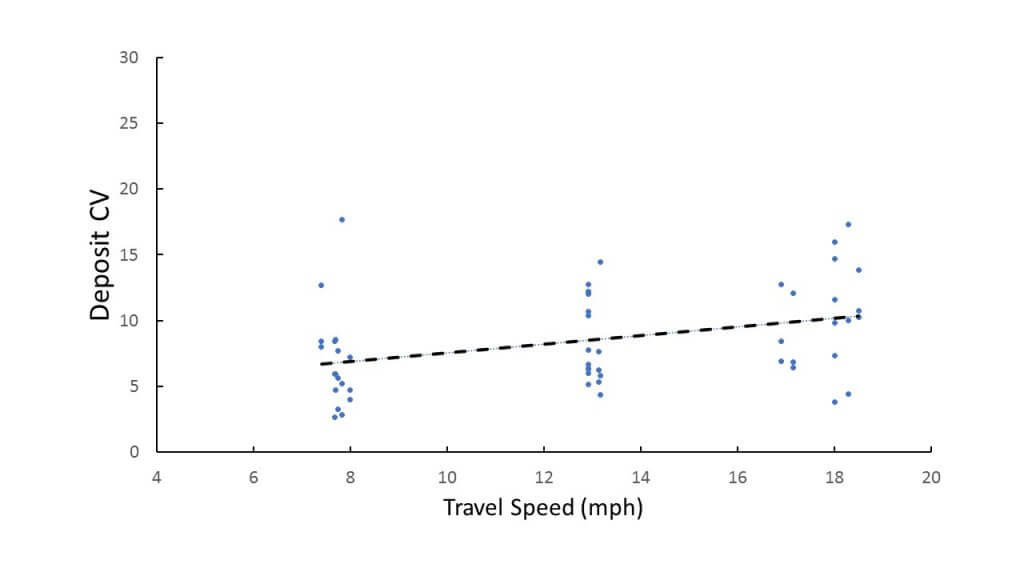
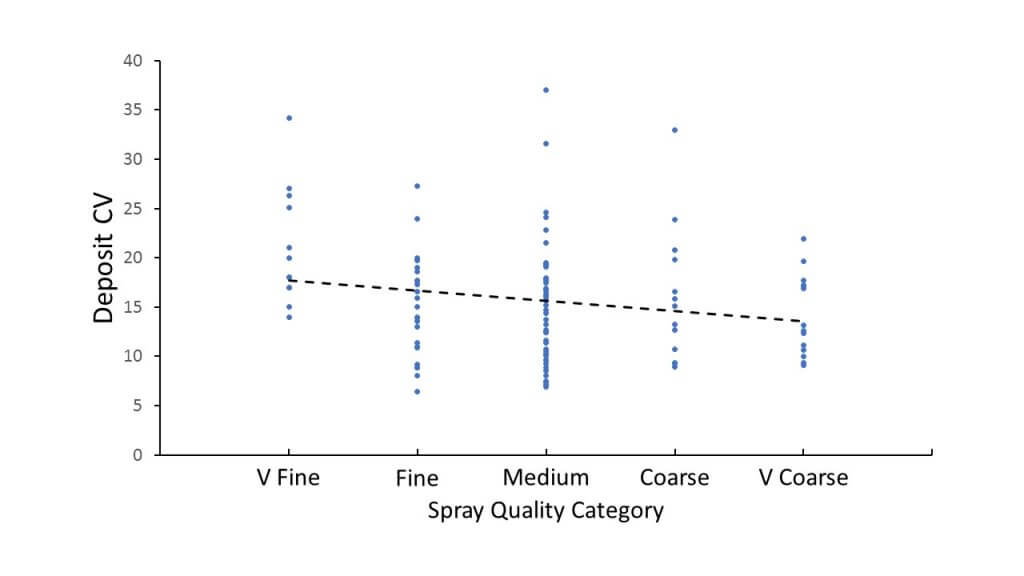
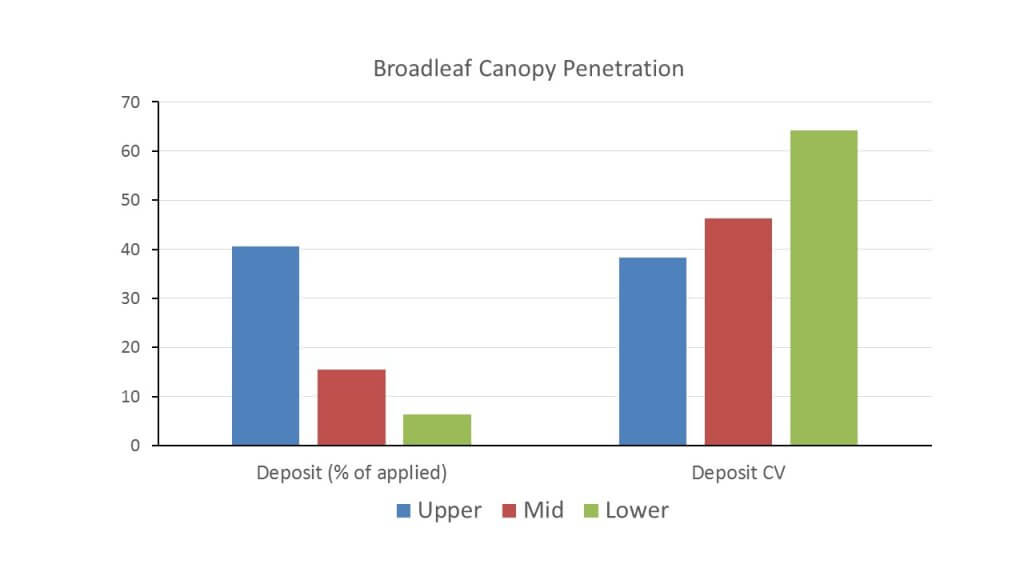
Because it’s hard to measure, it’s easy to ignore. But here are a few basics our research has told us: (In the first three examples, deposits were measured under a spray boom using petri plate or drinking straw samplers. There was no interference from a canopy. The last example was taken from within a canopy.)
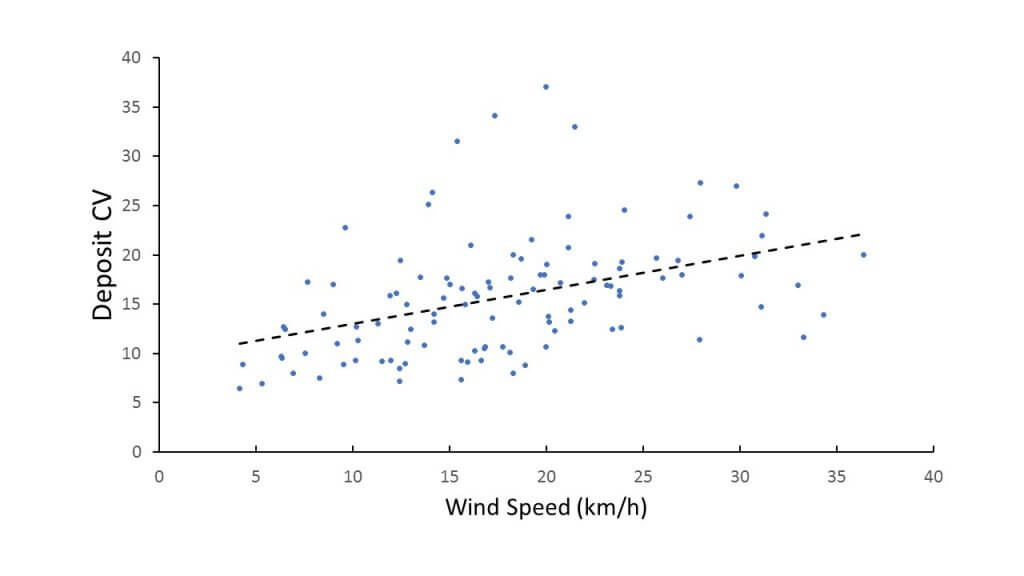
When measuring the deposited dose, the CV under a boom tended to rise with increased wind speed. This is no surprise, as it reflects that more wind has a greater chance to displace spray from its intended destination.
Spray deposit uniformity, observed during various spray drift studies, tended to decrease with higher wind speeds.
Higher booms and increased travel speed also tended to increase deposit CV.
Faster travel speeds during spray drift studies tended to decrease uniformity.
Finer sprays tended to increase deposit CV. This makes sense, as the finer droplets are more easily displaced by air movement.
Coarser sprays created more uniform deposits possibly because they were more resistant to turbulent displacement.
Deposits were reduced and became more variable deeper in a broadleaf canopy. Again this makes sense, as there are a lot of obstacles to clear and canopies themselves are by no means uniform.
Deposit amount was lower in the canopy, as expected. But the lower deposit was also more variable.
Also note that the CV in the canopy was quite a bit higher (40 – 60%) than for the exposed targets (10 – 20%). That’s another challenge.
To recap, the best uniformity was achieved with low booms (as long as patterns overlap sufficiently), slow speeds, low winds, and coarser sprays. It’s easy to see that current spray practice isn’t always conducive to uniform deposits.
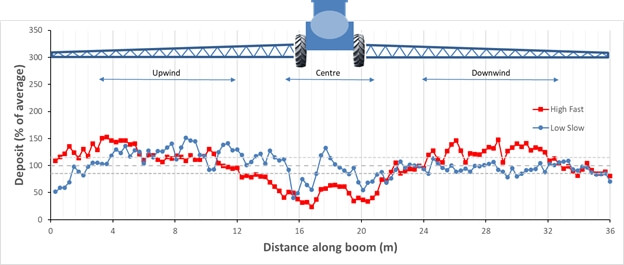
Deposit variability as captured by a 2 mm diameter string with two sprayer configurations.
So What?
Why does uniformity matter? It matters because more variable deposits are less efficient. They require higher doses for the same effect as uniform deposits. Here’s why:
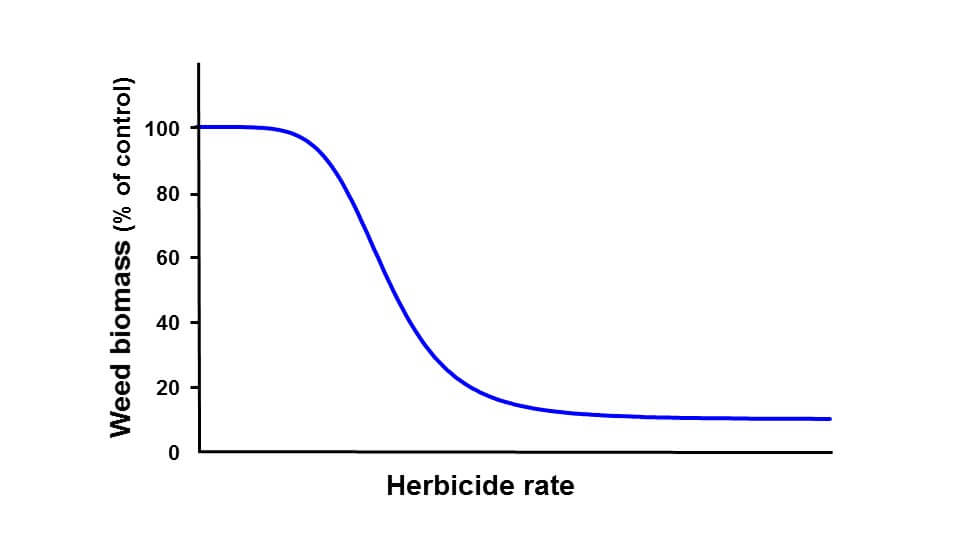
The figure below shows a typical dose response curve for a herbicide. On the y-axis, we see weed biomass, on the x-axis herbicide dose. At low pesticide doses, not much happens. (In fact, we often see a slight increase in biomass with very low herbicide doses.) As we increase dose, biomass begins to decline, and as dose increases further, the effect begins to taper off. At a certain dose, no further biological response is possible.
A typical dose response curve for a herbicide.
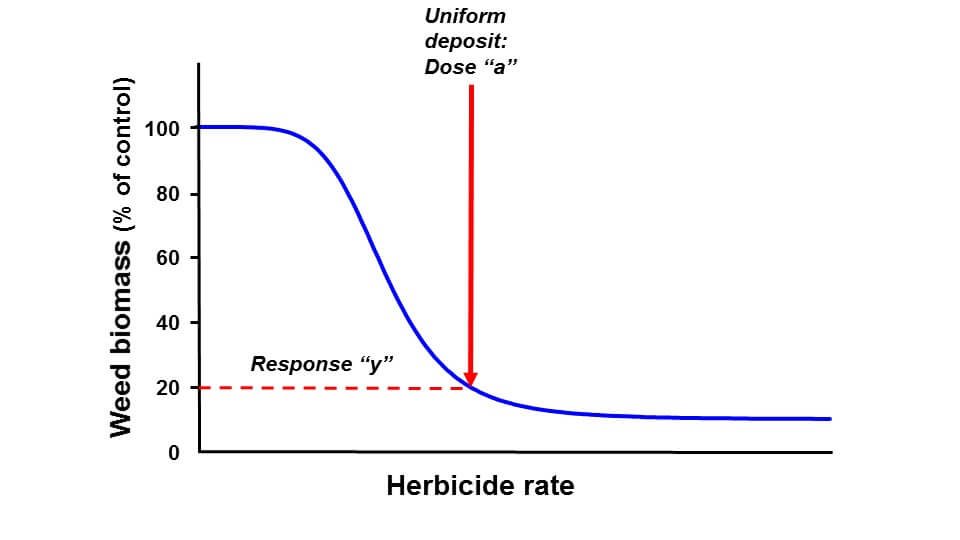
In the next figure, we see that application of a uniform dose “a” results in biomass “y”, about 20% of untreated.
A dose response curve represents the weed biomass that resulted from any applied dose.
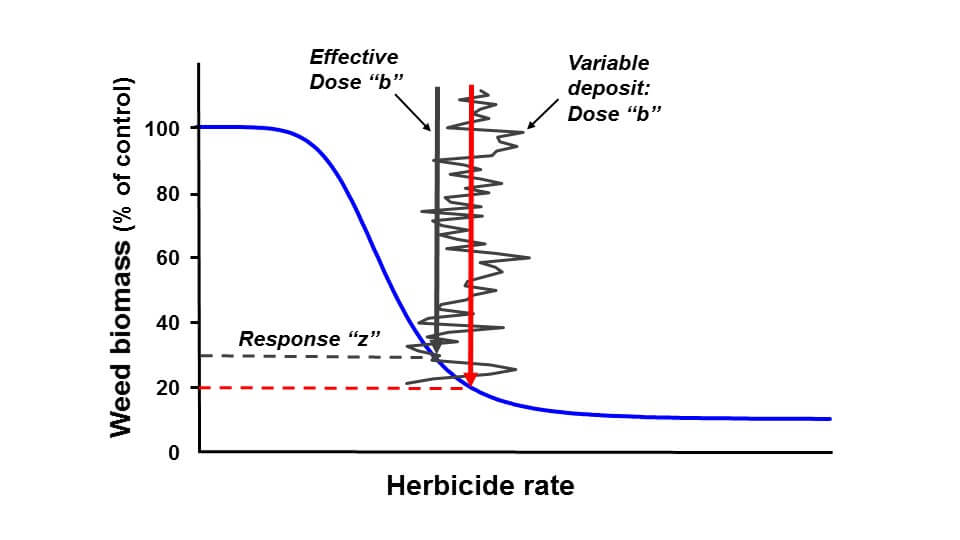
Next, we apply the same average dose, but we do it non-uniformly. At some locations under the boom, the deposit may be 40% higher or lower than average. The result is response “z”. Weed control is worse, as bad as it would have been at a lower uniformly applied dose (effective dose “b”).
A variable dose across a field results in many individual weed biomasses because of deposit variation. The net result is lower control.
This effect only happens when the effective dose is near the lower inflection point of the dose response curve. Perhaps we’re shaving rates. Perhaps the weather is challenging the herbicide’s performance. Or perhaps the weed is difficult to control. Under those conditions, any gain in performance with a higher dose is less than the penalty from a lower dose.
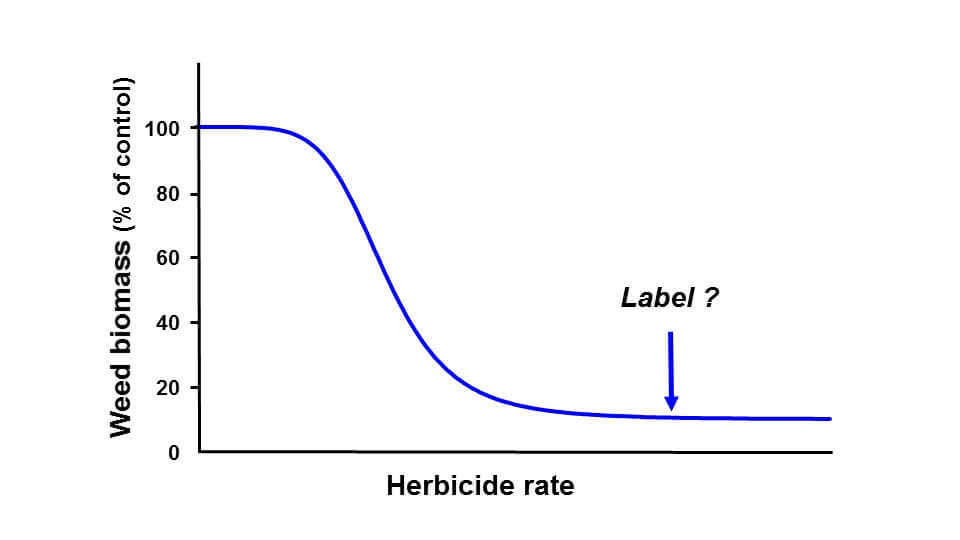
There are two ways to correct this performance loss. One is to apply a higher herbicide rate. It’s commonly done, as insurance against – you guessed it – variability, and it’s one reason why label rates have some flexibility. The second way is to improve deposit uniformity. In effect, better uniformity allows for rate reductions.
Label rates are typically in the flat region of the dose response curve to allow for variable conditions in weed susceptibility, weed growth stage, growing conditions, and deposit variability.
Take Home Message
Uniform spray deposition improves overall control. Our examples used herbicides, but the same is true for fungicides and insecticides. It’s true for field crops as well as fruit and vegetable sprays.
Uniformity is especially important when the application is done under adverse conditions in which the pesticide performance is challenged. It’s a fundamental part of good application practice.
It’s not always easy to improve uniformity. But at least it should be measured. Without measuring it, an applicator may never know how much product is being wasted. Have a look at the Crop Adapted Spraying approach Jason is using, it’s a template for all sorts of applications.
What can you do? The easiest task is to record the flow from each nozzle. The results might be surprising. Ensuring proper and consistent boom height is also important. Using water-sensitive paper to visualize the quality of the job would be icing on the cake. And adjusting application method, with uniformity as a goal…that gets you a gold star.
Funny how some issues never go away. For as long as I’ve been in the sprayer business, the question of ideal droplet size for pesticide application has remained a hot topic. At its root are the basic facts that small droplets provide better coverage, making better use of water, but large droplets drift less. So why are we still debating this? Because we need both of these properties to be efficient, effective, and environmentally responsible. Ultimately, the droplet size question is reduced into one of values, where everyone’s individual priorities play a role.
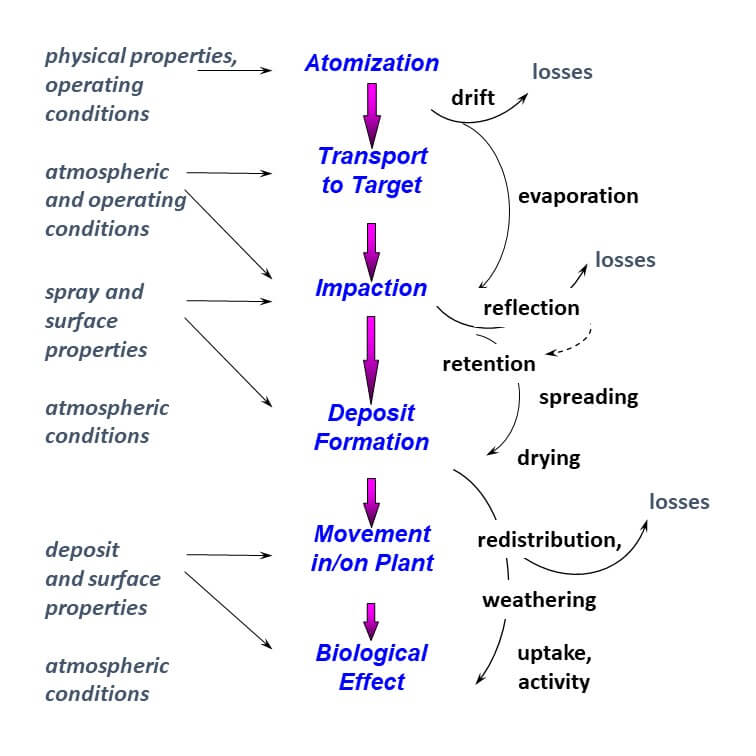
First, let’s talk about basic principles. To be effective, an active ingredient must make its way from the nozzle to the site of action in the target organism. On the way, it encounters several obstacles as summarized by Brian Young in 1986.
Figure 1: The dose transfer process of pesticides (after Young, 1986)
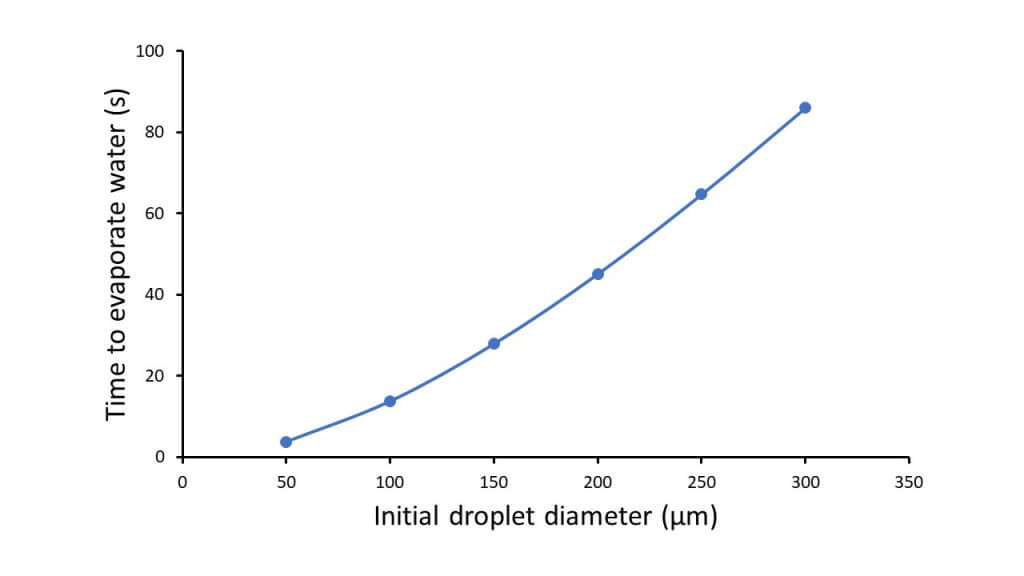
After atomization and before impaction, the spray encounters two main losses, evaporation and drift. Both of these are more severe for smaller droplets. Smaller droplets have a greater ratio of surface area to volume for any given spray volume, and can evaporate to a much smaller size, even to dryness depending on the formulation, in seconds. For water-soluble formulations, one consequence is lower uptake. Oily formulations may maintain efficacy, but neither type can escape the second effect, spray drift.
Figure 2: Time to evaporate all water from droplets of various sizes, based on the “two-fluid” model developed by Wanner (1980). Based on 0.8% v/v non-volatile, non-soluble addition, 20 ºC, and 50% RH. This model suggests that final droplet diameter is 20% of initial diameter. Reproduced from Microclimate and Spray Dispersion by Bache and Johnstone (1992, Ellis Horwood Ltd).
Small droplets are more susceptible to displacement by wind currents due to their small mass. There is no magical size above which drift is no longer possible, but we’ve generally used diameters of 100, 150, or 200 µm as a theoretical cutoff. The proportion of the spray’s volume in droplets smaller than these diameters can be called “drift potential”, and this value is useful to measure the impact of nozzle type, pressure, or formulation on that phenomenon.
But it’s not quite that simple. Even a small droplet may resist drift if its exposure to wind is limited, perhaps through a protective shield shroud, or lower boom height. Or by increasing its speed through air assist. Higher energy droplets resist displacement.
These mitigating strategies aren’t lost on sprayer manufacturers who have used them for decades to build lower drift sprayers.
The next phase of the dose transfer process is interception. The droplet has to encounter its target, but the process is mostly coincidence. Simply put, the target has to be in the way of the droplet’s flight path for the two to meet. Denser canopies are therefore more effectively targeted. A larger number of droplets (smaller droplets or more carrier) also improve the odds. But it’s not that simple. Flight paths can change. That’s where small droplets are more inventive. Because they respond to small air currents, and because such small currents surround most objects, the smaller droplets can weave around objects, following the small eddies generated by air flows. As a result, we’re more likely to find smaller droplets further down in denser, more complex canopies where the eye can’t follow. They simply cascade through.
Larger droplets, on the other hand, resist displacement by air and travel in straighter lines. They tend to hit the objects they encounter. For that reason, larger droplets are intercepted by the first object they reach and only make their way deeper into a canopy if the path is clear. In other words, vertical, sparser objects allow larger droplets to pass by.
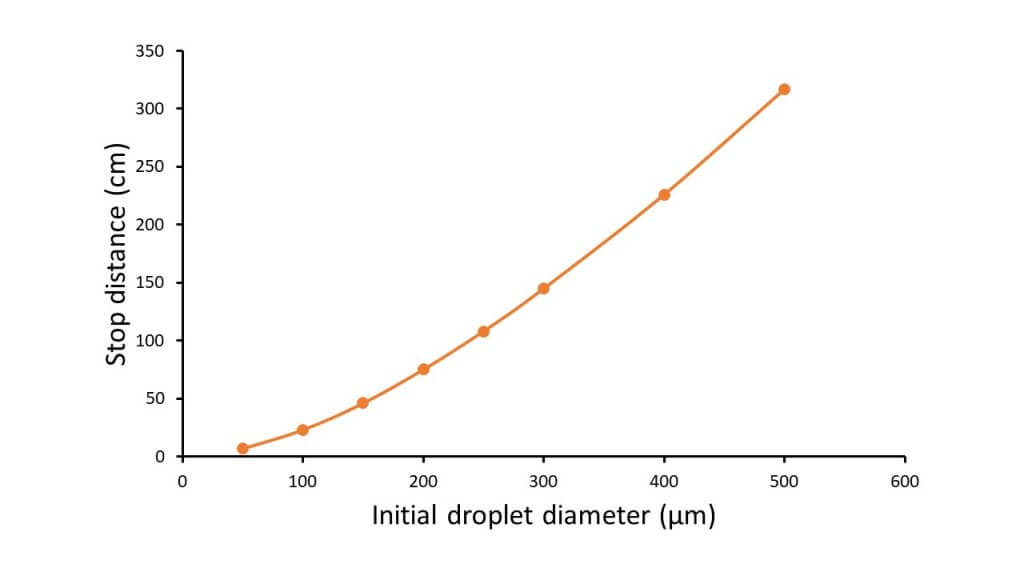
These properties are related to the droplet’s inertia, and are best described by a parameter known as “stop distance”. Assuming an initial velocity, stop distance is the distance required by a droplet to slow to its terminal velocity.
Figure 3: Stop distance as a function of droplet size. Assuming a 20 m/s initial velocity (similar to exit velocity of a hydraulic nozzle) and gravity assistance. Note that smaller droplets without the benefit of air assist lose their initial velocity within a few cm of the nozzle exit. Reproduced from Microclimate and Spray Dispersion by Bache and Johnstone (1992, Ellis Horwood Ltd).
These characteristics, combined with the aerodynamic properties of objects such as tiny insects, cotyledons, leaves, stems, etc. govern the collection efficiency of sprays. Small, slow moving droplets are thus best captured by small objects that don’t create strong enough deflections of airflow to steer the droplets past. Large objects that redirect air around them very effectively are better collectors of the larger or faster droplets whose kinetic energy can guide them through this turbulence. It’s also a matter of probability, as the smaller objects tend to have a lower likelihood of encountering the relatively scarce large droplets of any given spray.
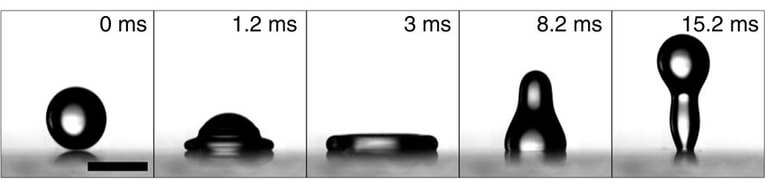
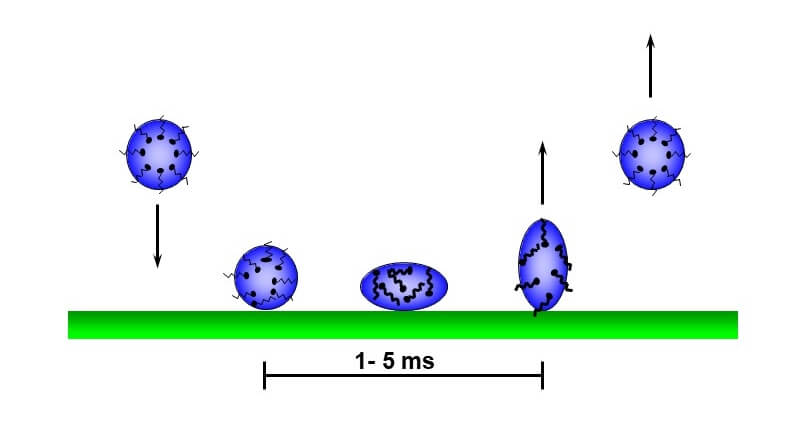
But once again, that’s not the end of the story. Interception is followed by a critical stage, retention. Objects must be able to hold onto the droplets they intercept. Slow motion video has shown that droplets flatten out on contact with an object as the liquid converts impaction velocity into lateral spread. Once at full extension, the flattened droplets will collapse even beyond their original round shape, pushing them away from the surface and possibly causing rebound. A rebounding droplet may eventually land on target, but that would be a matter of fortune. It’s better if the leaf can offer enough adhesion, diminishing the power of the rebound oscillation, allowing droplet to stick the first time.
Figure 4: Droplet deformation during impact (C. Hao, et al. 2015. Superhydrophobic-like tunable droplet bouncing on slippery liquid interfaces. Nature Communications. August 2015).
Small droplets have less mass, and tend to be retained more easily. But more than size is at play here. The morphology and chemistry of the leaf surface is also important, with crystalline or more oily surfaces offering less adhesion for droplets. The physico-chemical properties of the spray mixture becomes important, as characteristics such as dynamic surface tension and visco-elasticity affect spray retention. These properties are optimized through the product formulation effort, and possibly via adjuvants added to the tank.
We sometimes classify targets as “easy to wet” or “difficult to wet” to summarize these properties. Most grassy plants (foxtails, cereals) are difficult to wet (there are exceptions, such as the sedges) and broadleaf plants vary from the easy to wet pigweeds to the difficult to wet lambsquarters and brassicas. Easy to wet species can retain larger droplets than difficult to wet species, and that’s one reason why finer sprays are preferred for grassy weed control (leaf orientation and size are another).
Figure 5: Droplet deformation, and surfactant molecule alignment, during impaction. The inability of surfactants to reach optimal alignment quickly, and for the target surface to absorb these forces, leads to rebound.
A few words about surface tension. Although surfactants reduce surface tension and facilitate spreading, this may not be enough to improve spray retention. To be effective, surfactant molecules need to align themselves with the surface of the droplet so they can be a “bridge” at the interface where the droplet meets the target surface. This takes time. The oscillations that occur during impaction continuously create new surfaces, and if surfactant molecules don’t follow suit immediately, the droplet will behave as if no surfactant is present. Specialists measure “dynamic” surface tension, i.e., the surface tension at young surface ages – a few milliseconds – to better predict spray retention. Very young surface ages have surface tensions of plain water, even with a surfactant present. Only certain surfactants, or higher concentrations of surfactants, can actually improve spray retention.
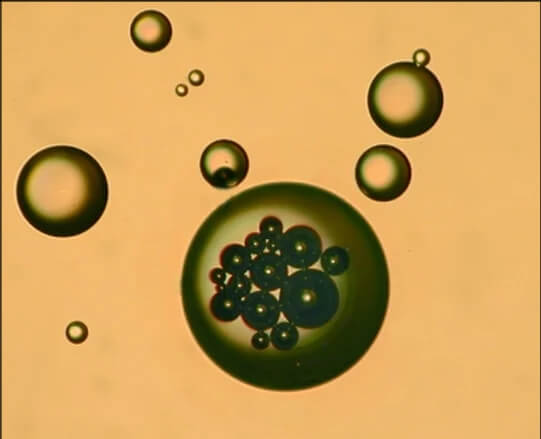
When air-induced nozzles were introduced in the mid 1990s, one of their claims was the improved spray retention due to air inclusions (bubbles) in the individual droplets. These bubbles made the droplets lighter, and also reduced their internal integrity, promoting breakup on impaction. As a result, the coarser sprays they produced actually had some of the same efficacy performance as the finer sprays they replaced. And indeed, research showed that coarser, air-induced sprays did in fact maintain good performance. Interestingly, performance of non-air-induced coarse sprays used with pulse-width modulation also showed similar robustness of performance. Research comparing air-induced to conventional sprays of similar droplet size rarely showed differences, and when they occurred, they were small in magnitude and could be corrected through improved pattern overlap.
Figure 6: Air Bubbles in spray droplets (Source: EI Operator. Believed to originate with Silsoe Research Institute, UK)
One reason larger droplets still work well is due to the pre-orifice designs of modern low-drift nozzles. This design reduces the internal pressure of the nozzle itself, with the effect being a slower moving large droplet. This reduced velocity takes away some of the force at impaction, reducing rebound.
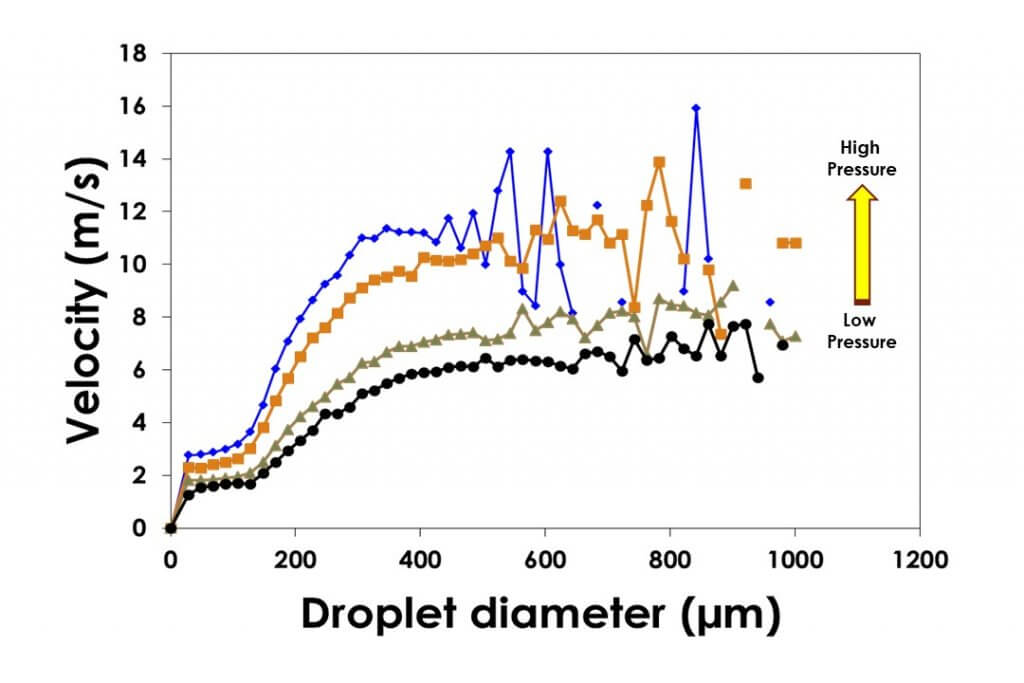
Figure 7: Droplet velocity of larger droplets is reduced by lower pressures from pre-orifice and air-induced design nozzles. Lower velocities reduce droplet rebound.
Another neat effect of coarser sprays is their ability to entrain air. All sprays move air (simply spray into a bucket to see this), and larger droplets do this better and for longer distances. The entrained air is a form of air assist for the smaller droplets, increasing their average velocity and thus reducing their drift potential while they move in the spray pattern.
The final stage of the dose transfer process is deposit formation and biological effect, and that’s where we once again see differences attributable to droplet size.
Once established on a target surface, the active ingredient usually needs to move to its site of action. In some cases, resting on the surface is sufficient, it depends on the specific product. But for the majority of herbicides, the active ingredient must move across the cuticle into the cytoplasm where it eventually migrates to the enzymes involved in photosynthesis or biosynthesis of fatty- or amino acids. The cuticle is waxy, with only a few water-loving pathways and the uptake process is basically driven by diffusion and concentration gradients. As such, it is more effective when the product is in solution and the longer the droplet can stay wet, the better. That’s one reason why spraying during hot, dry days may reduce performance. Again, it depends on the formulation and the mode of action. Too high a concentration can damage membranes, physiologically isolating the active ingredient and reducing its subsequent translocation. It’s always a balancing act.
If you’ve been keeping track of the score, it’s more or less a tie between large and small droplets. One deposits better and makes more efficient use of lower water volumes, while the other has lower losses from drift and evaporation, helps smaller droplets resist drift, and may improve uptake of some products.
And this draw is why the venerable hydraulic nozzle has been so successful for so many decades. Hydraulic atomization, by its nature, creates a wide diversity of droplet sizes, ranging from 5 to 2000 µm or greater. As Dr. Ralph Brown of the University of Guelph used to say, this nozzle provides a drop for all seasons. Some small ones for coverage and retention in hard to reach places, and some large ones for uptake and drift-reduction. The result is a robust delivery system that provides reliable results on many different targets under many conditions. In recognition of the heterogeneity of sprays, we don’t refer to specific droplet sizes, but rather their composite, grouped into international categories of Spray Quality such as Medium, Coarse, and Very Coarse.
Our challenge is to find the spray quality sweet spot, the ideal blend of these contradictory and yet complementary features of our agricultural sprays. And I believe that task is very achievable. Simply put, broadcast agricultural sprays in field crops work reliably when applied as Coarse and Very Coarse sprays in volumes between 7 and 12 US gpa. There is no need to spray any finer than Coarse for good efficacy, as coverage is already sufficient and any additional coverage has small marginal returns. There is, however, value in adding more water when canopies are denser or when leaf area index grows as the crop matures. To gain coverage, adding water is preferred to reducing droplet size because of the value of environmental protection. It so happens that Coarse to Very Coarse sprays provide or exceed the drift protection required by most agricultural labels.
There is occasional reason for spraying even coarser than what I’ve suggested. It’s certainly required by law for dicamba products on Xtend traited soybeans and cotton, but even then, only in conjunction with higher water volumes to offset losses in droplet numbers. In practice, moving to Extremely Coarse or Ultra Coarse sprays may allow an application to proceed in higher than average wind without adding drift risk. The use of some additional water is a relatively small price to pay for that additional capability.
There will always be opportunities for efficacy improvement in specific cases for those willing to spend the extra time to optimize that situation. That’s one of the reasons I’m excited to see the widespread adoption of pulse width modulation (PWM) in the industry, allowing users to change spray pressure and therefore spray quality with no impact on application rate or travel speed. Or the introduction of nozzle switching from the cab, employing the optimal atomizer for a specific situation. Although it remains difficult to define the ideal spray, selecting a spray quality has never been so easy.
Originally published in: Wolf, T.M. and Downer, R.A. ILASS Americas, 11th Annual Conference on Liquid Atomization and Spray Systems, Sacramento, CA, May, 1998
Note to reader:It’s been nearly 23 years since we wrote this paper at the invitation of organizers of the Institute for Liquid Atomization and Spray Systems Conference. At the time, custom operators, not farmers, bought self-propelled sprayers. Air-induction tips had just been introduced. Pulse-Width Modulation was only beginning to be available. GMO crops were available but not widely adopted. Buffer Zones were more rumour than policy. How badly out of date are the thoughts we mulled over?
Abstract
The goals of an agricultural spray application are to provide effective control of the pest at low cost without adverse environmental impact. A spray must transport effectively from the atomizer to the target, be intercepted and retained by the target, and form a biologically active deposit. Improvements in efficiency are elusive because of interactions between successive stages in dose transfer. Progress will depend on atomizers providing increased control over droplet size and velocity spectra without sacrificing mechanical simplicity: (a) elimination of the interdependence of flow rate and spray quality, (b) control over size span at any given nominal diameter, (c) reversal of present relationship between droplet size and velocity. Such an atomizer would drive a new research thrust to improve spray efficiency
Introduction
Polydisperse sprays provide consistent results yet suffer from inherent inefficiencies in dose transfer. Drift potential and poor spray retention at the extreme ends of their spectra are classic examples of this inefficiency, and environmental aspects of spray application have been criticized as a result (Pimmentel and Levitan, 1986). Yet, despite ongoing research, efficiency breakthroughs remain elusive (Hislop, 1993). Due to the interdependency of the factors governing dose transfer, progress in one area (i.e., greater retention with finer sprays) has often been at the expense of spray drift, and vice versa (Young, 1986). Theoretical improvements in efficiency with monodisperse sprays (Controlled Droplet Application, CDA) have not translated into widespread adoption due to drawbacks in consistency and robustness of the results. After 50 years of research, the same compromises which have been discussed since the early days of spray application are apparently still unresolved.
Nozzle designs have certainly improved – wider pressure ranges, improved spray patterns, more options for achieving various spray qualities, better quality, longer wearing materials, and lower costs are all important for the end-user. But the basic atomizer – the hydraulic flat fan nozzle generating a polydisperse spray – has hardly changed over the years.
A New Start?
The questions posed in this paper are: If a biologist could design the ideal spray, what would it be? What are the criteria for achieving the best result in the most efficient manner? Such a discussion represents a unique opportunity to think about what we know about sprays and their biological impact, providing atomizer design information to meet our future needs.
Unfortunately, biologists still know relatively little about the impact of kind of spray quality on efficacy. General statements can be made relating spray quality to herbicide, insecticide, or fungicide effectiveness, but for the most part, the ideal spray or subsequent deposit has still not been defined for most situations (Hislop, 1987). The situation reflects the lack of choice in spray atomization, creating a catch-22: not being able to easily produce customized sprays has made it difficult for biologists to identify (without confounding factors) the ideal spray for any particular situation. Further, the need by the industry for a simple, reliable, and standard application system has inherently hindered efforts to optimize the system. All stakeholders will need to be flexible to present a fertile environment for improvements to take hold.
“Integrated Spray Management”
In this era of integrated pest management, cropping systems are optimized to provide the most effective pest management strategy on a case-by-case basis with minimal crop protection agent (CPA) use. This underlying philosophy can be extended to spray application. When CPAs are used in such systems, they, too, must rely on diverse strategies to make them more efficient. Within this philosophy, a single standard application technique for all pests will not be acceptable. Two developments are needed to put such a development into action: (a) an application system capable of delivering a wide variety of spray qualities (droplet sizes, spans, velocities) at a range of carrier volumes; and (b) the knowledge to utilize specific spray qualities under identifiable conditions.
Application Objectives
During the development of such a new application philosophy, the objectives for spray application must remain clear. They are to deliver a CPA in its most effective form to the pest, with no off-target effects, at the lowest possible cost, i.e., effective, economical, and environmental.
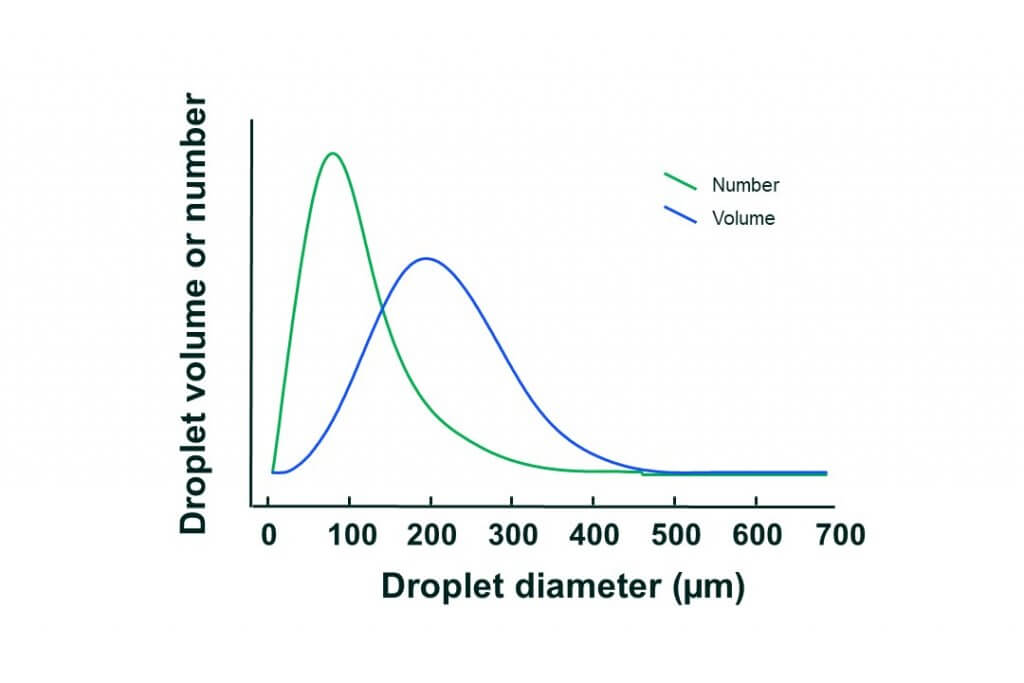
Figure 1: Typical droplet number and volume spectra for an agricultural hydraulic flat fan nozzle
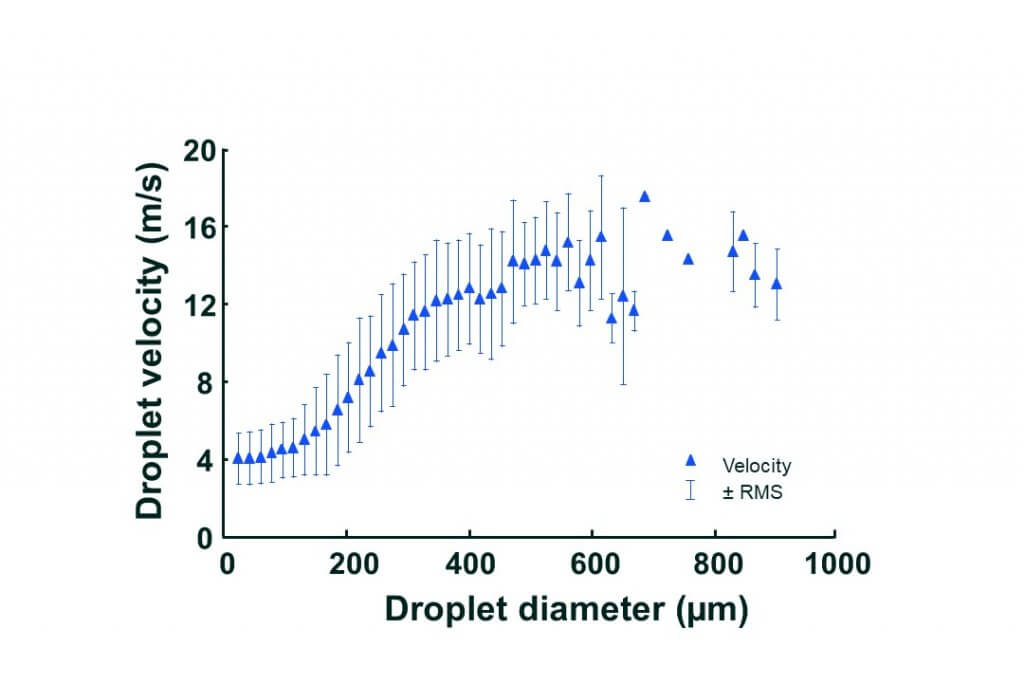
The status quo for most post-emergent CPA applications is the hydraulic flat fan nozzle. As we know, such a nozzle produces a heterogeneous mix of fine and coarse droplets (Figure 1) with a droplet speed and size relationship (Figure 2). This nozzle has frequently been criticized for inefficiency because only a small portion of spray is optimally targeted (Adams et al., 1990). At the same time, it has been applauded for consistency because a portion of its size and velocity spectrum (although not necessarily the same one) is usually appropriate for the pest complex at hand.
Figure 2: Typical velocity spectrum for an agricultural hydraulic flat fan nozzle.
The most frequently documented drawbacks of the hydraulic nozzle are driftability of fine, and poor retention of coarse components. An additional drawback is interdependence of flow rate and droplet size for any given nozzle, i.e., at the same work rate, lower carrier volumes are applied with finer sprays. Research into droplet size effects has been difficult because no variable can be held constant while another changes. Keeping dose constant, studies of carrier volume have to accept a simultaneous change in travel speed or droplet size, droplet size studies have to contend with changes in droplet density, and droplet density studies must alter active ingredient concentration. Given the complexity of the problem, few researchers commit themselves to solving these dilemmas.
Maximizing Effectiveness – No Easy Answers
For any given spray mixture, an atomizer controls spray pattern, droplet size, and droplet velocity. Spray patterns determine spatial uniformity. Droplet size and velocity in turn affect spray fate by controlling canopy penetration spray interception, spray retention, spray coverage, evaporation rate, etc. Considering the variety of active ingredients, formulations, concentrations, environments, pests, and plant canopies present, it is not surprising that the scientific body of evidence is often contradictory (Knoche, 1994). It should also come as no surprise that there is no single “best” droplet size to optimize these factors.
Basic principles: In order to better understand why a single ideal spray cannot exist, a brief review of the principles of spray drift, interception, and retention are appropriate. Larger droplets are driven mostly by inertial and gravitational forces (Spillman, 1984). As such, they tend to have vertical trajectories from which they cannot easily be displaced. This makes them a good choice for drift reduction, and also for canopy penetration into vertically oriented canopies, such as cereal grains. Collection efficiency by a target is a function of target size and orientation – horizontally oriented, larger objects will be favoured by larger droplets. Spray retention is a function of leaf surface wettability and microstructure, as more difficult to wet species will be more likely to reflect larger droplets (Hartley and Brunskill, 1958).
Small droplets, on the other hand, are more subject to viscous drag, have shorter stop distances, and can therefore move with local air turbulence to reach shadow regions (Nordbo, 1992). Thus the finer sprays have a propensity for displacement from their flight path by air turbulence, but they also are better able to penetrate dense broadleaf canopies because they can move around larger objects. Small, vertically oriented objects such as stems and petioles have the best collection efficiency for small droplets.
Upon depositing successfully on a target, the deposit must be in a form which exerts the desired biological effect. Given the same spread factor, deposits with greater volumes remain wet longer, providing more opportunities for uptake into the leaf. Small droplets provide more efficient coverage per unit volume, but dry rapidly, which may limit their uptake.
Uptake and translocation of active ingredients by biological targets are physical processes driven by concentration gradients. Concentrations of active ingredients and surfactants per unit leaf area are a function of carrier volume, droplet size, and spread factor. Less than optimum concentrations can result in reduced uptake and translocation (Wolf et al., 1992).
Further complications arise due to the heterogeneous nature of weeds. Individual regions of weed plants have unique anatomical and physiological features that can affect retention, uptake, and translocation processes on a spatial level. For example, Merritt (1982) showed that for wild oats (Avena fatua), younger leaves and the basal region of leaves absorbed more difenzoquat than older leaves.
All these factors conspire to complicate the quest for optimization in a field setting.
The Ideal Spray
Based on the previous discussion, it may be obvious that a single droplet size cannot meet all demands within such a complex system. Therefore our focus must shift from a theoretical optimum solution, as was the basis for controlled droplet applicators (Bals, 1980) to one which emphasizes flexibility.
One advantage of speaking on behalf of biologists is that one can feign complete ignorance about atomization, and propose seemingly ludicrous ideas. Perhaps a prerequisite to a fresh approach is such ignorance.
Biologists need a spray to not only implement optimum application, but as a means with which to learn how to optimize the process in the first place. Further, since there is no single optimum spray quality to meet all application scenarios, the most important feature in a spray is flexibility. The following features will be important:
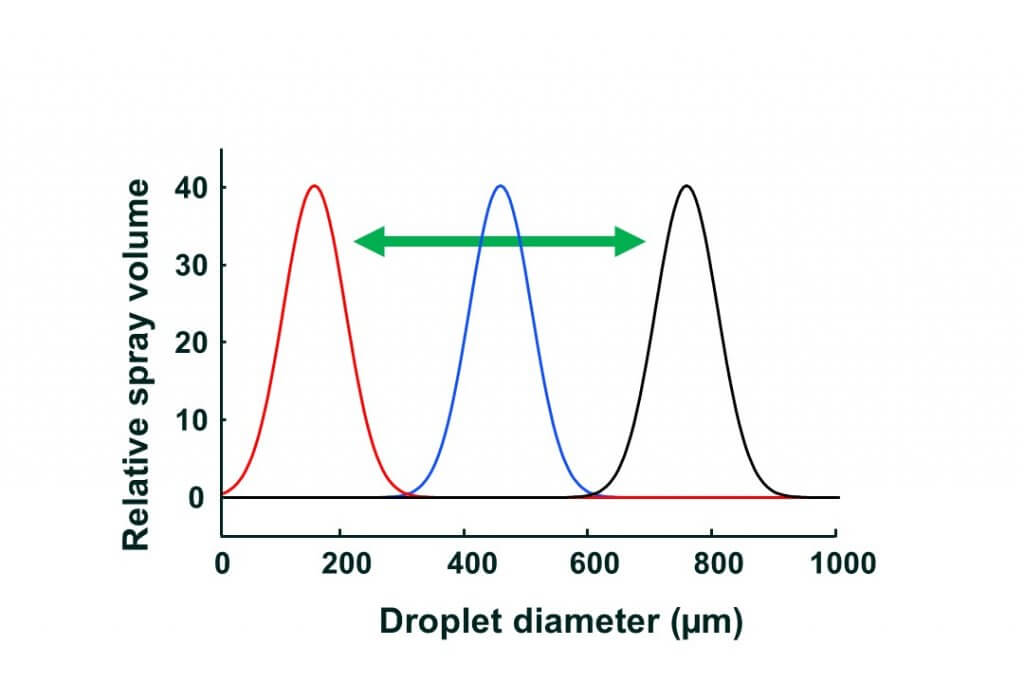
Spray quality independence: The first criteria is the ability to adjust spray quality easily, without affecting carrier volume or droplet velocity, and vice versa (Figure 3). A shift towards a coarser or finer spray can then be achieved without introducing other confounding effects. Some progress has already been made in this area (Giles and Comino, 1990).
Figure 3: Shift in droplet size spectra from medium to fine or coarse qualities, achievable without a change in carrier volume.
Relative span factor flexibility: The relative span factor of the spray should be adjustable (Figure 4). It will be important to narrow the broad spectrum sprays produced by flat fan nozzles to determine the importance of specific droplet sizes. While such research was conducted during the 1970s and 1980s with controlled droplet applicators (CDAs), the unique droplet velocity associated with such atomizers would question results if they were to be applied using hydraulic atomizers.
Figure 4: Narrowing the span of the droplet size spectra, while preserving its polydisperse nature, will be useful to strike a balance between specific droplet sizes and spray heterogeneity.
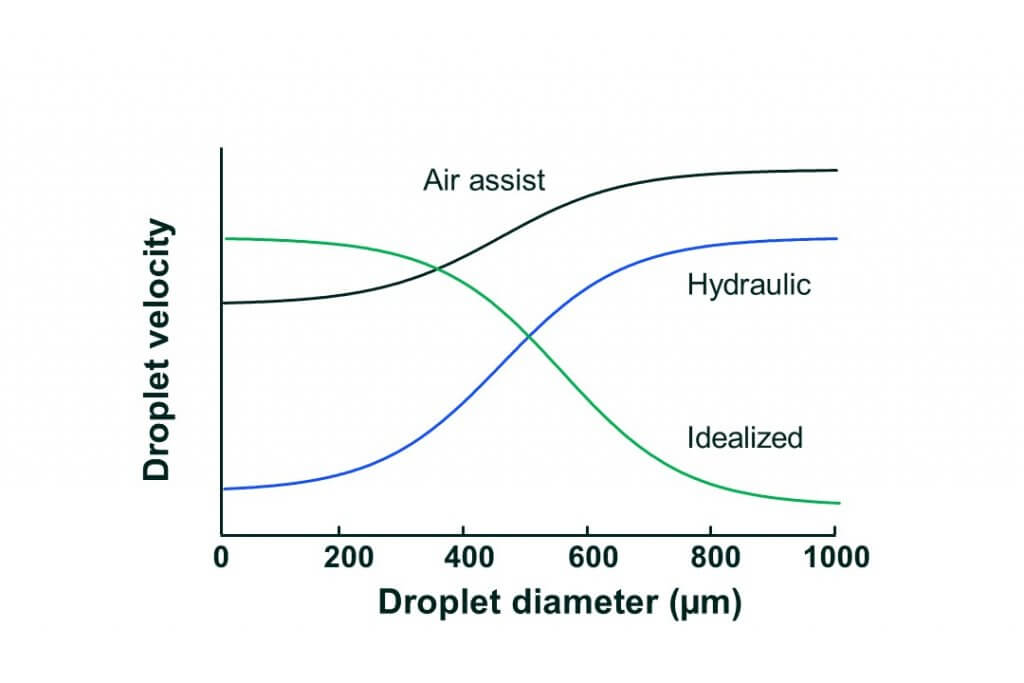
Velocity control: The third criteria is for improved droplet velocity control. The droplet velocity dependency on size has meant that in the absence of air assist, smaller droplets are always moving slower. This factor has reduced the efficiency of their collection and made them more drift prone. Additionally, the larger droplets, being faster moving, were more likely to rebound from targets. Acceleration of small droplets is a strategy for reducing spray drift and enhancing collection efficiency, but greater velocity for larger droplets may reduce the efficiency of their retention by the target. If the droplet size – velocity relationship were reversed, then smaller droplets would be less drift prone and larger droplets would be less likely to rebound (Figure 5).
Figure 5: Droplet velocity spectrum for a typical agricultural hydraulic spray, accelerated with air assist to reduce drift potential of smaller droplets, and with smaller droplets travelling faster than larger droplets to maximize transfer efficiency.
Spray heterogeneity: Spray heterogeneity will remain important in an optimized system, especially in the absence of specific knowledge on droplet function by size class. In this sense, a polydisperse spray does more than provide insurance for changing conditions, it adds diversity to static conditions which strengthens the overall effect. While a quantitative dose-based approach to CPA delivery is often appropriate, it under-emphasizes the role of deposit structure and spray redistribution, where quality is more important than quantity (Wolf, 1996). For example, let us assume that canopy penetration is maximized with a spray of 400 µm VMD, with a relative span factor of 0.7. In such a spray, fine droplets contribute relatively little to overall dose. However, their ability to redistribute in the canopy, targeting areas left untouched by the larger droplets may be more important than their total dose contribution would suggest. In this way, they provide benefits which are total dose independent. A heterogeneous spray would ensure that these benefits remain.
Deposit uniformity: Efforts at optimizing dose transfer are compromised if spatial dose uniformity cannot be maintained within the treated area. High deposit variability has been associated with reduced control of insects (Uk and Courshee, 1982; Cooke et al., 1986). As such, uniformity remains a fundamental requirement for spray application and should not be compromised with new atomizer designs.
Environment as a Priority
Spray must land on the intended target, be it a plant, insect or ground, and in some cases on the optimal pest part, i.e., specific leaves, leaf sides, stems, etc. Off-target placement not only represents inefficiency, but also undesired environmental input. With any application system, an important criteria is the ability to manage off-target impacts.
Past solutions to spray drift or droplet rebound has been two-fold: (a) eliminate those droplets which do not impact on the target efficiently, or (b) protect them from displacement. For spray drift, the elimination of small drops through production of coarse sprays has been successful (Edwards and Ripper, 1953). The challenge is to provide drift protection without compromising the advances made in the previous exercise of maximizing effectiveness. The protection of fines with barrier (shrouds) is an effective strategy for reducing drift, and provides the advantage of maintaining a spray quality established to meet separate criteria (Wolf et al., 1993). Another successful strategy has been to assist transport of fines with an external energy source (air or electrostatics). This also allows the preservation of an optimized spray quality, with the added advantage of modifying the droplet velocity spectrum in favour of canopy penetration.
Nozzle design may offer some opportunities for the reduction of rebound. Novel atomization systems such as venturi or twin-fluid nozzles, which offer air-inclusion in droplets, may reduce rebound of larger droplets. If larger droplets are required, but retention is of concern, such approaches may be useful. Spray adjuvants can also play important roles in this area (Downer et al., 1995)
Economical Considerations
Underlying any attempt to provide effective pest management is an economical consideration. The producer must see a benefit in making a technical investment. Any atomizer solution must therefore not only meet the technical requirements for optimizing dose transfer, it must also be a cost-effective and practical system. A system which is complicated to use is not likely to be widely adopted. Without strategies for implementation by the end user, innovations in delivery are merely theoretical exercises.
Putting it into Practice
During a typical work day, an applicator may be called to treat crops for a range of pests with broad-spectrum products. These pests will likely be present in a range of densities, some above and others below an economic threshold. There may also be a range of canopies present, some broadleaves, others grasses, some dense, others sparse. Depending on the area, there may have been a range of environments under which pests became established, or during which application is made. Each field will also have a range of bordering ecosystems with unique trespass sensitivities.
There will obviously be a limit to the degree of customization that is possible. But some efforts will be rewarded. The applicator uses GPS technology to collect or recall relevant data – sensitive areas, high and low infestation levels, or changes in canopy structure. With the new atomizer, the applicator can emit the most effective droplet size, velocity, span, and dose appropriate for the pest or canopy on a site-specific basis. The use of spray quality classification systems such as those developed by the BCPC and ASAE will guide optimization efforts, but in the end, these classification systems will be too broad to fine-tune the system. A higher resolution, multi-parameter scheme which is sensitive enough to represent the criteria laid out in this paper will be necessary.
Possible difficulties emerge when the system resists optimization. For example, it would be comparatively easy for the applicator to control a broadleaf weed in a grassy canopy, as the size spectrum which optimizes grass canopy penetration is also likely to target the broadleaf weed effectively. If a tank mix is used to control both grassy and broadleaf weeds in this canopy, the applicator now needs a more heterogeneous spray, where a finer component targets the grassy weed, and the coarser component still effectively transfers dose to the broadleaf weed. As the situation increases in complexity, the simultaneous optimization of several criteria will be increasingly difficult.
Conclusions
Only an integrated approach involving all stakeholders (engineers, chemists, biologists, etc.) can result in improved application of CPAs. Individual goals and concerns must be communicated and reconciled in new design efforts. This paper represents a wish list from biologists’ perspectives. While greater flexibility and control are important objectives in our opinion, consideration must also be given to mechanical complexity and cost, possible interactions with formulations exhibiting a range of physico-chemical properties, biocontrol agents, and practical strategies for adoption. A continued willingness to establish and maintain lines of communication and cooperation between these disciplines will be pivotal to success.
Acknowledgments
The invitation by the ILASS Program Organizing Committee to make this presentation is gratefully acknowledged.
Citations
Adams, A.J., Chapple, A. C., and Hall, F.R.. 1990. Agricultural sprays: lessons and implications of drop size spectra and biological effects. In: L.E. Bode, J.L. Hazen, and D.G. Chasin (eds.) Pesticide Formulations and Application Systems, ASTM STP 1078. American Society for Testing and Materials, pp. 156-169
Bals, E. J. 1978. The reasons for C.D.A. (Controlled Drop Application). Proceedings of the 1978 British Crop Protection Conference – Weeds, pp 659-666.
Downer, R.A., Wolf, T.M., Chapple, A.C., Hall, F.R., and Hazen, J.L. 1995. Characterizing the impact of drift management adjuvants on the dose transfer process. In: R.E. Gaskin (ed.) Fourth International Symposium on Adjuvants for Agrochemicals. New Zealand Forest Research Institute, Rotorua, NZ, pp. 138-143.
Edwards, C.J. and Ripper, W.E. 1953. Droplet size, rates of application and the avoidance of spray drift. Proceedings of the 1953 British Weed Control Conference, pp. 348-371.
Giles, D.K., and Comino, J.A. 1990. Droplet size and spray pattern characteristics of an electronic flow controller for spray nozzles. J. Agric. Engng. Res. 47:249-267.
Hartley, G.S. and Brunskill, R.T. 1958. Reflection of water drops from surfaces. In: J. F. Danielli, K. G. A. Parkhurst, and A. C. Giddiford, eds., Surface Phenomena in Chemistry and Biology, Pergannon Press, London, pp. 214-223.
Hislop, E.C. 1993. Application technology for crop protection: an introduction. Pages 3-12 In: G.A. Matthews and E. C. Hislop (eds.) Application Technology for Crop Protection. CAB International, Wallingford, UK.
Hislop, E. C. 1987. Can we define and achieve optimum pesticide deposits? Aspects Appl. Biol. 14:153-172.
Knoche, M. 1994. Effect of droplet size and carrier volume on performance of foliage-applied herbicides. Crop Prot. 13:163-178.
Merritt, C.R. 1982. The influence of form of deposit on the phytotoxicity of difenzoquat applied as individual drops to Avena fatua. Ann. Appl. Biol. 101:517-525.
Nordbo, E. 1992. Effects of nozzle size, travel speed and air assistance on deposition on artificial vertical and horizontal targets in laboratory experiments. Crop Prot. 11:272-278.
Pimentel, D. and Levitan, L. 1986. Pesticides: Amounts applied and amounts reaching pests. BioScience 36:86-91.
Spillman, J.J. 1984. Spray impaction, retention and adhesion: an introduction to basic characteristics. Pestic. Sci. 15:97-106.
Wolf, T.M. 1996. Spray application into standing stubble – an exploration of physical and physiological components. Ph.D. Dissertation, Department of Agronomy, The Ohio State University, 192 pp.
Wolf, T.M., Grover, R., Wallace, K., Shewchuk, S.R., and Maybank, J. 1993. Effect of protective shields on drift and deposition characteristics of field sprayers. Can. J. Plant Sci. 73:1261-1273.
Wolf, T.M., Caldwell, B.C. McIntyre, G.I., and Hsiao, A.I. 1992. Effect of droplet size and herbicide concentration on absorption and translocation of 14C‑2,4‑D in oriental mustard (Sysimbrium orientale). Weed Sci. 40:568-575.