Category: Multimedia

Videos, Books, Presentations, Songs and ePubs

  • How to Calibrate an Airblast Sprayer Operator

    How to Calibrate an Airblast Sprayer Operator

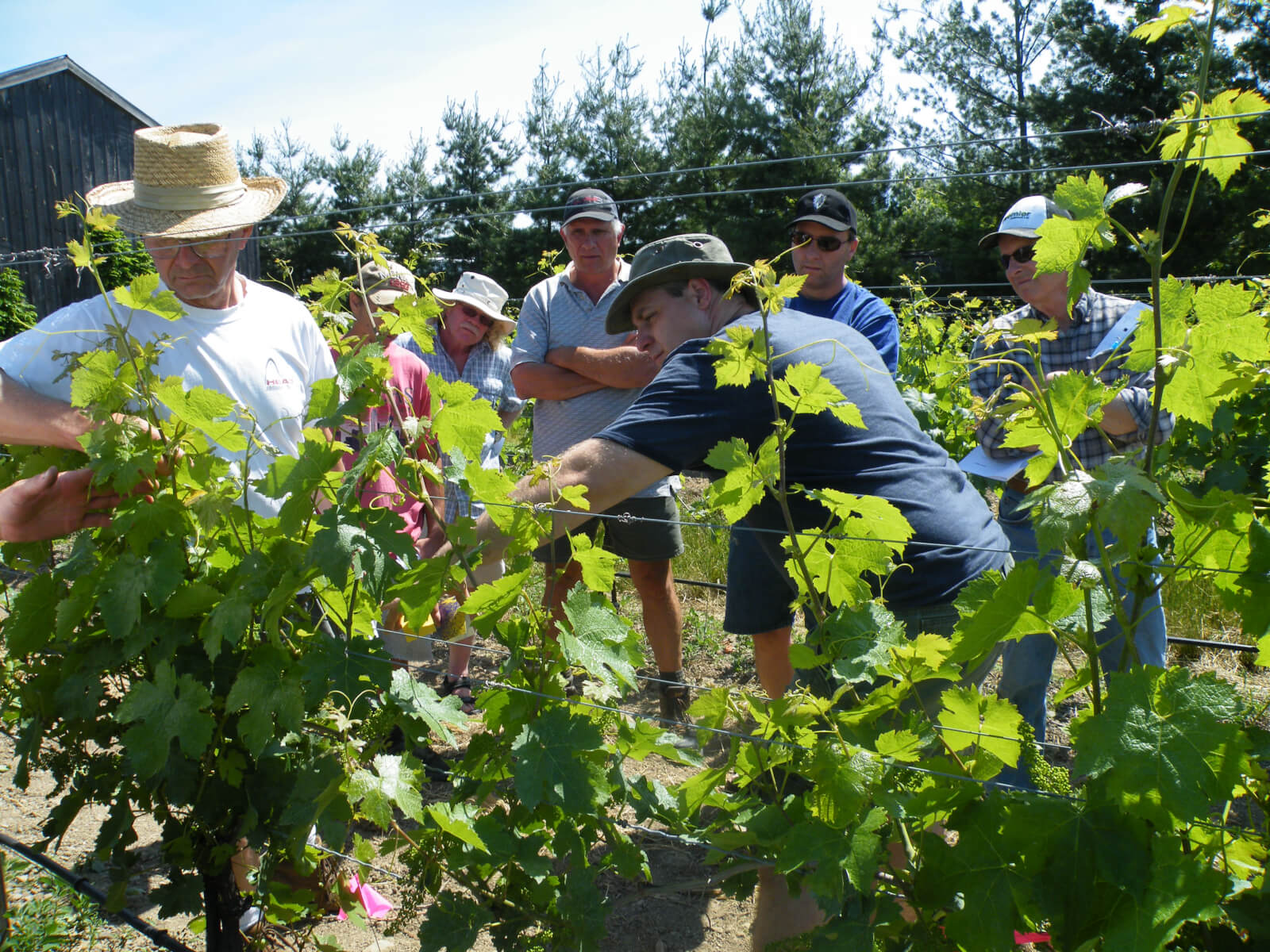
    Checking coverage on water-sensitive paper with some of the Grape Growers of Ontario members in 2012
    Checking coverage on water-sensitive paper with some of the Grape Growers of Ontario members in 2012
    Press play to hear the audio version of this article.

    When an extension specialist, equipment retailer or consultant is asked to calibrate an airblast sprayer, they would be well advised to calibrate the sprayer operator as well.

    Consider this: you and the operator are each investing three hours (average) to optimize the sprayer for a specific set of circumstances: the crop dimensions, density, and the weather conditions at the time of calibration. Depending on the reason for the application, you may even account for the product(s) mode of action and the pest location. This means that once you leave, the circumstances will change and the benefits of your efforts will quickly diminish.

    Calibrations, like milk, have an expiry date.

    There are three possible outcomes from a single, stand-alone calibration:

    1. The operator manages efficacious applications throughout the season because the variability in weather, crop and pest isn’t significant. This is generally not the case.
    2. Not recognizing that sprayer settings need constant adjustments (or being unable to make the changes) the operator experiences only modest results and decides calibration isn’t worthwhile.
    3. The operator experiences failures and lays the fault with you (as the last person the touch the sprayer) and/or the agrichemical rep that sold the chemical. Few sprayer operators blame timing or spray coverage.
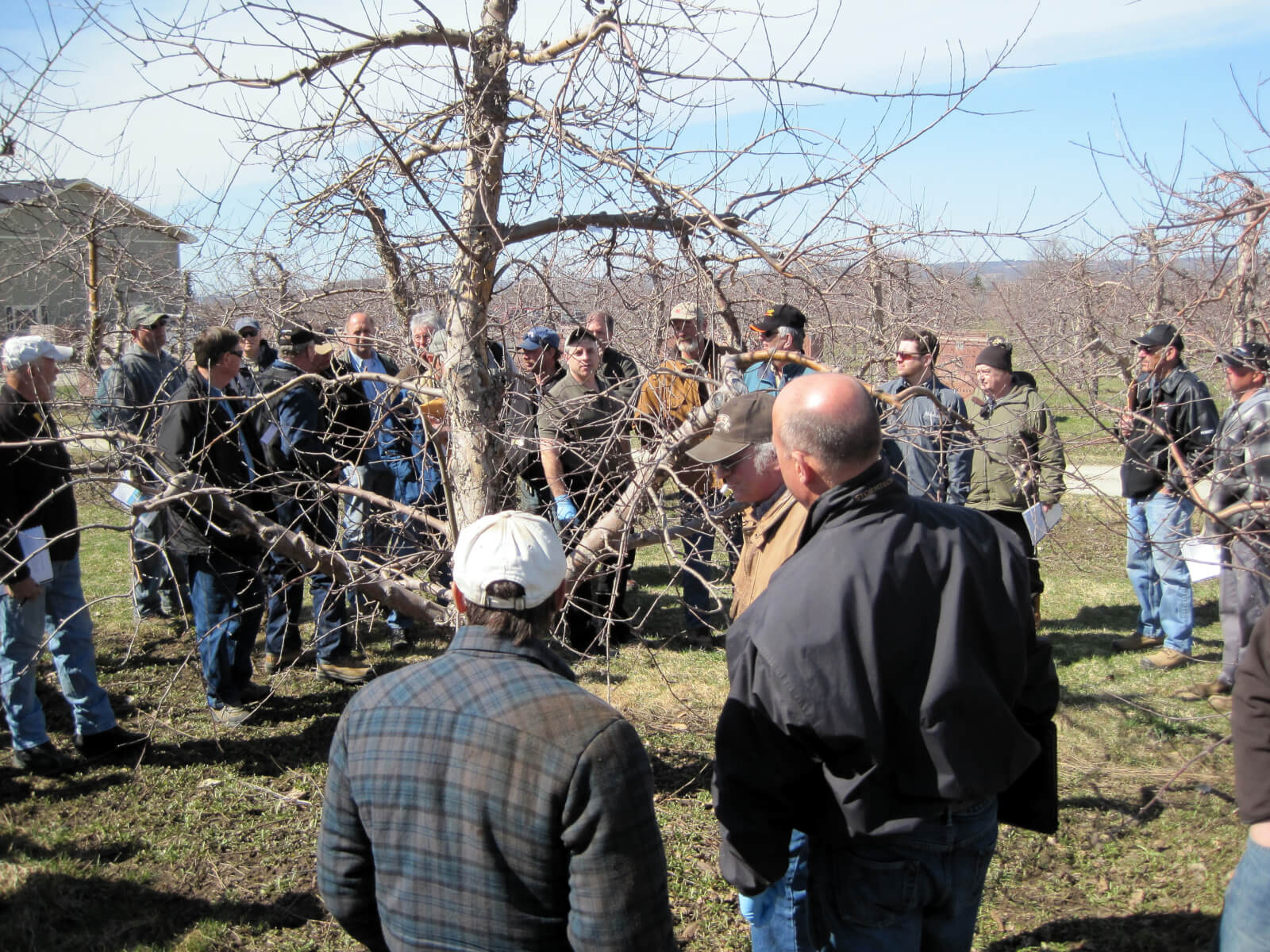
    Explaining how to place water-sensitive paper and ribbons in an apple tree
    Explaining how to place water-sensitive paper and ribbons in an apple tree

    The solution lies in the proverb “Give a man a fish and you feed him for a day; teach a man to fish and you feed him for a lifetime.” It is the sprayer calibrator’s responsibility to involve the sprayer operator and ensure they understand what is being done, why it is being done, and how to do it when you leave. Otherwise, expect to calibrate that sprayer again… soon.

    Personally, I have had the most success educating and empowering sprayer operators to make their own seasonal adjustments based on a formulaic approach. Depending what you are trying to accomplish, you may not need all of the following steps, or you may perform some on your own and others as part of the education:

    1) You could be working one-on-one, or you may be presenting to a large group. When it’s the latter, I like to arrive the day before to meet the host or owner of the sprayer(s). You can scope out the operation and triage the equipment so you know what parts you might need the next day. It also helps to see the space you will be working in.

    2) Perform a pre-calibration inspection of the equipment with the sprayer operator. They know their equipment and can tell you about usage, history and maintenance. It also opens a dialogue between you and helps the operator to relax. Remember: from their perspective they may feel they are being judged and they will take criticisms and corrections personally. Do your best to reassure them that you are trying to make a good thing better – not to correct failings.

    3) If you’re working at a large operation, educate the manager (decision maker) and the operators (drivers) at the same time. If you teach the manager, they might not effectively communicate the lessons to their operators. Likewise, if you teach the operators, they may not be able to convince the manager to let them spend money, or time, on making changes to the sprayer program. Get everyone on the same page, at the same time.

    4) With the operator, perform a basic maintenance check. Specifically, confirm sprayer ground speed, evaluate pressure gauge accuracy and evaluate nozzles. Explain what you are doing, and ask the operator questions. This is where you learn about their attitude. Are they open-minded about changing how they do things? How has their efficacy been in the past? Will they spring for new parts? Do they need convincing that this process must be repeated regularly?

    Demonstrating how deflectors aim air, and spray, into the target using some scrap wood.
    Demonstrating how deflectors aim air, and spray, into the target using some scrap wood.

    5) With the sprayer in the crop, have the operator tie wind-indicator ribbons in the canopy (or better, use lengths pre-tied to springback clips). Explain what they are doing and why. Tell them these ribbons should be monitored, maintained and replaced season-long.

    Here’s a tip: If you are working with a large audience, keeping them focused is critical. Growers will take the opportunity to catch up with each other while you are occupied with the sprayer. They are also inclined to wander away to answer cell phones. If they are not focused, you are on a service call and are not really educating. If you feel you are losing control, single out the ringleaders or wayward students and give them jobs, such as holding tools, or placing/removing water sensitive papers. When they have a responsibility, they pay closer attention.
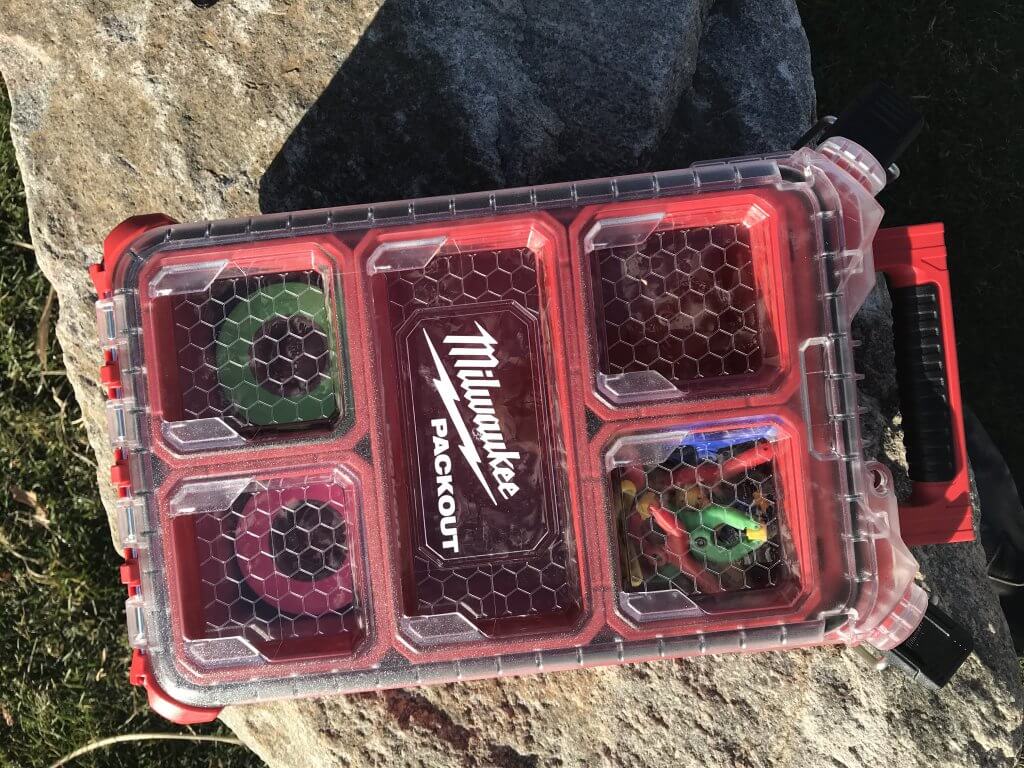
    A convenient, weather proof calibration kit for flagging tape, clips and water sensitive paper.

    6) Discuss where water-sensitive papers should go, and how they should face. Give the operator a latex glove and after you write on the back of each card (position and trial number) have them clip them in place. Tell them how much they cost, where to buy them and the benefits of using them regularly.

    7) Have the operator spray the target crop using their typical set-up (i.e. ground speed, pressure, rate, air settings, etc.) Have attendees and the operator watch the ribbons as the sprayer passes. Spray from one side with both booms on and then stop to discuss results. Then spray from the other side and explore the cumulative impact.

    8) The operator will be very surprised to learn they have drenched or missed the papers. They may or may not be surprised to have seen the ribbons stood straight out (indicating too much air). If you like, you can even set up papers in the next alley (or alleys) to show how much spray blew through the target. When the papers are dry enough, collect them and store them somewhere safe for later comparison. They tend to blow away, so stick them to a whiteboard with two-sided tape, or clip them there with paperclips. Explain that they can (potentially) save a lot of money and lost fill-time by improving their efficiency. Get them on-board for the big change to come.

    9) Optimize sprayer ground speed, air direction (i.e. deflectors) and air speed/volume (i.e. fan speed). Then re-nozzle the sprayer using brass disc and core tips to reduce output in areas that were drenched or increase output in areas of sparse coverage. Quite often, I turn off the lowest (and sometimes, highest) nozzle positions. A piece of water-sensitive paper at the top and bottom of the canopy will confirm the wisdom in this. Label a new set of papers and have the growers position them in the same locations. Spray again. This entire process should take about 1/2 an hour and is described in detail in the Airblast101 handbook.
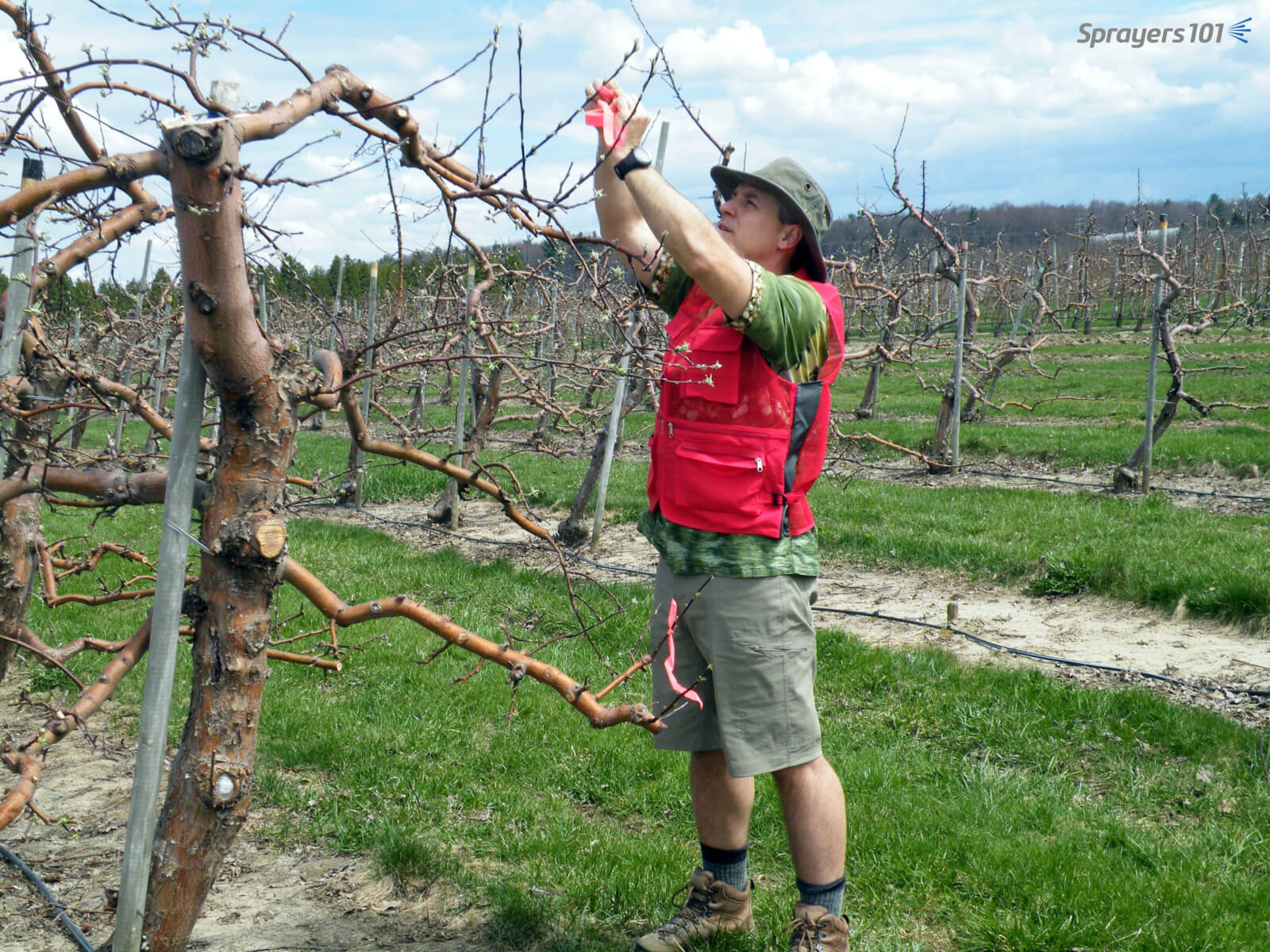
    Tying flagging tape in trees to indicate prevailing wind and to calibrate airblast air settings.
    Tying flagging tape in trees to indicate prevailing wind and to calibrate airblast air settings.

    10) The goal is 85 medium droplets per square centimetre and 10-15% coverage on 80% of the target surfaces for most insecticides and fungicides. If there are still drenches or misses, or if you’ve gone too far in a few positions, correct them and try once more. This is iterative. Make sure the sprayer operator will not be spraying in particularly hot or windy conditions, or your calibration at the top of the target can be compromised. Once you are both satisfied, work out the new sprayer output per area (e.g. US gpa or L/ha). You will have to discuss whether the operator plans to concentrate the tank mix to maintain the labelled “per area” rate (not recommended by me) or will continue to mix the tank as always and simply drive further on it (recommended by me). The later is called “Crop-Adapted Spraying“. Don’t push because it’s their livelihood, and therefore their choice.

    11) The final step relies on how well you’ve earned the sprayer operator’s trust throughout this process. Once you have an output and spray distribution that you are both happy with, the operator should invest in molded ceramic tips that emit similar rates to replace the brass disc-core. Then, they must be willing to repeat the process on any crops that are significantly different to ensure they have the right settings. Sometimes only modest changes are required between blocks. Perhaps they will dedicate certain sprayers to certain blocks to reduce the number of changes required. In either case, they will have to revisit these settings as the season progresses to compensate for denser and/or larger canopies.

    A few examples

    The following figures illustrate three airblast calibrations in Ontario apple orchards from spring 2014. Some required one attempt; others required a few trial settings before we achieved reasonable coverage. In all three cases, the sprayer operators reduced per-area rates, bought new nozzles and planned to buy water-sensitive paper. Further, they indicated they would continue to monitor ribbons (as long as they could be seen) and would review coverage after petal-fall.

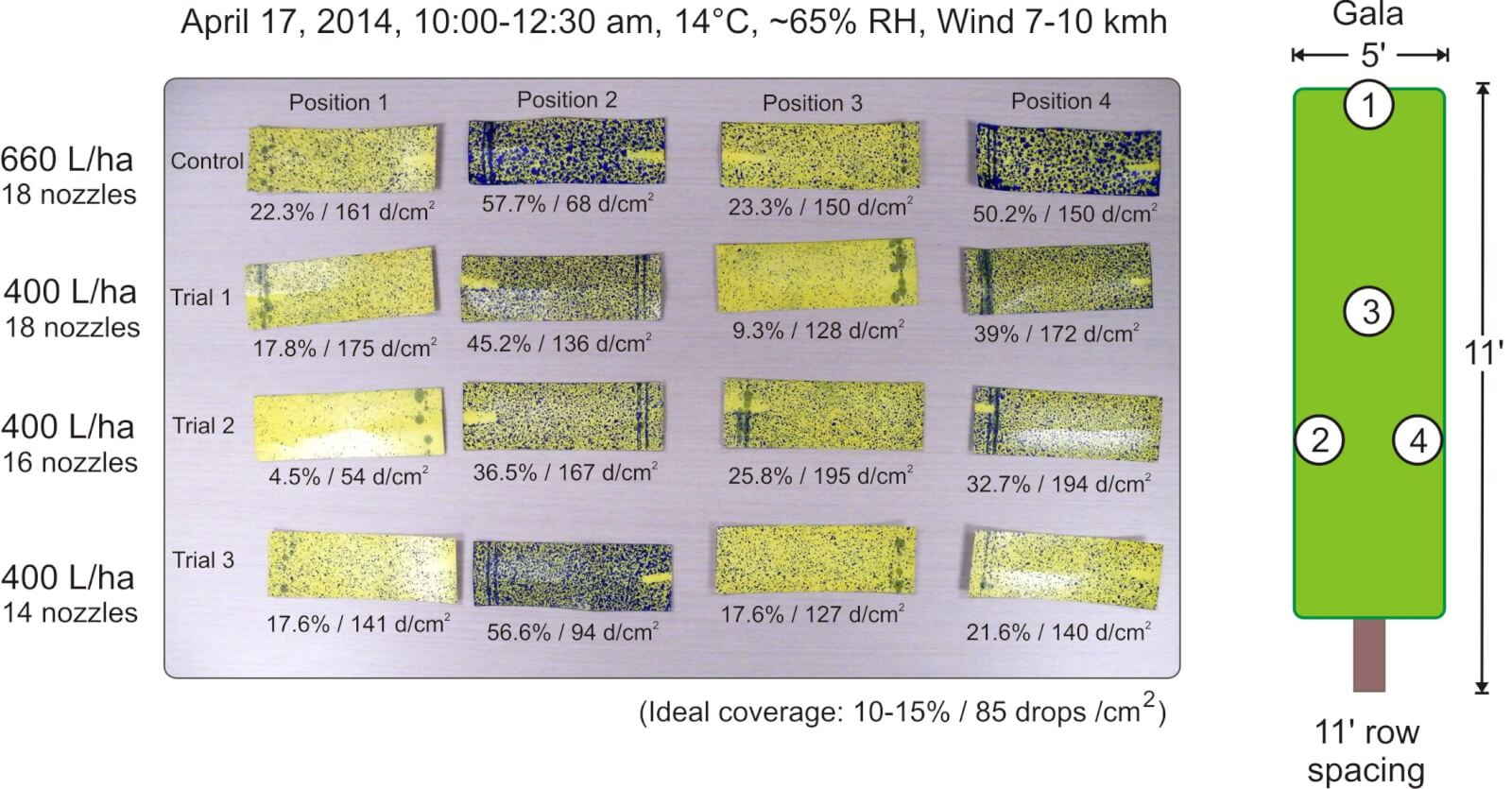
    Several nozzles shut off, spray re-distributed. Targets still drenched in two locations with a 24% savings in spray mix.
    Several nozzles shut off, spray re-distributed. Targets still drenched in two locations with a 24% savings in spray mix.
    Three successive re-calibrations were required. Output was reduced in the first trial, but poor coverage in position 3. Top nozzles turned off and spray re-distributed in trial 2, but a gust of wind reduced coverage at the top of the tree. Bottom nozzles turned off and spray redistributed to top nozzles for a 40% savings in spray mix.
    Three successive re-calibrations were required. Output was reduced in the first trial, but poor coverage in position 3. Top nozzles turned off and spray re-distributed in trial 2, but a gust of wind reduced coverage at the top of the tree. Bottom nozzles turned off and spray redistributed to top nozzles for a 40% savings in spray mix.
    Output reduced in all nozzle positions and sprayer fan speed reduced. The high humidity greatly reduced droplet evaporation and increased the spread on the papers. In this case, it was decided not to reduce output any further to account for anticipated growth and the high humidity. There was a 27% savings in spray mix.
    Output reduced in all nozzle positions and sprayer fan speed reduced. The high humidity greatly reduced droplet evaporation and increased the spread on the papers. In this case, it was decided not to reduce output any further to account for anticipated growth and the high humidity. There was a 27% savings in spray mix.

    Conclusion

    So, the next time you calibrate an airblast sprayer, be sure to teach the sprayer operator (and audience) what you are doing and why. Involve and engage them. Answer their questions. Encourage them to perform the same calibration for each significantly different block and make mid-season changes. With luck they will only call back to report success and savings, and not to condemn your efforts, or worse: to ask you to re-calibrate their sprayer!

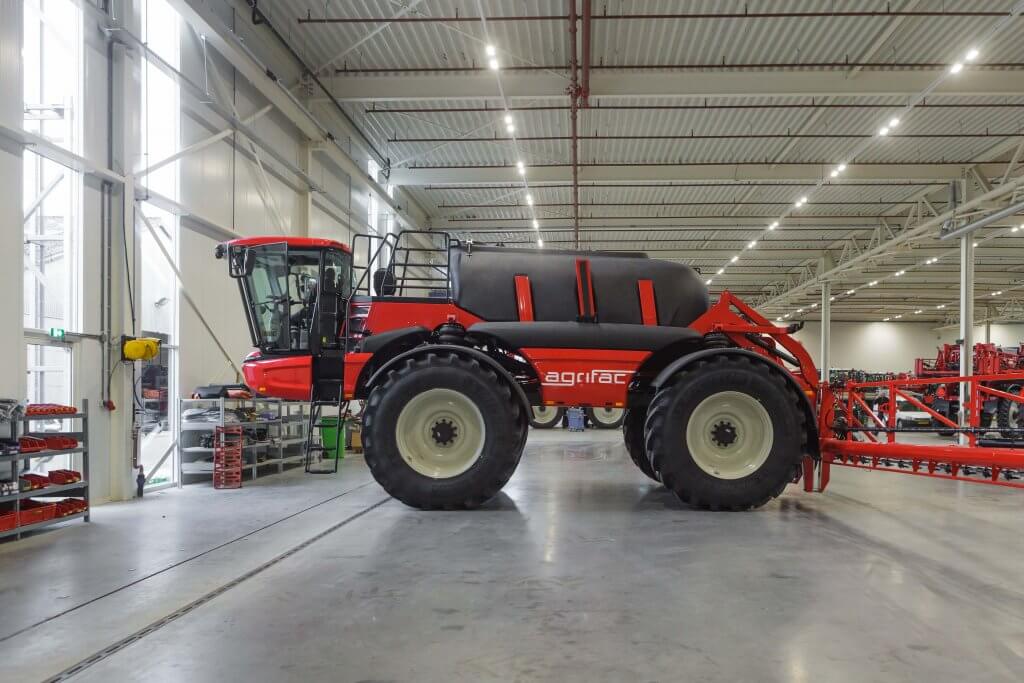
  • Agrifac Launch – Endurance II is a High Tech Offensive

    Agrifac Launch – Endurance II is a High Tech Offensive

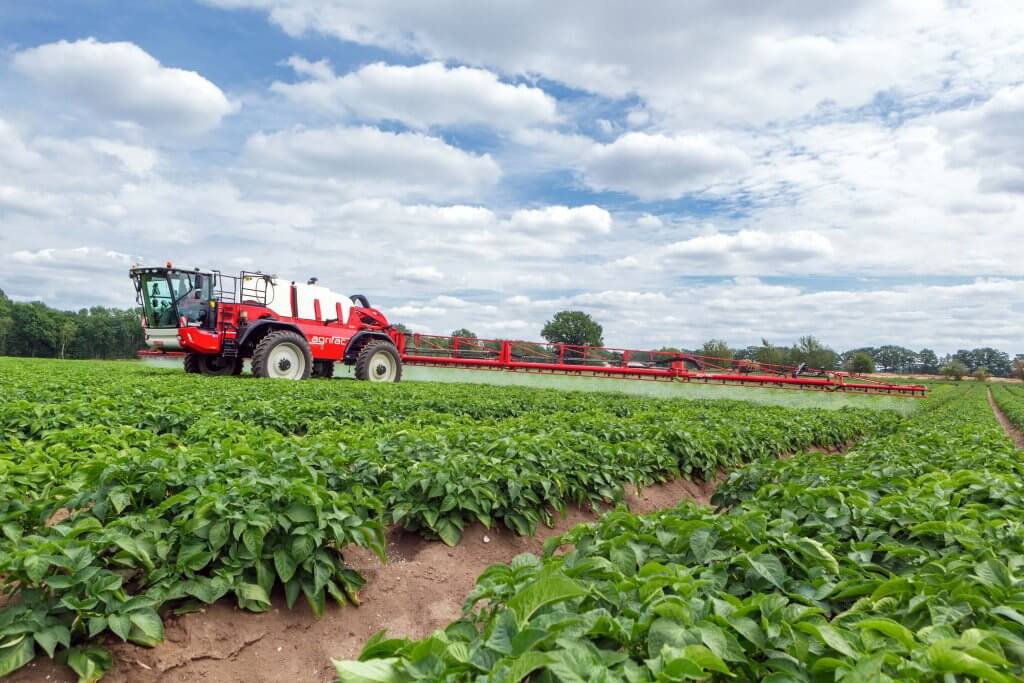
    Agrifac shunned the Agritechnica show last year, choosing instead to introduce its latest Condor Endurance II alongside a wide range of high-tech controls at the opening of its new factory at Steenwijk, in The Netherlands.

    Booms up to 80m wide can be tested in the new 14,000m² factory, which Agrifac has constructed on its existing site at Steenwijk in the Netherlands.
    Booms up to 80m wide can be tested in the new 14,000m² factory, which Agrifac has constructed on its existing site at Steenwijk in the Netherlands.

    Agrifac has seen quite remarkable growth in recent years, no doubt the result of investment from its owner – the sprayer specialist group, Exel Industries – which bought the struggling manufacturer in 2012.

    Since then, sales of self-propelled sprayers have rocketed – from 20/year in 2008 to more than 200 today. The new factory is currently building a machine a day and Agrifac is now looking to boost sales further by expanding operations in Australia, North America as well as central and eastern Europe.

    Sales of Agrifac self-propelled sprayers have risen from 20/year in 2008 to more than 200 today. Its new factory has the capacity to build one machine every day.
    Sales of Agrifac self-propelled sprayers have risen from 20/year in 2008 to more than 200 today. Its new factory has the capacity to build one machine every day.

    Indeed the impressive new, architect designed factory is set-up to test booms up to 80m (~262 ft) wide, which is a massive jump from its current 52m (~170 ft) maximum. Unsurprisingly it’s looking at carbon fibre to reach these widths.

    While not launched officially, Agrifac made no secret of this at the open day, showing a ‘hybrid’ with carbon fibre outer sections fitted to the existing steel one. While there are few details about this prototype, it uses a lattice-work construction, with the nozzles mounted at the top of a triangle.

    Targeting greater precision

    Under the banner of ‘Need Farming’ Agrifac is promoting a range of systems to apply products with ultimate precision. Top of the technology tree is AiCPlus, which identifies individual plants and applies a specifically-tailored product rate – on the move.

    By the way, Agrifac explains AiC is pronounced ‘I See’, with the AI an abbreviation of Artificial Intelligence.

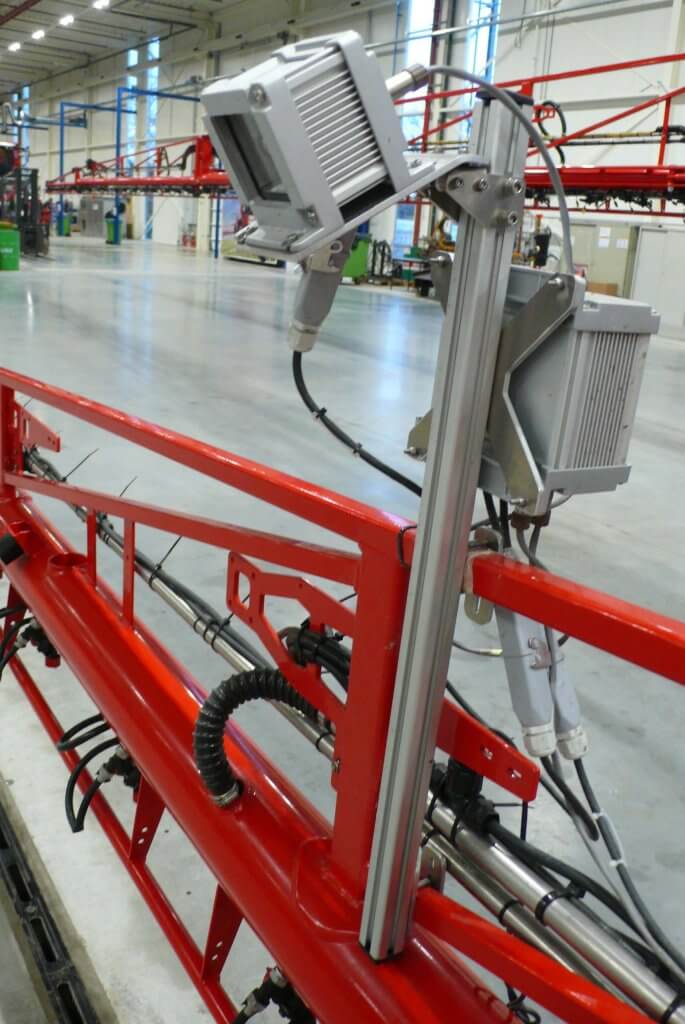
    Cameras, mounted along the boom, scan 3m (~10 ft) wide bands of crop in ‘real time’ and, use special software algorithms to interpret what they detect. This could be individual weeds, diseases or pest damage.

    Ultimate spraying precision and control delivered by AiCPlus, which uses boom-mounted sensors to identify areas down to 50cm and deliver targeted treatments with single nozzle accuracy.
    Ultimate spraying precision and control delivered by AiCPlus, which uses boom-mounted sensors to identify areas down to 50cm and deliver targeted treatments with single nozzle accuracy.

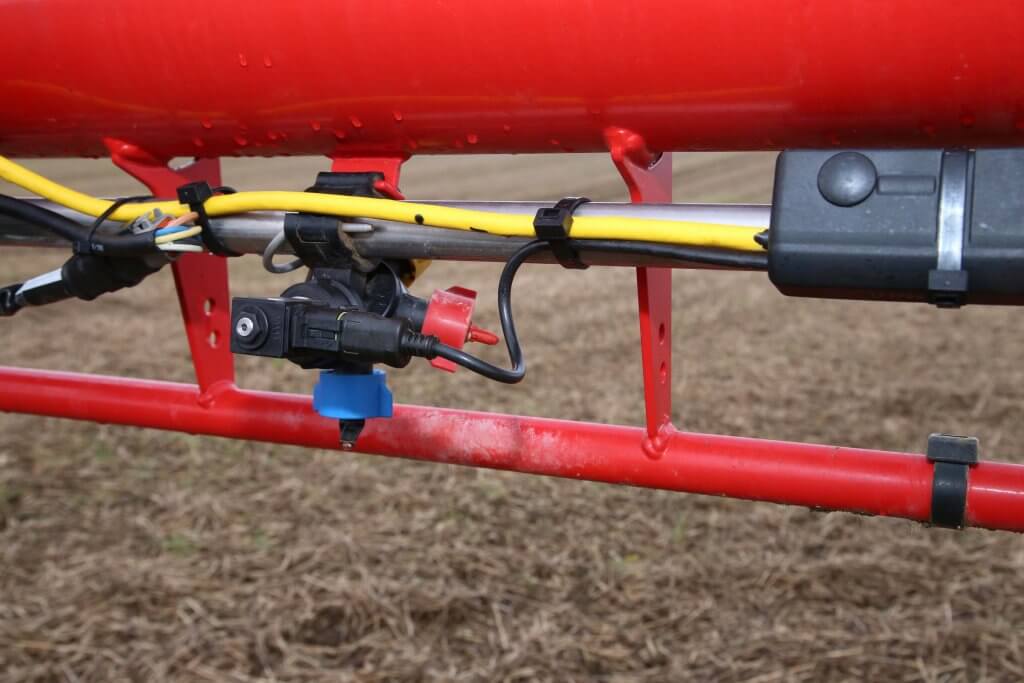
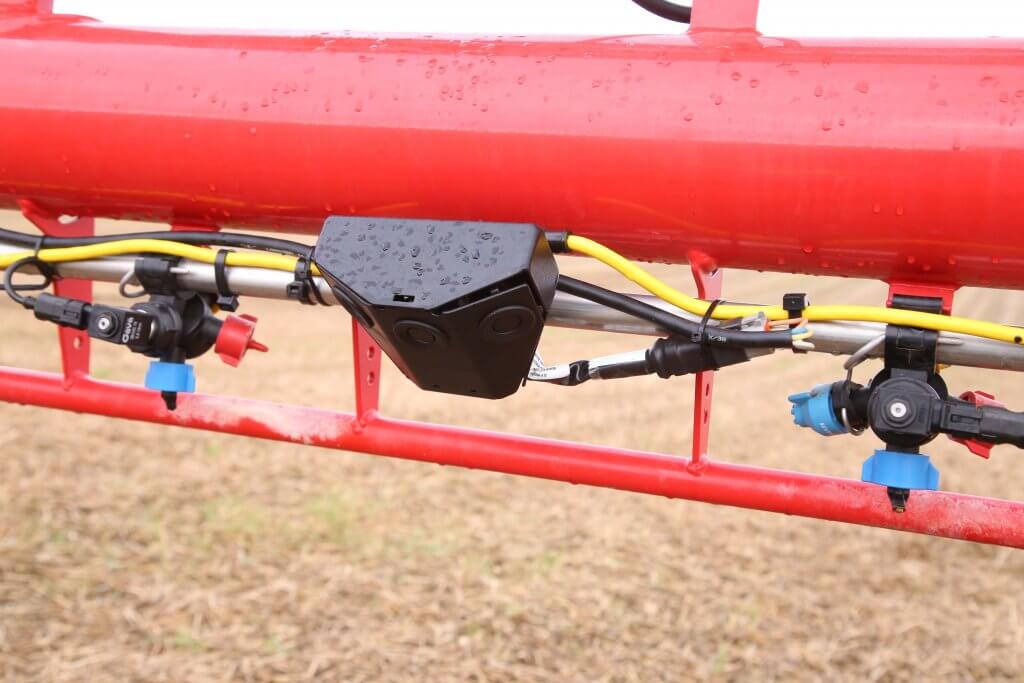
    Applications are targeted using control to single nozzles, which are operated by Pulse Width Modulation (PWM). This enables the nozzles to be turned on/off at up to 100 times/sec, allowing the system to not only vary and apply the dose for the target, but also maintain the correct droplet size for the product.

    Solenoid valves switch nozzles on/off up to 100 times/sec and maintain the application rate without changing pressure. The system also reduces flow to the inner nozzles and increases it to the outside automatically during turns.
    Solenoid valves switch nozzles on/off up to 100 times/sec and maintain the application rate without changing pressure. The system also reduces flow to the inner nozzles and increases it to the outside automatically during turns.

    To accomplish this degree of precision application, Agrifac has introduced a range of other new technology. Along with the sensors and single control there is another new system, DynamicDosePlus (here’s a smartphone video), which implements control down to a resolution of a single nozzle.

    Pesticide rates, rather than just the total application volume, are changed on the move using SmartDosePlus. And to ensure products are applied accurately there is StrictSprayPlus, which includes turn compensation.

    Precise prescription maps

    For precise applications, without using AiCPlus on the move sensing, Agrifac has developed DynamicDosePlus. This, it claims, is the first system to create application plans to one nozzle precision.

    As well as planning applications it also executes the operations, not only controlling applications, turning nozzles on/off, but also varying the pesticide rate between 0-100%. To do this AiCPlus requires high precision prescription maps.

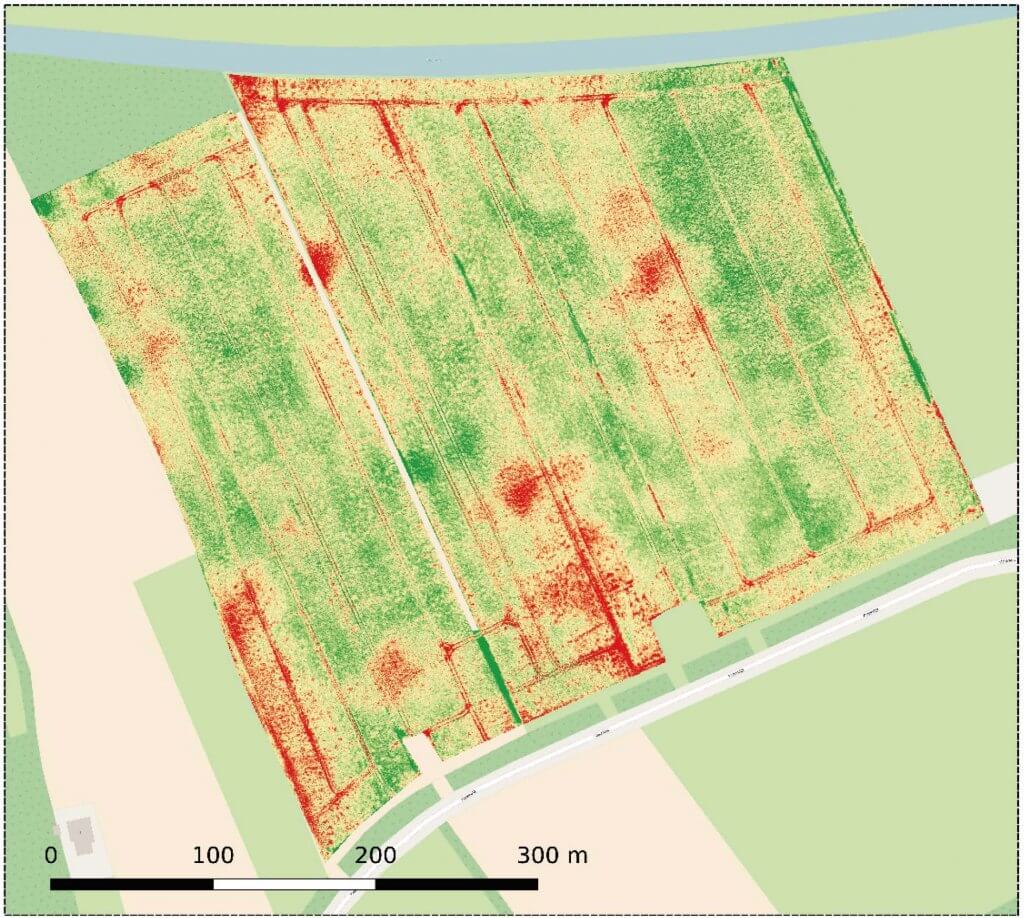
    Agrifac has developed a completely new high resolution system for creating prescription maps and executing the instructions on machines equipped with single nozzle control.
    Agrifac has developed a completely new high resolution system for creating prescription maps and executing the instructions on machines equipped with single nozzle control.

    Mixing on the move

    With AiCPlus varying pesticide rates on the move and to one-nozzle precision, Agrifac says it is difficult, or even impossible, to predict the chemical concentration required before application.

    To overcome this, it has developed its SmartDosePlus direct injection system. Just clean water is held in the spray tank with the concentrated chemical stored separately. According to required pesticide rates detected by the sensors or stored on the map, the system’s software then meters the precise quantity of active required for the specific area and mixes it ahead of the boom.

    The valve system and full boom circulation and priming ensures each nozzle receives the correct mix. It also doesn’t matter how many nozzles are in operation at the time.

    It also enables other active ingredients to be added to treat certain areas and turned off when the patch is passed. Similarly, pesticide rates can be reduced dramatically or even stopped completely in environmentally sensitive areas.

    Another big advantage of carrying just clean water in the tank, adds Agrifac, is it significantly cuts cleaning time and the amount of washings. This not only speeds up turnarounds between products, but can also help reduce the risk of cross contamination when working in sensitive crops.

    The right rate and droplet size

    As well as single nozzle control, StrictSprayPlus also provides application volume control that is unrelated to pressure, which maintains the droplet size regardless of changes in forward speed or pressure.

    Automatic controllers normally set the application volume, according to speed by varying the pressure. In most cases as speed rises the droplet size reduces, increasing the risk of drift. As the pressure falls the droplets get larger and this may have adverse effect on efficacy.

    Pulse Width Modulation overcomes this by using solenoids to turn the flow to the nozzle on/off up to 100 times/sec to maintain the correct application volume. The pressure is unaltered, so the droplet size remains the same.

    StrictSprayPlus nozzle control also delivers turn compensation – to maintain the correct application volume when spraying around corners. As the sprayer turns the nozzles on tip of the outside boom move considerably faster than those on the inside of the turn.

    With a fixed application volume, this results in under-dosing on the outside and overdosing on the inside. Agrifac says its system detects the speed differences and calculates the rate required for each nozzle across the boom.

    But, experts warn, it’s important to note that PWM currently does not work with many of the popular Air-Inclusion (AI) nozzles in use today.

    On the level

    Regardless of the other technology on board, setting and maintaining the best boom height is crucial to maintaining spray efficacy and cutting drift.

    For its new StrictHeightPlus auto-boom height control, which works in conjunction with the BalancePlus and variable geometry on its J Boom, Agrifac has developed new ‘wide view’ sensors.

    Three sensors are fitted into four separate clusters, mounted across the boom that, it adds, scan a wider area than other systems. This is said to provide a better overview of the crop as well as help to distinguish between irregularities, misses and tramlines, which can affect performance.

    A new auto-boom height control system, developed in house, uses three sensors in a cluster to scan a wider crop area. Four clusters are used on the boom.
    A new auto-boom height control system, developed in house, uses three sensors in a cluster to scan a wider crop area. Four clusters are used on the boom.

    The system is also now fully integrated into the firm’s own EcoTronic terminal, eliminating the need for another box in the cab.

    More power and control for Endurance II

    The Endurance II is powered by a 420hp engine and is equipped with a new, advanced control panel and joystick.

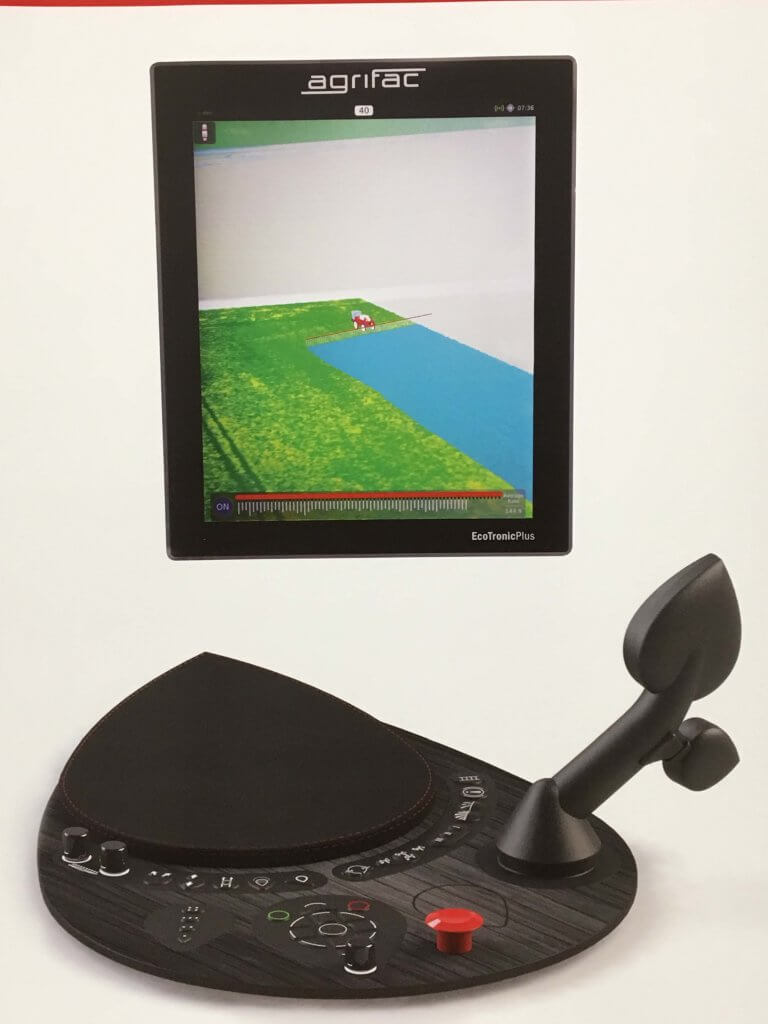
    The sleek new EcoTronicPlus II joystick and touch-pad clusters commonly used controls into areas, providing finger-tip control of operations.
    The sleek new EcoTronicPlus II joystick and touch-pad clusters commonly used controls into areas, providing finger-tip control of operations.

    While the manufacturer sticks with the Claas Vista cab, inside operators will find a sleek new, modern control panel. Called EcoTronicPlus II, it is designed solely for use on a sprayer and incorporates a stylish joystick ahead of the armrest pad, which is surrounded by touch buttons.

    These are accompanied by a single touch-screen, which is used for both the sprayer and the GPS-controlled equipment, such as section control, mapping and even road navigation. The screen changes automatically to display only information that is required for the current operation.

    Elsewhere the Endurance II retains familiar equipment such as the existing StabiloPlus chassis, GreenFlowPlus multi-stage centrifugal pump and spray system as well as the 8,000 litre (~2,110 gal.) capacity tank and booms from 24m (~80 ft) to 55m (~180 ft).

    Be sure to check out Pro Operator Magazine’s Facebook page and stay tuned for their new website!

  • TechTour Live Promo Video

    TechTour Live Promo Video

    In 2018 Tom and I were invited to participate TechTour Live, Real Agriculture’s live educational event spanning four Prairie cities in four days. How do you promote an event when the co-presenters are separated by a province?

    Like this!

    It was a great experience. An educational and entertaining event that led us to propose the Label Summary Sheet initiative.

  • Exploding Sprayer Myths (ep.9): Airblast Air

    Exploding Sprayer Myths (ep.9): Airblast Air

    In this, the season three finale of Exploding Sprayer Myths, we join Jason and the Tom-inator as they “tackle” airblast air settings. There are a whole suite of articles dedicated to this topic, linked below the video. It is, arguably, the most important adjustment you can make to an airblast sprayer.

    Will there be more Exploding Spray Myths episodes? In the words of a great man: “We’ll be back.”

    Special thanks to Don Murdoch and the Simcoe Research Station.

  • The Vermorel Nozzle – Humility in the Face of History

    The Vermorel Nozzle – Humility in the Face of History

    It’s a rainy Friday in 2017 and I decided to deal with the articles, factsheets, manuals and other sprayer-related documents that have been piling up on my desk for a year.

    My filing strategy is based on some advice I got from Dr. Bernard Panneton (Application Tech Guru) back in 2009. He said to read each document and then file them according to content, not by author or date. That way when I need something, I can search up the subject and find everything that might be relevant. More than 1,200 files later, the system works. No Dewey Decimals in my office, thank you.

    What I’ve noticed as I sift through this eclectic pile of wisdom, is that many of the application methods I experiment with, or generally promote, are rarely entirely novel. Crop protection has evolved considerably (think pulse width modulation, crop sensing and remote piloted aerial application systems), but the fundamentals of spraying haven’t changed that much.

    Case in point.

    I just found a photocopy of a 1906 book called “Ginseng – It’s Cultivation, Harvesting, Marketing and Market Value, with a Short Account of Its History and Botany“. Great title. We obviously appreciated florid language in technical manuals 100 years ago. Here’s an excerpt that caught my eye:

    “When applied to plants, the finest nozzle obtainable must be used. The Vermorel is perhaps the best. Now make no mistake: this spray must be a spray, not a dribble, nor a drizzle, nor a squirt, but a mist. It must look like a little fog at the end of the hose and must reach every part of the plant, particularly the undersides of the leaves, mind, just enough so it won’t trickle off.”

    Poetry. And to make my point, it’s similar to what I’d tell a ginseng grower today. Granted, I’d lead them into a lower-range-of-Medium droplet size and help them achieve the described coverage using drop arms. But what on Earth is a “Vermorel nozzle”? That’s not one I have in my motley collection.

    I turned to Virginia Tech’s Museum of Pest Management. I hope they’ll forgive me for lifting their content, but it’s too wonderful not to share. They note the contributions of Charles Valentine Riley. Born in London, England in 1843. He was a multi-talented Renaissance man. He was a pioneer of entomology in the United States and is often referred to as the founder of biological control in America.

    Charles Valentine Riley

    Two of his greatest contributions to pest management included founding the field of biological control and the invention of the Riley spray nozzle (1889). The Riley nozzle was sold as the Vermorel nozzle. It produced a fan pattern and was the primary nozzle used in pesticide application in the United States and Europe well into the 20th century. The auspicious Mr. Riley died in a bicycle accident in 1895.

    The Vermorel nee Riley Nozzle

    It was Riley’s nozzle, and the invention of some other early European pesticide application devices, that inspired W.B. Alwood (publisher of orchard spraying techniques c.1899) to import these devices and adopt them to Virginia conditions. The rest is history.

    I tell you this because of what I found beneath the book touting the Vermorel; A 2015 TeeJet brochure for their TXVK hollow cone nozzles. I’m aware that the engineering behind the TXVK molded poly body and ceramic orifice is considerable compared to the humble Vermoral. But on closer inspection the fundamental designs aren’t so different. That realization both surprised and pleased me and compelled me to write this article.

    I’m not certain what my point is. I suppose it’s just good to be reminded that the next time you want to invest time, money and effort into a “new idea” you might consider a little historical research. Odds are, you’re not the first person to recognize the problem, or propose a solution. A little time in the archives also instills respect for those that were there first. Let’s not waste time repeating their efforts, but stand on their shoulders and advance what they’ve already pioneered.

    And if anyone has one of Riley’s Vermorel nozzles, I’d love to add it to my collection. Drop me a line.