Tag: corn

  • Methods for Applying Fungicides in Corn

    Methods for Applying Fungicides in Corn

    This work was performed with Albert Tenuta (OMAFRA) and David C. Hooker (University of Guelph, Ridgetown).

    Objective

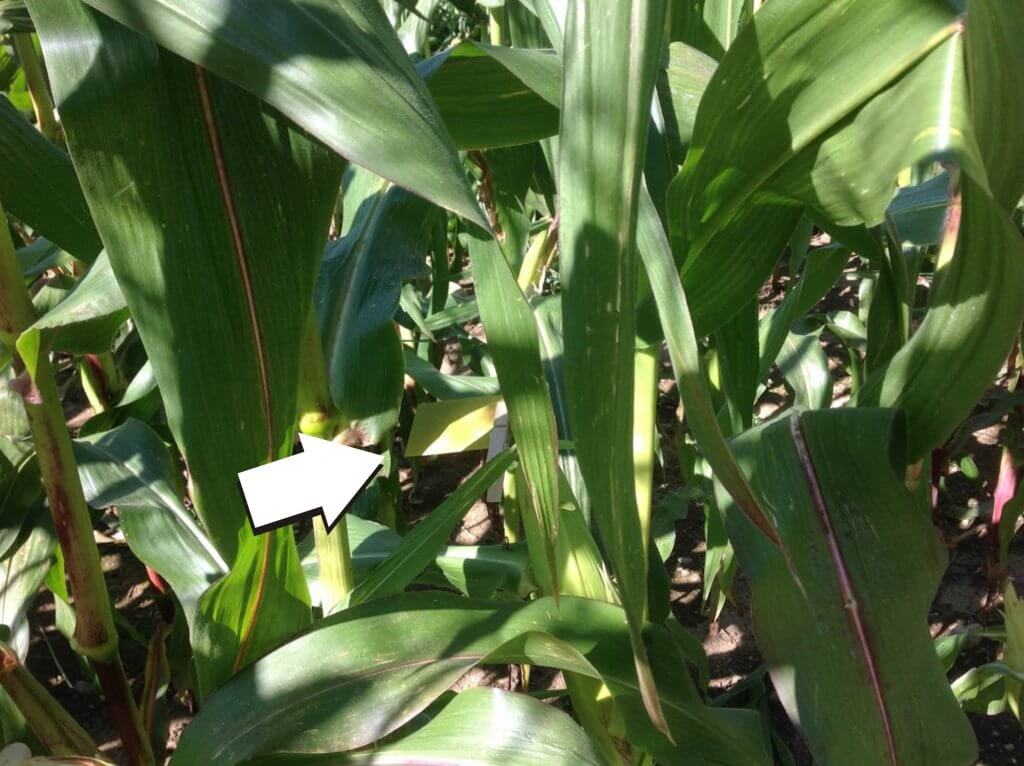
    Gibberella ear rot is a significant disease that reduces the quality of grain corn, especially with the accumulation of mycotoxins (such as Deoxynivalenol (DON)) produced from the causal pathogen(s). Infection occurs through the corn silk channel when ideal temperatures (~27°C) and high humidity are present. Cool, wet conditions after pollination favour disease development and determine the degree of infection. With crop management practices providing only modest improvements in disease control, strategies to increase the efficacy of fungicides are important to investigate. Research has shown that the timely application of fungicide labelled to suppress the disease can reduce mycotoxins, but only by ~50%. We wondered if changes in the method of application could give better results.
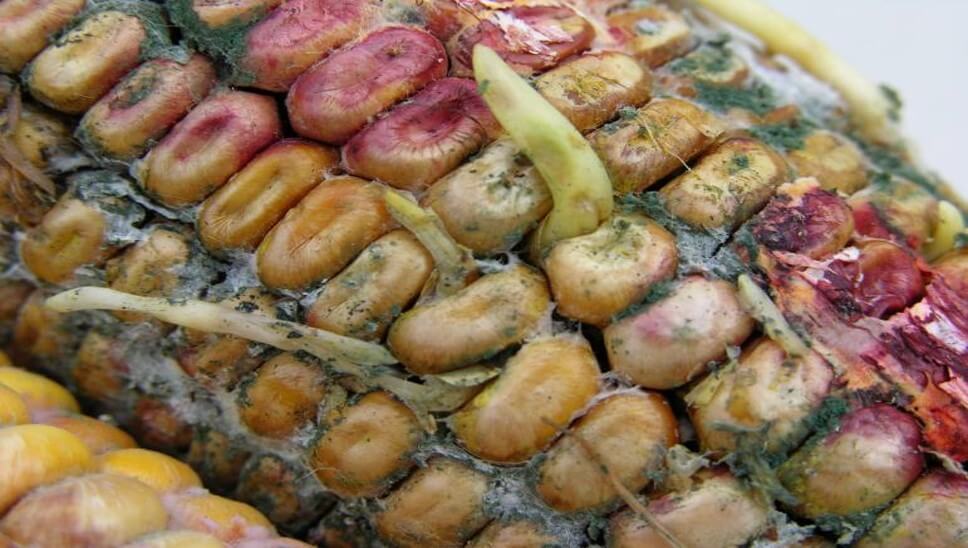
    Gibberella ear rot

    It is reasonable to assume that improvements in spray deposit uniformity and increases in overall spray coverage (up to some threshold) at the infection channel (i.e. the silks) should result in improved efficacy. Water sensitive paper is an excellent tool for the qualitative evaluation of spray coverage. However, recognizing the complicated relationship between dose and coverage, we also looked at the deposition of copper sulphate as a surrogate for active ingredient .

    Our primary objective of this study was to compare various sprayer systems and nozzle configurations by evaluating both spray coverage and copper sulfate deposition at the silks.

    Experimental Design

    The test field of hybrid corn had a stand of ~80,000 plants/ha. It was located at Ontario’s U of G Ridgetown Campus and was managed similar to a grower’s field (e.g. fertility, etc.). In August of 2019 we evaluated nine sprayer rigs (or nozzle configurations) in a randomized block design.

    The ground rigs were calibrated to deliver a spray volume of 190 L/ha and the aerial systems to deliver 47 L/ha.  In order to achieve the target spray volume, the ground rig speed varied from 9.5 to 13 km/h, depending on nozzle configuration. The aerial applicators used the same nozzle configuration, travel speed and altitude as in their commercial field applications.

    SprayerNozzle SetNotes
    John DeereYield Center 360 UNDERCOVER drop pipes 75 cm (30″) spacing, each equipped with two Turbo TeeJet (TT) nozzles.Drop pipes were centred between corn rows with nozzles adjusted to spray ~horizontally and directly at the corn silks.
    John DeerePentair Hypro Guardian Air nozzles on 50 cm (20″) spacing.Boom positioned to create 100% spray overlap at tassel height.
    John DeereTurbo TeeJet Induction (TTI) nozzles on 50 cm (20″) spacing.Boom positioned to create 100% spray overlap at tassel height.
    John DeereTurbo TeeJet (TT) nozzles on 50 cm (20″) spacing.Boom positioned to create 100% spray overlap at tassel height.
    New Holland (front-mounted boom)Wilger 60 degree conventional flat fan nozzles on 40 cm (16″) spacing.Boom positioned to create 100% spray overlap at tassel height.
    New Holland (front-mounted boom)Wilger 60 degree conventional flat fan nozzles alternating with custom-made Wilger 40 degree conventional flat fan nozzles on 40 cm (16″) spacing.40 degree nozzles were positioned between corn rows (interrow) while 60 degree nozzles were positioned over the tassels.
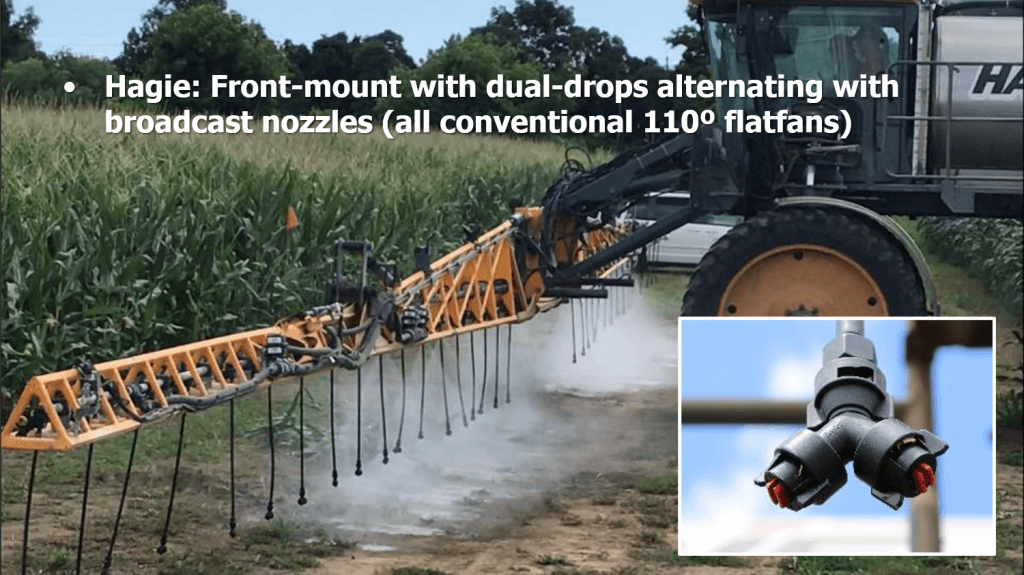
    Hagie (front-mounted boom)Drop hoses terminating with TeeJet Duo Nozzle bodies equipped with Turbo TeeJet Induction (TTI) nozzles were alternated with TeeJet XR110 nozzles.Drop hoses were centred between corn rows but nozzles were not aimed directly at the corn silks (aimed down 45 degrees and spray parallel to ground rather than perpendicular). They alternated with the AI nozzles positioned over the tassels.
    HelicopterAir Induction TeeJet Turbo TwinJet (AITTJ) nozzles directed backwards.
    AirplaneCP-111T nozzle bodies with CP256-4015 40 degree flat fan tips on 15 cm (6″) spacing.Wingspan was 14.2 m with a 10.6 m boom width.

    The field was divided into four replicated blocks (REP 1-4 in the image below) which corresponded with a single pass of the sprayer. The sprayers alternated direction with each pass over the four blocks. Depending on the ground rig, a single pass through a block might include more than one set of nozzles. For example, in the image below, a John Deere sprayer carried a different nozzle set on each of four sections, leaving the centre boom section off. Therefore, each block was subdivided into four experimental units that corresponded with each nozzle set. Further, to account for variability, each experimental unit was further subdivided into five ranges. Four water sensitive papers (yellow rectangles) were oriented sensitive-side up and fastened to random corn plants directly on top of silks at each of the five intersections between range and treatment for a total 20 papers. This was replicated four times for a final count of 80 papers per treatment.
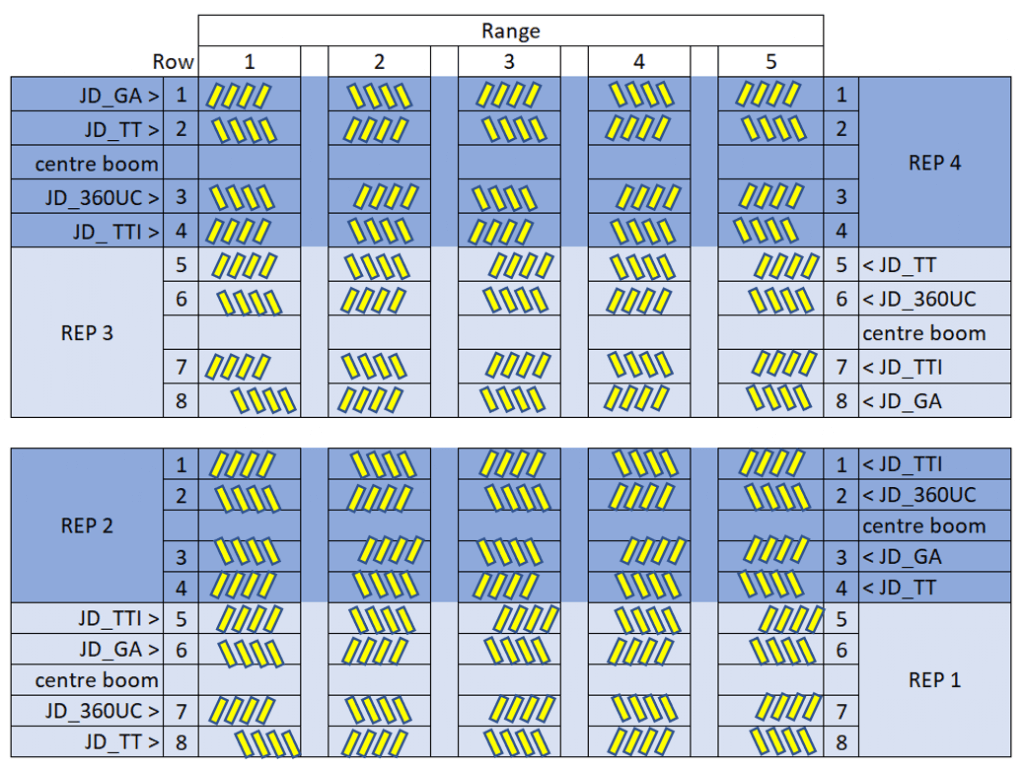
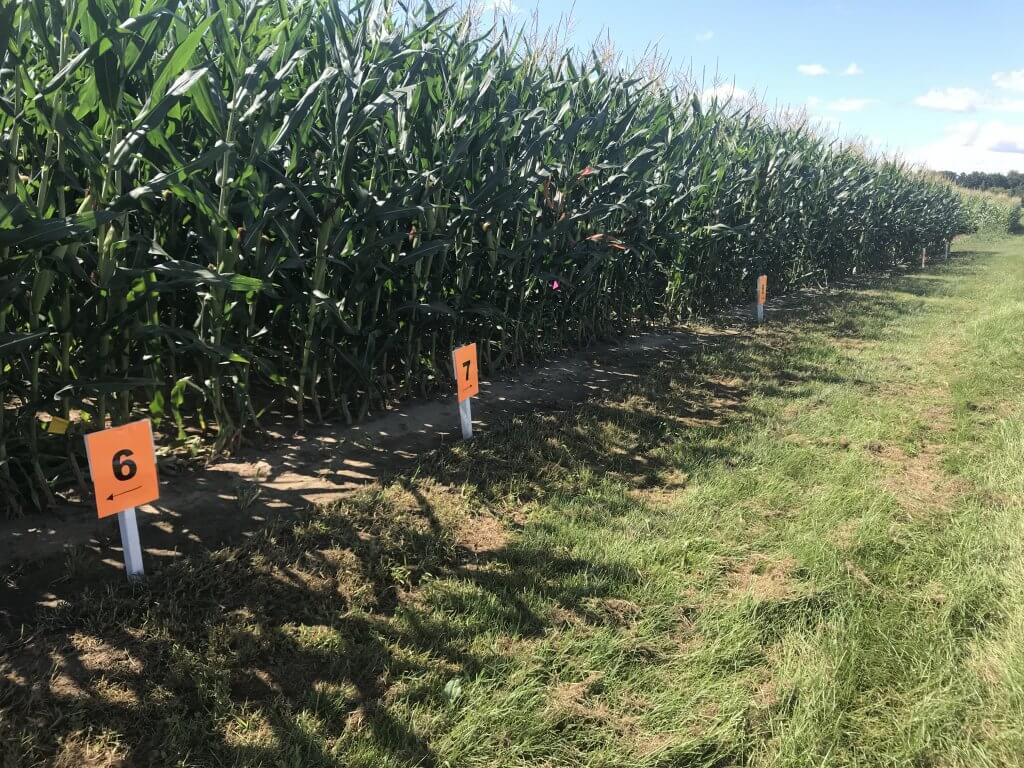
    The experimental unit covered by a nozzle set was four corn rows wide (~3 metres). Space was left between each boom section to provide a buffer and no nozzles were placed on the centre boom section. Four water sensitive papers (yellow rectangles) were fastened to random corn plants directly on top of silks at the intersection of each range and for a total 20 x 4 = 80 papers. The chevrons indicate sprayer direction.
    Test plots at University of Guelph, Ridgetown Campus

    Evaluating Coverage

    Each sprayer applied copper sulphate (Plant Products Inc., Leamington, ON) at 2 kg/ha as a chemical tracer. Agral 90 was added to the spray solution at 0.1% (v/v) to better emulate a typical fungicide application. After spraying, each water sensitive paper was allowed to dry, collected and then digitized using a DropScope (SprayX, Sao Carlos, Brazil). Droplet density and percent surface covered were evaluated within the detection limits of the equipment. Dose (represented by deposit volume) was more relevant to this study than percent surface covered, so a spread factor was used to convert area covered to volume. Once the papers were scanned they were subjected to flame emission spectroscopy (FES) (Actlabs – Activation Laboratories Ltd., Ancaster, ON) to determine the amount of copper deposited.
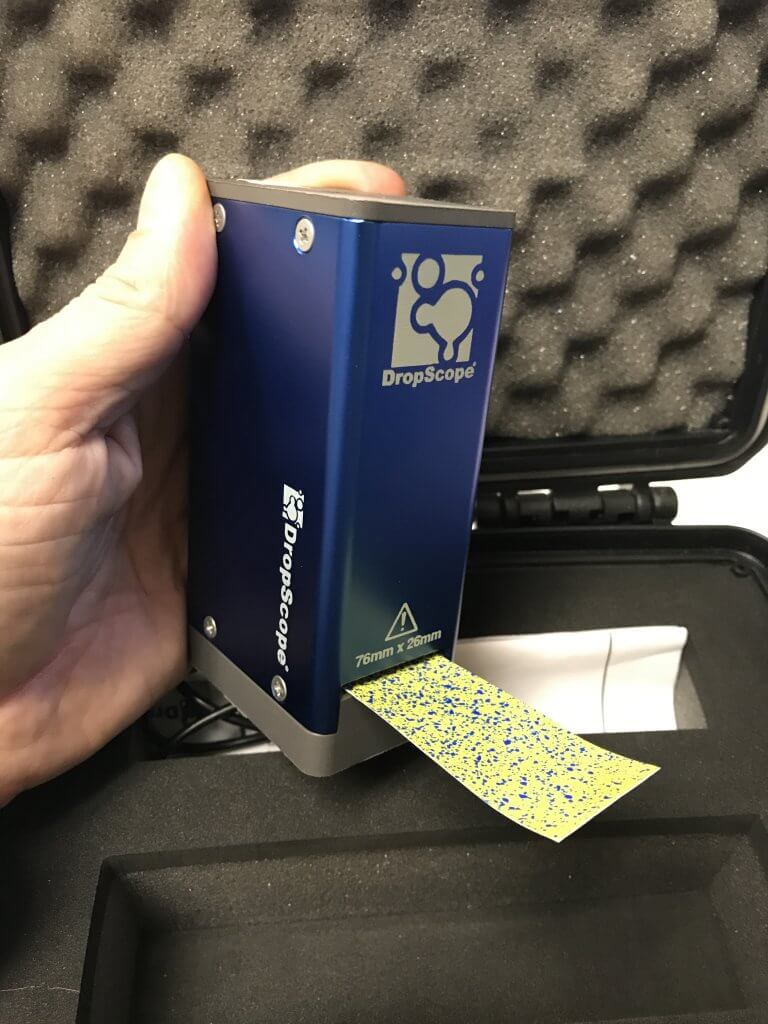
    DropScope digitizing water sensitive paper

    Results

    Deposit area and volume

    Note that papers were placed singly, oriented face-up. This was a missed opportunity to explore abaxial (down-facing) coverage and may have created a small experimental error wherein deposition from copper sulphate would be accounted for on both sides, but would only resolve on one side for area and density analysis. The results from evaluating water sensitive paper suggest trends and serve as quality checks for the experiment.

    The percent area covered on water sensitive papers was affected by nozzle configuration (P<0.0001). Ground rigs produced ~4.0-12.0% area coverage, while aerial produced ~0.7-1.0%. It is not appropriate to compare ground and aerial spraying using water sensitive paper. Water sensitive paper does not reliably resolve deposits under ~60 µm and therefore underestimates the deposits from aerial applications because their spray quality tends to be finer. Further, these figures have not been normalized to reflect the differences in sprayer volume (190 L/ha for ground versus 47 L/ha for aerial).

    The nozzle configurations with the highest percent area covered were produced by the 360 Undercover drop pipes and the TeeJet drop hoses (~9.5-12.0%). Coverage variability increased with percent area covered, but the lower 95% confidence limit with the pipes and hoses still exceed the upper limit of all overhead broadcast nozzles.
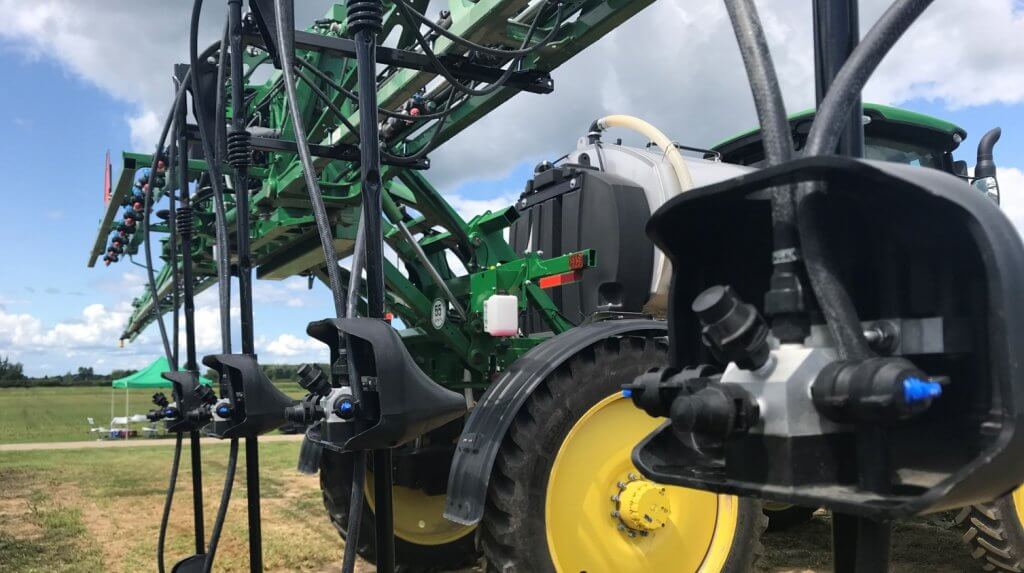
    Yield Center 360 UNDERCOVER drop pipes

    When area covered was converted to volume, estimated deposit volume on water sensitive papers was also affected by nozzle configuration (P<0.0001). The estimated volume calculated from deposit area showed fewer statistical differences across nozzle configurations compared to area data. However, once converted, there was no statistically significant difference in the volume deposited by drops or most broadcast methods.

    Copper deposition

    FES residue analysis (i.e. evaluating the amount of copper deposited on targets expressed as mass density) complements the water sensitive paper data. There are some differences that should be noted:

    • All applications sprayed the same amount of tracer per planted area. As such, depositions are more fairly compared with no need for normalization.
    • FES can resolve copper deposits as low as 0.5 µg/sample and may be more sensitive than the WSP method, which does not reliably resolve deposits under ~60 µm.
    • WSP will only resolve coverage on one surface. However, when these papers are subjected to FES, deposits on both sides of the paper will be accounted for, providing a more accurate result.
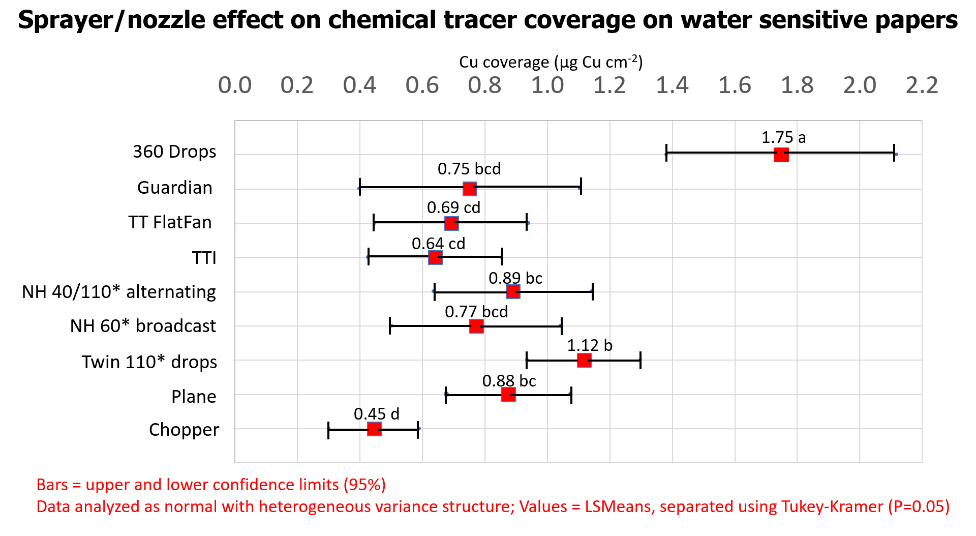
    As anticipated, there was no correlation between the area coverage or volume estimates and the FES-derived copper deposition data. Estimated copper mass density on water sensitive papers was affected by nozzle configuration (P<0.0001). Analysis showed 56% more copper deposited from the 360 Undercover nozzles (1.75 µg/cm2) compared to the next highest deposition (1.12 µg/cm2) which was from the drop hose configuration (P<0.05). We feel the TeeJet drop hose configuration would have performed better still had the nozzles been directed at the silks, and the alternating broadcast nozzles been omitted and flow redistributed to the nozzles on the drops (see below).
    Copper deposition from the airplane was similar to ground rigs with broadcast overhead nozzle configurations. The airplane deposited ~2x the copper as did the helicopter. It is assumed this is because the rotary atomizer nozzles on the airplane produced a much finer spray quality than the TTI nozzles on the helicopter. This increased the number of droplets considerably and has been shown to produce better coverage, particularly at such low sprayer volumes. Learn more about droplet size and behaviour here.

    Average copper deposition from the Guardian Air nozzle set was similar to all other ground sprayer overhead broadcast setups, but had the highest variability (Between 0.4 and 1.12 µg/cm2). Comparatively, the lower 95% limit of the 360 Undercover drop pipe deposited 3.4x the copper as the lower limit of the Guardian Air.

    Conclusions

    • The best deposition was produced from the Yield Center 360 Undercover drop pipes, followed closely by the TeeJet Duo nozzle body on drop hoses.
    • The deposition from ground sprayers with overhead broadcast nozzles was ~30% less than that of the two drop nozzle systems tested.
    • The deposition from Guardian Air and TTI nozzles were among the lowest of broadcast nozzle configurations with higher variability, but differences tended not to be statistically different (P=0.05) compared to other broadcast nozzles.
    • The deposition from the airplane was similar to the ground rig overhead broadcast applications, but the helicopter deposited the lowest amount of copper overall, likely due to droplet size (see image below).
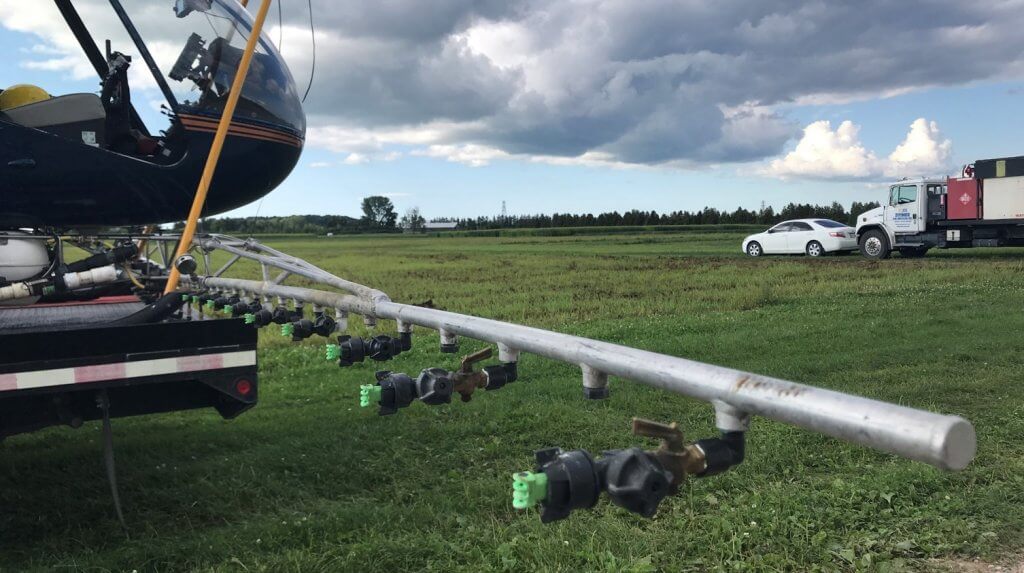
    Helicopter with air induction TeeJet Turbo TwinJet (AITTJ) nozzles directed backwards.

    Next steps

    In the summer of 2022 we re-evaluated promising nozzle configurations from this study, as well as other application methods (see bulleted list below).

    • Include various RPAAS (remote piloted aerial application systems) designs.
    • Include the Agrotop Beluga drop hose (Greenleaf Technologies, Louisiana, USA) with two nozzle bodies to span the silking zone of the canopy.

    We used water sensitive paper as a qualitative indicator, but folded them to get adaxial and abaxial data. We also used copper deposition to indicate dose. Once the results are analyzed we’ll write a companion article to this one.

    In 2021 and 2022 a separate study was performed to evaluate the efficacy, ease-of-use and return on investment of the Beluga drop hoses in corn. An article describing that work can be found here.
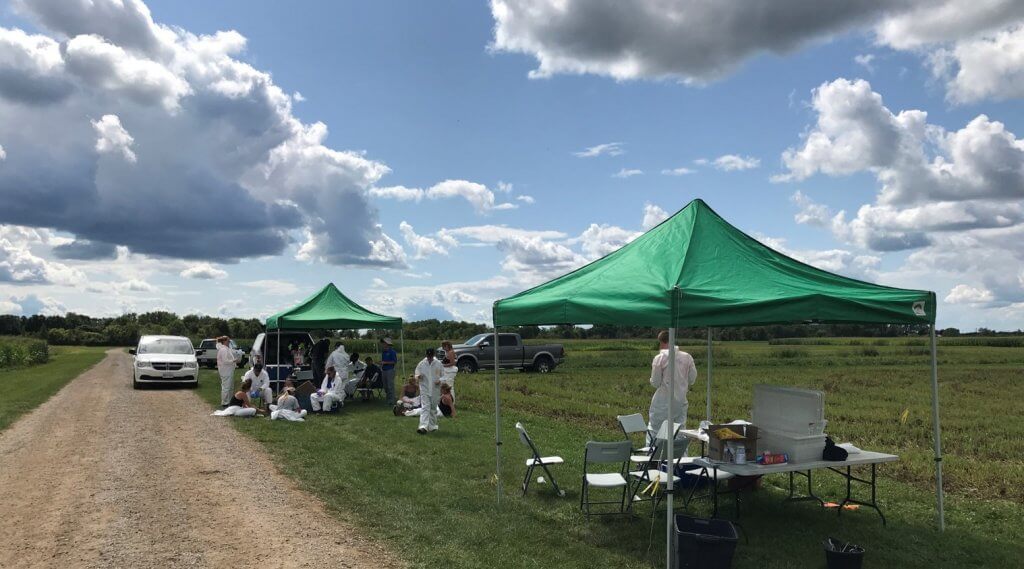
    Thanks to the agrichemical companies, students, equipment owners and operators that donated their time and equipment to make this study possible.

    Bonus

    Watch these very cool slow-motion videos of the airplane and helicopter applications. Note that there is no difference in how the spray behaves once released; It deposits as a function of wind, gravity and momentum and is not “blown in” by the helicopter.

  • Spraying Sweet Corn

    Spraying Sweet Corn

    This article was written with information from George Hamilton, Field Extension Specialist with New Hampshire Cooperative Extension (retired), and from Dr. Ben Werling, West Michigan Vegetable Educator with Michigan State University Extension.

    Commercial sweet corn growers must use spray application equipment capable of depositing spray material at the ear zone. These producers often hail from small, diversified vegetable and fruit farms that sell direct to the customer. For example, in 2013 New Hampshire’s Hillsborough County had about 500 acres planted to sweet corn. The seven farms ranged from 35 to 80 acres, and five of those farms also had orchards. Only one farm used an over the row (high clearance) sprayer, while the rest managed equipment costs by using their orchard airblast sprayers. While uncommon in Ontario, airblast application continues to be a very common practice in the US.

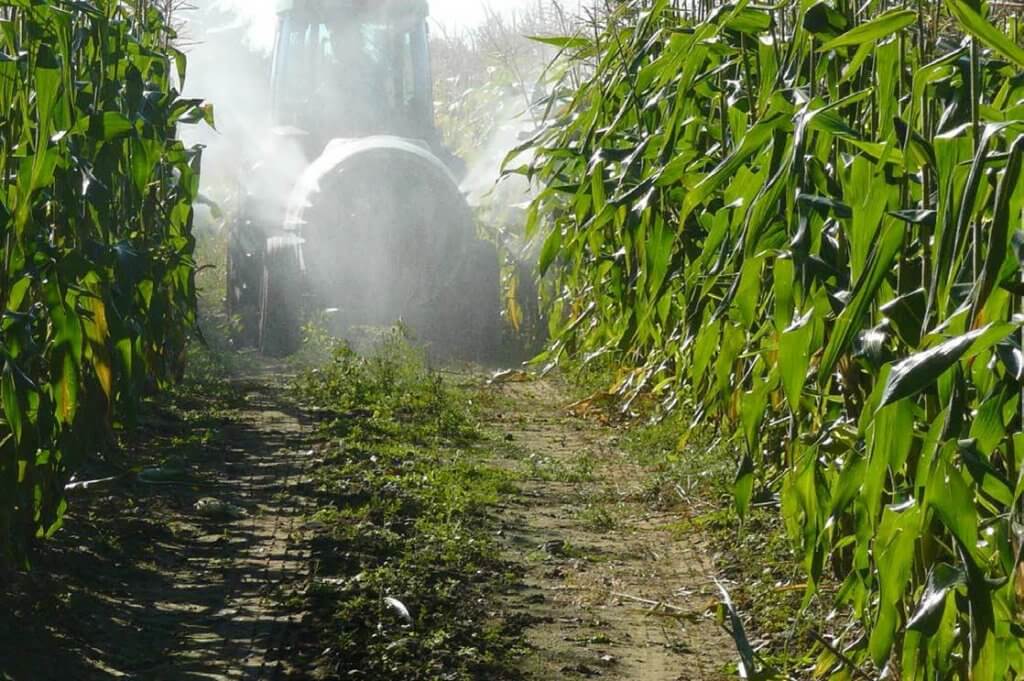
    High clearance in corn. Photo: FS Partners’ Juli Paladino

    So, if high clearance or aerial application isn’t an option, what are the limitations of using a directed application from an airblast sprayer? George wanted to find out, so he used water sensitive paper to compare coverage when spraying mature sweet corn plants.

    Water sensitive paper clipped to corn silks.

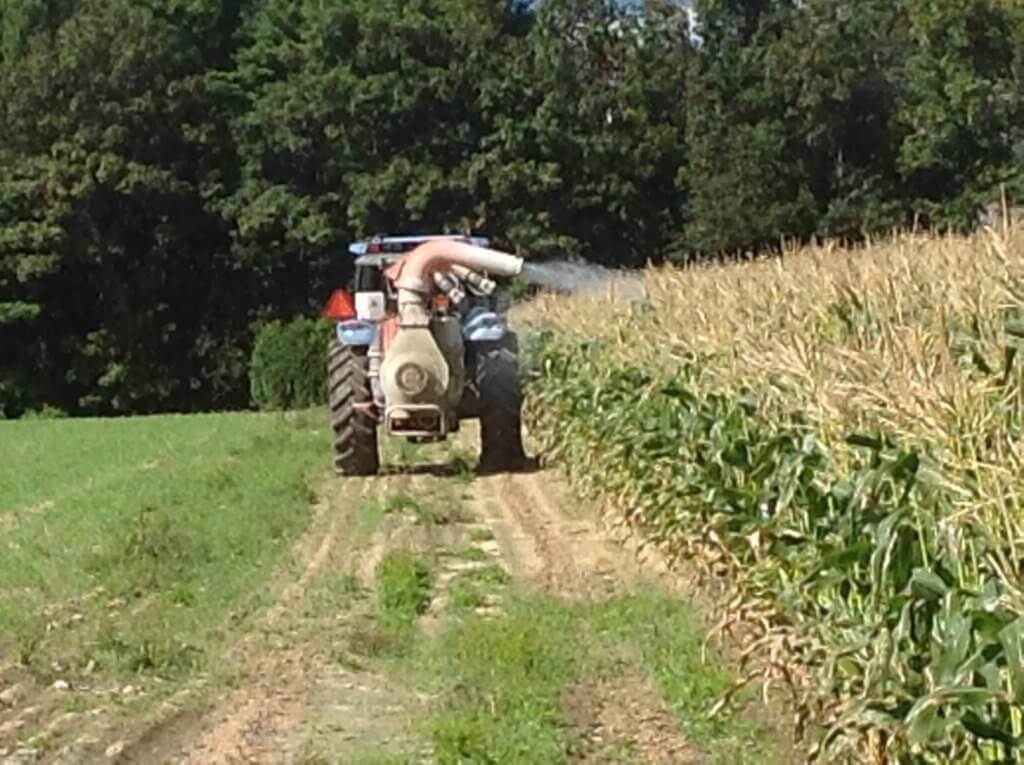
    He first sprayed an 18 row, and then a 16 row block using a Jacto cannon sprayer.

    Jacto cannon sprayer in action.

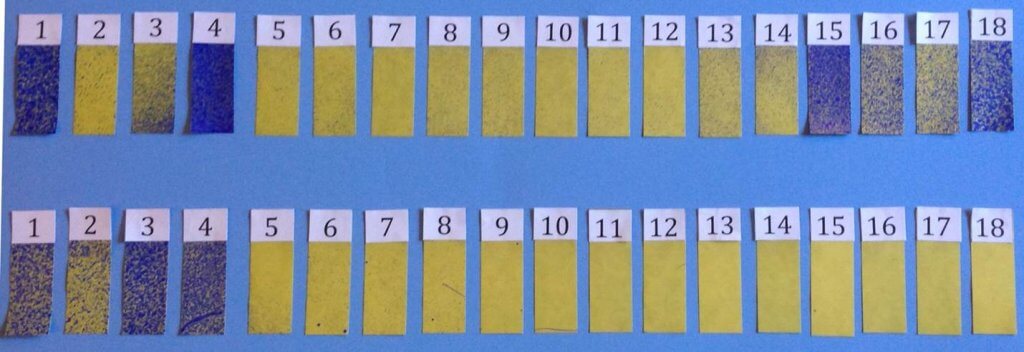
    The following photo shows (qualitatively) the resultant coverage. The top row shows the coverage when the sprayer drives both sides of the 18 row block. The bottom row shows the coverage from driving on only one side of an 18 row block. Three observations:

    1. Coverage is excessive adjacent to the cannon (row 1 or 18), improves further along the swath (rows 2-4 or 15-17), and then becomes erratic or non-existent with distance (see block sprayed from one side).
    2. Spraying from both sides improves coverage in the middle 10 rows.
    3. Spraying from one side does not provide sufficient coverage beyond row 7 or 8.
    Results from Jacto spray passes in 18 row block. Top: Driving both sides. Bottom: Driving only one side.

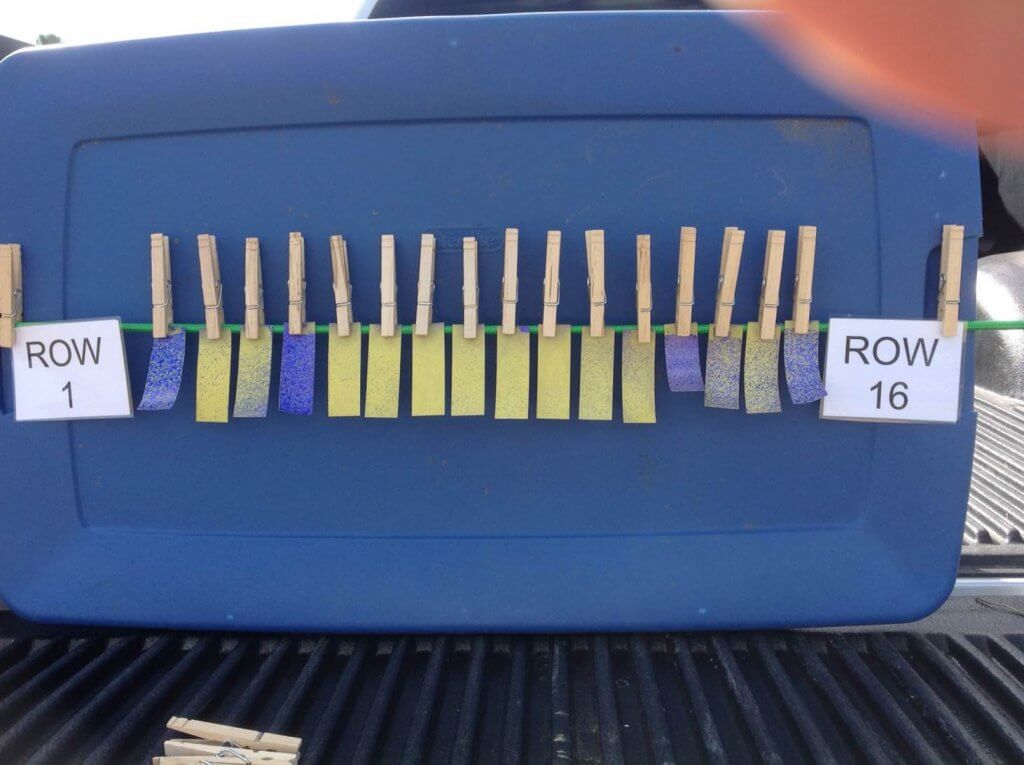
    They then used the cannon on both sides of a 16 row block to see if a shorter swath would improve coverage in the centre rows. It is a little difficult to discern from the photo, but the beyond the four outer rows, the centre rows have far better coverage.

    Jacto Cannon Sprayer spraying from both sides of a 16 row block.

    Finally, they used a more conventional axial Durand-Wayland airblast sprayer to spray a 12 row block from one side, and then from two.

    Durand-Wayland airblast sprayer in action.

    Once again, a shorter swath distance improves coverage in the middle rows, and spraying from one side results in poor coverage uniformity.

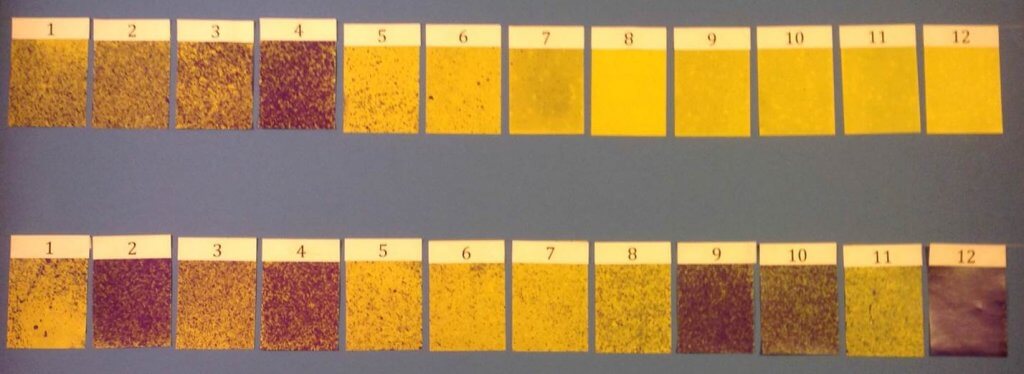
    Results from DW spray passes in 12 row block. Top: one side only. Bottom: Both sides.
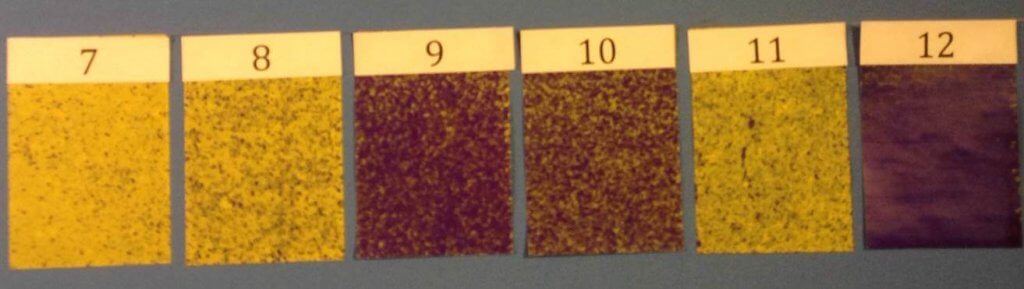
    Close-up of DW performance spraying from both sides in 12 row block.

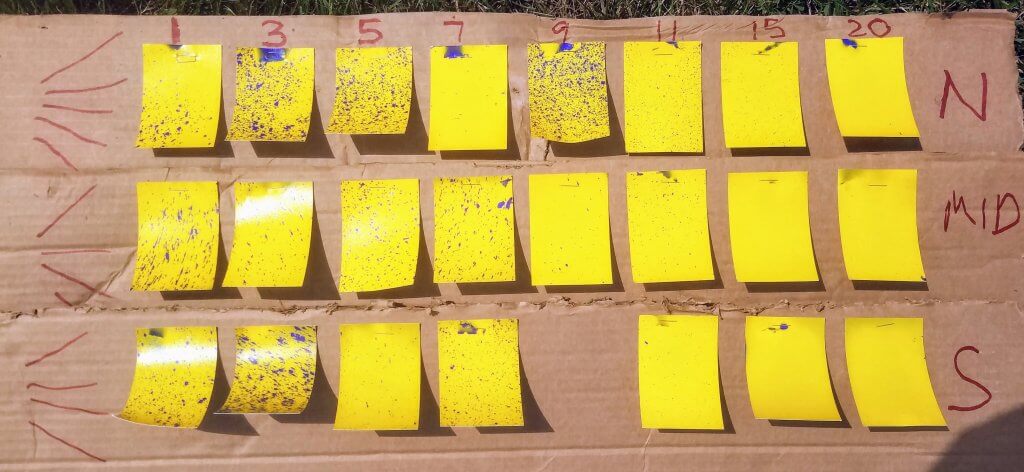
    In 2018, Ben also tried tackling the airblast / sweet corn combo. He and a grower used an AgTec cannon to spray from one side into a block of 5.5′ high corn on 30″ centres. They were travelling about 4 mph and spraying 50 gpa. Water-sensitive papers were placed at the top (N) middle (MID) and bottom (S) of the ear zone on rows 1,3,5,9,11, 15 and 20 rows to the west of the sprayer’s path. He used the Snapcard app to determine cover (see table).

    Rows from sprayerCoverage (Mean %)
    112
    319
    514
    77
    116
    153
    203

    Further observations:

    1. Coverage appears to be reasonable up to about row 5.
    2. The top card in row 9 caught spray falling into the crop (aka the up-and-over technique) but it didn’t penetrate any lower.
    3. Spraying from one side also showed how a stray leaf in the way of the card makes a big difference (see card at the top of row 7).

    Watch the video of Ben and the grower spraying water:

    So what’s happening?

    In both George’s and Ben’s trials, we see that spray droplets lose forward momentum as a function of distance from the nozzle. Fine droplets, typical of airblast sprayers, require air to carry them to the target. When the air produced by the sprayer slows, they begin dissipate and move erratically. Now, consider that the corn canopy itself is acting like a filter, scrubbing the spray from the swath as a function of distance. This is further exacerbated by environmental conditions such as wind, humidity and thermals.

    What’s the solution?

    In Ontario, we’ve tried directing cannons both laterally and downward (the up-and-over technique) in highbush blueberry, grape and cedar nurseries. We’ve tried increasing air speed, slowing sprayer travel speed and increasing spray volume. In each case we incur excessive coverage near the sprayer, extend the reasonable coverage zone a bit, and have only a modest improvement as the spray inevitably slows and is filtered.

    So, we feel the best approach for spraying sweet corn with an airblast sprayer is as follows:

    • Spray from both sides (even if you must cut an alley to accommodate the sprayer). This also helps with access for harvest.
    • For two or three head cannons, blocks between alleys should not exceed 16 rows to allow sufficient spray coverage of the ear zone. The sprayer head must be pointed downwards.
    • For axial airblast, or if spraying tall varieties with a cannon, consider 12 row blocks.
    • Any style of air-blast sprayer requires 75 gpa (or more) for sufficient coverage, and both travel speed and air settings should ensure air movement reaches the middle of the block.
  • Air-Assist Improves Coverage in Field Corn

    Air-Assist Improves Coverage in Field Corn

    Why aren’t there more air-assist boom sprayers in Canada? I can understand why field croppers might hesitate to pay for the feature because it’s only been in recent years that fungicide applications have become a regular part of their annual spray program. But, high-value horticultural muck crops like onion and carrot, or field vegetables like tomato and peppers have been a great fit for many years.

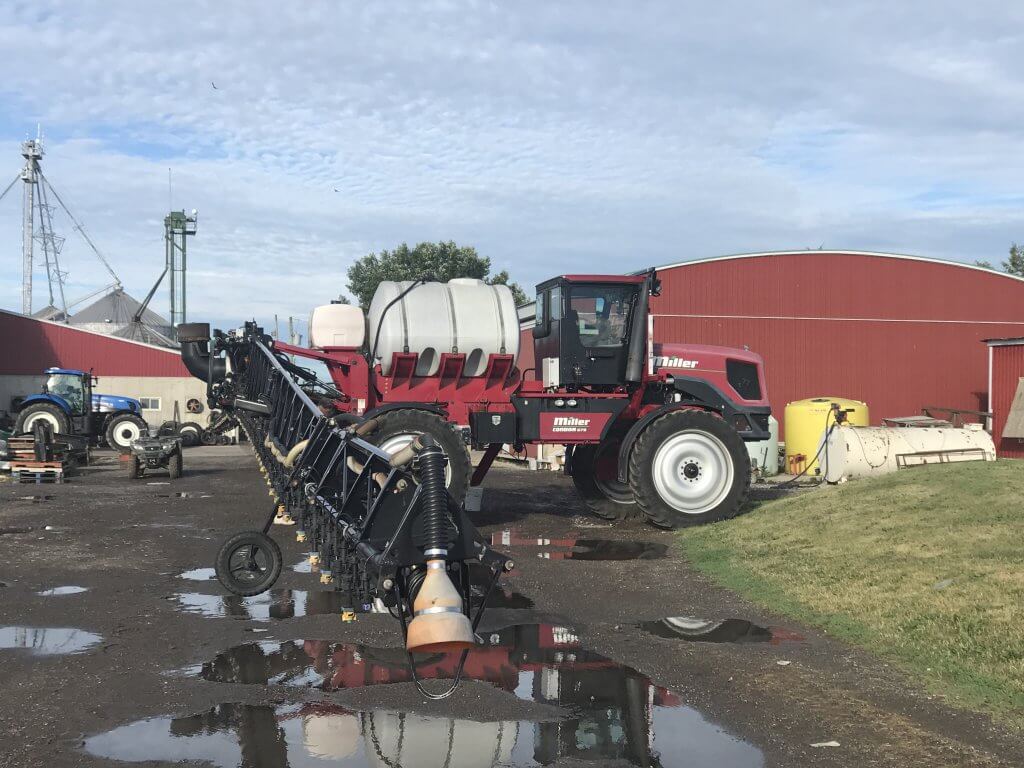
    One operation near Dresden, Ontario was thinking the same way when they bought a used 2010 Miller Condor with a Spray-Air boom from Indiana. In the past, they employed a trailed Hardi sprayer applying 40 gpa using Turbo TeeJets alternating front-to-back in their field tomato and onion crops. They felt they could achieve better coverage with the air assist feature.

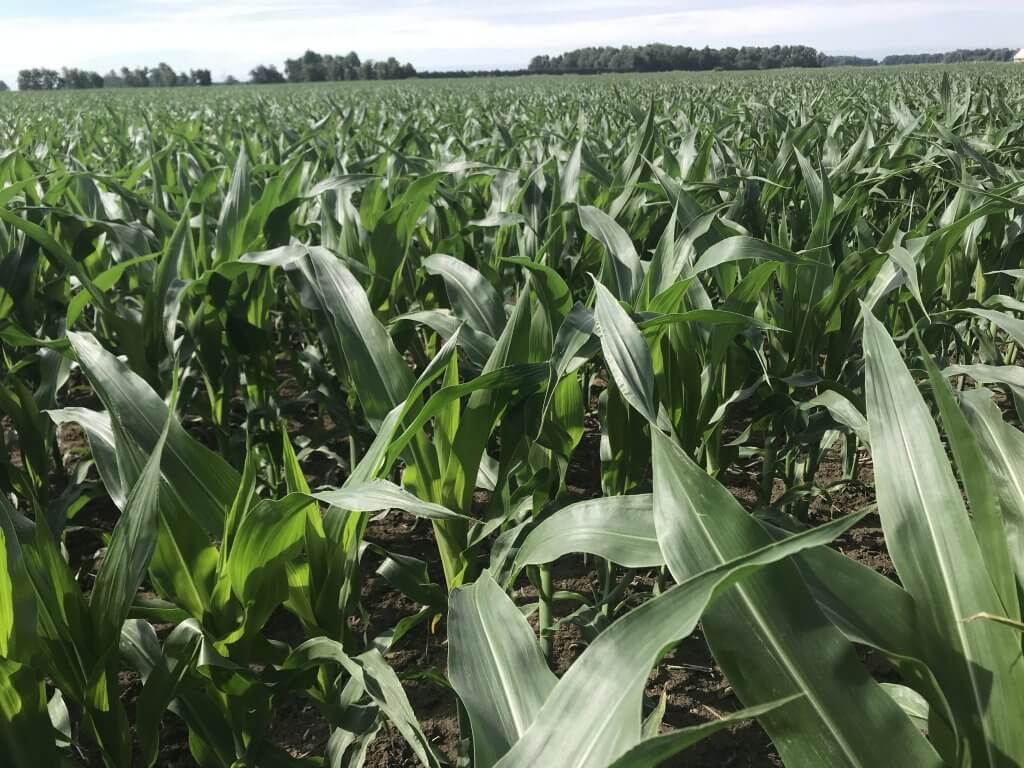
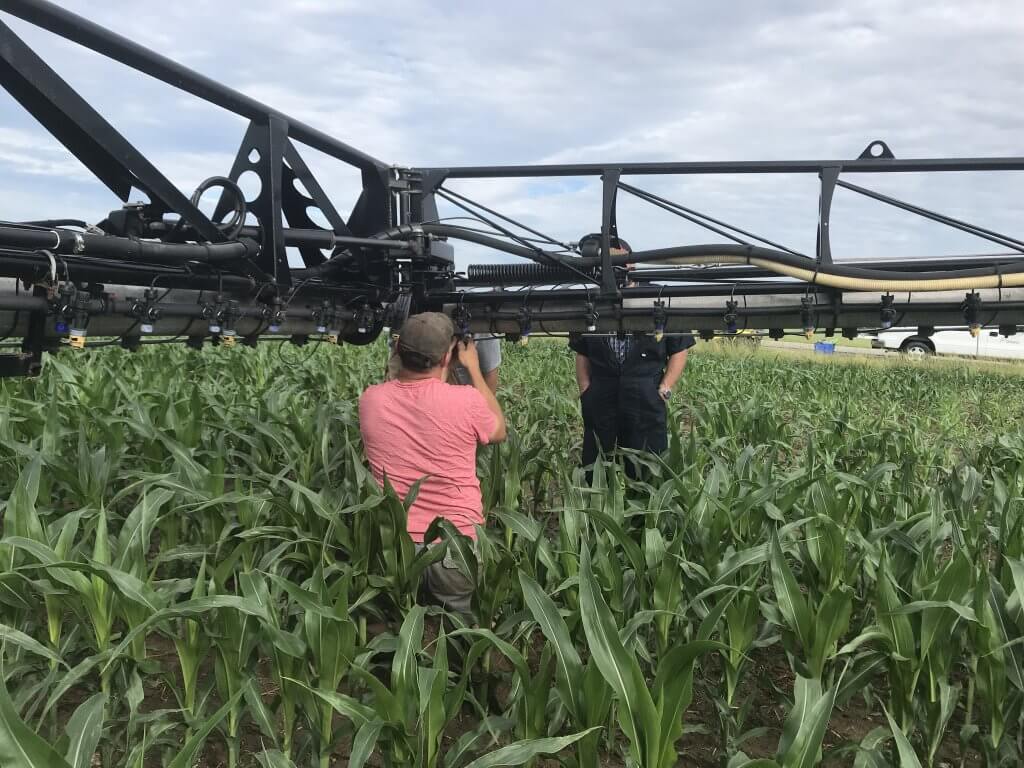
    On June 19 the onion and tomato canopies were still too sparse to be a good testing ground (and the ground was very wet). So, we decided to run coverage trials in a stand of 3 foot high corn on 30 inch centres.

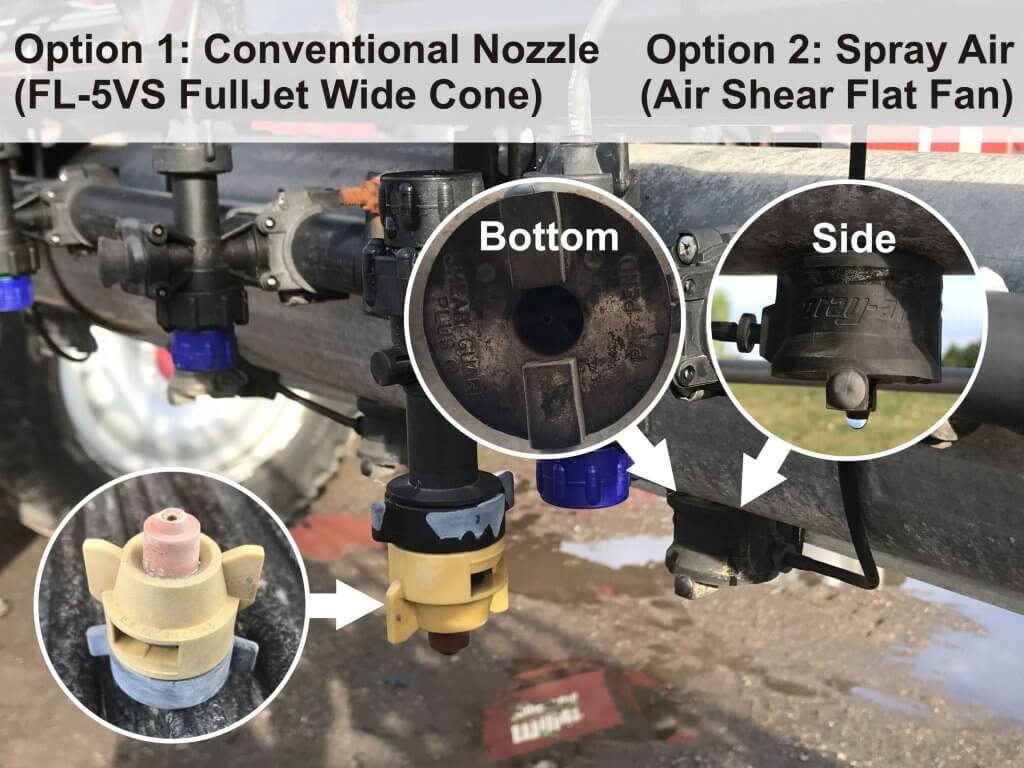
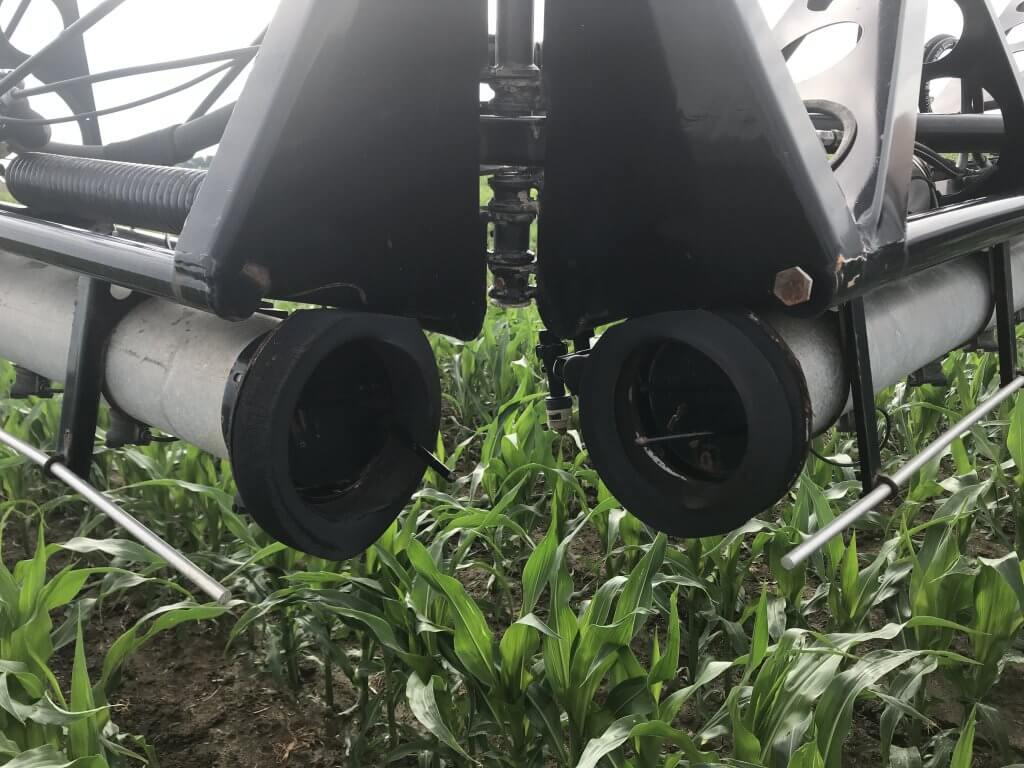
    The Spray Air boom features a series of air shear nozzles on 10 inch centres. A liquid feed line meters spray mix to the orifice, where high-volume air is directed at the flow via two Cross-Flow jets. This shreds the liquid into spray and shapes a 60 inch flat fan pattern. The operator can select from a range of air speed/volume settings that affect spray quality (lower air means Coarser and fewer droplets and a smaller fan angle).

    This particular boom also carried a set of hydraulic nozzles, so the operator could elect to turn off the Spray Air feature and employ a conventional application. This would be appropriate if applying a herbicide using air induction nozzles. In this case, the sprayer was equipped with TeeJet FullJet cones.

    The first thing we noticed was that the air was not distributed evenly across the boom. We inspected the baffles that join each boom section, but found no problem.

    We then suspected the Spray Air combination nozzles might be occluded with debris (it did come all the way from Indiana). This turned out to be the case, so we popped them out and cleared the Cross Flow jets of any obstructions.

    We then measured the air speed produced by the boom. A Pitot meter proved to be too finicky to get a consistent reading, so we used a Kestrel wind meter held 12 inches from the nozzle. The operator moved between the six air settings in the cab, producing the following air speeds. Note that these speeds were much slower than the 100+ mph (160+ km/h) speeds noted in the Miller brochure. The owner has since told me that they found a number of air leaks in the boom that they have been diligently repairing, and as a result he’s operating at a lower air setting.

    Air SettingApproximate Airspeed at 12”
    14 mph (6.5 km/h)
    26.5 mph (10.5 km/h)
    38.5 mph (13.5 km/h)
    412.5 mph (20 km/h)
    515.5 mph (25 km/h)
    617.5 mph (28 km/h)

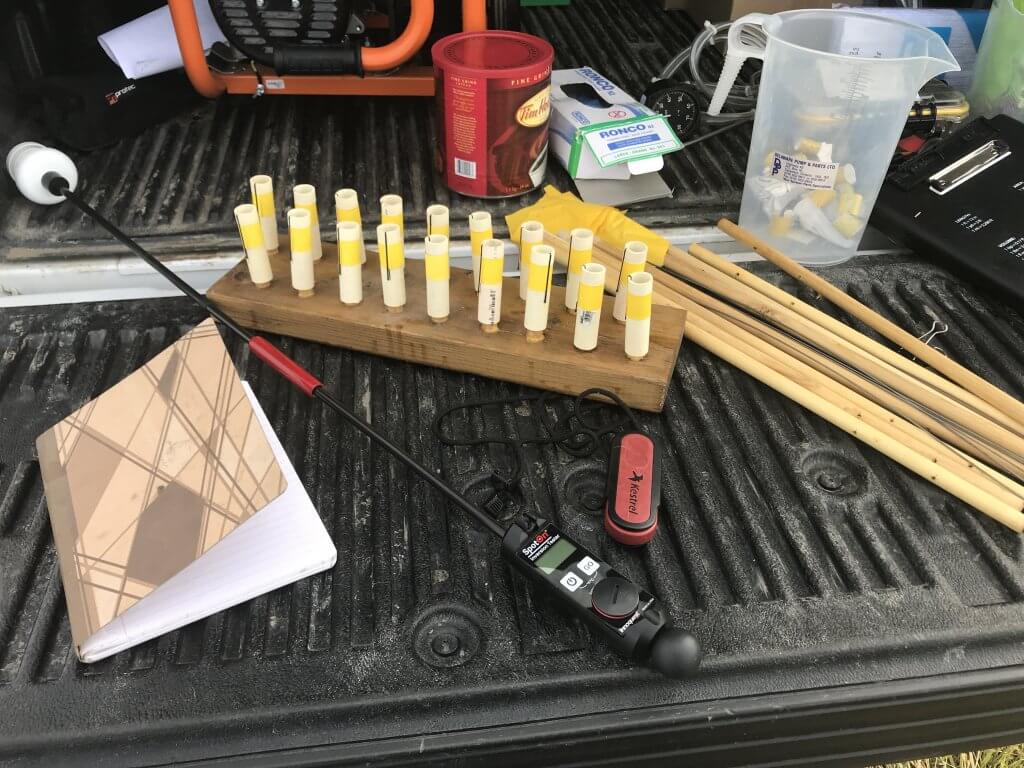
    We used water-sensitive paper wrapped around dowels to illustrate potential spray coverage.

    They were placed perpendicular to the spray at three depths in the corn canopy: High, Middle and Bottom. This provided an indication of panoramic coverage and represents a very difficult-to-wet target. In the last two trials, we also added a horizontal target at the Middle (not shown) and Bottom position to illustrate overall canopy penetration, and two at the High condition, angled at 45º into the sprayer’s path and 45º away from the sprayer’s path. These gave an indication of the highest potential coverage available to the canopy. Papers were later unfurled and digitally scanned. The papers were analyzed using DepositScan to determine the total percent coverage, and the droplet density.

    Trials took place between 8:30 and 11:00. Temperature slowly climbed from 20ºC to 23ºC (~ 70ºF). Relative humidity dropped from 69% to 60%. With the exception of Trial 1, we sprayed in a tail wind of 7.5 mph (12 km/h) gusting up to 10 mph (16 km/h). Travel speed was 7 mph (11 km/h).

    In the first five trials we made single, progressive adjustments to the spray settings that we assumed would improve coverage. Finally, we compared what we felt were optimal settings with the Spray Air (Trial 5) to optimal settings for the conventional hydraulic nozzles (Trial 6). Details are as follows:

    TrialAir settingSpray Volume (gpa)Boom Height (inches)
    121420
    23.51420
    361420
    46146
    56206
    6No Air – Fullcones206

    You can watch the passes in the following video. Note the boom height and the trailing spray.

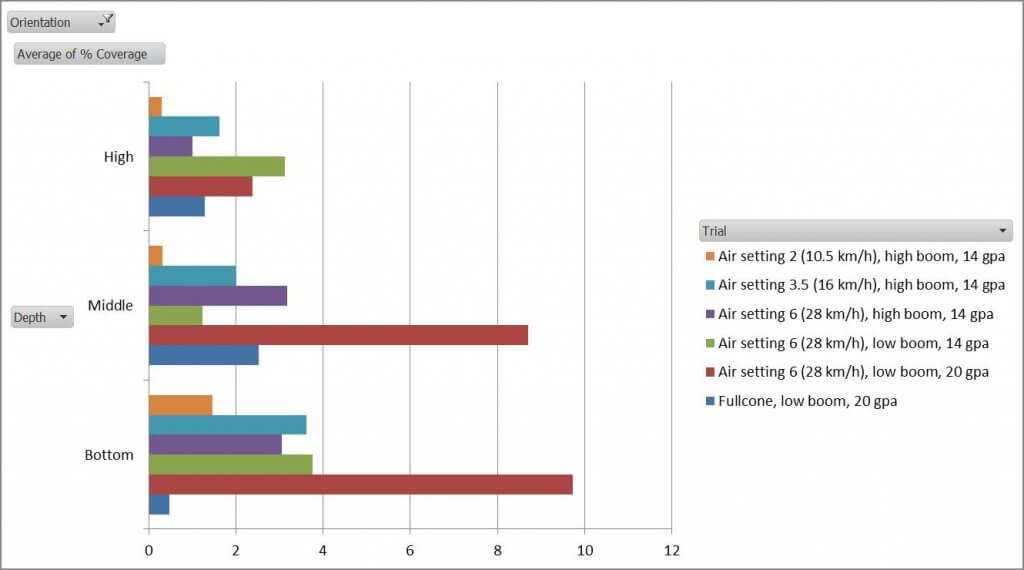
    The following two graphs show the coverage obtained in the High, Middle and Bottom positions for all six trials. The first graph is percent coverage, and the second is droplet density.

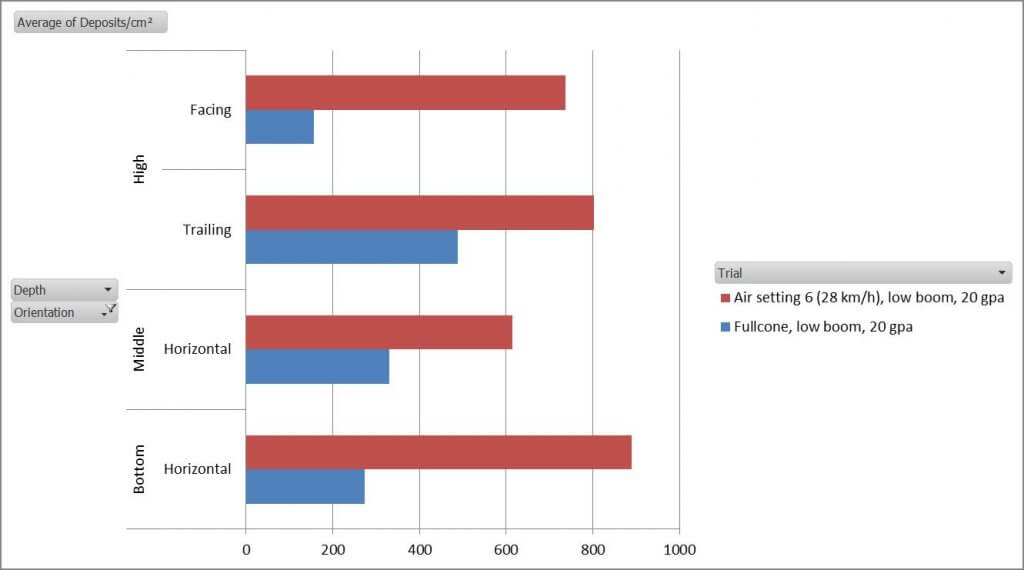
    In trial 1 the air was insufficient to properly atomize the spray mix (as seen in the video) and this is evident in both graphs. By increasing the air in trials 2 and 3, we see that coverage increases in the High and Middle positions, but declines a little in the Bottom position. When we lower the boom closer to the canopy in Trial 4, we see increased coverage again in the High and Bottom positions, but lose ground in the Middle. We then increase our water volume for exceptional gains in the Middle and Bottom position, but at the expense of the High. Throughout these changes, overall coverage trended up. Finally, when we turn off the Spray Air system, and switch to the Fullcones, which were set to spray the same volume via the rate controller, there is a drastic reduction in coverage in all positions.

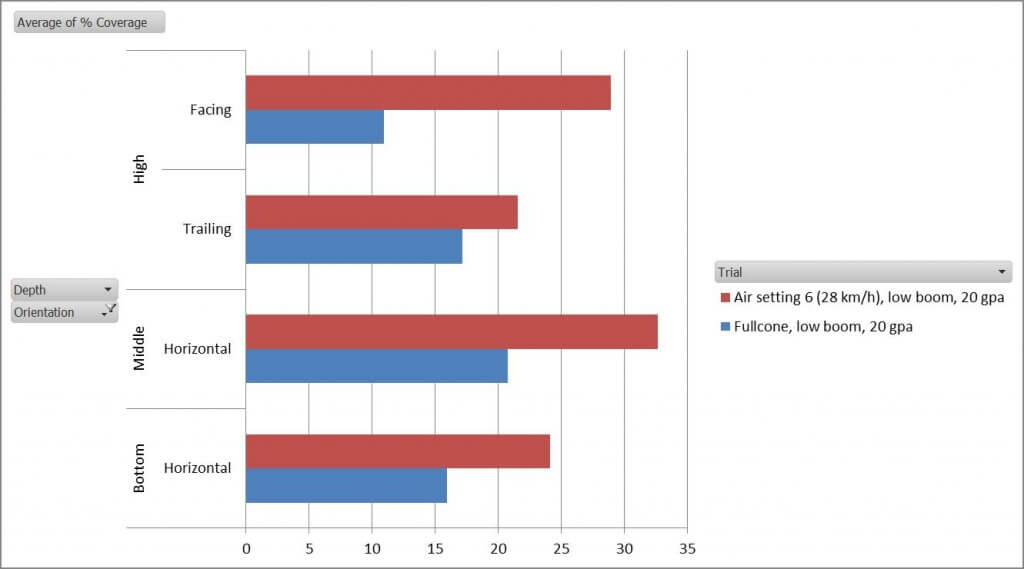
    Let’s look at the additional papers placed for Trials 5 and 6 in the following graphs.

    Even when papers were oriented to intercept the spray as much as possible, The Spray Air system provided superior coverage compared to the hydraulic nozzle.

    This leads us to conclude that there is an advantage to air assist in overall coverage and canopy penetration. Further, it demonstrates that such a system requires careful calibration to ensure it is being used optimally. Water volume, air settings and travel speed should all be reconsidered when the environmental conditions change (e.g. temperature and wind) and when spraying different crops, at different stages of growth.

    Two weeks after this trial, the corn grew too high for the Miller boom, but the grower moved into his onion and tomato and was very pleased with the overall coverage the Spray Air was providing. He’d also replaced the fullcones with 110 degree AI flat fans for herbicide spraying.

    I’d like to see more air-assist booms in Canada.