Category: General Operation

Articles that discuss general field sprayer operation and productivity factors

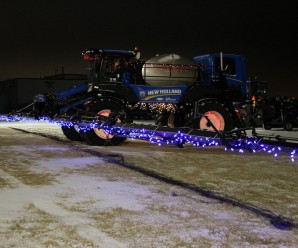
  • My Sprayer Santa Wish List

    My Sprayer Santa Wish List

    Dear Sprayer Santa,

    “I tried to be good this year.  It was hard, though.  Yes, I know that fast driving causes drift and lots of other problems.  But I couldn’t help it – the 375 horses under the hood needed the exercise.  I honestly didn’t mean it.  I’d have stopped had the air-ride not cushioned all the impacts so well.  I had no idea, really.  The cab was so quiet.  I’m sure that plume of spray and dust behind my sprayer didn’t cause any damage.  I mean, nobody called me, anyways.  I had no choice, after spending 2 hours cleaning out the tank and having to do another three quarters before the forecast rain.  So please, Santa, can I have a bigger sprayer?  Please? I think I need it…to, errr…to…to feed the world.  Yeah, that’s right, Santa Baby.  I need it to grow food for others.  So how about it?”

    I wake up in a cold sweat.  Well, if there was a Sprayer Santa, he’d hear lots of excuses about these sorts of things from applicators afraid of getting a lump of coal on Christmas Day, a black nozzle so to speak.

    So why don’t we stop making excuses and solve the problem by making sprayers that focus on the right things?

    Here’s my “no more excuses” wish list:

    1. Increase transport speeds, reduce field speeds. Let’s establish gear ranges which save time getting to the field, and ensure a better quality job once we get there. Let’s focus on productivity without resorting to the easy, but bad option.  Speed comes at a cost.  More horsepower.  More fuel. More structural stength. More weight.  None of it cheap. Or good.
    2. Increase boom width. This one’s a productivity powerhouse.  It’s every bit as good as travel speed, on a percent gain basis, and much cheaper.  Where else in the world is there a better opportunity for wider booms?  The earth’s temperate plains are almost without exception wide, and more or less flat.  With the help of autosteer and automatic boom height, why should 120 ft be the limit? Many aftermarket manufacturers offer booms at 150 ft.  But why stop there?  Sure, we’ll need some engineering to make it work.  But the fact is that wide booms, coupled to slower speeds that require less horsepower, can have the same productivity.  Not a bad tradeoff.
    3. Explore lighter materials. Sure, Ford was ridiculed by GM for offering aluminim trucks.  But when weight is important, alternate materials can make the impossible possible. Booms that weigh many thousands of pounds require so much strength just to carry their own weight, there are diminishing returns.  And the result is that we are stuck with narrow booms.  Let’s get inventive with alloys and composites.
    4. Focus on time saving features. On any given day, we are given maybe 6 hours of good spraying conditions, some in the morning, some in the evening, and perhaps a few in between. This can be interspersed with several days of bad conditions.  What a waste to spend this precious time not actually spraying, but rather filling, cleaning, transporting, getting un-stuck, figuring. In a business where timing is so important, and where a late application can have serious yield implications, we should be spending a greater proportion of time spraying. We need help to minimize downtime.
    5. Dedicated clean water pumps and small sumps. Want to clean out the tank faster? Rather than relying on batch mode, reducing concentration by serial dilution, consider adding a dedicated pump to your clean water saddle tank.  Introducing clean water through the wash-down nozzles while at the same time spraying out the sump dramatically increases dilution power with less water. And of course, the smaller the sump and recirculating reservoir, the faster the job will get done.
    6. Recirculating booms. I initially wrote these off as a bad idea when they offered a single pressure entry point (on one end) followed by an exit on the other. Over 120 ft, you’d surely see pressure drops of 10 psi – unacceptable. But with modern designs offering up to four pressure entry points (both ends and middle) these issues appear to have been eliminated. And with clever plumbing, the boom can act as an extension of the tank, making priming and cleaning faster and easier.  Sectional control is now governed by individual shutoff valves, offering customizable, fast, positive shutoff.
    7. Better flow and droplet size control. 2016 promises to be one of the most exciting years for new atomizers, with new entries in the twin fluid, pulse-width modulation, and multiple nozzle markets. But there’s still lots of room for improvement. To the young engineers reading this, give us a nozzle that provides a 10-fold range of flow rates, each at the same pattern angle and droplet size.  Let this nozzle offer easy control of droplet size from Medium to Ultra Coarse at each flow rate. How hard can this be? Make it affordable and reliable, with consistent flow rates and a long wear life.  I think we’re ready to pay for this.
    8. Easy cleaning materials. Every year, it’s a guessing game. Are all the Group 2 residues removed from the tank and booms before you spray your LibertyLink canola? How can you be sure?  Well, by checking your canola two weeks later, of course!  In the meantime, all we can do is offer hope with ever more rigorous cleaning protocols, one-upping last year’s efforts to ensure that nothing got left behind.  How about tank, fitting, hose, boom, and nozzle body designs engineered to eliminate these problems?  How about a guarantee to that effect by the sprayer manufacturer?  It’s going to take more than the occasional stainless steel component.  If we have enough knowledge in fluid dynamics to send an F1 sports car into a turn at 250 km/h, then surely we can design a hydraulic system that self-cleans!
    9. Better aerodynamics. Let’s face it, we can’t control drift just by making sprays coarser. Eventually we’ll reduce coverage too much and this will hurt our important contact products the most. Instead, we need sprayer and boom designs that facilitate the transport of droplets towards their target, avoiding drift. Maybe the shape of our tractor units and boom components will play a role here, maybe the nozzle pattern needs a re-evaluation. Maybe shrouds will return. One thing’s for sure – we can’t simply drive faster and expect coarser sprays to solve the problem.

    So that’s my list.  I’m sure it’s just a beginning.

    What’s on your list?

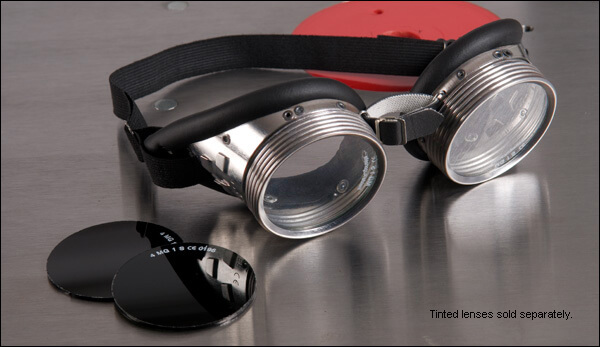
    Lee Valley Safety Goggles

    *I have a confession to make.  I’m secretly hoping for those Lee Valley German Safety Goggles for Christmas.  Protecting your eyes has never been cooler.

  • Agrifac Condor: A Wake-up Call For North American Sprayer Manufacturers?

    Agrifac Condor: A Wake-up Call For North American Sprayer Manufacturers?

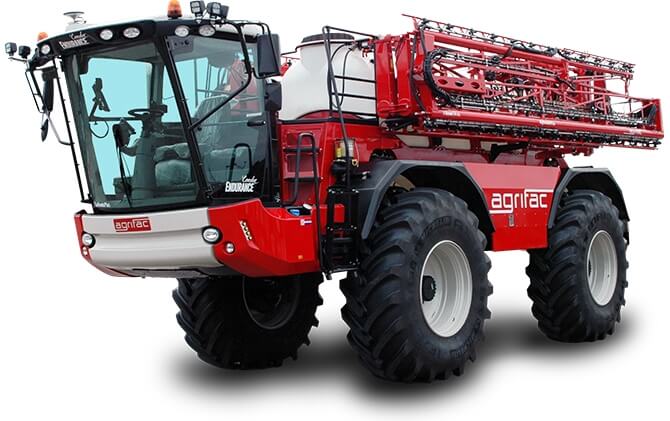
    agrifac-condor-endurance
    Agrifac Condor Endurance (Source: Agrifac)

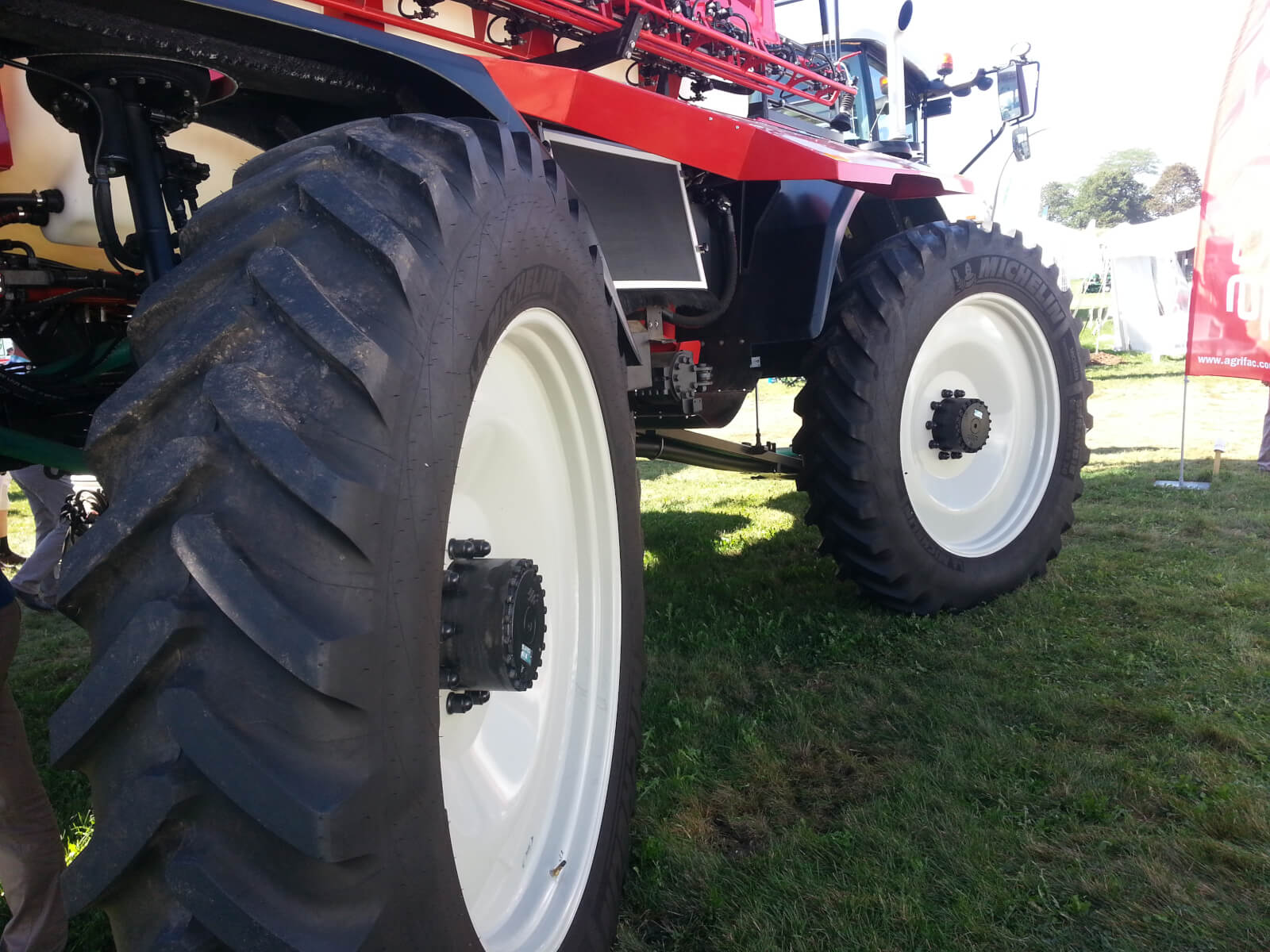
    I like good ideas.  And at Canada’s Outdoor Farm Show in Woodstock this fall, I saw a sprayer that puts a lot of them in one place.  I’m talking about the Agrifac Condor Endurance.  I’ve seen European sprayers before, even operated a few.  And although they are all well-engineered machines, the Netherlands-based Condor might be the first one to gain traction in North America. Why this one? Let me explain.


    Size:
      If you thought European machines are too small for North American conditions, this one breaks the mold.  Sporting an 8000 L (2100 US gal) tank, track widths up to 4.6 m (15 ft), a 320 hp Tier 4 engine, and booms up to 55 m (180 ft) wide, it’s a monster. The smaller Condor offers tank sizes of 1050 or 1300 US gal and is a smaller machine overall.

    Agrifact Condor Sump
    The tank sump design ensures minimal remainders.

    Tank and Pump:  The large tank has a molded funnel sump that feeds directly into the pump.  Net result is a design that empties the tank completely, leaving a tiny remainder amount, less than 2 gallons according to Rob Blijdorp, with Agrifac North America.  Because most of us clean tank remainders by diluting them with clean water, this small remainder needs less water to dilute residues to safe levels, saving time when switching products.  The machine is equipped with a Hypro centrifugal pump as standard equipment in North America. A diaphragm pump is optional. This pump type is unusual for North America, but it is self-priming, can run dry, and can produce very high pressures.

    Agrifac Condor Boom
    Wide booms with recirculating plumbing boost productivity and minimize waste (Source: Agrifac)

    Boom: The boom widths available on the Condor are astounding, and there’s no easier place to use them than the North American Great Plains.  Wider booms are one of the most effective efficiency boosts in spraying, and allow slower travel speeds while creating fewer tracks.  The Condor boom has a recirculating design with a pressure feed from both ends, eliminating boom ends and increasing cleanout speed.  Since it uses the boom as part of its circulation system, the boom primes at filling so the new product is at the nozzles right away. Sectional control is flexible, with nozzle-by-nozzle control available.

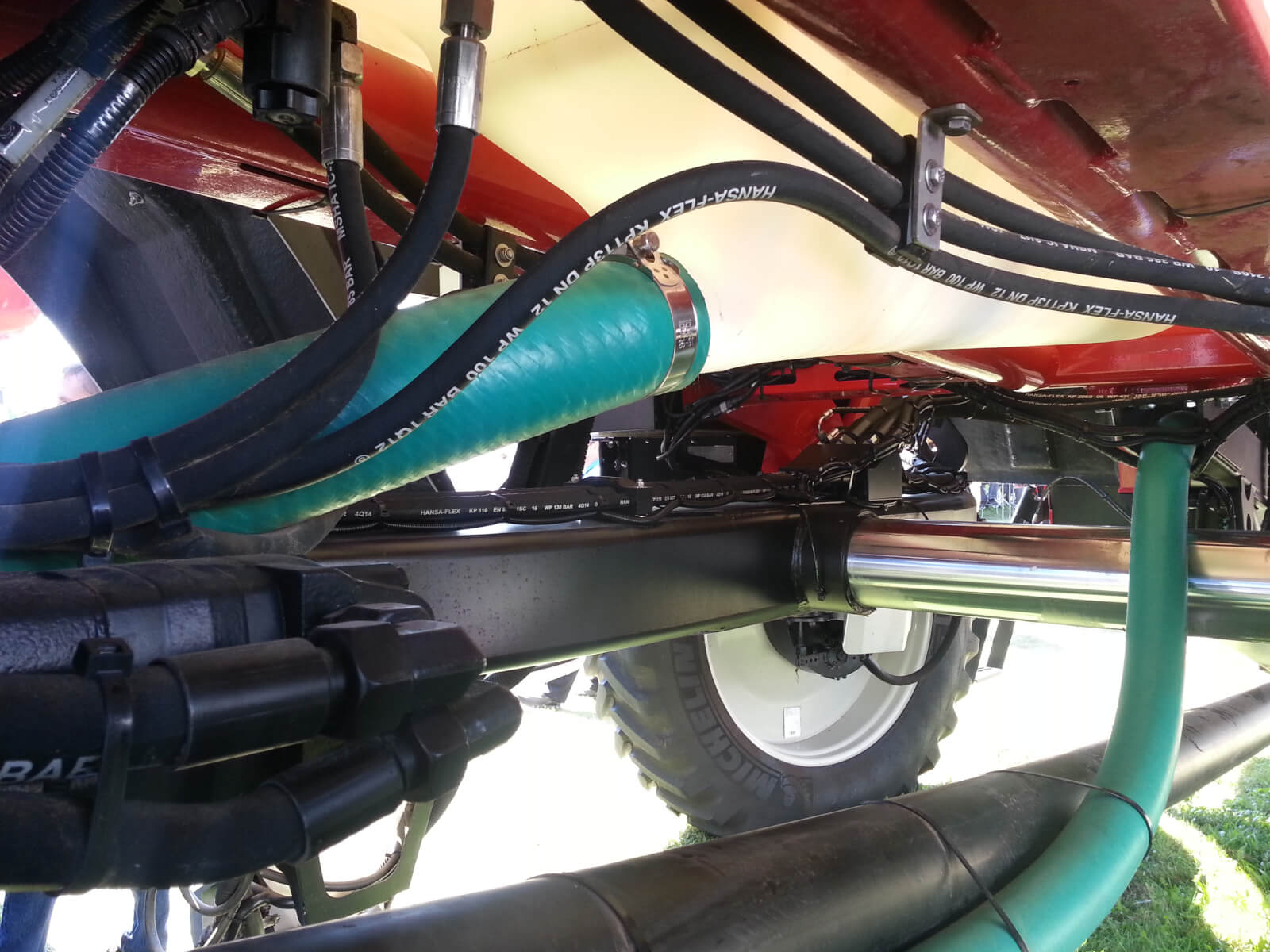
    Agrifac Condor 4-wheel steer
    Four wheel steer on a walking beam chassis

    Chassis:  The frame and suspension system looks like a walking-beam setup, and is claimed to give a smoother ride with less transfer of bumps to the boom. The system has four-wheel steer capability for less tracking in turns, and a tight turning radius. The weight of the smaller Condor machine equipped with a 120’ boom is 24,500 lbs, the Condor Endurance with the same boom is 31,000 lbs.

    HighTechAirPlus nozzle
    The HighTechAirPlus atomizer is a twin fluid design that uses air to control flow and atomization.

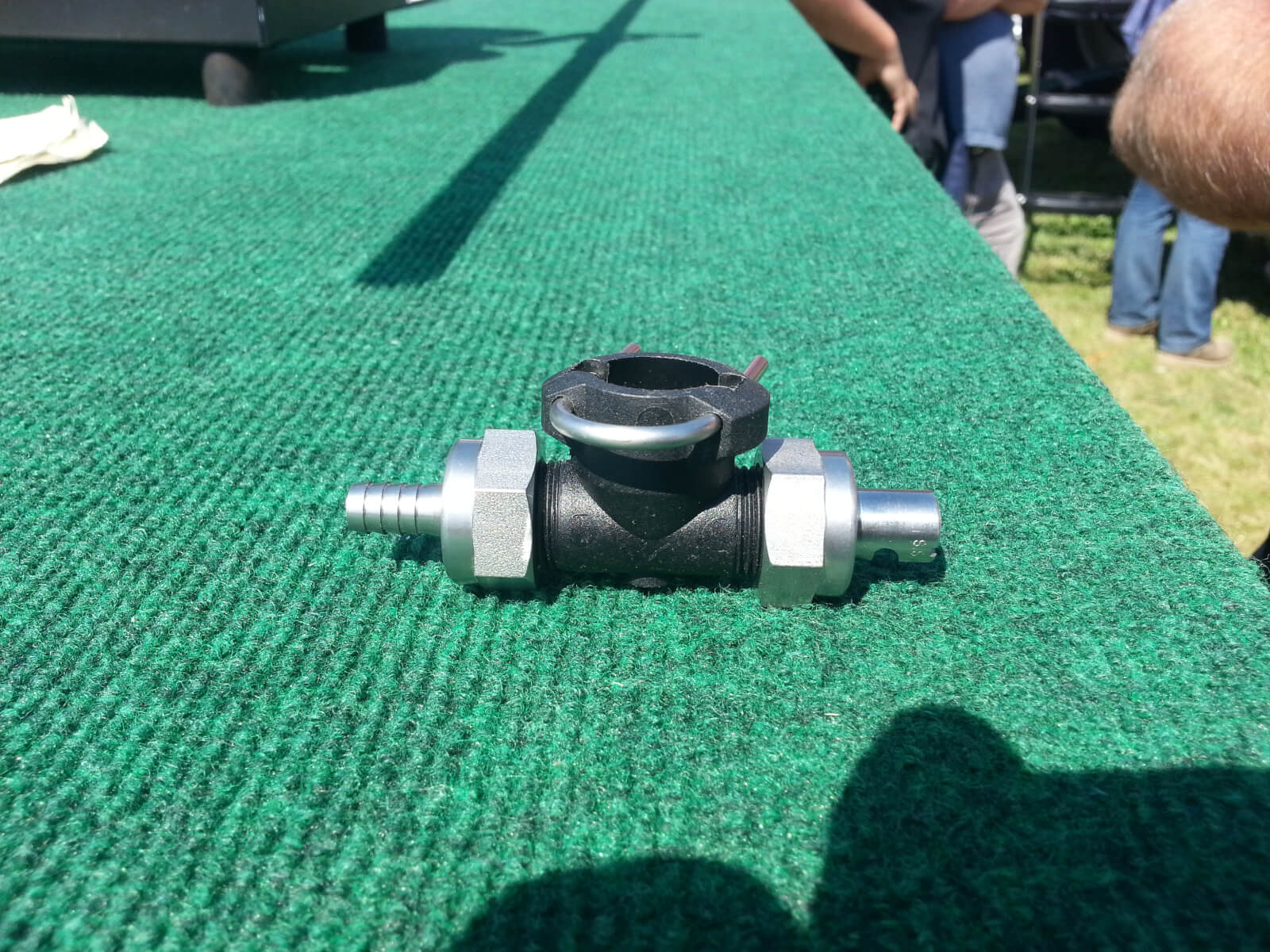
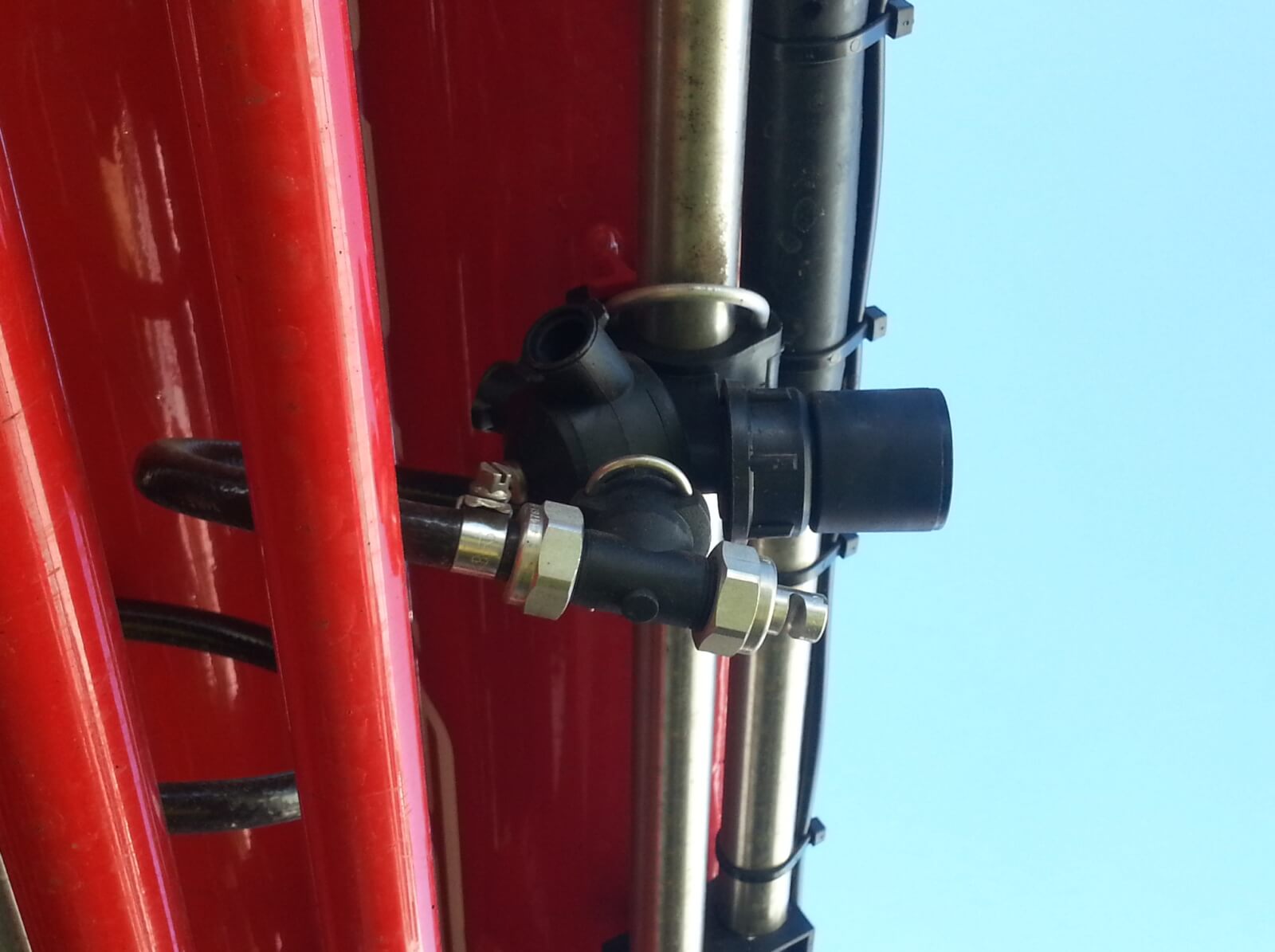
    Nozzles: I saved the best for last.  Since 1989 (yes, I remember the year!), I’ve been a fan of “twin fluid” nozzles, but have not seen them take hold anywhere.  The HighTechAirPlus nozzles are Agrifac’s version.  Here’s how they work:  Liquid is delivered to the nozzle in the usual way, by pressure.  But air is also delivered, created by a dedicated air pump that has modest volume and pressure requirements.  Both air and liquid make their way through the same nozzle (a deflector style, similar to the TeeJet FloodJet).

    HighTechAirPlus
    HighTechAirPlus installed. Note the air supply and the air-activated shutoff for individual nozzle sectional control.

    The advantage?  Liquid flow and droplet size can be adjusted independently, with air and liquid pressure.  More air results in lower liquid flow. It also reduces droplet size.  More liquid pressure increases flow, and also reduces droplet size.  Clever combinations of both can keep droplet size fairly constant over a wide flow rate range.  Alternatively, the nozzles can change droplet size while keeping the same flow rate, depending on the drift or coverage needs at the time. The travel speed range achievable is similar to that with PWM.

    Verdict.  The jury’s out.  As a newcomer to North America, the Agrifac faces a few challenges.  Many say it needs a dealer network, inventory and parts.  It needs to prove its reliability. It needs to be able to service its machines, especially if parts are non-standard.  It needs field cred out here.

    But I’m a bit tired of our North American sprayers adding horsepower, speed, and weight to their sprayers each year, and little else.  They leave applicators to struggle alone with equally important productivity factors such as quick and thorough cleanout, drift management, nozzle selection and others.

    The things that strike me with this new sprayer are Agrifac’s innovative design, and its emphasis on issues that matter to applicators:  productivity and excellent control over application rate and droplet size. The company has the right priorities in my books.

  • Hydraulic Fittings: A Galling Metallurgical State of Affairs

    Hydraulic Fittings: A Galling Metallurgical State of Affairs

    So it’s been a long spraying season and as you perform your annual maintenance you grudgingly admit that the hoses have given their all. Before you run out to get more of the same, give some thought to the hydraulic fittings (i.e. hose adaptors and couplers). Many feel that stainless steel (SS) is the best choice for hydraulic fittings: It must be, because it’s certainly the shiniest and most expensive choice! But before you opt for stainless, here are a few things you should know.

    SS requires surface oxidization to resist corrosion. Oxidation forms a protective barrier called a “passivation layer”, but it’s susceptible to mechanical damage. It can be penetrated as abrasive powders flow past. The layer will reform when it dries, only to be sanded off again during the next spray. The wear is on-going. If the newly-exposed SS remains submerged in a liquid, the passivation layer will not reform. Without it, SS surfaces corrode at a high rate, and in extreme cases SS will even corrode inside of itself and become a hollow shell.

    When two pieces of stainless steel are forced together, the passivation layer gets scraped off, allowing parts to gall (or ‘weld’). In fact, any similar metals in physical contact will naturally gall to each other, but stainless steel is especially susceptible. When disassembled, the ‘welded’ material must be torn apart. This destructive galling can be reduced with lubrication during assembly and avoided altogether by mating dissimilar materials (e.g. bronze and stainless steel). Technically, mating different types of stainless steels (e.g. martensitic against austenitic) could work, but it is possible that two different alloys electrically connected in a humid environment may act as a voltaic pile and corrode even faster. This is probably a moot point because many do not have access to different SS alloys when choosing fittings.

    Sometimes we see black or galvanized pipe fittings on sprayers, but I don’t recommend either. Galvanizing is only slightly better than black pipe and since the threads are cut after being galvanized the threads are essentially black pipe, anyway.

    So what about plated steel fittings? They’re available with swivels and can seal on faces and seats (rather than on the thread – which is much easier to assemble and disassemble). They can be crimped onto the hoses, eliminating the need for hose clamps that fail or snag and cut the operator. (As a related aside, hydraulic hose is not really compatible with most spray products – the steel wire inside the rubber begins to corrode and unexpected failure is common. Even when spraying above 200 psi there are better high pressure-rated choices than hydraulic hose.) Mechanically, these fittings are a great option, but unfortunately the plating is designed for oil, not pesticide. Within a year they rust internally and seize up. To add insult to injury, the flaking rust is notorious for plugging nozzles.

    A better choice is brass (or even bronze) fittings (e.g. pipe, SAE 45° and hose barb). Just like the crimped plated steel fittings, brass SAE 45° fittings can swivel and seal on seats and they are easily assembled and disassembled over many seasons. Brass fittings are more costly than black or galvanized pipe but cost less than hydraulic or SS fittings. Conveniently, they’re available at most hardware stores.

    While brass may be the best metal material for the sprayer fittings, I feel that plastic is the most economical and in many applications is superior to metal. But, that’s a topic for a follow-up article. So, before you spring for SS hydraulic fittings, consider cheaper and more effective alternatives like brass or plastic. And, if only for the sake of your mechanic, please don’t over tighten fittings. It is unnecessary and causes endless damage and frustration.

  • Operator Safety: How to Avoid Pesticide Hazards

    Operator Safety: How to Avoid Pesticide Hazards

    A Veteran Applicator’s Questions about Pesticide Handling

    Time and again, after years of working with dozens of different chemicals, I would wonder to myself “How dangerous is this chemical?”, “Is glyphosate as safe as they say it is?”, “How do I find out what type of safety gear I need while handling this chemical?”

    Beyond the agrichemical dealer, ag. consultants, and university or government ag. extension specialists, a quick internet search reveals many sources of pesticide information. Collectively they identify the active ingredient(s) in formulated products, they detail which pests are best controlled by the pesticide, and they provide instruction for application. But it’s more difficult to find consistent, practical information about safe pesticide handling. Sometimes it’s excessive to the point of being impractical (try finding actual “chemical proof” gloves), and sometimes it’s minimal and vague – it depends where you look. No matter the level of precaution, pesticide safety is time consuming and involves some fussing, but it is the hallmark of responsible pesticide use. Just as we ensure that we are applying “safe rates” when spraying chemicals, we must also ensure we are respecting our own well-being while handling chemicals.

    In Canada, the Pest Management Regulatory Agency (PMRA) is charged with protecting human health and safety by monitoring pesticides that are sold in this country. According to the Federal Pest Control Products Act all pesticides sold in Canada must be registered with the PMRA. There’s a very nice overview of how that process works here. It is during this registration process that pesticide handling precautions are identified for the label. Further classification may take place under provincial acts.

    All pesticides are designed to disrupt, repel, control or kill living organisms, but when it comes to safe handling, insecticides receive the most attention. This is because herbicides and fungicides target biochemical pathways that only exist in plants or fungi. However, most pesticides can be hazardous if they are not handled correctly. The handling precautions that appear on the label are based on five factors.

    Five factors that affect handling precautions:

    1. Pesticide Family

    This factor is the broadest way to categorize potential risk to the handler. Generally, herbicides and fungicides are considered safer than insecticides, but there are notable exceptions. Do not rely solely on the pesticide family when making decisions on pesticide handling.

    2. Pesticide Mode of Action

    The mode of action gives further detail into how a pesticide should be handled. Modes of action that inhibit biochemical pathways that exist in the target pest, but not in mammals (people, in particular), have lower acute toxicities. Examples include herbicides that inhibit enzymes involved in amino acid synthesis or in photosynthesis – these enzymes do not exist in mammals. However, once again, there are always exceptions. Do not rely solely on mode of action when making decisions on pesticide handling.

    3. Pesticide Formulation & Route of Entry

    Pesticide formulation affects how a product can potentially be absorbed into the body. Emulsifiable Concentrates (ECs), for example, have higher rates of absorption than solutions or dry products. When it comes to the route of entry, dermal contact is considered safer than inhalation or ingestion. However, not all parts of your skin are created equal, and the point of dermal contact on the body matters a great deal.

    4. Pesticide Toxicity

    Taken collectively, the first three factors form the overall toxicity of the pesticide. The level of toxicity cannot be predicted – it has to be tested. The LD50 (defined below) values that are reported for a pesticide come from standardized experiments such as animal feeding. Although the chosen species (usually white rats for mammalian endpoints) are known to be similar to humans in their response, there is still the possibility of error. Nevertheless, toxicity forms an important basis for establishing handling precautions.

    5. Operator Exposure

    People handle toxic substances every day. Household bleach, for example is surprisingly toxic, and yet it can be readily found on kitchen shelves in many homes. The risk of being harmed by a toxic product can only be determined by the likelihood of exposure. While it is possible someone might accidentally consume a hazardous dose of bleach, it’s improbable. Exposure does not just refer to a single exposure to a substance – repeated exposures to small doses of a toxic substance can have a cumulative effect. The goal when handling any pesticide is to minimize exposure, but it becomes even more critical when that pesticide is highly toxic. Together, exposure and toxicity form the basis for risk.

    Risk = Hazard x Exposure

    Studies have shown that exposure is greatest for handlers of agricultural pesticides during the mixing and loading phase of spraying. During this phase, the risk to the handler may be increased due to:

    • physical stress
    • the denial of risk
    • a negative opinion of personal protective equipment (PPE)

    The main method of pesticide exposure is dermal, and many of the surfaces on a piece of equipment are already contaminated.

    Health effects of pesticides: Acute and Chronic

    Acute: short term

    High exposure, resulting in immediate reaction due to a high dosage of pesticide exposure. The severity depends on the toxicity of the molecule and entry into the body (dermal, oral, eyes, etc.). The most common acute reaction is skin irritation, although in certain cases respiratory, digestive, and neurological systems may be affected. Organophosphate (e.g. Lorsban, Malathion) and carbamate (e.g. Sevin, Lannate) insecticides inhibit the cholinesterase enzyme, which is found in humans and affects nerve function. Frequent users of these insecticides undergo regular blood tests to ensure their levels are normal.

    Chronic: long term

    Chronic affects are more prolonged as they are usually due to lower doses of pesticide exposure over a longer period of time. Although some rare cancers and disruption of the reproductive system have shown to be related to this type of exposure, when the general population and farming population have been compared in studies, the farming population has shown an under-representation in the majority of cancers. In the cases were reproductive malfunctions were observed, a different cause of the malfunction, such as genetic offset, was most often observed in these situations. However, cancer types such as skin cancer and brain cancer were overrepresented in the farming community. A study in France has shown that the onset of neurological disorders in Agriculture communities shows a strong connection between Parkinson’s disease and exposure to pesticides.

    Label Information

    The majority of information needed to safely handle pesticides is found on the label. Pesticide labels are legal documents, meaning they can be enforced by the federal government. The problem is that most sprayer operators rarely look at the label as they are not very reader friendly and easy to skim through. Most pesticide boxes even have the recommended rate, or acres/case on the side of the box now, so there is even less reason to look at the label.

    LD50– the dose of pesticide in mg per kg of the test animals body weight that is lethal to 50 percent of the group of test animals.  For example, if the pesticide has an acute oral LD50 value of 1000 mg/kg, and the test animals each weigh 1 kg, then 50 percent of the animals would die if they each ate 1000 mg of pesticide at once.  A 100 kg animal would need to ingest 100,000 mg (100 g) of the pesticide for the same effect.  LD50 is often expressed by the route of entry – dermal, inhalation, acute oral (ingestion) are the main examples.

    Degree of Risk and Hazard Symbols
    Degree of Risk and Hazard Symbols

    The appropriate PPE for a job is determined by two factors

    1. The Hazard Rating (above) incorporates the minimum protection generally required for a substance with the rating.
    2. The Label Recommendations will usually give the additional specific protective clothing and equipment needs for an applicator.

    Degree of Exposure

    This increases as the length of each pesticide application increases. As the number of pesticide applications increases, the time between exposures decreases. If an operator becomes exposed to spray, dust or fumes the degree of exposure increases. Essentially, more protective wear is needed as the degree of exposure becomes greater.

    Knowledge

    This encompasses all of the above information. In order for a pesticide applicator to avoid injury or the chances of adverse effects on the body, a pesticide applicator must be knowledgeable about pesticides. It can be overwhelming for an applicator to sort through all of the information on the label or on-line regarding pesticides. So much so, that most often applicators avoid the information altogether. Ongoing training and learning will ensure that they are effective in their work. Many aspects of pest control change continuously, as new studies are conducted on the effects of pesticide exposure.

    The Material Safety Data Sheet (MSDS) is available for all pesticides registered, and these are usually linked on manufacturers’ websites. It can be eye-opening what types of toxicity tests are done, and what the results are.

    Denial that pesticides can potentially cause harm is also a major flaw in the behaviour of applicators. Maintaining a safe work environment and practicing personal safety will reduce the chances of an applicator experiencing serious injury throughout their farming career.

    Unknowns

    There is very little certainty in toxicology. For one, most testing is done using acute oral and dermal dosing. Basically, toxicologists expose test animals to the neat active ingredient and watch what happens. There is a lot of missing information – what about formulant like solvents, and surfactants? What about synergies in tank mixes? Some, but not all of these, undergo testing. We also have much less information on chronic (long-term) effects, and can only simulate these in quasi long-range tests. In addition, toxicological methodologies and statistical approaches can vary, and we should not be surprised that some reports disagree, and that there are outright conflicts between toxicologists and epidemiologists (scientists that study patterns of health in populations). Regulators are aware of these shortcomings and often use safety factors to account for them. But those of us that use these products regularly, the message is simple: be cautious, and protect yourself.

    Avoid Cross-Contamination

    Disposable nitrile gloves are the product of choice for handling pesticides. But one of the most common problems with the use of gloves is cross-contamination. You’re handling product with your gloves on, touching containers, hoses, valves, and couplers. When you’re done, you climb back into the cab where you take off your gloves. Later, someone climbs up into the cab to talk to you, using the railing and operating the door handle without gloves. Guess what’s on their hands? Even later, you put away the hose without gloves and return to the sprayer. Now it’s on the steering wheel and all the levers. There are a few solutions:

    • Double-glove so you can take the dirty outside glove off and still be protected.
    • Wipe down surfaces that you might touch with gloved or bare hands daily.
    • If using non-disposable gloves, avoid lined gloves and rinse the insides out daily.

    Learn More

    If you would like to learn more about pesticide safety, or to obtain pesticide application training, the Pesticide Applicator Licence can be obtained from the Ministry of Agriculture. This course offers in depth, valuable safety information for applicators, as well as general knowledge for pesticide applicators. The Pest Management Regulatory Agency provides workers, employers, and the general public with a wide range of pesticide information. The PMRA can be contacted from anywhere in Canada toll free at: 1-800-267-6315

    Download this Quick Reference Guide for commonly used herbicides. Print, laminate and post it at the fill station or pesticide storage area for easy reference.

    Sources

  • Exploding Sprayer Myths (ep.1): Rate Controllers

    Exploding Sprayer Myths (ep.1): Rate Controllers

    This is the first of a series of short, educational and irreverent videos made with Real Agriculture to bring a little levity to sprayer education. Let’s face it – ironically, nozzles can be pretty dry.

    This first video discusses what a rate controller can be expected to do, and what it cannot do. Plus, we got to blow up a sprayer in the intro… so there’s that.