Category: Boom Sprayers

Main category for sprayers with horizontal booms

  • The Vermorel Nozzle – Humility in the Face of History

    The Vermorel Nozzle – Humility in the Face of History

    It’s a rainy Friday in 2017 and I decided to deal with the articles, factsheets, manuals and other sprayer-related documents that have been piling up on my desk for a year.

    My filing strategy is based on some advice I got from Dr. Bernard Panneton (Application Tech Guru) back in 2009. He said to read each document and then file them according to content, not by author or date. That way when I need something, I can search up the subject and find everything that might be relevant. More than 1,200 files later, the system works. No Dewey Decimals in my office, thank you.

    What I’ve noticed as I sift through this eclectic pile of wisdom, is that many of the application methods I experiment with, or generally promote, are rarely entirely novel. Crop protection has evolved considerably (think pulse width modulation, crop sensing and remote piloted aerial application systems), but the fundamentals of spraying haven’t changed that much.

    Case in point.

    I just found a photocopy of a 1906 book called “Ginseng – It’s Cultivation, Harvesting, Marketing and Market Value, with a Short Account of Its History and Botany“. Great title. We obviously appreciated florid language in technical manuals 100 years ago. Here’s an excerpt that caught my eye:

    “When applied to plants, the finest nozzle obtainable must be used. The Vermorel is perhaps the best. Now make no mistake: this spray must be a spray, not a dribble, nor a drizzle, nor a squirt, but a mist. It must look like a little fog at the end of the hose and must reach every part of the plant, particularly the undersides of the leaves, mind, just enough so it won’t trickle off.”

    Poetry. And to make my point, it’s similar to what I’d tell a ginseng grower today. Granted, I’d lead them into a lower-range-of-Medium droplet size and help them achieve the described coverage using drop arms. But what on Earth is a “Vermorel nozzle”? That’s not one I have in my motley collection.

    I turned to Virginia Tech’s Museum of Pest Management. I hope they’ll forgive me for lifting their content, but it’s too wonderful not to share. They note the contributions of Charles Valentine Riley. Born in London, England in 1843. He was a multi-talented Renaissance man. He was a pioneer of entomology in the United States and is often referred to as the founder of biological control in America.

    Charles Valentine Riley

    Two of his greatest contributions to pest management included founding the field of biological control and the invention of the Riley spray nozzle (1889). The Riley nozzle was sold as the Vermorel nozzle. It produced a fan pattern and was the primary nozzle used in pesticide application in the United States and Europe well into the 20th century. The auspicious Mr. Riley died in a bicycle accident in 1895.

    The Vermorel nee Riley Nozzle

    It was Riley’s nozzle, and the invention of some other early European pesticide application devices, that inspired W.B. Alwood (publisher of orchard spraying techniques c.1899) to import these devices and adopt them to Virginia conditions. The rest is history.

    I tell you this because of what I found beneath the book touting the Vermorel; A 2015 TeeJet brochure for their TXVK hollow cone nozzles. I’m aware that the engineering behind the TXVK molded poly body and ceramic orifice is considerable compared to the humble Vermoral. But on closer inspection the fundamental designs aren’t so different. That realization both surprised and pleased me and compelled me to write this article.

    I’m not certain what my point is. I suppose it’s just good to be reminded that the next time you want to invest time, money and effort into a “new idea” you might consider a little historical research. Odds are, you’re not the first person to recognize the problem, or propose a solution. A little time in the archives also instills respect for those that were there first. Let’s not waste time repeating their efforts, but stand on their shoulders and advance what they’ve already pioneered.

    And if anyone has one of Riley’s Vermorel nozzles, I’d love to add it to my collection. Drop me a line.

  • The Misplay of our Generation

    The Misplay of our Generation

    We tend to overestimate the effect of a technology in the short run and underestimate the effect in the long run.

    –Amara’s Law of Computing

    We tend to overestimate the effect of a stewardship mistake in the short run and underestimate the effect in the long run.

    –Wolf’s Adaptation of Amara’s Law to Agricultural Stewardship

    August 9, 2017

    Since June of 2017, we’ve been hearing reports of widespread dicamba damage symptoms in soybeans throughout the US mid-south and midwest. It appears that millions of acres could ultimately be affected, and yield impacts are unknown at this time.

    For those new to the issue, dicamba is a broadleaf herbicide in the Group 4 mode of action group, a benzoic acid. It’s an important tool for herbicide resistance management for weeds like palmer amaranth (Amaranthus palmeri) and waterhemp (A. tuberculatus), populations of which have become resistant to Group 2 (ALS inhibitors), Group 5 (triazines), Group 9 (glyphosate), Group 14 (PPO inhibitors) and Group 27 (HPPD inhibitors) in some places.

    Dicamba is a volatile herbicide, discovered in 1942 and first registered in the US in 1967. Its primary use was in corn and other cereal crops, lawns, and rights of way, at comparatively low doses, and relatively early in the season.

    Calling a pesticide volatile means it can evaporate after application, either from a liquid or a dry deposit, for hours or sometimes days after application. The resulting vapor cloud can move unpredictably, depending on atmospheric conditions, and affect plants long distances away. Higher temperatures increase vapor loss.

    Starting this year, dicamba-tolerant soybeans and cotton (Xtend varieties) were sprayed with new lower-volatility formulations of dicamba, XtendiMax, Engenia, and FeXapan, to control certain broadleaf weeds (including the Amaranth species above) without harming the soybeans. Problem is, dicamba can harm non-Xtend soybeans and other plants, even at very low doses. And these registrations were for applications that occurred later in the season, at higher doses than before.

    I usually don’t get involved in people’s decision about whether to spray, or what to spray. But I do get involved when it comes down to how to spray. That’s my job. The real question to me is “can this product be used safely in cotton and soybeans?” Right now, the jury’s out on that one.

    In my business, our guiding principles are what some people have called the “Three Es of Application”, Efficacy, Efficiency, & Environment.

    We use sprays to control pests. That’s the only reason. We have to apply them so that they work, or else it’s a wasted effort. That’s the efficacy part. We also need to use our resources, time, money, etc., efficiently so the whole process doesn’t bankrupt us and we have time left for other important tasks.  That’s efficiency. And finally, we need to protect the environment, and that means making sure the product lands where it’s intended.

    None of these three priorities trumps the others. All need to be met to the best degree possible. And due to ever-changing conditions, we will typically change our approach to emphasize one or two of these three over the others, to have a working system.

    Simply put, pesticides belong on target surfaces covered by the swath of the sprayer, and nowhere else. If they do move elsewhere (something we’ve come to view as inevitable), regulators conduct risk assessments to ensure that this movement does not result in harm. If harm is possible, mitigating tools such as application timing, product rate, spray method, and buffer zones may be imposed. If those tools aren’t enough to ensure safety, regulators deny product registration. That’s their job.

    But even if no harm is done by trespass, the products still need to be on-target. That’s stewardship. It’s a principle whose adherence gives license for a technology to be used. It gives others faith in our competence. Practicing this principle when it’s easy prepares us for hard times.

    I respect our regulatory process, and know it to be increasingly conservative with regards to risk the less data there are. I worked for the PMRA (the Canadian pesticide regulatory agency) as an application expert for five years. I know the system isn’t perfect and can make mistakes.  I know the system can be political. Usually it’s by being too careful. With dicamba, it looks like the opposite happened.

    The reason we’re seeing dicamba leaf cupping everywhere isn’t because all applicators suddenly forgot how to spray. They didn’t suddenly get reckless. They didn’t wilfully ignore all the training that the dicamba manufacturers and state and provincial governments developed in preparation for the product launch.

    Instead, dicamba drift reports arose from a combination of extreme sensitivity and easily identified symptoms, as well as an unexpected (by some) amount of vapor drift. Even good applications appeared to create problems. Despite warnings from local experts, regulators and registrants didn’t see it coming.

    Experienced agronomists have suggested that the observed dicamba trespass of 2017 implicates both temperature inversions and vapor drift. And although the new product labels advise against spraying under inversion conditions, they don’t say a word about vapor drift, the conditions that give rise to it, or how to protect against its occurrence. Not one word. I’ve searched the XtendimaxEngenia and FeXapan labels. Nada.

    Seems that the regulators and registrants felt confident enough in the reduced volatility of dicamba, based on their internal empirical data and modeling, that they didn’t need to mention it on the label. Calling that a mistake is an understatement.

    I’d call it the biggest spray application misplay I’ve ever seen.

    A part of the problem may be the enormous scale on which this new use of dicamba was introduced, over 25 million acres of Xtend crops. Scale-up errors are common in many industries. Emergent properties related to scale can’t readily be predicted by empirical data and models. Especially when the underlying data are scant.

    So what to do? The continued success of agriculture depends to continued access to safe crop production tools. Irresponsible use threatens that. And by irresponsible use, I don’t just mean application. I also mean registration, promotion, sale, and support. The whole stewardship package.

    When problems occur, we need to be quick on our feet to acknowledge them, to support those affected, and to try to understand the cause and prevent the situation from continuing or getting worse.

    The current industry response appears to be the exact opposite. What I’ve seen is full of denial, downplaying, innuendo, blaming, and entrenchment.

    Why is such an important issue in pesticide stewardship handled so poorly?

    The immediate victims of this situation are the producers that depend on new technologies. But the long-term victim is agriculture as a whole. The lack of humility and leadership by many of the proponents of this technology, those with no small financial stake in its continued use, hurts not just them, but all of us involved in farming. This is not stewardship. It’s not license. It’s short sighted and reckless.

    Over my career, spray application has generally become safer for the operator and the environment. A big part of our success has been the adoption of low-drift nozzles, the de-facto standard for modern pesticide application. The development of less toxic and less persistent pesticides has also been very important. We can avoid a lot of problems with good chemistry. I’ve been proud to tell this story.

    I want to stay proud of our story. And in this case, that requires admitting to mistakes that were made and taking corrective action that is in the best interest of our entire industry. Agriculture will persist longer than company brands and titles. It takes priority.

    It’s still too early to fully understand all the reasons for the widespread dicamba damage. But it’s not too soon to say that much of this could have been prevented with a smaller rollout, with greater collaboration with government and university experts during registration, and with more honest information on dicamba volatility on product labels. Call it Volatility Humility.

    We’ll all pay for the mistakes that were made. We’ll likely have more stringent and expensive registration protocols. More restrictive application parameters. Strained relationships. More distrust of agriculture.

    And as always, an ounce of sweet prevention would have been much better than the pounds of bitter cure that will surely be required to make this right.

  • Plumbing Projects That Make Spraying Easier and Safer

    Plumbing Projects That Make Spraying Easier and Safer

    Some of our biggest struggles in spraying involve the start and end of each spray day.

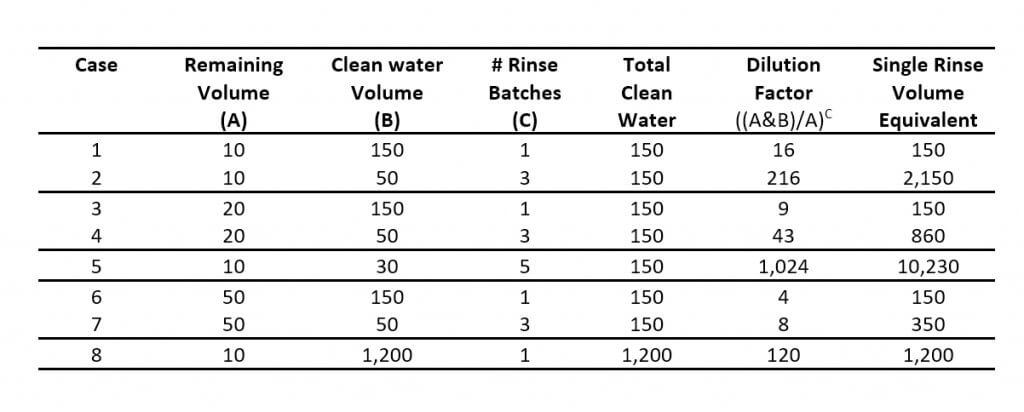
    When starting a new field after the sprayer is cleaned, we need to prime the boom. If it’s full of water, that water has to be purged and the question is always for how long and where to do this (pro tip at bottom of article).

    At the end of the day, we should ideally clean the sprayer. During that process, we may struggle with waste disposal, including large rinsate amounts, and course, the uncertainty of whether the job is actually done (since clean water looks exactly the same as contaminated water).

    If not cleaning the entire sprayer plumbing, we should at least rinse the boom, even if we’re returning to the same product the following day. It can prevent future problems.

    These tasks are complicated by the increasingly convoluted plumbing featured on modern sprayers. Ask someone to explain their sprayer’s plumbing system to you one day. It’s a long story! A bright spot is the well-engineered, compact, and accessible Agrifac system.

    Fortunately, virtually any sprayer can be modified to suit your needs. Let’s talk about a few ideas for a winter project:

    1. Boom flush. It’s good practice to flush clean water through your boom at the end of spraying even if the main tank remains full of product. Some sprayers have an air purge system to eliminate liquid from the plumbing and that is a great feature. A water flush should follow that purge so that any residual pesticide is diluted and removed before it can dry on and become hard to remove later.  First you’ll need a clean water tank on the sprayer (150 gal is enough). Second, plumb a feed so that this clean tank can be the sole source of the water supplied to the solution pump. Select this source, shut return lines down or off, and pump clean water through boom.  Sprayers that have an auto-rinse cycle will likely be able to draw clean water, but may not be able to push it to the boom, directing it to the wash-down nozzles instead. Check to see what’s possible, and make the changes you need.
    2. Clean water pump. Installing a second pump dedicated to the clean water tank has several advantages. We’ve talked about continuous rinsing before, here, and here, as a way to dilute the tank remainder faster. It requires installation of a second pump dedicated to clean water. Additionally, give this pump the option to deliver water to the boom, not just the wash-down nozzles. Now it can be used to rinse water through the boom. The main challenge is to obtain a pump capacity that can match the needs of the boom and/or the wash-down nozzles.
    3. Boom ends. We’ve mentioned this part of the boom many times. Boom ends must be flushed regularly to get rid of product and possibly debris that gets stuck there. A simple way to achieve this is to use the Express Nozzle Body End Caps from Hypro. These bleed air continuously, and also prevent accumulation of dead-end contamination. They do need to be flushed, and this can be done by pulling a plug or rotating the turret to an open (no nozzle ) position.
    1. Recirculating boom. This is a significant change, but worth considering. Conventional plumbed booms are separated into five to 13 sections. Each has two ends at which the spray stops and where air and contamination can accumulate (see point #3). Each section feed has a shutoff valve.  Once the spray mixture leaves the pump and bypass valve, it is committed to leaving the sprayer.  In a recirculating boom, the boom becomes a part of the tank and the liquid can return to the tank if desired. Spray is pressurized at one or both ends, and valve positions determine its flow. Sectional control is achieved with individual nozzle shutoff, air or electric.
      1. Three advantages:
        (a) the boom can be primed with new product without spraying. The surplus goes back to the tank.
        (b) the boom can be flushed with water without spraying while material is still in tank, and without spilling anything on the ground. Again, the surplus goes back to the tank.
        (c)  high resolution sectional control with individual nozzle shutoff is a byproduct of this design. Fast response, high res, saves money.
    2. Steel lines. Steel cleans easier than plastic, and this material makes a lot of sense for booms. But it also makes sense for the boom feeds, currently handled by black rubber hose.  This hose is a literal black box. We can’t see inside it, and we don’t know if and where potential contamination resides. It has considerable surface area. Consider replacing portions of your feed lines with steel. The boom is the obvious candidate. Aside from easier cleanout, it also helps with faster nozzle shutoff because it doesn’t expand with pressure.

    A word about dumping the tank on the ground. It’s a bad practice for many reasons. Let’s examine just one of those. When you spray a product at 10 gpa, you actually cover each square meter with about 10 mL, or 1/3 oz, of spray mix. When you flush your boom ends on the ground, you’re probably dropping 2 or 3 gallons in the same area. That’s 1000 times the label rate at each boom end, 10 to 26 times per boom. If you dump your tank remainder and all the hoses, say 20 or 30 gallons, that’s 10,000 times the label rate if it covers 1 sq meter. That’s leaching, runoff, residual potential, and not a good story.

    Many of the changes we outlined above help prevent that from being necessary.

    Pro Tip: To find out how much water your plumbing (from the pump to the boom ends) holds, do this: After cleaning with water and before spraying an EC formulation (white milky appearance in tank, some crop oils are ECs) reset your sprayed gallons on your rate controller. Start spraying and watch for the last nozzle on your furthest and longest section to spray white. Stop spraying and check your sprayed gallons. That’s your volume. No matter the size of nozzle or application volume, it stays constant. To be sure the boom is primed with a new mix, spray until those gallons are reached and you’re set.

  • Question of the Week: Fine Sprays for Fungicides?

    Question of the Week: Fine Sprays for Fungicides?

    The following question arrived from one of our prairie clients last week:

    “A retailer is promoting the use of hollow cone nozzles to be used on field sprayers (20” spacing) to apply fungicides which he claims out-perform any regular and twin fan tips. Claims:

    • create an extra fine droplet for maximum coverage on the canopy
    • use less water, less time spent filling
    • apply at 3.5 gpa
    • add vegetable oil to reduce drift

    “So his direction to a specific customer was to use the TEEJET CONEJET TXA8001VK nozzle at  80 psi – travelling at 10 – 12 mph to achieve a 3.4 gpa application rate with a ‘very fine’ droplet size.

    “What are your thoughts?”

    Here’s how I answered (edited for clarity):

    That recommendation sounds familiar – it originates from a consultant with experience in South America, where this idea is promoted to improve (aerial) spray productivity.

    I fundamentally disagree with his approach. Adopting and promoting it is not only illegal (contravenes every modern label’s water volume and spray quality requirements), it also puts a generation’s worth of stewardship efforts on drift management at risk.

    To be balanced, let’s explore the attractiveness of this approach. Finer sprays do provide superior coverage and save water. Every child knows this. Finer sprays also go places in the canopy where the coarser sprays can’t, for example very dense lentil canopies.

    Over the years, we’ve explored the performance of fine fungicide sprays in canola, pulses, and cereals in research trials with the U of S and AAFC. To our surprise, droplet size played only a small role in fungicide performance. Water volume was much more important. Droplet size management with pressure through a low-drift nozzle was enough to get the best disease control.

    The main drawbacks of very fine sprays are:

    1. The fine droplets evaporate to dryness very quickly, in seconds. As they shrink, their drift potential is increased even more, and once dry, the remaining particles work much less well. The proponent corrects for this by adding an oily adjuvant as an evaporation retardant. With oil, the fines remain liquid much longer. Although many products become more effective this way, they also become more phytotoxic and less safe for the applicator and bystander. Completely off label, completely risky for crop safety, unknown effects on MRLs, extremely unsafe for the environment and humans. Remember when people dissolved 2,4-D ester in diesel, back in the 40s and 50s and sprayed it with their brass 6501 tips? That’s what this is.
    2. Cone nozzles are designed for airblast sprayers and do not produce good pattern overlaps for boom sprayers. The proponent of this method actually recommends that the boom be raised to overcome the bad patterns and to (believe it or not) simulate aerial application. If this were done, the spray would be re-distributed by air-currents and come down wherever the wind blows it. Probably far away.  The concept of on-target, uniform application, the practice that makes product use acceptable, and the thing we try to achieve with flat fans at a low boom height, is completely lost.
    3. Producers will not have the support of pesticide manufacturers should a performance issue arise. Even worse, if regulators find out about this off-label practice, significant fines (fines for fines, get it?) can be charged under the Pest Control Products Act.
    4. Airborne spray drift with an air-induced spray like the AirMix, GuardianAir, AIXR and the like, applying 10 gpa, is about 1% of the applied amount, measured at 5 m downwind of the downwind edge of the swath in a 20 km/h wind. We’ve never measured hollow cone drift from a boom sprayer, but when we used a flat fan at 5 gpa, drift increased to about 8% of applied. I’d guess a high pressure hollow cone would easily double or triple that. Illegal and irresponsible.
    5. Travel and boom turbulence is a part of faster travel speeds. This would affect the finer droplets much more than the coarser ones, as we can imagine. It’s similar to drift. With a low-drift spray, the proportion of the total spray volume that is “fine”, say less than 150 microns, is about 5%. For a very fine hollow cone, it might by 50 to 75%. So a much greater proportion of the sprayed dosage would be susceptible to uncontrollable movement. This could be good, when turbulence redirects the spray to places that are unreachable by larger droplets. Or it could be bad, as turbulence pushes droplets away from an important target, creating a miss. On balance, bad. Very bad.

    These types of recommendations are concocted by people who want to tell a unique story that is popular with some. Their approach differentiates them from the rest of the crowd, an old and effective marketing trick. But these proponents do not have the best interests of the industry in mind.

    Our individual and collective agricultural practices must be respectful of others. Of safety. Of the law. Of the environment. We have lots of opportunities to make shortcuts…nobody’s watching most of the time. But that doesn’t make it right. It’s certainly not in ag’s long-term interest.

    When considering our agricultural practices, imagine describing them to a young non-farming person. Can you justify your actions? Do your practices make you proud? If not, you have work to do.

    Here’s a task: If your boom sprayer has nozzles that produce very fine sprays, take them off and throw them in the garbage. Might sound radical, but it’s the right thing to do.

  • Exploding Sprayer Myths (ep.8): Volume

    Exploding Sprayer Myths (ep.8): Volume

    In this episode of Exploding Sprayer Myths, we lay out four steps to determining the most appropriate spray volume required to achieve good coverage.

    1. Understand how the product works
    2. Understand the target
    3. Understand droplet behaviour
    4. Understand the plant canopy

    Joined by show-stealing Dr. Doug Baumann, and with the help of a lot of caffeine, we learn that there’s no silver bullet to choosing a spray volume.

    Special thanks to Syngenta, Honeywood, and to Real Agriculture.