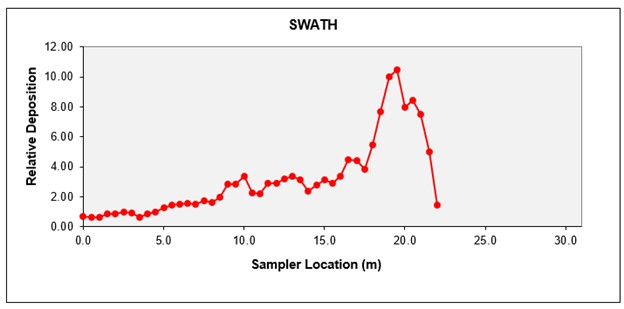
It can be challenging to illustrate how a drone deposits spray. We can take a cross-section of spray deposit (that is, the swath) using a continuous sampler, or a series of discrete samplers. This typically reveals a sharply-peaked curve that is symmetrical in a head- or tail-wind, or skewed if there is a cross-wind.
Spray coverage from a DJI T100 (4 m altitude, 30 L/ha, 16 m/s, 350 µm droplets) measured as percent area covered over a 30 m continuous sampler (Speed Track and Swath Gobbler – Application Insight LLC). Note: the prevailing wind was 8 km/h and generally from the right, skewing deposition to the left.
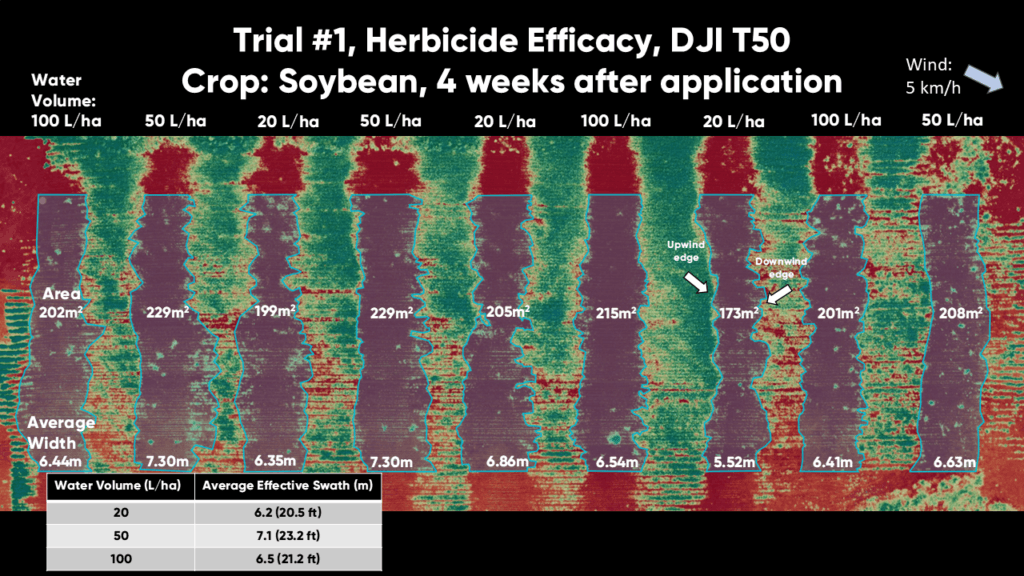
But this analysis only captures a slice of the swath at a single moment in time. Swath width and relative position along the flight path is inconsistent and highly variable. Some have shown this using herbicides and aerial photographs analyzed through a Normalized Difference Vegetation Index (NDVI). NDVI reveals the health and density of vegetation based on how they reflect different wavelengths.
A 50 m continuous swath visualization. This stitched graphic from work by K. Falk shows annotations for upwind/downwind edges and width measurements.
Design
We wanted to try something similar, but using dye instead of herbicide. Rhodamine WT is a synthetic fluorescent dye that absorbs green light and emits red light. It’s highly water-soluble and is the industry standard for environmental monitoring, including mapping groundwater flow, tracing pollution plumes and studying flow rates in rivers. We’ve used it in the past on Ontario’s snowy fields to show how boom height affects coverage uniformity with boom sprayers. Why not from a drone?
Spray coverage from a boom at an optimal height (left), too low (middle) and too high (right). From episode seven of our Exploding Sprayer Myths series.
The idea was to lay down swaths from a DJI T100 at different altitudes and speeds, and then take aerial photographs of the stained snow using a DJI Mavic 3 Multispectral drone. It would be visually impactful, and perhaps we could even quantify the deposition using photogrammetry and drone mapping software.
We flew a snowy field on Stefina Line, Blenheim, Ontario. It was 2°C and wind was gusting from 8-14 km/h. We mixed a 0.5% v/v solution of 0.5 L rhodamine WT in 900 L and flew a trial run (4 m altitude, 50 L/ha, 10 m/s, 500 µm droplets). But, as Robbie Burns said, “The best laid plans of mice and men [often go awry]. (If you’re not into late 18th century poetry, you’re forgiven.)
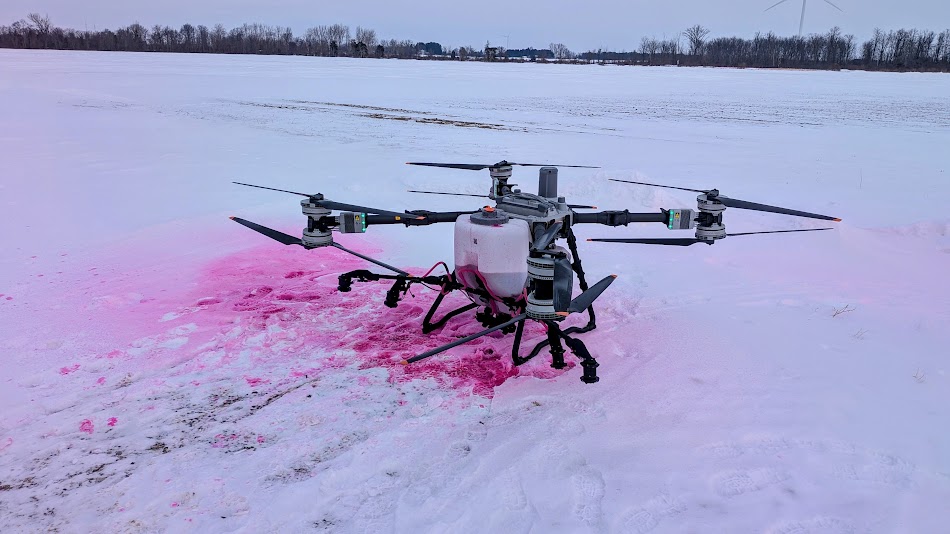
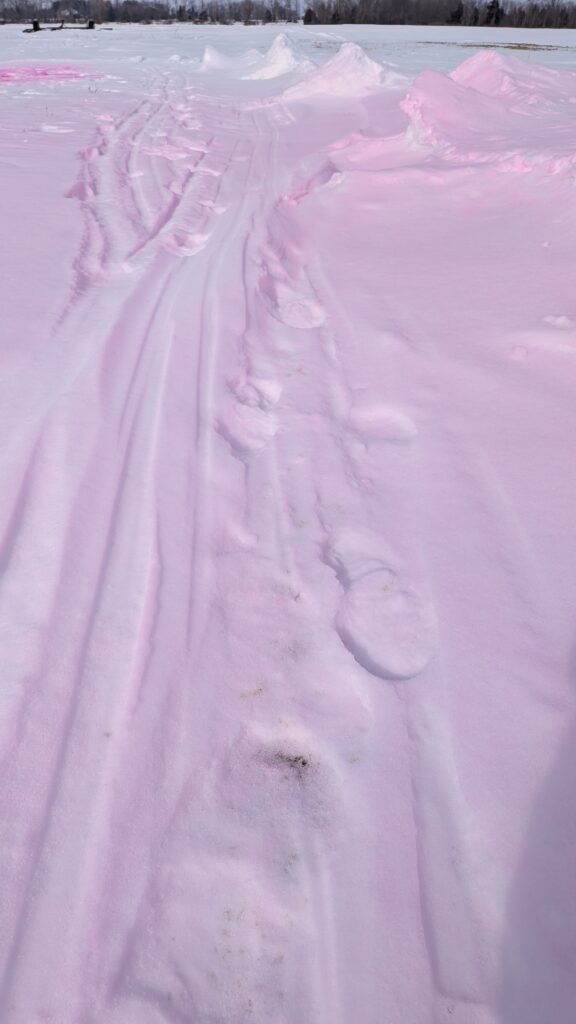
Rhodamine WT applied by drone did not result in high-contrast deposition. Hoping it was a function of concentration, we emptied the remaining rhodamine into the nurse tank, essentially doubling the concentration (we didn’t measure it), but to no avail.
Rhodamine WT applied by drone did not result in high-contrast deposition.
New Plan
We decided to pivot. We laid out a ~2.0 ha (5 ac) area and programmed the drone to fly a 10 m route spacing. Our hope was that the swaths would overlap for complete coverage, and perhaps we’d see a completely-stained rectangle. But, it seemed striated rather than solid, and the faint colouration made it difficult to see. This led us to shift to another location and spray another block, but this time we flew it four times in the hope that “multiple coats” would result in a brighter stain. We were already there, so why not?
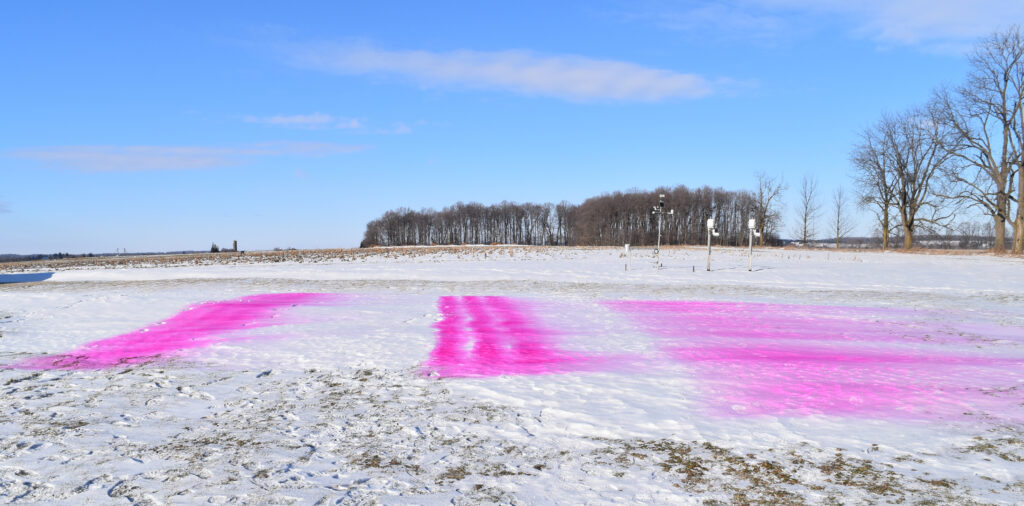
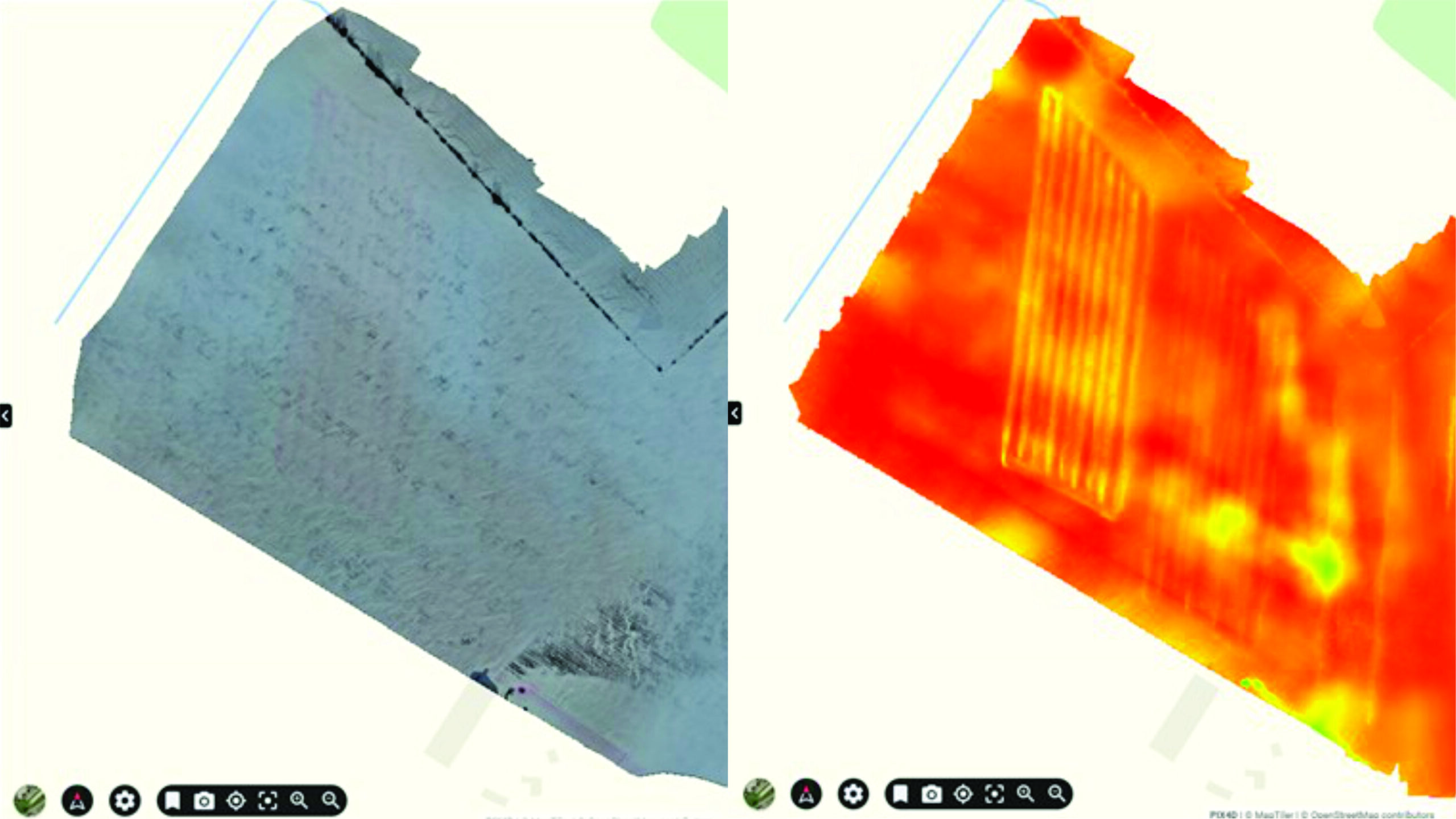
Feeling a bit underwhelmed, we slowly flew the Mavic M3M to capture aerial footage. In the following image you see the less-than-spectacular result in the visual spectrum (left). Then our operator had the bright idea to filter the spectrum to enhance the rhodamine, and suddenly we had something (right). By reducing the green light, the rhodamine glowed gold, and we could see the faint block (sprayed once) and the much more intense block (sprayed four times).
(Left half) Image from DJI Mavic M3M stitched together in Pix4D. Faint pink colouring can be discerned in the visual spectrum. (Right half) when green is reduced, the rhodamine glows gold on a red background. We begin to see the faint ~2.0 ha (5 ac) block sprayed with a single pass on the right, and the much brighter ~2.0 ha (5 ac) block sprayed 4x on the left.
Note that the block is not a uniform, gold rectangle. The deposition is concentrated along the flight paths and does not seem to overlap (or even reach) the spray from adjacent passes. While this might be a resolution issue, it implies the swath width was less than the route spacing.
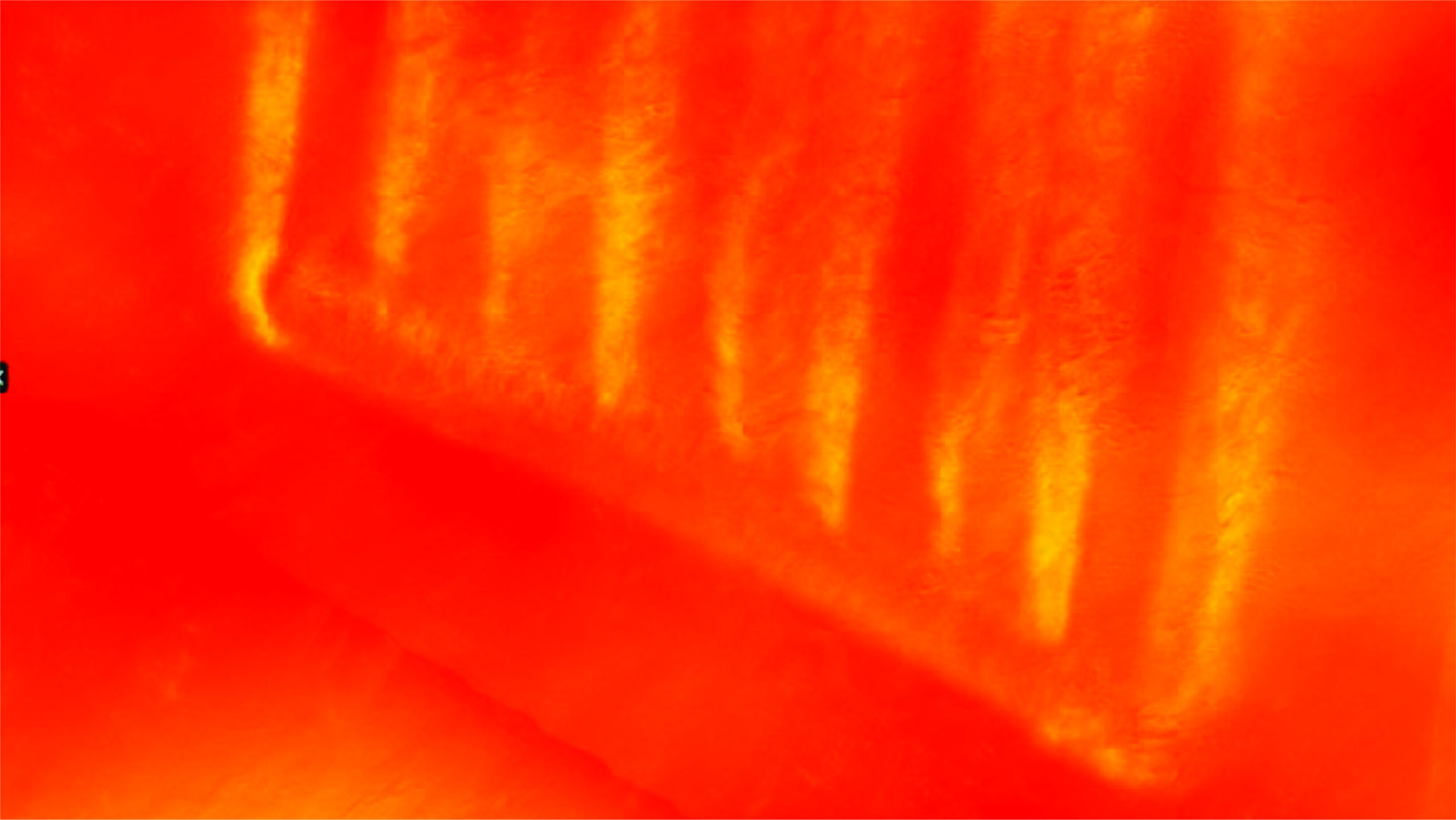
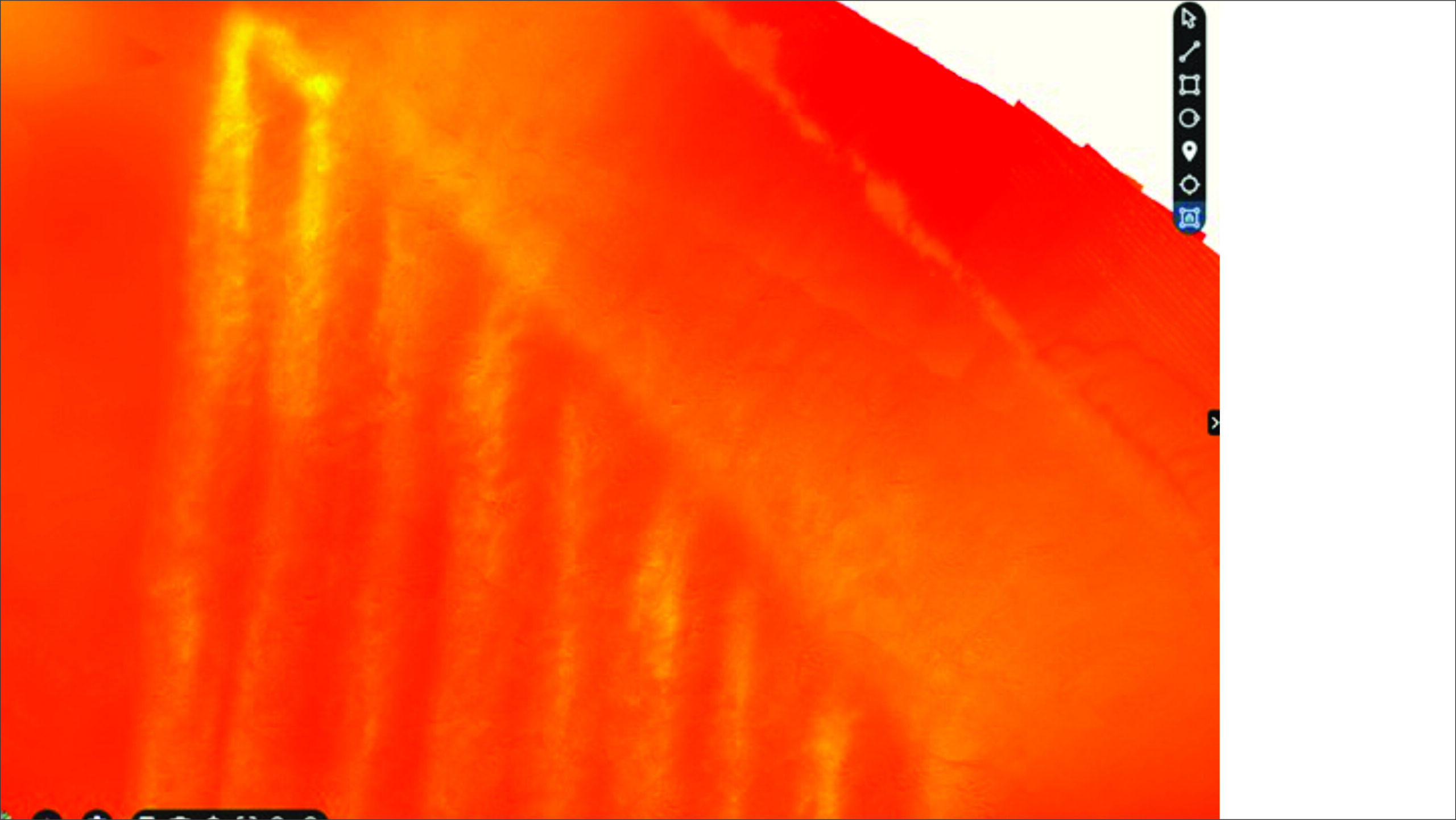
Then we zoomed-in on the downwind and upwind edges of the block that received multiple passes and noticed something. Given the variability of spray deposition, and the fact that we made four passes, we expected coverage would be blurred. Instead, there were clear, intense tapers where the drone was either accelerating or decelerating at the boundary (depending on the direction it was flying).
Close-up of the downwind edge of the ~2.0 ha (5 ac) area sprayed four times. Note the intensity and tapered profile of the swaths as they approach the boundary.Close-up of the upwind edge of the ~2.0 ha (5 ac) area sprayed four times. Note the intensity and tapered profile of the swaths as they approach the boundary.
We know from prior work with the T10, T30 and T50 that swath width and travel speed are directly related up to a certain speed (perhaps around 10 m/s, but this is yet to be determined). The practical implication was made clear in these images: there were significant gaps in coverage on two field margins. How long were the gaps? Did relative wind direction matter? Did this change with acceleration or deceleration? We went to the DJI flight record to find out.
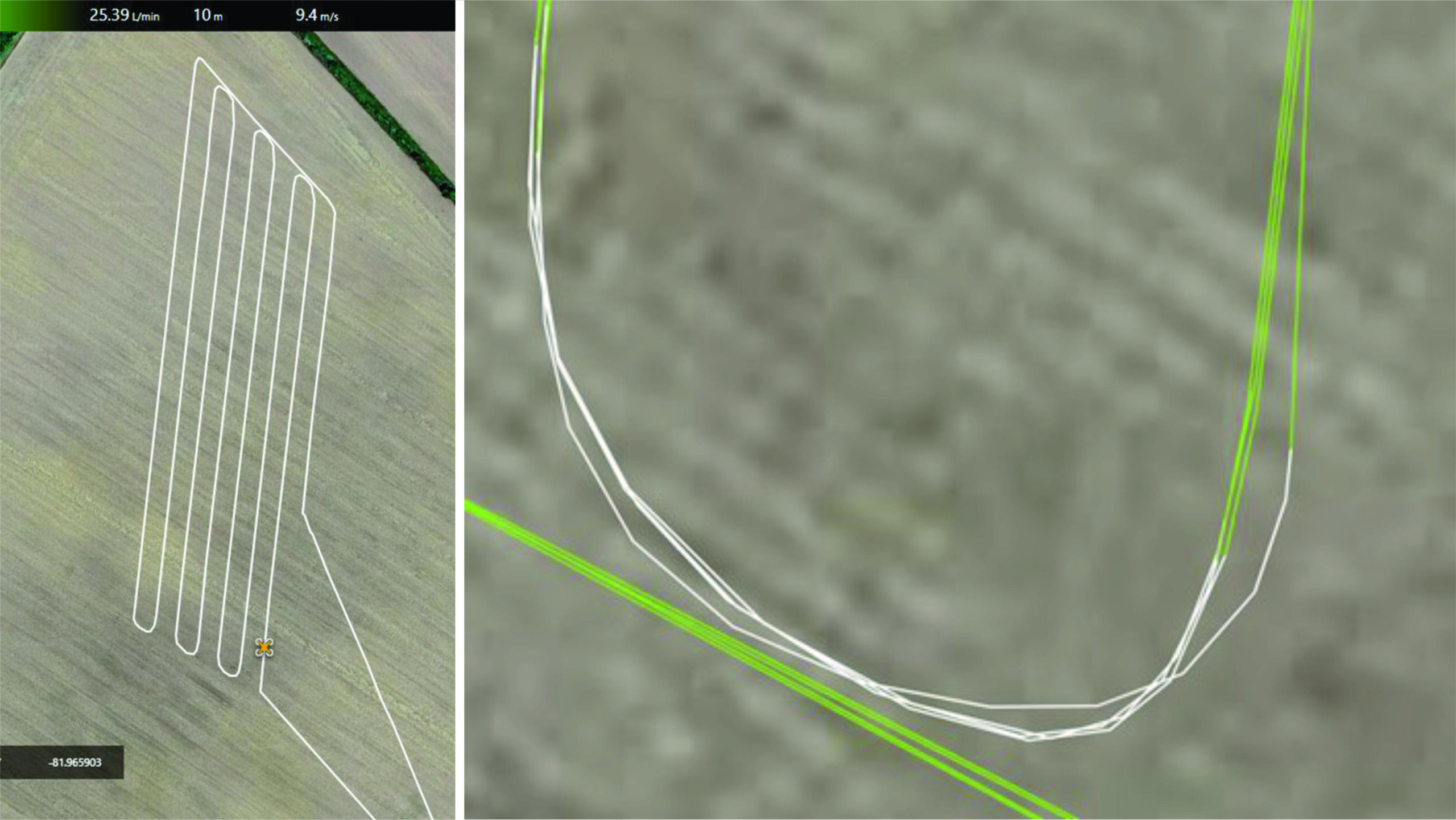
Using the playback feature, we could see the flow rate relative to the drone speed and geographical position (that is, latitude and longitude). Using a single pass, we established the point where the drone started or stopped spraying, and the point where the the target flow rate and speed were constant. Then, using the latitude and longitude, we calculated the intervening distance between coordinates.
Screen captures from the DJI flight recorder. (Left) The ~2.0 ha (5 ac) sprayed four times. You can see the drone icon displaying its position on the flight path, as well as the flow rate, altitude, speed and longitude (latitude was cropped out of the image). (Right) A close-up of one of the turns at the lower side of the sprayed block. All four passes are traced.
Analysis
We should note that we were able to spray just under 5 ac with a single tank, so the area that received four passes required multiple refills. This means the weight of the drone at any given location (and therefore the strength of the downwash) changed throughout the trial. We feel weight would affect acceleration and deceleration distances, but it wasn’t controlled in this study.
Most runs showed the acceleration distance was significantly greater than deceleration distance (Paired t-test: t = 2.54, p = 0.044).
Pass
Relative Velocity
Headwind Distance (m)
Tailwind Distance (m)
1
Acceleration
–
54.4
1
Deceleration
–
44.1
2
Acceleration
57.1
–
2
Deceleration
43.4
–
3
Acceleration
–
44.3
3
Deceleration
–
38.9
4
Acceleration
54.8
–
4
Deceleration
64.6
–
5
Acceleration
–
52.2
5
Deceleration
–
37.7
6
Acceleration
56.7
–
6
Deceleration
46.7
–
7
Acceleration
–
55.9
7
Deceleration
–
43.5
Headwind increased both acceleration and deceleration distances. There was a 7.5 m (16%) increase in a headwind, which was significant (r2 = 0.23). There was a stronger effect on deceleration, although not significantly.
WindDirection
Mean (m)
Std Dev (m)
Min(m)
Max (m)
Count
Headwind
53.9
7.7
43.4
64.6
6
Tailwind
46.4
7.0
37.7
55.9
8
Relative Velocity
Headwind Mean Distance (m)
Tailwind Mean Distance (m)
Acceleration
56.2
51.7
Deceleration
51.6
41.0
Conclusion
In a previous trial with the DJI T100 we noted the drone was not able to exceed 18.3 m/s over a 250 m treatment distance. It took roughly 200 m to get up to 18.3 m/s before the drone began to slow in anticipation of the end of the treatment block. At the time we assumed the drone would not be under- or over-applying because the pump flow rate compensated for a changing travel speed.
However, we had not considered the effect on swath width. Here, we see the T100 requires about 50 m to accelerate to / decelerate from 10 m/s. This distance is a function of wind direction, and to a lesser extent, whether the drone is accelerating or decelerating. During this time, the swath width is less than when at target flight speed, leaving (larger) gaps between passes.
This is a concern for broadacre applications where consistent, uniform coverage is required. Consider a fungicide that may no longer be effective at the extremes of the swath, or a systemic post-emerge herbicide where crops directly beneath the drone (especially horticultural crops or GMO’s with stressed metabolisms) could experience phytotoxic damage.
We have no practical work-around to suggest, but operators should be aware of the effect.
Thanks to Drone Spray Canada for in kind support and access to flight records, and thanks for Cesar Cappa, OMAFA horticulture weed specialist for his participation in the study and assistance with data analysis.
Remote Piloted Aerial Application Systems (RPAAS) or Unmanned Aircraft Spray Systems (UASS) are generally referred to as drones. They are an increasingly common tool for pesticide delivery in modern agriculture. They offer flexibility and access to difficult terrain, are capable of broadacre and patch applications, and facilitate air-assisted applications over perennial canopies. As with all application technologies, careful attention to fundamentals, safety, stewardship, and regulatory compliance remain the cornerstones of responsible use.
This document summarizes current best management practices for pesticide handling and application using drones. It is intended to support training and adoption for operators from a wide range of backgrounds. Given the rapid evolution of drone design and the changing regulatory landscape, key considerations are addressed without being overly prescriptive.
Categorization and the Canadian Legal Environment
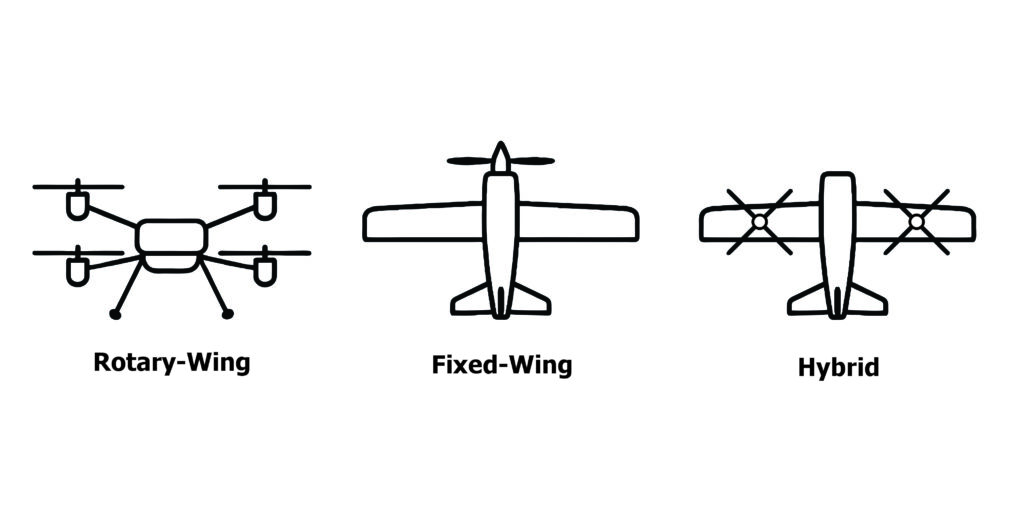
Drones can be divided into three design categories (Figure 1):
Rotary-Wing: Single or multi-rotor, these drones employ vertical take-off and landing (VTOL) and can hover during spraying. They have relatively short flight times and low volumetric capacity.
Fixed-Wing: Resembling crewed airplanes, these drones require a runway for take-off and landing. They have relatively long flight times, operate at higher speeds and have more volumetric capacity.
Hybrid: Encompassing a range of designs including, for example, parasail-wing and VTOL-wing, this design combines aspects of rotary drones with the speeds, flight times and volumes of fixed-wing designs.
Figure 1 – Common drone designs.
Drones are also categorized by weight, which is used to define their legal use:
Small Drones (250 g to 25 kg): Typically have tank sizes up to 12 liters and speeds less than 25 km/h (10 m/s).
Medium Drones (25 kg to 150 kg): Typically have tank sizes ranging from 12 to 70 liters and a maximum speed of 25 km/h (10 m/s).
Large Drones (>150 kg): Typically have tanks >70 liters and a maximum speed of 72 km/h (20 m/s).
Pesticide use is regulated by both federal and provincial governments to protect human health and the environment. Anyone applying pesticides must ensure they are registered for use in Canada and must comply with all applicable federal and provincial/territorial requirements. Provincial rules vary, and it is the responsibility of the drone operator to understand and follow the requirements in their jurisdiction.
Transport Canada: Certification
Drone pilots must follow Canadian Aviation Regulations (CARS) Part IX. Drones must be registered and marked, and the pilot must carry valid pilot’s certification.
Table 1 – Drone Operational Categories and Pilot Certificates
Basic
Advanced
Level 1 Complex3
Age minimum for certification1
14
16
18
Fly in visual line-of-sight
Y
Y
Y
Closer to or over people2
N
Y
Y
Small drones
Y
Y
Y
Medium drones
N
Y
Y
Large drones4
N
N
N
Controlled airspace (air traffic control permitted)
N
Y
Y
Sheltered operators (small drones only)
N
Y
Y
Extended visual line-of-sight
N
Y
Y
Beyond visual line-of-sight
N
N
Y
1In Canada, you must be at least 16 years old to apply pesticides. 2Flying at an advertised event is considered a special operation, requiring permission. 3Operating a drone over 150 kg in Canada is classified as a high-complexity, specialized operation requiring a Special Flight Operations Certificate (SFOC) from Transport Canada. 4Operations with large drones are medium-complexity special operations and require SFOC permission.
Health Canada: Pesticide Labels
Health Canada is responsible for approving the registration of pesticides across Canada. Pesticide labels are legal documents and set rules on how a pesticide can be used. They define application rates, equipment settings, mixing instructions, environmental precautions, personal protective equipment (PPE), restricted-entry intervals, and disposal instructions.
As pesticide labels are updated to reflect drone applications, it is recommended operators consult Health Canada’s Pesticides Regulatory Directorate (formerly known as the Pest Management Regulatory Agency) pesticide label search tool for the most recent version. The pesticide must be registered for use on the target crop and pest and be permitted for application by drone. Questions regarding product label interpretations and uses can be directed to the Pesticides Information Service at pesticides-info@hc-sc.gc.ca.
Mission Planning
Proper field mapping and mission planning leads to safe and successful flights. Map obstacles, no spray zones, buffer zones, sensitive area/crops, areas of human activity, terrain, etc. Be aware that these conditions may change if planning occurs too far in advance of the spray day. Always check for relevant Notice to Air Missions (NOTAM), ensure the airspace is not restricted, and be aware of any other aircraft operating in the area.
Staging Area
Ideally, the staging area should be identified and prepared prior to the spray day. Select and clear a location for filling, take-off and landing that is safe for the operator, crew and equipment.
The staging area should present clear lines of sight and support efficient operations.
Drones should never fly over, or too close to busy roads.
The staging area should be upwind of the target site to reduce operator exposure to drift.
Bystanders must be at a safe minimum distance, as defined by the nature of the operation.
The operator and crew must be a safe distance from the drone during take-off and landing. Flying over crew is prohibited.
When spraying large fields, moving to an alternate staging area can save unnecessary ferry time, increasing efficiency and reducing battery strain.
Identify and be prepared to use connecting points and perform a manual landing when needed.
Drone tendering systems vary in size, complexity, cost and capacity, depending on the nature of the operation. For example, licensed exterminators (that is, those paid to spray properties other than their own) may have additional needs beyond what is listed here.
Mixing
Drone tanks are small and lack agitation. Therefore, most tendering systems include a nurse tank for pre-blending and agitating batches of spray mix. This helps ensure that active ingredients dissolve and disperse fully, that suspension products stay mixed and that the target site receives a consistent mix.
Water quality determines pesticide effectiveness; hardness, bicarbonate, pH, and turbidity can antagonize or degrade products. Water quality testing allows operators to correct potential problems before spraying. Higher spray volumes (that is, liters per hectare or gallons per acre) enable proper mixing and have been shown to improve spray coverage.
The act of mixing (and filling) carries the highest risk of operator exposure and environmental contamination. PPE requirements must be observed, and operators should avoid distractions or hurried work. Mix only the amount required for the task; leftover pesticide mixes create disposal problems and safety risks.
Fill the nurse tank halfway with clean water. Backflow prevention (for example, a valve or air gap) protects the water source.
Measure and add the pesticide, following the mixing order on the label and allowing time for each tank mix partner to dissolve and disperse. Tank mixing must be permitted on the label of each tank mix partner. Mixing multiple products at high concentration greatly increases the possibility of physical and/or chemical antagonism. If compatibility is in question, contact the manufacturers for guidance and conduct a jar test well in advance of spraying.
Rinse jugs and measuring tools into the nurse tank.
Top up with water and maintain agitation throughout the operation.
Transfer the spray mix into the drone tank using the most closed system available.
Filling and Battery Management
Rotary-wing drones carry relatively small spray volumes, so refills and battery swaps occur frequently. Large models, for example, might have a 10-minute flight cycle, where the refilling and battery swap processes are simultaneous and comprise less than 2 minutes.
Filling
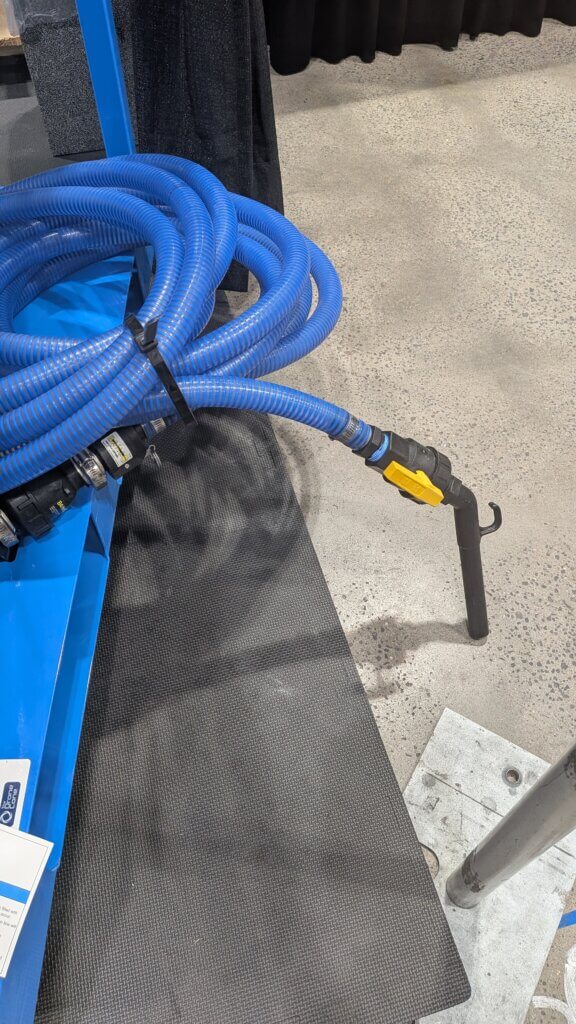
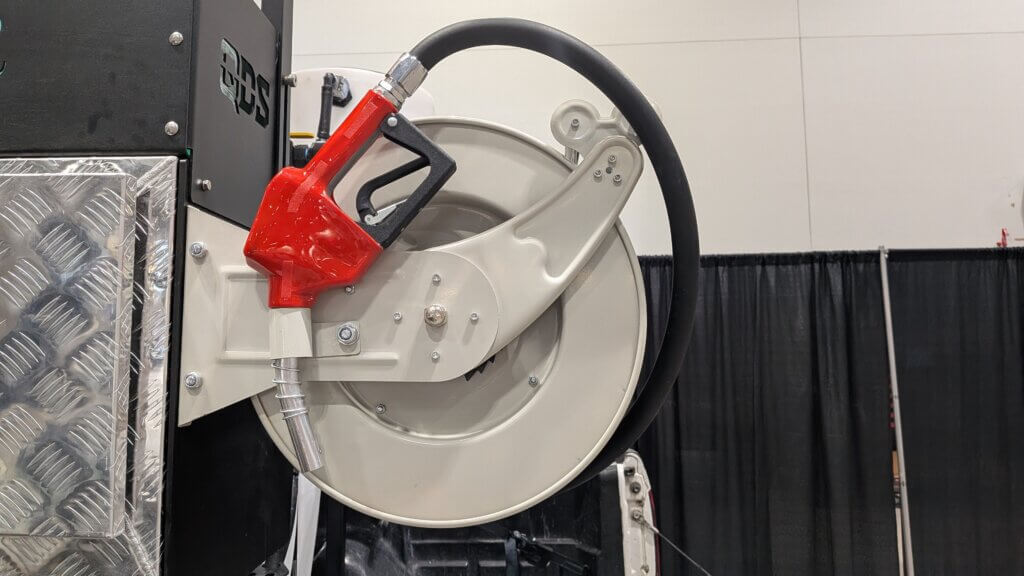
Haste and inattention increase the chance of spills, overflows and leaks during refilling. This represents unnecessary point source contamination and operator exposure and must be avoided. While drone refills currently involve quarter-turn-valved faucets, or gas-station-style automatic fuel nozzles, neither are ideal. Industry is developing alternatives. Ensure filling is performed with the most closed system available.
Batteries
Batteries, like the drone, carry spray residue and must be handled using PPE. Some battery chargers feature water baths, misters or air conditioning. If water-cooled, treat the water as pesticide‑contaminated and dispose of accordingly. Batteries charge more efficiently and last longer if charged in a cool, ventilated location. Charge according to the manufacturer’s instructions.
Operator Comfort
Drone operations are physically and mentally taxing. Attention to operator comfort improves safety and efficiency. Even seemingly minor accommodations have positive impacts:
Folding chairs combat operator fatigue.
RV awnings, umbrellas, foldable Bimini-style tops or flip-up doors provide shade.
Wear ear protection and consider lower-decibel equipment (for example, inverter gas generators are comparatively quiet, and electric pumps are even quieter).
Enclose or locate loud components far from the filling area to reduce noise and emission exposure.
Elevated Platforms and Flight Decks
Line-of-sight and Connectivity
While “beyond visual line-of-sight” operations are allowed under specific, authorized conditions, most current regulations require operators to maintain a visual line-of-sight with the drone. This supports swath alignment, obstacle avoidance, an ongoing assessment of drift risk, and general operational safety.
Operating from an elevated platform can help maintain visual line-of-sight and improve connectivity between the flight controller and the drone. Real-Time Kinematic (RTK) is a satellite positioning technique that enhances GPS/GNSS data to provide centimeter-level accuracy in real time. An RTK platform will improve connection reliability and drone accuracy. Satellite internet providers can supplement connectivity in regions with unreliable cellular coverage. Be aware that network latency varies with provider.
The safest approach is for the pilot to control the drone from an elevated platform while a loader performs refill and battery-swap procedures on the ground. However, if operating off a flight deck:
Long flight decks keep landings and lift-offs at a safer distance.
Decks with pull-out platforms or hydraulic wings can increase the operating area and can be adjusted to account for adjacent roads and the slope of the ground.
A security rail around the landing area can prevent a drone from slipping off; A falling drone is expensive, but falling or sliding into an operator is a disaster.
An enclosed operations area can improve operator safety and comfort.
Remember, the operator should be focused on the drone/controller when flying; Flight is not an opportunity for performing other tasks.
Cleaning
Proper cleaning prevents cross‑contamination, maintains equipment lifespan, and avoids crop injury from residues. Perform cleaning away from open water and ensure rinsate is disposed of responsibly. Follow the pesticide label and adhere to the manufacturer’s instructions on allowable cleaning methods. The following recommendations do not supersede either resource.
Triple‑Rinse Procedure
Multiple, small-volume rinses are more effective than a single, large-volume one. Follow the triple-rinse procedure:
Ensure the drone tank is as empty as possible.
Fill the drone tank 1/4 full of clean water and, with a partner, agitate by rocking the tank (if removable).
Flush the rinse water through the plumbing and nozzles.
Repeat the process twice more.
Employ a similar procedure to remove residues from the nurse tank plumbing systems. Important reminders when cleaning:
Use a cleaning agent in the second rinse if recommended by the label. Soaking may be required.
While the drone exterior should be rinsed, avoid pressure washing (to protect electronics) unless explicitly permitted by the manufacturer.
Cameras and Lidar will not function if they are covered in residue.
Commercial drone residue removers are available to assist in keeping the drone clean.
Wash or dispose of PPE according to label and local regulations.
Swath Width and the Operational Use Case
For now, consider swath width to be the total width of the area covered in a single pass. Swath width is a fundamental variable for mission planning, ensuring the pesticide is applied at the correct rate and (in the case of broadacre operations) as uniformly as possible. A drone’s swath width is highly variable and affected by several factors, collectively referred to as the “Operational Use Case”. These factors include:
Drone design (for example, atomizer type and location relative to the rotors)
Operational settings (for example, altitude and travel speed)
Meteorological conditions (for example, wind speed, wind direction, relative humidity)
Operational Settings
When configuring a rotary-wing drone for a mission, pilots select operational settings on the controller. The three settings that have the most influence on droplet behaviour, and consequently swath width, are droplet size, flight speed and altitude. A single change alters several other influencing factors, but the cumulative impact on swath width and drift potential is clear (Table 2).
Table 2 – Effect of rotary-wing drone operational settings on swath width and drift potential.
Variable
Change
Effect on Swath Width
Effect on Drift Potential
Droplet size
Coarser
Narrows
Reduces
Droplet size
Finer
Widens1
Increases
Flight speed
Faster
Widens2
Increases2
Flight speed
Slower
Narrows
Reduces3
Altitude
Higher
Widens1
Increases
Altitude
Lower
Narrows
Reduces3,4
1Coverage uniformity and overall number of deposits within the swath reduced due to downwind displacement and drift. 2Current evidence suggests that at high speeds (>10 m/s) there may be a plateau where there is little or no further change to swath width or drift. 3Lower speed and/or lower altitude will increase the influence of downwash on droplet behaviour. 4Low altitude may not permit sufficient overlap of the spray from each nozzle, creating gaps in coverage.
Meteorological Conditions
Spray released from a drone (or any aerial sprayer) is highly susceptible to environmental conditions. Drift potential increases when:
conditions are calm (inversion risk)
windspeed is too high (physical drift)
conditions are changeable (gusting and wind direction)
conditions are hot and relative humidity is low (droplet evaporation)
Operators must observe label recommendations, local laws, and use good judgment to minimize drift potential. Practical methods include:
increasing droplet size
increasing volume
adjusting passes (particularly along buffer zone) to account for swath offset
halting operations when conditions favour movement toward sensitive habitat / crop / residential areas.
Be aware that drift-reducing adjuvants have an unpredictable impact on the droplet size produced by current rotary atomizer designs. Until rotary atomizer design is standardized and tank mixes can be evaluated, do not assume adjuvants will work as intended.
Downwash
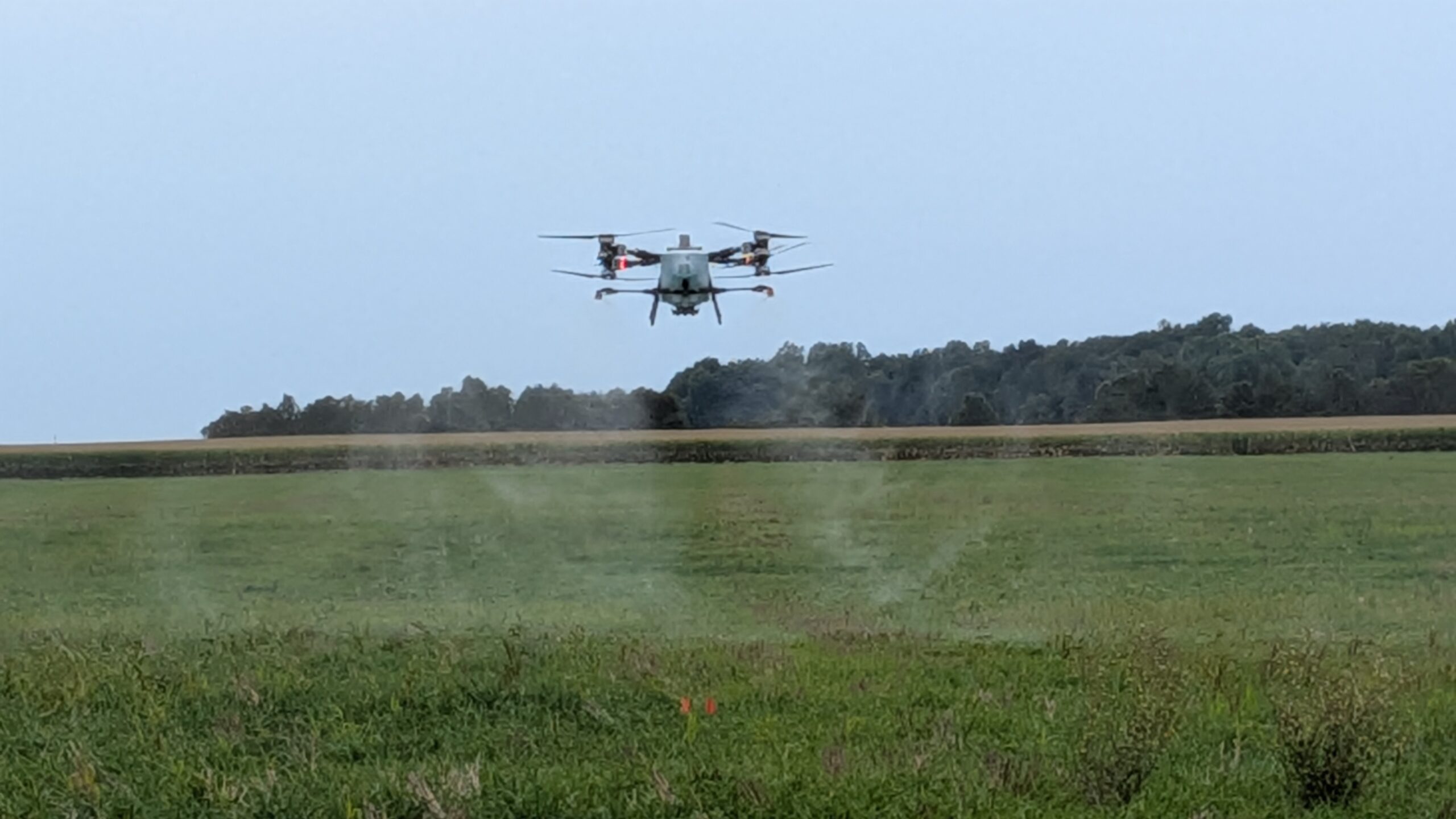
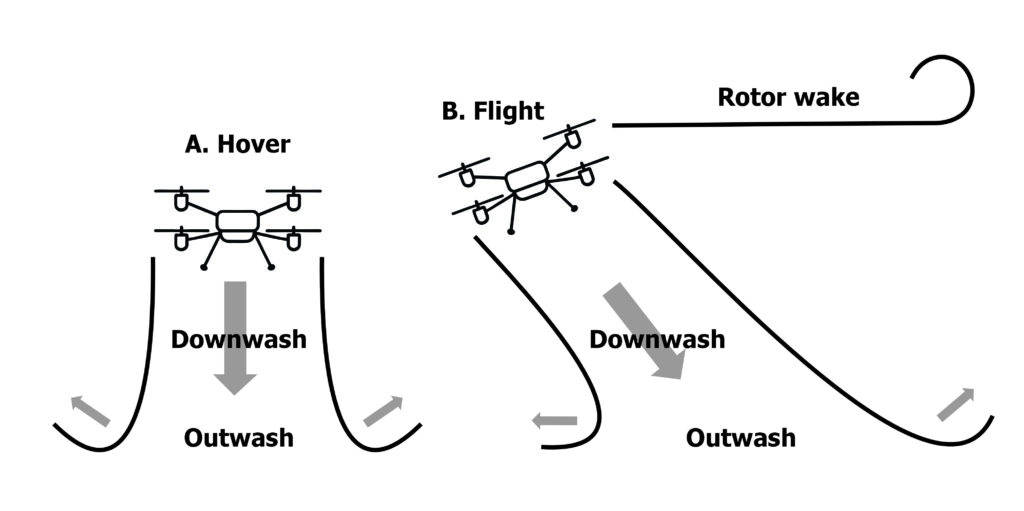
When a rotary-wing drone hovers, each rotor draws air from above and accelerates it downward in a high-velocity blast. The result is a vertical component referred to as the “downwash” and the turbulent splash of air that hits the ground and spreads laterally is the “outwash”. Droplets released beneath a drone at hover are almost completely entrained by the downwash. The majority get driven to the ground and then move laterally along the outwash, while a small portion (likely smaller droplets) recirculate back up through the rotors (see Figure 2a).
Most rotary-wing drones have fixed-pitch rotors, so the entire drone must tilt forward to enter low-speed flight. This causes the column of downwash to tilt backward. While the downwash is created by lift, “wake turbulence” is created at the tips of the rotors as high-pressure air beneath the rotor wraps around to the low-pressure area above. As the drone flies at low speed (~3 m/s) the wake can be visualized as a pair of counter-rotating, cylindrical vortices that trail behind. Spray is still mostly entrained by the downwash on a downward and rearward vector with deposition aligning closely to the flight path. However, a portion will get caught in the wake (see Figure 2b).
Figure 2 – A. Rotary-wing drone at hover creates a high-energy downwash directly below the drone. B. Rotary-wing drone at low-medium flight speed trails a lower-energy downwash and creates a rotor wake.
The effect of higher speed flight has not yet been fully characterized. However, there is evidence that the downwash will detach from the ground, directing the spray further back and with lower energy. This exposes droplets to deflection by wind and shifts a greater proportion of the spray into the rotor-tip vortices (that is, the wake). This makes higher speeds undesirable, as they result in increased drift and an unstable and unpredictable swath. There is evidence that at some point this relationship with speed may plateau, where there is no further change to swath width or drift.
Practical Impact
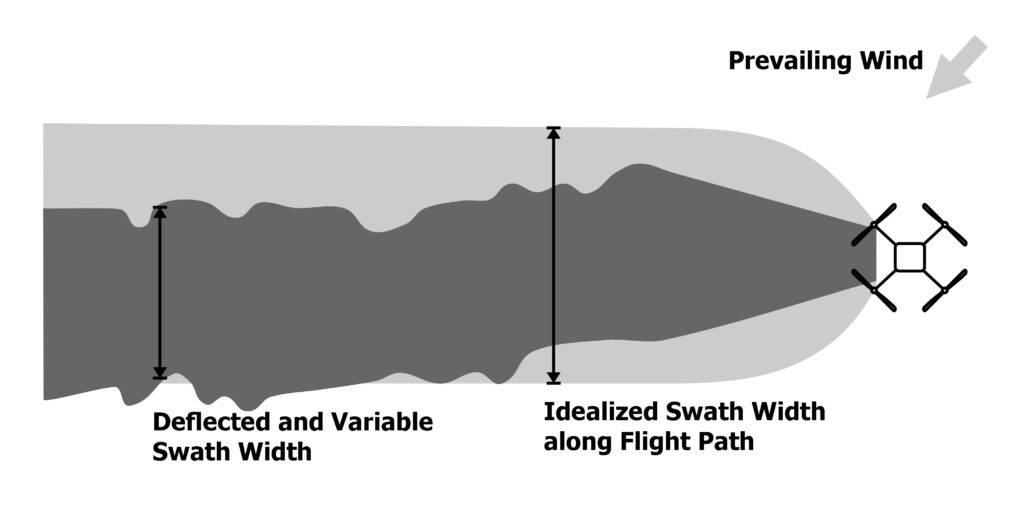
Operational settings, meteorological conditions and the downwash have a cumulative effect on droplet fate. Consider the following operational use case: A rotary-wing drone spraying back and forth over rolling topography will experience changing wind speed and relative direction. The drone will respond by changing drone pitch, rotor speed and pump flow to maintain the desired altitude, travel speed, and application rate. Meanwhile, the drone gets lighter as it sprays, thereby reducing the magnitude of the downwash. Ultimately, this results in a swath width that expands and contracts and may shift back-and-forth or be consistently offset along the flight path (Figure 3).
Figure 3 – Swath width and swath position along the flight path is variable.
Evaluating Swath Width
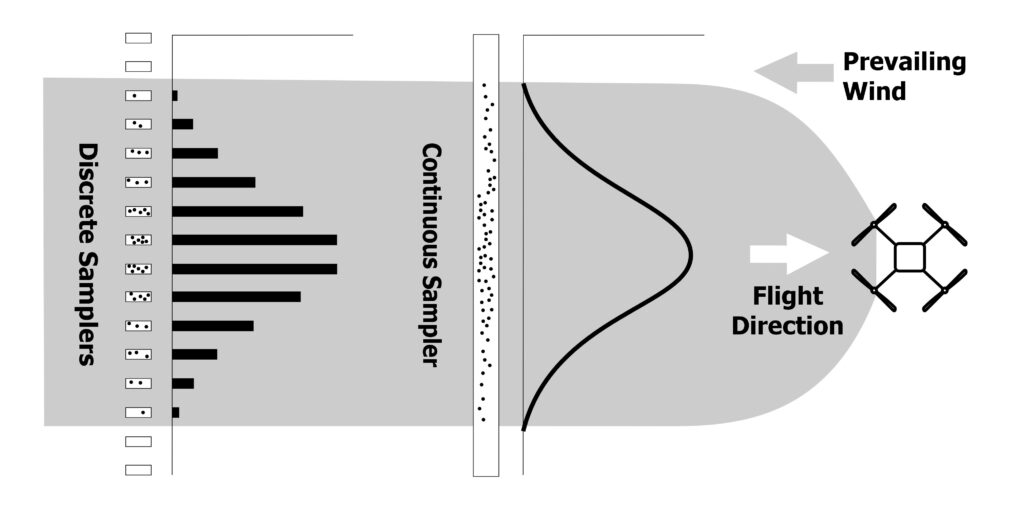
A drone’s swath width for a given operational use case must be determined through testing. The drone is first calibrated according to the manufacturer’s instructions. Swathing methods vary, but generally the drone is flown into the prevailing wind over a series of samplers (for example, discreet samplers like water sensitive paper or continuous samplers like string or bond paper). Multiple passes are required to capture the variability that occurs along the flight path (Figure 3).
A rotary-wing drone does not deposit droplets uniformly across its swath. There are fewer droplets at the extremes and more directly beneath the drone. This can be envisioned as a bell-shaped curve with a tight span and a high peak (Figure 4). This curve will skew with any lateral wind.
Figure 4- Methods for testing swath width.
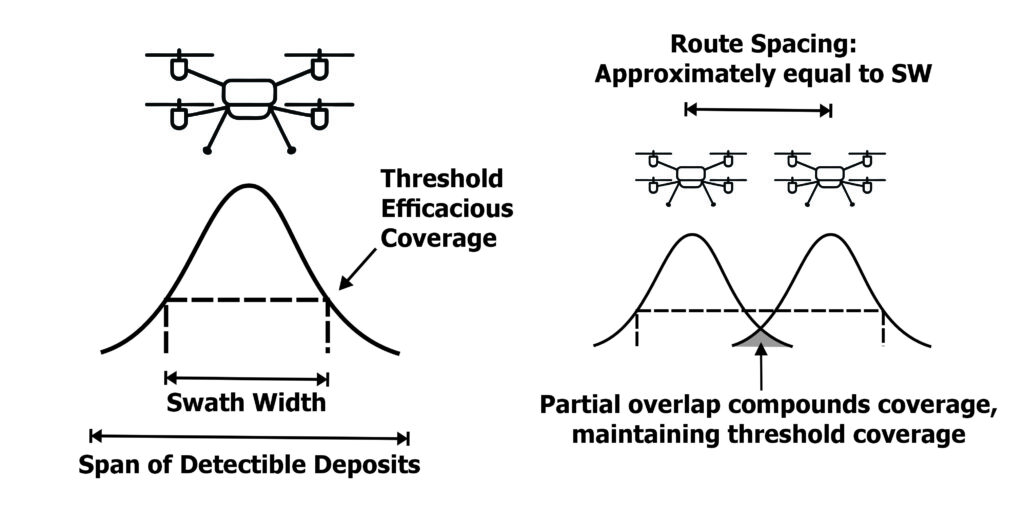
We must now refine the concept of swath width. Many drone manufacturers report the distance between the furthest detectable deposits as the swath width. However, variability within that span (specifically, the amount of active ingredient deposited, or the percent-area covered, and/or density of deposits) means the efficacy of the application can also be variable.
A more realistic and efficient estimate of swath width is one that presents the lowest variability (as indicated by the coefficient of variability, CV) while minimizing the degree of over- and under-dosing. This calculus requires an estimate of the coverage threshold that represents a minimum efficacious dose (that is, “how much is enough?”). Traditional aerial swath measurements estimate this as 90% of the maximum deposited. Online tools are available to help calculate the swath width from the span of detectible deposits.
This new definition of swath width matters during mission planning. The route spacing entered into the flight controller describes distance between passes over the target area, but this setting is independent of swath width. For instance, if the calculated swath width is 9 m, then entering a route spacing of 10 m will not change it. Therefore, if a uniform broadcast application is desired, the route spacing should match the swath width, which is often less than the span of detectible droplets (see Figure 5).
Figure 5 – Matching route spacing to swath width results in a more uniform, broadacre application. Curves and thresholds shown here are conceptual and not intended to be realistic.
Effective Swath Width and the Agronomic Use Case
The relatively sparse coverage at the extremes of the calculated swath width may or may not be sufficient to elicit the desired biological result. This can happen if the estimate of threshold efficacious coverage is incorrect, or some other factor affects deposition.
The Effective Swath Width (ESW) redefines the concept, relying on efficacy, and not a measure of deposition, as a means for determining swath width. The two approaches can result in similar distances, but quite often they are different. For example, in the case of most fungicide applications, the ESW (or the actual width of biological impact) is only a fraction of the SW (the estimated width calculated from deposition testing). The degree of deviation is influenced by the “Agronomic Use Case” which includes factors such as:
Minimum effective dose: This is a complex relationship between coverage, spray mix concentration and pesticide mode-of-action that results in an effective result while minimizing the environmental impact.
Target location (for example, a pest within a dense canopy or a weed on relatively bare ground)
Spray mix rheology (that is, the interaction of spray mix viscosity and atomizer design on droplet size)
Minimum Effective Dose
This is best explained by example. Consider a systemic herbicide and a contact fungicide.
A systemic herbicide mixed according to the label will kill weeds with less volume per hectare and less target coverage than is required for some fungicides and insecticides. Specifically, a systemic herbicide can still be effective at the extremes of the swath, where there is less coverage. The higher residues found in the middle of the swath are excessive, which may or may not be a liability. For example, certain crops directly beneath the drone (such as horticultural crops or GMO’s with stressed metabolisms) may experience phytotoxic damage. A contact fungicide requires relatively higher coverage and may not be effective at the extremes of the swath.
Therefore, two missions with identical operational use cases, but different agronomic use cases, can present the same swath width during testing, but have different effective swath widths.
Target Location
Spray coverage diminishes with canopy depth. The degree depends on crop morphology and planting architecture, as well as certain operational settings such as volume, droplet size and flight speed. Simply put, a plant canopy filters out spray droplets, and this occurs both vertically and laterally. This is not represented during typical swath measurements, which tend to take place on bare ground.
Spray Mix Rheology
Most conventional hydraulic nozzle designs adhere to an international standard. This allows the operator to determine the size of droplets produced for a given operating pressure and flow rate. Droplet size is a not only a critical factor in mitigating drift and improving spray coverage, but it is often a defined pesticide label requirement.
Currently, most rotary-wing drones employ rotary atomizers. This atomizer design is not standardized, and as a result, the droplet size selected on the controller will not necessarily produce the desired results. Studies have shown that changes in tank mix partners, concentrations, the inclusion of adjuvants, the flow rate and the atomizer design can produce droplets far larger or far smaller than intended.
Further, some atomizers are prone to “flooding” when the flow rate exceeds the atomizer’s capacity, and this produces a volume of larger, less-effective droplets.
Until rotary atomizers are standardized (or there is a return to conventional nozzles), operators can only select the desired size and infer the results based on in-flight behaviour and observing the size of the stains left on samplers during swath width testing.
Practical Impact
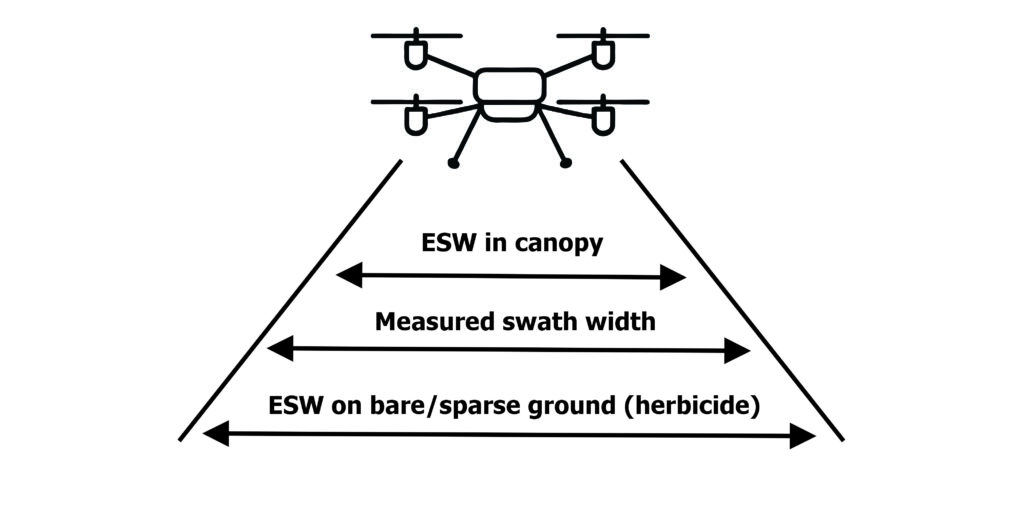
Taken collectively, research has shown a 20 to 30% reduction in ESW for corn, wheat and soybean fungicide applications compared to swaths measured on open ground. Conversely, herbicides sprayed on bare earth or sparse vegetation can produce an efficacious response 20% wider than the measured swath width (see Figure 6).
The impact of agronomic use case on ESW must be considered during mission planning, as this may warrant further adjustments to route spacing.
Figure 6 – Measured swath width versus effective swath width for different agronomic use cases.
Acceleration and Deceleration
Swath width produced by a rotary-wing drone varies with flight speed, up to an estimated (but not yet confirmed) limit of approximately 10 m/s. As a result, swath width increases as the drone accelerates at the start of a pass and decreases as it decelerates toward the end.
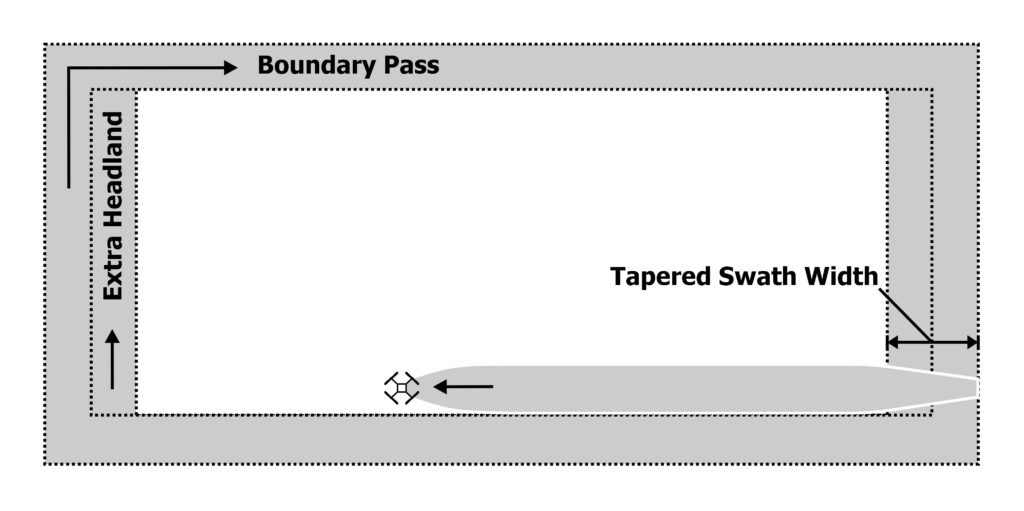
Unlike crewed aircraft—which reach and maintain target speed before spraying—current software limitations prevent drones from separating flight and treatment zones. Consequently, swath width is inconsistent over approximately the first and last 50 m of each spray pass. To maintain uniform coverage, additional headland passes may be required at the beginning and end of each flight pass (see Figure 7).
Figure 7 – Swath width changes due to acceleration and deceleration.
Recordkeeping
Detailed recordkeeping will help operators better understand how operational and agronomic use cases affect the outcome of a spray mission. Quality records also help mitigate against any allegations of misapplication, such as a drift complaint. The following items should be recorded, but the list is not exhaustive:
Product name(s), rate(s) and water volume.
Sprayer operational settings (altitude, speed, route spacing, droplet size to supplement a digital record of the mission)
Swath measurements
Weather conditions
Note of buffers and sensitive areas
Crew names and roles
Unusual events or corrections
Results (return to site to assess efficacy)
Conclusion
Drone technology is advancing rapidly, and best management practices will continue to evolve with new research and more experience. However, the principles in this document—proper preparation, careful mixing, responsible application, diligent maintenance, environmental awareness and swath testing—apply regardless of model or agronomic use case.
Operators must ensure they are properly licensed and comply with all applicable federal and provincial requirements, including those related to the sale, use, transportation, storage and disposal of pesticides. With thoughtful planning, practice and recordkeeping, drones can be a safe and effective means of crop protection.
Thanks to Dr. Steve Li (Auburn University, College of Agriculture) and Dr. Michael Reinke (Michigan State University Extension) for their review of, and contribution to, this article.
Best Management Practices for Safe and Effective Application of Pesticides Using Unmanned Aerial Spray Systems (UASS). Unmanned Aerial Pesticide Application System Task Force, Sep. 2024.
Most operators assume drone swath widths are wide, stable, and predictable. That confidence generally comes from three places:
Manufacturer specs, often broad, vague and dependent on working conditions, not to mention each drone model is different, and even two drones of the same model behave differently.
Single point calibrations (water sensitive paper, Swath Gobbler, etc.) that are useful and display a 1-dimensional point-in-time snapshot of the swath.
“Looks good from the ground.” Watching a plume from below often makes it feel wider than it is.
But drones move through space and time; spray patterns evolve as they fly. What you think is happening in the two seconds you glance up is not what’s happening over a 50 metre pass. The following video shows a multi-drone comparison where three drones apply 20, 50 and 100 L/ha.
Why Single Point Methods Fall Short
This isn’t a criticism. Water sensitive paper (WSP) cards and tools like Swath Gobbler™ are valuable. But they are 1-D snapshots of a 2-D, time-evolving problem. WSP captures a moment, not a pattern. Swath Gobbler™ helps visualize centre mass but can’t show edge dynamics or how edges wander along the pass.
Real deposition and uniformity depend on:
Flight parameters (altitude, speed, droplet size)
Ground or crop size and shape
Path stability and lane keeping of the aircraft
Continuous micro corrections the aircraft makes
Gusts, even in “light” wind
Onboard wind compensation behaviour
We noticed an observation from the field: gusts → aircraft corrections → amplified drift. If a left-side gust pushes the aircraft, the autopilot often dips into the wind to hold course. The nozzles are mounted to the airframe, so that slight tilt can direct spray downwind, in the same direction the gust is pushing, amplifying drift rather than cancelling it.
Hidden Message: Many operators are doing their homework. At SDEUC 2026, I was impressed by how many pilots were calibrating and said they “knew” their drone’s pattern. My data suggests your drone may be subtly lying to you – its pattern shifts as it moves through air over distance.
What Happens Over 50 m: The Swath You Weren’t Expecting
The setup matters, because without context, a lot of people will assume the pattern you’re about to see is an artifact. It’s not. It’s the result of a controlled, repeatable field experiment designed specifically to expose real-world swath behaviour.
During August–September 2024, we conducted clopyralid herbicide application trials in soybean, a crop that is extremely sensitive to clopyralid. Even a trace amount causes clear visual symptoms four weeks after application, which makes soybean a perfect bio indicator of spray deposition. (I jokingly call this sensitivity the “touch of death” because it reveals every detail.)
We used a DJI T50 to apply Lontrel™ XC (clopyralid) at the highest labeled rate (300 g ae/ha) across three water volumes (20, 50, 100 L/ha) over 100 m long field plots. From each pass, a continuous 50 metre analysis zone was extracted to see how the swath behaved over distance (Table 1).
Category
Details
Crop
Crop Soybean (highly sensitive to clopyralid, ideal for visualizing deposition)
Herbicide
Lontrel™ XC (clopyralid) @ 300 g ae/ha (highest labeled rate)
Equipment
DJI Agras T50 with rotary atomizers
Spray Altitude
3 m above canopy
Water Volumes
20 L/ha, 50 L/ha, 100 L/ha
Droplet Size
300 µm (rotary atomizer setting)
Flight Speeds Achieved
~7.0 m/s (20 L/ha), ~6.9 m/s (50 L/ha), ~4.2 m/s (100 L/ha)
Plot Dimensions
10 m wide × up to 110 m long (location dependent)
Analysis Window
Central 50 m (avoids acceleration/deceleration effects)
Wind
~5 km/h (cross wind)
Data Extraction
DroneDeploy orthomosaic → continuous 2 D swath visualization
Table 1 Key application parameters for the 50 m Swath Visualization trials
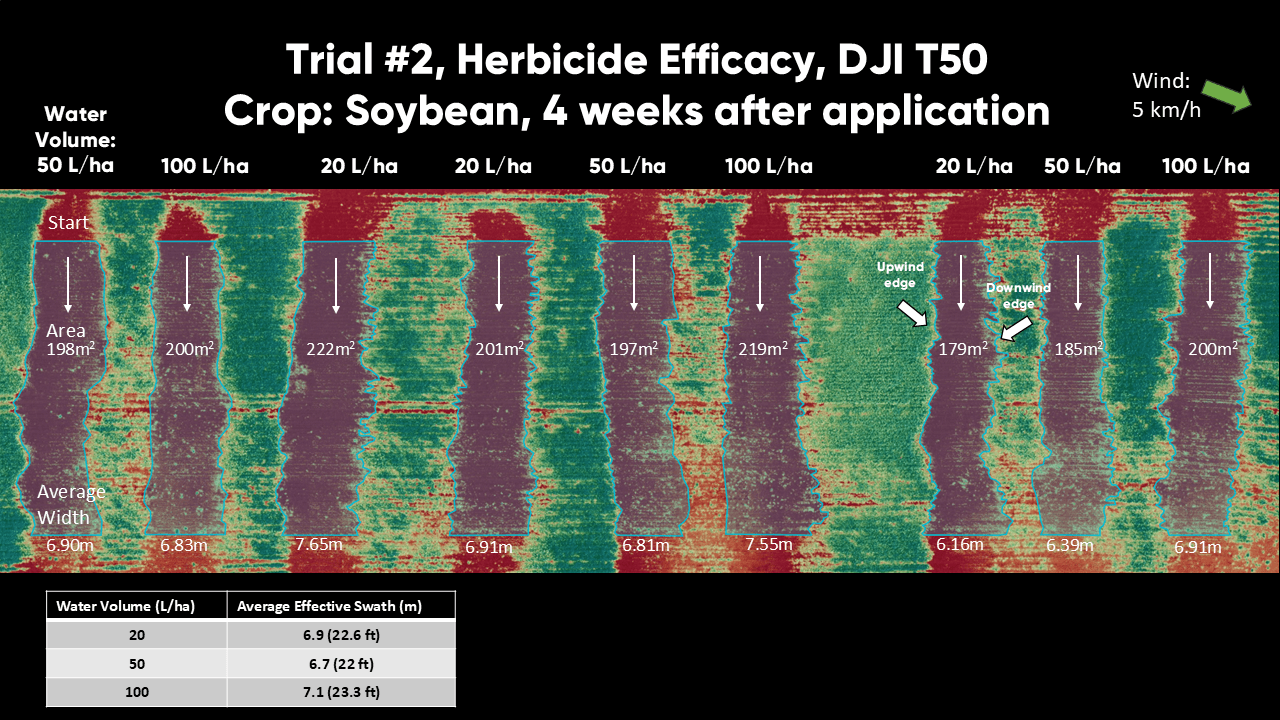
Now, here’s what the swath actually looked like over 50 m (Figures 1 and 2):
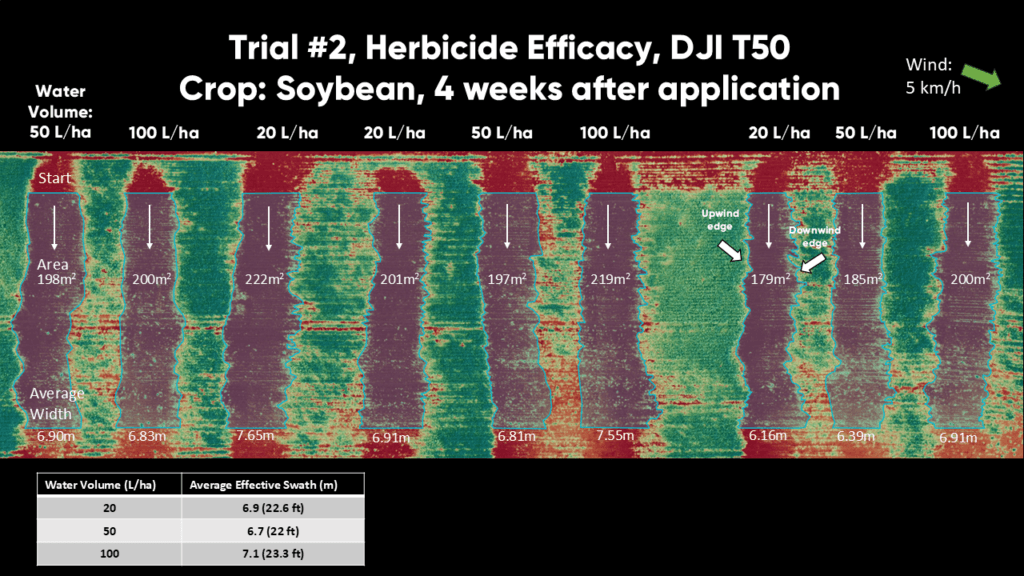
Figure 1 – 50 m continuous swath visualization, Trial 1. This stitched graphic shows annotations for upwind/downwind edges and width measurements.Figure 2 – 50 m continuous swath visualization, Trial 2. This stitched graphic shows annotations for upwind/downwind edges and width measurements.
What becomes immediately obvious is that this is not the clean, geometric ribbon many expect. Here’s what the 50 m swath showed:
Despite all the drone consistently flying north to south in a straight line, the path of efficacy isn’t consistently straight, appearing to subtly be affected by the wind.
Within the path, the edges are also not straight, the upwind edge can often appear jagged. Each “tooth” could correspond to a micro correction the drone makes to hold course. The downwind edge adds a frayed or tattered look, not as clean of a boundary, likely caused by drifting spray.
The width changes along the pass. Some sections widen, while others pinch inward. It would be unlikely to see these 2-D effects with 1-D sampling such as WSP cards.
The plume tail wanders. The airborne portion of the spray oscillates left and right in response to gusts and minor stability corrections.
The pattern is asymmetric. Left ≠ right. Upwind ≠ downwind. A drone swath is not a mirror image, and each pass is different.
The bottom line: A drone’s real swath is not a clean bar of colour, it’s an irregular coastline. And once you visualize it in 2-D over 50 m, the story becomes clear: swaths are dynamic, variable, dependent on conditions, and often narrower than manufacturer recommendations.
Why I Think It Looks Like This
It’s not that drones are bad sprayers; it’s that their reality is dynamic. 2-D imagery simply reveals what single point tools cannot:
Drones are constantly making tiny left/right/forward/back corrections to counter act the forces (mostly wind) acting on them.
The wind and the resulting corrections of the aircraft slightly change where the spray actually travels.
The downwash column shifts with the aircraft’s posture.
Even light wind (< 5 km/h) is enough to expose these shifts.
The Wandering Swath and Jagged Edge Problem: Swaths Don’t Fit Together Like Shark Teeth
This is where mis-set swath widths come back to bite. When you slide one measured swath against its neighbour, the non-linear path and jagged edges don’t interlock. Some spots show metres of overlap; others flirt with gaps. The following video shows us sliding a measured 2-D swath polygon until it just touches the neighbouring swath. Note how irregular edges force uneven overlap and occasional near misses.
Operationally, if you rely on the widest advertised swath—or on a single clean snapshot—two things happen:
Misses (especially with herbicides): escapes, patchy control.
Dose non uniformity: some areas get 0x, others 2x.
Sure, the average across 160 acres may equal the target rate, but field level uniformity is not icing-smooth.
Practical Recommendations You Can Use Tomorrow
These are observational, conservative, and based on what the 2-D data actually shows:
1. Calibrate, test in your conditions, over distance
Run a long test strip and evaluate coverage continuously (not just a few cards). Evaluate in many wind conditions, to best understand your swath variance given the situation.
2. Tighten your swaths beyond what’s stated in the brochure
Depending on the application and product, plan for more overlap than the manufacturer’s suggested swath width. Adjust from there with your own measurements.
3. Different jobs, different risk tolerance
Herbicides: misses are costly → tightest spacing.
Fungicides: somewhat more forgiving but still benefit from stability and overlap.
4. Faster (7 m/s) with lower water volume displayed more variable swath
Higher water volumes direct in a large amount of water being pushed down within the downwash resulting in less drift and more consistency. This coupled with slower flight = fewer corrections = a straighter, more consistent swath.
At ~5 m/s, droplets fall mostly into the downwash beneath the drone, deposition is close to the flight line.
At ~9 m/s, the airframe tilts forward to hold speed. The nozzles are slightly tilted back and the spray is deflected backward, it trails the drone like Superman’s cape.
Downwash is no longer straight down.
Coupled with the flight speed, the downwash is no longer pushing the spray into the canopy.
Deposition lands farther behind the drone.
Small gusts now matter more.
A backward angled plume has more side profile for crosswind to grab. The following speed comparison (same drone, two speeds) illustrates this effect:
5. Respect “light” wind
The imagery shows meaningful edge change and drift even in 5 km/h. Even the ‘gusts’ in light wind move the swath. In relatively calm days continue to watch variability, plan overlap, and validate.
Conclusion – Know the Swath You Actually Have
Drone spraying is promising and can be very effective and is getting better fast. Fit the setting with the task. If there is less room for error (herbicide), tighten those swaths to prevent misses caused by the wandering swath. Swaths are often misunderstood when we only look at single points.
When you test over distance and see the 2-D pattern:
Coverage becomes more reliable
Reduces misses
Efficacy gets consistent
Confidence rises
The first step to improving application is knowing the real shape of your swath. Tighten spacing, higher water volumes, slow down when you can, validate in your own conditions, and keep learning as the technology evolves. Spray drone technology is rapidly evolving, and many of today’s limitations will be addressed with innovation.
We conducted a series of drone deposition studies with three main objectives:
We wanted to:
Measure the swath width of a T50 drone at two flight speeds;
Document the nature of the downwash along the swath width;
Compare different techniques for measuring and analyzing swath widths.
The four swath width measurement methods were:
Horizontal bond paper (H-BP)
Horizontal water-sensitive paper (H-WSP)
Retreat-facing water-sensitive paper (R-WSP)
Three-dimensionally arranged water-sensitive paper (3D-WSP)
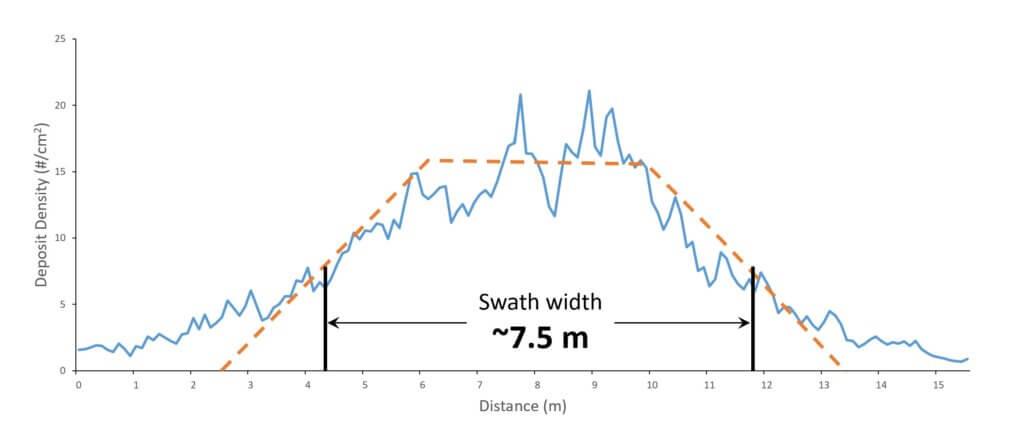
Assuming a trapezoidal-shaped spray swath, the Effective Swath Width (ESW) can be roughly defined as the span between two points that represent 1/2 of the average maximum deposit density. The idea is to create a cumulative pattern that is as uniform as possible when adjacent flights are added (Figure 1).
As with any application system, if we assume that the target rate provides acceptable control, any deviation from the intended target rate along the pattern is either over-dosing (waste), or under-dosing (reduced control). It is therefore imperative that the distributed dose, as received by the intended target, be as uniform as possible.
Figure 1. A spray pattern from DJI Agras T50, as depicted by horizontally oriented bond paper and scanned by Swath Gobbler™. In this case, the effective swath width is estimated from 1/2 the maximum deposit density, spanning approximately 7.5 m.
Materials and Methods
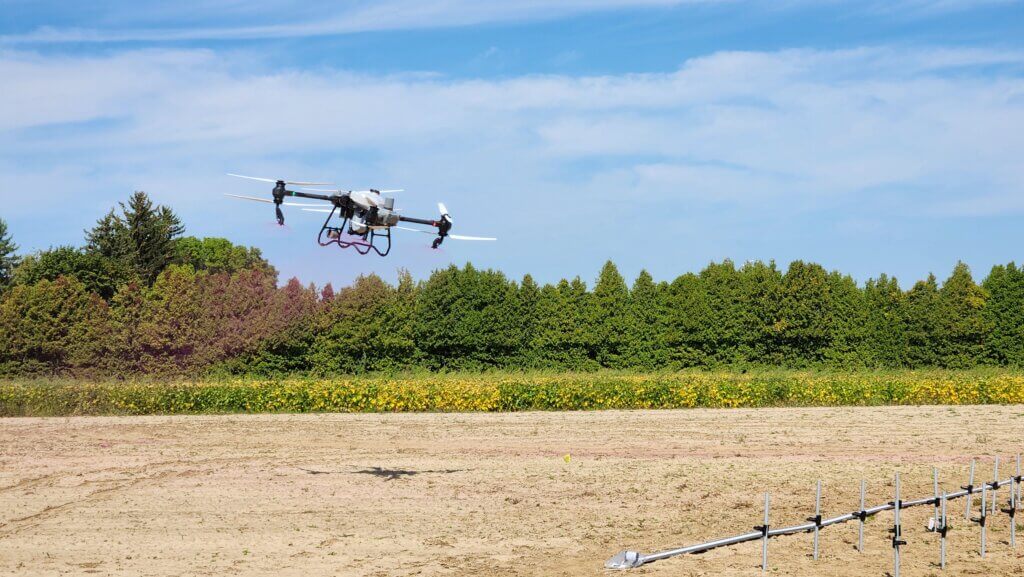
The study was conducted at Ontario’s Simcoe Research Station on September 17, 2024. The site was a flat, sand/loam field with no vegetation present (Figure 2).
Figure 2. Ground conditions at site.
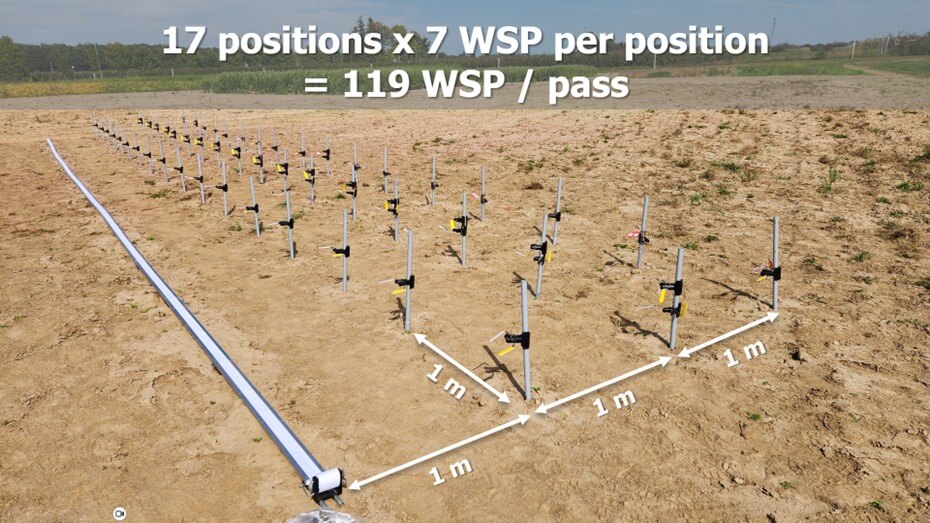
A sampling array was established perpendicular to the forecast prevailing wind direction (150º). The sampling array had 17 discrete sampling locations (0 m to 16 m at 1 m intervals).
Two collector methods were used simultaneously, centered on and perpendicular to the flight path:
A flat, horizontal, continuous bond paper strip measuring 7.5 cm wide and 16 m long (secured in a Speed Track™ and analyzed using a Swath Gobbler™, Application Insight, Lansing MI).
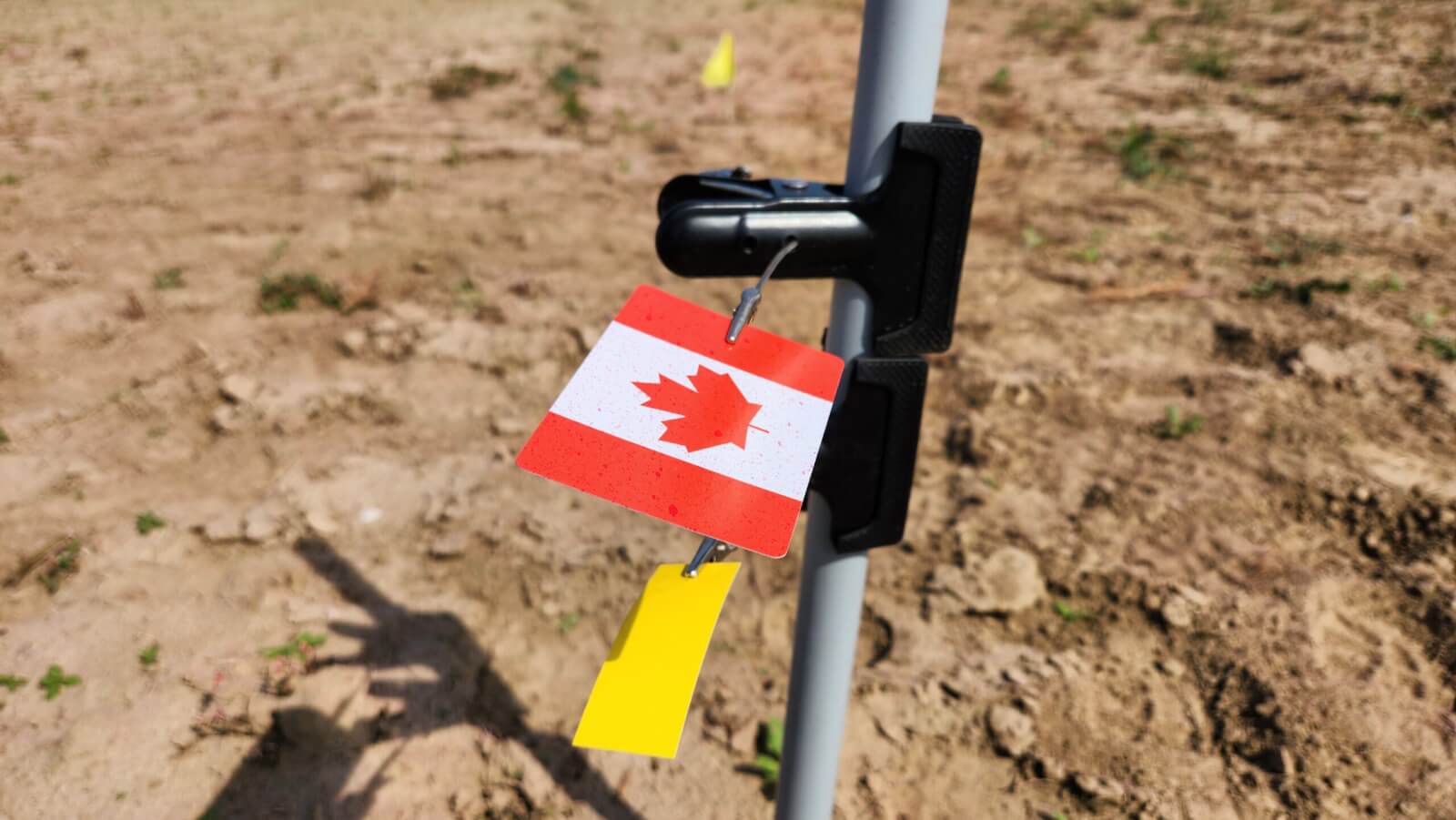
Discrete water-sensitive paper (WSP) collectors facing in three directions (x, y, z), each clamped back to back. WSP measured 26 x 76 mm (Spraying Systems, Glendale Heights, IL) and were analyzed using a DropScope™ (SprayX, São Carlos, Brazil).
Sampling height was 30 cm above ground to simulate a fungicide application into a soybean crop. To avoid crowding collectors on each sampler, three parallel sampler rows were established, separated by a 1 m spacing (Figure 3).
Figure 3. Sampling array and collectors.
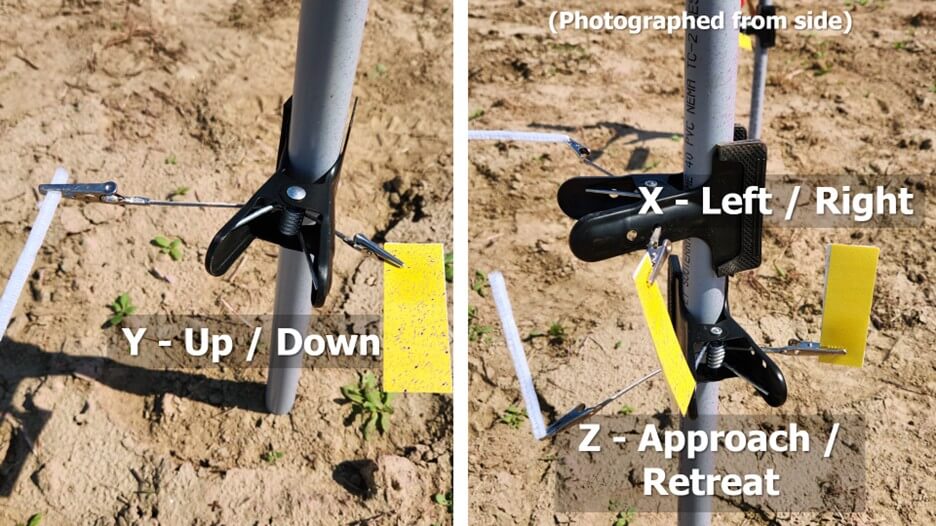
The first row contained the WSP oriented in the Y direction (WSP facing upward and downward. The second row contained the WSP in the X direction (WSP facing left and right relative to flight direction), as well as Z direction (WSP facing sprayer approach and retreat (Figure 4).
Figure 4. Examples of discrete sampler design and collector orientation.
Drone settings
A DJI T50 drone fitted with four rotary atomizers was used to make the spray applications. The flight controller settings were a 250 µm droplet diameter spray over a 7 m swath width, at an altitude of 3 m above ground. Flight speed was either 4 m/s or 8 m/s. Application volume was 30 L/ha. Each flight speed was replicated three times. A total of six passes were made in this trial.
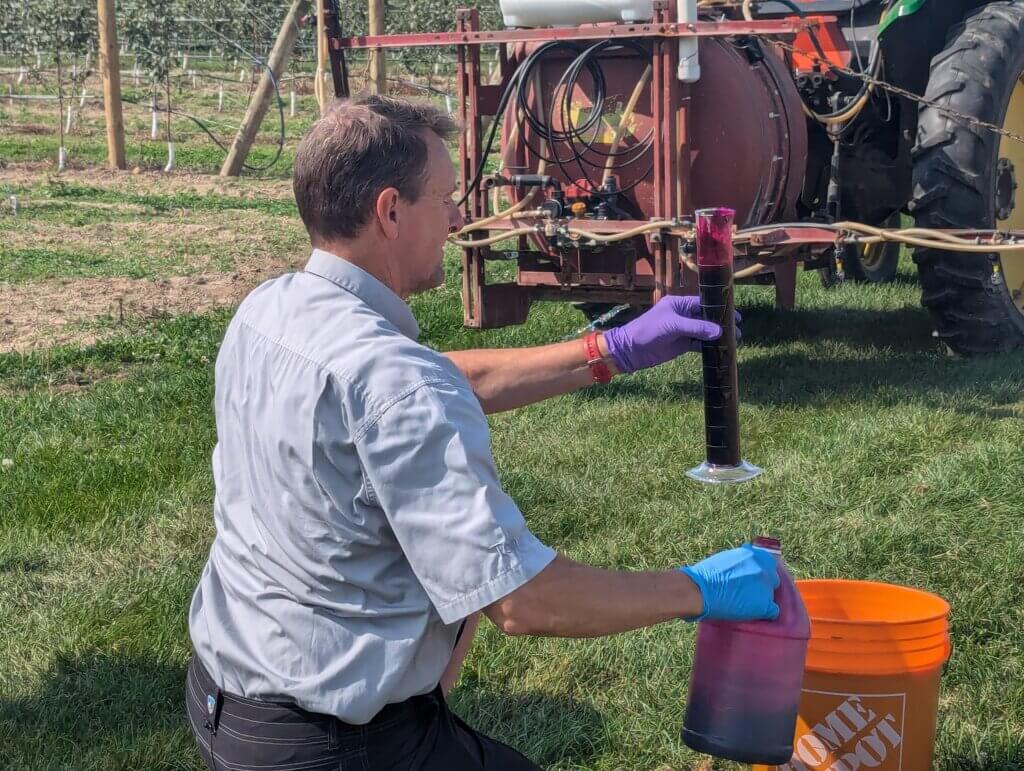
The drone tank (capacity 40 L) contained tap water water with 0.2% v/v of Rhodamine WT 20% liquid (Hoskin Scientific, Burnaby, BC), prepared in a single batch (Figure 5). The level of liquid in the RPAS tank was maintained between 20 L and 30 L throughout the trial to minimize the effect of a changing payload. A volume of spray liquid was sampled prior to each pass to serve as standards for fluorometric analysis.
Figure 5. Preparing the dye solution.
Trial procedure
Collectors were placed in samplers and the drone was positioned ~75 m downwind of the array to allow it to reach the target flight speed. When wind conditions were deemed appropriate, a signal was given to initiate the flight. Upon pass completion, one minute was allowed to elapse before sampler collection to permit complete deposition and drying.
Labelled WSP were retrieved and placed loosely in paper bags to prevent any residual moisture from ruining the collectors. Bond paper from the Swath Gobbler™ was marked with treatment information and reeled onto individual spools (one per treatment).
Weather conditions
Both wind speed and direction varied slightly during the study, but it was always possible to run a trial with negligible sidewinds so that the sample array captured the majority of the spray swath. Air temperature was approximately 25 °C. Wind speed was ranged from 6 to 14 km/h during the trial. All spray passes were into a headwind with maximum deviations of -10 to +30°.
Collector analysis
Bond paper digitization
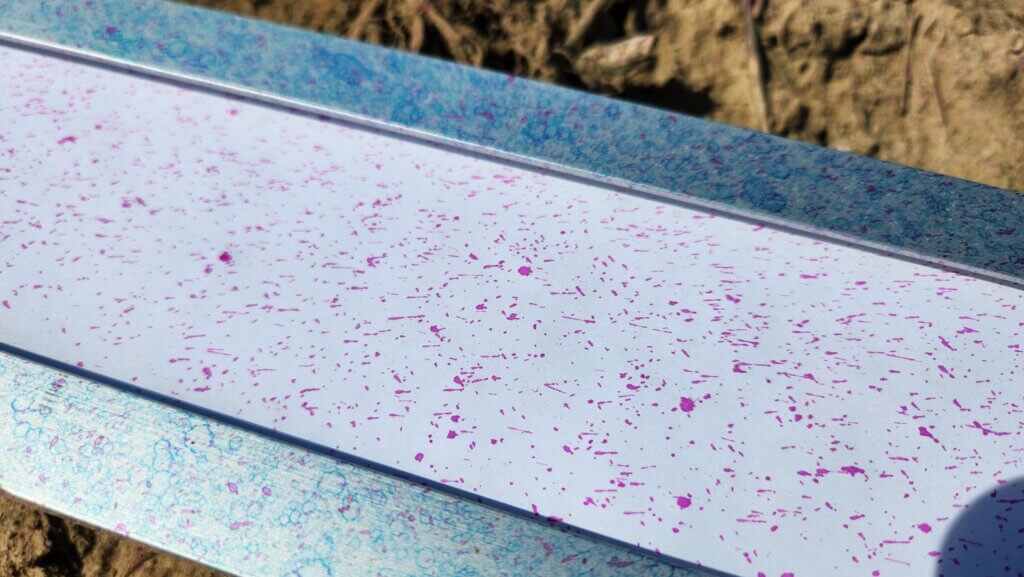
Bond papers (Figure 6) were scanned using a Swath Gobbler™. The software measured both deposit density and percent coverage at each scanned location, but only deposit density was used in the analysis.
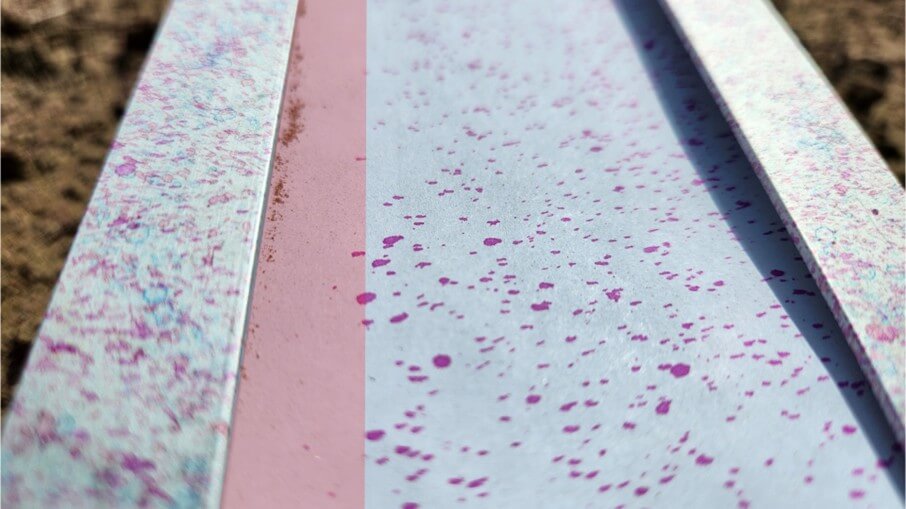
Figure 6. Bond paper secured in a Speed Track™ and sprayed with a Rhodamine WT solution.
WSP digitzation
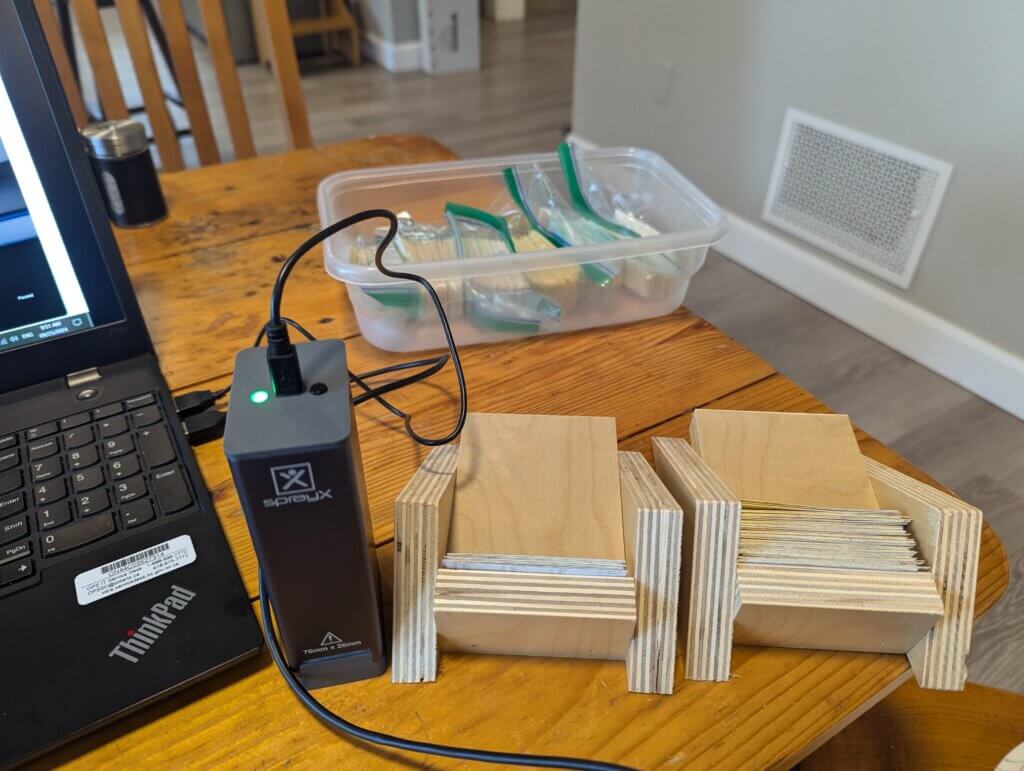
WSP were removed from paper bags, sorted and sequenced into reps. WSP were scanned using a Drop Scope™ set to “Ground sprayer” and “Syngenta WSP” (Figure 7). The software reported deposit density and percent area coverage, but only deposit density was used in the analysis.
Figure 7. In-box, Out-box procedure for scanning WSP using a Drop Scope™.
Effective swath width calculation
We used our Excel-based model which assumes a racetrack pattern and sums deposits from adjacent swaths. Swath width was adjusted to minimize over- and under-dosing as well as deposit coefficient of variation (CV), while maximizing swath width.
For the WSP collectors, each of the six orientations were first evaluated separately, and then averaged to simulate a three-dimensional plant structure. Given the similar orientations, the upward-facing WSP and bond paper were used as quality-checks.
Visualizing coverage in three dimensions
In order to understand the direction the spray cloud moved as it imacted the collector array, we declared a dominant side to each of the three cardinal directions, x, y, and z that we captured using the WSP.
X-axis: Looking in the direction of travel, WSP deposits facing right were subtracted from those facing left.
Y-axis: WSP facing up minus papers facing down.
Z-axis: WSP facing the RPAS retreat minus papers facing the advance.
This allowed us to estimate the vectors with which the spray was deposited.
Results and Discussion
Deposits on WSP
We first looked at WSP data to better understand the direction that the droplets flew at the time of impact.
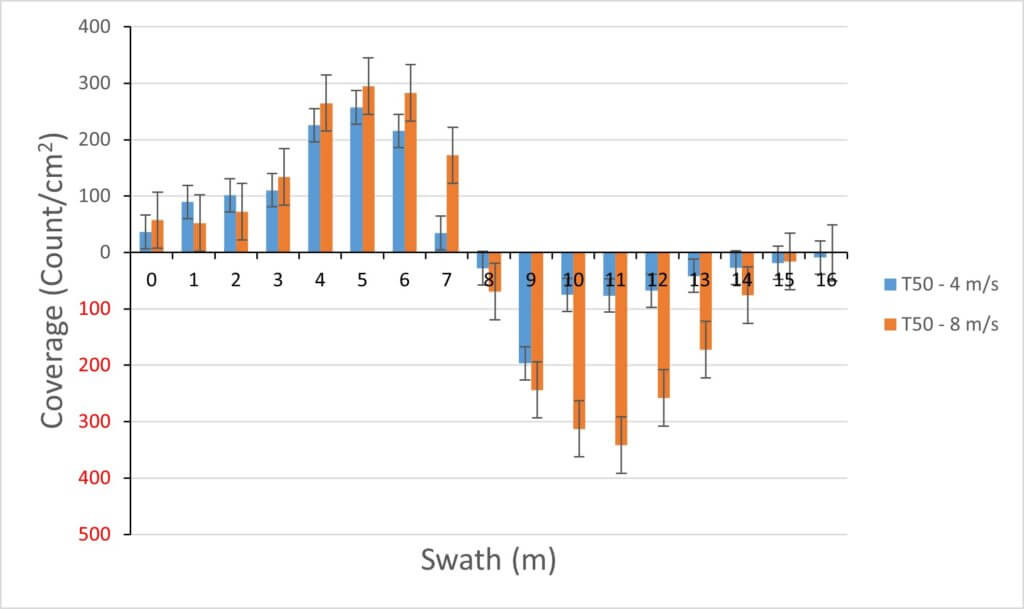
X-axis: Note that the right-facing cards are depicted as being positive, whereas the left-facing cards are depicted as negative.
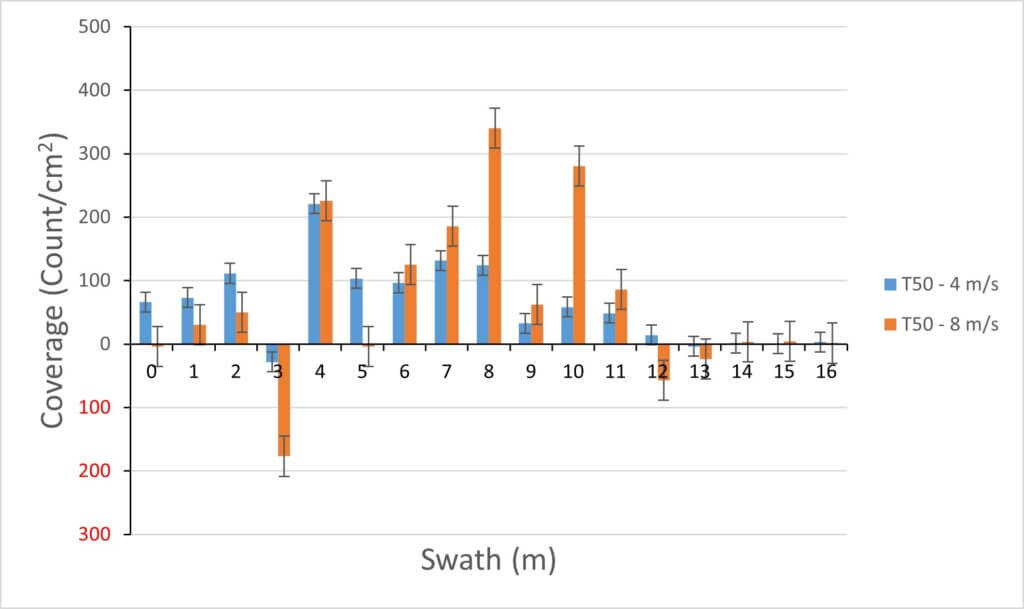
Only those WSP facing the drone received deposit, with the deposit amount being larger for the faster flight speed (Figure 8). This implies that the spray moved out to either side from the centre of the flight path, carried by a laterally moving downwash.
Figure 8. Coverage on the X-axis, with WSP faces oriented perpendicular to flight path. Note that the drone passed between the 7 and 8 metre marks.
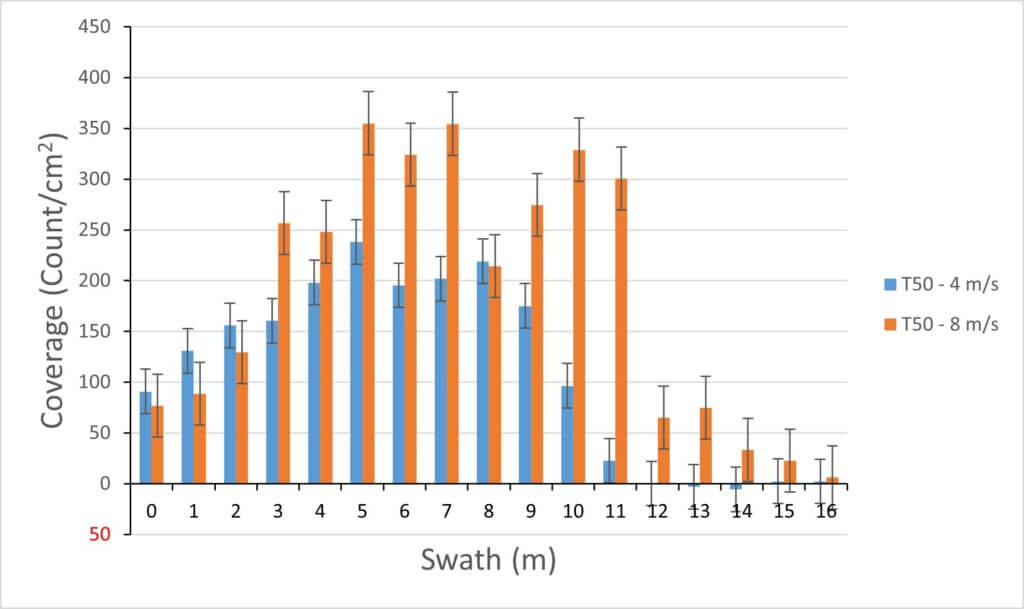
Y-axis: On the whole, deposition on the horozontal collectors was most variable of the three orientations, and resulted in the lowest measured droplet densities (Figure 9). Upward-facing WSP received more of the deposits than the downward-facing WSP. However, at 3 m and 12 m, the majority of deposition appeared on the downward-facing WSP. Underneath the drone rotors, downwash force would prevent re-bound. But at the edge of the rotors, a lower pressure region would permit pressurized air to escape not just laterally but also vertically. Entrained droplets would therefore gain an upward vector, and impact the downward-facing WSP. A slight wind from the right truncated the swath at the 13 m mark. That same wind may have captured any spray from the “bounce” at 3 m to become secondary deposition along the 1 m – 3 m section.
Figure 9. Coverage on the Y-axis, with WSP faces oriented up or down. The drone passed between the 7 and 8 meter marks.
Z-Axis: Only those WSP facing the retreat of the drone received deposits (Figure 10). As previously discussed, this is likely due to the downwash, which is vectored downward and rearward along the flight path according to the drone orientation in flight. These deposits were further reinforced by the prevailing wind direction after the drone had passed.
This deposit pattern is opposite to that of a ground sprayer, where spray tends to deposit on the advance surfaces due to droplet inertia (assuming a low boom height and fast travel speed). A slight shift to the left is apparent in Figure 10, likely due to the headwind’s directional deviation to starboard. Note that the faster flight speed had higher deposit densities. Reasons for this are unclear, as there was no commensurate deficit in droplet numbers at other sampler orientations for the faster speed.
The overall deposit density on the retreat-facing orientation was highest of any single collector orientation. The high deposit density and swath width is likely the result of the prevailing wind direction as well as the additional contribution of the downwash from the forward-tilted RPAS. These two factors helped transport the spray plume backwards for efficient interception by retreat-facing collectors.
Further evidence of this dynamic was visible when examining the bond paper collector strips. In the lee of the track edge, deposits were scarce, indicating a predominant horizontal trajectory of the droplets (Figure 11).
Figure 10. Coverage on the Z-axis, with WSP faces oriented to face drone advance and retreat. The drone passed between the 7 and 8 meter marks.Figure 11. A shadowed region (highlighted in light red) that sometimes appeared along the retreat-edge of the Speed Track™.
ESW at 8 m/s flight speed
Only the upward- and retreat-facing WSP surfaces received consistent spray coverage. As a result, only these two orientations were individually used for ESW calculations. However, deposits from all six orientations were averaged for the combined ESW measurement.
Two analysis methods were compared. First, the ESW was calculated for each replicate run seprately, and the resulting ESW were then averaged. Second, the three replicate run deposits were first averaged, and then ESW was calculated from that average.
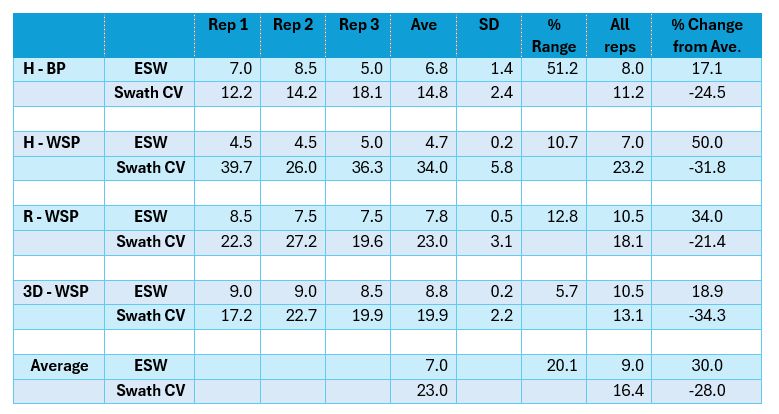
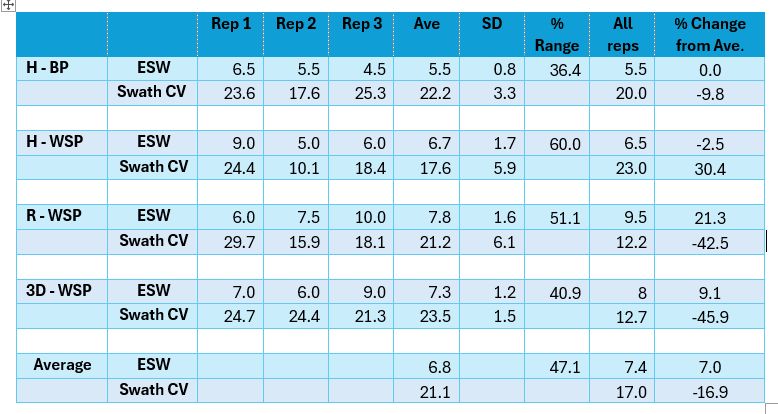
When ESW from the bond paper was calculated for each replicate and then averaged, the ESW was 6.8 ± 1.4 m (Table 1). The resulting average CV of those swaths in a racetrack pattern was 14.8%.
When ESW was calculated from the upward-facing WSP for each replicate, the ESW was 4.7 ± 0.2 m. This was narrower than the bond paper result oriented on the same plane. In addition, the average swath CV was now 34%, significantly higher than that from the bond paper collector.
The retreat-facing WSP resulted in the highest ESW so far, 7.8 ± 0.5 m.
To better simulate a plant’s cumulative deposit, reflecting the pesticide dose received on leaves and stems that might vary in location and orientation, all six orientations were combined for each pass. When ESW was then calculated for each replicate, it was 8.8 ± 0.2 m (CV = 20%).
The range of swath widths onserved within each of the three reps ranged from 6 to 51% of the mean ESW. Differences between replicates could be due to automatic, instantaneous adjustments in the flight path controlled by the drone, or it may be due to changes in environmental conditions in the two hours that elspsed between consecutive replications. It may be instructive to increase the replicate sampling to obtain better estimates of variability within any given treatment.
If reps were pooled before calculating ESW, ESW increased an average of 30% for all sampling methods (Table 1). The CV of multiple swath simulations also decreased an average of 28% with this approach. Pooling prior to analysis is, however, less accurate because it eliminates the variability one might observe between two dicrete locations, which is how product efficacy will be observed in a pest control situation.
Table 1. Calculated ESW (m) and CV (%) for 8 m/s flight speed based on deposit density (count/cm2). Range (% of mean) calculated for the averages. Change from Average is the % change in the ESW of a pooled sample compared to the averaged ESW from each replicate. H-BP: Horizontal Bond Paper, H-WSP: Horizontal water-sensitive paper, R-WSP: Retreat-facing water-sensitive paper, 3D-WSP: Sum of all six facets of water-sensitive paper.
ESW at 4 m/s flight speed
ESW were significantly narrower at the slower flight speed when measured on the bond paper, but of similar widths when merasured using WSP (Table 2). The slower speed had much greater variability among replicate samples as well, ranging from 36 to 60% of the average ESW.
The retreat orientation showed the widest ESW, with the 3D orientations resulting in slightly narrower swaths. At the high speed treatment, the 3D analysis had produced the largest ESW.
Pooling the reps prior to analysis resulted in similar ESW for the bond paper and the upward-facing WSP, whereas the remaining orientations resulted in wider swaths when the reps were pooled.
In general, the swath CVs at the slower flight speed were similar to the fast RPAS speed, averaging in the low to mid 20s. Pooling the reps prior to analysis reduced swath CVs for the retreat orientation and the combined orientations, but not for the upward-facing collectors.
Table 2. Calculated ESW (m) for 4 m/s flight speed based on deposit density (count/cm2). Range (% of mean) calculated for the averages. Change from Average is the % change in the ESW of a pooled sample compared to the averaged ESW from each replicate. H-BP: Horizontal Bond Paper, H-WSP: Horizontal water-sensitive paper, R-WSP: Retreat-facing water-sensitive paper, 3D-WSP: Sum of all six facets of water-sensitive paper.
Comparing speeds
When ESW was calculated for each replicate, the slower flight speed resulted in ESW that were slightly smaller than the faster flight speed on average (6.8 vs 7.0 m). However, when reps were pooled, the slower flight speed resulted in significantly smaller ESW compared to the faster flight speed (7.4 vs 9 m). Pooling the reps prior to analysis also resulted in a lower coefficient of variation.
Generally, there was less variability among replicates for the faster flying speed. Whether this was the result of the speed itself or was an artifact of the specific conditions during which the flights occurred is unclear.
Comparing swath appearance from bond paper and optimal WSP orientations
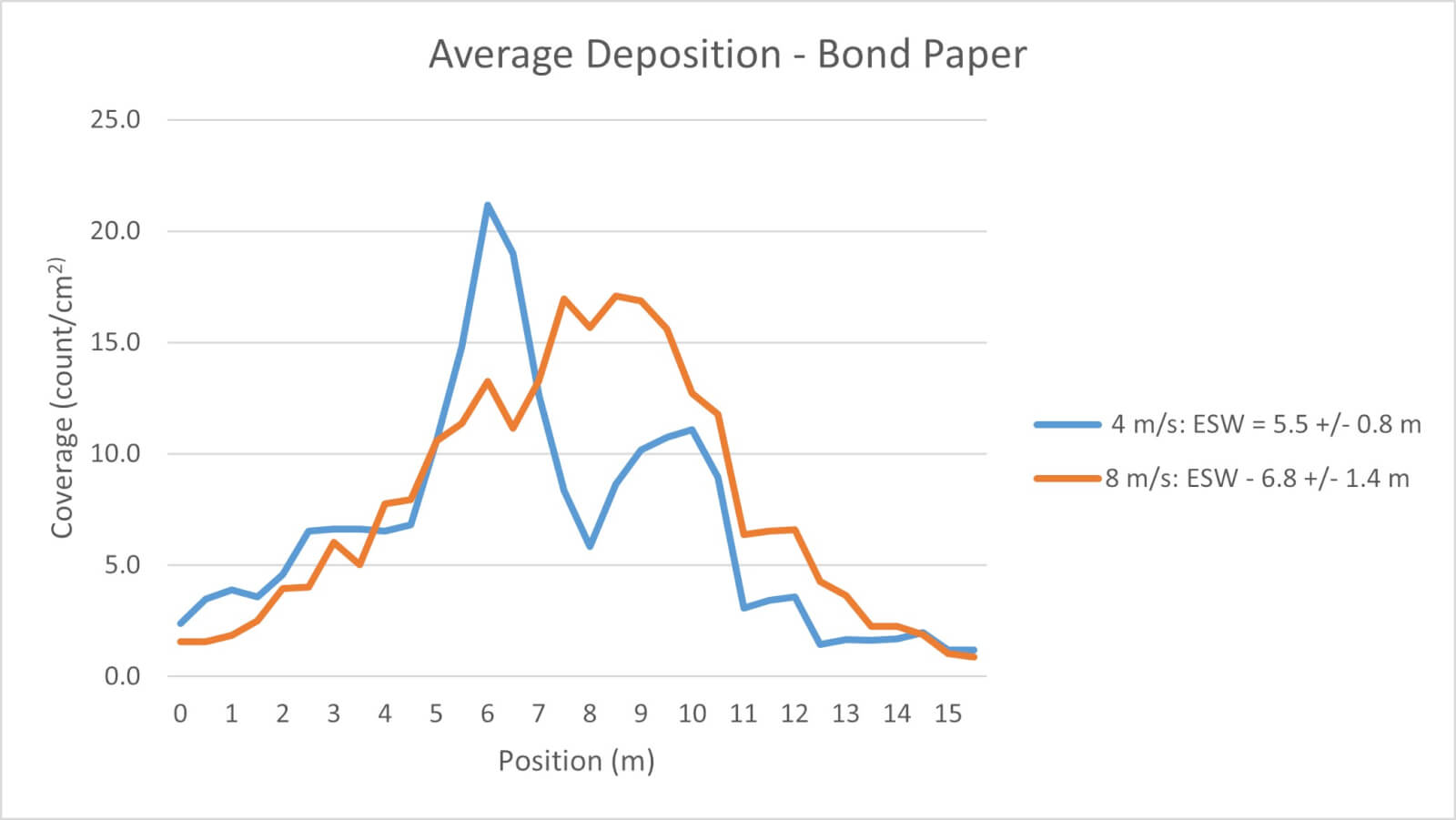
When the ESW from the bond paper was calculated for each replicate and then averaged, the following graph was produced (Figure 12). Note the bi-modal shape produced at the slower flight speed. This corresponds with the position of the atomizers and it’s possible the increased dwell time directed more spray in those positions compared to the faster flight speed, which increased ESW and dispersed the spray more evenly.
This could also be responsible for greater uniformity among the three replicate flights that was observed.
Figure 12. Average of three passes from bond paper at 4 m/s and 8 m/s speed.
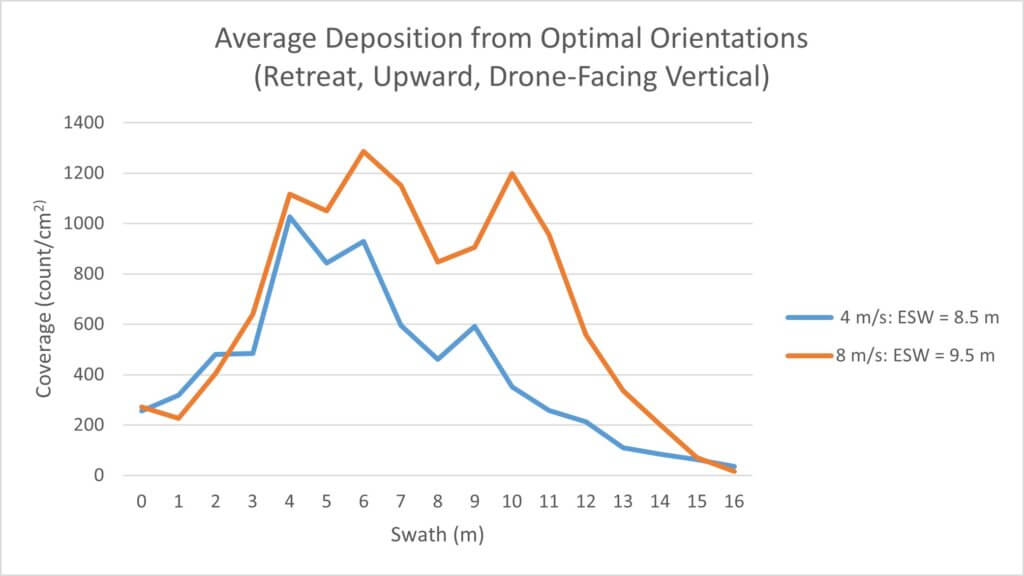
When we averaged coverage from the optimal 3D orientations (X-axis: inward-facing, Y-axis: upward-facing, and Z-axis: retreat-facing) and compared their swaths to the 2D, we are able to capture more droplets and eliminate the bi-modal pattern appearance of the lower speed, reducing CV and increasing the ESW (Figure 13). This may begin to explain why sprays that appear to have low coverage on horizontal collectors can produce better-than expected efficacy.
Figure 13. Average of three passes from optimal-facing WSP samplers at 4 m/s and 8 m/s speed.
Vector analysis
The sampler array permitted the generation of spray vectors that showed the inferred direction and intensity of the downwash movement.
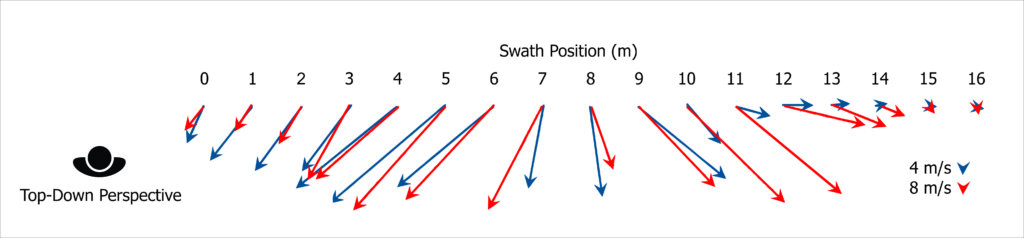
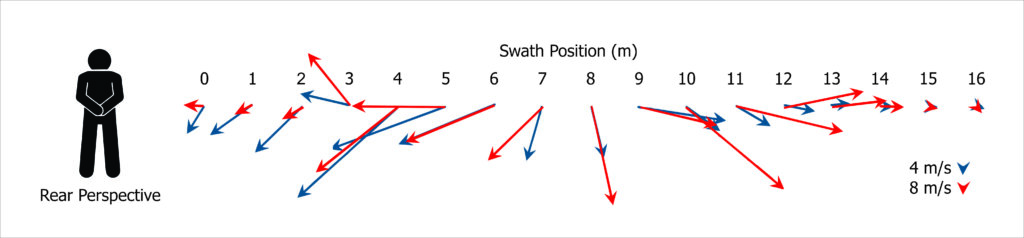
To graph vectors for droplet movement at each position along the 16 m swath, we calculated net coverage as previously described (i.e. for each of the x, y, and z sampler oerientations, the deposit density on one side was subtracted from the other). The magnitude of that value represented the relative dominance of that side of the orientation for spray deposition. We assumed that droplets were primarily carried by air movement to their collectors, therefore we inverted the sign on the coverage to express it as wind direction from the from the vantage of the drone. When these data were combined for the X-Y and the X-Z direction, we were able to estimate the origin and strength of the deposit vectors, and thus infer droplet-carrying airflow.
Plotting X by Z meant you are looking down from above (Figure 14). This created vectors that indicate lateral and rearward spray movement.
Figure 14. Plotting X by Z coverage creates vectors that indicate lateral and rearward forces that carry spray droplets released from the drone.
Note that the predominant direction of deposit in the X-Z plane was rearward, in the direction of the wind. The forward-tilt of the RPAS aso directed its downwash towards the rear, adding to the headwind effect. At the edge of the spray swath, the rearward vectors diminished, being solely under the influence of the headwind. The vectors were strongest at the locations corresponding to the RPAS rotors.
Plotting X by Y for each position means looking at the RPAS from ground level as it flies away from you. The resultant vectors indicated a combination of lateral and downward spray movement for the majority of the swath (Figure 15).
Figure 15. Plotting X by Y coverage creates vectors that indicate lateral and predominantly downward forces.
At two locations (3 m and 13 m) the net spray deposition was on the underside of the Y-samplers. This suggested that a special region in the downwash existed, where the high pressure air generated by the rotors dissipated, allowing droplet-laden air to move upwards, essentially re-bounding from the ground. At the same time, droplets moved laterally to escape the same high pressure region.
This region of high turbulence could be where plants in the canopy may see droplets arriving from a large number of directions, contributing to coverage that may not be similarly captured by a single flat collector.
Summary
ESW Measurement Method
There was significant variability in swath width and uniformity among three replicate measurements of the same drone configuration. We observed an average of 34%, and as much as 60%, variation in swath widths within replicate passes of the same speed treatment. Spray deposition cannot be assumed to be repeatable, and understanding deposit variability is likely more important than calculating its average.
Measurement techniques affected the observed swath widths. Generally, horizontal targets resulted in narrower swath width measurements than vertical targets facing into the wind and the direction of drone travel. A composite of various target orientations resulted in the widest and most uniform swath deposits.
Effect of Flight Speed
Faster drone flight speeds resulted in wider measured swath widths in all but one measurment technique. It is possible that the greater concentration of downwash energy at the lower flight prevented more of the droplets from moving laterally prior to impact with a collecting surface.
Measuring Downwash Turbulence
The direction of droplet movement varied with position under the drone. The majority of the droplets had a strong z-vector at deposition. This is the direction of the wind and of the retreating side of the drone. Both wind and backward-tilted downwash of the drone would contribute to this.
As the spray droplets neared the ground, the high air pressure under the drone rotors caused the downwash to move laterally away from the centreline. Droplets entrained in the downwash therefore moved strongly to the left and right of the centreline.
Of the dominant three collector orientations (retreat, lateral, and upwards), the lowest collection was achieved with horizontally oriented targets. Interestingly, at the rotor edge, vortices formed and these moved the droplets upwards, away from the ground. This effect was only observed in a narrow band at he outside edge of the rotors.
These effects were somewhat variable but consistent for all spray passes, and occurred at both travel speeds.
Overall Conclusions
A drone’s downwash results in spray droplets moving in many directions which cannot be accurately sampled with a single collector orientation.
If only a single plane can be sampled, it should be facing the retreat side of the spray pass.
Three-dimensional sampling may be required to better simulate the spray capture of an agricultural canopy.
Higher travel speeds resulted in slightly more uniform, wider, and repeatable deposition.
The variability of a drone’s deposition, both in ESW and CV, is considerable and remains a barrier for consistent efficacy.
Multiple replicate passes, analyzed discretely, are required to understand the variability of the drone’s spray deposit, both in ESW and in CV.
Thanks to Drone Spray Canada and Don Murdoch (University of Guelph) for their cooperation and in kind support of this study.
Much of this article is based on a session and tradeshow I attended at the 2026 Drone End-User Conference in Kansas City. I want to acknowledge the insightful information provided by the three session speakers, as well as the ~200 audience members that asked honest questions and shared their experiences. The speakers were Mr. Chase Plumer (Owner, ProBuilt Fabrication/ProDrone Spraying & Seeding, Seymour, IN), Mr. Klaytin Hunsinger (Owner, Hunsinger Ag Solutions, Rossville, IL) and Mr. Kyle Albertson (Owner, Albertson Drone Service LLC, Benton County IN).
Tendering systems
Drone-based crop protection is a rapidly growing industry and operator experience spans from novice to veteran. It follows that tendering systems are not a one-size-fits-all proposition. The best fit will be a configuration that is budget-conscious, reflects the size and nature of the operation, and accounts for future needs.
We can categorize them by their complexity, cost and capacity.
Entry-level tendering system: A starting point
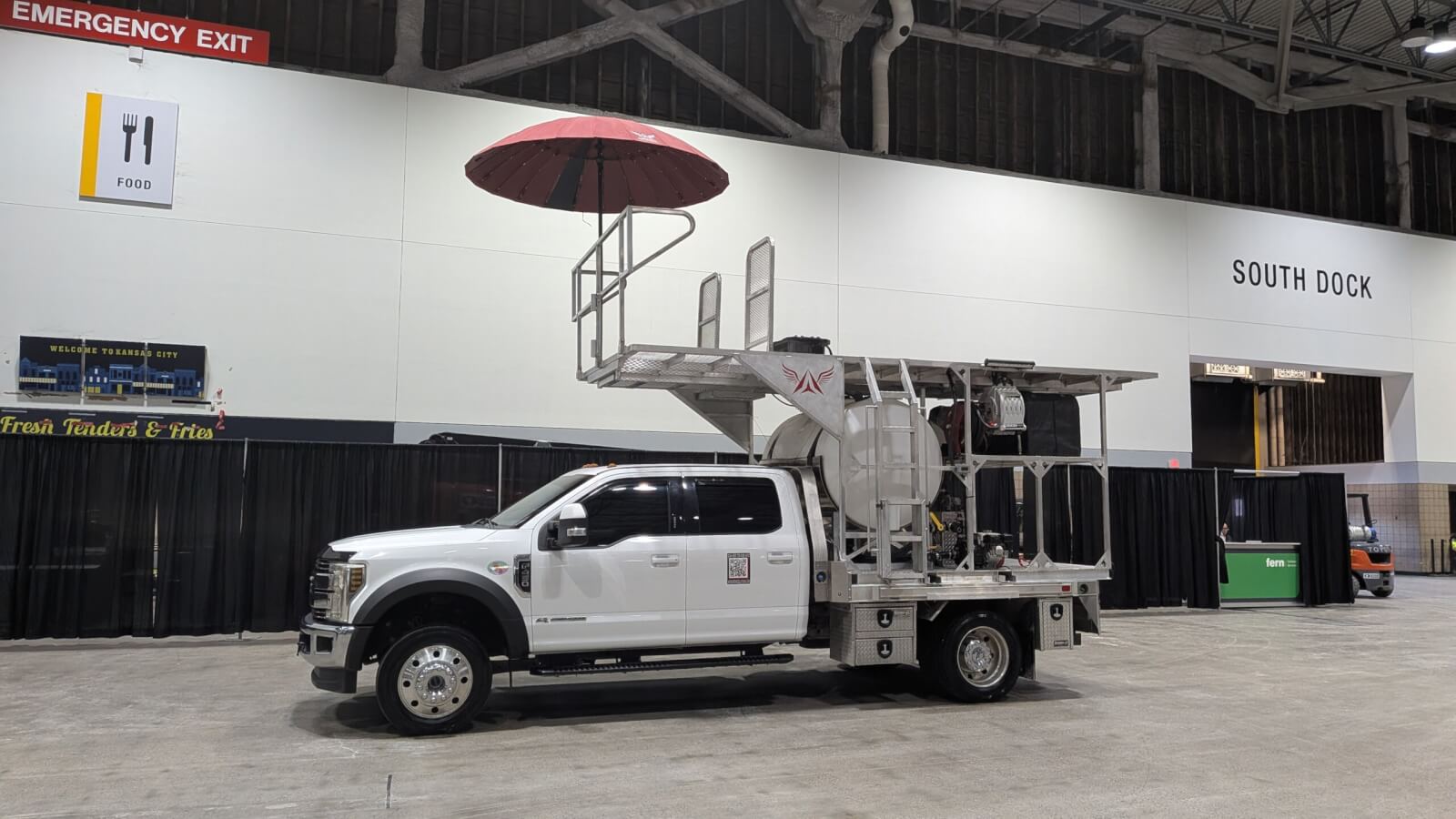
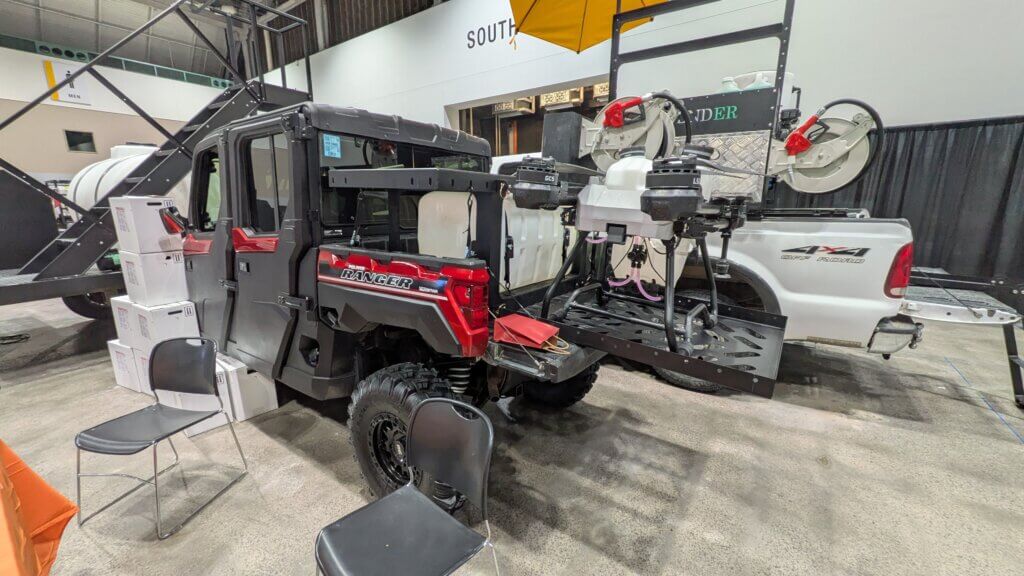
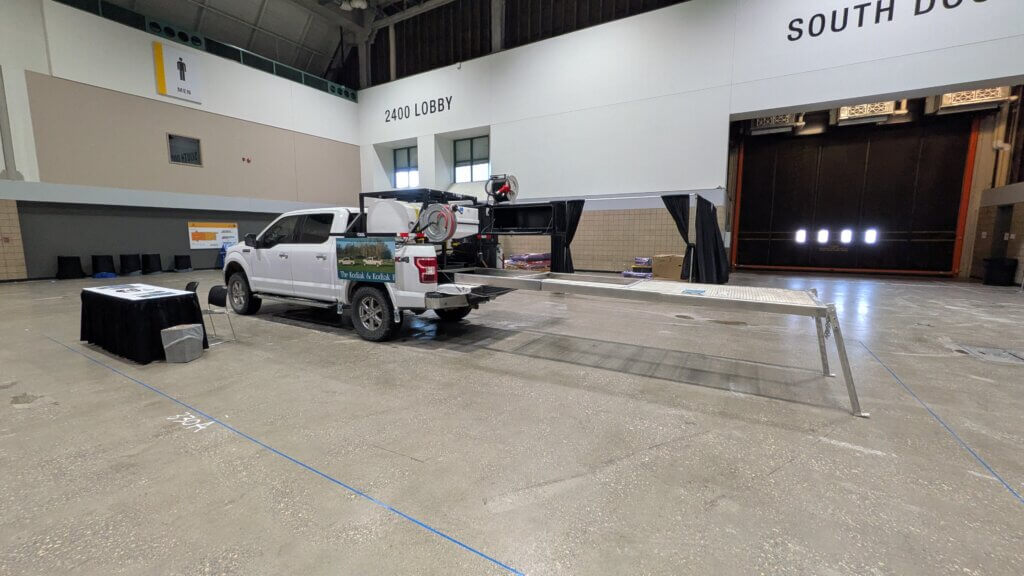
For those just getting started, focus on affordability (lower initial investment) and simplicity (basic components). Examples include skid or truck builds, which are removeable or permanent systems that either rest on a vehicle bed or are built on-and-around the vehicle. This is an operator-friendly system that is small and portable for easy access to diverse fields. It’s the least durable configuration, and not particularly efficient or upgradeable, but it will serve until you know what you really need and how you like to work.
Mid-level tender system: Second year
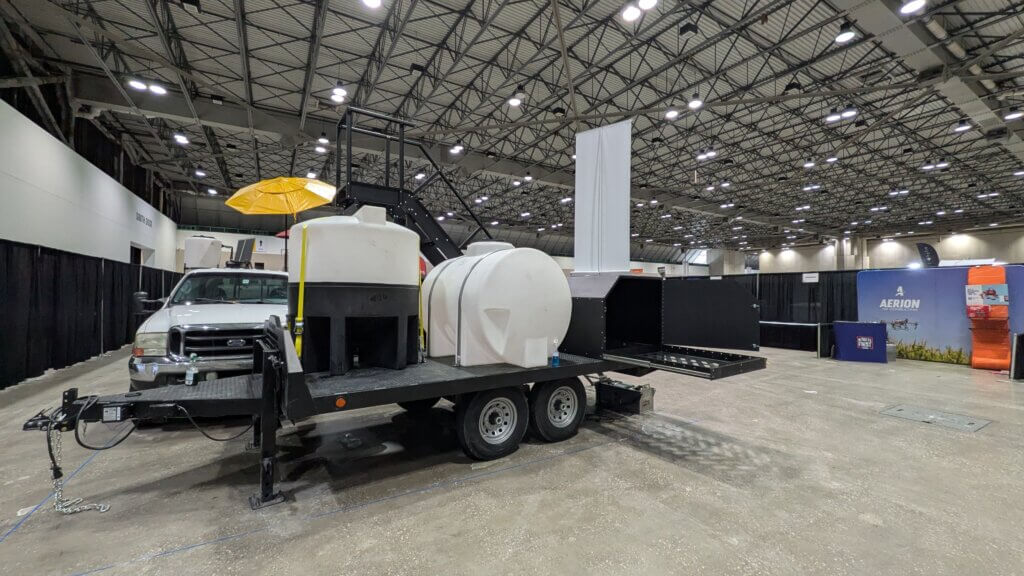
By year two, you might want a larger and more efficient configuration with additional storage and a few creature comforts to reduce operator fatigue. A truck build might suit, but this is more likely a trailed system that is still capable of being towed by a mid-sized (1/2 to 3/4 tonne) truck. Some operators feel enclosing the trailer reduces efficiency, while others appreciate the security and protection afforded by defined spaces.
A mid level system has some capacity for modification, but isn’t designed to support multiple drones, and likely won’t have enough capacity to store a day’s worth of water, chemical, or fuel. The operator may wish to detach the truck to run for supplies. Or perhaps it makes more sense to run a truck with a skid-mounted tender system that trails a second, mid-level system to divide-and-conquer, or scale up for larger projects.
Beware going too big, too quickly. A 30-foot gooseneck can get caught on hilly terrain, where a 20-foot flat bed with a straight truck might be better suited. Small to mid-size trailers also take less time to set up and tear down. Consider performing site recon before dispatching a mid-level tender system. This is an additional step, but it allows the operator to scope out potential hazards and is ultimately more productive because it prevents tender systems getting stuck or placed in inefficient or unsafe locations. For example, if a client is “plant-out, pick-in”, the fields are hard to service because there’s no way to access them with large vehicles. Pilots become landscapers, spending valuable time clearing an operations area.
High-level tender system: Large scale and Commercial interests
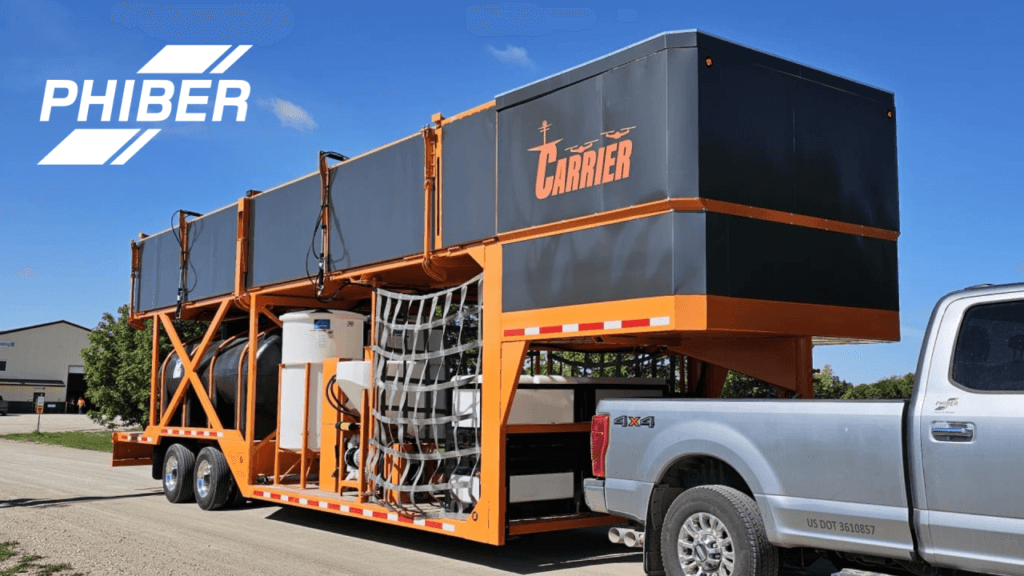
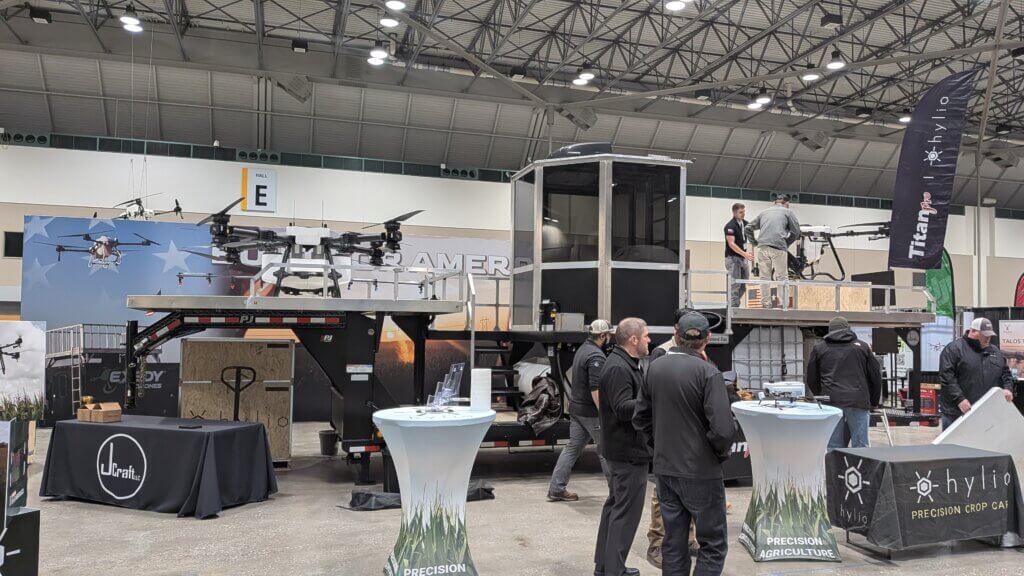
Made for efficiency, the limiting factor of this system is the drone’s productivity. This category is comprised of the largest gooseneck trailers, which may include an upper deck and enclosed areas. It has the highest capacity for water storage, can service multiple drones and has ample storage. Intended for large fields, the size of this unit can make it physically incapable of reaching smaller fields. While a one tonne truck might be able to tow it, an even larger vehicle might be more suitable. It may also be prohibitively inefficient given the time required for setup and teardown. Consider an operator that requires a 15 minute start-up and a 15 minute teardown to spray 250 acres at 50 ac/hr; At $20/ac, that’s roughly $500.00.
Fundamentally, each tendering system has the same function, so they share the same basic components. Here’s an overview of common features and considerations.
Trailer
The trailer is (literally) the foundation of most tendering systems. Operators suggest building for your current budget but planning for future needs as best you can. Trailer size should reflect the nature of the farms you will be servicing and how best to access them. You should also consider the safest and most efficient workflow on and around the trailer before committing to a layout.
Option 1 – Utility trailer
Advantages
Disadvantages
Easy to get on/off
Low ground clearance
Less expensive
Narrow footprint for accessories (e.g. conventional tanks not fitting between wheel wells)
Versatile (use for drones on season, and other tasks off season)
Narrow if planning a top flight deck
May be an insufficient trailer GVWR (Gross Vehicle Weight Rating). This is the maximum allowable total weight of a trailer when fully loaded.
Option 2 – Flatbed gooseneck trailer
Advantages
Disadvantages
More room for accessories
Much heavier. ¾ tonne truck likely not sufficient.
Better ground clearance
Hard to get into tight places (length dependent).
Higher GVWR
Set up / Tear down takes longer
Potential for top flight deck. Typically, 102” wide, so top deck can be about the same.
Option 3 – Enclosed trailer
Advantages
Disadvantages
Protection from weather and elements
Limited clearance for large drones (e.g. 24’ long, 8.5’ wide)
Increased security for equipment
Highest GVWR
Could serve as mobile workspace / office
Most expensive
Cleaner environment for charging batteries, and generators don’t need maintenance (e.g. filters changed) as often.
Can get hot inside, both for people and battery overheating. Airflow on batteries is a necessity, and fans can only cool to ambient. Drone hasn’t got time to cool between fields.
Vehicle
Based on operator discussion, it seems many have a tendency to push their trucks to the limit… or beyond it. One operator uses a ¾ tonne truck to pull a 22-foot trailer with an upper deck. Another uses a 1 tonne (aka tonner) gas F350 which struggles to pull a 30-foot trailer. Others recommended the use of a single axle semi (e.g. a Kodiac or a Kenworth T300), which even used still has ample life left in it, and at ~15 to 17,000.00 USD is cheaper than buying a truck.
Consider that if you run a two-person operation, you may want more than one vehicle. A smaller truck can be employed to run for parts or fuel, or as previously noted can be fitted with a skid mount and a 1,300 gal. poly tank to split up the duty.
Tanks
Tank size(s) will depend on how you choose to operate, how many acres you plan to do in a day, and the weight capacity of your truck and trailer. Again, there is no one solution, so consider the following scenarios before you commit.
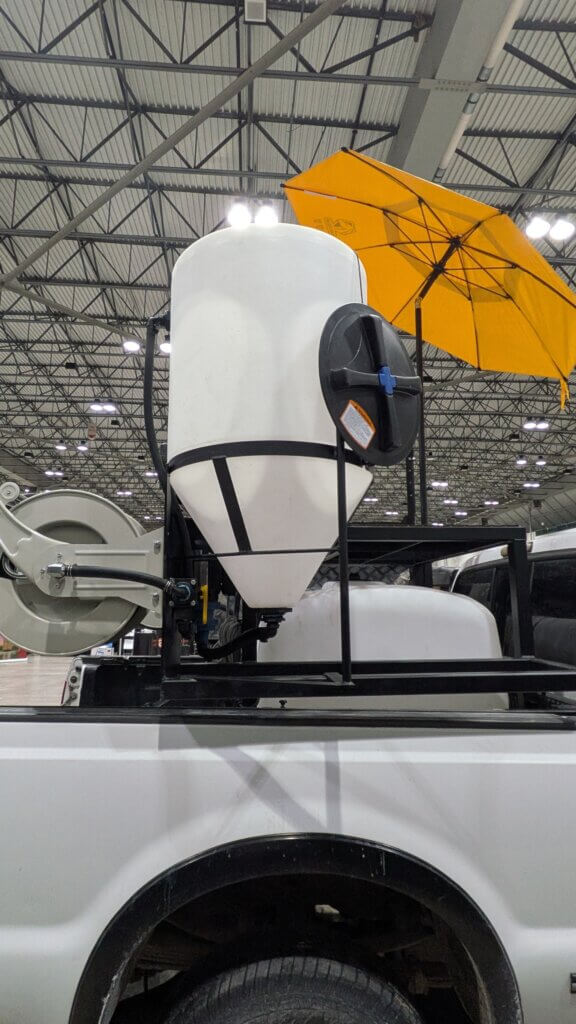
If you plan to hot load, perhaps you’ll just mix in a single, large tank. However, if you plan to switch between insecticides, fungicides and herbicides, one or two 100-gallon cone-bottom tanks with wash-down nozzles might make more sense. Then, you can carry clean water separately in a few repurposed IBC’s or go for the efficiency of a single, high-volume poly or stainless tank. Consider the most flexible and efficient arrangement.
Will you have access to water, will you have water tendered, or will you carry enough for the day? Will you fill from a 3-inch connector or suffer the lost time and fill with a garden hose? Will your truck and your trailer handle that weight, and will the vessel(s) fit between the wheel wells? Are the tanks black or shaded to prevent algae and do you have a plan to baffle the volume, so it doesn’t slosh when you drive over uneven terrain? Larger poly tanks (e.g. ~1,000-gallon tanks) have spots molded in to accept baffles, but some operators noted it’s difficult to install them after-market. Slosh suppressors such as floating balls or lengths of poly French drain can help.
Gas-powered pumps (e.g. Drummond or Predator transfer pumps) are relatively cheap, but some claim they have a high failure rate. This not only incurs downtime, but operators must deal with the chemical in the pump and lines during repair.
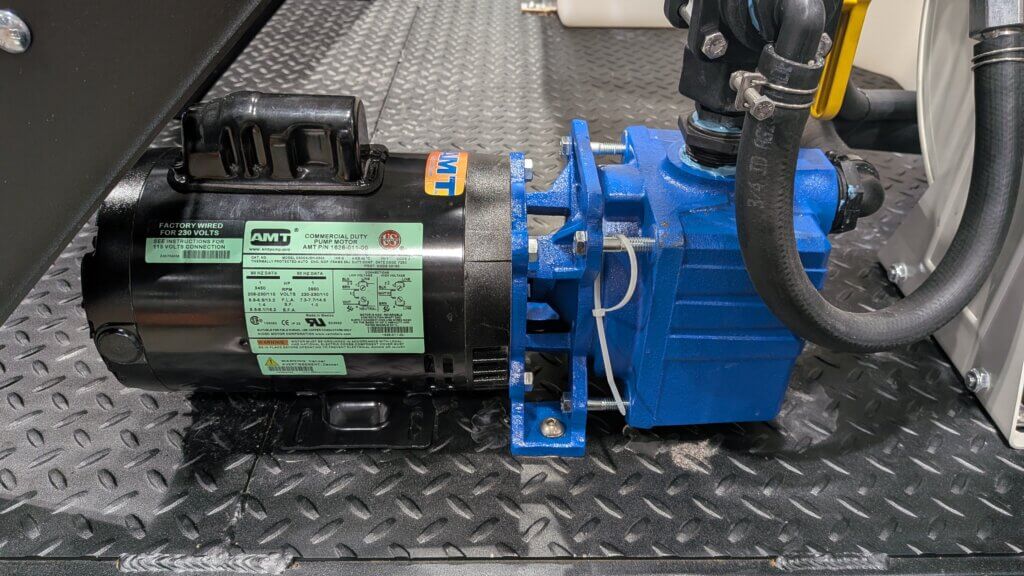
Electric may be a better choice, if only to avoid the noise and exhaust, and some operators run them continuously to recirculate chemistry when not filling a drone. Consider the horsepower, gallons per hour and head pressure, especially if you are pushing flow to an upper flight deck.
An AMT electric transfer pump on a mid-level tender system.
You should be able to fill a drone in about a minute. Some operators have begun increasing fill line diameter from 1-inch to 1.5-inch but feel 2-inch lines are too heavy to warrant the few seconds saved during filling. This may not be a limitation, however, if they are part of a top flight deck arrangement, and not dragged along the ground.
The auto shutoff function of a fuel-pump-style filler is preferred over a quarter-turn-style. The former contributes to foaming but some operators say that can be mitigated by using an anti-foam adjuvant and it’s less likely to create an overflow situation.
Perhaps a metered flow valve that shuts off once a predesignated volume has been dispensed would be a workable solution. This would preserve speed, but without foaming or potential overflows.
A loose line terminating in a quarter-turn valve fills quickly and with few bubbles, but is ultimately not ideal. It’s prone to causing overflows which increase the potential for operator exposure and cause point source contamination.A reeled hose and a fuel-pump style filler is a better approach. The hose can be recoiled to keep it from being underfoot, and the filler has a back pressure valve that shuts off when the drone is full. There is greater potential for foaming, but some suggest anti-foam adjuvants can help.
Generator
This proved to be a controversial subject at the conference. Many operators were unwilling to promote a single make or model, but the discussion resulted in some general guidance based on personal experiences. Generators will have a peak and a continuous performance rating. Ensure the sum total of all your draws does net exceed the continuous rating.
Drones are getting bigger, and the number of electrically powered devices on the trailer is increasing. Smaller operations tend to employ mobile gas generators that produce less than 10 kW. Larger operations reported using 30 kW (or more) diesel standby generators to charge two drones, plus accessories, while ensuring room for future growth.
A mobile gas generator (inverter or not) tends to be the cheaper, lighter alternative, depending on the wattage. They are a good choice for entry level systems and with regular maintenance will last longer, but are still a short-term proposition. Diesel generators tend to be more expensive, but are quieter, more fuel efficient and more reliable. A liquid propane standby generator is yet another option; Generally cheaper than diesel, consideration must be given to the weight and size of what is typically a 250-gallon propane tank.
A few points raised by operators during the discussion:
Most standby generators do not need diesel emission fluid, while mobile generators do.
Many operators prefer the durability of mobile generators over standby generators. The former is built to be moved while the later presents issues with brackets, mounts and stators.
Warranties are advisable for inversion generators, as they are not easily repaired.
Standby gas generators (10 kW continuous / 13 kW surge) may require you to downrate the battery charger, or the heat can trip the breakers. It is not advisable to bypass breakers.
Storage
Storage is often overlooked but can be critical to efficiency. For example, if you plan to spray six, 50-acre farms in a day and it takes 10 minutes for set up and 10 for tear down, that’s two hours gone. Consider what you’ll need and where you’ll need it, and place storage accordingly to minimize downtime. PPE should be located near your flight deck or filling area. You’ll also want to consider carrying spare parts, such as an electronic speed controller, motor, pump and a full set or rotors.
Batteries
Some battery chargers feature water baths, misters or air conditioning, but at bare minimum batteries should charge in the shade and in a ventilated area (e.g. not enclosed in a storage or tool box). One operator vented air from a commercial blower fan to the batteries on the top flight deck.
Connectivity
A hotspot on your cellphone doesn’t always provide reliable service. Satellite internet providers such as Starlink or Xplore (depending on your location) might be a solution. If the controller drops a direct signal to drone, it can bridge to satellite to connect to the SIM card in most drones. Operators that use this system advise it’s best to rent the hardware (if possible) so if something damages it, you get a free replacement. 100 gb of monthly roaming has proven more than enough for most operators.
Mounting solutions vary, but operators noted good experiences with companies such as Veritas Vans, which have a replacement policy. They warn against 3D printed options that tend to be produced using unsuitable filament materials. Operators that use magnetic mounts on their trucks have reported no issues. Some run wire through rear window or sliding door, and others pull the headliner down and run the power cord out through the third brake light.
Operator safety
Lastly but certainly not least, when it comes to the cost-benefit assessment of tender features, safety should always be a priority. Even simple comforts such as folding chairs combat operator fatigue, increase safety and happily also improve overall productivity. We’re none of us getting any younger.
RV awnings, umbrellas, foldable Bimini-style tops or flip-up doors provide shade. Switching to lower-decibel equipment (e.g. inverter gas generators run at about 90 decibels and electric pumps are even quieter), enclosing loud systems, or positioning them far from the filling area, reduce noise and emission exposure. Chemical drift and exposure during filling should be considered, and PPE should be used and stored in convenient locations.
Trailers that feature an upper flight deck sometimes include a central cable to tether belt harnesses. Stationary railings can help prevent falls, while a fold-up version provides clearance when backing the trailer into a shed.
The drones themselves are a hazard. Long flight decks keep landings and lift-offs at a safe distance, and a protected cockpit area improves matters. Decks with pull-out platforms or hydraulic wings can increase the operating area and can be adjusted to account for adjacent roads and the slope of the ground. A short rail around the landing area can prevent a drone from slipping off; A falling drone is expensive, but falling or sliding into an operator is a disaster. The simplest approach might be to operate on the ground.
An enclosed area for operators on a two-platform gooseneck trailer.Kodiak’s retractable flight deck on their skid-mounted system
Take home
The speakers left the session with some summary advice.
Trailer first, equipment second.
Build for today and tomorrow.
Function over form (stability, balance and access over appearance, bearing in mind that if it is a business, it can’t look terrible, either).
Efficiency from day one. Run a stopwatch (when the crew isn’t watching). Find and change the limiting factor, if it’s changeable. The right trailer improves efficiency even before the first acre is sprayed.
Thanks to the many speakers, attendees and trades people that contributed to this article. If you want to share pictures and specs for your tender system, let us know! If we get enough interest we’ll publish an article showcasing your tender systems so others can learn from your experience.