Category: Coverage

All hort articles about achieving, confirming or correcting for spray coverage.

  • When is Fungicide Coverage Critical? Always!

    When is Fungicide Coverage Critical? Always!

    Introduction

    A local strawberry producer was just beginning his harvest when the entire field was suddenly stricken with anthracnose. He would have done almost anything to save it, but he could only watch in frustration as the disease quickly devastated his crop. While he was telling me this story, he was wringing his hands; I’m sure he didn’t realize he was doing it. It had been more than a month since the crop was lost and he was obviously still very upset. Let’s put on our deerstalker hats and consider what might have caused the trouble.
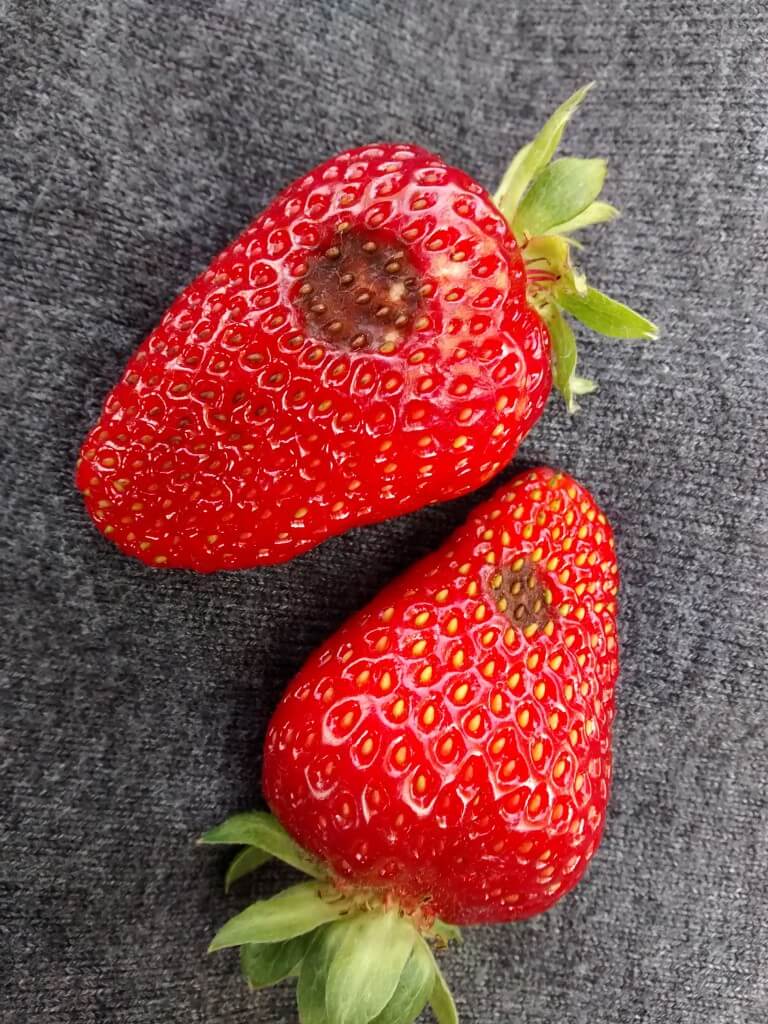
    Strawberry anthracnose. Photo by Pam Fisher, OMAFRA.
    Strawberry anthracnose. Photo by Pam Fisher, former berry specialist with OMAFRA.

    Most of the fungicides we apply in horticulture are protectants, not curatives. What that means is that the fungicide has to be in place before disease has a chance to take hold. Once it establishes a beachhead, you can typically only hold it at bay, not eradicate it. So, if you’re guilty of waiting too long between fungicide applications, the problems may have already begun. This is exacerbated when you don’t achieve the necessary spray coverage. Put the two together and mix in rainy and warm conditions and diseases like anthracnose can spread at alarming speed.

    Method

    I focus on the sprayer part of disease management, so I have to assume that inoculum is being controlled as much as possible (e.g. culling infected plants, drip irrigation, etc.). I asked the grower about his sprayer and his spraying schedule. He admitted to pushing the limits between fungicide applications, and being uncertain about the spray coverage he was achieving with his conventional flat fan nozzles.
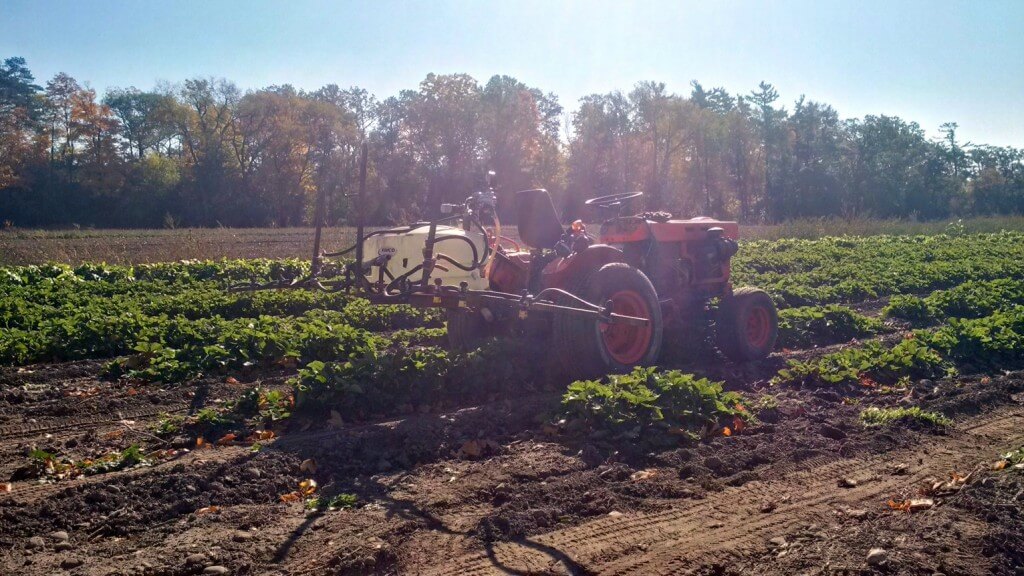
    Strawberry Sprayer
    Strawberry Sprayer

    In cases like this I try to find gentle ways of introducing the idea of using more water, increasing the frequency of applications, or buying new nozzles, because there is time and expense involved and many growers don’t want to hear that. However, when I started my soft sell routine, he looked me straight in the eye and said he’d lost tens of thousands of dollars in revenue so a few nozzles or a couple more applications were not a pressing concern. There’s a point in any endeavour when you’ve committed so much time and money that you’ll do pretty much anything to see it come to fruition (pun intended). He was willing to do whatever it took. This was my kind of guy.

    So, in preparation for next year, we diagnosed spray coverage from five different sprayer set ups. Let me point out, as I always do, that spray coverage analysis does not necessarily extend to control. They correlate well, but if you aren’t using the right product or your timing is off, even the best coverage won’t help you. Caveats aside, here’s what we tested:

    Setup1:

    Broadcast application using a horizontal boom with TeeJet Twinjet 8006’s at 8.3 bar (120 psi) on 50 cm (20 in) centres. We calculated a nozzle rate of 3.9 L/min (1.03 gpm), so at 5.0 km/h (3.1 mph) that’s 923 L/ha (98.7 g/ac).

    Setup 2:

    Banded application on a horizontal boom equipped with a row kits suspending three TeeJet XR 8002’s at 8.3 bar (120 psi). We angled the two side nozzles so the fans were not perpendicular or parallel with ground. This kept more spray on the raised row and out of the alleys. The swath covered 50 cm (18 in) and we calculated a nozzle rate of 1.29 L/min (0.34 gpm), so at 5.0 km/h (3.1 mph) that’s 1,016 L/ha (108.6 g/ac).

    Setup 3:

    Banded application on a horizontal boom equipped with a row kits suspending three TeeJet XR 8002’s at 6.2 bar (90 psi). We angled the two side nozzles so the fans were not perpendicular or parallel with ground. This kept more spray on the raised row and out of the alleys. The swath covered 50 cm (18 in) and we calculated a nozzle rate of 1.14 L/min (0.3 gpm), so at 5.0 km/h (3.1 mph) that’s 896 L/ha (95.8 g/ac).

    Setup 4:

    Broadcast application using a horizontal boom with TeeJet Twinjet 8004’s at 6.2 bar (90 psi) on 38 cm (15 in) centres. We calculated a nozzle rate of 2.27 L/min (0.6 gpm) so at 5.0 km/h (3.1 mph) that’s 717 L/ha (76.5 g/ac).

    Set up 5:

    Broadcast application using a horizontal boom with TeeJet Twinjet 8006’s at 6.2 bar (90 psi) on 38 cm (15 in) centres. We calculated a nozzle rate of 3.4 L/min (0.9 gpm) so at 5.0 km/h (3.1 mph) that’s 1,076 L/ha (115 g/ac).

    Protocol and Conditions

    It was late September, so the weather was a cool 8 °C, humidity was low and winds averaged 5 to 15 km/h. We timed our passes to correspond with lighter wind wherever possible. Three sets of water-sensitive paper were placed in a single row, but only one pass was made per sprayer setup. One paper was placed at the top of the canopy which is always very easy to hit, so we oriented it sensitive-face-down. The second paper was placed midway down the canopy, oriented facing up. The final paper was also oriented facing up, but placed at the very bottom of the canopy, more or less on the ground. Collectively, we spanned the depth of the canopy.

    Following each application, papers were collected for digital analysis using “DepositScan” which determines the percent of the paper covered with spray, and the droplet density. Both of these factors contribute to overall coverage. This wasn’t intended to be a rigorous experiment, so the means are presented here with standard error for the sake of comparison. There was no statistical analysis. In the case of papers located face-down, when only trace amounts of spray were discernible they were assigned a percent coverage of 1% and droplet density of 25 droplets/cm2.

    Results

    A few observations before we get to the results. Research has demonstrated that row kits and higher volumes improve spray coverage, and that’s why we tried banding the applications using row kits in Setups 2 and 3. However, this grower didn’t use GPS to plant his rows, and while they weren’t too crooked, they made it challenging to apply in a band. Further, there is some concern that a banded application would miss any inoculum in the alleys. These are important points to factor in when considering methods to control disease.

    The keen reader might notice we sprayed using pressures that exceed the manufacturer’s recommendations. In fact, none of these tips were rated over 60 psi and I used a formula to calculate their output at our high pressures. I have been heard to say (many times) never to exceed the manufacturer’s rates because it makes a mess out of the spray quality: droplets get much finer and pressure does not cause finer drops to penetrate a dense canopy. Better to switch to larger nozzles and stay within the pressures indicated on the manufacturer’s rate tables. I maintain that assertion. However, the grower was assured by fellow growers and custom applicators that this was the way to go and he wanted to try it. So, that’s where Setups 1, 4 and 5 came from.

    Be aware that a small sprayer like the one in this study needs considerable pump capacity to support such high pressure and flow to the boom and maintain effective agitation. For more information on pumps, check out this article.

    The following table expresses the coverage obtained by setup:

    Set upPaper PositionMean % Coverage (±SE)Mean Deposits/cm2 (±SE)
    Setup 1 – Broadcast XR 8006’s on 20” centres at 120 psi for 98.7 gpaTop1.0 ± 025.0 ± 0
    Middle23.6 ± 4.5253.5 ± 72.9
    Bottom15.2 ± 2.1423.2 ± 35.3
    Setup 2 – Three banded XR 8002’s at 120 psi for 108.6 gpaTop2.1 ± 1.178.9 ± 53.9
    Middle54.8 ± 12.1275.2 ± 145.3
    Bottom29.1 ± 2.7544.5 ± 70.4
    Setup 3 – Three banded XR 8002’s at 90 psi for 95.8 gpaTop7.4 ± 5.9134.4 ± 52.2
    Middle31.6 ± 15.9203.6 ± 108.5
    Bottom8.1 ± 3.9224.4 ± 102.3
    Setup 4 – Broadcast Twinjet 8004’s on 15” centres at 90 psi for 76.5 gpaTop1.0 ± 025.0 ± 0
    Middle33.3 ± 5.0240.7 ± 70.9
    Bottom12.9 ± 6.0263.9 ± 95.2
    Setup 5 – Broadcast Twinjet 8006’s on 15” centres at 90 psi for 115 gpaTop2.3 ± 1.3105.6 ± 80.6
    Middle48.9 ± 5.5194.3 ± 25.6
    Bottom19.5 ± 10.3246.8 ± 40.4

    The results may be easier to compare and contrast in the following graph.
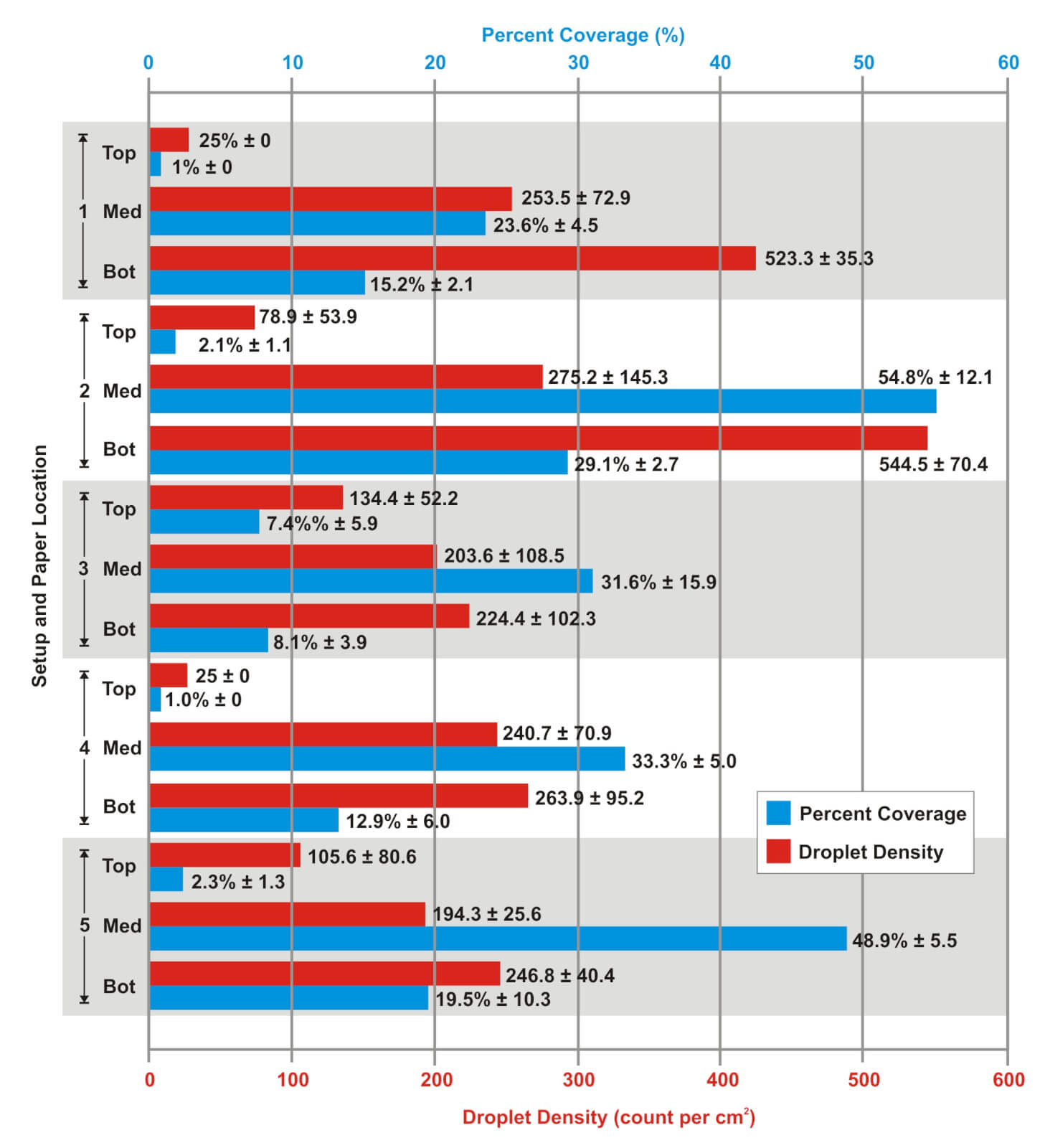
    Strawberry coverage results for all five setups.
    Strawberry coverage results for all five setups.

    Observations

    According to the results, Setup 2 appeared to provide the best overall coverage. This is no surprise given that it was the second highest volume and employed a row kit. This corresponds with findings that have been published elsewhere. However, the excessively high pressure did create a lot of drift and the row kit didn’t always line up with the planted row. Further still, there’s the potential for missing anything that might harbour inoculum in the alleys, like runners. This setup wasn’t appropriate for this particular situation.

    The second-best overall coverage was obtained from Setup 5. This represented the highest volume, and a preferably lower pressure on twinjets, which may have allowed the spray to penetrate the canopy from multiple angles. This broadcast application is more reliable for hitting meandering rows and covers the alleys as well. So, the grower plans to employ this setup for the 2016 season, spraying at shorter intervals and confirming his coverage with water-sensitive paper. Let’s hope it works out.

    End-of-Season Update

    The grower that volunteered his time to this study has reported that his strawberries at the end of the 2016 season were absolutely beautiful. Granted, it is always difficult to draw a direct correlation between sprayer calibration and control. For example, 2016 was a very dry growing season and disease pressure was lower than in 2015. Nevertheless, spray coverage plays an important role in crop protection and our work to improve sprayer performance definitely played it’s part. His success is great news!

  • Exploding Sprayer Myths (ep.2): Canopy Penetration

    Exploding Sprayer Myths (ep.2): Canopy Penetration

    This is the second of a series of short, educational and irreverent videos made with Real Agriculture to bring a little levity to sprayer education. Let’s face it – ironically, nozzles can be pretty dry.

    Here we enjoy an early morning soy bean scout and a light breakfast of toast as we demonstrate how pressure, droplet size and canopy penetration interact.

  • Measuring Spray Coverage – Tips with Tom #8

    Measuring Spray Coverage – Tips with Tom #8

    The importance of good spray coverage is emphasized in all kinds of agricultural publications, including product labels. But, according to Tom Wolf, “the labels are remarkably silent on what good coverage actually is and how you can actually measure it.”

    Tom goes on to explain that spray coverage can be defined using three main criteria: droplet density, area covered and dose administered. In order to measure and assess spray coverage, we recommend using water sensitive paper, a rigid, specially-coated, yellow paper which is stained dark blue/purple by aqueous solutions. The paper can be positioned at the targeted levels of the crop canopy with a paper clip or other handy instrument and the coverage received in the field then compared to recommended levels produced in the lab to give an indication of whether or not coverage needs to be adjusted through increasing water volumes or altering droplet size.

    Learn to integrate spray coverage evaluation into your spray operation, and how doing so can help you fine-tune applications.

  • Selecting the Right Sprayer Boom Height – Tips with Tom #5

    Selecting the Right Sprayer Boom Height – Tips with Tom #5

    What’s the right choice for nozzle fan angle? 80 degrees or 110 degrees? This question leads us to boom height. How do we select the right boom height?

    Nozzle fan angle does play a role, but so does the type of sprayer you run and, more importantly, the height that creates the best overlap pattern. In this Spray Tips, Tom Wolf explains the drift risks and realities of boom height settings on high clearance sprayers, why high-set booms can negate the benefits of certain nozzle designs and why low-drift nozzles need 100% overlap. Then, it’s off to the white board to illustrate the relationship between nozzle spacing and ideal boom height.

  • Spray Coverage in Potato

    Spray Coverage in Potato

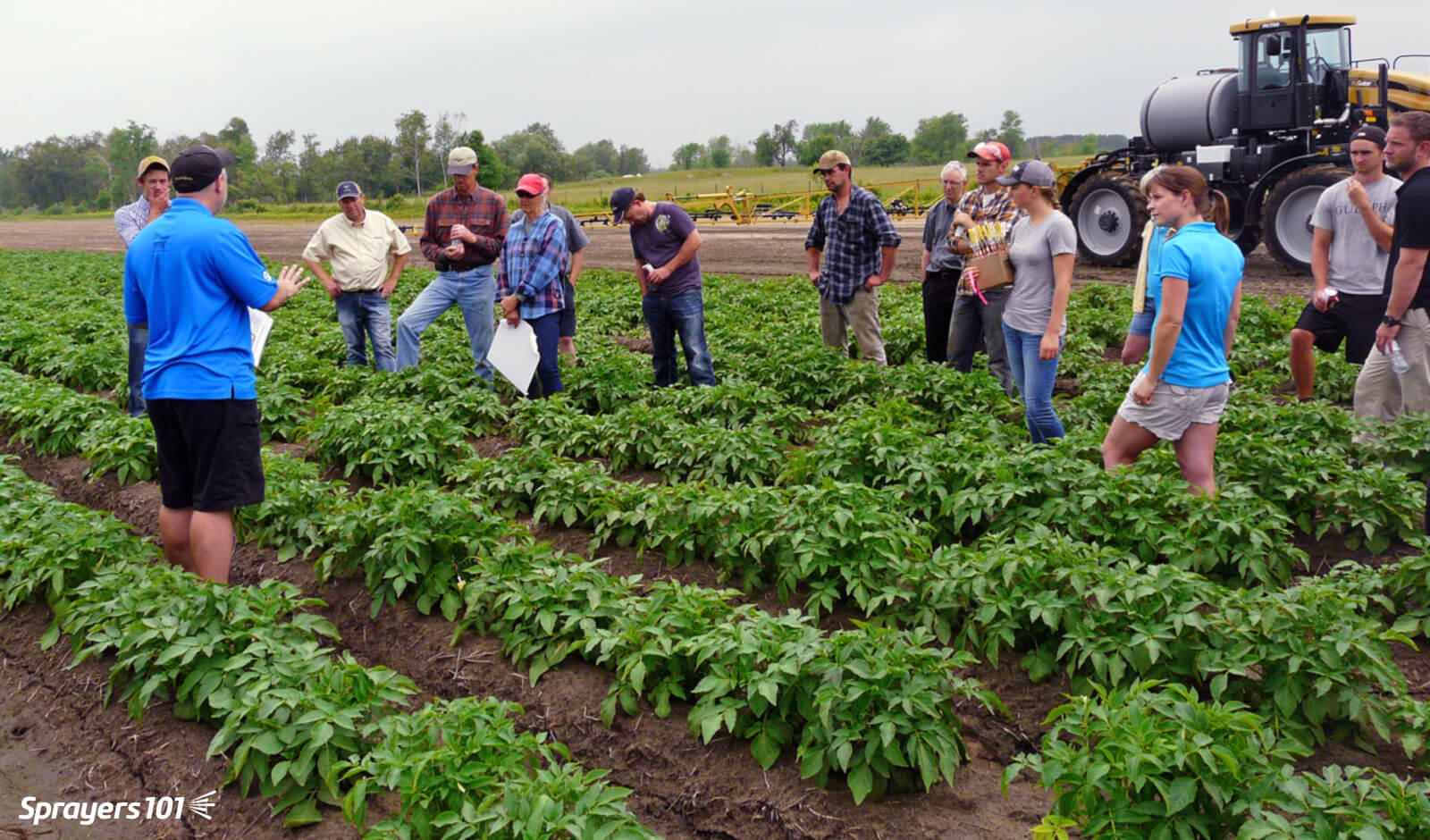
    In June, 2014, 30 growers attended a spray coverage demonstration in a potato field in Alliston, Ontario. Our goal was to explore three questions:

    1. What is the effect of droplet size on coverage?
    2. What is the effect of volume on coverage?
    3. What is the effect of spray angle on coverage?

    This certainly wasn’t a scientific experiment. Spray demos are a great foil for discussing droplet behaviour and teaching operators how to diagnose spray coverage. Take the “results” with a grain of salt.

    Discussing spray coverage in Alliston, Ontario (2014).
    Discussing spray coverage in Alliston, Ontario (2014).

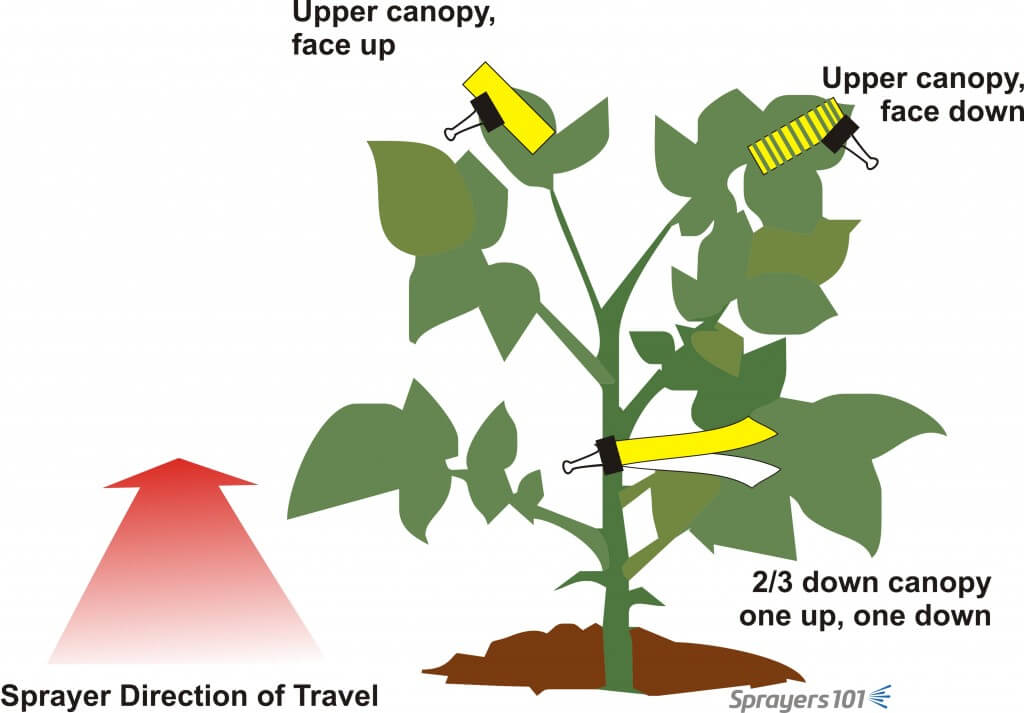
    In order to see spray coverage, we placed water sensitive paper in the potato canopy (see below). Water sensitive paper turns from yellow to blue when it is contacted by water. Normally, we use a digital scanner to quantify spray coverage. However, it was a very humid day and this made it difficult for the scanner to discern spray from background. We decided to assign a qualitative value to the papers based on coverage. Low (or no) coverage got a score of zero. Moderate coverage (enough to offer good control) received a score of one. Papers with excessive coverage (anything more than moderate) received a score of two. Did I mention this wasn’t a scientific experiment?

    The location of water-sensitive papers in the potato plant canopy. Two plants were papered for each nozzle.
    The location of water-sensitive papers in the potato plant canopy. Two plants were papered for each nozzle.

    Droplet Size

    To answer the first question, we compared coverage from two hollow cone nozzles. The TeeJet TXR80028, which creates a fine/medium droplet size, and the TeeJet AITX8002VK, which is air-induced and creates a Coarse/Very Coarse droplet size. In both cases the boom was approximately 50 cm (20 in) above the top of the crop, travelling at 10 km/h (6.2 mph) and spraying about 110 L/ha (~11.5 gpa).

    Generally, Coarse droplets tend to move in a straight line, and are not as easily deflected by moderate wind or travel speed. Conversely, Fine droplets slow very quickly and move erratically depending on the forces acting on them.

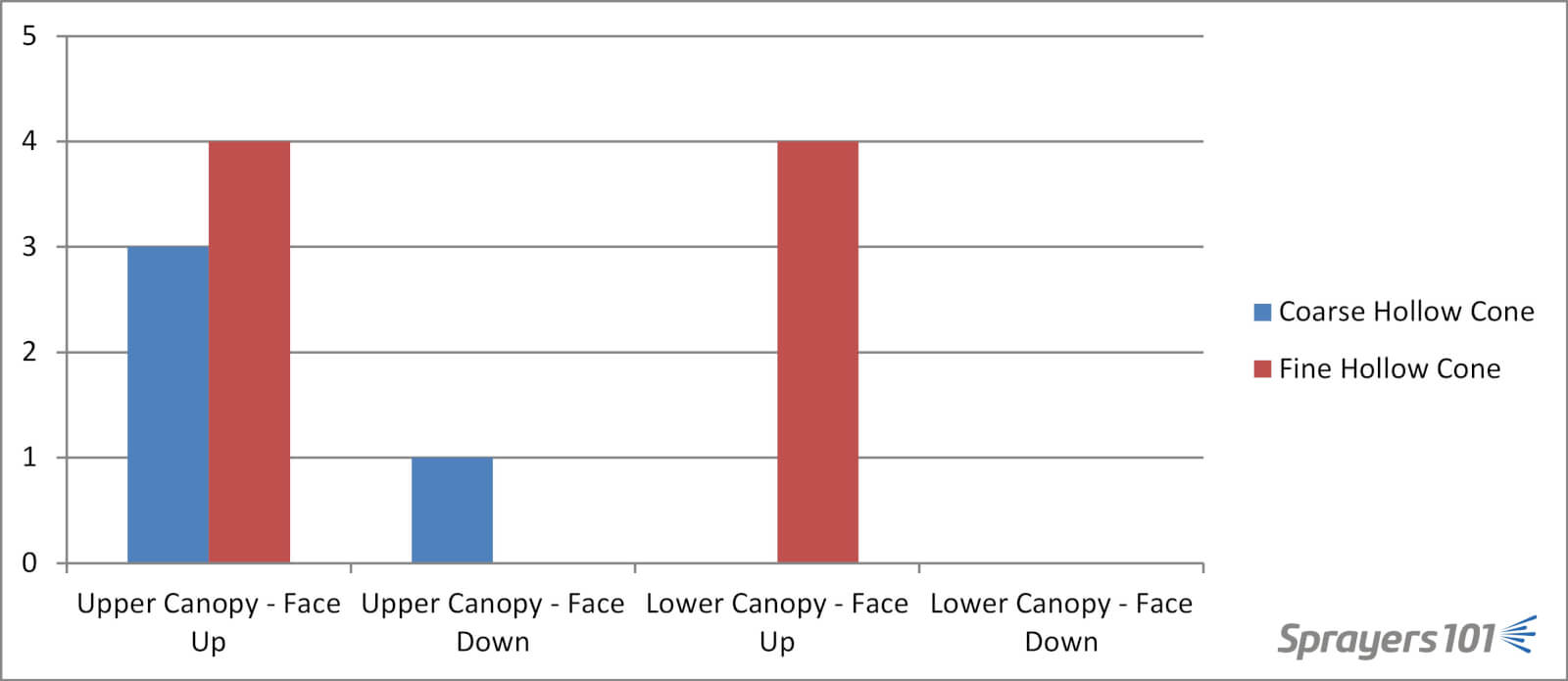
    Droplet size comparison. Cumulative spray coverage achieved in four positions, on two plants per nozzle. Low-to-no coverage = 0. Moderate coverage = 1. High-to-excessive coverage = 2.
    Graph 1 – Droplet size comparison. Cumulative spray coverage achieved in four positions, on two plants per nozzle. Low-to-no coverage = 0. Moderate coverage = 1. High-to-excessive coverage = 2.

    Graph 1 shows the coverage results in each position. We see that finer droplets appear to penetrate the canopy more than the coarser droplets. We also see that under-leaf coverage was difficult to achieve overall. It’s possible the small amount of coverage achieved on the under-side of the top scaffold of leaves is the result of Coarse droplets bouncing… but if that’s the case, why wasn’t there any coverage on the upward-facing leaves inside the canopy? Write me – I’m open to ideas. In any case, redistribution is erratic and should not be relied on.

    This graph may appear to favour smaller droplets, but be aware that Fine droplets are prone to drift and evaporation and should not be used without making every effort to prevent off-target movement. Shrouds, low ambient wind, and slower ground speed can help. To my mind, the best drift-mitigating option that still allows the use of finer droplets is an air-assist option on the boom, which would also improve under-leaf coverage. I’ve seen it in field tomato, soybean and even field corn. It’s disappointing that there aren’t more self-propelled sprayers in Ontario that offer this feature.

    Volume

    To answer this question, we compared coverage from Syngenta’s potato nozzles. They aren’t generally available in North America, but we got a few for the sake of the demo. The VP04 (gold) was operated at 1.5 bar (22 psi) and sprayed 135 L/ha (~14.4 gpa). The VP05 (Orange) sprayed 180 L/ha (~19.2 gpa) at the same pressure. The boom travelled at 10 km/h (6.2 mph) at approximately 50 cm (20 in) above the top of the crop.

    Generally, raising the volume-per-hectare translates to improves coverage, but at some point there is a diminishing return. Imagine comparing coverage between 1 L/ha and 100 L/ha – there would be a big difference. Now imagine comparing 500 L/ha to 1,000 L/ha – probably not much difference, because drenched is drenched.

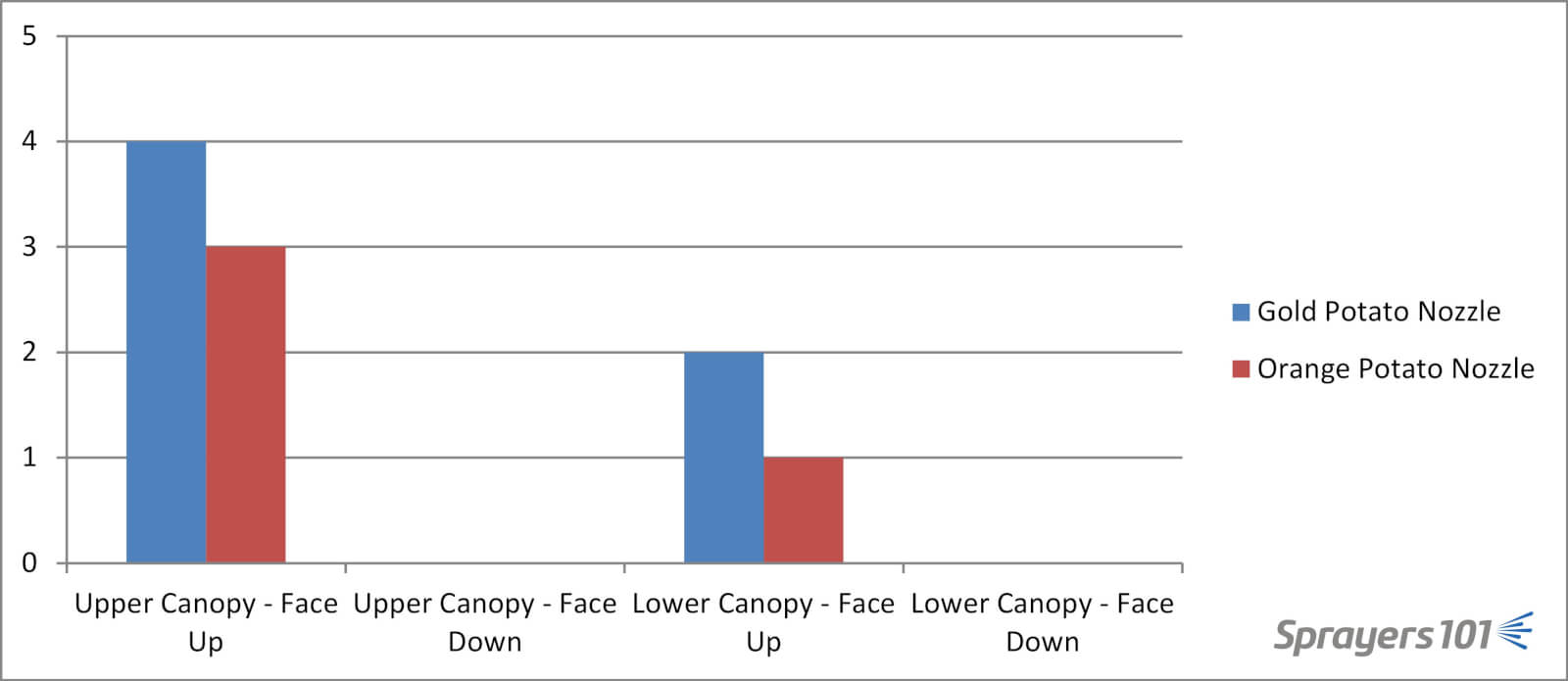
    Spray volume comparison. Cumulative spray coverage achieved in four positions, on two plants per nozzle. Low-to-no coverage = 0. Moderate coverage = 1. High-to-excessive coverage = 2.
    Graph 2 – Spray volume comparison. Cumulative spray coverage achieved in four positions, on two plants per nozzle. Low-to-no coverage = 0. Moderate coverage = 1. High-to-excessive coverage = 2.

    According to Graph 2, the higher volume did not improve coverage. In fact, the lower volume appears to have superior coverage, but it’s likely not significant. Remember, there are no error bars here because there’s no statistical analysis – it’s not a scientific study. It’s possible that at this stage of growth, our 150 L/ha was close to the threshold of diminishing return.

    Once again, note the absence of under-leaf coverage. Truly, the more I spray vegetable and row crops with conventional nozzles on a horizontal boom, the more I think under-leaf coverage can only be achieved by Bigfoot riding the Loch Ness Monster while wielding Harry’s wand. Without directed sprays from drops (aka pendant nozzles, drop hoses, etc.) or some means of redistribution (e.g. air assist or even maybe electrostatics) droplets will not reliably change direction.

    Spray Angle

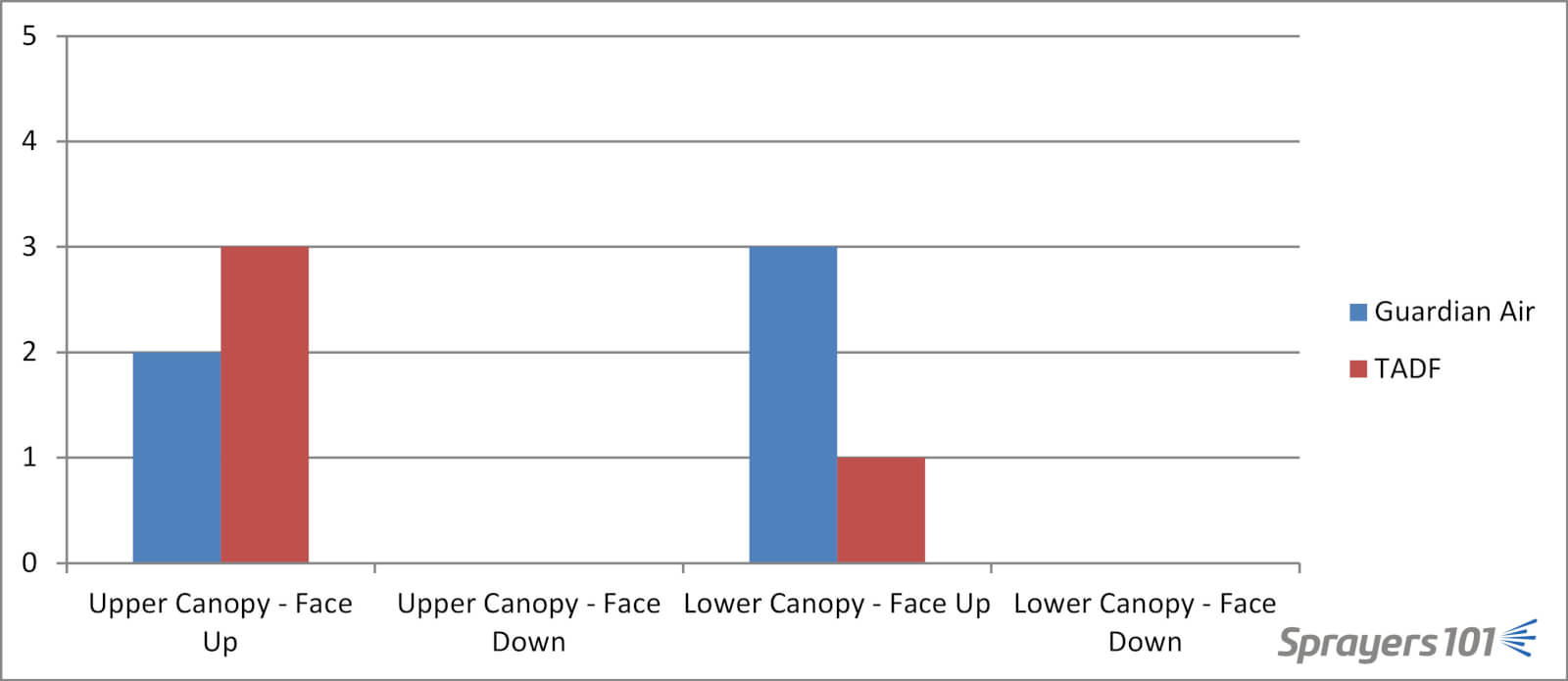
    To answer this question, we used Hypro’s Guardian Air nozzle (GA11003), which is a 110° wedge-shaped flat fan that we alternated between 15° forward and 15° backward on the boom. We compared it to Greenleaf’s TADF nozzle (a blue and yellow 02), which is an asymmetrical, 110° twin-fan tip, where one fan is at 50° and has a higher flow compared to the second fan at 10°. We also alternated these nozzles on the boom to take advantage of what became four different angles of attack. Both tips sprayed 100 L/ha (10.9 g/ac) from a boom travelling 10 km/h (6.2 mph) and about 35 cm (~14 in) from the top of the canopy.

    Spray angle comparison. Cumulative spray coverage achieved in four positions on two plants per nozzle. Low-to-no coverage = 0. Moderate coverage = 1. High-to-excessive coverage = 2.
    Graph 3 – Spray angle comparison. Cumulative spray coverage achieved in four positions on two plants per nozzle. Low-to-no coverage = 0. Moderate coverage = 1. High-to-excessive coverage = 2.

    Graph 3 shows a lot of spray impacting on the surface of the canopy, with moderate penetration to the upward-facing leaves in the inner canopy. The angled spray may have helped a little, but no more than the finer droplets from hollow cones. While others like it, my personal experience in soybean, field tomato and ginseng has shown that the spray angle does not have much bearing on crop penetration in a broadleaf canopy. Perhaps if the canopy is sparse… but not in dense canopies. This shouldn’t be a surprise because angled sprays are best suited to vertical targets, such as wheat heads. Graph 3 seems to bear this out.

    Now, since I ran this last demo, I’ve learned that I really didn’t use the twin fan nozzles optimally. In order to keep the outputs comparable, the rate controller operated the TADF’s at about 30 psi. That pressure is fine for something like glyphosate, but for contact products 60 psi to 120 psi is preferable to put the droplets in the medium range and keep them moving at the right angle.

    A lot of people like the asymmetrical nozzles in broad leaf crops, so if they’re working for you that’s great. Carry on! As for me, I’m hoping to run a more stringent experiment in the future to satisfy myself.

    Take Home

    So, as I’ve pointed out a few times, this comparison of nozzles and spray variables isn’t definitive. It was only a subjective demonstration. Further, coverage doesn’t necessarily imply efficacy: Just because you have more coverage doesn’t mean you didn’t already have enough to do the job.

    Caveats aside, however, there are a few points to be made:

    • Smaller droplets penetrate dense canopies better than larger droplets, as long as they survive to arrive.
    • Under-leaf coverage is difficult to achieve without some form of mechanical assistance – e.g. directed application from drops, air-assist, electrostatics, etc.
    • Higher volumes result in improved coverage, but only to a certain point. Volume should reflect the stage of growth.
    • At the moment, I’m unconvinced that spray angles impact (dense) broad leaf canopy penetration. There are, of course, many other learned and experienced opinions for spraying vegetables.