Author: Tom Wolf

  • Top Sprayer Retrofits

    Top Sprayer Retrofits

    You’ve got an older sprayer. Your neighbours have newer sprayers. For various reasons, you’ve decided against a trade.  How can you still get the benefits that newer sprayers deliver? Let’s explore how to improve your sprayer performance and productivity with strategic component upgrades.

    Most of the biggest gains will relate to the plumbing, especially filling and cleaning. Here is a list to think about:

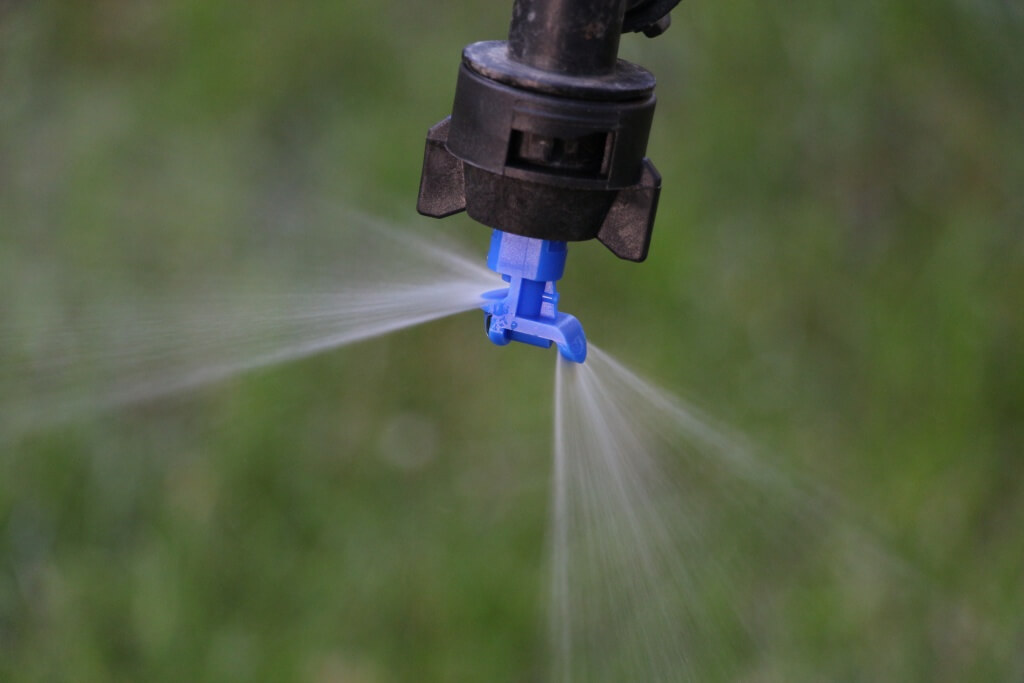
    Nozzles.  This one’s a no-brainer. Nozzles remain the cheapest and most important part of any sprayer, affecting coverage, drift, and accuracy.  Although durable, nozzles do wear or get damaged over time.  But perhaps more important is the changing use patterns of our pesticides.  We are moving into a time of greater reliance on tank mixes that blend systemic and contact products, and also higher water volumes into mature canopies.  For example, fungicides for Fusarium Head Blight benefit from twin fan nozzles. We’re also seeing new herbicide registrations with greater spray quality (droplet size) restrictions, requiring coarser sprays or higher water volumes to maintain acceptable drift amounts. Are your nozzles able to meet those needs?

    Nozzle bodies or turrets. As we move towards more specialty applications, perhaps we need a greater selection of nozzles at our disposal at any given time.  Bodies with 5-nozzle turrets are standard on newer sprayers, and these make sense. Burnoff, in-crop, fungicide, and fertilizer nozzles are four that most users will need just from flow-rate needs alone.  But some finer or coarser options of each may also be justified, and easy access saves time in the field. New bodies also provide new seals, and the newest offer higher flow rates and exchangeable parts.

    Boom end cleanout.  Removing residue or air from booms is an important part of good practice.  Many sprayers already have manual valves that allow this to happen relatively easily, but it’s still a process that an operator has to make time for.  And on top of that, flushing boom sections results in massive doses of pesticide on the soil.  One of the most innovative inventions in recent times is Hypro’s Express Nozzle Body End Cap.  A DIY or dealer installation of these units allows your boom to bleed introduced air on the go.  The ENBEC also forms a dead end exactly at the last nozzle position, eliminating the dead spots that introduce contamination after a pesticide switch.  Cleanout and shutoff response also improves.  A fast boom flush is straightforward by moving the turret to an open position.  TeeJet offers a Rapid Stop extended inlet tube that evacuates trapped air from the wet boom, can be retrofitted on most bodies. Wilger Combojet bodies offer a similar design called Kwikstop. Both can be expected to improve shutoff response, but do not address boom end contamination.

    Wet boom. Are your wet booms made of plastic? If so, they can warp over time and are also harder to clean.  Replacement wet booms are available from several suppliers, including Hypro and Wilger.  These are made of thin-walled stainless steel for excellent durability and ease of cleaning. Wilger units are very thin and light and come with their own Quick-Nut fittings and feature swept elbows and Ts.  Hypro’s Express Booms come with nozzle bodies and Express Nozzle Body End Caps. Flange fittings are used in the Hypro upgrade.

    New boom. Some people are recognizing the value of boom width in sprayer productivity and are considering a wholesale boom replacement from a third party.  These booms come in wider sizes, lighter materials such as aluminum or even carbon fibre, and innovative plumbing options such as recirculating designs or telescoping for adjustable widths from 80’ to 150’. Perhaps a better suspension system or automatic boom levelling system is part of such a purchase.

    Individual nozzle shutoff. Most sprayers have sectional control of at least 5 sections. But some of the outer wings (the part of the boom that is most often involved in sectional control) can still contain significant lengths tied to a section, creating waste. With individual shutoff valves, a boom can be converted to either many smaller sections or even nozzle-by-nozzle sections, depending on the capabilities of the rate controller.  Not only do these offer excellent resolution, they also feature instant shutoff and turn-on response at the spray pressure.  Because this type of installation can demonstrate product savings, it has a calculable ROI.

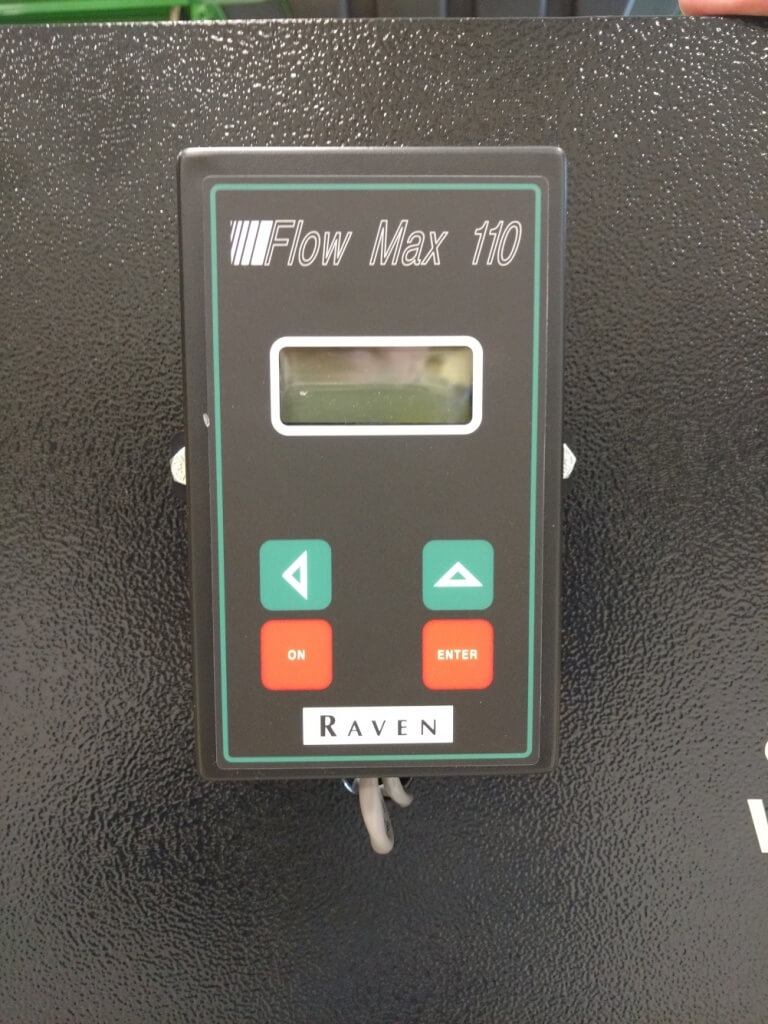
    Rate controller. Some older sprayers struggle with responsiveness. An operator changes speed, and has to wait a long time for the rate controller to catch up.  A newer controller can improve the responsiveness significantly, offer a new larger cab screen, work better with a navigation system, or even include ISO-BUS capabilities for future upgrades.  Improving the user experience with a better interface can be valuable, giving an old sprayer a new capabilities and feel.

    Variable rate technology. We are seeing several options that can offer better control over nozzle flow rate to suit either a greater range of travel speeds (on hilly or otherwise uneven land) or a better range of rates for prescription map application.  Pulse-Width Modulation systems from Capstan (Sharpshooter) and Case (AIM Command), Raven (Hawkeye), or TeeJet (DynaJet) all offer these types of features.  A new nozzle body, Hypro Duo React, achieves similar results with multiple nozzles that can switch back and forth according to flow rate needs.

    Boom lights. Whether spraying at night or wishing to see spray patterns better in the day, boom lights can help. Versions are available from ATI or SprayTest. Caution is advised when spraying between evening and morning hours, as temperature inversions are common during that time.

    3″ plumbing. One of the biggest productivity tools is decreasing the time required to load a sprayer.  Wide booms applying large water volumes at fast travel speeds can empty even a large tank in 30 minutes or less. If the fill also takes 30 minutes, then 50% of the spray day is spent idle just for filling.  Increasing the fill speed with a new load system using 3” plumbing and a high capacity pump can reduce that to 10 minutes, adding acres per hour.  Make sure, though that dry products are properly hydrated so they mix well and stay out of screens. Also consider the rate of chemical induction, as that can be a bottleneck.

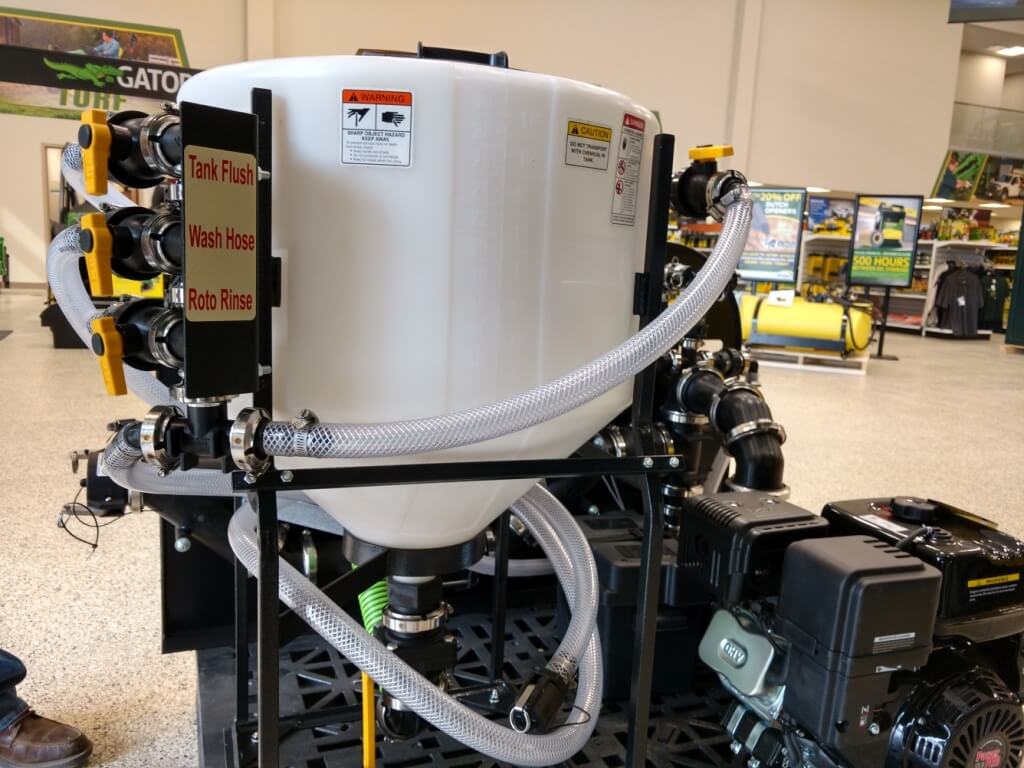
    Tank wash down nozzles. These nozzles, installed at the top of the tank, direct a clean water source (containing a cleaning adjuvant if needed) to the tank wall, rinsing the pesticide off. Successive batches of cleaning improve the tank wall decontamination as the solution becomes more dilute.  By making the wash down easier, tank cleaning can occur in the field immediately after spraying and the rinsate can be sprayed out in the field.  This saves time and prevents point-source contamination.

    Self-cleaning line strainers. Consider this a productivity tool.  Mounted on the pressure-side of the pump, these strainers use excess pump capacity to bypass particles back to the tank.  A tapered design creates a rapid flow of liquid past the screen face generating continuous wash-down of particles. Regular inspection is still recommended, but the chance of a problem is significantly reduced. Because debris is returned to the tank, proper tank sump cleaning becomes more important.

    Pump.  Some call it the heart of the sprayer. The pump pressurizes the spray mixture so it can be distributed evenly and atomized.  To do this, it needs to produce high enough flow for our ever increasing water volumes, travel speeds, and boom widths, while maintaining enough reserve for agitation. Some use the system pump to draw water into the tank, which can present a bottleneck.  Clearly, capacity and pressure are important.  Pump impellers can wear and seals can leak, reducing performance. New or re-built pumps are available in long-lasting stainless steel, and the best new models have flange fittings and seals with either enhanced dry-run survivability, or dry-run capability. An upgrade definitely worth considering.

    Clean water tank with dedicated clean water pump. This is another productivity tool. Cleaning the tank in the field without stopping the sprayer becomes an option with this design. Rather than use the product pump to draw clean water into the tank, mix it up, spray it out, and repeat, this design allows continuous cleaning. When the product tank is empty (signalled by a loss of pressure), the clean water pump turns on and delivers clean water through the wash-down nozzles. The pump must have enough capacity to obtain a good cleaning spray from the wash-down nozzles. As the sump fills again, the product pump delivers it to the boom and also cleans the return lines. The end result is prompt cleaning of the tank and thorough, efficient dilution of the remainder.

    Boom remote control. Whether it’s for cleaning out boom ends or simply verifying proper nozzle operation, a remote boom section shutoff makes those jobs easier, safer, and more environmentally friendly. Boom remote controls let you turn on just the boom section you need to inspect. It’s also useful for nozzle calibration.

    Tires. Ask yourself: what equipment do I spend more time in than any other, makes more passes over each field than any other, makes deeper ruts than any other, and gets stuck more often than any other?  A new set of tires, or even tracks, might be worth considering. Low-pressure sprayer-specific tires with VF (Very High Flexion) technology are available from major suppliers. These offer sprayer-specific lug designs, they increase the footprint for increased floatation and less compaction, and they can also improve ride quality. Tracks, though considerably more expensive, are becoming available for sprayers and can make sense in some situations.

    Some of these retrofits can be costly.  But they can introduce new life and utility into an aging chassis, resulting in higher productivity, higher quality work, or simply a better operator experience.  All of these are important and are worth investing in.

    Here’s a Real Agriculture video of Tom and Jason talking sprayer retrofits at the end of Edmonton’s 2016 FarmTech.
    Note the snazzy “Sprayers101” team shirts!

  • Lessons Learned from the Top 5 Field Sprayer Articles of 2015

    Lessons Learned from the Top 5 Field Sprayer Articles of 2015

    When Jason and I launched the Sprayers101 website in June, I wasn’t sure what to expect. Seven short months and 150 posts later, we’re stoked to have had such a great response.  About 70,000 page views.  17,000 users.  Of the over 100 countries that have visited, Canada, the US, Russia, Australia, and the UK are the top 5.  Jason provided some great background to the venture in his recap of the top horticulture posts.  I owe him a debt of gratitude for leading this effort.

    It was a pleasant surprise that a very specific subject matter such as agricultural spraying could generate this level of response.  Without a single mention of the Kardashians!

    Here are the top five posts on field spraying for 2015:

    1. Agrifac Condor: A Wake-up Call for North American Sprayer Manufacturers? 3078 views. Prior to writing this article, I’d been watching this relatively new (to me) Dutch company for about one year.  I noticed that they thought big, and featured technologies that had benefits for applicators, like air-assist or twin-fluid nozzles, wide booms, and clever plumbing. On seeing the sprayer first-hand at Canada’s Outdoor Farm Show in Woodstock, I knew it was just what the industry needed.  A wake up call.
    2. Exploding Sprayer Myths Episode IV: Speed Spraying. 2211 views.  What is life without a bit of fun?  Writing and filming these episodes had us in stitches.  With generous support of Shaun Haney and the gang at RealAgriculture.com, we’re producing these in our spare time and with gifted resources.  A big thanks to Bern Tobin for being the videographer, director, and rough cut editor, and Jason Stroeve for the final editing, special effects, voice-overs and all those other things that go into it.  We hope to do more of these, resources permitting.
    1. A New Way to Purchase Sprayers. 1058 views. A friend recently reminded me that I used to urge producers to spend more money on sprayers. Well, the industry responded by making sprayers more expensive (you’re welcome), without actually improving our control over deposition uniformity, coverage, or drift.  So yes, people are spending more, but not the way I intended.  In the meantime, the innovations that matter, those on the spray boom – width, aerodynamics, recirculation, better sectional controls, droplet size and rate management – are still considered special options that are probably too expensive.  We’re still looking for the right balance here.
    1. Sprayer Tank Cleanout. 968 views. Cleaning a sprayer remains one of the top concerns of an applicator, actually the whole industry, and we’ve written about it several times.  But it wasn’t until we had a guest contributor, Katelyn Duncan, offer her views that we had any real success.  Katelyn is a Regina area farmer with her own blog and an interest in machinery.  She approached the issue from a practitioner’s perspective and this really resonated and generated a lot of discussion.
    1. Calculators and Tables. While no single table or calculator broke into our top 5, collectively they did and this is worth mentioning.  Much of spraying is mathematical, from rate calculations, to calibrations and nozzle size selection, travel speed ranges and so forth.  Despite living in an age of connectivity and touch screens, a laminated table in the sprayer cab is often worth its weight in gold.

    So what are the lessons?

    For one, we showed that a dedicated website for just one aspect of a farming operation seems to be in demand.  That should encourage those specializing in seeding or harvesting techniques, commodities, fertility.  Where are those sites?

    People seem to want alternative, independent views, sometimes voiced as controversial opinions. Much of our media is controlled by corporate interests with soft-sell implications.  Yes, it’s interesting and valuable information.  But a reality check, whether it comes from an independent researcher or a new entry from the corporate world, is still needed.

    Alternative formats for information are important.  Not everyone learns by reading articles or deciphering charts. By offering a bit of entertainment, we can reach new clients or demographics that we’d otherwise leave behind.  Plus, for Jason and I, the opportunity to be creative is probably the single most important thing about Sprayers101 that keeps us going.

    Lastly, we are so pleased to have guest contributors on our site.  Anyone can contribute – just drop us a note.  I think it’s important to hear different viewpoints, and learn from each other.  That’s one of the great things about agriculture – the willingness to share information.  Any applicators out there who want to describe an aspect of their operation, from innovations in how they fill faster, to their experience with boom lights or cameras, to their thoughts on boom height controllers or PWM, we’d love to hear from you.

    Thanks everyone for supporting Sprayers101.com!

  • My Sprayer Santa Wish List

    My Sprayer Santa Wish List

    Dear Sprayer Santa,

    “I tried to be good this year.  It was hard, though.  Yes, I know that fast driving causes drift and lots of other problems.  But I couldn’t help it – the 375 horses under the hood needed the exercise.  I honestly didn’t mean it.  I’d have stopped had the air-ride not cushioned all the impacts so well.  I had no idea, really.  The cab was so quiet.  I’m sure that plume of spray and dust behind my sprayer didn’t cause any damage.  I mean, nobody called me, anyways.  I had no choice, after spending 2 hours cleaning out the tank and having to do another three quarters before the forecast rain.  So please, Santa, can I have a bigger sprayer?  Please? I think I need it…to, errr…to…to feed the world.  Yeah, that’s right, Santa Baby.  I need it to grow food for others.  So how about it?”

    I wake up in a cold sweat.  Well, if there was a Sprayer Santa, he’d hear lots of excuses about these sorts of things from applicators afraid of getting a lump of coal on Christmas Day, a black nozzle so to speak.

    So why don’t we stop making excuses and solve the problem by making sprayers that focus on the right things?

    Here’s my “no more excuses” wish list:

    1. Increase transport speeds, reduce field speeds. Let’s establish gear ranges which save time getting to the field, and ensure a better quality job once we get there. Let’s focus on productivity without resorting to the easy, but bad option.  Speed comes at a cost.  More horsepower.  More fuel. More structural stength. More weight.  None of it cheap. Or good.
    2. Increase boom width. This one’s a productivity powerhouse.  It’s every bit as good as travel speed, on a percent gain basis, and much cheaper.  Where else in the world is there a better opportunity for wider booms?  The earth’s temperate plains are almost without exception wide, and more or less flat.  With the help of autosteer and automatic boom height, why should 120 ft be the limit? Many aftermarket manufacturers offer booms at 150 ft.  But why stop there?  Sure, we’ll need some engineering to make it work.  But the fact is that wide booms, coupled to slower speeds that require less horsepower, can have the same productivity.  Not a bad tradeoff.
    3. Explore lighter materials. Sure, Ford was ridiculed by GM for offering aluminim trucks.  But when weight is important, alternate materials can make the impossible possible. Booms that weigh many thousands of pounds require so much strength just to carry their own weight, there are diminishing returns.  And the result is that we are stuck with narrow booms.  Let’s get inventive with alloys and composites.
    4. Focus on time saving features. On any given day, we are given maybe 6 hours of good spraying conditions, some in the morning, some in the evening, and perhaps a few in between. This can be interspersed with several days of bad conditions.  What a waste to spend this precious time not actually spraying, but rather filling, cleaning, transporting, getting un-stuck, figuring. In a business where timing is so important, and where a late application can have serious yield implications, we should be spending a greater proportion of time spraying. We need help to minimize downtime.
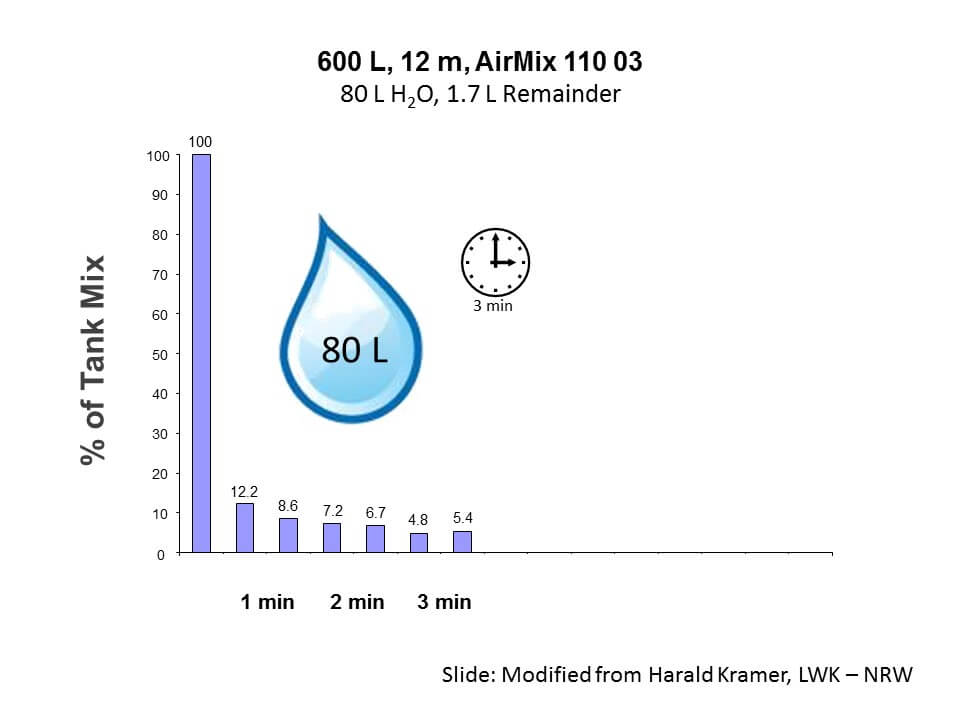
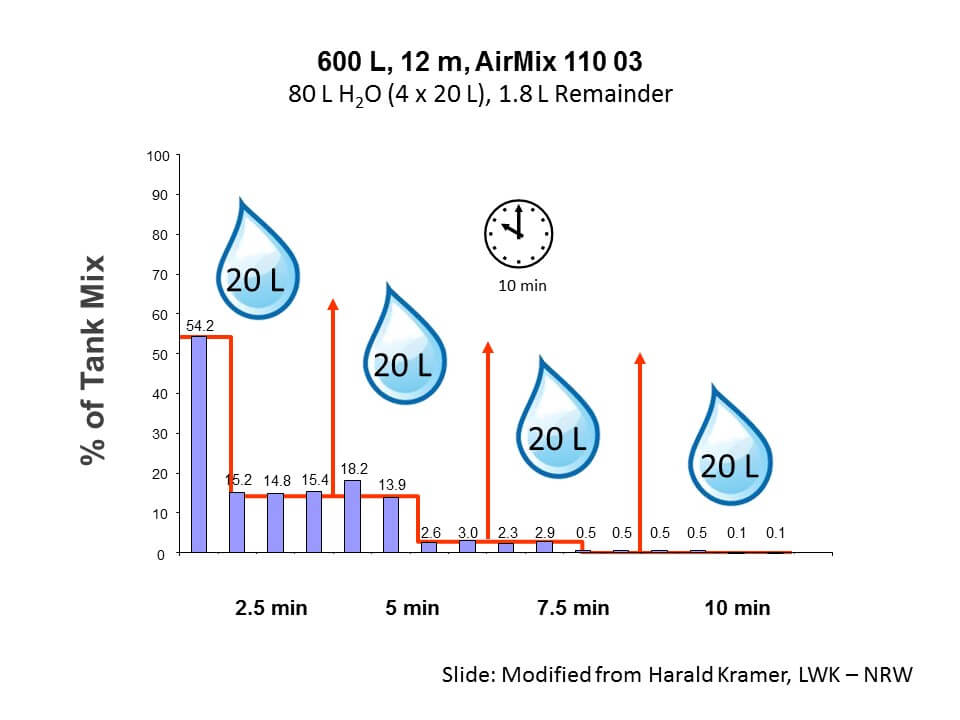
    5. Dedicated clean water pumps and small sumps. Want to clean out the tank faster? Rather than relying on batch mode, reducing concentration by serial dilution, consider adding a dedicated pump to your clean water saddle tank.  Introducing clean water through the wash-down nozzles while at the same time spraying out the sump dramatically increases dilution power with less water. And of course, the smaller the sump and recirculating reservoir, the faster the job will get done.
    6. Recirculating booms. I initially wrote these off as a bad idea when they offered a single pressure entry point (on one end) followed by an exit on the other. Over 120 ft, you’d surely see pressure drops of 10 psi – unacceptable. But with modern designs offering up to four pressure entry points (both ends and middle) these issues appear to have been eliminated. And with clever plumbing, the boom can act as an extension of the tank, making priming and cleaning faster and easier.  Sectional control is now governed by individual shutoff valves, offering customizable, fast, positive shutoff.
    7. Better flow and droplet size control. 2016 promises to be one of the most exciting years for new atomizers, with new entries in the twin fluid, pulse-width modulation, and multiple nozzle markets. But there’s still lots of room for improvement. To the young engineers reading this, give us a nozzle that provides a 10-fold range of flow rates, each at the same pattern angle and droplet size.  Let this nozzle offer easy control of droplet size from Medium to Ultra Coarse at each flow rate. How hard can this be? Make it affordable and reliable, with consistent flow rates and a long wear life.  I think we’re ready to pay for this.
    8. Easy cleaning materials. Every year, it’s a guessing game. Are all the Group 2 residues removed from the tank and booms before you spray your LibertyLink canola? How can you be sure?  Well, by checking your canola two weeks later, of course!  In the meantime, all we can do is offer hope with ever more rigorous cleaning protocols, one-upping last year’s efforts to ensure that nothing got left behind.  How about tank, fitting, hose, boom, and nozzle body designs engineered to eliminate these problems?  How about a guarantee to that effect by the sprayer manufacturer?  It’s going to take more than the occasional stainless steel component.  If we have enough knowledge in fluid dynamics to send an F1 sports car into a turn at 250 km/h, then surely we can design a hydraulic system that self-cleans!
    9. Better aerodynamics. Let’s face it, we can’t control drift just by making sprays coarser. Eventually we’ll reduce coverage too much and this will hurt our important contact products the most. Instead, we need sprayer and boom designs that facilitate the transport of droplets towards their target, avoiding drift. Maybe the shape of our tractor units and boom components will play a role here, maybe the nozzle pattern needs a re-evaluation. Maybe shrouds will return. One thing’s for sure – we can’t simply drive faster and expect coarser sprays to solve the problem.

    So that’s my list.  I’m sure it’s just a beginning.

    What’s on your list?

    Lee Valley Safety Goggles

    *I have a confession to make.  I’m secretly hoping for those Lee Valley German Safety Goggles for Christmas.  Protecting your eyes has never been cooler.

  • What’s my Spray Quality, in 3 Simple Steps

    What’s my Spray Quality, in 3 Simple Steps

    The introduction of dicamba and 2,4-D tolerance traits in corn and soybeans was accompanied by an unprecedented emphasis on spray drift management by the registrants. Product label statements for 2,4-D choline and the new formulations of dicamba emphasize spray drift control to a greater degree than previous products.

    Spray Quality Table

    In Canada, labels make prominent reference to the appropriate “spray quality”, a term referring to an internationally standardized droplet size classification (ASABE S572.2). In this standard, the droplet size spectrum produced by a nozzle is communicated using terms such as “Medium”, “Coarse”, “Very Coarse” etc., and used to describe the potential for spray coverage and spray drift. Spray qualities are colour coded for easy recognition.

    An example of this label language is shown for Enlist Duo below:

    “Droplet Size: Apply as a coarse to extremely coarse spray (ASABE S572 Standard). Use drift reducing nozzle tips in accordance with manufacturer directions that produce a droplet classification of coarse to extremely coarse to significantly reduce the potential for drift.”

    Although spray qualities are voluntarily measured and published by most nozzle manufacturers, their appearance on the label makes their use a legal requirement. This is because the Pest Management Regulatory Agency (PMRA) conducts a risk assessment which assumes, in this case, that a Coarse spray quality supports certain calculated buffer zones (15 m in this case) to protect sensitive ecosystems from Enlist Duo damage.

    The use of coarser sprays can be used to reduce this buffer zone somewhat, in accordance with an on-line “Site-Specific Buffer Zone Calculator” published by the PMRA.

    The challenge for applicators will be to determine the spray quality of their current application method. Here’s a relatively simple three-step process to find out.

    Step 1: Identify the nozzles currently on the sprayer.

    It seems basic, but it’s surprising how many applicators can not name their spray nozzle.  If unsure, closely inspect the nozzle, looking for the manufacturer’s name, the nozzle model, and its flow rate. Most nozzles will have this information printed right on them. Here are pictures of the most common nozzles. Can’t find the info? Have a look at this article for websites with pictures.

    Major manufacturers include Hypro (John Deere via private label), Agrotop (marketed by Greenleaf in North America), Hardi, Lechler, TeeJet, Wilger, and Billericay Farm Systems (Air Bubble Jet). Manufacturers produce many models, but most are easily identified by a series of letters and numbers. For example, all nozzles will be offered in several fan angles (80º and 110º are most common), and flow rates (in US gpm).

    To be more helpful, flow rates are colour coded according to an international standard. This table shows the colours and lists flow in US units in (gpm at 40 psi) and metric (L/min at 3 bar).

    The combination of series of letters or numbers shown on nozzles follows a relatively consistent pattern: Fan angle and flow rate arranged as 11003 or 03-110. In this case, the nozzle produces a 110 degree fan and has a flow rate of 0.3 US gpm. The use of US gpm at 40 psi to designate flow rate is an international standard.

    The nozzle model is frequently inserted into this stamp, and is manufacturer specific. For example, TeeJet may include “AIXR” in its stamp, and Agrotop may include “TDXL”. Hardi’s MiniDrift is abbreviated MD. Some nozzles may not list their fan angle. Others (Air Bubble Jet) are blank, creating a mystic aura of superiority.  Others leave the information printed on the nozzle cap.

    A bit of experience is very helpful, especially with John Deere nozzles, where the nomenclature inexplicably eliminates the first digit of the 110 or 120 degree fan angle. So the JD 11004 is labelled “1004”.  That’s a bit like saying “my truck sas a 50 engine”, when you mean it has a 350. How’s a city person supposed to know you don’t mean the trusty old 250 straight 6?

    Hypro SprayIT app screenshot

    Step 2: Obtain spray quality information on the nozzle.

    Most manufacturers publish the recommended pressure range and the spray quality of their nozzles. This information can be found in their product catalogues, or on their websites, or in smartphone apps.

    Although the designation of Spray Quality is governed by an international standard that is designed to standardize droplet sizing among various labs, we do see some variation in results.  Part of this is due to the continued evolution of the standard, requiring manufacturers to re-do some tests, or at least re-analyze their data. For example, ASABE S572.3 was released in conjunction with ISO25358 which changed the boundaries for the coarser sprays. These changes are beginning to be seen in the newer catalogues.

    Turbo TeeJet Spray Quality

    Another problem is that testing is done with plain water.  It is well known that the use of certain formulations or adjuvants can affect spray quality.  Currently, the standard does not address these effects, and data should be used with some caution.

    Step 3: Identify the expected pressure for a given travel speed and water volume.

    The same catalogues or websites that publish spray quality also produce charts that list the expected spray pressures at various travel speeds and water volumes.

    Becoming familiar with using these charts enables the applicator to predict the spray pressure the nozzle will be operating at. For example, if an applicator intends to apply 10 gpa using a yellow (02) nozzle, this table shows the following: The nozzle will be operating at 30 psi at 5 mph, at 40 psi at 6 mph, at 60 psi at 7 mph, at 70 psi at 8 mph, and at 90 psi at 9 mph. The applicator should know the nozzle’s spray quality at each of those pressures.

    Nozzle sizing follows a slightly different procedure for Pulse-Width-Modulation (PWM) systems, requiring the nozzle to be over-sized about 30% or so. Since the majority of new sprayer sales now include PWM, we’ve prepared a special article just for this system here.

    Application Chart 2015 cropped

    Travel speed and/or spray volume should be adjusted to ensure the sprayer operates at a pressure which creates the desired spray quality. In other words, the pressure gauge should be used as a speedometer.  If the nozzle model or size doesn’t produce the desired results, the applicator should consider changing nozzles. Once the right combination of factors has been determined, the spray pressures that created the label-required spray quality should be noted. From that point, the applicator can choose travel speeds that maintain the necessary pressure range.

    Summary

    It is up to applicators and industry representatives to ensure that herbicide products are applied according to label requirements. We expect significant scrutiny on spray drift from new products and need to ensure that proper application methods are used at all times. It’s important that everyone understands just how to do it.

    Dr. Scott Bretthauer (U. Illinois) gives a nice summary in this video by Precision Labs:

  • Agrifac Condor: A Wake-up Call For North American Sprayer Manufacturers?

    Agrifac Condor: A Wake-up Call For North American Sprayer Manufacturers?

    agrifac-condor-endurance
    Agrifac Condor Endurance (Source: Agrifac)

    I like good ideas.  And at Canada’s Outdoor Farm Show in Woodstock this fall, I saw a sprayer that puts a lot of them in one place.  I’m talking about the Agrifac Condor Endurance.  I’ve seen European sprayers before, even operated a few.  And although they are all well-engineered machines, the Netherlands-based Condor might be the first one to gain traction in North America. Why this one? Let me explain.


    Size:
      If you thought European machines are too small for North American conditions, this one breaks the mold.  Sporting an 8000 L (2100 US gal) tank, track widths up to 4.6 m (15 ft), a 320 hp Tier 4 engine, and booms up to 55 m (180 ft) wide, it’s a monster. The smaller Condor offers tank sizes of 1050 or 1300 US gal and is a smaller machine overall.

    Agrifact Condor Sump
    The tank sump design ensures minimal remainders.

    Tank and Pump:  The large tank has a molded funnel sump that feeds directly into the pump.  Net result is a design that empties the tank completely, leaving a tiny remainder amount, less than 2 gallons according to Rob Blijdorp, with Agrifac North America.  Because most of us clean tank remainders by diluting them with clean water, this small remainder needs less water to dilute residues to safe levels, saving time when switching products.  The machine is equipped with a Hypro centrifugal pump as standard equipment in North America. A diaphragm pump is optional. This pump type is unusual for North America, but it is self-priming, can run dry, and can produce very high pressures.

    Agrifac Condor Boom
    Wide booms with recirculating plumbing boost productivity and minimize waste (Source: Agrifac)

    Boom: The boom widths available on the Condor are astounding, and there’s no easier place to use them than the North American Great Plains.  Wider booms are one of the most effective efficiency boosts in spraying, and allow slower travel speeds while creating fewer tracks.  The Condor boom has a recirculating design with a pressure feed from both ends, eliminating boom ends and increasing cleanout speed.  Since it uses the boom as part of its circulation system, the boom primes at filling so the new product is at the nozzles right away. Sectional control is flexible, with nozzle-by-nozzle control available.

    Agrifac Condor 4-wheel steer
    Four wheel steer on a walking beam chassis

    Chassis:  The frame and suspension system looks like a walking-beam setup, and is claimed to give a smoother ride with less transfer of bumps to the boom. The system has four-wheel steer capability for less tracking in turns, and a tight turning radius. The weight of the smaller Condor machine equipped with a 120’ boom is 24,500 lbs, the Condor Endurance with the same boom is 31,000 lbs.

    HighTechAirPlus nozzle
    The HighTechAirPlus atomizer is a twin fluid design that uses air to control flow and atomization.

    Nozzles: I saved the best for last.  Since 1989 (yes, I remember the year!), I’ve been a fan of “twin fluid” nozzles, but have not seen them take hold anywhere.  The HighTechAirPlus nozzles are Agrifac’s version.  Here’s how they work:  Liquid is delivered to the nozzle in the usual way, by pressure.  But air is also delivered, created by a dedicated air pump that has modest volume and pressure requirements.  Both air and liquid make their way through the same nozzle (a deflector style, similar to the TeeJet FloodJet).

    HighTechAirPlus
    HighTechAirPlus installed. Note the air supply and the air-activated shutoff for individual nozzle sectional control.

    The advantage?  Liquid flow and droplet size can be adjusted independently, with air and liquid pressure.  More air results in lower liquid flow. It also reduces droplet size.  More liquid pressure increases flow, and also reduces droplet size.  Clever combinations of both can keep droplet size fairly constant over a wide flow rate range.  Alternatively, the nozzles can change droplet size while keeping the same flow rate, depending on the drift or coverage needs at the time. The travel speed range achievable is similar to that with PWM.

    Verdict.  The jury’s out.  As a newcomer to North America, the Agrifac faces a few challenges.  Many say it needs a dealer network, inventory and parts.  It needs to prove its reliability. It needs to be able to service its machines, especially if parts are non-standard.  It needs field cred out here.

    But I’m a bit tired of our North American sprayers adding horsepower, speed, and weight to their sprayers each year, and little else.  They leave applicators to struggle alone with equally important productivity factors such as quick and thorough cleanout, drift management, nozzle selection and others.

    The things that strike me with this new sprayer are Agrifac’s innovative design, and its emphasis on issues that matter to applicators:  productivity and excellent control over application rate and droplet size. The company has the right priorities in my books.