Tag: vegetable

  • Nozzle Choice in Vegetable Crops – an Australian Perspective

    Nozzle Choice in Vegetable Crops – an Australian Perspective

    Editor’s Note: Any brand-specific references or recommendations in this article are based on the author’s experience. Sprayers101 endeavours to preserve brand independence and impartiality to best serve our readers. This article was originally posted in 2018.

    During my many years of work in the Australian vegetable and horticultural industry, I am continually asked:

    Q. What is the best spray unit to use?

    My answer is simple:

    A. The one that has been correctly set up and matched to the crop you are spraying.

    That can be hard to achieve, especially in vegetable crops where the target can vary enormously from bare ground to upright leaf crops (e.g. onions), to horizontal leaf crops (e.g. potatoes and brassica).

    Generally, I have found that air-assist booms offer the best starting point for achieving good spray coverage of vegetable crops. However, like any spray boom, they must be set up correctly. Air-assist booms are more expensive and require a few more horses to operate, which is why most Australian vegetable growers prefer to make do with a non air-assist boom.

    So, if air-assist isn’t an option, it then becomes imperative to determine the most suitable nozzles for their particular requirements. I have worked in many vegetable crops over the years. I’ve held my share of “fluorescent dye nights” and checked spray coverage and canopy penetration with many grower groups. Based on my experience, there are three types of nozzles I recommend for most vegetable crops:

    Nozzle #1: Air Induction Flat Fan

    Here’s what I say when the grower (inevitably) asks which nozzle is the best for every task:

    Using only one nozzle will compromise some aspect of a series of applications. However, the Syngenta 110 025 air induction nozzle generally performs well. Manufactured by Hypro it creates more droplets per liter than other air induction nozzles of the same size (as of 2018). (Editor’s note: as of 2025, a likely North American equivalent is alternating-direction Syngenta 3D 90’s. They produce a high-velocity Extremely Coarse-Ultra Coarse spray quality and the manufacturer claims they improve the penetration of broad leaf canopies over conventionally-angled sprays. However, when drift potential is low, travel speed is reasonable, and boom height is low, alternating-direction Defy 3Ds produce a Medium-Coarse Spray quality which may be more conducive to retention on hard-to-wet vertical targets).

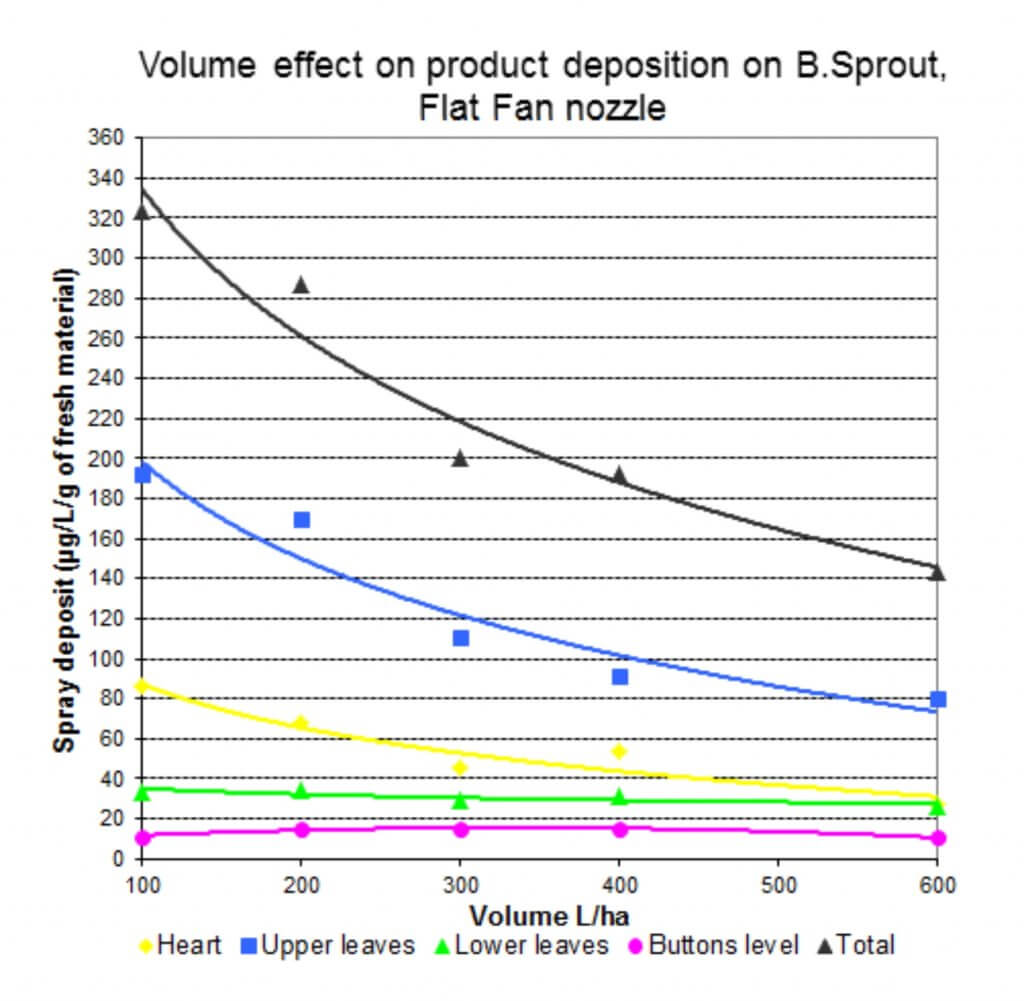
    As long as the crop isn’t too large (e.g. later season), I recommend this nozzle with lower water volumes. This is because I tend to see more application issues arising from excessive water rates that wash product off the plant. Unless you are after soil borne diseases, avoid run-off and wastage by using the SAI 110 -25 with volumes of about 200 L/ha. The following graph shows the results of application volume on brussels sprout coverage (per Syngenta UK).
    Nozzle #2: Narrow Spray-Angle Flat Fan

    When I am trying to increase canopy penetration, I like the Syngenta Vegetable Nozzle (SV65-04 flat fan). I feel the narrow spray fan angle delivers a directed spray pattern into the crop canopy which can significantly improve penetration. This is a good fit for late-season insecticide and fungicide sprays in brassica crops, where pests and diseases can be hidden deep in the crop canopy.

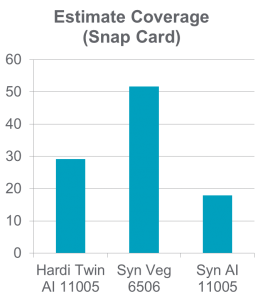
    I worked with a vegetable grower who was having trouble controlling sclerotinia in his mature fennel crop. The target was the base of the stem, deep in the canopy. In the following image you can see the water sensitive paper taken from ground-level in the canopy. The nozzles used from left to right are; Hardi Twin AI 110-05, Syngenta 65-06 vegetable nozzle and Syngenta AI 110-05. Coverage was estimated using the SnapCard app (freely available for iPhone and Android platforms). (Editor’s note: as of 2025, Syngenta’s silver 06 and gold 08 vegetable nozzles are not available in North America. They produce high volume, slow-moving, Coarse-Very Coarse sprays. TeeJet’s Visiflo is a 65 degree tip, but produces too fine a spray quality to be serviceable. As spot-spraying is increasingly adopted, the development of narrow-angled nozzles is anticipated and may offer a reasonable alternative.).
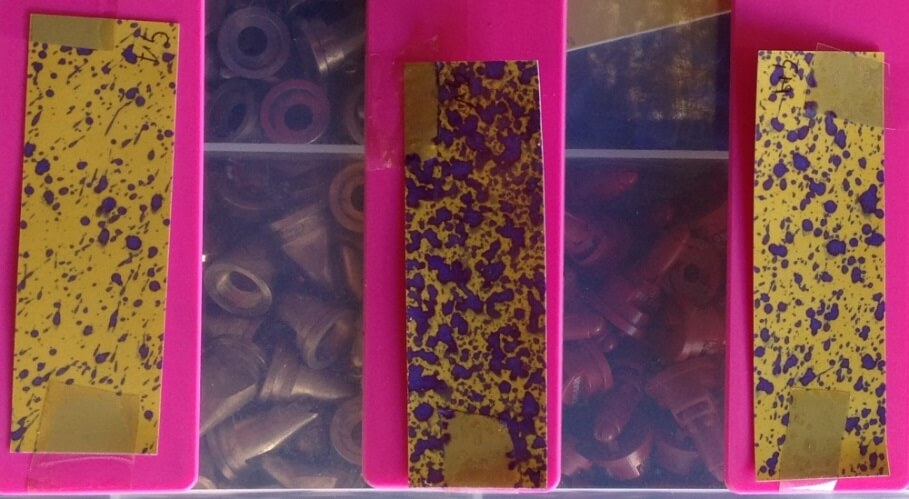
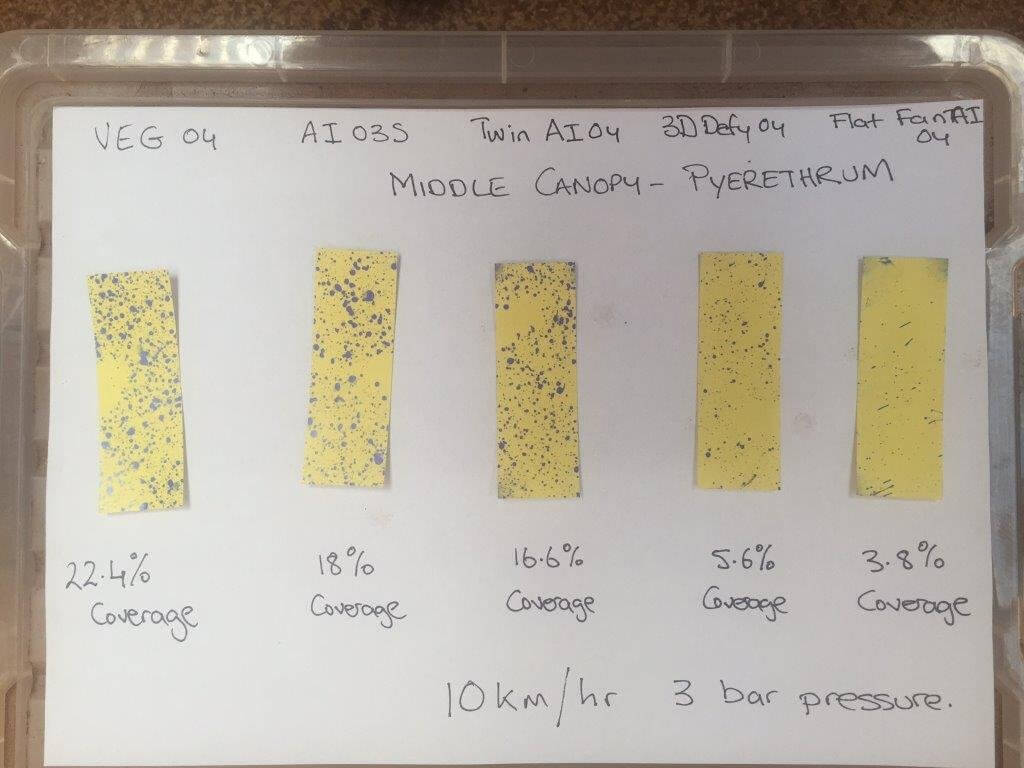
    So, I know pyrethrum is a flower and not a vegetable crop (think chrysanthemum), but it can be hard to penetrate, so this is a good example. We compared five nozzles and estimated coverage using SnapCard. The Veg 65-04, AI 110-035, and Twin AI 110-04 seemed to improve coverage over the Defy 3D 85-04 and conventional AI 110-04.
    For broadacre farmers (i.e. field or cereal crops) the SV65 flat fan nozzle has also proven to be extremely successful at penetrating thick standing stubble residue when using pre-emergent herbicides. Likewise, it performs well when targeting lower leaves during fungicide applications. Again, I believe that this is due to the narrow fan angle of the spray giving a more direct spray down through both the stubble and the current season’s foliage. Be attentive to nozzle spacing and boom height when using narrow fan angles to ensure correct overlap and complete coverage.

    Nozzle #3: Angled Flat Fan

    For onions and broadleaf crops (e.g. potatoes and beans), I feel the nozzles that have their spray fans angled forwards and backwards along the (non air-assist) boom are best suited.
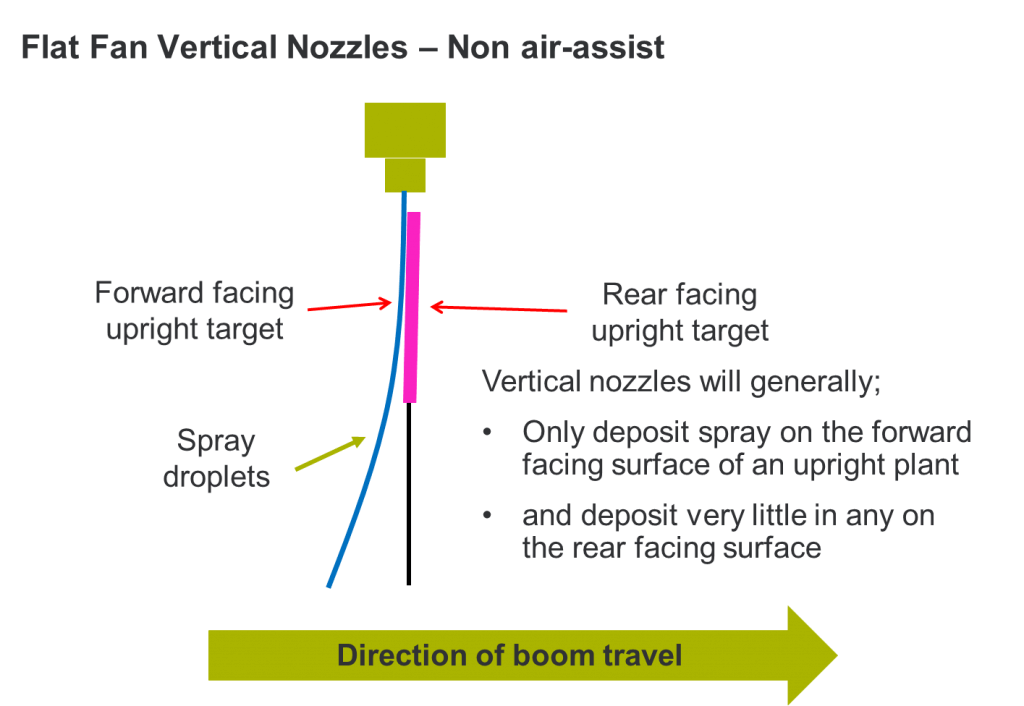
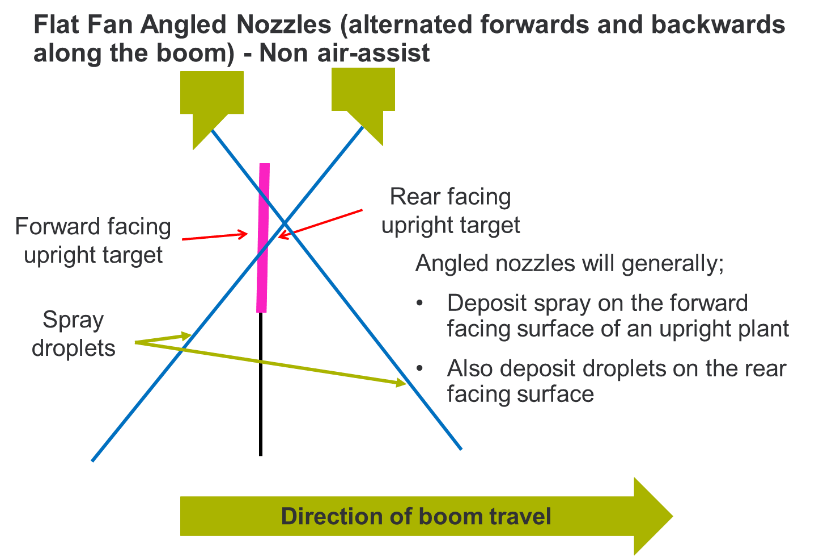
    The following image shows coverage from angled sprays on simulated upright targets in the field using water sensitive paper.
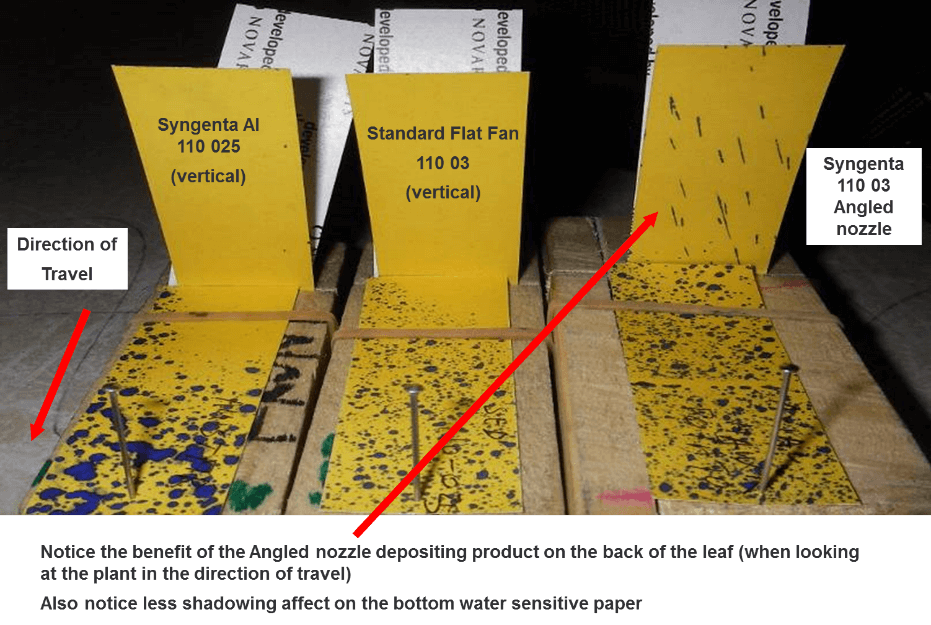
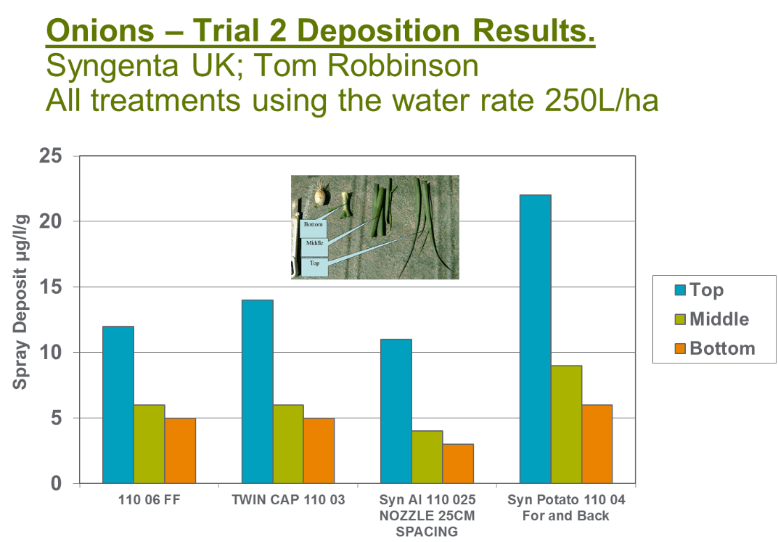
    The Syngenta angled nozzles are designed with a 30° incline intended to improve foliar coverage down to the lower leaves on some vegetable crops. Although originally designed for use in potato crops, I have also had success in other vegetable crops such as onions and leeks. (Editor’s note: as of 2025, the Gold 04 and Orange 05 potato nozzles do not appear to be commercially available, although possibly in Ireland. They produced a ~Medium spray quality at an angle similar to that of the vegetable nozzles).
    Summary

    No matter the nozzle choice, or how good the application technique may be, the priority should be to manage disease and insect pests early in crop development. If you are trying to control heavy pressure from disease or insects and it’s deep within the crop canopy, often, you’re going to come off second best. Prevention is always better than cure, no matter what crop protection product you are spraying.

    With that caveat, I’ll leave you with my suggested nozzle choices. Preferably, I would suggest installing (at least) a triplet nozzle selector to quickly change between three nozzles for each crop.

    CropGrowth StageWater Volume (L/ha)Suggested NozzleNotes
    CabbageSmall, open100-200Air InductionRun-off is the enemy of small plants.
    Hearted300-80065 ° Fan Angle NozzleAngled spray important to get spray under top leaves. Use twin cap option for volumes greater than 300 L/ha.
    CarrotsSmall100-200Air InductionCarrots are good at catching spray. Angling nozzles e.g. Twin Cap will give best results.
    Large200-40065 ° Fan Angle Nozzle65º fan the best for penetrating to crown. Apply volume of 200 L/ha, increasing to 400 L/ha in denser crops. Avoid air induction (aka bubble jet) and hollow cone nozzles for later application timings.
    Brussels SproutsSmall, open100-200Syngenta AI 110025Run-off is the enemy of small plants.
    Large200-300Syngenta 3D nozzle 85 04 or 85 05
    LeeksSmall100Syngenta 3D Nozzle 85 03, 85 035 and 85 04 cover both sides of the plant.Coverage, run-off and missing the target are the problems likely in Leeks. Angled spray forward and backwards is important. High Volumes = Run-off.
    Large200-300Syngenta 3D nozzle 85 04 or 85 05Angled spray forward and backward. High Volumes = Run-off.
    LettuceSmall, open100-200Air Induction Run-off is the enemy of small plants.
    Hearted300-80065 ° Fan Angle Nozzle
    OnionsSmall100Syngenta 3D Nozzle 85 03, 85 035 and 85 04 cover both sides of the plant.Coverage, run-off and missing the target are the problems likely in onions. Angled spray forward and backwards is important. High volumes = run-off.
    Large200Syngenta 3D Nozzle 85 04 or 85 05Angled spray forward and backward to cover both sides of the plant.
    PotatoesPrior to row closure100Syngenta Pre-em 03 nozzleAngled spray forward and backward.
    After row closureSyngenta 3D Nozzle 85 03, 85 035 and 85 04
    Pre harvest (desiccation)200-400Syngenta 3D Nozzle 85 04 or 85 05The desiccation of very large canopies may require up to 400 L/ha of water on the 1st application.
    Peas and Edible BeansSmall100Syngenta 3D Nozzle 85 04 for 7–9 km/hr. Syngenta 3D Nozzle 85 05 for 10–12 km/hr.Medium spray quality and use higher water volumes in dense crops. All nozzles 0.4-0.5 m above top of crop.
    Large200
  • Drop Hoses Improve Coverage in Field Peppers

    Drop Hoses Improve Coverage in Field Peppers

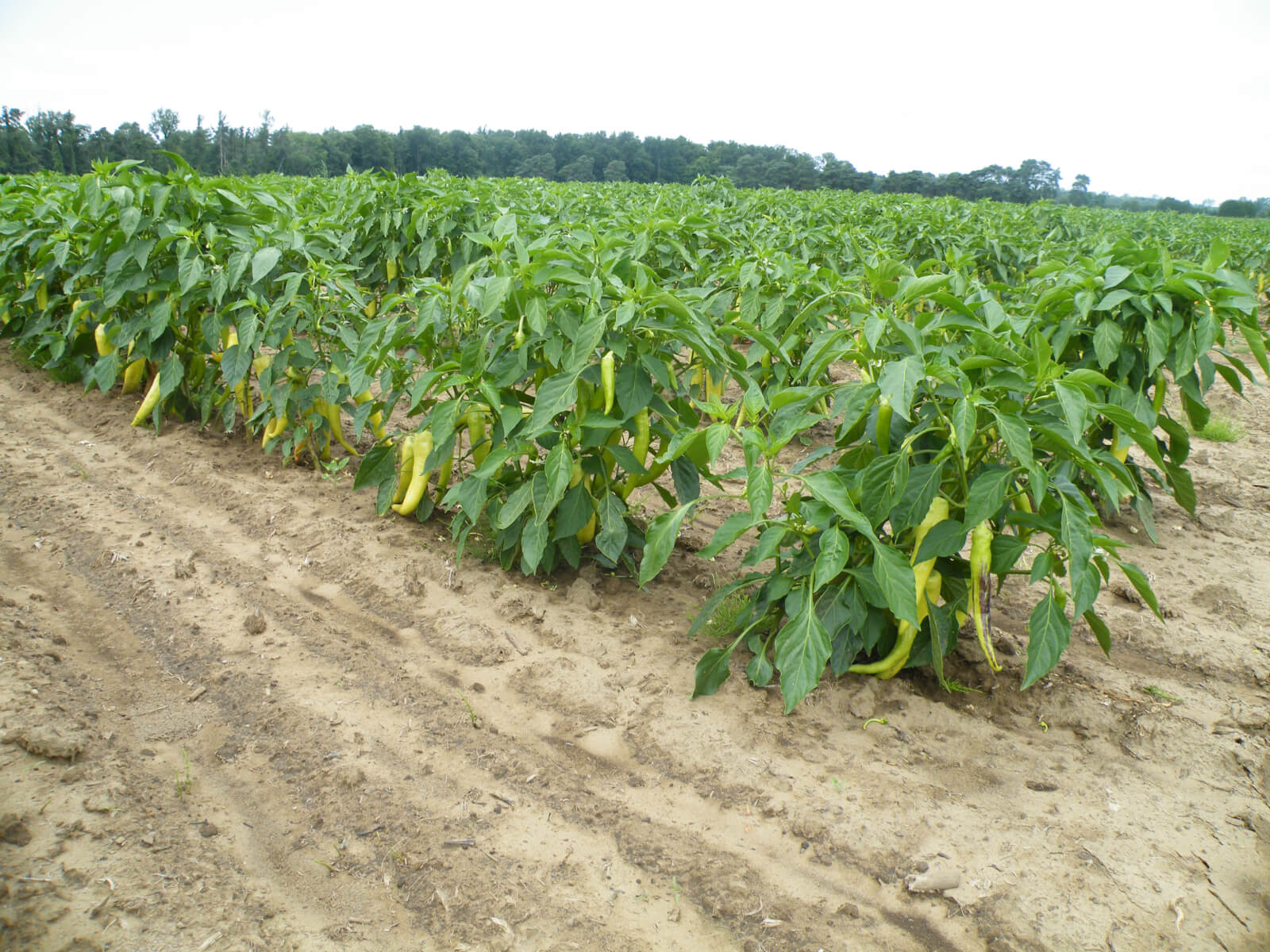
    In early July 2016, a farm supplier contacted us on behalf of a client with a history of disease control issues in his field pepper operation. He wanted us to calibrate their sprayer and diagnose spray coverage to see if there was room for improvement. Improved coverage doesn’t necessarily mean improved efficacy, but generally it’s a reliable indicator. When we arrived at the field the winds were gusting over 15 km/h, which had the potential to create a massive drift issue. We were only spraying water, so it was decided that if we managed decent coverage in those conditions, there would be no need to worry on an acceptable spray day.

    Field pepper in Southern Ontario in mid-July
    Field pepper in Southern Ontario in mid-July

    The grower traditionally ran two different settings on his sprayer. They were relatively low volumes for a vegetable operation, but the crop was still small at this stage, so we did not propose raising the volume:

    1. TeeJet AITX 11008’s on 50 cm (20″) centres at 11.25 kmh (7 mph) and 3.44 bar (50 psi). That’s 3.35 L/min (0.89 gpm) per nozzle for a total rate of 350 L/ha (37.5 gpa).
    2. TeeJet ConeJet TXVK18’s on 50 cm (20″) centres at 7 kmh (4.5 mph) and 3.44 bar (80 psi). That’s 1.6 L/min (0.42 gpm) per nozzle for a total rate of 275 L/ha (29.5 gpa).

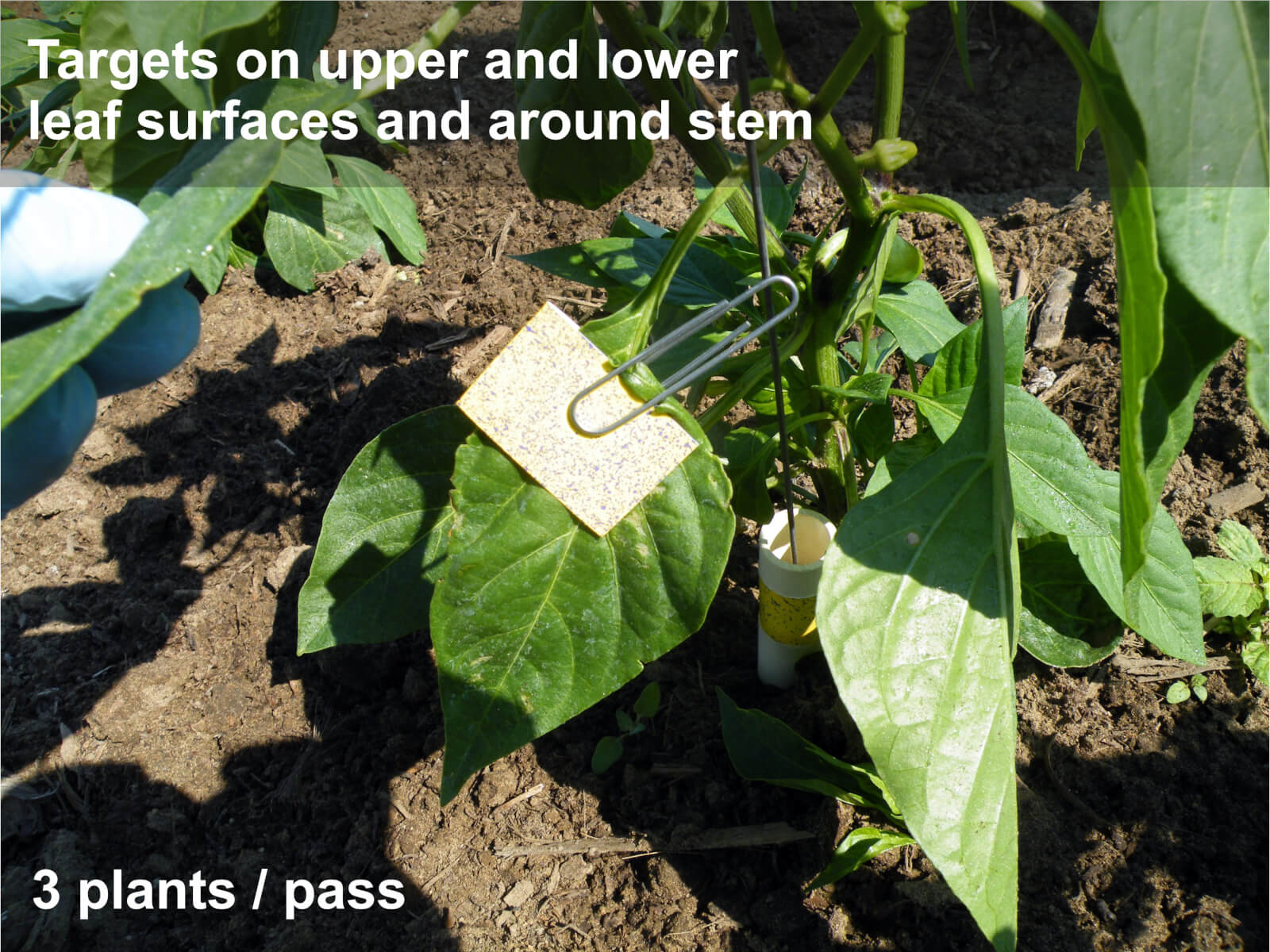
    To test the coverage with these settings, we folded a piece of water-sensitive paper over a leaf to cover both surfaces, and wrapped one around a hollow tube to mimic a plant stem (see figure). Three plants were papered for each sprayer pass. Papers were collected, digitized and analysed for percent-coverage and droplet density. When diagnosing coverage for a horticultural crop, a distribution of 85 medium deposits/cm2 and 10-15% coverage is a reasonable standard for most applications.

    Location of water-sensitive papers in situ.
    Location of water-sensitive papers in situ.

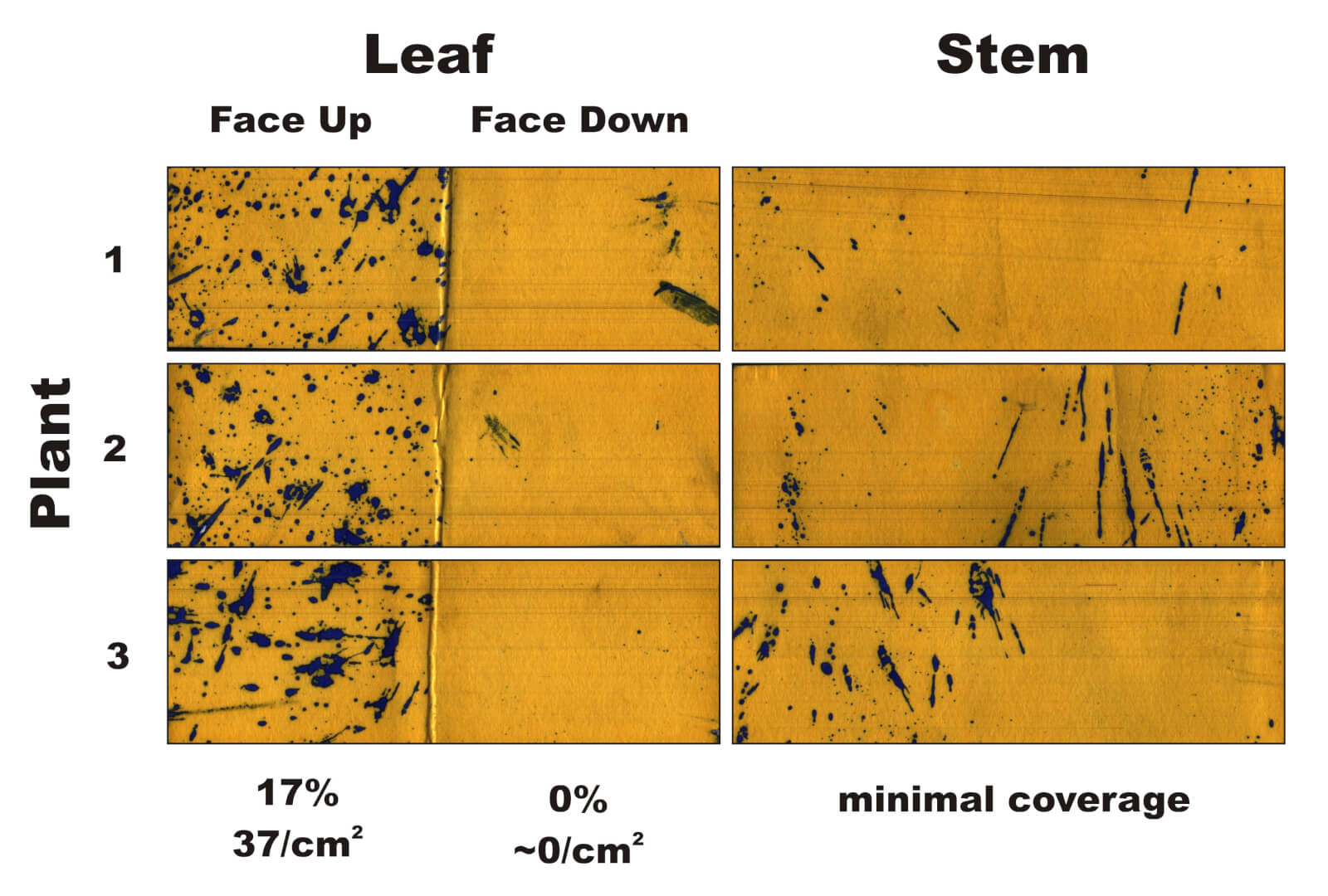
    The first condition (the AITX tips) averaged 17% coverage on upper leaf surfaces (37 deposits/cm2). These were coarser droplets at relatively low volume, so it was no surprise that we didn’t achieve 85 deposit/cm2 target. When using such large droplets, it is more important to achieve an even distribution and the 10-15% surface coverage (we achieved 17%). There were no deposits on the underside of the leaves (See figure 1), but that was also expected as coarser droplets tend to follow a downward vector that is not conductive to under-leaf coverage.

    Figure 1 - Water-sensitive papers from three plants sprayed in Condition 1. Percent coverage and droplet density are calculated for the leaves, and a visual inspection is made of the stems.
    Figure 1 – Water-sensitive papers from three plants sprayed in Condition 1. Percent coverage and droplet density are calculated for the leaves, and a visual inspection is made of the stems.

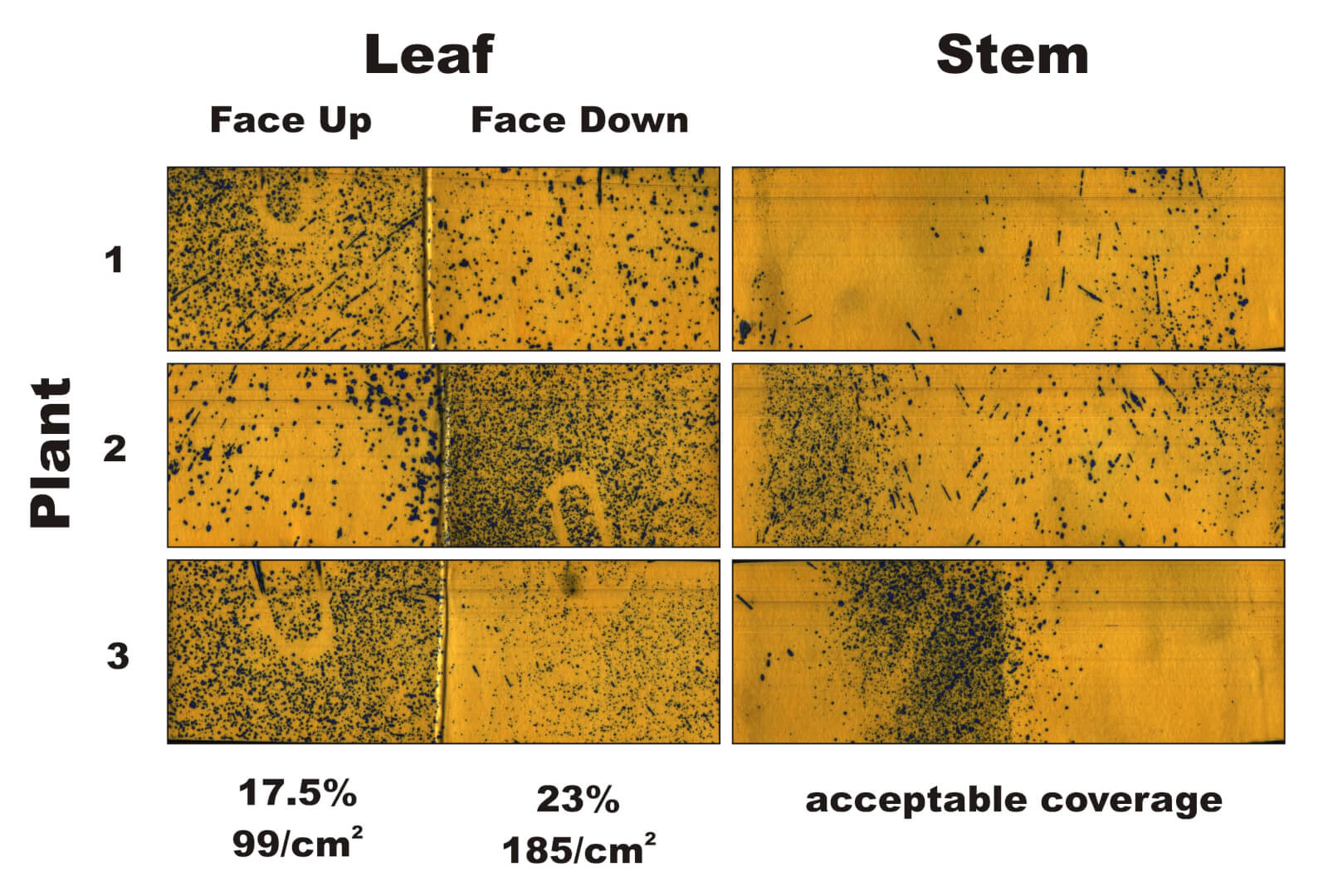
    The second condition (the ConeJets) provided better coverage. The fine droplets produced covered an average 17.5% coverage with a distribution of 99 deposits/cm2 on upper surfaces, and 23% coverage with a distribution of 185 deposits/cm2 on lower surfaces. Panoramic stem coverage was improved as well (see figure 2). This is excellent coverage, but the finer droplets were highly prone to drift (see below). With no form of drift control, this set up is undesirable.

    Figure 2 - Water-sensitive papers from three plants sprayed in Condition 2. Percent coverage and droplet density are calculated for the leaves, and a visual inspection is made of the stems.
    Figure 2 – Water-sensitive papers from three plants sprayed in Condition 2. Percent coverage and droplet density are calculated for the leaves, and a visual inspection is made of the stems.
    With no form of drift control, the fine droplets produced by hollow cones create unacceptable spray drift, even in moderate wind conditions.
    With no form of drift control, the finer droplets produced by hollow cones create unacceptable spray drift, even in moderate wind conditions.

    This led us to propose a more directed boom arrangement: We set up a hollow cone over the row (the grower’s original ConeJet) and a drop hose suspended in each alley with two TeeJet XR 8004 flat fans positioned on an angle (i.e. not vertical or horizontal to ground). This gave sufficient height to span the canopy with as little direct waste on the ground as possible. As the crop grows, the nozzles would need to be twisted into a more vertical alignment.

    ConeJet TXVK18’s alternating with drops with TeeJet XR 8004’s.
    ConeJet TXVK18’s alternating with drop hoses with TeeJet XR 8004’s.

    We did not use an air induction fan to avoid the Very Coarse spray quality and we used 80° instead of 110° to ensure the spray did not overshoot or undershoot the plant. Here are the details of the third set up:

    3. TeeJet ConeJet TXVK-18’s on 100 cm (40″) centres at 7 kmh (4.5 mph) and 3.44 bar (80 psi). That’s 1.6 L/min (0.42 gpm) per nozzle. Also, two TeeJet XR 8004’s per drop on 100 cm (40″) centres at 7 kmh (4.5 mph) and 3.44 bar (80 psi). That’s ~4.5 L/min (1.2 gpm) per drop hose. Together, set of nozzle for a total rate of 523 L/ha (56 gpa).

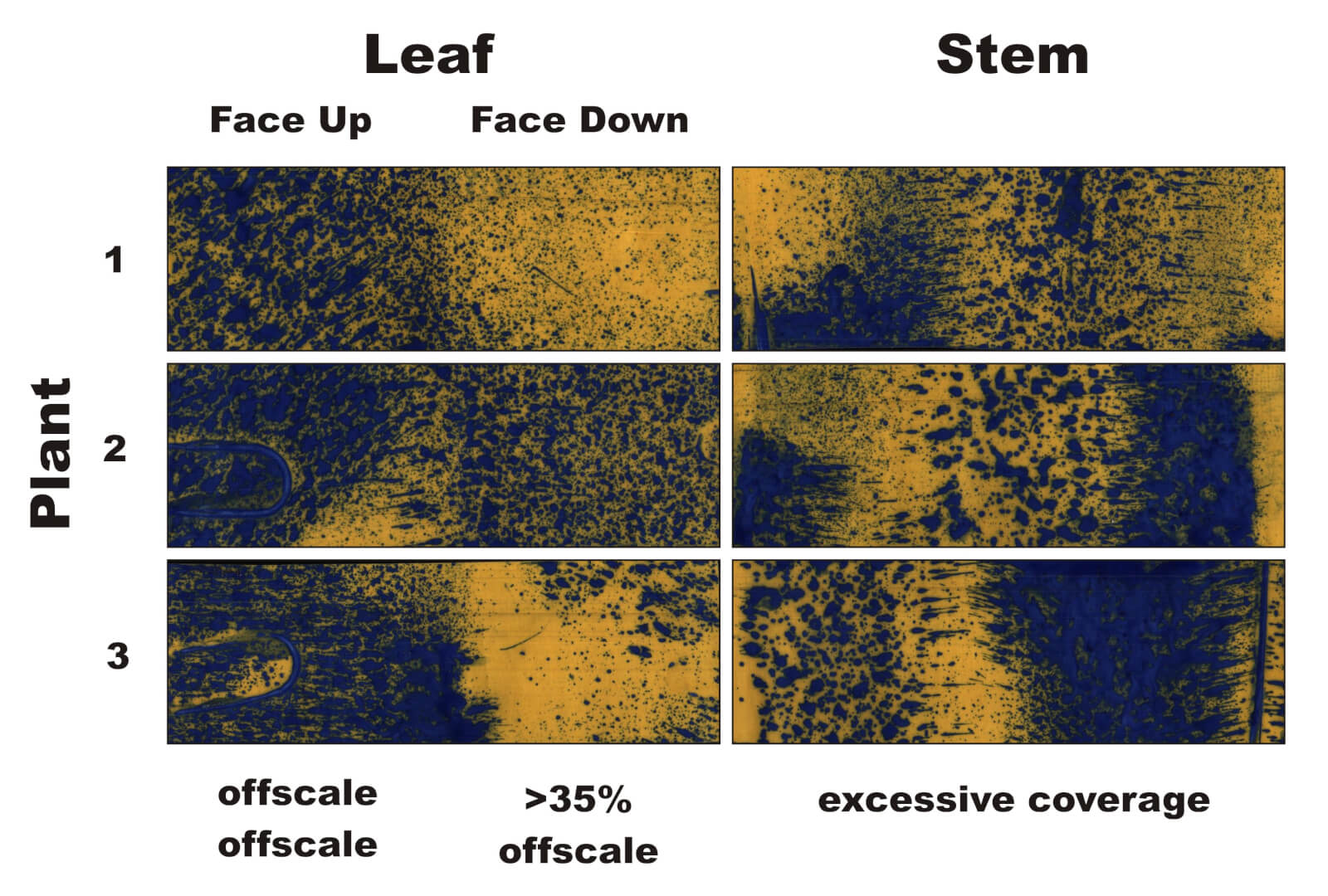
    This set up raised the volume considerably and aimed spray directly at the sides of the plant. Coverage was excessive and in a few cases exceeded what the diagnostic software could reliably resolve (see figure 3). Since the plants were still small at this stage, it was decided we would let them “grow into the volume” and come back to check coverage once they were at full size.

    Figure 3 - Water-sensitive papers from three plants sprayed in Condition 3. Percent coverage and droplet density are calculated for the leaves, and a visual inspection is made of the stems.
    Figure 3 – Water-sensitive papers from three plants sprayed in Condition 3. Percent coverage and droplet density are calculated for the leaves, and a visual inspection is made of the stems.

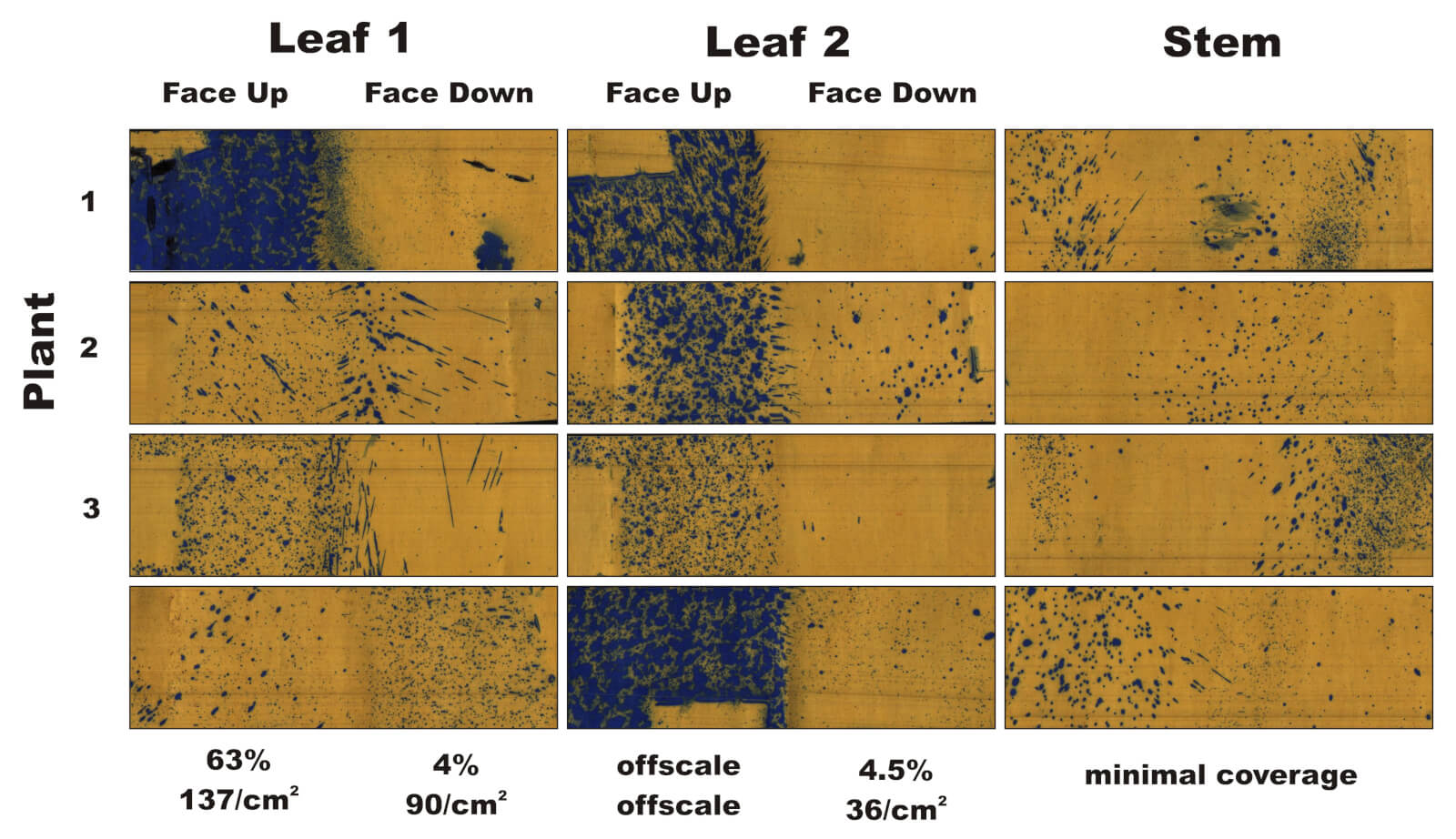
    When we returned in mid-August the plants had reached full maturity. In this final coverage trial, we added a second water-sensitive paper to each plant to span the height of the crop canopy, which had grown considerably.

    The same pepper plants ~5 weeks later had more than doubled in size.
    The same pepper plants ~5 weeks later had more than doubled in size.

    Coverage was reduced compared to how we left things in July, but appeared to be sufficient on key surfaces (see figure 4). The papers showed upper leaf-surface coverage of 63%-to-offscale and deposit distribution of 137 deposits/cm2-to-offscale. Coverage on the lower leaf surfaces was greatly reduced to 4-4.5% and 36-90 deposits/cm2. Panoramic stem coverage was present, but minimal. Applying higher volumes would likely have improved matters.

    Figure 4 - Water-sensitive papers from three plants sprayed in Condition 3, ~5 weeks later. Percent coverage and droplet density are calculated for the leaves, and a visual inspection is made of the stems.
    Figure 4 – Water-sensitive papers from three plants sprayed in Condition 3, ~5 weeks later. Percent coverage and deposit density are calculated for the leaves, and a visual inspection is made of the stems.

    When asked about the drop hoses, the grower reported “They are a bit of a nuisance because they take extra time to put on, and they get caught in the bush at the back of the field. But if they increase our coverage, then they’re worth the extra effort.”

    Final thoughts

    Adding drop hoses to a vegetable sprayer may be unconventional, but if fungicide coverage is a concern, and the drops will fit between rows, they might be worth a try. Carefully consider the volumes you use because they should reflect the size of the plant canopy you are trying to protect. Finally, water-sensitive paper provides excellent feedback to help you decide if your field volume, nozzle rates and nozzle positions are providing acceptable coverage.

  • Spray Coverage in Carrot, Onion and Potato

    Spray Coverage in Carrot, Onion and Potato

    This research was performed with Dennis Van Dyk (@Dennis_VanDyk), vegetable specialist with the Ontario Ministry of Agriculture, Food and Rural Affairs.

    Prior to 2017, Syngenta introduced the UK to the Defy 3D nozzle, which is a 100° flat fan, designed to run alternating 38° forward or backward along the boom. They prescribed a boom height of 50 to 75 cm, 30-40 psi, and travel speeds of 10 to 14 km/h in cereals and vegetables. Compared to a conventional flat fan, they claimed that the angle and Medium-Coarse droplets promise less drift and improved coverage.

    In 2017, Hypro and John Deere began distributing the Defy 3D in North America. Our goal was to explore coverage from the 3D in vegetable crops. We compared the nozzle’s performance to common grower practices in onion, potato and carrot in the Holland Marsh area of Ontario.

    Experiment

    We used a technique called fluorimetry. A fluorescent dye (Rhodamine WT) was sprayed at 2 mL / L from a calibrated sprayer based on protocols generously provided by Dr. Tom Wolf.

    Tissue samples from the top, middle and bottom of the canopy were collected from random plants.

    The samples were rinsed with a volume of dH2O and this rinsate was then tested to determine how much dye was recovered.

    The tissues collected were dried and weighed to normalize the samples to µL of dye per gram dry weight to allow for comparison.

    In addition, we used water-sensitive paper as a check in key locations in the canopy to provide laminar and panoramic coverage. Papers were digitized and coverage determined as a percentage of the surface covered.

    In carrot and onion, we compared a hollowcone, an air-induction flatfan, and alternating 03 3D’s at 500 L/ha (~40 cm boom height, ~3 km/h travel speed, ~27ºC, 3-9 km/h crosswind, ~65% RH).

    In potato we compared the alternating 05 3D’s to a hollowcone at 200 L/ha (~55 cm boom height, ~10.5 km/h travel speed, ~22ºC, 6-8 km/h crosswind, ~65% RH).

    Water-sensitive papers were originally intended as a coverage check, and not as a source of analysis, but their use revealed interesting information. The following images are the papers recovered a single pass in each crop.

    Carrot

    Onion

    Potato

    Results

    The following table represents the percent coverage of these paper targets. Papers were digitized using a WordCard Pro business card scanner and analysis made using DepositScan software. This table is small, but you can zoom in for a quick comparison. The following three histograms show the same data graphically for carrot, onion and potato, respectively. Remember, this only represents a single pass, so don’t draw any conclusions about coverage yet.

    Carrot

    Onion

    Potato

    It was interesting to note differences in coverage observed on the papers versus the results of the fluorimetric analysis. It was anticipated that while water-sensitive paper serves for rough approximation of deposition, fluorimetry would be far more accurate. This is because of the droplet spread on the paper, and the evaporation and concentration of a spray droplet en route to the target. Again, here is a small table, and again, the next three histograms show the same data graphically for carrot, onion and potato, respectively.

    Carrot

    Onion

    Potato

    Observations

    While water-sensitive paper is an excellent diagnostic tool for coverage, fluorimetry allows for greater resolution. The high variability in coverage meant little or no statistical significance, however the means suggested the following:

    • In carrot, the 3D deposited more spray at the top of the canopy.
    • In onion, the hollowcone spray had a higher average deposit, and penetrated more deeply into the canopy.
    • In potato, the hollowcone deposited more spray at the top, with little or no difference mid-canopy.

    Each nozzle performed well at the top of the canopy, which is quite easy to hit. Certainly they exceeded any threshold for pest control. With the possible exception of hollowcone in onion, nozzle choice had only minor impact on mid-bottom canopy coverage. And so, if coverage is not a factor for distinguishing between these nozzles, we should consider drift potential. Due to the comparably smaller droplet spray quality, the hollowcone is far more prone to off target movement. This leads us to select the AI flat fan or the 3D as the more drift-conscious alternatives.

    Future analysis would benefit from a larger sample size to reduce variability, and the inclusion of an air-assist boom to better direct spray into the canopy.

    Applitech Canada (Hypro / SHURflo) is gratefully acknowledged for the 3D nozzles. Thanks to Kevin D Vander Kooi (U of G Muck Crops Station) and Paul Lynch (Producer). Assistance from Will Short, Brittany Lacasse and Laura Riches is gratefully acknowledged. Research made possible through funding from Horticultural Crops Ontario.

  • How to Assess Spray Coverage in Vegetable Crops

    How to Assess Spray Coverage in Vegetable Crops

    Sprayer operators recognize the importance of matching their sprayer settings to the crop to optimize efficacy. For example, spraying a protective fungicide in field tomato should require a different approach from spraying a locally systemic insecticide in staked peppers. Knowing this, many operators make ad hoc changes and then wait to “see if it worked”. A process is required that empowers the operator to make systematic changes to their program and assess coverage immediately.

    Such a process would require some fundamental understanding of how droplets behave, the location of the target, and the physical structure of the crop. This would be tempered by broader concerns such as weather (e.g. wind, rain and inversions as they affect coverage and spray drift), pest staging, and sprayer capacity (i.e. the sprayer’s ability to cover the crop in the window of time available). Finally, there has to be a mechanism for the operator to make a single change, then assess the impact in a quick, convenient, and yet quantitative manner.

    There are always exceptions to a rule, but an operator looking to assess spray coverage might consider the following process:

    • Understand how the pesticide works. Not only do certain tank mixes and weather conditions affect pesticide efficacy, but the mode of action plays a big role. A contact product must hit the target, while a locally systemic offers more latitude and can withstand less coverage.
    • Use IPM to determine where the pest is, whether it’s at a stage of development where it is susceptible to the spray, and where the spray needs to be to affect it. For example, if the pest is deep in the canopy, or under a leaf, or in the flower, this is where spray coverage should be targeted and assessed.
    • Understand droplet behaviour.
      • Coarser droplets move in straight lines and are prone to runoff (especially on waxy and vertical targets). They rarely provide acceptable canopy penetration in dense, broadleaf canopies and do not give under-leaf or panoramic stem coverage. The Coarser the droplet, the fewer the sprayer produces, reducing droplet density. However, they are not prone to drift and can tolerate higher winds.
      • Finer droplets slow quickly and tend to move in random directions without some form of entrainment (e.g. air-assist). While they are not prone to runoff, they can get caught up on trichomes (leaf hairs) and may not reach the leaf surface. They provide improved canopy penetration and some under-leaf and panoramic stem coverage, but their lack of momentum leads some operators to use higher pressures to “fog them in”. Higher pressures are generally not advisable because they increase the potential for drift and often result in less spray available to the crop.
      • Consider the droplets’ point of view. Look along the droplets potential path from nozzle to target. If there’s something in the way, consider re-orienting the nozzle using drop-arms, or a nozzle body that can be adjusted to change the spray direction.
    • Understand the impact of water volume and travel speed. Higher volumes improve spray coverage by increasing the number of droplets. Slower speeds give more opportunity for spray to penetrate the canopy and reduce the potential for drift, leaving more spray available to cover the crop.
    • Use water-and-oil sensitive paper to assess spray coverage. The operator should pin or clip papers in the crop, in locations and orientations representing the desired target. Wire flags and flagging tape mark their locations:
      • Spray using water to establish baseline coverage.
      • Retrieve the papers and replace them with a new set in the same locations and orientation.
      • Make one change to the sprayer set-up and determine whether or not coverage was improved.
      • Continue to tweak the sprayer until coverage is improved. Sometimes, improving spray efficiency means maintaining coverage while using less spray.
      • Understand how much is enough. Knowing whether to drench the target, or be satisfied with a low droplet density depends on how the pesticide works and whether or not the pest is mobile. As a general rule for foliar insecticides and fungicides, 85 drops per square centimeter and 10-15% surface coverage on 80% of all targets should be sufficient.

    Now, a few caveats: Know that under-leaf coverage is VERY difficult to achieve and that improved coverage does not necessarily mean improve efficacy. Further, know that a systematic approach requires time and effort, and should only be performed in weather conditions the operator would spray in.

    Read about how a similar process was used to assess coverage in field tomato and in staked pepper. It may take time out of an already busy schedule, but performing this assessment is always worth it.