Sprayer operators recognize the importance of matching their sprayer settings to the crop to optimize efficacy. For example, spraying a protective fungicide in field tomato should require a different approach from spraying a locally systemic insecticide in staked peppers. Knowing this, many operators make ad hoc changes and then wait to “see if it worked”. A process is required that empowers the operator to make systematic changes to their program and assess coverage immediately.
Such a process would require some fundamental understanding of how droplets behave, the location of the target, and the physical structure of the crop. This would be tempered by broader concerns such as weather (e.g. wind, rain and inversions as they affect coverage and spray drift), pest staging, and sprayer capacity (i.e. the sprayer’s ability to cover the crop in the window of time available). Finally, there has to be a mechanism for the operator to make a single change, then assess the impact in a quick, convenient, and yet quantitative manner.
There are always exceptions to a rule, but an operator looking to assess spray coverage might consider the following process:
Understand how the pesticide works. Not only do certain tank mixes and weather conditions affect pesticide efficacy, but the mode of action plays a big role. A contact product must hit the target, while a locally systemic offers more latitude and can withstand less coverage.
Use IPM to determine where the pest is, whether it’s at a stage of development where it is susceptible to the spray, and where the spray needs to be to affect it. For example, if the pest is deep in the canopy, or under a leaf, or in the flower, this is where spray coverage should be targeted and assessed.
Understand droplet behaviour.
Coarser droplets move in straight lines and are prone to runoff (especially on waxy and vertical targets). They rarely provide acceptable canopy penetration in dense, broadleaf canopies and do not give under-leaf or panoramic stem coverage. The Coarser the droplet, the fewer the sprayer produces, reducing droplet density. However, they are not prone to drift and can tolerate higher winds.
Finer droplets slow quickly and tend to move in random directions without some form of entrainment (e.g. air-assist). While they are not prone to runoff, they can get caught up on trichomes (leaf hairs) and may not reach the leaf surface. They provide improved canopy penetration and some under-leaf and panoramic stem coverage, but their lack of momentum leads some operators to use higher pressures to “fog them in”. Higher pressures are generally not advisable because they increase the potential for drift and often result in less spray available to the crop.
Consider the droplets’ point of view. Look along the droplets potential path from nozzle to target. If there’s something in the way, consider re-orienting the nozzle using drop-arms, or a nozzle body that can be adjusted to change the spray direction.
Understand the impact of water volume and travel speed. Higher volumes improve spray coverage by increasing the number of droplets. Slower speeds give more opportunity for spray to penetrate the canopy and reduce the potential for drift, leaving more spray available to cover the crop.
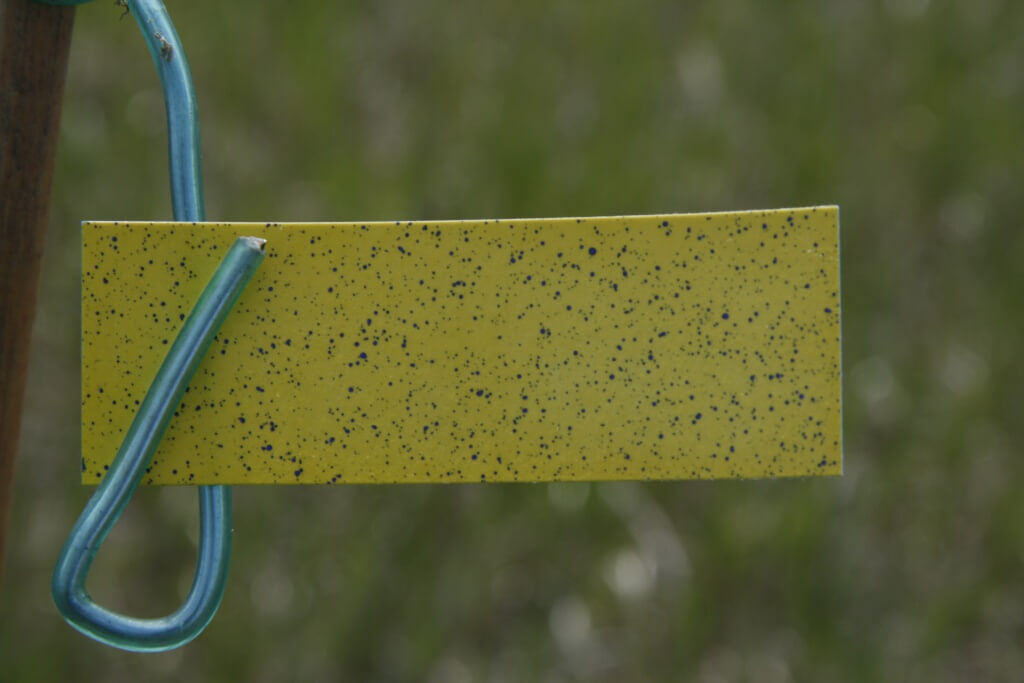
Use water-and-oil sensitive paper to assess spray coverage. The operator should pin or clip papers in the crop, in locations and orientations representing the desired target. Wire flags and flagging tape mark their locations:
Spray using water to establish baseline coverage.
Retrieve the papers and replace them with a new set in the same locations and orientation.
Make one change to the sprayer set-up and determine whether or not coverage was improved.
Continue to tweak the sprayer until coverage is improved. Sometimes, improving spray efficiency means maintaining coverage while using less spray.
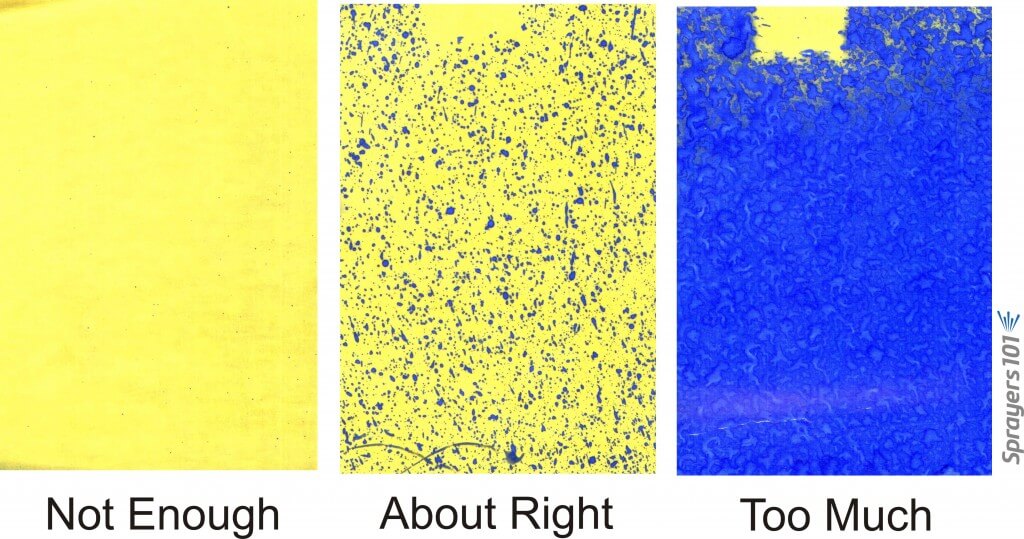
Understand how much is enough. Knowing whether to drench the target, or be satisfied with a low droplet density depends on how the pesticide works and whether or not the pest is mobile. As a general rule for foliar insecticides and fungicides, 85 drops per square centimeter and 10-15% surface coverage on 80% of all targets should be sufficient.
Now, a few caveats: Know that under-leaf coverage is VERY difficult to achieve and that improved coverage does not necessarily mean improve efficacy. Further, know that a systematic approach requires time and effort, and should only be performed in weather conditions the operator would spray in.
Read about how a similar process was used to assess coverage in field tomato and in staked pepper. It may take time out of an already busy schedule, but performing this assessment is always worth it.
In August, 2016, we were contacted by a cut-flower grower specializing in Dahlias. There are photos in this article, but they don’t do justice to this beautiful perennial flower. Imagine a chrysanthemum crossed with a zinnia: lots of tight petals in the bloom. Unfortunately, they’re a perfect place for insects to hide.
Those that buy cut flowers may be some of the most discerning clients in horticulture. A scar on an apple may or may not cause the buyer to reject the fruit, but imagine leaning in to smell a beautiful white bloom only to see a black bug crawl out of it! For many, the revulsion is the equivalent of finding a hair in their food.
The challenge
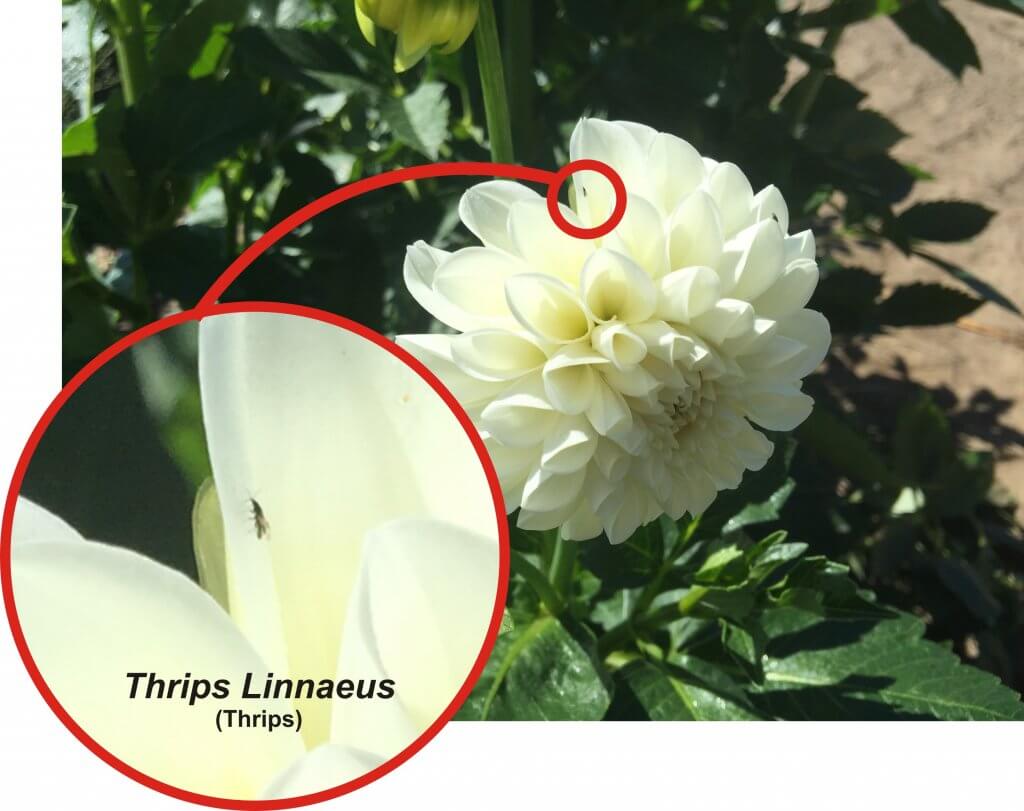
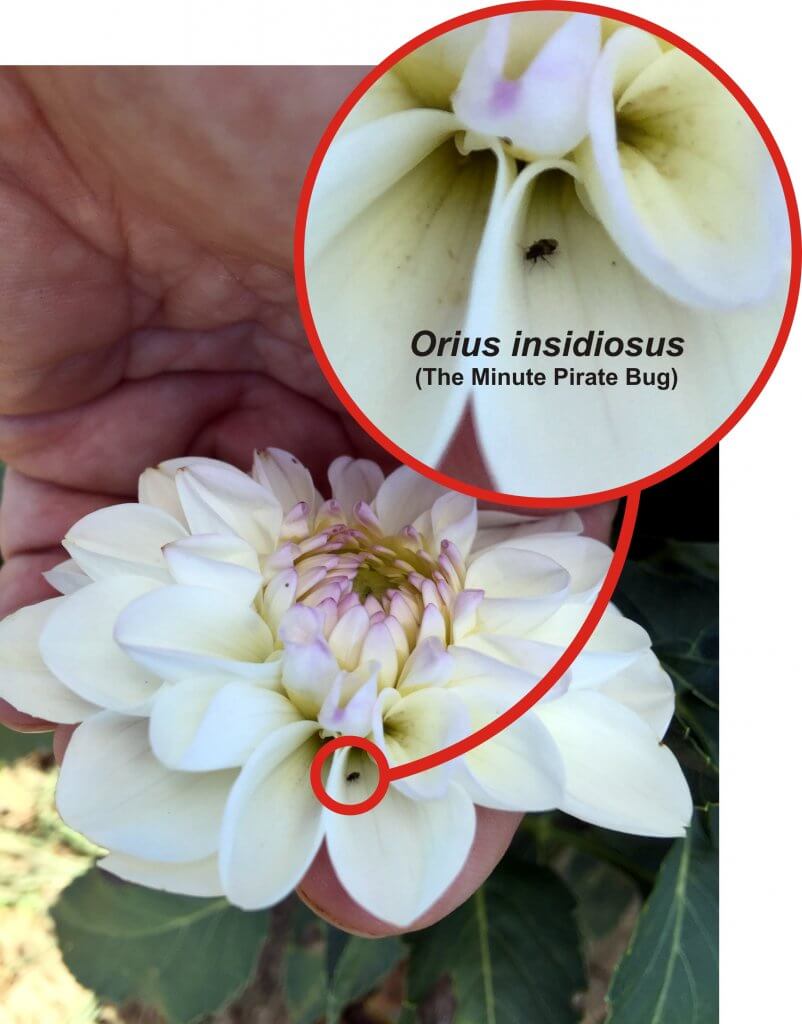
According to the grower, the 2016 season has been very bad for Thrips, which could easily exceed five per bloom even after spraying. The grower had the insect identified as “Western Flower Thrips” which, in Ontario’s greenhouses, are demonstrating resistance to chemical control. With such high insect density comes natural predators, such as Orius (the Minute Pirate Bug). While it does an admirable job hunting thrips, it must also be controlled because to the buyer it is just another undesirable black bug. Getting the contact spray in between all those petals is exceedingly difficult. The grower wanted to know how he could improve spray coverage deep in the bloom itself. So, we had a discussion.
The ideas
Adjuvants
Our first thought was an adjuvant. Wetting agents have been helpful for controlling thrips in other crops, such as those located deep in green onions in Ontario. We consulted the grower’s insecticide labels looking for possible incompatibilities. We found they had the potential to damage tender foliage if applied in periods of high humidity or high heat (i.e. > 25 °C). They also noted that the use of an adjuvant may increase the potential for damage. The grower confessed that he had already experimented with a non-ionic spreader and saw damage to the blooms. So, a water-conditioning option to improve spread was off the table.
Volume and travel speed
Our next idea was to increase the volume being applied per hectare. This strategy is a safe bet for improving coverage because it increases the number of droplets available for contact. There are a few ways to achieve higher volumes, but we elected to drive slower, which has the added advantage of reducing drift.
Spray angle
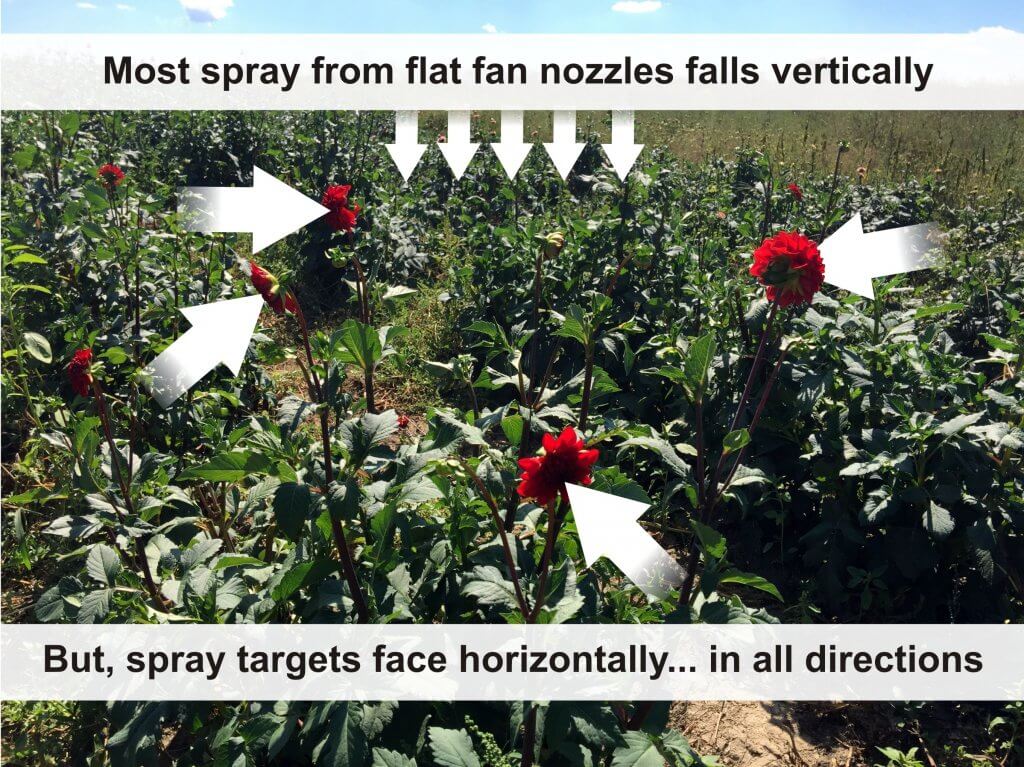
We also talked about spray angle. Dahlia blooms face horizontally in all directions, not vertically (i.e. side-ways, not straight up). Consider the spray from the nozzle’s point of view: The spray from the grower’s flat fans would fall predominantly downward. Theoretically, most of it would settle on the upper edges of the flower. We wondered if we could use an angled spray to hit the blooms face-on and improve penetration into the bloom.
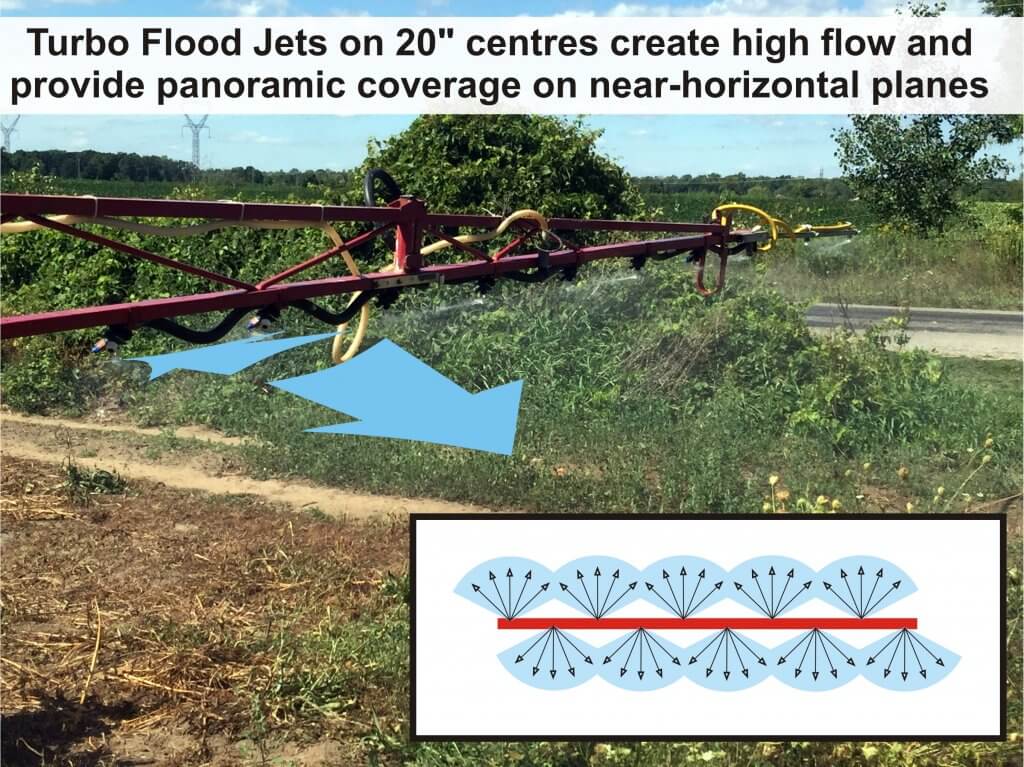
We felt twin fans and asymmetrical fans weren’t an aggressive enough angle, and they didn’t address the fact that the flowers faced in all directions. So, in order to get panoramic coverage on a near-horizontal plane, we decided to try alternating (one back, one forward) TeeJet Turbo FloodJets. They have been used to great effect by the University of Guelph’s Dr. David Hooker to provide panoramic coverage to wheat heads, so perhaps they would help here.
To prove the principle, we decided to run a short qualitative trial to see if there was a difference.
Nozzles
In the video below you can see how we nozzled the sprayer. We kept the left wing of the boom in the grower’s configuration: conventional 8004 flat fans (red) operated at 40 psi on 20” centres. That was a Medium spray quality and 0.4 US gallons per minute. On the other wing (right) we used TF04’s (white) operated at 40 psi on 20” centres. That was an Extremely Coarse spray quality and 0.8 US gallons per minute.
Coverage and Efficacy
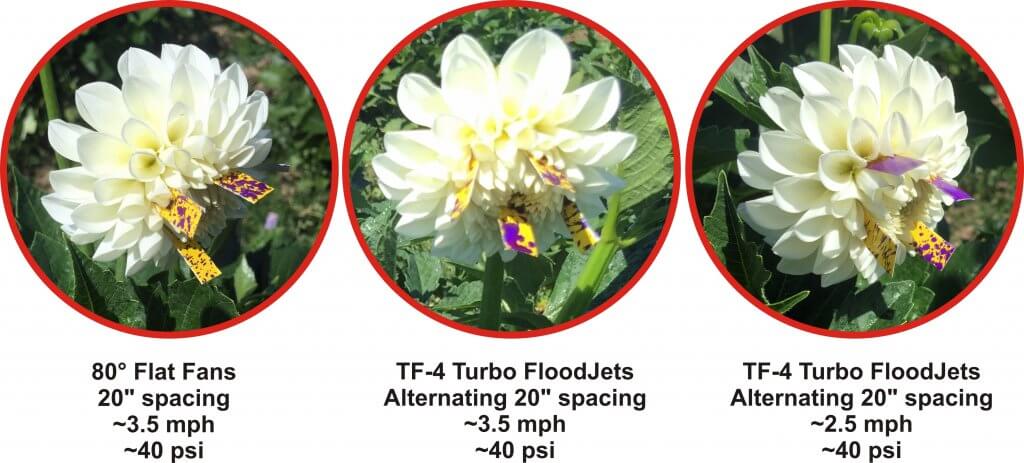
We cut water-sensitive paper into strips and slotted them into the blooms. By orienting them in multiple directions we hoped get a visual indication of bloom coverage. Plus, when they were extracted after spraying we could see how deeply the spray penetrated the bloom.
We ran a pass using water at the grower’s typical speed of 3.5 mph, but when we didn’t see a big difference on the papers, we slowed to 2.5 mph. That’s 47.5 US gallons per acre (~500 L/ha) from the flat fans (left) and 95 US gallons per acre (~100, L/ha) on the right. A few typical results are shown below.
We weren’t sure if we were seeing an appreciable difference in bloom coverage, but it looked promising. In retrospect, they may have been more effective indicators if we’d oriented a few flat against the bloom face. We decided to use the nozzle arrangement for a few insecticide applications and see if there was a difference in efficacy.
The grower sprayed in the evening and returned the next morning to perform counts in 20 random blooms from each treatment. Normally, a scout looking for thrips would tap the bloom over a piece of white paper to do counts, but the grower’s method was to blow into the bloom. He said Thrips and orius climb out to the edges of the petals immediately and can be counted. We sprayed in the white Dahlia to make the counts easier. We did this twice. The counts were less than spectacular and we were disappointed:
1st application: Turbo FloodJets: 16 orius and 31 thrips in 20 blooms Conventional flat fans: 10 orius and 21 thrips in 20 blooms
2nd application: Turbo FloodJets: 2 Orius and 1 thrip in 20 blooms Conventional flat fans: 2 Orius and 3 thrip in 20 blooms
Conclusion and next steps
The grower reported that even though we raised the volumes by slowing down, the efficacy from his flat fans had not improved compared to what he was doing previously. Adding insult to injury, the Turbo FloodJets (which were spraying twice the volume as the flat fans) did not seem to improve matters. Before we could try another approach, the insect pressure fell and the season drew to a close. You might wonder why we’d publish an article that didn’t pan out. It’s because you can learn as much from what doesn’t work as what does
So why didn’t we see improvement? Perhaps the boom was too high and the spray from FloodJets fell vertically. Perhaps the spray quality from the FloodJets was too coarse. Perhaps the grower’s method for counting insects was biased or inaccurate. It’s all speculation. As we pointed out earlier in this article, this hardly constitutes a formal experiment. We were hoping to see some indication of improvement before designing a more intense study. We didn’t see one.
We hoped to try again between June and August, when thrips and orius counts are highest. Our plan was to use drop-hoses to suspend nozzles at bloom-height and to use a double nozzle body to mount two back-to-back full-cone nozzles in each position. They would alternate 180° along the boom aiming in front-to-back and left-to-right orientations to provide panoramic coverage using a Medium spray quality. And, finally, we would have engaged a scout in a blind study to eliminate bias and increase our sample size.
Unfortunately the study didn’t take place – any takers?
Thanks to the grower co-operator, and TeeJet Technologies for providing the water-sensitive paper and nozzles for the study.
In the spring of 2016, the Ontario Berry Growers Association (OBGA) conducted a survey of its membership to poll how fungicides were being applied. The results were very interesting.
Fungicide basics
Generally, fungicides registered for berry crops are contact products, so coverage and timing are very important. The fungicide has to be distributed evenly on the target before disease has a chance to infect the crop. That means the sprayer operator must be aware of the susceptibility of the crop to the level of disease pressure to ensure timing is appropriate. While kickback and post-application distribution of pesticide residue is sometimes possible, sprayer operators should not rely on it. The following table outlines application recommendations for a fungicide commonly used in Ontario. It combines labelled information and provincial recommendations and is representative of most fungicides.
Summer-fruiting and Fall-bearing Raspberry / Blackberry
Highbush Blueberry
Day-neutral and June-bearing Strawberry
Labelled rate
2.5 kg/ha
2.25 kg in 1,000 L/ha
2.75-4.25 kg in 1,000 L/ha
Diseases (Labelled and Ontario provincial recommendations)
Anthracnose fruit rot, Spur blight, Leaf spot, Botrytis grey mould
Flower bud, First bloom, 7-10 days after bloom, Pre-harvest, Through to fall
As of 2016
The spray target
The applicator reading the recommendations should be considering the best way to get the fungicide to the target. But, what is the target, and what is the best way to apply it? It seems the recommendations raise as many questions as they answer:
With the possible exception of blueberry, this fungicide can be applied through much of the growing season (especially when it’s been a wet season). That means the crop staging is highly variable.
The primary target is blossoms, but depending on the disease, leaves and stems are also important.
The label states a volume of carrier (i.e. 1,000 L/ha) for strawberry and blueberry, but not the cane fruit. It does not specify highbush blueberry versus the sessile, ground cover variety.
So, this means is the sprayer operator has to spray crops with highly variable physiology (e.g. bush, cane or sessile row crops), onto very different targets (e.g. leaves, canes, stems, flowers) throughout much of the season as the crop canopies grow and fill. This is a very challenging spray application. It would be wrong to suggest a single spray quality, water volume or sprayer set-up to efficiently accomplish all these goals (more on that later). The first consideration is the application equipment itself.
The application equipment
Berry growers employ a variety of sprayers to protect berries. Without considering models or optional features, there are three fundamentally different styles: Airblast, backpack and boom. According to the survey, the following table shows which sprayers are used in which berry crop in Ontario. Approximately 60 growers responded, and many grow more than one variety of berry and use more than one style of sprayer.
Jacto airblast in raspberry
Airblast Sprayer
Backpack or Wand Sprayer
Vert. or Hor. Boom Sprayer
Total
Highbush blueberry
8
1
0
9
Day-neutral Strawberry
3
0
21
24
June-bearing Strawberry
5
0
32
37
Raspberries & Blackberries
21
1
7
29
Total
37
2
60
So, generally, cane and bush berries are sprayed using airblast sprayers and strawberries using horizontal booms. The survey didn’t specify features such as air-assist on booms, or whether or not those booms are trailed or self-propelled. The type of, and features on, any given sprayer dictate the limits of what an operator can adjust to improve coverage.
Water volume
Respondents also reported on how much carrier (i.e. water) they used to spray fungicide on their crops. Given Canada’s propensity to report volumes in many different forms, I have converted all values into the most common units: L/ha, US g/ac and the dreaded L/ac:
n
L/ha ± std (max./min.)
US g/ac ± std (max./min.)
L/ac ± std (max./min.)
Highbush Blueberries
7
534.2 ± 340.1 (1,000/150)
57.1 ± 36.4 (106.9/16)
216.2 ± 138 (404.7/60.7)
Day-neutral Strawberries
22
418.5 ± 192.2 (1,000/224.5)
44.7 ± 20.6 (106.9/24)
169.4 ± 77.8 (404.7/90.8)
June-bearing Strawberries
33
403.1 ± 235.1 (1,000/50)
43.1 ± 25.1 (106.9/5.3)
163.1 ± 95.1 (404.7/20.2)
Raspberries & Blackberries
27
450.1 ± 279.4 (1,200/50)
48.1 ± 29.9 (128.3/5.3)
182.1 ± 113.1 (485.6/20.2)
Trailed horizontal boom in strawberry
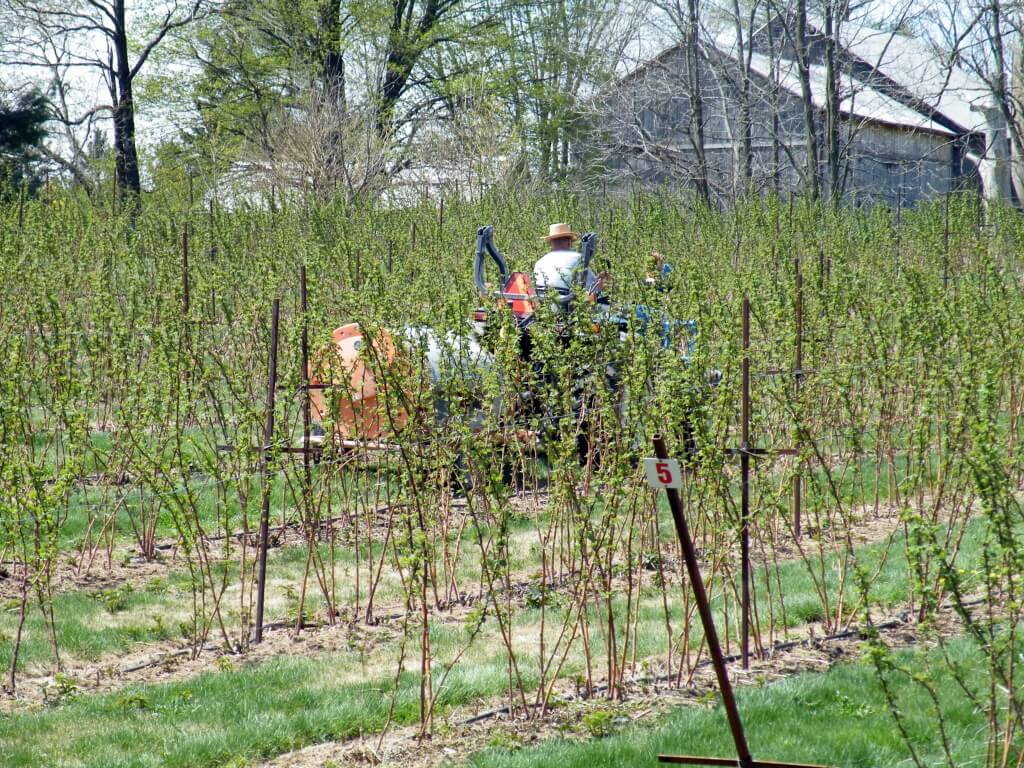
There appears to be a lot of variability in the volumes applied, but on the whole, very few are using the 1,000 l/ha indicated in the fungicide recommendations. The ~430 l/ha overall average is no surprise; labelled volumes are quite often higher than what sprayer operators use. In some cases, high label volumes are warranted because the product requires a “drench” application to totally saturate the target, or to penetrate very dense canopies. Conversely, a high label volume might reflect outdated practices if that label hasn’t kept up with current cropping methods or application technology. Sometimes label volumes are suspiciously large, round numbers that suggest they are intended to encompass a worst-case scenario (e.g. a large, unmanaged crop with high disease pressure and a less-than-accurate spray application). In the particular case of crops sprayed with an airblast sprayer, it is very difficult for a label to accurately predict an appropriate volume due to the variability in crop size, density and plant spacing. This has led to methods to interpret labels, such as crop-adapted spraying.
The disparity between label language and grower practices is not entirely the fault of the label. Most sprayer operators don’t want to carry a lot of water because more refills prolong the spray day. In situations where the crop has reached a critical disease threshold, or bad weather has compressed the spray window, sprayer operators sometimes reduce the volumes in the belief that “getting something on” trumps “good coverage”. Perhaps that’s true, but insufficient volumes greatly reduce coverage. This can be further exacerbated when operators do not account for the increase in crop size and density over the season, or the impact of hot dry weather on droplet evaporation.
Improving coverage
So, is there an ideal sprayer set up and volume? As previously alluded, the variability in crop staging, crop morphology, target location and spray equipment make a single recommendation impossible. But that doesn’t mean there aren’t diagnostic tools and a few simple rules to help a sprayer operator determine a volume to suit their particular needs. Much can be accomplished with these three things:
Water-sensitive paper
A modest selection of nozzles and a nozzle catalogue
An open-minded sprayer operator willing to spend a little time and reconsider traditional practices
Rule-of-thumb fungicide coverage on water-sensitive paper.
Water-sensitive paper is placed in the canopy, oriented to represent the target (e.g. leaf, bloom, etc.). It is important to put multiple papers in at least three plants to ensure the coverage reflects a typical application. The paper changes colour when it’s sprayed and this provides valuable and immediate feedback. Did the spray go where it was supposed to go and did it distribute throughout the target? If so, then the operator now knows that they can safely focus on timing rather than targeting. If not, a little diagnosis is required:
1. Were targets completely drenched? If so, there is too much coverage. Operators can drive faster (if possible, and as long as it doesn’t create drift), reduce operating pressure (if possible, and as long as the nozzle is still operating in the middle of its registered range), or change nozzles to lower rates (as long as spray quality is constant).
2 .Were targets only partially covered, as if a leaf obstructed part of the target and created a shadow? This mutual-shading is the bane of spraying dense canopies. One possible solution lies in understanding droplet behaviour: Coarser sprays generally mean fewer droplets and they move in straight lines. Therefore, when they hit a target, they might splatter or run-off, but typically their journey is over. If the spray is too Coarse, a slightly Finer spray quality increases droplet counts and may help droplets navigate around obstacles and adhere to more surfaces. Sprays that are too Fine will not penetrate dense canopies without some form of air assist. They slow very quickly and tend to drift and evaporate before they get deep enough into a canopy to do any good. A Medium droplet size is a good compromise because it produces some Fines and some Coarser drops – the best of both worlds.
Increasing volumes and reconsidering spray quality often helps, but there might be other options. If using air assist, there are tests that can confirm the air volume and direction are appropriate. Another solution might lie in canopy management (where pruning bushes and canes can help spray penetration immensely). Still another might lie in the use of adjuvants to improve droplet spread on the target.
3. Were targets missed entirely, or coverage is consistent but sparse? The operator is likely not using enough water, and/or the spray quality is too fine. It has been demonstrated time and again that higher volumes improve coverage, but operators can try any of the options listed previously for partially-obstructed coverage. All the reasoning is the same.
Conclusion
Spraying fungicides effectively requires an attentive sprayer operator. Timing and product choice are very important, but when it is time to spray the sprayer operator should diagnose coverage with water-sensitive paper, and be willing to make changes to the sprayer set-up to reflect changing conditions. Thanks to the OBGA for sharing the survey data.
Get ready for a busy fungicide season. If your growing conditions have been good, your crop is dense and vigorous, and soil moisture is adequate, you have yield potential to protect. A bit of moisture and warm temperatures at a critical time, and disease is likely to develop.
Before we delve into how to apply fungicides, let’s review the basics.
There is no substitute for an informed decision about whether to spray or not. Seek the advice of a professional to make sure you understand your crop’s genetic susceptibility to disease, the conditions conducive to its development, and the parts of the plant canopy that are affected and therefore need protection. How much yield or seed quality is actually at risk? What do the disease forecasts say for your area?
Identify the best fungicide product for your disease situation. Consider inherent efficacy, but also the longevity of the protection and the fungicide’s off-target toxicity (less toxic products can be sprayed in windier conditions without harming susceptible ecosystems). Remember that most fungicides are not curative and must be present on the plant foliage before infection takes place. Also remember that most fungicides are not easily translocated and are at best “locally systemic”. This means that fungicide deposit must cover the plant part that requires protection with an adequate droplet density. If the fungicide is systemic, these deposits must be absorbed through the plant cuticle and will only migrate a small distance within the plant tissue, usually in the transpiration stream, from the point of application.
Make proper timing the priority. Disease control is usually only effective if the fungicide is applied in a narrow time frame in which the crop or disease is at a certain developmental stage. A great application at the wrong time is less valuable than mediocre application at the right time. The use of low-drift nozzles should be considered an agronomic tool that permits the correct staging even under marginal wind conditions.
Let’s now review the major highlights of fungicide application in the major cereal and oilseed crops.
Wheat
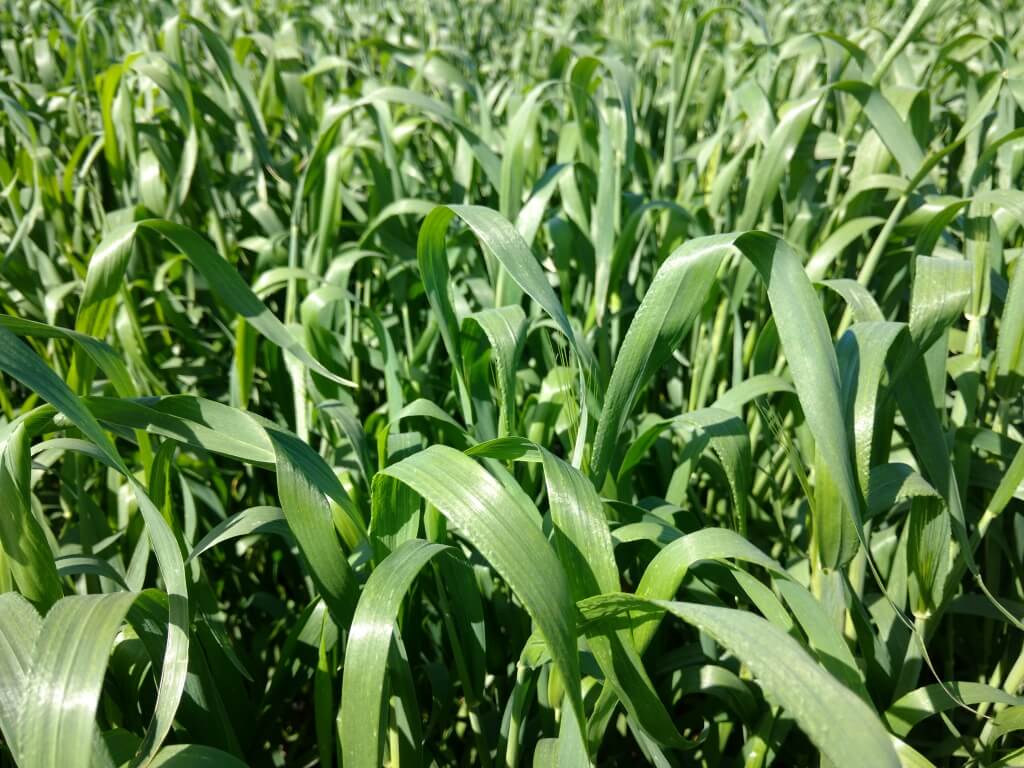
In wheat, the early growth stagings for foliar fungicides are usually done to protect from leaf spot diseases such as tanspot, septoria nodorum blotch and septoria tritici blotch. Because these diseases are trash-borne, they tend to migrate up from the bottom to the top and good canopy penetration of the spray is important.
Better canopy penetration can be achieved the following ways:
Higher water volumes. This is probably the most powerful tool in an applicator’s arsenal. More water usually delivers higher doses of active ingredient deeper into the canopy, and whatever dose does get deposited will be present in higher droplet densities. So in short, for any given spray quality (droplet size), more water provides better coverage. We all intuitively know this.
Slower travel speeds. Moving slower imparts less of a forward velocity on the spray cloud, particularly in the larger droplets. As a result, these droplets move more vertically. In the case of a cereal canopy, more of the spray will reach the lower leaves. The finer droplets in the cloud tend to deposit with the wind direction regardless of travel speed.
Backward pointed nozzles. If a droplet moves backwards at the same speed as the spray boom moves forwards, then it is basically standing still relative to the crop. It will have a greater chance of moving down towards the lower canopy than a droplet that’s moving forwards. The latter droplet will likely be intercepted by something vertical, like a wheat head or stem.
A single nozzle oriented back, applying a water volume that is at least 10 to 15 US gpa, will be sufficient to get good canopy coverage for leaf spot and rust protection.
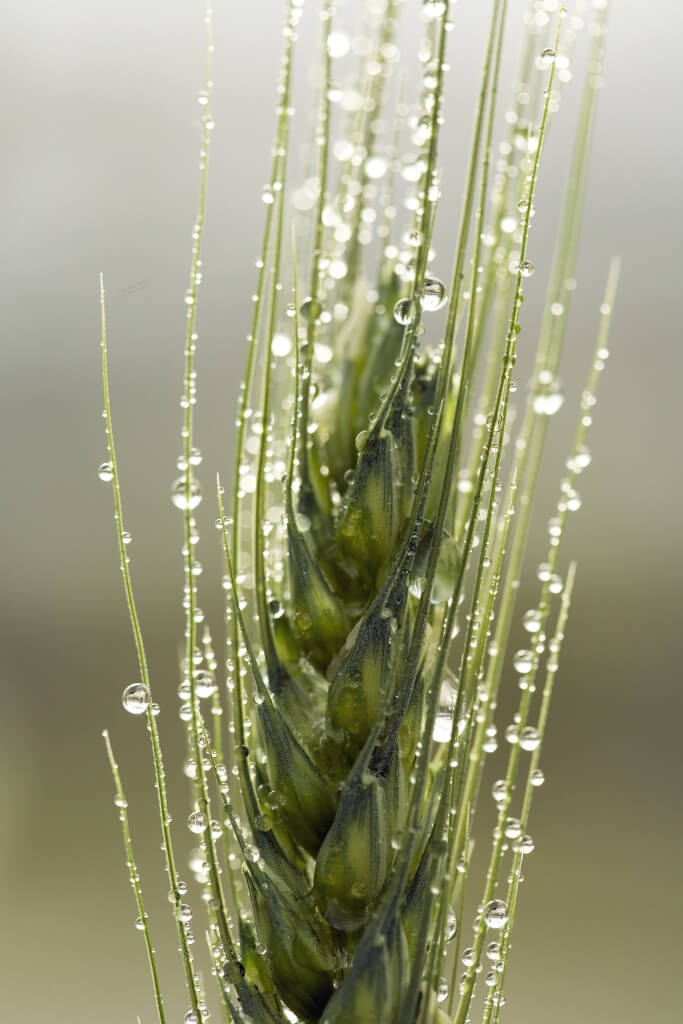
Fusarium Headblight (FHB), caused by Fusarium graminearum, is a special case. It infects the wheat head at anthesis, and fungicide must be present on the head, at the glumes where the anthers emerge, at the time of infection. So we have a relatively large vertical target that is at the very top of the canopy. Initial work at North Dakota State University, followed up by work at AAFC in Saskatoon and the University of Guleph at Ridgetown, found the following:
Angled sprays are essential. Field and lab studies showed that angled sprays were much more effective at depositing the fungicide on heads than vertical sprays. Backward pointed angled sprays provided additional help at targetting the other side of the wheat head. Twin nozzles are available from most manufacturers.
Use Coarse sprays when angling. Angled and twin sprays have their challenges. The angle at which the spray is released dissipates quickly, particularly for smaller droplets. As a result, more aggressive angles and coarser droplets were found to be more effective. Larger droplets were able to maintain their initial trajectory for a longer distance, increasing the chance that the droplet hit the head from the side rather than passing it by vertically.
Maintain low boom heights. Even coarse sprays are deflected by air resistance and will eventually stop moving in the direction they were first emitted. In fact, this happens within a short distance. Low booms, less than 25″ if possible, help.
Watch wind speed and direction. Field observations show that even a moderate wind can over-ride the application practices described above, resulting in most of the spray deposited on the windward side of a target regardless of its initial release.
Awns intercept small droplets. Many of our modern wheat cultivars are awned, and these fine structures are excellent collectors of small droplets. In early studies with durum, we found a large proportion of the spray volume on awns, where it served no useful purpose. The best way to minimize this awn interception is to ensure coarse sprays and sufficient water, no less than 10 gpa.
It’s important to maintain realistic expectations with FHB. Fungicide chemistry is improving but still offers only suppression. Crop staging is variable. Excellent application practices place the odds more in favour of disease control, but can’t change these facts.
Pulse Crops
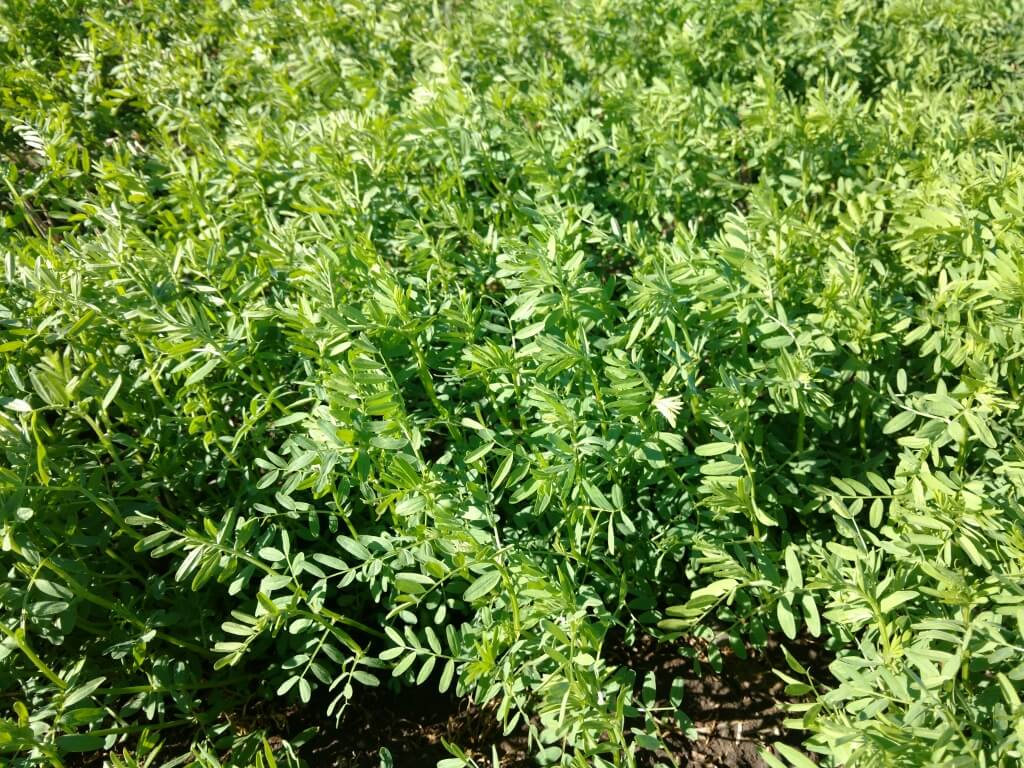
Lentils and peas are increasingly important crops. They appear spindly in their early stages of development and are poor weed competitors. But under the right conditions, lentils soon form an impressive set of leaflets that creates one of the most impenetrable barriers in our cropping systems.
Here are some pointers for fungicide application in pulse crops:
Understand the disease in your crop. Do you need to protect stems (anthracnose), leaves and stems (ascochyta complex, mycosphaerella), or senescing leaves or flowers (sclerotinia)? This is where the spray needs to go.
Understand the time of disease development.
Trash-borne diseases like anthracnose and ascochyta will start at the bottom of a lentil canopy, and early treatment before canopy closure will be important to arrest or at least delay disease development as long as possible.
Late season diseases like sclerotinia and botrytis push the application timing towards a closing or closed canopy. Success of such sprays is more elusive because of the rapid development of new biomass.
Take a bird’s eye view of the canopy.
If you can see the target you need to spray, the job is pretty straightforward and conventional water volumes and nozzles will work.
If the targets are hidden from view, it will take more water and slower travel speeds to get the required coverage. Consider the higher end of the recommended water volumes (15 gpa in most cases), slower travel speeds (10 mph).
When a canopy has many layers of cascading leaves, it is very difficult for a spray to get past these “umbrellas”. We’ve observed many times that a leaf is a very effective shield for anything below it. Large droplets have a hard time changing direction because of their mass and resulting momentum. But small droplets, especially those below 100 microns, can move with slight changes in air movement and get around these obstacles. Use higher pressures (to generate the finer sprays) or select finer nozzles to improve canopy penetration.
Look at the size of the plant part you need to target. Large targets like leaves can capture almost any droplet size, but small targets like petioles or vertical targets such as stems may benefit from finer sprays, especially if they’re hidden in the canopy.
Generally speaking, dense pulse canopies will require higher water volumes and finer sprays than their cereal counterparts. Although twin fan nozzles have not been shown to provide an advantage in our studies on chickpeas, higher water volumes proved very effective at improving deposition and disease control.
Canola
Canola has two main diseases for which foliar sprays are used. A small number of producers choose herbicide timing for control of blackleg. Because the crop canopy is small and the spray targets are exposed, general herbicide application guidelines (Coarse sprays from a venturi nozzle, 7 – 10 US gpa) will provide good targeting and adequate coverage.
Sclerotinia control requires that the spray reaches buds and petals of canola that is between 20 and 50% flowering. Work at AAFC in Melfort compared conventional and low-drift sprays at two pressures, and showed that droplet size had no effect on disease control. In fact, the Fine spray produced by hollow cone nozzles at high pressure did not significantly improve sclerotinia control compared to a venturi nozzle at its recommended pressure of about 60 psi.
Subsequent lab work showed that the proportion of the applied spray that was retained by petals and buds was statistically identical for all tested sprays.
Water volumes may need to be increased for modern canola hybrids that have significant biomass at flowering. Such cultivars may grow over 1.5 m tall and present a large range of canopy positions in which buds and petals appear. As with the other crops, when a spray needs to cover more area, and especially when this area presents itself in layers, more water volume is appropriate.
Fine Sprays for Coverage
Conventional wisdom says that fungicides require finer sprays for coverage and best effect. This is certainly true in some cases, particularly where the leaf area index is high and leaves are arranged in cascading layers. But it’s time to retire this notion as general advice and adhere to research results for guidance. For FHB, the recommended angled sprays benefit from being applied in coarser, not finer sprays. And in pulses and canola, research showed that there was no benefit from finer sprays. In fact, finer sprays can impair proper timing because of their propensity for drift and rapid evaporation under dry conditions.
Modern coarse sprays produced by air-induced nozzles are less susceptible to these environmental conditions and therefore offer an important advantage: they allow for better timing accuracy. For this reason, I view them not so much as drift control tools, but rather as agronomic tools.
There is a downside to the coarser sprays – they do require more water. Volumes should always be above 10 US gpa, and many recommendations go to 15 gpa if the canopy is dense. In some cases, 20 gpa may be beneficial. These higher volumes are a reasonable price to pay to protect a valuable crop, and we certainly have the equipment to make this price bearable.
Aerial Application
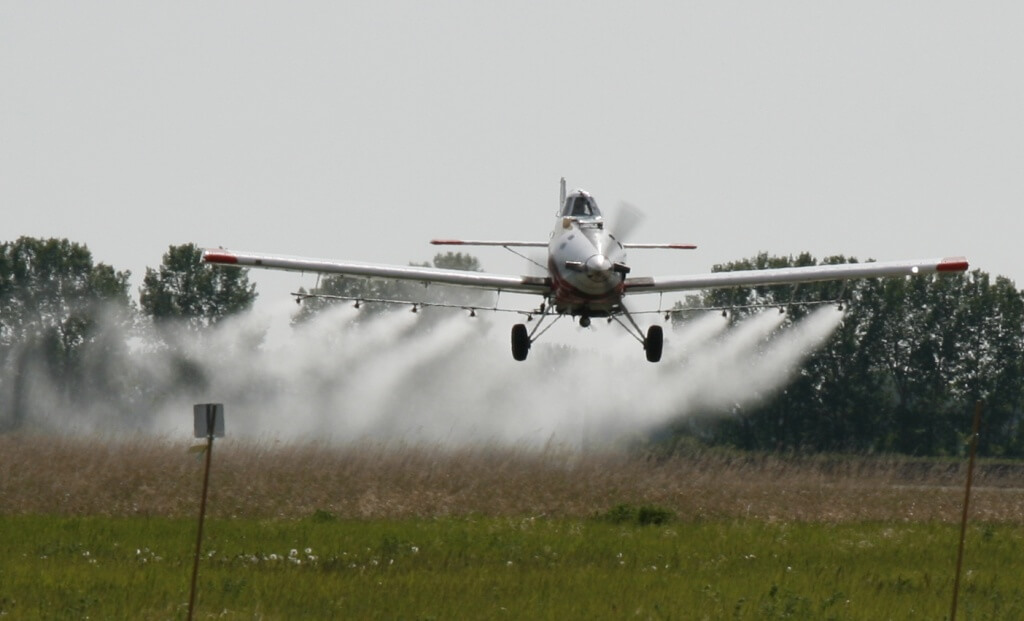
Aerial application is an important way to apply fungicides. An aircraft’s chief advantage is to cover large areas with no crop trampling, and can do so even in wet conditions. As a result, they offer the timing advantage we so often mentioned in this article.
A producer hiring an aircraft for spraying ought to have a conversation with the pilot and discuss water volume and droplet size. Aircraft, out of practical necessity, apply less water and distribute it in finer sprays to offer the required coverage. Although this has been shown to be effective, it creates drift and evaporation potential. It is worthwhile to ask for higher water volumes if it means that the spray can be applied somewhat coarser, creating less drift.
The rotary atomizers on many aircraft produce fairly uniform droplet sizes and do a good job of eliminating the larger droplets. This makes even more droplets available for coverage. However, even with this technology spray drift still matters and all steps to prevent it should be taken. This means using larger average droplet sizes and increasing water volumes accordingly to their label recommendations.
A local strawberry producer was just beginning his harvest when the entire field was suddenly stricken with anthracnose. He would have done almost anything to save it, but he could only watch in frustration as the disease quickly devastated his crop. While he was telling me this story, he was wringing his hands; I’m sure he didn’t realize he was doing it. It had been more than a month since the crop was lost and he was obviously still very upset. Let’s put on our deerstalker hats and consider what might have caused the trouble.
Strawberry anthracnose. Photo by Pam Fisher, former berry specialist with OMAFRA.
Most of the fungicides we apply in horticulture are protectants, not curatives. What that means is that the fungicide has to be in place before disease has a chance to take hold. Once it establishes a beachhead, you can typically only hold it at bay, not eradicate it. So, if you’re guilty of waiting too long between fungicide applications, the problems may have already begun. This is exacerbated when you don’t achieve the necessary spray coverage. Put the two together and mix in rainy and warm conditions and diseases like anthracnose can spread at alarming speed.
Method
I focus on the sprayer part of disease management, so I have to assume that inoculum is being controlled as much as possible (e.g. culling infected plants, drip irrigation, etc.). I asked the grower about his sprayer and his spraying schedule. He admitted to pushing the limits between fungicide applications, and being uncertain about the spray coverage he was achieving with his conventional flat fan nozzles.
Strawberry Sprayer
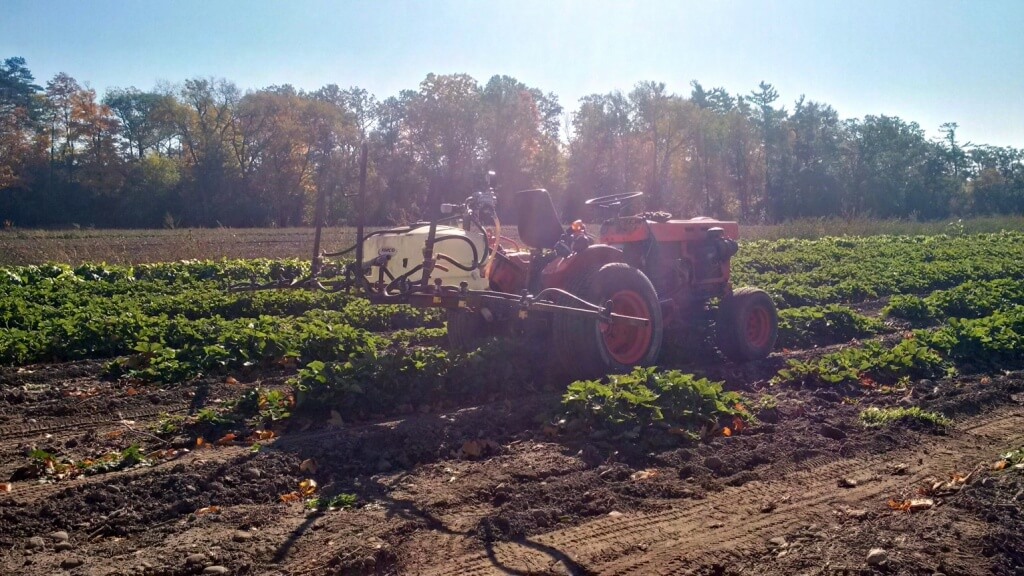
In cases like this I try to find gentle ways of introducing the idea of using more water, increasing the frequency of applications, or buying new nozzles, because there is time and expense involved and many growers don’t want to hear that. However, when I started my soft sell routine, he looked me straight in the eye and said he’d lost tens of thousands of dollars in revenue so a few nozzles or a couple more applications were not a pressing concern. There’s a point in any endeavour when you’ve committed so much time and money that you’ll do pretty much anything to see it come to fruition (pun intended). He was willing to do whatever it took. This was my kind of guy.
So, in preparation for next year, we diagnosed spray coverage from five different sprayer set ups. Let me point out, as I always do, that spray coverage analysis does not necessarily extend to control. They correlate well, but if you aren’t using the right product or your timing is off, even the best coverage won’t help you. Caveats aside, here’s what we tested:
Setup1:
Broadcast application using a horizontal boom with TeeJet Twinjet 8006’s at 8.3 bar (120 psi) on 50 cm (20 in) centres. We calculated a nozzle rate of 3.9 L/min (1.03 gpm), so at 5.0 km/h (3.1 mph) that’s 923 L/ha (98.7 g/ac).
Setup 2:
Banded application on a horizontal boom equipped with a row kits suspending three TeeJet XR 8002’s at 8.3 bar (120 psi). We angled the two side nozzles so the fans were not perpendicular or parallel with ground. This kept more spray on the raised row and out of the alleys. The swath covered 50 cm (18 in) and we calculated a nozzle rate of 1.29 L/min (0.34 gpm), so at 5.0 km/h (3.1 mph) that’s 1,016 L/ha (108.6 g/ac).
Setup 3:
Banded application on a horizontal boom equipped with a row kits suspending three TeeJet XR 8002’s at 6.2 bar (90 psi). We angled the two side nozzles so the fans were not perpendicular or parallel with ground. This kept more spray on the raised row and out of the alleys. The swath covered 50 cm (18 in) and we calculated a nozzle rate of 1.14 L/min (0.3 gpm), so at 5.0 km/h (3.1 mph) that’s 896 L/ha (95.8 g/ac).
Setup 4:
Broadcast application using a horizontal boom with TeeJet Twinjet 8004’s at 6.2 bar (90 psi) on 38 cm (15 in) centres. We calculated a nozzle rate of 2.27 L/min (0.6 gpm) so at 5.0 km/h (3.1 mph) that’s 717 L/ha (76.5 g/ac).
Set up 5:
Broadcast application using a horizontal boom with TeeJet Twinjet 8006’s at 6.2 bar (90 psi) on 38 cm (15 in) centres. We calculated a nozzle rate of 3.4 L/min (0.9 gpm) so at 5.0 km/h (3.1 mph) that’s 1,076 L/ha (115 g/ac).
Protocol and Conditions
It was late September, so the weather was a cool 8 °C, humidity was low and winds averaged 5 to 15 km/h. We timed our passes to correspond with lighter wind wherever possible. Three sets of water-sensitive paper were placed in a single row, but only one pass was made per sprayer setup. One paper was placed at the top of the canopy which is always very easy to hit, so we oriented it sensitive-face-down. The second paper was placed midway down the canopy, oriented facing up. The final paper was also oriented facing up, but placed at the very bottom of the canopy, more or less on the ground. Collectively, we spanned the depth of the canopy.
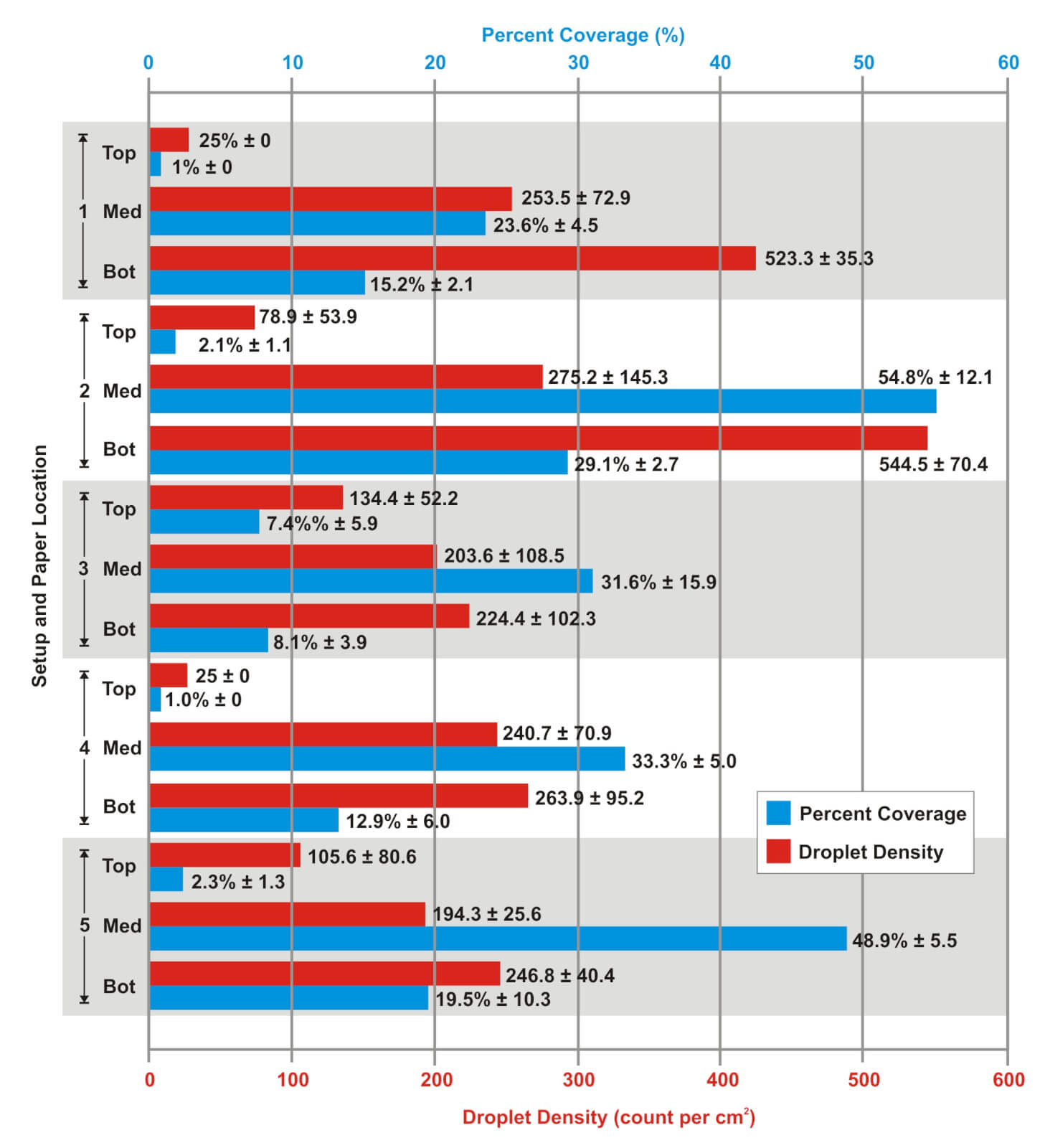
Following each application, papers were collected for digital analysis using “DepositScan” which determines the percent of the paper covered with spray, and the droplet density. Both of these factors contribute to overall coverage. This wasn’t intended to be a rigorous experiment, so the means are presented here with standard error for the sake of comparison. There was no statistical analysis. In the case of papers located face-down, when only trace amounts of spray were discernible they were assigned a percent coverage of 1% and droplet density of 25 droplets/cm2.
Results
A few observations before we get to the results. Research has demonstrated that row kits and higher volumes improve spray coverage, and that’s why we tried banding the applications using row kits in Setups 2 and 3. However, this grower didn’t use GPS to plant his rows, and while they weren’t too crooked, they made it challenging to apply in a band. Further, there is some concern that a banded application would miss any inoculum in the alleys. These are important points to factor in when considering methods to control disease.
The keen reader might notice we sprayed using pressures that exceed the manufacturer’s recommendations. In fact, none of these tips were rated over 60 psi and I used a formula to calculate their output at our high pressures. I have been heard to say (many times) never to exceed the manufacturer’s rates because it makes a mess out of the spray quality: droplets get much finer and pressure does not cause finer drops to penetrate a dense canopy. Better to switch to larger nozzles and stay within the pressures indicated on the manufacturer’s rate tables. I maintain that assertion. However, the grower was assured by fellow growers and custom applicators that this was the way to go and he wanted to try it. So, that’s where Setups 1, 4 and 5 came from.
Be aware that a small sprayer like the one in this study needs considerable pump capacity to support such high pressure and flow to the boom and maintain effective agitation. For more information on pumps, check out this article.
The following table expresses the coverage obtained by setup:
Set up
Paper Position
Mean % Coverage (±SE)
Mean Deposits/cm2 (±SE)
Setup 1 – Broadcast XR 8006’s on 20” centres at 120 psi for 98.7 gpa
Top
1.0 ± 0
25.0 ± 0
Middle
23.6 ± 4.5
253.5 ± 72.9
Bottom
15.2 ± 2.1
423.2 ± 35.3
Setup 2 – Three banded XR 8002’s at 120 psi for 108.6 gpa
Top
2.1 ± 1.1
78.9 ± 53.9
Middle
54.8 ± 12.1
275.2 ± 145.3
Bottom
29.1 ± 2.7
544.5 ± 70.4
Setup 3 – Three banded XR 8002’s at 90 psi for 95.8 gpa
Top
7.4 ± 5.9
134.4 ± 52.2
Middle
31.6 ± 15.9
203.6 ± 108.5
Bottom
8.1 ± 3.9
224.4 ± 102.3
Setup 4 – Broadcast Twinjet 8004’s on 15” centres at 90 psi for 76.5 gpa
Top
1.0 ± 0
25.0 ± 0
Middle
33.3 ± 5.0
240.7 ± 70.9
Bottom
12.9 ± 6.0
263.9 ± 95.2
Setup 5 – Broadcast Twinjet 8006’s on 15” centres at 90 psi for 115 gpa
Top
2.3 ± 1.3
105.6 ± 80.6
Middle
48.9 ± 5.5
194.3 ± 25.6
Bottom
19.5 ± 10.3
246.8 ± 40.4
The results may be easier to compare and contrast in the following graph.
Strawberry coverage results for all five setups.
Observations
According to the results, Setup 2 appeared to provide the best overall coverage. This is no surprise given that it was the second highest volume and employed a row kit. This corresponds with findings that have been published elsewhere. However, the excessively high pressure did create a lot of drift and the row kit didn’t always line up with the planted row. Further still, there’s the potential for missing anything that might harbour inoculum in the alleys, like runners. This setup wasn’t appropriate for this particular situation.
The second-best overall coverage was obtained from Setup 5. This represented the highest volume, and a preferably lower pressure on twinjets, which may have allowed the spray to penetrate the canopy from multiple angles. This broadcast application is more reliable for hitting meandering rows and covers the alleys as well. So, the grower plans to employ this setup for the 2016 season, spraying at shorter intervals and confirming his coverage with water-sensitive paper. Let’s hope it works out.
End-of-Season Update
The grower that volunteered his time to this study has reported that his strawberries at the end of the 2016 season were absolutely beautiful. Granted, it is always difficult to draw a direct correlation between sprayer calibration and control. For example, 2016 was a very dry growing season and disease pressure was lower than in 2015. Nevertheless, spray coverage plays an important role in crop protection and our work to improve sprayer performance definitely played it’s part. His success is great news!