On a trip to Mildura, Victoria I met Matthew McWilliams, Director at Interlink Sprayers. His passion for innovation was exciting. He described Interlink’s history of near-annual design improvements, each of which made the last generation of sprayers look a bit passé. Continual improvement means spending a lot of time educating and upgrading customer’s sprayers, but that level of support is worth it. Their strategy of drawing from leading international designs and improving on them has led to a unique axial fan assembly that boasts impressive benefits for those spraying large canopies.
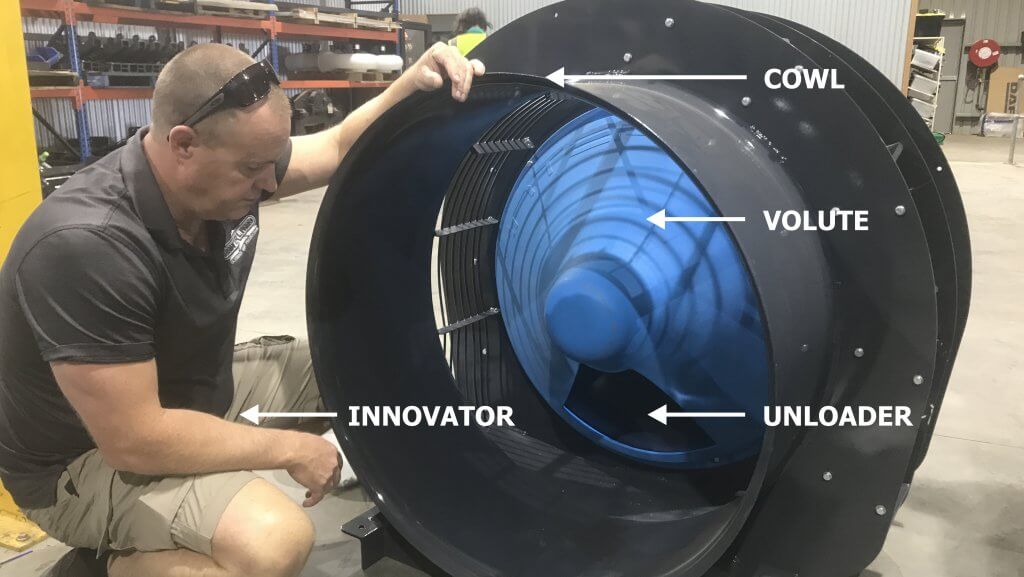
A man and his fan housing.
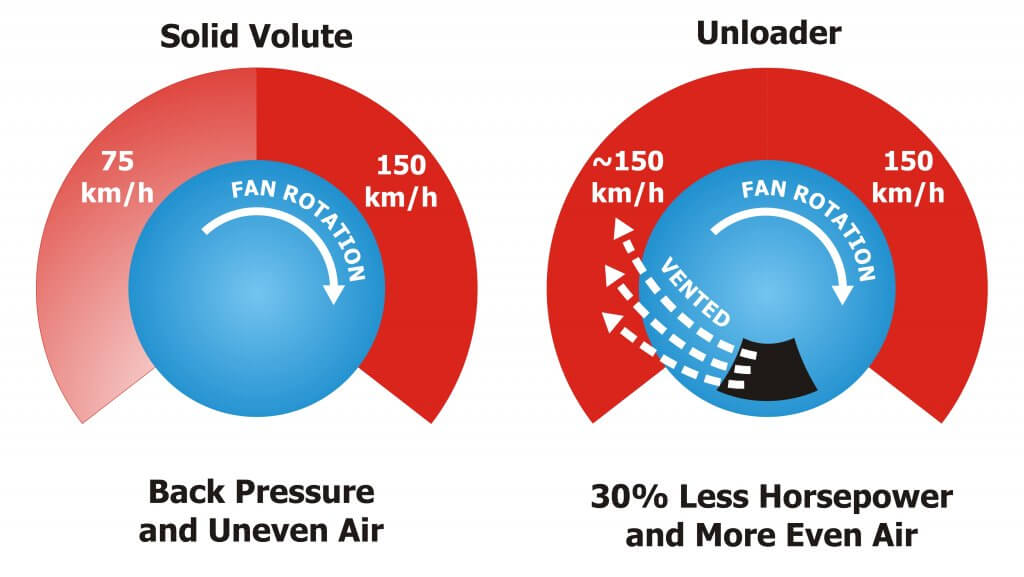
Matt explained a problem common to any axial fan: they hate back-pressure. When an axial fan blows air against a volute, which redirects the air laterally, the back-pressure acts like an air break. It pushes back against the fan, flexing the blades, reducing output volume and reducing efficiency.
In an effort to relieve some of this pressure, Interlink cut a hole in the volute (called an “Unloader”). Venting reduced the pressure and increased efficiency significantly. It did something else, too, but we’ll get to that later.
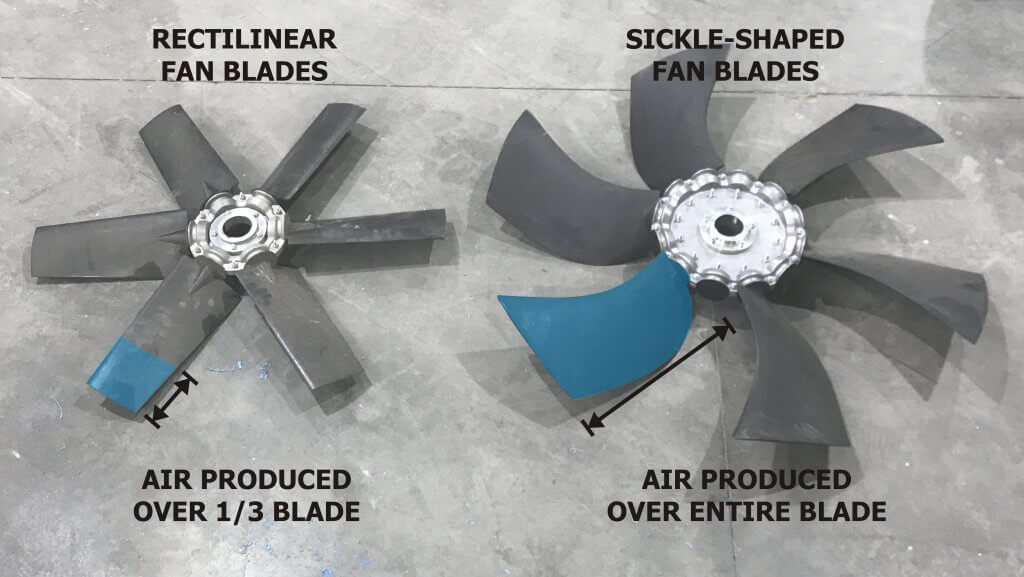
This success led them to reconsider fan blade design. Classic, rectilinear fan blades are inefficient. They only produce air over the last 1/3 of their length. Using computational fluid dynamics, they modelled an efficient sickle-shape that creates pressure over the entire length. This means it can produce as much volume as a rectilinear blade, but with fewer revolutions.
The difference between rectilinear and sickle-shaped fan blades.
When the new blades were combined with the Unloader, they were able to move the fan closer to the volute and make the cowl longer. A less-exposed fan is not only safer, but its proximity to the volute increased efficiency.
The result was a 2.5x increase in pressure and a concomitant 30% savings in horsepower. In other words, while similarly-sized sprayers were using 25 L (6.5 US gal.) of fuel per hour, they created the same air volume and speed using 17 L (4.5 US gal.) fuel per hour.
But why stop there?
Nut orchards in Australia and the US can grow up to 21 meters (~70 feet). A low-profile axial sprayer must produce a great deal of air volume to both penetrate the canopy and reach the top. Increasing fan diameter can help, but perhaps two fans are better? Air-O-Fan has their twin-fan system, where two shaft-driven fans with reversed blade pitches produce high-volume turbulent air. Interlock decided to try it.
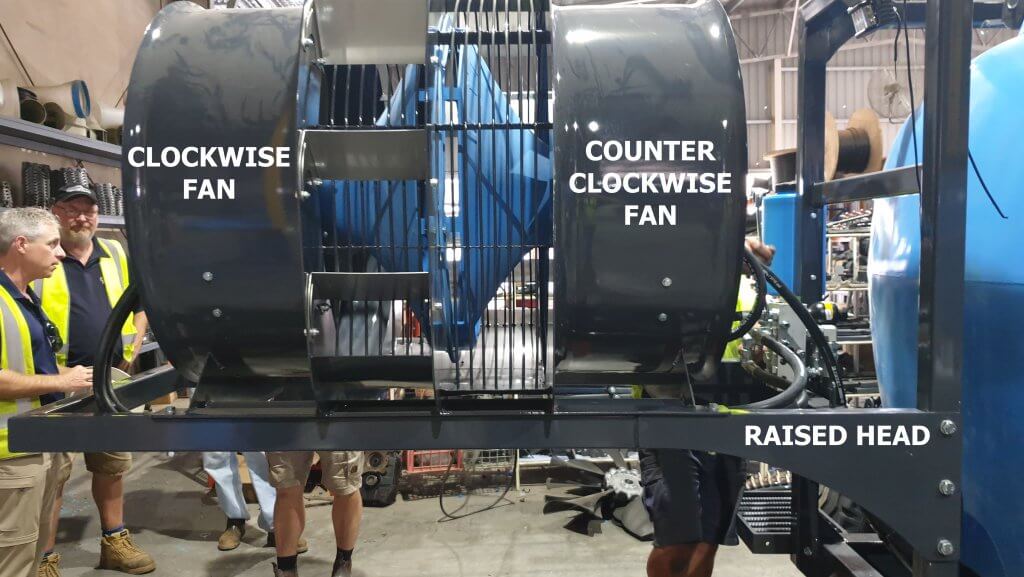
Hydraulics permit the twin-fan head to be raised off the ground.
When two hydraulically driven fans were placed back-to-back (spinning counter to one another) the Unloaders did something Unexpected. Normally, an axial fan blowing against a volute creates deflection, causing higher speeds on the downward side of the fan. Most sprayers use vanes to correct this, but they cause back-pressure. Serendipitously, when placed back-to-back, the pressure vented through the Unloaders was reclaimed on the upward side of each fan, equalizing airspeed across the outlet.
The air vented through the Uploader evened-out the airspeed.Computational fluid dynamics demonstrate even air-speed and volume on both sides of the sprayer.
And there’s still more. Since this counter-rotation twin fan design is hydraulically driven, it is not restricted by a shaft. This allows the head to be lifted off the ground. Quite often in large orchards, air and nozzles are aimed too low, wasting spray below the canopy. Lifting the fan and nozzle banks brings everything closer to the top of the canopy; a notoriously difficult target to reach. It also reduces the level of dust and detritus stirred up from the canopy floor. Operators reported that the elevated fan head helped keep fan intakes and radiators (required on Australian airblast sprayers) clear of debris.
This low-profile axial airblast fan is a refreshing new approach to a design that has seen only marginal improvement over the last 20 years. Given the pace of innovation in Matt’s factory, I’m sure the next set of improvements will be in place by the time this article is published.
This article was co-authored by Kristy Grigg-McGuffin, OMAFA Horticulture IPM Specialist
In view of the frequent heavy rains in many regions this season,
understanding rainfastness, or the ability of a pesticide to withstand
rainfall, is important to ensure proper efficacy. All pesticides require a
certain amount of drying time between application and a rain event. Typically,
residue loss by wash-off is greatest when rain occurs within 24 hours of
spraying. After this point, the rainfastness of a product will depend on
formulation, adjuvants and length of time since application.
Rainfastness of Insecticides
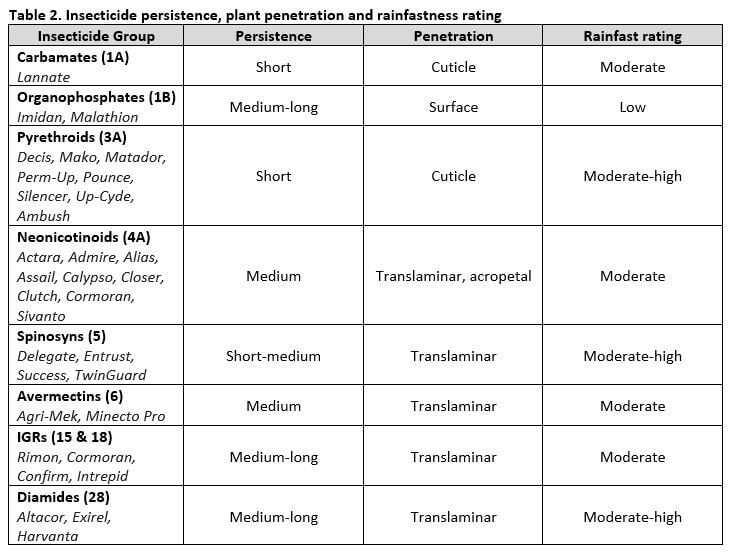
John Wise, Michigan State University has studied rainfastness of common tree fruit insecticide groups and his findings are summarized below. For the complete article, refer here. Note that some products listed in this article may not be registered for use in Canada. Check with your local supplier or in Ontario, refer to OMAFA Publication 360 for a complete list of registered products.
According to Wise, the impact of rain on an insecticide’s
performance can be influenced by the following:
1- Penetration
Penetration into plant tissue is generally expected to enhance rainfastness.
Organophosphates have limited penetrative potential, and thus considered primarily surface materials.
Carbamates and pyrethroids penetrate the cuticle, providing some resistance to wash-off.
Spinosyns, diamides, avermectins and some insect growth regulators (IGR) readily penetrate the cuticle and move translaminar (top to bottom) in the leaf tissue.
Neonicotinoids are considered systemic or locally systemic, moving translaminar as well as through the vascular system to the growing tips of leaves (acropetal movement).
For products that are systemic or translaminar, portions of the active ingredient move into and within the plant tissue, but there is always a portion remaining on the surface or bound to the waxy cuticle that is susceptible to wash-off.
2- Environmental persistence and inherent toxicity
Environmental persistence and inherent toxicity to the target pest can compensate for wash-off and delay the need for immediate re-application.
Organophosphates are highly susceptible to wash-off, but are highly toxic to most target pests, which means re-application can be delayed.
Carbamates and IGRs are moderately susceptible to wash-off, and vary widely in toxicity to target pests.
Neonicotinoids are moderately susceptible to wash-off, with residues that have moved systemically into tissue being highly rainfast, and surface residues less so.
Spinosyns, diamides, avermectins and pyrethroids are moderate to highly rainfast.
3- Drying time
Drying time can significantly influence rainfastness, especially when plant penetration is important. For instance, while 2 to 6 hours is sufficient drying time for many insecticides, neonicotinoids require up to 24 hours for optimal penetration prior to a rain event.
4- Adjuvants
Spray adjuvants that aid in the retention, penetration or spread will enhance the performance of an insecticide.
The following tables can serve as a guide for general rainfastness to compliment a comprehensive pest management decision-making process. They are adapted from “Rainfast characteristics of insecticides on fruit” by John Wise, Michigan State University Extension.
Based on simulated rainfall studies to combine rainfastness with residual performance after field-aging of various insecticides, including carbamates (Lannate), organophosphates (Imidan, Malathion), pyrethroids (Capture), neonicotinoids (Assail, Actara, Admire), IGRs (Rimon, Intrepid), spinosyns (Delegate) and diamides (Altacor), Wise recommends the following re-application decisions for apples. Additional work was done on grapes and blueberries; see Wise’s article for this information. Among the crops, variation in rainfastness of a specific insecticide occurs since the fruit and leaves of each crop have unique attributes that influence the binding affinity and penetrative potential.
½ inch (1.25 cm) rainfall: All products with 1-day old residues could withstand ½ inch of rain. However, if the residues have aged 7 days, immediate re-application would be needed for all products but Assail, Rimon, Delegate or Altacor on apples.
1-inch (2.5 cm) rainfall: In general, most products would need re-application following a 1-inch rainfall with 7-day old residues, whereas Delegate and Altacor could withstand this amount of rain on apples and would not need to be immediately re-applied. Some products such as Imidan on apples could withstand 1 inch of rain with 1-day old residues.
2-inch (5 cm) rainfall: For all products, 2 inches of rain will remove enough insecticide to make immediate re-application necessary.
It is important to note, not all products registered for the
selected pests were included in this study. Refer to Publication 360 for a
complete list of management options.
Rainfastness of Fungicides
There is no comparable research on rainfastness of fungicides
and few labels provide this kind of information. A general rule of thumb often
used is that 1 inch (2.5 cm) of rain removes approximately 50% of protectant
fungicide residue and over 2 inches (5 cm) of rain will remove most of the
residue. However, many newer formulations or with the addition of
spreader-stickers, some products may be more resistant to wash-off. Avoid
putting on fungicides within several hours before a rainstorm as much can be
lost to wash-off regardless of formulation. As well, there are exceptions to
the general rule in regard to truly systemic fungicides such as Aliette and
Phostrol.
The effectiveness of sticker-spreaders with fungicides is
variable and product/crop specific. Penetrating agents don’t help strobilurins;
in fact, some fungicide/crop combinations have been associated with minor
phytotoxicity due to excessive uptake. Captan, which is intended to stay on the
surface, is notorious for causing injury when mixed with oils or some
penetrating surfactants that cause them to penetrate the waxy cuticle. Consult labels for minimum drying times for
individual products and recommendations for using surfactants.
Annemiek Schilder, Michigan State University suggests the
following to improve fungicide efficacy during wet weather:
During rainy periods, systemic fungicides tend to perform better than protectant (or contact) fungicides since they are less prone to wash-off.
Applying a higher labelled rate can extend the residual period.
Apply protectant fungicides such as captan (Supra Captan, Maestro), mancozeb (Manzate, Dithane, Penncozeb) and metiram (Polyram) during sunny, dry conditions to allow for quick drying on the leaves. These types of fungicides are better absorbed and become rainfast over several days after application.
Apply systemic fungicides such as sterol inhibitors (Nova, Fullback, Inspire Super), SDHI (Fontelis, Sercadis, Kenja, Aprovia Top, Luna Tranquility) and strobilurins (Flint, Sovran, Pristine) under humid, cloudy conditions. The leaf cuticle will be swollen, allowing quicker absorption. In dry, hot conditions, the cuticle can become flattened and less permeable, so product can breakdown in sunlight, heat or microbial activity or be washed off by rain.
When it comes to information about mitigating pesticide drift, it’s plentiful and easily accessed. I have an archive of >30 articles written by Ontario Ministry of Agriculture staff spanning 1999 to present day. Many are on this website. In fact, there’s so much good information out there (see BeDriftAware) it feels like there’s nothing left to say. As a connoisseur (and author) of such materials, I’ve noticed they can be grouped into four common themes – see if you recognize any:
The Carrot: These articles describe the benefits of reduced drift, like solid neighbourly relations, reduced environmental impact, saving money in wasted pesticide and improved spray coverage.
The Stick: These articles feature insurance adjusters or regulators providing statistics from case studies on the financial, legal, and insurance impacts of drift. Not to mention the time it takes to deal with these issues.
The Heart: Many articles describe the frustration and emotional impact from the driftee’s perspective. Others chronicle the conflict, irritation and personal insult that come from being accused of drifting.
The Facts: Here we have technical specialists laying out math, such as weather models describing spray behaviour, buffer zones and drift reduction technologies like nozzles, shrouds and sprayer calibration.
Beyond the written word there are also videos, PowerPoint presentations, workshops or demonstrations, government fact sheets, marketing brochures, social media content and smartphone apps. And yet, every May-July, the drift complaints seem to roll in regardless. For those that ask “why?” here are a few possible reasons:
Why drift happens
Maybe the sprayer operator is pressed for time and chooses to ignore best practices in an effort to catch up. Haste can lead to mistakes.
Perhaps the sprayer operator is new and inexperienced, or falls into that small demographic without ready access to educational resources like ag meetings or the internet.
Maybe the operator is a veteran lulled into false security having successfully sprayed so many acres, for so many hours, for so many years. Why be so diligent when nothing bad ever seems to happen? Bad logic, but not uncommon.
Maybe the problem stemmed from poor communication. Perhaps the land is rented by one person, to a farmer that isn’t there, who has their fields sprayed by custom applicators, who don’t know what’s around the field.
Or, perhaps, even the best-intentioned sprayer operator can have bad luck.
Where can drift take place?
Agricultural spray (i.e. field crop or horticulture) has the potential to move between operations, or onto residential areas, or sensitive environmental areas. A single operation can even drift an incompatible chemistry onto itself. There are also residential applications (e.g. lawn care) that can negatively affect neighbours. Industrial applications such as roadside sprays can drift to agricultural or residential. Even organic operations spray products that can move outside the treatment area if conditions allow.
It is important to recognize that every single spray application has the potential for off-target movement. That’s why it’s so important to know what and who is around the treated area.
Communication helps
Communication between neighbours can make a big difference, both in preventing drift damage and resolving matters should an incident occur. Here are two perspectives on the same chemical trespass incident. In the first, the parties do not know, and do not care to know, one another. In the second, the parties have communicated previously. Which scenario will be easier to resolve?
A “field cropper that drives 20 miles per hour in high winds” is contacted by a MECP officer on behalf of a “vegetable grower that’s always complaining about spraying”. Accusations and defensiveness between the two parties escalate until they prevent them from speaking directly. Specialists, adjusters, and the officer find themselves acting as mediators. The process is slow and likely headed for court.
Sarah knocks on Kevin’s door and says there might be something wrong with her crop – can he come have a look? She has (rightfully) contacted the MECP to collect samples just in case, and Kevin has all his spray records so they can figure it out. They call in a crop consultant and she contacts a university specialist to solve the problem and prevent it happening again. They follow the crop to yield to determine the impact and agree on a settlement between them.
Regarding Scenario 1, it’s not my intention to slander field croppers or horticulturalists; I have actually heard parties involved in highly emotional drift disputes describe one another this way. My intent is to point out that you cannot label an entire industry based on the actions of an individual. When parties see each other in this fashion they are unlikely to work together to resolve the problem. No one will be satisfied with the outcome.
Regarding Scenario 2, I have observed that once each party has a face and a name, it’s so much easier to find solutions. It doesn’t mean someone wasn’t at fault or that compensation isn’t required, but the dialogue facilitates a faster, easier and less emotional outcome. Obviously, in the case of repeated or large-scale incidents, communication may not yield satisfactory results. I’m hopeful, but not naive.
Opening a dialogue
Communication can be initiated from either direction: An applicator can inform a residential neighbour or fellow farmer with sensitive crops when and what they intend to spray. Likewise, the neighbour or sensitive crop grower can reach out to the applicator to let them know they are there and that they are concerned.
There’s no need to wait until there’s a problem. Both parties benefit from keeping one another informed about when sprays go on and the state of any sensitive crops. And, if there is an issue, both parties should begin documenting conditions and suspected damage as soon as possible and over time during the resolution.
So, the core of this article isn’t how to prevent drift, or what to do if you suspect it. That’s all been said and I’ve listed a few resources for reference at the end. This article is about being aware of drift potential and about opening lines of communication between those that share borders.
So follow the links below to learn more about what you can do to mitigate drift. Then, go introduce yourself to your neighbours. Bring a pie. Everyone loves pie.
Resources
Article – This link includes four videos and a factsheet about what drift is, how to prevent it and what to do if you suspect it.
Article – This link includes a video and a factsheet about surface inversions and drift.
Website – This is a link to BeDriftAware, a collection of resources and tools to encourage the use of best application practices by farmers and sprayer operators to reduce the possibility of spray drift.
When warm air is cooled, it loses some of its moisture-holding capabilities. This change often occurs at night, when plants (and other objects) cool. Once the temperature of the surface of the leaves, for example, drops below the dewpoint, it causes water to condense, forming the shiny dew that causes so many to question early morning spray applications.
The question is often: will the spray run off the plant or will it get so diluted that it doesn’t work anymore?
In a dew chamber, work has shown that large spray droplets are more likely to run off a plant saturated with dew than their smaller counterparts. However, similar work showed that spray efficacy was not altered by droplet size.
Wolf discusses this work and the potential answer to the seemingly conflicting findings. Wolf also explains how grassy weeds compare to broadleaves, the role of surfactants, and what to consider when making the decision to spray through dew or not.
Excepting air shear and centrifugal style nozzles, most airblast sprayers employ nozzle bodies designed to except hydraulic nozzles distributed evenly along the booms. Nozzle caps compress the nozzle against the body to force the spray mix through the nozzle orifice. Nozzle bodies are not all created equal.
Double Outlet Roll-Over Nozzle Bodies
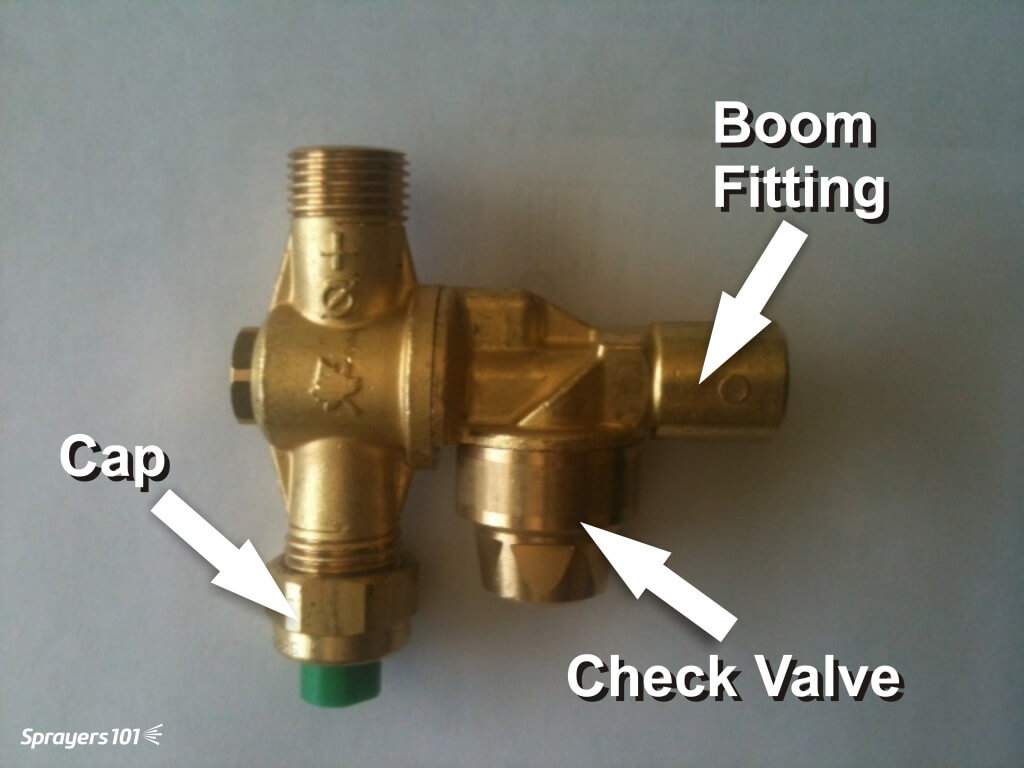
Double outlet roll-over bodies (pictured below) allow the operator to quickly switch between two nozzles mounted in each position. This is convenient when alternating from dilute to concentrated applications, or changing the spray distribution from block to block.
A typical brass roll-over style nozzle body with cap and check valve.
The roll-over feature can act as a shut-off and facilitate fine-tuning the orientation +/- 15° from centre. When roll-overs are new there is an audible ‘click’ when they reach 15° to alert the operator that turning them any further will interfere with flow. This feature fails as bodies wear.
Single Nozzle Bodies
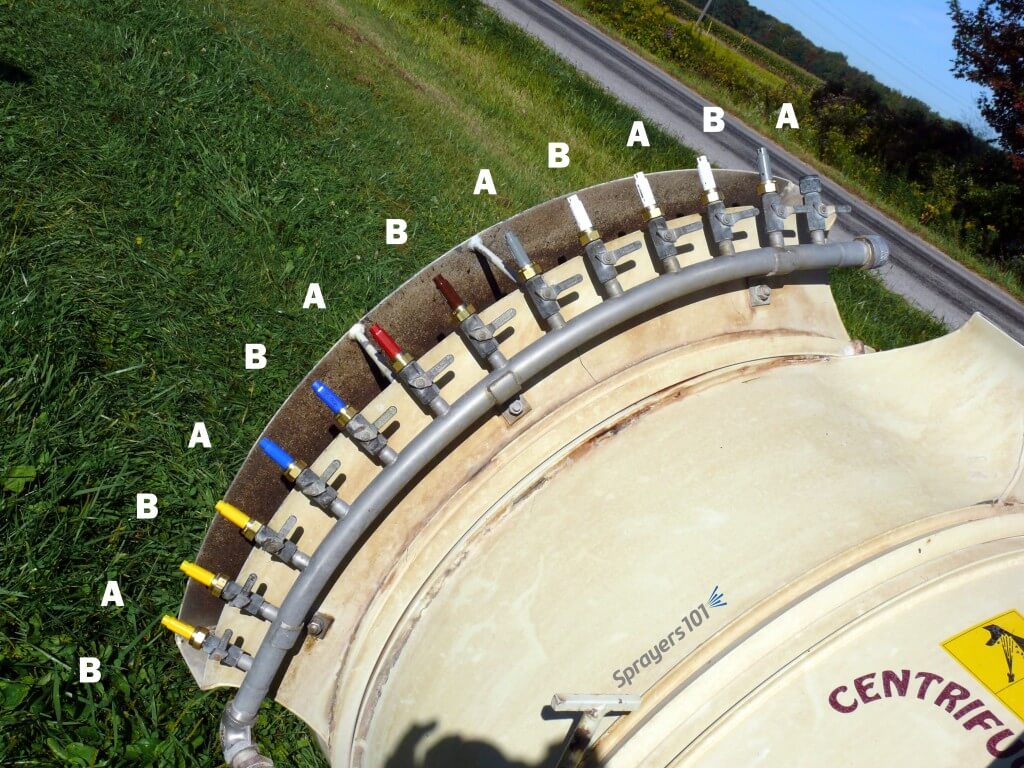
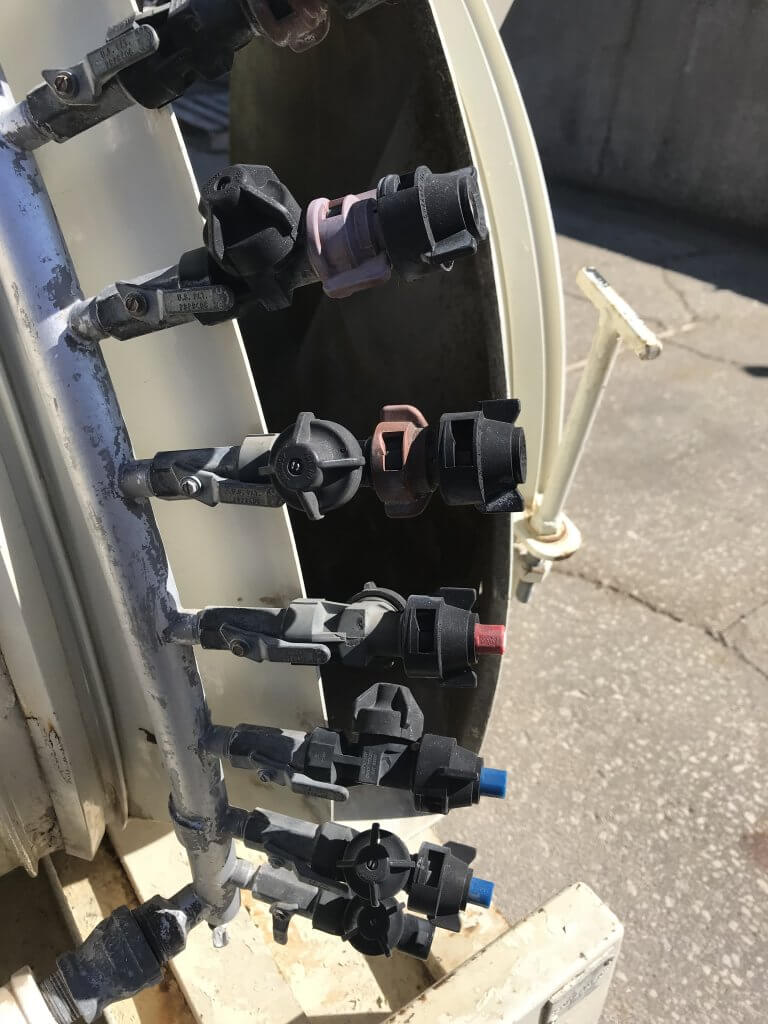
Some sprayers employ single nozzle bodies featuring screw or lever-style quarter-turn shut-offs. Some sprayers, like the Turbomist featured below, double the density of the bodies along the boom, arranged in an alternating A-B pattern. The operator shuts off each alternate nozzle, perhaps using the A’s for dilute and the B’s for concentrate applications. The density gives the operator the ability to “double up” in positions along the boom if more spray is required.
Some sprayers do not use double outlet roll-over nozzle bodies. Instead, they double the density of single bodies along the booms for use in an alternating A-B pattern.
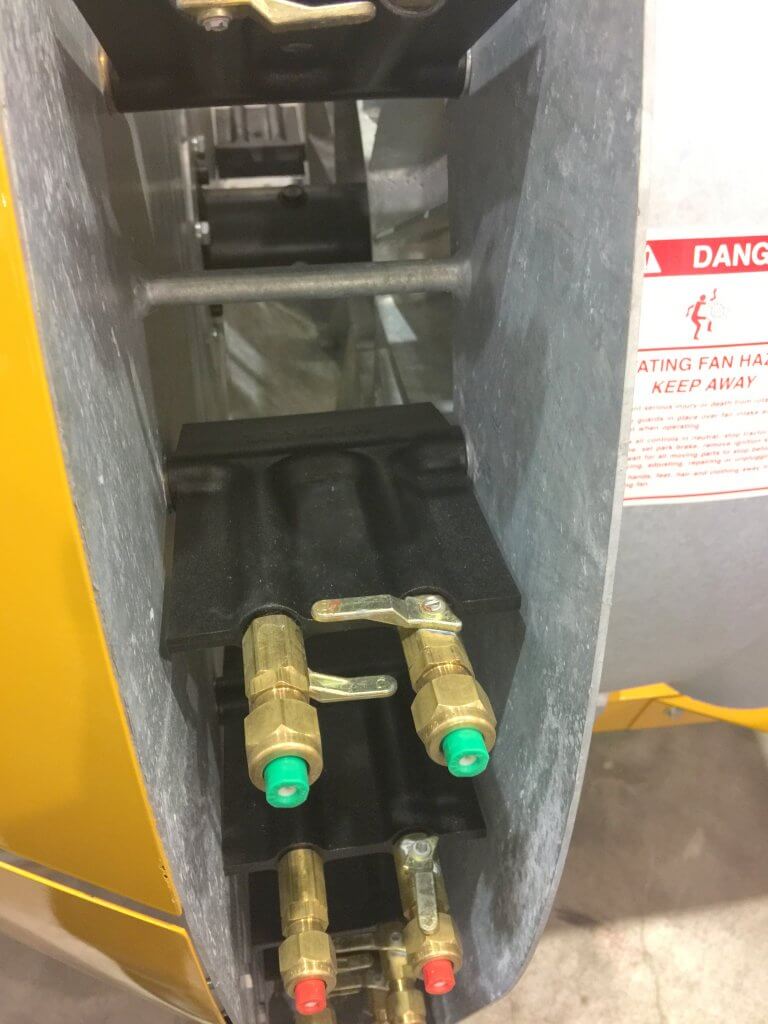
Still others may affix the nozzle bodies to the deflectors (like the Air-O-Fan below), permitting the operator to orient the air and nozzles at the same time.
The Air-O-Fan offers double-density by affixing two single nozzle bodies to each air deflector. The operator aims air and nozzles simultaneously and can select flow combinations using quarter-turn shut-offs.
Check Valves
In my opinion, it should be mandatory for nozzle bodies (or at least booms) to have diaphragm check valves. When pressure drops below ~15 psi the valves shut to prevent the boom from draining (see image below).
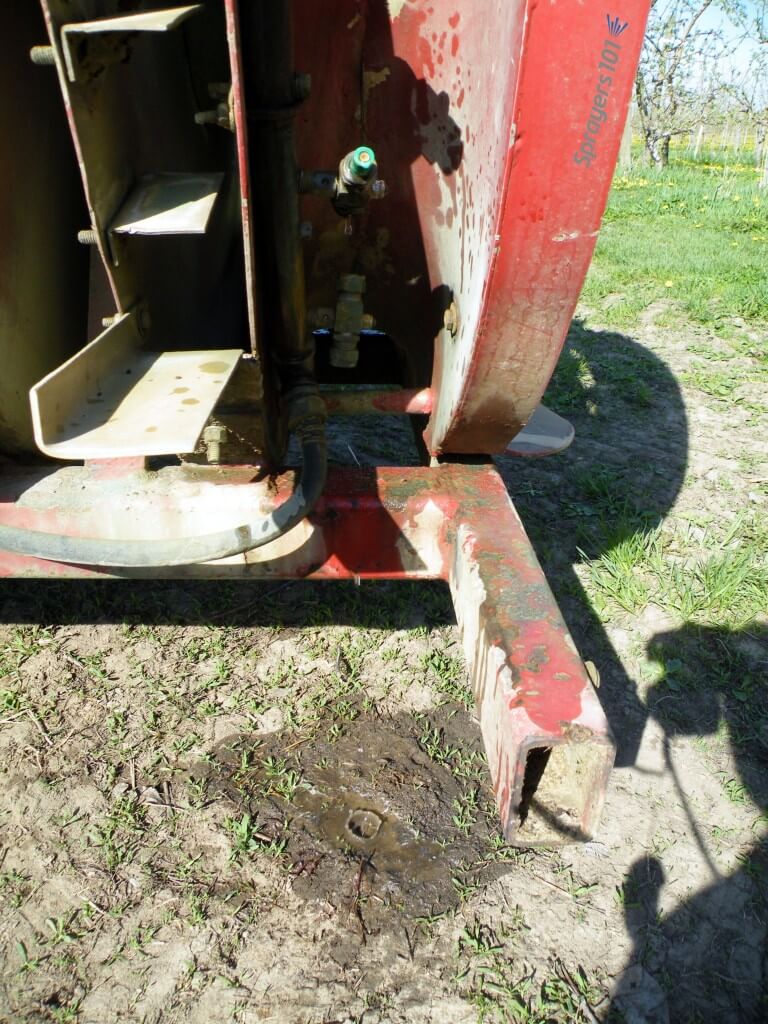
An older FMC with nozzles bodies that do not have check valves. Once the pressure is off, the booms drain through the lowest nozzle. This is a waste of pesticide and unnecessary environmental contamination.
Booms don’t just drain in the yard. Operators shut off the outside boom when turning at the end of a row. Without check-valves, the boom drains through the bottom nozzle, wasting pesticide and causing repeated and unnecessary point-source contamination. Further, it takes a moment for the boom to refill, meaning the top nozzles may not be spraying at the beginning of each row.
You may be tempted to purchase mesh nozzle strainers with built-in ball valves. They can work as an alternative to integrated nozzle body check valves, but they plug and fail with irritating regularity. The image below shows a creative method for installing check-valves on single nozzle bodies. The nozzles protrude and the check valve seems too close to the shut-off, but reputedly this works.
An example of retrofitting diaphragm check valves on single nozzle bodies.
Thread Types
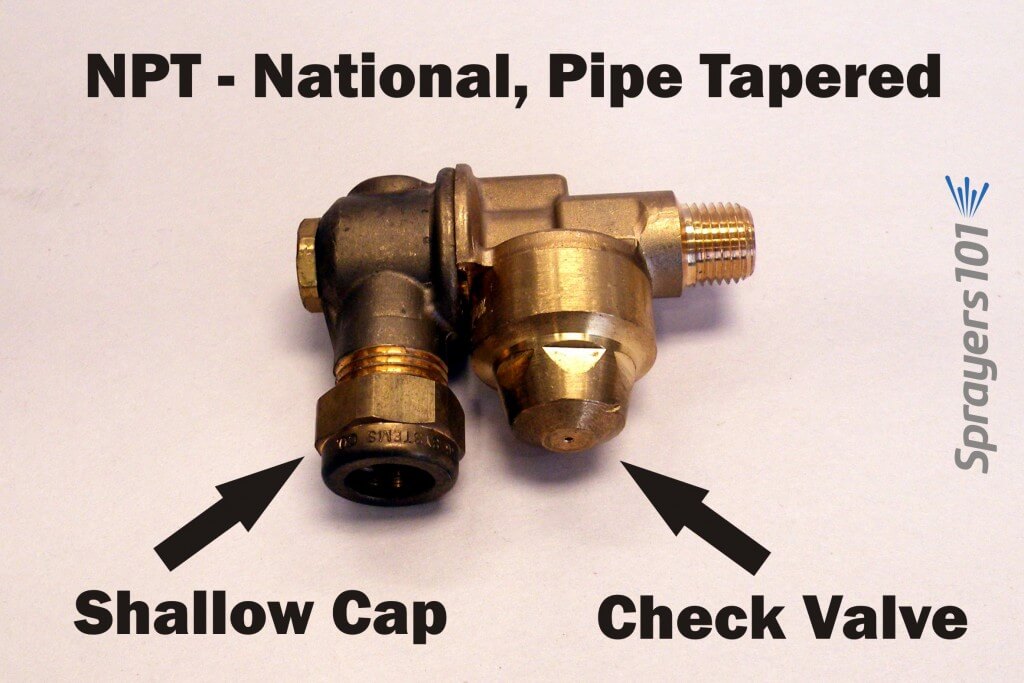
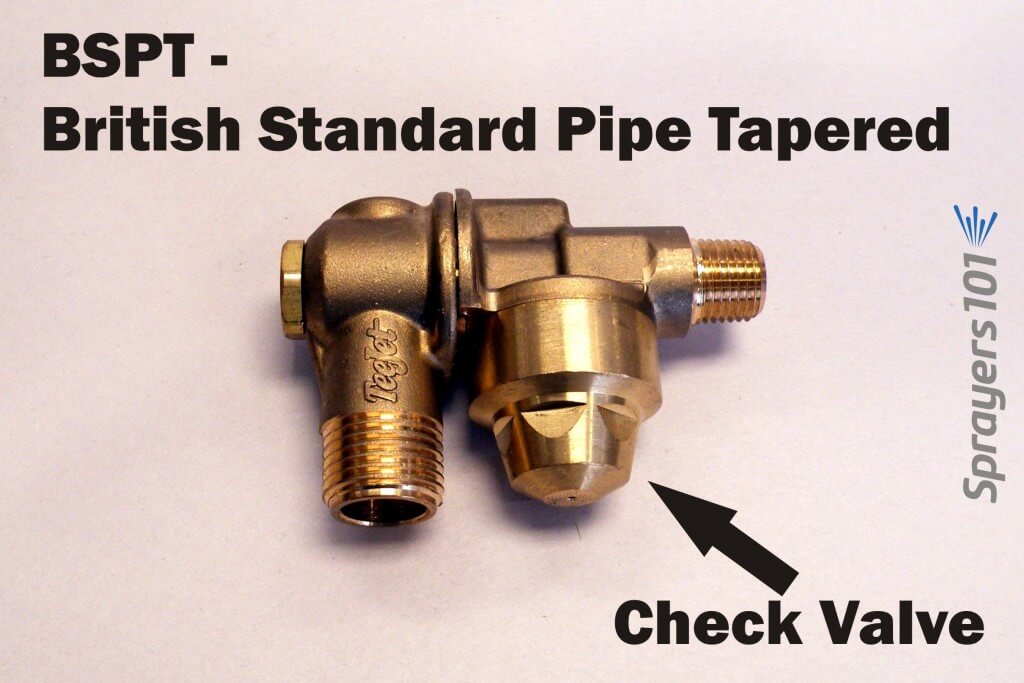
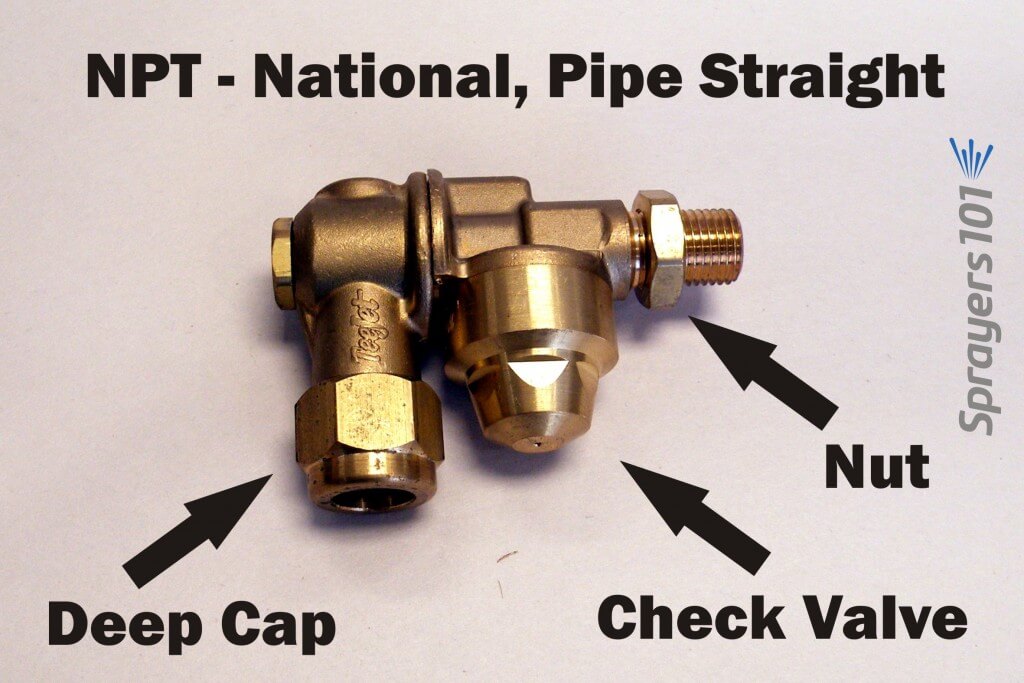
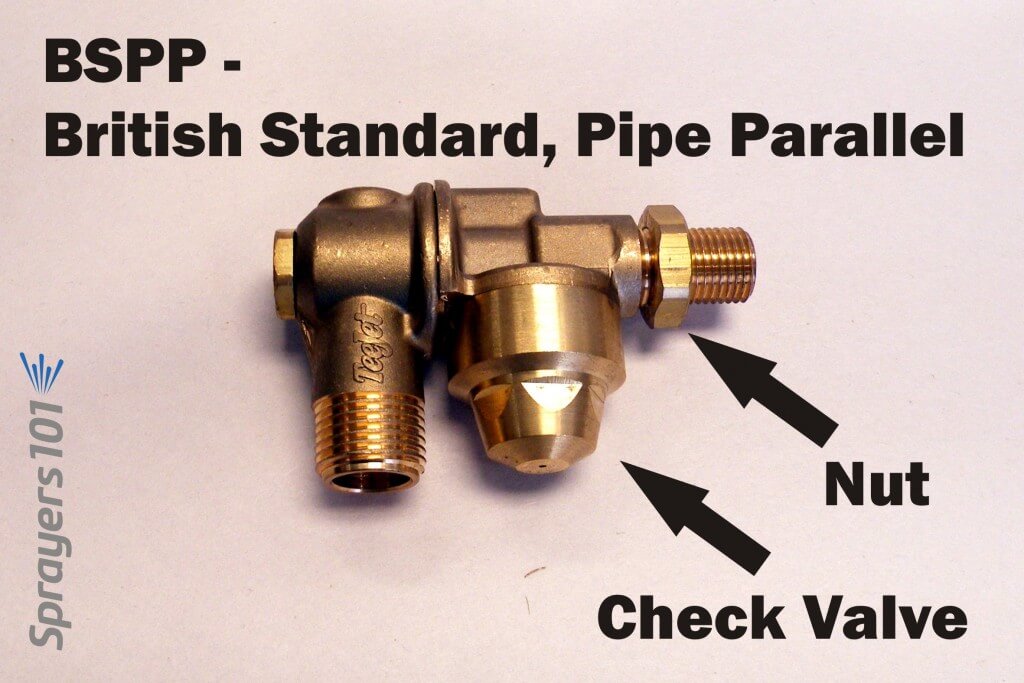
In North America, you will encounter four inlet thread types: NPT, BSPT, NPS and BSPP.
National, Pipe Tapered (NPT) single-sided, brass roll-over nozzle body with check valve. Note the shallow cap pictured here.British Standard, Pipe Tapered (BSPT) single-sided, brass roll-over nozzle body with a check valve.National, Pipe Straight (NPS) single-sided, brass roll-over nozzle body with check valve. Note the deep cap pictured here.British Standard, Pipe Parallel (BSPP) single-sided, brass roll-over nozzle body with a check valve.
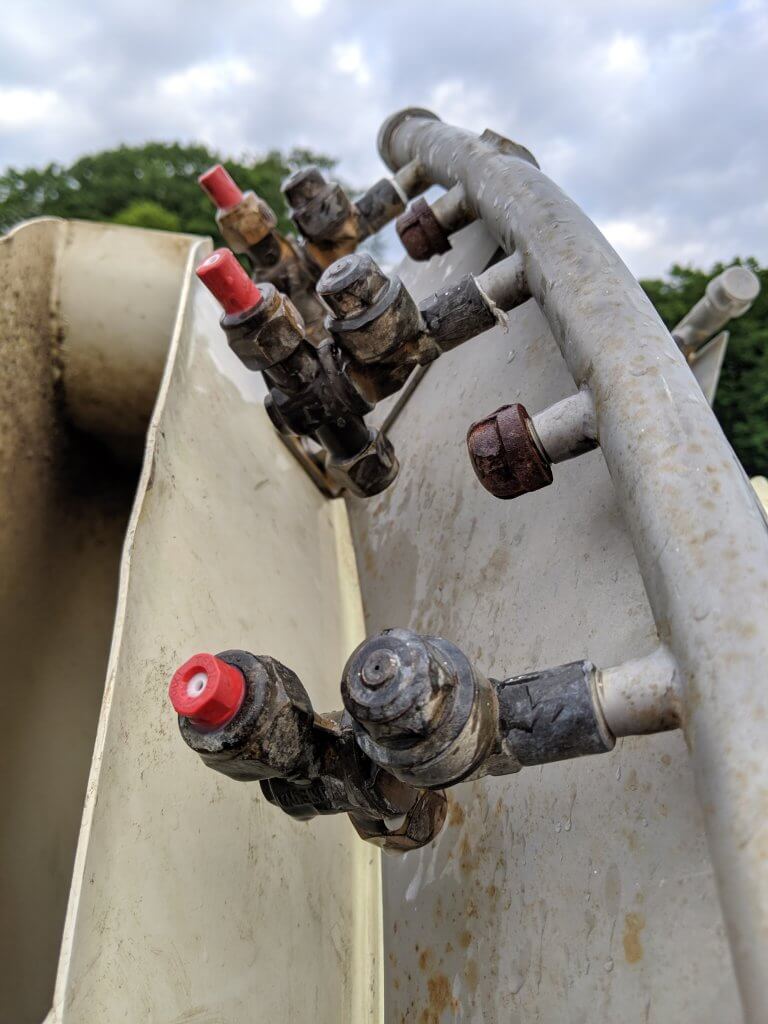
The inlet thread sizes available are 1/4” female, 1/4” male and 3/8” male. 1/4” female is not available on the NPS or BSPP inlet thread types. If you are considering installing new roll-over bodies, know your boom’s thread type. The retrofitted Turbomist below, for example, required bodies with female fittings.
A retrofitted Turbomist with check valves and female double outlet roll-over bodies.
Molded Nozzles
Another reason for installing new bodies is to convert from disc & core combination nozzles to single-piece, molded nozzles. They may not fit existing nozzle bodies. Check the diameter of the body outlet (where the nozzle rests) and the outlet cap (which compresses the nozzle against the body outlet). Your sprayer may currently use an unusual-diameter nozzle, like older FMC disc & whirls or European large-diameter pink ceramic disc & cores. Today’s ISO molded nozzles won’t fit in those bodies, so you’ll need to replace them.
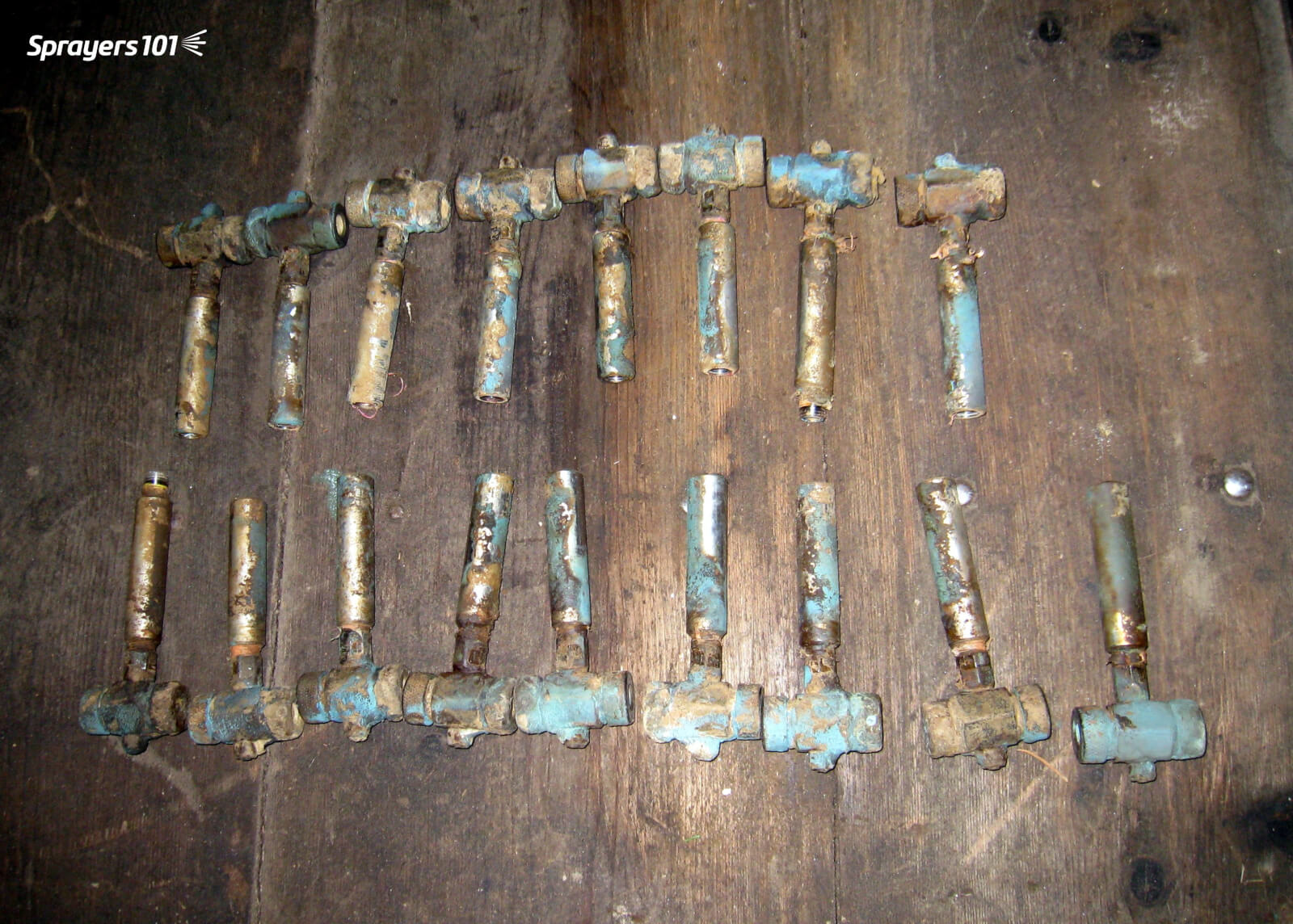
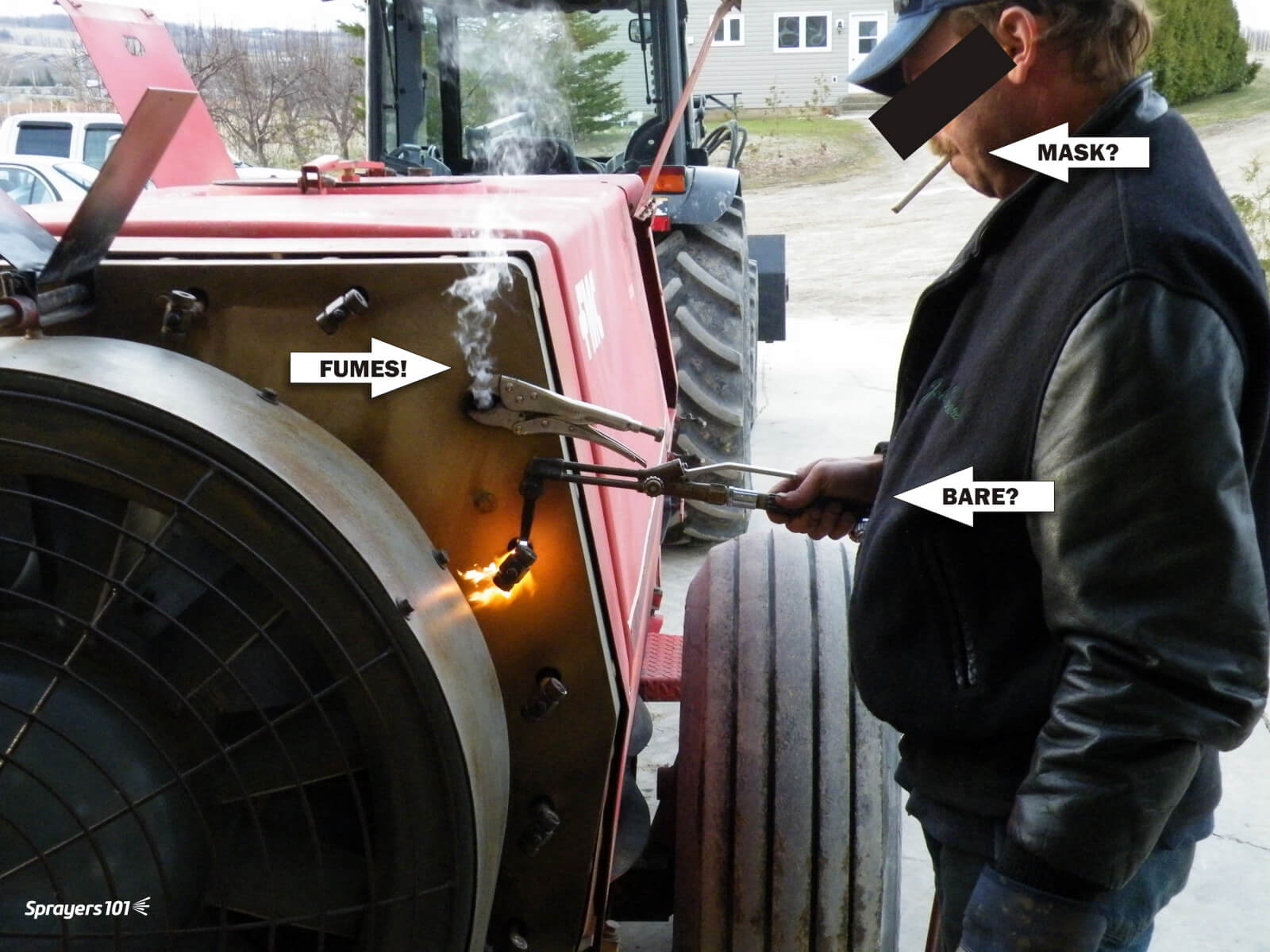
Old roll-over bodies without check-valves. These were removed to make way for better bodies.Older nozzle bodies can seize in the boom, requiring novel approaches to removing them. In this case, the mechanic is heating the fittings using “the blue wrench” to loosen them. If you do this, do not do what this mechanic did. Operate in an open space using gloves and a respirator. Years of residue build-up should be anticipated and respected.
Be aware: that unlike disc and core, molded nozzles protrude and may hit the edge of the sprayer duct when rolled over, preventing them from turning freely
Nozzle Body Caps
Nozzle bodies DO NOT come with the nozzle caps; they are specific to the nozzle type and must be ordered separately. This was an unpleasant surprise the first time I ordered a set of bodies.
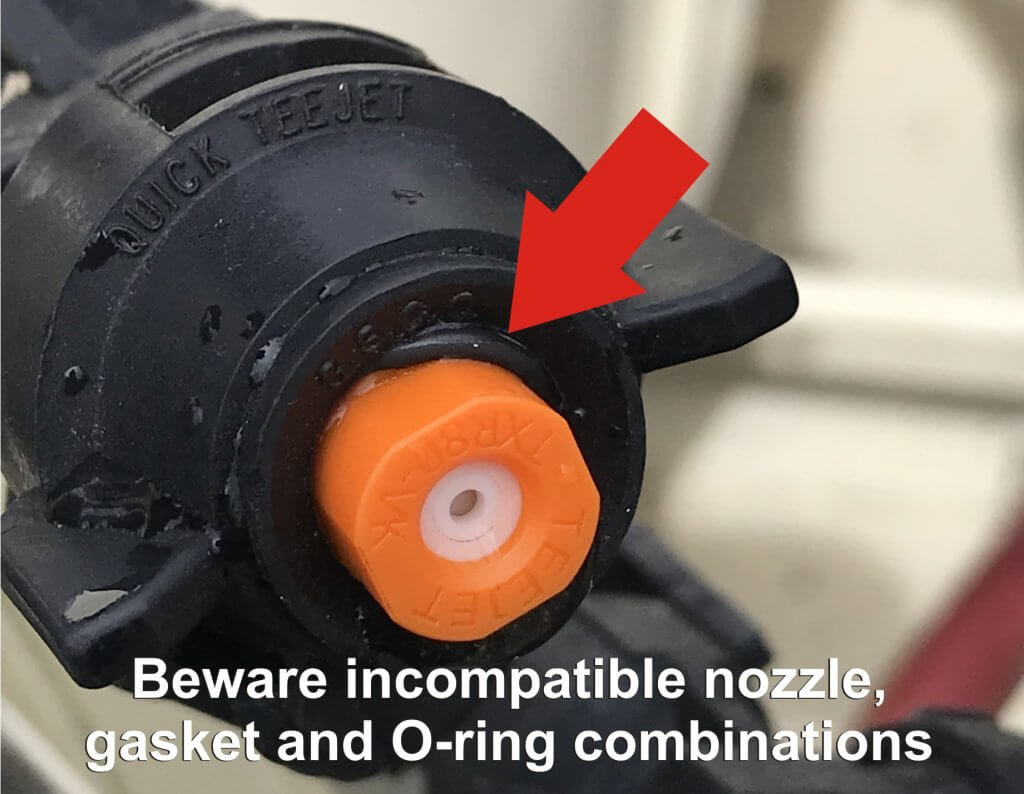
The standard caps are threaded brass hex nut-style but there are also nylon wing-style caps that don’t require a wrench. Beware converting to quarter-turn systems for airblast sprayers. It can work, but nozzles may require additional gaskets and O-rings… and even then are known to leak if the cap diameter is too large (see below):
Airblast pressure often exceeds 100 psi and can force the O-ring off the molded nozzle and cause leaks.
Be aware: North American nozzle caps might not fit imported European bodies, and European nozzles might not fit North American cap diameters. The LipCo sprayer is one such example.
Regarding the cap depths, sprayer operators must consider the how much “stuff” is between the nozzle body and cap. Gaskets, spacers, O-rings and strainers take up room that may warrant a deeper cap. Perhaps most critical is the nozzle itself. For example, brass disc-core are quite thin, but ceramic are much thicker. They require different cap depths.
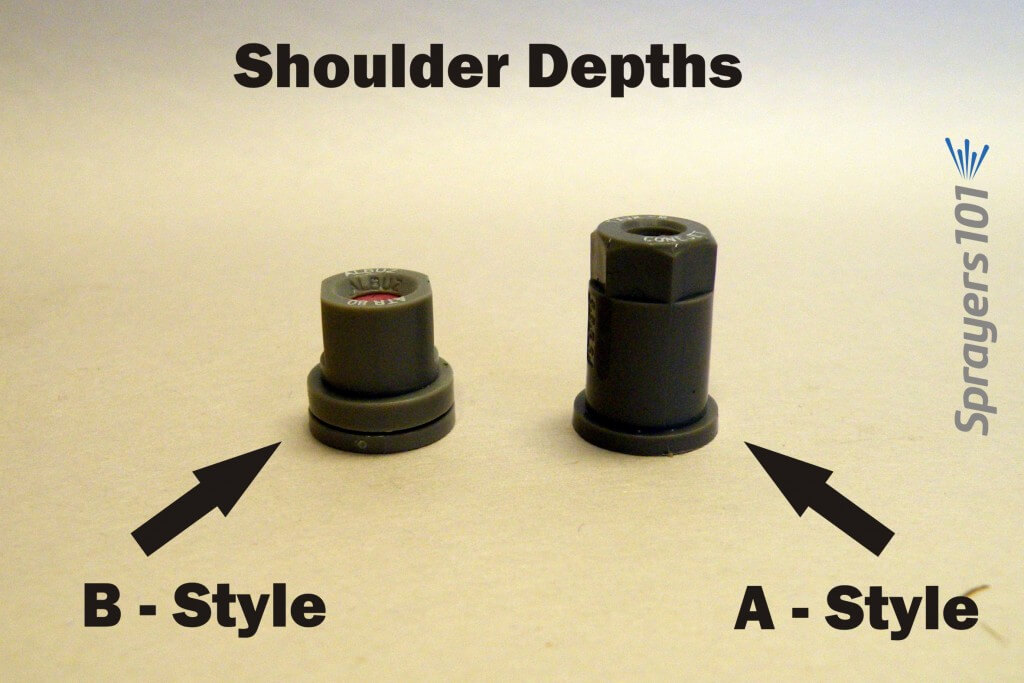
TeeJet’s molded cone nozzles come with an ‘A’ (Thinner) or ‘B’ (Thicker) shoulder. The shoulder is the lip around the nozzle base that is compressed against the nozzle body outlet. The B-shoulder is the ISO standard, and is preferred (see below). Shallow caps may not thread onto a nozzle body using a nozzle with a B-shoulder. Deep caps may bottom-out before compressing a nozzle with an A-shoulder, creating leaks. Be sure to note in the nozzle catalog which caps are recommended for the nozzle.
Molded cone nozzles come in the thin shoulder (A-style) or thick shoulder (B-style) varieties. The B-style is the ISO standard and is preferred.
Nozzle Strainers (aka Filters)
Before we wrap up, here’s one more look-out. As mentioned, the nozzle strainer shoulder takes up some room between nozzle body and cap. It turns out there can be another concern.
A hop grower contacted me. He had installed new nozzle bodies on his sprayer. He’d taken into account the shoulder depth and the cap depth. So why were his nozzles plugged? And why when he loosened the cap to finger-tight did they spray, but leak?
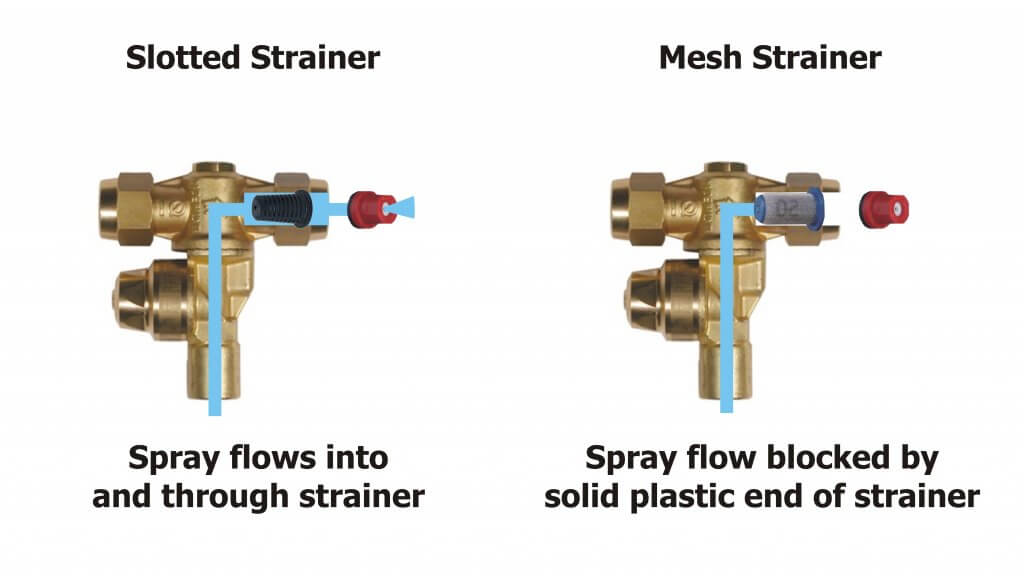
We tried gaskets, O-rings, different cap depths and new nozzles – but no change. That’s when we noticed one side of the roll-over body had a plastic slotted strainer and the other had newer mesh strainer. The mesh strainers were longer and terminated in a disk of solid plastic. When we swapped the two strainers, we had flow! We realized the longer mesh strainers were being compressed against the orifice in the nozzle body, acting like a cork in a wine bottle.
I prefer slotted over mesh because they are a bit more forgiving with dry formulations and hard water residue, but perhaps more critical is that they aren’t long enough to block the flow.
Be aware that some strainers may be long enough to block flow in the nozzle body.
Take Home Tips
If you are considering installing new nozzle bodies:
Confirm the male or female fitting and thread type of your boom
Ensure bodies have check valves
Ensure roll-overs and check valves clear any obstructions with nozzles in place
Know the nozzle type you intend to use, and ensure cap diameter is appropriate
Know whether you will use gaskets, o-rings, spacers and strainers, and confirm the cap depth will accommodate everything.
Be certain the strainer you choose isn’t so long that it interferes with flow.
Consider buying a single nozzle body to install as a trial before buying an entire set of replacements.