The calibration of handheld plot sprayers is an important part of agricultural research, and this article already covers all the bases… as long as you are spraying broadacre or row crops. But what happens when you are trying to emulate an airblast sprayer and treating a tree, bush, cane or vine?
The key difference is that spraying a two dimensional area requires the operator to pass the boom over the target at a uniform height and pace to achieve consistent coverage. But, a three-dimensional target requires the operator to circle the target, or spray from both sides, until it has received the required dose (or volume).
In order to scale down a typical airblast carrier volume for small plot work, we need to know three things:
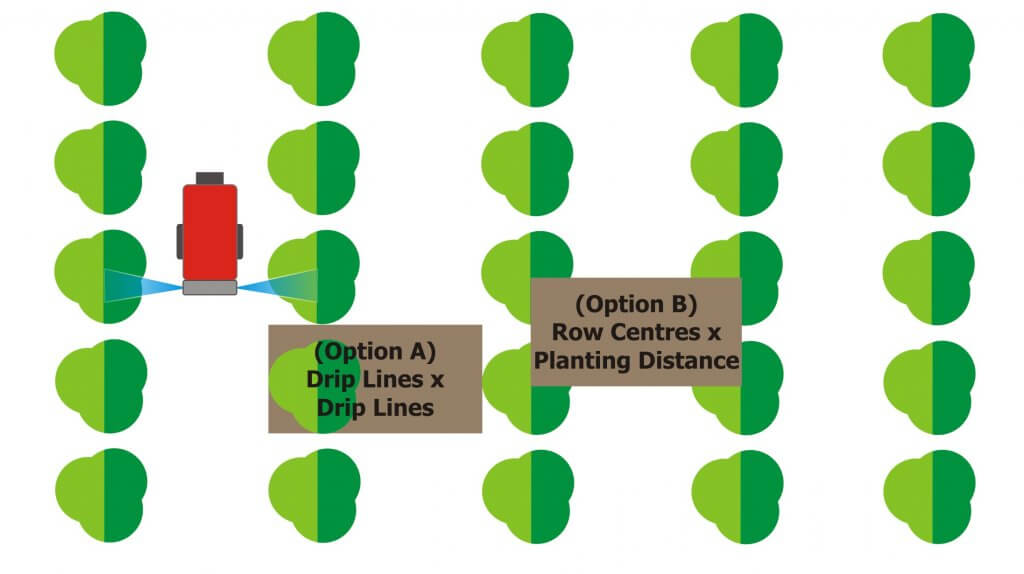
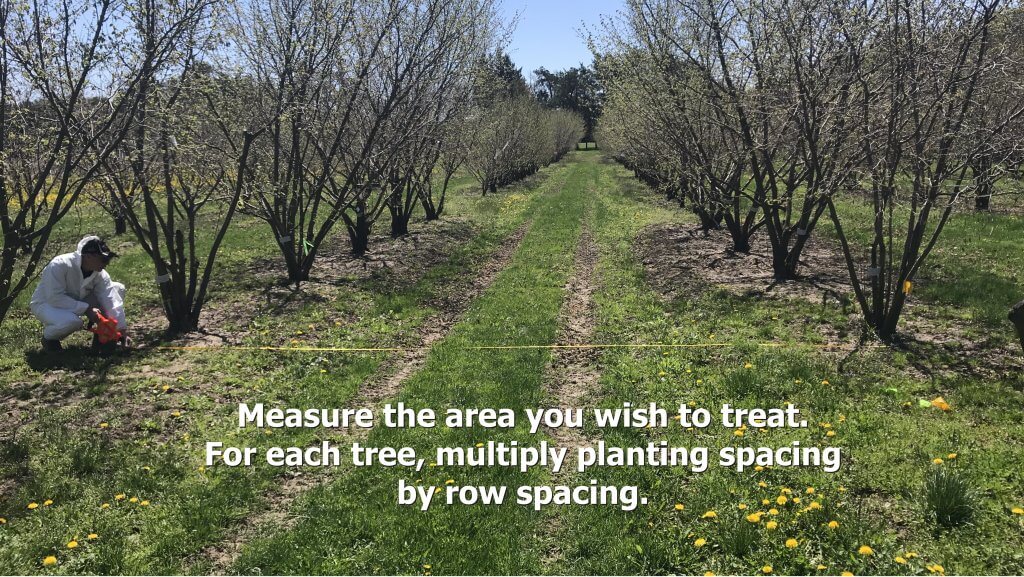
The area you wish to treat (e.g. bush, grape panel, tree, etc.), including it’s share of the alley (in m2).
The emission rate from the calibrated plot sprayer (in US gal./min.)
The airblast carrier volume you wish to scale down (e.g. L/ha).
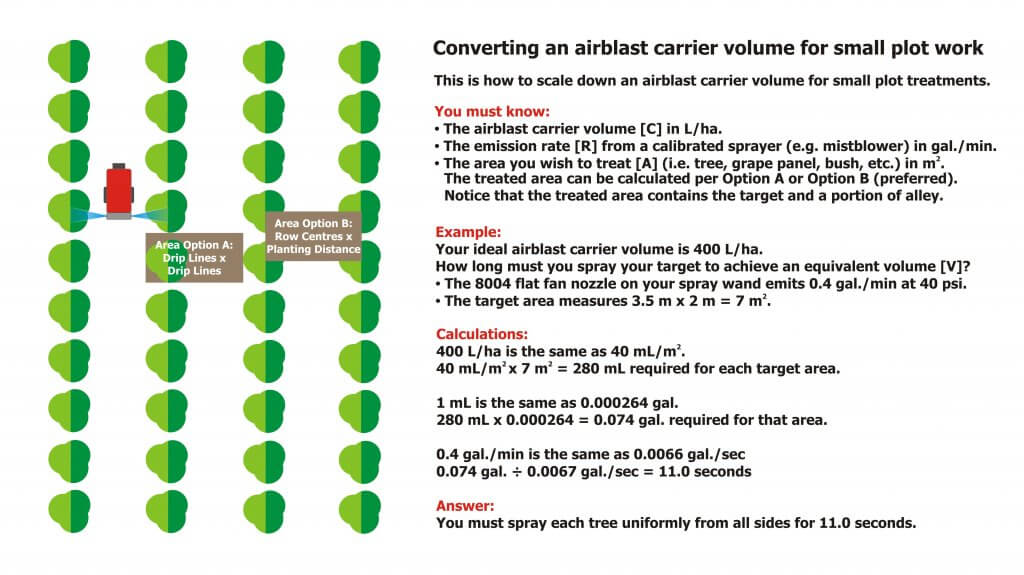
The illustration below shows two options for calculating the treated area. Option A requires you to measure from the outermost edges of the canopy (imagine if the canopy was wet and dripping – the dripline is that outermost point). It is less consistent than the preferred Option B, where the area is determined from row centres and planting distance.
Two options for scaling down an airblast carrier volume for small plot work. Both produce the same treated area, but Option B is the preferred method.Use the average planting distance and row spacing in metres. For a panel of grapes, use the centre of each panel as the planting distance.
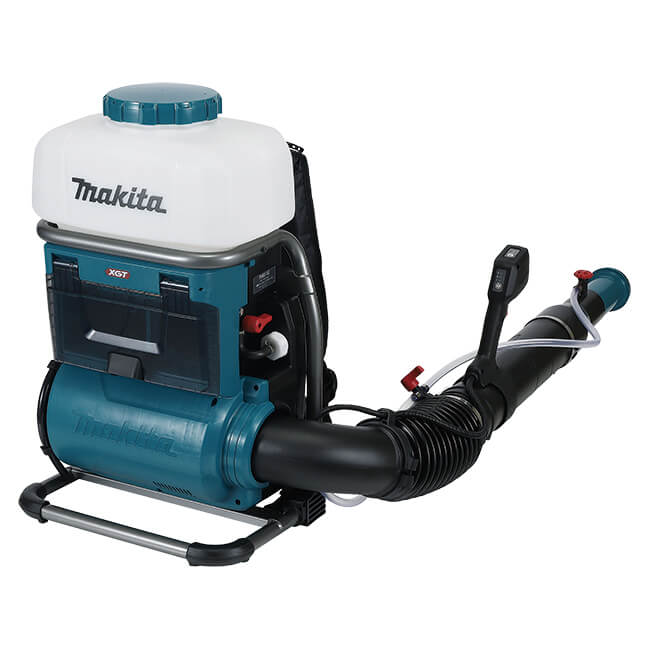
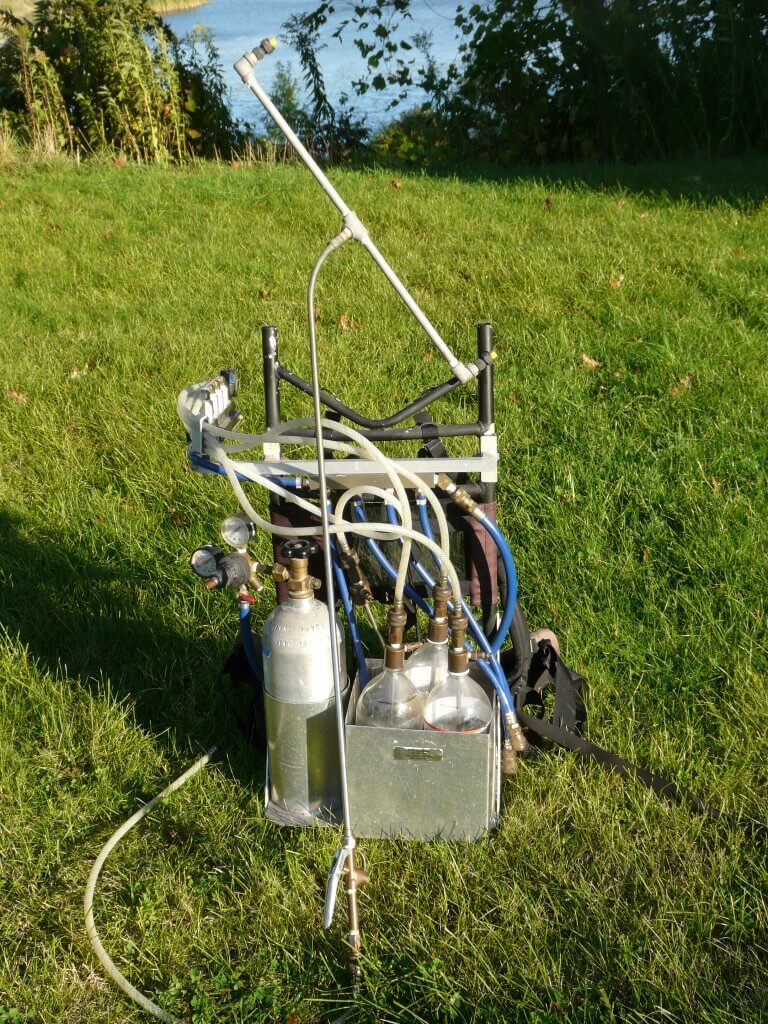
If you are using a CO2 powered hand wand (preferred over a manual pump) with one or more hydraulic nozzles, then you can calibrate it using the methods in this article. There are battery-powered options from Jacto and Petra Tools, the latter offering a battery powered ULV system as well. Makita also has a battery entry (image below). However, if you are using a backpack mistblower, which better approximates an airblast sprayer compared to a hydraulic hand boom (see this article), it requires a different approach. Plus, you get to look like a Ghostbuster, which is a win in my book.
Follow along in the following images as we explore how to calibrate a backpack step by step:
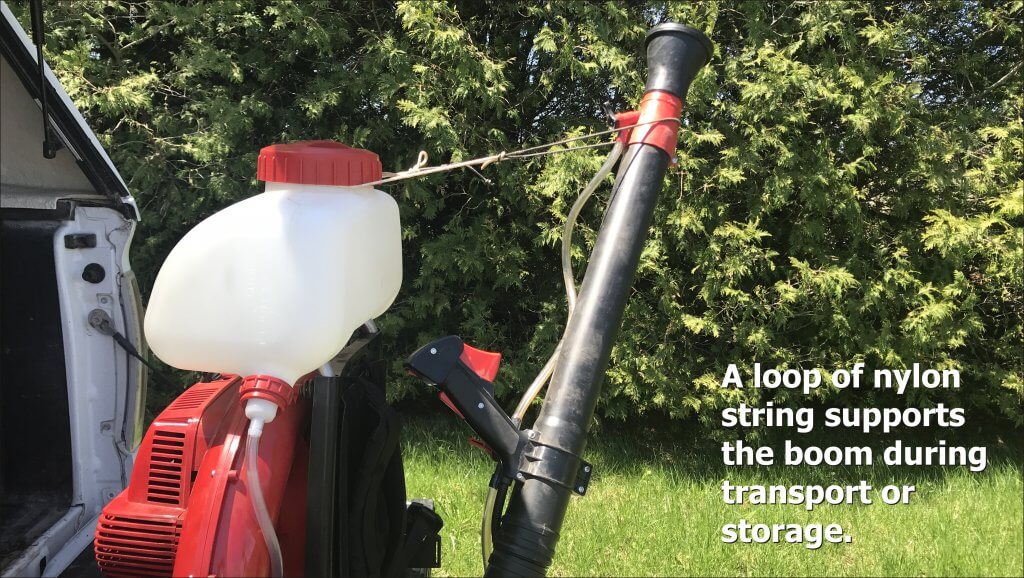
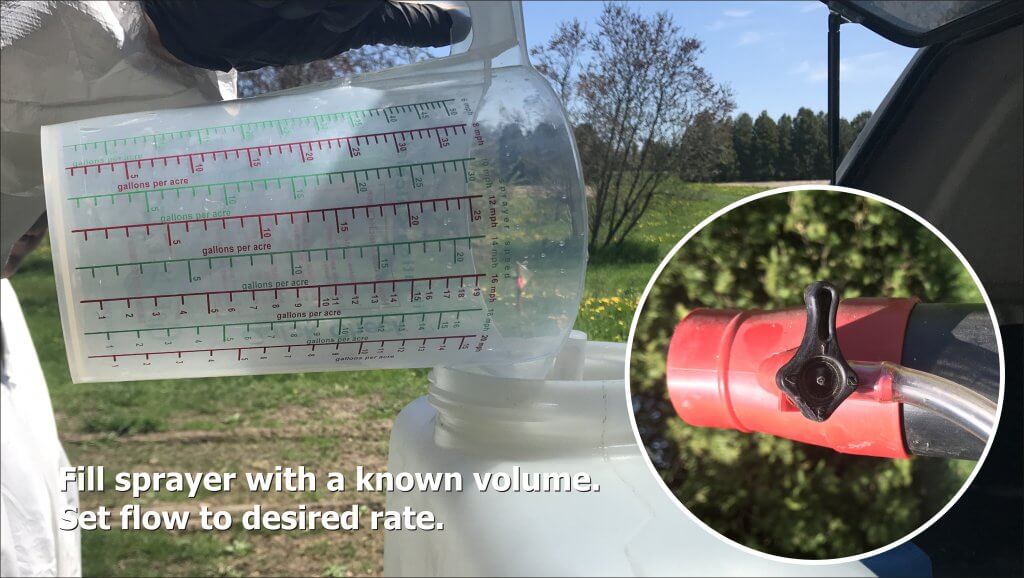
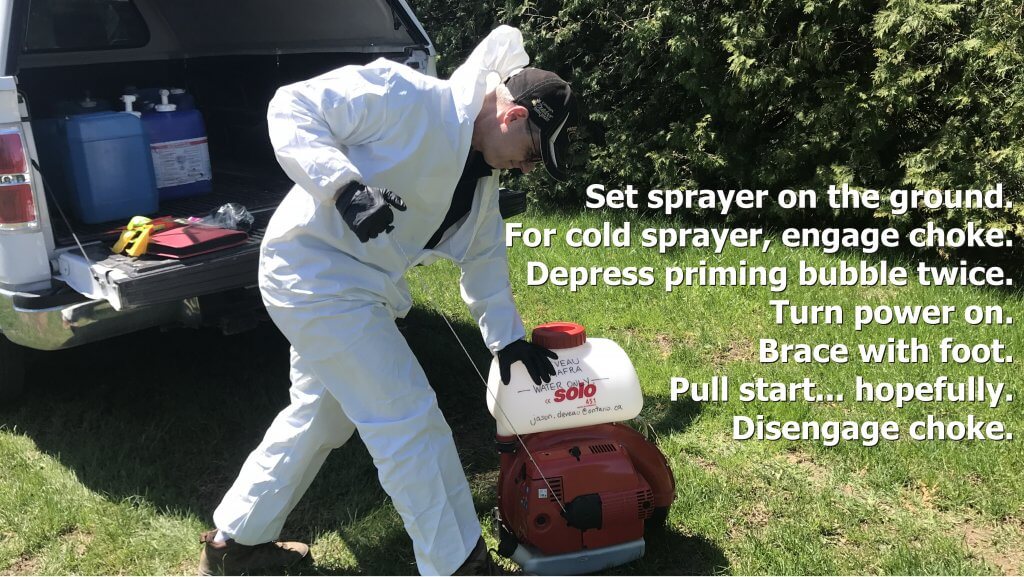
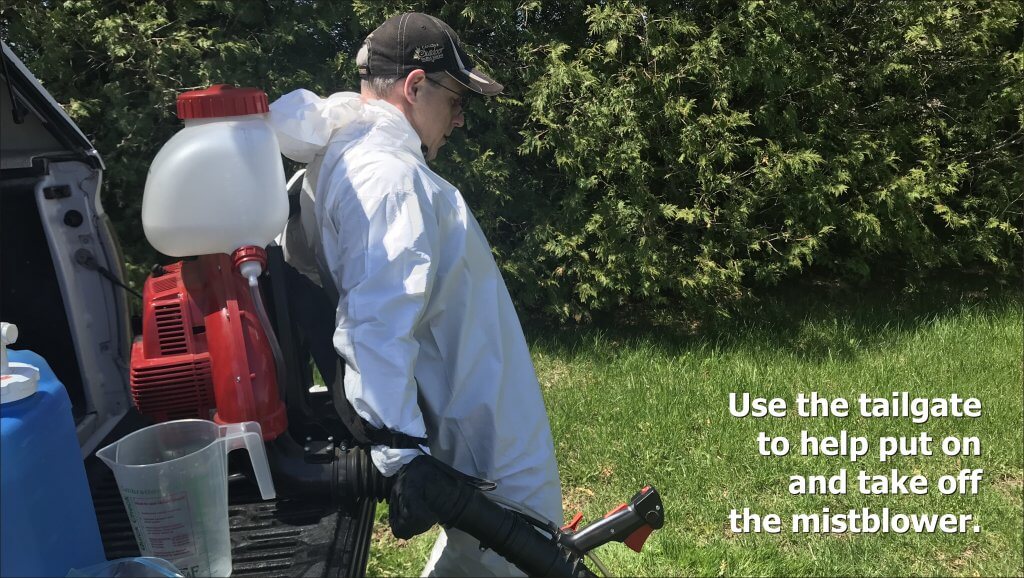
When transporting a mistblower, use a loop of nylon cord to secure the boom in an upright position.For calibration, fill the completely empty sprayer with a known volume of water. If the boom is gravity-fed, be sure the feed valve is closed so the water doesn’t run out of the boom.With the sprayer on the ground, brace it with your foot. Step on the metal frame, not the motor housing or tank. Follow the operating instructions to pull start the motor.Being cautious of the hot exhaust, set the sprayer on a tailgate, or other elevated surface to facilitate strapping it on.
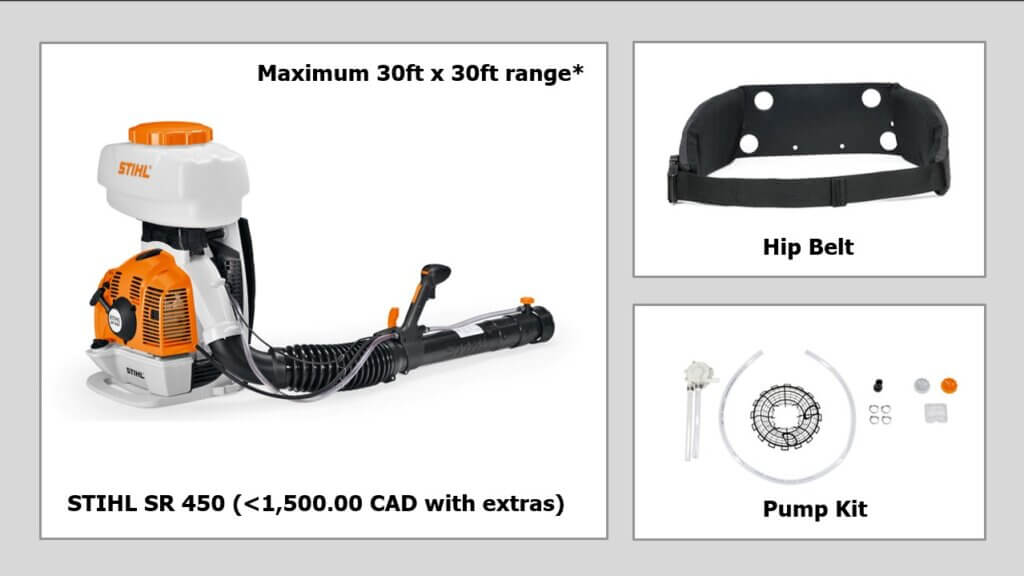
Be aware that most mistblowers use gravity to feed the spray mix from the tank to the boom. A pressure pump kit is recommended for applications where the spray tube is held upward more than 30 degrees to maintain a consistent discharge rate. A hip belt is also recommended to reduce fatigue. Examples are shown below are for Stihl-brand sprayers. Some may or may not require the pump (e.g. Tomahawk) but they are primarily intended for mosquito control and in that case a consistent rate over a vertical plane may not be as important.
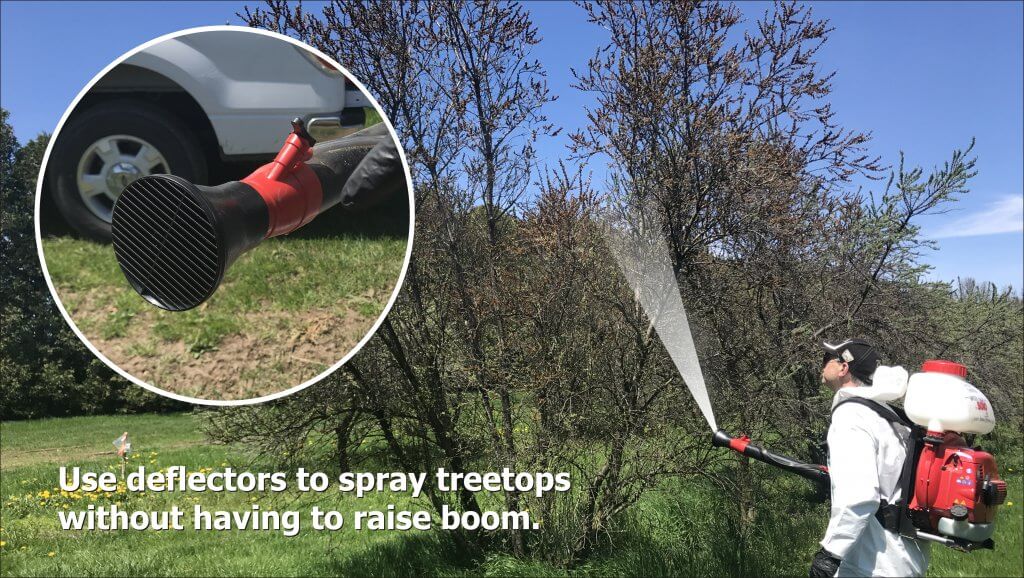
If your sprayer does not have a pump kit, pointing the boom upward will cause spray to slow or even stop. This greatly diminishes your ability to reach high targets and achieve consistent coverage. In this case, attach the deflector (which comes with the sprayer) before proceeding with the calibration.
Deflectors angle the spray upwards without having to lift the boom. This is easier on your shoulder and keeps the rate consistent.
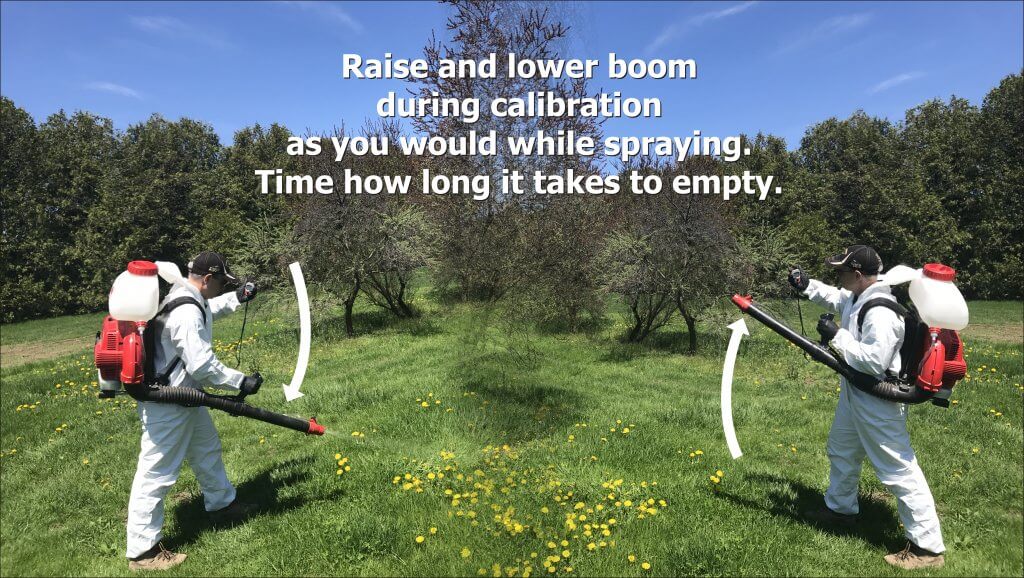
Set the flow rate to the preferred setting (usually a dial at the end of the boom), and using a stopwatch, time how long it takes to spray the entire volume. Be sure to move the boom exactly as you would when spraying the target, either side-to-side or up-and-down, to capture possible rate changes from the gravity feed. Convert the output to US gal./min.
When timing output, move the boom as you would when spraying the target.
Alternately, some people will stand on a bathroom scale with the backpack full. Then get off and spray for a period of time. Then get back on the scale. One millilitre of water weighs one gram, so you can calculate the flow from the weight difference.
Now you know the area and the emission rate. You should have a target carrier volume in mind (e.g. L/ha). Using the following example, let’s determine how long you need to spray the target:
A sample calibration.
In this example, an ideal airblast Carrier Volume [C] for the orchard is 400 L/ha. We want to scale this down to determine the Volume for Treated Area [V]. First, divide [C] by 100 to convert it to 40 mL/m2. Then, because in Canada our nozzles are in US units, we do an ugly conversion: Since 1 mL = 0.000264 US gallons, [C] becomes 0.0106 US gal./m2.
The Treated Area [A] measures 3.5 m by 2 m = 7 m2.
The Emission Rate [R] is the rate the plot sprayer sprays. While we prefer using a mistblower, many still use a hand wand with no air assist. In this case let’s suppose we are using a hand wand with two 8002 flat fan nozzles operating at 40 psi. According to our calibration, we confirm it sprays 0.4 US gal./min.
[C](US gal./m2) × [A](m2) = [V] (US gal.)
0.0106 US gal./m2 × 7 m2 = 0.074 US gal.
We know we want to spray the target with 0.074 US gal., and we also know [R] which says our boom emits 0.4 US gal./min. We convert this to seconds by dividing by 60, so [R] = 0.0067 US gal./sec. From this we can calculate how long [T] we must spray the target.
[V](US gal.) / [R](US gal./sec.) = [T](seconds).
0.074 US gal. / 0.0067 US gal./sec. = approximately 11.0 seconds.
So, we know that to spray the target with an equivalent 400 L/ha, we must achieve consistent coverage from all sides by spraying it for a total of 11 seconds. Pro tip: Always mix a little more spray volume than you will need to account for priming.
This is only one way to calibrate a backpack sprayer for spot spraying. If it’s isn’t quite what you need, check out these resources:
Did you come here looking for advice on which sprayer is best for your small operation? Are you looking to ditch the backpack mist blower? Do you want to avoid repeatedly mounting and dismounting a 3-pt hitch sprayer from your only tractor? Are you concerned you’ll have to sell an organ to be able to afford one? We hear you, and we’ll try to help. Let’s set the stage with a few facts.
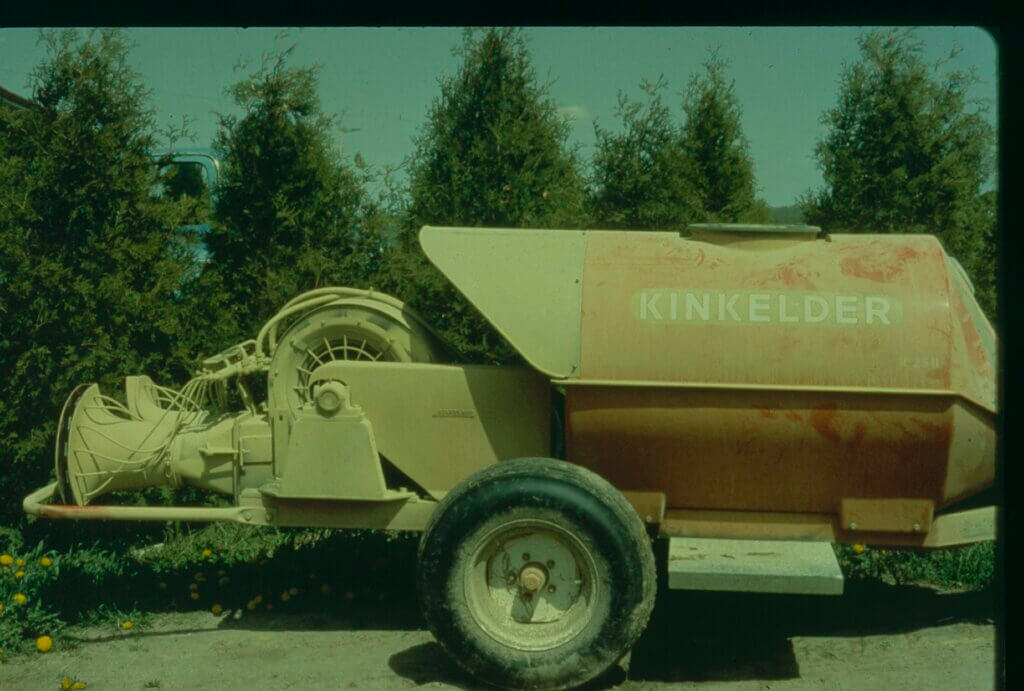
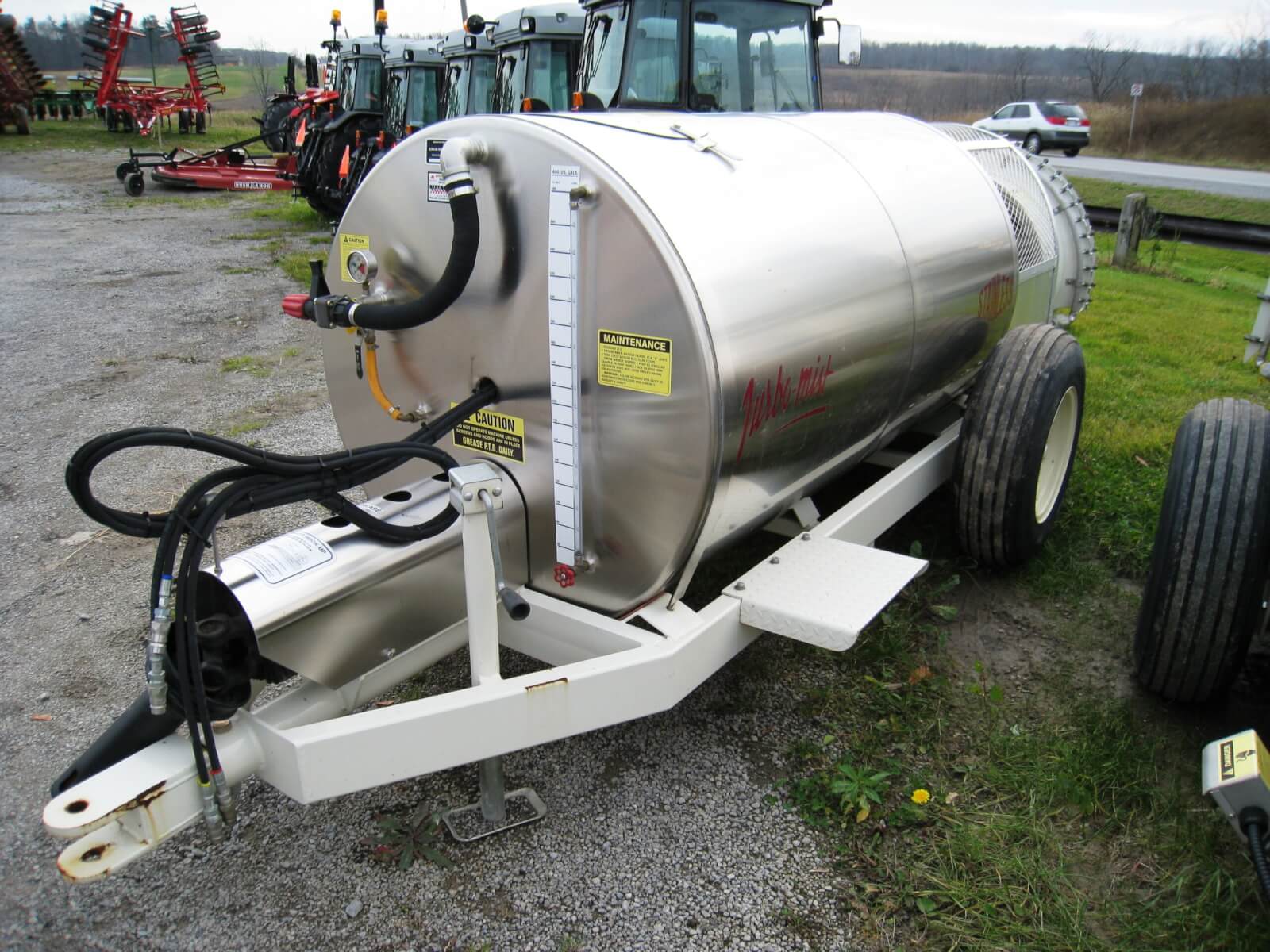
Airblast sprayers stay in service for a long time; more than twenty five years is not unheard of. The majority of them are the generalist, PTO-driven low profile radial design with capacities ranging 150 to 1,200 gallons. Typical fan diameters are around 30″ and can produce >40,000 m3/h of air, making them a good fit for most pomme, citrus and tender fruit canopies. These sprayers come with a horsepower price tag of perhaps 45 hp or more. Many of these sprayers eventually enter the used sprayer market, making them an affordable option for small acreage specialty operations. But, affordability should not be the sole motivation when choosing a sprayer.
Ontario, c.1980 and probably still out there spraying somewhere!
The key to optimizing sprayer performance is to match the air settings to the the canopy you’re trying to spray. You can start reading about the process here. In the case of small and medium-sized canopies like vine, cane and bush crops, the fleet of gently-used sprayers we just described tend to produce too much air. There are options to improve the fit, like driving faster to reduce dwell time, or perhaps the operator can employ the Gear-up Throttle-down method. But, the best plan is to employ a smaller sprayer, which produces a more appropriate air volume, has a smaller profile, delivers better fuel efficiency and won’t break the bank.
So, where are these sprayers? Unfortunately there aren’t many, and options are especially limited if you don’t own a tractor to power them.
The budget-conscious grower may be tempted to buy a sprayer that does not have air-assist. We do not recommend this. Air is a critical component for spraying canopies consistently and efficiently. Caveat Emptor!
We encountered a good solution in June, 2014, when we were invited to Durocher Farm in New Hampshire to see their new airblast sprayer. In years previous, spotted-wing drosophila (SWD) was a significant pest in this two acre, high bush blueberry planting. They claimed that since buying their new sprayer they no longer had any trouble with SWD. That’s quite an endorsement!
The Carrarospray ATVM (200 L option pictured)
I’m not sure what I expected, but I was captivated by this miniature orchard sprayer. The toy-like size carried a zero-intimidation factor and I immediately wanted to start using it. Italian-made, Carrarospray’s hobby line is designed to be pulled behind vehicles without PTO. The ATVM is available in capacities from 120-400 L. The one I saw had a 400 L capacity, adjustable air deflectors, a fan speed gear box, and it was powered by a quiet and efficient pull-start Briggs & Stratton four-stroke engine. It even had a trash guard, a kick-stand and a clean water tank for hand washing. That’s a lot of features.
Thanks to Kitt Plummer (Durocher Farm), Penn State, Univ. New Hampshire and Chazzbo Media for filming these 2014 videos:
The sprayer was pulled (in this case) by a mower, so the grower not only sprayed, but mowed his alleys at the same time. It fit beautifully between the bushes, so the potential for physical damage to the berries was minimized. The air speed and volume was enough to displace the air in the blueberry canopy and replace it with spray-laden air with minimal blow-through. Combined with an appropriate spray volume and distribution over the boom, we found that the coverage it provided was excellent.
Coverage from the top-centre of the bush.
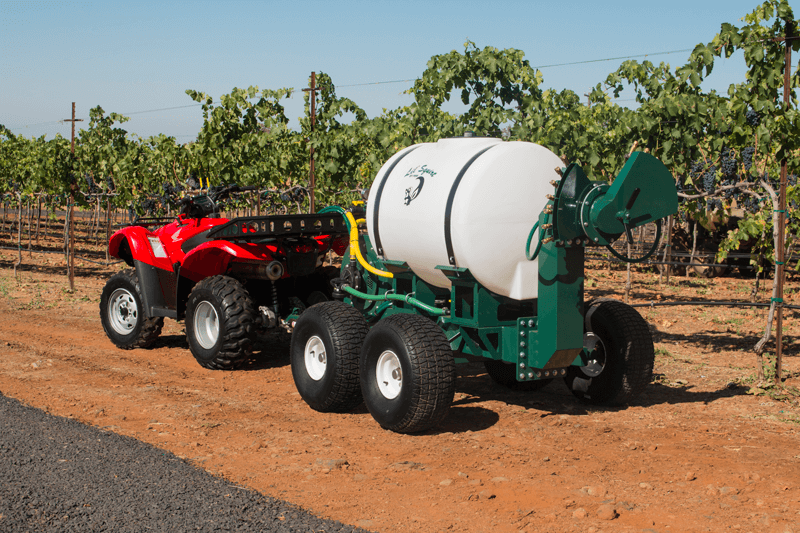
Since seeing this sprayer, we have had reports that importing it to Canada has proved challenging. But there are alternatives. A few companies here in North America offer economy-sized airblast models that are ATV trailed, or skid-mounted, or attached to a small tractor via a three point hitch. PBM’s Lil Squirt is a simple and versatile option. Available primarily in the western US from California through to Washington.
PBM’s trailed Lil Squirt (Image from their website)
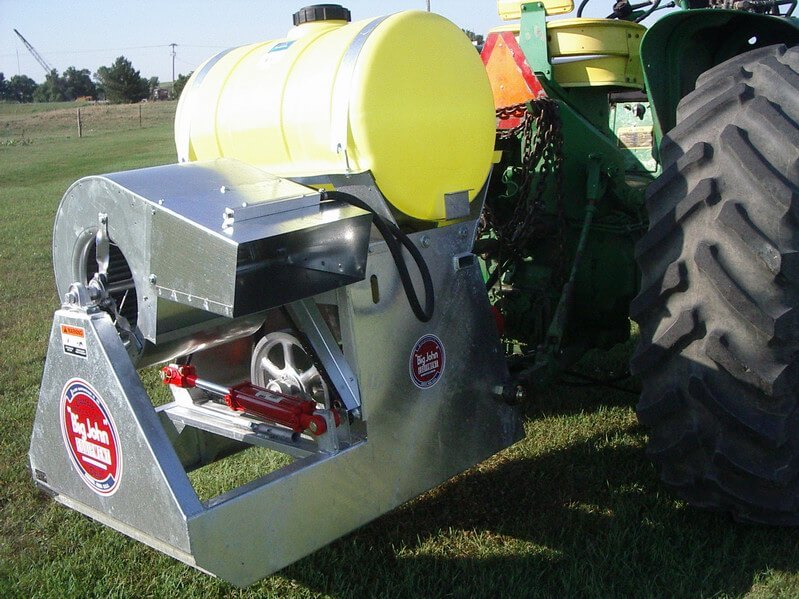
Another option is the mounted, PTO-driven mistblower line from Big John Manufacturing in Nebraska.
BJ 3PT mistblower from Big John Manufacturing (Image from their website)
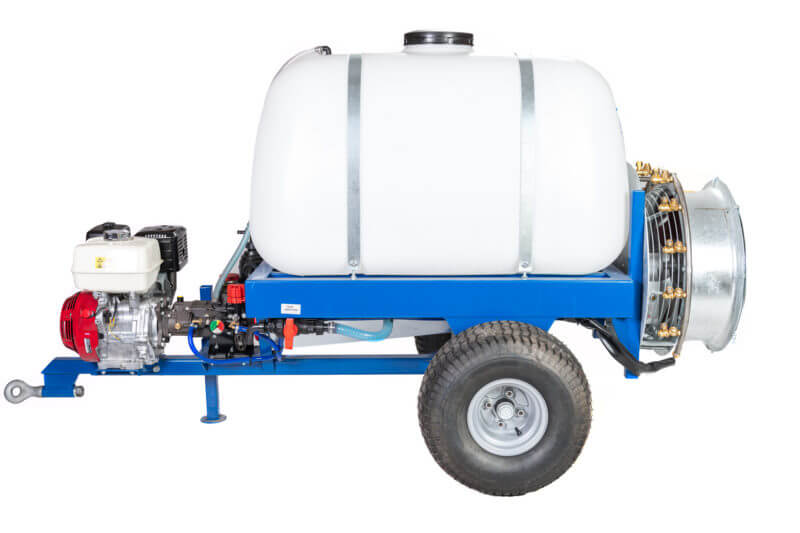
Or MM Sprayer‘s ATV sprayers, which come PTO or Engine-driven. The LG400 has a 106 gallon tank and a 20″ fan. I’d like to see deflectors, but you could easily add them. Here’s a 2024 pdf on features.
Picture of the LG400 engine-driven model from www.mmsprayers.usa
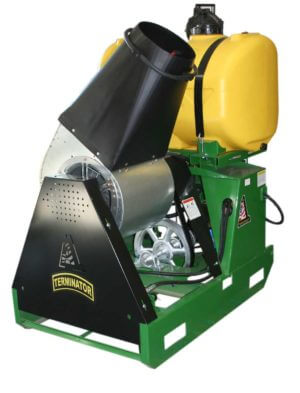
Or Wisconsin’s Contree Sprayer and Equipment. They carry the “Terminator” line. Skid mounted, one-sided air shear units with capacities from 15 to 100 gallons, this company offers a range of possibilities both PTO and gas-driven. Well worth a look.
The “Terminator” skid-mounted mist blower from Contree Sprayer and Equipment (Image from their website)
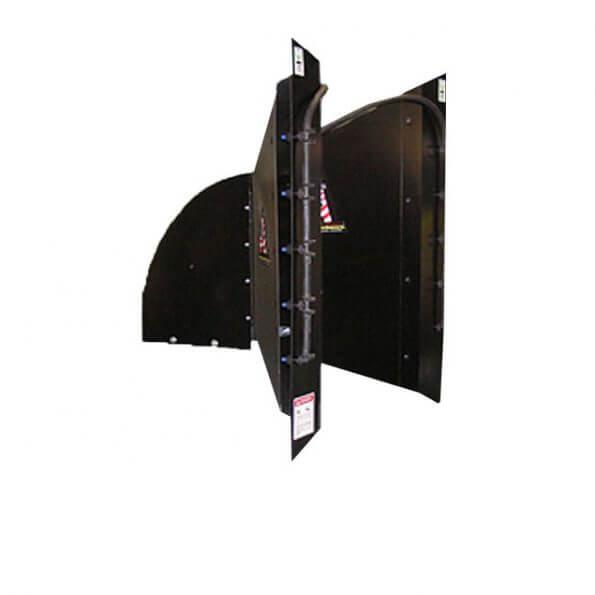
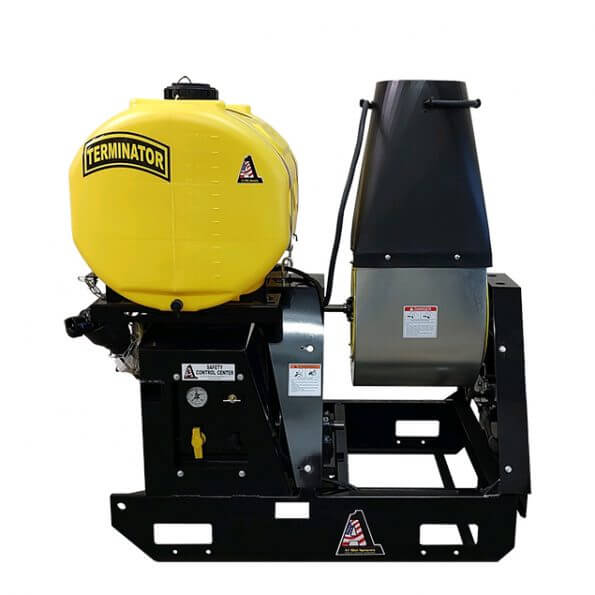
Then there’s the A1 Mist sprayer series, also out of Nebraska. They carry the Terminator line as well as an interesting two-sided volute option that employs conventional nozzles and allows one pass down an alley rather than two. This is a big productivity booster:
A1’s two-way volute header. (Image from website)A1’s PTO-driven 60 gallon, skid-mounted “Terminator”. (Image from website).
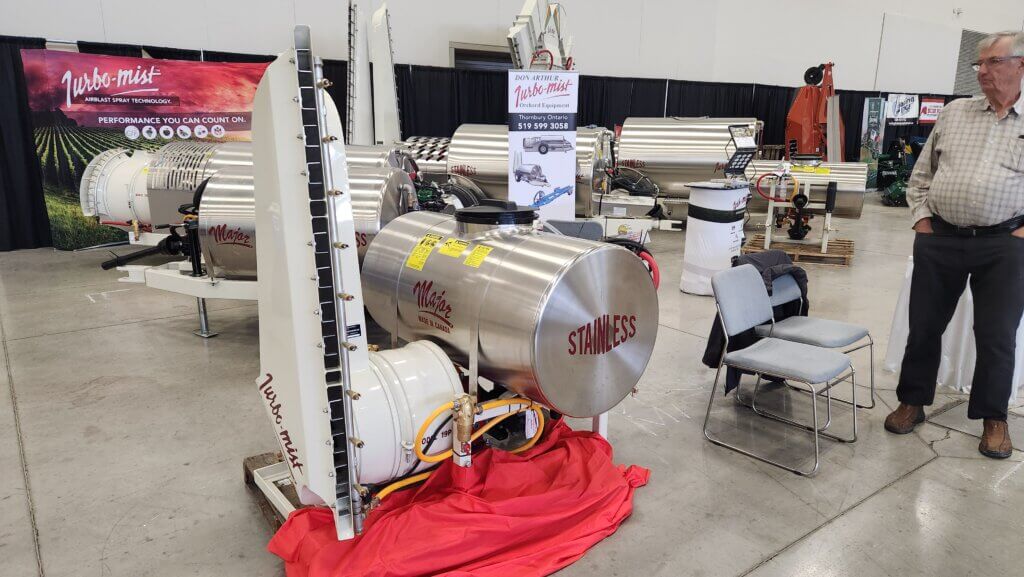
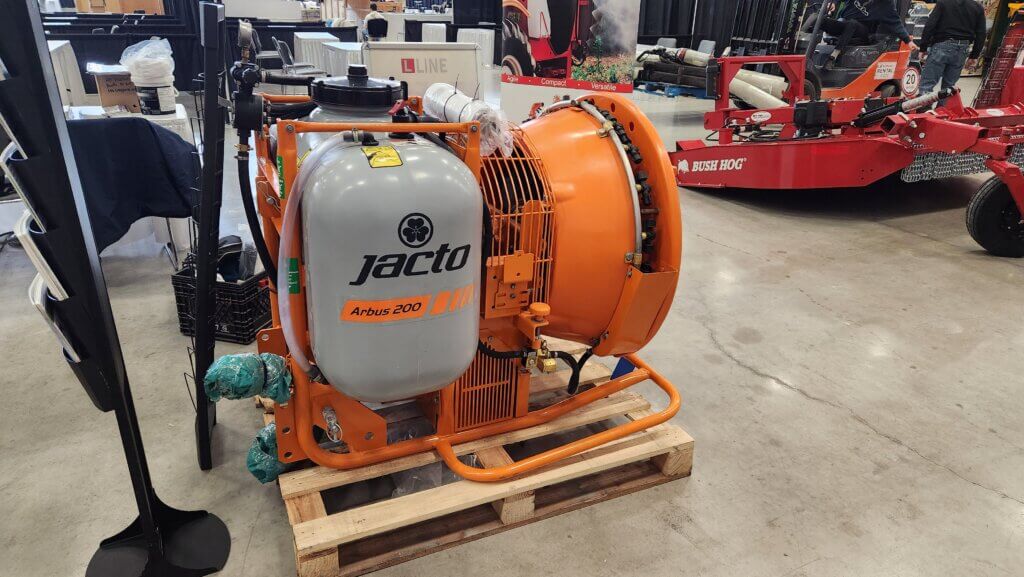
Then there are larger, PTO-driven, three-point hitch options. In fact, there are many options for this manner of sprayer, but they tend to be out of the price range for small operations, and they do require a tractor. That isn’t a deal-breaker, though, as they can sometimes be found used. Pictured below is British Columbia’s Major 193 (Slimline Manufacturing) and a Brazilian-made option (Jacto) distributed out of Quebec.
Slimline Manufacturing (aka Turbomist) makes the Major 19P 3-pt hitch tower sprayer (PTO-driven)Jacto’s Arbus 200 3-pt hitch airblast sprayer (PTO-driven)
When considering your options, give serious thought to your work rate, refill time and other factors that go into developing a robust spraying strategy. What’s a spraying strategy? That’s a farm’s overall management and operational plan for achieving safe, effective and efficient spray coverage. You can read more in chapter 8 of Airblast101, which you can download for free, here. And, just to play Devil’s Advocate, go small but not so small that the sprayer is underpowered.
We staged this video in 2011 (spraying only water, so don’t mind the lack of PPE) to show how a sprayer can be too small for an operation. This 3-pt hitch GB cannot overcome the cross wind and the spray barely reaches the apple trees. Reducing travel speed and increasing pressure won’t cut it, either.
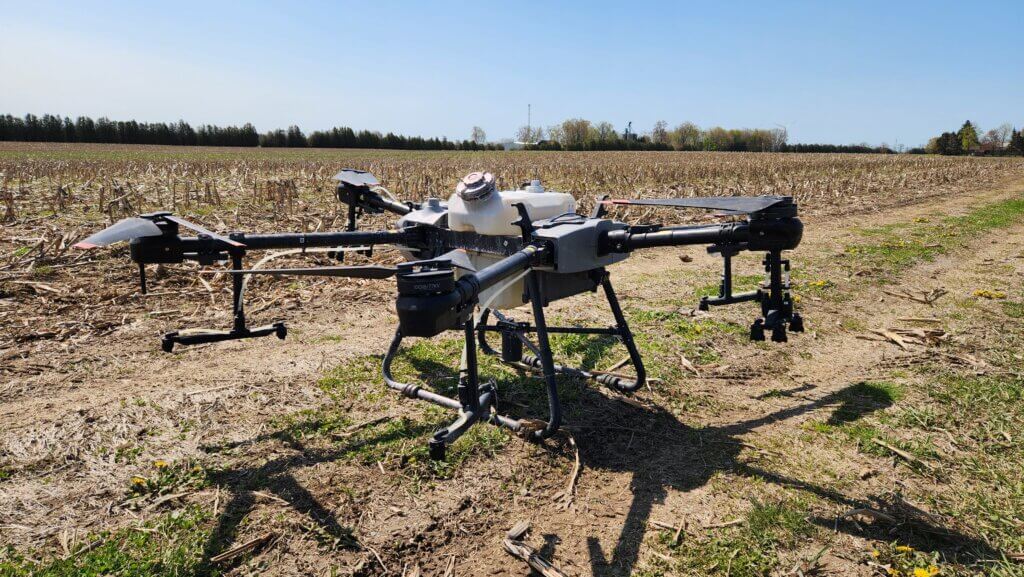
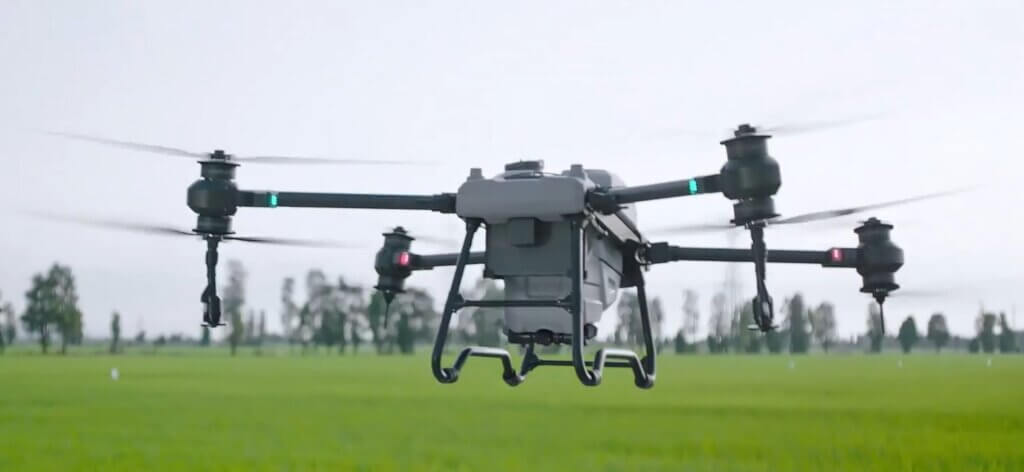
Of course, other possibilities are emerging for crop protection in small acreage perennial crops. Multirotor drones are capable of delivering air-assisted spray from above the canopy. While it’s still a drift-prone and inconsistent means for broadcast spraying, it might lend itself to perennial row crops. Equipment design is evolving quickly and global research is underway to establish best practices. As regulators and agrichemical companies focus more on this method we may see drones as a cheap alternative to a tractor/airblast sprayer, with no compaction, no mechanical damage to fruit/berries, and no potential for splashing infection throughout an operations.
DJI’s Agras T30
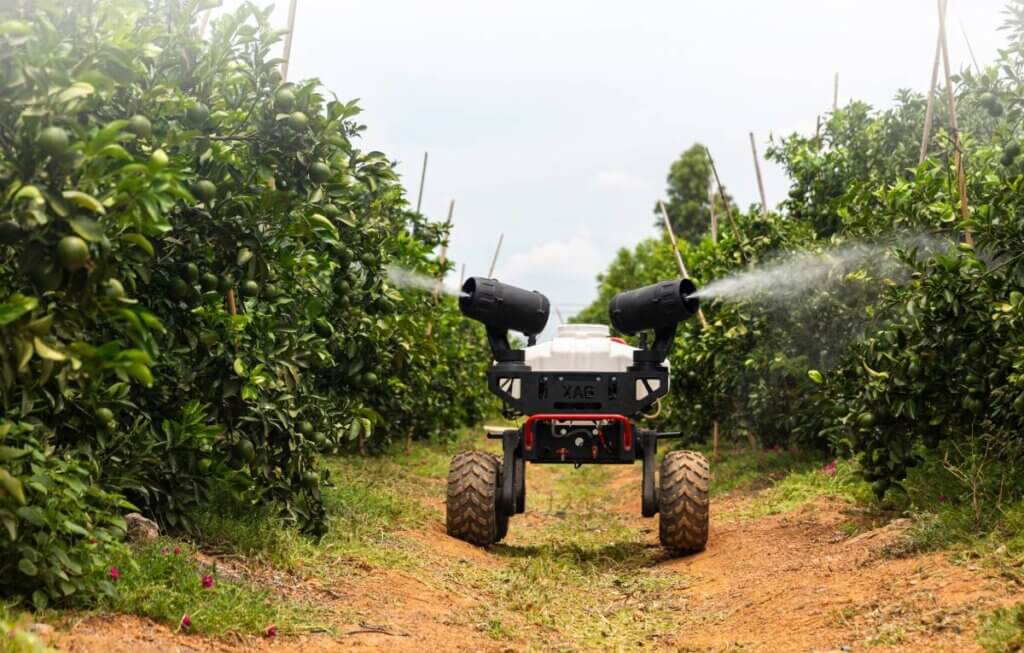
Even further into the future, small autonomous sprayers may be viable, too. Very much in their early days there is great potential. One example is the XAG Revospray Ground 2 with it’s 150L capacity or the R150 with it’s 100 L capacity.
The R150 – Image from https://hse-uav.com/. Modular system and ~32K USD (as of 2023)… if you can find one.
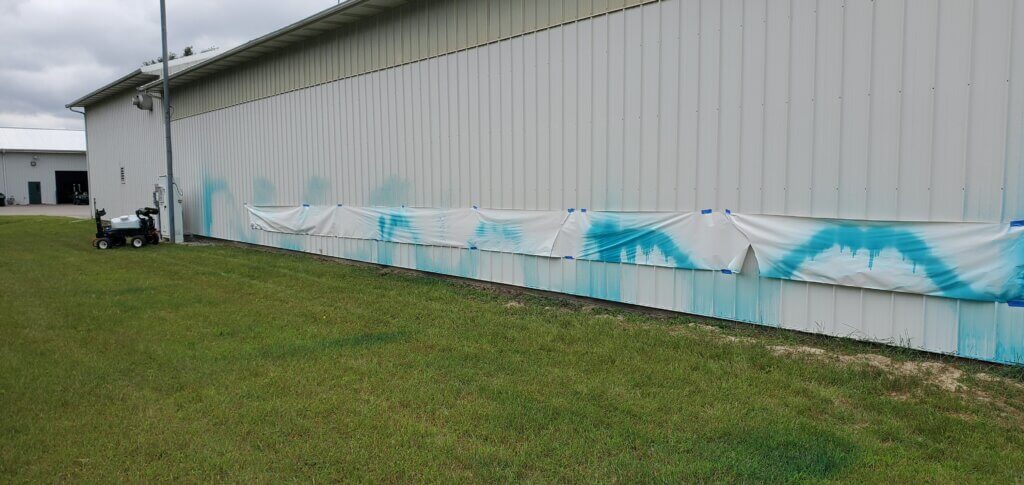
It’s early days, but there are researchers looking at the spray pattern from these units. The image below may not be a fair indication because the nozzle used may not have produced as wide a swath as possible. Thanks to Dr. M. Reinke for the image.
A test pass using food grade dye. You can see the waveform created by the two spray heads as they move up and down during travel.
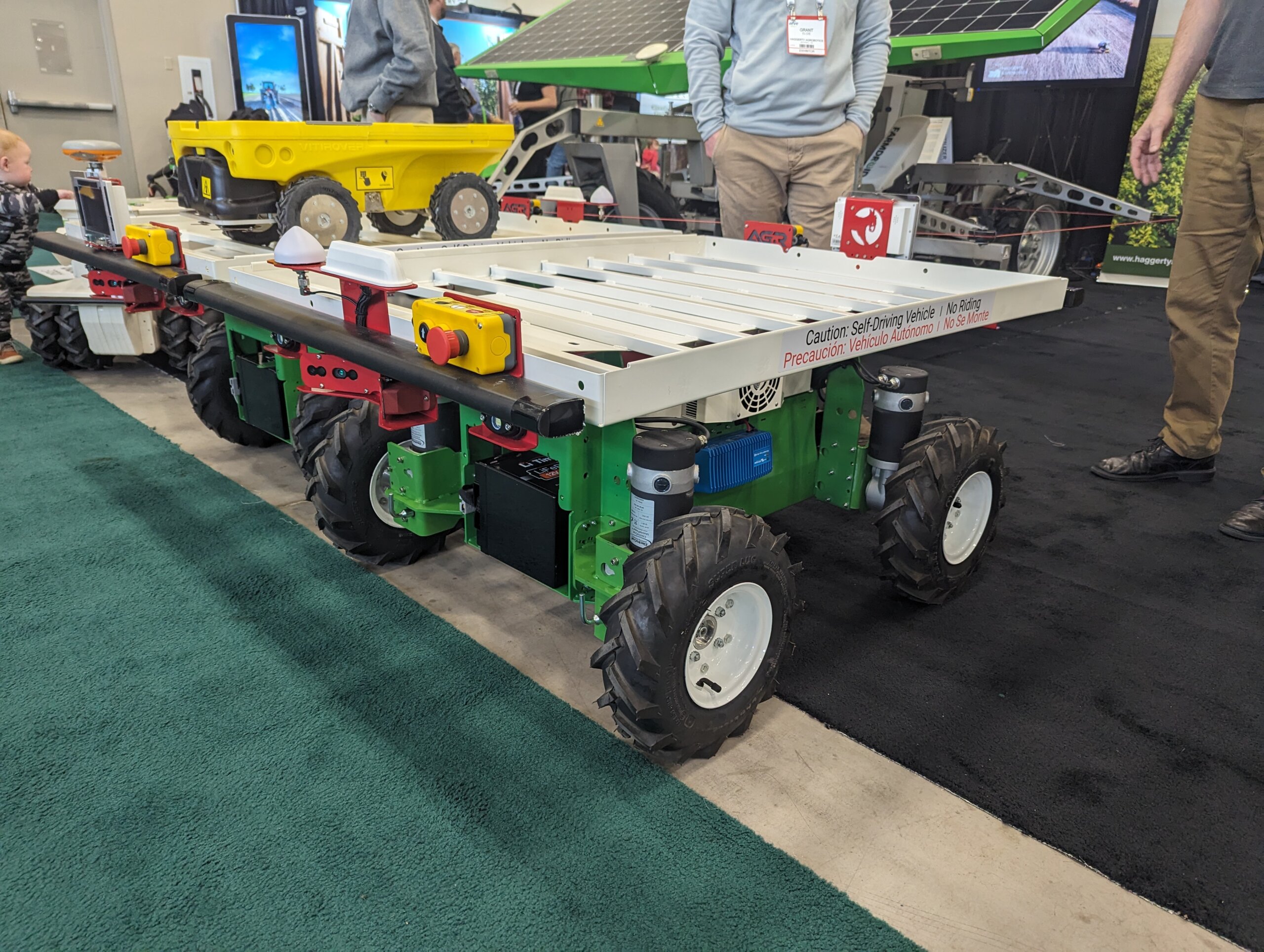
And recently, small autonomous platforms have become more common. Perhaps there’s an opportunity to place a gas powered sprayer on these platforms, or use them to pull a hitch-style sprayer. One such possibility is created by the Burro, shown below at the Ontario Fruit and Vegetable Convention in 2024.
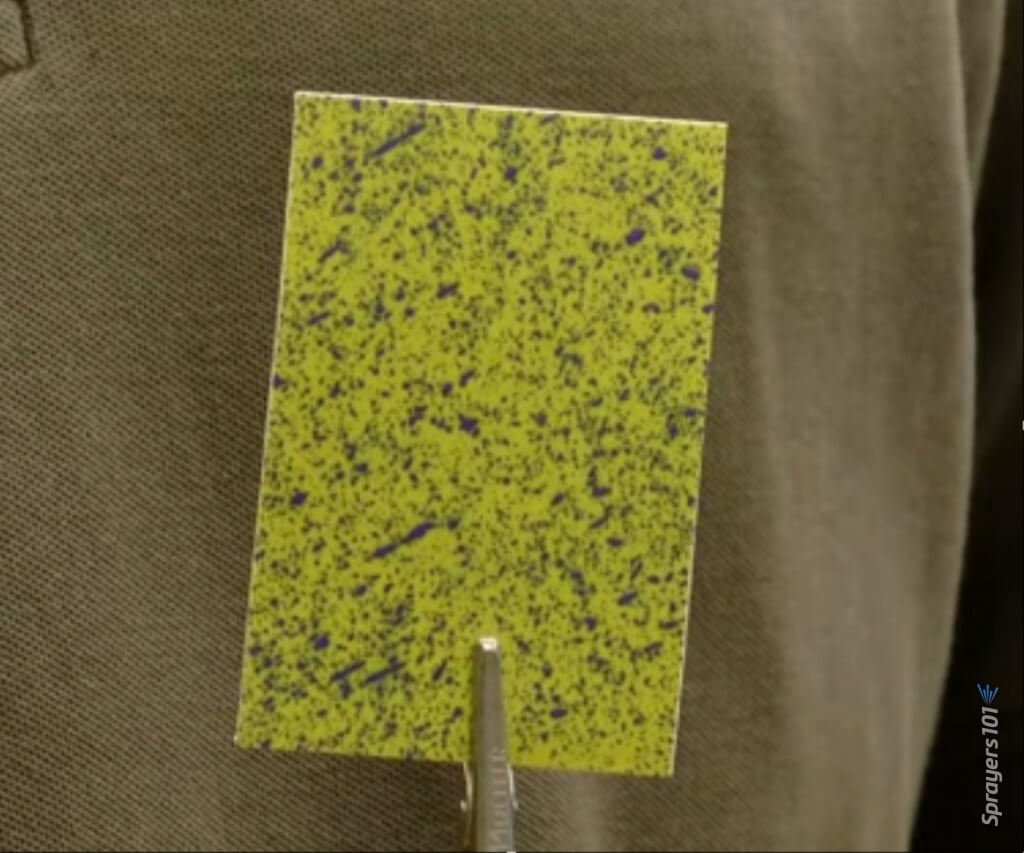
The decision on which application method is best for herbicides boils down to two main factors: (a) target type and (b) mode of action. In general, it’s easier for sprays to stick to broadleaf plants on account of their comparatively larger leaf size and better wettability compared to grassy plants. There are exceptions, of course – at the cotyledon stage, broadleaf plants can be very small and a finer spray with tighter droplet spacing may be needed. Water sensitive paper is a very useful tool to make that assessment. Imagine if a tiny cotyledon could fit between deposits – that could be a miss!
Some weeds are also more difficult to wet, and those may also need a finer spray or a better surfactant for proper leaf contact. An easy test is to apply plain water to the leaf with a spray bottle. If the water beads off or the droplets remain perched on top in discrete spheres, the surface is considered hard to wet. Most grassy weeds are hard to wet, while most broadleaf weeds are easy to wet.
Grassy weeds are an especially difficult target because they have smaller, more vertically oriented leaves, and almost without exception are more difficult to wet than broadleaf species. All these factors call for finer sprays for effective targeting and spray retention.
Broadleaf weeds usually have more horizontally oriented leaves which also happen to be larger. As a result, they can intercept larger droplets quite efficiently.
There are about thirty mode of action (MOA) groups among the herbicides with about ten accounting for the majority in Canadian prairie agriculture. It’s probably an over-simplification to categorize them into just two groups – systemic and contact. But that grouping goes a long way to making an application decision.
Contact products (MOA Group 5, 6, 10, 14, 22, 27) must form a deposit that provides good coverage. Good coverage is an ambiguous term that basically means that droplets need to be closely spaced and cover a significant proportion of the surface area because their physiological effects occur under the droplet, and don’t spread far from there. One way to generate more droplets is to reduce droplet diameter, another is to add more water. A reasonable combination of both is ideal because simply making droplets smaller creates issues with evaporation and drift.
Systemic products (MOA Group 1, 2, 4, 9) will translocate within the plant to their site of action after uptake. As a result, coverage is less important as long as sufficient dose is presented to the plant. In practice, this means coarser sprays and/or less water may be acceptable.
When two factors are combined, either in a tank mix or a weed spectrum, the more limiting factor rules. Application of a tank mix or product that is active on both broadleaf and grass plants will be governed by the limitation placed on grass targets. A tank mix comprised of both systemic and contact products is governed by the limitations placed on contact products.
A factor we should also consider is soil activity and the presence of residue. Studies have shown that soil-active products are relatively insensitive to droplet size. But if they have to travel through a layer of trash to get to the soil surface, more application volume is the best tool.
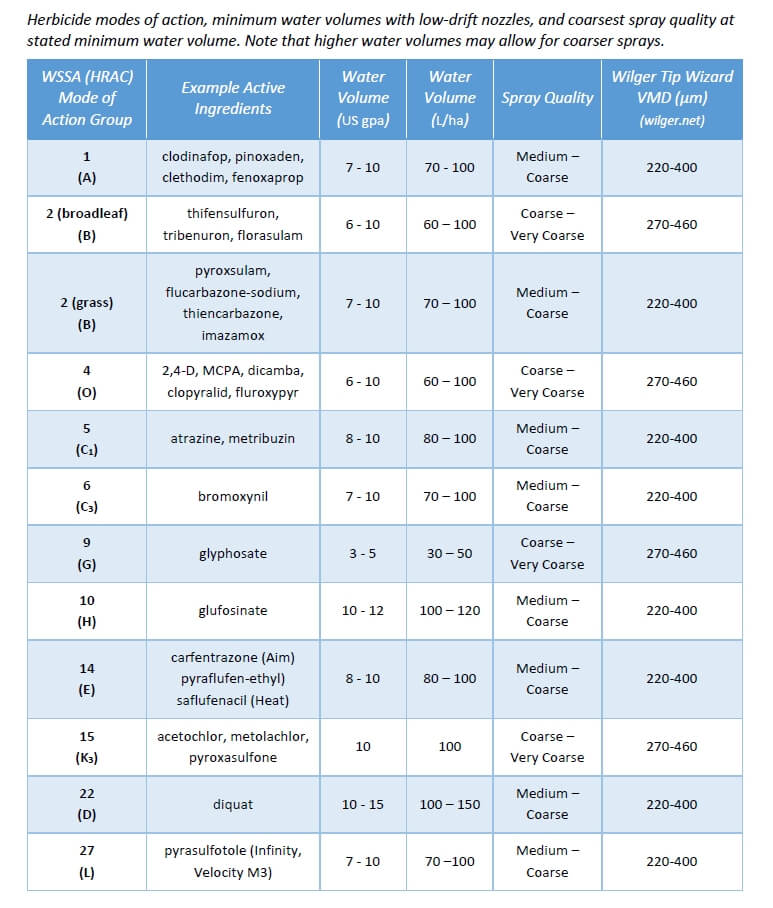
Below are some recommended spray qualities and water volumes for use in Canada. The spray qualities listed in the table can be matched to a specific nozzle by referring to nozzle manufacturer catalogues, websites, or apps. Note that Wilger also offers traditional VMD measurements on their site, allowing users to be a bit more specific if necessary.
One of the fastest moving new agricultural technologies is spray drones. Hardly a month goes by without some sort of new capability, some new features. It’s truly an exciting space to watch.
As with all things, there are good news and bad news to share. First the good news.
Drone capacity is on the rise. The early drones shipped with hoppers of 8 to 10 litres. Part of the reason was to keep weight below 25 kg. Below this weight, pilot licensing requirements and flight restrictions are easier. Anyone with a Basic RPAS license (RPAS is the official term for drones, Remotely Piloted Aircraft Systems) can operate drones up to 25 kg. Above this weight, one requires an Advanced license, which is much more difficult to obtain. Current drones like the DJI T40 have a hopper capacity of 40 L, allowing more area to be covered per flight.
The new DJI T40 holds 40 L of liquid and has a claimed swath width of 36 feet (Source: DJI)
Swath widths are increasing with drone size. The limiting factor for electric drones is still battery power. Flight times of 15 to 20 minutes are possible, depending on the ferrying distance. As a result, larger drones don’t necessarily fly longer, but they spray wider, up to a claimed 30 feet for the DJI T30, and 36 feet for the T40.
Atomizers are improving. The trusty flat fan nozzle certainly works on a drone, but its proper operation depends on spray pressure. And spray pressure is not currently reported by drones. Instead, their application software relies on flow rate, and pressure is adjusted in the background in response to changes in travel speed, swath width, or nozzle size. Although drone flow meters are remarkably accurate, the operator could inadvertently operate the drone at a pressure that produces the wrong spray quality for the conditions.
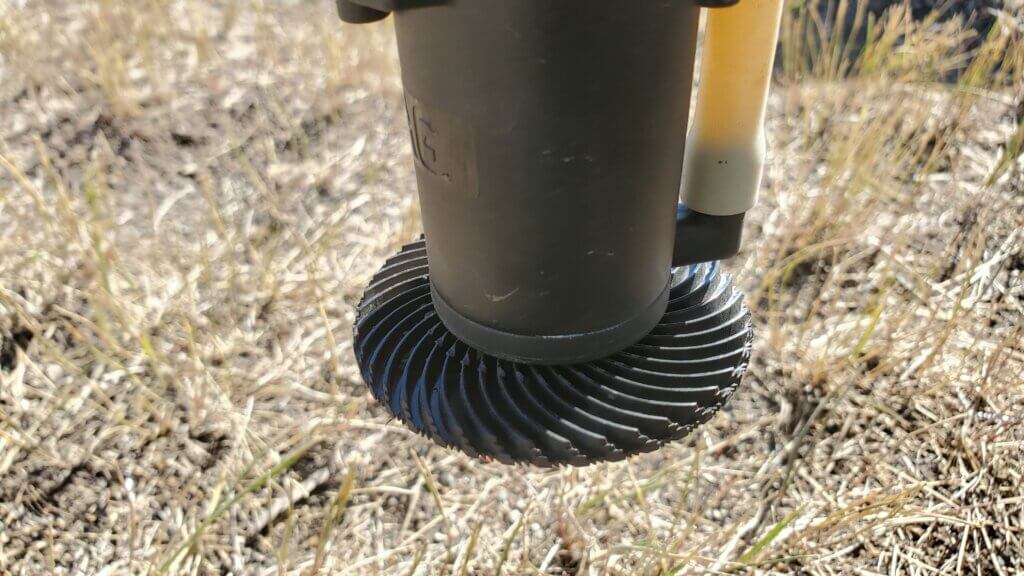
Enter the rotary atomizer. Long a darling of the thinking applicator, these atomizers use centrifugal energy to create a spray with a tighter span, meaning fewer fine and fewer large droplets. Spray quality still depends on pressure-generated flow rate, but droplet size can additionally be altered with rotation speed. This means that if a faster travel speed increases the spray pressure, the effect on spray quality can be counteracted with a changed rotational speed to keep everything more uniform.
Rotary atomizers, like this one from XAG generate more uniform droplet sizes and can alter droplet size without changing spray pressure.
Hybrid systems are entering the market. Rotary wings allow for precise positioning of aircraft and they provide downwash that helps spread the spray pattern out. Downwash also improves canopy penetration and could reduce drift, like air-assist, if used properly. But rotary wings use a lot of energy, limiting battery life. When flown at the wrong height or speed, deposit patterns, drift, and swath width will change. That has to be managed and requires experience.
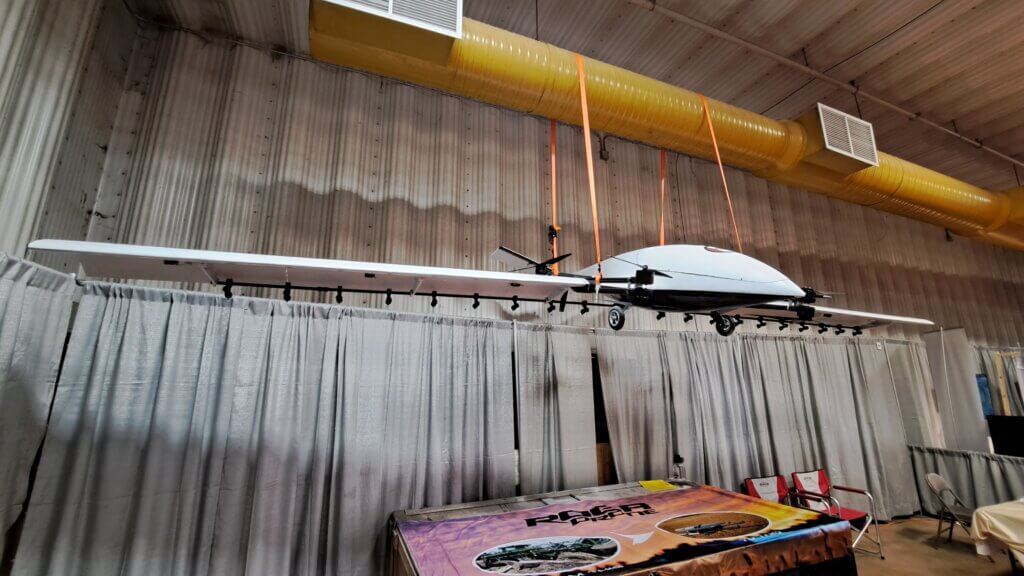
In comparison, hybrid drones have fixed wings for flight and rotary wings for take-off and landing. The rotors just rotate into the position needed at the time. Fixed wing drones will fly faster, possibly improving capacity and also reducing the effect of the downwash. These systems are new, and much needs to be learned before we understand their various characteristics. But they offer a nice avenue into more productivity.
Hybrid drones like this one from Advanced Robotics can cover more ground with less turbulence than a rotary wing drone.
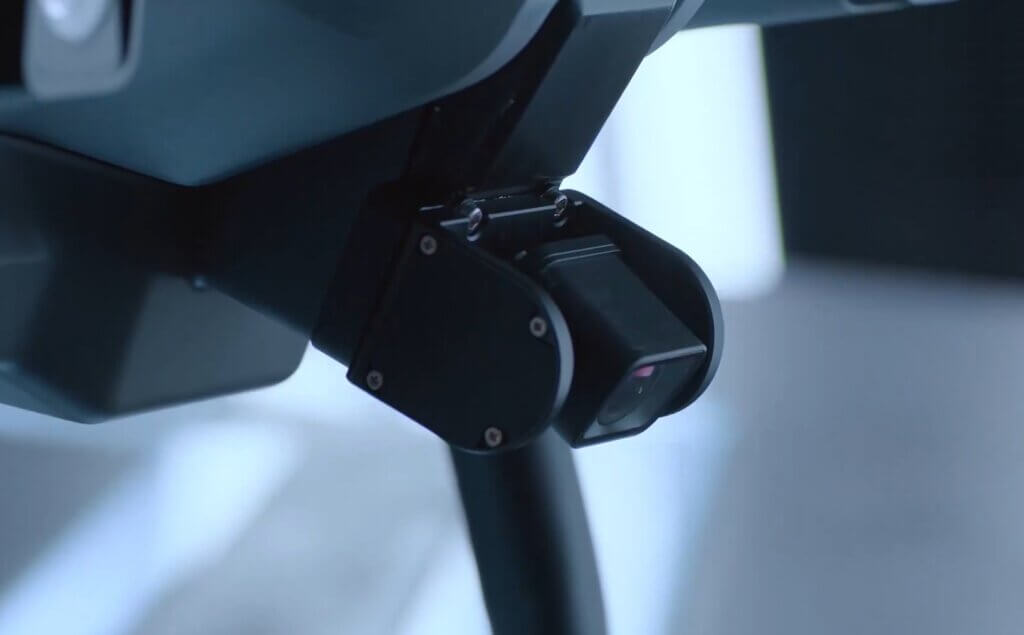
Drones are multi-purpose. Virtually all drones have interchangeable wet and dry hoppers so they can be used to apply dry nutrients or seed as needed. That makes them quite versatile. But the newest spray drones have scouting-quality cameras on board and can be asked to take high resolution images while they’re spraying. At the end of the mission, a very detailed picture of the crop emerges, with much higher resolution than the higher-elevation scouts produce. Other sensors on the drones can be used for variable rate application of nutrients, or even for spot spraying weed patches.
Scouting camera takes pictures while conducting a spray mission (Source: DJI)
Now for the bad news. It’s still not legal to apply mainstream pesticides using drones in Canada, and it may stay that way for a while yet.
Pesticide application by drones remains illegal in Canada. The main reason is that the Pest Management Regulatory Agency (PMRA) has declared drones to be unique application method, separate from ground sprays and aerial sprays from piloted aircraft. This has triggered the need for risk assessment data for spray drift, efficacy, bystander exposure, crop residue. It’s a fair decision – drones produce finer sprays than any other existing system, they potentially use lower water volumes by necessity, and they create a less predictable deposit due to rotor downwash. The majority of current pesticide formulations are designed for 5 to 10 gpa, this creates a certain concentration of surfactants and products that interact with plant surfaces or that change the potency of drift. Altering this by a factor of 5 can have undesirable outcomes. Yes, aircraft also use lower volumes, but more in the area of 2 to 5 gpa. Drones could cut that in half again, and that warrants study.
Registrants haven’t rushed to study drones. Most major manufacturers of pesticides have a small drone program to get their feet wet, and most have applied for Research Authorization (RA) from the PMRA to study them. But the decision to register a drone use for a pesticide has much to consider. Is it worth it to generate the required dataset for the regulators? Will drones amount to a lucrative new market for product? Do we have the resources and expertise to service this new market? The answers to such questions are clearly complex and much remains unknown. The registrants’ caution is understandable.
There may be a small portfolio of available products. Anyone thinking that a fleet of inexpensive, nimble drones will replace their ground sprayer is banking on the registration of the products they need in their operatioin by the registrants. The most likely products to be registered are fungicides, for which drones would offer several advantages in canopy penetration and spraying in tight time windows due to, say, wet weather.
Another obvious use is in industrial vegetation management where rough terrain or remote locations make it difficult to use wheeled sprayers. Or vector control with larvicides, which, incidentally, comprise the first pesticide registrations for drones in Canada (two microbial mosquito larvicides were approved for drone use in October 2022).
But it seems unlikely in the short term that a producer would have their pick of products to apply by drone anytime soon. And this means that a drone would remain a supplemental tool on the farm, not the main workhorse.
Regulatory hurdles are substantial. Not only is a pilot required to be licensed to use drones, a pesticide application also requires a Specialized Flight Operations Certificate (SFOC). In general, SFOCs are required if:
you are a foreign operator (i.e., not a Canadian citizen or permanent resident);
you want to fly at a special aviation event or an advertised event;
you want to fly your drone carrying dangerous or hazardous payloads (e.g. chemicals);
you want to fly more than five drones at the same time.
SFOC applications are fairly easy to fill out. Aside from identifying the drone and the pilot, the application needs the purpose of the mission, the location of the mission, and the time period of the mission. The problem is that it may take up to 30 days to hear back for simple missions, 60 days for complex mission. And if the SFOC is not granted, you can’t fly. You can’t decide to spray a field at the last minute.
The news is clearly a mixed bag. We have it all – exciting technology, obvious niche in the marketplace, significant regulations, slow process. In the meantime, spray drones are legal to purchase and relatively inexpensive. And we know they are being purchased. Canada doesn’t have a strong compliance system within the PMRA, so it’s hard to know how much pesticide spraying is being done illegally, or how perpetrators will be treated by the law.
The reputation of the industry once again rests with hope that good decisions are being made by conscientious individuals.
Many of the application technologies used in specialty crop production today are based on axial fan airblast sprayers (Figure 1). Airblast sprayers were first developed in the 1950s when orchard trees were 6 meters tall or more; today 2-4 meter tall trees are typical. Airblast sprayers are versatile, reliable, and can be modified to fit numerous types of crops, all of which are reasons for their continued popularity. Despite their popularity, air-blast sprayers have long had a reputation for inefficient application characteristics. Sensor controlled spray systems were first designed in the 1980s as a way to reduce labor costs and pesticide waste. Sensor controlled spray systems are receiving renewed interest as their reliability has improved and more options have become available.
Figure 1. A classic low-profile axial airblast sprayer.
Sensor Sprayer Types
There are two main types of sensor sprayers:
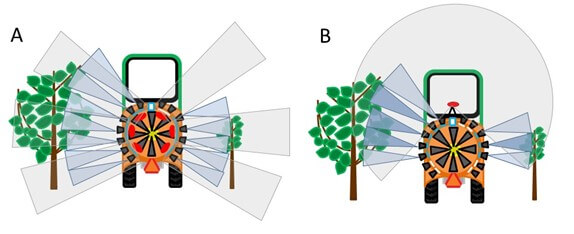
A. On/off sensor sprayers operate by using the sensor information to automatically turn on individual nozzles or sections of nozzles on the spray boom when plants are sensed. Likewise when no object is in the sensing range of the sprayer, the spray will be turned off. (Figure 2A).
B. Crop adapting sprayers are similar in that the sensor is used to turn the sprayer on and off as it passes by plants, however they go a step further by changing application volume, air volume, air flow direction, or a combination thereof in response to plant characteristics. (Figure 2B).
Figure 2. Illustration of on/off sensor sprayers (A) and canopy adapting sensor sprayers (B). Sensors are illustrated with red ovals and sensor field of view illustrated with grey shaded washes.
On/off and canopy adapting sensor sprayers both typically have an override where the user can bypass the sensor system and spray as they would with a standard sprayer if the sensor components of the sprayer are malfunctioning.
Sensors
Crop sensing systems are the eyes of the sprayer and determine crop shape by emitting and/or receiving signals. There are 4 basic sensor types used in sensor sprayers: infrared, ultrasonic, plant fluorescence and LiDAR. Each one of these sensors emit their own specific band of waves aimed at the plants that then bounce off the plants and back to the sensor. After the wave returns to the sensor, the time that the wave took from when it was emitted until when it returned is calculated. This calculated time from when the sensor sends the wave until it bounces back to the sensor is called the time of flight (TOF). The TOF is used to calculate distance and/or plant characteristics which are used to target spray to that area. For some sensor types, multiple sensors are required to resolve plant structure characteristics, while other sensor types require only one.
Infrared (IR) sensors detect IR radiation emitted from plants. Atmospheric conditions such as humidity and temperature have little impact on IR sensing accuracy. However, light intensity, plant and leaf appearance, and driving speed can affect the accuracy of these sensors. Low light conditions, such as during dawn and dusk when red wavelengths of light are more abundant, are known to interfere with IR sensor functioning for around 30 min. During dawn and dusk, IR sprayers could be operated in standard mode via an override on the spray controller. The inability to resolve characteristics of plant structure makes IR sensors suited to less complex applications such as triggering the sprayer on and off at a plant. Even with their limitations, the low cost of IR sensors makes them economically viable for commercial sprayers. IR systems can be used on air-blast sprayers for foliar applications of pesticides to trigger the release of spray when a plant canopy is detected. Additionally, these systems can be used for herbicide sprayers where the sensors are aimed at the trunks of trees/vines and turn off the sprayer as they pass the trunk to avoid direct application to it. Conversely, the sensors can directly spray only the trunks to specifically target suckers.
Unlike the other sensors in this list that all emit electromagnetic waves, ultrasonic sensors emit high-frequency sound waves to measure objects. A sonic emitter generates an ultrasonic sound wave, a sensor detects the returning sound wave, and a chronometer measures the TOF of the wave to gauge distance. This process is like how bats or dolphins use echolocation to navigate and search for food. When arranged in an array, ultrasonic sensors can detect objects with approximately 10 cm resolution, allowing for calculation of canopy volume with similar accuracy to taking manual measurements. Bumps and swaying from rough driving conditions can change the accuracy of the ultrasonic sensor because movement affects the angle of signal detection. The initial patents on ultrasonic sensors expired decades ago, so continued off-patent development has improved their quality and capability while reducing costs. Comparatively, ultrasonic sensors are more expensive than IR sensors but less expensive than laser sensors.
Laser sensors come in wide variety of configurations depending on the application, but those typically used to characterize plants are either 2 dimensional (2D) or 3 dimensional (3D) in the space that they can sense. These sensors are referred to as LiDAR sensors which is an acronym meaning “light detection and ranging.” 2D sensors emit light beams in a 2D plane around the sensor using a mechanical scanner. Picture an arc around a central origin point (See Figure 2B). 3D sensors emit laser beams in a 3D area surrounding the sensor, like the shape of a sphere. In both 2D and 3D laser sensors there is a spinning mirror inside the sensor that reflects the laser in every direction possible within sensor’s field of view, then measures the TOF from the sensor to plants and other objects. Compared to other sensors, LiDAR most accurately measures crop structure. Numerous LiDAR sensors are available for industrial applications such as agriculture.
Sensor Type
Measurement Method
Pros
Cons
Infrared
Detection of infrared waves emitted or reflected from plants.
Little impact of temperature and humidity on sensing accuracy. Low cost.
Sensing ability impacted by red light intensity and driving speed. Narrow field of view and short sensing distance. Unable to determine plant structure characteristics.
Ultrasonic
Measurement of the distance to objects using sound waves. Uses time of flight concept.
Ability to determine plant structure characteristics. Relatively easy to implement.
Limited resolution of plant structure. Need multiple sensors to detect plant structure.
Plant Fluorescence
Detection of near infrared fluorescence from green plant surfaces.
Ability to determine plant structure characteristics. Rapid data acquisition.
Need multiple sensors to detect plant structure. Sensors affected by background lighting, requiring frequent calibration.
LiDAR
Measurement of the distance to objects using laser beams. Uses time of flight concept.
Rich data acquisition capability. Fine resolution of plant structure. High speed of measurement.
Data acquisition affected by tractor bouncing which requires correction. Delicate moving parts inside sensor.
Table 1: Pros and cons of sensors used in sensor based spraying systems. Modified from Warneke et al 2019.
Plant fluorescence sensors are another sensor type used in sensor controlled sprayer applications. These sensors emit a wavelength of light in the visible spectrum and detect the fluorescence reflected back at the sensor from the plant. Specifically, these sensors detect near infrared wavelengths of light, which plants reflect readily. These sensors have a spatial resolution of about 10cm2 and can detect a plant area as small as 10mm2 (Genna, Gourlie, & Barroso, 2021). Plant fluorescence sensors can collect plant structure data which can be stored and used for further agricultural planning. These sensors are most widely used on “weed-seeing” herbicide sprayers to detect green weed tissue contrasted with the soil surface, however they are also integrated onto canopy sprayers to trigger the spray when a green canopy is sensed.
One other sensor is needed for sensor controlled canopy sprayers. Ground speed sensors are used in combination with crop sensors to sync spray release to plants as the sprayer moves through the field. Currently, sensor spraying systems are not directly connected to the speedometer on the tractor, so a separate speed sensor is needed to convey the sprayer ground speed to the sensor system. Maintaining accurate speed sensing is critical to ensure spray is released on target. Some spray systems derive speed from tractor wheel bolt sensors or with radar sensors that use Doppler technology. The simplest adjustment of sensor controlled spray release is through mechanical adjustment of the horizontal location of sensors and delay adjustments to set when the sprayer turns on and off after objects are sensed.
Spraying with Sensor Sprayers
Sensor sprayer efficacy and efficiency
Insect pest and disease control with sensor controlled sprayers has been widely shown to be similar to that of standard sprayers. For example using a LiDAR based variable rate sprayer on a diversified fruit farm in Ohio resulted in equivalent control of disease and insect pests such as codling moth, powdery mildew, and scab on apples, oriental fruit moth and brown rot in peach, spotted wing drosophila and mummy berry in blueberry, and anthracnose in black raspberries compared to when a standard air blast sprayer was used (L. Chen, Wallhead, Reding, Horst, & Zhu, 2020). Control was achieved on those crops with 29%, 48%, 52%, and 59% lower spray volume when applying on peaches, blueberries, black raspberries, and apples, respectively (L. Chen et al., 2020). When ultrasonic sensors were used to actuate nozzles in one, three, and seven-year-old apple orchards, apple rust mite (Aculus schlechtendali) and pear psylla (Cacopsylla pyri) were both controlled with similar efficacy to standard sprayers (Koch & Weisser, 2000). Additionally, apple scab (Venturia inaequalis) and apple powdery mildew (Podosphaera leucotricha) were controlled to a similar extent using sensor sprayers as with standard sprayers (Koch & Weisser, 2000; Sedlar et al., 2013). Generally, in crops with a uniform canopy such as vineyards or densely planted orchards, sensor sprayers will result in lower volume savings compared to crops with a more variable canopy.
Operational efficiency improvements
Economic savings from sensor sprayers come from a variety of places. The most direct savings come from a reduction in the cost of spray materials required to treat an area. Pesticide material savings will be most significant when sensor sprayers are used in areas with sparse foliage or irregularly shaped crops. Variability in the size of plants across a field is common in some specialty crop operations. Variability can be due to multiple plant varieties being grown, the death of plants or limbs, and replanting. For example, in almond and citrus groves where sick trees are removed and replaced, causing a mosaic of differently aged trees and sizes of canopies. Another aspect of sensor sprayers that can save time and money is automatic adjustment of nozzles as the plant progresses in growth during the season. Early in the season when there is not much foliage present, a sensor system will automatically adjust which nozzles are on to apply the product to where it is needed. This can save the operator the time of manually adjusting nozzles.
Labor savings from less time spent on a given spray event is another significant source of savings when using a sensor controlled sprayer. For example, a 100 acre orchard getting air-blast sprayed at a target rate of 2 acres per hour. At 60% efficiency (due to fill-ups) the sprayer would cover 1.2 acres per hour, with the whole field being completed in 83 hours of work. By implementing a sensor sprayer, the efficiency could increase to 80%, and the area covered would increase to 1.6 acres/hour. In this scenario, the field could be sprayed in 62 hours, about 20 hours less. If an operator is paid $20 an hour this would result in labor costs per acre of $16.60 for the 60% efficient sprayer and $12.40 for the 80% efficient sprayer. Therefore using the 80% efficient sprayer could result in $420 savings for the farm per application. A larger orchard with more than one sensor sprayer would accumulate savings quicker, due to incremental increases in overall operational efficiency for each sprayer as they are added (Tona, Calcante, & Oberti, 2018).
In addition to monetary savings, driver fatigue is reduced as the number of hours the tractor is in operation goes down. Also, a reduction in the number of sprayer fill-ups required leads to lesser labor and fuel costs, in addition to a lower amount of wear on the tractor. When spray operations can be completed quicker, it can also make it easier to fit sprays into windows of good weather or during critical application windows, such as when a plant pathogen or pest is reproducing.
Environmental benefits of using sensor sprayers
Environmental benefits of using a sensor system include reduced chemical load on the non-target crop environment, beneficial organisms, and workers. Spray drift can be broadly defined as any spray that does not get deposited on the intended target. Drift can be deposited on the ground near the intended target, or can be carried further, eventually landing on the ground or on non-target plants. Ground deposited drift is especially common in gaps between trees, which can result in significant pesticide load on the environment. In California almond orchards, ultrasonic sensor sprayers reduced ground deposition by 72% compared to a standard axial fan air-blast system (Giles et al., 2011). Airborne drift from over application is another significant source of non-target pesticide load from air-blast sprayers. In apple orchards, 23-45% of the applied pesticide volume has been observed to drift off target (Pergher, Gubiani, & Tonetto, 1997). Canopy adapting sprayers can be particularly effective at reducing spray drift. A study looking at three different canopy stages in an apple orchard from early to late season showed reductions in spray drift of 70-100% using a canopy adapting sprayer (Y. Chen, Zhu, Ozkan, Derksen, & Krause, 2013). Lower non-target chemical loads also help decrease the rate of development of pesticide resistance because less pesticide residue is present on non-target locations (Verweij, Snelders, Kema, Mellado, & Melchers, 2009). Other considerations include less pesticide contamination of surface and groundwater and lower chances of exposure on non-target organisms such as beneficial insect populations and livestock (Pimentel, 1995). These benefits incrementally improve the vitality of the agricultural landscape, and should not be overlooked when thinking of implementing a sensor sprayer.
One step further: autonomous sensor control airblast sprayers
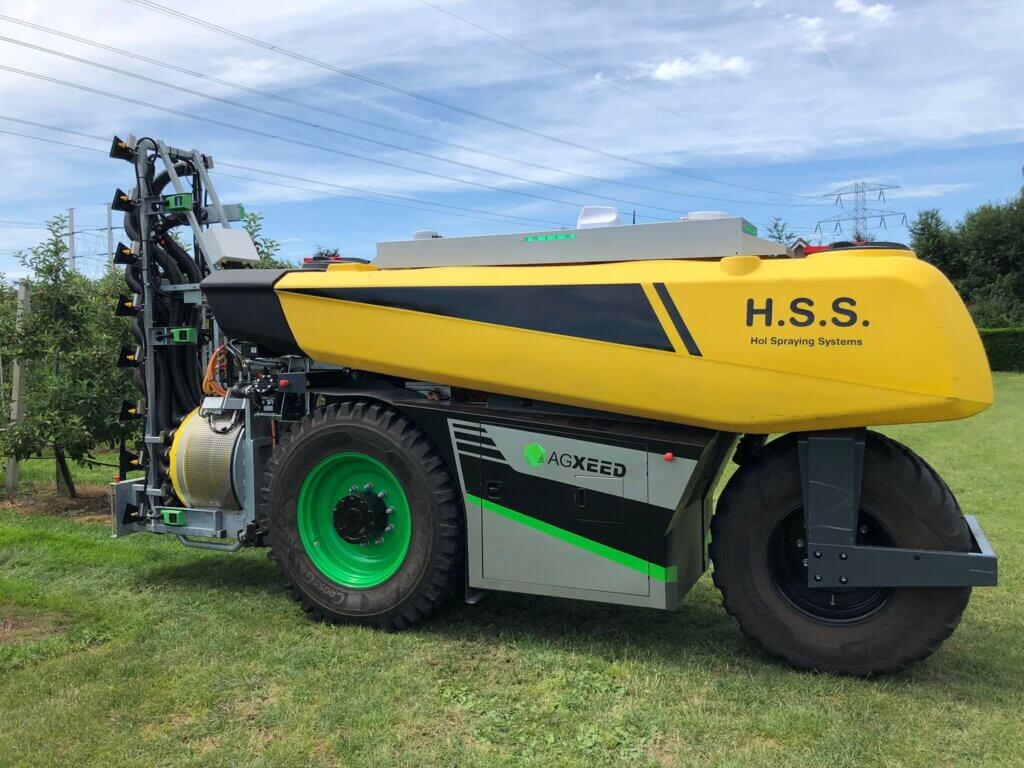
Sensor controlled sprayers help to increase spray application efficiency a lot, but there still needs to be an educated applicator driving the tractor and operating the sprayer. Agricultural labor availability has become increasingly less reliable and more expensive, so some sprayer manufacturers are producing autonomous sprayers that can be monitored remotely during a spray process. The GUSS sprayer (Global Unmanned Spray Systems) is fully autonomous self-propelled sprayer. GUSS sprayers come in a large size designed for mature orchard trees and a mini GUSS that is designed for grapes and small fruits. The GUSS systems can be manufactured with or without ultrasonic sensors. Up to eight GUSS machines can be running at the same time while being monitored by one individual. Another autonomous system is the result of a collaboration between Hol Spraying Systems (HSS) and Agxeed, called the Agxeed HSS (Figure 3). This is a multi-purpose agricultural robot with a standard 3 point hitch. A 2000L tank can be integrated with the machine to supply the sprayer with water. The sprayer used on the robot can be integrated with HSS’s Intelligent Spray Application system to modulate spray output as plants are sensed. This system uses plant fluorescence sensors and mapping software to apply pesticides with variable rates while also taking plant structure data that can be used for other purposes. In addition to the sprayer, standard agricultural implements such as mowers or grinders can be hooked up to the robot for autonomous operation. Another high tech autonomous sprayer is the Jacto Arbus 4000 JAV. This is a self-propelled sprayer that is equipped with sensors to modulate spray volume in real time in addition to a separate electronic driveline to actively modulate air volume in real time to match the target canopy. All three of these autonomous sprayers offer lower labor requirements and more efficiency than manned-sprayer applications.
Figure 3. The Hol Spraying Systems (HSS) AgXeed autonomous machine with integrated 2000L tank and sprayer with HSS Intelligent Spray Application system integrated. Image courtesy of HSS.
Conclusion
Sensor sprayers are another great tool available to specialty crop growers to improve spray application efficiency. The range of sensor types available are suited to a wide variety of crops and applications, and in most cases can be added retroactively to growers current sprayers. The benefits of sensor controlled spray systems are many, from economic to environmental, and all work to improve the vitality of the agricultural landscape.
This article was adapted from Pacific Northwest Extension publication #727 (Warneke, Pscheidt, Rosetta, & Nackley, 2019). Freely available online from Oregon State University, Washington State University, or University of Idaho extension.
This work was provided in part by the USDA-ARS Integration of Intelligent Spray Technology into IPM Programs in Specialty Crop Production (Project Number 58-5082-2-010).