Author: Jason Deveau

  • Comparing Fluorescent Dyes for Spray Coverage Evaluation

    Comparing Fluorescent Dyes for Spray Coverage Evaluation

    I work in agricultural extension and I’m always on the lookout for new methods to help me achieve my goals. A big part of my job is to research and teach efficient, effective and safe crop protection practices, so it follows that I have to be able to evaluate the quality of a spray application. Fundamentally, there are two ways to do it:

    1. Wait to see if the pesticide did its job and protected the crop from weeds / bugs / disease.
    2. Don’t wait. Confirm your spray is depositing where you want it before committing to the application.

    Three guesses which approach I advocate. So, how do you check spray coverage in a way that’s quick, cheap, easy and informative? Again, there are choices, but rather than simply list them I’ll add a little insight in the form of pros and cons.

    MethodProsCons
    Water sensitive paperRelatively cheap, available, clean, easy, repeatable, supports a photographic record, simple to analyze.Does not accurately reflect coverage on plant surface, slow to place and retrieve, can be spoiled by dew, humidity and physical contact.
    Inspecting for residue / wetnessCheap and fast.Not proactive, too subjective, not repeatable, pesticide many not leave visible residue, requires re-entry soon after spraying.
    Inspecting spray pattern (e.g. shoulder check)Cheap and fast.Not proactive, not indicative of coverage, not repeatable.
    Watching for run-offJust don’t.Just don’t.
    Fluorescent dyesReflects actual, whole-canopy coverage and off-target coverage at same time.Expensive, hard to find, messy, time-consuming, hard to photograph, not repeatable, leaves unwanted residues (or can’t be used on edibles), may have to take place at night, may fade quickly… or is any of this actually true?

    I’ve never been a proponent of spraying dyes because of the reasons I listed in the table. If I already have difficulty convincing a grower to leave the sprayer or tractor cab to place and retrieve water sensitive papers, what are the odds of them mixing a messy and expensive tank of dye and waiting until twilight to see the results?

    On the other hand, dyes are compelling. Particularly if we change the perspective a little. What if we consider the use of dyes, not as a tool for a grower, but as a tool for agricultural extension or consultation (really, anyone that wants to research or teach the safe and effective use of crop inputs)? Several of the cons are minimized or even eliminated. Additionally, this new lens reveals several uses for dyes beyond spray coverage. This is not an exhaustive list:

    • Off-target (primarily drift) evaluation
    • Dermal exposure / PPE evaluation
    • Rinsate / sprayer cleanout evaluation
    • Sprayer loading / point source contamination evaluation

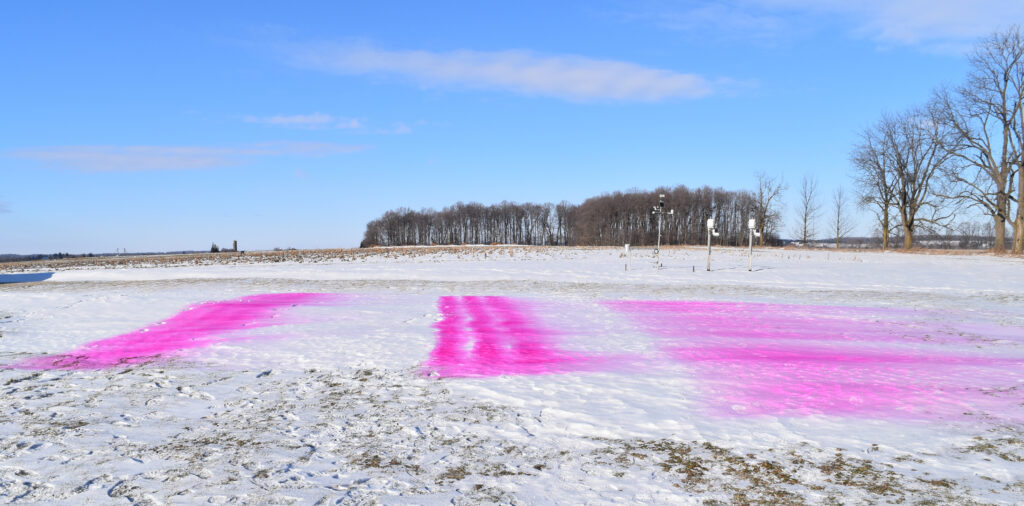
    I decided to compare a few of these dyes. I enlisted the help of a local blueberry operation. Being October, all the berries have been picked so we could spray the bushes without any risk to the fruit. Plus the sprayer was clean and the growers were curious to evaluate their spray coverage.

    Blueberry in Ontario in October.

    Having secured a location, spray equipment, and operator, I needed dyes and some criteria for choosing them. First and foremost, I chose fluorescent dyes that glowed under UV (aka black lights). My thinking was that they would be more interesting in demos, and given that we might be spraying horticultural operations, I didn’t want obvious and persistent stains on the produce. At least not something easily seen in daylight before it broke down and/or was washed away.

    My UV dye candidates had to be:

    • Moderately inexpensive.
    • Non-toxic (i.e. had an SDS that clearly permitted human exposure, were environmentally friendly and could be sprayed on edible crops).
    • Readily available in Ontario (e.g. quickly and cheaply shipped from within Canada or perhaps the US).
    • Available in formats that facilitated small volume batches (anywhere from 50 mL squirt bottles for indoor demos, up to 50 L volumes for field demos).
    • Clearly visible on plant tissue.

    I found five likely prospects for the study. I won’t list prices, but none of them were over $100.00 CAD. Number 3 was a free sample and number 5 was gifted to me by a colleague more than 15 years ago. I looked up the SDS for that last one and was surprised that it was relatively inert. So, I used it.

    Dye numberName of dyeCommercial sizeManufacturerLocation
    1IFWB-C81PT1 pintRisk ReactorCalifornia, USA
    2UVTRACER-G1PT1 pintRisk Reactor
    California, USA
    3Eco Pigment Blaze Orange SPL15JXSample size – 100 gramsDayGloCleveland, Ohio, USA
    4Fluorescent Yellow Tempura Paint1 literTri-Art ManufacturingKingston, Ontario, CA
    5Phosphor Powder (Zinc Orthosilicate: Manganese CAS#11-47-2)1 kgGlobal Tungsten and Powders Corp.Pennsylvania, USA

    I also purchased UV lights. When I was bequeathed the phosphor powder it came with heavy, ancient, black lights. They made an unsettling humming noise and required a power source, making them unwieldly for field work. I opted to try three battery powered versions instead. Again, I won’t list prices, but they weren’t unreasonable.

    UV flashlight numberName of lightManufacturerWavelength / wattageBatteries
    1Super TacRisk Reactor395 NM / 850 µW/cm2 at 5 inchesRechargeable battery provided
    2Mini ZoomRisk Reactor395 NM / 1 watt1 AAA
    3V3 UV Flashlight with 68 LEDsAmazon.ca395 NM / 10 watts3 AA

    Regarding the recipes, one of my criteria was that the dyes could be mixed in relatively small batches. I chose 50 L as the high end because the airblast sprayer we were using (Turbo-Mist 30P) could still prime when only 50 L was added to the tank. This allowed us to mix as small a batch as possible, while still having enough to spray a row of berries from both sides. We left three rows between treatments to serve as buffers.

    Turbo-Mist Model 30P before the dye-job.

    I also had to consider the nature of the dyes. The Eco Pigment (Dye 3) is a hydrophobic powder and two colleagues warned me that it was notorious for plugging filters. So, it had to be mixed with a non-ionic surfactant (NIS) to help “wet” the powder prior to adding it to the tank. In fact, NIS seemed like a good idea for all my dye candidates, so I included Activate Plus (Sollio Agriculture, Winfield Solutions) in each recipe.

    The candidates.

    I added the dye, NIS, and a small amount of water to a Pyrex measuring cup on a digital scale, then rinsed the cup into a final volume of 50 L while filling the tank. I didn’t always follow the advice I received, so I’ll show you the ratios I was told and (right or wrong) what I ultimately did.

    Dye numberManufacturer- or colleague-suggested ratio Amount of dyeAmount of NISAmount of water
    11 part dye : 10,000 parts water125 mL65 mL310 mL
    21 part dye : 10,000 parts water125 mL65 mL310 mL
    31 gram dye : 1 mL NIS : 200 L water65 grams65 mL425 mL
    41 part paint : 100 parts water500 mL65 mL0 mL
    51 gram dye : 1.25 L water65 grams65 mL425 mL

    It took roughly 15 minutes to fill, prime, spray, and rinse out each dye. We started at 5:00 p.m., were done at 6:15, and then waited for sunset at 7:30.

    50 L tank mixes going through circulation and paddle agitation.
    Draining the remains and rinsing the tank. It looks terrible, but these dyes are intended for environmental projects like tracing water courses.

    We used a smartphone (Google Pixel 9a – 48 megapixel camera) to photograph each combination of dye and flashlight. It was tricky to find an angle where the black light illuminated the residue, but didn’t wash out the photo. In those cases where the dye was evident, it was always far more vibrant in person than through the lens of a camera. As for the results?

    Lets start with the lights. We found that the high wattage of Light 3 showed dye more easily. This also happened to be the cheapest light, which was a pleasant surprise.

    Dye 1 and 2 were disappointing. We couldn’t see anything on the plants. This dye is intended for monitoring plumbing and water courses, and the manufacturer states that the colour will disappear if the solution is mixed with chlorine. Perhaps mixing it with city water caused it to fade, but that’s likely to happen, so these dyes failed.

    Dye 1 – Light 1, 2 and 3. A sad, single drop showed up for Light 3.
    Dye 2 – Light 1, 2 and 3. Again, a solitary deposit illuminated under Light 3.

    Dye 3 was spectacular. Not only was it evident with every light source (including day light to some extent), but we were able to find it several rows downwind, on the sprayer nozzles, all over the tires and on the floor of the cab (which surprised the operator). I may have mixed this one too strong; It seemed to clump on the leaves, but perhaps that’s because they were exceptionally waxy.

    Dye 3 – Light 1, 2 and 3.
    Dye 3 showed up everywhere… whether we wanted it there or not.
    A nice close up of Dye 3 on a leaf.
    A close up of Dye 3 on the boom.

    Dye 4 came in second place. It wasn’t amazing, but it was visible. This is children’s tempera paint, used in daycares for finger painting and at universities for raves. I’ve used it in the past with mixed results, not only to spray canopies, but in classroom demos on cabbage leaves and as a surrogate tracer to hunt down where pesticide hides in sprayer plumbing. It’s OK in a pinch if you mix it at least 2x more concentrated than I did here.

    Dye 4 – Light 1, 2 and 3.
    A nice close up of Dye 4 on a leaf.

    Dye 5, like dyes 1 and 2, was a disappointment. I’ve seen it used in powder-form to demonstrate how dermal exposure can spread as you touch clothing, doorknobs, your face, and places where the occasional adjustment is required. But in a liquid solution, it wasn’t any good at all.

    Dye 5 – Light 1, 2 and 3

    Persistence

    We followed up after the application to see if the dyes would persist. Twenty four hours after application, Dye 4 (our runner-up) was gone. This was no surprise given it was a water soluble paint and wasn’t terribly showy to begin with. However, Dye 3 (our winner) was still clearly in evidence. This is a hydrophobic, micro ground powder (~0.1 micron). That’s one reason it had to be mixed with a non-ionic surfactant. The following photos shows little or no change after 24 hours and a respectable dew:

    Dye 3 after 24 hours.

    Three days after application (DAA), we had a rain event. Four DAA this (blurry, sorry) image was taken:

    Dye 3 after 96 hours and a heavy rain.

    We see that the deposits did redistribute to drip points and the overall coverage was reduced, but it was still holding on. This means it likely shouldn’t be used on any horticultural crop that isn’t going to be washed. Or at least used long before any fruit, leafy green or vegetable contacted by the powder will be harvested. Not because it is unsafe (see safety data sheet) but because of the optics to buyers.

    Conclusion

    And so, I hope you have been inspired by this process. I’ve learned that the use of dyes for education and research is potentially powerful, relatively cheap, and more accessible than I originally thought. Certainly the growers were impressed by what they could suddenly see and it’s led them to reassess some of their practices. Just bear in mind the possible persistence, and remember to wear gloves when mixing.

    Wear gloves. Trust me.

    Thanks to Mark Ledebuhr, Helmut Spieser, David Manktelow, and Ben Werling for the helpful advice. Thanks to Brandon and Jordan Falcon for use of their spray equipment and their blueberry operation.

  • DJI Agras T100 – First Impressions

    DJI Agras T100 – First Impressions

    On July 15, 2025, DJI Agriculture announced the global launch of the DJI Agras T100. Compared to its predecessor, the T50, it features a larger payload for spraying and spreading and can fly at approximately twice the speed. The rotary atomizer-style nozzles (which DJI refers to as sprinklers) produce comparatively increased flow with an option to increase from two to four for orchard operations. Designed for large-scale commercial growers, it also features a new single-side spraying function to assist with sharper field boundaries and infield obstacles.

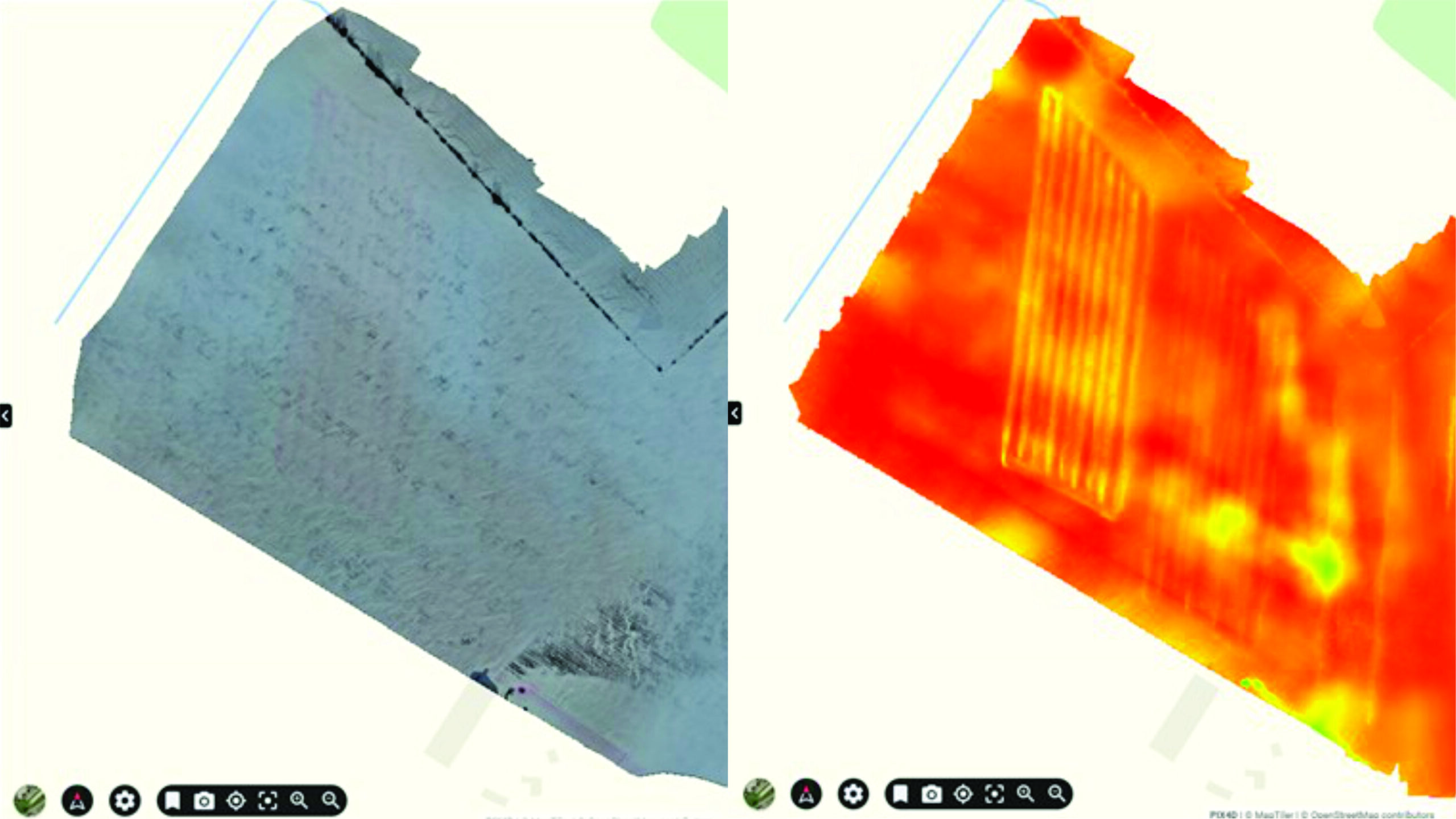
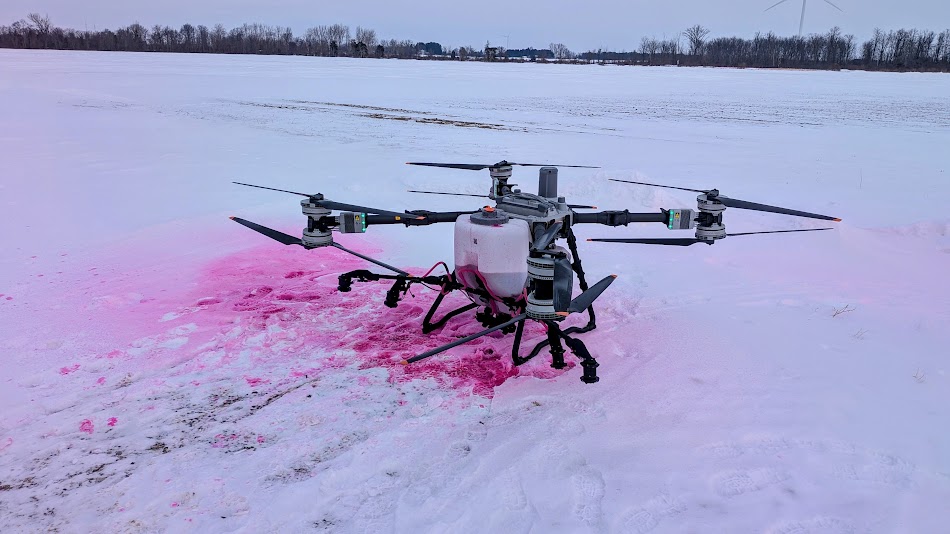
    On September 13 we performed some preliminary trials comparing it to the T50. We applied Roundup Transorb HC (PMRA research authorization 0054-RA-25) in plots over a 160-acre field of wheat stubble. While the results of this study will appear in a later article, we wanted to capture our initial observations.

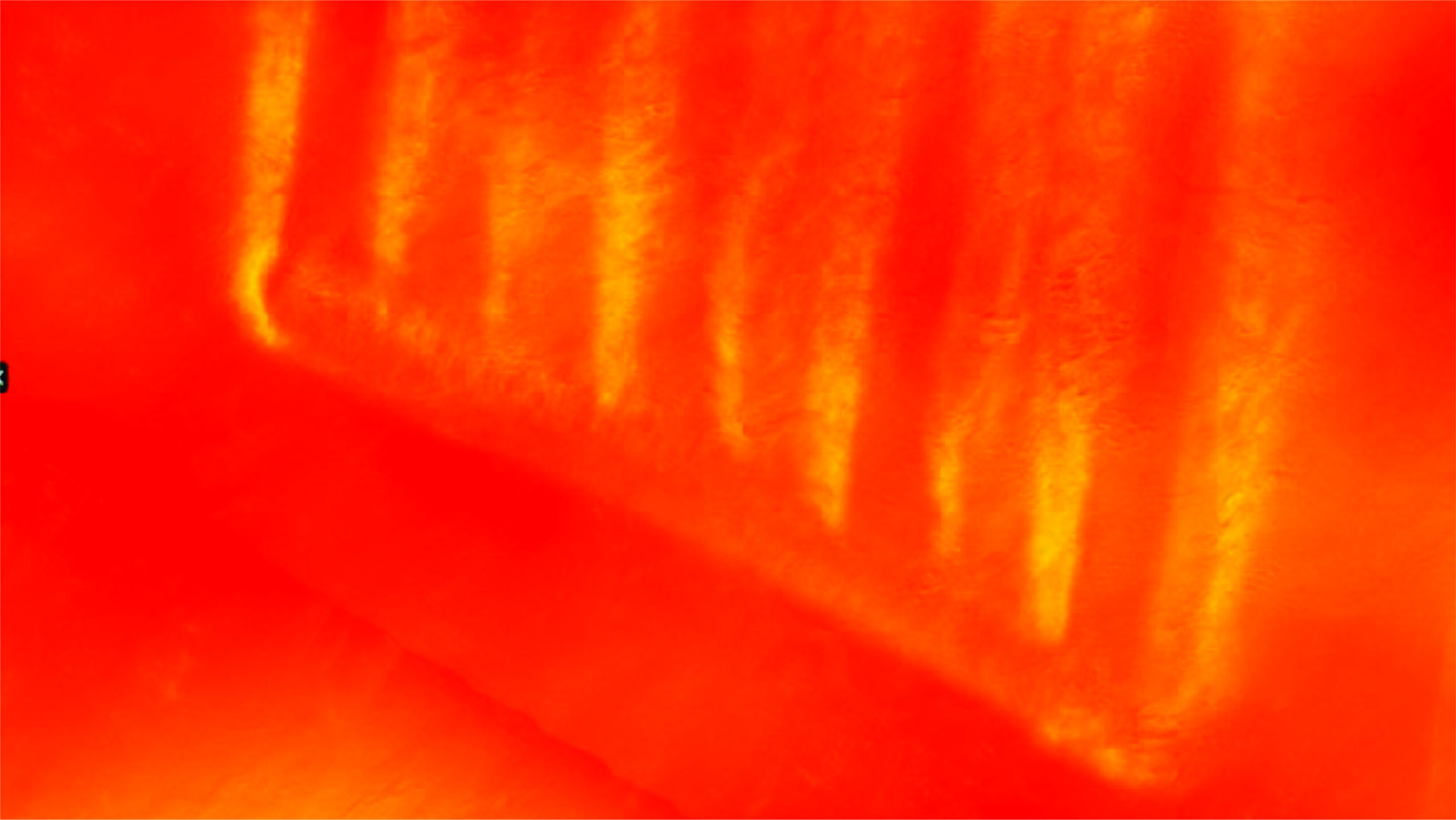
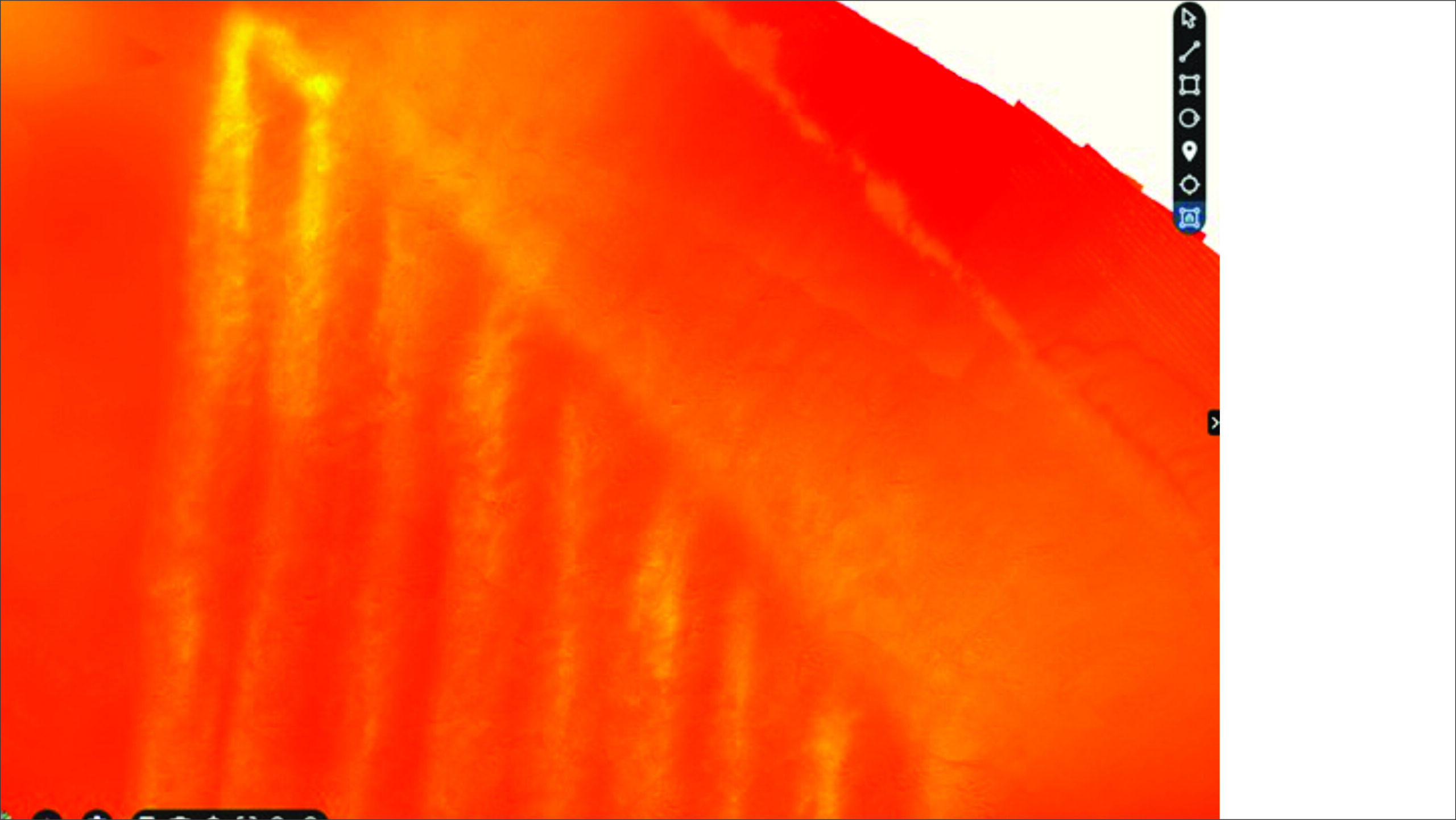
    160 ac wheat stubble field 7 DAA. Wind was a light 2-6 km/h with consistent direction throughout the study.

    Weight and Dimensions

    In Canada, Remote Piloted Aircraft (RPA) are regulated under the Canadian Aviation Regulations (CARs). Part IX of the CARs deals with RPA by operating weight and complexity of the operation to be conducted. Prior to recent amendments (which come into force in November 2025), Part IX covered up to and including 25 kg (55 lb) flown in visual line of sight (VLOS). Other operations like above 25 kg and Beyond VLOS operations required a Special Flight Operations Certificate.

    The 2025 amendments to Part IX added operations of medium RPA that weigh more than 25 kg (55 lb) up to and including 150 kg (331 lb) and introduced rules for beyond visual line-of-sight (BVLOS), sheltered, and extended VLOS operations.

    Left: DJI Agras T100. Right: DJI Agras T50.
    T50T100
    Empty weight52 kg75 kg (2 nozzles
    77 kg (4 nozzles)
    Max. takeoff weight (full liquid tank)92 kg175 kg (2 nozzles)
    177 kg (4 nozzles)
    Dimensions (arms & rotors unfolded)2,800 × 3,085 × 820 mm3,220 × 3,224 × 975 mm

    If flown full, the T100 will be 25 kg beyond the medium RPA category. Therefore, Canadian pilots will have to apply for a Special Flight Operations Certificate (SFOC). Similarly, DJI notes that when using the T100 in Australia, pilots are to follow local regulations and keep the maximum takeoff weight at 149.9 kg.

    The additional size and weight may make handling and transportation more challenging (e.g. lifting the RPAS out of a vehicle). Regarding spray performance, it remains to be seen if the greater weight of the T100 will appreciably increase the magnitude of the downwash, or perhaps this will be negated by the potential for greater travel speed (see Dwell time).

    Tank and nozzles

    Both the T50 and T100 have HPDE tanks (neither with agitation). The rotary atomizer nozzle (aka sprinkler) design has changed. According to DJI’s promotional video, the atomizers are “water cooled”. Our assumption is that the spray mix itself serves as a heat-exchanging coolant. This will come up later in this article.

    T50T100
    Liquid tank capacity40 L100 L
    Atomizer model2 or 4 LX8060SZ standard sprinklers2 LX07550SX, standard sprinklers
    2 LX09550SX, optional mist nozzles for orchard spraying
    Atomizer flow rate16 L/min (2 sprinklers)
    24 L/min (4 sprinklers)
    30 L/min (2 sprinklers)
    40 L/min (2 sprinklers plus 2 misters)
    Droplet size50 – 500 μm50 – 500 μm
    Span between nozzles1,570 mm (between rear nozzles)1,834 mm (between rear nozzles)
    Effective swath width4 – 11 at 3 m altitude5 – 13 m (no altitude specified)

    DJI states that droplet size was “measured by a laser particle size analyzer, with a 50-micron diameter using the Dv50 standard”. It is notable that they do not refer to ASABE S572.3 or ISO 25358:2018, which are standards that define nozzle spray quality. Canadian pesticide labels will require compliance with these standards when the application of agricultural pesticides is eventually permitted.

    T100’s LX07550SX rotary atomizer.

    It would be interesting to confirm if the new atomizers can actually produce the median droplet size indicated on the controller. Historically, and to differing degrees, RPAS rotary atomizers suffer from a “flooding” issue. This is a condition where flow to the nozzle overwhelms its ability to atomize the fluid, degrading the spray pattern and creating coarser, heterogenous spray.

    DJI states that the effective spray width depends on the “actual working scene [sic]”. Compared to the T50, the T100 atomizers are not directly below the rotor hubs, are angled slightly outward and are set further apart. This may explain claims of a larger swath width than the T50.

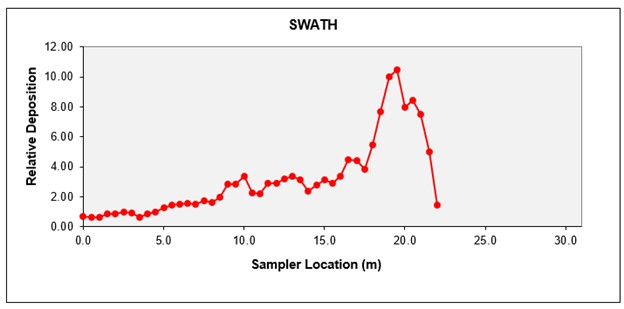
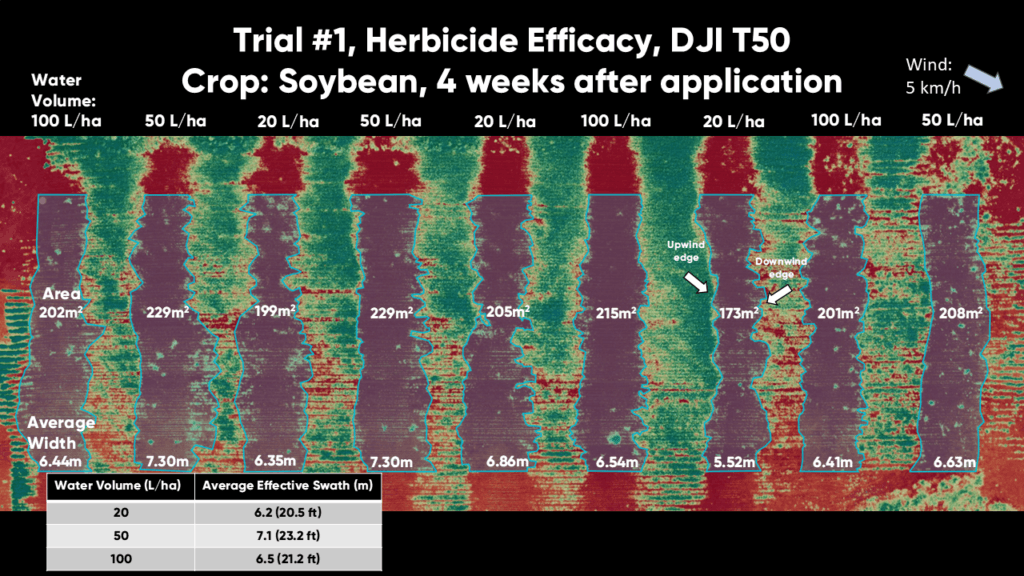
    However, our studies with the T50 have determined that when flight settings are optimized for low drift and consistent coverage, the ESW for in-canopy fungicide application is no greater than 7 m. This is likely wider for herbicide applications in stubble or on bare ground, but the risk of downwind drift (i.e. not displacement) makes claims of 11 or 13 m for the T100 unlikely. Swathing runs were performed using the Speed Track and Swath Gobbler methods (results will be reported when the burndown study is analyzed).

    Observations during spray trial

    According to DJI, both the T50 and the T100 can manage a maximum 30 L/ha (~3 gpa) at their respective maximum speeds. For the T50, this is 10 m/s (36 km/h) and for the T100 this is 20 m/s (62 km/h). This has obvious implications for greater efficiency, but we wondered what effect higher speeds might have on spray coverage and drift potential.

    Succinctly, faster speeds leave droplets aloft for longer periods, subjecting them to wind, wake and vortices while reducing the influence of the downward-rearward downwash that might normally entrain and direct them to the ground. As a result, they tend to spread laterally in the direction of the prevailing wind. This is drift. To see if this was happening, our treatments included combinations of travel speed, altitude, programmed swath width and droplet size. Here’s what we saw.

    Altitude

    We generally fly the T50 between 3 and 3.5 m above the ground or crop canopy. Any higher creates unacceptable drift and any lower tends to leave a bimodal and inconsistent coverage pattern. However, the T100 controller advises an altitude of >5 m during “high speed operations”. Perhaps this relates to orchard operations, or it’s strictly a matter of safety for such a large drone operating at high speed. In any case, it seemed far too high for field applications.

    Screenshot of altitude recommendations at ~20 m/s.

    To compare the T50 directly to the T100, we chose to fly three treatments at 3 m altitude, 6 m/s and 50 L/ha (5 gpa). There appeared to be a gap in the T100 swath between the nozzles that might indicate bimodal (non uniform) deposition. This gap disappeared when we later flew at 4 m and increased the speed of the drone. Despite what we observed during the application, a preliminary inspection of the aerial images taken of the treatment plots hasn’t revealed any obvious gaps in the burndown. We hope to learn more when we have higher resolution images and when the swath gobbler data is analyzed.

    At 3 m altitude and slower speed (~10 m/s) there was a visual gap in the spray. This was not obvious at 4 m altitude and higher flight speed. It did not appear to leave a corresponding gap in weed control, likely due to secondary coverage from from subsequent passes.

    Battery heat and endurance management

    According to DJI, the T50’s DB1560 battery takes 9-12 minutes to fully charge and the T100’s DB2160 Intelligent Flight battery takes 8-9 to get to 95%. We did not have access to the recommended 3-phase generator and instead used an adaptor cable (pictured right in the following image) that allowed the use of a smaller generator at a cost of slower charging. We alternated between two batteries and did not use a battery cooling station (pictured left in the following image).

    Left: Cooling station (from DJI website). Right: DB2160 battery being charged using a smaller generator and adaptor cable.

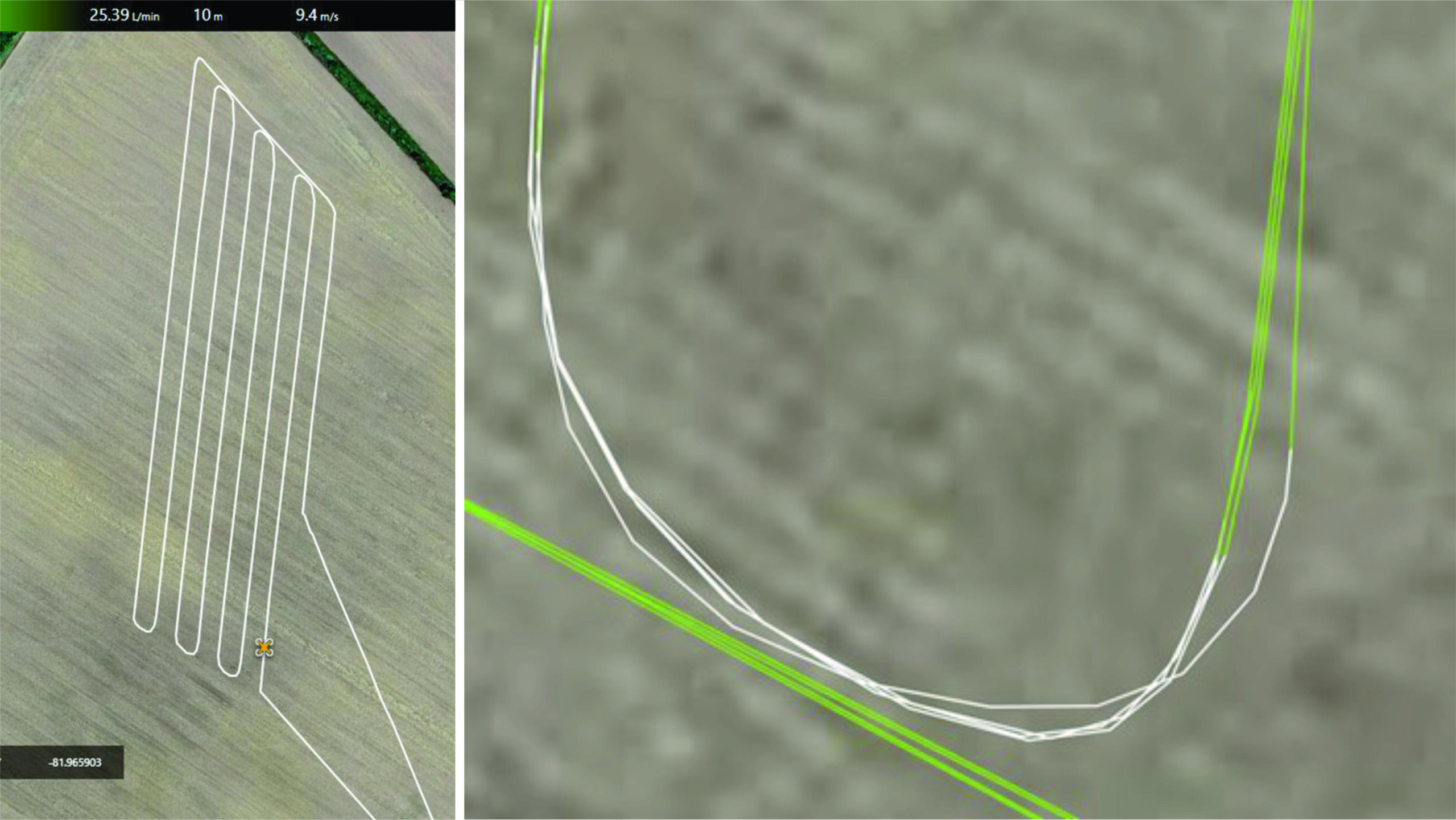
    When spraying our 150 m long treatments, the drone flew four passes (two out-and-backs). During the 10 m/s, 50 L/ha (5 gpa) trials, the battery threw an “overheat” warning. We were only able to do a single out-and-back before replacing the overheated battery with a fresh one. The overheated battery was placed in an air-conditioned truck cab until it was cool enough to recharge.

    This taught us that to manage battery heat, three batteries should be swapped, and the cooling station is likely not optional. Also, we gave further thought to the purpose of the water-cooled nozzles: We did not have an overheat issue during faster flights (15-18.5 m/s) and that may have been because the nozzle flow rate was considerably higher and kept the system cooler. In subsequent flights (and days), the drone sprayed at higher flight speeds and the overheat warning did not reappear.

    Addendum

    A few months after writing this article we were able to analyze the burndown data (here). There’s another possibility to explain the battery overheat phenomenon. Any operator can confirm that rotary drones expend a lot of power to remain in the air when they are full and when they are hovering. Flying at slow speed is a little more battery-efficient, but flying faster is better still. However, because rotary drones cannot achieve transitional lift, they are still not flying in a traditional sense. Rather, think of them as pushing hard off the ground, which is why they produce an extensive downwash. The faster they fly, the less the dwell time, which is the time the downwash is focused on one spot.

    But this new generation of larger, faster rotary drones challenges those limitations. The T100 (and a few other brands such as the EAVision J150) are capable of far greater speeds than previous designs. There is a threshold (yet to be determined) where the drone surpasses translational lift and achieves proper flight. When that happens, the downwash is reduced or even eliminated, just as with a helicopter. This could explain why the overheat issue disappeared during faster flights. It might also explain why, beyond a certain speed, additional speed did not appear to affect swath width (see the burndown study).

    This changes certain expectations about droplet movement beneath and behind the drone, as well as canopy penetration, drift potential and certainly, productivity. As drone design continues to evolve, the “rules” surrounding optimal operational settings must be reassessed. These observations are already changing research plans for 2026.

    Flight speed and flow

    Two of our treatments explored the effect of flight speed on swathing. The first set of three treatments set the T100 at max speed (20 m/s) spraying 30 L/ha (3 gpa) at 4 m altitude on an 8 m swath using 50, 250 and 500 µm droplets. Then, the next set of three treatments held droplet size at 250 µm and the dependent variable became speed at 10, 15 or 20 m/s.

    We found the controller set limits on certain combinations of settings. For example, at 20 m/s we could not select any lower than a 200 µm droplet. In fact, the lowest combination of settings was 80 µm and 12.5 m/s. We thought this might be a drift mitigating measure, but it’s more likely a pump or nozzle flow limitation. We also found that we were unable to exceed 16.7 m/s when applying 30 L/ha (3 gpa) using 250 um droplets on a 10 m swath.

    Once we started flying the treatments, we found the drone was not able to exceed 18.3 m/s over the 250 m treatment distance. It took roughly 200 m to get up to 18.3 m/s before the drone began to slow in anticipation of the end of the treatment block. This is not to suggest the drone was under- or over-applying up to that point, because it’s assumed the flow rate compensated for a changing travel speed. It does reflect observations with other rotary RPAS that they take some time (and distance) to achieve a consistent spray state.

    Conclusion

    The T100 shows promise for spraying larger fields more efficiently. Early indications suggest a higher travel speed and altitude will be required for battery management and to maintain consistent coverage over potentially wider swaths. However, research is required to determine how this will affect the balance between coverage, drift and productivity. The results of the burndown study can be found here.

    Acknowledgements

    Adrian Rivard and Stuart Hunter (Drone Spray Canada), Adam Pfeffer (Bayer Canada) and Mike Cowbrough (Ontario Ministry of Agriculture, Food and Agribusiness) are gratefully acknowledged for their participation, and both in kind and financial support of this study.

  • Circulating Spray Mix Through a Tank-Rinse Nozzle Maintains Nematode Concentration

    Circulating Spray Mix Through a Tank-Rinse Nozzle Maintains Nematode Concentration

    This article was co-written with Jennifer Llewellyn, former OMAFA Nursery Crop Specialist

    With more and more bio-rational products on the market, crop protection methods may require reassessment. Certain products require exacting water quality, cannot tolerate residues, and have half-lives that are both time- and temperature-critical. We’ve been getting questions about sprayer compatibility with some of these new products, so it seemed like a good opportunity to recycle this article from 2013.

    Many horticultural commodities, such as turfgrass and nursery crops, include the application of live nematodes as part of their annual IPM program. We performed preliminary research into the claim that a grower’s nematode applications were becoming less effective. In the course of the investigation it was discovered that the nematode concentration (i.e. dose) sampled from the spray nozzle was diminishing over the course of the application.

    (A) Tank-rinse assembly mounted through tank lid with a flow-regulating valve. (B) Close up of tank-rinse nozzle.
    (A) Tank-rinse assembly mounted through tank lid with a flow-regulating valve. (B) Close up of tank-rinse nozzle.

    After eliminating potential sinks in the sprayer’s plumbing (e.g. filters, strainers, etc.) it was hypothesized that the nematodes were adhering to the interior of the poly tank. If this was the case, the concentration would drop as the level of spray mix dropped. To test the hypothesis, we installed a tank-rinse nozzle to sparge the inner walls of the tank throughout the application and to re-suspend any stranded nematodes.

    A high capacity roller pump (Pentair series 1700C) was installed to operate the tank-rinse nozzle (Pentair Proclean Tankwash) during spraying. It was installed through a bulkhead fitting in the tank fill lid. During testing it was discovered that the tank-rinse nozzle shunted too much flow and pressure to maintain flow to the spray gun. A valve was installed behind the tank-rinse nozzle to restrict flow to the point where it gently rinsed the inner walls of the tank, restoring flow and pressure to the spray gun.

    (A) Installing a high-capacity roller pump. (B) Tank-rinse nozzle, with valve, installed through tank lid. (C) Control manifold installed to plumb the return, the tank-rinse nozzle, spray gun and boom. (D) The entire installed system.
    (A) Installing a high-capacity roller pump. (B) Tank-rinse nozzle, with valve, installed through tank lid. (C) Control manifold installed to plumb the return, the tank-rinse nozzle, spray gun and boom. (D) The entire installed system.
    (A) Nematodes, as-shipped, in a sponge. (B) Suspending nematodes for tank mixing.  (C) Counting nematodes. (D) Undiluted, healthy nematodes in a stock solution via microscope ocular.
    (A) Nematodes, as-shipped, in a sponge. (B) Suspending nematodes for tank mixing.
    (C) Counting nematodes. (D) Undiluted, healthy nematodes in a stock solution via microscope ocular.

    The 200 L tank was inoculated with a stock solution containing 25 million nematodes (125 nematodes / ml). 20 L of the spray solution was sprayed into a bucket every 10 minutes, whereupon 1 L of spray solution was immediately removed and 1 ml volumes were sub-sampled for counting.

    In the first trial, nematode counts continued over a period of 2 hours and viability dropped by ~40%. It was assumed the damage was caused by prolonged circulation through the roller pump. In subsequent trials, the sampling duration reduced to 10 minutes (more realistically reflecting the time it took the grower to apply 200 L in the field). The tank was rinsed and re-inoculated for each trial. 1 ml samples were drawn from the spray gun, which operated continuously, with and without the tank rinse nozzle in operation.

    Univariate analysis confirmed data normality and a GLM procedure was conducted for analysis of variance. Results indicate that nematode concentration dropped by ~15% without tank-rinse with minimal nematode damage observed. With the tank-rinse nozzle engaged, the concentration still declined slightly, but significantly less (<5%) (see graph below).

    Nematode concentration over time for each condition.
    Nematode concentration over time for each condition.

    The results suggest that a tank-rinse system that sparges the tank walls preserves nematode concentration throughout an application and may lead to more efficacious applications.

    Horticultural Crops Ontario, Ground Covers Unlimited, Pentair (Hypro) and Nemapro are gratefully acknowledged for making this research possible.

  • Strainers (aka Filters)

    Strainers (aka Filters)

    The level of filtration required for any given spray operation depends on the materials sprayed and the nuisance factor: That is, the balance between lost productivity from plugged nozzles and the effort required to address them during rinsing.

    There are opportunities to install strainers at the tank opening (usually a basket), the suction-side of the pump, each section line, and behind the nozzles. While we’ve yet to see an operation that uses all four (speciality or field operations), the suction strainer and line strainers are required bare-minimum.

    This infographic explains how strainers are classified. Be aware that older strainers may use a different colour code (e.g. 50 mesh used to be red – now it’s blue).

    To convert these ratings to actual size exclusion, we look at the Mesh Width (mm). An 80 mesh (yellow) leaves a distance of 0.18 to 0.23 mm between the wires. We can convert Mesh Width from mm to microns by multiplying it by 1,000, giving us 180 – 230 microns.

    Each level of filtration should get progressively finer, ending with the nozzle strainers being slightly finer than the nozzle orifice. Nozzle catalogues will often advise you on which strainer is appropriate for the nozzle you are using.

    When we ask why operators don’t use nozzle strainers, the response is either “Because they plug” or “It’s one more thing to clean”. Well, if your nozzle strainers are plugging, it’s likely because you have an agitation (see here) or mixing issue (see here and here) further up the line. They can handle a lot before the spray pattern begins to suffer … but yes, you do have to clean them regularly so they can continue their good work.

    Running water through any strainer often fails to remove plugs and debris, which are a source of contamination that can wreak havoc later on. They have to be removed and physically scrubbed during rinsing. We ran a demo to show why this irritating process is still a must-do (here).

    If you use an airblast sprayer, you should use slotted (not mesh, which plug too easily) nozzle strainers. Beyond the obvious benefit of preventing plugged nozzles, the strainer shoulder plays a role in keeping the nozzle snug in the nozzle body. Without it, you may need additional gaskets to prevent leaks. Be aware that some nozzle strainer designs can plug a nozzle body. Learn more here.

    If you use a field sprayer with clean carrier water, liquid formulations and large nozzles, you may never need nozzle strainers. But, if you’re using a lot of dry formulations, if your agitation is under-powered, or if your fill water is less than pristine (we’ve seen frogs in sprayer tanks) then you might consider them… even if they are a nuisance to clean.

  • Why are my Airblast Nozzles Plugging?

    Why are my Airblast Nozzles Plugging?

    This article was inspired by the following email:

    “I’m an organic apple grower with constant nozzle-clogging problems. These problems occur when we use wettable powders such as micronized sulfur and Surround WP. We always premix before adding to the tank through its strainer. Our airblast sprayers have towers and employ mechanical agitation. The nozzle/filter combo is TeeJet TXR8001K Ceramic Conejet Visiflow Hollow Cone spray tips with TeeJet 4514NY10 50-mesh nylon slotted strainers. The nozzle strainers rarely make it through a full tank without having problems. Do I need to add an additional level of filtration or is there something that I’m missing?”

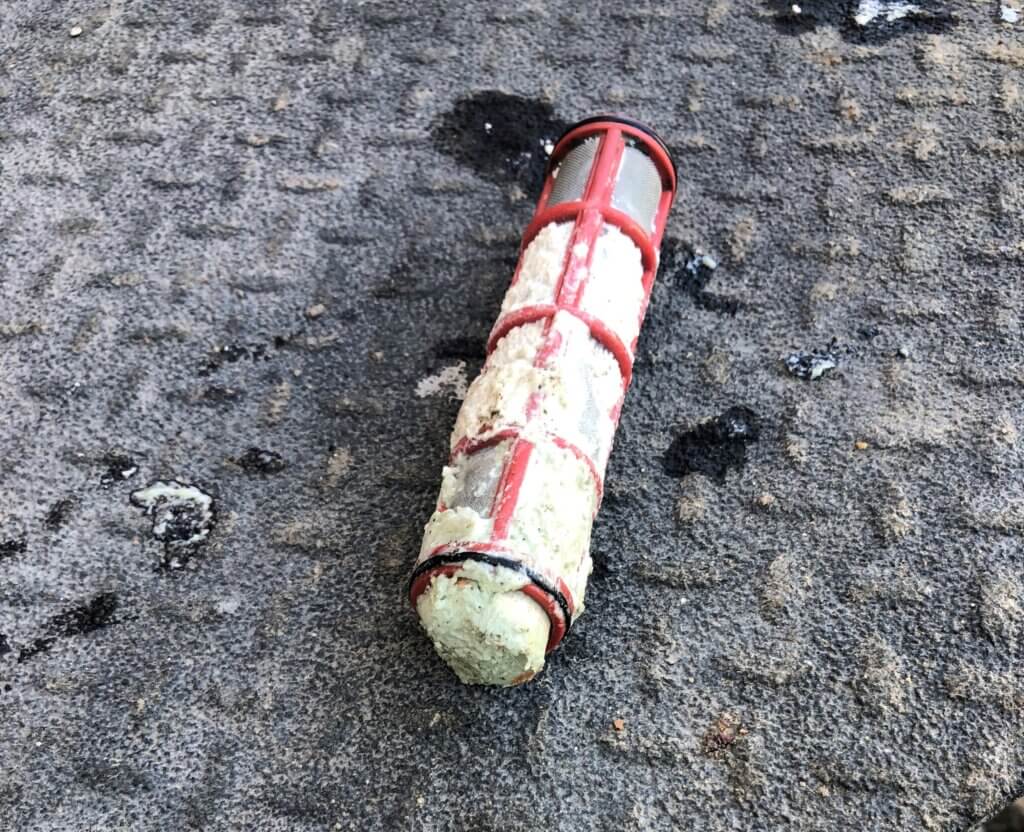
    A clogged slotted strainer inside the nozzle body. Note that the inners of the check valve seem clear (a good thing).
    A clogged slotted strainer.

    You can almost feel the frustration. When I receive grower enquiries, I first turn to the library of articles on Sprayers101 as well as the Airblast101 textbook. I was surprised to discover that we didn’t have anything that addressed this issue directly. So, I checked through university extension and industrial resources. Ultimately I couldn’t find what I was looking for, so let’s correct this oversight.

    Possible causes

    There may not be a single reason for why nozzles plug. It might be a combination of the following factors:

    1. Product choice

    While any tank mix can create clogs if they prove to be physically incompatible, there are two formulations that have a reputation for clogging nozzles.

    • Wettable powder (WP) formulations such as micronized sulfur and diatomaceous earth are notorious for clogging nozzles. WPs consist of a finely ground solid active ingredient often combined with wetting and bulking agents to help hold them in a dilute suspension. They tend to be dry products rather than liquids.
    • In a similar vein, suspension concentrate (SC) formulations also consist of a finely ground solid active ingredient, but this time they are suspended in a liquid and kept dispersed in the sprayer tank by wetting agents, dispersants, and thickeners. These formulations are known as “flowables” or “suspensions”.

    By the way, for those thinking he should change products, he already uses Kumulus DF (or Microthiol Disperss), which are reputedly the least troublesome formulations… and smell better than other sulfurs.

    2. Mixing practices

    Pre-slurries are sometimes prescribed for SCs. I personally feel that pre-slurries create exposure risks and more things to clean, but this opinion is moot in the case of WPs: Micronized sulfur and diatomaceous earth are not soluble. They’re particles that are held in suspension by fluid flow or agitation, so there’s no point in a pre-slurry.

    For those readers that cook, consider the corn starch metaphor. You’re making a sauce, and you choose to thicken it with a pre-slurry of corn starch and water. The particles disperse, but do not dissolve, so if you fail to use it immediately they settle to the bottom of the container. They must be forcibly scraped up and resuspended.

    3. Agitation

    Best practice is to fill the tank at least ½ full of water and engage agitation before you add anything. To extend the cooking metaphor, you want a simmer but not a rolling boil. Once filled, never stop agitating or WPs and SCs will settle and may not resuspend uniformly, if at all.

    Your sprayer design may affect matters. Some hydraulic agitation systems flag if they have undersized pumps. If your pump is busy sending flow to the nozzles, it may not have sufficient capacity to run the agitation. When your sprayer is “empty”, is there a thick accumulation at the bottom? You may have insufficient hydraulic agitation. Mechanical (paddle) agitation does not suffer this issue because it is direct-driven off the PTO. Read more here.

    4. Clean-out practices

    Perhaps plugs are occurring because of the previous tank, not the current tank. WPs can leave a buildup of settled pesticide in the tank, suction strainer and nozzle strainers. If you aren’t diligent about rinsing at the end of each day, products will settle and harden. Micro sulfur particles, for example, are less than 10 µm in diameter and harden into a flakey shell that can break loose and cause plugs.

    5. Flow restriction

    Several things can restrict flow. Elbows, bends and fittings can increase friction, reducing flow. The greater the distance a fluid needs to travel, the more flow is reduced. The greater the head (a pump’s head is the maximum height that the pump can achieve pumping against gravity), the more flow is reduced. There is an excellent description of this relationship here.

    So, if an operator is using nozzles with a particularly small orifice, plus nozzle strainers, on a vertical boom, liquid flow will be reduced. This allows particles to fall out of suspension and settle, forming further restriction to flow and eventually, plugs.

    Possible solutions

    Now, armed with these potential causes, let’s return to the grower. After some back-and-forth, he clarified that the clogs were a problem, but restricted flow was worse. An operator will stop to clean or replace a plugged nozzle, but may not notice reduced flow. This has the potential to affect several rows as well as leave unsprayed product in the tank.

    My first proposal was to increase nozzle size. An ’01 tip is very, very small and even with slotted strainers (as opposed to mesh), that’s a lot of restriction. I suggested recalibrating for larger tip orifices. This is a rather involved process, but options included using every second nozzle (as long as there were no gaps in coverage), and/or dropping pressure, and/or increasing travel speed (as long as the spray still reached the tree top and canopy centre). I shared this Excel output calculator to help with the process.

    Failing that, we discussed a plumbing project. Section 5.2.1 of Airblast101 describes a way to create a self-cleaning line filter that replaces nozzle strainers. That means instead of climbing a ladder to pull tips off a tower to reach the strainers, all filtration is conveniently located at ground level for easier (and more frequent) cleaning.

    The outcome

    The grower felt the numbers worked best running orange 02 TXR’s in every second position. He ordered new 50 mesh slotted nozzle strainers. His new operating parameters would be 5 nozzles/side, at 8.2 bar (120 psi) and 5.1 km/h (3.2 mph) for a total 51.5 L/ha (55 gpa). He noted some incompatibility issues running Braglia nozzle bodies (spec on his Rears sprayer), TeeJet TXR’s, TeeJet slotted strainers and TeeJet CP20230 caps. That was an important observation, and you can learn more about it here.

    We felt good about this, but while there was an improvement, it didn’t solve the problem. There was still strainer clogging after the first tankload. So, he added inline filters and removed the tip strainers. The result:

    “Yesterday I sprayed over 350 pounds (over 1,000 gal) of Surround WP and had no issues. I’m really excited about this new setup – it looks very promising. I’ve attached more pics if you’re interested (I don’t spend a lot of time scrubbing sprayers until after Surround season). Thanks again for all your help in this matter. – Joe Fahey, Peck & Bushel Fruit Company”

    A 50 mesh inline filter assembly with a 1/4 turn ball valve for quick flushes.
    New filter plumbed and secured. Note the anti-rub wrap on the line – always a good idea.
    The new loadout. 02’s in every second position, with no tip strainers, and a new inline filter on each side of the sprayer.

    Fantastic. Thanks to Joe for letting me share this story. Hopefully his experience will help you diagnose and solve any flow or nozzle plugging issues in your own operation.

    Happy Spraying.

    Epilogue

    This article elicited some interesting comments. I’ll share two:

    1. One grower proposed switching from a low profile axial sprayer to an air-shear system (there are a few examples here). In this case, the grower had a European make with hydraulic agitation. The grower re-plumbed theirs by installing a bigger pump and swapping the sparge system with a 3/4″ pipe oriented toward the bottom to sweep it out. When mixing, the agitation valve is left wide open. He says he doesn’t even bother with a tank basket; he dumps the Surround (as much as 2 x 50 pound bags in 1,000 litres) and has no plugging issues.
    2. Another grower with considerable boom-sprayer experience was genuinely surprised this was even an issue. Self-cleaning filters have been commercially available for more than 30 years and most boom sprayers have them. This is a comment on the stagnation of the North American low-profile radial airblast design. Perhaps the long life of these sprayers (sometimes 40 years of service) makes iterative change slow, or perhaps most operators aren’t aware of new features, or perhaps change is a risky proposition in such high-value crops. This is a shame given that the first optic sensors were installed on airblast, not broad acre field sprayers. That comes as a surprise to many. But it seems to have been the exception and not the rule.