Tag: drone feature

  • Safe and Effective Pesticide Application using Drones

    Safe and Effective Pesticide Application using Drones

    Remote Piloted Aerial Application Systems (RPAAS) or Unmanned Aircraft Spray Systems (UASS) are generally referred to as drones. They are an increasingly common tool for pesticide delivery in modern agriculture. They offer flexibility and access to difficult terrain, are capable of broadacre and patch applications, and facilitate air-assisted applications over perennial canopies. As with all application technologies, careful attention to fundamentals, safety, stewardship, and regulatory compliance remain the cornerstones of responsible use.

    This document summarizes current best management practices for pesticide handling and application using drones. It is intended to support training and adoption for operators from a wide range of backgrounds. Given the rapid evolution of drone design and the changing regulatory landscape, key considerations are addressed without being overly prescriptive.

    Categorization and the Canadian Legal Environment

    Drones can be divided into three design categories (Figure 1):

    • Rotary-Wing: Single or multi-rotor, these drones employ vertical take-off and landing (VTOL) and can hover during spraying. They have relatively short flight times and low volumetric capacity.
    • Fixed-Wing: Resembling crewed airplanes, these drones require a runway for take-off and landing. They have relatively long flight times, operate at higher speeds and have more volumetric capacity.
    • Hybrid: Encompassing a range of designs including, for example, parasail-wing and VTOL-wing, this design combines aspects of rotary drones with the speeds, flight times and volumes of fixed-wing designs.
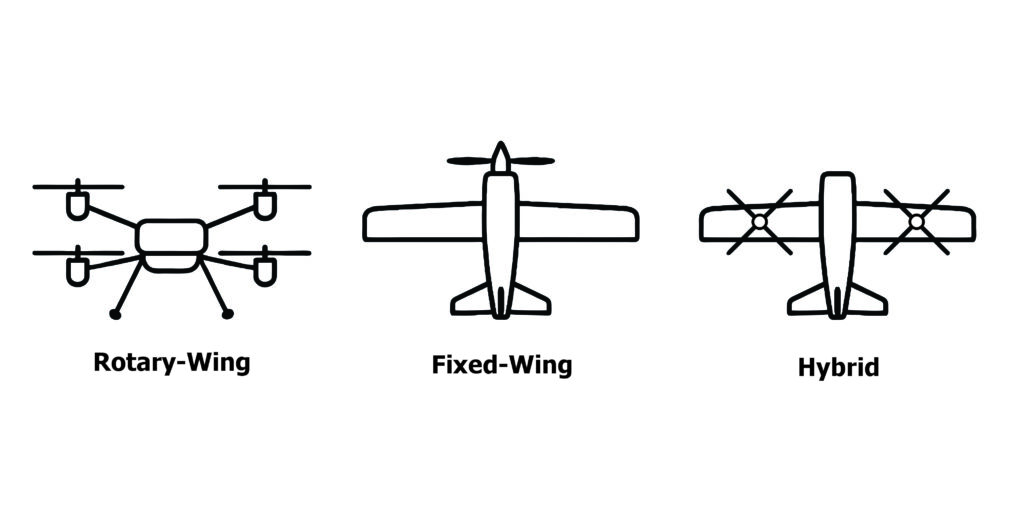
    FIgure 1 – Common drone designs

    Drones are also categorized by weight, which is used to define their legal use:

    • Small Drones (250 g to 25 kg): Typically have tank sizes up to 12 liters and speeds less than 25 km/h (10 m/s).
    • Medium Drones (25 kg to 150 kg): Typically have tank sizes ranging from 12 to 70 liters and a maximum speed of 25 km/h (10 m/s).
    • Large Drones (>150 kg): Typically have tanks >70 liters and a maximum speed of 72 km/h (20 m/s).

    Pesticide use is regulated by both federal and provincial governments to protect human health and the environment. Anyone applying pesticides must ensure they are registered for use in Canada and must comply with all applicable federal and provincial/territorial requirements. Provincial rules vary, and it is the responsibility of the drone operator to understand and follow the requirements in their jurisdiction. 

    Transport Canada: Certification

    Drone pilots must follow Canadian Aviation Regulations (CARS) Part IX. Drones must be registered and marked, and the pilot must carry valid pilot’s certification.

    Table 1 lists each pilot certification (that is, Basic, Advanced, and Level 1 Complex) and permitted category of operation for small, medium and large drones. It is based on Transport Canada’s “Drone Operation Categories and Pilot Certificates: Overview (2025-11-04)”.


    Table 1 – Drone Operational Categories and Pilot Certificates

    BasicAdvancedLevel 1 Complex3
    Age minimum for certification1141618
    Fly in visual line-of-sightYYY
    Closer to or over people2NYY
    Small dronesYYY
    Medium dronesNYY
    Large drones4NNN
    Controlled airspace (air traffic control permitted)NYY
    Sheltered operators (small drones only)NYY
    Extended visual line-of-sightNYY
    Beyond visual line-of-sightNNY
    1In Canada, you must be at least 16 years old to apply pesticides.
    2Flying at an advertised event is considered a special operation, requiring permission.
    3Operating a drone over 150 kg in Canada is classified as a high-complexity, specialized operation requiring a Special Flight Operations Certificate (SFOC) from Transport Canada.

    4Operations with large drones are medium-complexity special operations and require permission.

    Health Canada: Pesticide Labels

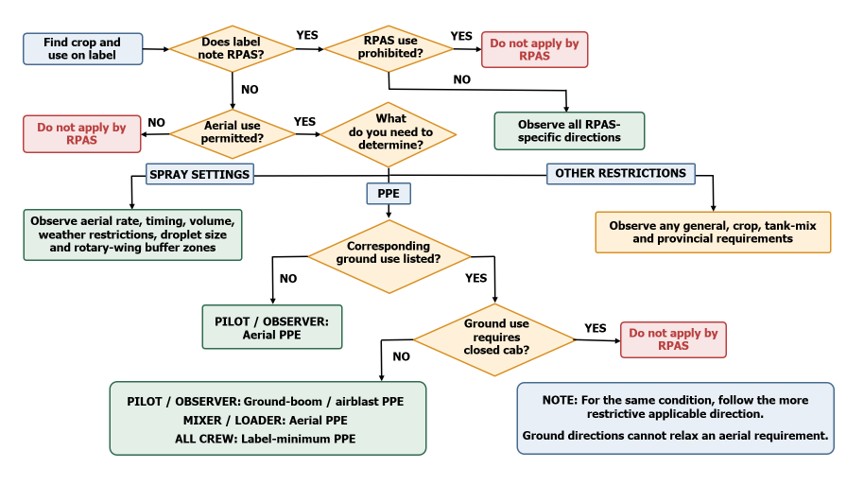
    Health Canada is responsible for approving the registration of pesticides across Canada. Pesticide labels are legal documents and set rules on how a pesticide can be used. They define application rates, equipment settings, mixing instructions, environmental precautions, personal protective equipment (PPE), restricted-entry intervals, and disposal instructions.

    As pesticide labels are updated to reflect drone applications, it is recommended operators consult Health Canada’s Pesticides Regulatory Directorate (formerly known as the Pest Management Regulatory Agency) pesticide label search tool for the most recent version. The pesticide must be registered for use on the target crop and pest and be permitted for application by drone. Questions regarding product label interpretations and uses can be directed to the Pesticides Information Service at pesticides-info@hc-sc.gc.ca.

    Mission Planning

    Proper field mapping and mission planning leads to safe and successful flights. Map obstacles, no spray zones, buffer zones, sensitive area/crops, areas of human activity, terrain, etc. Be aware that these conditions may change if planning occurs too far in advance of the spray day. Always check for relevant Notice to Air Missions (NOTAM), ensure the airspace is not restricted, and be aware of any other aircraft operating in the area.

    Staging Area

    Ideally, the staging area should be identified and prepared prior to the spray day. Select a staging area for filling, take-off and landing that is safe for the operator, crew and equipment. Drones should never fly over, or too close to busy roads.

    • The staging area should present clear lines of sight and support efficient operations.
    • The staging area should be upwind of the target site to reduce operator exposure to drift.
    • Bystanders must be at a safe minimum distance, as defined by the nature of the operation.
    • When spraying large fields, moving to an alternate staging area can save unnecessary ferry time, increasing efficiency and reducing battery strain.

    Take-off and Landing

    The operator and crew must be a safe distance from the drone during take-off and landing. Flying over crew is prohibited. The operator should be focused on the drone during take-off and landing. Be prepared to use connecting points and perform a manual landing when needed.

    Tendering System

    A drone tendering system is a required component. At minimum, they achieve four things:

    • They supply onsite power.
    • They store water and chemicals.
    • They have a mixing and dispensing capability.
    • They transport the drone(s).

    Drone tendering systems vary in size, complexity, cost and capacity, depending on the nature of the operation. For example, licensed exterminators (that is, those paid to spray properties other than their own) may have additional needs beyond what is listed here.

    Mixing

    Drone tanks are small and lack agitation. Therefore, most tendering systems include a nurse tank for pre-blending and agitating batches of spray mix. This helps ensure that active ingredients dissolve and disperse fully, that suspension products stay mixed and that the target site receives a consistent mix.

    Water quality determines pesticide effectiveness; hardness, bicarbonate, pH, and turbidity can antagonize or degrade products. Water quality testing allows operators to correct potential problems before spraying. Higher spray volumes (that is, liters per hectare or gallons per acre) enable proper mixing and have been shown to improve spray coverage.

    The act of mixing (and filling) carries the highest risk of operator exposure and environmental contamination. PPE requirements must be observed, and operators should avoid distractions or hurried work. Mix only the amount required for the task; leftover pesticide mixes create disposal problems and safety risks.

    1. Fill the nurse tank halfway with clean water. Backflow prevention (for example, a valve or air gap) protects the water source.
    2. Measure and add the pesticide, following the mixing order on the label and allowing time for each tank mix partner to dissolve and disperse. Tank mixing must be permitted on the label of each tank mix partner. Mixing multiple products at high concentration greatly increases the possibility of physical and/or chemical antagonism. If compatibility is in question, contact the manufacturers for guidance and conduct a jar test well in advance of spraying.
    3. Rinse jugs and measuring tools into the nurse tank.
    4. Top up with water and maintain agitation throughout the operation.
    5. Transfer the spray mix into the drone tank using the most closed system available.

    Filling and Battery Management

    Rotary-wing drones carry relatively small spray volumes, so refills and battery swaps occur frequently. Large models, for example, might have a 10-minute flight cycle, where the refilling and battery swap processes are simultaneous and comprise less than 2 minutes.

    Filling

    Haste and inattention increase the chance of spills, overflows and leaks during refilling. This represents unnecessary point source contamination and operator exposure and must be avoided. While drone refills currently involve quarter-turn-valved faucets, or gas-station-style automatic fuel nozzles, neither are ideal. Industry is developing alternatives. Ensure filling is performed with the most closed system available.

    Batteries

    Batteries, like the drone, carry spray residue and must be handled using PPE. Some battery chargers feature water baths, misters or air conditioning. If water-cooled, treat the water as pesticide‑contaminated and dispose of accordingly. Batteries charge more efficiently and last longer if charged in a cool, ventilated location. Charge according to the manufacturer’s instructions.

    Operator Comfort

    Drone operations are physically and mentally taxing. Attention to operator comfort improves safety and efficiency. Even seemingly minor accommodations have positive impacts:

    • Folding chairs combat operator fatigue.
    • RV awnings, umbrellas, foldable Bimini-style tops or flip-up doors provide shade.
    • Wear ear protection and consider lower-decibel equipment (for example, inverter gas generators are comparatively quiet, and electric pumps are even quieter).
    • Enclose or locate loud components far from the filling area to reduce noise and emission exposure.

    Elevated Platforms and Flight Decks

    Line-of-sight and Connectivity

    While “beyond visual line-of-sight” operations are allowed under specific, authorized conditions, most current regulations require operators to maintain a visual line-of-sight with the drone. This supports swath alignment, obstacle avoidance, an ongoing assessment of drift risk, and general operational safety.

    Operating from an elevated platform can help maintain visual line-of-sight and improve connectivity between the flight controller and the drone. Real-Time Kinematic (RTK) is a satellite positioning technique that enhances GPS/GNSS data to provide centimeter-level accuracy in real time. An RTK platform will improve connection reliability and drone accuracy. Satellite internet providers can supplement connectivity in regions with unreliable cellular coverage. Be aware that network latency varies with provider.

    The safest approach is for the pilot to control the drone from an elevated platform while a loader performs refill and battery-swap procedures on the ground. However, if operating off a flight deck:

    • Long flight decks keep landings and lift-offs at a safer distance.
    • Decks with pull-out platforms or hydraulic wings can increase the operating area and can be adjusted to account for adjacent roads and the slope of the ground.
    • A security rail around the landing area can prevent a drone from slipping off; A falling drone is expensive, but falling or sliding into an operator is a disaster.
    • An enclosed operations area can improve operator safety and comfort.

    Remember, the operator should be focused on the drone/controller when flying; Flight is not an opportunity for performing other tasks.

    Cleaning

    Proper cleaning prevents cross‑contamination, maintains equipment lifespan, and avoids crop injury from residues. Perform cleaning away from open water and ensure rinsate is disposed of responsibly. Follow the pesticide label and adhere to the manufacturer’s instructions on allowable cleaning methods. The following recommendations do not supersede either resource.

    Triple‑Rinse Procedure

    Multiple, small-volume rinses are more effective than a single, large-volume one. Follow the triple-rinse procedure:

    1. Ensure the drone tank is as empty as possible.
    2. Fill the drone tank 1/4 full of clean water and, with a partner, agitate by rocking the tank (if removable).
    3. Flush the rinse water through the plumbing and nozzles.
    4. Repeat the process twice more.

    Employ a similar procedure to remove residues from the nurse tank plumbing systems. Important reminders when cleaning:

    • Use a cleaning agent in the second rinse if recommended by the label. Soaking may be required.
    • While the drone exterior should be rinsed, avoid pressure washing (to protect electronics) unless explicitly permitted by the manufacturer.
    • Cameras and Lidar will not function if they are covered in residue. 
    • Commercial drone residue removers are available to assist in keeping the drone clean.
    • Wash or dispose of PPE according to label and local regulations.

    Swath Width and the Operational Use Case

    Swath width is the total width of the area covered in a single pass. Swath width is a fundamental variable for mission planning, ensuring the pesticide is applied at the correct rate and (in the case of broadacre operations) as uniformly as possible. A drone’s swath width is highly variable and affected by several factors, collectively referred to as the “Operational Use Case”. These factors include:

    • Drone design (for example, atomizer type and location relative to the rotors)
    • Operational settings (for example, altitude and travel speed)
    • Meteorological conditions (for example, wind speed, wind direction, relative humidity)

    Operational Settings

    When configuring a rotary-wing drone for a mission, pilots select operational settings on the controller. The three settings that have the most influence on droplet behaviour, and consequently swath width, are droplet size, flight speed and altitude. A single change alters several other influencing factors, but the cumulative impact on swath width and drift potential is clear (Table 2).

    Table 2 – Effect of rotary-wing drone operational settings on swath width and drift potential.

    VariableChangeEffect on Swath WidthEffect on Drift Potential
    Droplet sizeCoarserNarrowsReduces
    Droplet sizeFinerWidens1Increases
    Flight speedFasterWidens2Increases2
    Flight speedSlowerNarrowsReduces3
    AltitudeHigherWidens1Increases
    AltitudeLowerNarrowsReduces3,4
    1Coverage uniformity and overall number of deposits within the swath reduced due to offset and drift.
    2Current evidence suggest that at high speeds (> 10 m/s) there may be a plateau where there is little or no further change to swath width or drift.
    3Lower speed and/or lower altitude will increase the influence of downwash on droplet behaviour.
    4Low altitude may not permit sufficient overlap of the spray from each nozzle, creating gaps in coverage.

    Meteorological Conditions

    Spray released from a drone (or any aerial sprayer) is highly susceptible to environmental conditions. Drift potential increases when:

    • conditions are calm (inversion risk)
    • windspeed is too high (physical drift)
    • conditions are changeable (gusting and wind direction)
    • conditions are hot and relative humidity is low (droplet evaporation)

    Operators must observe label recommendations, local laws, and use good judgment to minimize drift potential. Practical methods include:

    • increasing droplet size
    • increasing volume
    • adjusting passes (particularly along buffer zone) to account for swath offset
    • halting operations when conditions favour movement toward sensitive habitat / crop / residential areas.

    Be aware that drift-reducing adjuvants have an unpredictable impact on the droplet size produced by current rotary atomizer designs. Until rotary atomizer design is standardized and tank mixes can be evaluated, do not assume adjuvants will work as intended.

    Downwash

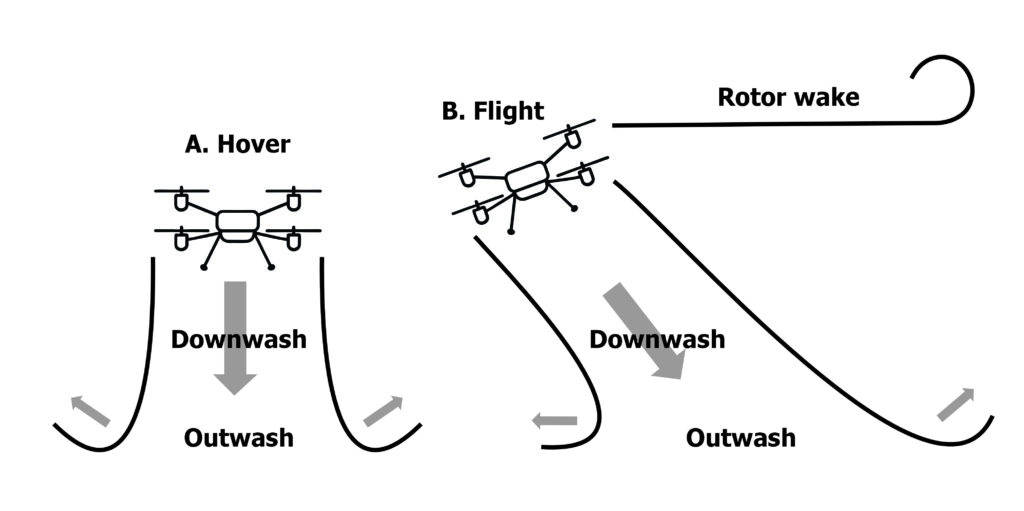
    When a rotary-wing drone hovers, each rotor draws air from above and accelerates it downward in a high-velocity blast. The result is a vertical component referred to as the “downwash” and the turbulent splash of air that hits the ground and spreads laterally is the “outwash”. Droplets released beneath a drone at hover are almost completely entrained by the downwash. The majority get driven to the ground and then move laterally along the outwash, while a small portion (likely smaller droplets) recirculate back up through the rotors (see Figure 2a).

    Most rotary-wing drones have fixed-pitch rotors, so the entire drone must tilt forward to enter low-speed flight. This causes the column of downwash to tilt backward. While the downwash is created by lift, “wake turbulence” is created at the tips of the rotors as high-pressure air beneath the rotor wraps around to the low-pressure area above. As the drone flies at low speed (~3 m/s) the wake can be visualized as a pair of counter-rotating, cylindrical vortices that trail behind. Spray is still mostly entrained by the downwash on a downward and rearward vector with deposition aligning closely to the flight path. However, a portion will get caught in the wake (see Figure 2b).

    Figure 2 – A. Rotary-wing drone at hover creates a high-energy downwash directly below the drone.
    B. Rotary-wing drone at low-medium flight speed trails a lower-energy downwash and creates a rotor wake.

    The effect of higher speed flight has not yet been fully characterized. However, there is evidence that the downwash will detach from the ground, directing the spray further back and with lower energy. This exposes droplets to deflection by wind and shifts a greater proportion of the spray into the rotor-tip vortices (that is, the wake). This makes higher speeds undesirable, as they result in increased drift and an unstable and unpredictable swath. There is evidence that at some point this relationship with speed may plateau, where there is no further change to swath width or drift.

    Practical Impact

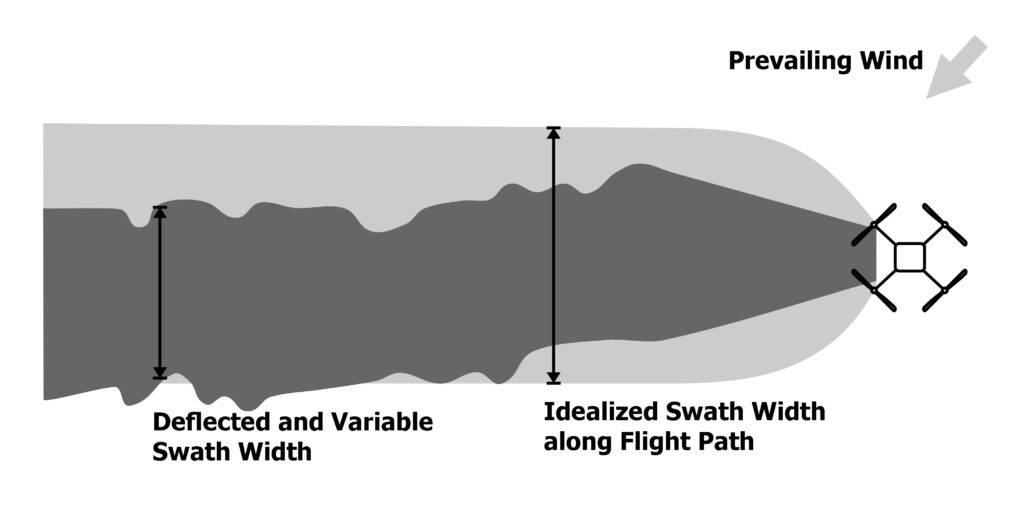
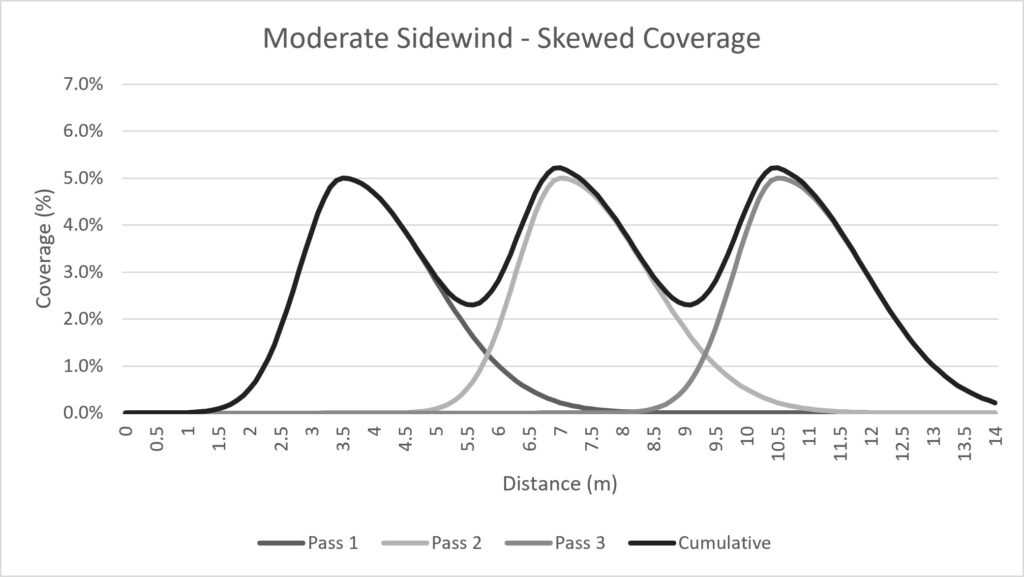
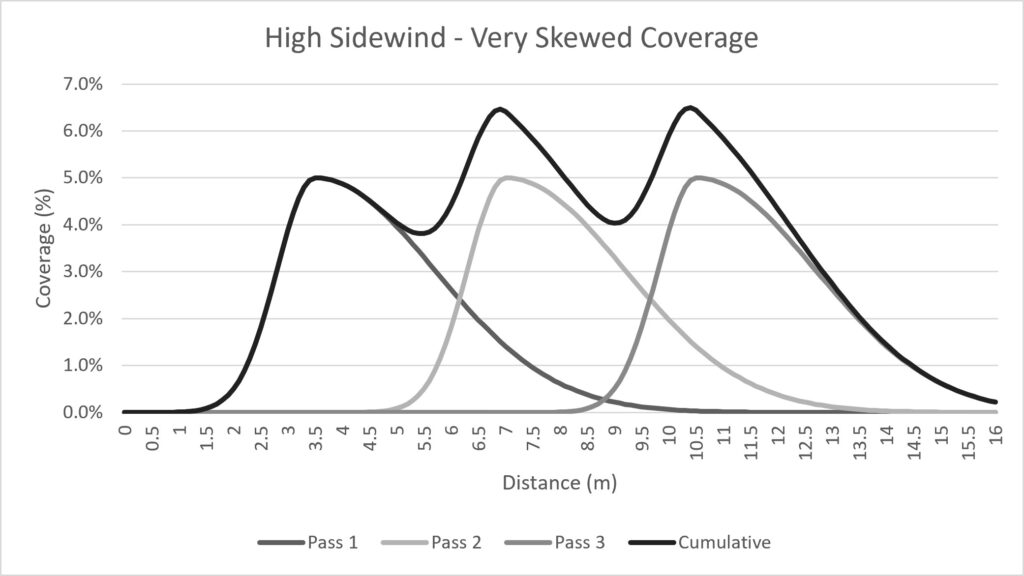
    Operational settings, meteorological conditions and the downwash have a cumulative effect on droplet fate. Consider the following operational use case: A rotary-wing drone spraying back and forth over rolling topography will experience changing wind speed and relative direction. The drone will respond by changing drone pitch, rotor speed and pump flow to maintain the desired altitude, travel speed, and application rate. Meanwhile, the drone gets lighter as it sprays, thereby reducing the magnitude of the downwash. Ultimately, this results in a swath width that expands and contracts and may shift back-and-forth or be consistently offset along the flight path (Figure 3).

    Figure 3 – Swath width and swath position along the flight path is variable.

    Evaluating Swath Width

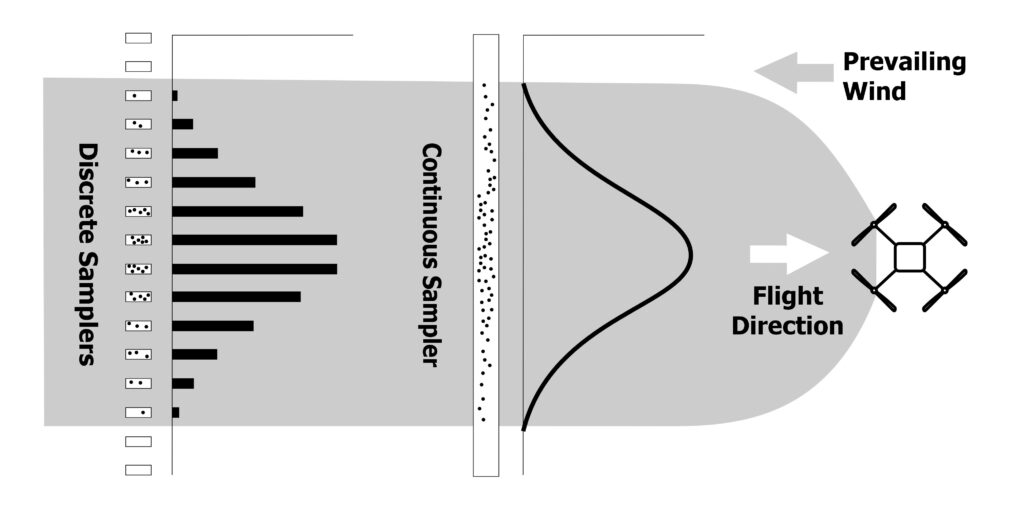
    A drone’s swath width for a given operational use case must be determined through testing. The drone is first calibrated according to the manufacturer’s instructions. Swathing methods vary, but generally the drone is flown into the prevailing wind over a series of samplers (for example, discreet samplers like water sensitive paper or continuous samplers like string or bond paper). Multiple passes are required to capture the variability that occurs along the flight path (Figure 3).

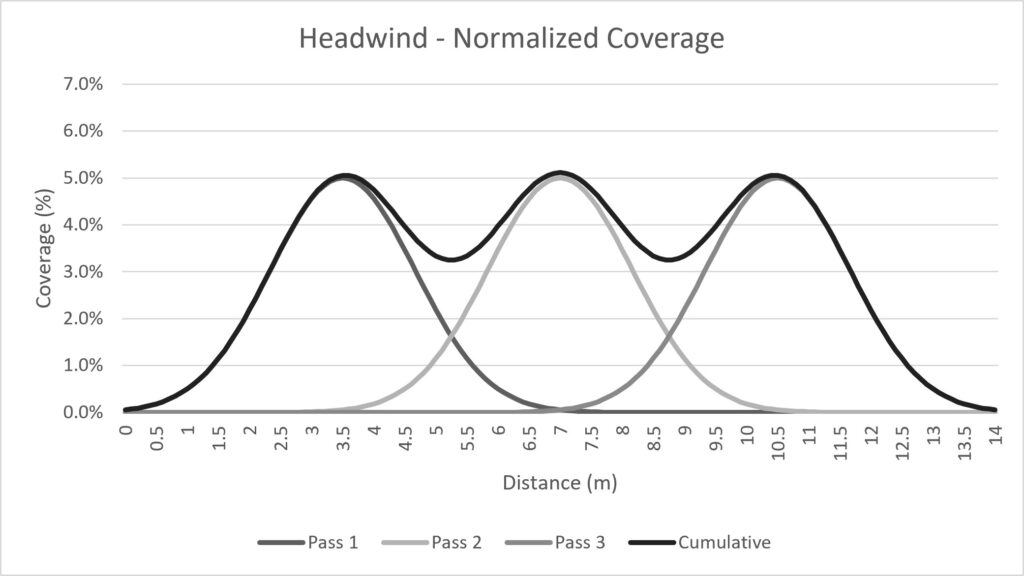
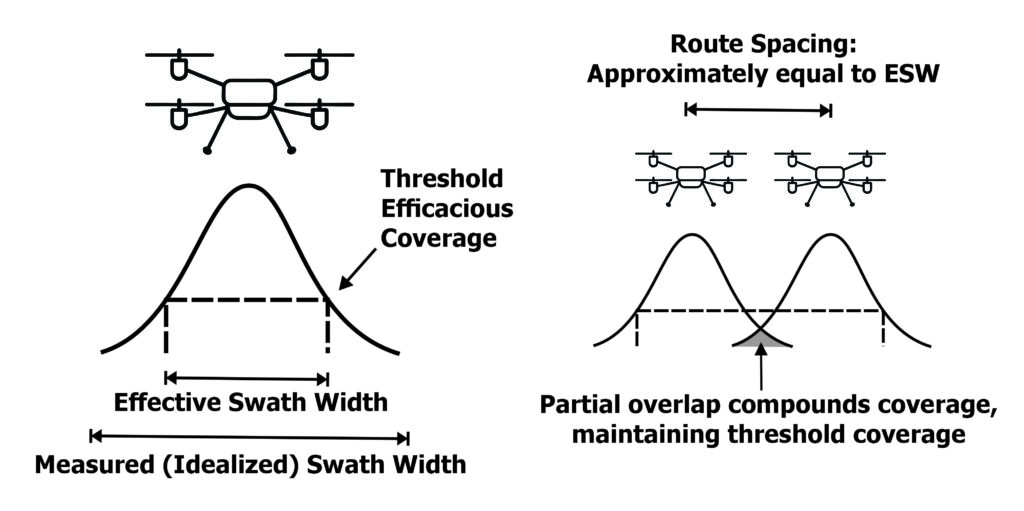
    A rotary-wing drone does not deposit droplets uniformly across its swath. There are fewer droplets at the extremes and more directly beneath the drone. This can be envisioned as a bell-shaped curve with a tight span and a high peak (Figure 4).

    Figure 4- Methods for testing swath width

    Many drone manufacturers report an idealized swath width that represents the distance between the furthest detectable deposits. However, variability within the swath (that is, the amount of active ingredient deposited, the percent-area covered, and/or density of deposits) implies that the efficacy of the application will also be non-uniform, leading to further considerations.

    Effective Swath Width and the Agronomic Use Case

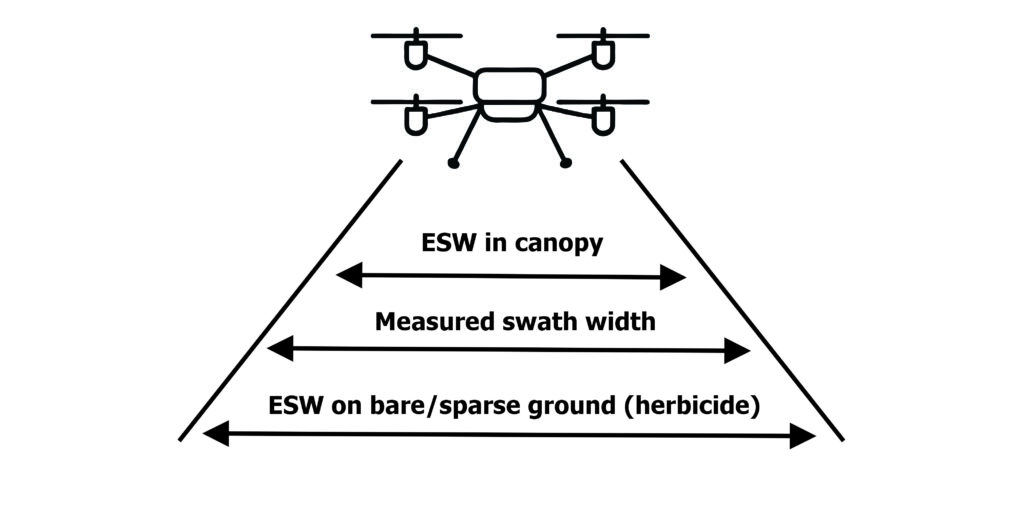
    The relatively sparse coverage at the extremes of the measured swath width may be insufficient to elicit the desired biological result. The Effective Swath Width (ESW) represents the segment of the total swath width that results in pesticide efficacy. In some use cases, the two widths can be similar, but in the case of a fungicide application, the ESW is typically only a fraction. The difference is influenced by the “Agronomic Use Case” which includes factors such as:

    • Minimum effective dose: This is a complex relationship between coverage, spray mix concentration and pesticide mode-of-action that results in an effective result while minimizing the environmental impact.
    • Target location (for example, a pest within a dense canopy or a weed on relatively bare ground)
    • Spray mix rheology (that is, the interaction of spray mix viscosity and atomizer design on droplet size)

    Minimum Effective Dose

    Consider a systemic herbicide and a contact fungicide. A systemic herbicide mixed according to the label will kill weeds with less volume per hectare and less target coverage than is required for some fungicides and insecticides. Therefore, a systemic herbicide can still be effective at the extremes of the swath, and while not ideal, higher residues in the middle of the swath are not a liability. Conversely, a contact fungicide requires relatively higher coverage and may not be effective at the extremes of the swath. Therefore, two missions with identical operational use cases, but different agronomic use cases, can present the same swath width during testing, but have different effective swath widths.

    Target Location

    Spray coverage diminishes with canopy depth. The degree depends on crop morphology and planting architecture. Simply put, a plant canopy filters out spray droplets, and this occurs both vertically and laterally.

    Spray Mix Rheology

    Most conventional hydraulic nozzle designs adhere to an international standard. This allows the operator to determine the size of droplets produced for a given operating pressure and flow rate. Droplet size is a not only a critical factor in mitigating drift and improving spray coverage, but it is often a defined pesticide label requirement.

    Currently, most rotary-wing drones employ rotary atomizers. This atomizer design is not standardized, and as a result, the droplet size selected on the controller will not necessarily produce the desired results. Studies have shown that changes in tank mix partners, concentrations, the inclusion of adjuvants, the flow rate and the atomizer design can produce droplets far larger or far smaller than intended.

    Further, some atomizers are prone to “flooding” when the flow rate exceeds the atomizer’s capacity, and this produces a volume of larger, less-effective droplets.

    Until rotary atomizers are standardized, operators can only select the desired size and infer the results based on in-flight behaviour and observing the size of the stains left on samplers during swath width testing.

    Practical Impact

    Taken collectively, research has shown a 20 to 30% reduction in ESW for corn, wheat and soybean fungicide applications compared to swaths measured on open ground. Conversely, herbicides sprayed on bare earth or sparse vegetation can produce an efficacious response 20% wider than the measured swath width (see Figure 5). The impact of agronomic use case on ESW must be considered during mission planning.

    Figure 5 – Measured swath width versus effective swath width for different agronomic use cases

    Route Spacing and Boundary Passes

    During mission planning, operational settings are entered into the controller. Route spacing should not be confused with ESW. Route spacing describes distance between passes over the target area, but this does not affect ESW, which is a constant. If a banded application is desired (for example, spraying over planted rows of perennial canopies, but not alleys) the route spacing should be wider than the ESW. If a uniform broadcast operation is desired, the route spacing should be less than the tested swath width and approximate the ESW (see Figure 6).

    Figure 6 – Matching route spacing to effective swath width results in a relatively uniform, broadacre application

    Kinematics

    Depending on the operational use case, rotary-wing drone speed and swath width share a direct relationship. This means swath width increases during acceleration and decreases during deceleration.

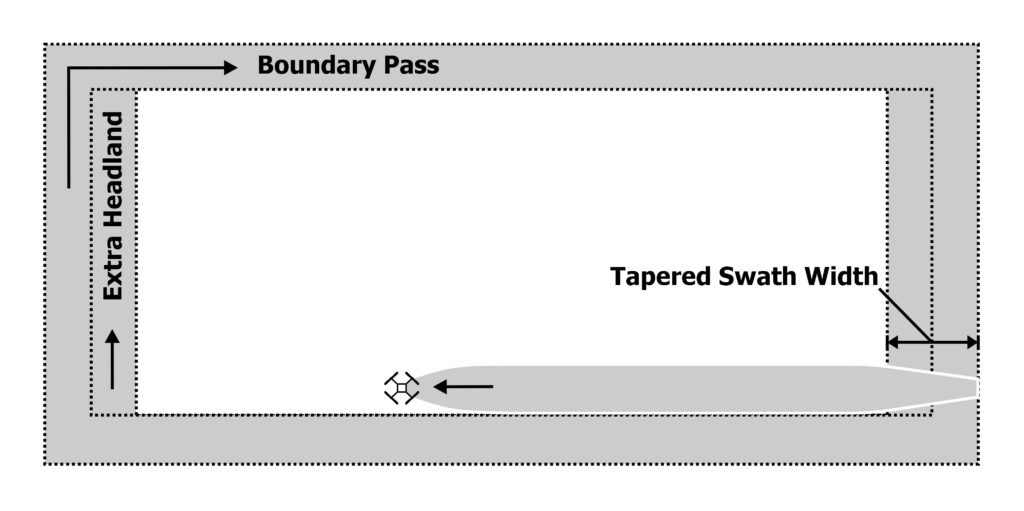
    Conventional crewed aerial applications reach the desired speed before spraying the target area. Ideally, rotary-wing drones would do the same, but software limitations currently prevent the separation of flight area from target area. As a result, it can take 25 meters or more for larger drones to accelerate to target speed. Additional headland passes may be required to ensure coverage is not compromised at the beginning and end of flight passes (see Figure 7).

    Figure 7 – Swath width changes due to acceleration and deceleration.

    Recordkeeping

    Detailed recordkeeping will help operators better understand how operational and agronomic use cases affect the outcome of a spray mission. Quality records also help mitigate against any allegations of misapplication, such as a drift complaint. The following items should be recorded, but the list is not exhaustive:

    • Product name(s), rate(s) and water volume.
    • Sprayer operational settings (altitude, speed, route spacing, droplet size to supplement a digital record of the mission)
    • Swath measurements
    • Weather conditions
    • Note of buffers and sensitive areas
    • Crew names and roles
    • Unusual events or corrections
    • Results (return to site to assess efficacy)

    Conclusion

    Drone technology is advancing rapidly, and best management practices will continue to evolve with new research and more experience. However, the principles in this document—proper preparation, careful mixing, responsible application, diligent maintenance, environmental awareness and swath testing—apply regardless of model or agronomic use case.

    Operators must ensure they are properly licensed and comply with all applicable federal and provincial requirements, including those related to the sale, use, transportation, storage and disposal of pesticides. With thoughtful planning, practice and recordkeeping, drones can be a safe and effective means of crop protection.

    Thanks to Dr. Steve Li (Auburn University, College of Agriculture) and Dr. Michael Reinke (Michigan State University Extension) for their review of, and contribution to, this article.

    Resources

  • Drone Tendering – Considerations before Buying or Building

    Drone Tendering – Considerations before Buying or Building

    Much of this article is based on a session and tradeshow I attended at the 2026 Drone End-User Conference in Kansas City. I want to acknowledge the insightful information provided by the three session speakers, as well as the ~200 audience members that asked honest questions and shared their experiences. The speakers were Mr. Chase Plumer (Owner, ProBuilt Fabrication/ProDrone Spraying & Seeding, Seymour, IN), Mr. Klaytin Hunsinger (Owner, Hunsinger Ag Solutions, Rossville, IL) and Mr. Kyle Albertson (Owner, Albertson Drone Service LLC, Benton County IN).

    Tendering systems

    Drone-based crop protection is a rapidly growing industry and operator experience spans from novice to veteran. It follows that tendering systems are not a one-size-fits-all proposition. The best fit will be a configuration that is budget-conscious, reflects the size and nature of the operation, and accounts for future needs.

    We can categorize them by their complexity, cost and capacity.

    Entry-level tendering system: A starting point

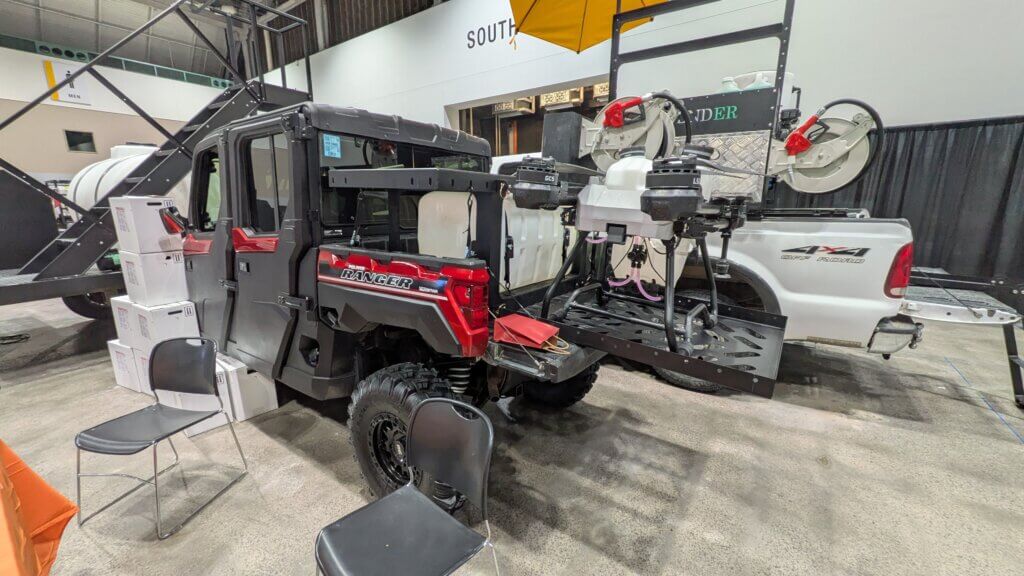
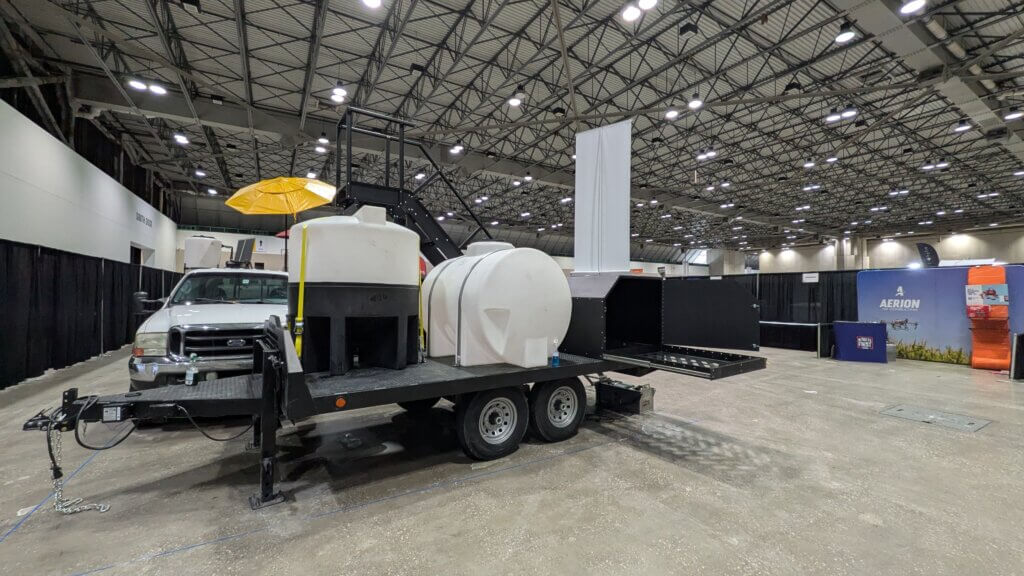
    For those just getting started, focus on affordability (lower initial investment) and simplicity (basic components). Examples include skid or truck builds, which are removeable or permanent systems that either rest on a vehicle bed or are built on-and-around the vehicle. This is an operator-friendly system that is small and portable for easy access to diverse fields. It’s the least durable configuration, and not particularly efficient or upgradeable, but it will serve until you know what you really need and how you like to work.

    Mid-level tender system: Second year

    By year two, you might want a larger and more efficient configuration with additional storage and a few creature comforts to reduce operator fatigue. A truck build might suit, but this is more likely a trailed system that is still capable of being towed by a mid-sized (1/2 to 3/4 tonne) truck. Some operators feel enclosing the trailer reduces efficiency, while others appreciate the security and protection afforded by defined spaces.

    A mid level system has some capacity for modification, but isn’t designed to support multiple drones, and likely won’t have enough capacity to store a day’s worth of water, chemical, or fuel. The operator may wish to detach the truck to run for supplies. Or perhaps it makes more sense to run a truck with a skid-mounted tender system that trails a second, mid-level system to divide-and-conquer, or scale up for larger projects.

    Beware going too big, too quickly. A 30-foot gooseneck can get caught on hilly terrain, where a 20-foot flat bed with a straight truck might be better suited. Small to mid-size trailers also take less time to set up and tear down. Consider performing site recon before dispatching a mid-level tender system. This is an additional step, but it allows the operator to scope out potential hazards and is ultimately more productive because it prevents tender systems getting stuck or placed in inefficient or unsafe locations. For example, if a client is “plant-out, pick-in”, the fields are hard to service because there’s no way to access them with large vehicles. Pilots become landscapers, spending valuable time clearing an operations area.

    High-level tender system: Large scale and Commercial interests

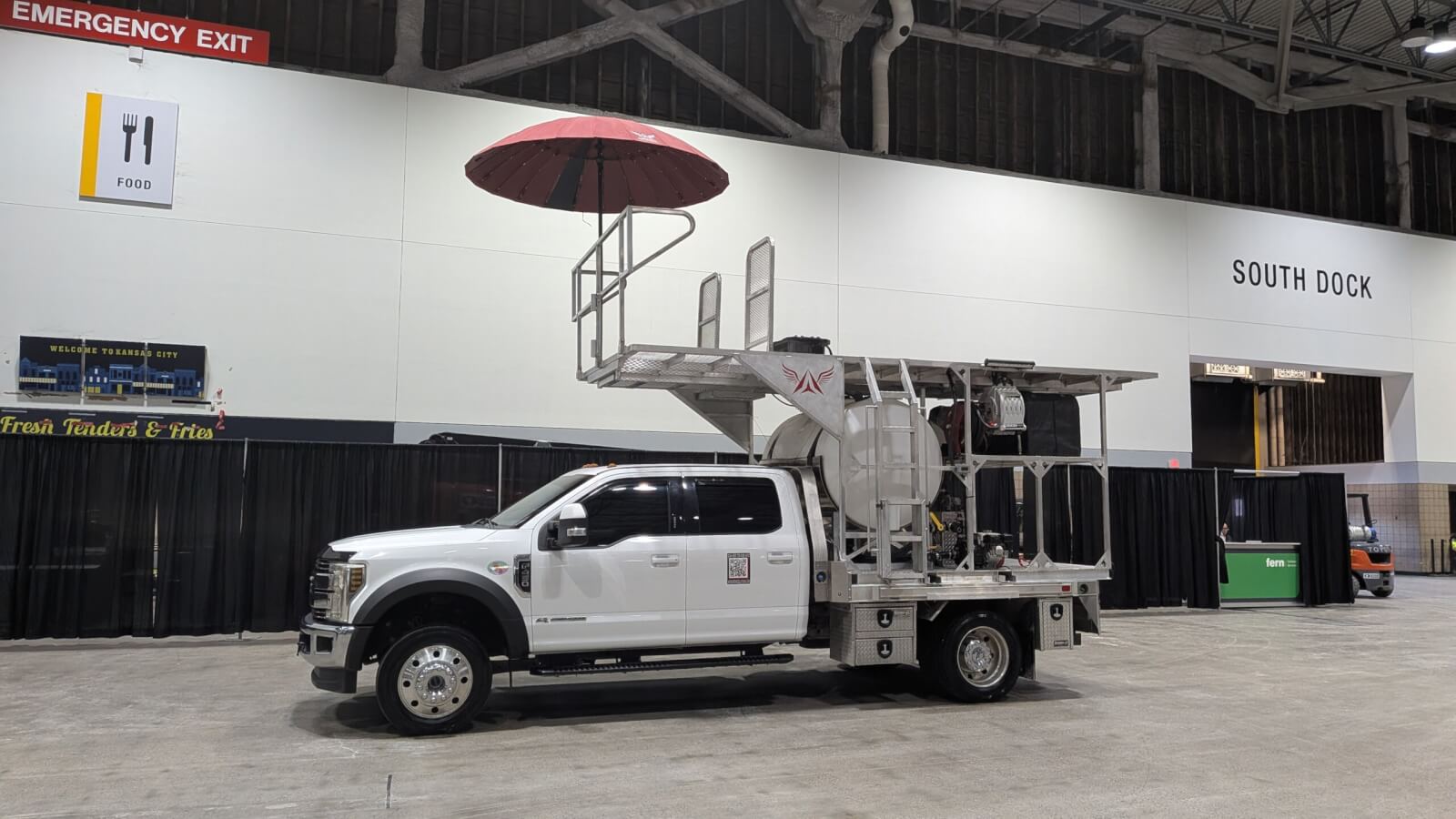
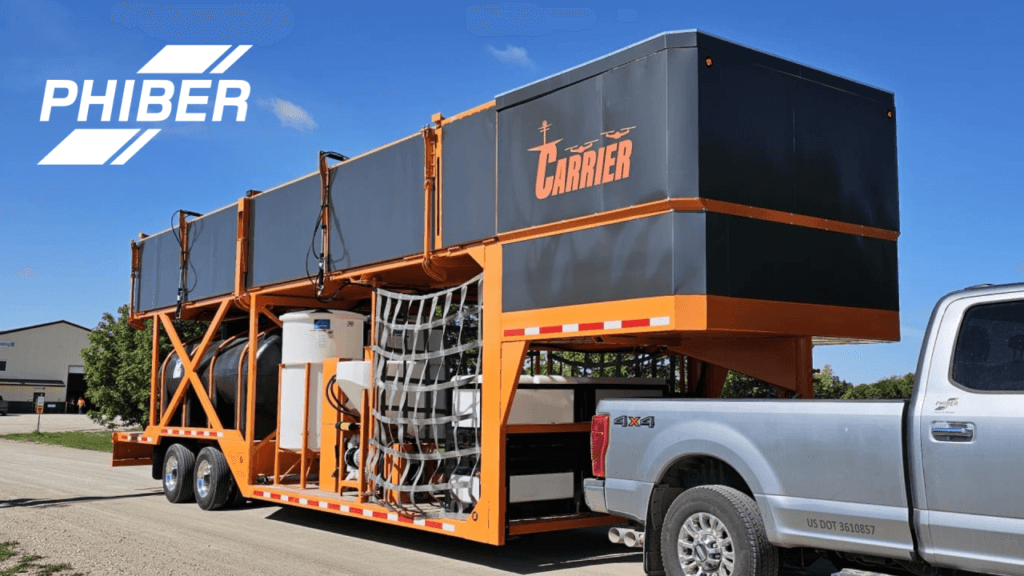
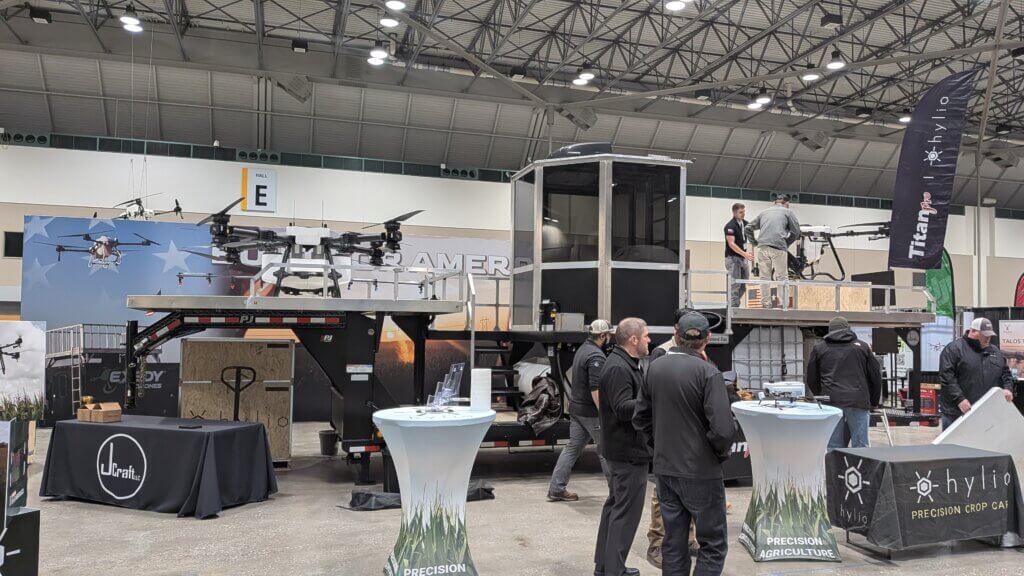
    Made for efficiency, the limiting factor of this system is the drone’s productivity. This category is comprised of the largest gooseneck trailers, which may include an upper deck and enclosed areas. It has the highest capacity for water storage, can service multiple drones and has ample storage. Intended for large fields, the size of this unit can make it physically incapable of reaching smaller fields, or prohibitively inefficient given the time required for setup and teardown. While a one tonne truck might be able to tow it, an even larger vehicle might be more suitable.

    Phiber’s DASH Carrier (image from website)

    Components

    Fundamentally, each tendering system has the same function, so they share the same basic components. Here’s an overview of common features and considerations.

    Trailer

    The trailer is (literally) the foundation of most tendering systems. Operators suggest building for your current budget but planning for future needs as best you can. Trailer size should reflect the nature of the farms you will be servicing and how best to access them. You should also consider the safest and most efficient workflow on and around the trailer before committing to a layout.

    Option 1 – Utility trailer

    AdvantagesDisadvantages
    Easy to get on/offLow ground clearance
    Less expensiveNarrow footprint for accessories (e.g. conventional tanks not fitting between wheel wells)
    Versatile (use for drones on season, and other tasks off season)Narrow if planning a top flight deck
    May be an insufficient trailer GVWR (Gross Vehicle Weight Rating). This is the maximum allowable total weight of a trailer when fully loaded.

    Option 2 – Flatbed gooseneck trailer

    AdvantagesDisadvantages
    More room for accessoriesMuch heavier. ¾ tonne truck likely not sufficient.
    Better ground clearanceHard to get into tight places (length dependent).
    Higher GVWRSet up / Tear down takes longer
    Potential for top flight deck. Typically, 102” wide, so top deck can be about the same.

    Option 3 – Enclosed trailer

    AdvantagesDisadvantages
    Protection from weather and elementsLimited clearance for large drones (e.g. 24’ long, 8.5’ wide)
    Increased security for equipmentHighest GVWR
    Could serve as mobile workspace / officeMost expensive
    Cleaner environment for charging batteries, and generators don’t need maintenance (e.g. filters changed) as often.Can get hot inside, both for people and battery overheating. Airflow on batteries is a necessity, and fans can only cool to ambient. Drone hasn’t got time to cool between fields.

    Vehicle

    Based on operator discussion, it seems many have a tendency to push their trucks to the limit… or beyond it. One operator uses a ¾ tonne truck to pull a 22-foot trailer with an upper deck. Another uses a 1 tonne (aka tonner) gas F350 which struggles to pull a 30-foot trailer. Others recommended the use of a single axle semi (e.g. a Kodiac or a Kenworth T300), which even used still has ample life left in it, and at ~15 to 17,000.00 USD is cheaper than buying a truck.

    Consider that if you run a two-person operation, you may want more than one vehicle. A smaller truck can be employed to run for parts or fuel, or as previously noted can be fitted with a skid mount and a 1,300 gal. poly tank to split up the duty.

    Tanks

    Tank size(s) will depend on how you choose to operate, how many acres you plan to do in a day, and the weight capacity of your truck and trailer. Again, there is no one solution, so consider the following scenarios before you commit.

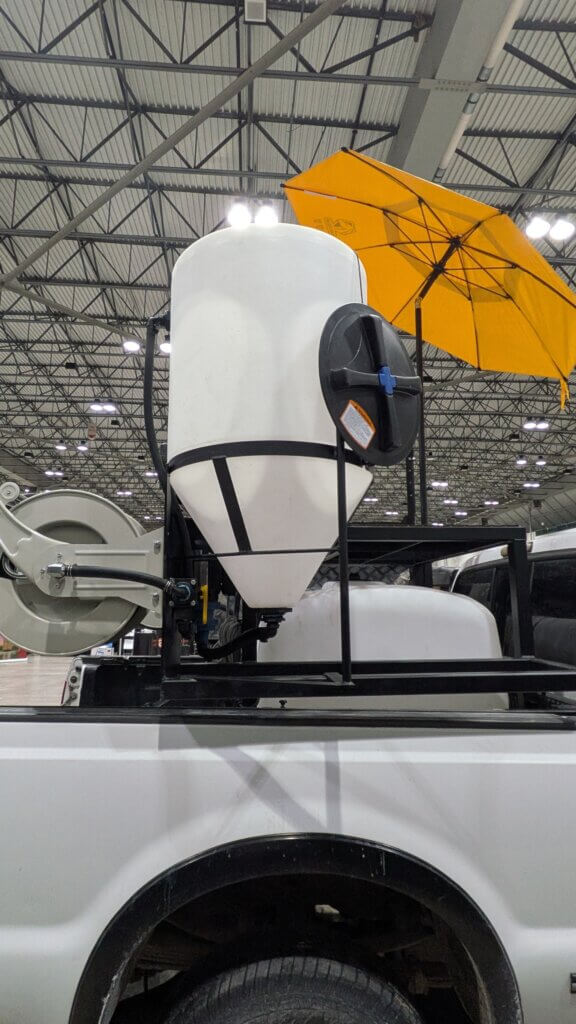
    If you plan to hot load, perhaps you’ll just mix in a single, large tank. However, if you plan to switch between insecticides, fungicides and herbicides, one or two 100-gallon cone-bottom tanks with wash-down nozzles might make more sense. Then, you can carry clean water separately in a few repurposed IBC’s or go for the efficiency of a single, high-volume poly or stainless tank. Consider the most flexible and efficient arrangement.

    Will you have access to water, will you have water tendered, or will you carry enough for the day? Will you fill from a 3-inch connector or suffer the lost time and fill with a garden hose? Will your truck and your trailer handle that weight, and will the vessel(s) fit between the wheel wells? Are the tanks black or shaded to prevent algae and do you have a plan to baffle the volume, so it doesn’t slosh when you drive over uneven terrain? Larger poly tanks (e.g. ~1,000-gallon tanks) have spots molded in to accept baffles, but some operators noted it’s difficult to install them after-market. Slosh suppressors such as floating balls or lengths of poly French drain can help.

    Pumps and Lines

    While some prefab trailers offer pneumatic pumps, most must choose between electric and gas pumps, and there are pros and cons to both.

    Electric PumpGas Pump
    Low noiseHigh noise
    No exhaustExhaust
    Taxes the generatorDoes not tax the generator
    No fuelRequires fuel
    Low maintenanceRegular maintance
    May limit head pressureAmple head pressure

    Gas-powered pumps (e.g. Drummond or Predator transfer pumps) are relatively cheap, but some claim they have a high failure rate. This not only incurs downtime, but operators must deal with the chemical in the pump and lines during repair.

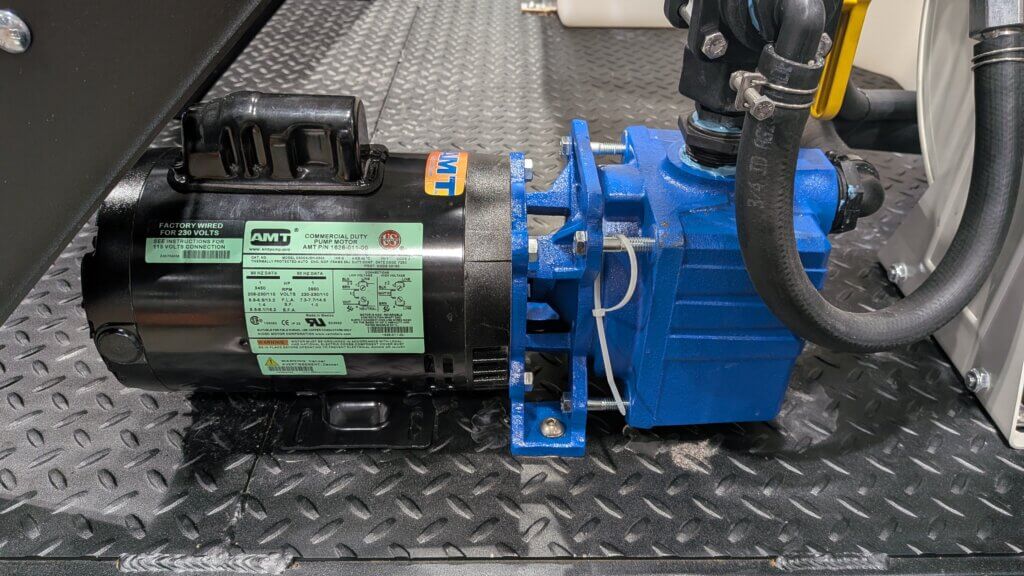
    Electric may be a better choice, if only to avoid the noise and exhaust, and some operators run them continuously to recirculate chemistry when not filling a drone. Consider the horsepower, gallons per hour and head pressure, especially if you are pushing flow to an upper flight deck.

    An AMT electric transfer pump on a mid-level tender system.

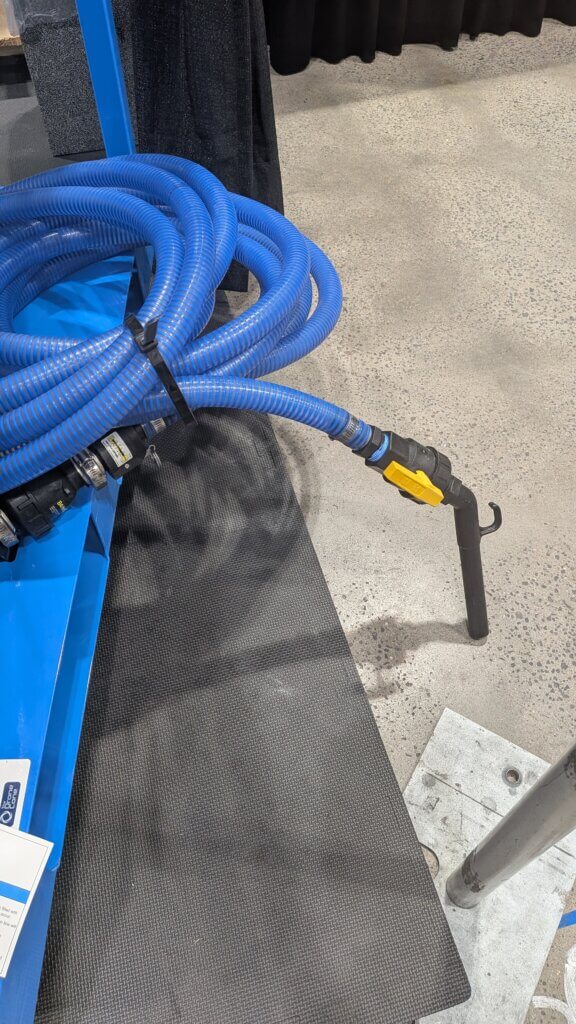
    You should be able to fill a drone in about a minute. Some operators have begun increasing fill line diameter from 1-inch to 1.5-inch but feel 2-inch lines are too heavy to warrant the few seconds saved during filling. This may not be a limitation, however, if they are part of a top flight deck arrangement, and not dragged along the ground.

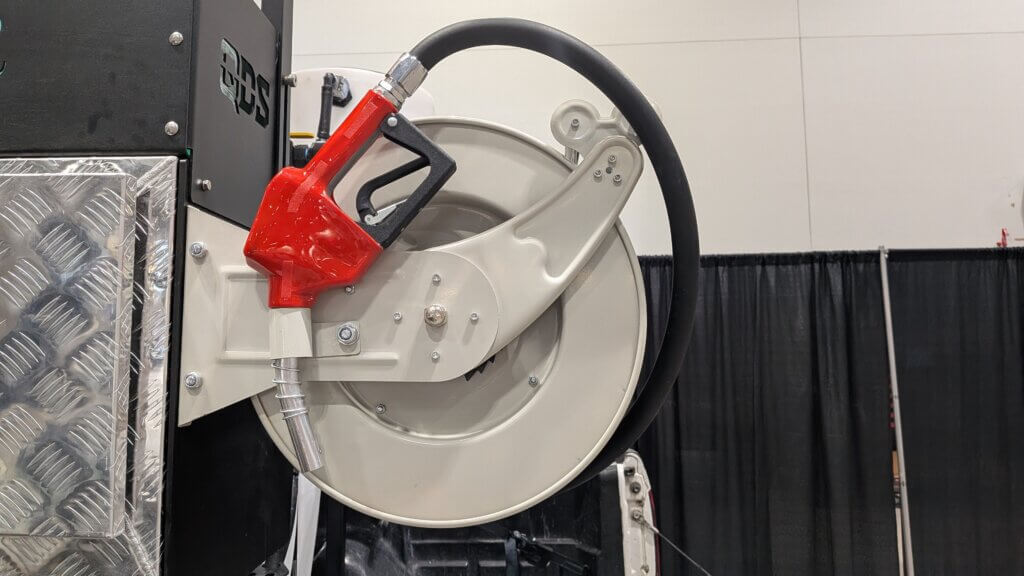
    The auto shutoff function of a fuel-pump-style filler is preferred over a quarter-turn-style. The former contributes to foaming but some operators say that can be mitigated by using an anti-foam adjuvant and it’s less likely to create an overflow situation.

    Perhaps a metered flow valve that shuts off once a predesignated volume has been dispensed would be a workable solution. This would preserve speed, but without foaming or potential overflows.

    A loose line terminating in a quarter-turn valve fills quickly and with few bubbles, but is ultimately not ideal. It’s prone to causing overflows which increase the potential for operator exposure and cause point source contamination.
    A reeled hose and a fuel-pump style filler is a better approach. The hose can be recoiled to keep it from being underfoot, and the filler has a back pressure valve that shuts off when the drone is full. There is greater potential for foaming, but some suggest anti-foam adjuvants can help.

    Generator

    This proved to be a controversial subject at the conference. Many operators were unwilling to promote a single make or model, but the discussion resulted in some general guidance based on personal experiences. Generators will have a peak and a continuous performance rating. Ensure the sum total of all your draws does net exceed the continuous rating.

    Drones are getting bigger, and the number of electrically powered devices on the trailer is increasing. Smaller operations tend to employ mobile gas generators that produce less than 10 kW. Larger operations reported using 30 kW (or more) diesel standby generators to charge two drones, plus accessories, while ensuring room for future growth.

    A mobile gas generator (inverter or not) tends to be the cheaper, lighter alternative, depending on the wattage. They are a good choice for entry level systems and with regular maintenance will last longer, but are still a short-term proposition. Diesel generators tend to be more expensive, but are quieter, more fuel efficient and more reliable. A liquid propane standby generator is yet another option; Generally cheaper than diesel, consideration must be given to the weight and size of what is typically a 250-gallon propane tank.

    A few points raised by operators during the discussion:

    • Most standby generators do not need diesel emission fluid, while mobile generators do.
    • Many operators prefer the durability of mobile generators over standby generators. The former is built to be moved while the later presents issues with brackets, mounts and stators.
    • Warranties are advisable for inversion generators, as they are not easily repaired.
    • Standby gas generators (10 kW continuous / 13 kW surge) may require you to downrate the battery charger, or the heat can trip the breakers. It is not advisable to bypass breakers.

    Storage

    Storage is often overlooked but can be critical to efficiency. For example, if you plan to spray six, 50-acre farms in a day and it takes 10 minutes for set up and 10 for tear down, that’s two hours gone. Consider what you’ll need and where you’ll need it, and place storage accordingly to minimize downtime. PPE should be located near your flight deck or filling area. You’ll also want to consider carrying spare parts, such as an electronic speed controller, motor, pump and a full set or rotors.

    Batteries

    Some battery chargers feature water baths, misters or air conditioning, but at bare minimum batteries should charge in the shade and in a ventilated area (e.g. not enclosed in a storage or tool box). One operator vented air from a commercial blower fan to the batteries on the top flight deck.

    Connectivity

    A hotspot on your cellphone doesn’t always provide reliable service. Satellite internet providers such as Starlink or Xplore (depending on your location) might be a solution. If the controller drops a direct signal to drone, it can bridge to satellite to connect to the SIM card in most drones. Operators that use this system advise it’s best to rent the hardware (if possible) so if something damages it, you get a free replacement. 100 gb of monthly roaming has proven more than enough for most operators.

    Mounting solutions vary, but operators noted good experiences with companies such as Veritas Vans, which have a replacement policy. They warn against 3D printed options that tend to be produced using unsuitable filament materials. Operators that use magnetic mounts on their trucks have reported no issues. Some run wire through rear window or sliding door, and others pull the headliner down and run the power cord out through the third brake light.

    Operator safety

    Lastly but certainly not least, when it comes to the cost-benefit assessment of tender features, safety should always be a priority. Even simple comforts such as folding chairs combat operator fatigue, increase safety and happily also improve overall productivity. We’re none of us getting any younger.

    RV awnings, umbrellas, foldable Bimini-style tops or flip-up doors provide shade. Switching to lower-decibel equipment (e.g. inverter gas generators run at about 90 decibels and electric pumps are even quieter), enclosing loud systems, or positioning them far from the filling area, reduce noise and emission exposure. Chemical drift and exposure during filling should be considered, and PPE should be used and stored in convenient locations.

    Trailers that feature an upper flight deck sometimes include a central cable to tether belt harnesses. Stationary railings can help prevent falls, while a fold-up version provides clearance when backing the trailer into a shed.

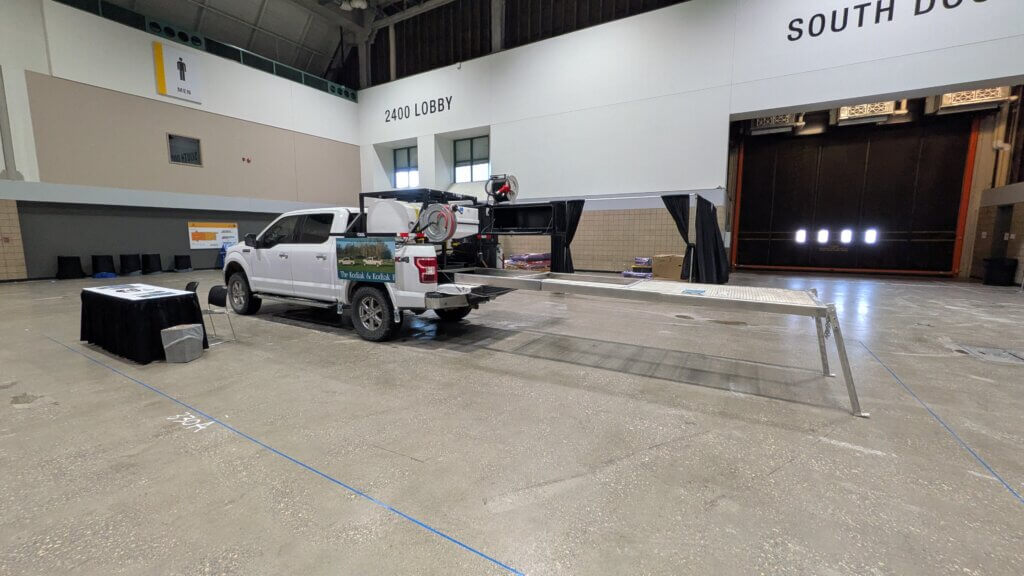
    The drones themselves are a hazard. Long flight decks keep landings and lift-offs at a safe distance, and a protected cockpit area improves matters. Decks with pull-out platforms or hydraulic wings can increase the operating area and can be adjusted to account for adjacent roads and the slope of the ground. A short rail around the landing area can prevent a drone from slipping off; A falling drone is expensive, but falling or sliding into an operator is a disaster. The simplest approach might be to operate on the ground.

    An enclosed area for operators on a two-platform gooseneck trailer.
    Kodiak’s retractable flight deck on their skid-mounted system

    Take home

    The speakers left the session with some summary advice.

    • Trailer first, equipment second.
    • Build for today and tomorrow.
    • Function over form (stability, balance and access over appearance, bearing in mind that if it is a business, it can’t look terrible, either).
    • Efficiency from day one. Run a stopwatch (when the crew isn’t watching). Find and change the limiting factor, if it’s changeable. The right trailer improves efficiency even before the first acre is sprayed.

    Thanks to the many speakers, attendees and trades people that contributed to this article. If you want to share pictures and specs for your tender system, let us know! If we get enough interest we’ll publish an article showcasing your tender systems so others can learn from your experience.

  • The Carvalho Boom and the Stages of Quadcopter Flight

    The Carvalho Boom and the Stages of Quadcopter Flight

    The Hypothesis

    The results of a recent herbicide deposition study performed with the DJI T100 led us to observe that after ~13 m/s, swath width and drift were no longer directly related to travel speed; They appeared unaffected. The result was completely unexpected as it was counter to several years of prior study with smaller drones. This led to a hypothesis that the aerodynamics of this new generation of quadcopters might be similar to that of a helicopter, and it was impacting spray deposition in a similar fashion.

    Let’s use the stages of quadcopter flight to set up the premise.

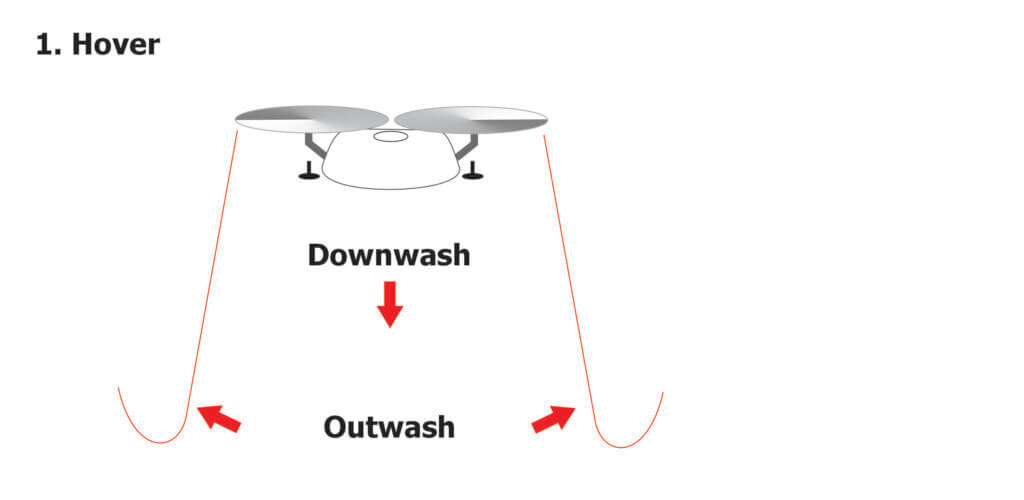
    1. Hover

    When a drone hovers, each rotor draws air from above and accelerates it downward in a high-velocity blast. The cumulative effect is a vertical component referred to as the “downwash” and the turbulent splash of air that hits the ground and spreads laterally is the “outwash”.

    The initial strength of the downwash depends on the degree of “disc loading” which is the weight of the drone divided by the rotor area. The intensity of the downwash wanes with distance from the rotor, spreading out in three dimensions until it impacts the ground and becomes the outwash.

    During hover, the drone recycles some of its downwash. This turbulence affects the stability of the drone, requiring a great deal of power to stay aloft, especially when it’s full.

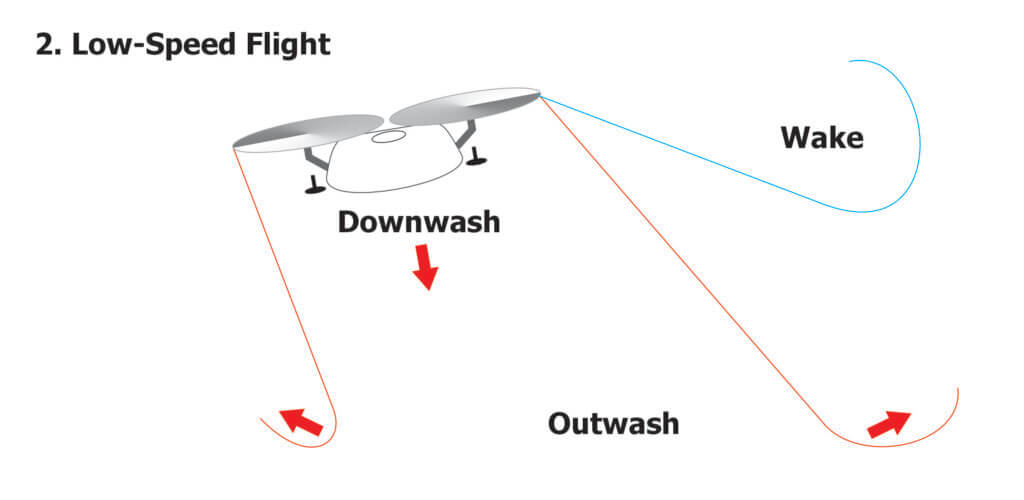
    2. Low-speed flight

    A helicopter achieves forward thrust by changing the pitch of its rotor blades. Most drones have fixed-pitch rotors, so the entire drone must tilt forward to enter low-speed flight. This causes the column of downwash to tilt backward.

    While the downwash is created by lift, “wake turbulence” is created at the tips of the rotors as high-pressure air beneath the rotor wraps around to the low-pressure area above. As the drone flies at low speed (~<3 m/s) the wake is visualized by a pair of counter-rotating, cylindrical vortices that trail behind. Some journal articles suggest the downwash for medium-sized drones (e.g. < 50 L capacity) detach from the ground at speeds as low as 3 m/s.

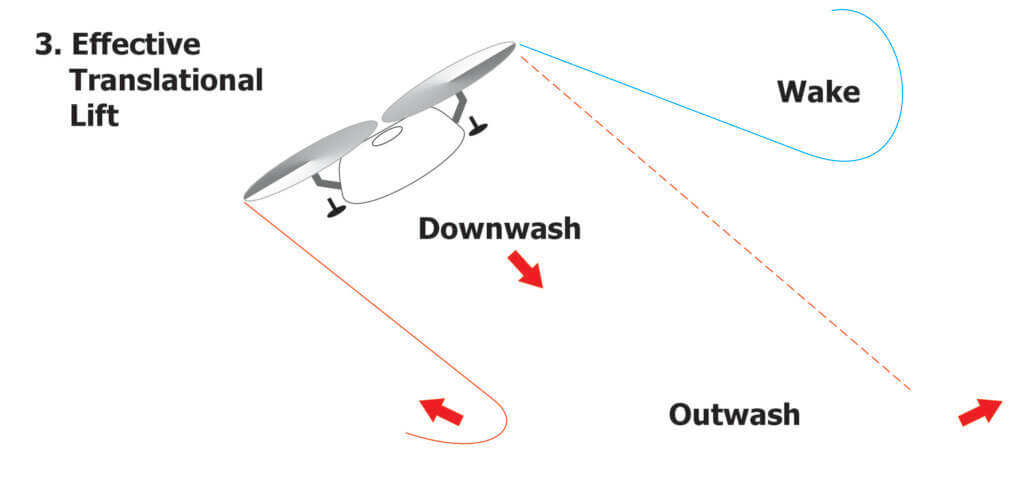
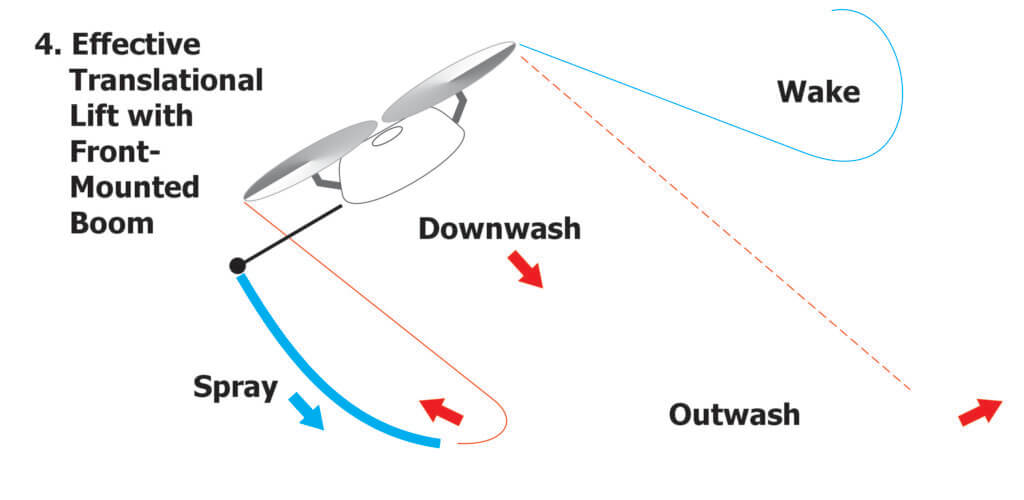
    3. Effective Translational Lift (EFT)

    As the drone accelerates it continues to angle forward, likely not exceeding 30°. At some point (~15 m/s?), we suggest it enters a state of “effective translational lift”, becoming more stable and therefore more energy efficient. This speed is notably slower than is commonly reported for a helicopter.

    During the transition, the drone behaves more like a wing as it essentially outruns its downwash, moving undisturbed air over the rotors. This horizontal air provides some lift, making flight more energy efficient, at least until drag begins to pull on the drone.

    The Possible Effect of Flight Stage on Spray Behaviour

    Droplets released beneath a drone at hover are completely entrained by the downwash. The majority get driven to the ground and then laterally along the outwash, while some small portion (likely smaller droplets) recirculate back up through the rotors.

    At low-speed flight, the downwash begins to tip backwards and the downwash trails behind and at some point detaches from the ground. Spray released beneath the drone is still entrained and will trail on a downward and rearward vector in that downwash. However, a portion will get caught in the wake. We can sometimes see this spray separation occur when lighting conditions are just right.

    As speed continues to increase, much of the spray would still be entrained in the downwash, but a greater portion would get caught in the wake, appearing as spray curling at the extremes of the swath. At some point, perhaps if and when the drone enters EFT, the the downwash might be less chaotic and behave more like laminar air. In which case some spray would still curl in the wake, but much of it would fall in a more stable sheet. Further increases in speed would not affect spray behaviour appreciably.

    Taking Advantage of ETL

    If this is the case, it is conceivable that rotary atomizers positioned under the front rotors could fling some droplets beyond the leading edge of the downwash. What if instead, it were a horizontal boom positioned out in front of the rotors, transecting the chord line?

    As the drone tipped forward during high-speed flight, so too would the boom, bringing it closer to the ground and releasing droplets ahead of, and below, the leading edge of the downwash. This should produce a more uniform swath, perhaps subsequently pushed down as the drone passed over.

    It’s an interesting idea that is only made possible when drones are capable of high-speed flight.

    Reception

    In January 2026 I presented this concept during a lecture at the 4th annual Drone End-User meeting in Kansas City. The response was polite, but skeptical. I then shopped the idea around the trade show floor where drone manufacturers suggested a front-mounted boom would interfere with obstacle avoidance sensors, or shift the centre of gravity, making the drone difficult to fly and to land. And what about the impact of wind speed and direction? All good points. Then, Nino Carvalho introduced himself.

    The Carvalho Boom

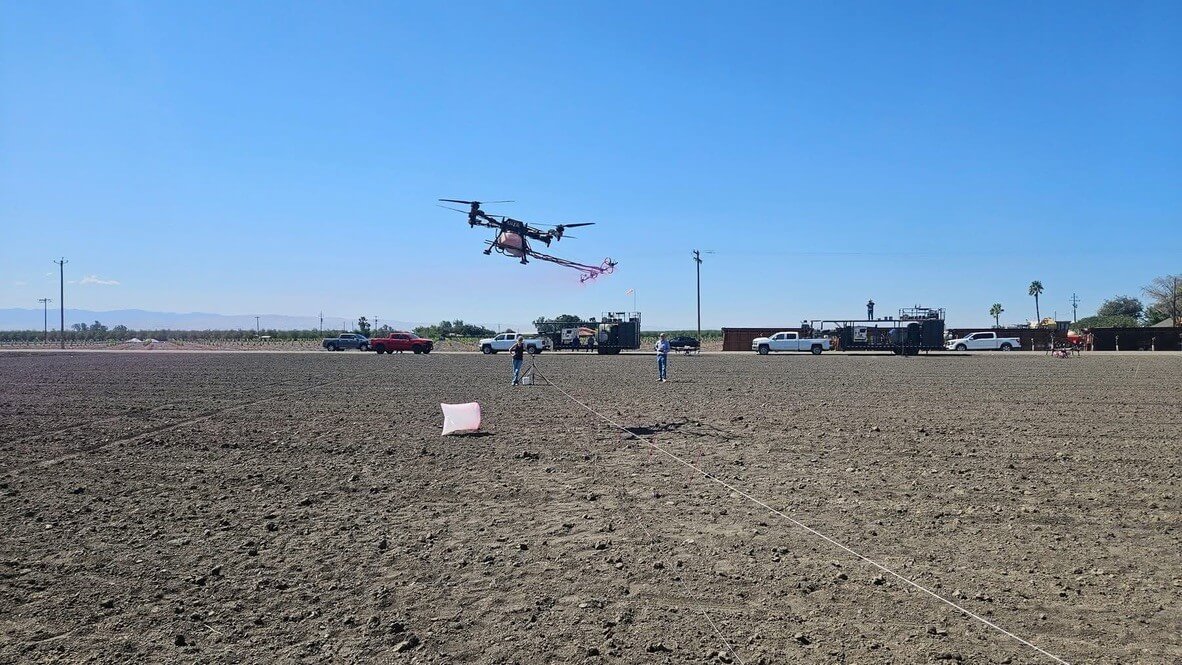
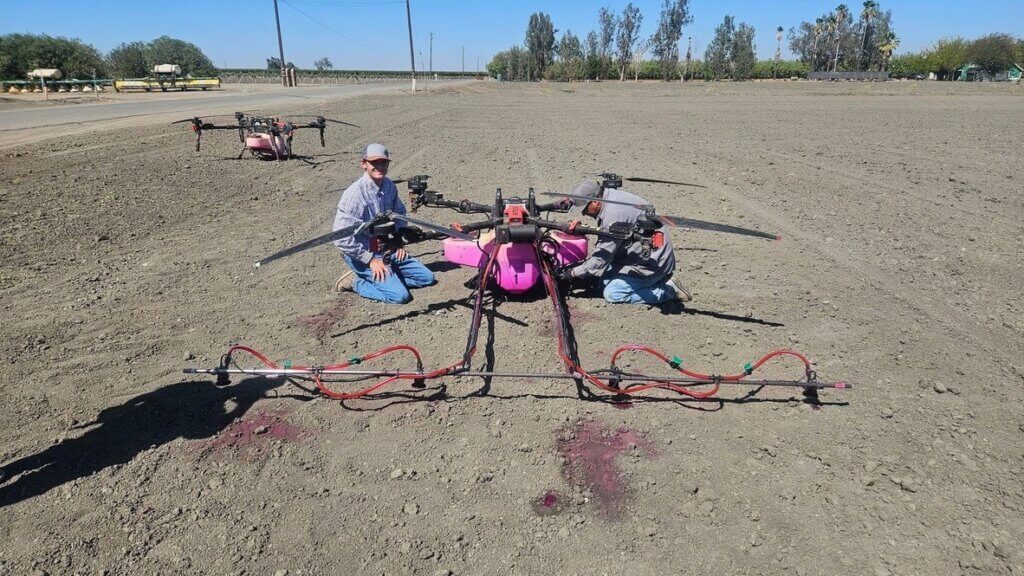
    Nino Carvalho and his son, Emilio, own and operate NC Ag Spraying in the Central Valley of California, USA. Emilio was inspired to modify his drone after discussing matters with his mentors; one who owns and operates a fixed wing aerial business, and another that pilots a Huey helicopter. In late 2025, they designed and built a horizontal boom which I’ve dubbed “The Carvalho Boom”.

    Their first attempt was with a DJI T50, but the boom mount interfered with the stacked rotors, and the atomizer cables were difficult to extend. The XAG P150 had fewer cables and only top-mounted rotors, so it was a better fit. After experimenting with various materials (PVC was too flimsy, steel too heavy) they mounted a length of ½ inch metal conduit directly under the drone.

    In California, aircraft booms must be limited to 90% of the rotor width (because of rotor tip vortices). The greatest span of the rotors was 312 cm (122.8 in), so they made the boom 275 cm (~9 ft) long. They spaced the rotary atomizers evenly along the boom every 69 cm (~ 2 ft 3 in), extended the original 30.5 cm (12 in) nozzle cables to 305 cm (10 ft) to reach their respective electronic speed controllers, and plumbed them using 1.25 cm (0.5 in) diameter tubing.

    They flew this first prototype over water sensitive papers. Dropping from a 3 m (10 ft) altitude to 2 m (6.6 ft) improved coverage uniformity and resulted in a 10.3 m (34 ft) effective swath width. They could see the downwash was interfering with deposition, and while increasing to a larger droplet size helped, it didn’t help enough. Then they made some design changes, extending the boom 30.5 cm (12 in) beyond the rotors, and they saw they had something. They reached out to Agri-Spray Consulting (Nebraska) and arranged to run a series of Operation S.A.F.E. fly-ins.

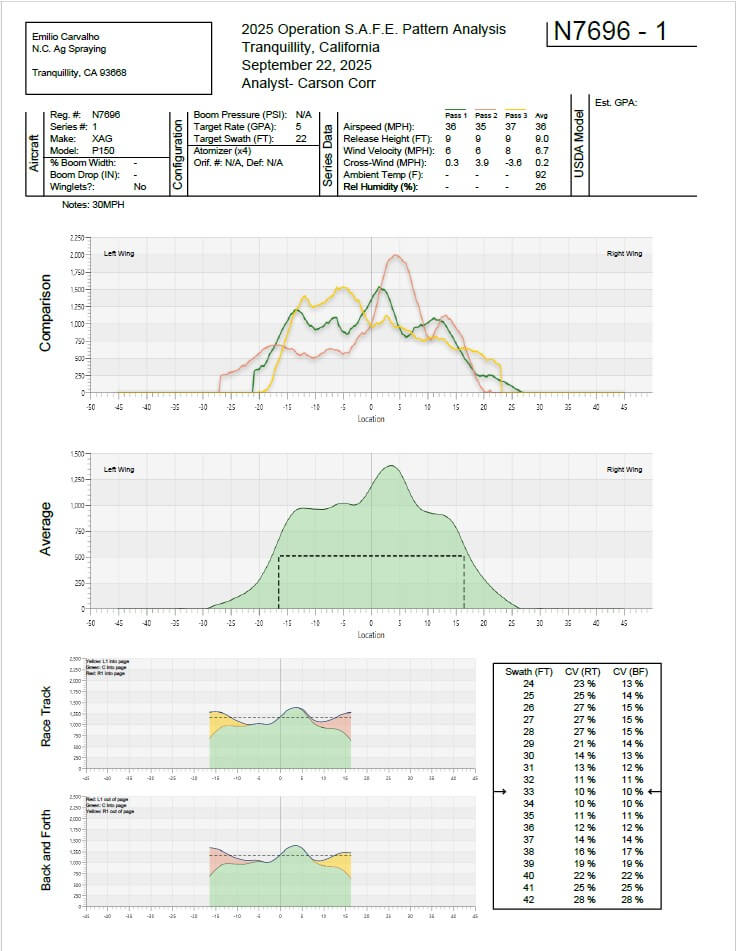
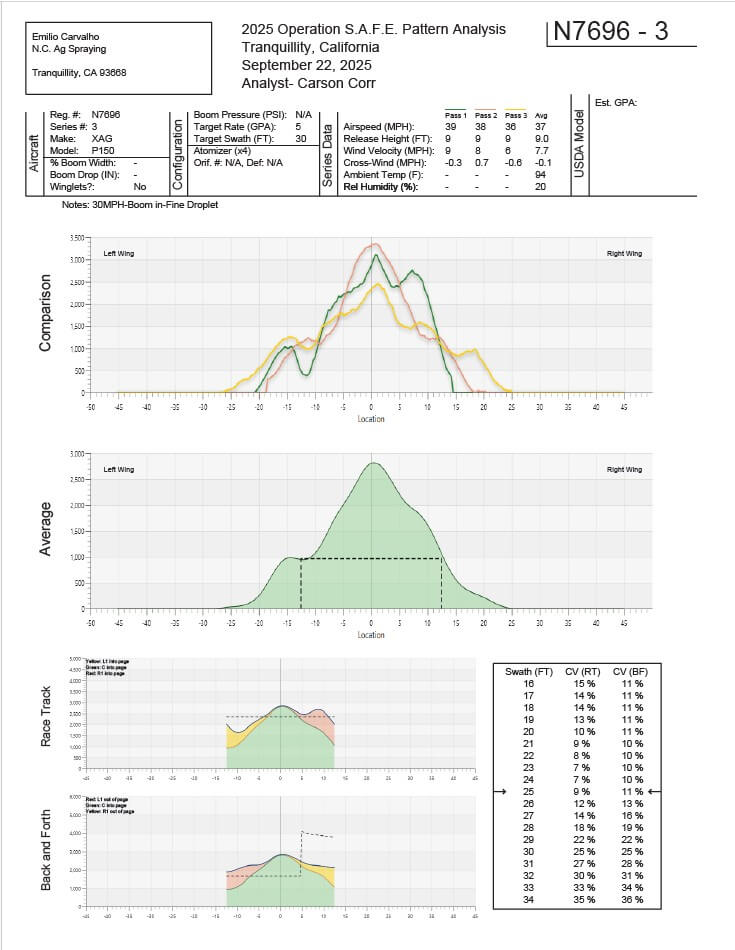
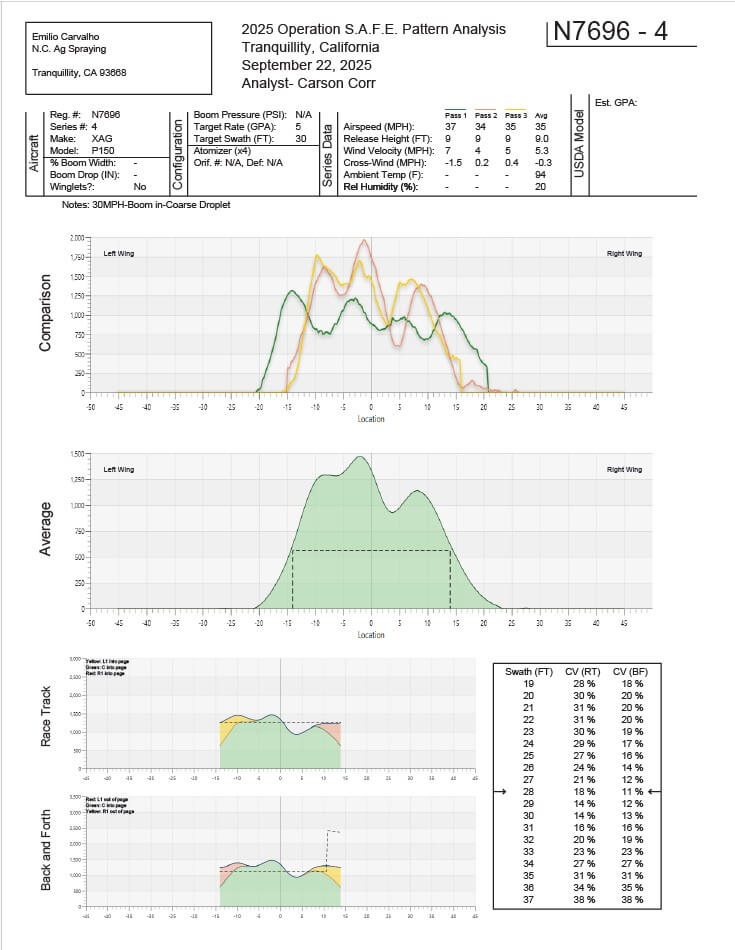
    There were more than 25 flights that day, so we’ll focus on three specific load-outs. The critical parameters are listed in the following table in the order that they flew them. The first load-out (N7696-01) was deemed the best, and was the only one with the boom extended out front, beyond the rotor tips. This information is italicized. The other two are included here for interest. N7696-03 attempted to shift the boom back under the drone for cosmetic reasons, but also for ease of transportation. N7696-04 was the same configuration as the last, but with coarser droplets in an attempt to battle the downwash. The first fly-in report (N7696-01) is shown below, but all three reports can be downloaded by clicking the links above.

    Load-OutBoom PositionVolume Speed Droplet Size (µm)Altitude Wind VelocityEffective Swath WidthC.V. (Race Track / Back & Forth)
    N7696-01Beyond Rotors50 L/ha
    (5 gpa)
    16 m/s
    (36 mph)
    2302.75 m
    (9 ft)
    10.7 kmh
    (6.7 mph)
    10 m
    (33 ft)
    10%/10%
    N7696-03Beneath Rotors50 L/ha
    (5 gpa)
    16.5 m/s
    (37 mph)
    2302.75 m
    (9 ft)
    12.5 kmh (7.7 mph)7.6 m
    (25 ft)
    9%/11%
    N7696-04Beneath Rotors50 L/ha
    (5 gpa)
    14.3 m/s
    (32 mph)
    4002.75 m
    (9 ft)
    8.5 kmh
    (5.3 mph)
    8.5 m
    (28 ft)
    18%/11%

    Observers said it looked like the swath was rolled with a paintbrush and that there were no observable vortices – just a sheet of spray. The following videos show some of the passes from that day. Actually, you can see vortices, but only in the passes where the boom is positioned beneath the rotors and not when it’s extended out front.

    A 10% CV is spectacular, and the profile of each pass (even before averaging) was far flatter than any drone deposition I’ve seen previously. This design has not yet been used for custom application because there are still questions about how flight speed and pump flow will affect performance. But, the Carvalhos are already discussing the next design, constructed with carbon fibre tubes.

    Impacts and Musings

    Perhaps our description of how the air is moving over the drone is correct, or perhaps it isn’t quite right. Dr. Fernando Kassis Carvalho (no relation to Nino and Emilio) (AgroEfetiva, Sao Paulo, Brazil) recently shared that he also observed swath width no longer changed at speeds exceeding 13 or 14 m/s (personal communication). So, whatever the aerodynamic cause, the result seems clear.

    Does this mean we’ll see a new generation of quadcopters with front mounted booms? It’s certainly possible, and kind of poetic as some early drone designs featured a centrally-mounted boom that extended beyond the rotor tips. Emilio wondered aloud about possible wear on the front motors, and likely there will be other issues as they experiment, but it’s early days and they’re enthusiastic about pursuing the design.

    Nozzle Design

    Should we also consider a return to hydraulic nozzles? The rotary atomizers on a drone currently leave a lot to be desired. Dr. Ulisses Antuniassi (Prof., Sao Paulo State University) studied the spray quality produced by rotary atomizers. He ran atomizers from a DJI T40 and from a XAG P60 in a wind tunnel spraying WG and SL formulations with either MSO or NIS adjuvants and found no logical trends in VMD, relative span or DV 0.1

    Further, work by Dr. Steven Fredericks (Land O’Lakes) showed that the rotary atomizer from a DJI T40 created droplets roughly one ASABE category smaller than the software indicated. Conversely, common knowledge is that the XAG P100 version produces a coarser spray quality than anticipated, and slow motion video produced by Mark Ledebuhr (Application Insight LLC) and Dr. Michael Reinke (Michigan State University) clearly showed the flooding issue reported by Dr. Andrew Hewitt (University of Queensland), where excessive flow to the disc interferes with its ability produce a uniform droplet size.

    I photographed no less than nine different rotary atomizer designs while at the End-User meeting. So, perhaps we should embrace a standardized design, or perhaps hydraulic nozzles should make a comeback. If the later, it would be a great opportunity to include PWM to increase their flow range.

    Acceleration and Flight Pattern

    And what of kinematics? A drone’s “acceleration time” is calculated by dividing the change in velocity by the acceleration rate. We’ve seen that a DJI T100 must travel up to 100 m before it reaches target velocity. Admittedly, it was full and attempting to fly at high speed. Kevin Falk (Corteva Agriscience) noted a 25 m acceleration distance and a 15 m deceleration distance for a T50 flying mostly-full at 6 m/s. That’s a not-insignificant distance to achieve target flight speed.

    What happens to the spray from a quadcopter drone with a front mounted boom as it transitions through the stages of flight? We don’t know for sure, but we can infer an inconsistent swath. Perhaps the prolonged acceleration time is sufficient reason for drones to start flying racetrack flight patterns like planes and helicopters, where they reach sufficient speed before passing over and spraying the target area. Current software does not allow that practice.

    All this to say that as drone design continues to evolve, we must continue to challenge and test assumptions surrounding best practices. It has been fascinating to see how spray drones are finding their place in Western crop protection systems.

    Acknowledgements

    Thanks to Mark Ledebuhr (Application Insight LLC), Dr. Michael Reinke (Michigan State University), Kevin Falk (Corteva Agriscience), Dr. Tom Wolf (Application Research & Training), Adrian Rivard (Drone Spray Canada), and Adam Pfeffer (Bayer Crop Science) for insightful discussions.

    Special thanks to Nino and Emilio Carvalho (NC Ag Spraying) for sharing their experience and practical approach to improving drone spray deposition.

    Additional Resource

    In early February, 2026, I gave a short interview with RealAgriculture. We discussed the state of spray application by drone in Canada as well as some of the possible impacts of higher speeds.

  • RPAS Swathing in Broad Acre Crop Canopies

    RPAS Swathing in Broad Acre Crop Canopies

    This work was performed with contributions from Adrian Rivard (Drone Spray Canada) and Adam Pfeffer (Bayer Crop Science – funding partner). Dr. Tom Wolf is gratefully acknowledged for his editorial support and assistance interpreting the results.

    Introduction

    This research is part of a continuing effort to identify best practices for broad acre crop protection using remote piloted aerial systems (RPAS). Previous work in wheat, corn and soybean has provided insight into how RPAS operational settings and environmental factors affect drift potential, effective swath width and spray coverage. This information, paired with advancements in RPAS design, has helped operators to improve spray deposit accuracy.

    However, RPAS still produce what has traditionally been considered poor (or at least sporadic) broad acre coverage. Many studies have illustrated these shortcomings using herbicides or fluorescent tracers. Contributing factors include inappropriate operational settings, low application volumes (20-50 L/ha) paired with coarser spray qualities, and inaccurate swath widths. In light of these issues, we struggle to reconcile claims of acceptable disease control, which is arguably the greatest challenge in a spray-based crop protection paradigm.

    Tar Spot

    One real-world example of intermittent disease control from aerial applications (not just RPAS) is the case of tar spot in corn. Tar spot is a fungal disease caused by Phyllachora maydis and it is becoming a significant economic concern in Ontario. Left unchecked the disease causes rapid, premature leaf senescence. This reduces photosynthetic capacity, and ultimately, yield. Depending on spray timing, crop variety, environmental stressors, and the product applied, protection should last for up to three weeks.

    In the last few years there have been several reports (both in Ontario and in corn-producing US states) of tar spot “striping” following aerial sprays. Crops seem well protected directly beneath the flight path (green and healthy), but efficacy tapers to failure towards the edges of the swath (brown and desiccated). Fundamentally, this is likely due to inadequate spray coverage caused by an overestimation of the effective swath width.

    Figure 1 Tar spot striping in Western Illinois following two applications from a fixed wing sprayer (2023).
    Figure 2 Tar spot striping from RPAS volume trials. A brown strip can be seen between two passes in each RPAS treatment of 30 and 50 L/ha. The top is an application by a 100 foot horizontal boom. Each treatment is separated by an unsprayed check. (2023).
    Figure 3 – Tar spot striping in Ontario corn following fungicide application by helicopter (2024).

    Effective Swath Width (ESW)

    The measured swath width presents the lowest variability (as indicated by the coefficient of variability, CV) while minimizing the degree of over- and under-dosing. As a matter of operational productivity, wider swaths mean wider route spacing, which is attractive because it means fewer passes and faster applications. Once the agronomics are considered, the effective swath width is that portion of the swath that gives the desired biological result. It may equal, or only be a fraction of, the measured swath width. It is plausible that inappropriate effective swath widths from aerial applications are common, but have not always been detected, because:

    • Generally, fungicides are weakly systemic and give modest yield increases from disease suppression and their “stay green” properties. Until tar spot, a sub lethal dose of fungicide did not lead to rapid and acute crop failure.
    • Most growers do not intentionally leave unsprayed checks, or the check locations do not coincide with disease presence.
    • The applied product rate is sufficiently high to cover regions of under-application.
    • Taken together, deficiencies are often too subtle for passive detection.

    This is not to suggest that pilots intentionally inflate swath widths. Swaths are evaluated during fly-in calibration sessions using established protocols (e.g., Operation S.A.F.E.), and RPAS swath evaluation has emulated these practices. Calibrations take place on bare ground or stubble/grass using two-dimensional samplers (i.e., continuous samplers like string or bond paper, or discreet samplers like water sensitive paper). However, this protocol does not account for any physical interference from the crop canopy itself. This may have negative implications, particularly given the unique nature of the RPAS swath.

    RPAS tend to produce swaths with a very narrow span and a steep profile. To a certain extent, their swath widths share a direct relationship with altitude and headwind speed, and coarser sprays result in narrower swaths (with Dr. Michael Reinke, MSU). The outer edges of the RPAS swath represent the least amount of spray volume along the width, and this coincides with the turbulent dispersion zone of the downwash. Therefore, those extremes should contain a higher proportion of low-energy droplets moving in multiple directions relative the centre of the swath.
    While crop morphology and planting architecture are contributing factors (i.e. part of the agronomic use case), it is generally accepted that the degree of spray penetration falls off exponentially with canopy depth. It follows that this should also be the case for any lateral movement, resulting in a significantly shorter swath in-canopy versus on bare ground.
    Materials and Methods

    Spray Sampling

    Spray deposition was sampled using a 15.8 m (52 ft) Speed Track (Application Insight LLC) loaded with 3-inch bond paper (Staples Canada). The spray mix was 0.3% v/v FD&C Blue #1 Liquid. Bond papers were analyzed using a Swath Gobbler (2nd gen software – Application Insight LLC) at 100 mm sampling rate (i.e., ~150 discreet images per sample). Hue: 32-180. Saturation 17-60. Value: 156-255.

    The Swath Gobbler produces a complete, correlated and ordered record of the cross-section of a swath. For each discreet image, it reports the number of individual droplet stains on the sampler per area. It also reports percent area covered by measuring the total number of pixels with dye divided the total number of pixels in the image.

    The device deliberately does not calculate a Droplet Size Distribution (DSD) of the stains. This is because any DSD calculated from paper collectors relies on assumptions that cannot be validated, such as the fact that all droplets are captured and detected, spread factors are known for that application condition and similar for all stain sizes, there are no multiple hits, etc.

    RPAS

    The sprayer was a DJI T40, calibrated according to the pilot’s standard operating procedure (Drone Spray Canada). Certain operational settings varied with treatment and will be detailed later in this section.

    The flight path was perpendicular to the sampler, aligned with the centre using pin flags as references for the pilot. Spraying began approximately 20 m prior to the sampler to ensure the RPAS was at target speed and continued some 20 m past the sampler.

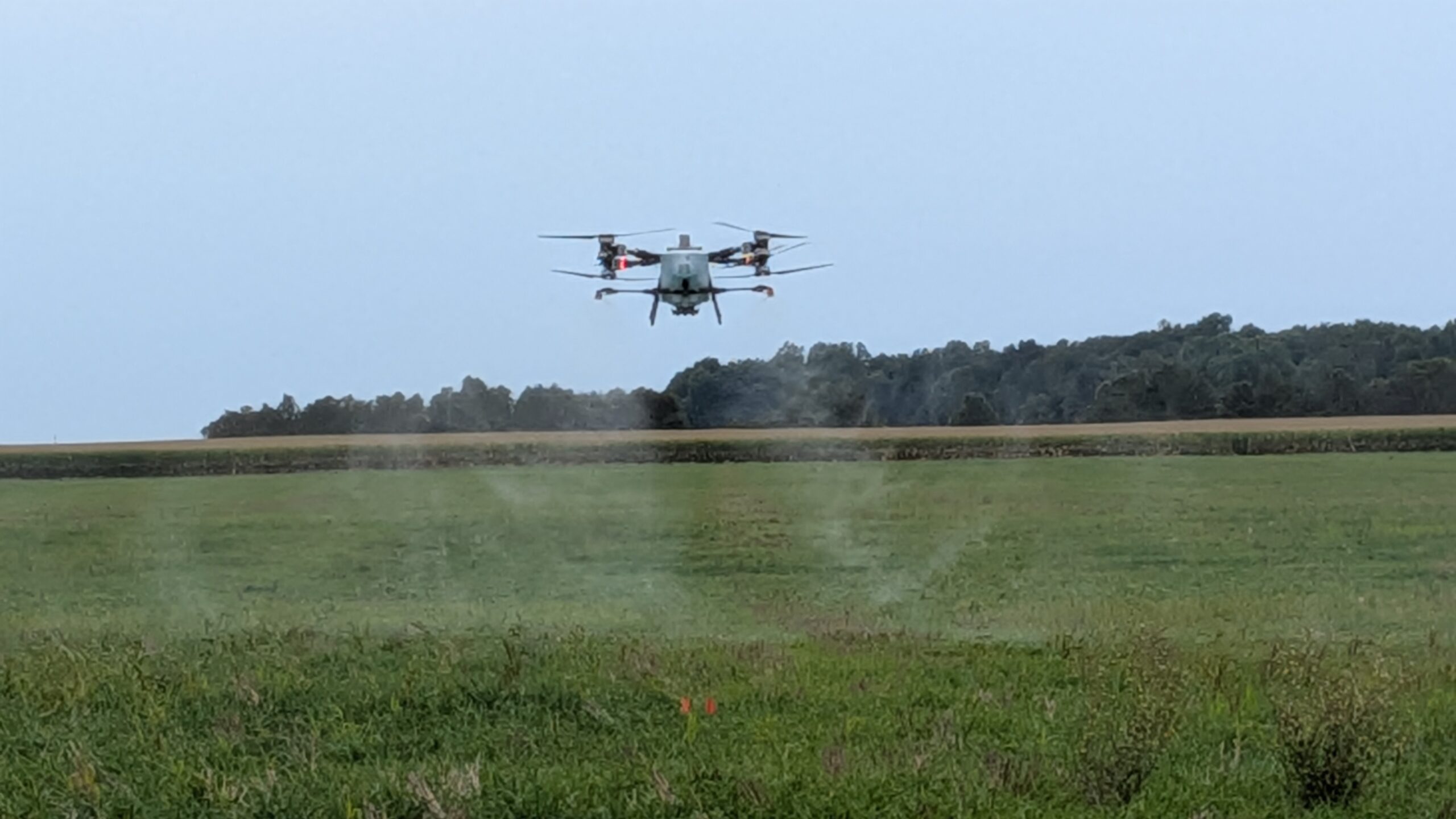
    Figure 4. DJI T40 approaching sampler on bare ground. Sampler was later moved into the adjacent wheat field (left).

    Defining Coverage

    Swath width will be calculated from two different coverage metrics.

    Percent Area Covered describes the amount of surface area covered by deposit. Given the variable degree of stain diameter (a function of sampler material, spray mix, and droplet velocity) this value can only be used as a relative index (i.e., can only be compared to itself). No conclusions can be drawn about how spray interacts with plant tissue, but generally more coverage correlates to improved crop protection.

    Deposit Density describes the number of individual droplet stains on the sampler per area. Higher densities can imply more uniform distribution over the plant surface, which is particularly important for contact materials.

    Previous studies (with Dr. Tom Wolf, Agrimetrix Research and Training, data not shown) indicate a higher correlation between deposit density and swath width at lower versus higher spray volumes. Lower volumes are typically comprised of finer droplets, which are more accurately resolved using deposit counts. Swath widths determined by deposit density also tend to be longer than those determined using percent coverage, better aligning with real-world observations of efficacy.

    Wheat

    R40 wheat was planted on October 9th, 2023, at 808,000 seeds/ha (2 million seeds/ac). Wheat height at the time of the trial was 60 cm (25 in). The location was 45180 Fruit Ridge Line, St. Thomas, Ontario. Deposition trials took place on May 23rd. Wheat stubble swath testing also took place at this location on May 15th.

    The RPAS was programmed to apply 50 L/ha using a 260 µm droplet diameter according to the DJI software. Air speed was 5 m/s and the flow rate was 11-12 L/min as it passed over the sampler. Swath was programmed at 8 m.

    Coverage was evaluated for water (control) and for a spray mix containing 0.15% v/v Interlock (a drift mitigating adjuvant – Winfield United) and 0.15% v/v Interlock + 0.125% v/v Activate Plus (a spreader adjuvant – Winfield United). For bare ground, each treatment had three passes (n=3) except for water, which had four (n=4).

    The wheat canopy was only sprayed with water three times (n=3). Limited passes were made because it served as a proof of principle. Any indication of relevant differences in the swath width would justify later trials in corn and soybean. These first passes revealed issues with the experimental design that were later corrected:

    • The RPAS spray tank level was not held constant. The RPAS weight affects the intensity of the downwash. The volume dropped from 30 L to ~20 L over the course of the experiment. In future trials, a tank volume of 20 L was maintained from a premixed source.
    • The wind direction occasionally shifted from a direct headwind to a partial cross wind from the RPAS’s right. In future experiments, we waited for an optimal wind direction before starting each pass.
    • The RPAS altitude was set to 3 m above bare ground. We assumed it would climb to account for the height of the wheat, but the canopy did not register with the RPAS sensors. As a result, spray was released ~60 cm closer to the wheat heads than to the ground in bare ground swathing. In future experiments, we confirmed that the RPAS was 3 m from the top of the crop canopy.
    • Despite best efforts, moving the sampler into the wheat parted and distorted the canopy. As a result, the sampler was not as obscured as it should have been. We developed strategies to minimize canopy distortion in corn and soybean that will be described later.
    Figure 5. Top-down view of sampler in wheat canopy. Note that the canopy did not close over the sampler as intended.

    Corn

    Corn was planted on May 15th, 2024, at 13,300 seeds/ha (33,000 seeds/ac). The sampler was erected in the field on July 3 to allow the canopy to grow up and around it. Deposition trials took place on July 26 and every effort was made to leave the canopy undisturbed around the sampler. Corn measured 2.4 m (9 ft) at the tassel and 1.2 m (4 ft) at the silks. The sampler height corresponded to the ears. The location was 42°40’52.1″N 81°04’45.9″W near 5277 Quaker Road, Sparta, Ontario.

    Figure 6 Sampler erected to 4 ft. Crop grew around the sampler to minimize any canopy disturbance.
    Figure 7 Sampler position relative to ears during sampling.
    Figure 8 Installing Speed Track for swath testing in wheat stubble.

    Soybean

    Soybean was planted on June 30th, 2024, at 80,800 seeds/ha (200,000 seeds/ac) on 38 cm (15 in) centres. Deposition trials took place the morning of August 14. While the densest area was selected for the trials, the field was patchy with crop height spanning 20-25 cm (8-14 in). Each section of the Speed Track was inserted under the canopy separately to avoid disturbing or damaging the plants. The track was elevated ~10 cm off the ground. The location was at 42°46’50.4″N 81°08’20.8″W near 43900 Talbot Line, Central Elgin, Ontario.

    Figure 9 Sampler in soybean.

    Corn and Soybean Treatments

    The following treatments were repeated three times in-canopy (n=3) (Table 1). The actual flow rate (recorded as the RPAS passed over the sampler) was always ~1.5 L/min less than programmed.

    Treatment #Droplet Diameter (µm)Programmed Swath (m)Volume (L/ha)Rate (L/min)Flight Speed (m/s)Spray Mix
    1320102010.510water
    232083010.58.3water
    332085010.55water
    43208305.75water
    550085010.55water
    63208505.750.5% Masterlock
    732083010.58.30.5% Masterlock
    Table 1 RPAS operational settings for corn and soybean treatments

    The following treatments were repeated three times on wheat stubble (n=3) (Table 2). Once again, the actual flow rate (recorded as the RPAS passed over the sampler) was always ~1.5 L/min less than programmed.

    Treatment #Droplet Diameter (µm)Programmed Swath (m)Volume (L/ha)Rate (L/min)Flight Speed (m/s)Spray Mix
    1320102010.510water
    232083010.58.3water
    332085010.55water
    43208305.75water
    Table 2 RPAS operational settings for wheat stubble treatments

    Weather Data

    The RPAS flight path was into the prevailing wind, but minor variations occurred throughout sampling. Weather was recorded as the RPAS passed over the sampler using a Kestrel 3550AG weather meter in a vane mount positioned on a tripod 2 m above ground (Table 3).

    TerrainWind Speed (km/h)Direction Relative to Flight PathTemperature (°C)Cloud Cover (%)RH (%)
    Bare Ground3-5Headwind +/- 25° from starboard20-21060
    Wheat Canopy5-7Headwind +/- 25° from starboard21-22060
    Corn Canopy2-4Headwind +/- 15° from starboard23-26<1075
    Wheat Stubble4-7Headwind +/- 15° from starboard26-28<1065
    Soybean3-4Headwind +/- 15° from starboard22055
    Table 3 Average weather conditions during trials.

    Results

    Raw Coverage Expressed as Percent Coverage or Deposit Density

    Coverage can be presented as raw data plotted by swath position. This is a qualitative means for assessing the swath. The bare ground data has been presented (using both coverage metrics) as an example (Figures 10 and 11).

    Figure 10 Swath coverage data for water on bare ground expressed as percent area covered. All four passes are plotted.
    Figure 11 Swath coverage data for water on bare ground expressed as deposit density. All four passes are plotted.

    Repetitions were similar enough to imply that environmental conditions were consistent during sampling. By averaging the repetitions, coverage in-canopy can be more easily compared to that on bare ground Figures 12 and 13).

    Figure 12 Average swath coverage data expressed as percent area covered. Bare ground (n=10). Wheat canopy (n=3).
    Figure 13 Average swath coverage data expressed as deposit density. Bare ground (n=10). Wheat canopy (n=3).

    The magnitude of coverage on bare ground exceeded that in-canopy, tapering to similitude and near-zero at the edges of the pattern. It can therefore be concluded that the entire swath was captured, and that spray was filtered by the canopy before reaching the sampler within.

    The difference between bare ground and the wheat canopy was greater when the data were presented as percent area versus deposit density. Differences in the number of deposits from finer sprays were more accurately resolved using deposit density than percent coverage. Since it can be expected that smaller droplets penetrate a canopy better than coarser droplets, it may be more appropriate to use deposit density to document their presence. We also saw indications of wider swaths when data were presented as deposit density, as well as a bimodal distribution that reflected the positions of the two rotary atomizers.

    While informative, this raw coverage format did not allow empirical comparisons. Each pass must be converted to a swath width.

    Converting to Swath Width

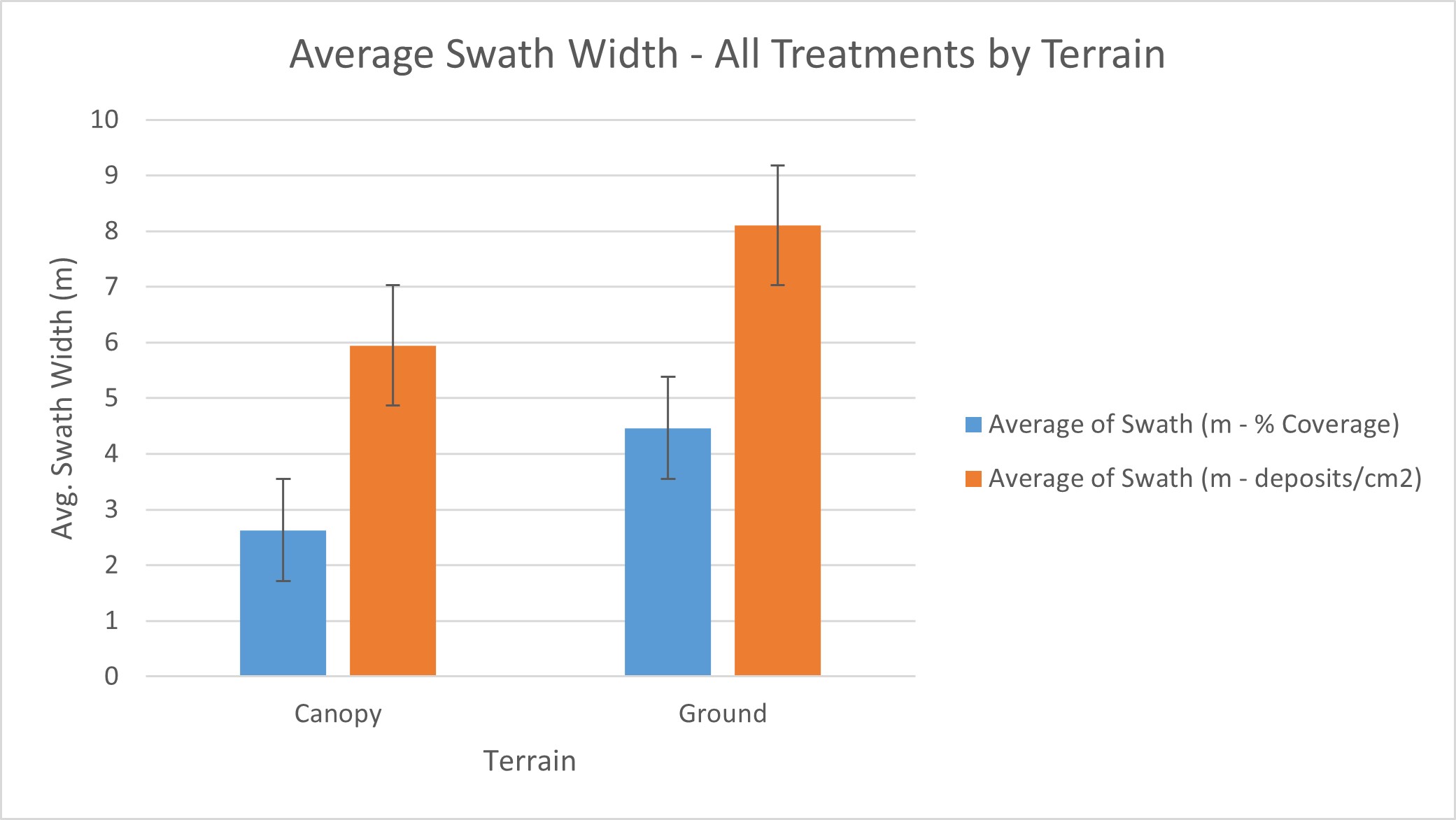
    Each pass was transformed by averaging Swath Gobbler data to a single value every 0.5 m. Data were then entered into the www.sprayers101.com swath width calculator and the SW was manually determined for each pass. Criteria was the lowest overdose, lowest underdose and lowest CV for an idealized threshold coverage of 90% that of the highest value in the swath. In the following histogram, the SW from all treatments have been averaged for ground and canopy terrains (Figure 14).

    There was a significant reduction in swath width in a wheat canopy compared to stubble or bare ground. There was a 41.2% reduction in swath width in a canopy when measured as percent area covered and a 26.6% reduction when expressed as deposit density. As previously stated, deposit density better reflects the contribution of finer deposits, which tend to penetrate deepest into crop canopies.

    Figure 14 Average effective swath width for all treatments on all terrains. Swaths expressed from both percent coverage and deposit density metrics. Standard error bars presented. Canopy (n=45). Ground (n=22).

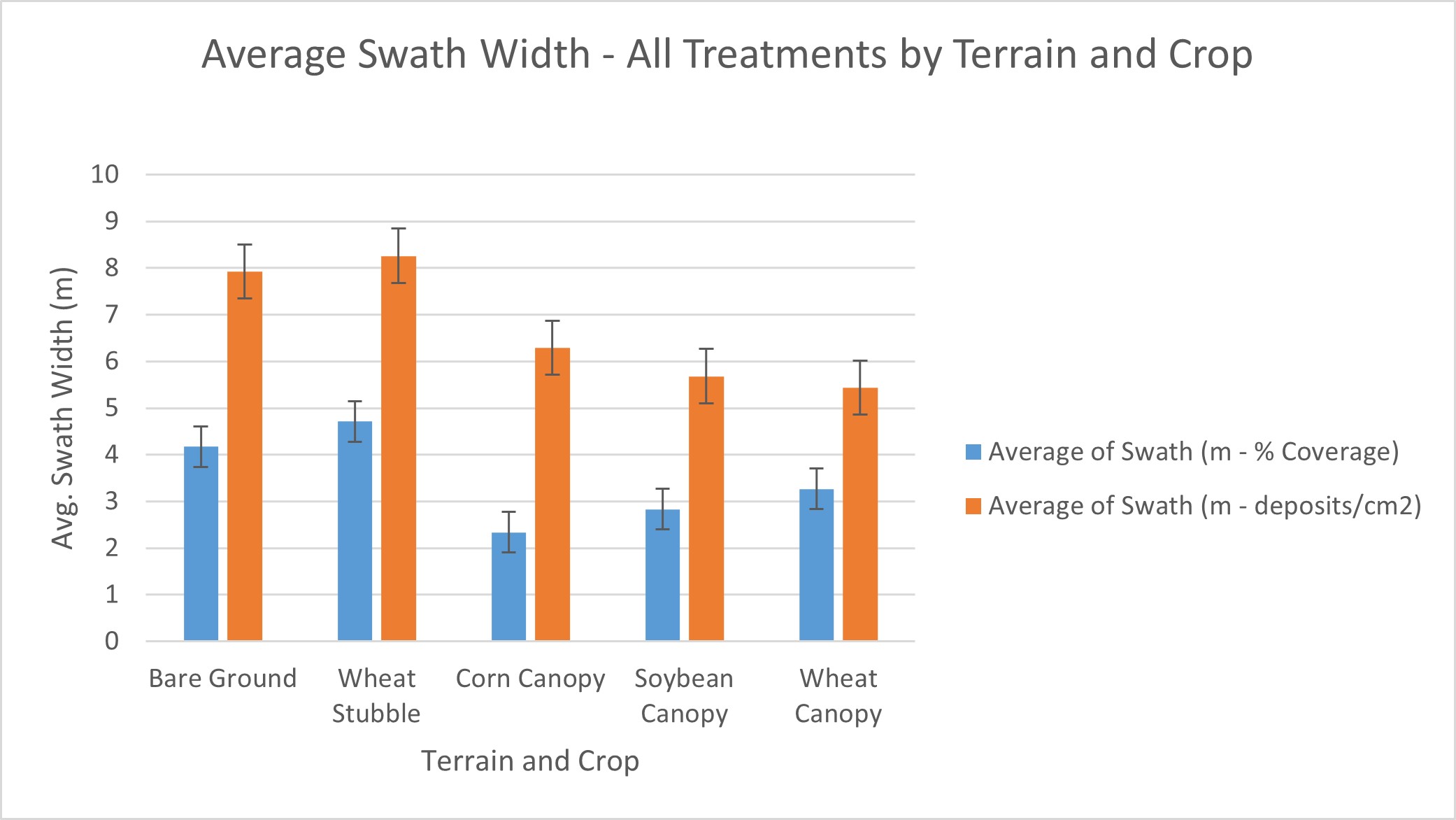
    When the data is considered by terrain and by crop, we see that swathing on bare ground or in wheat stubble doesn’t have a significant impact. This justifies combining those data as “Ground” in subsequent analyses.

    Another observation that supports the use of deposit densities is the difference between the intended (i.e., programmed) swath width and the detected swath width on ground (Figure 15). The SW on ground was closer to the intended 8 or 10 m swath width when expressed as deposit density. It was approximately half the desired width when expressed as percent coverage, which is considerably less than common practice.

    Figure 15 Average effective swath width for each crop and terrain. Swaths expressed from both percent coverage and deposit density metrics. Standard error bars presented. Ground 8 m swath (n=19). Ground 10 m swath (n=3). Canopy 8 m swath (n=39). Canopy 10 m swath (n=6).

    Canopy Effect

    By percent area, corn had the biggest reduction in swath width compared to bare ground, then soybean, then wheat (Table 4 and Figure 16). This suggests the SW shares an inverse relationship with the canopy depth. However, the relationship reversed when SW was expressed as deposit density. The relationship between droplet size, crop physiology, planting architecture and canopy penetration is complicated, and no conclusions can be drawn beyond a reduction in SW in-canopy.

    Crop% Reduction in SW (% area)% Reduction in SW (deposits/cm2)
    Corn44.020.6
    Soybean32.228.3
    Wheat21.731.5
    Table 4 Reduction in average effective swath width in-canopy by crop compared to on ground. Swaths expressed from both percent coverage and deposit density metrics.
    Figure 16 Average effective swath width for each terrain. Swaths expressed from both percent coverage and deposit density metrics. Standard error bars presented. Bare ground (n=10). Wheat Stubble (n=12). Corn Canopy (n=21). Soybean Canopy (n=21). Wheat Canopy (n=3).

    Effect of Volume on SW

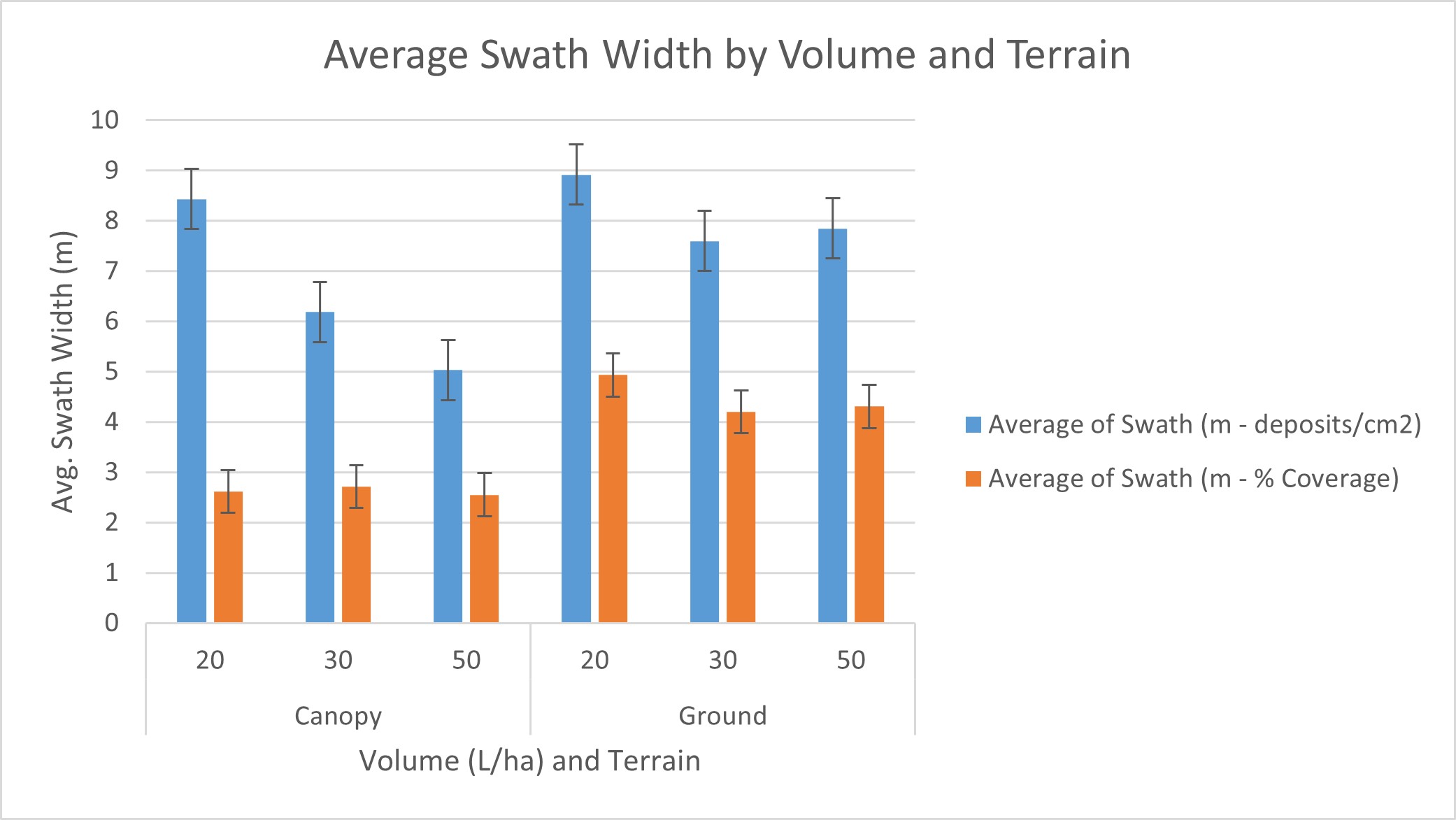
    The effect of spray volume on swath width is not immediately clear. When the data were expressed as deposit density, volume shared an inverse relationship with SW in canopy (Figure 17). There appeared to be no effect when expressed as percent coverage. The inverse relationship is weakly expressed, if at all, for both metrics on bare ground.

    Figure 17 Average effective swath width by volume and terrain. Swaths expressed from both percent coverage and deposit density metrics. Standard error bars presented. Canopy 20 L/ha (n=6). Canopy 30 L/ha (n=18). Canopy 50 L/ha (n=21). Ground 20 L/ha (n=6). Ground 30 L/ha (n=3). Ground 50 L/ha (n=13).

    Effect of Speed on SW

    For most RPAS designs, lower volumes are applied at higher flight speed (Table 5). Previous work demonstrated that higher flight speeds tended to result in wider swaths and an increase in drift. Do higher speeds cause wider swaths in-canopy, despite lower volumes?

    Volume Applied (L/ha)5 m/s Flight Speed8.3 m/s Flight Speed10 m/s Flight Speed
    203 treatments9 treatments
    309 treatments12 treatments
    5034 treatments
    Table 5 – Number of treatments for each flight speed by volume applied.

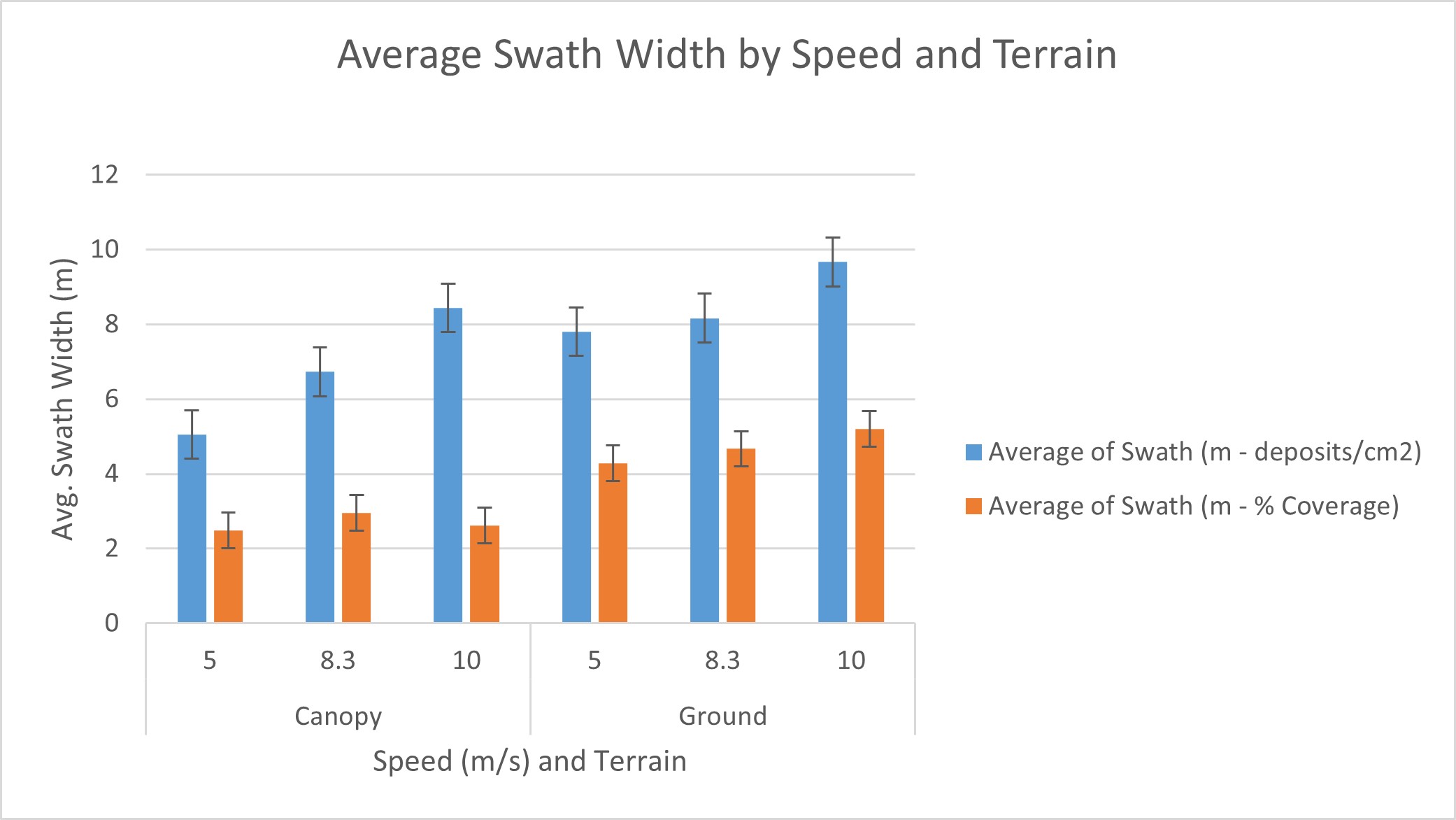
    Flight speed had a clearer impact on swath width than spray volume did (Figure 18). There was a positive relationship between flight speed and swath width as measured by deposit density in canopy and on bare ground.

    Figure 18 Average effective swath width by speed and terrain. Swaths expressed from both percent coverage and deposit density metrics. Standard error bars presented. Canopy 5 m/s (n=27). Canopy 8.3 m/s (n=12). Canopy 10 m/s (n=6). Ground 5 m/s (n=16). Ground 8.3 m/s (n=3). Ground 10 m/s (n=3).

    Just as with volume, there appeared to be no significant effect on swath width in either canopy when expressed using percent coverage. This was likely because finer sprays were better able to penetrate a canopy and deposit density is better able to resolve their presence.

    Conclusions

    There was no difference in SW between stubble and bare ground. The SW on-ground was far closer to the programmed 8 or 10 m swath width when expressed as deposit density.

    There appears to be a significant reduction of SW in-canopy versus on-ground. A crop canopy created a 26.6% reduction when expressed as deposit density. Specifically, corn was -20.6%, soybean was -28.3%, and wheat was -31.5%. Previous work has demonstrated diminishing coverage with canopy depth in corn, but it is difficult to make comparisons between agronomic use cases (e.g. different planting architectures and plant physiologies).

    When the data were expressed as deposit density, spray volume shared an inverse relationship with SW in-canopy, but the effect on SW on-ground was less clear. However, RPAS speed had a clear inverse relationship with SW in-canopy and strong trend on-ground.

    It is understood that finer spray is better able to penetrate canopies. One reason is because finer droplets are able to become entrained the downwash. Another is simply mathematical advantage, given that finer sprays are comprised of exponentially higher numbers of droplets than coarser sprays, increasing the odds of deposition. Conversely, coarser droplets (which have the greatest influence on percent area covered), are more likely to impinge on the canopy structure before reaching the sampler. Deposit density appears to be the more accurate metric for calculating SW both on-ground and in-canopy.

    The reduced SW in-canopy versus on-ground explains, in part, why striping is occurring in aerial corn fungicide applications. The route spacing reflects on-ground swath width, where it should reflect the shorter, ESW.