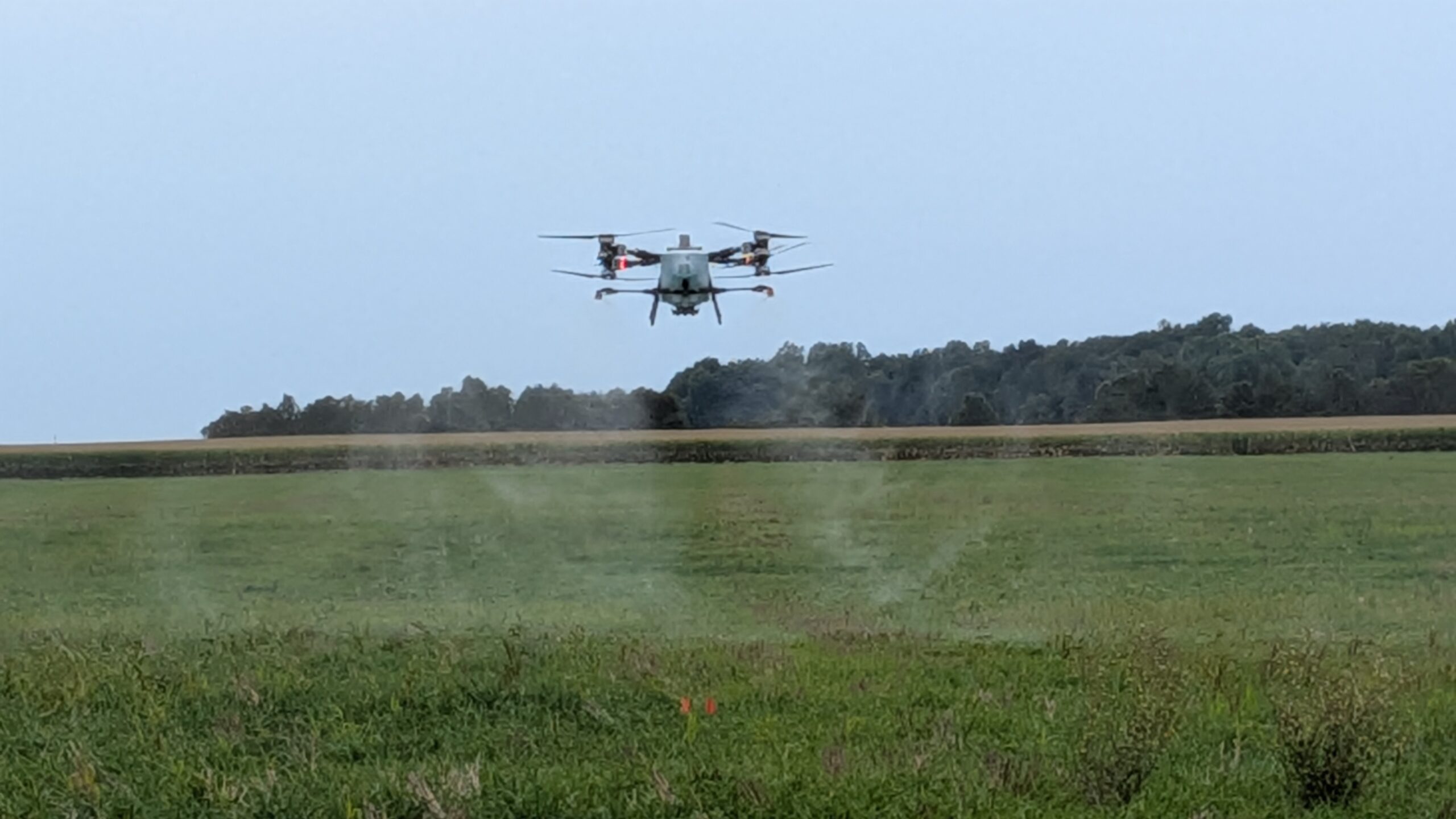
In this study, 3D sampling of drone spray applications in wheat demonstrates that coverage is strongly influenced by the interaction between drone downwash, flight speed, and wind conditions. These factors collectively determine where droplets land, how evenly they are distributed, and how reliable coverage is from pass to pass. In 2025 we characterized wheat head coverage from a DJI Agras T50. In this study, we explore the larger, faster DJI Agras T100, and relate the observations to what we’ve seen in previous studies.
Materials and Methods
Site and crop
The experiment was conducted at 45939 John Wise Line, St. Thomas, Ontario (42°43’57.0″N, 81°05’49.8″W) on June 3, 2025. Wheat was seeded at 1.8 million seeds/ac on 19 cm spacing and was at the T3 stage (~0.7 m height) at application.
Design
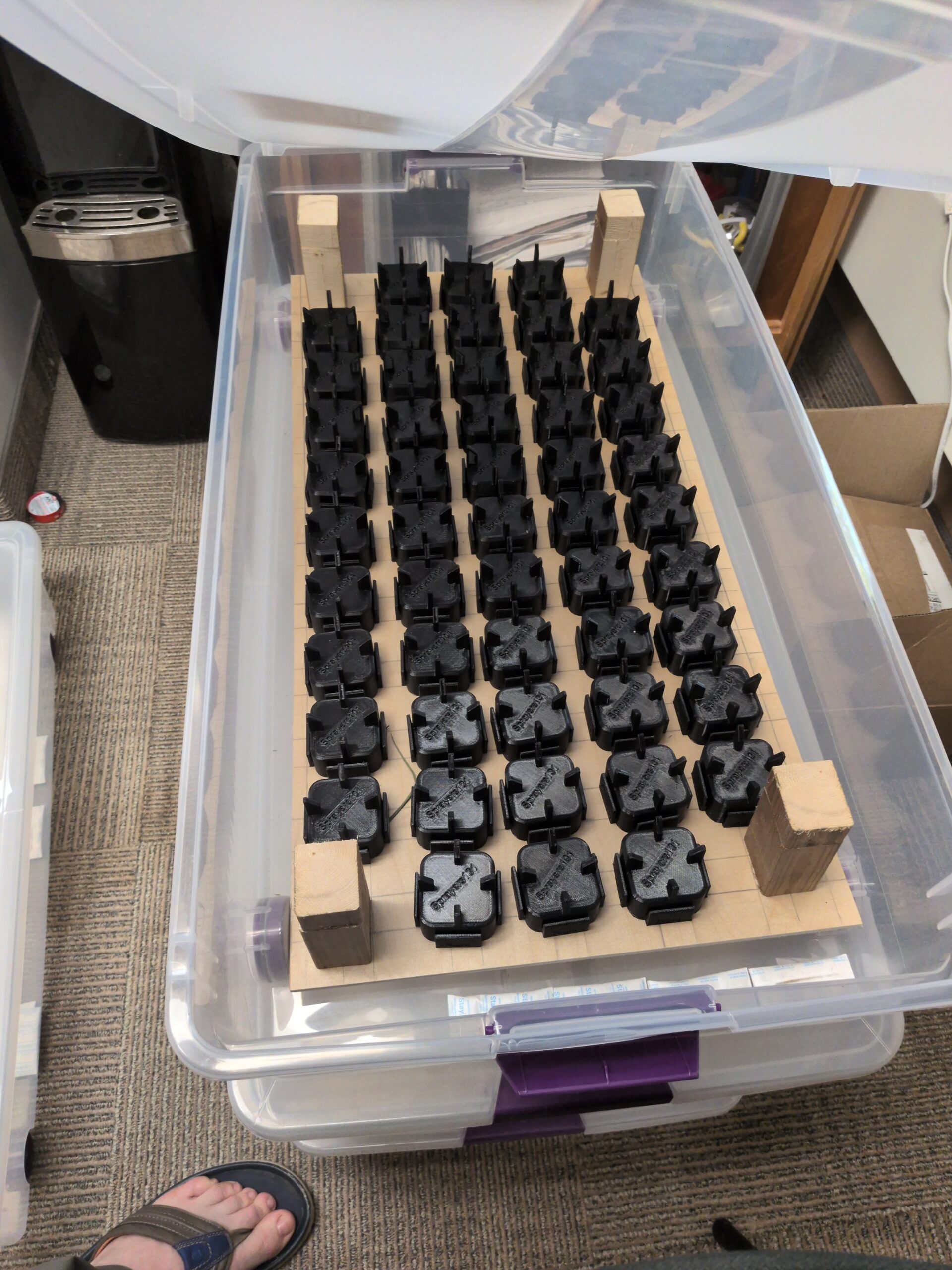
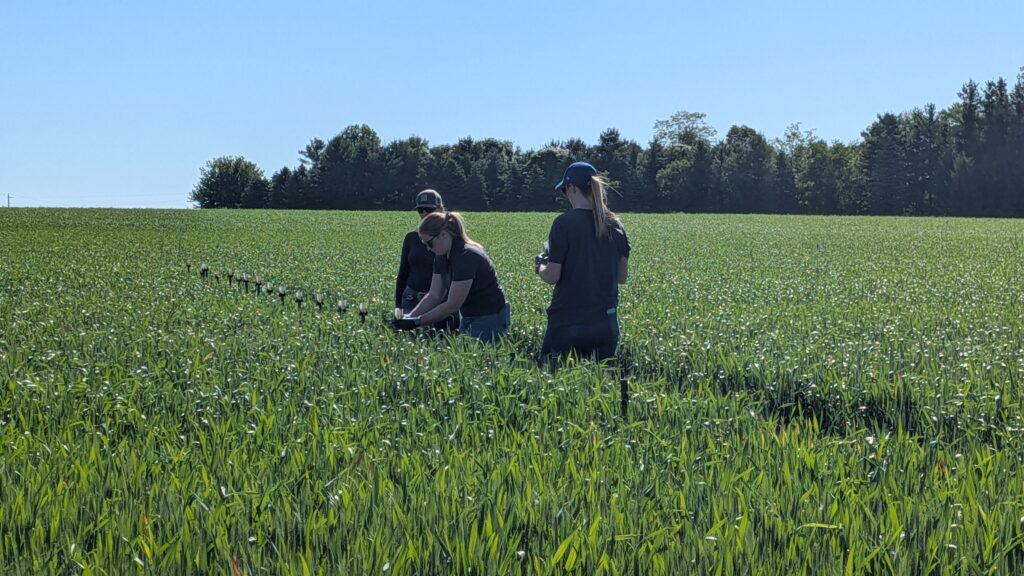
Twenty-one poles spaced at 1 m intervals held 3D-printed mounts with 1×3″ water-sensitive papers oriented in four directions relative to the drone flight path: advance, retreat, left, and right. A tramline behind the array preserved canopy structure while allowing access to the samplers (Figure 1).
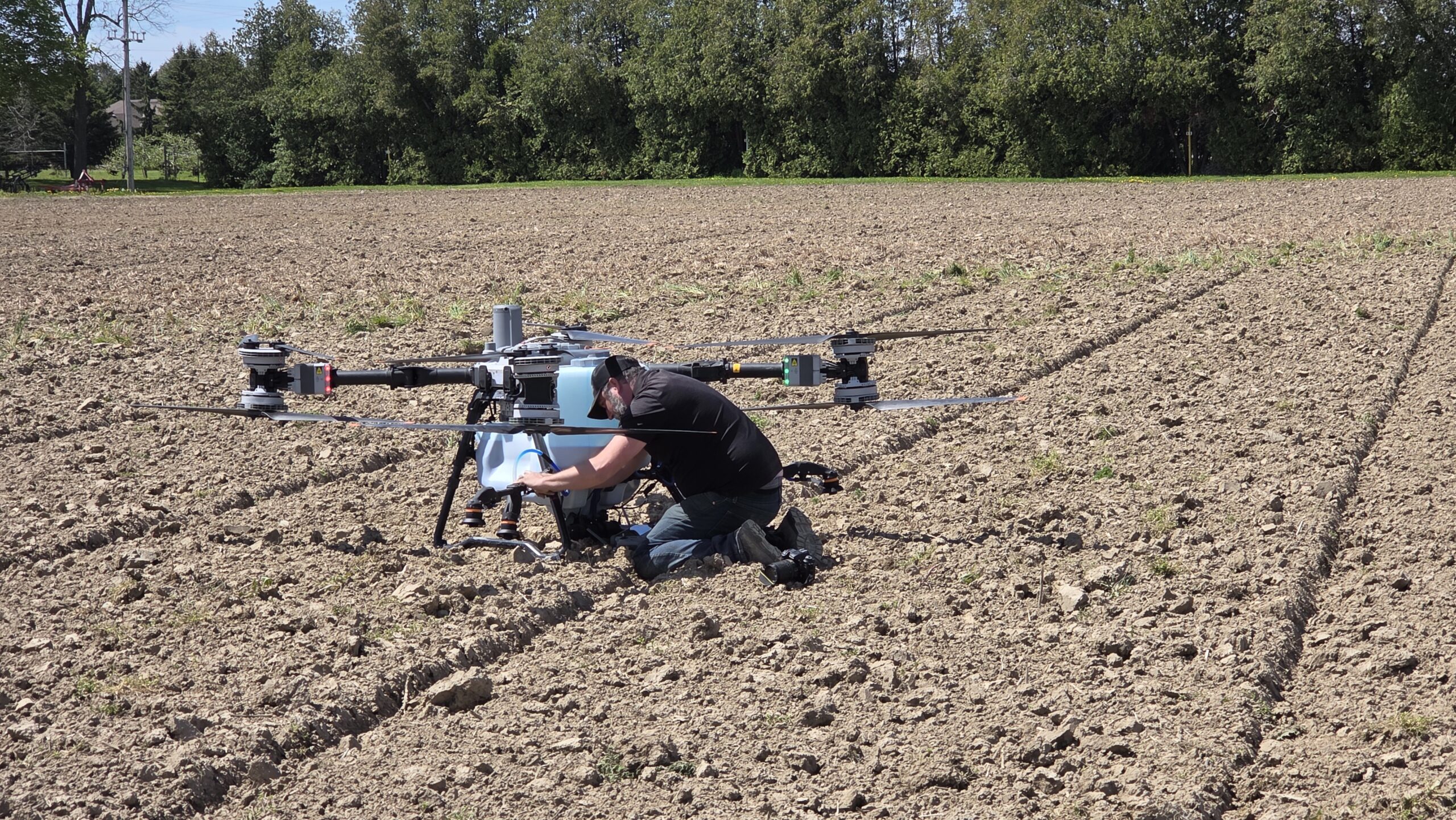
Figure 1 – Volunteers retrieving and replacing samplers between passes.
Drone Operational Settings
The primary objective of the study was to explore the effect of flight speed on coverage. Speed was increased from 6, to 10, to 14 m/s with the following operational settings:
4 LX07550SX (sprinkler) nozzles
50 L/ha application volume
350 µm droplet size
4 m flight altitude
7 m programmed swath width
Tank volume maintained at ~50 L
The drone began spraying 50 m before and continued 20 m after the samplers, flown on full auto over pole 10 and 11 (the middle of the 21 poles). The spray liquid was municipal water with 0.5% v/v of MasterLock (Winfield United).
The secondary objective was to compare coverage from the drone spraying 5 gpa (6 m/s) to a 10 gpa (7 m/s) condition.
Weather
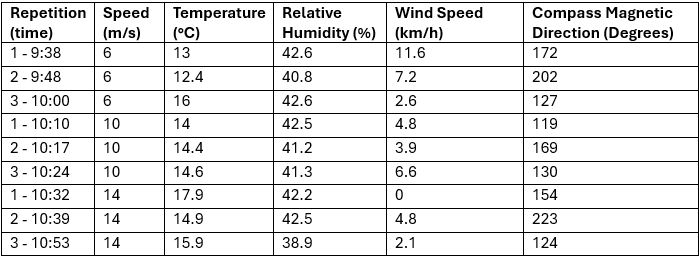
Weather data was collected using a Kestrel 3550AG weather meter (Kestrel Instruments) in a vane mount positioned roughly 2 m below drone altitude. Data was logged as the drone passed the samplers (Table 1).
Table 1 – Weather conditions for each spray pass.
Flights were conducted under a prevailing tailwind (rather than the preferred headwind) due to field constraints. Wind conditions during application varied by treatment. The 6 m/s treatment experienced higher and more variable wind speeds (avg. 6.6 km/h, SD 3.7 km/h, 177°), predominantly from the north (tailwind). The 10 m/s treatment occurred under moderate and stable winds (avg. 4.8 km/h, SD 1.1 km/h, 136°) with a slight right-to-left crosswind component. The 14 m/s treatment experienced low and variable wind speeds (avg. 1.6 km/h, SD 2.0 km/h, 198°) including periods of calm .
Results
Deposition Magnitude and Orientation
Papers were analyzed using a DropScope™ (SprayX, São Carlos, Brazil). Deposition differed strongly by collector orientation (Table 2). Some repetitions were removed if wind pushed spray beyond the collectors. This left a minimum 2 repetitions per condition.
Speed
Direction
Mean(deposits/cm2)
Std Dev
Min
Max
6 m/s
Advance
45.70
67.03
1.3
210.7
Left
40.06
66.19
0.0
211.8
Retreat
20.10
20.25
0.0
71.0
Right
45.47
73.55
0.0
208.9
10 m/s
Advance
52.07
63.05
0.1
189.3
Left
31.95
43.65
0.0
136.0
Retreat
5.12
9.19
0.0
37.6
Right
37.22
70.18
0.0
202.1
14 m/s
Advance
39.02
37.51
0.5
115.3
Left
26.89
43.91
0.0
130.9
Retreat
0.43
1.27
0.0
5.7
Right
11.03
22.53
0.0
71.2
Table 2 – Average deposition by sampler orientation for each speed.
Forward-facing collectors (advance) consistently recorded the highest deposition across all speeds, followed by lateral orientations. Reverse-facing collectors (retreat) recorded substantially lower deposition. Variability was high for advance and lateral orientations, whereas retreat collectors showed consistently low variability (Table 3).
Direction
Mean(deposits/cm2)
Std Dev
Min
Max
Advance
39.02
37.51
0.5
115.3
Left
26.89
43.91
0.0
130.9
Retreat
0.43
1.27
0.0
5.7
Right
11.03
22.53
0.0
71.2
Table 3 – Average deposition by sampler orientation for all passes.
Directional Bias (Anisotropy)
Anisotropy refers to the property of having different values when measured in different directions. We can quantify this by dividing the average coverage on one plane by the opposite plane; The resulting indices show the relative direction of deposition.
For the lateral plane (left-to-right), we divide the average coverage on the left-facing orientation by the right. On the sagittal plane (advance-to-retreat), we divide the average coverage on the advance-facing orientation by the retreat (Table 4).
Speed
Lateral (L÷R)
Sagittal (A÷R)
6 m/s
0.88 (slight right-dominant)
2.27 (moderate advance-dominant)
10 m/s
0.86 (slight right-dominant)
10.17 (strong advance-dominant)
14 m/s
2.44 (strong left-dominant)
90.05 (almost entirely advance-dominant)
Table 4 – Relative coverage indices for lateral and sagittal planes.
Bias in the lateral index was relatively weak, with a subtle shift with the wind (wind-facing is left) at higher speeds. The sagittal index (advance-to-retreat) increased from a 2x between 6 m/s and 10 m/s to 5x between 10 m/s and 14 m/s, demonstrating strong forward bias with flight and wind direction despite the down-and-back vector created by the downwash.
Spatial Distribution
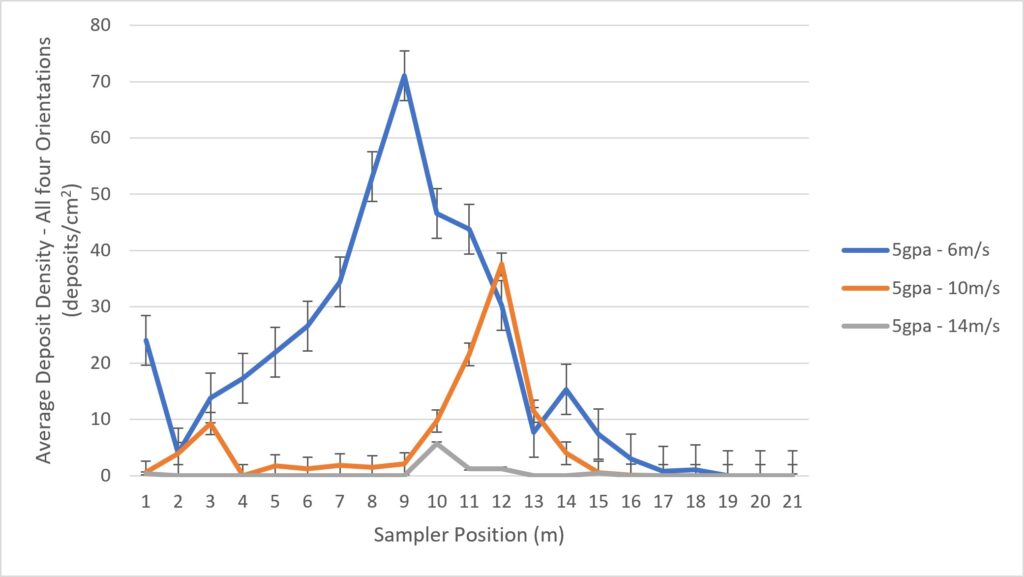
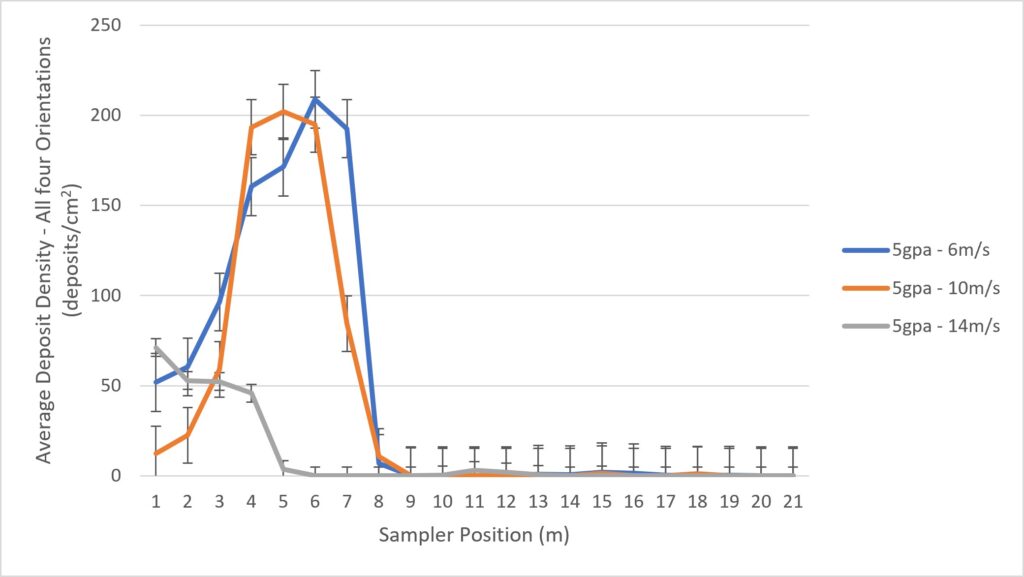
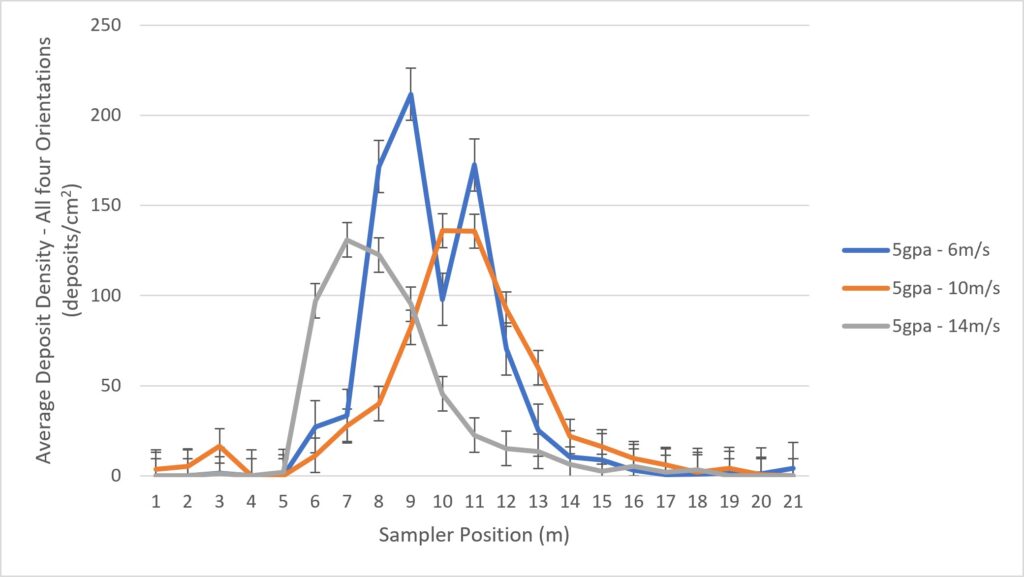
Peak deposition consistently occurred 1 to 5 m downwind of the flight line, rather than directly beneath it. A cross-tail wind shifted deposition laterally, while forward motion (inertia) and wind reinforced deposition in the advance direction. This can be illustrated by isolating the average coverage for each orientation, for all three speeds (Figures 2 to 5).
Figure 2- Advance Orientation (Facing tailwind). Bars = SEFigure 3 – Retreat Orientation (facing away from tailwind). Bars = SEFigure 4 – Right Orientation (Facing cross wind). Bars = SEFigure 5 – Left Orientation (facing away from cross wind). Bars = SE
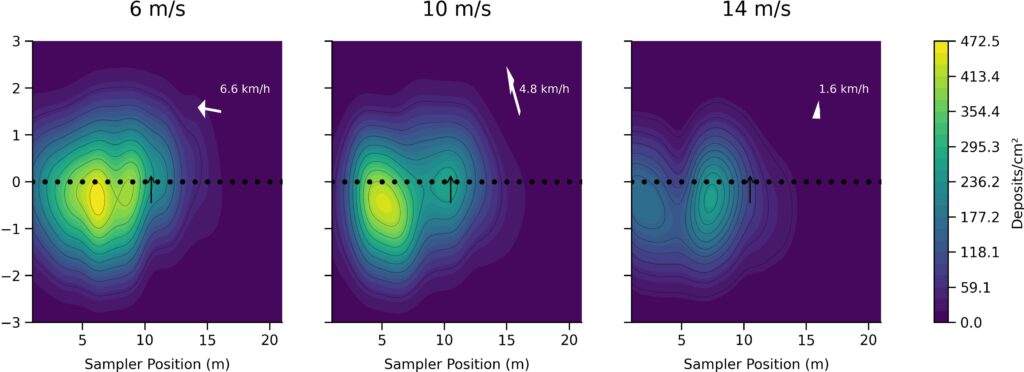
By combining and plotting average coverage on all orientations in a top-down heatmap, we can clearly see the lateral shift to the left of the flight pass (with the light crosswind), the higher relative coverage on the advance face, and indications of bi-modal coverage that likely corresponds to the position of the rotary atomizers(Figure 6).
Figure 6 – Coverage heatmap created by smoothing the average deposition data for each speed (σ ≈ 1.1 – 1.2 m) over a 300 x 300 grid to illustrate deposition gradients. The colour scale supports a direct comparison of deposition intensity. The 21 samplers are indicated by black dots spaced at 1 m intervals, and the drone flight path appears as a black arrow between posts 10 and 11. Average wind speed and direction appears as an inset white arrow (vector).
Effect of flight speed on swath width
Swath width was determined by averaging all deposition on each post for each speed and using our online swath width calculator. The range of flight speeds used in this study did not significantly affect swath width.
6 m/s: 8 m swath width (16.3 % C.V.).
10 m/s: 7.5 m swath width (22.5 % C.V.)
14 m/s: 7.5 m swath width (22.3 % C.V.)
These widths are 15-20% wider than the widths calculated in the same manner during the 2025 study with the T50.
Averaging swath widths can mask variability
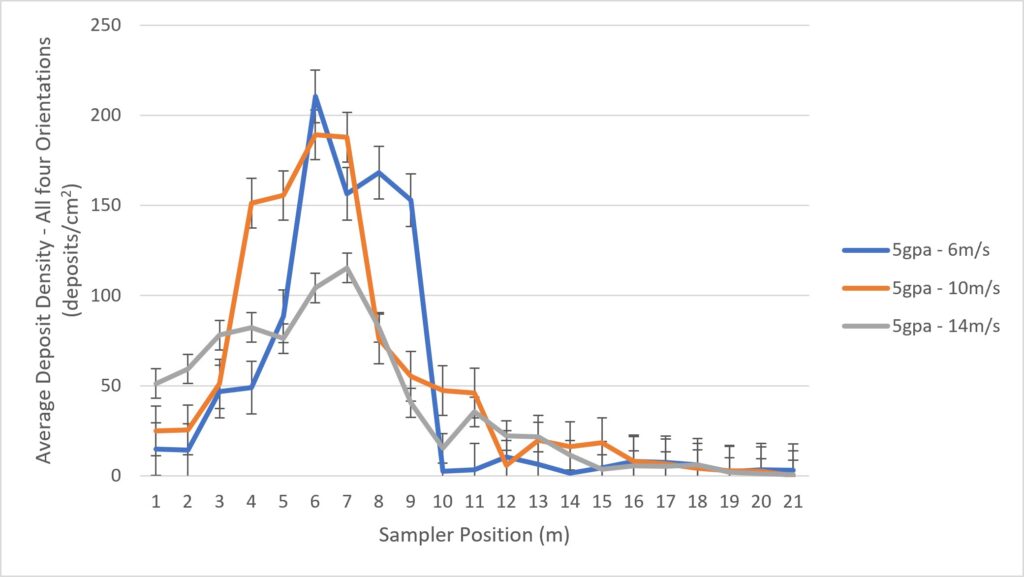
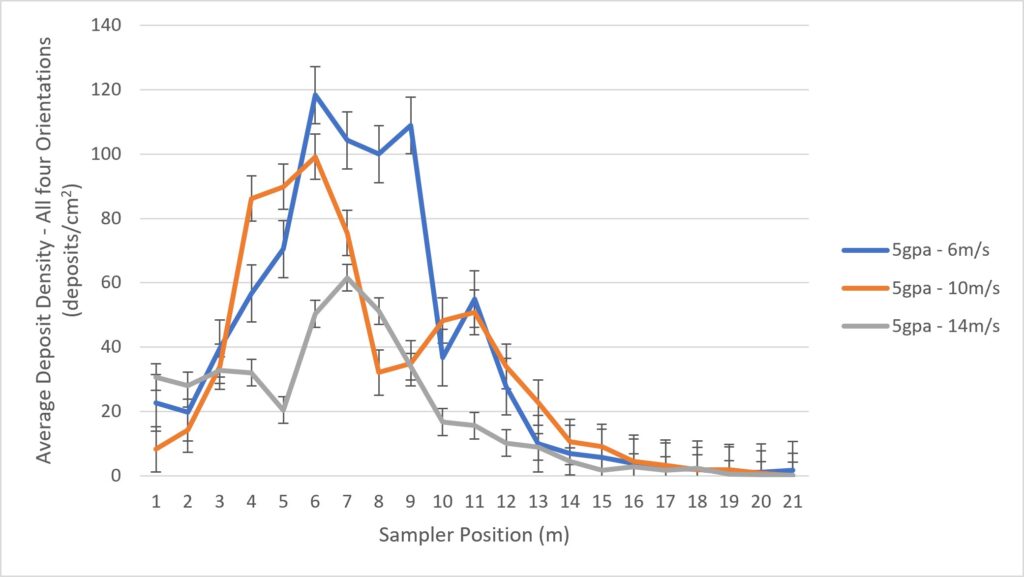
This method of calculating and comparing average swath widths is convenient, but it hides any variability in the amount of spray deposited within the swath. Consider that an 8 m swath with 10 deposits/cm2 every meter would have the same C.V. as an 8 m swath with 100 deposits/cm2. Deposit variability can be illustrated by plotting the average coverage along the swath with standard error (figure 7). We see that flight speed significantly influenced the degree of deposition, where higher speeds reduced the average droplet density (counts) as well as the variability (standard deviation).
Figure 7 – Average coverage, all orientations, for each speed. Bars = SE
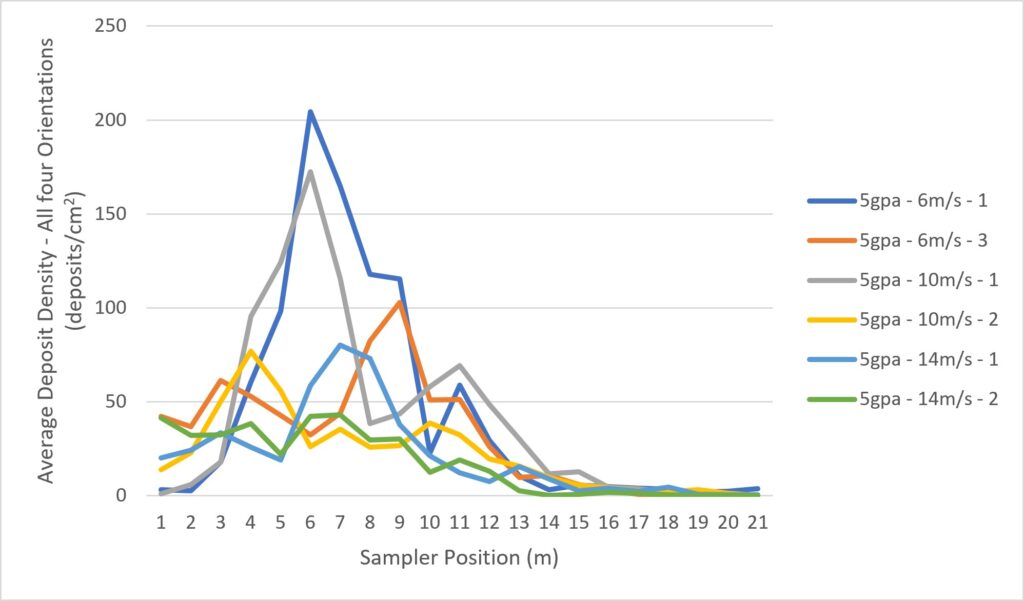
Think of each repetition as a randomly-selected cross section of the swath from somewhere along a spray pass. Calculating swath width from averaged coverage data can hide shifts in the relative position along the flight path, making the composite value greater than that of any single replicate. This variability and the potential for inadvertent smoothing can be exposed by plotting each repetition. (Figure 8).
Figure 7 – Average coverage (all orientations) from each pole plotted by speed and repetition.
Therefore, the order of operations matters. When swath width is calculated for each repetition, and then averaged, we would expect the widths to be somewhat smaller. They are presented here in table form next to the previous values for comparison (Table 5).
Speed (m/s)
(A) Deposition averaged, then swath calculated (m)
(B) Swaths calculated, then average (m)
Difference (A-B) (m)
6
8 (16.3% C.V.)
6 (29.6% C.V.)
-2
10
7.5 (22.5% C.V.)
6 (33.5% C.V.)
-1.5
15
7.5 (22.3% C.V.)
7.5 (30.5% C.V.)
0
Table 5. Average swath widths generated by two methods.
Statistical Analysis
No matter the method, we can draw conclusions from the swath widths calculated here.
6 m/s: highest deposition but greatest variability.
10 m/s: best balance of deposition, uniformity, and swath width.
14 m/s: lowest deposition and most directional bias.
A two-way analysis of variance (ANOVA) was conducted to evaluate the effects of flight speed and collector orientation on spray deposition. Deposition differed significantly between Advance, Left, Right, and Retreat collectors (F = 6.1, p = 0.0005). Flight speed had a statistically significant effect on deposition, where deposition was reduced with speed (F = 3.03, p = 0.05). The effect of orientation did not significantly depend on speed (F = 0.46, p = 0.83), suggesting that the pattern of deposition was consistent across speeds.
Effect of volume on deposition
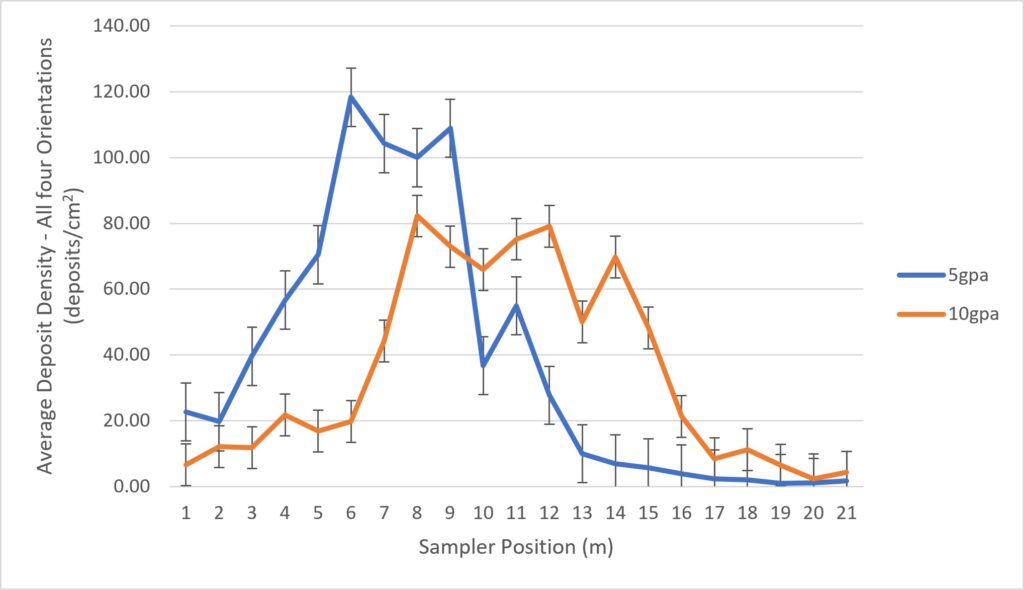
In a secondary investigation, the drone was flown at 7 m/s, applying 10 gpa to compare coverage to the 6 m/s, 5 gpa condition (Figure 8).
Figure 8 – Average coverage as deposit counts, all orientations, for 5 gpa and 10 gpa. n=2 for each condition . Bars = SE
Surprisingly, there was no significant increase in total deposition within the swath when volumes were increased. In fact, the 5 gpa condition is ~8% higher when all deposits are summed or when area under the curve is calculated. The relative shape of the curve was notably different with 5 gpa producing a sharper, higher-intensity central peak, while 10 gpa produced a broader and more uniform deposition profile.
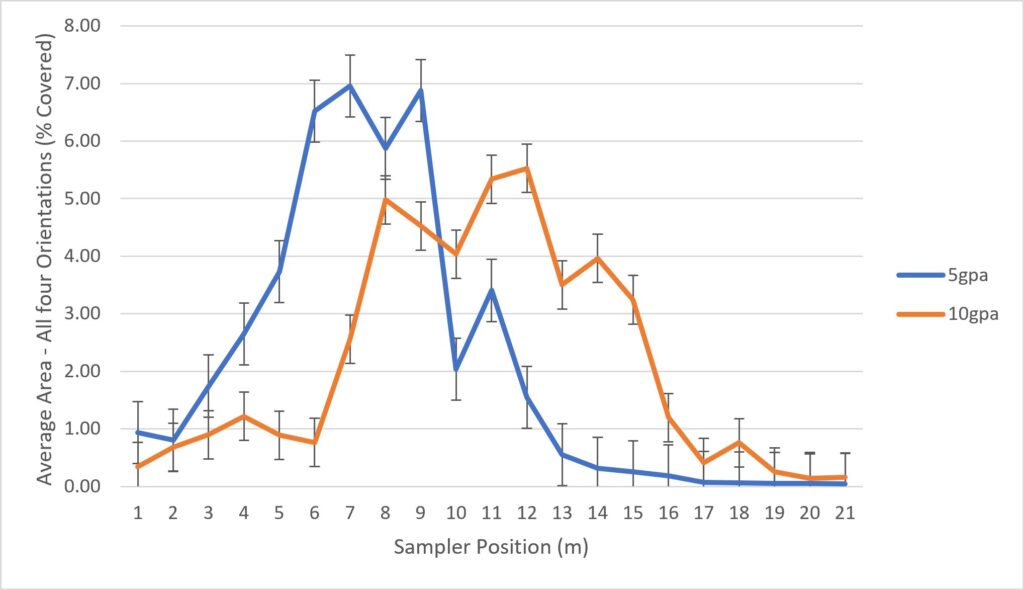
It was expected that higher volumes would result in higher counts. One theory for the absence of this result was that overlapping depositions in the high volume treatment might have underestimated counts when the papers were digitized. Therefore, the percent surface area was also analyzed (Figure 9). Once again, there was no significant difference in the total percent area or a comparison of area under the curves.
Figure 9 – Average coverage as area covered, all orientations, for 5 gpa and 10 gpa. n=2 for each condition . Bars = SE
When swath widths were calculated for each repetition, then averaged for each speed, we arrived at (5 m + 7 m) ÷ 2 = 6 m for the 5 gpa condition, and (5.5 m + 6.5 m) ÷ 2 = 6 m for the 10 gpa condition. We have no explanation for why there was no volume-related difference.
Discussion
Wind direction strongly influenced deposition, overriding the down-and-back pattern seen in previous studies. A tail-cross wind likely drove deposition (likely occurring after the drone passed the sampling location), explaining why retreat-facing collectors captured minimal deposition, and peak deposition was accordingly displaced from the flight line.
Overall, results confirm that wind conditions fundamentally reshape spray distribution. The implication is that wind direction must be accounted for alongside swath width when developing flight path spacing to minimize the potential for overlaps and gaps between passes.
Further, previous studies have demonstrated a direct and positive relationship between flight speed and swath width up to 8-10 m/s with no further response after ~8 m/s. This study supports the hypothesis that rotary-wing drone speed and swath width share an asymptotic relationship that inflects at ~8-10 m/s (variability makes it difficult to determine an exact value). Flight speed also has a direct and inverse impact on the degree of spray deposition and deposit variability within the swath.
Finally, caution is advised when interpreting average swath widths. There may be no indication of the degree of coverage within the swath (affecting efficacy), or the lateral variability along the flight path (affecting fieldwide uniformity).
Related video
Thanks to Adam Pfeffer and Bayer Canada for in kind and financial support, and thanks to volunteers Erin Jewson (OMAFA Engineer), Halle Barton and Nikki Intranuovo (Bayer Summer Students) for their help with the field work.
Author’s Note: These results were adjusted in July to exclude outliers and include the results of the spray volume comparison.
Swath width is a fundamental parameter in spray drone mission planning. It facilitates the uniform application of broadacre pesticides at the target rate. Pilots adjust the swath width via operational settings such as droplet size, flight speed and altitude to produce the most effective and efficient application.
Rapid advances in drone design, however, may warrant a re-evaluation of how operational settings affect swath width. For example, the most recent generation of drones are now capable of speeds up to 20 m/s (72 km/h), which is twice that of the previous generation.
In late 2025 we conducted a series of comparative herbicide applications using the DJI Agras T50 and T100. For both drones, swath width increased with speed up to ~10 m/s, as expected. However, between ~10 m/s and 18.5 m/s, swath width from the T100 did not seem to increase further. Similar observations have been reported by researchers at AgroEfetiva (São Paulo, Brazil; personal communication).
These results suggest that the relationship between speed and swath width is positive and direct at lower speeds, but reaches a saturation point beyond which any further increase in speed no longer affects swath width. This is an asymptotic relationship. To test this hypothesis, we conducted a deposition study where swath width was measured at flight speeds that increased incrementally from 8 m/s to 20 m/s.
Configuration Study
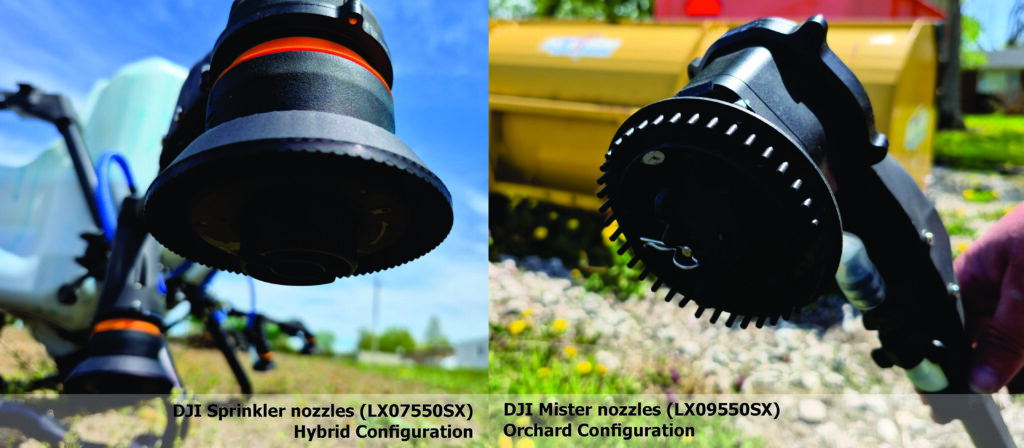
The standard T100 configuration uses two rotary atomizers (“sprinkler” nozzles; LX07550SX) with a reported maximum combined flow rate of 30 L/min. The alternate orchard configuration incorporates a boom that supports two additional “mister” nozzles (LX09550SX), increasing the reported maximum flow rate to 40 L/min.
To improve productivity in broadacre applications, some operators have adopted a hybrid configuration. In this setup, the orchard boom is retained, but the reputedly drift-prone mister nozzles are replaced with a second set of sprinklers. This approach is intended to achieve a higher flow rate than the standard two nozzle configuration while maintaining a larger mean droplet size.
A secondary objective of this study was to compare the Hybrid configuration with the Orchard configuration (Figure 1).
Figure 1 – Left: DJI Sprinkler Nozzle (LX07550SX). Four such nozzles comprised the “Hybrid” configuration. Right: DJI Mister nozzle (LX09550SX). Four such nozzles comprised the “Orchard” configuration.
Materials and Methods
Location and Layout
The study was conducted at Ontario’s Simcoe Research Station on May 12, 2026. The site (42.857414, -80.271759) was a flat, recently tilled sand/loam field with no vegetation present. A DJI Agris T100 drone was used to perform the spray applications, supported by the D-RTK 3 relay station and flown on full auto.
The spray mix was 0.2% v/v Super Signal Blue (Precision Laboratories) and 0.125% v/v Activate Plus NIS (Winfield United) in municipal water, pre-mixed to ensure consistency. A volume of 40 L – 60 L was maintained throughout the trial to minimize the effect of a changing payload.
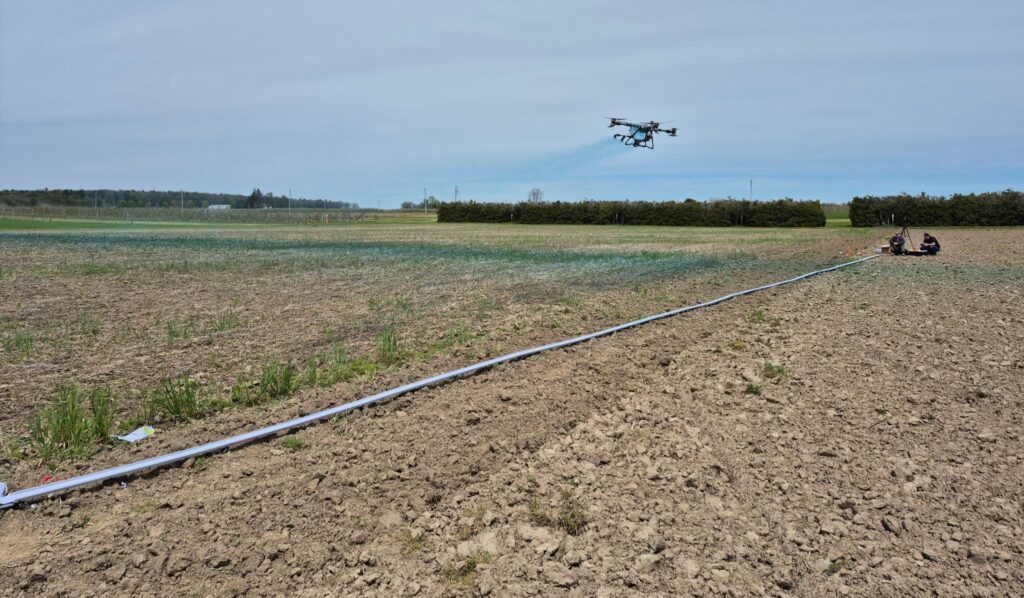
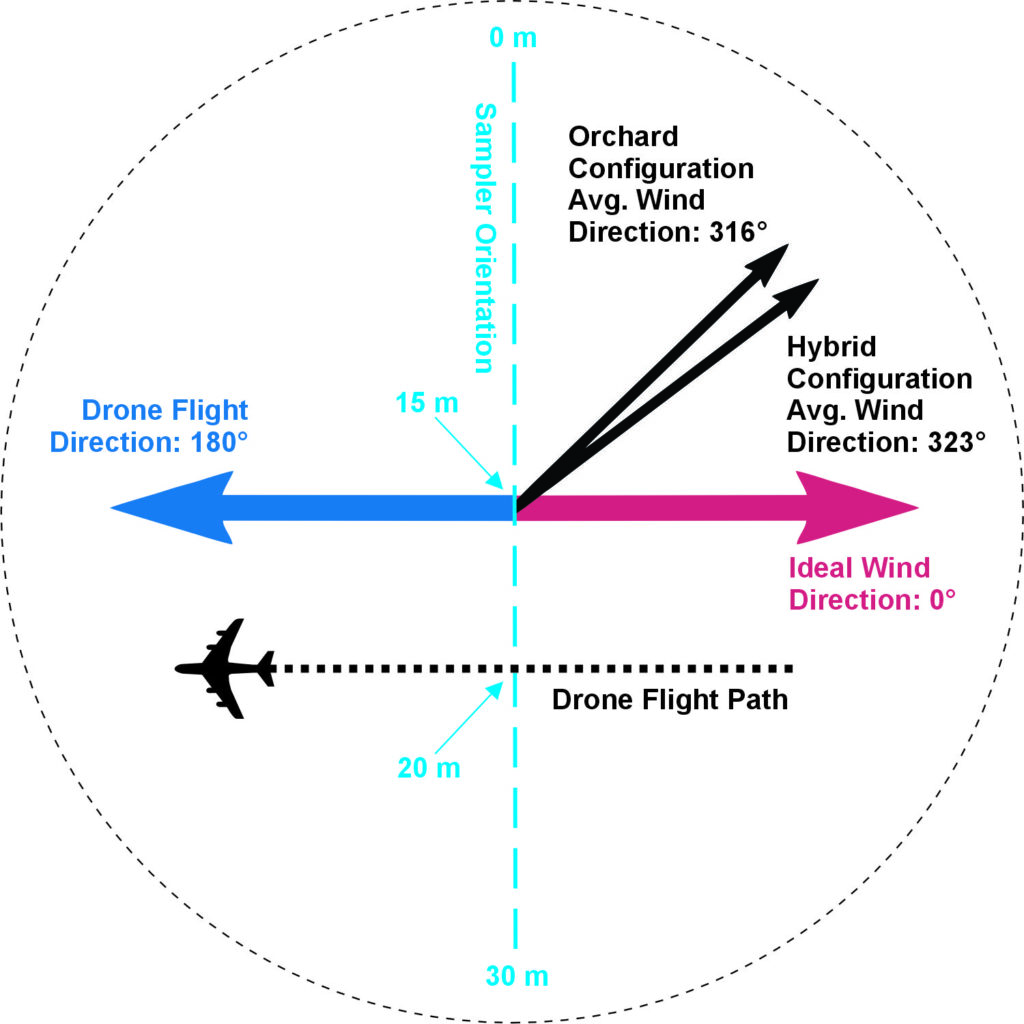
The sampler was a flat, horizontal, continuous bond paper strip measuring 7.5 cm wide and 30 m long (secured in Speed Tracks™, Application Insight LLC). The sampler was oriented perpendicular to the prevailing wind, with the intention of flying the drone with a headwind across the 15 m mark (the centre) (Figure 2). Test passes determined that the T100 required 210 m to reach 20 m/s while half-full.
Figure 2 – T100 spraying indicator dye across the 30 m continuous sampler.
Before the swathing runs began, the prevailing wind shifted direction slightly. It was decided to fly the drone 5 m upwind (at the 20 m mark along the 30 m sampler) to ensure any downwind displacement was captured on the sampler (Figure 3).
Figure 3 – Trial layout and prevailing wind conditions.
Drone Settings and Swathing Order
The primary objective of the study was to explore the effect of flight speed on swath width. Speed was increased from 8 m/s to the maximum 20 m/s by 2 m/s increments. Trial and error with the controller indicated that we could achieve these speeds by balancing an application volume of 30 L/ha and a programmed swath width of 7 m.
Altitude was set to 4 m which is lower than the 5 m minimum recommended by DJI for high-speed flight. This was a compromise above the preferred 3.5 m altitude we have historically used with the T50. It was felt that higher altitudes would create unacceptable potential for swath displacement.
Rotary atomizer design is not standardized, and as a result, the droplet size selected on the controller did not necessarily produce the desired results. The Hybrid configuration was programmed to emit 350 µm droplets, selected as a compromise between drift mitigation and coverage potential. To offset the Mister nozzles’ reputation for producing a finer spray, the Orchard configuration was set to the maximum 500 µm. Operations settings are noted in Table 1.
Configuration
Nozzle
Droplet size (µm)
Speed (m/s)
Altitude (m)
Programmed Swath Width (m)
Application Volume (L/ha)
Hybrid
4 Sprinklers
350
8, 10, 12, 14, 16, 18, 20
4
7
30
Orchard
2 Misters, 2 Sprinklers
500
8, 10, 12, 14, 16, 18, 20
4
7
30
Table 1 – Operational settings for trials.
Three repetitions of seven speeds were flown for each configuration. Anticipating an increase in temperature and wind speed throughout the day, it was decided move through all seven speeds (a single repetition) before resetting and doing so two more times. The intent was to preclude confounding weather effects. Ideally, we should have alternated between configurations as well, but this proved impractical. As a result, we flew the Hybrid configuration first and the Orchard configuration last.
Weather
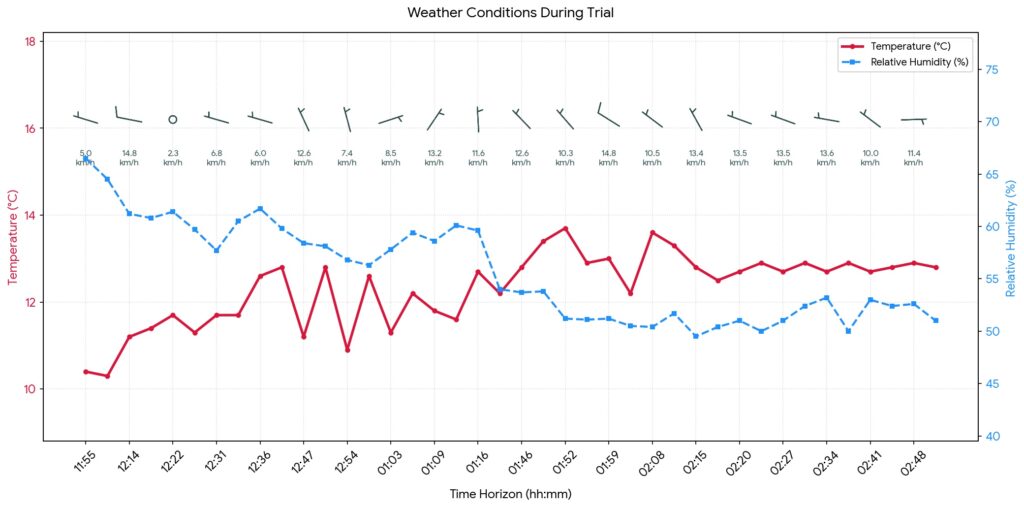
Weather data was collected using a Kestrel 3550AG weather meter (Kestrel Instruments) in a vane mount positioned 2.5 m above ground. Temperature and relative humidity were comparable throughout the ~3 hours of data collection, but as anticipated, wind speed was higher for the later Orchard configuration passes.
As previously indicated, wind direction shifted from an ideal headwind situation just before trials began, and was somewhat changeable, but the average wind direction for the two configurations was comparable (Figure 4 and Table 2).
Figure 4 – Weather conditions recorded at roughly 10-minute intervals, corresponding to the drone passing over the sampler.
Time
Configuration Flown
Average Temperature (°C)
Average Relative Humidity (%)
Average Wind Speed (km/h ± SD)
Average Direction (° ± SD)
11:55 am – 1:16 pm
Hybrid
11.7
59.9
8.4 ± 3.5
323 ± 46
1:43 pm – 2:52 pm
Orchard
12.9
51.6
11.9 ± 2.5
316 ± 48
Table 2 – Average weather conditions for the Hybrid configuration passes and for the Orchard configuration passes.
Collector analysis
Bond paper digitization
Bond papers were scanned using a Swath Gobbler™ (Application Insight LLC). The software measured deposition as both percent area covered (% area) and deposit density (deposits/cm2) every 100 mm, with a thresholded Hue of 23-280, a Saturation of 5-120 and a Value of 156-255.
Effective swath width calculation
The large data set produced by each pass was reduced in size by averaging the deposition for every 50 cm. This data was entered into our Excel-based swath width calculator, which assumes a racetrack pattern and sums deposits from adjacent swaths. The resulting swath width for each pass was the maximum width that minimized over- and under-dosing as well as the coefficient of variation (CV).
Analysis
The average swath width derived from deposit density data was wider than that derived from percent area covered (Table 3).
Table 3 – Group means and standard deviation for average swath widths derived from deposit density data and percent coverage data. The average CV was between 29 and 32%.
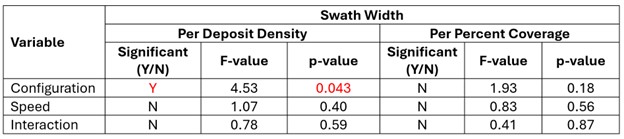
A two-way ANOVA (Analysis of Variance; α = 0.05) was performed to determine any significant effect of speed or configuration on swath width (Table 4). Flight speed had no significant effect on swath width, no matter how it was derived (% area covered or deposit density), for either configuration (Hybrid or Orchard). However, the average swath width derived from deposit density was significantly wider for the Orchard configuration compared to the Hybrid and presented higher variability.
Table 4 – Results of two-way ANOVA, exploring interactions between speed, swath width and configuration (95% confidence interval).
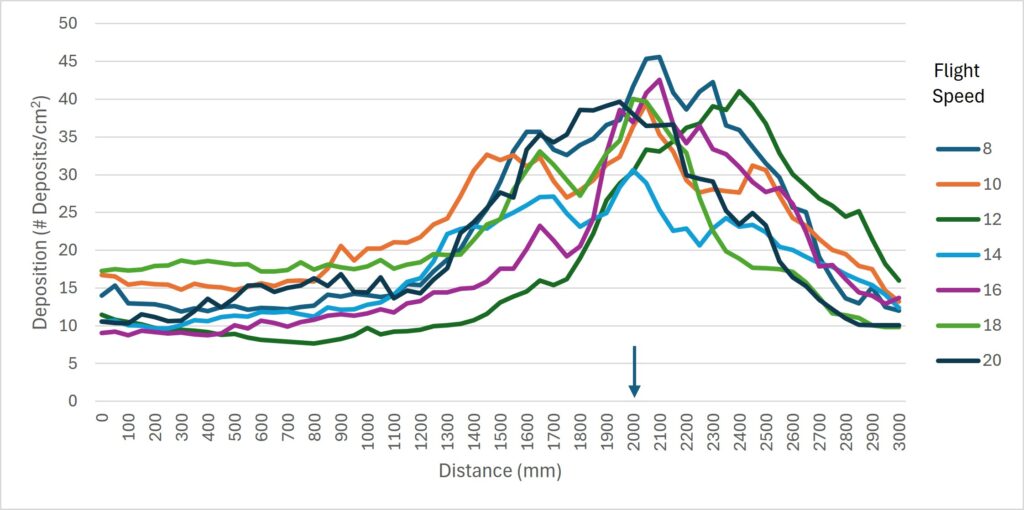
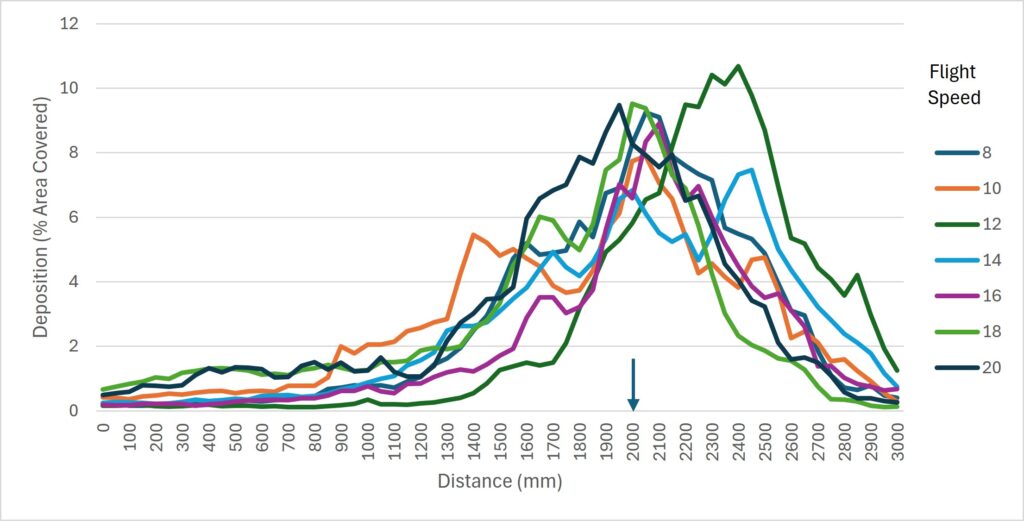
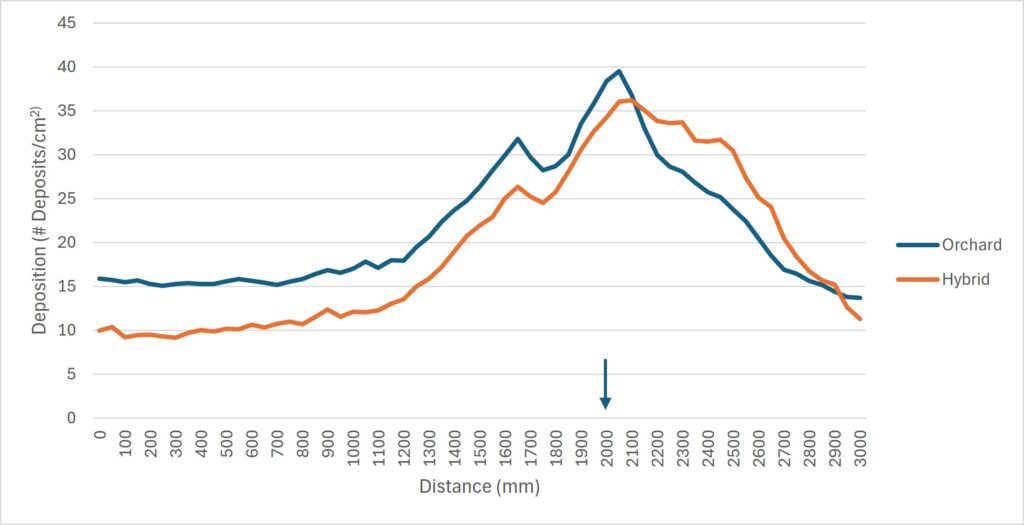
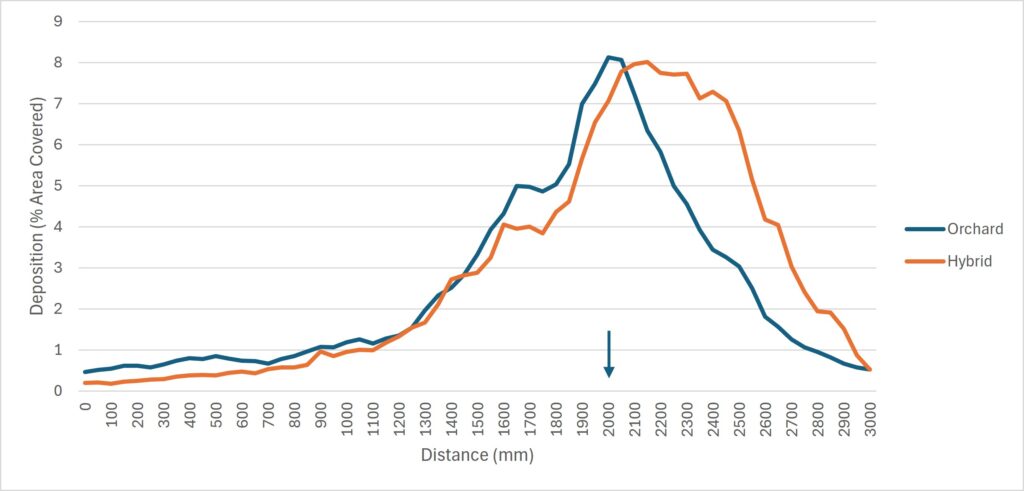
Orchard configuration was prone to displacement in a side wind. Shifting the flight path 5 m upwind improved the downwind capture, but for some flights it did trim a small portion of the upwind deposition. Deposit density gives greater resolution and exposes more variability than percent area covered. Figure 5 shows the average deposition by speed based on deposit density. Figure 6 shows the average deposition by speed based on percent area covered.
Figure 5 – Average deposition by speed based on deposit density. Arrow indicates flight path.Figure 6 – Average deposition by speed based on percent area covered. Arrow indicates flight path.
Figure 7 shows the average deposition by configuration based on deposit density. Figure 8 shows the average deposition by configuration, based on percent area covered. Based on deposit density, there were 55% more deposits on the downwind side of the sampler for Orchard configuration set to set to 500 microns compared to the Modified configuration set to 350 microns.
Figure 6 – Average deposition by configuration based on deposit density. Arrow indicates flight path.Figure 8 – Average deposition by configuration based on percent area covered. Arrow indicates flight path.
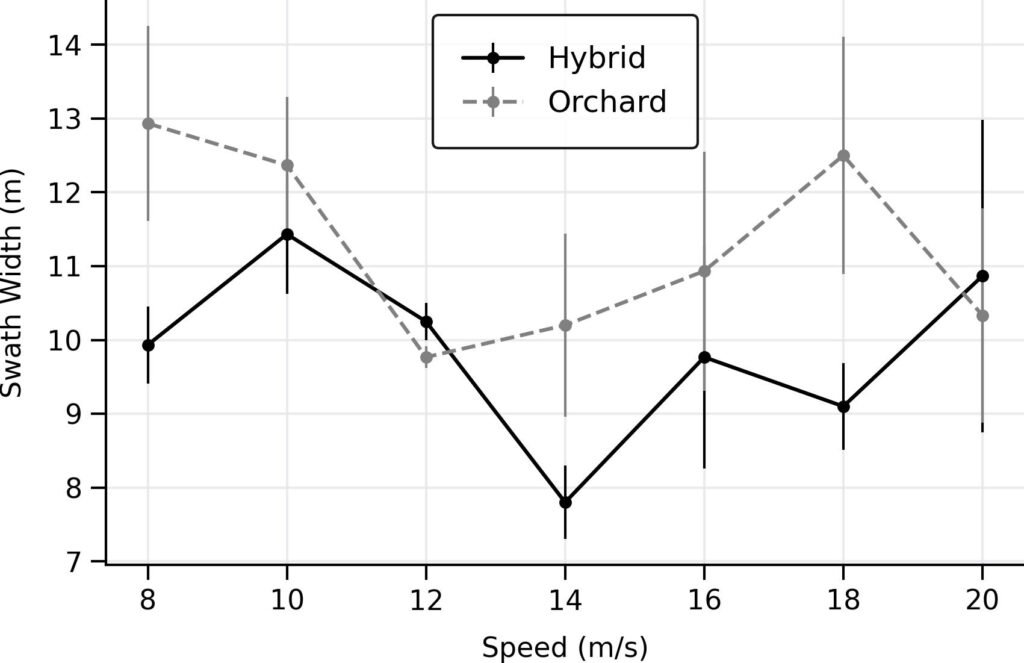
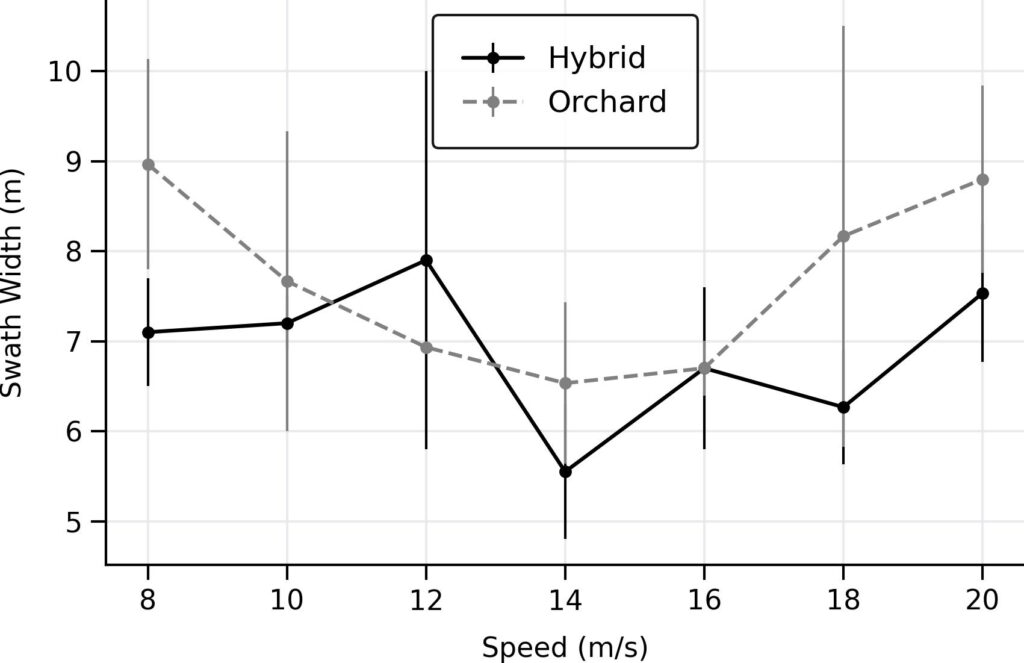
The average swath widths calculated from deposit density (Figure 9) and percent area covered (Figure 10) are shown with standard deviation. While it appears the swath width is less around 14 m/s, it is statistically insignificant and the response to speed is essentially flat. As with prior studies, swath widths calculated from deposit density are larger than those calculated from percent area covered.
Figure 9 – Average swath widths for each speed, derived from deposit density data. SD shown. n=3 for each speed, while n=2 for Hybrid configuration at 12 m/s and 14 m/s.Figure 10 – Average swath widths for each speed, derived from percent coverage data. SD shown. n=3 for each speed, while n=2 for Hybrid configuration at 12 m/s and 14 m/s.
Observations
Previous studies demonstrated a direct and positive relationship between drone speed and swath width up to 8-10 m/s. Here, we see no further response after ~8 m/s. This supports the hypothesis that rotary-wing drone speed and swath width share an asymptotic relationship that inflects at ~8-10 m/s. Variability makes it difficult to determine an exact value.
Despite increasing the programmed droplet size to the maximum 500 microns for the Orchard condition, there was 55% more downwind deposition compared to the Hybrid condition, which was set to 350 microns. This supports the claim that the Mister nozzle produces a span of droplet sizes that include far more fines than the Sprinkler nozzle, and underpins the need for a better understanding of the spray quality produced by rotary atomizers.
Spraying at high speeds is not an advisable practice. While swath width is no longer affected after ~8 m/s, there are other considerations. Note that it required 200 m for the drone to reach the highest speed, and in a related study we have seen swath width taper during initial acceleration and final deceleration, leaving gaps in coverage.
Further, the minimum 5 m altitude advised by DJI ensures a safe margin for the drone to respond to obstacles and topography during high speed flight, but is not conducive to spraying. The author is aware of a situation where flying the T100 at 4 m altitude and 18 m/s over a canola field with rolling hills caused it to perform an emergency landing.
An ideal speed is one that maintains the most consistent swath width at a reasonable altitude.
Thanks to Drone Spray Canada and Bayer Canada for in kind and financial support, and thanks to Cesar Cappa, OMAFA horticulture weed specialist for his participation in the study.
Remote Piloted Aerial Application Systems (RPAAS) or Unmanned Aircraft Spray Systems (UASS) are generally referred to as drones. They are an increasingly common tool for pesticide delivery in modern agriculture. They offer flexibility and access to difficult terrain, are capable of broadacre and patch applications, and facilitate air-assisted applications over perennial canopies. As with all application technologies, careful attention to fundamentals, safety, stewardship, and regulatory compliance remain the cornerstones of responsible use.
This document summarizes the state of the Canadian legal environment at the time of writing, and current best management practices for pesticide handling and application using drones. It is intended to support training and adoption for operators from a wide range of backgrounds. Given the rapid evolution of drone design and the changing regulatory landscape, key considerations are addressed without being overly prescriptive.
Drone best practices are, ultimately, a matter of context and compromise.
1. Categorization and the Canadian Legal Environment
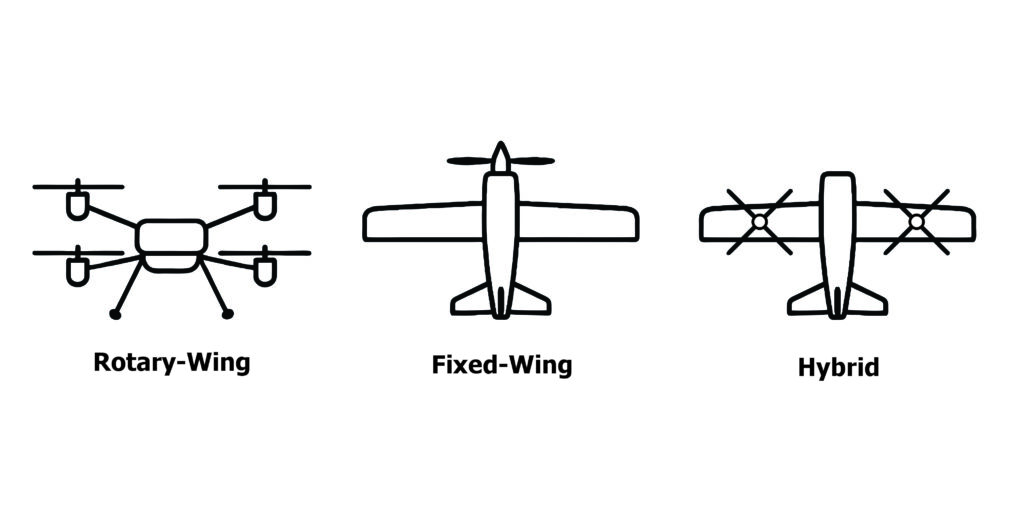
Drones can be divided into three design categories (Figure 1):
Rotary-Wing: Single or multi-rotor, these drones employ vertical take-off and landing (VTOL) and can hover during spraying. They have relatively short flight times and low volumetric capacity.
Fixed-Wing: Resembling crewed airplanes, these drones require a runway for take-off and landing. They have relatively long flight times, operate at higher speeds and have more volumetric capacity.
Hybrid: Encompassing a range of designs including, for example, parasail-wing and VTOL-wing, this design combines aspects of rotary drones with the speeds, flight times and volumes of fixed-wing designs.
Figure 1 – Common drone designs.
Drones are also categorized by weight, which is used to define their legal use:
Small Drones (250 g to 25 kg): Typically have tank sizes up to 12 liters and speeds less than 25 km/h (10 m/s).
Medium Drones (25 kg to 150 kg): Typically have tank sizes ranging from 12 to 70 liters and a maximum speed of 25 km/h (10 m/s).
Large Drones (>150 kg): Typically have tanks >70 liters and a maximum speed of 72 km/h (20 m/s).
Pesticide use is regulated by both federal and provincial governments to protect human health and the environment. Anyone applying pesticides must ensure they are registered for use in Canada and must comply with all applicable federal and provincial/territorial requirements. Provincial rules vary, and it is the responsibility of the drone operator to understand and follow the requirements in their jurisdiction.
Transport Canada: Certification
Drone pilots must follow Canadian Aviation Regulations (CARS) Part IX. Drones must be registered and marked, and the pilot must carry valid pilot’s certification.
Table 1 – Drone Operational Categories and Pilot Certificates
Basic
Advanced
Level 1 Complex3
Age minimum for certification1
14
16
18
Fly in visual line-of-sight
Y
Y
Y
Closer to or over people2
N
Y
Y
Small drones
Y
Y
Y
Medium drones
N
Y
Y
Large drones4
N
N
N
Controlled airspace (air traffic control permitted)
N
Y
Y
Sheltered operators (small drones only)
N
Y
Y
Extended visual line-of-sight
N
Y
Y
Beyond visual line-of-sight
N
N
Y
1In Canada, you must be at least 16 years old to apply pesticides. 2Flying at an advertised event is considered a special operation, requiring permission. 3Operating a drone over 150 kg in Canada is classified as a high-complexity, specialized operation requiring a Special Flight Operations Certificate (SFOC) from Transport Canada. 4Operations with large drones are medium-complexity special operations and require SFOC permission.
Transport Canada has complied a list of drones that meet their RPAS Safety Assurance Standards to conduct specific operations. Pilots must declare their drone for advanced or Level 1 Complex operations, and any modification to RPAS components or configurable elements must also be declared to ensure the drone complies with Canadian Aviation Regulations section 901.194 and Standard 922.
Health Canada: Pesticide Labels
Health Canada is responsible for approving the registration of pesticides across Canada. Pesticide labels are legal documents and set rules on how a pesticide can be used. They define application rates, equipment settings, mixing instructions, environmental precautions, personal protective equipment (PPE), restricted-entry intervals, and disposal instructions.
On June 30, 2026, Health Canada released Science Policy Document SPN2026-02, allowing pesticide application by drones for products currently registered for aerial application. Users are required to follow all label directions for aerial application, with no changes to spray volume, application rate, droplet size, spray buffer zones, or any other conditions of use specified on the label, with some clarifications regarding nozzle placement, and PPE and safety measures for drone pilots.
Before using drones to apply pesticides, pilots and crew members must ensure they understand provincial requirements, complete any training and certification required and obtain any applicable licenses, permissions and permits for pesticide use that are required by provincial or territorial regulators.
Questions regarding product label interpretations and uses can be directed to the Pesticides Information Service at pesticides-info@hc-sc.gc.ca.
2. Mission Planning and Logistics
Proper field mapping and mission planning leads to safe and successful flights. Map obstacles, no spray zones, buffer zones, sensitive area/crops, areas of human activity, terrain, etc. Be aware that these conditions may change if planning occurs too far in advance of the spray day. Further, be aware that some drones will fly through the airspace designated as “no spray” but will not fly through airspace designated as “obstacle”. This distinction can help avoid potential collisions. Always check for relevant Notice to Air Missions (NOTAM), ensure the airspace is not restricted, and be aware of any other aircraft operating in the area. Ensure the RPAS software is updated and is the manufacturer’s latest version.
Staging Area
Ideally, the staging area should be identified and prepared prior to the spray day. Select and clear a location for filling, take-off and landing that is safe for the operator, crew and equipment.
The staging area should present clear lines of sight and support efficient operations.
Drones should never fly over, or too close to busy roads.
The staging area should be upwind of the target site to reduce operator exposure to drift.
Bystanders must be at a safe minimum distance, as defined by the nature of the operation.
The operator and crew must be a safe distance from the drone during take-off and landing. Flying over crew is prohibited.
When spraying large fields, moving to an alternate staging area can save unnecessary ferry time, increasing efficiency and reducing battery strain.
Identify and be prepared to use connecting points and perform a manual landing when needed.
Drone tendering systems vary in size, complexity, cost and capacity, depending on the nature of the operation. For example, licensed exterminators (that is, those paid to spray properties other than their own) may have additional needs beyond what is listed here.
Mixing
Drone tanks are small and lack agitation. Therefore, most tendering systems include a nurse tank for pre-blending and agitating batches of spray mix. This helps ensure that active ingredients dissolve and disperse fully, that suspension products stay mixed and that the target site receives a consistent mix.
Water quality determines pesticide effectiveness; hardness, bicarbonate, pH, and turbidity can antagonize or degrade products. Water quality testing allows operators to correct potential problems before spraying. Higher spray volumes (that is, liters per hectare or gallons per acre) enable proper mixing and have been shown to improve spray coverage.
The act of mixing (and filling) carries the highest risk of operator exposure and environmental contamination. PPE requirements must be observed, and operators should avoid distractions or hurried work. Mix only the amount required for the task; leftover pesticide mixes create disposal problems and safety risks.
Fill the nurse tank halfway with clean water. Backflow prevention (for example, a valve or air gap) protects the water source.
Measure and add the pesticide, following the mixing order on the label and allowing time for each tank mix partner to dissolve and disperse. In Canada, tank mixing must be permitted on the label of each tank mix partner. Mixing multiple products at high concentration greatly increases the possibility of physical and/or chemical antagonism. If compatibility is in question, contact the manufacturers for guidance and conduct a jar test well in advance of spraying.
Rinse jugs and measuring tools into the nurse tank.
Top up with water and maintain agitation throughout the operation.
Transfer the spray mix into the drone tank using the most closed system available.
Filling and Battery Management
Rotary-wing drones carry relatively small spray volumes, so refills and battery swaps occur frequently. Large models, for example, might have a 10-minute flight cycle, where the refilling and battery swap processes are simultaneous and comprise less than 2 minutes. Flight time between spraying and filling represents a significant factor in productivity and should be minimized where possible.
Filling
Haste and inattention increase the chance of spills, overflows and leaks during refilling. This represents unnecessary point source contamination and operator exposure and must be avoided. While drone refills currently involve quarter-turn-valved faucets, or gas-station-style automatic fuel nozzles, neither are ideal. It is inadvisable to remove or otherwise modify the tank lid to expedite filling. Ensure filling is performed with the most closed system available.
Batteries
Batteries, like the drone, carry spray residue and must be handled using PPE. Some battery chargers feature water baths, misters or air conditioning. If water-cooled, treat the water as pesticide‑contaminated and dispose of accordingly. Batteries charge more efficiently and last longer if charged in a cool, ventilated location. Charge according to the manufacturer’s instructions.
Note: At the time of writing, there are new developments in drone tendering that permit autonomous charging and loading. This will reduce the potential for operator exposure and environmental contamination.
Operator Comfort
Drone operations are physically and mentally taxing. Attention to operator comfort improves safety and efficiency. Even seemingly minor accommodations have positive impacts:
Folding chairs combat operator fatigue.
RV awnings, umbrellas, foldable Bimini-style tops or flip-up doors provide shade.
Wear ear protection and consider lower-decibel equipment (for example, inverter gas generators are comparatively quiet, and electric pumps are even quieter).
Enclose or locate loud components far from the filling area to reduce noise and emission exposure.
Elevated Platforms and Flight Decks
Line-of-sight and Connectivity
While “beyond visual line-of-sight” operations are allowed under specific, authorized conditions, most current regulations require operators to maintain a visual line-of-sight with the drone. This supports swath alignment, obstacle avoidance, an ongoing assessment of drift risk, and general operational safety.
Operating from an elevated platform can help maintain visual line-of-sight and improve connectivity between the flight controller and the drone. Real-Time Kinematic (RTK) is a satellite positioning technique that enhances GPS/GNSS data to provide centimeter-level accuracy in real time. A RTK platform will improve connection reliability and drone accuracy. Satellite internet providers can supplement connectivity in regions with unreliable cellular coverage. Be aware that network latency varies with provider.
The safest approach is for the pilot to control the drone from an elevated platform while a loader performs refill and battery-swap procedures on the ground. However, if operating off a flight deck:
Long flight decks keep landings and lift-offs at a safer distance.
Decks with pull-out platforms or hydraulic wings can increase the operating area and can be adjusted to account for adjacent roads and the slope of the ground.
A security rail around the landing area can prevent a drone from slipping off; A falling drone is expensive, but falling or sliding into an operator is a disaster.
An enclosed operations area can improve operator safety and comfort.
Remember, the operator should be focused on the drone/controller when flying; Flight is not an opportunity for performing other tasks.
Cleaning
Proper cleaning prevents cross‑contamination, maintains equipment lifespan, and avoids crop injury from residues. Perform cleaning away from open water and ensure rinsate is disposed of responsibly. Follow the pesticide label and adhere to the manufacturer’s instructions on allowable cleaning methods. The following recommendations do not supersede either resource. Be sure to clean the drone exterior, but do not pressure-wash to avoid damaging sensitive electronics.
Triple‑Rinse Procedure
Multiple, small-volume rinses are more effective than a single, large-volume one. Follow the triple-rinse procedure:
Ensure the drone tank is as empty as possible.
Fill the drone tank 1/4 full of clean water and, with a partner, agitate by rocking the tank (if removable).
Flush the rinse water through the plumbing and nozzles.
Repeat the process twice more.
Employ a similar procedure to remove residues from the nurse tank plumbing systems. Important reminders when cleaning:
Use a cleaning agent in the second rinse if recommended by the label. Soaking may be required.
While the drone exterior should be rinsed, avoid pressure washing (to protect electronics) unless explicitly permitted by the manufacturer.
Cameras and Lidar will not function if they are covered in residue.
Commercial drone residue removers are available to assist in keeping the drone clean.
Wash or dispose of PPE according to label and local regulations.
Record Keeping
Detailed record keeping will help operators better understand how operational and agronomic use cases affect the outcome of a spray mission. Quality records also help mitigate against any allegations of misapplication, such as a drift complaint. The following items should be recorded, but the list is not exhaustive:
Product name(s), rate(s) and water volume.
Sprayer operational settings (altitude, speed, route spacing, droplet size to supplement a digital record of the mission)
Swath measurements
Weather conditions
Note of buffers and sensitive areas
Crew names and roles
Unusual events or corrections
Results (return to site to assess efficacy)
3. Operational Use Case
Swath Width
For now, consider swath width to be the width of the area sprayed in a single pass. This definition will be refined later in the article.
Swath width is a fundamental variable for mission planning, ensuring the pesticide is applied at the correct rate and (in the case of broadacre operations) as uniformly as possible. A rotary-wing drone’s swath width is highly variable and affected by several factors, collectively referred to as the “Operational Use Case”. These factors include:
Downwash
Operational Settings (for example, altitude and travel speed)
Meteorological Conditions (for example, wind speed, wind direction, relative humidity)
Downwash
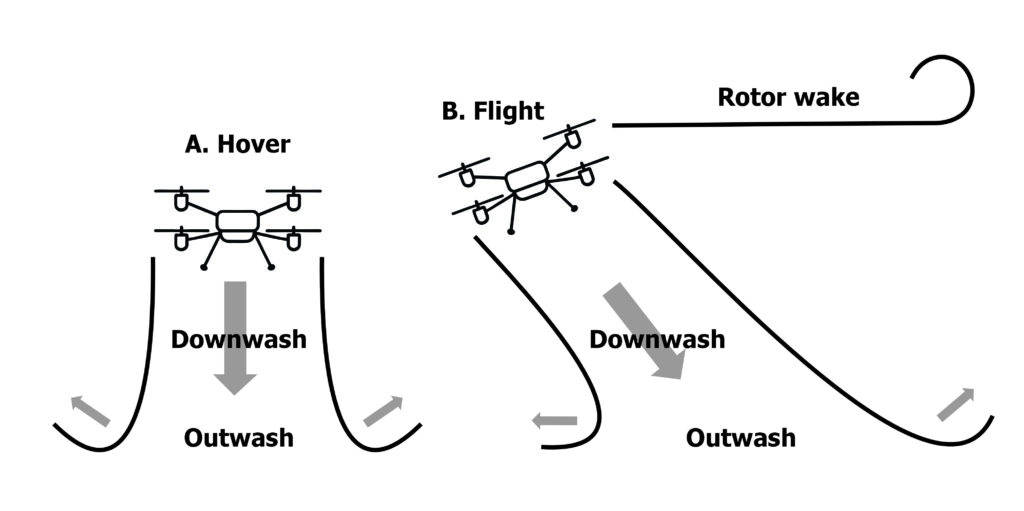
When a rotary-wing drone hovers, each rotor draws air from above and accelerates it downward in a high-velocity blast. The result is a vertical component referred to as the “downwash” and the turbulent splash of air that hits the ground and spreads laterally is the “outwash”. Droplets released beneath a drone at hover are almost completely entrained by the downwash. The majority get driven to the ground and then move laterally along the outwash, while a small portion (generally smaller droplets) recirculate back up through the rotors (see Figure 2a).
Most rotary-wing drones have fixed-pitch rotors, so the entire drone must tilt forward to enter low-speed flight. This causes the column of downwash to tilt backward. While the downwash is created by lift, “wake turbulence” is created at the tips of the rotors as high-pressure air beneath the rotor wraps around to the low-pressure area above.
As the drone flies at low speed (~3 m/s) the wake can be visualized as a pair of counter-rotating, cylindrical vortices that trail behind. Spray is still mostly entrained by the downwash on a downward and rearward vector with deposition aligning closely to the flight path. However, a portion will get caught in the wake (see Figure 2b).
Figure 2a (left). Rotary-wing drone at hover creates a high-energy downwash directly below the drone. 2b (right). Rotary-wing drone at low-medium flight speed trails a lower-energy downwash and creates a rotor wake.
The effects of higher flight speeds have not yet been fully characterized. While the additional thrust required at higher speeds may increase downwash energy, the downwash is also carried farther behind the drone and distributed over a larger area. As a result, it becomes less effective at entraining spray droplets and directing them to (or into) the target. Droplets remain suspended for longer, making them more susceptible to evaporation and wind displacement. This increases the proportion of spray carried within the rotor wake. Overall, these effects tend to widen the deposition pattern, increasing swath width.
The optimal flight speed achieves the intended result as efficiently as possible, and is therefore situation-specific. It must be assessed by the operator.
Operational Settings
When configuring a rotary-wing drone for a mission, pilots select operational settings through the controller. Of these, droplet size, flight speed, and altitude (specifically, the distance between the nozzles and the target) have the greatest influence on droplet behaviour and, consequently, swath width. Although the interactions among these factors are complex, some general trends have emerged. These trends can be used to predict how changes in a setting are likely to affect both swath width and drift potential (Table 2).
Table 2 – Effect of rotary-wing drone operational settings on swath width and drift potential.
Variable
Change
Effect on Swath Width
Effect on Drift Potential
Droplet size
Coarser
Narrows
Reduces
Droplet size
Finer
Widens1
Increases
Flight speed
Faster
Widens2
Increases
Flight speed
Slower
Narrows
Reduces3
Altitude
Higher
Widens1
Increases
Altitude
Lower
Narrows
Reduces3,4
1Coverage uniformity and overall number of deposits within the swath reduced due to evaporation and drift. 2Current evidence suggests that at high speeds (>~10 m/s) there may be a plateau where there is little or no further change to swath width, but deposition within the swath decreases, likely due to a combination of evaporation and drift. 3Lower speed and/or lower altitude will increase the influence of downwash on droplet behaviour. 4Low altitude may not permit sufficient overlap of the spray from each rotary atomizer, creating peaks and troughs in coverage.
Meteorological Conditions
Spray released from a drone is highly susceptible to environmental conditions. Drift potential increases when:
conditions are calm (inversion risk)
windspeed is too high (physical drift)
conditions are changeable (gusting and fluctuating wind direction)
conditions are hot and relative humidity is low (droplet evaporation)
Operators must observe label instructions, local laws, and use good judgment to minimize drift potential. At minimum, operators should consider adjusting settings for passes along the downwind field margin to account for swath offset and drift. Practical methods include:
reducing flight speed
increasing droplet size
increasing volume
reducing altitude (and compressing route spacing)
halting operations when conditions favour movement toward sensitive habitat / crop / residential areas.
Be aware that certain drift-reducing adjuvants have an unpredictable impact on the droplet size produced by current rotary atomizer designs. Until rotary atomizer design is standardized and tank mixes can be evaluated, do not assume adjuvants will work as intended.
Droplet Deposition
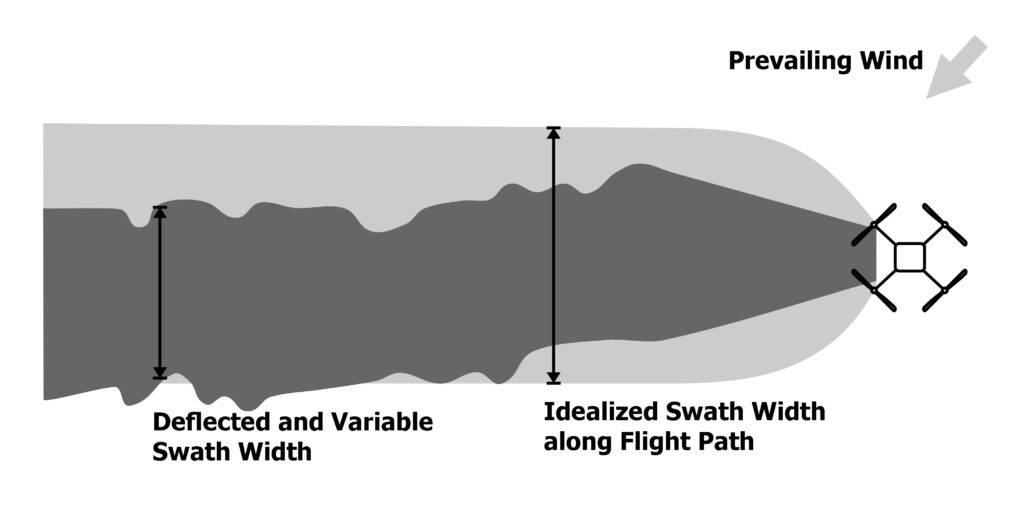
Consider the following operational use case: A rotary-wing drone spraying back and forth over rolling topography will experience changing wind speed and relative direction. The drone will respond by changing drone pitch, rotor speed and pump flow to maintain the desired altitude, travel speed, and application rate. Meanwhile, the drone gets lighter as it sprays, reducing the magnitude of the downwash. Ultimately, this results in a swath width that expands and contracts and may shift back-and-forth or be consistently offset along the flight path (Figure 3).
Figure 3 – Swath width and swath position along the flight path is variable.
Deposition studies using vertical targets have shown that when a drone sprays into a headwind, deposits spread laterally to either side of the flight path due, in part, to rotor outwash. Deposit density decreases with increasing distance from the flight path. Spray is also carried downward and rearward by the downwash, resulting in greater deposition on vertical surfaces that face the drone’s retreat (revisit Figure 2).
In contrast, a tailwind, even as light as 7 km/h, can carry suspended droplets forward and cumulatively deposit on vertical surfaces facing the drone’s advance. This is the opposite of the headwind situation. Similarly, a crosswind shifts the spray plume laterally in the downwind direction.
In summary, when the wind is strong enough to overcome the drone’s downwash, most spray will deposit downwind of the flight path, regardless of the drone’s direction of travel. This is especially true for smaller droplets.
Evaluating Swath Width
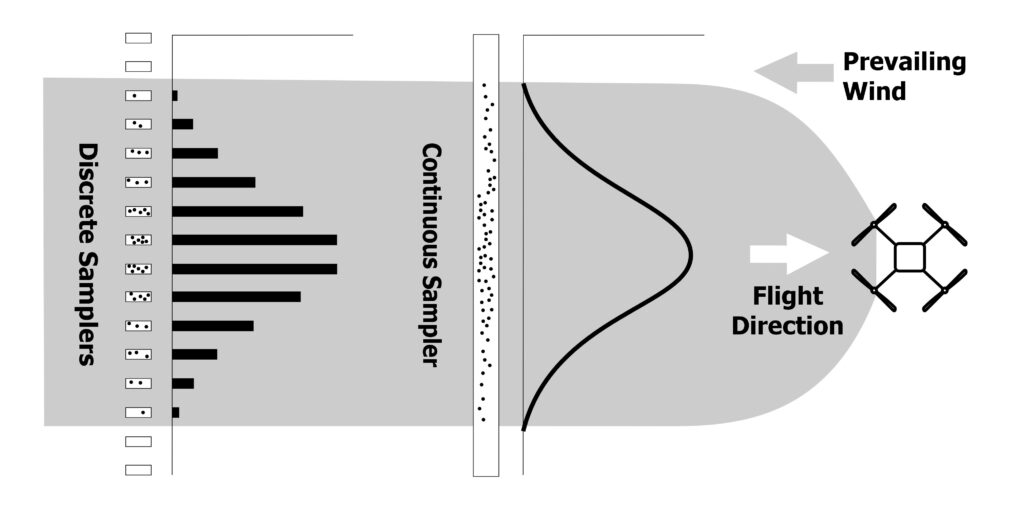
A drone’s swath width for a given operational use case must be determined through testing. The drone is first calibrated according to the manufacturer’s instructions. Swathing methods vary, but generally the drone is flown into the prevailing wind over a series of samplers (for example, discreet samplers like water sensitive paper or continuous samplers like string or bond paper). This creates a cross-section of the spray deposition (Figure 4).
Figure 4- Methods for testing swath width.
Multiple passes are required to capture the variability that occurs along the flight path. Swath width is calculated for each pass and then averaged, as opposed to averaging deposition data and calculating a swath width. The later practice is incorrect because it conceals variability, resulting in a larger swath width and a more uniform distribution than can not be consistently achieved in practice.
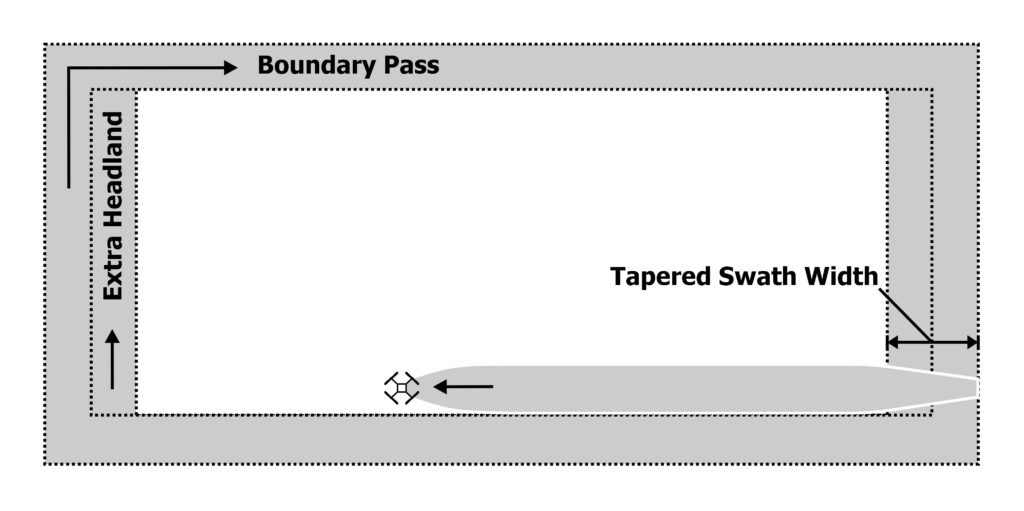
This tapered coverage pattern may be unavoidable. Crewed aircraft reach and maintain target speed before spraying, but current software limitations prevent drones from separating flight and treatment zones.
Some drones will climb into the turn, ostensibly to reduce the impact of downwash on delicate canopies, but also to prevent tapering. In practice, this does not appear to change the effect on swath width significantly.
Therefore, when uniform coverage is critical, consider performing additional boundary passes, or headland passes at the beginning and end of each flight pass (see Figure 5).
Figure 5 – Swath width changes due to acceleration and deceleration.
Route Spacing and Overlap
A rotary-wing drone does not deposit spray uniformly across its swath. Deposition is typically greatest beneath the drone and decreases with distance from the flight path, creating a bell-shaped distribution (revisit Figure 4). In the presence of a sidewind, this distribution becomes skewed in the downwind direction.
Route spacing, which is entered into the flight controller, determines the distance between adjacent flight passes, but it does not influence the swath width itself. For example, if testing indicates a swath width of 7 m, entering a route spacing of 10 m will not increase it and striping will occur.
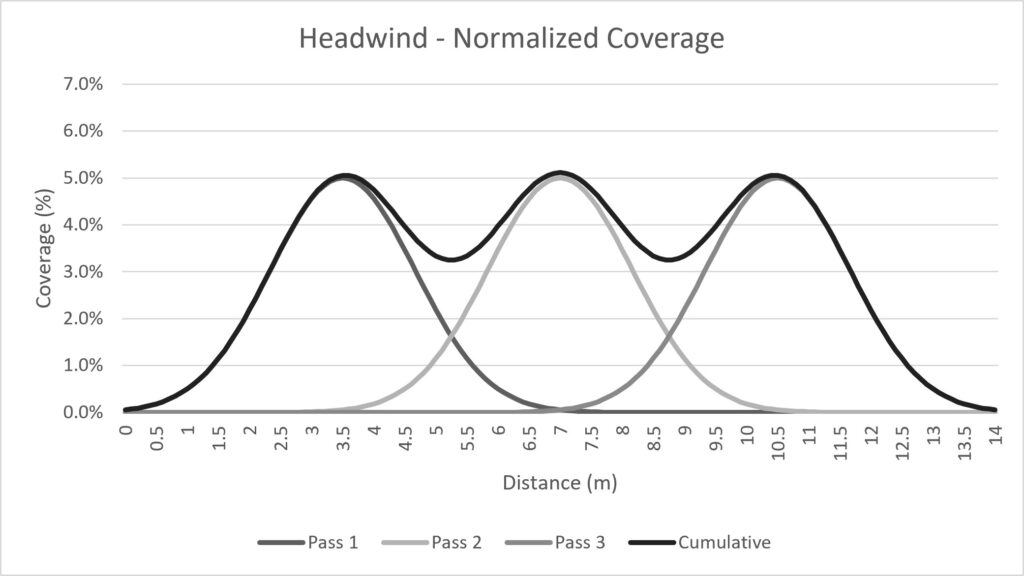
When uniform broadacre coverage is the objective, adjacent swaths should be overlapped to create the flattest possible combined distribution. Technically, for a series of repeated, symmetrical deposition curves, adjacent passes should be spaced so that the edge of one swath aligns with the centre of the next. Figure 6 models idealized, identical curves as if the operator flew into a headwind each time. In reality, curves are not normalized and repeated, so most operators employ wider route spacing to achieve a minimum threshold dose, and the result is an alternating pattern of excessive and appropriate doses. This will be addressed later in the article.
Figure 6 – Modeling a 7 m, normalized swath (headwind), on a 7 m route spacing. Illustrates cumulative coverage due to overlap.
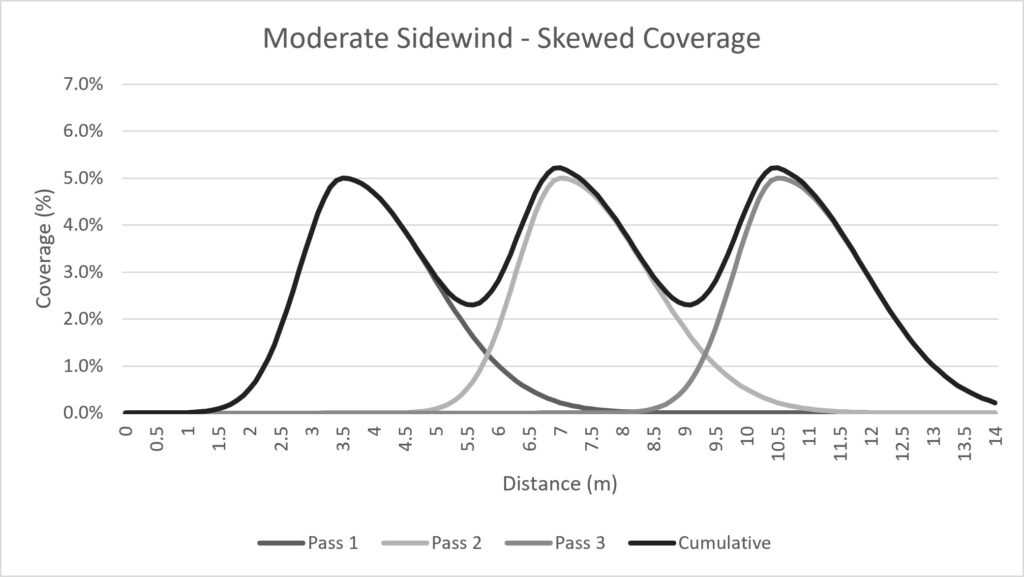
It may seem that a sidewind would improve uniformity by spreading and smoothing deposits over a wider area. However, sidewinds produce skewed deposition patterns rather than symmetrical bell curves. Modelling shows that when these asymmetric profiles are overlapped at regular intervals, their steep leading edges and long trailing tails do not balance. Instead, they create pronounced peaks separated by broad, shallow valleys (Figure 7).
Figure 7 – Modeling a 7 m, skewed swath (moderate sidewind), on a 7 m route spacing. Illustrates cumulative coverage due to overlap.
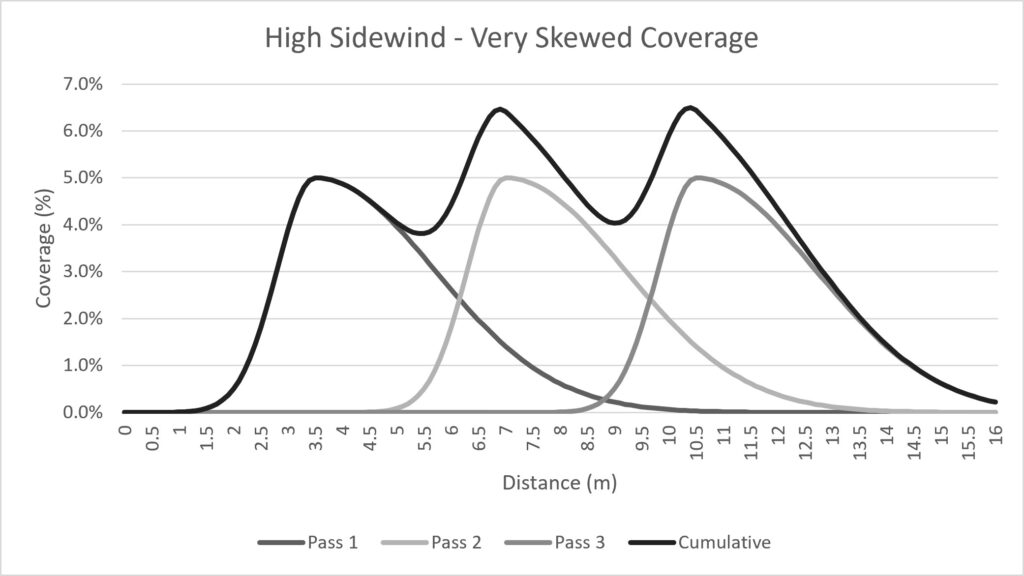
As skew increases (due to higher wind, smaller droplets or higher altitude), uniform coverage becomes progressively more difficult to achieve, and no single route spacing can fully compensate for the asymmetry of the deposition pattern (Figure 8). Drones that adopt a horizontal boom with evenly-spaced atomizers, preferably preceding the downwash, will likely produce a more uniform pattern of deposition.
Figure 8 – Modeling a 7 m, significantly skewed swath (high sidewind), on a 7 m route spacing. Illustrates cumulative coverage due to overlap.
4. Agronomic Use Case
Effective Swath Width
We must now refine the concept of swath width. Some drone manufacturers define swath width as the distance between the furthest detectable spray deposits. However, detecting a deposit during testing does not necessarily mean enough product has been deposited to achieve the desired result. As a result, application efficacy can vary across the swath, even within the measured limits of detectable deposition.
A more practical definition is the Effective Swath Width (ESW), which is the maximum route spacing that achieves the desired biological result while minimizing over-dosing between adjacent passes. Determining the ESW requires establishing a minimum threshold dose, or put simply, “how much is enough?” Traditional aerial application methods often assess deposit uniformity using the coefficient of variation (CV) and estimate the efficacy threshold as a percentage (70% or more) of the maximum deposition. Online tools are available to help calculate ESW from measured deposition patterns.
The need for an ESW becomes apparent at the outer edges of the swath, where deposition is often too sparse and/or variable to provide reliable control. Therefore, the Effective Swath Width is influenced by the Agronomic Use Case, which includes factors such as:
Minimum Effective dose: This is a complex relationship between coverage, spray mix concentration and pesticide mode-of-action. It is a threshold or narrow range that elicits an effective result while minimizing waste.
Spray Mix Rheology (that is, the interaction of spray mix viscosity and atomizer design on droplet sizes produced)
Target Location (for example, a pest within a dense canopy or a weed on relatively bare ground)
Minimum Effective Dose
Consider a systemic herbicide and a contact fungicide. Generally, a herbicide mixed according to the label will kill weeds with less volume per hectare and less target coverage than is required for most fungicides and insecticides. Therefore, a herbicide can still be effective at the extremes of the swath, whereas a fungicide may not.
Somewhere towards the middle of a drone’s steep deposition curve, the dose becomes excessive. If uniform broadacre coverage is the objective (as opposed to a directed application into a perennial, three-dimensional canopy), this represents waste. In exceptional circumstances, such as certain horticultural crops or GMOs with stressed metabolisms, it could potentially cause phytotoxic damage.
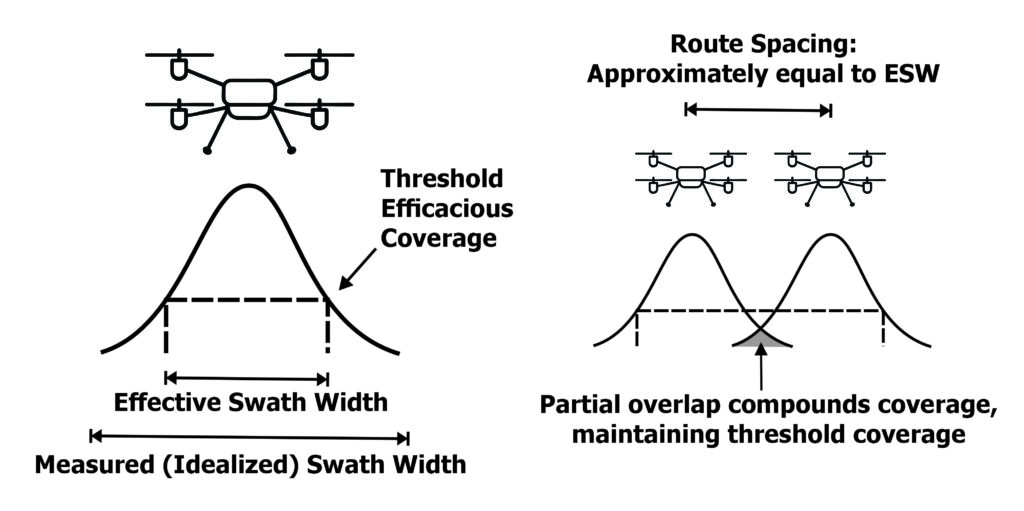
Therefore, two missions with identical operational use cases, but different agronomic use cases, can present the same swath width during testing, yet have different Effective Swath Widths in practice. This important distinction is why route spacing should match the effective swath width (see Figure 9).
Figure 9 – Matching route spacing to effective swath width represents the widest route spacing while achieving minimal threshold dosage. It is a compromise that trades increased productivity for reduced coverage uniformity. Deposition curves and thresholds shown here are idealized and not intended to be realistic.
Spray Mix Rheology
Most conventional hydraulic nozzle designs adhere to an international standard. This allows the operator to determine the size of droplets produced for a given operating pressure and flow rate. Droplet size is a not only a critical factor in mitigating drift and improving spray coverage, but also affects product efficacy (for example, droplets that stay wet longer tend to improve herbicide uptake).
Currently, most rotary-wing drones use rotary atomizers positioned within the rotor downwash. Rotary atomizer designs are not standardized, and their performance can vary considerably. Some atomizers are prone to “flooding” when the liquid flow rate exceeds their capacity. When this occurs, the atomizer produces a greater proportion of large droplets, which can reduce coverage and overall application efficacy.
As a result, the droplet size selected in the controller does not necessarily reflect the droplet size actually being produced. Research has shown that factors such as atomizer design, flow rate, spray mix composition, product concentration, and the use of adjuvants can significantly alter droplet size, producing droplets that are either much larger or much smaller than intended.
This variability creates a practical challenge for operators. When a pesticide label specifies a particular droplet size, it can be difficult to verify that the spray being produced by the drone is actually within the required range. Until rotary atomizers are standardized (or there is a return to conventional nozzles), operators can only select the desired size and infer the results based on in-flight behaviour and observing the size of the stains left on samplers during swath width testing.
Target Location
Spray coverage diminishes with canopy depth. The degree depends on crop morphology and planting architecture, as well as certain operational settings such as volume, droplet size and flight speed. Stated differently, a plant canopy filters out spray droplets, and this occurs both vertically and laterally. This is not represented during typical swath measurements, which tend to take place on bare ground in two dimensions.
Practical Impact
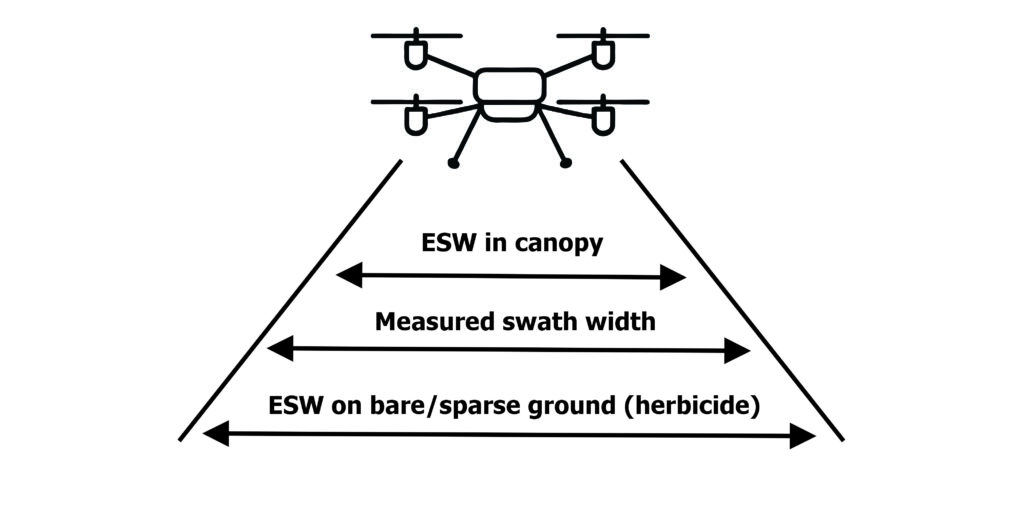
Taken collectively, research has shown a 20 to 30% reduction in ESW for corn, wheat and soybean fungicide applications compared to swaths measured on open ground. It is presumed that any complex canopy will reduce ESW to some degree.
The impact of agronomic use case on ESW must be considered during mission planning, because it may warrant further adjustments to route spacing.
Figure 10 – Relative size of a measured swath width (that is, deposition analysis) versus effective swath width (that is, biological efficacy) for different agronomic use cases.
5. Conclusion
Drone technology is evolving rapidly, and best management practices will change with new research and more experience. However, the principles in this document (that is, proper preparation, careful mixing, responsible application, diligent maintenance, environmental awareness and swath testing) apply regardless of model or agronomic use case.
Operators must ensure they are properly licensed and comply with all applicable federal and provincial requirements, including those related to the sale, use, transportation, storage and disposal of pesticides. With thoughtful planning, practice and record keeping, drones can be a safe and effective means of crop protection.
Thanks to Dr. Steve Li (Auburn University, College of Agriculture) and Dr. Michael Reinke (Michigan State University Extension) and Dr. Tom Wolf (Agrimetrix Research and Training) for their contributions to this article.
The scuttlebut on coffee row is that acidifying a spray mixture improves its efficacy. There are also claims that pesticides break down in the sprayer tank if the pH is too high.
But it’s not that simple. Low pH has a strong impact on pesticide solubility, and that means mixing and cleanout are affected. Acidifying the mixture can have profound negative effects for many products.
It’s important to know what you’re doing.
What is pH?
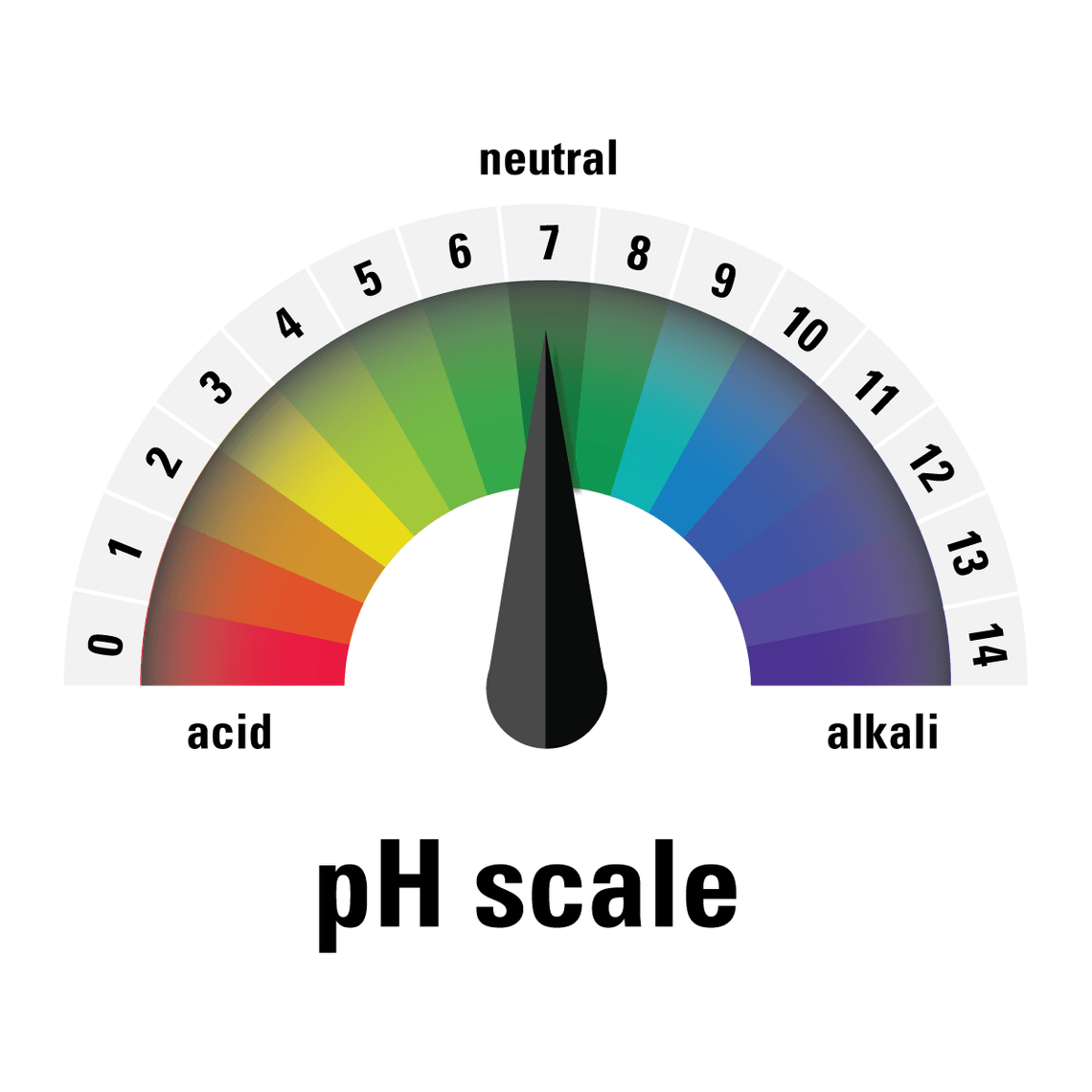
pH is defined as the negative log of the molar concentration of hydrogen ions in a water-based solution. The more abundant the hydrogen, the lower the pH. It’s a log scale, so every unit of pH refers to a 10-fold change in the concentration of hydrogen ions.
Both very low (acidic) or very high (basic) pH can be caustic. But having a low or high pH doesn’t mean it will burn your skin or clothes right away, it might just be a bit unpleasant. But at the extreme ends, protection is needed.
Why is pH Important in Spray Mixtures?
In spraying, the main effect of pH is on the pesticide’s solubility. Solubility matters when mixing and becomes important during cleanout as well.
A minor effect on pH, at least for herbicides, is on chemical breakdown, usually through hydrolysis, when the pH is too high. The effect on breakdown is rarely meaningful during any given spray day, but may play a role if a spray mix is stored overnight or longer.
The Basics: Strong vs Weak Acids
Strong acids like hydrochloric acid (HCl) ionize completely in solution. When added to water, only H+ and Cl– are present, there is no HCl. The water’s pH does not affect solubility of a strong acid.
But weak acids do not completely ionize. The water pH affects the degree of ionization and therefore solubility.
Most herbicides are weak acids. A weak acid is one that does not dissociate completely in solution. A typical example of a weak acid functional group is carboxylic acid (-COOH). In solution, compounds with a carboxylic moiety exist in an equilibrium, with some as -COOH (containing the hydrogen, also called “protonated”) and others as -COO– and H+. In the dissociated form, the acid is more water soluble than in its protonated form due to the negative charge that makes it ionic.
Weak acids have a dissociation constant known as the pKa. When the solution is at the molecule’s pKa, the acid is 50% dissociated. When the solution has a lower pH than the pKa, there is less dissociation and the protonated forms of the molecule dominate. That has two important implications for herbicides.
the molecule becomes less water-soluble at lower pH
the molecule has fewer opportunities to interact with positively charged items
pH Dependent Solubility
Water-solubility is a two-edged sword. On the one hand, having a highly water soluble product makes it easier to dissolve in water. This pays dividends when mixing a batch or cleaning a sprayer because a product formulated as a solution will easily go into a true solution and will stay mixed. Examples are glyphosate, glufosinate, and salts of 2,4-D, MCPA, and dicamba.
On the other hand, most pesticides need to enter a plant to reach their site of action. And a plant cell, with its waxy cuticle and oily membranes, creates an effective barrier for water, and for water-loving molecules dissolved in it. As a result, a formulation that allows the water-soluble product to interact with an oily barrier is needed.
The products that can do this are surfactants. Acting like detergents, surfactants have regions in their structure that are oil-loving (lipophilic) and other regions that are water-loving (hydrophilic). Surfactants can therefore bind to both oil and water and provide a bridge for water-soluble products across oily barriers.
That’s also one of the reason that the most water-soluble products such as glyphosate and glufosinate contain a lot of surfactants in their formulation, reducing the concentration of active ingredient in the jug and possibly leading to foaming with agitation.
Pesticides have a wide range of solubilities, and for some, water pH will play an important role. Below is a table of some water solubilities of selected herbicides.
Solubility (ppm)
Trade Name
Active Ingredient
Mode of Action Group
pH ~ 5
pH ~ 7
pH ~ 9
Select
clethodim
1
53
5,450
58,900
Ally 2
metsulfuron
2
550
2,800
313,000
Express
tribenuron
2
48
2,040
18,300
Pinnacle
thifensulfuron
2
223
2,240
8,830
Everest
flucarbazone
2
44,000
44,000
44,000
Simplicity
pyroxsulam
2
16
32,000
13,700
Frontline
florasulam
2
0.1
6
94
Varro
thiencarbazone
2
172
436
417
Raptor
imazamox
2
116,000
>626,000
>628,000
Pursuit
imazethapyr
2
2,570
12,870
7,500
2,4-D
2,4-D salt
4
29,934
44,558
43,134
dicamba
dicamba salt
4
>250,000
>250,000
>250,000
Roundup
glyphosate
9
>500,000
>500,000
>500,000
Liberty
glufosinate
10
>500,000
>500,000
>500,000
Heat
saflufenacil
14
30
2,100
>5000
Distinct
diflufenzopyr
19
63
5,900
10,550
Infinity
pyrasulfatole
27
4,200
69,100
49,000
Compare the solubility at pH 7 to that at pH 5. For most of these herbicides, water solubility is worse at lower pH. That is because they are more protonated and become more lipophilic.
I’ve placed a lot of Group 2 products in this table because those products are most often implicated in tank cleanout issues. All Group 2 products in this table, with the exception of Everest (flucarbazone-sodium) have lower solubility at pH 5 than they do at pH 7. For some, like pyroxsulam and floarsulam, it’s a big change. Those products, when acifified, are prime candidates for poor mixability and poor cleanout.
When it comes to dicamba, low pH has another side-effect. It makes the molecule more volatile, increasing danger to sensitive plants nearby. For that reason, acidification of dicamba in its Xtendimax and Engenia formulations is not permitted.
Note that the Group 4 examples, 2,4-D salt and dicamba salt, as well as glyphosate and glufosinate, are highly water-soluble and pH has very little effect on that.
Particularly for glyphosate, the claim that it becomes more oily at low pH and will therefore be taken up more easily, is not supported by these data. Considering that the most acidic pKa for glyphosate (it has four acidic groups) is 0.8, pH would need to be much lower for any noticeable impact on oilyness.
Tank Mixability
Given today’s environment of herbicide resistance, applications with multiple mode of action tank mixes are very common. Acidifying a spray mix to benefit one herbicide may create problems for its tank mix partners.
If there is a concern that spray water is too alkaline, it is recommended that the pH of the finished spray mix be measured. Since many herbicides are weak acids, they will lower the pH of the mixture by themselves. For example, the addition of glyphosate to water with pH 7.5 will drop the pH to about 5 or so, depending on the water’s buffering capacity.
As a result, glyphosate tank mix partners that are pH sensitive may suffer in the presence of glyphosate, and pH may actually need to be raised.
pH Dependent Half-life
Herbicides
There are a lot of claims that pesticides break down rapidly in alkaline spray water. And yet, in my career working primarily with herbicides, I do not recall this ever being a problem in practice.
Below is a table of herbicides for which I could find half-life information, with the help of this comprehensive list produced by Michigan State University.
Product
Active ingredient
Half Life
Atrazine
atrazine
More stable at high pH
Banvel
dicamba
Stable at pH 5 – 6
Bromoxynil
bromoxynil
pH 5 = 34 d; pH 9 = 1.7 d
Fusilade
fluazifop-p-butyl
pH 4.5 = 455 d; pH 9 = 17 d
Liberty
glufosinate-ammonium
Stable over wide range of pH
Gramoxone
paraquat
Not stable at pH above 7
Reglone
diquat
pH 5 = 178 d; pH 7 = 158 d; pH 9 = 34 d
MCPA
MCPA
pH 9 = < 5 days
Poast
sethoxydim
Stable at pH 4.0 to 10
Princep
simazine
pH 4.5 = 20 d; pH 5 = 96 d; pH 9 = 24 d
Prowl
pendimethalin
Stable over a wide range of pH values
Roundup
glyphosate
Stable over a wide range of pH values
Treflan
triflularin
Stable over a wide range of pH values
2,4-D
2,4-D
Stable at pH 4.5 to 7
Note that all of the herbicides are relatively stable. Some are a bit less stable at high pH, but none of the listed herbicides is in danger of breaking down on the day it is being applied. Only one is actually unstable at high pH – paraquat, a herbicide no longer registered in Canada and resticted in many other countries. Those with short half-lives experience them at quite high pH which are rarely seen in practice.
Insecticides
Insecticides are a different story. Several are very sensitive to pH. This table is again adapted from a comprehensive list published by Michigan State University, here.
Among insecticides, dimethoate, amitraz, and malathion stand out as breaking down rapidly in alkaline water. For these products in particular, it may be important to acifify the spray mix if there is any delay in spraying.
Recommendations
I’ve never been a fan of messing with solution pH unless recommended on the product label. Even when there is evidence that lower pH improves efficacy, consider the impact on tank mix partners.
We’ve seen improvements in solubility and tank cleranout of Group 2 products with raised pH, and ammonia is the most cost-effective way to achieve that. But again, following label recommendations is strongly recommended. The consequences of changes in pH, particularly acifification, can be very detrimental. To be safe, consider doing a jar test before committing to a whole tank to a pH adjustment.
Most operators assume drone swath widths are wide, stable, and predictable. That confidence generally comes from three places:
Manufacturer specs, often broad, vague and dependent on working conditions, not to mention each drone model is different, and even two drones of the same model behave differently.
Single point calibrations (water sensitive paper, Swath Gobbler, etc.) that are useful and display a 1-dimensional point-in-time snapshot of the swath.
“Looks good from the ground.” Watching a plume from below often makes it feel wider than it is.
But drones move through space and time; spray patterns evolve as they fly. What you think is happening in the two seconds you glance up is not what’s happening over a 50 metre pass. The following video shows a multi-drone comparison where three drones apply 20, 50 and 100 L/ha.
Why Single Point Methods Fall Short
This isn’t a criticism. Water sensitive paper (WSP) cards and tools like Swath Gobbler™ are valuable. But they are 1-D snapshots of a 2-D, time-evolving problem. WSP captures a moment, not a pattern. Swath Gobbler™ helps visualize centre mass but can’t show edge dynamics or how edges wander along the pass.
Real deposition and uniformity depend on:
Flight parameters (altitude, speed, droplet size)
Ground or crop size and shape
Path stability and lane keeping of the aircraft
Continuous micro corrections the aircraft makes
Gusts, even in “light” wind
Onboard wind compensation behaviour
We noticed an observation from the field: gusts → aircraft corrections → amplified drift. If a left-side gust pushes the aircraft, the autopilot often dips into the wind to hold course. The nozzles are mounted to the airframe, so that slight tilt can direct spray downwind, in the same direction the gust is pushing, amplifying drift rather than cancelling it.
Hidden Message: Many operators are doing their homework. At SDEUC 2026, I was impressed by how many pilots were calibrating and said they “knew” their drone’s pattern. My data suggests your drone may be subtly lying to you – its pattern shifts as it moves through air over distance.
What Happens Over 50 m: The Swath You Weren’t Expecting
The setup matters, because without context, a lot of people will assume the pattern you’re about to see is an artifact. It’s not. It’s the result of a controlled, repeatable field experiment designed specifically to expose real-world swath behaviour.
During August–September 2024, we conducted clopyralid herbicide application trials in soybean, a crop that is extremely sensitive to clopyralid. Even a trace amount causes clear visual symptoms four weeks after application, which makes soybean a perfect bio indicator of spray deposition. (I jokingly call this sensitivity the “touch of death” because it reveals every detail.)
We used a DJI T50 to apply Lontrel™ XC (clopyralid) at the highest labeled rate (300 g ae/ha) across three water volumes (20, 50, 100 L/ha) over 100 m long field plots. From each pass, a continuous 50 metre analysis zone was extracted to see how the swath behaved over distance (Table 1).
Category
Details
Crop
Crop Soybean (highly sensitive to clopyralid, ideal for visualizing deposition)
Herbicide
Lontrel™ XC (clopyralid) @ 300 g ae/ha (highest labeled rate)
Equipment
DJI Agras T50 with rotary atomizers
Spray Altitude
3 m above canopy
Water Volumes
20 L/ha, 50 L/ha, 100 L/ha
Droplet Size
300 µm (rotary atomizer setting)
Flight Speeds Achieved
~7.0 m/s (20 L/ha), ~6.9 m/s (50 L/ha), ~4.2 m/s (100 L/ha)
Plot Dimensions
10 m wide × up to 110 m long (location dependent)
Analysis Window
Central 50 m (avoids acceleration/deceleration effects)
Wind
~5 km/h (cross wind)
Data Extraction
DroneDeploy orthomosaic → continuous 2 D swath visualization
Table 1 Key application parameters for the 50 m Swath Visualization trials
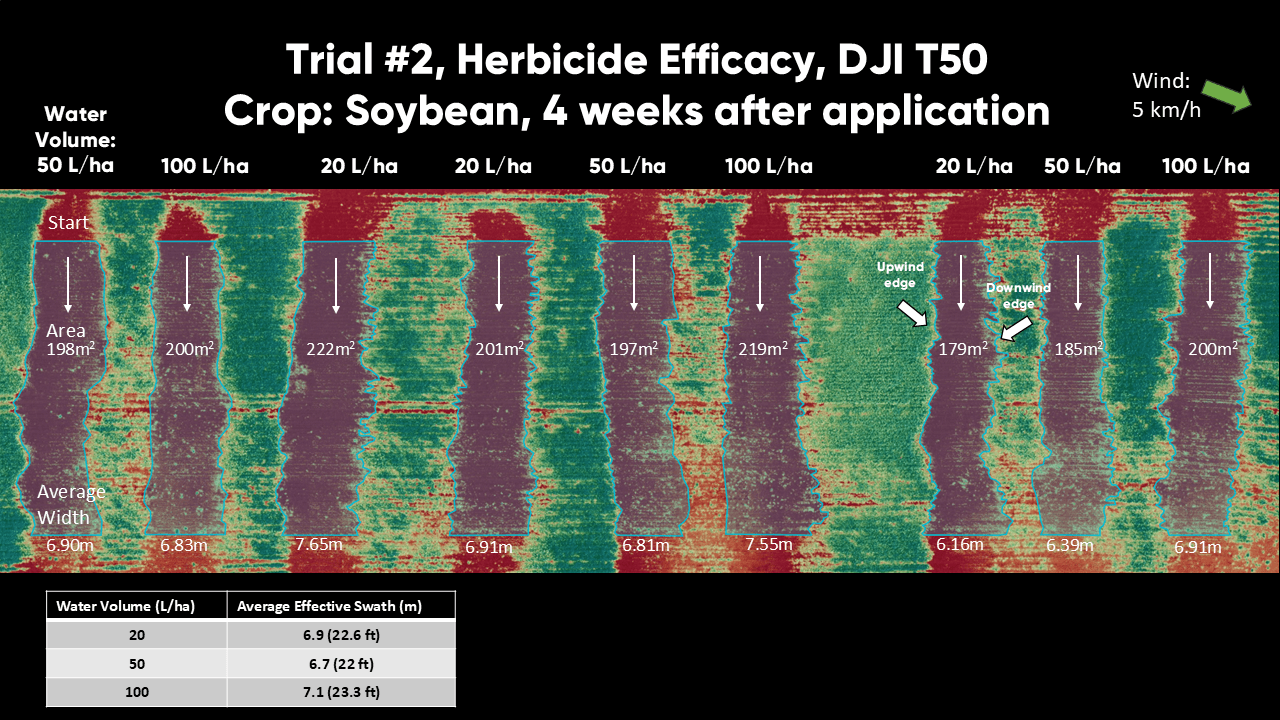
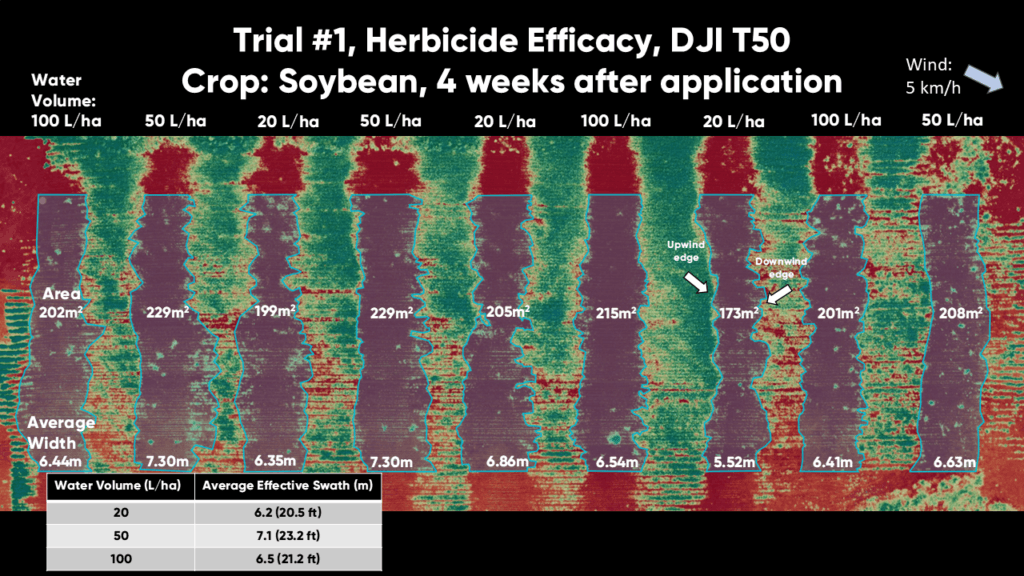
Now, here’s what the swath actually looked like over 50 m (Figures 1 and 2):
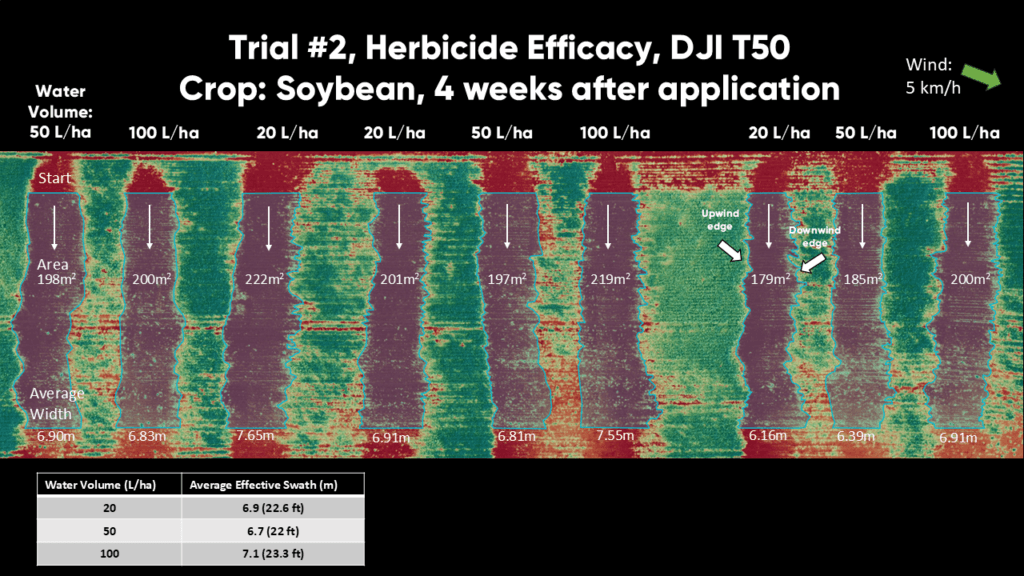
Figure 1 – 50 m continuous swath visualization, Trial 1. This stitched graphic shows annotations for upwind/downwind edges and width measurements.Figure 2 – 50 m continuous swath visualization, Trial 2. This stitched graphic shows annotations for upwind/downwind edges and width measurements.
What becomes immediately obvious is that this is not the clean, geometric ribbon many expect. Here’s what the 50 m swath showed:
Despite all the drone consistently flying north to south in a straight line, the path of efficacy isn’t consistently straight, appearing to subtly be affected by the wind.
Within the path, the edges are also not straight, the upwind edge can often appear jagged. Each “tooth” could correspond to a micro correction the drone makes to hold course. The downwind edge adds a frayed or tattered look, not as clean of a boundary, likely caused by drifting spray.
The width changes along the pass. Some sections widen, while others pinch inward. It would be unlikely to see these 2-D effects with 1-D sampling such as WSP cards.
The plume tail wanders. The airborne portion of the spray oscillates left and right in response to gusts and minor stability corrections.
The pattern is asymmetric. Left ≠ right. Upwind ≠ downwind. A drone swath is not a mirror image, and each pass is different.
The bottom line: A drone’s real swath is not a clean bar of colour, it’s an irregular coastline. And once you visualize it in 2-D over 50 m, the story becomes clear: swaths are dynamic, variable, dependent on conditions, and often narrower than manufacturer recommendations.
Why I Think It Looks Like This
It’s not that drones are bad sprayers; it’s that their reality is dynamic. 2-D imagery simply reveals what single point tools cannot:
Drones are constantly making tiny left/right/forward/back corrections to counter act the forces (mostly wind) acting on them.
The wind and the resulting corrections of the aircraft slightly change where the spray actually travels.
The downwash column shifts with the aircraft’s posture.
Even light wind (< 5 km/h) is enough to expose these shifts.
The Wandering Swath and Jagged Edge Problem: Swaths Don’t Fit Together Like Shark Teeth
This is where mis-set swath widths come back to bite. When you slide one measured swath against its neighbour, the non-linear path and jagged edges don’t interlock. Some spots show metres of overlap; others flirt with gaps. The following video shows us sliding a measured 2-D swath polygon until it just touches the neighbouring swath. Note how irregular edges force uneven overlap and occasional near misses.
Operationally, if you rely on the widest advertised swath—or on a single clean snapshot—two things happen:
Misses (especially with herbicides): escapes, patchy control.
Dose non uniformity: some areas get 0x, others 2x.
Sure, the average across 160 acres may equal the target rate, but field level uniformity is not icing-smooth.
Practical Recommendations You Can Use Tomorrow
These are observational, conservative, and based on what the 2-D data actually shows:
1. Calibrate, test in your conditions, over distance
Run a long test strip and evaluate coverage continuously (not just a few cards). Evaluate in many wind conditions, to best understand your swath variance given the situation.
2. Tighten your swaths beyond what’s stated in the brochure
Depending on the application and product, plan for more overlap than the manufacturer’s suggested swath width. Adjust from there with your own measurements.
3. Different jobs, different risk tolerance
Herbicides: misses are costly → tightest spacing.
Fungicides: somewhat more forgiving but still benefit from stability and overlap.
4. Faster (7 m/s) with lower water volume displayed more variable swath
Higher water volumes direct in a large amount of water being pushed down within the downwash resulting in less drift and more consistency. This coupled with slower flight = fewer corrections = a straighter, more consistent swath.
At ~5 m/s, droplets fall mostly into the downwash beneath the drone, deposition is close to the flight line.
At ~9 m/s, the airframe tilts forward to hold speed. The nozzles are slightly tilted back and the spray is deflected backward, it trails the drone like Superman’s cape.
Downwash is no longer straight down.
Coupled with the flight speed, the downwash is no longer pushing the spray into the canopy.
Deposition lands farther behind the drone.
Small gusts now matter more.
A backward angled plume has more side profile for crosswind to grab. The following speed comparison (same drone, two speeds) illustrates this effect:
5. Respect “light” wind
The imagery shows meaningful edge change and drift even in 5 km/h. Even the ‘gusts’ in light wind move the swath. In relatively calm days continue to watch variability, plan overlap, and validate.
Conclusion – Know the Swath You Actually Have
Drone spraying is promising and can be very effective and is getting better fast. Fit the setting with the task. If there is less room for error (herbicide), tighten those swaths to prevent misses caused by the wandering swath. Swaths are often misunderstood when we only look at single points.
When you test over distance and see the 2-D pattern:
Coverage becomes more reliable
Reduces misses
Efficacy gets consistent
Confidence rises
The first step to improving application is knowing the real shape of your swath. Tighten spacing, higher water volumes, slow down when you can, validate in your own conditions, and keep learning as the technology evolves. Spray drone technology is rapidly evolving, and many of today’s limitations will be addressed with innovation.