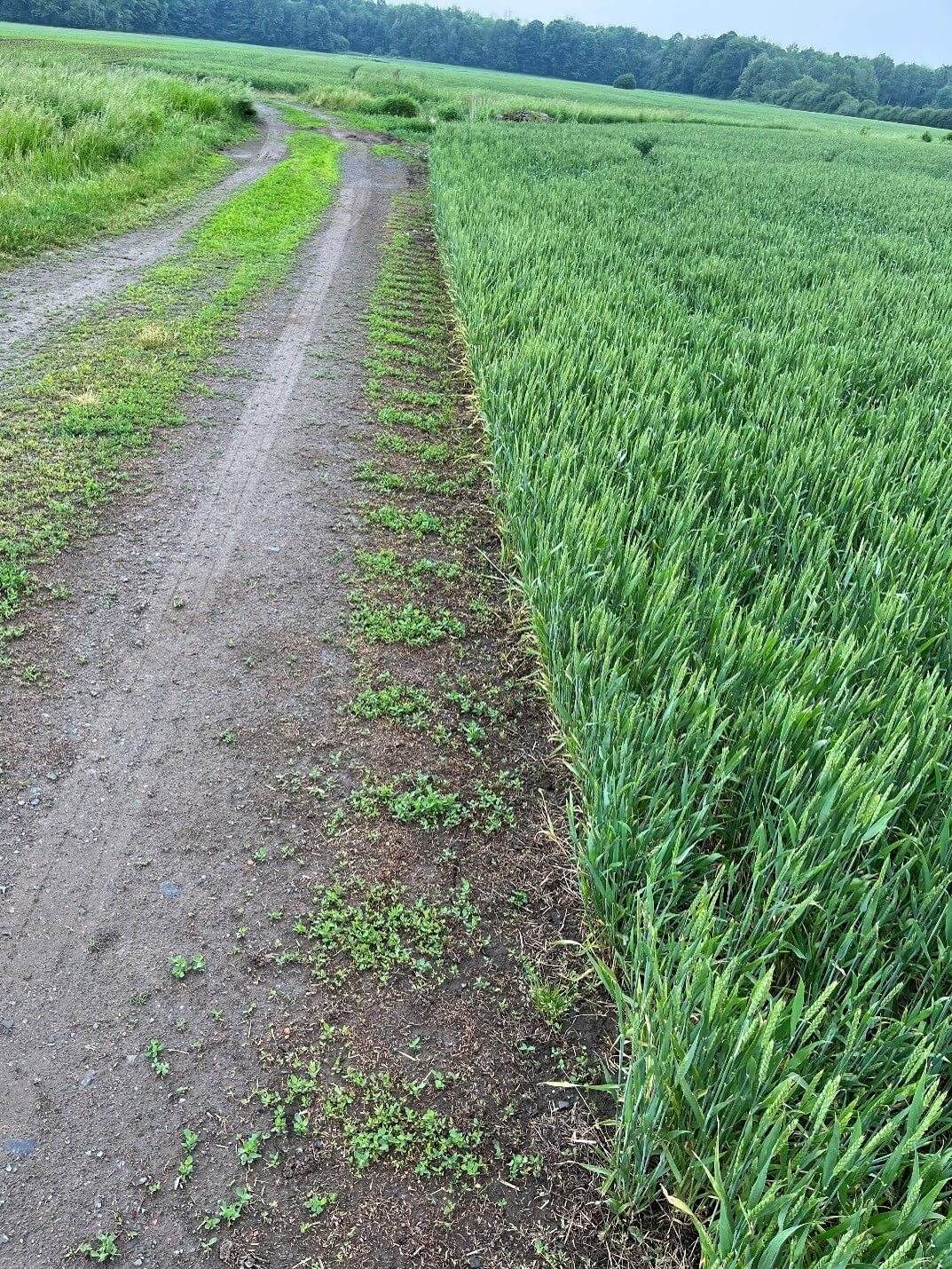
“This year was the first year we used a growth regulator on our wheat. After heading, we noticed a wavy pattern of different plant heights between 30 and 45° to the operating direction. It was only a couple inches difference and was difficult to photograph. We sprayed 12 gpa at 9 mph using TT11005 nozzles alternating forward and back at 35 psi and a 70% duty cycle. I’ve talked to other operators in Canada and in Europe and several customers have reported seeing this pattern, no matter which model of PWM sprayer. What’s happening?”
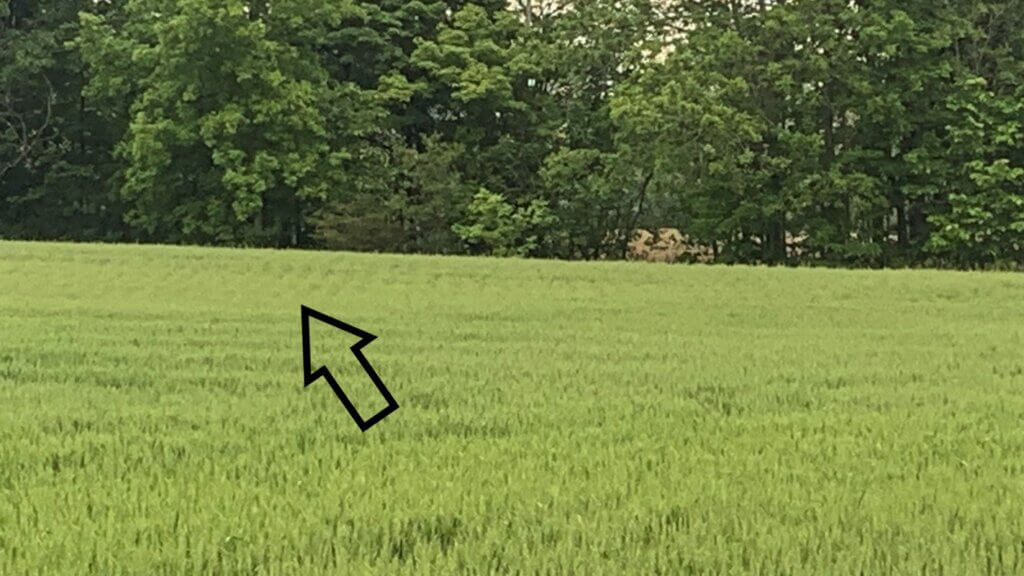
Skips in cereal that are obvious to the eye can be difficult to photograph.
The pulse width modulation is very likely responsible for the waves. We have a number of articles describing how PWM works, but here’s a brief recap of the relevant bits.
A solenoid intermittently interrupts nozzle flow with a frequency between 10 and 100 times per second (depending on manufacturer). The proportion of the time the nozzle remains open is called the Duty Cycle. Each nozzle is linked to the neighbouring nozzles so that when one pulses on, the neighbour pulses off. So although you may only have half the nozzles spraying at any moment in time, sufficient overlap ensures there are no gaps in the pattern.
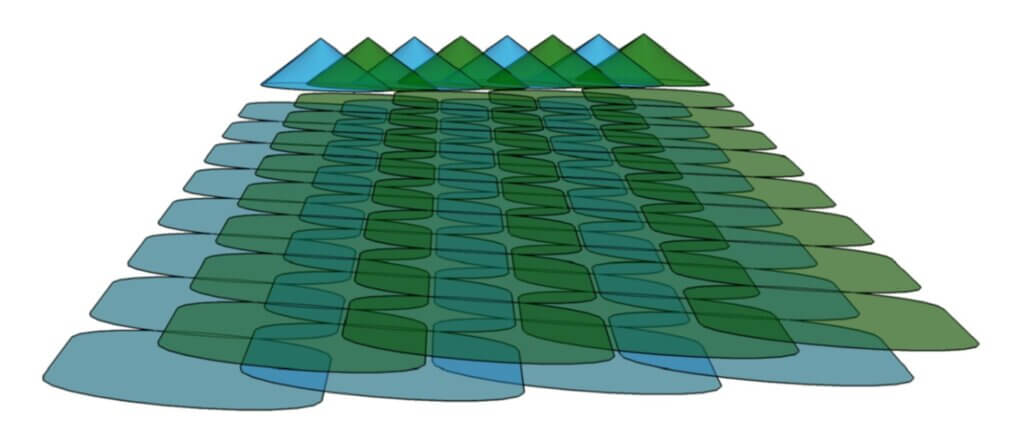
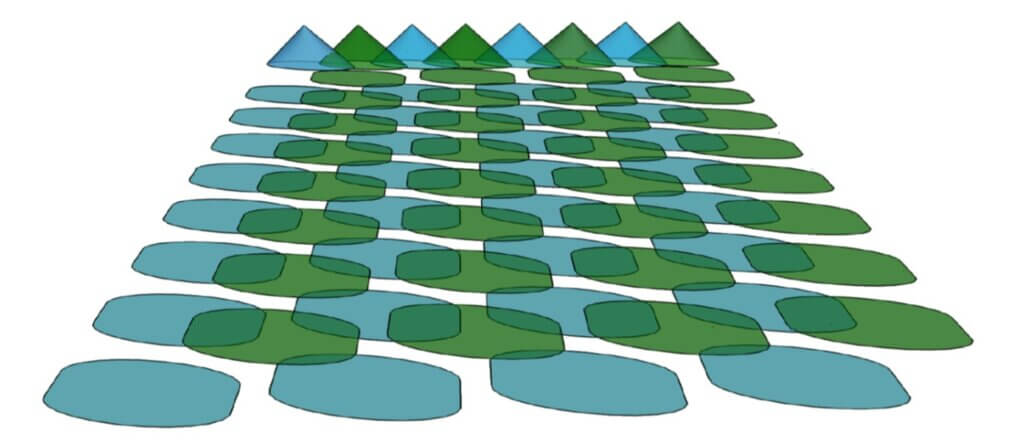
However, depending on the combination of frequency and duty cycle, it is possible to lose that overlap between nozzles. This can cause a checkerboard pattern that appears to repeat in a diagonal line. The following two images are from www.Capstanag.com and they illustrate an ideal overlapping pattern and a pattern that creates skips.
Here’s a 11008 at 10 gpa, 15 mph, 60% DC, 10 Hz, 21” boom.Here’s an 8008 tip at 5 gpa, 15 mph, 30% DC, 10 Hz, 21” boom.
We can also sometimes see skips on the outer edges of sharp turns. In that case the outer boom section can be travelling two or three times as fast as the cab. In a conventional system, this would produce under-dosing in the outer region and over-dosing closer to the cab.
Some degree of skipping may be more common than we realize. It’s only when we spray products that produce obvious visual symptoms at low doses that we can see a biological response. In the case of plant growth modifiers used to prevent lodging in cereals, we have a perfect storm situation. A region of reduced spray overlap, applied at a time when the crop is elongating rapidly, perhaps on rolling ground from an unstable boom height, can all conspire to create regions of reduced dose with striking visual symptoms.
The following list describes conditions that can increase the potential for skips, and what you can do to avoid them.
Low duty cycles. Cycles less than 60% should be avoided.
Fast travel speeds. Faster speeds may help blend the spray in the swath a little, but too fast can create gaps and increase drift potential. At high travel speeds the system is usually operating at a high duty cycle unless an especially large nozzle size has been selected. Ideally, we want to run the duty cycle at 60-80%, but there are always exceptions. For example, according to Wilger, 90-92% is fine when you run at 20 gal/ac with their “15 gal tips”.
Low booms. The lower the boom, the less overlap. Raising the boom to 24″ above the crop may help, but beware of drift.
Narrow fan angles. Nozzle angles less than 110° reduce the degree of overlap and are less forgiving if the distance between nozzle and target decreases.
Low pressure. Avoid operating at pressures below 35 PSI. Due to pressure drop at the solenoid, 40 PSI on the monitor might mean 28 PSI at the nozzle. Some nozzle tables account for solenoid-induced pressure drop and some do not. Low pressure may be insufficient to establish the full 110° pattern, and the resulting marginal overlap not only means inconsistent dose, but inconsistent droplet size because droplets are coarsest at the edge of the pattern. And, if that’s not already enough, note that air induction nozzles intended for use with PWM tend to create messy patterns at low pressures and low duty cycles.
Especially coarse spray quality. Unless the label requires it, consider using spray qualities no larger than Very Coarse, particularly at low volumes. PWM frees the operator to use pressure independent of rate, so you may be able to accomplish this without swapping nozzles.
Products that are highly dose-dependent. This one is likely unavoidable, but be aware they are the products most likely to produce obvious visual symptoms. In the case of PGR’s, we have not (yet?) seen any evidence that skips translate to reduced yield. Weed misses or sub-lethal doses of fungicide or insecticide might be another matter.
Editor’s Note: This work was performed in 2023. A more recent exploration into wheat head coverage was performed in 2025. This article is not obsolete as it introduces concepts and makes foundational observations. Read on, then read the 2025 article afterwards.
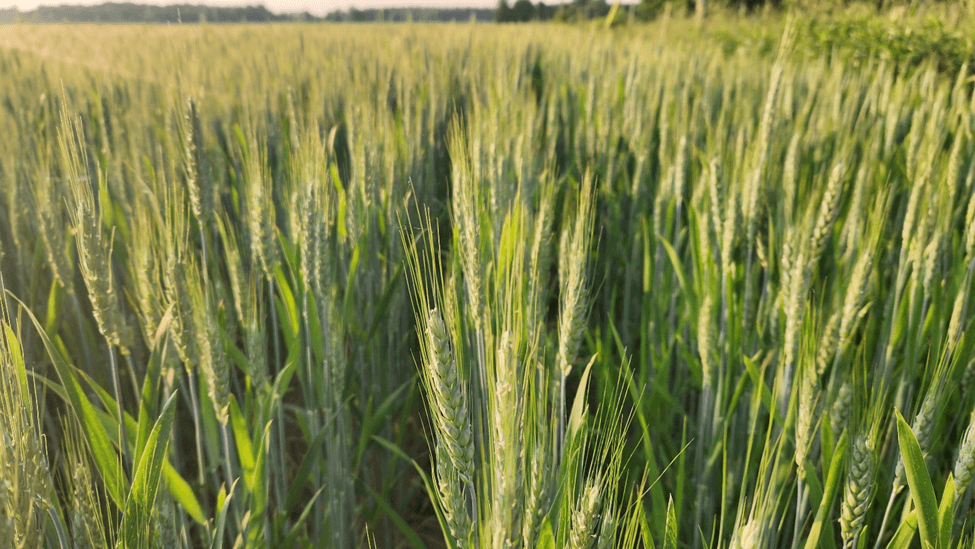
Fusarium head blight is one of the most economically important diseases in winter wheat. Application timing is arguably the most critical aspect of effective crop protection. The application window stretches some two to five days following the point where 75% of the wheat heads are fully emerged and coinciding with the beginning of flowering (Figure 1). Product placement is the second most critical aspect, where the wheat head represents the primary target, and the flag and penultimate leaf are somewhat incidental, secondary targets.
Figure 1. Winter wheat at T3 staging is optimal for fungicide application.
This article describes the results of two experiments exploring wheat head spray coverage from a rotary drone. The first compares wheat head coverage from a drone to that of a helicopter (Figure 2). The second explores the effect of drone ground speed, and the related downwash, on wheat head coverage. All work was performed under PMRA research authorization. As of the date of this publication, there are no crop protection products permitted for application by RPAS in Canada.
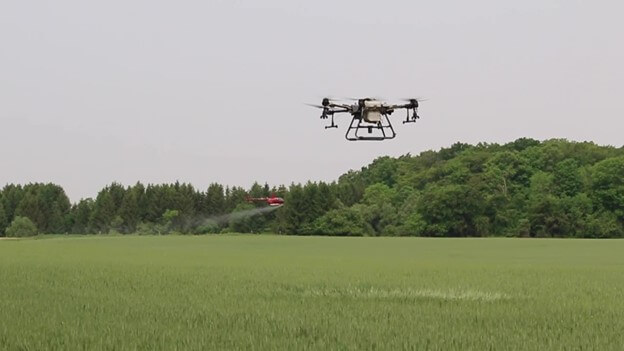
Figure 2. The helicopter spraying in background does not create a downwash. Note how the spray is not forced straight down but falls in a sheet subject to gravity and inertia. The rotary drone spraying in the foreground does create a downwash. Note how the wheat is displaced by the spray-laden air as the drone passes. At higher speeds, this downwash does adopt a down-and-back vector.
Experimental Design
Wheat field
The wheat field was clay/loam located at 42°47’12.6″N 81°03’06.4″W near New Sarum, Ontario. Wheat was “common seed” planted on October 2nd, 2022, at 1.8 million seed/ac on 19 cm (7.5 in) row spacing. It was sprayed on June 5th, 2023, and at the time the wheat heads were about 0.7 m (2.5 ft) high.
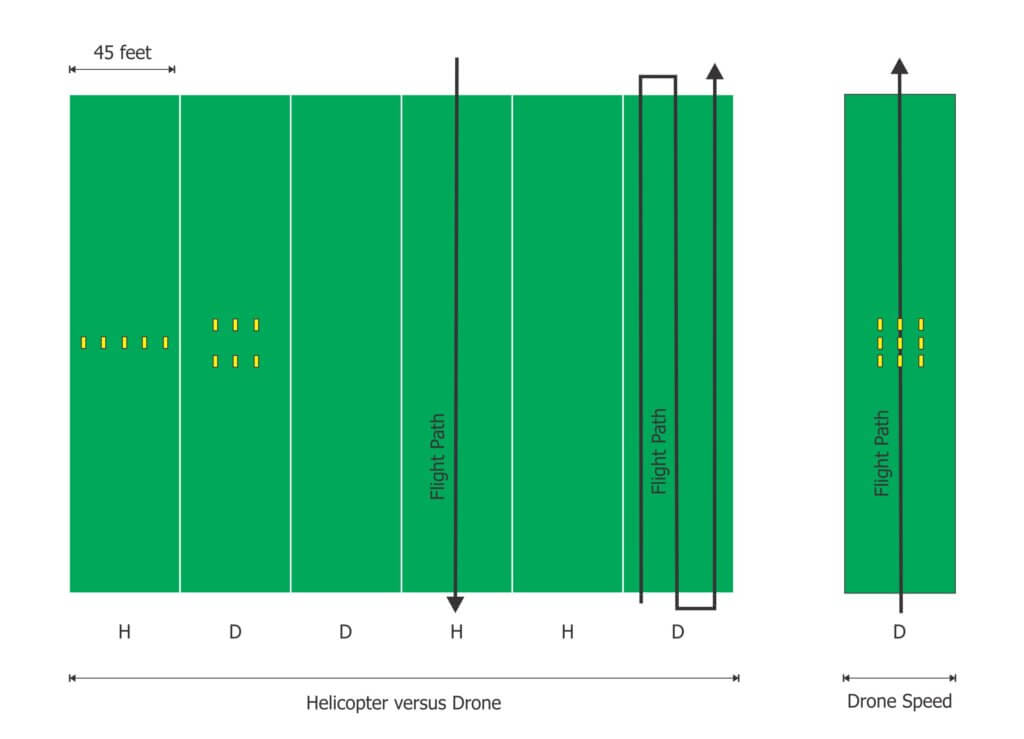
Treatments were laid out parallel with the planting direction in a randomized design. The helicopter pilot reported an effective swath width of 13.7 m (45 ft), which formed the basis for the treatment block widths (Figure 3). The helicopter made a single pass. The drone pilot reported an effective swath width of 4.5 m (14.75 ft). It made three passes per treatment block in the helicopter versus drone experiment but made only a single pass centred on the treatment block for the speed experiment.
Both the helicopter and drone applied fungicide at label rate plus 0.125% Activate in a final volume of 50 L/ha (5 gpa). For the helicopter this was about 20 ac. per jug, and for the drone we created an equivalent tank mix using 450 ml fungicide and 37.75 ml Activate diluted with water to fill the 30 L spray tank.
Figure 3. Treatment layout for both experiments. H: Helicopter. D: Drone. Yellow rectangles represent location of water sensitive papers on a 1.75 m (5.75 ft) spacing, centred on the treatment block. Flight paths were centred on the treatment block.
Helicopter versus drone experiment
For the helicopter treatments, five water sensitive papers (WSP) were spaced 1.75 m (5.75 ft) apart, centred on the treatment block. For the rotary drone passes, two rows of WSP were spaced 1.75 m (5.75 ft) apart, centred on the treatment block. Application volume was 50 L/ha (5 gpa)
The helicopter had a 20 foot boom with CP-03-05 nozzles on 12” spacing, alternating between a 0.062 (smallest) orifice and a 0.172 (largest) orifice. Ground speed was 96.5 km/h (60 mph) and altitude ranged from 1.5-3 m (5-10 ft) above the wheat heads. The contractor company calibrated the helicopter according to their standard operating practices.
The rotary drone was a DJI Agras T30 equipped with TeeJet TT110015’s. It flew at 5.1 m/s at 3 m above the wheat heads and applied three adjacent swaths of 4.5 m. The contractor company calibrated the drone according to their standard operating practices. A similar methodology can be found here.
Drone speed experiment
A single pass was made over three rows of WSP spaced 1.75 m apart, centred on the treatment block. The drone made two separate passes (n=2) for each speed. Samplers were retrieved and replaced after each pass and the same plot was used for all six passes. Application volume was 30 L/ha (3 gpa). Drone was refilled after every two passes to maintain a consistent weight.
The rotary drone was a DJI Agras T40 programmed to apply an “Extra Coarse” spray quality at 3.5 m above the wheat heads with a swath width of 9 m. Ground speeds were 2 m/s, 4 m/s and 7.2 m/s and were visually confirmed by the RPAS controller. Once again, the contractor company calibrated the drone according to their standard operating practices.
Target Locations
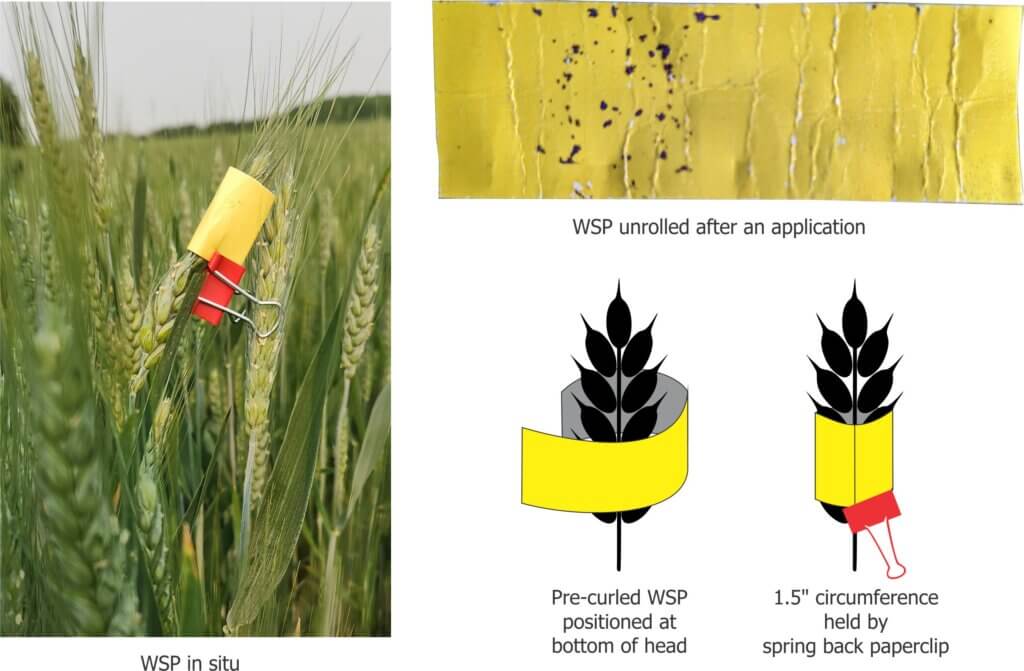
For both experiments, SpotOn brand WSP from the same production run was pre-curled by wrapping it around a pencil, then wrapped around the wheat head and secured at the bottom by a small, spring back paper clip (Figure 4). This left approximately 1.5 x 1 inches (i.e. half) of the surface exposed to spray and provided an indication of panoramic coverage.
The clip distorted the target by flattening it at the bottom and obscured a small portion of the target area, but this area was digitally removed during the analysis. By securing the WSP to the wheat head rather than a surrogate stake, the target moved naturally in the downwash of the drone. The papers were retrieved when dry, placed in individual plastic bags, flattened for scanning, and digitized using a DropScope within 24 hours of retrieval.
Figure 4. Pre-curled water sensitive paper was wrapped around the bottom of the wheat head and secured with a spring back paper clip.
Weather and Application Times
Weather data was collected using a Kestrel 3550AG weather meter (Kestrel Instruments) in a vane mount positioned 1.5 m (5 ft) above the wheat heads. Wind speed fluctuated throughout the day, but wind direction remained relatively stable at 90 degrees to the flight path. Targets remained within the swath, despite any offset, as indicated by the consistent coverage observed on the windward WSP compared to other, downwind samplers in each pass.
Application method
Pass #
Time
Windspeed (km/h)
Temperature (°C)
Helicopter
1
8:45
2.0
17.0
Helicopter
2
10:00
4.5
17.7
Helicopter
3
10:20
4.8
19.9
Agras T30
1
10:20
4.8
19.9
Agras T30
2
10:45
5.2
19.7
Agras T30
3
11:00
8.6
20.0
Agras T40
1
12:25
8.2
21.6
Agras T40
2
13:00
4.8
22.4
Agras T40
3
13:30
5.2
22.8
Wind direction remained a steady side wind (i.e. 90 degrees) to the flight path throughout day. Sky was clear (i.e. minimal to no cloud cover) throughout day.
Results and Analysis
WSP were scanned and digitized. Coverage was measured as percent surface covered (% area), and deposit density (# deposits/cm2). Given that only ½ of the WSP was exposed to spray, and the remining half was obscured during the wrapping process, the entire card was scanned, and the resulting coverage was doubled.
Helicopter versus drone experiment
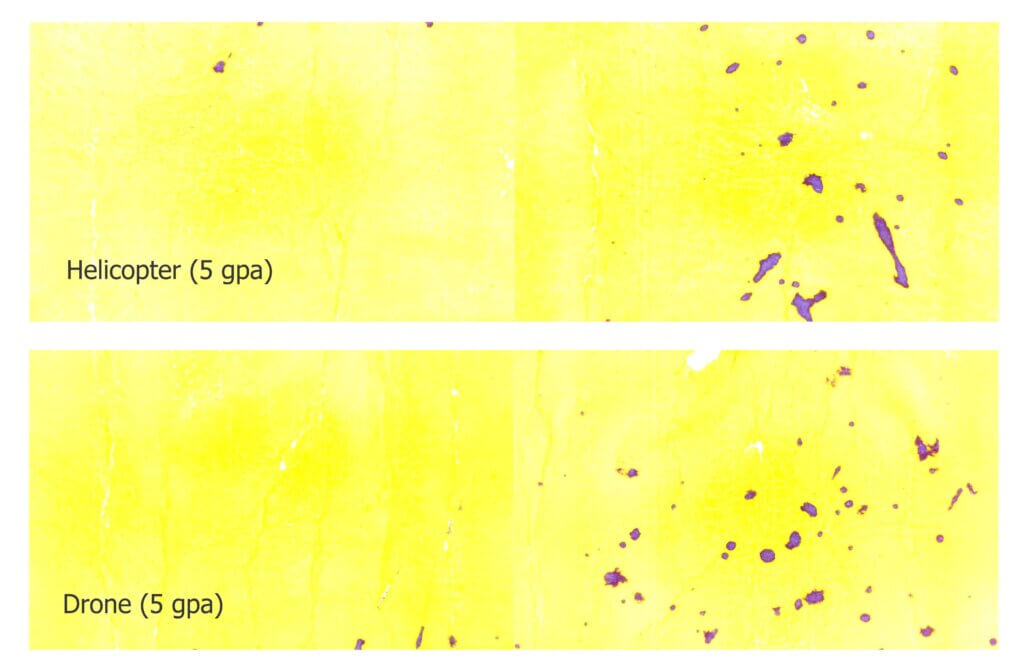
For each helicopter pass, a single line of five WSP were averaged to a single data point. Therefore, n=3, but represents 15 WSP samplers. For the drone, two lines of three papers were placed in the block. Each line was averaged to a single data point, for n=2 per pass x 3 passes for a total of n=6, representing 18 WSP samplers. The following image (Figure 5) shows a digitized WSP typical of each method.
Figure 5. Typical WSP from helicopter and drone applications at 5 gpa. Recall that only half the paper (the right half, in this case) was exposed following the wrapping process.
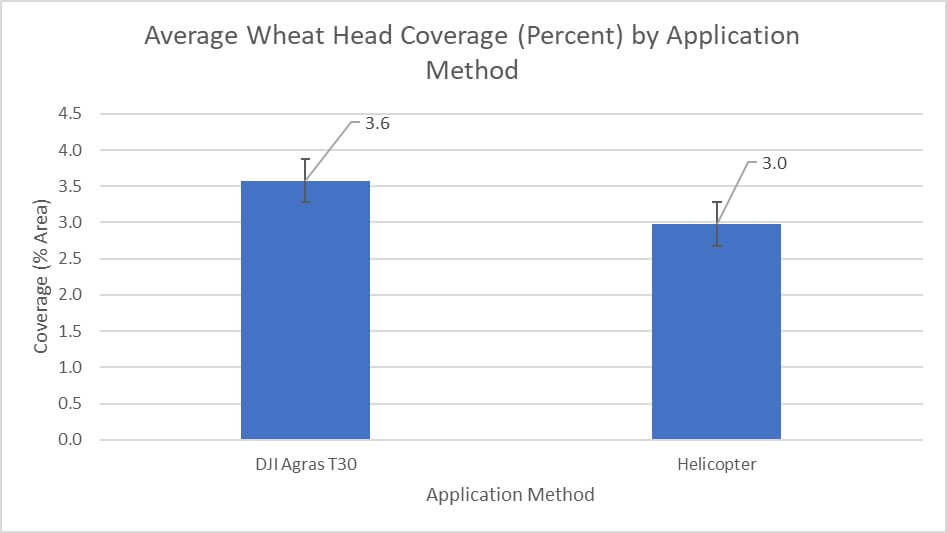
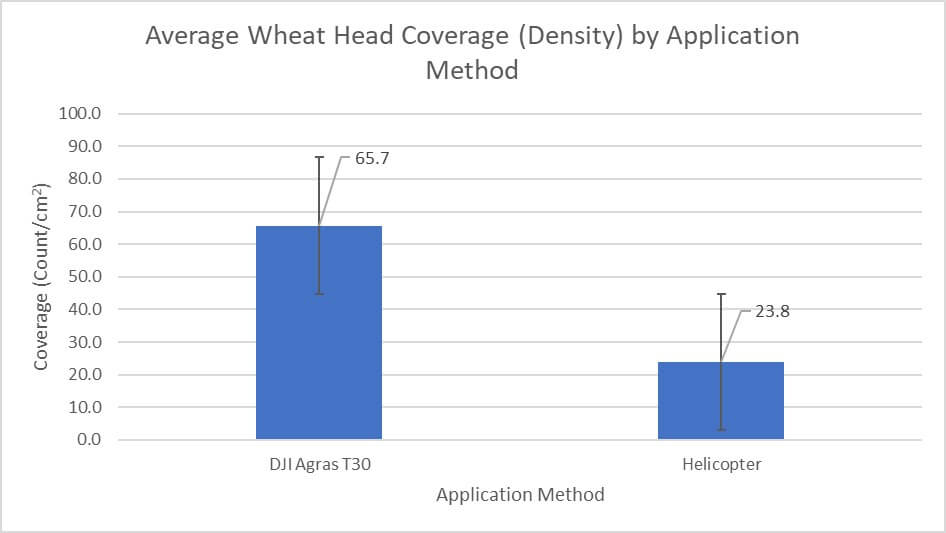
The following histograms (Figure 6 and 7) illustrate the mean coverage for each application method, with standard error.
Figure 6. Average wheat head coverage (percent area) by application method. Drone is n=6 and Helicopter is n=3. Bars represent standard error.Figure 7. Average wheat head coverage (deposit density) by application method. Drone is n=6 and Helicopter is n=3. Bars represent standard error.
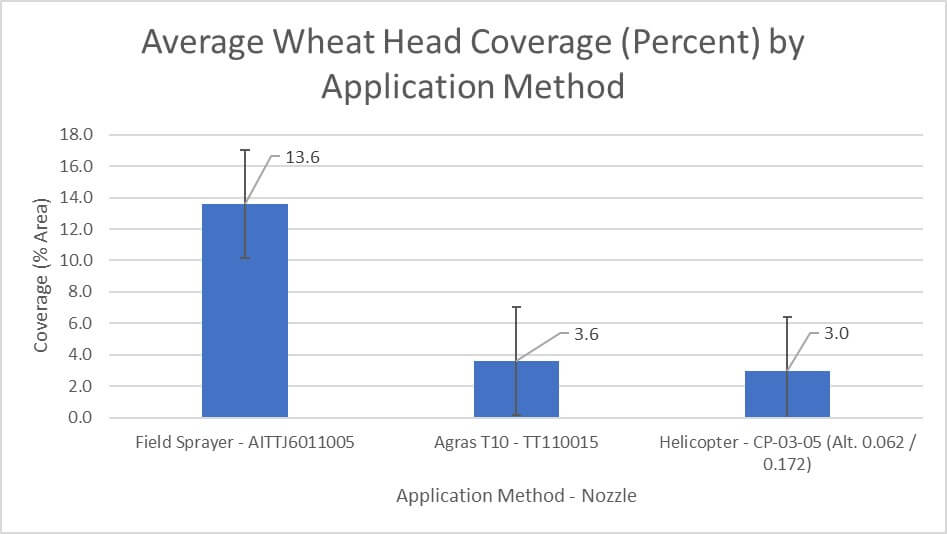
The drone covered an average 17% more surface area than the helicopter. The spray quality was visibly finer, as evidenced by the average 64% higher deposit count. As a matter of context, we ran a similar study four days later with a field sprayer running TeeJet AITTJ60’s on 38 cm (15 in) centres, 50 cm (20 in) above the wheat head. It applied 175 L/ha (19 gpa) compared to the 50 L/ha (5 gpa) applied by the helicopter and drone. The relative percent area covered is shown in Figure 8.
Figure 8. Average wheat head coverage (percent area) by application method. Drone (5 gpa) is n=6, Helicopter (5 gpa) is n=3 and Field Sprayer (19 gpa) is n=6. Bars represent standard error.
The more than fourfold difference in coverage from ground versus aerial application is significant, but given the relative concentrations of product applied (i.e. the same product rate) residue levels would likely prove equivalent for all treatments. Fungicide efficacy cannot be predicted from coverage data, but the convention is that the more surface area covered, the better the protection.
Drone speed experiment
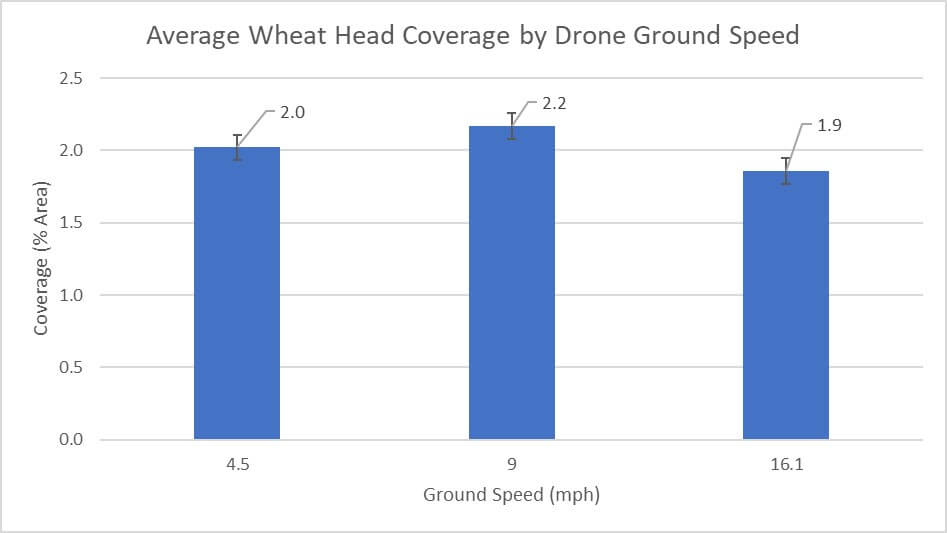
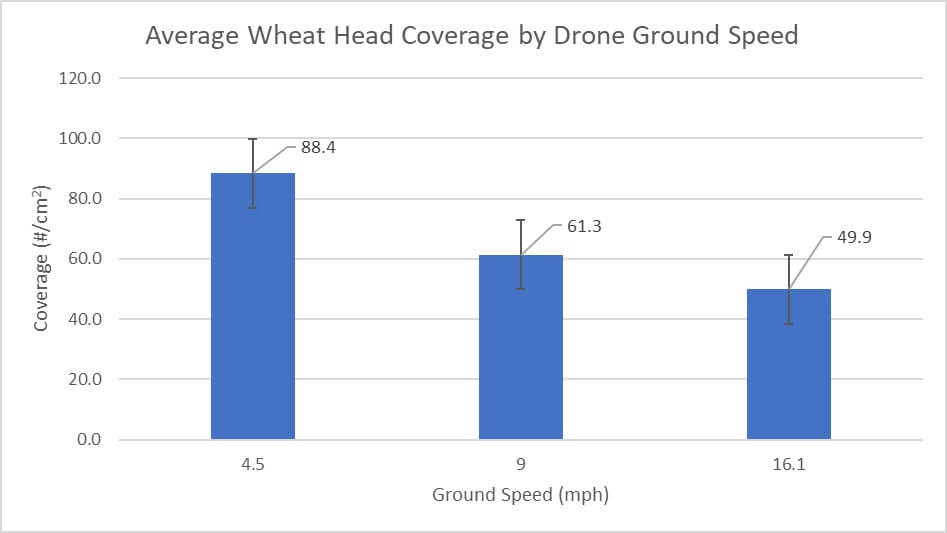
The drone made two separate passes over each treatment block. For each drone pass, three lines of three WSP were placed in the block. Each line of three papers was averaged to create a single data point, for n=3 per pass and n=6 in total. The following histograms (Figures 9 and 10) illustrate the mean coverage for each application method, with standard error.
Figure 9. Average wheat head coverage (percent area) by ground speed. Each speed is n=6. Bars represent standard error.Figure 10. Average wheat head coverage (deposit density) by ground speed. Each speed is n=6. Bars represent standard error.
As an aside, note that the average is approximately 2% surface area for these 30 L/ha (3 gpa) applications compared to the 3.6% average at 50 L/ha (5 gpa) in the drove versus helicopter experiment, reflecting the results from many studies that show employing higher water volumes results in improved coverage until some point of diminishing return.
The drone appeared to cover approximately the same surface area at all three speeds. However, when deposit density is considered, the slowest speed deposited 31% more droplets than the medium speed, which in turn deposited 23% more droplets than the fastest speed.
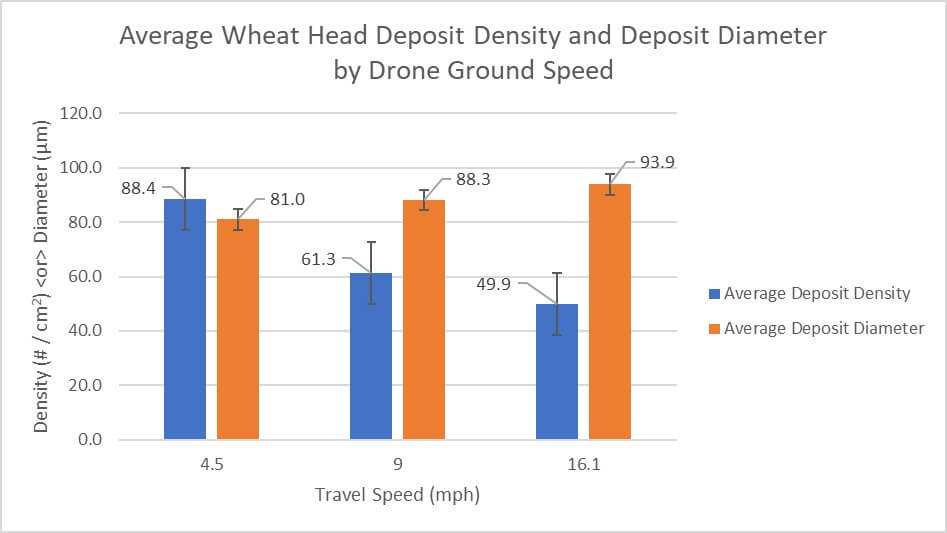
One possibility is that higher speeds, which are known to create wider swaths, dispersed the spray over a larger area. Another possibility is that higher speeds, which are known to increase drift potential, left a greater proportion of droplets aloft, beyond the reach of the samplers. Yet another non-exclusive possibility is that deposit counts increased while overall surface coverage remained approximately equal because the diameter of the stain increased with speed. DropScope reports stain diameter, and this has been graphed alongside the deposit counts in Figure 11.
Figure 11. Deposit counts share an inverse relationship with ground speed, but average stain diameter shares a direct relationship with ground speed.
We see an inverse relationship between ground speed and deposit density, but a direct relationship between ground speed and stain diameter. This difference may appear small, but assuming stains are approximately circular, diameter can be used to calculate deposit area, per the following table.
Drone Ground Speed (mph)
Mean Coverage (%)
Mean Deposit Density (#/cm2)
Mean Stain Diameter (µm)
*Mean Stain Area (µm2)
4.5
2.0
88.4
81
5,153.0
9
2.2
61.3
88.3
6,124.0
16.1
1.9
49.9
93.3
6,793.0
*Assumes a circular deposit
We see an increase in average deposit area of 16% and 10%, respectively, for each increase in speed. In previous trials conducted in corn in 2022 we saw a decrease in coverage and an increase in drift when drone ground speed was increased. We also observed that as the T40’s ground speed increased, the swath width appeared to increase. We did not measure effective swath width at different speeds, but if this observation is correct then droplet density by area would decrease at higher speeds. The loss of spray to drift and/or through increased swath width would explain why increased speed resulted in fewer deposits on the wheat heads.
The increased deposit diameter is likely due to spread factor. Higher ground speeds would impart a higher droplet velocity and therefore cause droplets to spread more on impact. If this is the case, and had we conducted residue trials, we would predict an inverse relationship between ground speed and residue levels, despite having similar percent surface coverage. This observation underpins the importance of assessing deposition patterns as well as residue in coverage trials.
Conclusions
For this use case, a drone applying 50 L/ha (5 gpa) produces a similar, if slightly higher, percent coverage on a wheat head compared to a helicopter applying the same volume. However, the deposit density is considerably higher.
Corroborating previous results in corn, drone application volume has a direct relationship with spray coverage.
For this use case, drone ground speed does not appear to affect the percent wheat head area covered, but there is an inverse relationship with deposit density. We theorize based on the direct relationship between ground speed and deposit spread, and prior evidence of increased drift with higher ground speed, that less active ingredient is deposited on the wheat head at higher ground speeds.
The relationship between downwash (i.e. dwell time, which is a function of downwash air energy and ground speed), wheat movement and coverage is unclear.
Acknowledgements
Thanks to Zimmer Air, Drone Spray Canada, Bayer Canada, Grower-Cooperator Adam Pfeffer and OMAFRA SEO student Vanessa Benitz.
We were long overdue for a new classic rock parody, so we decided to re-tackle one of the greatest rock ballads ever written. With the ongoing success of drop pipes (aka drop arms, drop legs, etc.) in corn, we’re promoting directed spraying in verse.
If you’d like to read more about the research, check out this article, and this one too. Farmtario also wrote a nice summary from one of our 2022 demos.
So, this was a tough one, but we feel good about how we laminated a new message over Zeppelin’s tricky cadence and rhymes. It helps if you play the actual song as you read. Rock on:
There’s a grower who’s sure all corn glitters like gold and he’s spraying from seven to seven.
When he’s done, then he knows that the products he chose will handle the pests that he sprayed for.
Ooh ooh ooh ooh ooh And he’s spraying from seven to seven.
He sees signs on them all but he wants to be sure ‘cause he knows bug poop means that they’re feeding.
So, he stops for a look spits and wipes as he should sometimes all of his thoughts are misgivings.
Ooh, it makes him wonder Ooh, it makes him wonder
There’s a feeling he gets when the silks seem too wet and his scouting is slowly revealing.
In his fields he has seen in the irrigation rings that tarspot’s in the plot where he’s standing.
Ooh, it makes him wonder Ooh, it really makes him wonder
Maybe he sprayed the corn too soon Or too late, it could be too ‘cause the timing defies common reason.
And he goes back in the dawn to see what else has gone wrong and his checks echo pests that he’s after.
Oh whoa-whoa-whoa, oh-oh
If there’s cutworm in your corn row, don’t be alarmed now. It may have been coverage or timing.
But there’s a new way, you can spray now, and in the long run there’s time to change the for the next season.
And it makes him wonder Oh, whoa
Overhead spraying is a no-go in case you don’t know drop pipes are calling you to try them.
Diseases come in when the wind blows but did you know drop pipes cover stalks from end-to-end.
So, as you drive on down the row overhead spray just won’t go deep into targets, we all know are hard to hit deep down below.
Next year he can still have gold. Using drop pipes isn’t hard. Coverage will come to him at last.
Quick to mount, one and all, yeah They barely rock as sprayers roll.
Did you come here looking for advice on which sprayer is best for your small operation? Are you looking to ditch the backpack mist blower? Do you want to avoid repeatedly mounting and dismounting a 3-pt hitch sprayer from your only tractor? Are you concerned you’ll have to sell an organ to be able to afford one? We hear you, and we’ll try to help. Let’s set the stage with a few facts.
Airblast sprayers stay in service for a long time; more than twenty five years is not unheard of. The majority of them are the generalist, PTO-driven low profile radial design with capacities ranging 150 to 1,200 gallons. Typical fan diameters are around 30″ and can produce >40,000 m3/h of air, making them a good fit for most pomme, citrus and tender fruit canopies. These sprayers come with a horsepower price tag of perhaps 45 hp or more. Many of these sprayers eventually enter the used sprayer market, making them an affordable option for small acreage specialty operations. But, affordability should not be the sole motivation when choosing a sprayer.
Ontario, c.1980 and probably still out there spraying somewhere!
The key to optimizing sprayer performance is to match the air settings to the the canopy you’re trying to spray. You can start reading about the process here. In the case of small and medium-sized canopies like vine, cane and bush crops, the fleet of gently-used sprayers we just described tend to produce too much air. There are options to improve the fit, like driving faster to reduce dwell time, or perhaps the operator can employ the Gear-up Throttle-down method. But, the best plan is to employ a smaller sprayer, which produces a more appropriate air volume, has a smaller profile, delivers better fuel efficiency and won’t break the bank.
So, where are these sprayers? Unfortunately there aren’t many, and options are especially limited if you don’t own a tractor to power them.
The budget-conscious grower may be tempted to buy a sprayer that does not have air-assist. We do not recommend this. Air is a critical component for spraying canopies consistently and efficiently. Caveat Emptor!
We encountered a good solution in June, 2014, when we were invited to Durocher Farm in New Hampshire to see their new airblast sprayer. In years previous, spotted-wing drosophila (SWD) was a significant pest in this two acre, high bush blueberry planting. They claimed that since buying their new sprayer they no longer had any trouble with SWD. That’s quite an endorsement!
The Carrarospray ATVM (200 L option pictured)
I’m not sure what I expected, but I was captivated by this miniature orchard sprayer. The toy-like size carried a zero-intimidation factor and I immediately wanted to start using it. Italian-made, Carrarospray’s hobby line is designed to be pulled behind vehicles without PTO. The ATVM is available in capacities from 120-400 L. The one I saw had a 400 L capacity, adjustable air deflectors, a fan speed gear box, and it was powered by a quiet and efficient pull-start Briggs & Stratton four-stroke engine. It even had a trash guard, a kick-stand and a clean water tank for hand washing. That’s a lot of features.
Thanks to Kitt Plummer (Durocher Farm), Penn State, Univ. New Hampshire and Chazzbo Media for filming these 2014 videos:
The sprayer was pulled (in this case) by a mower, so the grower not only sprayed, but mowed his alleys at the same time. It fit beautifully between the bushes, so the potential for physical damage to the berries was minimized. The air speed and volume was enough to displace the air in the blueberry canopy and replace it with spray-laden air with minimal blow-through. Combined with an appropriate spray volume and distribution over the boom, we found that the coverage it provided was excellent.
Coverage from the top-centre of the bush.
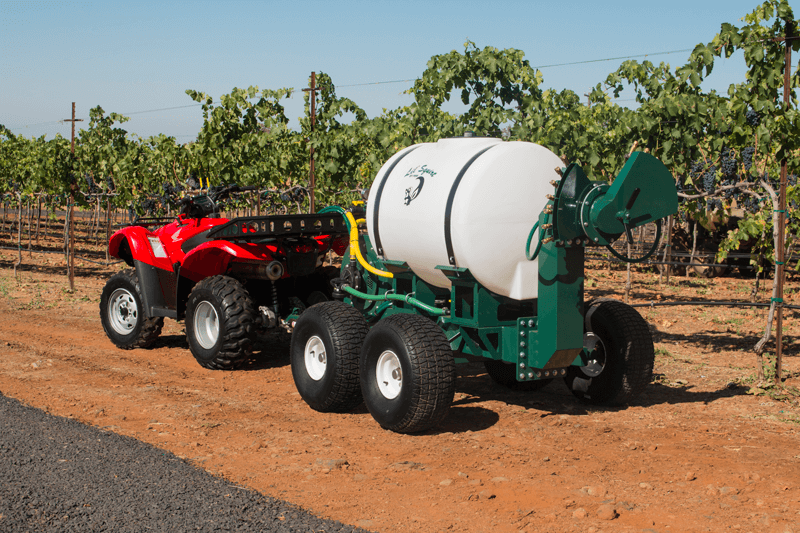
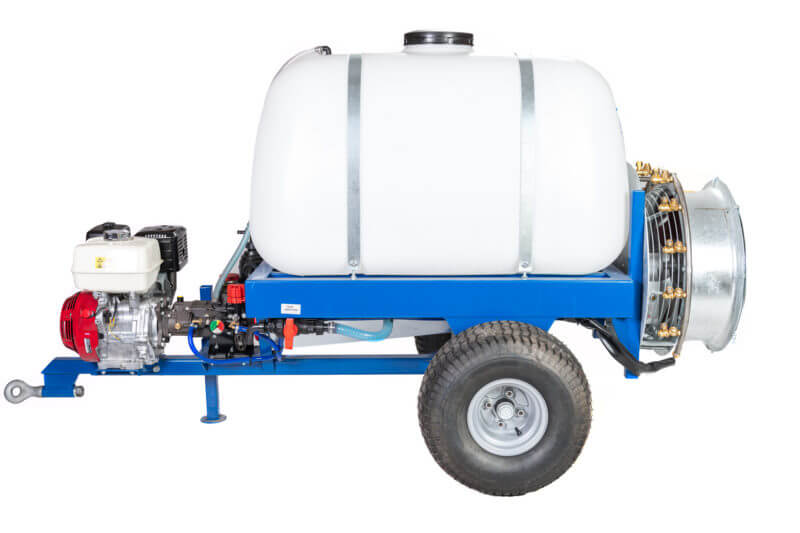
Since seeing this sprayer, we have had reports that importing it to Canada has proved challenging. But there are alternatives. A few companies here in North America offer economy-sized airblast models that are ATV trailed, or skid-mounted, or attached to a small tractor via a three point hitch. PBM’s Lil Squirt is a simple and versatile option. Available primarily in the western US from California through to Washington.
PBM’s trailed Lil Squirt (Image from their website)
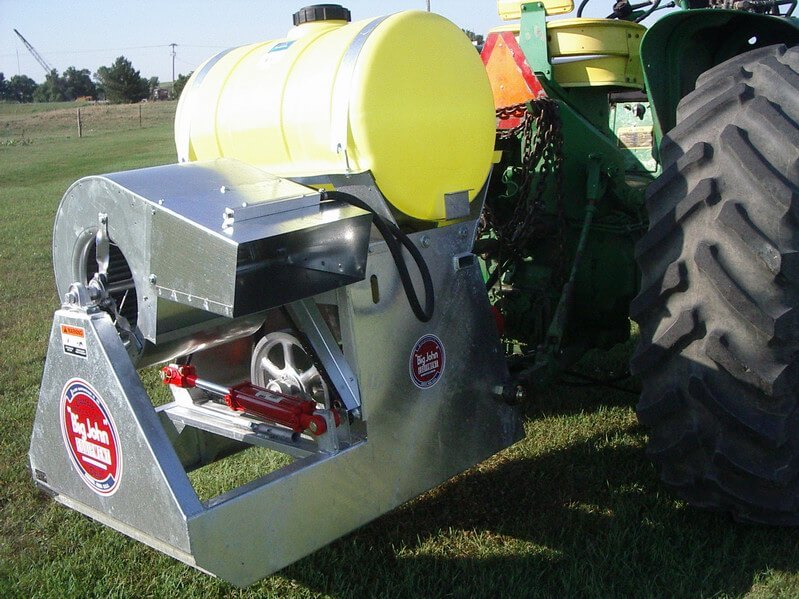
Another option is the mounted, PTO-driven mistblower line from Big John Manufacturing in Nebraska.
BJ 3PT mistblower from Big John Manufacturing (Image from their website)
Or MM Sprayer‘s ATV sprayers, which come PTO or Engine-driven. The LG400 has a 106 gallon tank and a 20″ fan. I’d like to see deflectors, but you could easily add them. Here’s a 2024 pdf on features.
Picture of the LG400 engine-driven model from www.mmsprayers.usa
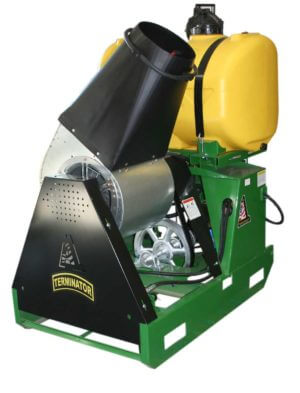
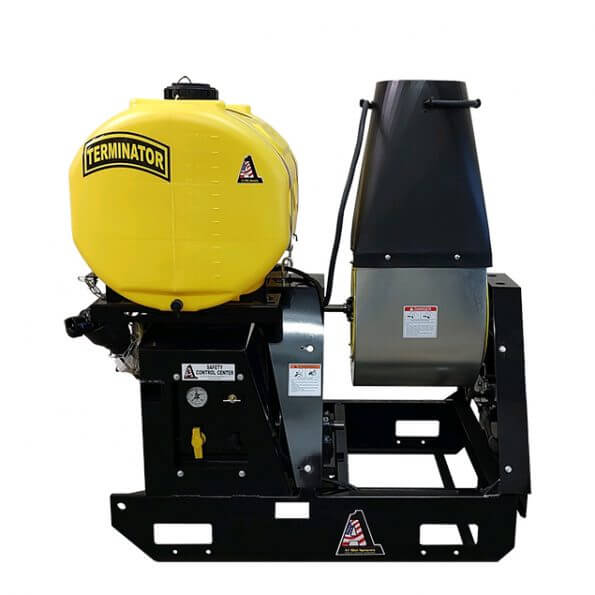
Or Wisconsin’s Contree Sprayer and Equipment. They carry the “Terminator” line. Skid mounted, one-sided air shear units with capacities from 15 to 100 gallons, this company offers a range of possibilities both PTO and gas-driven. Well worth a look.
The “Terminator” skid-mounted mist blower from Contree Sprayer and Equipment (Image from their website)
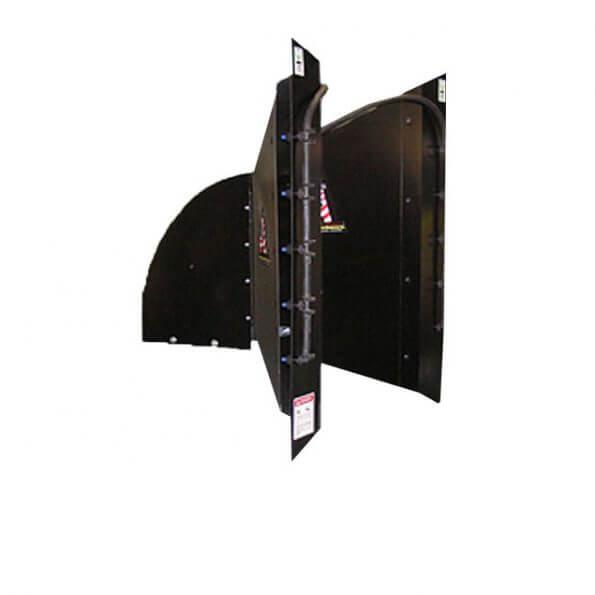
Then there’s the A1 Mist sprayer series, also out of Nebraska. They carry the Terminator line as well as an interesting two-sided volute option that employs conventional nozzles and allows one pass down an alley rather than two. This is a big productivity booster:
A1’s two-way volute header. (Image from website)A1’s PTO-driven 60 gallon, skid-mounted “Terminator”. (Image from website).
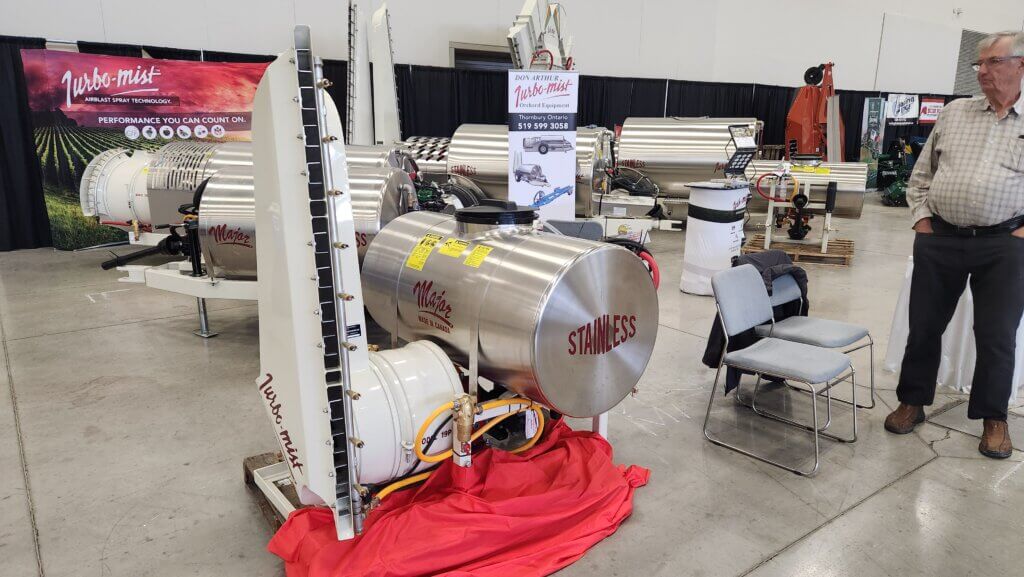
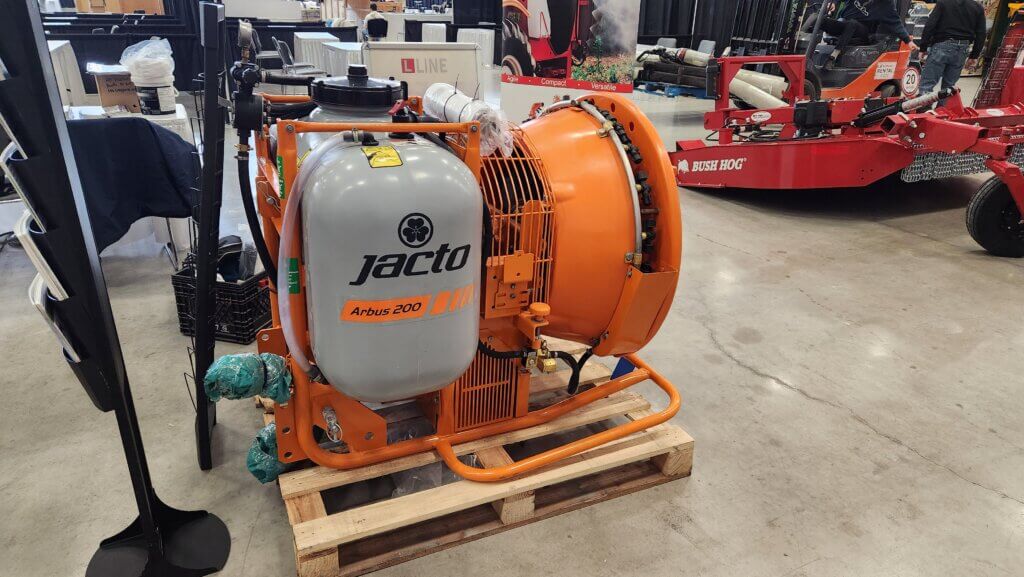
Then there are larger, PTO-driven, three-point hitch options. In fact, there are many options for this manner of sprayer, but they tend to be out of the price range for small operations, and they do require a tractor. That isn’t a deal-breaker, though, as they can sometimes be found used. Pictured below is British Columbia’s Major 193 (Slimline Manufacturing) and a Brazilian-made option (Jacto) distributed out of Quebec.
Slimline Manufacturing (aka Turbomist) makes the Major 19P 3-pt hitch tower sprayer (PTO-driven)Jacto’s Arbus 200 3-pt hitch airblast sprayer (PTO-driven)
When considering your options, give serious thought to your work rate, refill time and other factors that go into developing a robust spraying strategy. What’s a spraying strategy? That’s a farm’s overall management and operational plan for achieving safe, effective and efficient spray coverage. You can read more in chapter 8 of Airblast101, which you can download for free, here. And, just to play Devil’s Advocate, go small but not so small that the sprayer is underpowered.
We staged this video in 2011 (spraying only water, so don’t mind the lack of PPE) to show how a sprayer can be too small for an operation. This 3-pt hitch GB cannot overcome the cross wind and the spray barely reaches the apple trees. Reducing travel speed and increasing pressure won’t cut it, either.
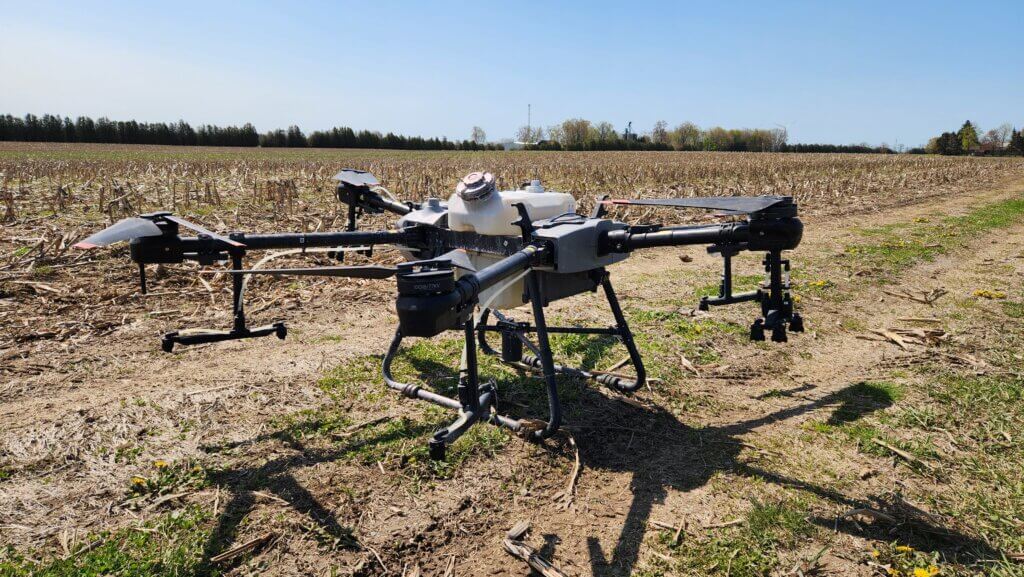
Of course, other possibilities are emerging for crop protection in small acreage perennial crops. Multirotor drones are capable of delivering air-assisted spray from above the canopy. While it’s still a drift-prone and inconsistent means for broadcast spraying, it might lend itself to perennial row crops. Equipment design is evolving quickly and global research is underway to establish best practices. As regulators and agrichemical companies focus more on this method we may see drones as a cheap alternative to a tractor/airblast sprayer, with no compaction, no mechanical damage to fruit/berries, and no potential for splashing infection throughout an operations.
DJI’s Agras T30
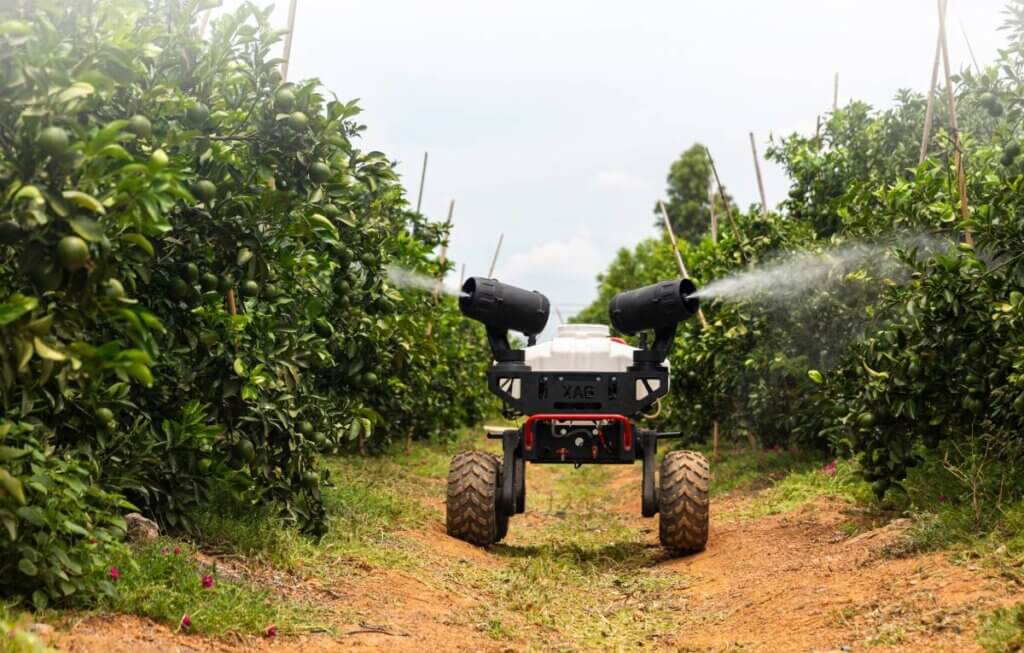
Even further into the future, small autonomous sprayers may be viable, too. Very much in their early days there is great potential. One example is the XAG Revospray Ground 2 with it’s 150L capacity or the R150 with it’s 100 L capacity.
The R150 – Image from https://hse-uav.com/. Modular system and ~32K USD (as of 2023)… if you can find one.
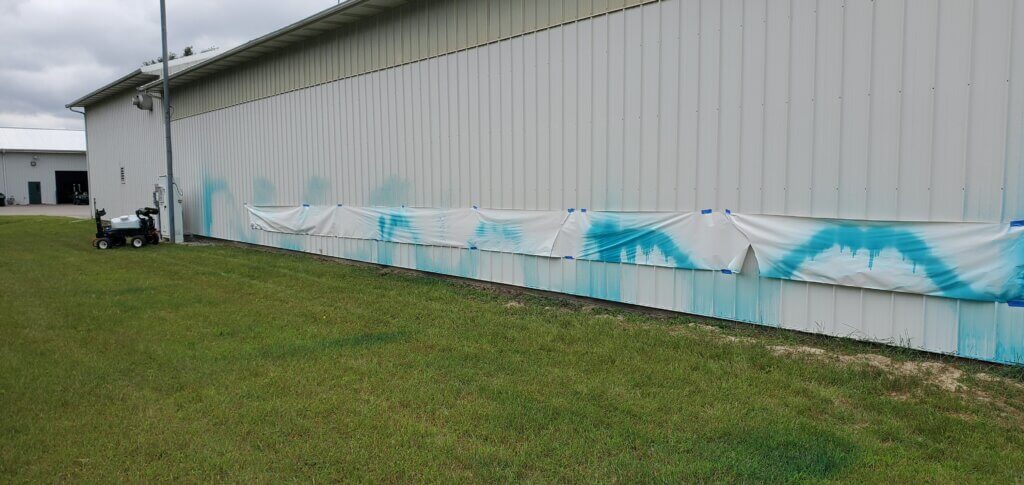
It’s early days, but there are researchers looking at the spray pattern from these units. The image below may not be a fair indication because the nozzle used may not have produced as wide a swath as possible. Thanks to Dr. M. Reinke for the image.
A test pass using food grade dye. You can see the waveform created by the two spray heads as they move up and down during travel.
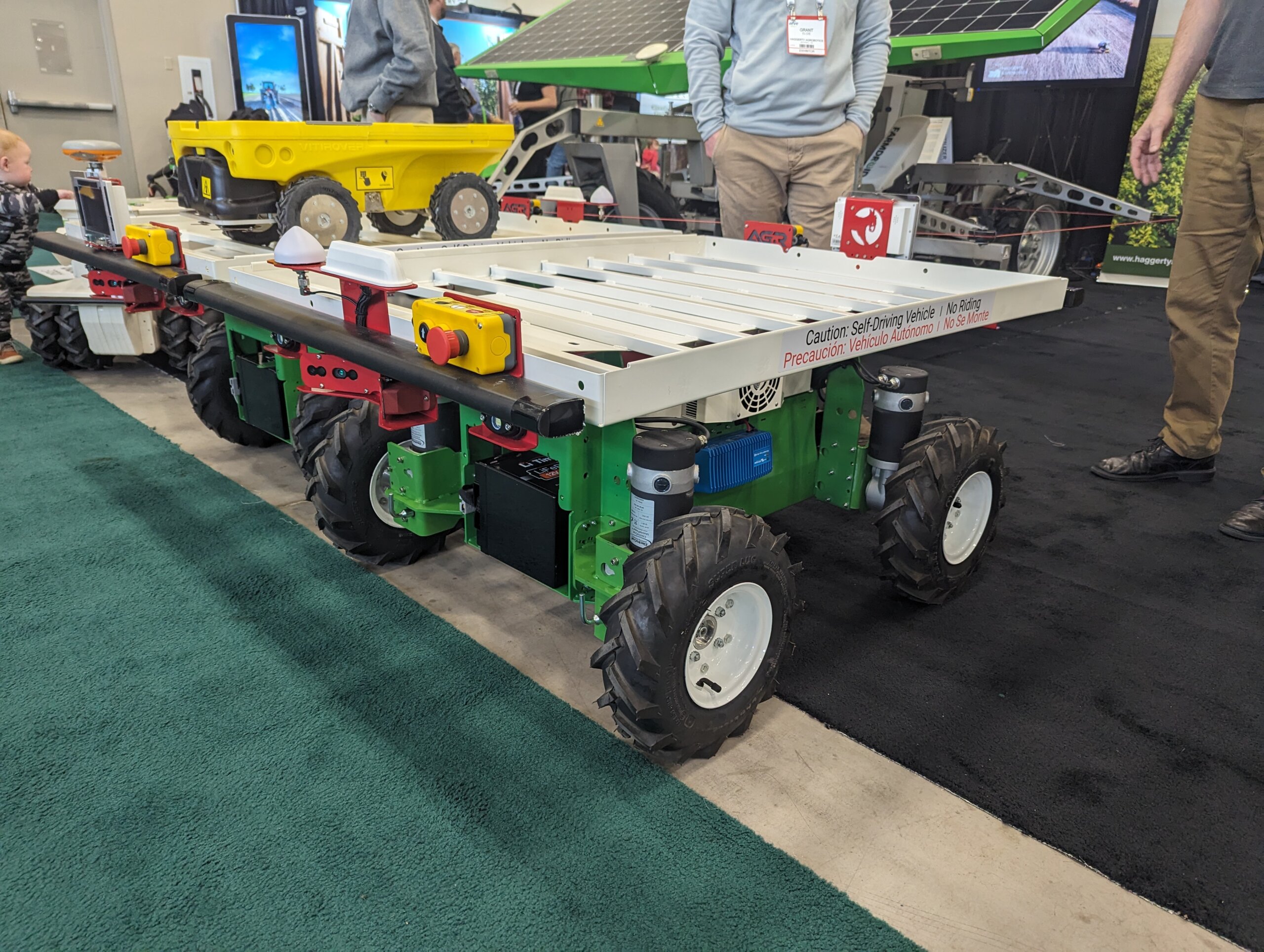
And recently, small autonomous platforms have become more common. Perhaps there’s an opportunity to place a gas powered sprayer on these platforms, or use them to pull a hitch-style sprayer. One such possibility is created by the Burro, shown below at the Ontario Fruit and Vegetable Convention in 2024.
This work was performed with Mike Cowbrough, OMAFA Field Crop Weed Specialist.
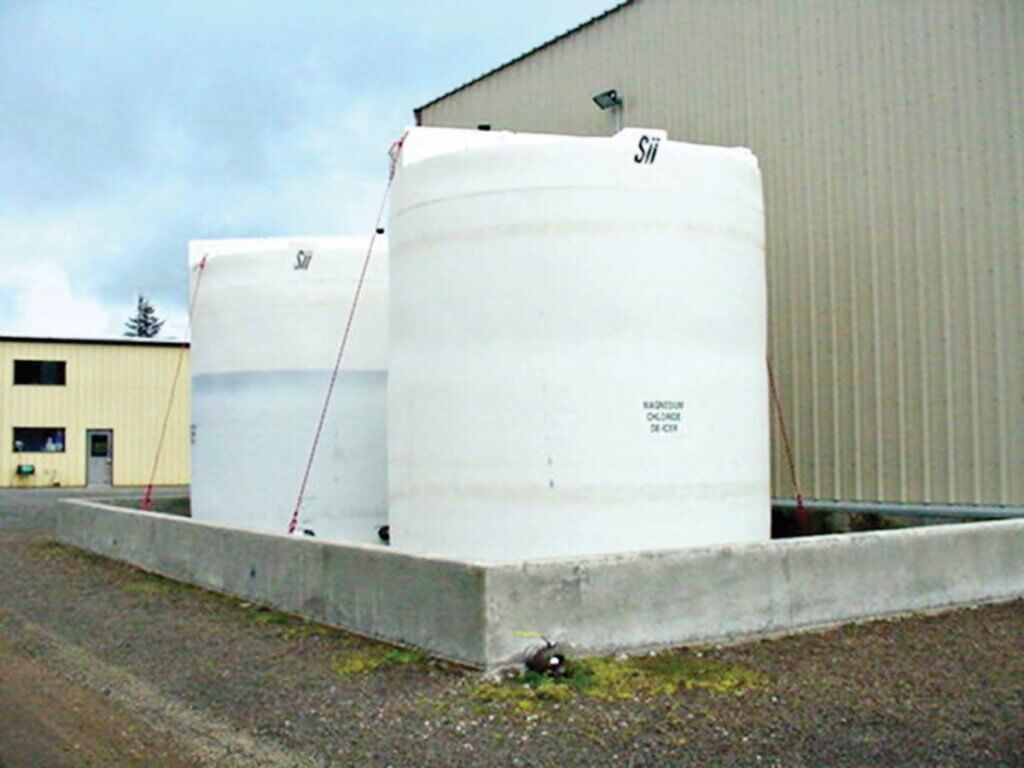
In the early summer months, many field and specialty crop operations collect rainwater (or possibly pump water from holding ponds) into storage tanks for use as a carrier in spray applications. These tanks may be stationary, or they may be part of a nurse or tender truck that delivers both water and chemistry to the field as a means of improving operational efficiency.
In the case of translucent poly tanks, which are commonly used because of their light weight, custom shape, and low price point, light exposure will grow algae. Algal populations multiply exponentially and will clog spray filters and negatively affect filling. In response, growers use home-grown algicides such as copper sulfate, lengths of copper pipe, household bleach, chlorine, bromine, etc. They do so with little or no guidance and therefore little or no consistency. Beyond the obvious questions surrounding efficacy, it is unknown whether these adjuncts create physical or chemical incompatibilities in the tank mix. If so, there is the potential for reduced efficacy and/or crop damage.
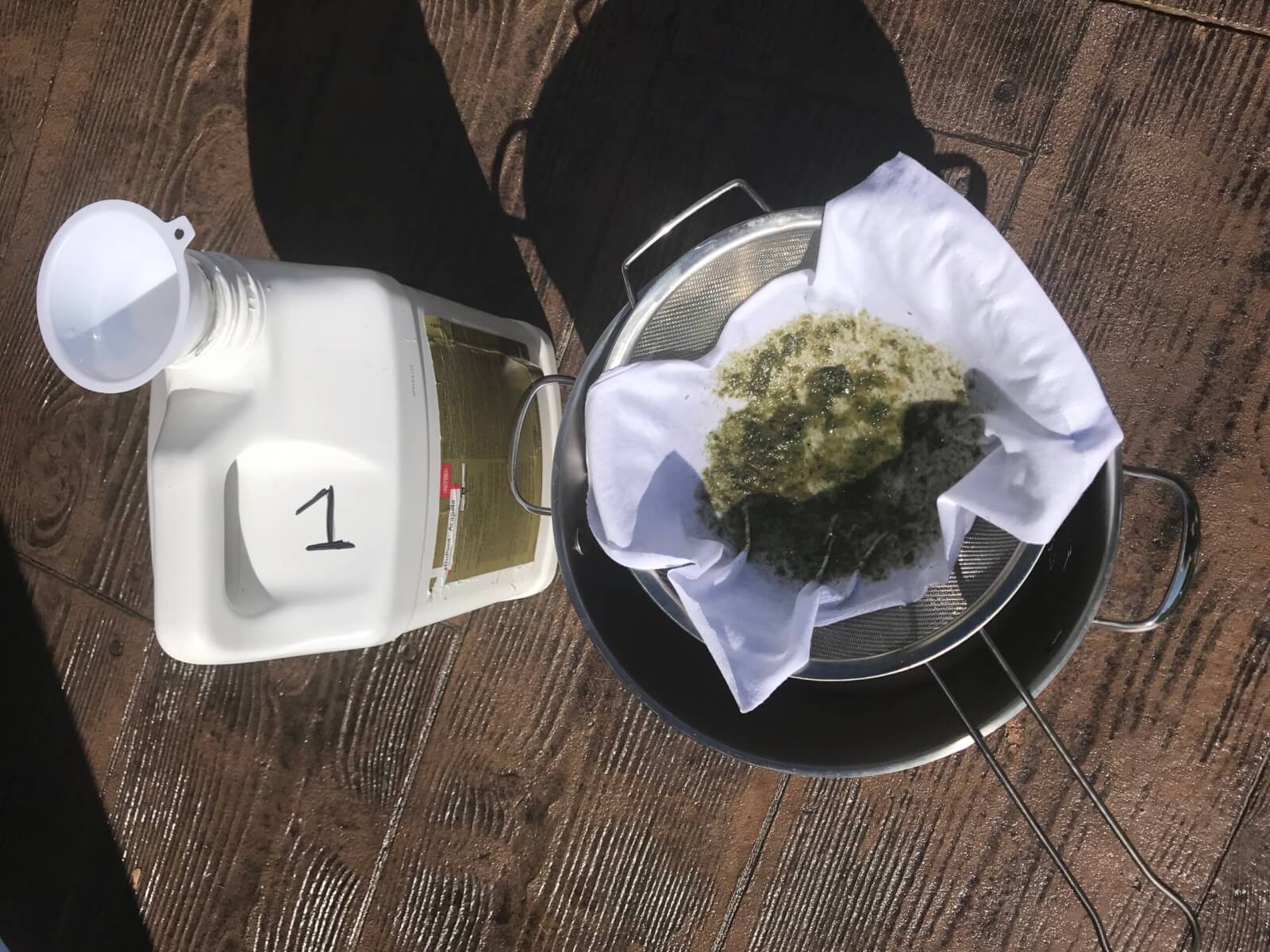
We tested popular methods for algae control by inoculating a series of 10 L translucent plastic jugs with an algal population sourced from a southern Ontario holding pond. The population was left to acclimate and generally establish itself (aka colonize) before we introduced some form of control. Each jug was then gently stirred and emptied through a sieve for qualitative assessment.
In a parallel experiment, we introduced the same algicides to fill water and conducted spray trials. 10 L volumes were mixed with a field rate of glyphosate and sprayed on RR soybeans. Weed control was assessed and soybean yield measured for each treatment.
Algicide Efficacy Experiment
In each treatment, tap water was mixed with a micronutrient growth media (from the Canadian Phycological Culture Centre at the University of Waterloo). This was an unsterilized 10% WC(ed) solution intended to provide micronutrients for algal growth while minimizing fungal and bacterial growth.
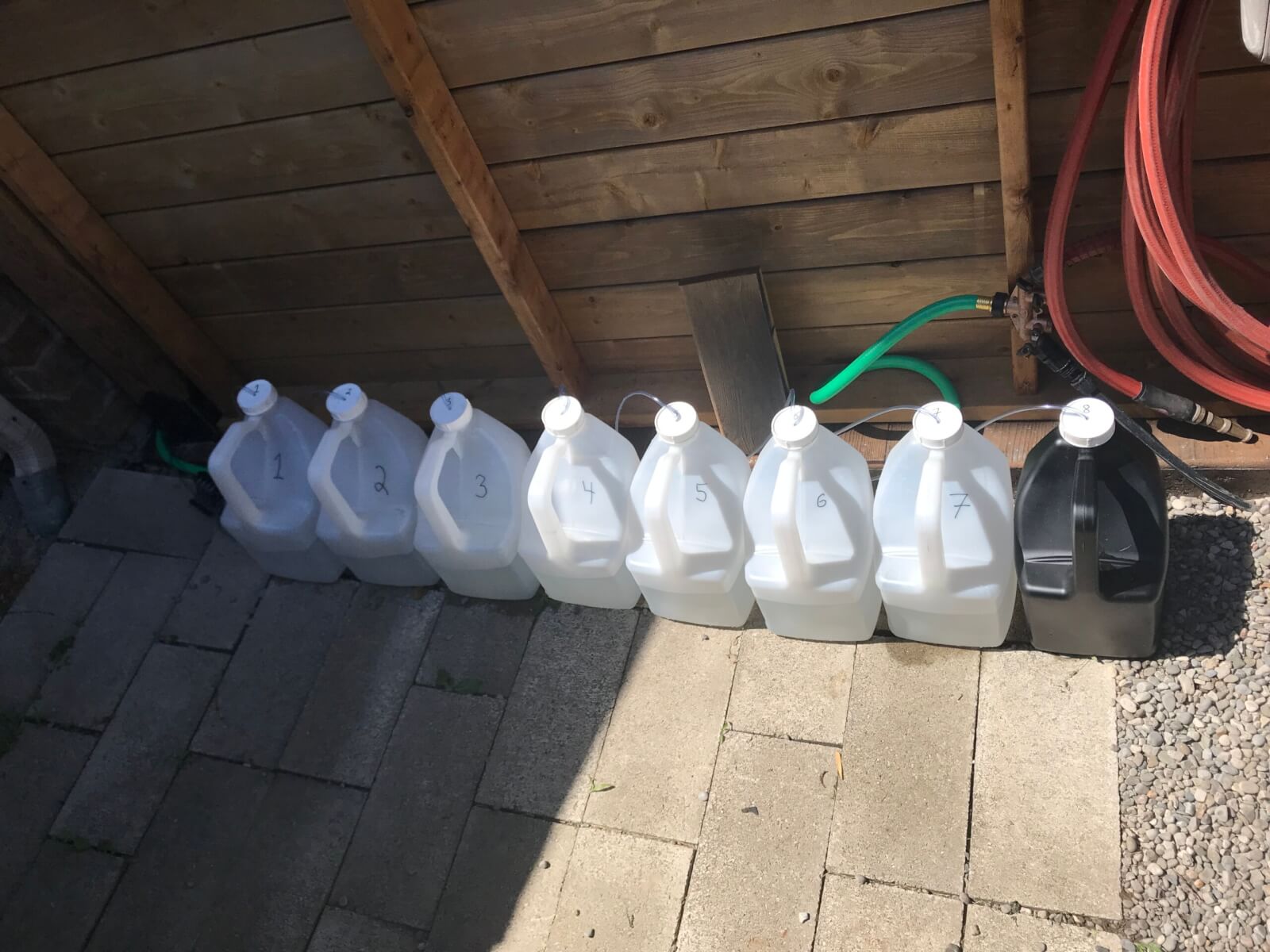
The source algae were collected from the bottom of a holding pond from a farm in Guelph, Ontario. Algae were homogenized and equal parts added to each jug. The jugs were former 10 L pesticide containers thoroughly rinsed and sprayed with Five Star’s “Star San” non-rinse sterilizer. Tank solutions were gently bubbled (one bubble every 10-15 seconds) with air from an aquarium pump. Air was balanced using a manifold and introduced via diffusion stones at the bottom of each jug.
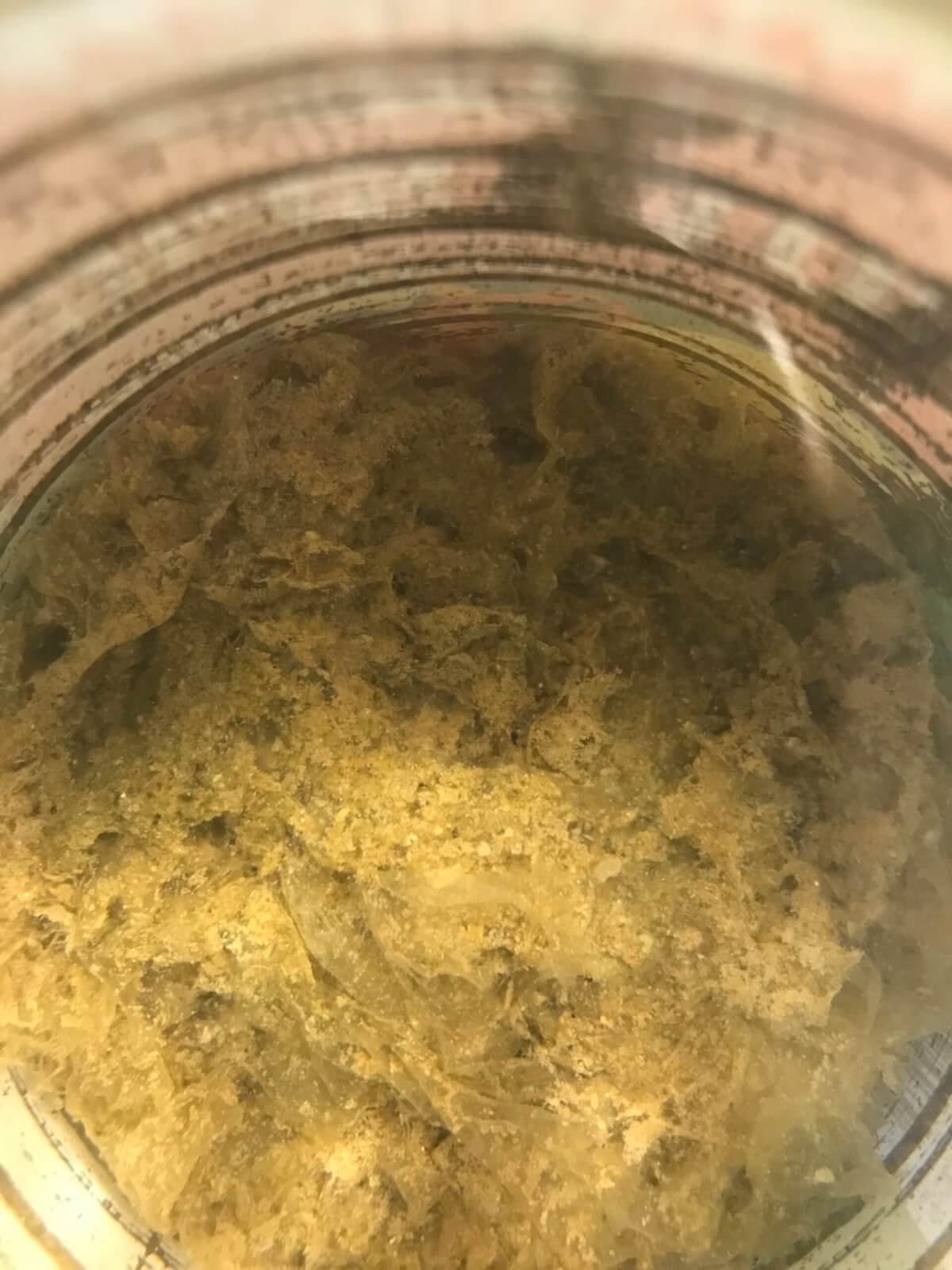
Algae sourced from a farm’s holding pond near Guelph, Ontario. Algae was homogenized before inoculating treatment jugs with equal parts.
Treatments
Each treatment was tap water plus growth media inoculated with algae and exposed to a natural diurnal/nocturnal cycle unless otherwise indicated.
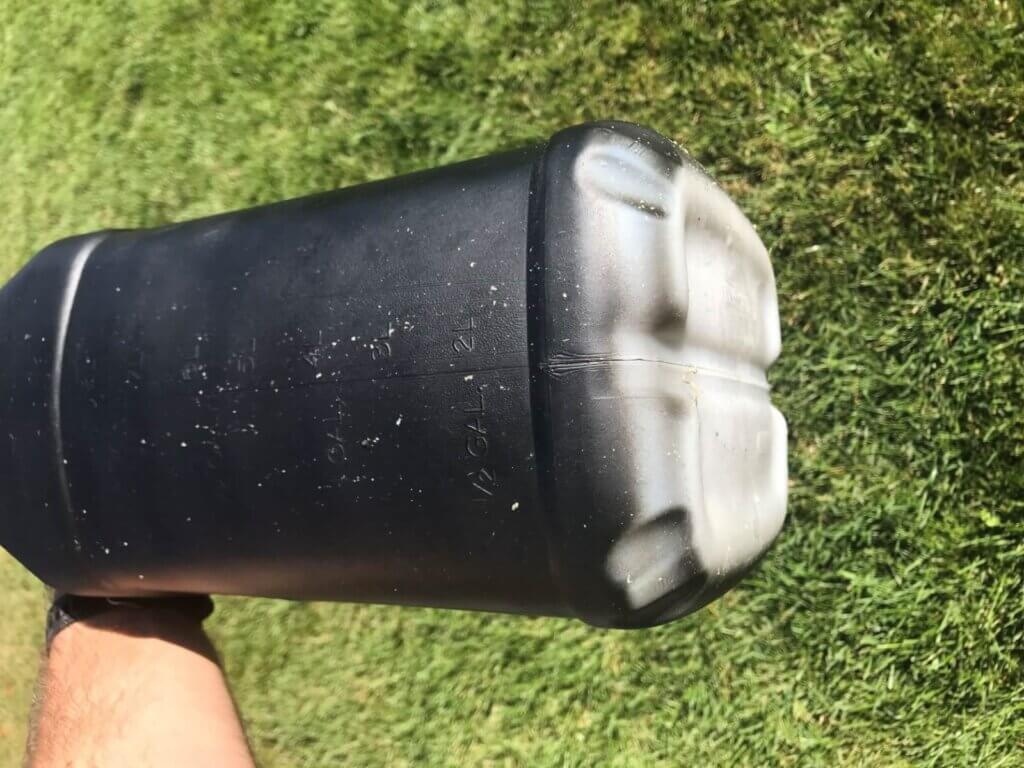
Container was spray-painted black to exclude light
Ammonia
“Scotch Bright” copper-coated scour pad. (copper is often introduced as copper sulfate at 1 cup / 1,000 US gal. or a short length of copper pipe)
Bromine (sourced from a local pool supply store)
Treatment Number
Treatment Name
Rate (/US Gal.)
Rate (% v/v)
Rate (/10 L final volume)
1
Control (no algicide)
2
Shaded
3
*Household bleach
1/4 tsp
0.00033
3.3 mL
4
Black container
5
*Ammonia solution
1/4 tsp
0.00033
3.3 mL
6
Copper-coated scour pad
7
Bromine
1/32 ml
0.000004
0.04 g
Table 1. *Bleach and ammonia should never be added together as they produce toxic chloramine gas.
Method
On July 12, jugs were loaded with water and growth media and inoculated with algae. They were bubbled gently for one week to establish a stable algal colony. On July 19, algicides were added, or transferred to shade or black-out conditions. On August 31 (approximately six weeks later), jug contents were gently stirred and filtered through white cloth for qualitative assessment.
Building up algal population for each jug. Note air lines through lids for slow, intermittent bubbling. Algae was not moved to black container or to the shade until after the first week of acclimation.Almost six weeks after algicide was added, jug contents were gently stirred and poured through white cloth to collect algae and establish how easily the liquid passed through.
Observations
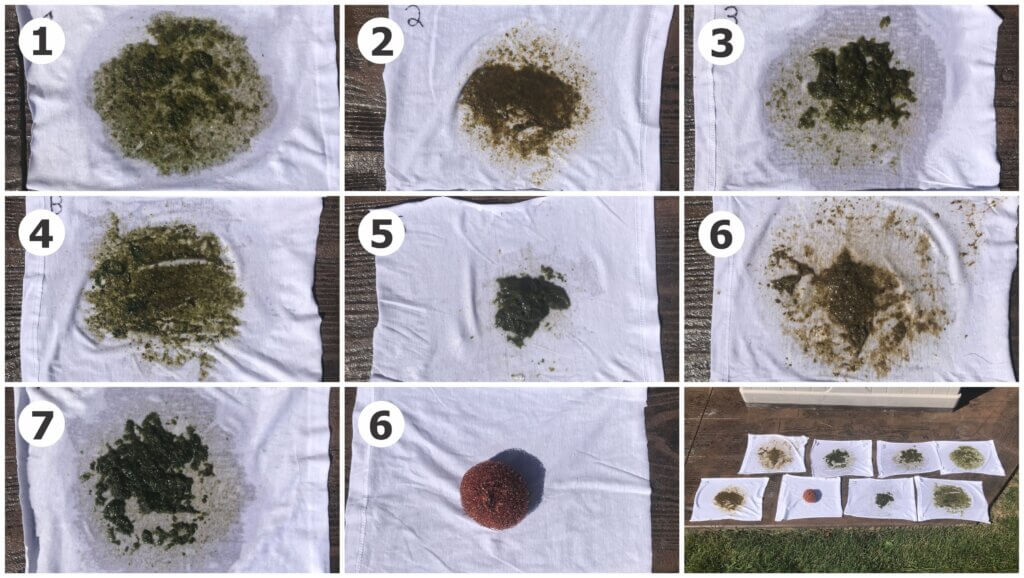
The results of all seven treatments, plus photos of the copper-coated scour pad.
(1) Control. Liquid poured slowly through cloth. Algae was still alive and healthy. It formed some clumps but was not as thick as other treatments.
(2) Shaded. Liquid poured fast and easily through cloth. Was particulate in texture rather than clumpy or gelatinous. Very little mass and entirely brown, suggesting it was dead.
(3) Household bleach. Liquid poured easily through cloth until the clump of algae sitting at the bottom of the jug came out (i.e., most algae were not suspended). Thick mat of healthy-looking algae (note profile photo #3 below). Much greener and thicker than the control (1).
(4) Black container. Liquid poured fast and easily through cloth. Algae retained a little green coloration (more than the shaded condition (2)) but was particulate and not as healthy as the control (1). We intended for this treatment to exclude all light, but it was still able to enter at the bottom where the jug wasn’t completely painted. This may have kept the algae alive.
In an oversight, the jug was not completely painted. This left a source of light at the bottom edge that may have helped sustain algae.
(5) Ammonia. Very difficult to pour liquid through the cloth (note profile photo #5 below). The only condition where a mat of algae was floating at the top of the jug rather than settled at the bottom. It was healthy, green and thick.
(6) Copper. The most gelatinous of all conditions, the liquid took the longest to pass through the cloth filter. While the algae seemed brown and dead, the gel would be very problematic during sprayer filling and spraying. Note that the copper scouring pad (shown unrinsed) has nothing growing on it.
(7) Bromine. Like the household bleach condition, liquid poured easily until the healthy mat of algae at the bottom of the jug came out (i.e., most algae were not suspended). Note profile photo #7 below.
Profile shots of treatment 3 (Bleach), 5 (Ammonia), and 7 (Bromine).
Spray Efficacy Experiment
Ideally, adjuncts added to carrier water are inert. That means they don’t reduce a herbicide’s effectiveness on susceptible weeds or increase crop injury. For example, hypochlorite (found in bleach and in chlorinated water) reduces the biological effectiveness of low concentrations of isoxaflutole (the active ingredient in herbicides such as Converge and Corvus). However, when added to higher, agriculturally-relevant concentrations, the reduction in efficacy wasn’t considered significant (Lin et al., 2003). Conversely, bromide has been added to certain herbicides to improve performance (Jeschke, 2009).
There’s precious little information about synergistic or antagonistic effects from adding bleach, ammonia, copper or bromine to herbicide carrier water. To learn more, we added each of these adjuncts to the standard rate of glyphosate (900 gae/ha – 0.67 L/ac). Using a CO2-pressurized plot sprayer, the solution was applied to <10 cm tall weeds at 150 L/ha (15 g/ac) in glyphosate tolerant soybean at the 2nd trifoliate stage of growth (Elora Research Station, Ontario).
Visual crop injury was evaluated at 7 and 14 days after application. Weed efficacy was evaluated at 14 and 28 days after application. Soybeans yields were collected using a Wintersteiger plot combine and adjusted to a moisture content of 14%.
Weed Control
All treatments provided excellent control (>90%) of the weeds emerged at the time of application. Table 2 (below) presents the % visual control 28 days after application.
Carrier Treatment (glyphosate 540 g/L at 900 gae/ha or 0.67 L/ac)
Lamb’s-quarter
Green pigweed
Witch grass
Green foxtail
1) Control
0
0
0
0
2) Shaded
100
100
100
100
3) Household bleach
100
100
100
100
3a) Household bleach – added prior to mixing
95
97
100
100
4) Black container
100
100
100
100
5) Ammonia
100
100
100
100
6) Copper-coated scour pad
100
100
100
100
7) Bromine
100
100
100
100
Table 2. Visual control of lamb’s-quarter, green pigweed, witch grass and green pigweed at 28 days after the application of glyphosate 540 g/L at 900 gae/ha mixed with various carrier treatments intended to prevent algae growth. Treatment numbers correspond with the soybean injury and yield image below.
Soybean Injury and Yield
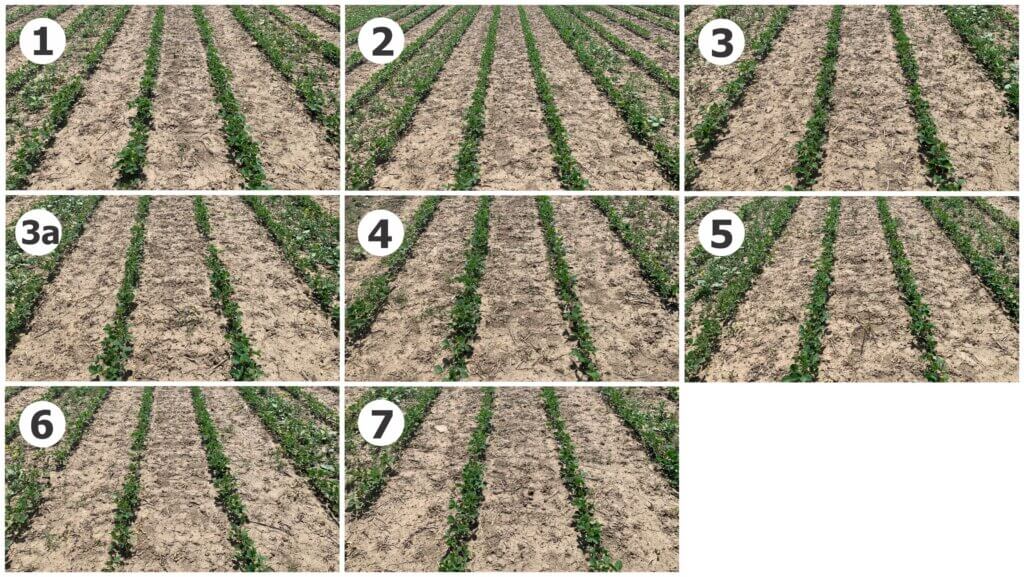
There was no noticeable crop injury from any treatment (figure below) and yields were not significantly different from the control treatment (Table 3). However, when bleach was added prior to mixing, we did observe a trend in reduced soybean yield. We’re unable to explain this observation, but suggest it may be an unrelated issue (such as field variability). There were no obvious signs of crop injury, and the treatment provided excellent weed control.
Photographs of each plot 14 days after application. The number/letter in each inset image corresponds to treatments in Tables 2 and 3.
Carrier Treatment (glyphosate 540 g/L at 900 gae/ha or 0.67 L/ac)
Crop Injury (%)*
Avg. Yield (bu/ac)
Significance**
4) Black container
0
40.0
A
7) Bromine
0
39.6
A
2) Shaded
0
38.1
AB
3) Household bleach
0
37.6
AB
1) Control
0
37
ABC
5) Ammonia
0
36.9
ABC
6) Copper-coated scour pad
0
36.1
BC
3a) Household bleach – added prior to mixing
0
34.0
C
Table 3. Visual control of lamb’s-quarter, green pigweed, witch grass and green pigweed at 28 days after the application of glyphosate 540 g/L at 900 gae/ha mixed with various carrier treatments to prevent algae growth. *7 days after application. **Duncan’s multiple range test. Soybean yields that don’t share a letter in common are significantly different.
Discussion
We elected to use an extreme situation where a single application of algicide was applied to an established, healthy colony. It’s possible that regular applications of algicide in a volume of water with little or no algae could maintain that condition.
A treatment was considered effective if it slowed or halted algal growth, especially if it also degraded algal populations, causing them to become brown, thin, and/or particulate. Once in the spray tank, the shear forces created by circulation should disperse any dead or degraded algal masses, making it easier to pass them through filters and nozzles.
The shade treatment appeared to kill algae as well as cause degradation. Second place went to the black-out treatment, where some light was unfortunately allowed in. This would have continued to fuel photosynthesis in the unpainted portion at the bottom of the jug. Conversely, the black exterior likely raised temperatures above >20 °C, which depresses most algal growth and may have contributed to the degradation.
Copper appeared to kill the algae but also created a gel that would pose problems to filters. Unlikely to be bacterial, as copper is known to suppress bacterial growth, it could have been caused by diatoms; certain invasive species are known to form brown jelly-like material endearingly referred to as “brown snot” or “rock snot”. Alternately, and according to work by J. Rodrigues and R. Lagoa, alginate polysaccharide can form viscous aqueous dispersions (such as gels) in the presence of divalent cations (such as copper).
No treatment appeared to reduce herbicide efficacy or affect crop health. However, unexpectedly, the household bleach added prior to mixing may have reduced soybean yield. Given the limited number of replications and the single plot location, we suspect this was a field effect, unrelated to the treatment.
Take Home
Based on these results, a combination of shade and light-excluding materials (e.g. black paint) would be the ideal approach to algae control. It’s cheap, effective, and doesn’t require periodic management. Buying black tanks is a good choice, or you can paint them. What you should paint them with is a matter of debate and there’s a very good Twitter thread on the subject if you’re interested.
An Aside: Algae in Ponds and Dugouts
We didn’t test this, but the question has come up and the best we can do is share some long-standing farmer wisdom. Some have used Aquashade dye to absorb the photosynthetic wavelengths and reduce algae buildup. Reputedly it is moderately successful. Another option is adding aluminum sulfate to the pond, and with a lot of agitation it should clarify in about 48 hours. Still others have added a few square barley straw bales to the water and found it to work surprisingly well (possibly an allelopathic response). Tie a rope to them and float them in the pond.
Citations
Jeschke, Peter. 2009. The unique role of halogen substituents in the design of modern agrochemicals. Pest Manag Sci, 2010; 66: 10–27
Lin, C.H., Lerch, R.N., Garrett, H.E. and M.F. George. 2003. Degradation of Isoxaflutole (Balance) Herbicide by Hypochlorite in Tap Water. J. Agric. Food Chem. 2003, 51, 8011-8014