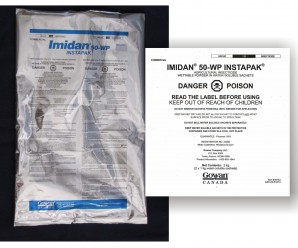
Biopesticides are a rapidly growing segment in horticultural pest control. While they are often billed as green “miracle cures”, applicators should be aware that they require unique considerations. Issues with lifespan, target specificity, and application technology can all impact their efficacy. However, like any pesticide application, careful planning can minimize wasted time and money.
Typically defined as pesticides derived from “natural” sources, biopesticides contain active ingredients extracted from plants, microorganisms, animals, and/or certain minerals. Given their origin, and the fact that many biopesticides are living organisms (as is the case with most of the microbial-based pesticides), they are often photo-sensitive and quickly break down. This generally means that they need to be re-applied often.
Mixing and handling
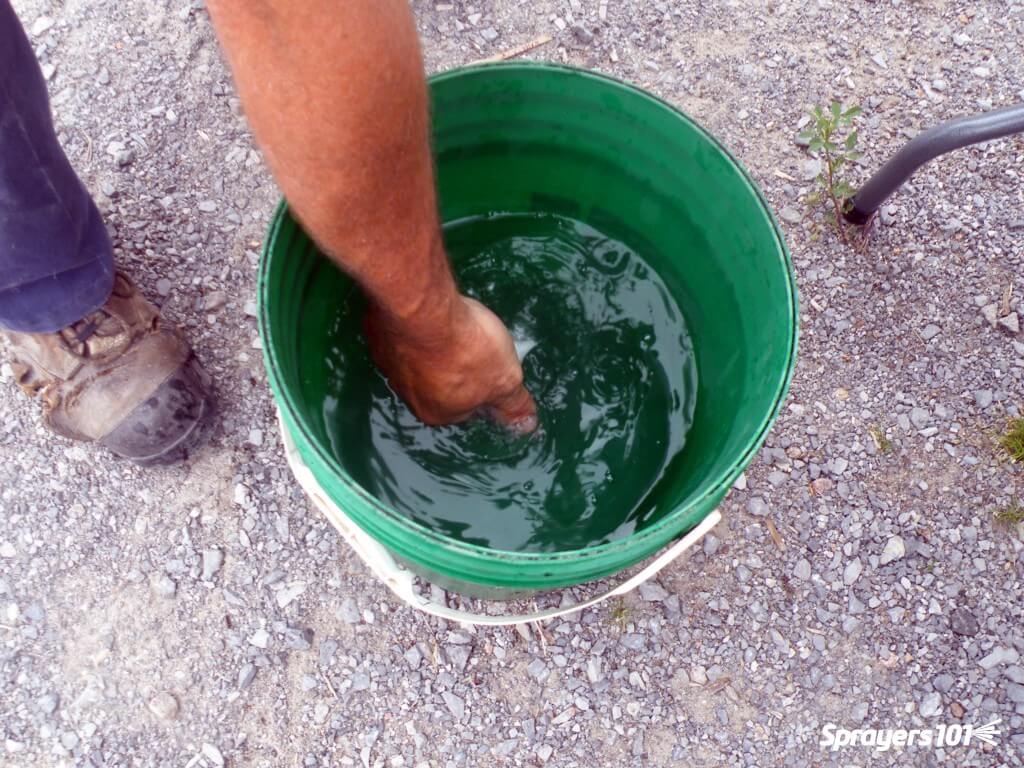
Consideration should also be given to the lifespan of these products during the application. Many have an optimum pH for both the carrier water and the soil, and a limited temperature range outside of which they may not be active. As already mentioned, direct sunlight can quickly degrade many biopesticides, which means they should be applied either early or late in the day. Timeliness is also a factor: efficacy can be greatly reduced if the product is not used quickly – many biopesticide organisms begin to break down as soon as they are tank mixed. Also, be aware that it can be difficult (or impossible) to find suitable tank-mix partners. For example, a fungal biopesticide obviously shouldn’t be mixed with a fungicide. That also leads the applicator to consider their spray program carefully and clean their sprayers thoroughly between applications.
Efficacy
Applicators should understand how each biopesticide is supposed to control (or more likely, supress) pests. Many biopesticides have to be ingested or physically contact the pest. As such, they often need high application volumes to ensure sufficient coverage of all target surfaces. Many are slow to control the pest, so the applicator may mistakenly think the product is not working, and reapply unnecessarily.
Application equipment
Applicators may need to reconsider their current equipment when using biopesticides. If the product has to contact the pest, high droplet density is preferred. This can be accomplished with high volumes, but also with higher droplet counts, and that means smaller droplets. Drift issues aside, many biopesticides are actually living organisms (e.g. nematodes) which might be negatively affected by the small nozzle orifice.
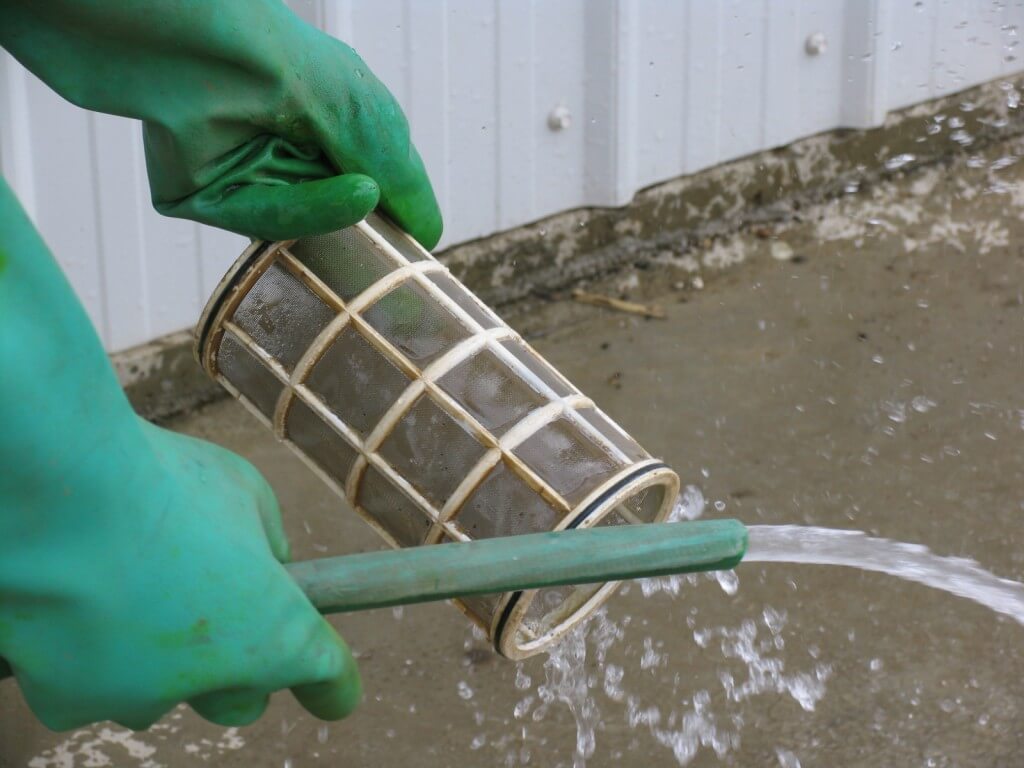
The “Spray Guy”, Dr. Jason Deveau, (Application Technology Specialist with the Ontario Ministry of Agriculture, Food and Rural Affairs) suggests using a nozzle with a larger exit orifice and no pre-orifice to minimize clogging or any potential damage to the microorganisms. Clogging can be further reduced by using a minimum of three levels of filtration on a sprayer. With proper agitation, a tank basket, suction filter at the pump and slotted strainers behind each tip should catch any “chunks”. In-line filters at the boom are also potentially helpful. Each filter, from tank to nozzle, should be filter smaller particles than the last. Cleaning screens diligently and inspecting the effectiveness of the agitation system, should be part of every spray day.
Applicators can account for many of these issues by understanding what the biopesticide is and how it is intended to work. Consider these questions:
- When is the pest active/vulnerable?
- Under what conditions does the product need to be used to be most effective?
- Are there special handling or mixing considerations?
- What do I need to have in place to minimize the time between mixing and applying the product?
Ultimately, an effective application of biopesticides relies on integrated pest management (IPM). Biopesticides can work as advertised when used thoughtfully and appropriately. Understanding the products benefits and limitations will ensure applicators reap the full benefits of these new and evolving methods of control.