Tag: pull type

  • Does the Pull-Type Sprayer once again have a Place on our Farms?

    Does the Pull-Type Sprayer once again have a Place on our Farms?

    The self-propelled sprayer revolution is complete in western Canada. Almost all sales of new equipment are self-propelled. In fact, the once thriving sector of Canadian-made pull-type sprayers, and the innovations they brought to spraying, has disappeared.

    In its place we have self-propelled sprayers that offer plenty of power, large tanks, high mobility and comfort, and of course, the clearance required for late-season sprays. These features come at a cost: high capital expense, weight, fuel consumption and drift potential if the speed or boom height are not controlled.

    The self-propelled machines are nice; however, customers are becoming concerned about overall value. Sure, the sprayer is the most-used piece of equipment on the farm, with the average field being treated four to five times per year. Does that justify the $500 to $700 k purchase price?

    To answer this question, we need to evaluate the alternatives. Even though we’ve lost most North American pull-type sprayer makers, a few, such as Top Air, are left. A new pull type, the Connect Sniper, is being offered by Pattison Liquid. In addition, there are now several European manufacturers looking at our market. These bring large capacity, sophisticated booms plumbing and a narrow transport width. Let’s look at the issues:
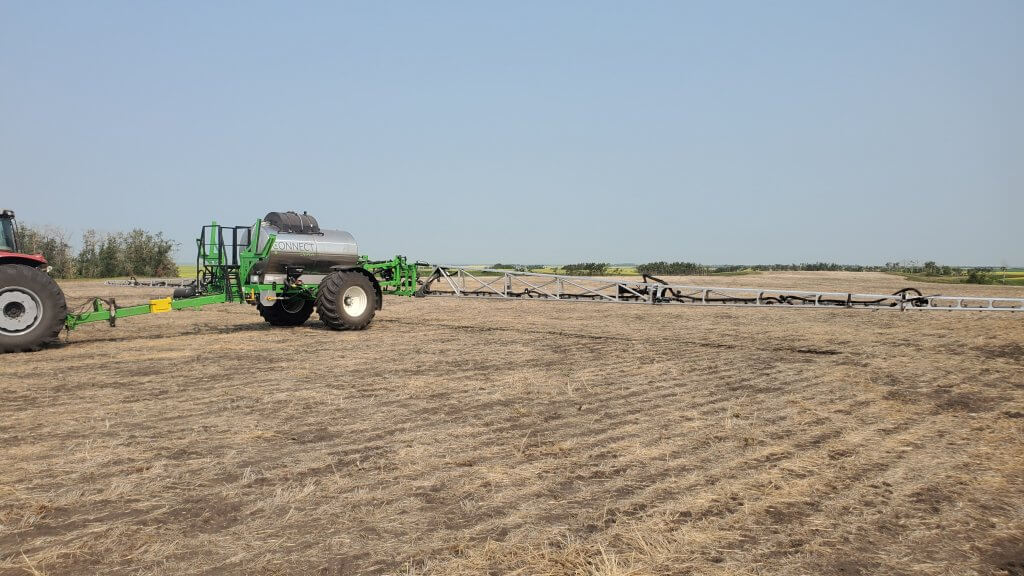
    The Connect Sniper, manufactured by Pattison Liquid, offers recirculating booms, Raven Hawkeye pulse-width modulation, continuous rinsing, and 120′ Millenium booms. The WEEDit spot spray system is also available.

    Capacity

    Not a problem. Top Air features tanks up to 2400 gallons and 132’ booms. Amazone builds a 3000 gallon tank twin axle sprayer (UX11200) with 132’ booms. The 230 gpm on-board diaphragm pump can fill the sprayer in 15 minutes. The Hardi Commander offers tanks up to 2600 gallons with 132’ booms. The Horsch Leeb TD12 is at 3170 gallons with 138’ booms. Equipped with air brakes, these sprayers can be trailed at up to 50 km/h.
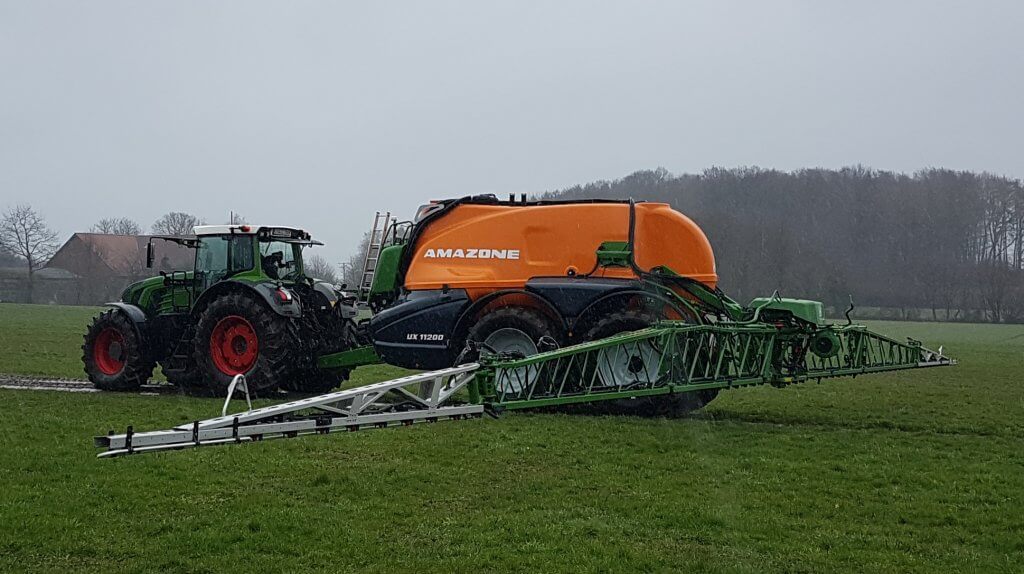
    The Amazone UX 11200 has an 11,200 L (2960 US gal) tank and tandem, steering axles combined with up to 130′ booms.

    Clearance

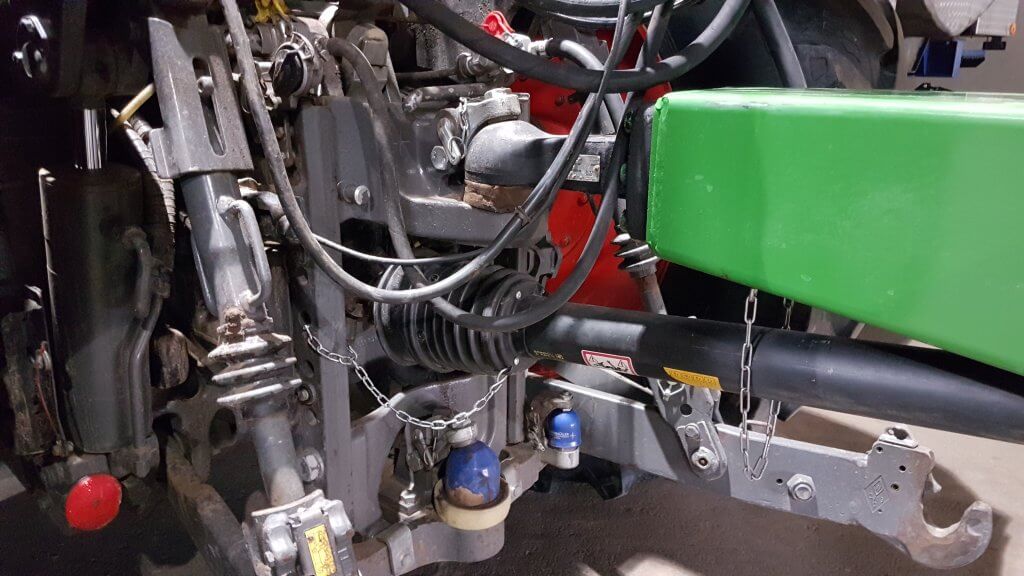
    The pull-types themselves have adequate clearance for most crops. The limiting factor will be the tractor and the hitch point. The availability of a high hitch point, and an 80 mm ball, on European tractors, is a boon for this.  Although it may be necessary to shield the low standard drawbar and belly, pull-type owners report no long-term effects from the lower clearance.

    The Horsch Leeb TD12 offers a 12,000 L (3170 US gal) tank and up to 1.25 m ground clearance (Photo: Horsch.com).
    European tractors offer 80 mm ball hitches for larger implements with high mounting heights to gain extra sprayer clearance.

    Tractor

    The pull-type sprayer makes most sense if it allows the re-purposing of an existing tractor.  The common yard tractor isn’t enough, as the high capacity sprayers may require >200 hp with front wheel assist, especially in softer ground or hilly terrain. Another requirement is that the track width match the sprayer, and the European standard of a 2.25 m track width (centre to centre) can be hard to match in North America. New rims on the sprayer can push the width out, but the resulting increased axle stress may be problematic; these issues should be considered in advance. Fortunately, powerful front wheel assist tractors are finding a place on farms, even as seeding tractors. The changing over from one implement to another during a busy time can be a hassle, with a dedicated rate controller requiring additional cab real estate. But with the lower capital cost of a pull-type, a new tractor that also has other utility on the farm may be justified.
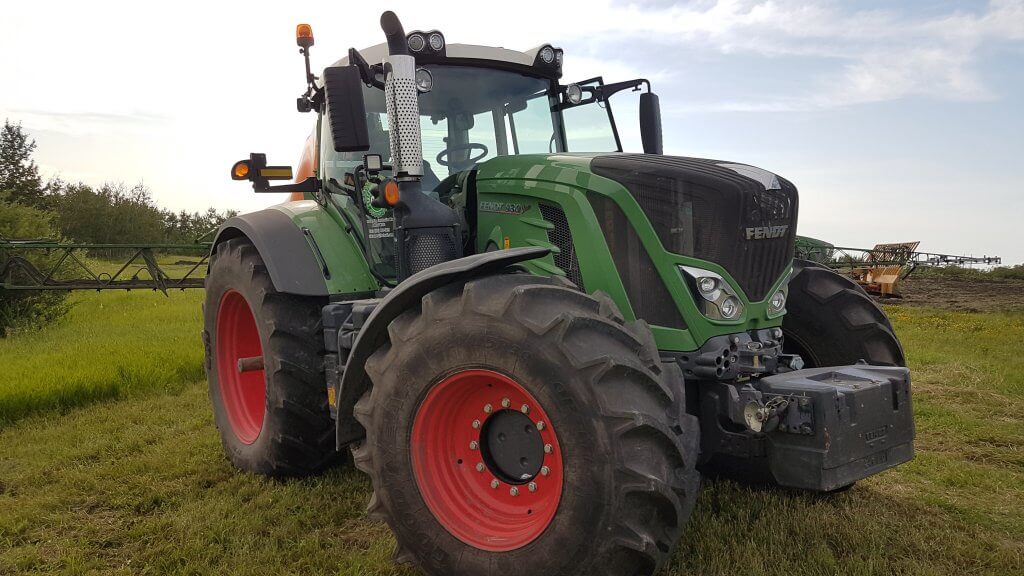
    Large pull types require large tractors that may not already exist on the farm. The ability to match wheel tracks and the convenience of monitor hookups are important considerations.

    Productivity

    We’ve long maintained that productivity gain through increased travel speed creates more problems than it solves. It is virtually unavoidable to use somewhat higher booms with faster speeds, and it’s been proven that spray drift potential increases with travel speed. Instead, the sprayer features that save time are faster fill and clean times (reduced downtime), larger tanks (fewer stops to fill) and wider booms. Wider booms are easier to keep steady with slower moving equipment.

    So how do typical self-propelled sprayers stack up against pull-types?

    We compared two sprayers, a large pull-type with 3000 US gallon tank and a typical self-propelled with a 1200 gallon tank. Travel speeds were 10 and 15 mph, respectively, and fill times were 15 and 10 minutes. The slower pull-type turned in one headland, whereas the self-propelled used two to allow room for acceleration after the turn.

    On half-mile runs, our “Productivity Calculator” at agrimetrixapps.com showed 129 acres per hour for the self-propelled and a respectable 119 acres/h for the pull type.  The value of fast but infrequent fills and the more efficient turns made the difference for the pull-type.  Use the app to compare other tank sizes, travel- and fill-speeds, or boom widths.
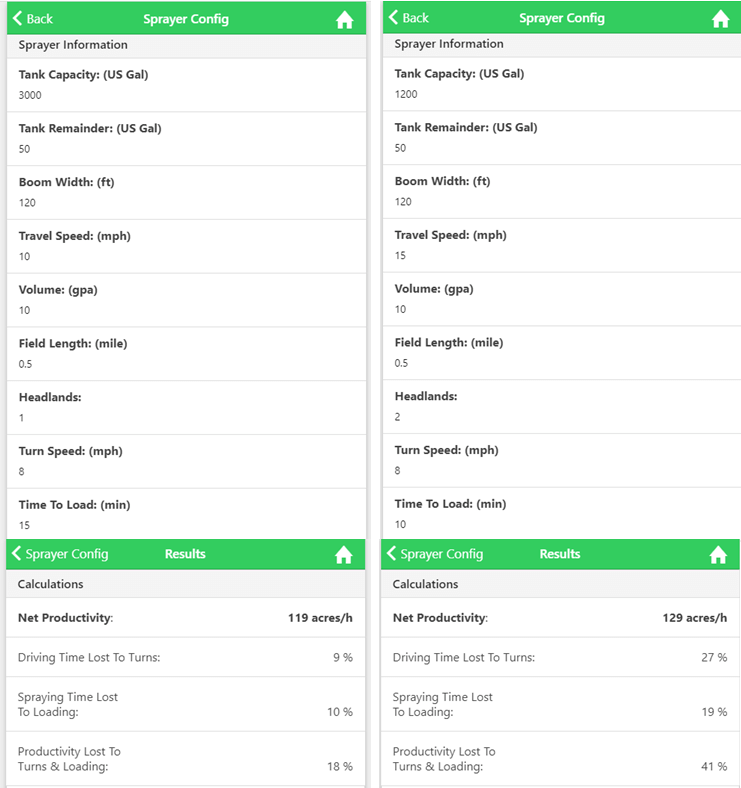
    Productivity of a 3000 gallon tank pull-type (left) vs a 1200 gallon self-propelled (right), given specific speed, boom width, and fill times.

    The specific design features of a sprayer may create additional productivity. For example, the ease of tank rinsing and cleanout can save time. European sprayers typically have lower remaining volume values, which increases the speed of tank rinsing and can eliminate the need for dumping tank remainders on the ground. Ease of filter inspection may seem trivial, but it permits more frequent confirmation that the system is clean and thus avoids potential future problems.  An on-board pressure washer on the Amazone makes boom hygiene easier. It’s important to account for all these seemingly small gains because they add up.

    Service

    The success of any agricultural equipment relies on the equipment durability, fast availability of parts and service. Any new market entry will need to establish a dealer network, parts distribution system and superior service. This is no easy feat in a time of dealer consolidation. But without a drive train, there’s less to go wrong in a pull-type, and many plumbing parts are generic or can be obtained in metric equivalents.
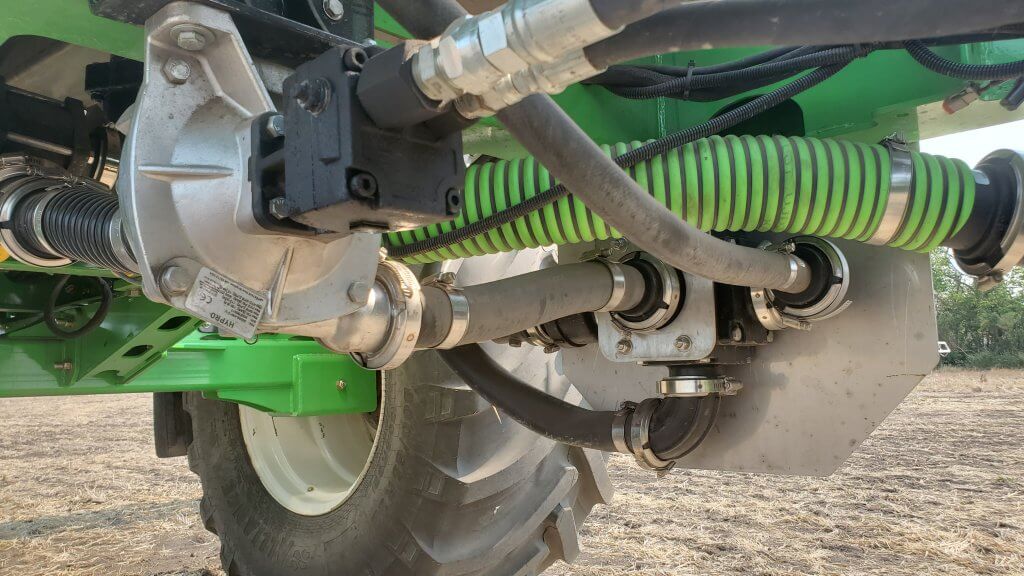
    With fewer mechanical components, pull-type sprayers require less service and are less prone to breakdowns.

    Cost and Value

    Prices vary, but a pull-type sprayer will usually cost less than half of a similar-sized self-propelled sprayer depending on the options selected.

    With European-influenced equipment, the plumbing system will be more sophisticated, often offering recirculating booms, steering axles that follow in the tracks of the sprayer, narrow transport widths for greater road safety, an improved boom suspensions and levelling performance. It is safe to say that in terms of features, these sophisticated machines offer good value and many good design ideas. Operating costs are almost certainly lower, with better fuel economy and less drivetrain trouble.

    The pull-type sprayer continues to have an important place to fill on our farms. With trade and weather anomalies lowering farm income, farmers are wary of being over-capitalized. It is conceivable that lower-cost and feature-rich alternatives to self-propelled units will have a fit.  They certainly make sense on smaller farms that may not be able to utilize the full performance of a self-propelled, or on a larger farm that needs extra capacity but doesn’t want to bear the capital cost of a second expensive sprayer. The inherently slower working speeds allow for lower booms, less drift, overall improved deposit accuracy and uniformity. They’re worth a closer look.

  • What do European Sprayers Bring to the North American Market?

    What do European Sprayers Bring to the North American Market?

    For many years, European agricultural machinery was considered too small to be relevant for North American conditions. That started to change when Claas and New Holland began introducing large harvesting equipment 20 yrs ago. Larger tractors from the likes of Fendt, and seeding and tillage equipment (e.g. Horsch) followed soon after. Now, European sprayers are knocking on our doors. What do they bring to the party?

    Overall capacity

    The typical large self-propelled European sprayer of 2020 has all the capacity of the largest North American models, and sometimes more. Boom widths of 36 m (120 ft) are common, and wider booms extending to 40 and even 50 m (~131 and 164 ft) are available. Tank sizes of 5,000 and 6,000 L (~1,300 and 1,600 US gal) are not uncommon, and 8,000 to 12,000 L (~2,000 to 3,000 US gallons) are featured on some. On those specs alone, they qualify.

    European sprayers can be significantly larger than their North American counterparts (Dammann DT 3500 H S4).

    Dimensions

    The first thing people notice about European sprayers is their more compact design. In order to comply with the 3 m maximum transport width allowed by law, everything is narrower. That doesn’t prevent the wheel track from widening in the field, of course, where stability is needed or where tramlines need to be matched.

    More efficient use of space in a European sprayer allows a smaller sprayer footprint with equal capacity (Amazone Pantera).

    The more compact design does come at a cost. There’s no room for large ladders with handrails to enter the cab, and catwalks are usually gone, too. Access to service points can be more cramped. But the upside is that most of these sprayers are lighter than their North American siblings, with dry weights between 9,000 to 12,000 kg (20 – 25,000 lbs) not uncommon even for the larger capacities.

    Compact, efficient designs featured in Bateman sprayer, one of UK’s top makes.

    Frame and Cab

    Less space has provided some frame innovations. A central channel frame is sometimes featured, creating room for a sophisticated swingarm suspension, or a walking beam. The cabs typically sit in front of the chassis, with a centrally mounted engine. This offers superior visibility, although it does take some getting used to. Overall, the cabs on these more compact sprayers are every bit as spacious and comfortable as North American types, with better rearward views possible due to the narrow chassis.

    Wishbone swingarm from central tube frame in Fendt Rogator.

    Monitor systems vary, but due to the majority of sprayers being made by smaller firms, third-party controllers will be more likely. Ag Leader, Topcon, and others can be seen in place of the proprietary systems of the larger manufacturers.

    There are no shortcuts with European cabs.

    Tank design

    Again, the compact real-estate requires some unique solutions. The barrel-shaped tank resting on a cradle that we’re used to in North America is replaced by a more complex-shaped tank that needs to utilize every possible available space. Although this is done with steel on many units, molded plastic is once again more common. Access to the tank lid is also more difficult due to the general absence of walking platforms. However, attention is paid to sump design and minimizing the remaining volume, making cleaning easier.

    Less room on narrow frames requires more complex tank shapes. Will cleanout be as effective?

    Booms

    European sprayers have well-engineered booms with better height control and contour-following capabilities than North American units. Usually triple-fold, they are compact and many offer Norac (Topcon) height sensors. Steel remains the most common material, with aluminum deployed as necessary on outer sections. Wet booms have 25 mm outside diameters and as such are slightly smaller than North American types. However, flow and pressure drop are measured to ensure a quality distribution. If these systems are used at faster travel speeds, flow limitations may become an issue and that will require closer evaluation.

    Large tanks and wide booms are commonplace in Europe (Sands sprayer)

    Plumbing

    An aspect where the European sprayers excel is plumbing design. Most have recirculating booms; some offer continuous rinsing. Both designs minimize waste generation and simplify rinsing and cleaning, saving time. More sophisticated tank level gauge systems that offer cab readouts, better resolution at low volumes and less dependence on having the sprayer resting on a level surface, can also be seen.

    Recirculating booms are common on European sprayers (Bateman sprayers).

    Pumps tend to be diaphragm, with only a few brands offering centrifugal types. The reasons are both technical and traditional. On the one hand, diaphragm pumps can run dry, don’t need to be primed and can be located beside the tank, for example, and can push air into a boom. On the other, they are bulkier and more expensive, noisier, need a pulsation damper and require maintenance. Some manufacturers, notably the Fendt Challenger and the Chafer, ship with centrifugal pumps. These are now equipped with wet seals, and the Challenger has employed an auto-prime system that prevents air-locks.

    Diaphragm pump on Amazone Pantera (top of picture)

    Flow Control

    Whereas all North American manufacturers offer a pulse-width-modulation (PWM) option which now comprises an estimated 30% of new sales, the European sprayers are only beginning to consider this flow management approach. The majority still offer multiple nozzle bodies that permit automatic switching between various sized nozzles to achieve extended travel speed ranges or changes in spray quality. One of the reasons for the delayed adoption of PWM is the European regulatory system, which have yet to approve some aspects of the PWM system.  Low-drift performance, for which most air-induction nozzles have been approved, must still be validated for nozzles that must be used with PWM (recall that air-induced nozzles are not generally recommended for PWM).

    Multiple nozzle bodies are favoured over PWM in Europe, but PWM is gaining acceptance.

    Many UK sprayers also use an interesting means of managing bypass, via a so-called Ramsay Valve. This type of valve uses an air-filled diaphragm to divert flow, and air-pressure change is used to alter the bypass. Such a system was an answer to early butterfly valves which had slow, uneven response, but is bulkier than the modern mechanical bypass valves now available, and may require maintenance.

    Drivetrain

    Like North American sprayers, wheels are driven by hydraulic motors. Hybrid Continuously Variable Transmission (CVT) systems are also available, and these offer superior torque characteristics at slower speeds. Engines are like those offered in North America, supplied by major manufacturers such as John Deere, Deutz, Fiat, etc. We are seeing smaller engines on European sprayers owing to the slower travel speeds. Slower speeds don’t just save cost, weight, and fuel consumption, they also provide the advantage of better boom height control and lower spray drift, as long as productivity can be maintained.

    Wheels

    European sprayers generally use the same wheel sizes as North America, with 46” wheels being common. A unique feature of UK sprayers is their use of 28 to 38” wheels. Although native ground clearance is sacrificed, it is enough for most crops except for corn, for which many sprayers require a lift kit anyway. These smaller wheels allow booms and other components to be cradled lower, improving the centre of gravity and safety.

    Wheel sizes vary, but are sometimes significantly smaller, particularly in the UK.

    Summary

    There is very active competition between European sprayer brands. Many dozens of manufacturers are in the market, and customers have high expectations. Although some of the features on European sprayers will appear strange at first sight, they should be evaluated purely on performance criteria, not aesthetics.  Does the sprayer improve efficiency by reducing downtime?  Does it make drift control easier? Does it waste less product that one would otherwise dump on the ground? Is it more fuel efficient? In this regard, customers will benefit from the competition introduced by other sprayer brands. A rising tide lifts all boats.