As Canadian farmers begin to adopt closed transfer systems (CTS), growing pains are to be expected. Instructions for installation and use are primarily European and field-sprayer centric. We’ve seen precious little in the way of practical advice for incorporating CTS into airblast operations.
This is a “live” article which we’ll update periodically. We encourage readers to contact us and share their observations and experiences (and photos) so we can all learn from them. We’re happy to keep contributions anonymous if that’s preferred.
This article does not intentionally imply any brand preference. Our experience is limited at this point and we are using any information we have access to. As the article grows, so will the combinations of sprayer and CTS. Also, we are not recommending or endorsing any of the following approaches. It’s still unclear if modifying the sprayer is the purview of the manufacturer / dealer of the sprayer or the CTS. At this point, we suspect it’s likely the owner that accepts any responsibility.
Does it matter where the CTS is relative to the sprayer?
If the system is gravity-fed, the coupler, the fill line and the connection to the tank must be higher than the fill level in the tank. Liquid won’t flow uphill unless it’s pushed from behind (pressure) or pulled (suction or siphon). Be aware this means the entire fill line should be above the tank’s fill level; sags will prevent fluid transfer. If we’re observing best practices, the tank should be half-full of water before you start adding products.
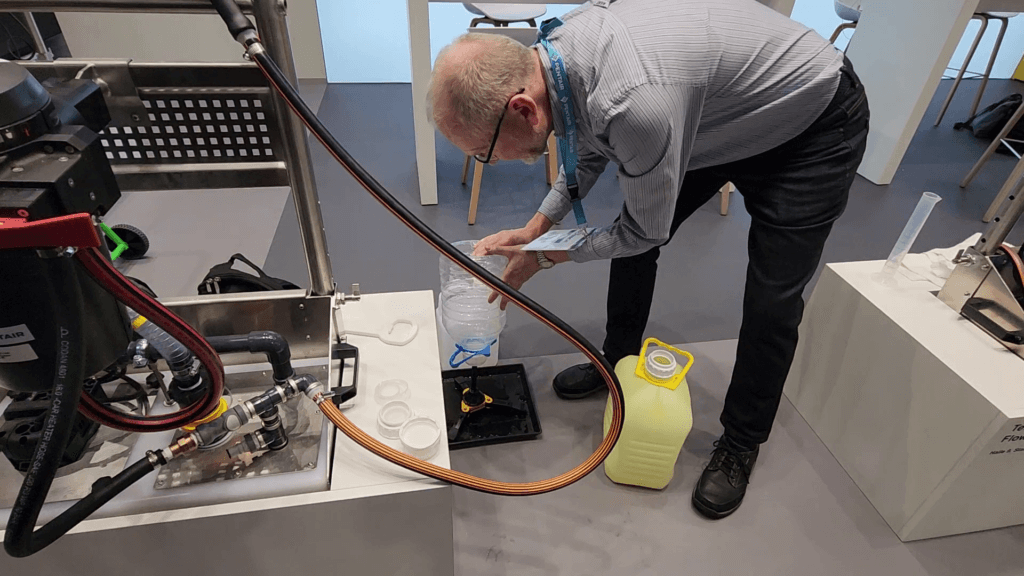
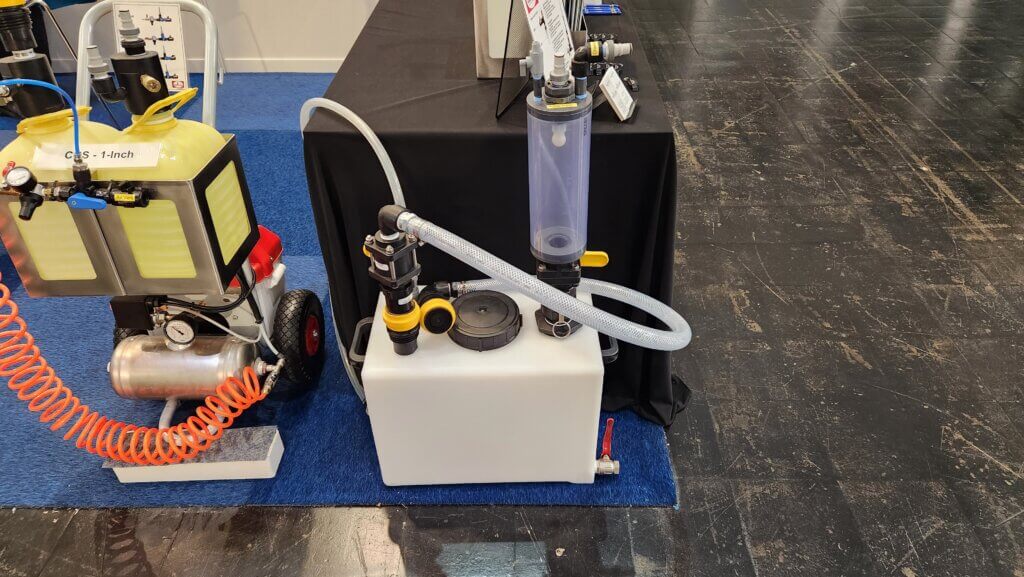
If the coupler uses suction from the sprayer itself, or employs a pump, relative height won’t affect filling. In this case it is likely part of a separate transfer system (i.e. not permanently mounted on the sprayer). It might be simple, or part of a larger and more sophisticated affair, but in either case it should be level, stable, and easily accessed without the operator having to reach or squat. Two examples are pictured below.
Here, a CTS is mounted to a hand cart so it can be wheeled into place and then put away. The sprayer provides suction via venturi to pull in the chemistry and a simple garden hose supplies municipal carrier / rinse water. Note the cinder (concrete) block used to stabilize the unit. Simple and effective.Here, a coupler is part of a larger tender system. Carrier / rinse water is pumped from an onboard tank, through the coupler, and then into the sprayer.
How do I plumb the CTS to the sprayer?
If the CTS is mounted directly on the airblast sprayer, it’s typically a smaller, gravity-fed coupler. The rinse / carrier water is often from an external source (e.g. water tank, tower, pond or municipal water), but there are cases where an onboard water source can be used.
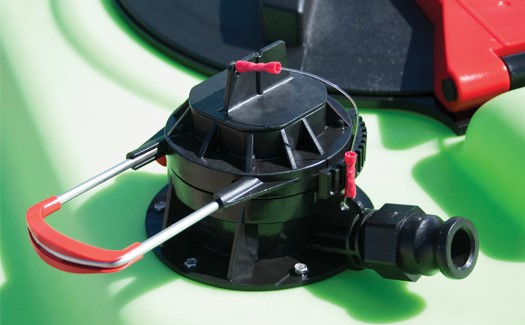
Provide Agro has attached a gravity-feed coupler to the secondary tank hatch. This is above the fill line, sealed tightly, and it uses an onboard rinse / carrier water source. If considering cutting into a hatch, be aware of the filter basket or any onboard rinse system. Also, note that letting the lid flop open (or setting it aside) should not damage the coupler itself.No matter the rinse / carrier water source, it should match the manufacturer’s prescribed pressure range (generally between 3 – 6 bar or 45 – 85 psi) and have an anti-backflow device. There is no such device in this photo.
Some have suggested cutting a hole in the tank itself, above the highest possible fill line, and sealing the coupler in place. This is not simple. If you find a flat horizontal surface and you are equipped to cut poly, Fiberglas or steel (listed in ascending order of difficulty), doing so could undermine tank integrity and create potential for leaks. We won’t even entertain what would happen to your sprayer warranty… assuming someone still has one.
If the intent is to couple a fill line to the sprayer, the best approach is to tee a fitting into the suction-side of the sprayer plumbing to draw product in through the pump. Consider accessibility and safety first: Can you safely and easily reach the suction side of the sprayer plumbing? Is the PTO shaft too close for comfort? Will anything stick out past the sprayer that might create a risk of snagging a crop canopy or trellis? If a tee can be plumbed in, will it need to be secured to the chassis in some way to create stability?
There is no easy or universal answer to these questions.
On this sprayer, the only easily-accessed point is between the suction filter and pump. Creating a tee that would accommodate a dry poppet fitting is challenging.In the case of this 3-pt hitch sprayer, there is no simple way to access the suction side of the plumbing. Perhaps a tee could be added and the fitting extended up-and-out from under the chassis. Securing the fitting might require strapping it to the back of the tank, or to a mast of angle iron (or similar) attached to the chassis. Imagination required. Apply within.
As for the fitting, what style is best? A cam lever style fitting will work, but it will leak a volume of liquid when it’s detached. A quarter-turn valve will also be required on the sprayer, and preferably another on at the end of the feed line, so that’s two more valves in play when loading. And, for the sake of safety, best practice would to be to use a cam cap on the sprayer just in case the quarter-turn valve gets snagged and opens. Far safer and more efficient, a dry poppet style fitting will ensure minimal spillage when the hose is disconnected, with no additional valves or caps required.
Finally, what of the fill line itself? We’re seeking confirmation, but we have been told of a situation where the pump suction was sufficient to collapse the feed line. This is why some CTS manufacturers provide the hose and fitting with the units. At minimum, check the CTS manufacturer’s instructions and ensure the hose is rated for the degree of suction created by the pump.
Send us your experiences
And that’s all we have for now. We encourage you to reach out to us with your successes and failure and we’ll update this article for others to learn from.
Closed Transfer Systems (CTS) permit the direct transfer of pesticides from container to sprayer while isolating the process from the operator and the environment. Similar systems are already used with bulk pesticide containers and in other industries to dispense a wide range of liquids from household products to industrial chemicals. In the case of small-volume containers (e.g., up to 20 L), these systems include an integrated container rinsing function.
The UK’s Iain Robertson testing Pentair’s Cleanload Nexus Coupler
CTS are comprised of two parts: The Cap (or Adaptor) and the Coupler. The CTS cap is either pre-fitted on the pesticide container, or the user must remove and replace the existing, non-CTS cap with an adaptor. Generically, the container is then locked into the coupler, and a valve in the cap or adaptor opens to permit chemical to be drawn out. If a partial amount is required, the valve can be closed to re-seal the container for safe removal, and the coupler and lines can then be rinsed. If the full amount is required, then the container is also rinsed prior to removal.
Regulatory Requirements: Canada
Canada’s Pest Management Regulatory Agency (PMRA) considers the requirement for closed transfer when products go through their natural re-evaluation cycle. They define it as follows:
“A closed system means removing a pesticide from its original container, rinsing, mixing, diluting, and transferring the pesticide through connecting hoses and couplings that prevent exposure to the pesticide.”
The requirement is primarily a means of reducing operator exposure and point-source contamination during filling, but can also be used to impose rate restrictions, or in response to reformulation. In recent years, several pesticides have had statements added to the labels regarding the requirement for a closed transfer system. They have stated that there have been three scenarios that they have included closed systems on labels:
The registrant requested closed systems be used in the occupational risk assessment.
Closed systems were required when triggered by the occupational risk assessment as a form of mitigation to reduce exposure to the mixer/loader. This is the most common reason it gets added.
Closed systems were used in the specific exposure study submitted to PMRA that was used in the risk assessment.
As standardized language is developed, Canadian operators can expect to see statements that vary in their specificity, such as in the following two examples:
Product 1: “Requirement for additional personal protection equipment (PPE) and engineering controls when mixing/loading and applying to various crops.” Product 2: “Closed mixing/loading systems are required. A closed system means removing a pesticide from its original container, rinsing, mixing, diluting, and transferring the pesticide through connecting hoses, pipes, and couplings that are sufficiently tight to prevent exposure of any person to the pesticide or rinsing solution.”
Questions and concerns have been raised by registrants and growers as these changes have appeared on pesticides with particularly important actives. As of 2025:
Products with standard CTS label statement:
Lorox L Herbicide
Ethrel PGR
Dibrom Insecticide
Products that require CTS without standard label statement:
Bravo ZN Fungicide (bulk totes only, chlorothalonil in 10 L jugs does not require CTS)
Captan 480 SC and Captan L Fungicide (only if open cab AND exceeding a maximum L/day threshold)
Products that may require CTS but not clear on the label:
Sevin XLR Insecticide – “use a closed mixing system”
In some cases, registrants have avoided the requirement by splitting the label rate and promoting multiple applications to ensure rates do not reach the PMRA’s threshold for closed transfer. Another strategy is to remove small-volume formats and rely on Intermediate Bulk Containers (IBC or totes), which already employ closed transfer. If neither option is available, registrants may face expensive changes (which are currently unspecified) to their injection molding process. This is assuming North American small-volume container packers respond to emerging Canadian requirements.
Commercial horticultural and specialty crop growers (or field croppers with smaller acreages and diversified crops) are more likely to purchase pesticides in small-volume containers as opposed to a tote. For growers, the practical requirements for compliant closed transfer are not well understood. Most do not currently have CTS and feel a retrofit is overly burdensome (e.g. slow, expensive, complicated), incompatible with their equipment, or redundant with conventional PPE.
As Canadian agriculture comes to terms with these regulatory changes, the European experience offers valuable insight.
Regulatory Requirements: Europe
In Europe, reducing operator exposure and point source contamination during filling has long been a regulatory priority. Regulatory requirements for CTS are slated or already exist. The following dates are “fluid estimates” that will depend on the politics of each country. At the time of writing, the Netherlands are planning to make it compulsory on liquid formulations by 2025. Denmark will follow by 2024-25 and Belgium by 2026. The Czech Republic already stipulates about 12 separate products must be used in combination with CTS, and a blanket requirement is under discussion. In some cases, growers will be granted a three-year transition period before they must show that they have a capable CTS. Currently the UK doesn’t yet have any concrete targets, but they have been testing CTS since 2017 and their experiences have informed product development and the creation of international standards. According to a 2023 article in EI Operator, CropLife Europe stated that Europe is on track to make CTS available to all European farmers by 2030
Recycling
According to easyconnect (c. 2024), Germany is on the cusp of agreeing to accept both jugs and caps for shredding. Currently the caps are collected separately (if at all) because they aren’t typically rinsed. This is the same as in Canada.
Cap and foil collection awaiting disposal.
However, because the transfer systems also rinse the connection, the caps are down to the same 0.01% residue limit as the jugs, so as long as they’re dry, they’re both recyclable. Discussions are ongoing with France to make the same agreement.
ISO definitions of CTS
The 2021 publication of ISO 21191 has greatly facilitated CTS development. The standard defines what a CTS is and specifies the testing methods and compliance criteria for both operator and environment-related safety. Summarizing key points in the ISO:
The CTS shall
connect to containers and application equipment;
control flow and measuring of all or a part of the container content;
rinse the container into the application equipment;
flush the CTS equipment as well as the interface;
permit operation while using appropriate personal protection equipment specified on pesticide label and any associated operator’s manual;
have clearly labelled controls;
be designed to avoid any return of liquid to the clean water supply.
The CTS shall not
cause leakage when the device is connected to the mix tank or application equipment;
influence the circulation system of the connected application equipment;
allow the introduction of air that promotes foaming or reduces pump performance;
leave a residue level of more than 0.01% of the containers nominal volume following rinsing.
The ISO was reinforced by a 2023 Crop-Life Europe study that tested three systems applying for ISO certification. It demonstrated a more than 98% reduction in operator exposure (while using gloves) for the easyFlow M, GoatThroat, and Cleanload Nexus systems. These systems, and others, are described below.
Note: when using crop protection products, it remains a legal obligation for operators to wear the personal protection equipment indicated on the product label.
Commercial Systems
Pesticide container compatibility is fundamental to the success of any CTS design. There are exceptions, but many agrichemical companies in Europe and North America already employ a 63 mm screw cap for small-volume containers. According to the EPA (EPA 40 CFR Part 165 Subpart B), liquid agricultural pesticides in containers that are rigid and have capacities equal to or larger than 3 liters must have a screw cap either 63 or 38 mm in diameter and at least one thread revolution at 6 threads per inch. Depending on the CTS design, jugs may or may not require a tamper-proof foil. As of 2024, the first available jugs in the U.K. did not have foils.
The following systems are compatible with the 63 mm cap and are emerging as viable options at the time of writing. Some have been commercially available for several years and others are either new or still in development. Cost and availability will vary based on regional distribution and demand. Interested readers are advised to contact the manufacturer to confirm compatibility with their preferred products.
The easyFlow was developed with support from Bayer and has been available for more than 10 years. It requires the operator to remove the existing container cap and replace it with the easyFlow adaptor, which features a built-in knife that automatically cuts any foil seal. It is compatible with container sizes between 1 and 15 L. There are three versions of the easyFlow coupler.
easyFlow
The original easyFlow coupler installs directly to the sprayer tank. Once the pesticide container is joined (maximum 10 L format), product pours via gravity straight into the sprayer tank. The container can then be rinsed using an external water source (e.g. via a garden hose) with a min. ¾” diameter, anti backflow valve and water pressure between 3-6 bar.
easyFlow directly mounted on sprayer tank (image from FreeForm)
easyFlow M
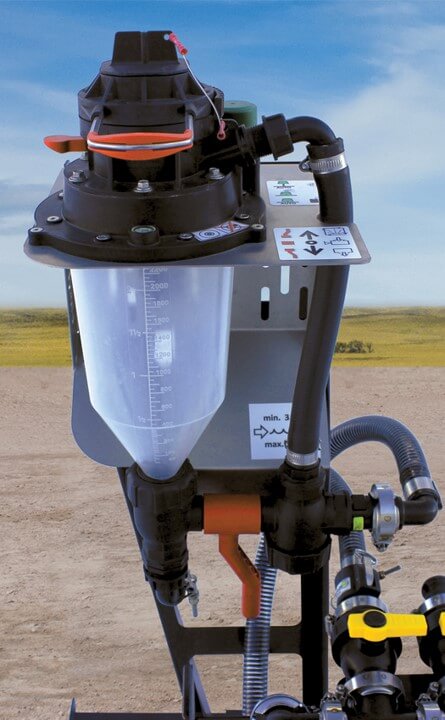
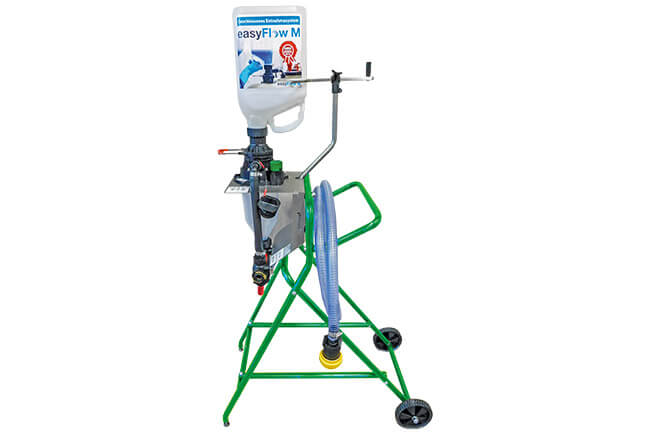
The easyFlow M is a standalone coupler that supports containers over 10 L and permits dosing via an integrated measuring unit just below the mounting point. The measuring unit holds up to 2,250 ml with a minimum volume of 60 ml and graduations of 20 ml (50 ml over the 400 ml mark). Product transfer is achieved either by gravity, or by a pump (e.g. Teed to the suction side of the sprayer pump).
easyFlow M mounted on separate transfer station (image from FreeForm)
According to agrotop, a 5L container under suction took 2-2.5 minutes to empty and clean during the Croplife study. For reference, some operators claim they are able to drain and triple rinse in less than a minute using a traditional pour into an inductor. An operator in wheat aims to fill in 5-10 min depending and uses 5-10 jugs. On the other hand, CTS users have claimed a “hidden savings” from the overlap in operations where the product from one jug is still entering the system as another is being drained and a third is being prepared. AgroTop sells an optional vent spike called a “Chucker” that makes the process faster still, but penetrating the jug raises questions about ISO compliance.
Empty containers can then be rinsed before removal, or partial containers removed leaving the adaptor on the jug. While this unit can be mounted on the side of the sprayer, most UK farmers that have trialed this system opted to install it on a portable cart.
This system is still under development and information is limited. The easyFlow QF coupler reputedly has all the features of the M but is compatible with all manner of container and employs a 12 VDC supply to automatically meter the dose (starting from a minimum 1 L volume). The rinsing process is electronically automated as well.
Videos of the easyFlow systems in use can be seen hereand here. In the United states, these couplers are carried by Greenleaf Technologies. In Canada, it is also carried by FreeForm, a plastic molding company out of Saskatchewan.
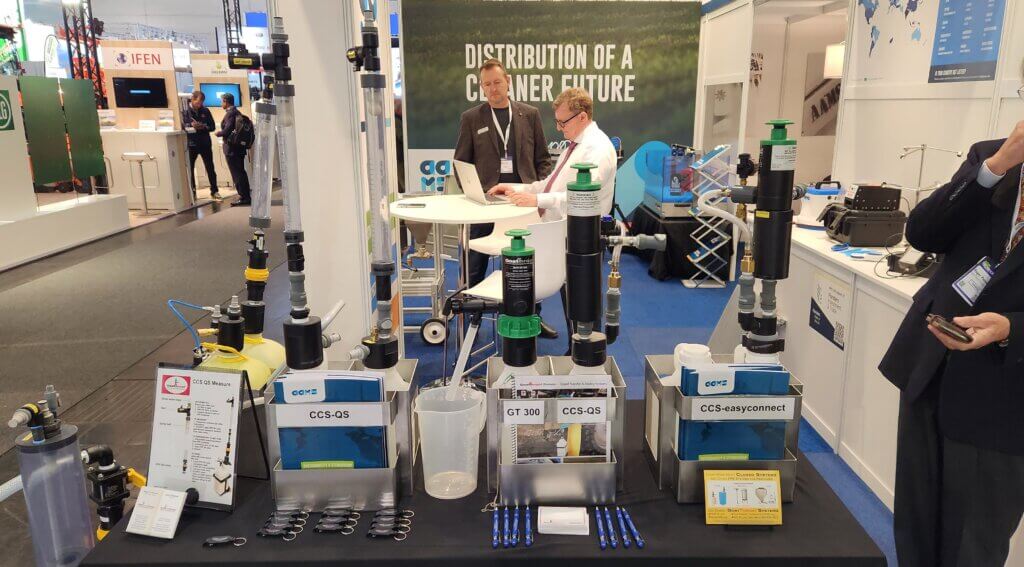
US-based GoatThroat has provided industrial liquid transfer solutions since 2001. Their CCS-8600 series requires the operator to remove the existing container cap and replace it with an adaptor with a siphon tube (which also pierces any foil). The container is then pressurized by a hand pump or compressor, forcing chemical into a measuring cylinder before it’s drawn into the sprayer. A clean water line then rinses the container (if emptied completely) and system before decoupling. The adapter can be left on containers if using partial volumes.
Comparatively, this system transfers and rinses more slowly than other small-format container systems and is entirely manual with multiple steps to transfer product. However, it now has a compressor option to replace manual pumping and it is highly customizable, making compatible with any container from a 1 L jug to a 1,000 L IBC tote. Further, its ability to transfer as little as 5 ml increments makes it a good option for small-acreage horticultural, specialty crop, and research farms where accurate partial loads are prioritized.
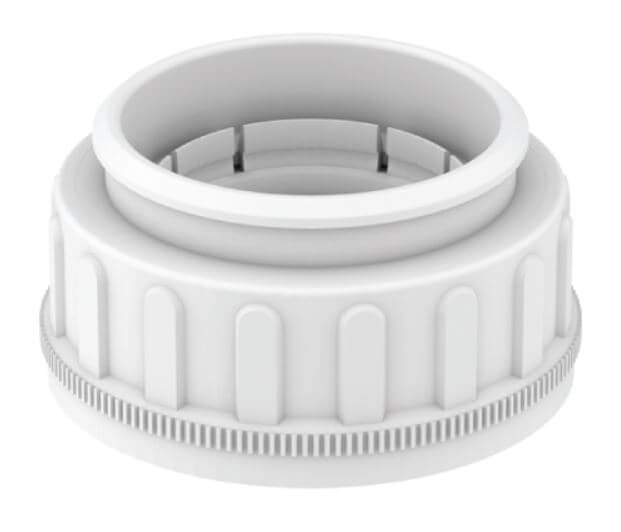
The easyconnect cap was originally developed by IPN Scholle with the support of BASF and is currently under development by Easy Cap and United Cap. It is compatible with container sizes between 1 and 15 L (possibly 20 L).
Because the cap is factory-fitted, it never has to be manually unscrewed or removed and works without requiring a tamper-proof foil. Its success is contingent on major agrochemical manufacturers agreeing to pre-fit it on their products. This has been facilitated by the easyconnect Working Group (ECWG), a consortium of ten major agrichemical companies, including those selling biological products and liquid fertilizers, that are supporting the European implementation of this format.
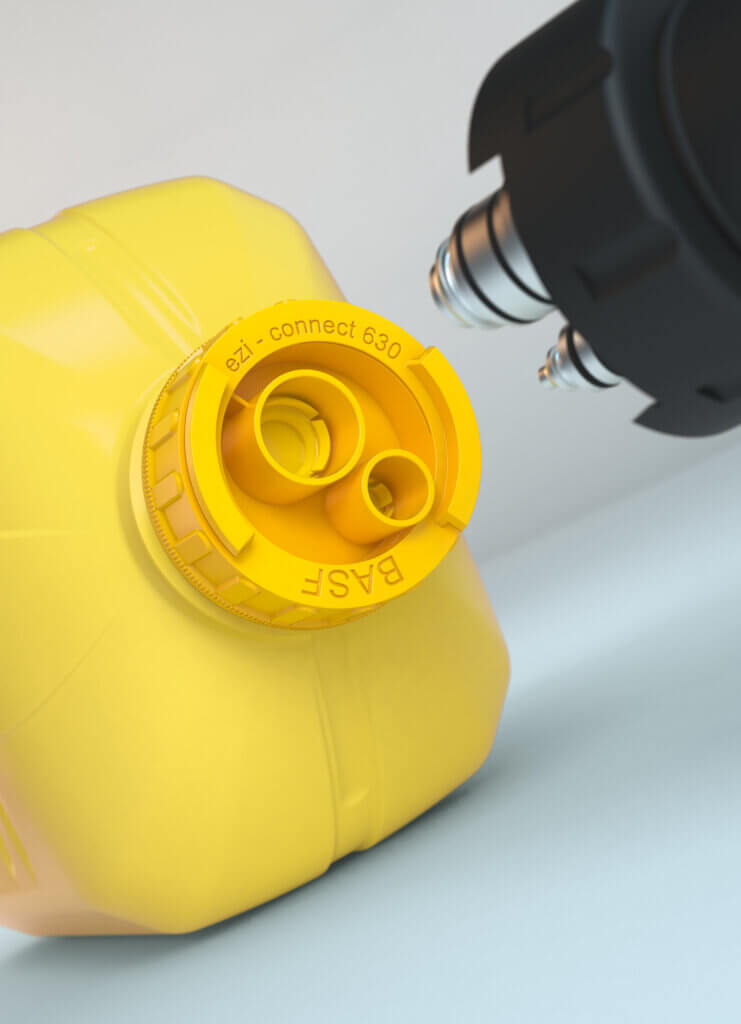
BASF displayed their compatible coupler, the ezi-connect at the 2023 Agritechnica in Hanover, Germany. Transfer requires the operator to snap off a dust cover, invert the container, and connect and lock it into the coupler. Another lever advances a probe and allows partial volumes to be dispensed via a vacuum generated by the hopper. Finally, a trigger controls rinsing water and undoing a catch allows the assembly to be rotated to improve cleaning without removing it.
Easyconnect will be factory installed on 1, 5 and 10 L containers in 2024. This will not be the entire portfolio from all agrichemical companies in the easy connect working group, but will represent a “significant amount” that will demonstrate commitment. In 2022, Syngenta released some information about their new jug format, the Evopac. In November 2024, Syngenta released this short video describing the design, which has the easyconnect cap and several features informed by sprayer operators to make it as safe and convenient as possible. The ezi-connect coupler will be launched in Europe in the 2025-2026 season.
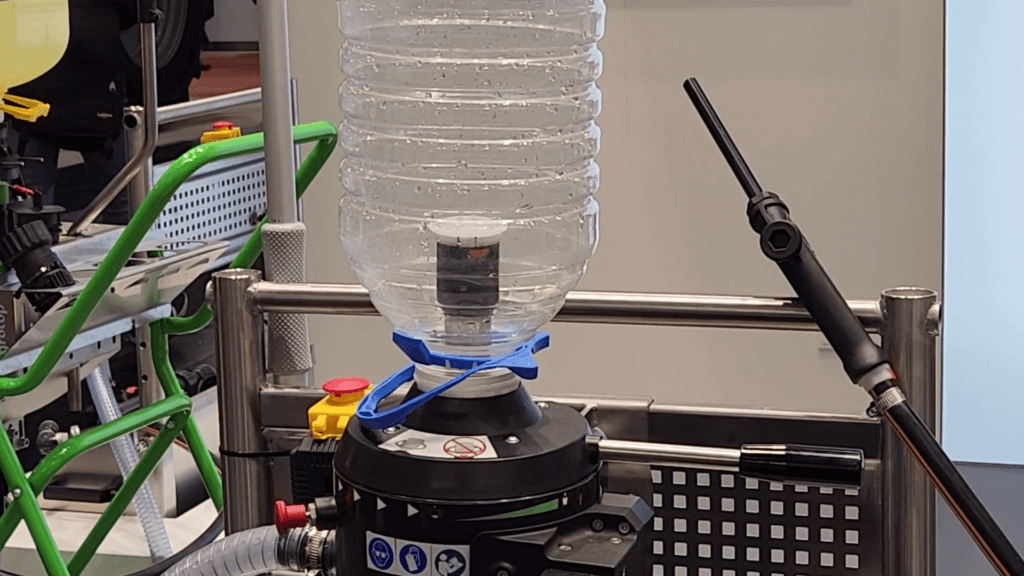
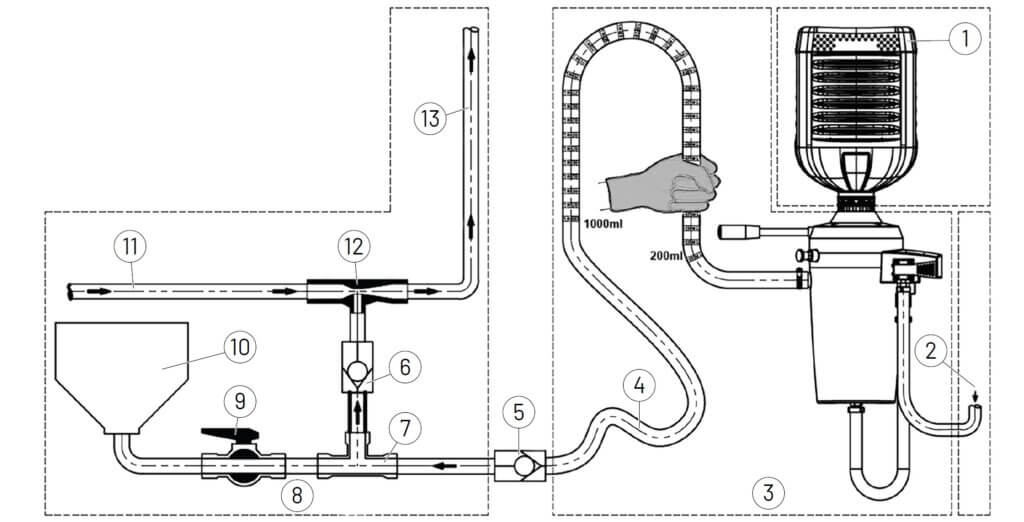
The Cleanload Nexus is a JKI-approved coupler designed for use with easyconnect caps on 1 to 15 L containers. The supplied 25 mm x 4 m suction hose can be connected by teeing it directly into the sprayer suction line ahead of the venturi (mounted to sprayer) or using a suitable dry-break coupler (mounted on a portable transfer station). The supplied 16 mm x 2.5 m rinse water hose connects to a clean rinse water source either on or off the sprayer.
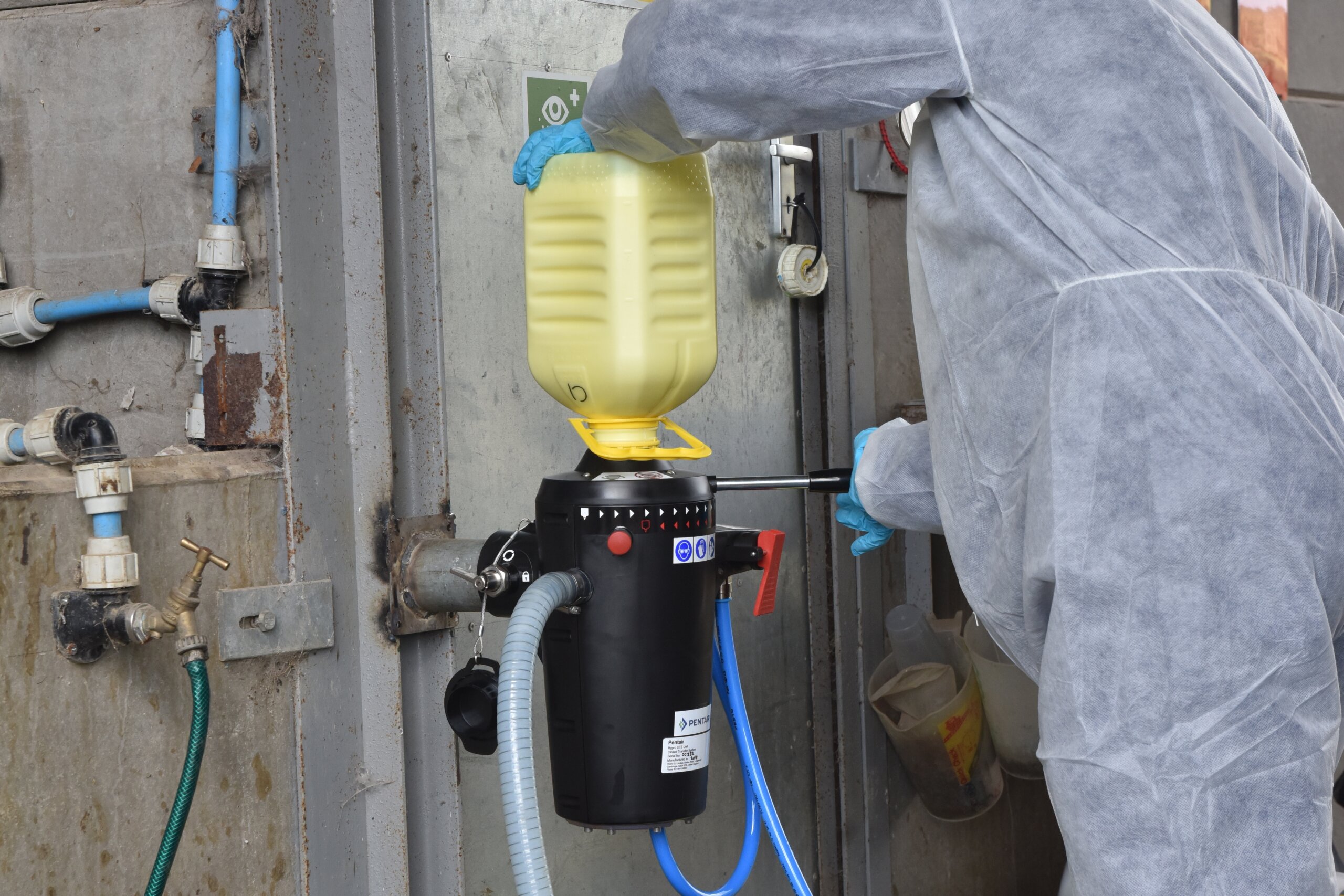
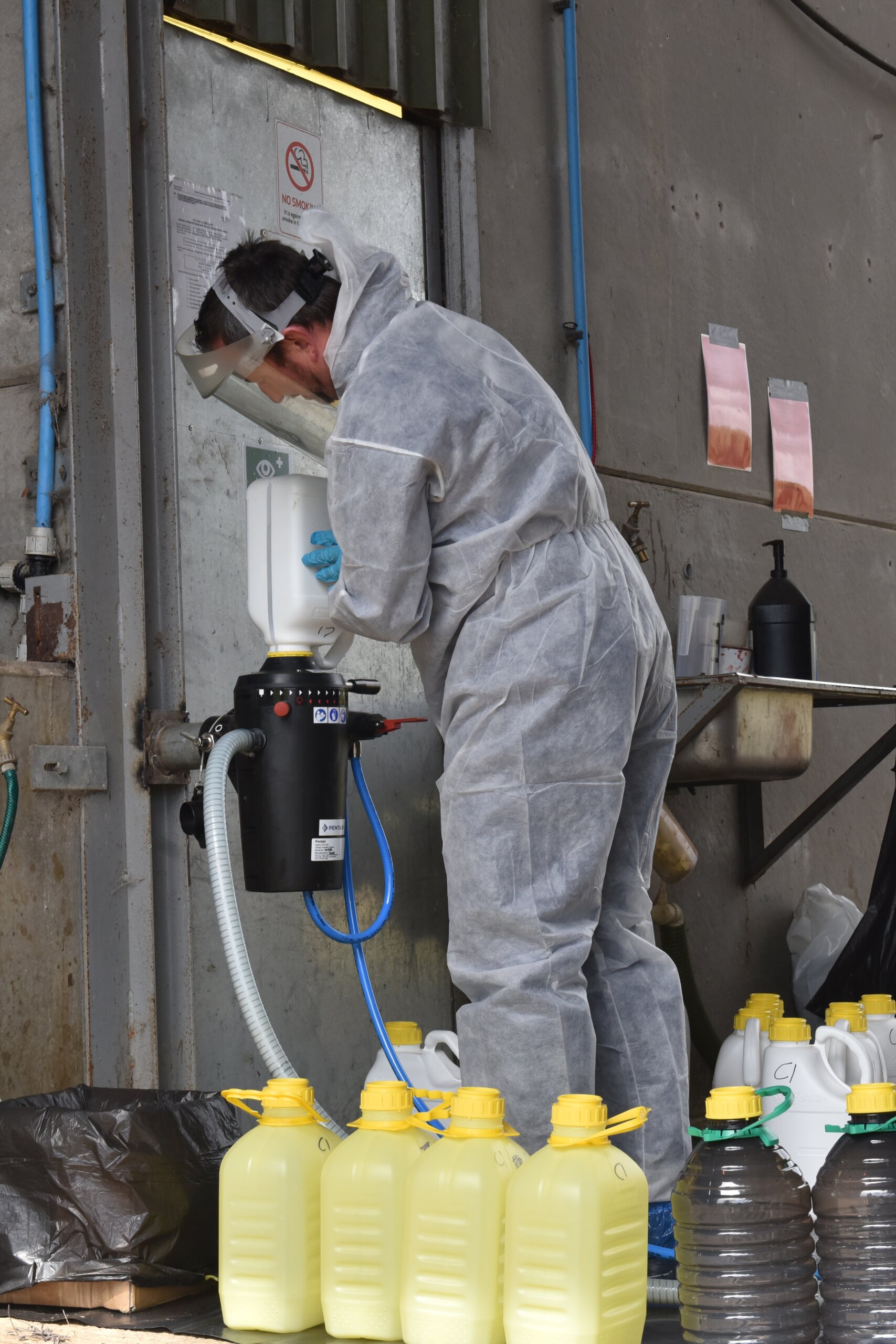
The Cleanload Nexus in use
It is entirely mechanical and has just two manual controls. The first is a lever that locks the cap in place. Rotating the lever controls the emptying rate, which is between 0.5 and 1 L/sec at 4 bar, depending on liquid viscosity. The time to empty and rinse a 15 L container at 3.5 bar is about 2 minutes, and users have stated that this is as fast or faster than traditional pouring and rinsing methods.
For dosing, it currently relies on the operator using scale markings on the side of the pesticide container. It has been noted that the plunger mechanism displaces sufficient volume that it must be accounted for when reading graduations. Alternately, the calibrated suction hose connected to the sprayer can be used to assess larger volumes. The hose is, according to many, not a viable method for dosing and improvements are reputedly under development. Neither approach can achieve the ISO +/- 2.5% dosing accuracy, so Pentair has developed a dosing cylinder add-on that sits between the Cleanload Nexus and the sprayer and provides +/-1% accuracy (anticipated launch was in November 2023). A new measuring device, the Ezi-Connect VacTran Measure Unit by Wisdom Systems, was introduced in 2024 and is discussed in this article from EI OPerator.
Plumbing diagram for the Cleanload Nexus (from Pentair website).
While this video depicts 4 quarter-turns separated by 10-15 seconds rinses, practical application sees the simultaneous full rotation of the jug during a 30 second rinse. While the unit will rinse itself, some keep a dedicated jug full of clean water on hand and run that through the system last to ensure it’s left in a clean state. Note: operators say they only thoroughly rinse the cap when using a partial volume.
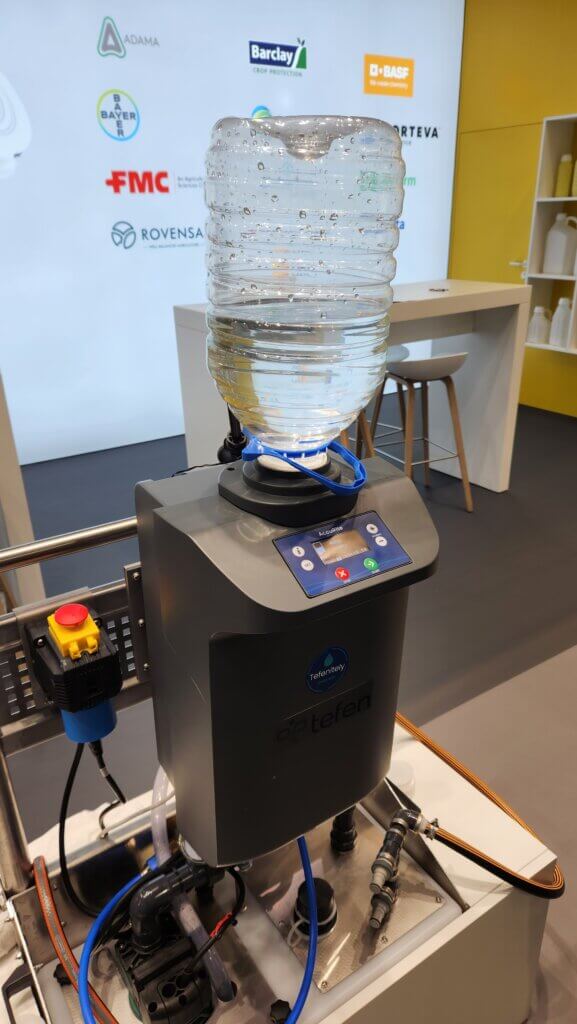
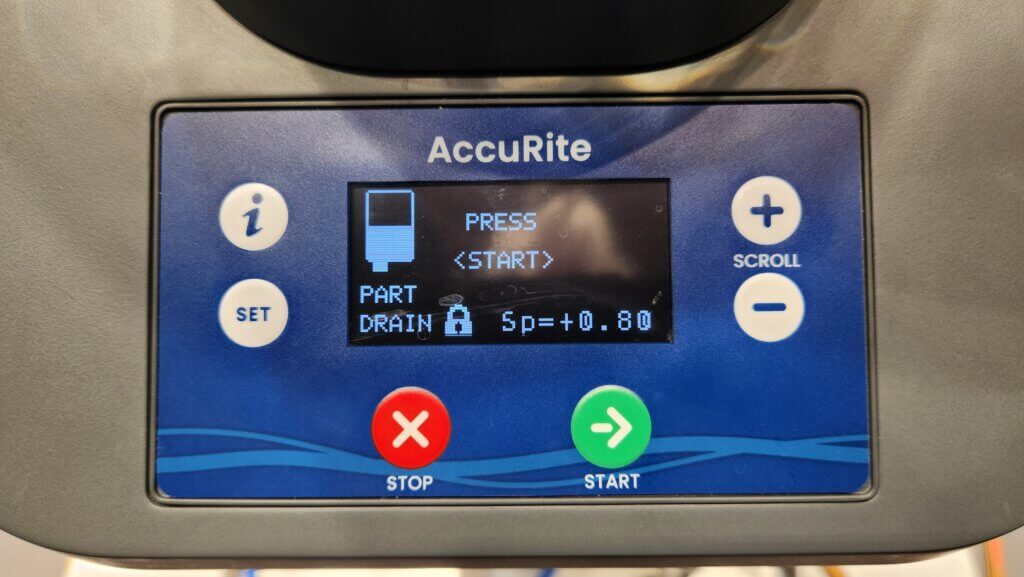
Israel’s Tefen has produced dosing pumps and flow products for many years and began field testing the AccuRite CTS coupler in 2022. With a single digital interface to operate the filling process and mobile capabilities for remote management and cloud-based record keeping (e.g., date, time and chemical usage). It is designed to work with the easyconnect cap on containers ranging from 1 to 20 L. This is slow compared with the ~60L/min. from the Pentair system, but Tefen is working to improve the speed.
Its diaphragm pump can deliver partial volumes at 0.1 L increments with an accuracy of +/- 2.5% of the smallest container used, and a minimum of 0.5 litres remaining in the container. Skip to the 1:50 mark to see the product reviewed (no English) in this video. In 2024, the following instructional video was released:
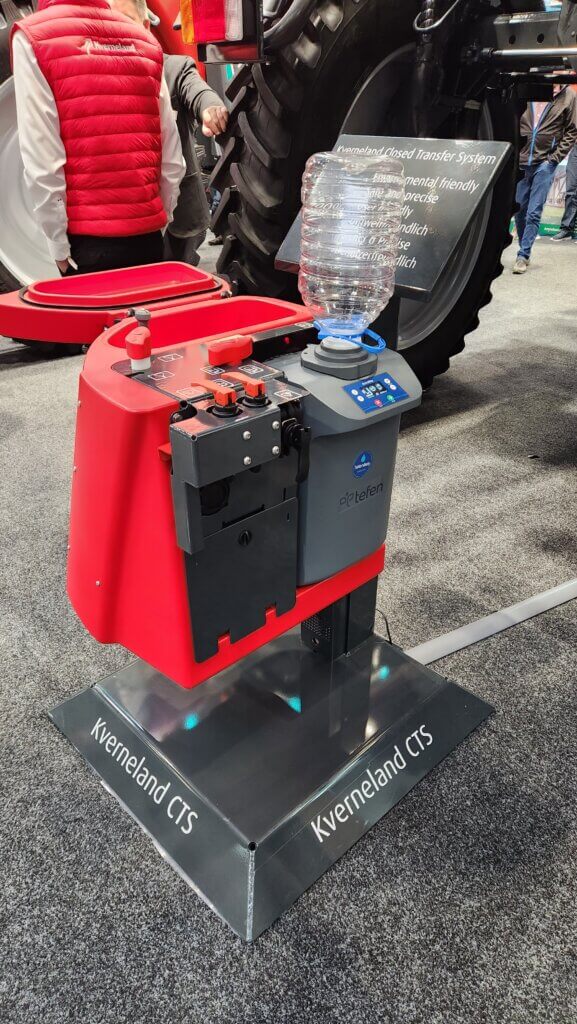
We saw one moulded into a Kverneland sprayer (now owned by Kubota) that was designed to couple with the current induction bowl. This is the first time a sprayer company has altered their design to accommodate a CTS and it points to the future.
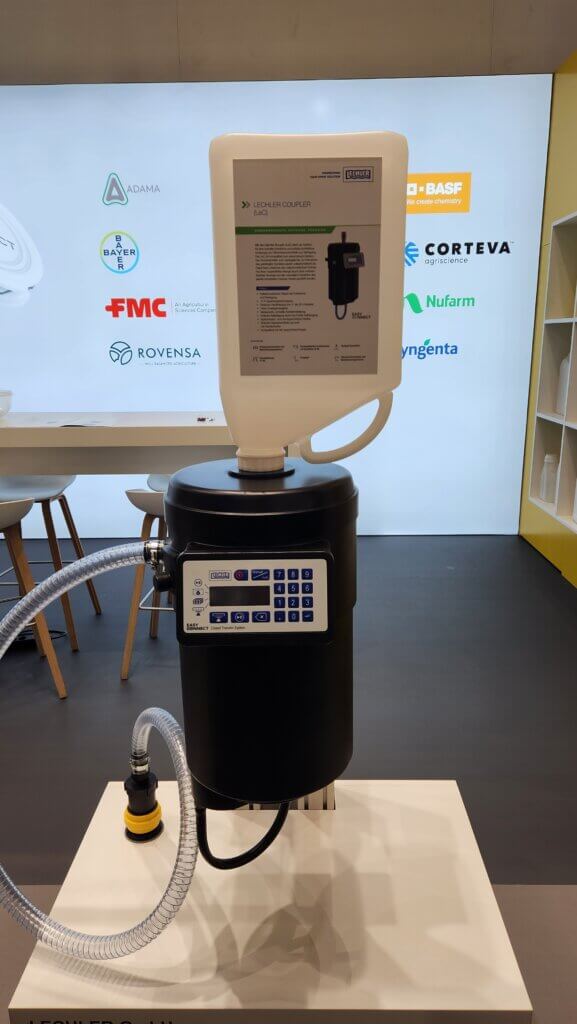
Lechler’s Coupler is compatible with the easyconnect cap and features more electrical automation in its design. It requires a 12V electric supply and creates suction (typically from the sprayer’s venturi) to draw out the chemical. A small metering motor automatically moves the probe that enters the container to adjust emptying rate. It employs a pressurized water line running at about 6 bar.
The system will be controlled via a smartphone app, where the operator can choose partial or full emptying of product containers and control the operating and rinsing processes. Rather than metering flow, the unit employs three load cells with vibration compensation to weigh product. Lechler claims this is more accurate (automatic dosing to a set volume with +/- 2.5% accuracy), because it can compensate for different product densities. The user manually enters these values from product SDS, but likely QR codes will be used in the future.
The system underwent further testing in 2024 and commercial availability is anticipated for 2025. Farmer’s Weekly covered the details of this system following Agritechnica 2023.
Aspects of Applied Biology 147, 2022 International Advances in Pesticide Application Review of ISO 21191 Closed Transfer Systems Performance Specifications. Nancy Westcott and Jan Langenakens.
This article was originally co-authored by Mick Roberts (Owner/Editor of Pro Operator Magazine) with significant contributions from Jan Langenakens (Principal at AAMS) and informed by insightful communications with both users and manufacturers of CTS. It has been updated as of January, 2025.