Category: Environmental Impacts

For Basics Category

  • What is Delta T and why is it important for spraying?

    What is Delta T and why is it important for spraying?

    Click here to listen to Audio Article

    Humidity is important in spraying. With the average tank of pesticide being 90 to 99.5% water, evaporation plays an important role in both droplet size and active ingredient concentration. Low humidity causes droplets to evaporate faster, potentially increasing drift and reducing uptake. But relative humidity (RH) isn’t the best way to measure this effect because the same RH at two different temperatures results in two different water evaporation rates.

    Instead, we present Delta T, also known as “wet bulb depression”. Delta T is an atmospheric moisture parameter whose use in spraying has made its way to North America from Australian operations. It is defined as the dry bulb temperature minus the wet bulb temperature, and provides a better indication of water evaporation rate than RH. Higher Delta T means faster water evaporation.

    The recommendations from Australia are to avoid spraying when the Delta T is either too high or too low, with a range of two to eight being described as ideal.
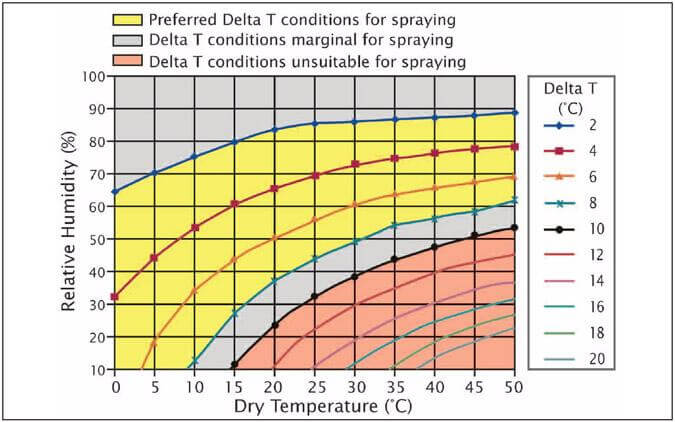
    Figure 1: Delta T chart used in Australia (Source: Australian Gov’t Dept of Meteorology)

    Delta T is being reported on an increasing number of weather stations, and it’s time we took a closer look at what it means.

    Measuring Relative Humidity

    In the early days of weather reporting, relative humidity was calculated from psychrometric charts. All one needed was a hygrometer, usually a sling psychrometer. A sling psychrometer is two identical thermometers side by side whose bulbs could be slung in a circle, exposing them to moving air. One bulb was covered in a cotton wick moistened with distilled water, the other was left exposed and dry.
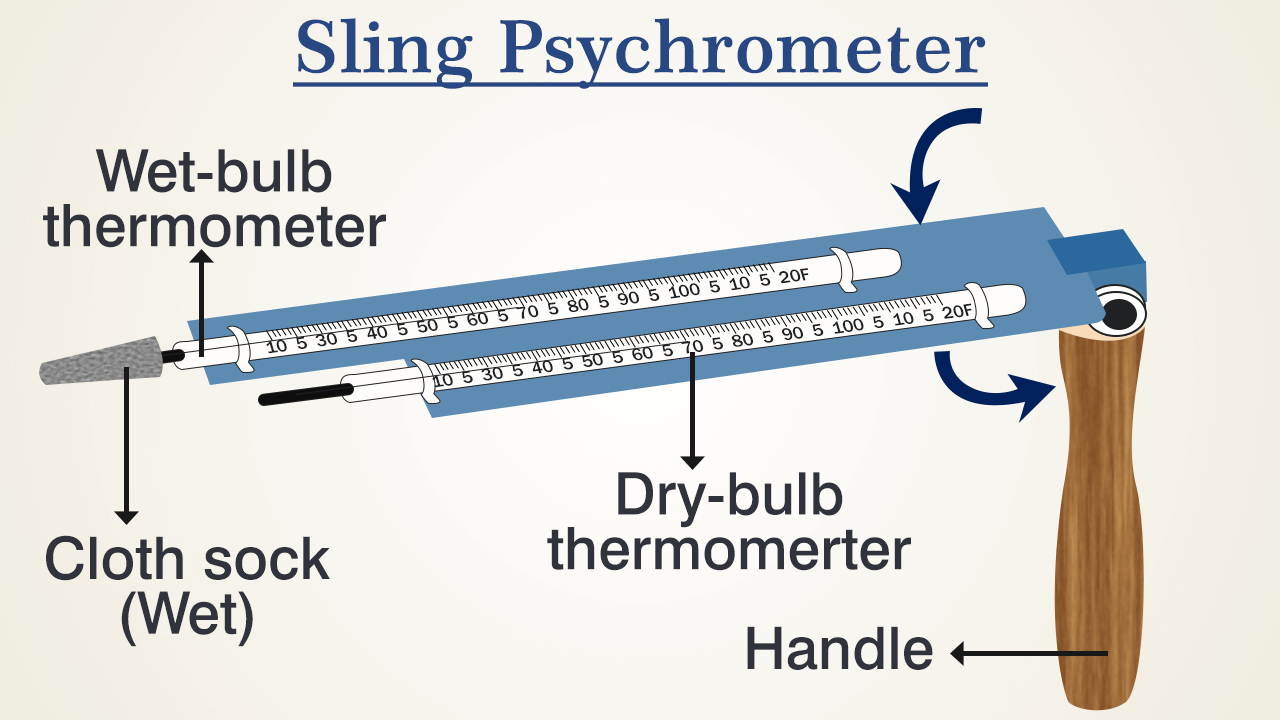
    Figure 2: Sling psychrometer (Source: ScienceStruck.com)

    As the bulbs met moving air, water evaporated from the cotton wick and that reduced the temperature of that thermometer. The dryer the air, the greater the evaporation rate and therefore the greater the temperature drop. The dry thermometer was unaffected by this movement.

    On measuring the wet and dry bulb temperature, one consulted a psychrometric chart. This chart converted the two temperatures to total water content in the air, compared it to total water-holding capacity, and expressed it as Relative Humidity. Psychrometric charts are useful for many other air parameters such as dew point, vapour pressure, or enthalpy. (Pause briefly to give thanks that we don’t need to know what enthalpy is.)
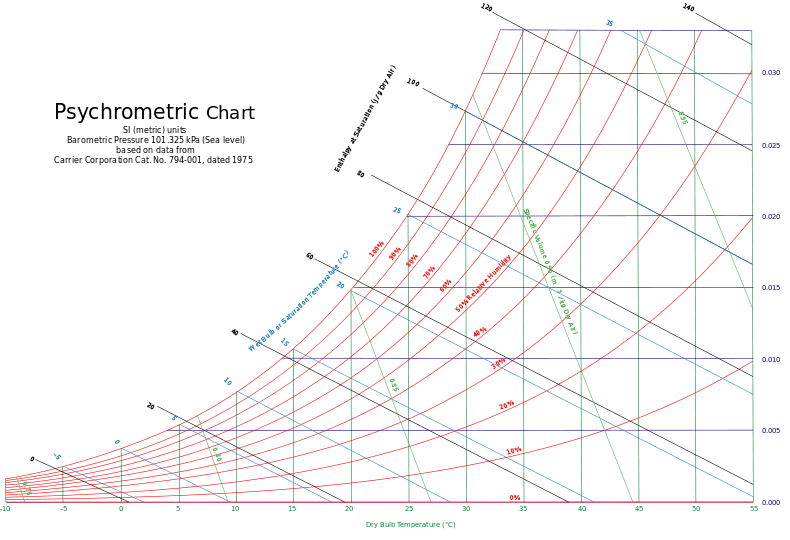
    Figure 3: Psychrometric Chart (Source: Carrier Corporation)

    Turns out that RH is a poor measure of water evaporation rate. An RH of 24% at 20 C has exactly the same evaporation rate as an RH of 44% at 35 C. That’s why Delta T is the preferred measurement: it’s linearly related to evaporation.

    Note: Modern electronic weather stations don’t need two thermometers to measure air moisture content, and use polymers whose capacitance or resistance changes with atmospheric moisture. Add an internal look-up table, and we have all the information we need.

    Pros and Cons of Water Evaporation

    It’s important to note that our Australian colleagues caution against spraying when water evaporation rate is both too high and too low.

    Too High:

    • Water evaporates rapidly, reducing droplet size and pre-disposing the smaller droplets to drift;
    • Deposited droplets dry quickly, reducing pesticide uptake which is more effective from a wet deposit.

    Too Low:

    • Water doesn’t evaporate, maintaining the smaller droplets in a liquid state. These small droplets are already drift prone, but are now more potent because of more effective uptake. Overnight conditions that are inverted are usually humid, adding to harm potential from the inversion.

    Delta T in North America

    The addition of this parameter to our spraying weather lexicon has been useful. But it’s important to understand the context in which it was developed to properly judge its suitability.

    Aussies started talking about Delta T because the use of finer sprays under the hot dry conditions found during their summer sprays resulted in significant evaporative losses, significantly greater drift potential, and potential reduction of product performance. The guidelines to avoid spraying when Delta T exceeds eight or ten originate there.

    A few changes have happened since these guidelines were developed. Over the past ten to 20 years, we’ve observed greater use of low-drift sprays, with the coarser sprays’ larger droplets resisting fast evaporation. In the past five to ten years, water volumes have increased due to our heavier reliance on fungicides, desiccants, and contact modes of action. Both of these developments have helped reduce the impact of a dry atmosphere. We simply can’t say if a Delta T of 10 is too high with these new application methods.

    Looking at it another way, if Delta T values are very high, increasing water volume and droplet size will mitigate that to some degree, as the Aussies state in their extension materials (linked earlier).

    Formulation

    Pesticide formulation can also play a role in evaporation. Once the water is gone, oily formulations may still have good uptake because the oily active ingredient stays dissolved in the oily solvents. This is both good and bad, helping on-target efficacy but also increasing the risk of more potent drift. Solutions, on the other hand, are more likely to leave their actives stranded on leaves as crystals once the water is gone.

    Bottom Line

    Delta T is definitely useful information when spraying. It will typically rise and fall with air temperature as the day proceeds, and it is wise to consider suspending operations when values are critical. Take note of the Delta T when spraying the same product throughout these hot days and learn from the experience. Remember, the atmosphere affects not just sprays but also plants and insects, and due to this complexity we may not be able to attribute success or failure to just one measurement.

  • “Bee” Responsible with Pesticide Sprays

    “Bee” Responsible with Pesticide Sprays

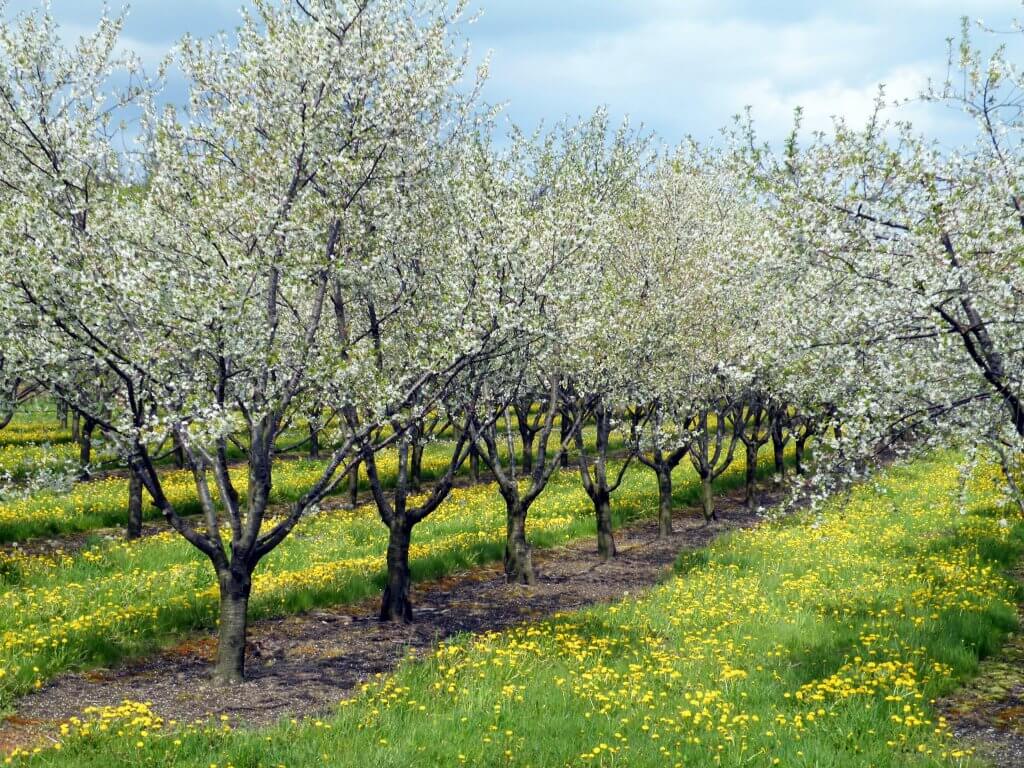
    Horticultural crops cannot be produced commercially without the use of pesticides to manage the impacts of insects and pathogens. Growers recognize the importance of pollinators and in some cases, rely on bees for pollination. Growers are practicing due-diligence to try to minimize the effects of necessary pest management activities on bees. There’s a fine balance between managing pests effectively and economically and minimizing the effects of pesticides on pollinators. Impact on pollinators is a major consideration for the registration of pesticides.

    Not all pesticides are toxic to honeybees.

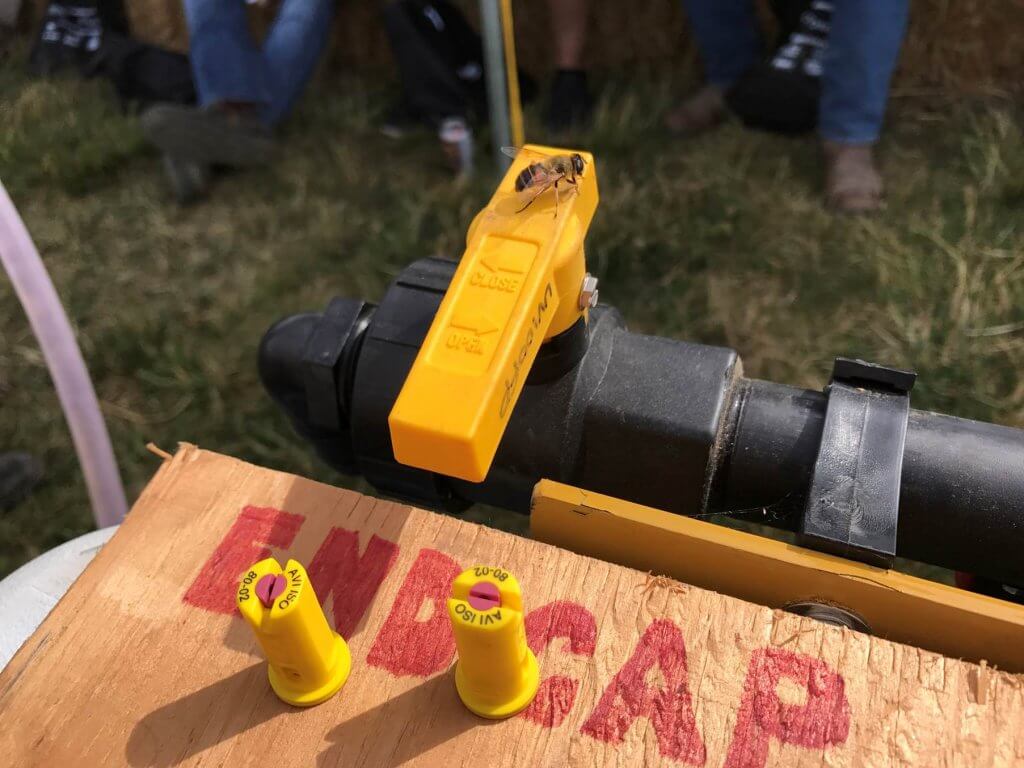
    Not a honeybee, but a great photo of a pollinator on a spray boom near some nozzles. Too good not to use.

    Growers use IPM practices which means that they are spraying only when necessary (monitoring for pest levels) rather than following a calendar-based program. Because each droplet of spray that does not land on the target (the crop) is wasted money, growers are more conscious of drift and are using technology to reduce off-target drift.

    The Ontario Bees Act states “No person shall spray or dust fruit trees during the period within which the trees are in bloom with a mixture containing any poisonous substance injurious to bees unless almost all the blossoms have fallen from the trees.” While some crops, like grapes and peaches, do not rely on insects for pollination, bees may still visit their flowers and they are still present in vineyards and orchards before and after bloom, foraging for nectar and pollen on flowering plants in row middles and surrounding vegetation areas. We have been promoting row middle management with flowering plants to encourage the presence of beneficial insects. Honey bees are also attracted to these plants. For this reason, it’s important to recognize that sprays applied to manage pests may have adverse effects on honey bees as well.

    One of the most important things to do is to maintain communication between growers/custom operators and beekeepers. While it’s common sense to not allow insecticides to drift directly onto bee hives, bees will usually forage up to 3 km from a hive and when food sources are scarce, they are known to fly as far as 12 km (8 miles) (Download reference).

    BeeConnected is an app connecting registered beekeepers with registered farmers and spray contractors, enabling anonymous communication on the location of hives and crop protection product activities. The app is available free of charge through a web browser, the Apple App Store and Google Play.

    Here are a few others things you can do:

    Read the pesticide label:

    Carefully follow listed precautions with regard to bee safety. In some cases a product may not be used while bees are actively foraging.

    Product selection:

    Pesticides (insecticides and fungicides) are not all equally toxic to honey bees. It is also important to be familiar with the relative toxicity of pest control products to bees. In Publication 360, Fruit Crop Protection Guide, the relative honeybee toxicity is now listed in the fungicide and insecticide activity tables of each chapter. The impact of products that are moderately toxic to bees can be can be minimized if dosage, timing and method of application are correct. Highly toxic products may cause severe losses if used when bees are present at treatment time or within a few days thereafter.

    Choose the least hazardous insecticide formulation. Emulsifiable formulations normally have a shorter residual toxicity to bees than wettable powders and flowables which, in addition to having residual characteristics can be more easily picked up from the flowering plant while bees are gathering pollen.

    Spray timing:

    Whenever possible, apply products with toxicity to bees in late evening, night or early morning while bees are not foraging (generally between 8 p.m. and 8 a.m.). Evening applications are less hazardous to bees than early morning applications. Warm days and nights can extend the foraging period; therefore applications may be necessary later in the evening or earlier in the morning under unusually warm conditions. Do not apply insecticides when cool temperatures are expected after treatment. Residues will remain toxic to bees for a much longer time under cool conditions. Do not apply insecticides that are toxic to bees on crops in bloom, including crops containing weeds or cover crops in bloom. Avoid treating during hot evenings if beehives are very close to the target field and honey bees are clustered on the outside of the hives.

    Remove alternate pollen sources:

    Where feasible, eliminate weeds or flowers in row middles by mowing at least 2 days before a pesticide with toxicity to bees is to be applied.

    Minimize off-target drift:

    Drift of spray applications can cause significant bee poisoning problems, particularly when drift reaches colonies or adjacent flowering weeds. In general, sprays should not be applied if wind speed exceeds 10 mph and favors drift towards colonies. Give careful attention to position of bee colonies relative to wind speed and direction. Ensure that there are no colonies directly in the orchard at the time of spray. Select drift-reducing spray nozzle technology, whenever possible. Since fine droplets tend to drift farther, apply spray at lower pressures or choose low-drift nozzles that reduce drift by producing a medium to coarse droplet size.

    Calibrate spray equipment often. Air-blast sprayers can produce finer droplets with greater drift potential. When using an air-blast sprayer, consider redirecting or turning off nozzles, or use technologies that reduce drift (for example, towers, multirow, tunnel and target-sensing sprayers). Shut off sprayer when making turns at field ends or gardens, near large puddles, ponds and other sources of water that may be used by pollinators and other wildlife.

    There is a precaution to nighttime spraying: you must be aware of inversions. When you spray during an inversion, the larger drops fall quickly (per normal), but smaller lighter droplets fall very slowly (a few centimetres per second). They do not disperse. Instead, they move with the air they were released into, evaporating very slowly, over great distances. These small particles, as well as vapours from volatilizing products, are capable of moving for kilometers and are therefore subject to drift.

    The only sure way to know if you are in an inversion is to take two air temperature readings: the first about 10 cm from the ground, and the second about three metres off the ground. If the surface air temperature is cooler, you are in an inversion. The magnitude of the difference indicates how strong the inversion is. Accurate measurements are difficult to manage with conventional thermometers (Although the new Spot-On Inversion Detector makes it possible). It is generally easier for sprayer operators to watch for the following cues:

    • Large temperature swings between daytime and the previous night.
    • Calm (e.g. less than 3 km/h wind) and clear conditions when the sun is low.
    • Intense high pressure systems (usually associated with clear skies) and low humidity where you intend to spray.
    • Dew or frost indicating cooler air near the ground (fog may be too late).
    • Smoke or dust hanging in the air or moving laterally.
    • Odours travelling large distances and seeming more intense.
    • Daytime cumulus clouds collapse toward the evening.
    • Overnight cloud cover is 25% or less.

    If you suspect a strong inversion, don’t spray. Postpone the application if possible.

    Reducing pesticide injury to honey bees requires communication and cooperation between beekeepers and growers and applicators. It is important that beekeepers understand cropping practices and pest management practices used by farmers in the vicinity of their apiaries. Likewise, pesticide applicators should be sensitive to locations of apiaries, obtain a basic understanding of honey bee behavior, and learn which materials and application practices are the most hazardous to bees.

    Furthermore a number of native pollinators such as bumblebees, leaf cutter bees, sweat bees and squash bees are also important pollinators in some crops and they too require consideration. While it is unlikely that all poisonings can be avoided, a balance must be struck between the effective use of insecticides, the preservation of pollinators and the rights of all — the beekeeper, farmer and applicator.

  • Application Recordkeeping: Focus on Environmental Conditions

    Application Recordkeeping: Focus on Environmental Conditions

    Note: This article was written by Bob Wolf of Wolf Consulting and Research, and first appeared as an NDSU Extension Service publication. Bob has agreed to reproduce the article on our website.

    When applying crop protection products, a good steward is one who can identify and record the environmental factors that may negatively impact making an application; particularly, the possibility of spray drift.

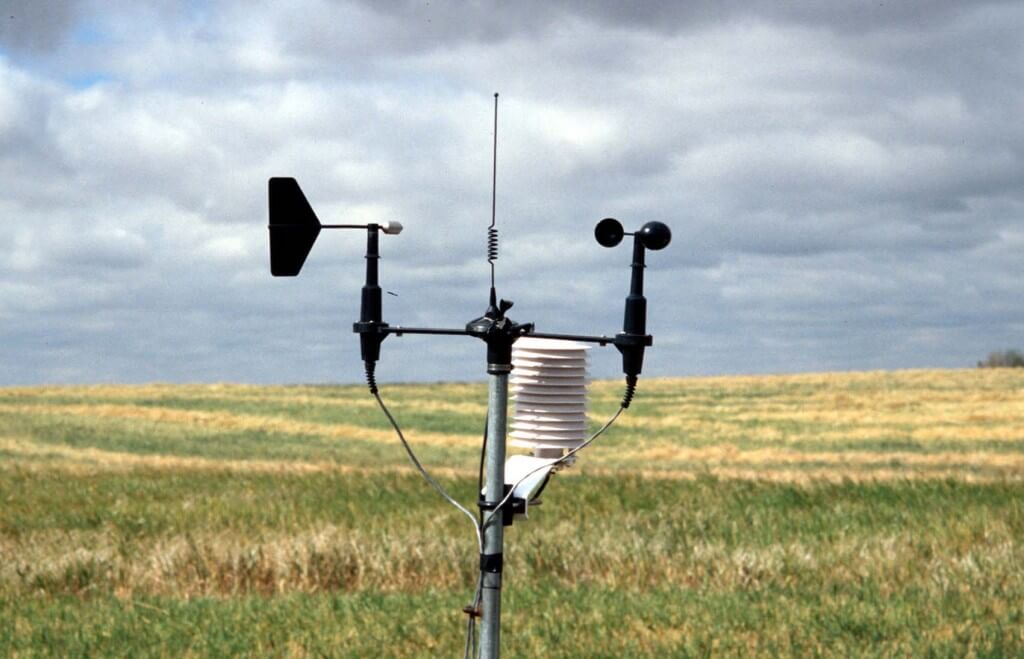
    New label language states: “Avoiding spray drift at the application site is the responsibility of the applicator.” A wise sprayer operator must possess the ability to assess the environmental conditions at the field location to determine how best to spray the field, or maybe decide it would be best not to spray that field, or part of that field, at that time. Instruments that assess environmental conditions are available to assist applicators in making good decisions.

    Making the correct measurement is the critical first step. Record the information measured to document the application conditions. Quality records help mitigate against any misapplication allegations, such as a drift complaint. Many of the items listed below are based on past legal experiences with applications involving spray drift litigation.

    The following guidelines should help you measure and accurately record environmental conditions at the application site.

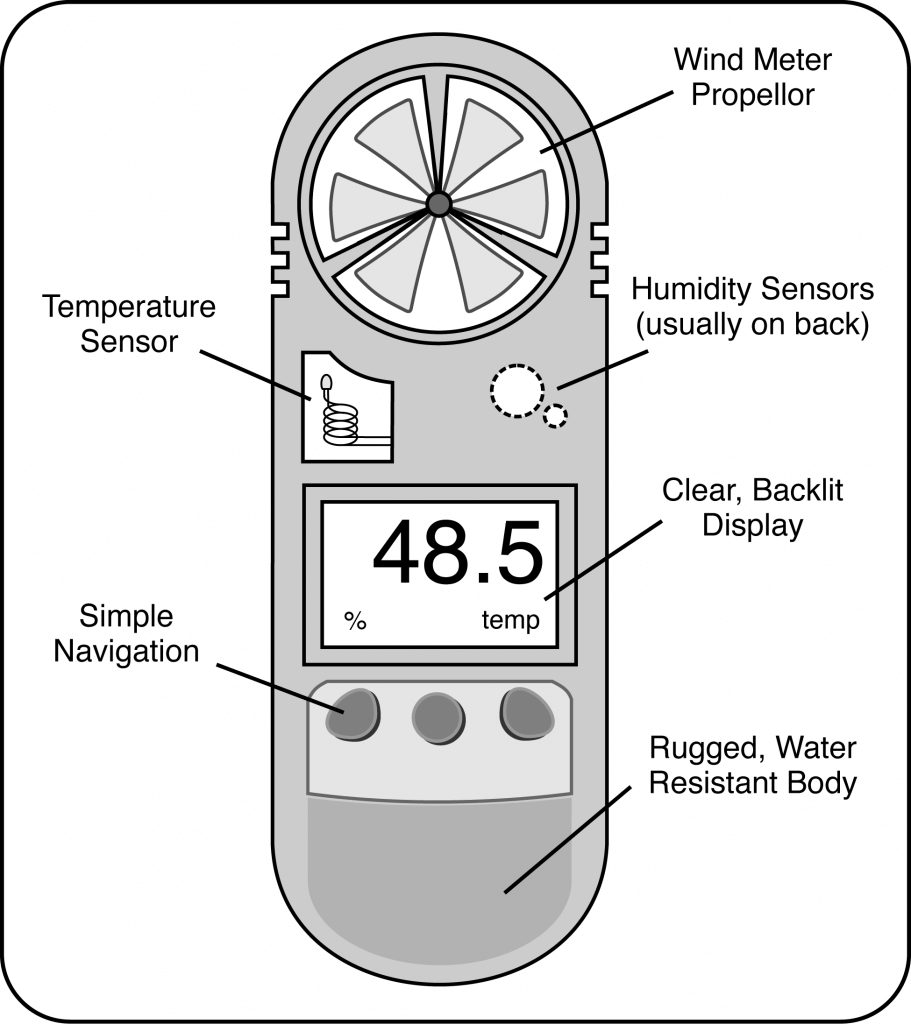
    1- Document any instrument used by recording the manufacturer and model number. Accurate portable weather instruments are recommended. Portable weather instruments are available that log and store data, and aid in auditing and recordkeeping. Some will have Bluetooth/wireless capabilities.

    2- Environmental measurements include wind speed and direction, temperature, and relative humidity.

    3- At a minimum, record data at the start and finish of the job. Consider more often as conditions change or for a job that lasts over a longer period. For example, make observations when tank refilling for larger fields. Time stamp all observations with a.m., p.m., or military time.

    4- Take meteorological readings as close to the application site as possible. Be advised that the weather data received via a smart phone or local weather station may not be accurate for the location being sprayed.

    Note the specific location where the measurement was made, such as GPS coordinates, field entry point, field location, etc. Check the label to see if it requires a specific observation location in relation to the treatment area.

    5- Make all measurements as close as possible to the nozzle release height (boom height) and in an area not protected from the wind by the spray machine or your body. For aerial applications, six feet is suggested when using a hand held instrument.

    6- Record wind speed averaged over a 1 to 2 minute time span. Note the time the observation was recorded. Most instruments give an average over a period of time. Make sure the instrument’s anemometer is facing directly into the wind.

    Do not record winds as variable or with a range i.e. 4 to 8 mph – an average gives a better indication of the transport energy. Light and variable winds, where directions may change several times over a short period, can be more problematic than higher speed winds in a sustained direction. Observe any label restrictions on wind speed.

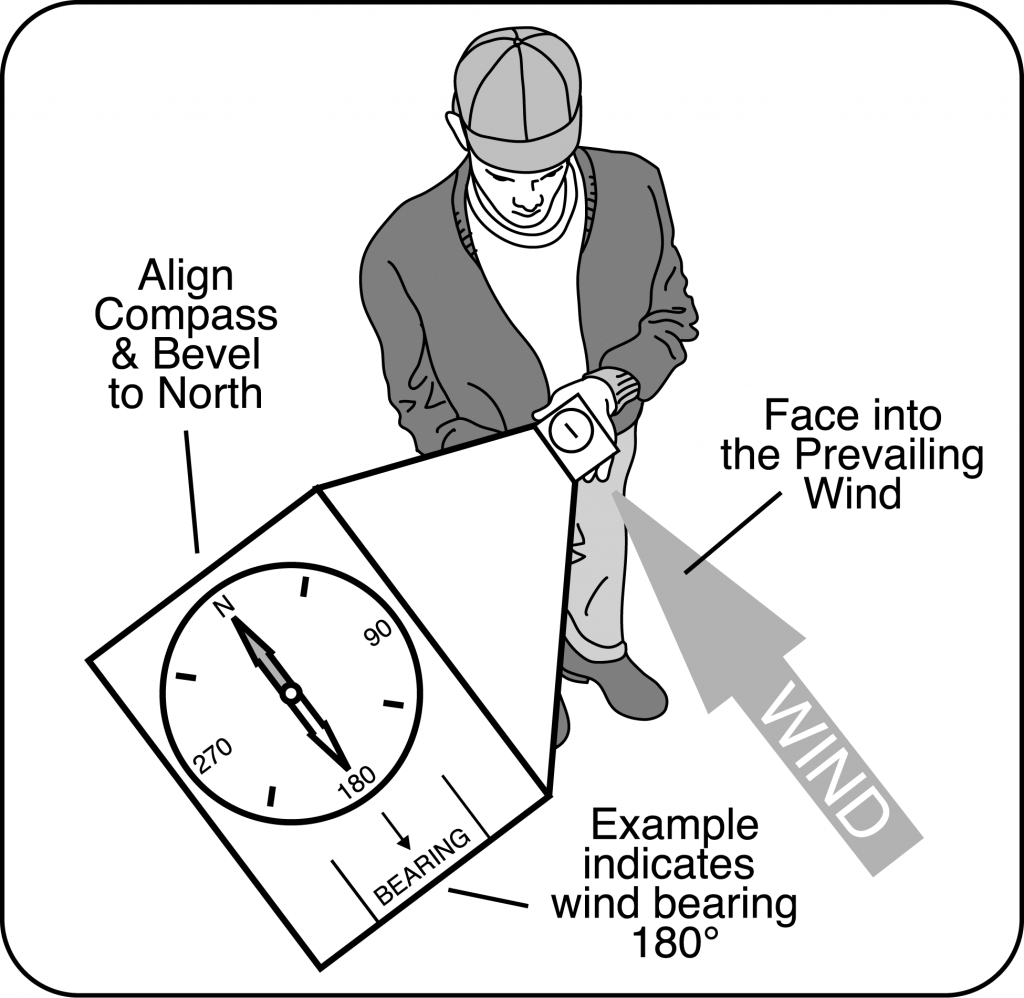
    Wind direction requires a similar averaged measurement. Record direction in degrees magnetic from a compass (0-360°). The use of alphabetic characters, i.e., N, S, NW, to indicate wind direction is discouraged. The key for determining direction is to have an accurate assessment method: trees moving, dust, smoke, a ribbon on a short stake, etc. Face directly into the wind and record the direction from which the wind is coming. A ribbon on a stake with the ribbon blowing directly at your body is a simple fail safe approach. Movement of smoke, particularly from moving aircraft, or dust may help determine direction.

    7- Record temperature and humidity since they can be helpful in determining temperature inversion potential. It may be advisable to record both temperature and humidity well before and after the application for this purpose. In fact, recording a morning low and an afternoon high would be useful regarding determining the potential for an inversion. Take temperature measurements with the instrument out of direct sunlight. Shade the instrument with your body or spray equipment. This is especially critical if you are trying to assess temperature differentials for determining if an inversion is in place.

    8- Be alert to field level temperature inversion conditions which typically occur from late afternoon, can be sustained through the night, and into the next morning. Beware, inversions can start mid-afternoon. Observe conditions such as the presence of ground fog, smoke layers hanging parallel to the ground, dust hanging over the field/gravel road, heavy dew, frost, or intense odors (i.e., smells from manure or stagnant water from ponds are held close to the surface when inversion conditions exist). Inversions commonly occur with low (less than 3 mph) to no wind speeds. Spraying in calm air is not advised. If a mechanical smoker is used note wind direction and smoke dissipation with a time stamp.

    9- Note any variances due to terrain or vegetation differences, tree lines, buildings, etc.

    10- Initial or sign all recordings to indicate who made the observation(s).