Tag: operator

  • Six Spray Technology Skills for Agronomists

    Six Spray Technology Skills for Agronomists

    Press play to listen to an audio version of this article

    Agronomists help farmers manage their crop with advice on everything from crop cultivars to fertilizer rates to marketing. It’s challenging to be an expert on everything, but a few core competencies can go a long way to improving the level of service.

    Agronomists are also responsible for communicating environmental best practices. Along with fertilizer rates come messages of source, time, and place, the 4R principles. The same is true for spraying, with messages of spray drift, resistance management, and economic thresholds part of the consultation. Let’s remember that we should not be indifferent to the potential consequences of our recommendations.

    Here are six skills that an agronomist should know about spray technology.

    1. Recognizing major nozzle models and their spray quality and pressure requirements.

    Application technologists are often asked to identify nozzles and recommend spray pressures for clients. It’s a skill that anyone can develop with just a bit of homework.

    First, learn the colour-coding of nozzles – colours identify flow rates and follow an international standard that all manufacturers have adopted.
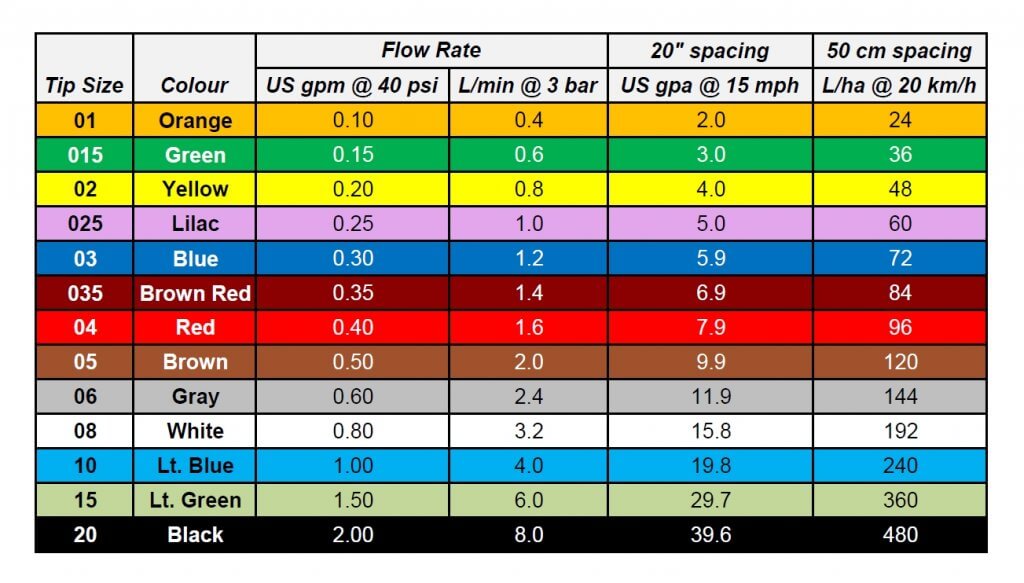
    ISO Colour coding of major nozzle sizes, as well as application volumes at benchmark speeds.

    Next, focus on the common nozzles on the major sprayers. John Deere sprayers will typically have three main air-induced nozzles, made for John Deere by Hypro, the Low-Drift Air (LDA), the Ultra Low-Drift (ULD), and the GuardianAIR Twin (GAT). Those with ExactApply, John Deere’s PWM system, will see the non air-induced 3D, the Guardian (LDX), and the Low-Drift Max (LDM). Recall that PWM flow control should not be used with air-induction tips.

    Almost all Case sprayers have PWM, called AIM Command. Case uses Wilger ComboJet bodies and nozzles, with the ComboJet ER, SR, and MR most common, sometimes the DR or UR for dicamba.

    New Holland/Miller with PWM (called IntelliSpray) are also likely to have these tips, but because these brands have TeeJet bodies on their booms, they require an adaptor for the proprietary ComboJet caps.

    Otherwise, PWM units often use TeeJet’s TurboTeeJet (TT), Turbo TwinJet (TTJ60), and Air-Induced TurboTwinJet (AITTJ60), the only air-induced tip approved for PWM use by TeeJet.

    Conventional spray systems (i.e., no PWM), will commonly have (in alphabetical order) the Air Bubble Jet (ABJ, actually labelled BFS for their manufacturer, Billericay Farm Systems), the Greenleaf AirMix (AM), the Hypro GuardianAIR (GA), and the TeeJet AIXR.

    Many sprayers will have a twin fan for fungicides, primarily for fusarium headblight (FHB) management. The Greenleaf Turbo Asymmetric Dual Fan (TADF), the Hypro GuardianAIR Twin (GAT), and the TeeJet AI3070 dominate, as well as a number of custom configurations using splitters and twincaps.

    Where dicamba is applied on Xtend trait soybeans, some special nozzles may be used to meet label requirements for coarseness. The TeeJet TTI is very common, but Greenleaf developed a special set of tips called the TurboDrop XL-D and the TADF-D. Wilger’s version, mentioned earlier, is the UR. John Deere has just announced their new ULDM.

    That covers 95% of what you’ll encounter in the North American market. In Europe, add some Lechler nozzles (ID3, IDTA, IDK, IDKT) to the mix. In Australia, Arag is gaining ground.

    Identifying the nozzles on sight is the prerequisite to finding out their average droplet size, called spray quality. Often, the inscriptions are worn off, so visual recognition is required to get there.

    We’ve published a visual identification guide with pictures of the major nozzles here.

    Knowing the relative spray qualities produced by these various nozzles will get you bonus points, but you’ll need to do some extra research to get there.

    2. Using a spray calibration chart

    This skill will make you popular on the farm and at the office. A very frequent question is “what size nozzle do I need for this new sprayer?”. The best way to approach the answer is to ask several questions.

    • Does the sprayer have 20” nozzle spacing? (90% of sprayers do).
    • What is the desired water volume?
    • What is the expected average travel speed?

    The first question guides you to the appropriate calibration chart, which can be downloaded here or can also be found in all sprayer catalogues.  We explain how to use these charts here. 
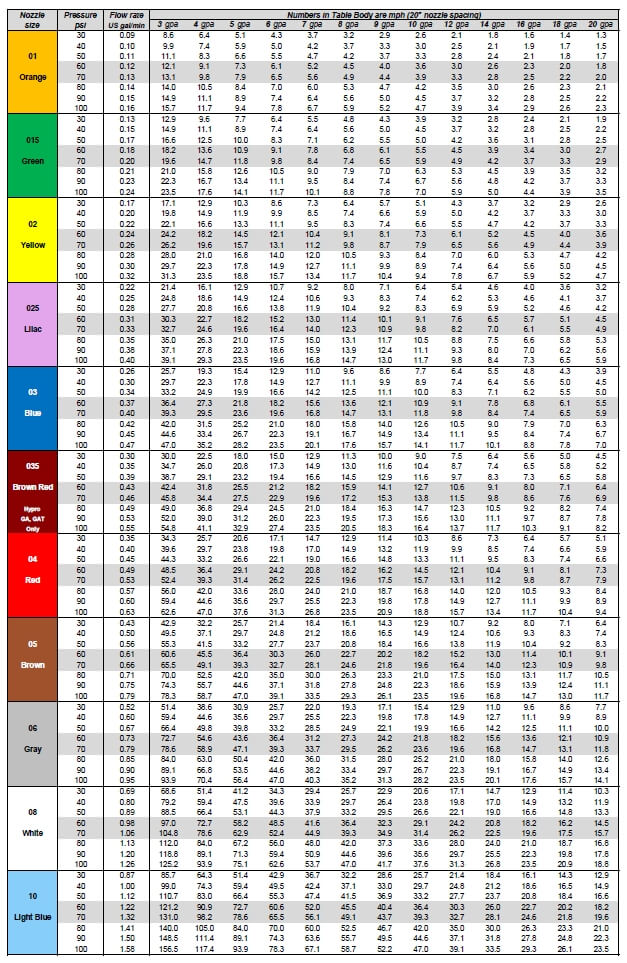
    Calibration chart for 20: spacing, in US units.

    If you don’t have a chart handy, use this shortcut: on a boom with 20” spacing, at 5 mph, every 0.1 US gpm capacity at 40 psi delivers 6 US gpa. So if you need to apply 12 gpa at 15 mph, an 06 size will get you there at 40 psi. That’s ballpark.

    In metric, with 50 cm spacing, at 10 km/h every 400 mL/min (01 size) at 3 bar delivers about 50 L/ha. To deliver 200 L/ha at 20 km/h would require an 08 (white) tip.

    Of course, if the tip is air-induced, make adjustments to speed or size to accommodate the higher pressure requirement of these types of nozzles.

    Remember that spray pressure is key to performance, therefore the operator needs to drive at a speed, or use a volume, that results in the correct spray pressure.

    3. Understanding Pulse Width Modulation

    PWM technology has been on the North American and Australian market for two decades, but it remains poorly understood by those who do not use it. PWM will continue to gain popularity and has implications for nozzle selection and sizing.

    Traditional rate control in the field involves the use of spray pressure to match liquid flow rates to travel speed. The rate controller knows the width of the boom (entered by the user), the travel speed (from gps), and the desired application volume (entered by the user). It does some math to identify the flow rate it needs, and compares that to the sprayer’s current flow meter reading. If the current flow is less than what’s needed, the sprayer increases pressure to increase flow. This happens continuously in the background.

    When an operator speeds up, the pressure increases, and vice versa. As a result, the pressure (and therefore droplet size) will fluctuate with travel speed, and that can result in inconsistent spray patterns, coverage and drift.

    PWM involves the installation of electronic solenoid valves at each nozzle body. These valves pulse on and off at 10, 15, 50, or 100 Hz, depending on the manufacturer. Each pulse contains a brief, complete shutoff of the flow. The proportion of the time the valve is open during a pulse is called the Duty Cycle (DC), and this is proportional to the flow through the nozzle.
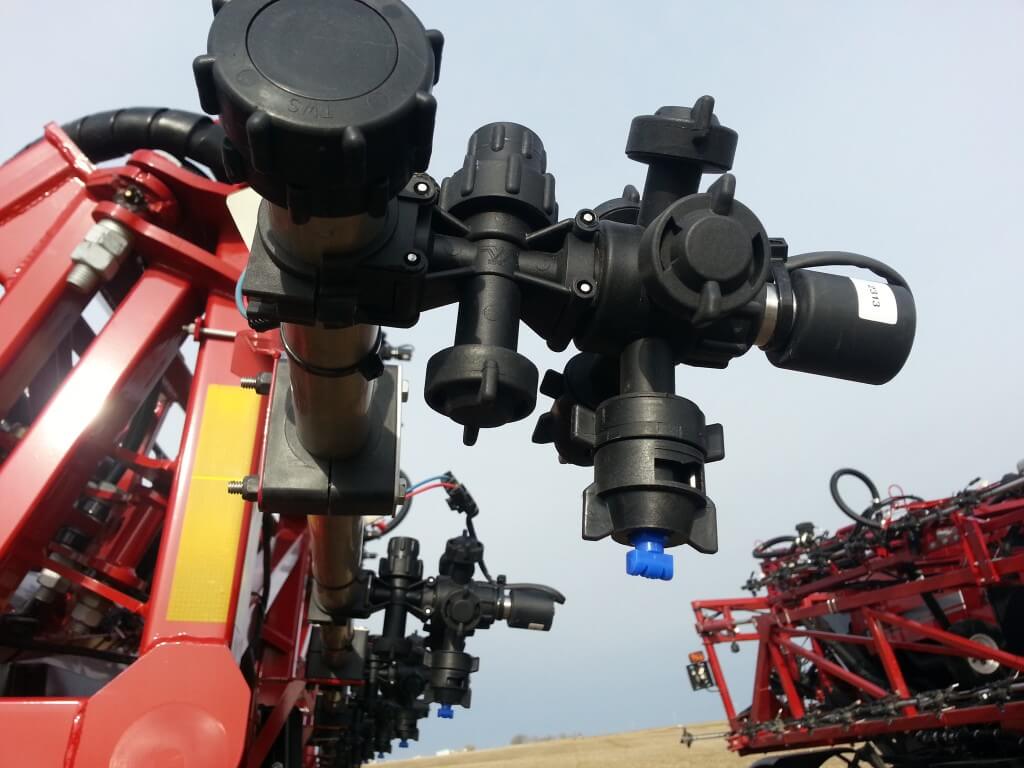
    Capstan PWM solenoid on Case AIM Command

    When the system requires more flow, it no longer increases pressure. Instead, it increases the DC. The advantage of this approach is that nozzle pressure can now stay constant, ensuring consistent coverage and drift.

    There are other advantages of these systems. Each nozzle can be controlled independently, offering high resolution sectional control and turn compensation.

    Nozzle selection and sizing are both affected by this technology. Nozzles need to be sized larger, with about 30 to 40% more flow capacity ideal. The DC will therefore run at 60 to 70%, optimal for speed fluctuations and turn compensation. Air-Induced tips are not usually recommended because their pattern deteriorates with pulsing.

    We’ve written about PWM here, here and here to get you started.

    4. Validating coverage of the target

    A very useful indicator of the success of a spray operation is an assessment of “coverage”. This term refers to a qualitative combination of droplet density and percent area covered, and can be quickly assessed using water sensitive paper. We’ve explained the use of WSP here and here.

    It’s very useful to have some of this paper on hand (available from any retailer that sells TeeJet or Hypro products, or on-line from Sprayer Parts Warehouse in Winnipeg or Nozzle Ninja in Stettler, AB). The coverage can be assessed in four different ways:
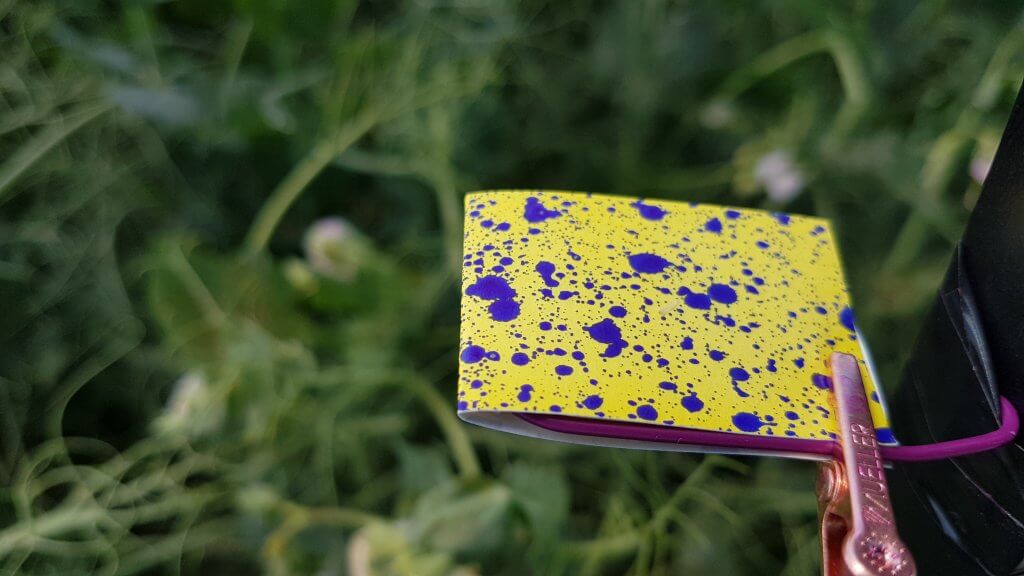
    Water-sensitive paper being used to assess spray coverage.
    • using the “SnapCard” app (gives % coverage only);
    • using the “DropScope” scanner (gives a comprehensive assessment of coverage, density, size, plus image editing tools);
    • using a template of coverage examples;
    • using experience built on years of doing this.

    Water-sensitive paper is also useful as a record, for quality assurance. A spray application is conducted and part of the record is an image of the deposit. Should a performance issue arise, this will help settle it.

    5. Understand basic sprayer plumbing

    Often, a sprayer problem can be traced back to an issue with its plumbing. There could be mysterious sources of contamination. The pump might not be building pressure. The agitation isn’t running. Or you need to drain all the remaining liquid from the tank.

    Sprayer plumbing seems intimidating for a number of reasons. It’s become complex on most modern sprayers. It’s hidden under the sprayer belly. All the lines are the same black colour, so they’re hard to tell apart.

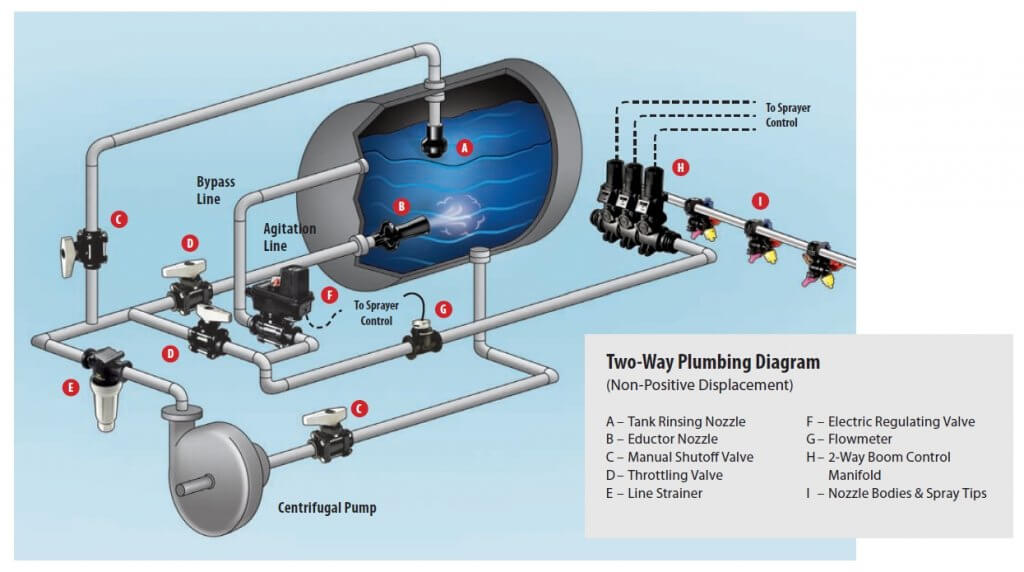
    But it’s not as bad as it seems. Basic plumbing is the same on all sprayers. The pump draws the spray mix from the bottom of the tank, the sump. It may also have options to draw clean water from an external supply, or from the clean water tank for wash-down.

    The pressurized supply goes to three places:

    • to the booms, via sectional valves;
    • back to the tank, via a control valve that can be used to adjust the spray pressure;
    • to the wash-down nozzles.
    Typical sprayer plumbing for a centrifugal pump (Courtesy TeeJet).

    When spraying, the less is returned to the tank, the higher the boom pressure. There may be several ways back to the tank, via agitation, via bypass (sparge), or via wash-down (used only when the pump draws water from the wash-down tank). Usually engineers can’t help themselves and introduce several what-if features that complicate the situation. But with a bit of know-how, and a flashlight, the plumbing system can be deciphered.

    Pro tip: A centrifugal pump’s inlet (suction) is always the centre of the pump, its outlet (pressure) is at the periphery.

    6. Matching a pesticide recommendation with application advice

    It’s commonplace to recommend a specific crop protection product that matches the crop and pest situation. Recommending an ideal crop or pest stage improves the recommendation. But a truly successful outcome requires one additional step, advice on the application method. The customer may need to know if product performance depends on water volume and droplet size. Some products are more sensitive to this than others. Perhaps there is a specific nozzle type that may be helpful.

    The classic example for application method is Fusarium headblight in wheat. The basics are straightforward. An agronomist recommends the fungicide, and guides the tight application window with a field visit to stage the crop, plus a look at the disease risk forecast map. But true application success requires an angled spray, with a coarser spray quality plus relatively low boom height to make it all worthwhile. That’s a full-featured recommendation. 

    Common herbicide applications also benefit from additional information. Some tank mixes and weed spectra allow for coarser sprays than others, and the ability to spray coarser means a wider application window and therefore more accurate timing. Other tank mixes may pose a significant risk to drift damage, requiring special measures to prevent a problem. Identifying those opportunities adds value.

    Water volume and spray quality recommendations for major herbicide mode of action groups.

    Newer labels for dicamba (Xtendimax, Engenia, Fexapan) and 2,4-D (Enlist Duo) have very specific instructions for drift prevention. This information must be shared with customers to ensure that their drift liability is covered.

    Are there other skills that you feel agronomists should have? Please share them with us by contacting us at the bottom of this page.

  • How to Calibrate an Airblast Sprayer Operator

    How to Calibrate an Airblast Sprayer Operator

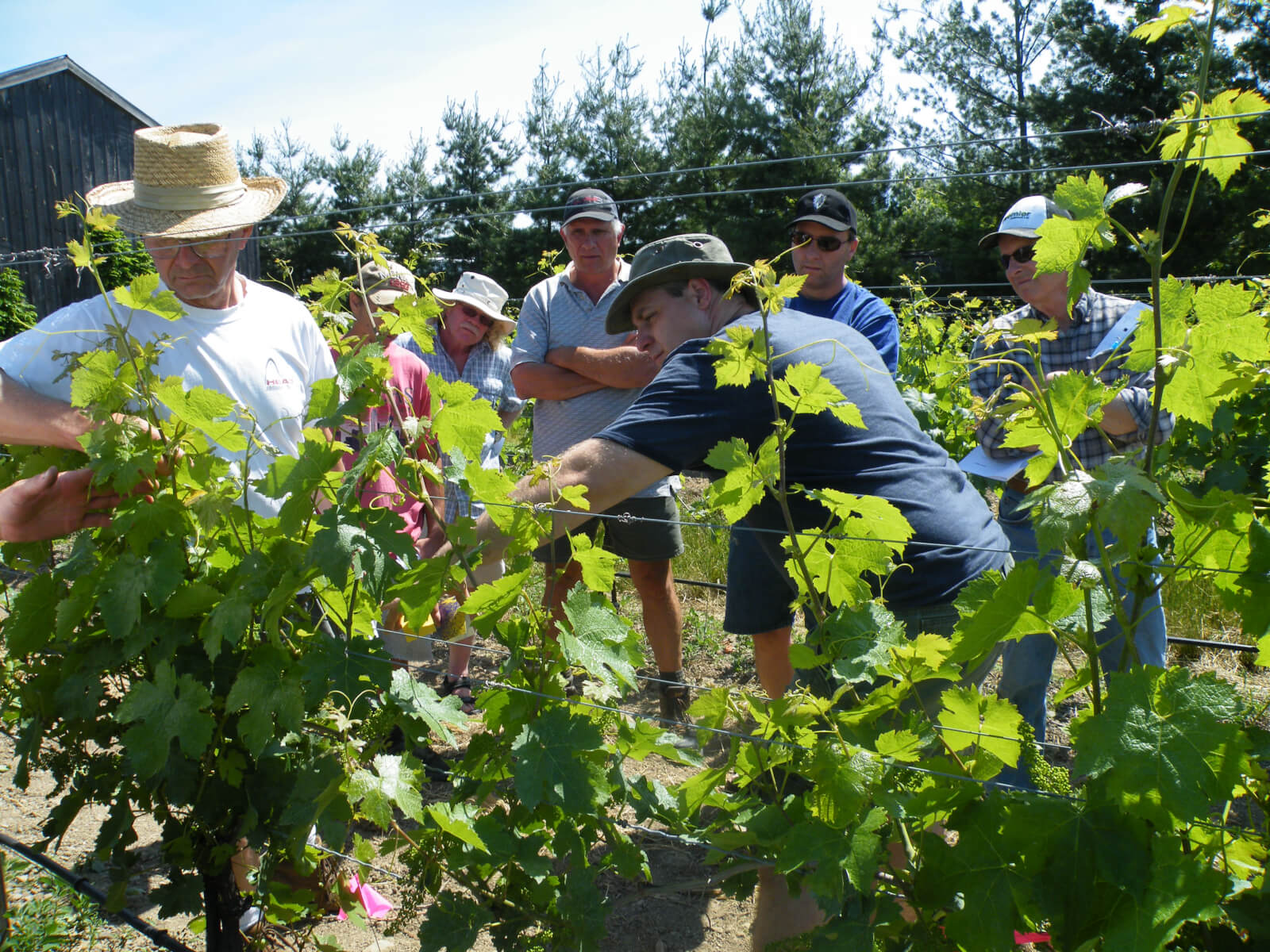
    Checking coverage on water-sensitive paper with some of the Grape Growers of Ontario members in 2012
    Checking coverage on water-sensitive paper with some of the Grape Growers of Ontario members in 2012
    Press play to hear the audio version of this article.

    When an extension specialist, equipment retailer or consultant is asked to calibrate an airblast sprayer, they would be well advised to calibrate the sprayer operator as well.

    Consider this: you and the operator are each investing three hours (average) to optimize the sprayer for a specific set of circumstances: the crop dimensions, density, and the weather conditions at the time of calibration. Depending on the reason for the application, you may even account for the product(s) mode of action and the pest location. This means that once you leave, the circumstances will change and the benefits of your efforts will quickly diminish.

    Calibrations, like milk, have an expiry date.

    There are three possible outcomes from a single, stand-alone calibration:

    1. The operator manages efficacious applications throughout the season because the variability in weather, crop and pest isn’t significant. This is generally not the case.
    2. Not recognizing that sprayer settings need constant adjustments (or being unable to make the changes) the operator experiences only modest results and decides calibration isn’t worthwhile.
    3. The operator experiences failures and lays the fault with you (as the last person the touch the sprayer) and/or the agrichemical rep that sold the chemical. Few sprayer operators blame timing or spray coverage.
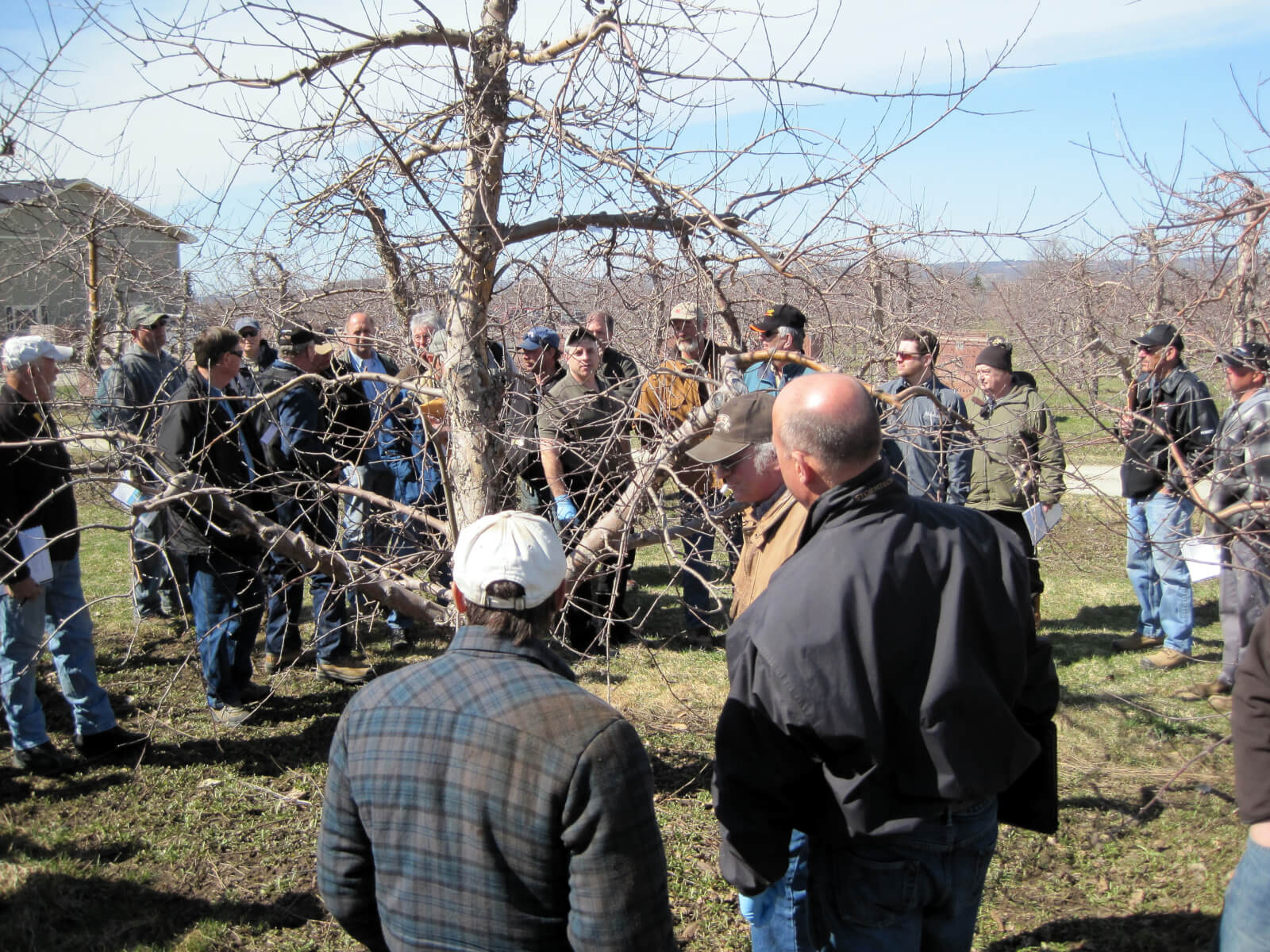
    Explaining how to place water-sensitive paper and ribbons in an apple tree
    Explaining how to place water-sensitive paper and ribbons in an apple tree

    The solution lies in the proverb “Give a man a fish and you feed him for a day; teach a man to fish and you feed him for a lifetime.” It is the sprayer calibrator’s responsibility to involve the sprayer operator and ensure they understand what is being done, why it is being done, and how to do it when you leave. Otherwise, expect to calibrate that sprayer again… soon.

    Personally, I have had the most success educating and empowering sprayer operators to make their own seasonal adjustments based on a formulaic approach. Depending what you are trying to accomplish, you may not need all of the following steps, or you may perform some on your own and others as part of the education:

    1) You could be working one-on-one, or you may be presenting to a large group. When it’s the latter, I like to arrive the day before to meet the host or owner of the sprayer(s). You can scope out the operation and triage the equipment so you know what parts you might need the next day. It also helps to see the space you will be working in.

    2) Perform a pre-calibration inspection of the equipment with the sprayer operator. They know their equipment and can tell you about usage, history and maintenance. It also opens a dialogue between you and helps the operator to relax. Remember: from their perspective they may feel they are being judged and they will take criticisms and corrections personally. Do your best to reassure them that you are trying to make a good thing better – not to correct failings.

    3) If you’re working at a large operation, educate the manager (decision maker) and the operators (drivers) at the same time. If you teach the manager, they might not effectively communicate the lessons to their operators. Likewise, if you teach the operators, they may not be able to convince the manager to let them spend money, or time, on making changes to the sprayer program. Get everyone on the same page, at the same time.

    4) With the operator, perform a basic maintenance check. Specifically, confirm sprayer ground speed, evaluate pressure gauge accuracy and evaluate nozzles. Explain what you are doing, and ask the operator questions. This is where you learn about their attitude. Are they open-minded about changing how they do things? How has their efficacy been in the past? Will they spring for new parts? Do they need convincing that this process must be repeated regularly?

    Demonstrating how deflectors aim air, and spray, into the target using some scrap wood.
    Demonstrating how deflectors aim air, and spray, into the target using some scrap wood.

    5) With the sprayer in the crop, have the operator tie wind-indicator ribbons in the canopy (or better, use lengths pre-tied to springback clips). Explain what they are doing and why. Tell them these ribbons should be monitored, maintained and replaced season-long.

    Here’s a tip: If you are working with a large audience, keeping them focused is critical. Growers will take the opportunity to catch up with each other while you are occupied with the sprayer. They are also inclined to wander away to answer cell phones. If they are not focused, you are on a service call and are not really educating. If you feel you are losing control, single out the ringleaders or wayward students and give them jobs, such as holding tools, or placing/removing water sensitive papers. When they have a responsibility, they pay closer attention.

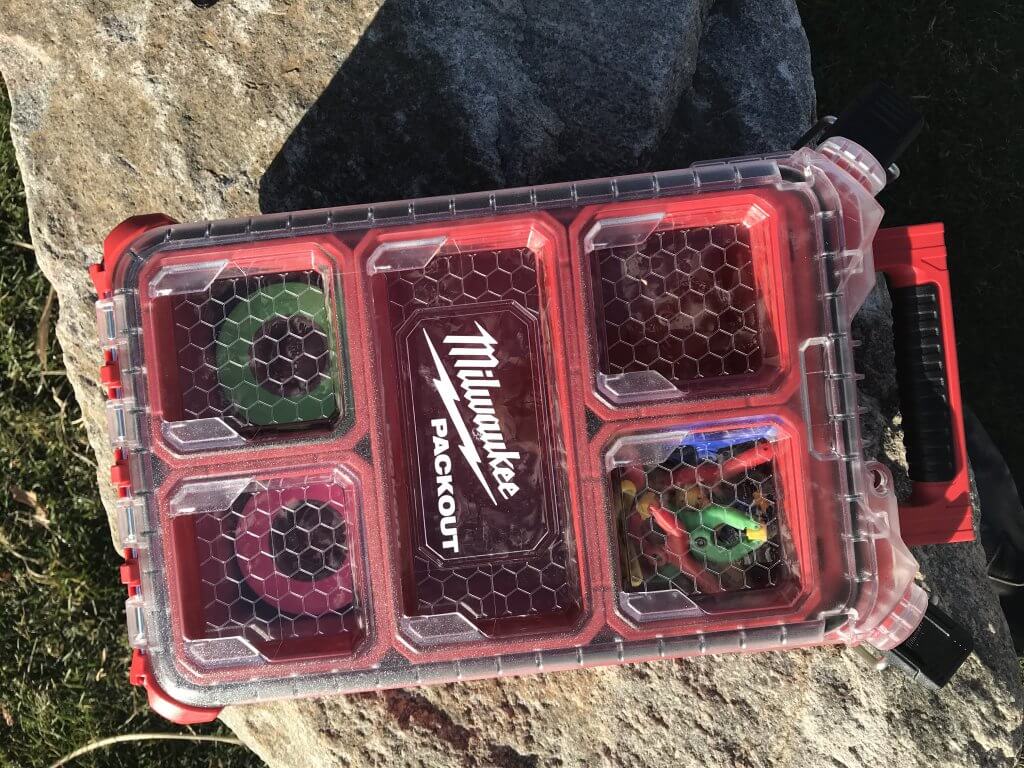
    A convenient, weather proof calibration kit for flagging tape, clips and water sensitive paper.

    6) Discuss where water-sensitive papers should go, and how they should face. Give the operator a latex glove and after you write on the back of each card (position and trial number) have them clip them in place. Tell them how much they cost, where to buy them and the benefits of using them regularly.

    7) Have the operator spray the target crop using their typical set-up (i.e. ground speed, pressure, rate, air settings, etc.) Have attendees and the operator watch the ribbons as the sprayer passes. Spray from one side with both booms on and then stop to discuss results. Then spray from the other side and explore the cumulative impact.

    8) The operator will be very surprised to learn they have drenched or missed the papers. They may or may not be surprised to have seen the ribbons stood straight out (indicating too much air). If you like, you can even set up papers in the next alley (or alleys) to show how much spray blew through the target. When the papers are dry enough, collect them and store them somewhere safe for later comparison. They tend to blow away, so stick them to a whiteboard with two-sided tape, or clip them there with paperclips. Explain that they can (potentially) save a lot of money and lost fill-time by improving their efficiency. Get them on-board for the big change to come.

    9) Optimize sprayer ground speed, air direction (i.e. deflectors) and air speed/volume (i.e. fan speed). Then re-nozzle the sprayer using brass disc and core tips to reduce output in areas that were drenched or increase output in areas of sparse coverage. Quite often, I turn off the lowest (and sometimes, highest) nozzle positions. A piece of water-sensitive paper at the top and bottom of the canopy will confirm the wisdom in this. Label a new set of papers and have the growers position them in the same locations. Spray again. This entire process should take about 1/2 an hour and is described in detail in the Airblast101 handbook.

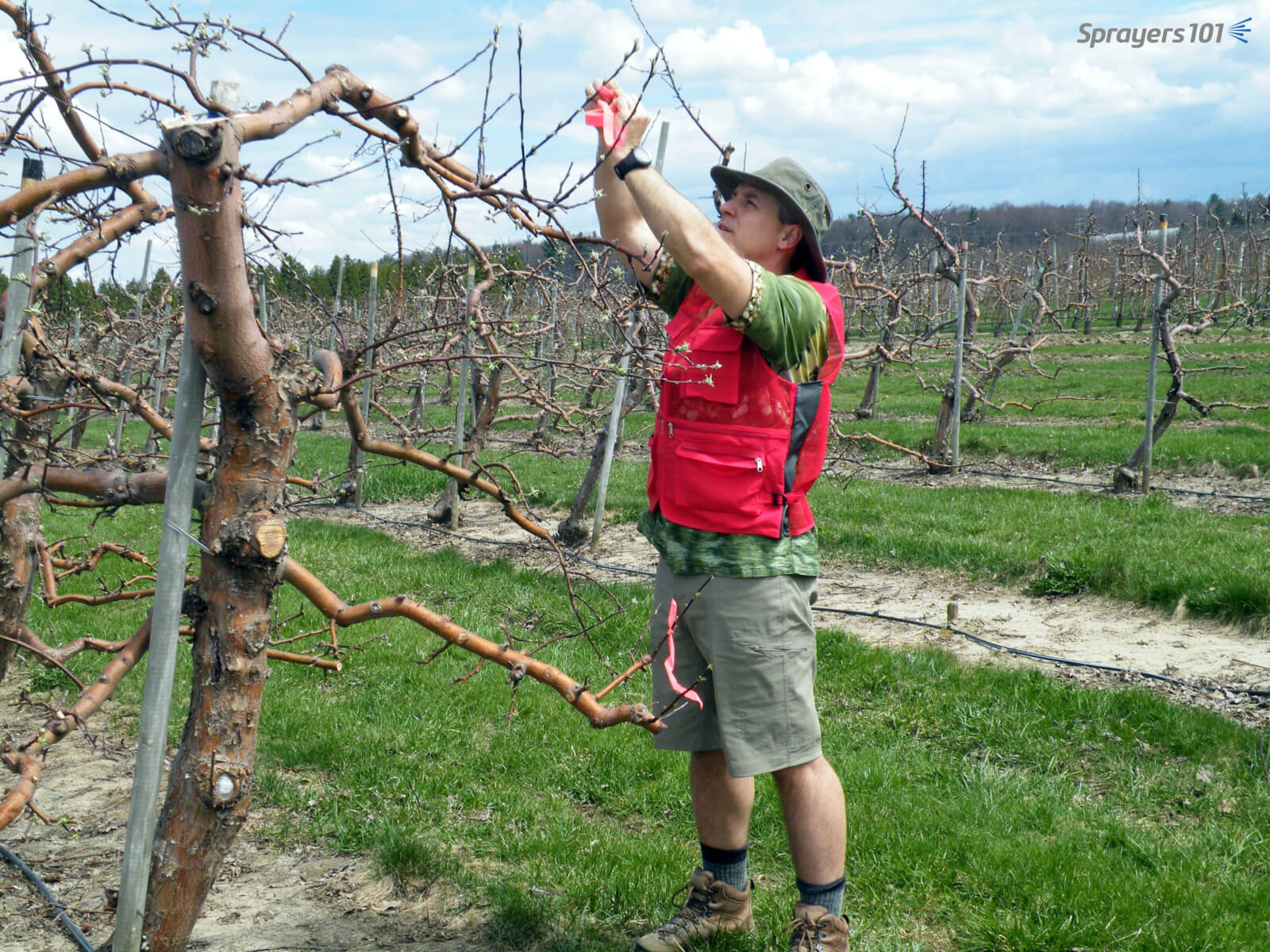
    Tying flagging tape in trees to indicate prevailing wind and to calibrate airblast air settings.
    Tying flagging tape in trees to indicate prevailing wind and to calibrate airblast air settings.

    10) The goal is 85 medium droplets per square centimetre and 10-15% coverage on 80% of the target surfaces for most insecticides and fungicides. If there are still drenches or misses, or if you’ve gone too far in a few positions, correct them and try once more. This is iterative. Make sure the sprayer operator will not be spraying in particularly hot or windy conditions, or your calibration at the top of the target can be compromised. Once you are both satisfied, work out the new sprayer output per area (e.g. US gpa or L/ha). You will have to discuss whether the operator plans to concentrate the tank mix to maintain the labelled “per area” rate (not recommended by me) or will continue to mix the tank as always and simply drive further on it (recommended by me). The later is called “Crop-Adapted Spraying“. Don’t push because it’s their livelihood, and therefore their choice.

    11) The final step relies on how well you’ve earned the sprayer operator’s trust throughout this process. Once you have an output and spray distribution that you are both happy with, the operator should invest in molded ceramic tips that emit similar rates to replace the brass disc-core. Then, they must be willing to repeat the process on any crops that are significantly different to ensure they have the right settings. Sometimes only modest changes are required between blocks. Perhaps they will dedicate certain sprayers to certain blocks to reduce the number of changes required. In either case, they will have to revisit these settings as the season progresses to compensate for denser and/or larger canopies.

    A few examples

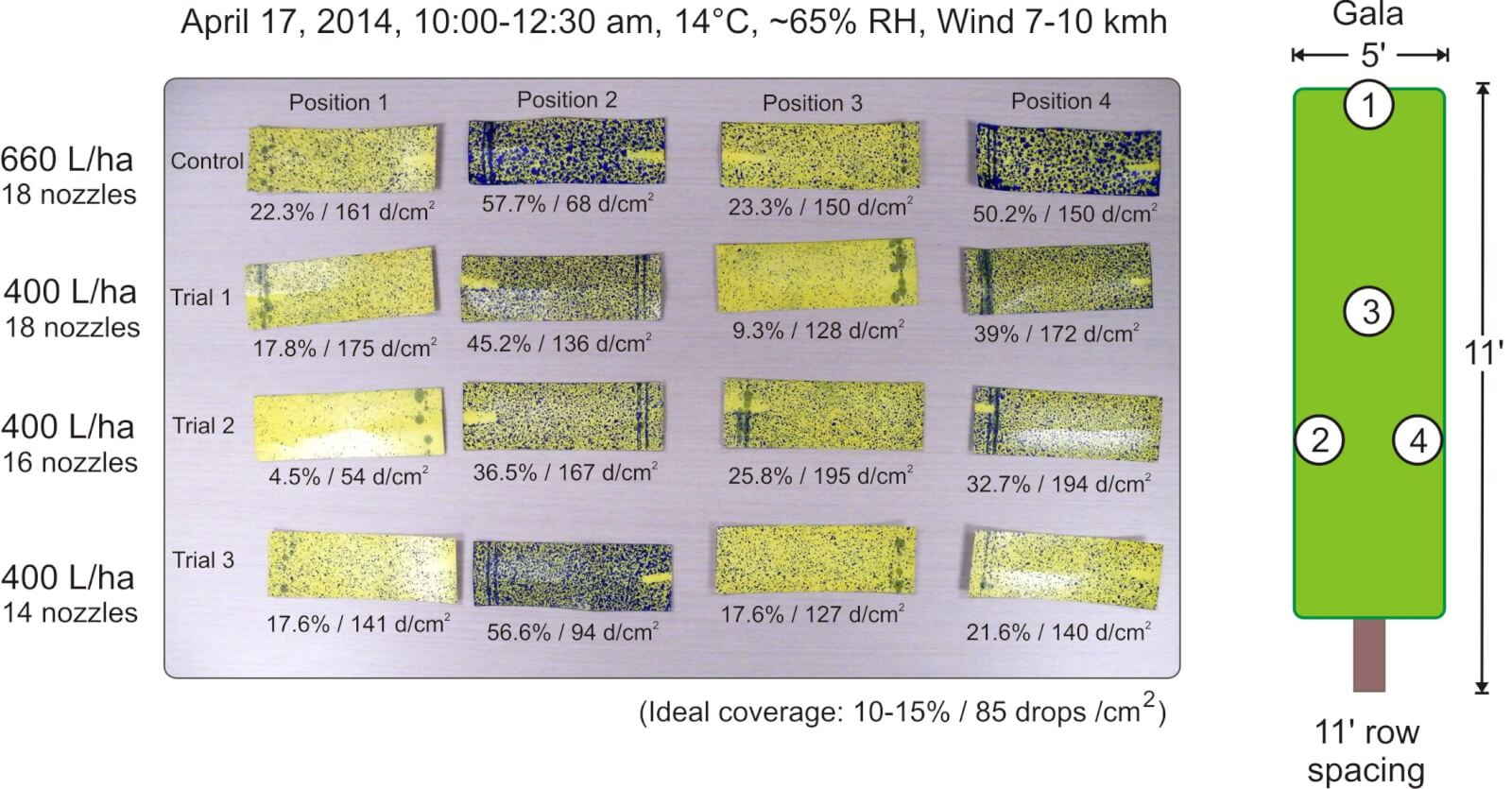
    The following figures illustrate three airblast calibrations in Ontario apple orchards from spring 2014. Some required one attempt; others required a few trial settings before we achieved reasonable coverage. In all three cases, the sprayer operators reduced per-area rates, bought new nozzles and planned to buy water-sensitive paper. Further, they indicated they would continue to monitor ribbons (as long as they could be seen) and would review coverage after petal-fall.

    Several nozzles shut off, spray re-distributed. Targets still drenched in two locations with a 24% savings in spray mix.
    Several nozzles shut off, spray re-distributed. Targets still drenched in two locations with a 24% savings in spray mix.
    Three successive re-calibrations were required. Output was reduced in the first trial, but poor coverage in position 3. Top nozzles turned off and spray re-distributed in trial 2, but a gust of wind reduced coverage at the top of the tree. Bottom nozzles turned off and spray redistributed to top nozzles for a 40% savings in spray mix.
    Three successive re-calibrations were required. Output was reduced in the first trial, but poor coverage in position 3. Top nozzles turned off and spray re-distributed in trial 2, but a gust of wind reduced coverage at the top of the tree. Bottom nozzles turned off and spray redistributed to top nozzles for a 40% savings in spray mix.
    Output reduced in all nozzle positions and sprayer fan speed reduced. The high humidity greatly reduced droplet evaporation and increased the spread on the papers. In this case, it was decided not to reduce output any further to account for anticipated growth and the high humidity. There was a 27% savings in spray mix.
    Output reduced in all nozzle positions and sprayer fan speed reduced. The high humidity greatly reduced droplet evaporation and increased the spread on the papers. In this case, it was decided not to reduce output any further to account for anticipated growth and the high humidity. There was a 27% savings in spray mix.

    Conclusion

    So, the next time you calibrate an airblast sprayer, be sure to teach the sprayer operator (and audience) what you are doing and why. Involve and engage them. Answer their questions. Encourage them to perform the same calibration for each significantly different block and make mid-season changes. With luck they will only call back to report success and savings, and not to condemn your efforts, or worse: to ask you to re-calibrate their sprayer!

  • Application Recordkeeping: Focus on Environmental Conditions

    Application Recordkeeping: Focus on Environmental Conditions

    Note: This article was written by Bob Wolf of Wolf Consulting and Research, and first appeared as an NDSU Extension Service publication. Bob has agreed to reproduce the article on our website.

    When applying crop protection products, a good steward is one who can identify and record the environmental factors that may negatively impact making an application; particularly, the possibility of spray drift.

    New label language states: “Avoiding spray drift at the application site is the responsibility of the applicator.” A wise sprayer operator must possess the ability to assess the environmental conditions at the field location to determine how best to spray the field, or maybe decide it would be best not to spray that field, or part of that field, at that time. Instruments that assess environmental conditions are available to assist applicators in making good decisions.

    Making the correct measurement is the critical first step. Record the information measured to document the application conditions. Quality records help mitigate against any misapplication allegations, such as a drift complaint. Many of the items listed below are based on past legal experiences with applications involving spray drift litigation.

    The following guidelines should help you measure and accurately record environmental conditions at the application site.

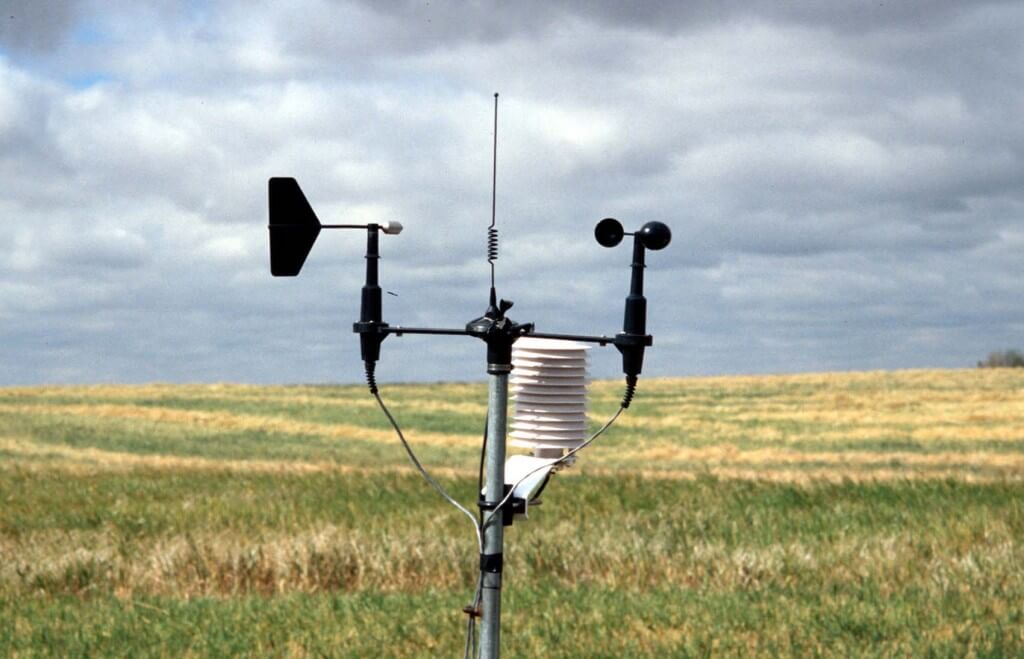
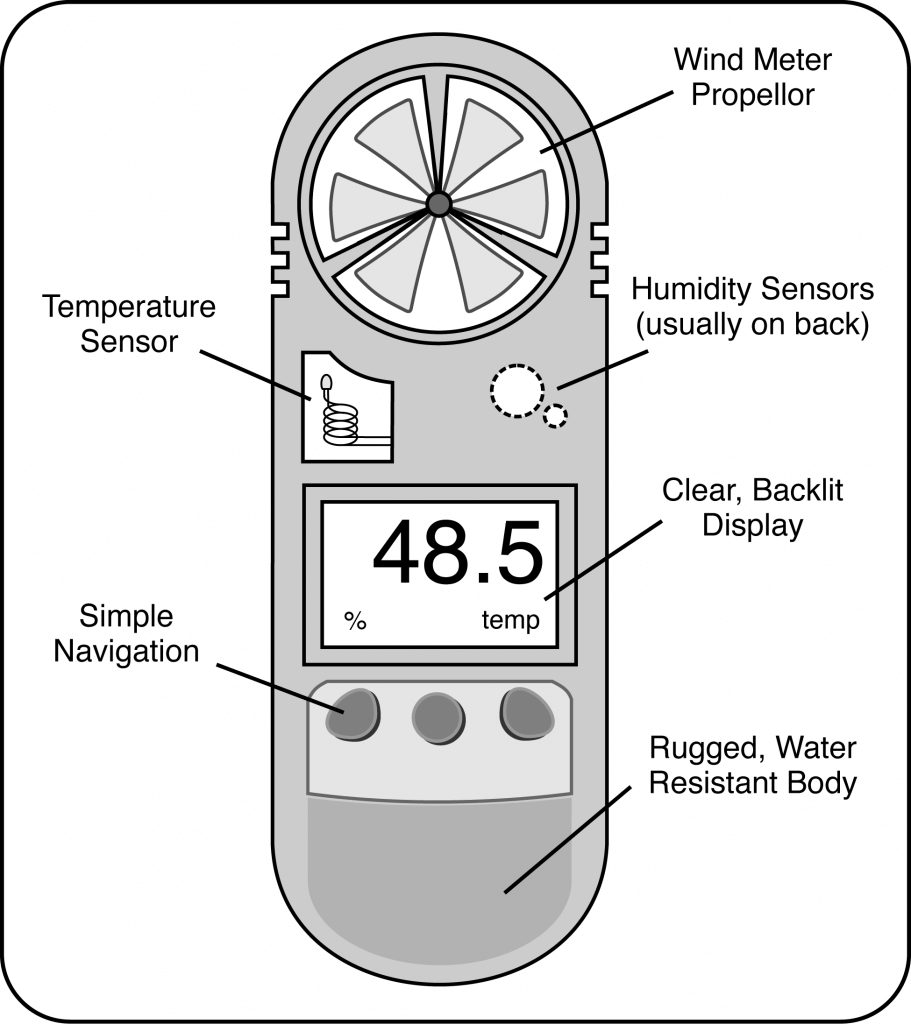
    1- Document any instrument used by recording the manufacturer and model number. Accurate portable weather instruments are recommended. Portable weather instruments are available that log and store data, and aid in auditing and recordkeeping. Some will have Bluetooth/wireless capabilities.

    2- Environmental measurements include wind speed and direction, temperature, and relative humidity.

    3- At a minimum, record data at the start and finish of the job. Consider more often as conditions change or for a job that lasts over a longer period. For example, make observations when tank refilling for larger fields. Time stamp all observations with a.m., p.m., or military time.

    4- Take meteorological readings as close to the application site as possible. Be advised that the weather data received via a smart phone or local weather station may not be accurate for the location being sprayed.

    Note the specific location where the measurement was made, such as GPS coordinates, field entry point, field location, etc. Check the label to see if it requires a specific observation location in relation to the treatment area.

    5- Make all measurements as close as possible to the nozzle release height (boom height) and in an area not protected from the wind by the spray machine or your body. For aerial applications, six feet is suggested when using a hand held instrument.

    6- Record wind speed averaged over a 1 to 2 minute time span. Note the time the observation was recorded. Most instruments give an average over a period of time. Make sure the instrument’s anemometer is facing directly into the wind.

    Do not record winds as variable or with a range i.e. 4 to 8 mph – an average gives a better indication of the transport energy. Light and variable winds, where directions may change several times over a short period, can be more problematic than higher speed winds in a sustained direction. Observe any label restrictions on wind speed.

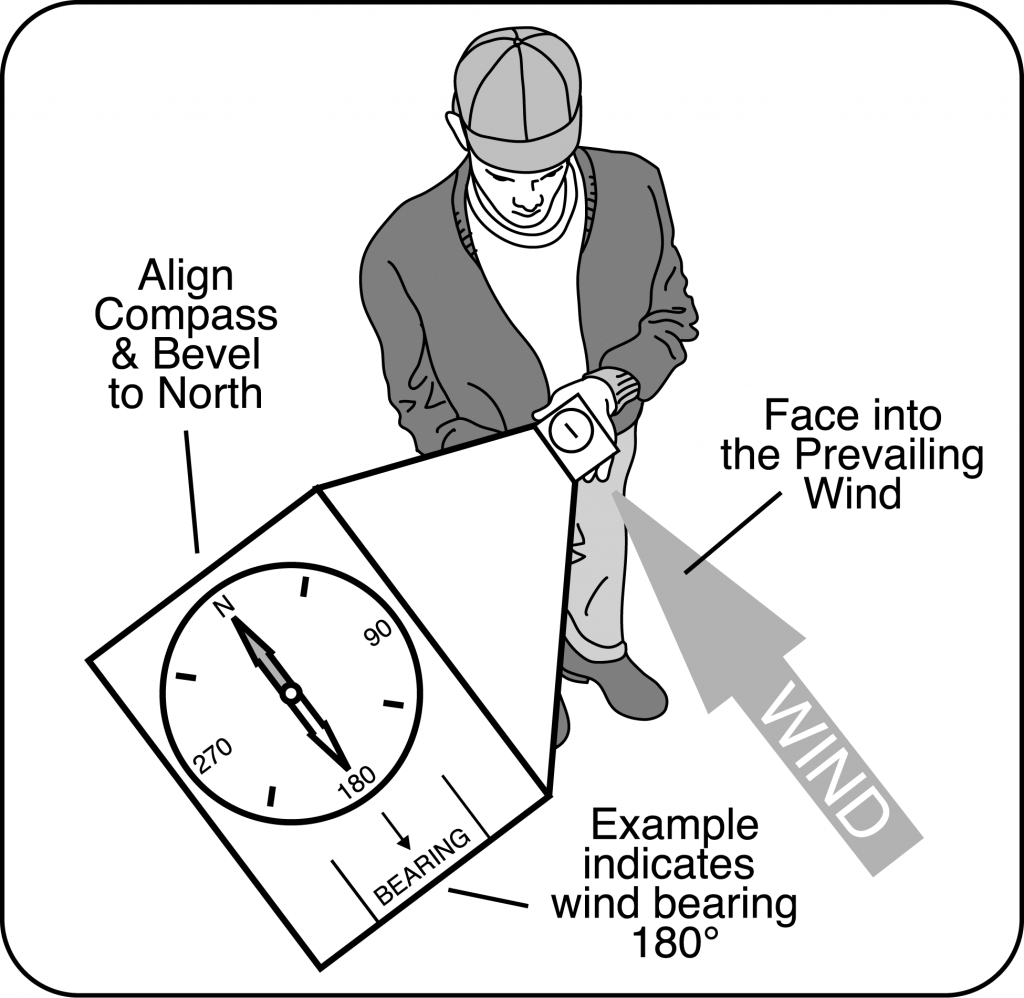
    Wind direction requires a similar averaged measurement. Record direction in degrees magnetic from a compass (0-360°). The use of alphabetic characters, i.e., N, S, NW, to indicate wind direction is discouraged. The key for determining direction is to have an accurate assessment method: trees moving, dust, smoke, a ribbon on a short stake, etc. Face directly into the wind and record the direction from which the wind is coming. A ribbon on a stake with the ribbon blowing directly at your body is a simple fail safe approach. Movement of smoke, particularly from moving aircraft, or dust may help determine direction.

    7- Record temperature and humidity since they can be helpful in determining temperature inversion potential. It may be advisable to record both temperature and humidity well before and after the application for this purpose. In fact, recording a morning low and an afternoon high would be useful regarding determining the potential for an inversion. Take temperature measurements with the instrument out of direct sunlight. Shade the instrument with your body or spray equipment. This is especially critical if you are trying to assess temperature differentials for determining if an inversion is in place.

    8- Be alert to field level temperature inversion conditions which typically occur from late afternoon, can be sustained through the night, and into the next morning. Beware, inversions can start mid-afternoon. Observe conditions such as the presence of ground fog, smoke layers hanging parallel to the ground, dust hanging over the field/gravel road, heavy dew, frost, or intense odors (i.e., smells from manure or stagnant water from ponds are held close to the surface when inversion conditions exist). Inversions commonly occur with low (less than 3 mph) to no wind speeds. Spraying in calm air is not advised. If a mechanical smoker is used note wind direction and smoke dissipation with a time stamp.

    9- Note any variances due to terrain or vegetation differences, tree lines, buildings, etc.

    10- Initial or sign all recordings to indicate who made the observation(s).