Tag: Twitter

  • Smart Spraying Tips and Tricks

    Smart Spraying Tips and Tricks

    This 2018 article was written by Victoria Berry for the Ontario Grain Grower.

    In the era of social media and keyboard warriors, it’s easy to feel like someone is always watching and ready to force their opinion on the world. The “tweet first, think later” mentality often adds to misinformation, and worse, it can leave science as a bystander — especially when it comes to modern farming techniques.

    Farmers feed the world and they need to ensure they are growing high quality, high yielding crops. One of the most important elements of protecting high-quality crops is spraying. As farmers and custom applicators become more innovative and more knowledgeable about spraying techniques they have to strike a delicate balance, according to Jason Deveau, Application Technology Specialist with the Ontario Ministry of Agriculture, Food and Rural Affairs (OMAFRA).

    Deveau recently sat down for a Q&A session to discuss tips and tricks for smart spraying, understanding drift, and how important it is for farmers to share smart practices and be champions to others in the community.

    V.B.: WHAT ARE SOME OF THE KEY AREAS TO SPRAYING? WHAT ARE THE TOP MUST-DOS?
    J.D.: First and foremost, the laws of physics have never changed. We may present the facts in different ways to help people understand, or to make them more accessible, but when it comes to spray coverage and spay drift, there are three speaking points:

    1. We want farmers to use the largest droplet size they can without compromising coverage.
    2. We want the boom at the lowest practicable height to the field.
    3. We want farmers to adjust their spraying practices to match weather conditions, and know when spraying isn’t advisable.

    V.B.: OK. LET’S START FROM THE TOP. WHY AND HOW DO FARMERS CHOOSE THE LARGEST DROPLET SIZE?
    J.D.: Droplet size is an effective tool for combating physical drift. Larger droplets have more mass, which means they are more likely to fall rather than be carried away. But, for a given rate, the number of droplets a nozzle produces decreases as average droplet size increases. It’s the same amount of pie no matter how many slices.

    Fewer droplets might compromise spray coverage, particularly when targeting small weeds or when using a contact pesticide in a dense canopy. The answer is to use more volume to bring the droplet count back up, but that means more refills for the sprayer operator, which is time consuming. A good operator is always considering the balance between drift potential, coverage, and efficiency. Even with sophisticated technologies, these considerations always lead to nozzle choice.

    Traditionally, a grower would choose a nozzle based on the desired rate (e.g. gallons per minute) for a given pressure. As the sprayer changed speed, this would lead to over — or under — application. So, for convenience and consistency, most growers use rate controllers that monitor speed and auto-adjust the rate using pressure. But pressure also changes droplet size and spray pattern. Patterns can collapse at lower pressures (say <30 psi) and average droplet size decreases as pressures increase. You can see that droplet size wasn’t really on the radar. Pulse-width systems have changed this, but they are still few and far between.

    And even if a grower chooses a nozzle with a coarse spray quality, they may be surprised to learn it still produces some fine droplets, too. Look at a bell curve. That’s how a nozzle is rated for droplet size — a lot of average sizes in the middle, and then a few smaller or larger sizes. A coarse nozzle does not make you bullet proof; there will still be some drift. That is why we always observe weather and time-of-day restrictions and adhere to the buffer zones that appear on the pesticide label.

    V.B.: HOW DO LOW BOOMS IMPACT DRIFT AND WHY DO SOME FARMERS RESIST THIS ADVICE?
    J.D.: Imagine holding out your arm and dropping a feather. It will move a ways downwind before landing. Now climb a ladder and do the same thing — it goes considerably further. It’s exactly the same for water droplets. To add insult to injury, releasing spray from a higher point also prolongs evaporation, making it even smaller and exacerbating the problem. And if that weren’t enough incentive to lower booms, the high booms create inconsistent spray coverage, undermining the whole reason for spraying in the first place.

    The resistance to low booms comes from the desire to drive fast. North American booms sway and yaw, even with boom leveling systems. Higher speeds may get the job done faster, but it requires most farmers to raise the boom to prevent it hitting the ground. It may seem counter-intuitive, but there are several ways a farmer can slow down, drop the boom, and spray more acres in a day — it just requires them to look at their spray operation differently. A great deal of time is spent filling, idling, turning, and travelling between jobs. It’s been demonstrated that saving time on sprayer-related tasks has a big impact on efficiency — more than simply driving faster.

    V.B.: HOW DO YOU KNOW WHEN THE WEATHER IS RIGHT FOR SPRAYING?
    J.D.: Everyone knows the obvious cues. If your hat blows off, it’s probably not the time to spray. But, we’re learning that calm conditions may contribute to chemical trespass even more than wind. There’s no hard and fast rule, but three kilometres an hour to 10 kilometres an hour winds are a good range.

    In calm weather, you may find yourself in a thermal inversion, which does not allow fine particles (or volatiles) to disperse and ground. Instead, they hang in a layer of undisturbed air, either moving downhill like water, or eventually moving in an unpredictable direction when the wind picks back up. It’s suspected that this phenomenon has played a significant role in the off target crop damage issues in the U.S. in 2016 and 2017.

    In a very telling demonstration, an Ontario agrichemical rep showed that the smoke from a smoke bomb (representing pesticide vapour) travelled 1.7 kilometres during an inversion. In another demo, he showed it moving back and forth across the same field for hours after the application. Learning how to recognize a strong inversion, and knowing when there is too much or too little wind will require a different way of thinking, but will greatly reduce the potential for chemical trespass.

    V.B.: WHAT OTHER PRACTICES SHOULD FARMERS BE AWARE OF TO COUNTER DRIFT?
    J.D.: There are a lot of other considerations, but let’s highlight two.

    First – Downwind neighbours (residential and agricultural) can take actions based on your spraying schedule. If there’s a possibility of chemical trespass, it’s a courtesy to let them know your plans, or at least make spray records available and be prepared to answer questions. Quite often explaining what’s happening prevents them getting misinformation elsewhere. It may sometimes be a nuisance, but educating others is part of maintaining the public trust. Ontario farmers are experienced and certified and, frankly, the industry needs them to help educate people on all the good work being done.

    Second – Night spraying. Please stop. Time is short and weather can force us to take opportunities where we find them, but calm, clear nights represent the highest potential for a strong thermal inversion. Knowing the weather conditions that affect product performance (for better or for worse), minding pollinator presence, knowing what’s downwind, and STILL following integrated pest management means there seem to be fewer hours left to spray. But, it’s really a matter of understanding which of those factors trumps the others in the decision to spray, or wait. It requires today’s farmer to play an active role when it comes to spraying.

    V.B.: YOU MENTIONED PUBLIC TRUST. HOW WILL SPRAYING AND PUBLIC TRUST IMPACT FARMERS’ BUSINESSES?
    J.D.: We talk about soil, stewardship, and environmental sustainability. But at the core of all those important considerations is the customer driving those agendas. We are getting close to the day (if we’re not there already) where the grocery store dictates farm practices.

    Many broad acre farms are still self-regulating to a large degree. They do their best to maintain high standards for safety, transparency, and record-keeping. But, as specialty crop and livestock operations already know, we are moving towards tracing the history of a farm product from the customer all the way back to the seed. Farmers should adopt best practices proactively, before they become mandatory.

    So, the level of attention on field crops is more acute than ever before. Many are not used to being under the public microscope. Customers are asking when, how, and what was it sprayed, and they want to know the weather and cleaning practices that were followed. We need to have those answers ready to show what we’ve always known — that farmers are self-aware, are stewards, and are responsible partners in public health and safety.

    So spray like everybody’s watching… because they are.

  • Boom Collisions on Twitter

    Boom Collisions on Twitter

    An interesting technology recently came to our attention. The Horsch BoomSight detects potential obstacles and as the sprayer passes it raises the boom to avoid the impact. We figured it was worthy of a tweet, which read:

    The Horsch BoomSight

    @Spray_Guy:
    Ever accidentally hit something with your boom?
    <35 km/h, perhaps the Horsch BoomSight can help:
    http://bit.ly/2j6ShBx

    Now, when you tweet something, you hope it has some impact. That’s usually a few “likes”, maybe a few “retweets” and if you’re lucky someone may take the time to write a response. We received the following response:

    @WcropW:
    Yes, often bumping into kangaroos as they hop out of my crop.
    Got to be quick to lift boom above them!

    @Spray_Guy:
    Still can’t decide if that’s a joke or not, but it certainly made me laugh.

    @WcropW:
    Was looking for picture – definitely true! Has happened 3 or 4 times!

    @spraydriftgirl:
    Definitely true! Plague numbers in crops down here #strayamat.

    @ryan_milgate:
    Yep I’ve hit plenty of kangaroos, esp in canola.

    @Wilkshag:
    Kangaroo- out side window of sprayer. They get stuck jumping through canola.

    @Spray_Guy:
    Wow! What a photo!
    Is there any product registered for kangaroo in canola in Canada?

    Photo Credit: Randall Wilksch

    And so, it got us thinking… What other strange and unexpected things do sprayer operators hit, or nearly hit, during all those hours of spraying? So we asked:

    @Spray_Guy:
    Hey Twitterverse!
    What’s the strangest thing you’ve hit with spray boom?
    “Kangaroo” currently in lead.

    In less than 48 hours, that tweet earned more than 10,000 impressions as the Twitterverse shared all. What follows is a slightly edited transcript of that thread: snarky responses, pictures, videos and all. We don’t know if there’s any educational value, but it’s certainly fun and surprising. No one wrote “fencepost” or “tree”. They covered everything else, though.

    @SteveTwynstra:
    Wild Turkey!

    @Spray_Guy:
    Is that what you hit, or WHY you hit?

    @SteveTwynstra:
    Jumped right up outta the standing wheat 50 odd feet to my right.
    Next day, grazed a fawn 2 fields over…

    @Spray_Guy:
    Putting the “Bam” in Bambi.

    @SteveTwynstra:
    The doe did give me a dirty look…..

    @MarkDavis0129:
    I snagged a boat, dragged it 150 yds.
    The fisherman had quite the look on their faces once I stopped.

    @Spray_Guy:
    A BOAT!?
    Nope… I’m pretty imaginative, but this escapes me.
    How was that possible?

    @MarkDavis0129:
    It’s true, have land right to shoreline in few spots.
    Turning on head land and snagged it.

    @Spray_Guy:
    Priceless.
    I’m still laughing picturing that.

    @MarkDavis0129:
    Was last fall, 18′ alum flat bottom, they were nosed up to shore, snagged boweye on boom tip.

    @Paulvdb2016:
    I have hit an abandoned small liquid manure spreader in a fast turn.
    Boom hit at 30+ mph!

    @Spray_Guy:
    The $hit hit the flatfan…

    @AgronomoOz:
    @Pontaragrain has hit his own drone and put it on Youtube.
    #honesty

    @Spray_Guy:
    Ouch.
    UAV’s aren’t cheap.
    Got the link, Andrew?

    @CrystalSeedSeer:
    Let’s hope crop inspector isn’t in there! LOL!

    @Spray_Guy:
    From this thread, it seems like he’d be at risk of being hit, too!

    Turn up the volume on this video.
    Great soundtrack! Shared with permission from Michael Pfitzner (@farmingfitz)

    And believe it or not, it’s happened to more than one person. Bad time for battery to run low.
    Shared with permission from Warwick Holding (@Pontaragrain)

    @MattTolton2:
    I’d only run a sprayer a few months but once slapped a duck out of mid air.

    @Spray_Guy:
    A solid example of booms set too high… or ducks too low.
    Tell me you shouted “DUCK”!

    @JoannaMWallace:
    This thread is winning Twitter for me today.

    @vg_tim:
    Knocked over a wild turkey and porcupine at same time. Years ago, but can still remember.

    @Spray_Guy:
    Yikes… what were they doing when you hit them? #Darwinwouldntapprove

    @vg_tim:
    it seemed suspicious, they were just standing in a bean field looking at each other…

    @DavidKucher:
    I may have hit an oilwell or two.

    @MaizingPete:
    Almost hit a hippy sleeping off a punk party in the fence line.

    @Spray_Guy:
    LOL! You may have de-throned ‘kangaroo’ with ‘hippy’! We still have hippies?
    We have hipsters… we should hit more of them.

    @MaizingPete:
    For sure Hippy… That poor b@stard thought he was still in Woodstock.

    @BlackPearl152:
    I gave two coyotes a good spank with the boom once.

    @cropperandy2:
    Have hit deer, a coyote, in ON and a moose in AB.

    @jamesschiltz85:
    1982 International cab cover.

    @GregOldhaver:
    Had a flock of partridge lift up and get smacked out of the air with boom.

    @cjrnumber6:
    An endangered Lesser Prairie Chicken.

    @Spray_Guy:
    Somewhat more endangered now, it would seem…

    @DarLinFarms:
    Travel trailer.
    Guy drove into boom unfolding infield.
    He watching as unfold.
    Crash into me.

    @Joe_Widdup:
    Had a near miss with a guy who stopped to take photos.
    Scared the hell out of me.

    @Luckycangus:
    Deer and sharp tail grouse.

    @RowcropAust:
    Emus at night go crazy in the lights.
    I have hit a couple over the years.

    @Spray_Guy:
    I’ve heard of people jacking deer (headlights and hunting) but never emu.
    Educational!

    @kerriRaeMillar:
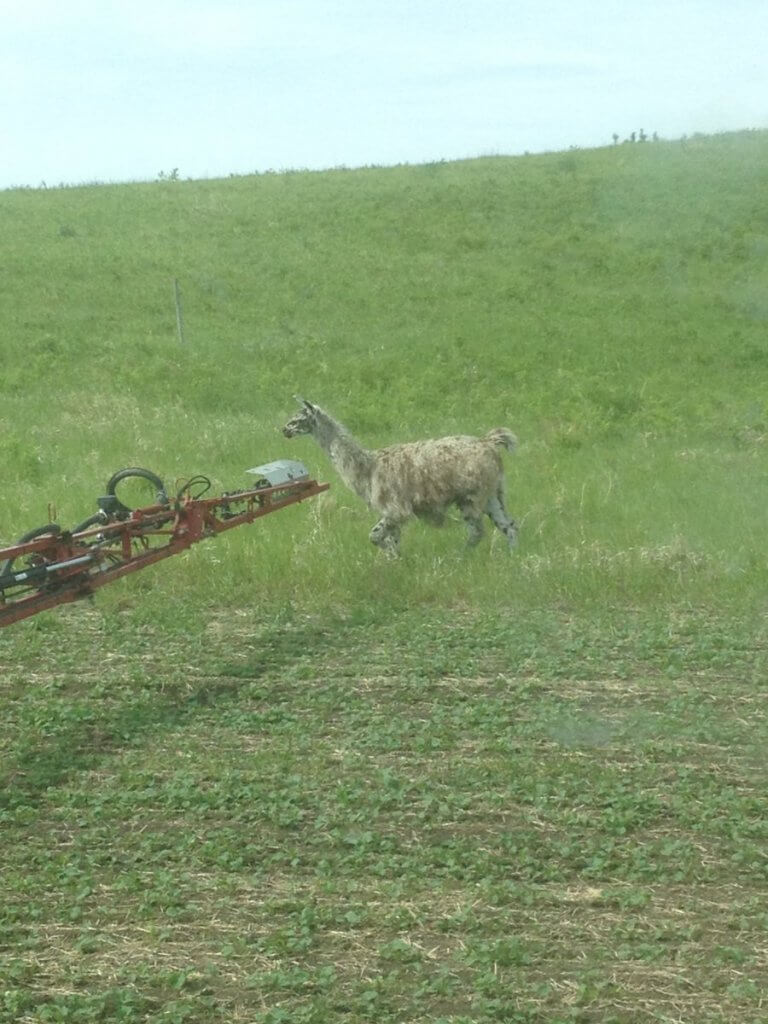
    Llama in the hills of south-central Manitoba.

    (Photo credit Lucas Millar)

    @Jeremycnobel:
    Hit a gopher in head with a foam cup as he came out of his hole.
    Ended with Blue dye foam ?

    @Spray_Guy:
    That’s one way to mark your A-B line. Trying to think of a #caddyshack joke…

    And that’s the thread. So look up from your smart phones occasionally while you’re spraying. It seems there are all kinds of unexpected obstacles in the field.

  • Sprayer Top Tips – The Twitterverse has Spoken

    Sprayer Top Tips – The Twitterverse has Spoken

    In June, 2016 (back when Twitter was fun), someone tweeted a clever tip for sprayer operators. It got the usual round of likes and retweets, but it also inspired an idea. We decided to have a two week-long competition for the best North American tip under the hashtag #SprayerTopTips. The winner would receive a WeatherFlow windmeter. Shortly thereafter, Graham Smith (@retrofitparts) of RetroFit Parts generously volunteered a weather meter for the best UK submission.

    2016_sprayertoptips

    After two weeks, we received 43 Sprayer Top Tips. Some of the submissions were best practices, some were equipment tweaks and some were downright funny. Thanks to everyone that shared their ideas, practices and sense of humour. Since Twitter limits a tweet to 140 characters, we took the liberty of interpreting a few of the tweets to ensure everyone understands the content.

    Let’s be clear – we’re not endorsing any of the brands or practices here. There are some great ideas, but give it some thought if you’re thinking of adopting any of them. And so, in no particular order, here are the submissions for the 2016 #SprayerTopTips competition:

    ‏@a4nick  – Any smartphone with apps weather, windspeed, calculator, camera, set up guides and Twitter <to access the> global knowledge of operators.

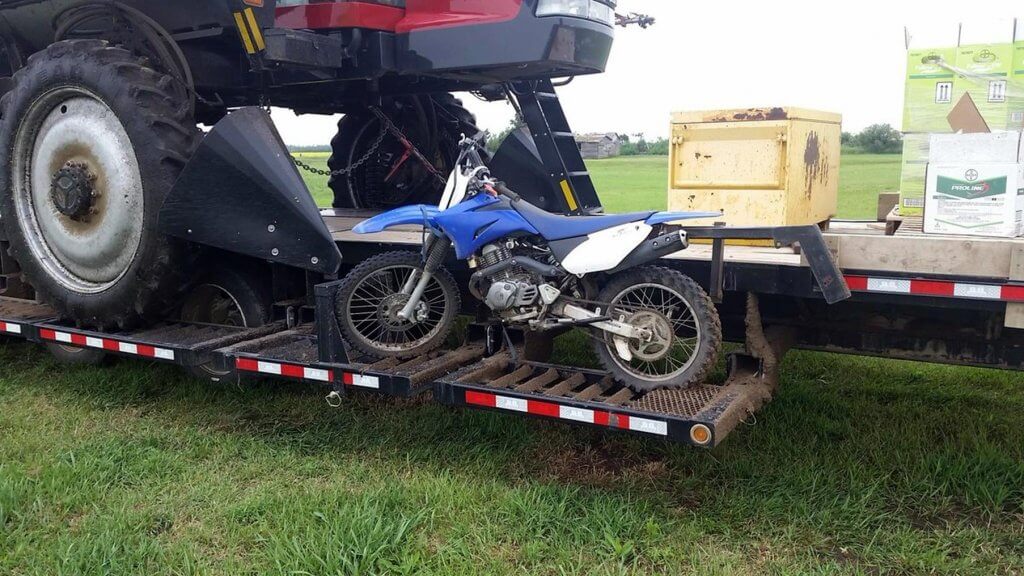
    @Camcar_Ent – Put the dirt bike on the trailer to allow it to be moved where the sprayer will need a fill.

    Camcar_ent

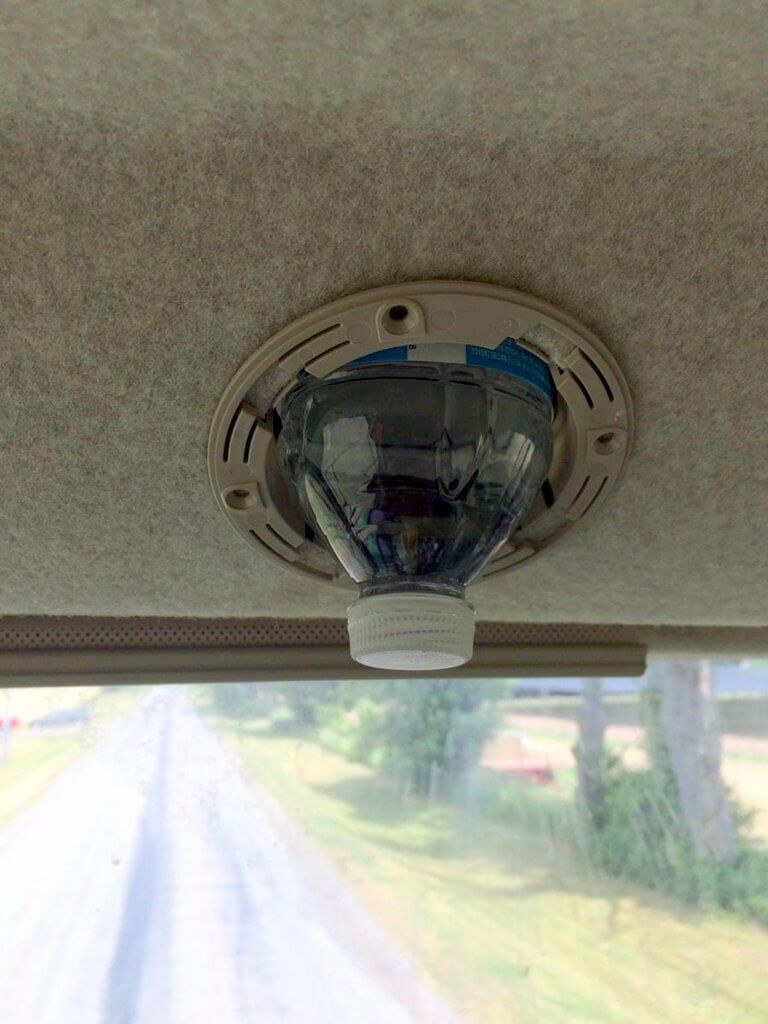
    @Paulvdb2016 – Finally found the water cooler in the John Deere R series cab!

    Paulvdb2016_2

    @Paulvdb2016 – Everybody breaks a few nozzle bodies each year! Save the turret part to organize your extra nozzles (WIND METER WINNER)

    Paulvdb2016_1

    @LeightonBlashko – If your water/handler pump runs out of gas while spiking jugs, backflow will likely contaminate water tank. Keep fueled up!

    @fortkampnathan – Add <an> electric valve to <the> mix system to keep solution agitated when spraying, and shut off when tank is near empty. Total cleanout.

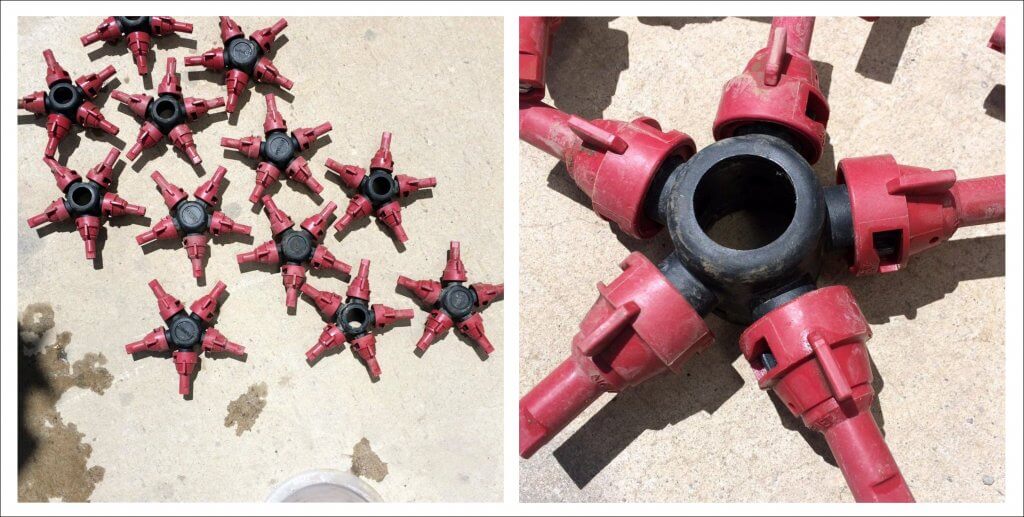
    @fortkampnathan – Valves on boom <section> ends to flush residue and prevent buildup in caps. Split <the> inductor and fill line to add <conditioner> with <the water>.

    @twistedironfarm – Flush booms with water at night when shutting down to prevent residue buildup. Even if using same product the next day.

    1tonyharding

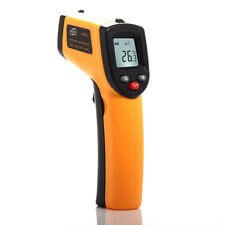
    @landon707 – Don’t forget to feel the hubs to make sure you don’t have <one> hot one (HONOURABLE MENTION)

    This got a reply from @1TonyHarding – One of these <see temperature gun image> is even better. Only ~10°C between a good and bad wheel motor on a Nitro <sprayer>.

    ‏@apple_grain – Talk to landlords before spraying. Some don’t understand what you are doing and why. A short chat can relieve a lot of anxiety.

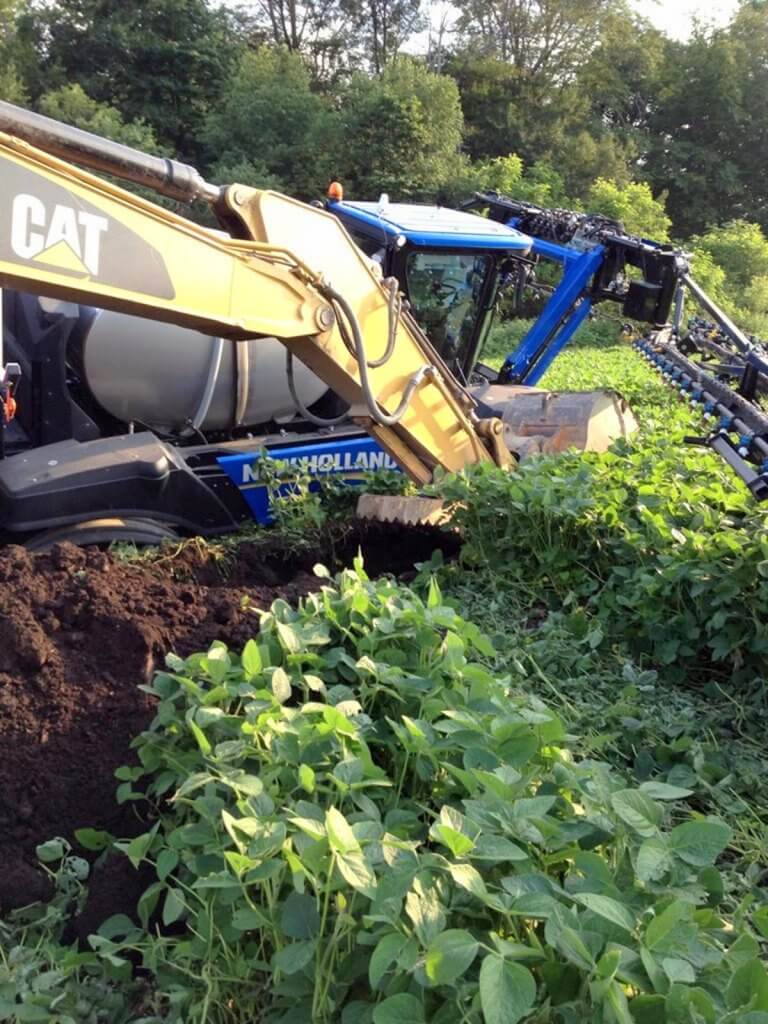
    @rmmathesonfarms – Stay out of the muck, it really is a buzzkill on productivity!

    rmmathesonfarms

    @T77HAM – Always organize a family day out when you want to go spraying to guarantee perfect spraying conditions.

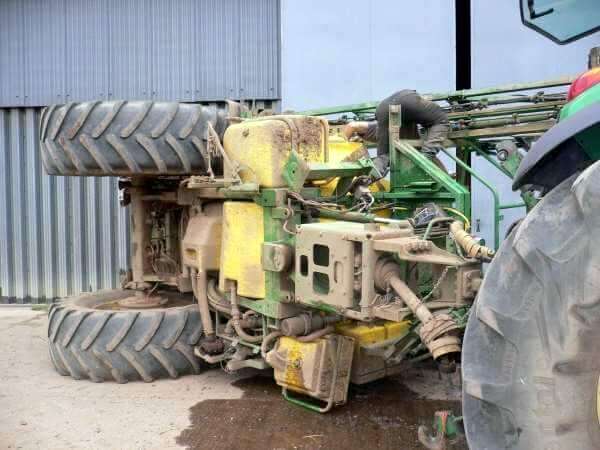
    ‏‏@T77HAM – Make sure everything it greased well… putting it on its side <is> easier than scrambling underneath.

    T77ham

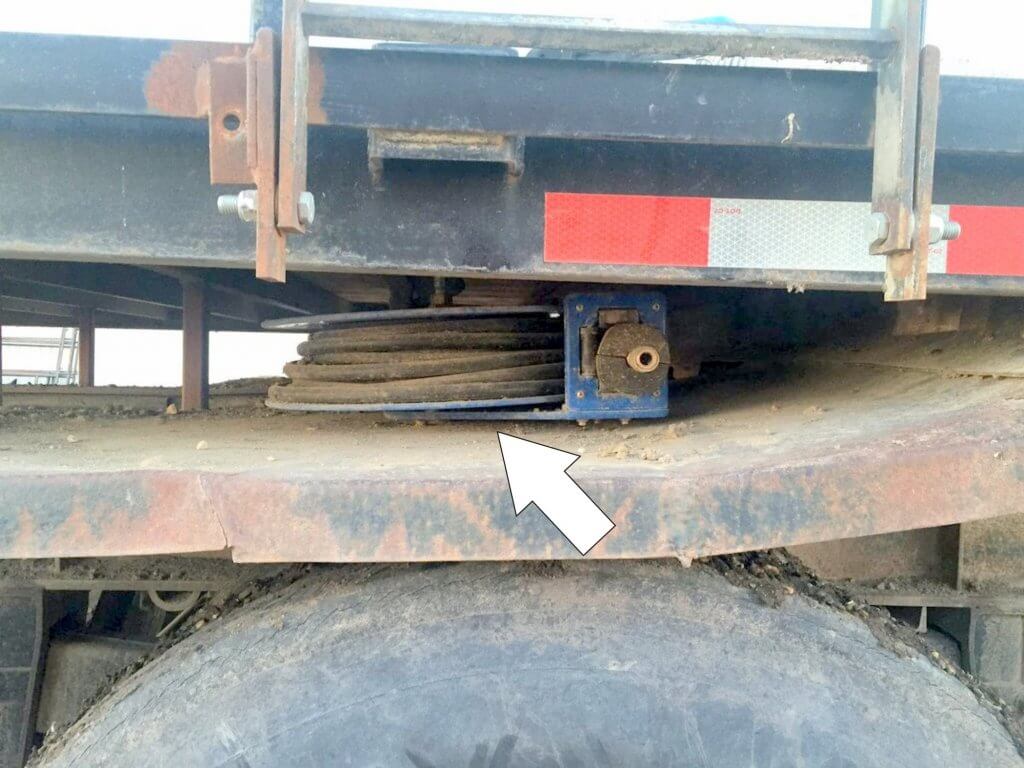
    @GlenHanks – Air reel mounted on water trailer. #no blowback

    Glenhanks

    @cfsdennis – Check <that> all wheels are on! <Editor’s note – This wasn’t just a photo lifted from the internet – this was his experience!>

    Cfsdennis

    @FreyTodd – It never hurts to double check that the field you are spraying is, in fact, all <RoundUp Ready> <More info here>

    FreyTodd

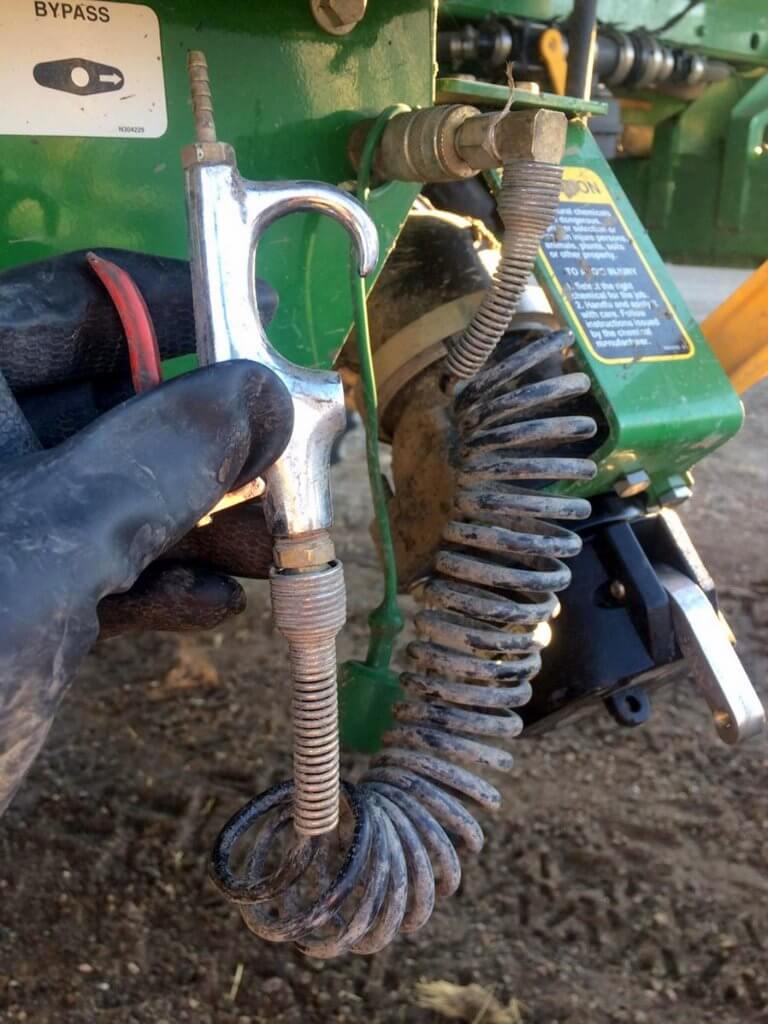
    @EnnsFarmsRuss – Small blow gun tied into sprayer air system makes cleaning nozzles a breeze (WIND METER WINNER)

    EnnsFarmsRuss_2

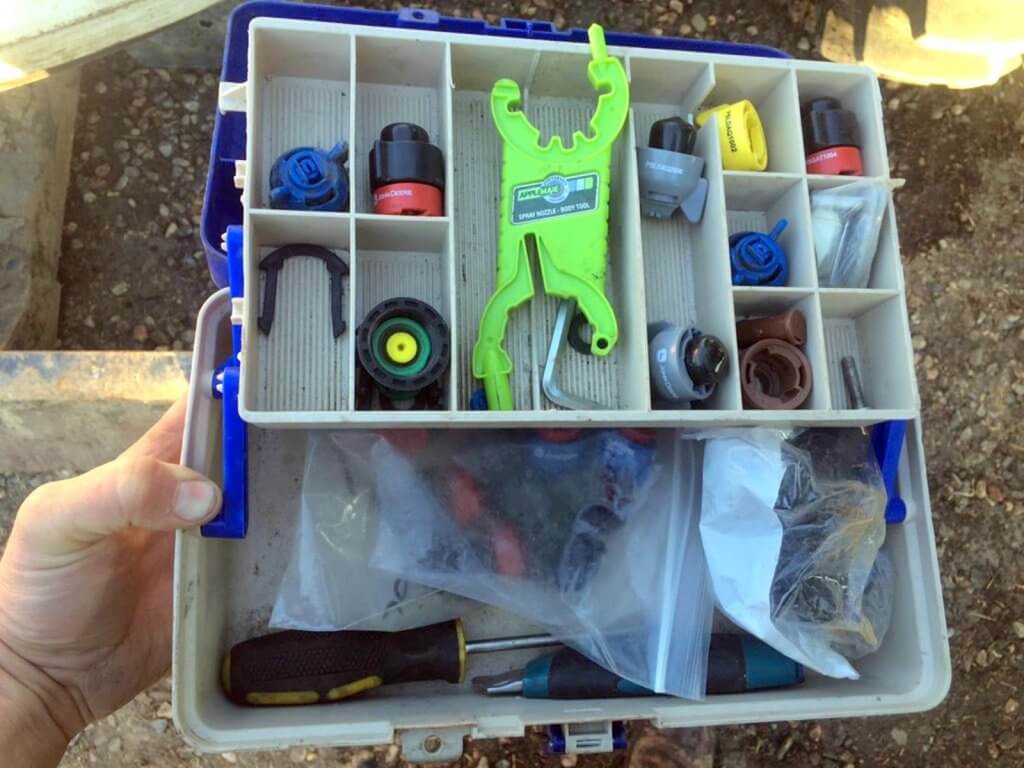
    @EnnsFarmsRuss – A tackle box is great for keeping spare nozzles and parts and tools organized.

    EnnsFarmsRuss

    This got a reply from @thecropdoctor – Neater than my plastic ice cream tubs!

    @thecropdoctor – Record headland sizes as well as landwork areas so if <you are> patch spraying, data is available.

    @konopelskifarms – I spray #ReglonIon @ 20USgal/ac 6MPH 50PSI in evenings – awesome results!

    @konopelskifarms – I spray Liberty at 20 US gal/ac. Great results including less bronzing. Lots of fills, but oh well.

    This got two replies from ‏@skellerfarms  – We upped our water volume for Liberty from 10 to 13gpa, have fewer escapes now. More water is always the answer. <and> More water (10-13gpa) and slower speeds (<13mph) means better coverage and less drift.

    @skellerfarms – Getting “too windy” but need to spray? Up <the> water volume by 3-5gpa and slow to a speed near your minimum effective pressure.

    @landon707  – Eye/hand wash stations on sprayer and tender. We have a garden hose on tender for cleaning filters. <More info here>

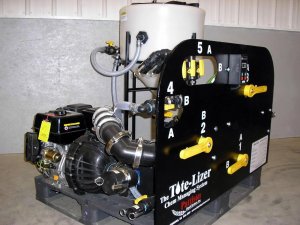
    @LegueeFarms – Pattison Totalizer – loads our R4045 in 7-8 min without hot loading.

    LegueeFarms

    ‏@ONspraysafety – If you can see the maple leaf in the <Canadian> flag, it is too windy to spray!

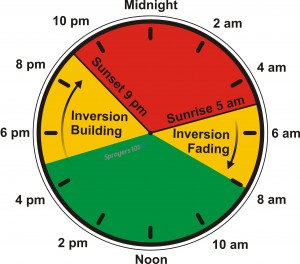
    @ONspraysafety – If you hear sounds from far away on a calm morning, beware of a temperature inversion. <More info here>.

    Inversions occur to some extent every day. It’s the intense and prolonged inversions we want to be especially aware of. On this hypothetical 24 hour clock, we see the inversion fades in the morning and grows in intensity through the evening. Do you spray in the morning or at night? Be mindful or pollinating insects, but when there’s a strong inversion, consider night/morning spraying over evening/night.

    @WheatlanderJay – Use a 1,000 L tote with <the> top cut off for used jugs. We recycle all boxes so they never leave the shed.

    @WheatlanderJay – The four R’s of spraying stewardship: Right Product, Right Rate, Right Staging, Right Application. #dontsprayandpray

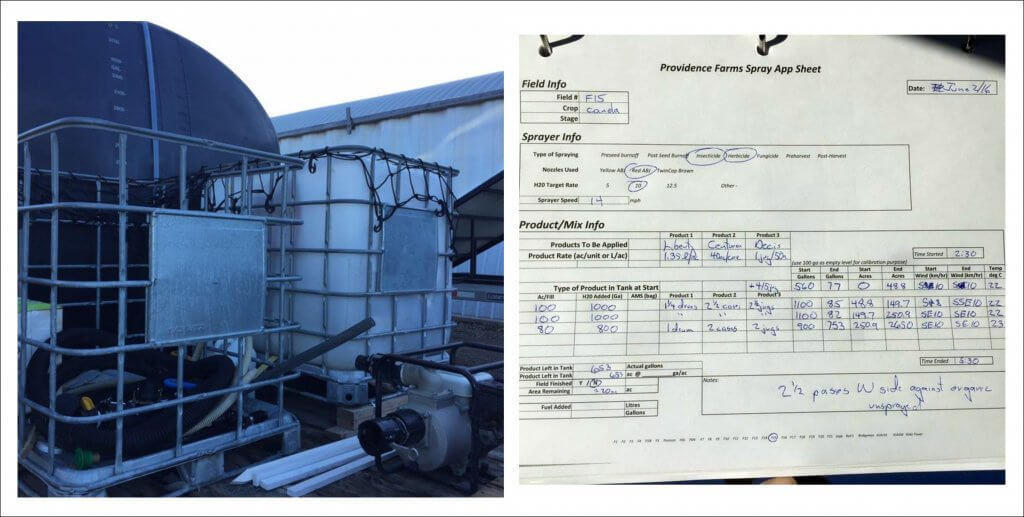
    @RonKrahn – 1,000L tote cages <with> nets for <storage> boxes <left image>. Use a spray record sheet to keep track of fills and <environment> <right image>.

    RonKrahn

    @redwoodacres – Plumb line directly into tank for pumping in bulk chemicals. <This> keeps big hoses chemical free.

    @redwoodacres – Install fresh water connection for eductor/handler rinse water <with anti-backflow>. Cleaner jugs = less exposure.

    @KeatingSeed -Keep a good custom operator on speed dial.

    @GavinHowley – <Install a> float valve in tender tank, hook up hose, go home for <image of a few frosty beers>.

    ‏@DarylTuck – When spraying at 15 MPH and spray drift starts to pass the sprayer, it’s nap time!

    @ehrinf – Reload, reload, reload? Cut that time to a minute and concentrate on spraying. <More info here>.

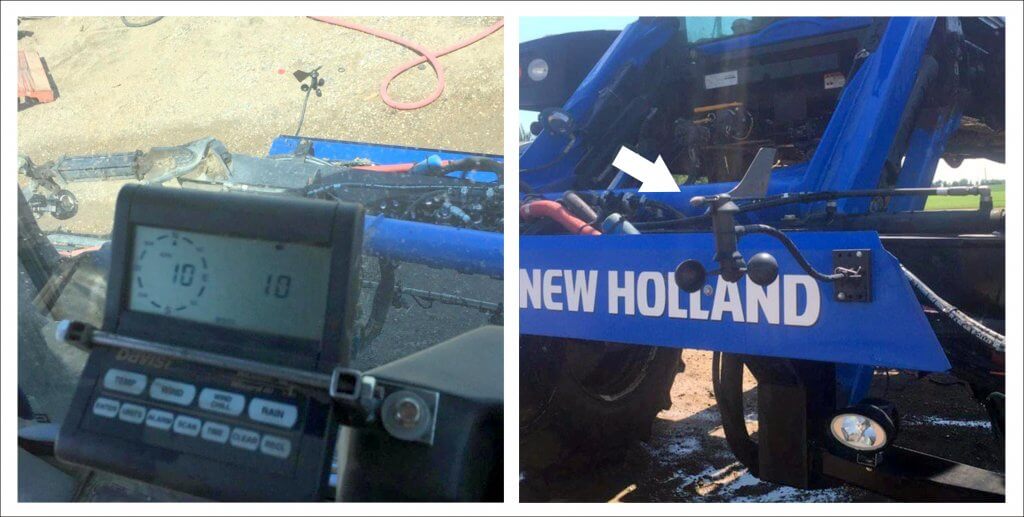
    @BlackwellBrad – Re-purpose your old Davis weather station. Know wind speed and direction.

    BlackwellBrad

    @a4nick – Mobile phone weather apps – very handy.

    Thanks to everyone that shared. Maybe we’ll do it again in 2017!

  • Lessons Learned from the Top 5 Field Sprayer Articles of 2015

    Lessons Learned from the Top 5 Field Sprayer Articles of 2015

    When Jason and I launched the Sprayers101 website in June, I wasn’t sure what to expect. Seven short months and 150 posts later, we’re stoked to have had such a great response.  About 70,000 page views.  17,000 users.  Of the over 100 countries that have visited, Canada, the US, Russia, Australia, and the UK are the top 5.  Jason provided some great background to the venture in his recap of the top horticulture posts.  I owe him a debt of gratitude for leading this effort.

    It was a pleasant surprise that a very specific subject matter such as agricultural spraying could generate this level of response.  Without a single mention of the Kardashians!

    Here are the top five posts on field spraying for 2015:

    1. Agrifac Condor: A Wake-up Call for North American Sprayer Manufacturers? 3078 views. Prior to writing this article, I’d been watching this relatively new (to me) Dutch company for about one year.  I noticed that they thought big, and featured technologies that had benefits for applicators, like air-assist or twin-fluid nozzles, wide booms, and clever plumbing. On seeing the sprayer first-hand at Canada’s Outdoor Farm Show in Woodstock, I knew it was just what the industry needed.  A wake up call.
    2. Exploding Sprayer Myths Episode IV: Speed Spraying. 2211 views.  What is life without a bit of fun?  Writing and filming these episodes had us in stitches.  With generous support of Shaun Haney and the gang at RealAgriculture.com, we’re producing these in our spare time and with gifted resources.  A big thanks to Bern Tobin for being the videographer, director, and rough cut editor, and Jason Stroeve for the final editing, special effects, voice-overs and all those other things that go into it.  We hope to do more of these, resources permitting.
    1. A New Way to Purchase Sprayers. 1058 views. A friend recently reminded me that I used to urge producers to spend more money on sprayers. Well, the industry responded by making sprayers more expensive (you’re welcome), without actually improving our control over deposition uniformity, coverage, or drift.  So yes, people are spending more, but not the way I intended.  In the meantime, the innovations that matter, those on the spray boom – width, aerodynamics, recirculation, better sectional controls, droplet size and rate management – are still considered special options that are probably too expensive.  We’re still looking for the right balance here.
    1. Sprayer Tank Cleanout. 968 views. Cleaning a sprayer remains one of the top concerns of an applicator, actually the whole industry, and we’ve written about it several times.  But it wasn’t until we had a guest contributor, Katelyn Duncan, offer her views that we had any real success.  Katelyn is a Regina area farmer with her own blog and an interest in machinery.  She approached the issue from a practitioner’s perspective and this really resonated and generated a lot of discussion.
    1. Calculators and Tables. While no single table or calculator broke into our top 5, collectively they did and this is worth mentioning.  Much of spraying is mathematical, from rate calculations, to calibrations and nozzle size selection, travel speed ranges and so forth.  Despite living in an age of connectivity and touch screens, a laminated table in the sprayer cab is often worth its weight in gold.

    So what are the lessons?

    For one, we showed that a dedicated website for just one aspect of a farming operation seems to be in demand.  That should encourage those specializing in seeding or harvesting techniques, commodities, fertility.  Where are those sites?

    People seem to want alternative, independent views, sometimes voiced as controversial opinions. Much of our media is controlled by corporate interests with soft-sell implications.  Yes, it’s interesting and valuable information.  But a reality check, whether it comes from an independent researcher or a new entry from the corporate world, is still needed.

    Alternative formats for information are important.  Not everyone learns by reading articles or deciphering charts. By offering a bit of entertainment, we can reach new clients or demographics that we’d otherwise leave behind.  Plus, for Jason and I, the opportunity to be creative is probably the single most important thing about Sprayers101 that keeps us going.

    Lastly, we are so pleased to have guest contributors on our site.  Anyone can contribute – just drop us a note.  I think it’s important to hear different viewpoints, and learn from each other.  That’s one of the great things about agriculture – the willingness to share information.  Any applicators out there who want to describe an aspect of their operation, from innovations in how they fill faster, to their experience with boom lights or cameras, to their thoughts on boom height controllers or PWM, we’d love to hear from you.

    Thanks everyone for supporting Sprayers101.com!

  • Top Five Tips for the Spray Season

    Top Five Tips for the Spray Season

    This article was originally written by @nozzle_guy as a guest blog for Farm At Hand, and is reproduced with permission.

    Spray season is here, but are you ready?  Here are 5 tricks to give you a productivity edge.

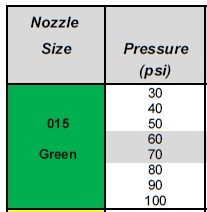
    1. Choose a spray pressure in the middle of your nozzle’s operating range.  All spray nozzles have a range of pressures throughout which the manufacturer believes the spray pattern is acceptable.  We’ve come to assume that the correct spray pressure for a nozzle is about 40 psi, largely because of tradition.  In fact, 40 psi is merely the mid-point of a traditional nozzle’s pressure range, between 20 and 60 psi.  Modern air-induced nozzles have much higher and wider pressure ranges, usually from 30 to 100 psi.  The new middle ground is about 70 psi.
    For this nozzle, the manufacturer recommends pressures from 30 to 100 psi. The middle ground is 60 to 70, allowing travel speed flexibility

    Why so high?  There are two reasons.

    • Air-induced tips perform optimally at higher pressures, and remain lower drift than conventional nozzles even at those pressures.
    • Travel speed range.  As a sprayer changes speed, the spray pressure is automatically adjusted to maintain a constant application volume.  Even a small reduction in speed, due to changes in terrain, for example, can put the spray pressure too low for good nozzle operation.  A nozzle that is sized for a higher average operating pressure will permit a reduction in speed without a nozzle performance penalty at lower speeds.
    1. Measure your boom’s pressure drop and add this value to your target operating pressure. All sprayers experience a drop in pressure as the solution moves further away from the pump.  This is due to friction caused by a number of factors, including length of tubing, elbows, valves, screens, and other flow obstructions.  The pressure transducer that reports pressure to the cab is usually located between the pump and the manifold that divides the spray into the various boom sections.  After this point, the spray liquid experiences those additional restrictions, and pressure at the nozzle will therefore be lower than the cab reading indicates.
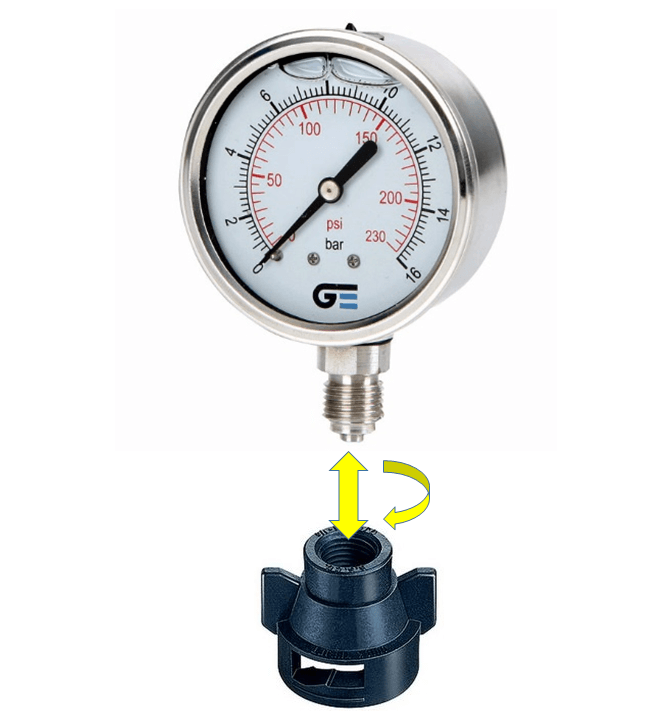
    By adapting a pressure gauge to a nozzle cap, boom pressure can be measured directly

    The nozzle pressure can be measured with a gauge placed on a nozzle body.  Simply purchase a gauge and a threaded nozzle cap, combine the two and install in place of a nozzle.  Operate the sprayer and read this pressure, comparing it to the pressure in the cab.  The difference between the two is the pressure drop.  Do this for your lowest, as well as your highest expected flow rates.  Higher flow rates cause greater pressure drops.  If you want to spray at 60 psi and your pressure drop is 10 psi, then the cab pressure should read 70 psi.

    1. Install a clean water tank and wash-down nozzle on your sprayer. One of the more time-consuming aspects of a spray operation is cleaning the sprayer when you switch products.  The quickest way to clean a sprayer starts with accurately calculating your last tank needs, and spraying any remainder (if you’ve done your math, this will be small) out in the field.  Depending on the product, overspraying the crop a second time can be an option, simply reduce the application rate to prevent doubling the dose.
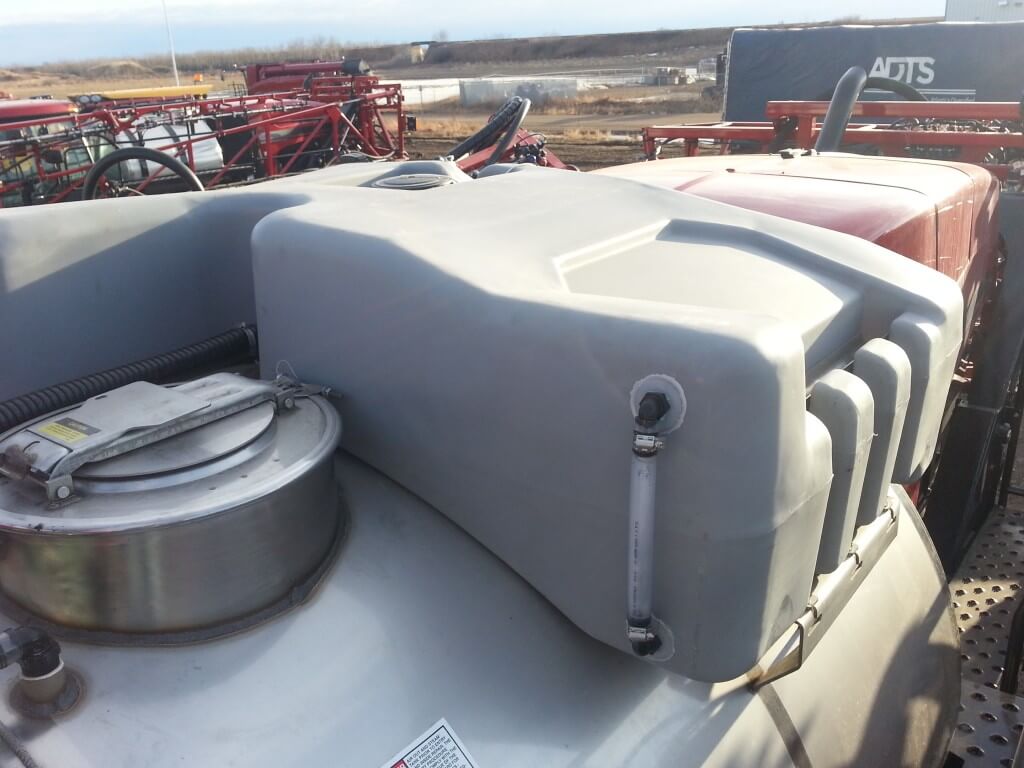
    On-board clean water tanks save time

    When the spray tank is empty, introduce clean water from your clean water tank through the wash-down nozzle, allow to mix with remaining spray in plumbing (make sure agitation is on) and spray out.  The spray mixture will quickly become increasingly dilute and flush through all sprayer parts that contained the product.  The clean water tank can contain a cleaning adjuvant such as ammonia or a detergent depending on the properties of the product to be removed. After the sprayer is cleaned, stop and inspect all screens to ensure there are no pockets of residue.

    1. Obtain a faster transfer system and strive to load faster. Most sprayer refills can take longer than planned, and before you know it, 15 or more minutes have passed.  That can be a significant portion of the total spray time, resulting in lost productivity.  By moving to a 3” transfer pump and plumbing, fills in 5 minutes are possible.  Care is required to ensure that products are properly mixed, and dry products may need to be hydrated in advance to prevent screen and nozzle plugging.
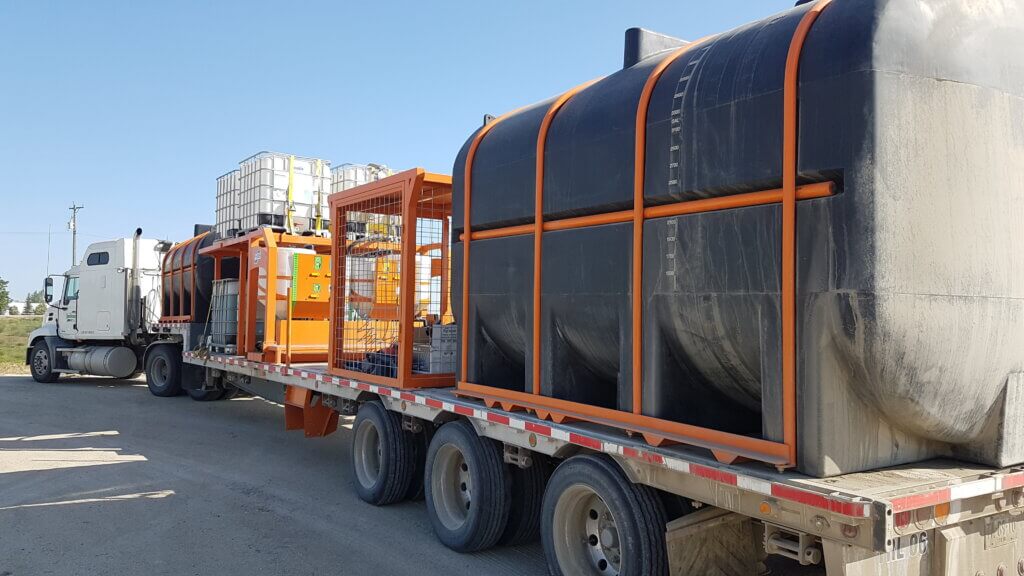
    A good tender system may be the most important productivity component in your spray operation

    The fastest operators have a capable person on the tender truck, and have the tender truck move to the sprayer at the field edge, not the other way.  Front fill attachments save further time.  Think of it like a Nascar pit stop, and watch productivity increase.

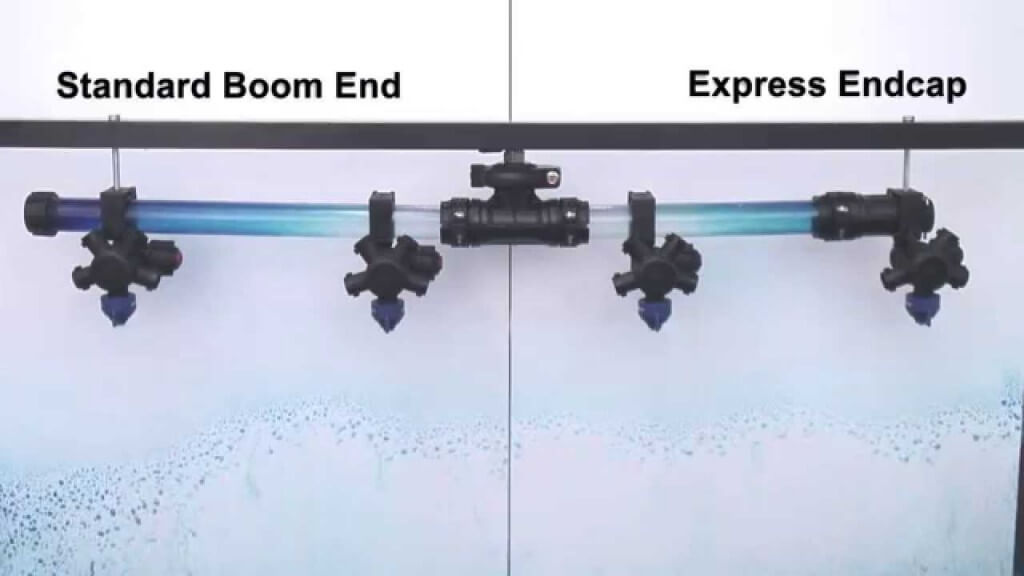
    1. Say goodbye to boom end valves. Traditional 1” wet boom sections have a “boom end” that is capped about 4 to 6” beyond the last nozzle body.  The boom end is a dead end, and any pesticide mixture that ends up there, as well as any air in the boom, is virtually impossible to remove.
    The Hypro Express End Cap system prevents boom ends from retaining spray mix.

    Two problems result:

    • Boom end residues can cause contamination.
    • The air in a boom acts as a bladder, preventing diaphragm check valves from shutting nozzles off until enough liquid has left the boom to reduce the bladder pressure.

    The most common way to remedy this is to install valves at each boom end, flushing the air and contamination out.  But this has to be repeated twice for each boom section, which can number anywhere from 5 to 11 per boom.  A product called the Hypro Express Nozzle Body End Cap automates the process.  The end cap has a novel design that eliminates the dead reservoir and bleeds air from the boom continuously during normal operation.  The result is easier sprayer cleaning and better shutoff responsiveness.

    Spraying is an important operation, and timing is critical.  Small changes in productivity can add up, preventing problems and getting more acres treated each day.