Basic Sprayer Math Demystified

Sprayer math can be intimidating, but the effort gives solid value. When combined with a calibrated sprayer you reap the following benefits: There are many ways to perform sprayer math, and you need only look to local pesticide safety courses, industrial catalogues, and extension resource centres for examples. If you’re already comfortable with your current method, don’t […]

Read More… from Basic Sprayer Math Demystified

Nitrogen Application Technology in Winter Wheat

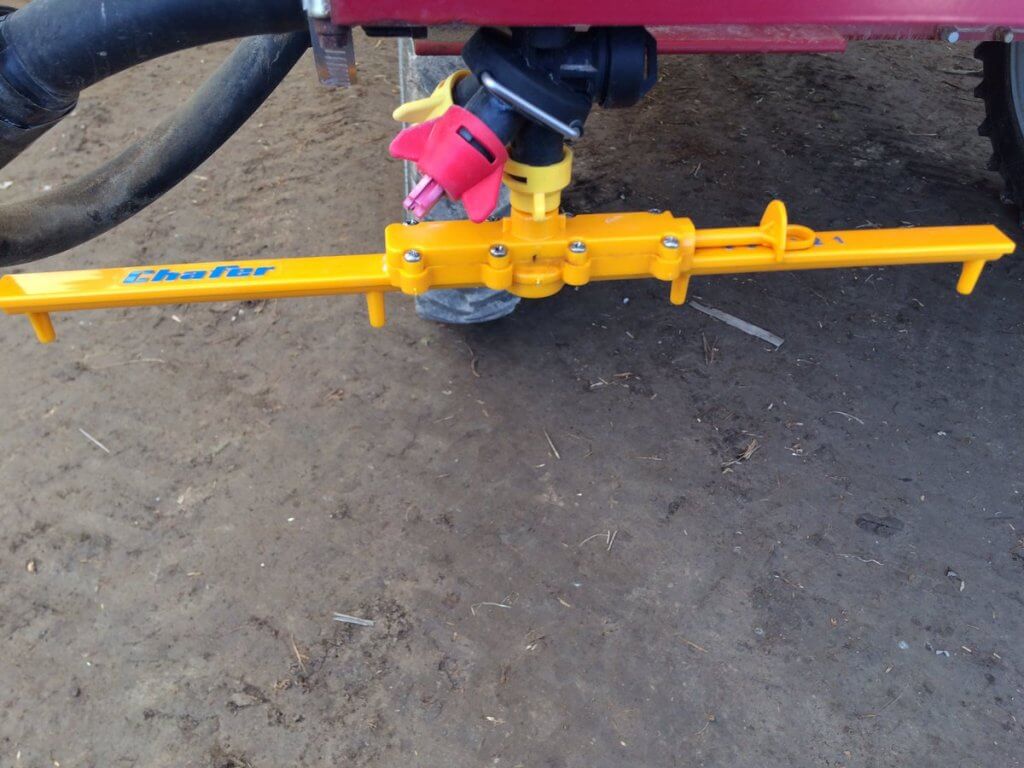
With an ever growing selection of options for nozzles and streamer bars, many growers are asking the question, what should I outfit my sprayer with for winter wheat liquid fertilizer applications? Well, it depends on what are you trying to accomplish. If the goal is to push your winter wheat management and improve yields, then […]

Read More… from Nitrogen Application Technology in Winter Wheat

What’s a Ramsay Valve?

This article has been modified with kind permission from an article on Retrofit Parts. Liquid pressure in an agricultural sprayer must be controlled so as to apply the correct volume of spray per hectare. For sprayers that use positive-displacement pumps driven by the tractor’s power take-off, higher flow rates are produced than are actually required. […]

Read More… from What’s a Ramsay Valve?

Exploring Spray Drones in Soybean

White mould is caused by the fungus Sclerotinia sclerotiorum and it’s an annual threat to soybean when cool, wet conditions correspond with flowering. Variety selection (e.g. high tolerance) and cultural control (e.g. crop rotation and wider row width) are important management tools, but ultimately the application of a crop protection product between R1 and R2 […]

Read More… from Exploring Spray Drones in Soybean

How to Succeed with a Soil Drench Application in Strawberries

The soil probe. See how far water infiltrates soil by taking core samples.

In 2016, Ontario berry growers were surveyed to determine the typical spray volume they used to apply unspecified crop protection products. For strawberry growers (day-neutral and June-bearing), the results spanned 50 to 1,000 L/ha (~5 gpa to ~100 gpa). In an earlier survey (2013), respondents specified 250 to 650 L/ha (~26.5 to 70 gpa) for […]

Read More… from How to Succeed with a Soil Drench Application in Strawberries