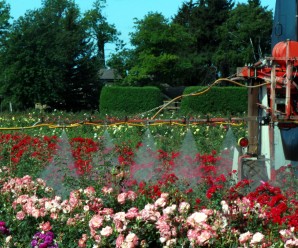
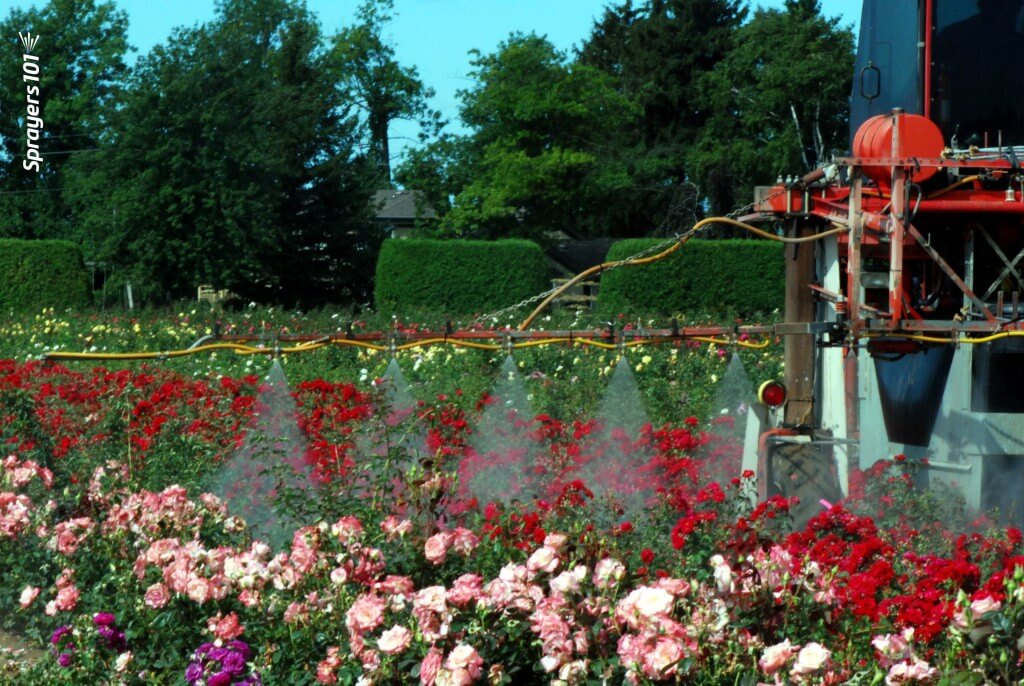
We always admire the photos of sprayers in tulips produced by the Netherlands. Rose protection in Ontario is equally beautiful.
Nursery growers apply pesticides to a diverse range of plant species. In a perfect world, sprayer operators would adjust their sprayer set-up to match each crop, but this is rarely done because of time constraints and a lack of guidance. Adjustments in product rate and spray distribution should reflect the plant size, row spacing and developmental stage of the crop and pest. Any such adjustments should be performed using a reference point for coverage and a strong history of efficacy.
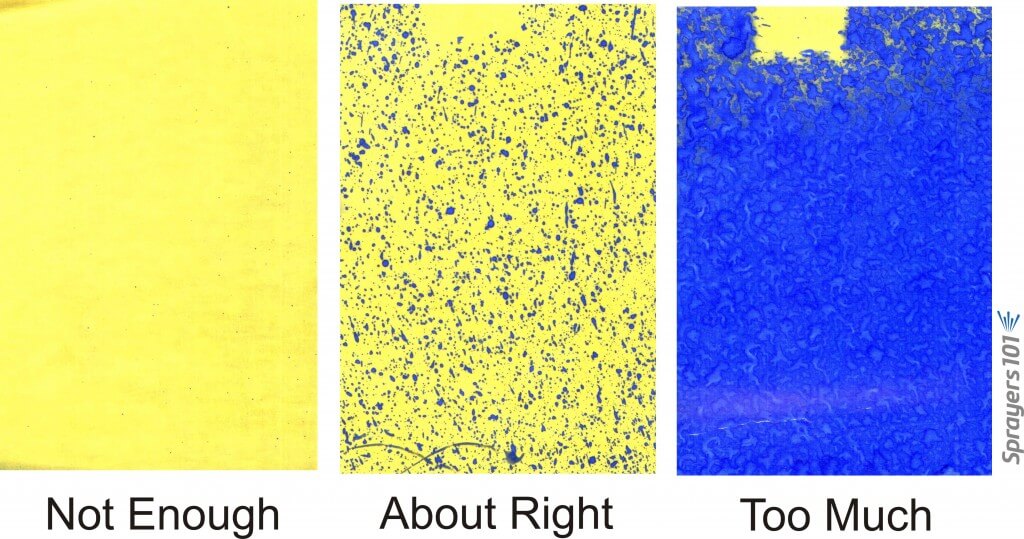
To demonstrate the value of sprayer optimization, we marked out three, 65m x 6.5m blocks in a field of roses. One block was an untreated control. One block was the grower’s traditional set up of hollow cones (D4D45) on 50 cm centres at 300 psi and 3.0 mph (841 L/ha). The third block was the experimental condition where we used an optimized set up of hollow cones (D3D45) on 50 cm centres at 150 psi and 3.0 mph (388 L/ha). We validated this condition using an iterative process to dial in the coverage indicated by water-sensitive paper.
Setting up water-sensitive papers in the rose blocks.Rule-of-thumb fungicide coverage on water-sensitive paper.
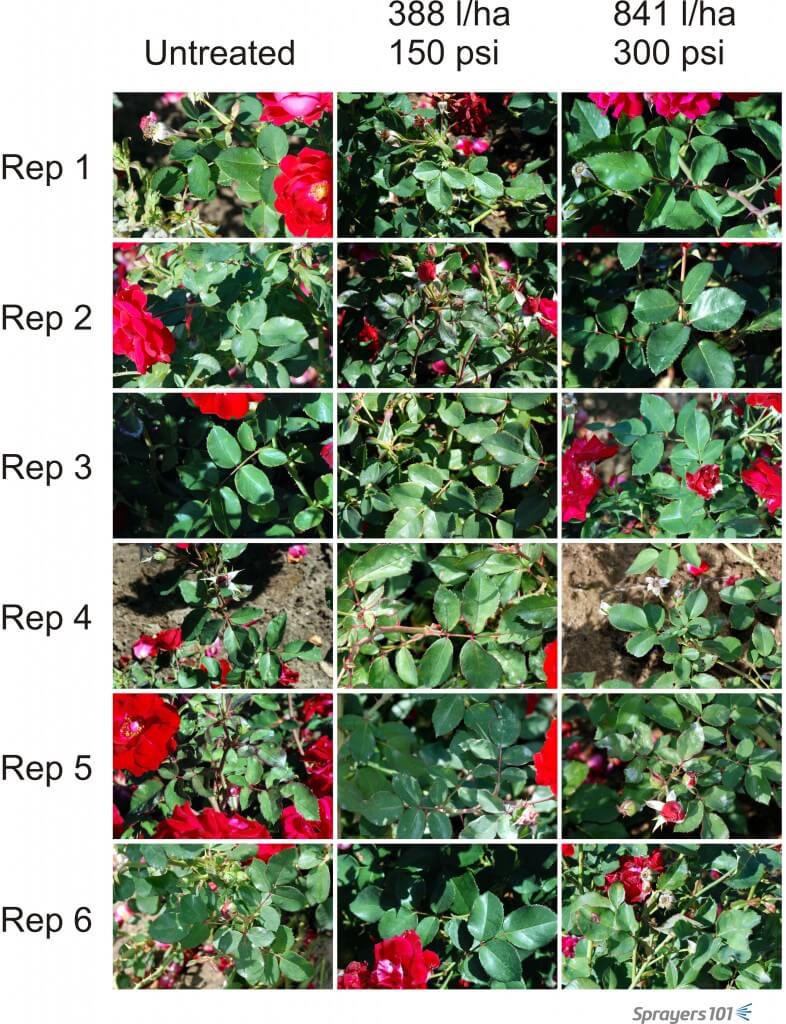
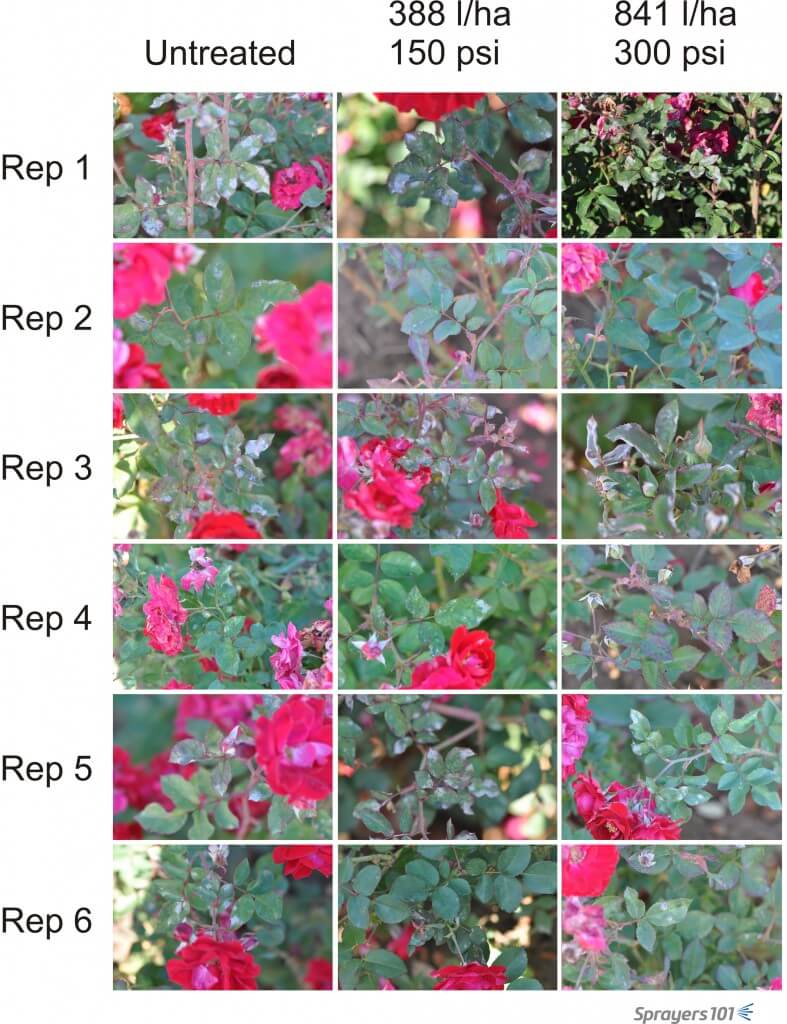
One application of Folpet + Nova was made on Sep 19, 2011. Roses were photographed before and after the treatment. The photographs were digitized and the amount of powdery mildew appearing on the upper surfaces was determined as a percent of the total visible leaf area. Six replications were randomly selected from each block.
Visual record of randomly selected roses prior to treatment (September 9).Visual record of randomly selected roses immediately following treatment (September 20).
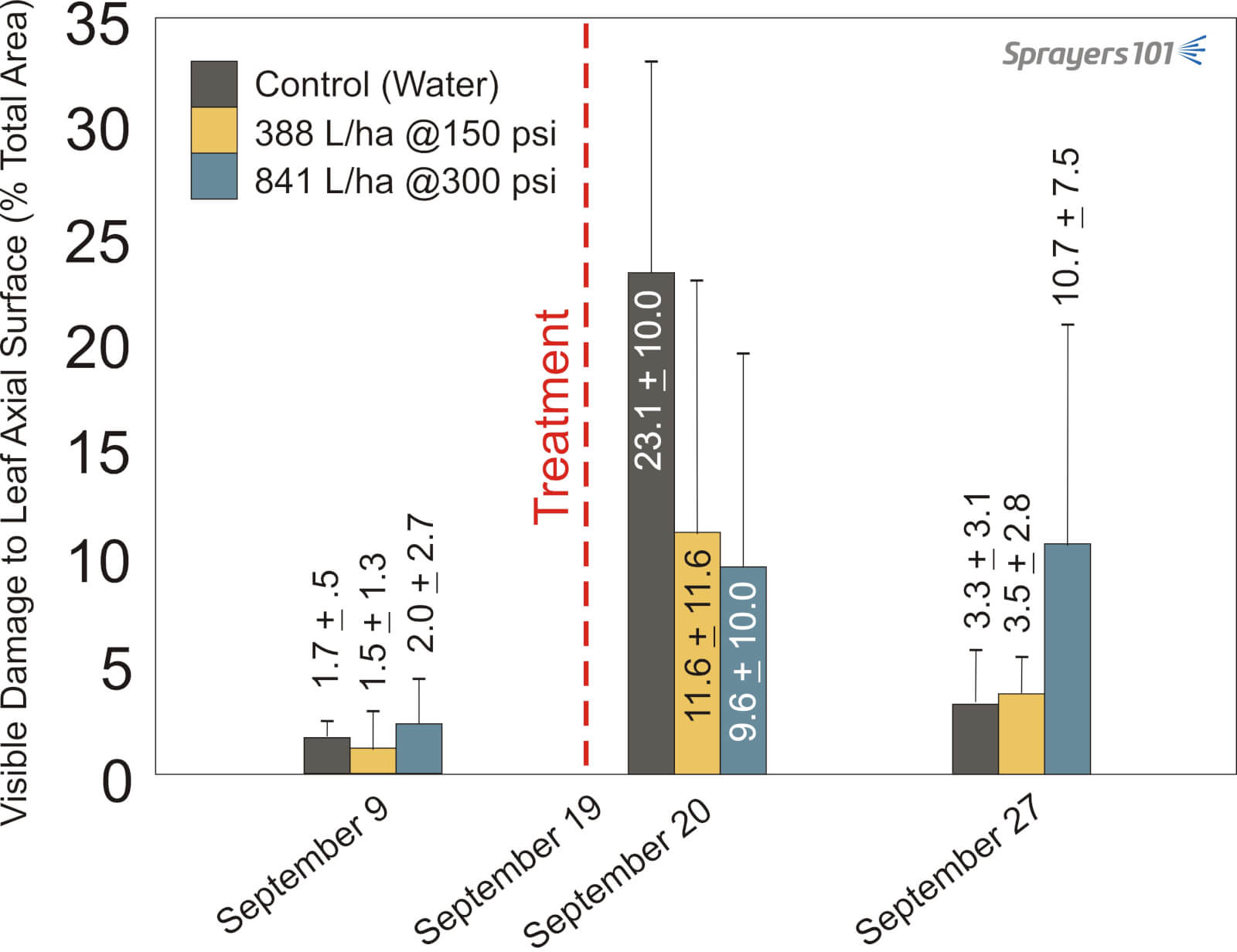
There was no significant difference in the amount of mildew presented in the two sprayed blocks one day after the application (September 20). Eight days after application (September 27), there appeared to be better control in the optimized sprayer set up condition versus the grower’s standard set up. The large standard error bars in the grower’s condition made this statistically insignificant. It is unclear why the untreated block presented with the least visual mildew at this point. This preliminary work demonstrates the value of customized application settings and their potential to conserve pesticide, water, and fuel without compromising pesticide efficacy.
Results of optimizing sprayer set up on the visual occurrence of powdery mildew on rose leaves. Bars represent standard error of the mean. Unclear why control block presented less mildew on Sept 27.
The Ontario Farm Innovation Program and the grower co-operator are gratefully acknowledged for making this research possible.
The aesthetic value of ornamental plants requires a near-zero tolerance for insect pests, which cause up to 10% of crop losses per season. Controlling them with insecticides is a difficult proposition:
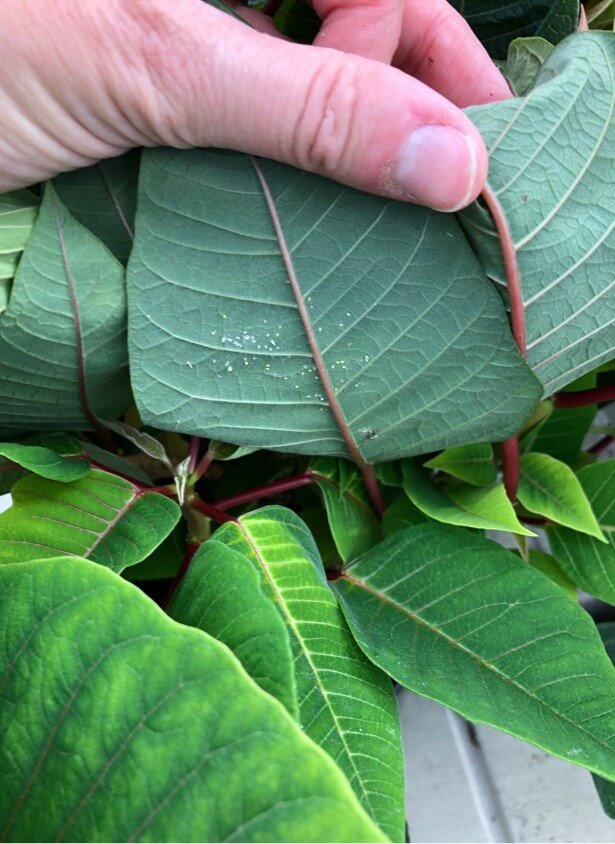
Key pests such as thrips, aphids and whiteflies tend to feed on the underside of leaves – a notoriously difficult surface to target because of it’s orientation relative to the spray nozzle (see image below).
Other pests, such as mealybugs, are found on stems. Stems are hard-to-wet plant surfaces because spray tends to run off. Further, as the plant canopy grows and densifies, these surfaces are buried deep inside, out of line-of-sight.
The insecticides available for closed environment spraying must be compatible with biological controls and are therefore “softer” chemistries. Examples include soaps, oils and entomopathogenic fungi. These products require contact with the pest and are at best translaminar, so coverage becomes critical for performance.
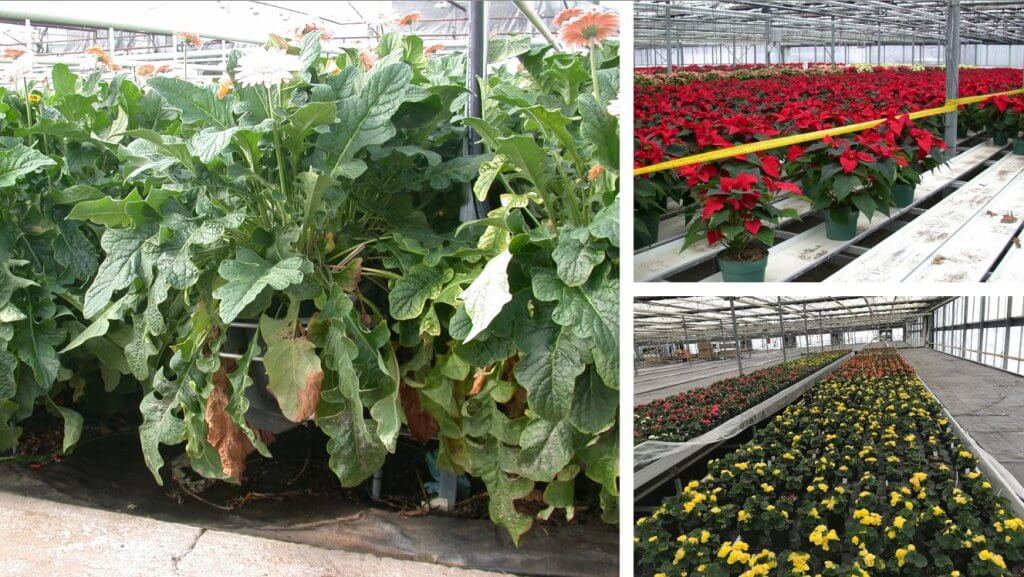
Whitefly on the abaxial laminar (under-leaf) surfaces of Poinsettia.
Spraying for Insects
The planting architectures and canopy morphologies are highly variable in ornamental greenhouses. Perhaps they are young plants with sparse canopies, densely packed in pots on raised tables. Perhaps they are mature, hanging plants with dense canopies. Perhaps they are something in between.
Crop canopy morphology and planting architecture are highly variable from operation to operation.
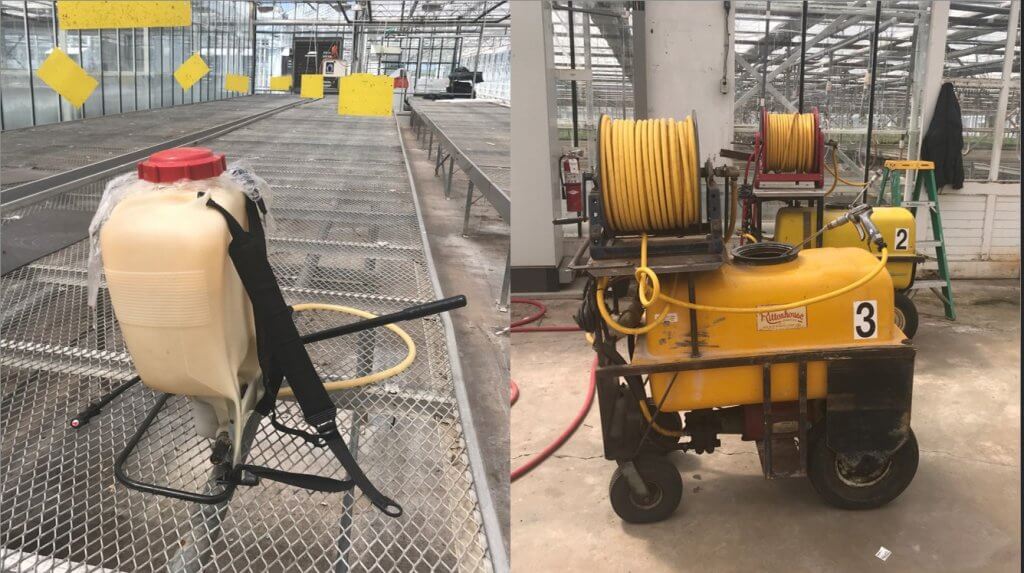
Ideally, each combination of canopy morphology, planting architecture, pest and chemistry would have a specific sprayer designed to optimize coverage and efficiency. This is economically unrealistic. Instead, many producers utilize technologies that rely on high water volumes and hydraulic pressures to “drench” targets indiscriminately. Others employ highly manual methods that allow the operator to aim the nozzle in relation to the canopy on a case-by-case basis, but still rely solely on water to distribute the insecticide.
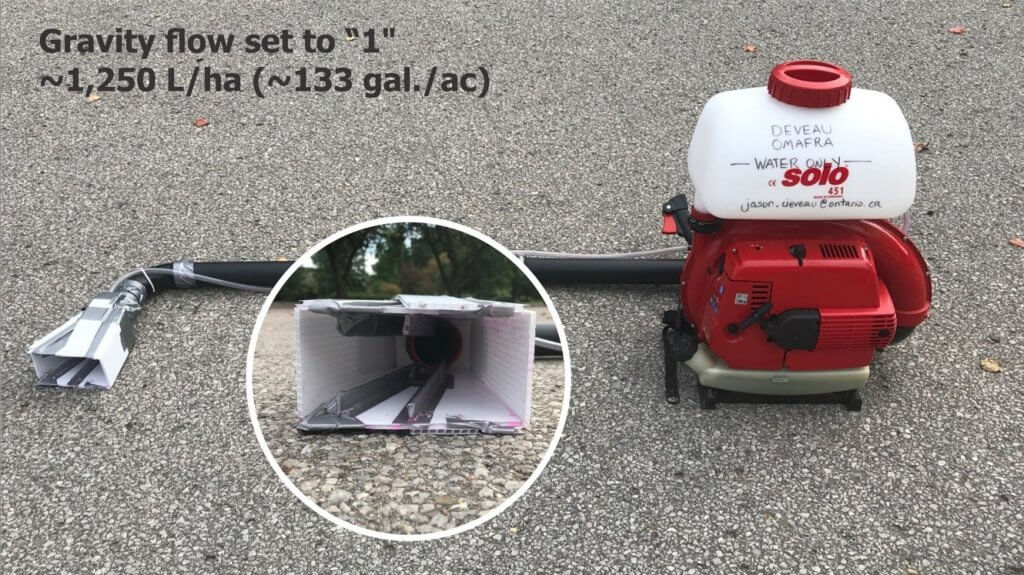
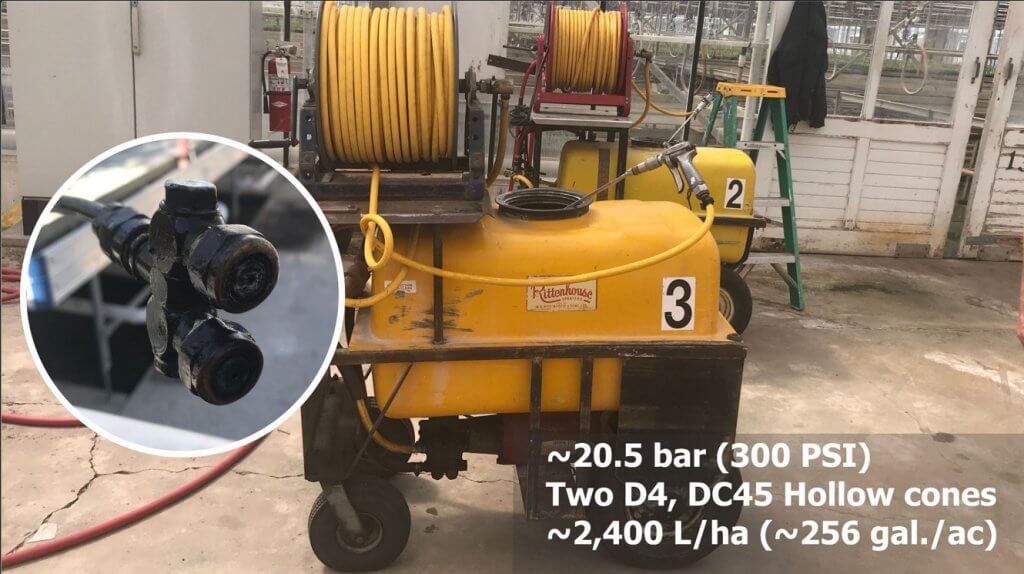
Typical application technologies in ornamental greenhouses. The backpack sprayer (left) with its manual pump is inexpensive and the operator can aim the nozzle more accurately. The trailed tank-and-handgun (right) utilizes higher hydraulic pressure and water volume in an attempt to improve the work rate. Both rely solely on water and hydraulic pressure to distribute spray.
These technologies have their place, but the reliance on hydraulic pressure and carrier volume has drawbacks:
High water volumes lead to higher humidity in closed environments which may favour disease.
The inevitable run-off creates waste water that may require treatment before leaving closed environments.
High carrier volumes dilute an already “soft” chemistry and hydraulic pressure doesn’t always improve canopy penetration or coverage uniformity.
Air-assisted spraying can be a viable alternative (and an improvement) over these approaches. Stationary or mobile, many ultra-low volume sprayers already employ air to capitalize on the mechanical advantage offered by smaller and more numerous droplets. Finer droplets have very little mass, so they must be directed and carried by air currents to get them to the target. Sufficient air energy will also displace the air within the target canopy and physically expose otherwise hidden plant surfaces to the spray.
The upshot is that air can partially replace water as a carrier and it has the potential to improve coverage uniformity throughout the target canopy.
Testing Air-Assisted Spraying
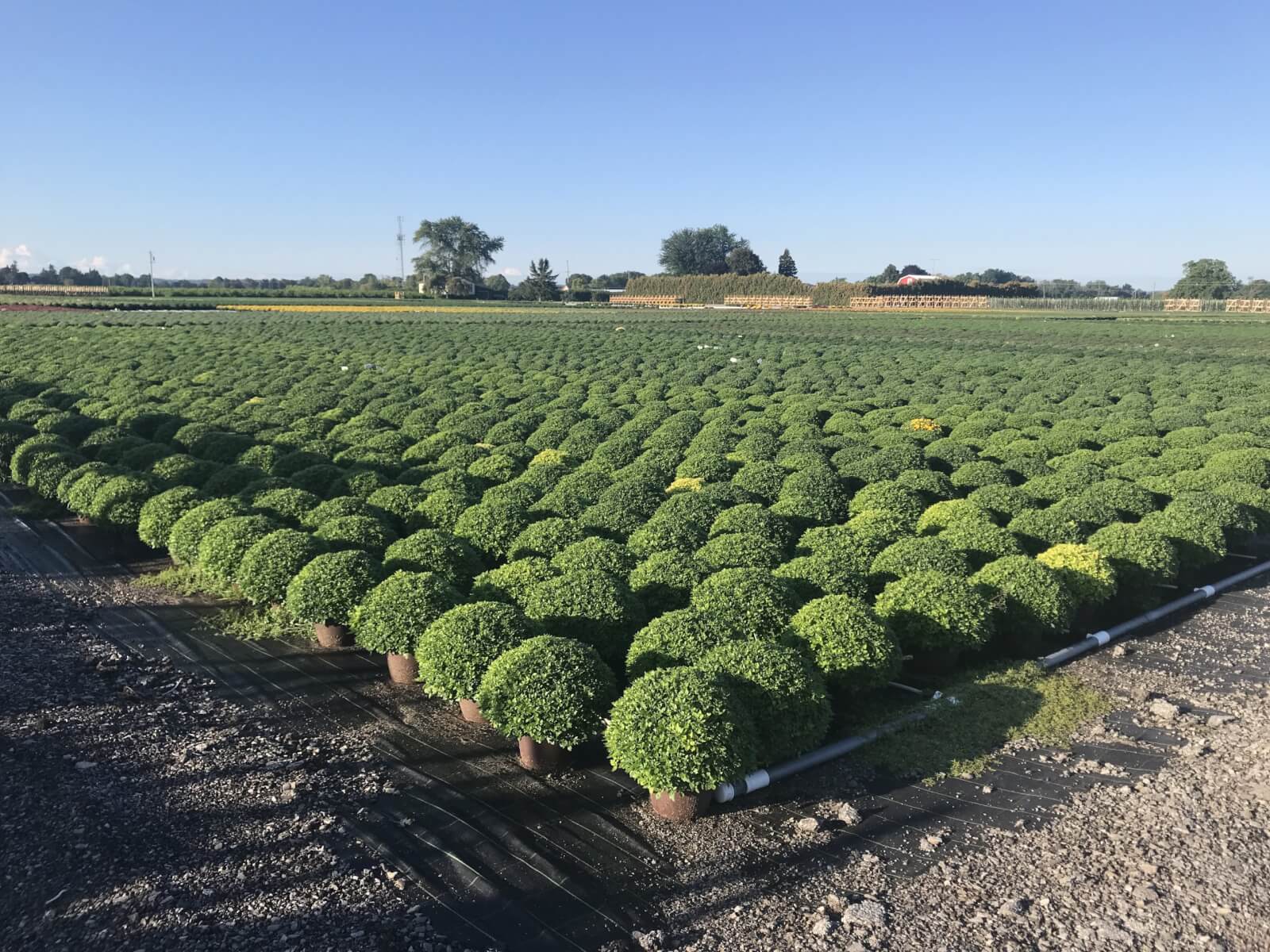
We chose to test this assertion in a chrysanthemum nursery. Our objective was to compare the coverage from the grower’s conventional hydraulic gun to that of a customized backpack mist blower.
Crop Canopy and Architecture
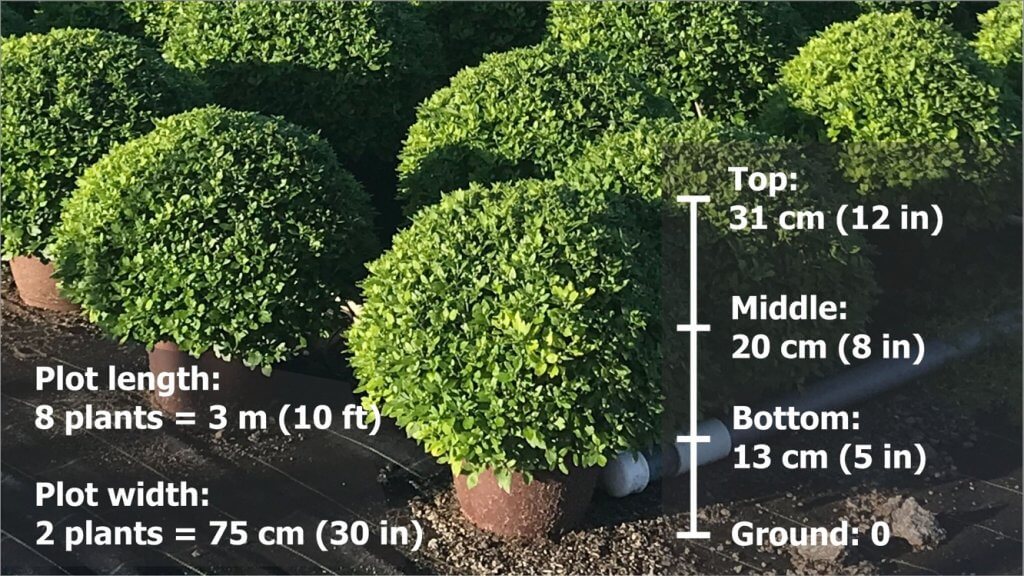
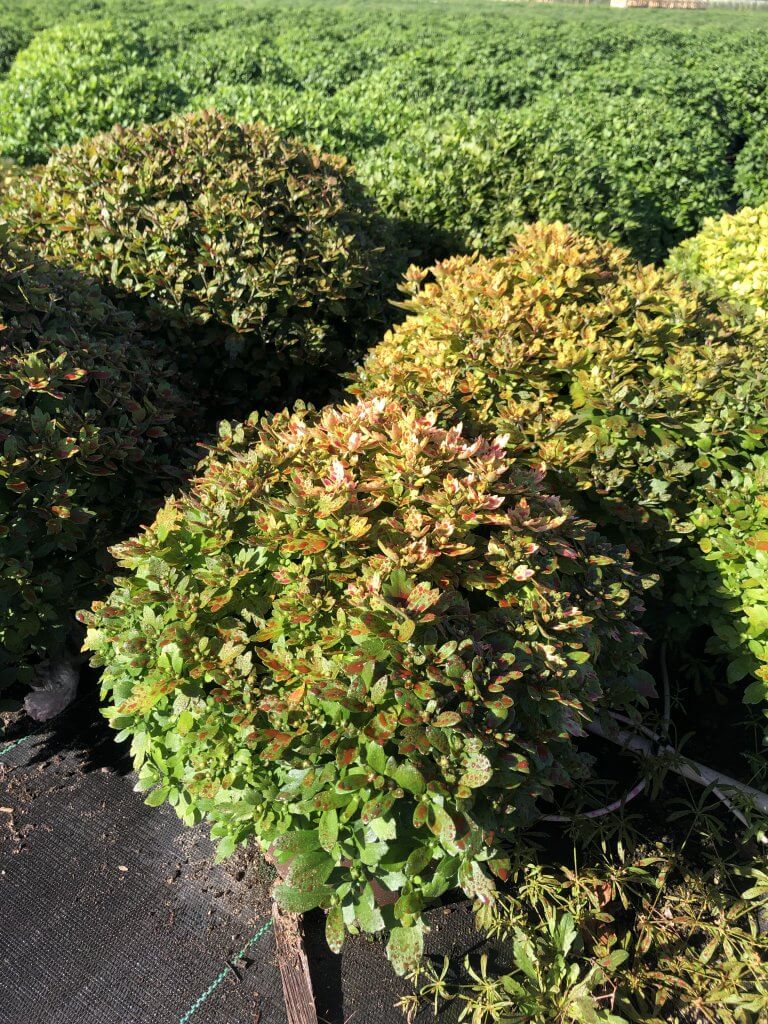
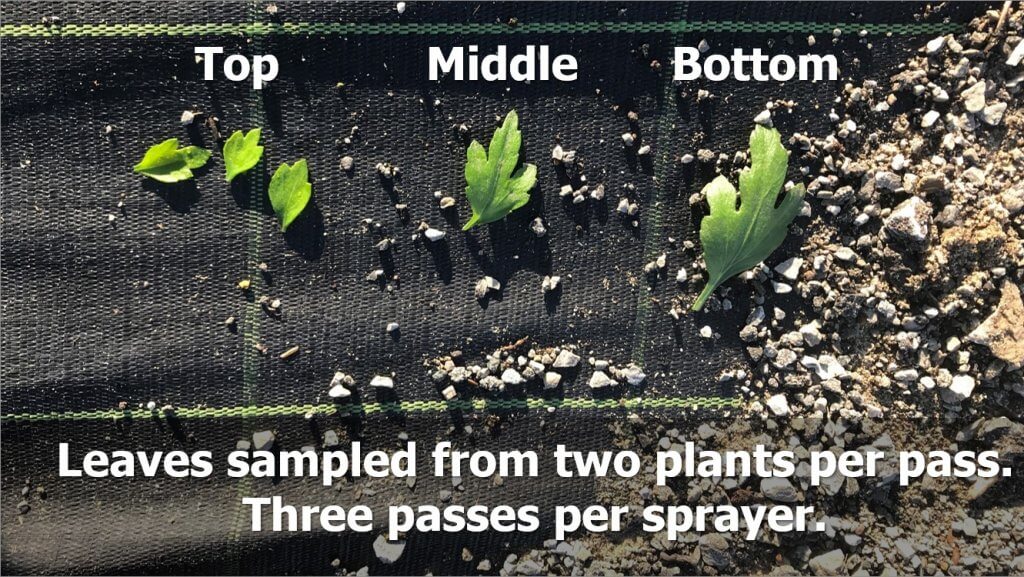
The crop canopy wasn’t fully mature but still represented a very dense target. In order to compare canopy penetration the canopy was divided into three depths: The Top exterior, the Middle (8″ from ground) and the Bottom (just above the pot soil). Each treatment area contained 8×2 plants and a buffer of three plants was maintained between treatments. We made three sprays (reps) for each condition.
Sprayers
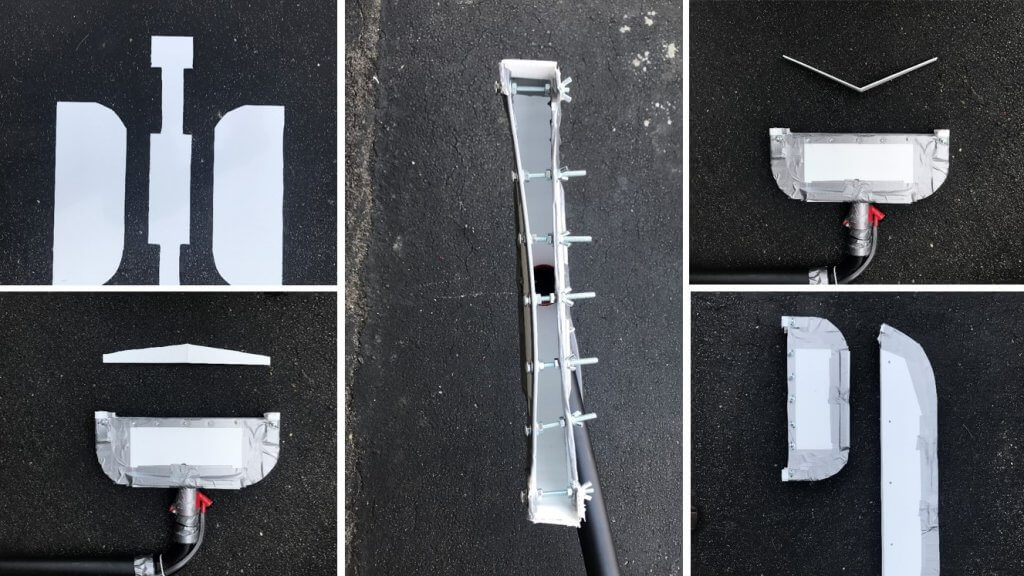
Several attempts were made to redirect and redistribute air from a commercial backpack mist blower. The goal was to create an air outlet that would distribute the same air speed over a long and narrow swath. Air is highly compressible and early attempts using baffles, straightening vanes and variable outlet sizes were unsuccessful. A compromise was reached by reducing the swath to about plant-width (40 cm). This was confirmed by spraying water on dry pavement and measuring the width of the swath. While not ideal, the operator could span the full 75 cm plot width by shifting the outlet back-and-forth laterally while spraying. There are videos below that show examples of both applications.
Several iterations of the air outlet design.
Through trial and error, the outlet was held above the canopy at a height and angle that optimized air penetration. If the outlet was held too far away, there was insufficient air energy to penetrate the canopy. If held too close, too much spray-laden air would escape the canopy. These attempts were performed at a comfortable walking pace to account for dwell time (E.g., the longer the outlet remained stationary over a canopy, the deeper it penetrates).
With the gravity flow set to “1” and moved as it would be used during spraying, we measured walking pace and timed how long it took to spray a known volume. The application volume was 1,250 L/ha (~133 US gal./ac).
The grower’s conventional sprayer was used according to their typical practices. Walking pace and flow rate were measured to establish application volume for both sprayers.
By timing walking pace and performing a timed output test, the application volume was 2,400 L/ha (~256 US gal./ac) for the conventional sprayer.
Coverage Indicator
Coverage was quantified using dye recovery and fluorimetry. The process is described in detail in this article and this article. Basically, a known concentration of Rhodamine WT dye is applied to the plant. Sprayed leaves are collected from key locations in the canopy and placed in labelled containers with a known volume of water. Later, that water is analyzed in a fluorimeter and the data is normalized by leaf weight (or in this case, leaf surface area) to account for the volume used and the size of the leaf sampled.
Dye pooling on leaf surfaces following an application using conventional methods.Relative size and number of leaves sampled from each canopy depth.
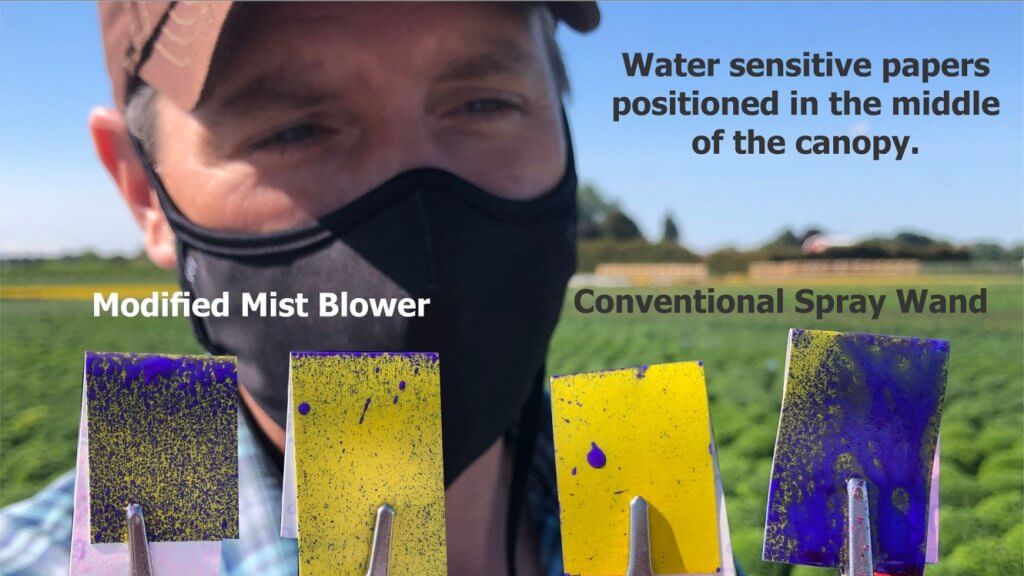
In addition to dye recovery, we also used water sensitive paper as a qualitative indicator. Papers were placed at the Middle depth facing into and away from the direction of travel and sprayed with both methods. This was used as a visual check to ensure spray went where it was intended, but it also provided insight into how spray might deposit on the leaf surface. As an artificial collector, water sensitive paper does not behave like a leaf surface, but it is helpful for relative comparisons.
There were obvious visual differences in how spray deposited on water sensitive papers located in the middle of the canopy. The mist blower had far less drenching and an even distribution of finer deposits compared the the conventional method. From left to right: Mistblower, facing sprayer travel direction. Mistblower, facing away from sprayer travel direction. Conventional sprayer, facing away from sprayer travel direction. Conventional sprayer, facing sprayer travel direction. When comparing these papers, remember that the mist blower was using approximately half the volume of the conventional method.
Results
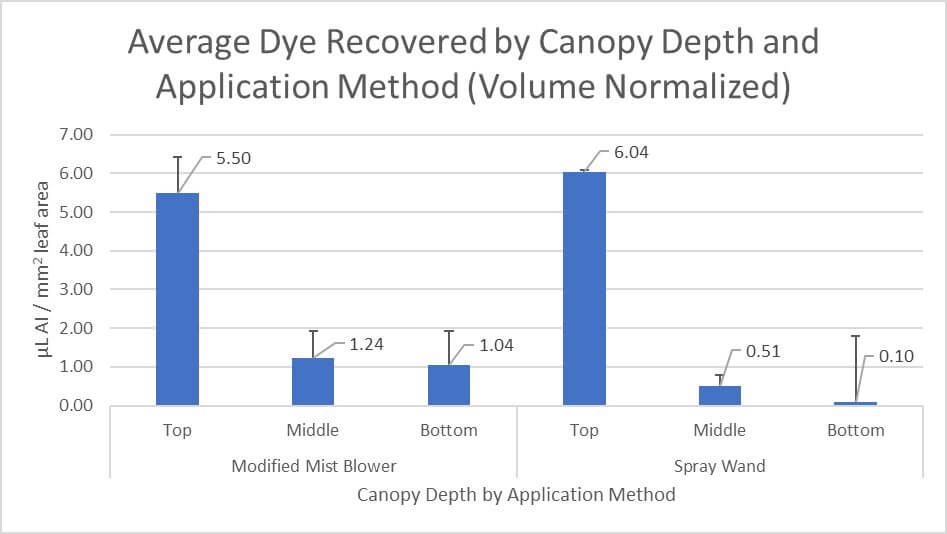
As mentioned previously, dye recovery was normalized by spray volume and leaf area for each condition. The results align with inferences made in the above image. Spray coverage can be highly variable which often leads to statistically insignificant results, but the mean-dye-recovered does demonstrate clear trends. The top of each canopy received a similar dose of dye for each condition. This comes as no surprise and is typical of any overhead application into a canopy. However, the air-assisted condition resulted in more than 2x the dye in the middle of the canopy and more than 10x the dye at the bottom compared to the conventional method.
Bars represent standard error.
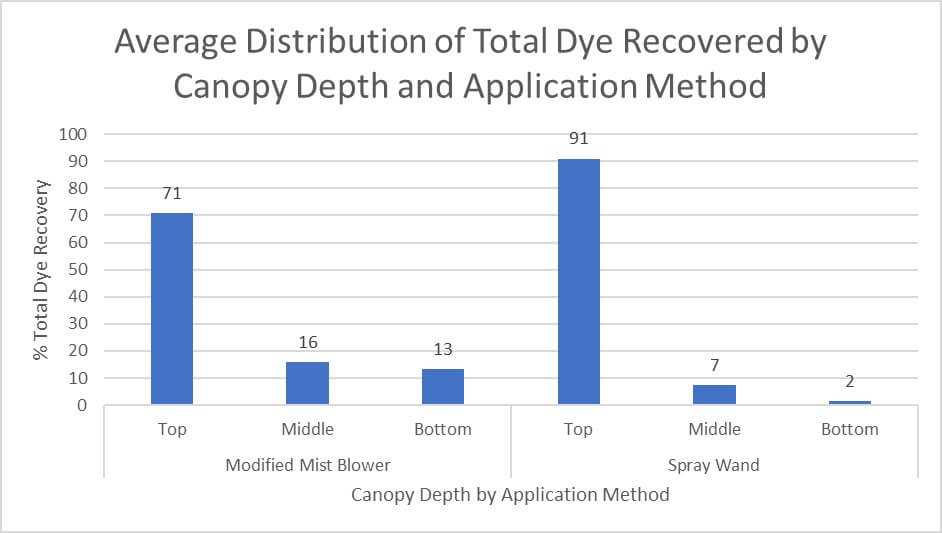
When considered as a percentage of overall dye recovered, we see that the dye deposited was more uniform in the air-assisted condition. 16% of total dye recovered in mid-canopy in the air-assisted condition canopy versus 7% in the conventional condition. 13% at the bottom on the air-assisted condition versus 2% at the bottom of the conventional condition.
Conclusions
Based on this study, there is compelling reason to consider air-assisted applications in closed environments. Canopy penetration and coverage uniformity was improved in the air-assisted condition. In addition, there is potential for reduced water volumes, which mean less contaminated run-off and lower humidity levels in closed environments.
Future work would require a better-engineered sprayer than the prototype used here. Further, while improved coverage often improves spray efficacy, it is not always a direct correlation. An efficacy study comparing crop damage and pest counts should be performed to confirm that this method of application represents a positive return on investment.
This research was performed with Dr. Sarah Jandricic, OMAFRA Greenhouse Floriculture IPM Specialist. Thanks to Schenk Farms and Greenhouses Co. for collaborating in the study.
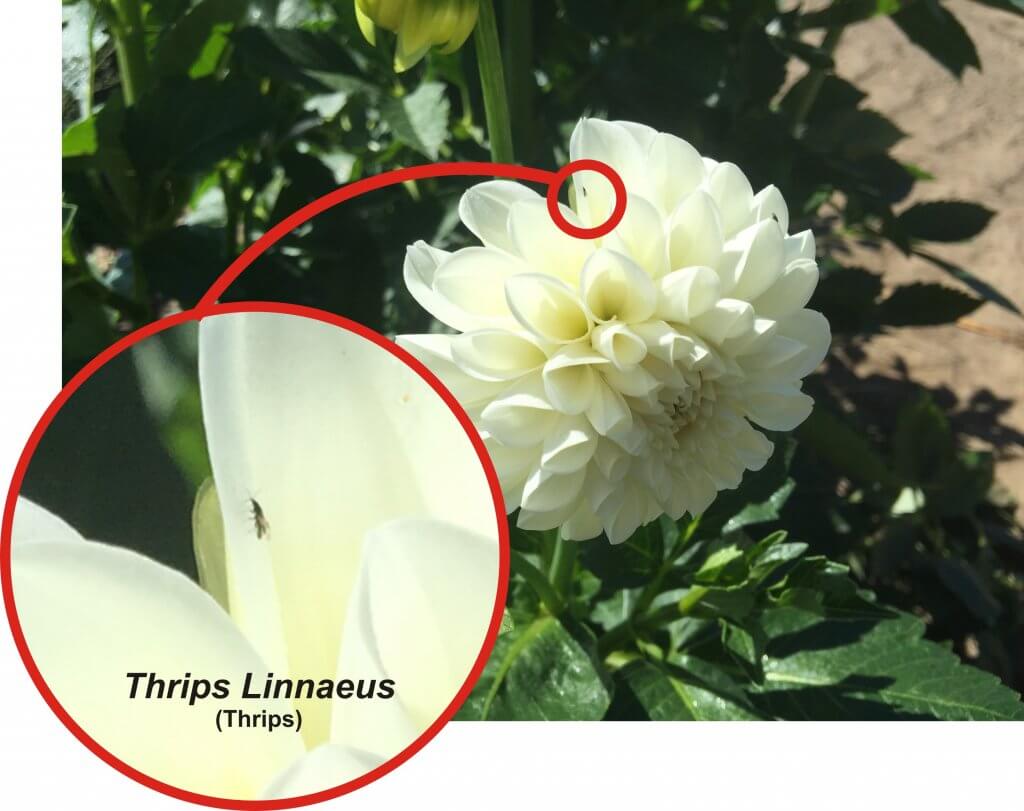
In August, 2016, we were contacted by a cut-flower grower specializing in Dahlias. There are photos in this article, but they don’t do justice to this beautiful perennial flower. Imagine a chrysanthemum crossed with a zinnia: lots of tight petals in the bloom. Unfortunately, they’re a perfect place for insects to hide.
Those that buy cut flowers may be some of the most discerning clients in horticulture. A scar on an apple may or may not cause the buyer to reject the fruit, but imagine leaning in to smell a beautiful white bloom only to see a black bug crawl out of it! For many, the revulsion is the equivalent of finding a hair in their food.
The challenge
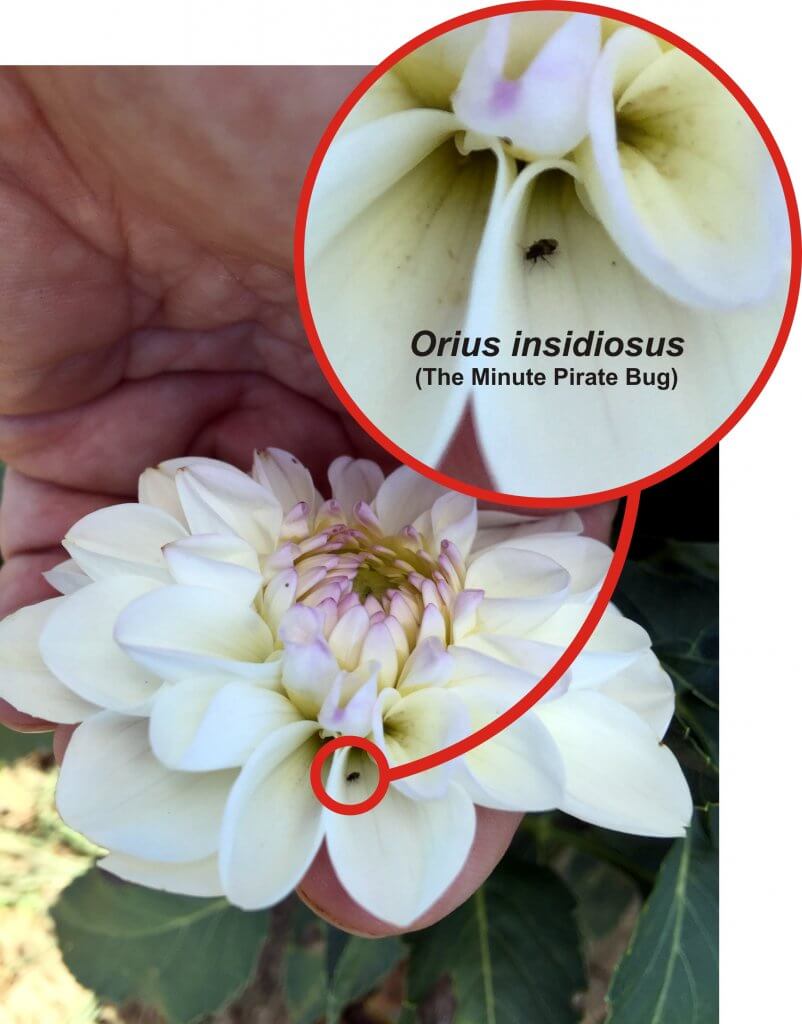
According to the grower, the 2016 season has been very bad for Thrips, which could easily exceed five per bloom even after spraying. The grower had the insect identified as “Western Flower Thrips” which, in Ontario’s greenhouses, are demonstrating resistance to chemical control. With such high insect density comes natural predators, such as Orius (the Minute Pirate Bug). While it does an admirable job hunting thrips, it must also be controlled because to the buyer it is just another undesirable black bug. Getting the contact spray in between all those petals is exceedingly difficult. The grower wanted to know how he could improve spray coverage deep in the bloom itself. So, we had a discussion.
The ideas
Adjuvants
Our first thought was an adjuvant. Wetting agents have been helpful for controlling thrips in other crops, such as those located deep in green onions in Ontario. We consulted the grower’s insecticide labels looking for possible incompatibilities. We found they had the potential to damage tender foliage if applied in periods of high humidity or high heat (i.e. > 25 °C). They also noted that the use of an adjuvant may increase the potential for damage. The grower confessed that he had already experimented with a non-ionic spreader and saw damage to the blooms. So, a water-conditioning option to improve spread was off the table.
Volume and travel speed
Our next idea was to increase the volume being applied per hectare. This strategy is a safe bet for improving coverage because it increases the number of droplets available for contact. There are a few ways to achieve higher volumes, but we elected to drive slower, which has the added advantage of reducing drift.
Spray angle
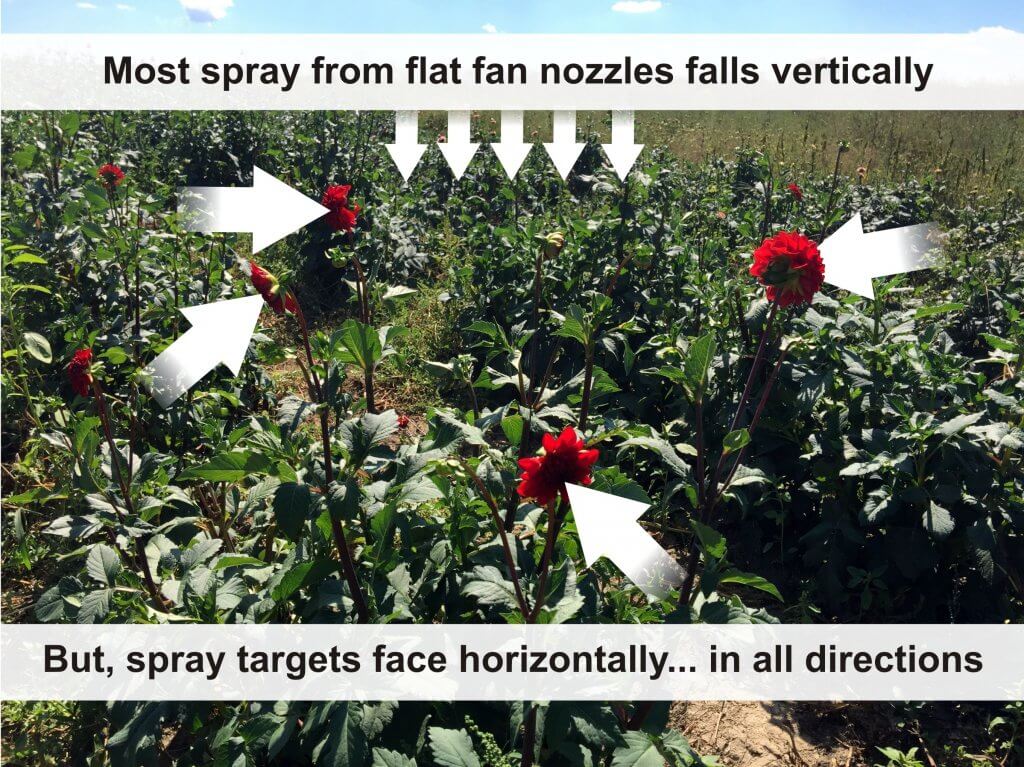
We also talked about spray angle. Dahlia blooms face horizontally in all directions, not vertically (i.e. side-ways, not straight up). Consider the spray from the nozzle’s point of view: The spray from the grower’s flat fans would fall predominantly downward. Theoretically, most of it would settle on the upper edges of the flower. We wondered if we could use an angled spray to hit the blooms face-on and improve penetration into the bloom.
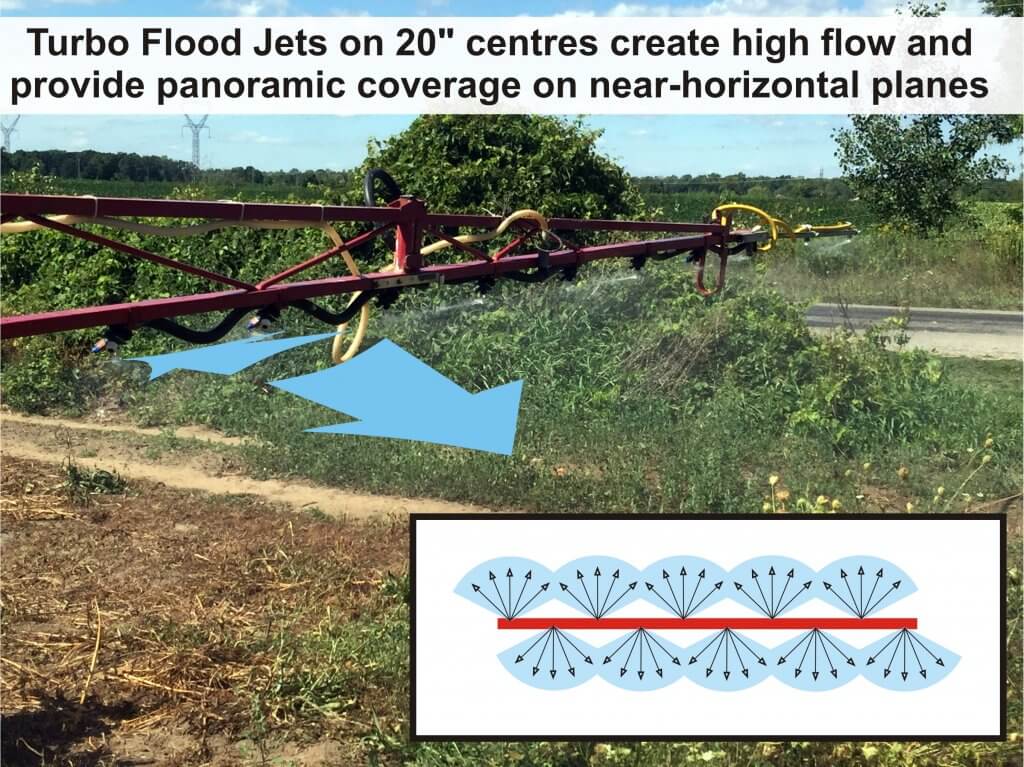
We felt twin fans and asymmetrical fans weren’t an aggressive enough angle, and they didn’t address the fact that the flowers faced in all directions. So, in order to get panoramic coverage on a near-horizontal plane, we decided to try alternating (one back, one forward) TeeJet Turbo FloodJets. They have been used to great effect by the University of Guelph’s Dr. David Hooker to provide panoramic coverage to wheat heads, so perhaps they would help here.
To prove the principle, we decided to run a short qualitative trial to see if there was a difference.
Nozzles
In the video below you can see how we nozzled the sprayer. We kept the left wing of the boom in the grower’s configuration: conventional 8004 flat fans (red) operated at 40 psi on 20” centres. That was a Medium spray quality and 0.4 US gallons per minute. On the other wing (right) we used TF04’s (white) operated at 40 psi on 20” centres. That was an Extremely Coarse spray quality and 0.8 US gallons per minute.
Coverage and Efficacy
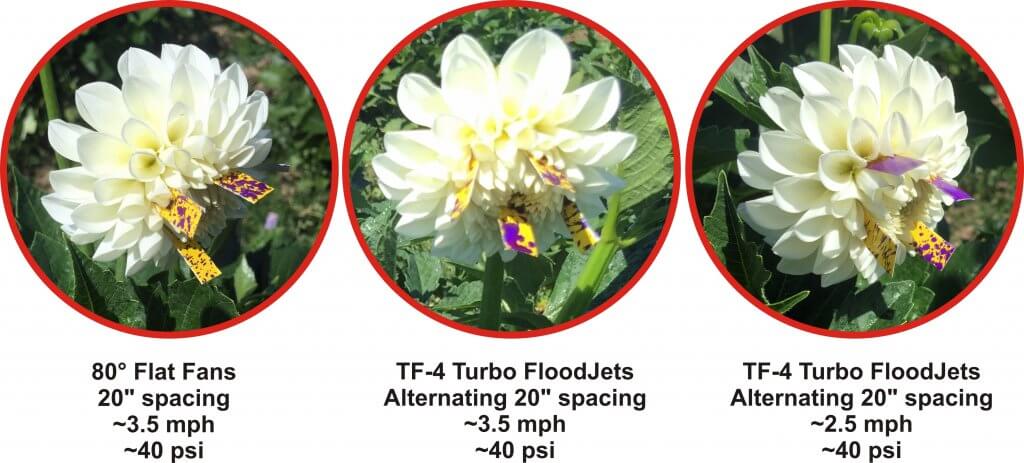
We cut water-sensitive paper into strips and slotted them into the blooms. By orienting them in multiple directions we hoped get a visual indication of bloom coverage. Plus, when they were extracted after spraying we could see how deeply the spray penetrated the bloom.
We ran a pass using water at the grower’s typical speed of 3.5 mph, but when we didn’t see a big difference on the papers, we slowed to 2.5 mph. That’s 47.5 US gallons per acre (~500 L/ha) from the flat fans (left) and 95 US gallons per acre (~100, L/ha) on the right. A few typical results are shown below.
We weren’t sure if we were seeing an appreciable difference in bloom coverage, but it looked promising. In retrospect, they may have been more effective indicators if we’d oriented a few flat against the bloom face. We decided to use the nozzle arrangement for a few insecticide applications and see if there was a difference in efficacy.
The grower sprayed in the evening and returned the next morning to perform counts in 20 random blooms from each treatment. Normally, a scout looking for thrips would tap the bloom over a piece of white paper to do counts, but the grower’s method was to blow into the bloom. He said Thrips and orius climb out to the edges of the petals immediately and can be counted. We sprayed in the white Dahlia to make the counts easier. We did this twice. The counts were less than spectacular and we were disappointed:
1st application: Turbo FloodJets: 16 orius and 31 thrips in 20 blooms Conventional flat fans: 10 orius and 21 thrips in 20 blooms
2nd application: Turbo FloodJets: 2 Orius and 1 thrip in 20 blooms Conventional flat fans: 2 Orius and 3 thrip in 20 blooms
Conclusion and next steps
The grower reported that even though we raised the volumes by slowing down, the efficacy from his flat fans had not improved compared to what he was doing previously. Adding insult to injury, the Turbo FloodJets (which were spraying twice the volume as the flat fans) did not seem to improve matters. Before we could try another approach, the insect pressure fell and the season drew to a close. You might wonder why we’d publish an article that didn’t pan out. It’s because you can learn as much from what doesn’t work as what does
So why didn’t we see improvement? Perhaps the boom was too high and the spray from FloodJets fell vertically. Perhaps the spray quality from the FloodJets was too coarse. Perhaps the grower’s method for counting insects was biased or inaccurate. It’s all speculation. As we pointed out earlier in this article, this hardly constitutes a formal experiment. We were hoping to see some indication of improvement before designing a more intense study. We didn’t see one.
We hoped to try again between June and August, when thrips and orius counts are highest. Our plan was to use drop-hoses to suspend nozzles at bloom-height and to use a double nozzle body to mount two back-to-back full-cone nozzles in each position. They would alternate 180° along the boom aiming in front-to-back and left-to-right orientations to provide panoramic coverage using a Medium spray quality. And, finally, we would have engaged a scout in a blind study to eliminate bias and increase our sample size.
Unfortunately the study didn’t take place – any takers?
Thanks to the grower co-operator, and TeeJet Technologies for providing the water-sensitive paper and nozzles for the study.