Tag: backpack

  • Calibrating a Plot Sprayer for Airblast Crops

    Calibrating a Plot Sprayer for Airblast Crops

    The calibration of handheld plot sprayers is an important part of agricultural research, and this article already covers all the bases… as long as you are spraying broadacre or row crops. But what happens when you are trying to emulate an airblast sprayer and treating a tree, bush, cane or vine?

    The key difference is that spraying a two dimensional area requires the operator to pass the boom over the target at a uniform height and pace to achieve consistent coverage. But, a three-dimensional target requires the operator to circle the target, or spray from both sides, until it has received the required dose (or volume).

    In order to scale down a typical airblast carrier volume for small plot work, we need to know three things:

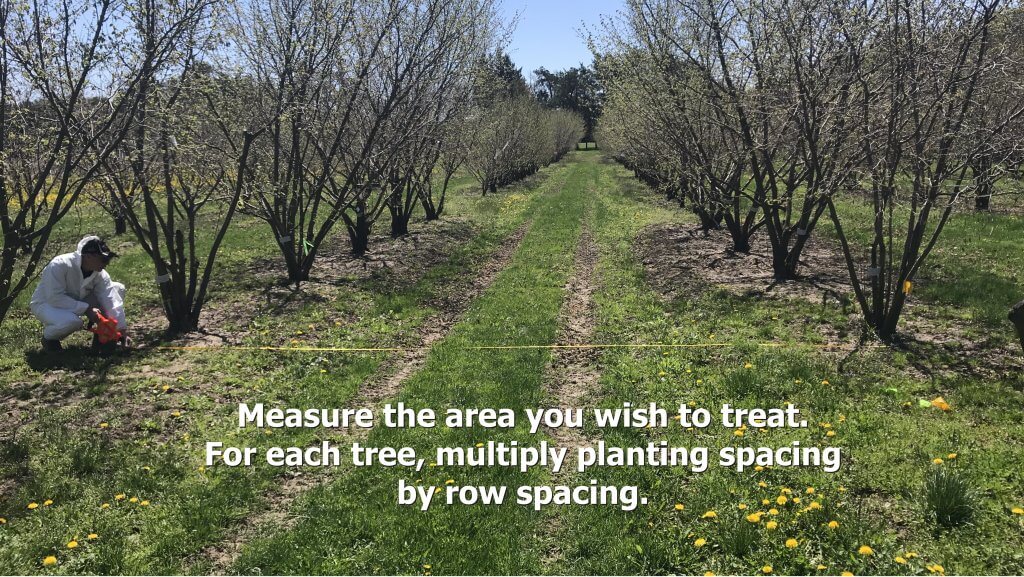
    1. The area you wish to treat (e.g. bush, grape panel, tree, etc.), including it’s share of the alley (in m2).
    2. The emission rate from the calibrated plot sprayer (in US gal./min.)
    3. The airblast carrier volume you wish to scale down (e.g. L/ha).

    The illustration below shows two options for calculating the treated area. Option A requires you to measure from the outermost edges of the canopy (imagine if the canopy was wet and dripping – the dripline is that outermost point). It is less consistent than the preferred Option B, where the area is determined from row centres and planting distance.
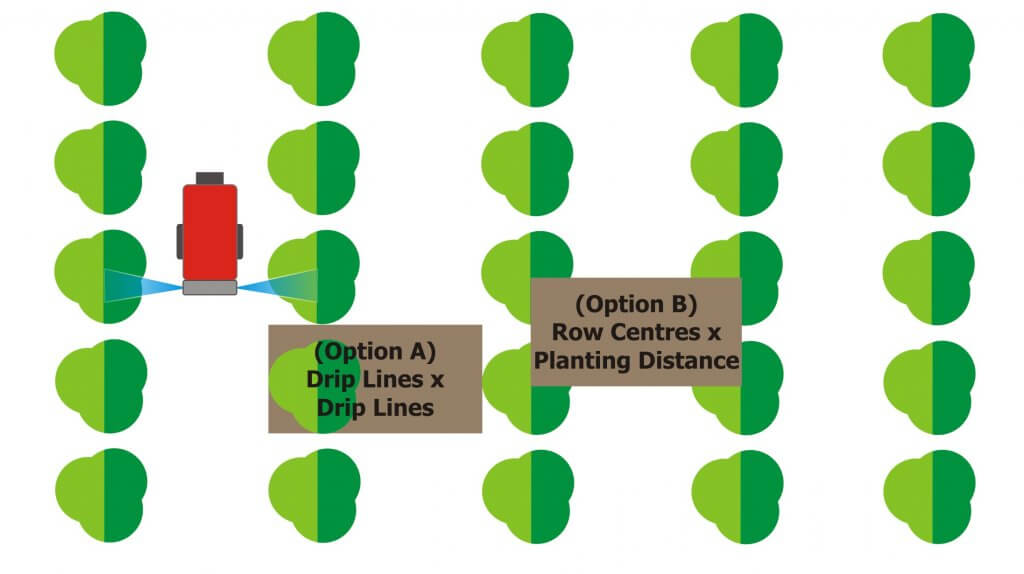
    Two options for scaling down an airblast carrier volume for small plot work. Both produce the same treated area, but Option B is the preferred method.
    Use the average planting distance and row spacing in metres. For a panel of grapes, use the centre of each panel as the planting distance.

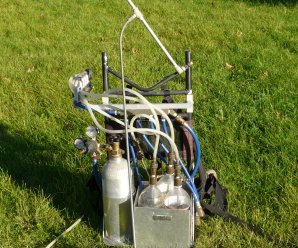
    If you are using a CO2 powered hand wand (preferred over a manual pump) with one or more hydraulic nozzles, then you can calibrate it using the methods in this article. There are battery-powered options from Jacto and Petra Tools, the latter offering a battery powered ULV system as well. Makita also has a battery entry (image below). However, if you are using a backpack mistblower, which better approximates an airblast sprayer compared to a hydraulic hand boom (see this article), it requires a different approach. Plus, you get to look like a Ghostbuster, which is a win in my book.
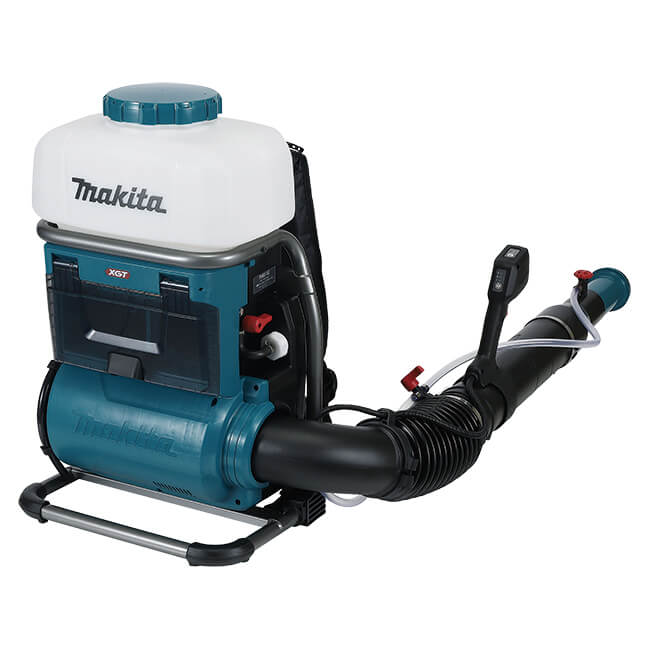
    PM001GL201 – 40V max XGT Brushless Cordless 15L Backpack Mist Blower (8.0Ah x2 Kit)

    Follow along in the following images as we explore how to calibrate a backpack step by step:
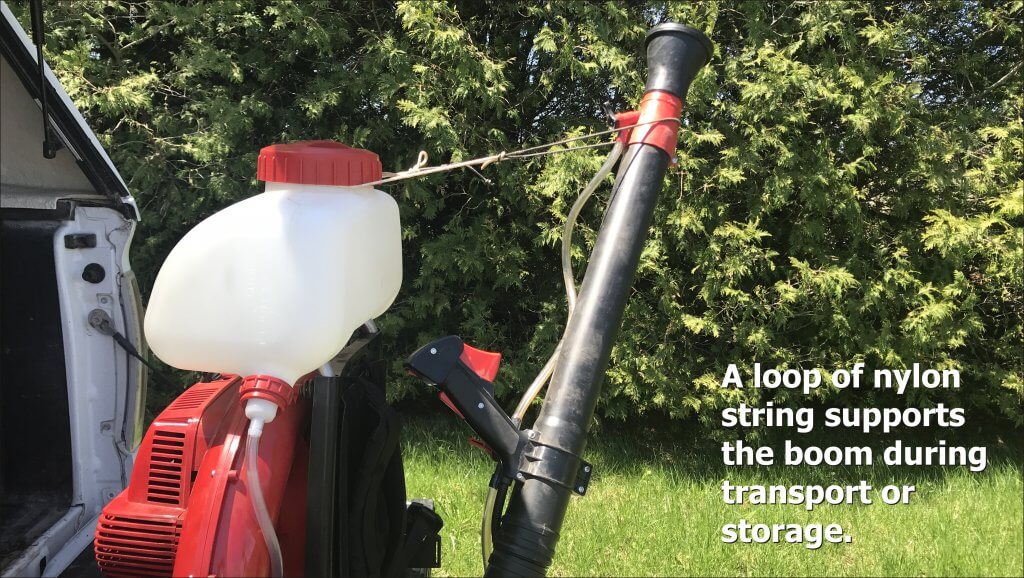
    When transporting a mistblower, use a loop of nylon cord to secure the boom in an upright position.
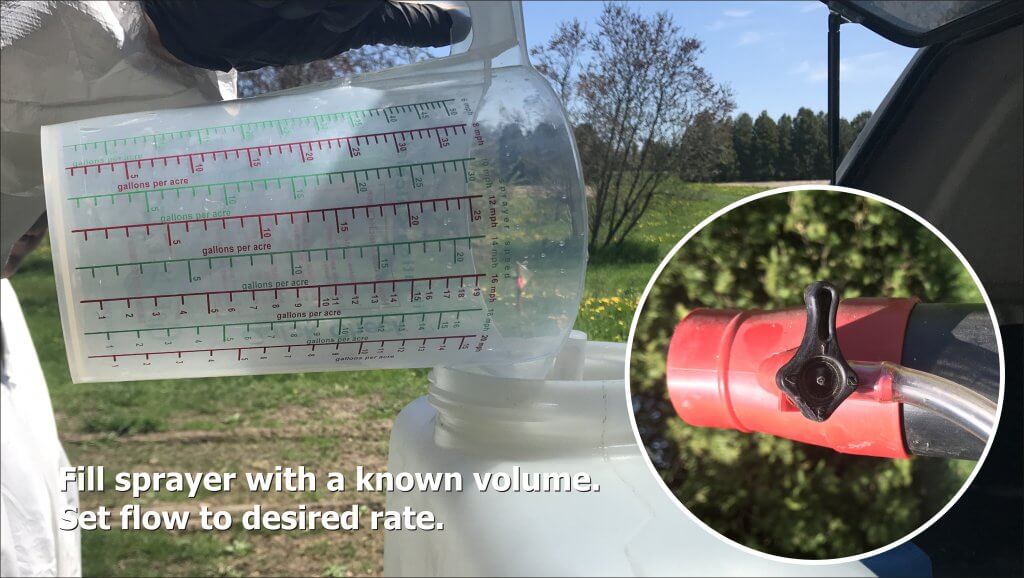
    For calibration, fill the completely empty sprayer with a known volume of water. If the boom is gravity-fed, be sure the feed valve is closed so the water doesn’t run out of the boom.
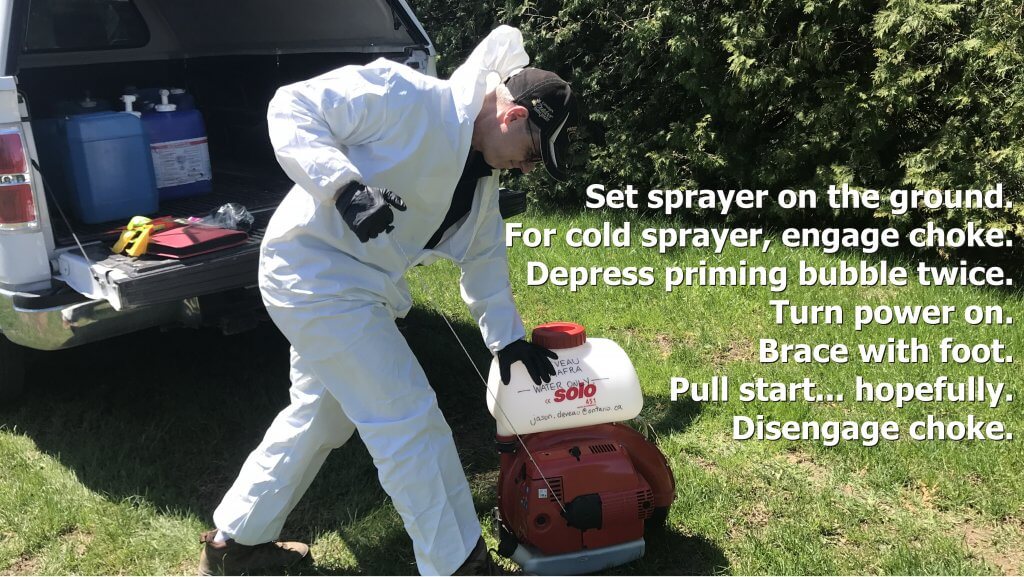
    With the sprayer on the ground, brace it with your foot. Step on the metal frame, not the motor housing or tank. Follow the operating instructions to pull start the motor.
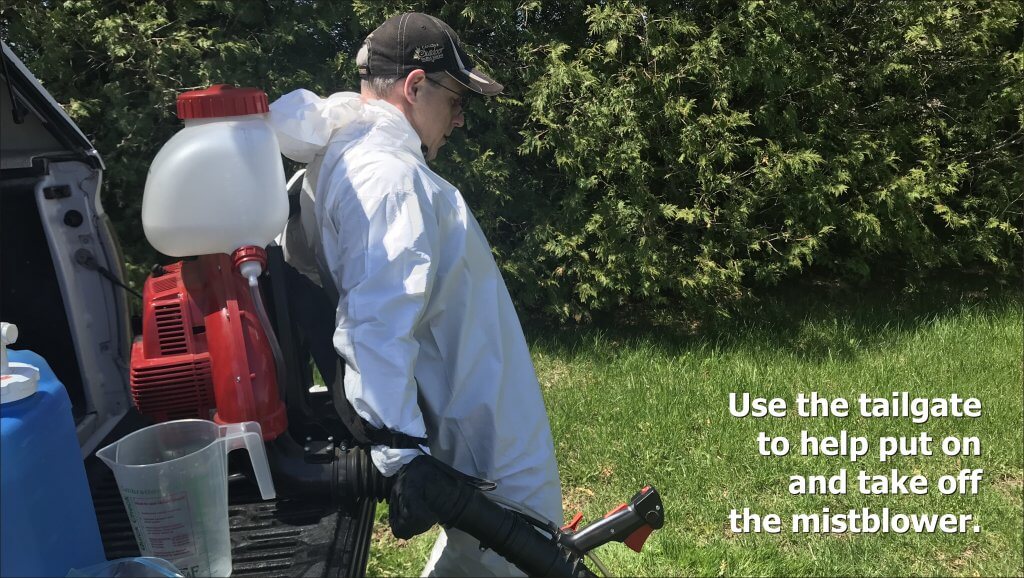
    Being cautious of the hot exhaust, set the sprayer on a tailgate, or other elevated surface to facilitate strapping it on.

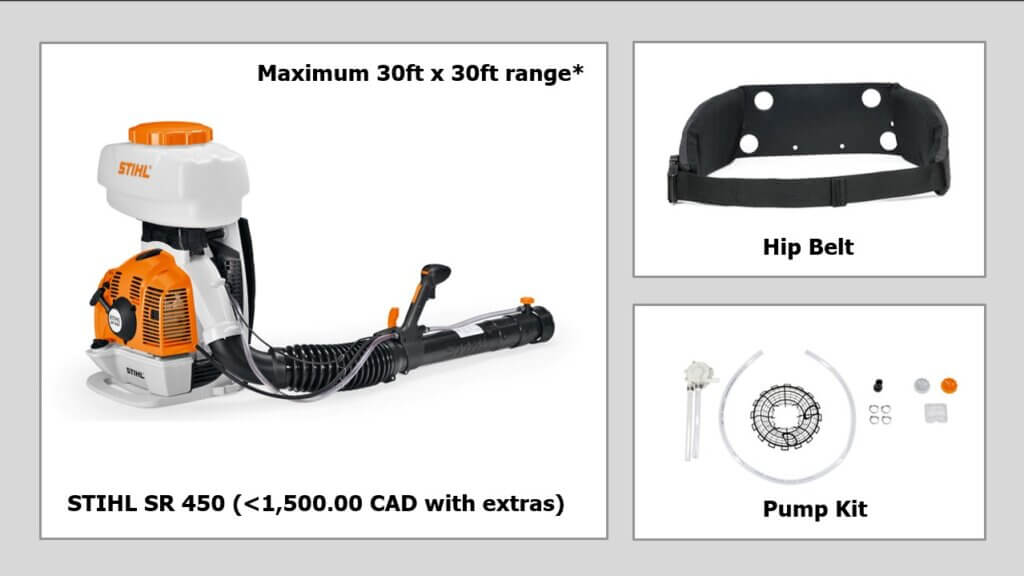
    Be aware that most mistblowers use gravity to feed the spray mix from the tank to the boom. A pressure pump kit is recommended for applications where the spray tube is held upward more than 30 degrees to maintain a consistent discharge rate. A hip belt is also recommended to reduce fatigue. Examples are shown below are for Stihl-brand sprayers. Some may or may not require the pump (e.g. Tomahawk) but they are primarily intended for mosquito control and in that case a consistent rate over a vertical plane may not be as important.
    If your sprayer does not have a pump kit, pointing the boom upward will cause spray to slow or even stop. This greatly diminishes your ability to reach high targets and achieve consistent coverage. In this case, attach the deflector (which comes with the sprayer) before proceeding with the calibration.
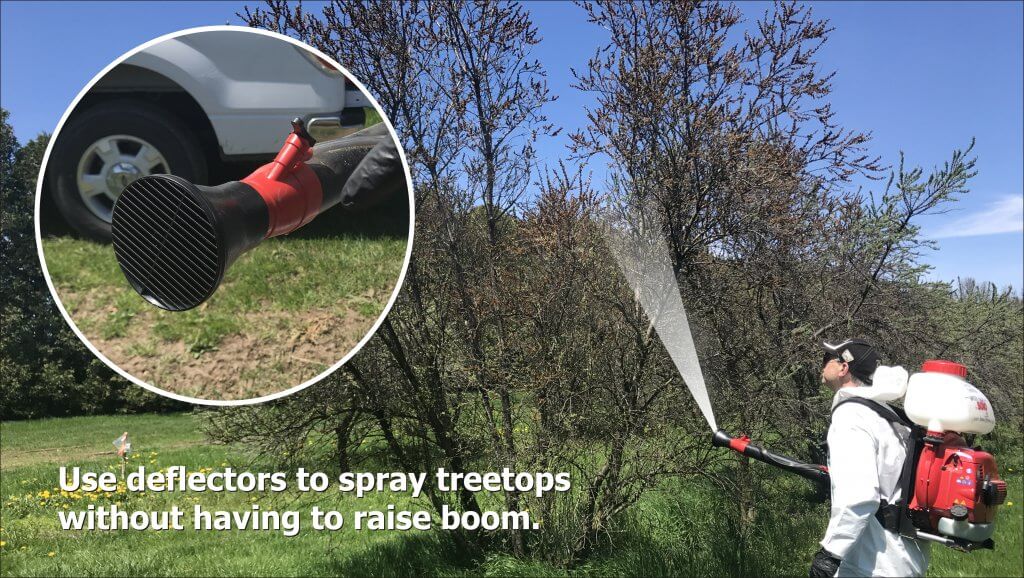
    Deflectors angle the spray upwards without having to lift the boom. This is easier on your shoulder and keeps the rate consistent.

    Set the flow rate to the preferred setting (usually a dial at the end of the boom), and using a stopwatch, time how long it takes to spray the entire volume. Be sure to move the boom exactly as you would when spraying the target, either side-to-side or up-and-down, to capture possible rate changes from the gravity feed. Convert the output to US gal./min.
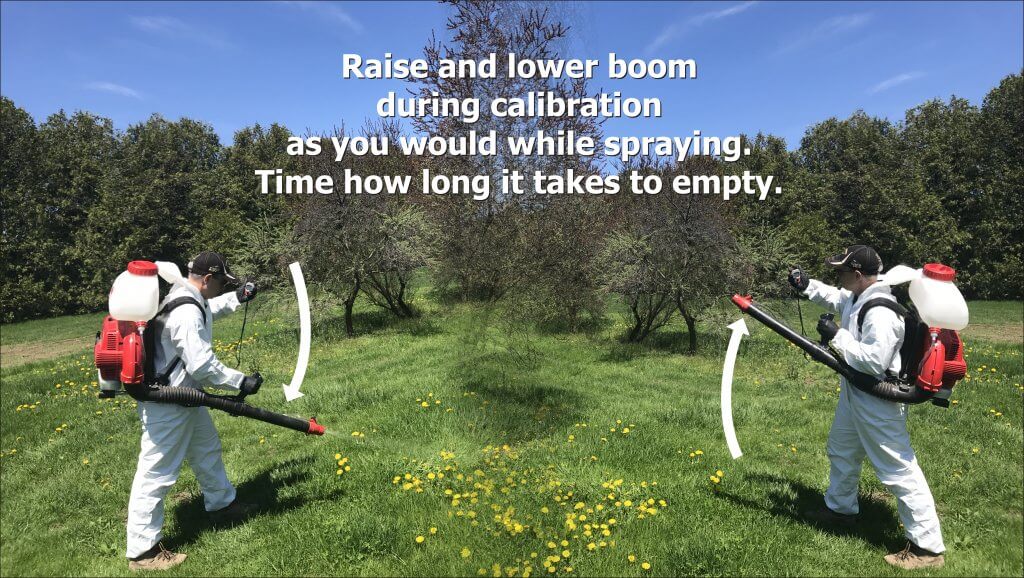
    When timing output, move the boom as you would when spraying the target.

    Alternately, some people will stand on a bathroom scale with the backpack full. Then get off and spray for a period of time. Then get back on the scale. One millilitre of water weighs one gram, so you can calculate the flow from the weight difference.

    Now you know the area and the emission rate. You should have a target carrier volume in mind (e.g. L/ha). Using the following example, let’s determine how long you need to spray the target:
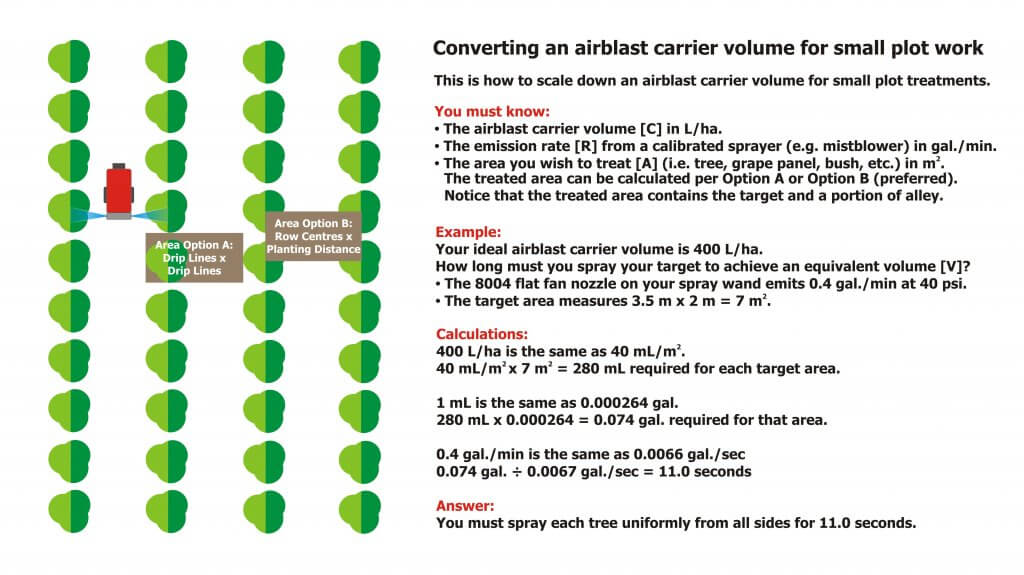
    A sample calibration.

    In this example, an ideal airblast Carrier Volume [C] for the orchard is 400 L/ha. We want to scale this down to determine the Volume for Treated Area [V]. First, divide [C] by 100 to convert it to 40 mL/m2. Then, because in Canada our nozzles are in US units, we do an ugly conversion: Since 1 mL = 0.000264 US gallons, [C] becomes 0.0106 US gal./m2.

    The Treated Area [A] measures 3.5 m by 2 m = 7 m2.

    The Emission Rate [R] is the rate the plot sprayer sprays. While we prefer using a mistblower, many still use a hand wand with no air assist. In this case let’s suppose we are using a hand wand with two 8002 flat fan nozzles operating at 40 psi. According to our calibration, we confirm it sprays 0.4 US gal./min.

    • [C](US gal./m2) × [A](m2) = [V] (US gal.)
    • 0.0106 US gal./m2 × 7 m2 = 0.074 US gal.
    We know we want to spray the target with 0.074 US gal., and we also know [R] which says our boom emits 0.4 US gal./min. We convert this to seconds by dividing by 60, so [R] = 0.0067 US gal./sec. From this we can calculate how long [T] we must spray the target.

    • [V](US gal.) / [R](US gal./sec.) = [T](seconds).
    • 0.074 US gal. / 0.0067 US gal./sec. = approximately 11.0 seconds.

    So, we know that to spray the target with an equivalent 400 L/ha, we must achieve consistent coverage from all sides by spraying it for a total of 11 seconds. Pro tip: Always mix a little more spray volume than you will need to account for priming.

    This is only one way to calibrate a backpack sprayer for spot spraying. If it’s isn’t quite what you need, check out these resources:

    1. Calibrating a Knapsack Sprayer (www.weedfree.co.uk – 2008)
    2. Don’t Overlook Backpack Sprayers (John Grande, Rutgers)
    3. Hand Sprayer Calibration Steps Worksheet (Bob Wolf, Kansas State University – 2010)
    4. Sprayer Calibration Using the 1/128th Method for Motorized Backpack Mist Sprayer Systems (Jensen Uyeda et al., University of Hawai’i – 2015)
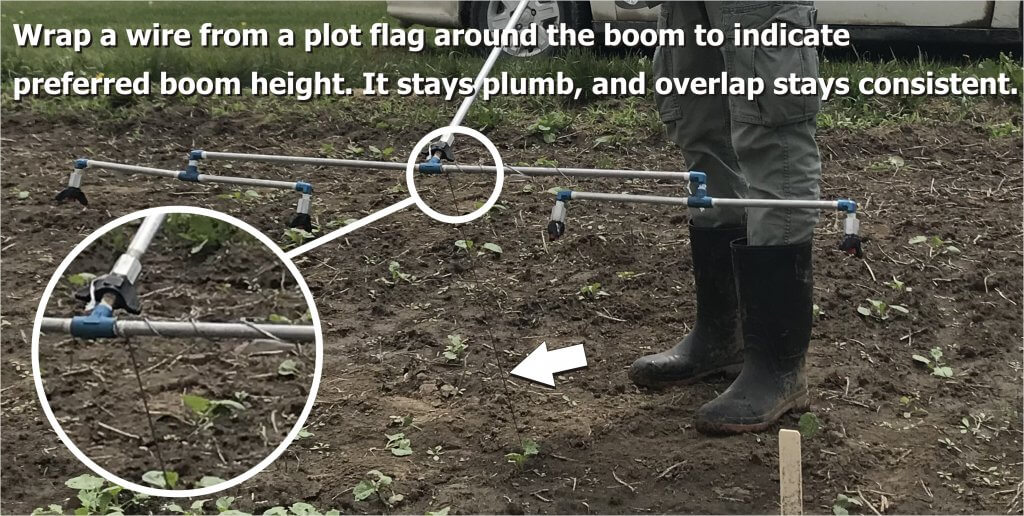
    Pro Tip: To maintain a consistent boom height without a wheel, coil a measured length of wire from a plot marker flag to guide you.

  • Air-Assisted Spraying in Greenhouse Ornamentals

    Air-Assisted Spraying in Greenhouse Ornamentals

    The aesthetic value of ornamental plants requires a near-zero tolerance for insect pests, which cause up to 10% of crop losses per season. Controlling them with insecticides is a difficult proposition:

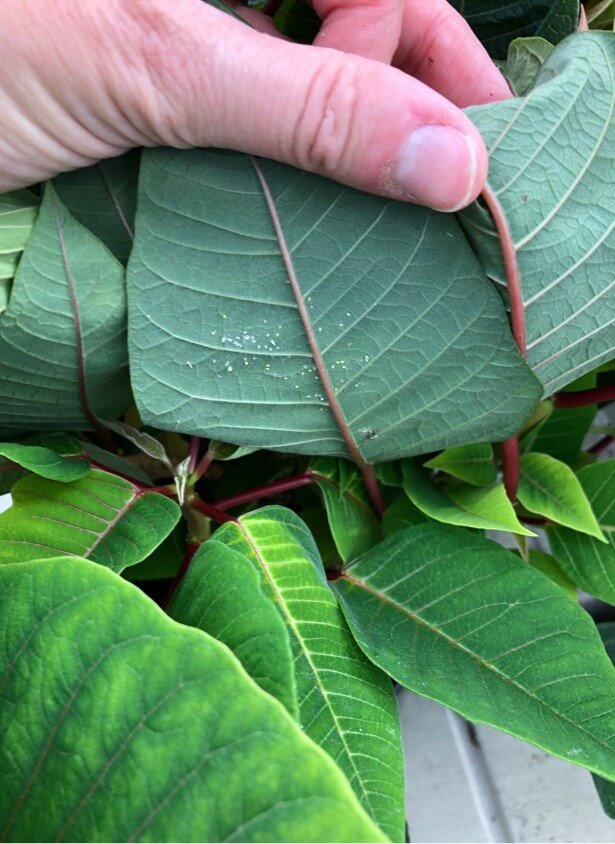
    • Key pests such as thrips, aphids and whiteflies tend to feed on the underside of leaves – a notoriously difficult surface to target because of it’s orientation relative to the spray nozzle (see image below).
    • Other pests, such as mealybugs, are found on stems. Stems are hard-to-wet plant surfaces because spray tends to run off. Further, as the plant canopy grows and densifies, these surfaces are buried deep inside, out of line-of-sight.
    • The insecticides available for closed environment spraying must be compatible with biological controls and are therefore “softer” chemistries. Examples include soaps, oils and entomopathogenic fungi. These products require contact with the pest and are at best translaminar, so coverage becomes critical for performance.
    Whitefly on the abaxial laminar (under-leaf) surfaces of Poinsettia.

    Spraying for Insects

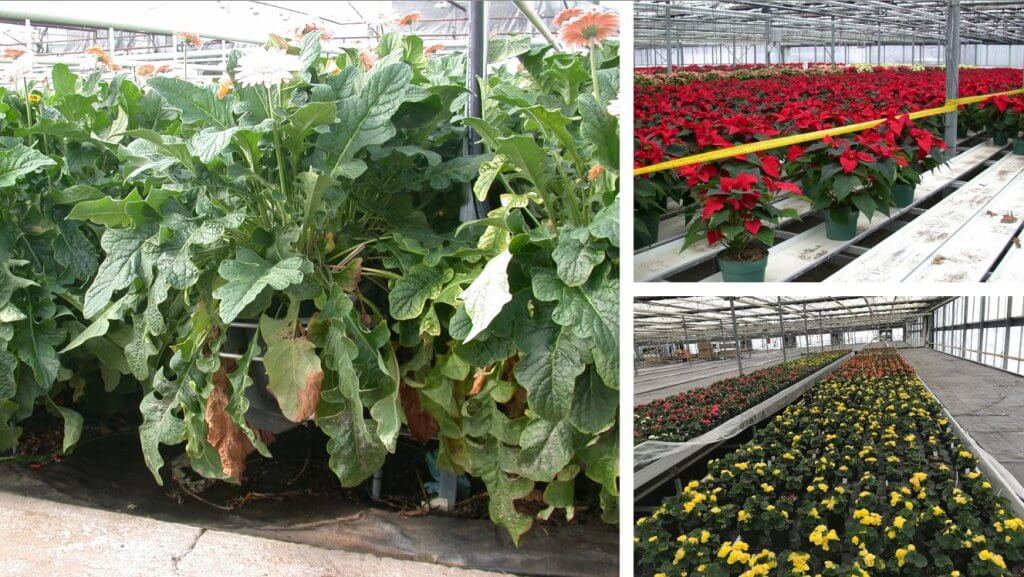
    The planting architectures and canopy morphologies are highly variable in ornamental greenhouses. Perhaps they are young plants with sparse canopies, densely packed in pots on raised tables. Perhaps they are mature, hanging plants with dense canopies. Perhaps they are something in between.

    Crop canopy morphology and planting architecture are highly variable from operation to operation.

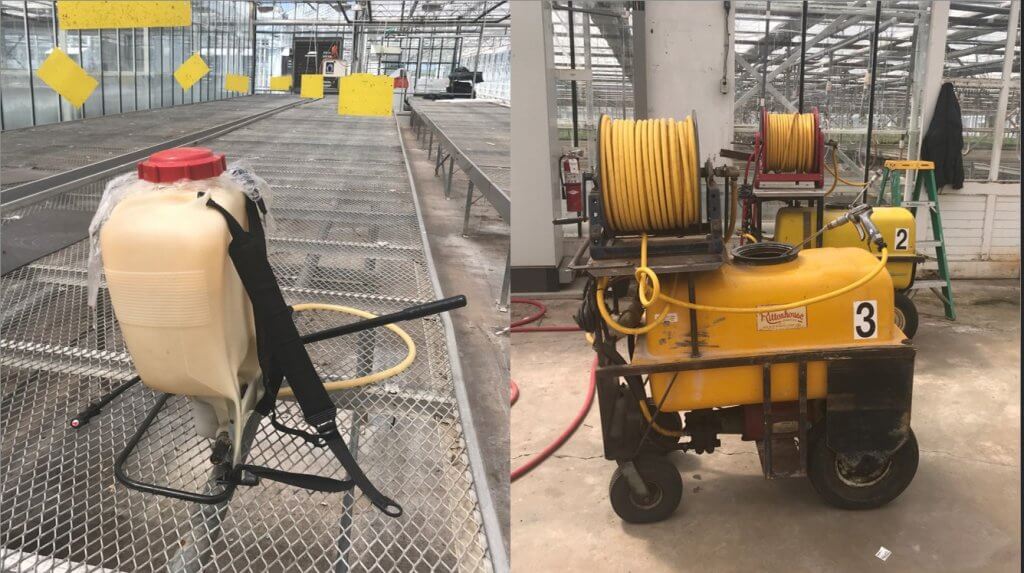
    Ideally, each combination of canopy morphology, planting architecture, pest and chemistry would have a specific sprayer designed to optimize coverage and efficiency. This is economically unrealistic. Instead, many producers utilize technologies that rely on high water volumes and hydraulic pressures to “drench” targets indiscriminately. Others employ highly manual methods that allow the operator to aim the nozzle in relation to the canopy on a case-by-case basis, but still rely solely on water to distribute the insecticide.

    Typical application technologies in ornamental greenhouses. The backpack sprayer (left) with its manual pump is inexpensive and the operator can aim the nozzle more accurately. The trailed tank-and-handgun (right) utilizes higher hydraulic pressure and water volume in an attempt to improve the work rate. Both rely solely on water and hydraulic pressure to distribute spray.

    These technologies have their place, but the reliance on hydraulic pressure and carrier volume has drawbacks:

    • High water volumes lead to higher humidity in closed environments which may favour disease.
    • The inevitable run-off creates waste water that may require treatment before leaving closed environments.
    • High carrier volumes dilute an already “soft” chemistry and hydraulic pressure doesn’t always improve canopy penetration or coverage uniformity.

    Air-assisted spraying can be a viable alternative (and an improvement) over these approaches. Stationary or mobile, many ultra-low volume sprayers already employ air to capitalize on the mechanical advantage offered by smaller and more numerous droplets. Finer droplets have very little mass, so they must be directed and carried by air currents to get them to the target. Sufficient air energy will also displace the air within the target canopy and physically expose otherwise hidden plant surfaces to the spray.

    The upshot is that air can partially replace water as a carrier and it has the potential to improve coverage uniformity throughout the target canopy.

    Testing Air-Assisted Spraying

    We chose to test this assertion in a chrysanthemum nursery. Our objective was to compare the coverage from the grower’s conventional hydraulic gun to that of a customized backpack mist blower.

    Crop Canopy and Architecture

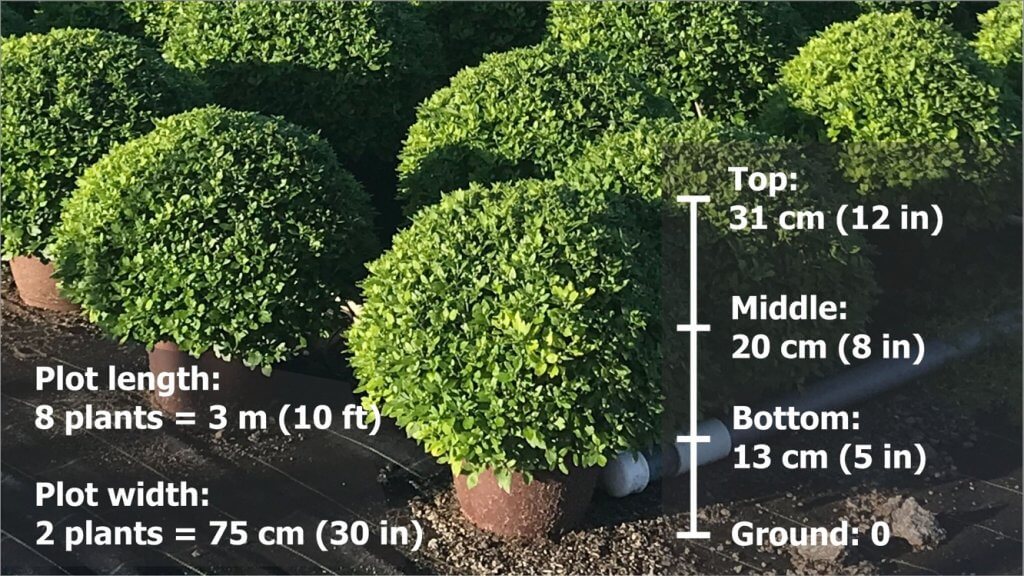
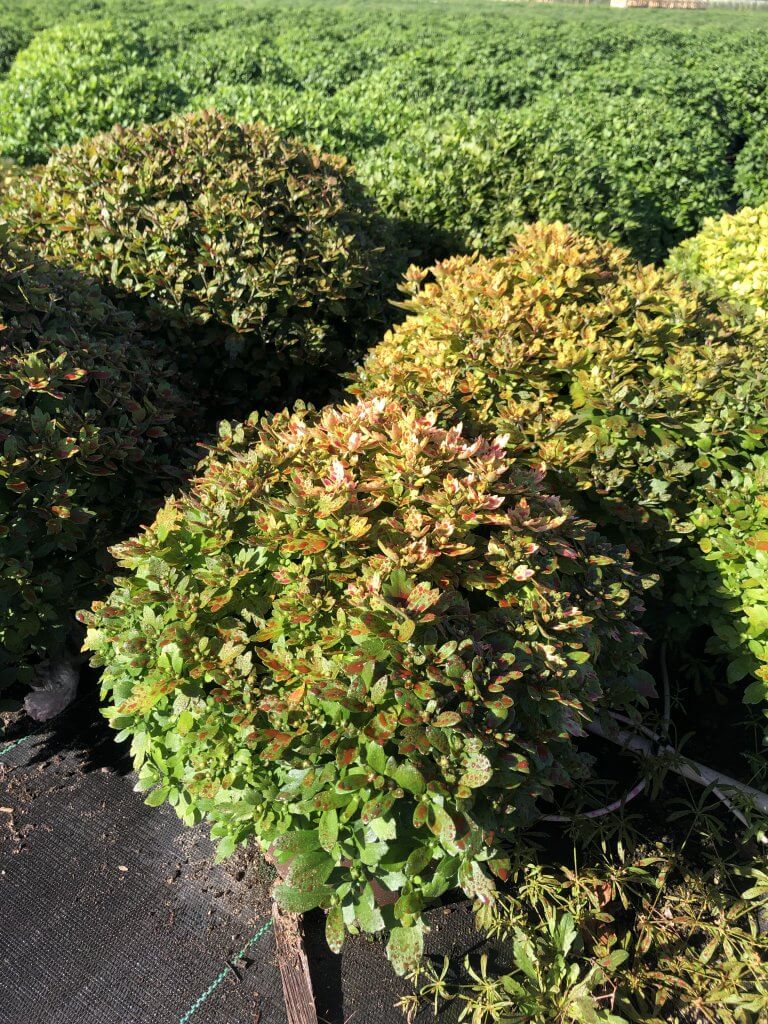
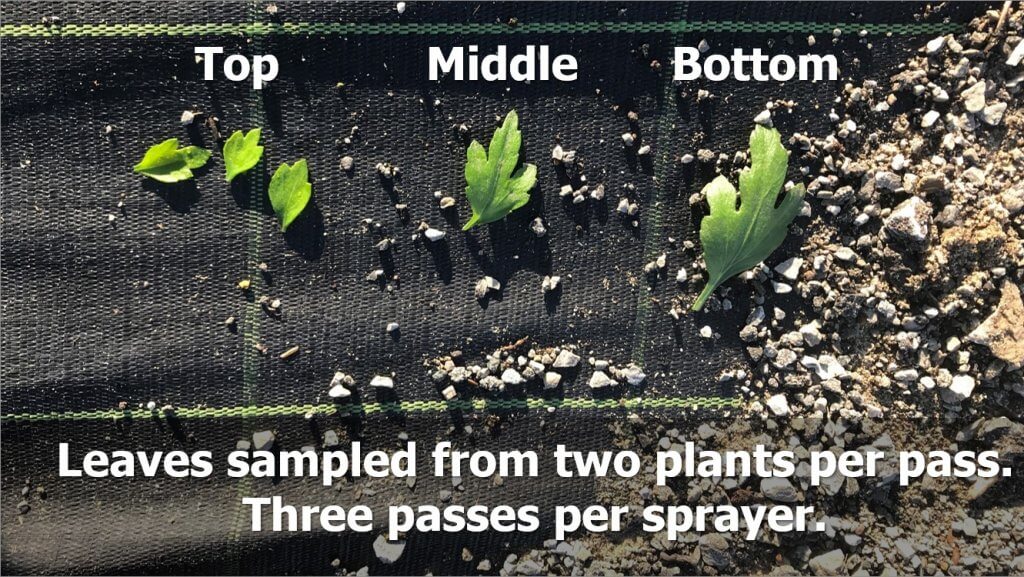
    The crop canopy wasn’t fully mature but still represented a very dense target. In order to compare canopy penetration the canopy was divided into three depths: The Top exterior, the Middle (8″ from ground) and the Bottom (just above the pot soil). Each treatment area contained 8×2 plants and a buffer of three plants was maintained between treatments. We made three sprays (reps) for each condition.

    Sprayers

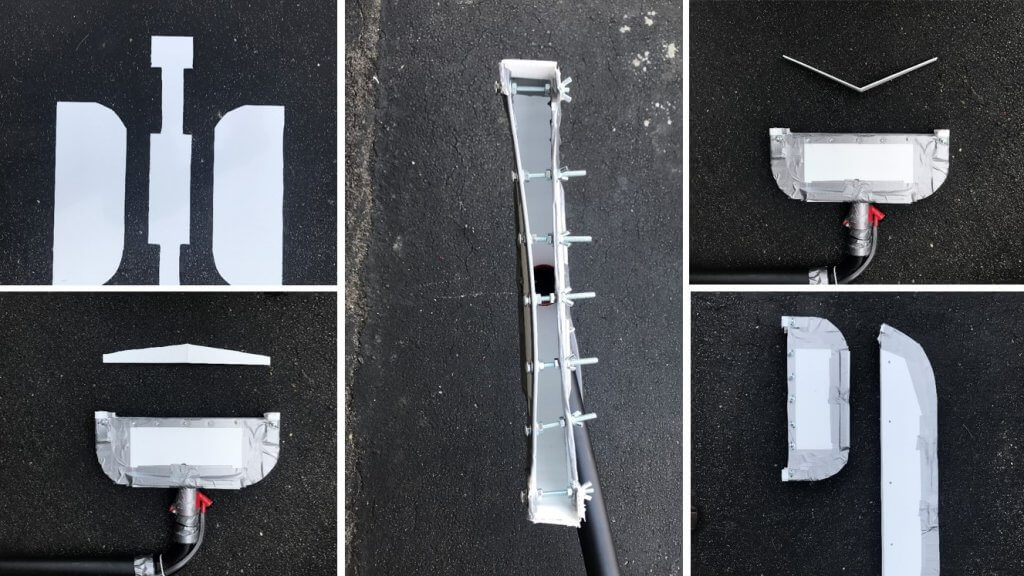
    Several attempts were made to redirect and redistribute air from a commercial backpack mist blower. The goal was to create an air outlet that would distribute the same air speed over a long and narrow swath. Air is highly compressible and early attempts using baffles, straightening vanes and variable outlet sizes were unsuccessful. A compromise was reached by reducing the swath to about plant-width (40 cm). This was confirmed by spraying water on dry pavement and measuring the width of the swath. While not ideal, the operator could span the full 75 cm plot width by shifting the outlet back-and-forth laterally while spraying. There are videos below that show examples of both applications.

    Several iterations of the air outlet design.

    Through trial and error, the outlet was held above the canopy at a height and angle that optimized air penetration. If the outlet was held too far away, there was insufficient air energy to penetrate the canopy. If held too close, too much spray-laden air would escape the canopy. These attempts were performed at a comfortable walking pace to account for dwell time (E.g., the longer the outlet remained stationary over a canopy, the deeper it penetrates).

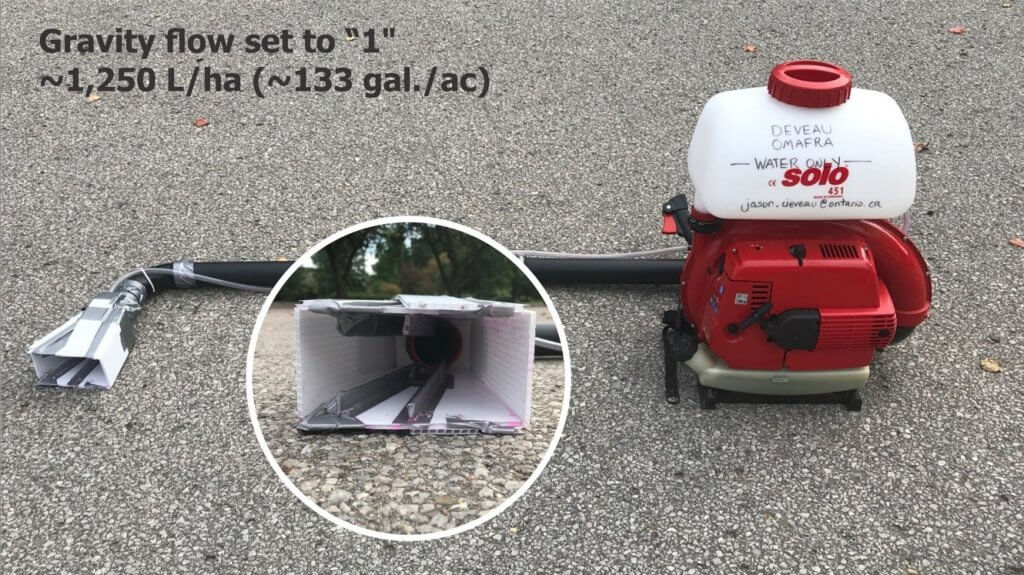
    With the gravity flow set to “1” and moved as it would be used during spraying, we measured walking pace and timed how long it took to spray a known volume. The application volume was 1,250 L/ha (~133 US gal./ac).

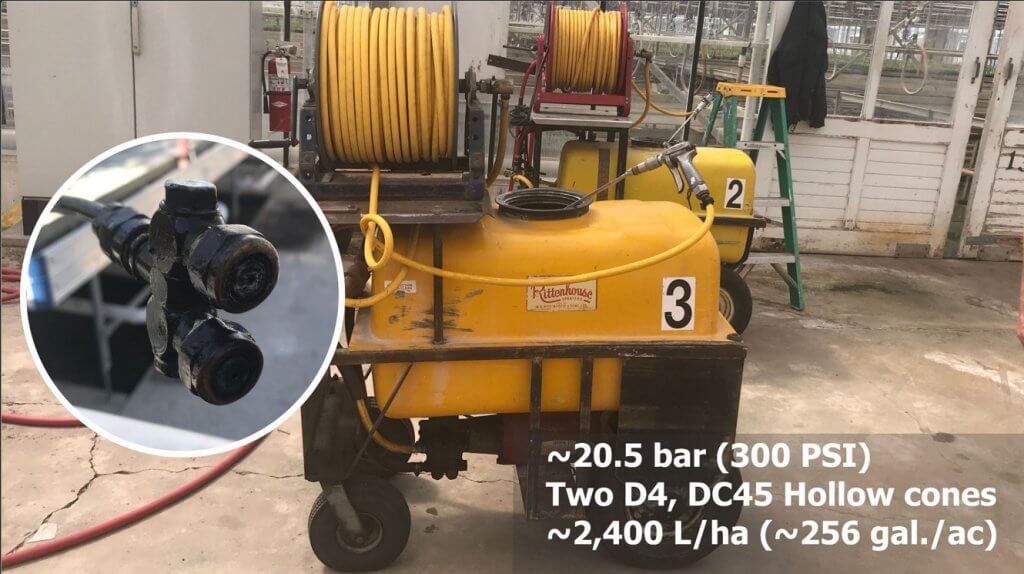
    The grower’s conventional sprayer was used according to their typical practices. Walking pace and flow rate were measured to establish application volume for both sprayers.

    By timing walking pace and performing a timed output test, the application volume was 2,400 L/ha (~256 US gal./ac) for the conventional sprayer.

    Coverage Indicator

    Coverage was quantified using dye recovery and fluorimetry. The process is described in detail in this article and this article. Basically, a known concentration of Rhodamine WT dye is applied to the plant. Sprayed leaves are collected from key locations in the canopy and placed in labelled containers with a known volume of water. Later, that water is analyzed in a fluorimeter and the data is normalized by leaf weight (or in this case, leaf surface area) to account for the volume used and the size of the leaf sampled.

    Dye pooling on leaf surfaces following an application using conventional methods.
    Relative size and number of leaves sampled from each canopy depth.

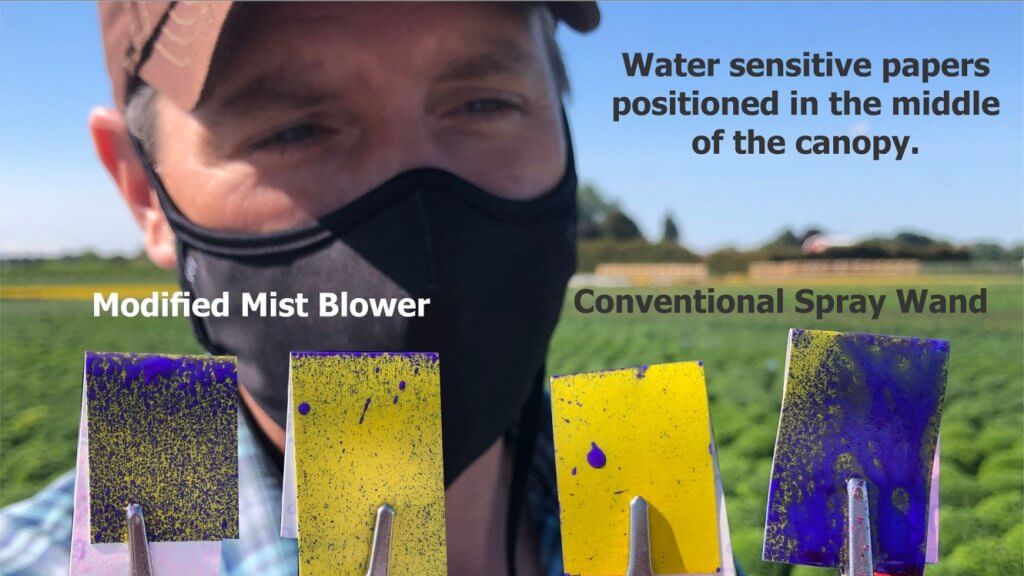
    In addition to dye recovery, we also used water sensitive paper as a qualitative indicator. Papers were placed at the Middle depth facing into and away from the direction of travel and sprayed with both methods. This was used as a visual check to ensure spray went where it was intended, but it also provided insight into how spray might deposit on the leaf surface. As an artificial collector, water sensitive paper does not behave like a leaf surface, but it is helpful for relative comparisons.

    There were obvious visual differences in how spray deposited on water sensitive papers located in the middle of the canopy. The mist blower had far less drenching and an even distribution of finer deposits compared the the conventional method. From left to right: Mistblower, facing sprayer travel direction. Mistblower, facing away from sprayer travel direction. Conventional sprayer, facing away from sprayer travel direction. Conventional sprayer, facing sprayer travel direction. When comparing these papers, remember that the mist blower was using approximately half the volume of the conventional method.

    Results

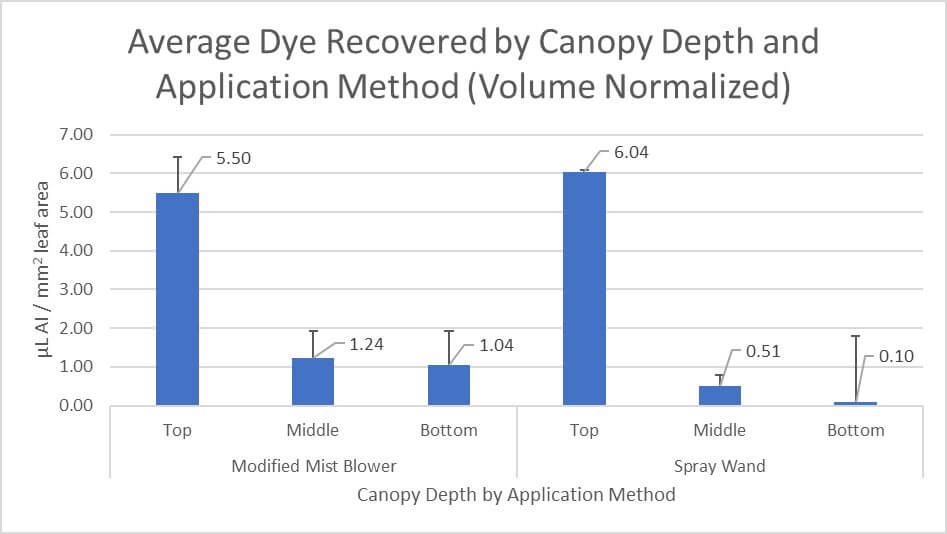
    As mentioned previously, dye recovery was normalized by spray volume and leaf area for each condition. The results align with inferences made in the above image. Spray coverage can be highly variable which often leads to statistically insignificant results, but the mean-dye-recovered does demonstrate clear trends. The top of each canopy received a similar dose of dye for each condition. This comes as no surprise and is typical of any overhead application into a canopy. However, the air-assisted condition resulted in more than 2x the dye in the middle of the canopy and more than 10x the dye at the bottom compared to the conventional method.

    Bars represent standard error.

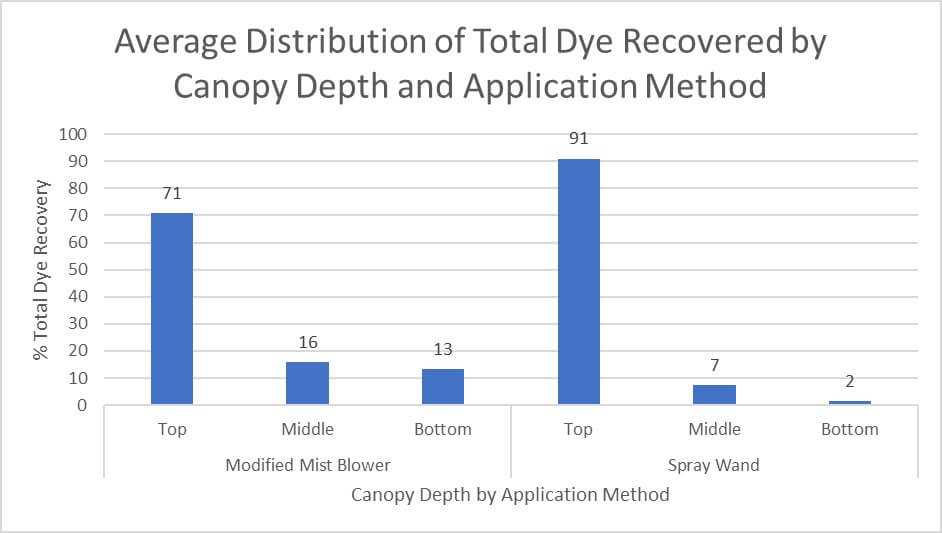
    When considered as a percentage of overall dye recovered, we see that the dye deposited was more uniform in the air-assisted condition. 16% of total dye recovered in mid-canopy in the air-assisted condition canopy versus 7% in the conventional condition. 13% at the bottom on the air-assisted condition versus 2% at the bottom of the conventional condition.

    Conclusions

    Based on this study, there is compelling reason to consider air-assisted applications in closed environments. Canopy penetration and coverage uniformity was improved in the air-assisted condition. In addition, there is potential for reduced water volumes, which mean less contaminated run-off and lower humidity levels in closed environments.

    Future work would require a better-engineered sprayer than the prototype used here. Further, while improved coverage often improves spray efficacy, it is not always a direct correlation. An efficacy study comparing crop damage and pest counts should be performed to confirm that this method of application represents a positive return on investment.

    This research was performed with Dr. Sarah Jandricic, OMAFRA Greenhouse Floriculture IPM Specialist. Thanks to Schenk Farms and Greenhouses Co. for collaborating in the study.

  • Should Backpack Sprayers be Used to Test Airblast Products? – Part 2

    Should Backpack Sprayers be Used to Test Airblast Products? – Part 2

    In Part One of this article, we showed that approximately 40% of minor use label expansions and registrant submissions rely on data from hand booms and guns. We also showed that a hydraulic backpack or knapsack will not give the same coverage as an airblast sprayer, and we concluded by suggesting that small plot researchers use spray equipment that reflects grower practices.

    Unfortunately, practical logistics prevent most researchers from using a full-size airblast sprayer. They may not have access to such a sprayer, and if they do, it takes considerable time to mix and clean between treatments. Further, treatments are often only a single row, or even a single plant. It takes too much pesticide, too much time, and too much plot space to justify using a full-sized airblast sprayer, even if the relevance of the results are questionable.

    Would another method of application better emulate an airblast application but retain the convenience of a hand boom or gun?

    The motorized backpack mistblower

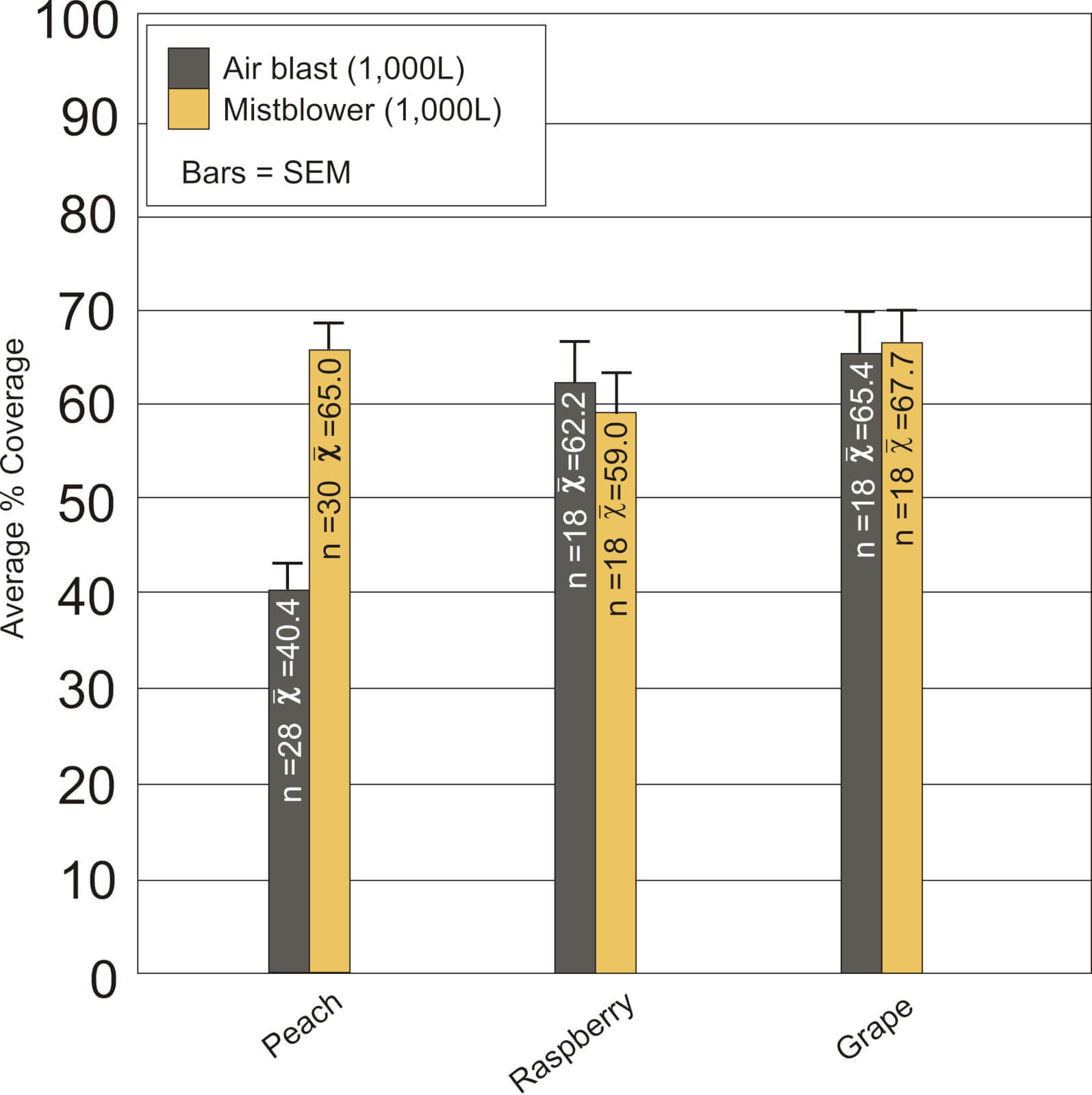
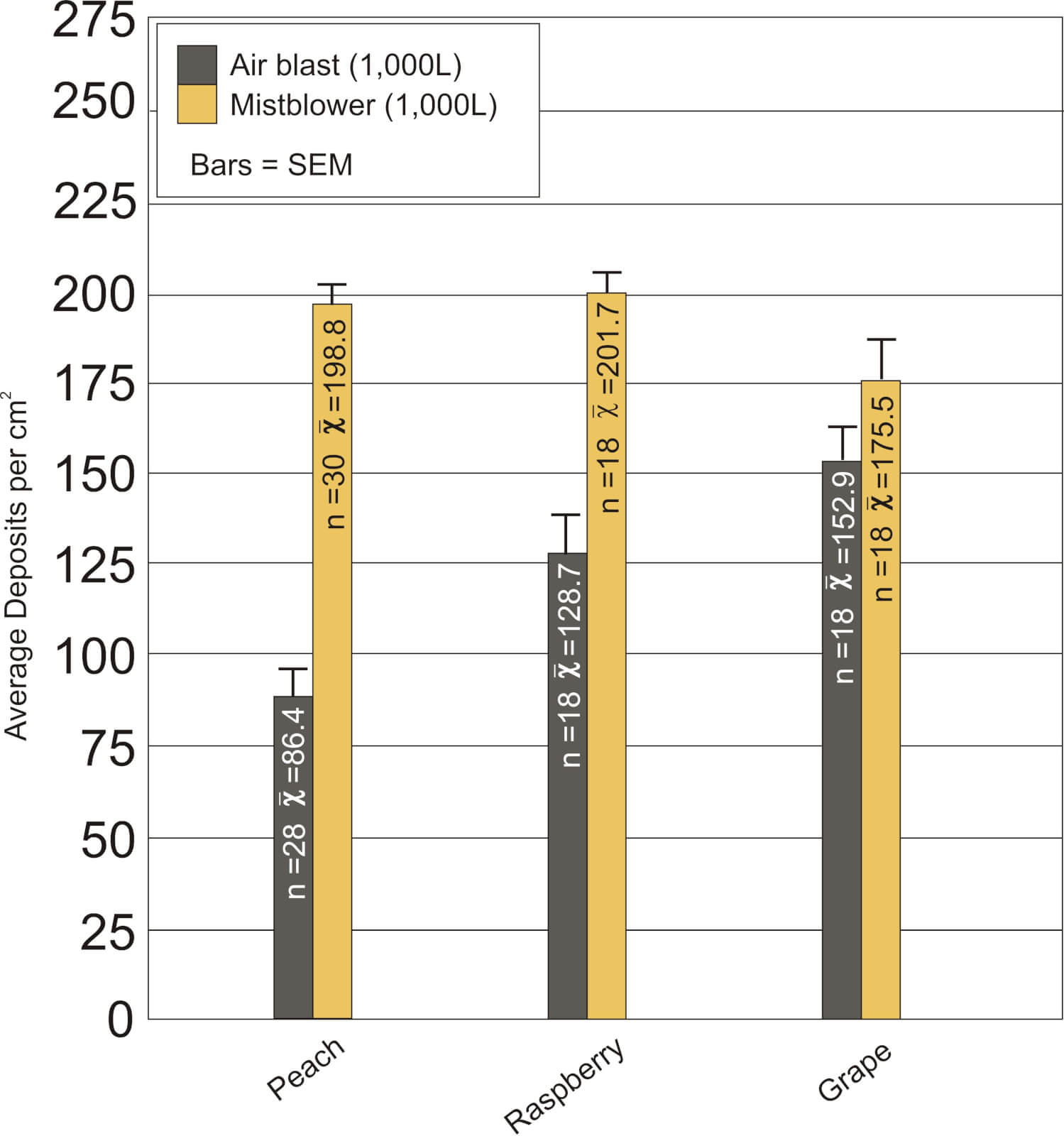
    Using the same methods used to compare airblast to hand boom spray coverage in the previous article, we compared airblast sprayer coverage to that of a motorized backpack mistblower in grape, raspberry and peach (July, 2013). Once again, coverage was analyzed as overall percent coverage (see first graph) and droplet density (average droplets per square centimeter – see second graph).

    Comparison of average % coverage in peach, raspberry and grape using a mistblower and air blast sprayer emitting he same volume
    Comparison of droplets per square centimetre in peach, raspberry and grape using a mistblower and air blast sprayer emitting the same volume

    Results and Observations

    The mistblower met, or in the case of droplet density, exceeded the coverage obtained using an air blast sprayer in most crops. The results led to a few observations:

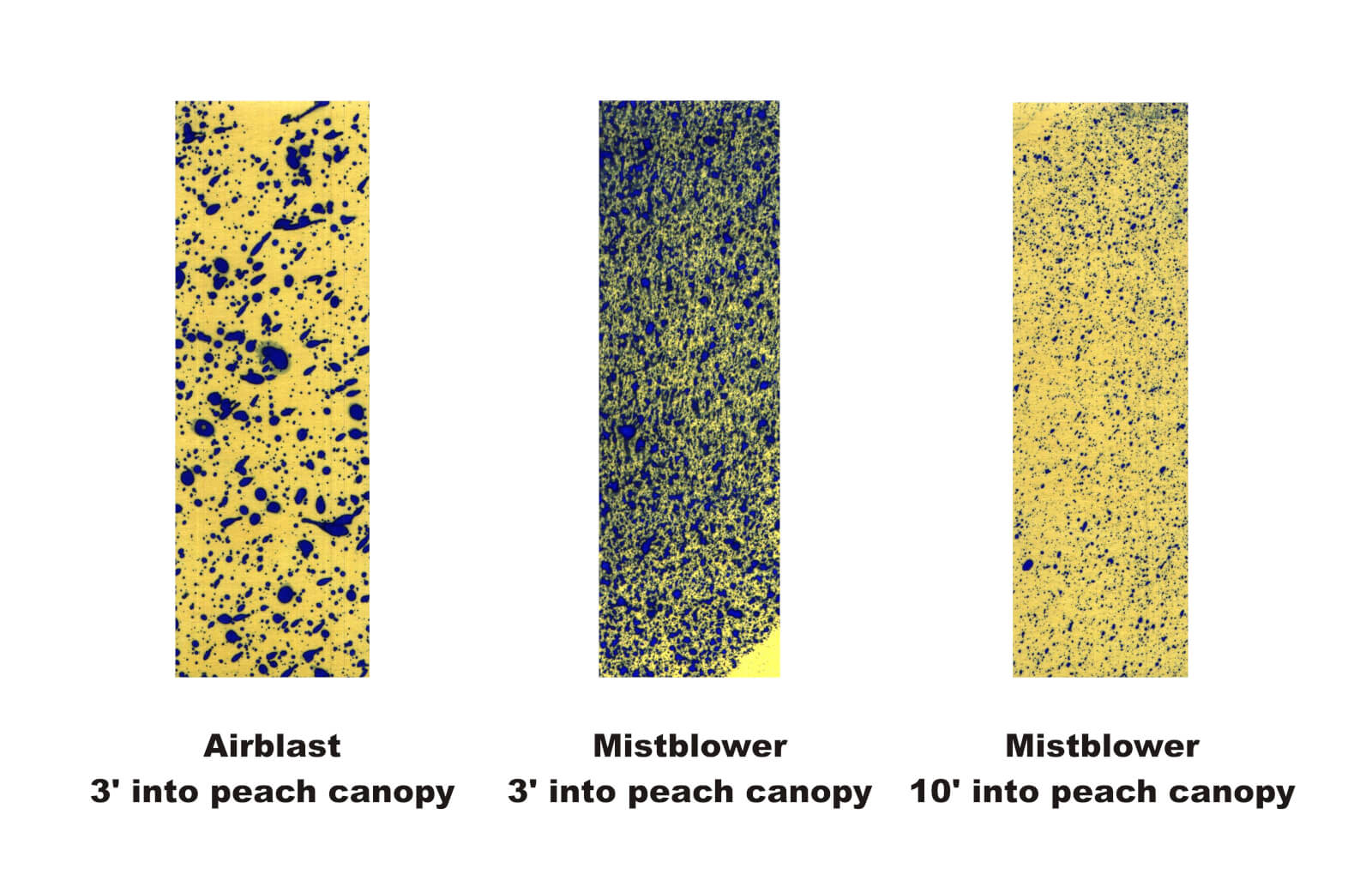
    • The significantly-higher droplet density is a function of the Finer spray quality produced by the mistblower (see water sensitive papers below). This may still represent a confound between small plot work and large scale airblast applications.
    • Drift between proximal treatments may be an issue given how far the mist was blown. This should be considered when planning plots.
    • While not shown here, spray coverage was more consistent throughout each canopy, of each crop, when using the mistblower. This is likely because the operator was able to aim the output as they swept the spray over the canopy, thereby ensuring all surfaces were hit from multiple angles.
    • While we always try to be brand-neutral, it should be noted that we’ve used multiple Solo mistblowers over the years, and all of them required significant maintenance (no matter how they were cleaned and stored). It was very difficult to find brand parts and repair expertise in Ontario. The Stihl brand currently has far more dealers, and more accessible parts, and has not caused us any difficulties (yet).
    • Always use the highest grade gasoline in two-stroke engines to avoid ethanol gumming up the carburetors!
    • Always calibrate mistblowers by volume because raising and lowering the boom will affect the flow rate.

    Conclusion

    Hand booms, and likely hand guns, are not appropriate for testing agrichemical products intended for use with an airblast sprayer. Data derived from these methods should be questioned. An airblast sprayer is the best choice for any such research, but a mistblower is a viable alternative. Transparent, standardized operating protocols for testing products intended for use in airblast sprayers should be required.

    Thanks to Vaughan Agricultural Research Services Ltd. for their assistance in the research performed for this article.

  • Should Backpack Sprayers be Used to Test Airblast Products? – Part 1

    Should Backpack Sprayers be Used to Test Airblast Products? – Part 1

    Peer-reviewed journal publications claim there is a significant difference in spray coverage and deposition patterns when an agrichemical product is applied using an airblast sprayer versus a hydraulic hand boom. An airblast sprayer creates Fine droplets that shear in entraining air and are carried into a plant canopy. Properly calibrated, the air opens the canopy to expose all target surfaces to the spray. By comparison, a hand boom relies on pressure to propel fine droplets into a canopy, and while there is some air-entrainment surrounding the spray, it cannot travel as far or displace as much canopy. As a result, most of it impacts on the outer surfaces of the canopy.

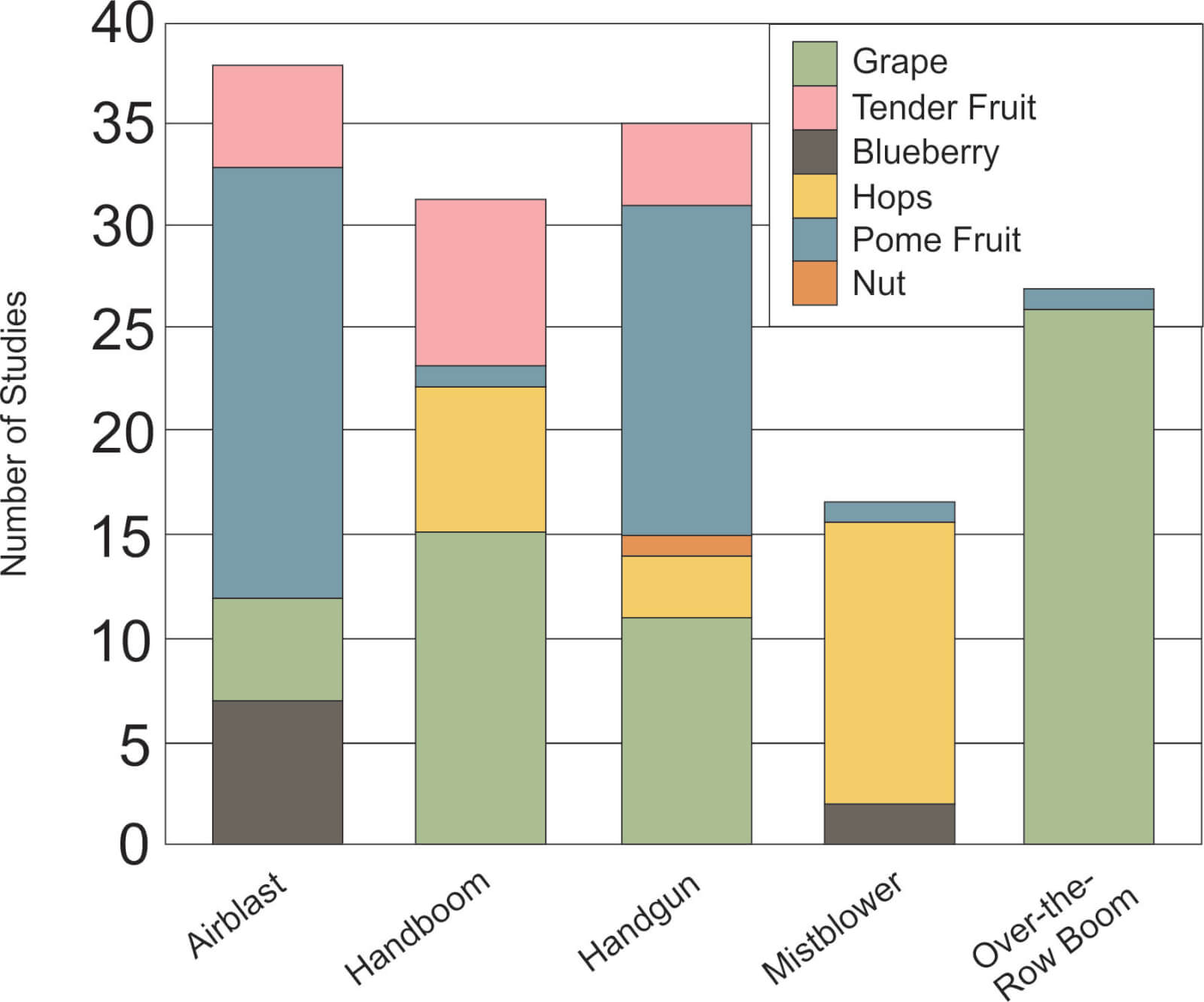
    Knowing this, it is surprising that so many products intended for use with airblast sprayers are applied by researchers and consultants using hand booms or the high-pressure arborist-style handgun (see ‘Survey of Submissions’).

    Survey of Submissions
    This graph represents a random selection of 150 minor use label expansion studies and registrant submissions from Canada and the USA spanning 1990 to 2011. It shows the application method by crop.

    In 2012, we performed some research with the following goals:

    • To demonstrate the difference between spray deposition and coverage when using a hand boom versus an airblast sprayer.
    • To create a sound basis for questioning and potentially improving how agrichemical products for orchard, bush, and vine are tested in Canada.

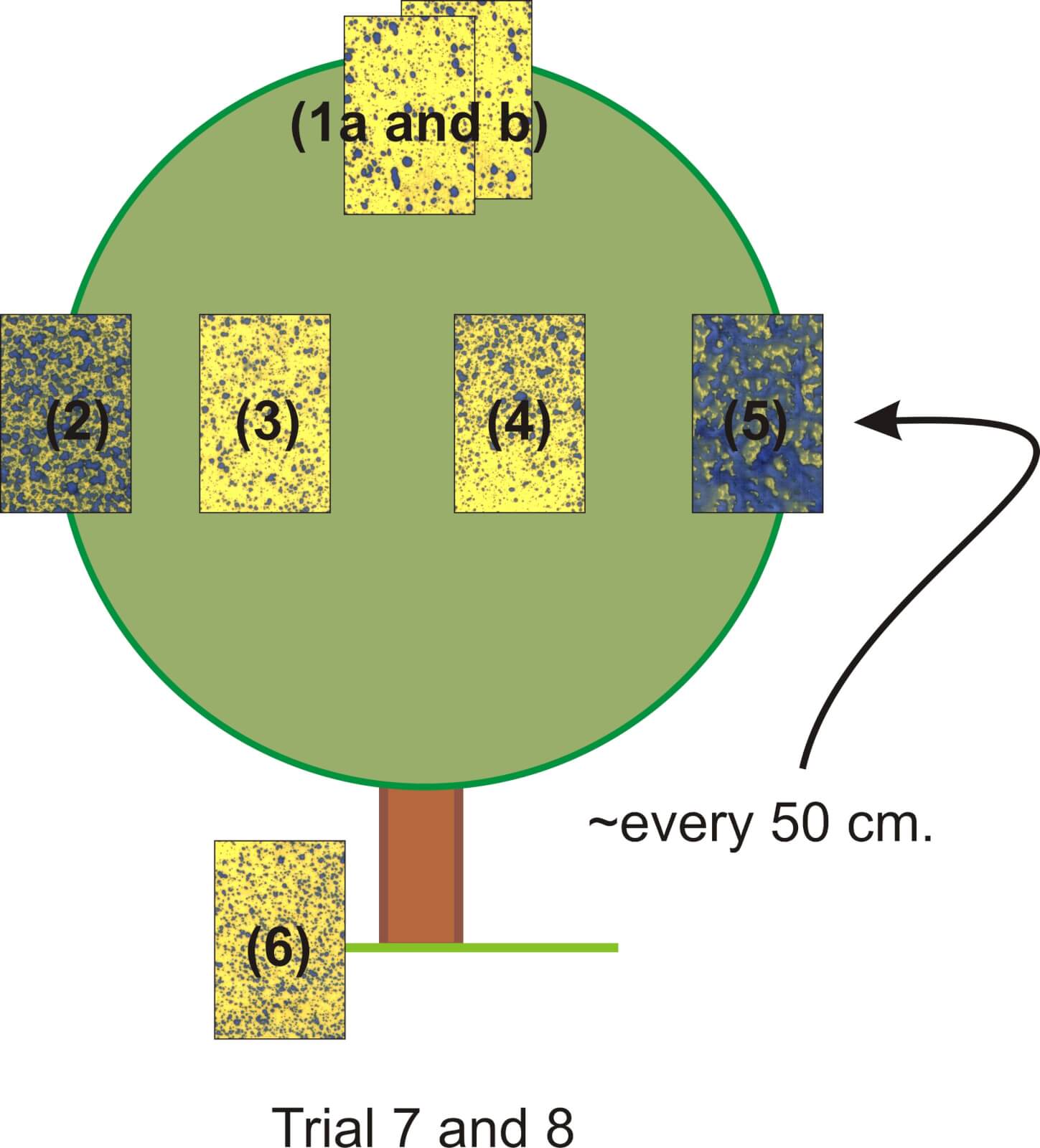
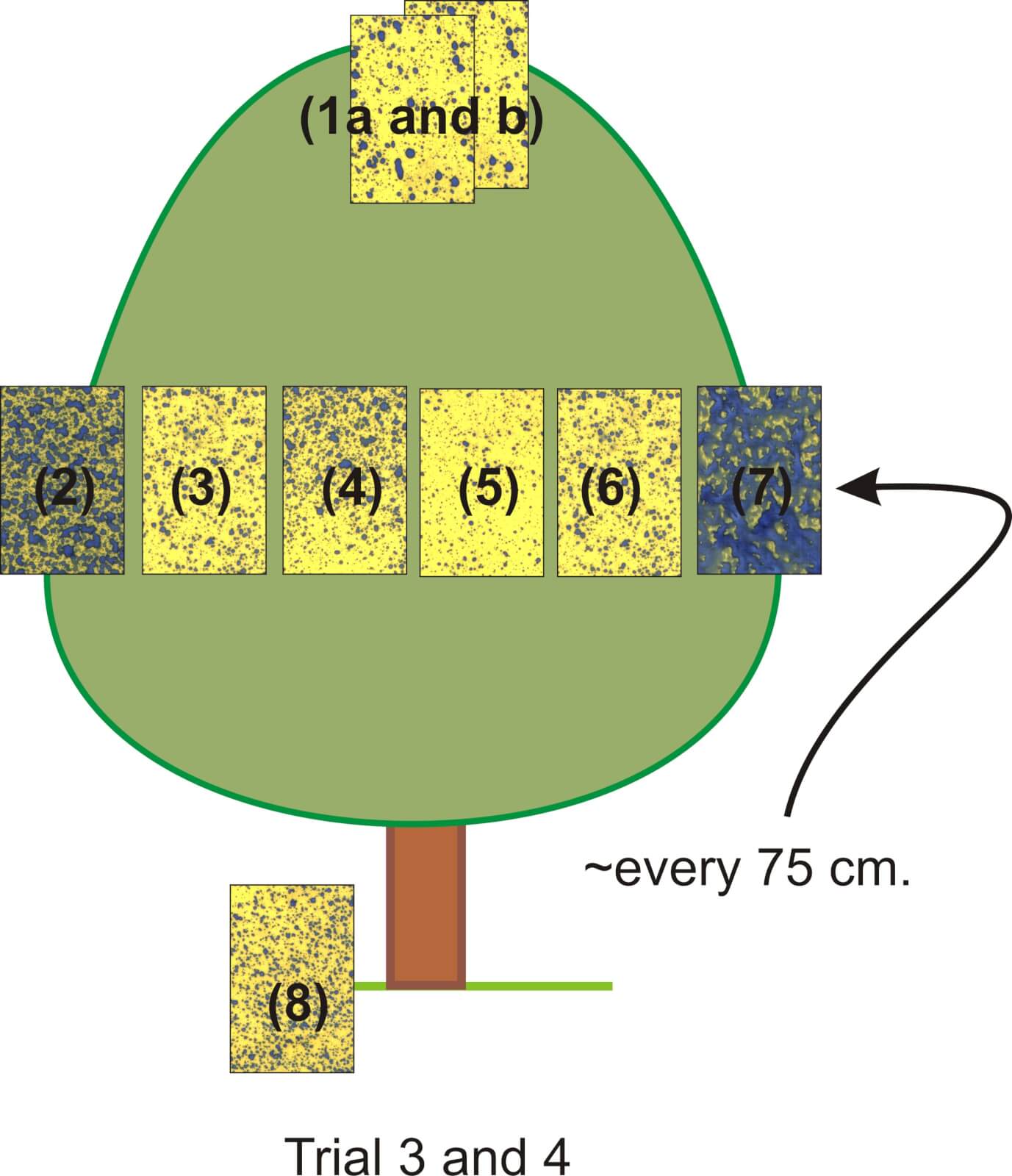
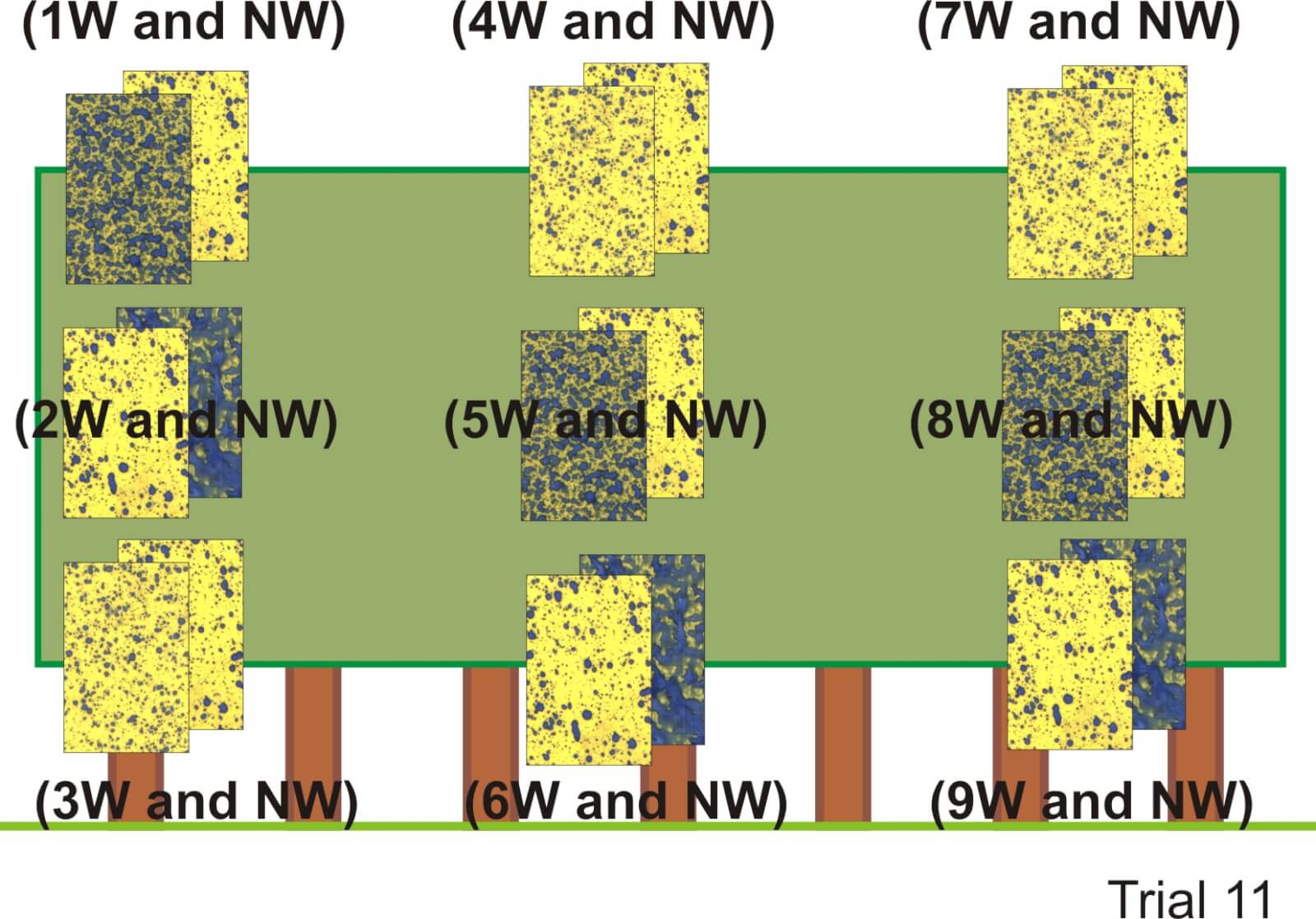
    Using water-sensitive paper to diagnose spray coverage, airblast sprayer application was compared to hand boom application in highbush blueberry, apple and grape.

    Target locations in highbush blueberry.
    Target locations in apple.
    Target locations in grape panel.

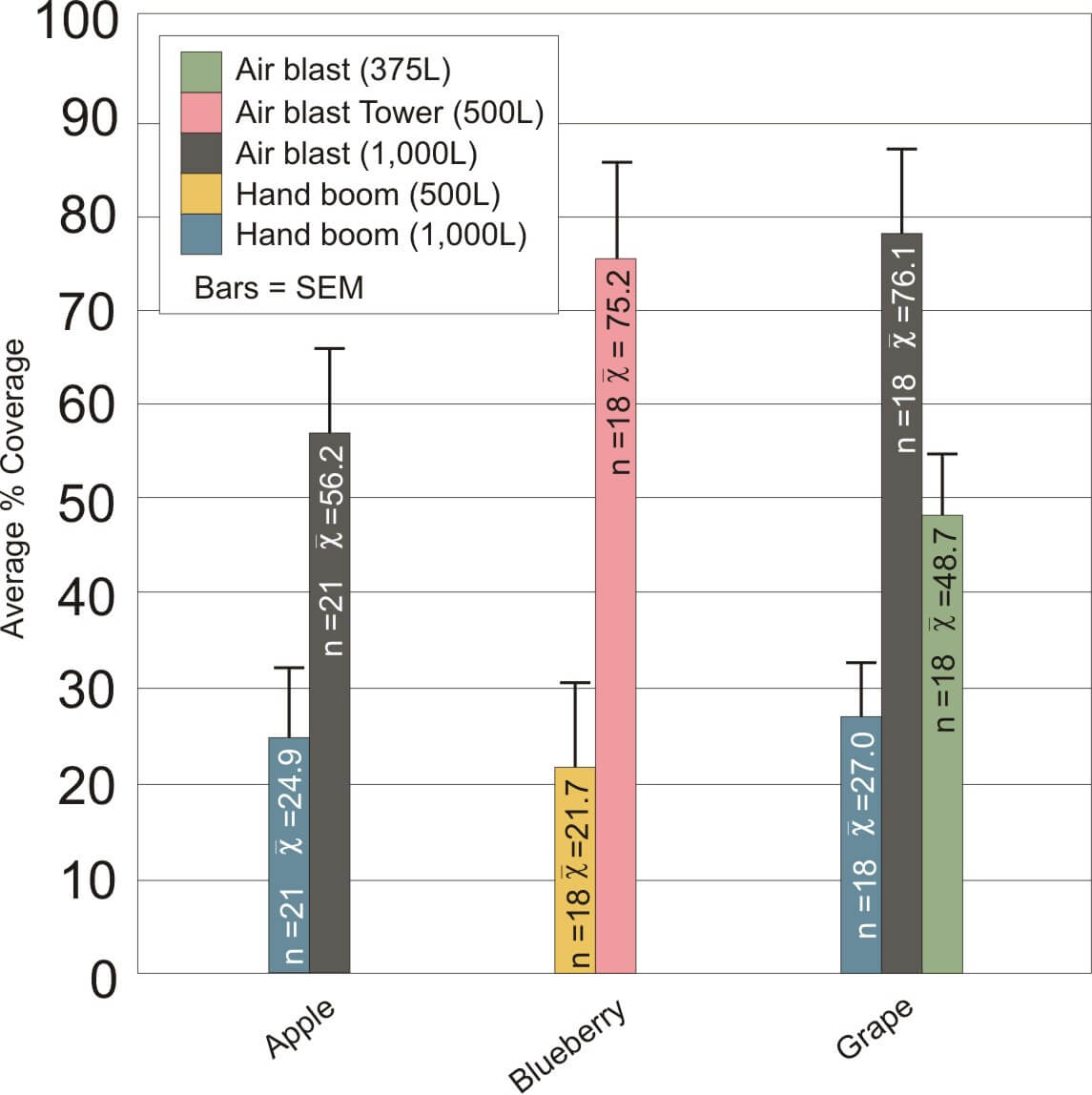
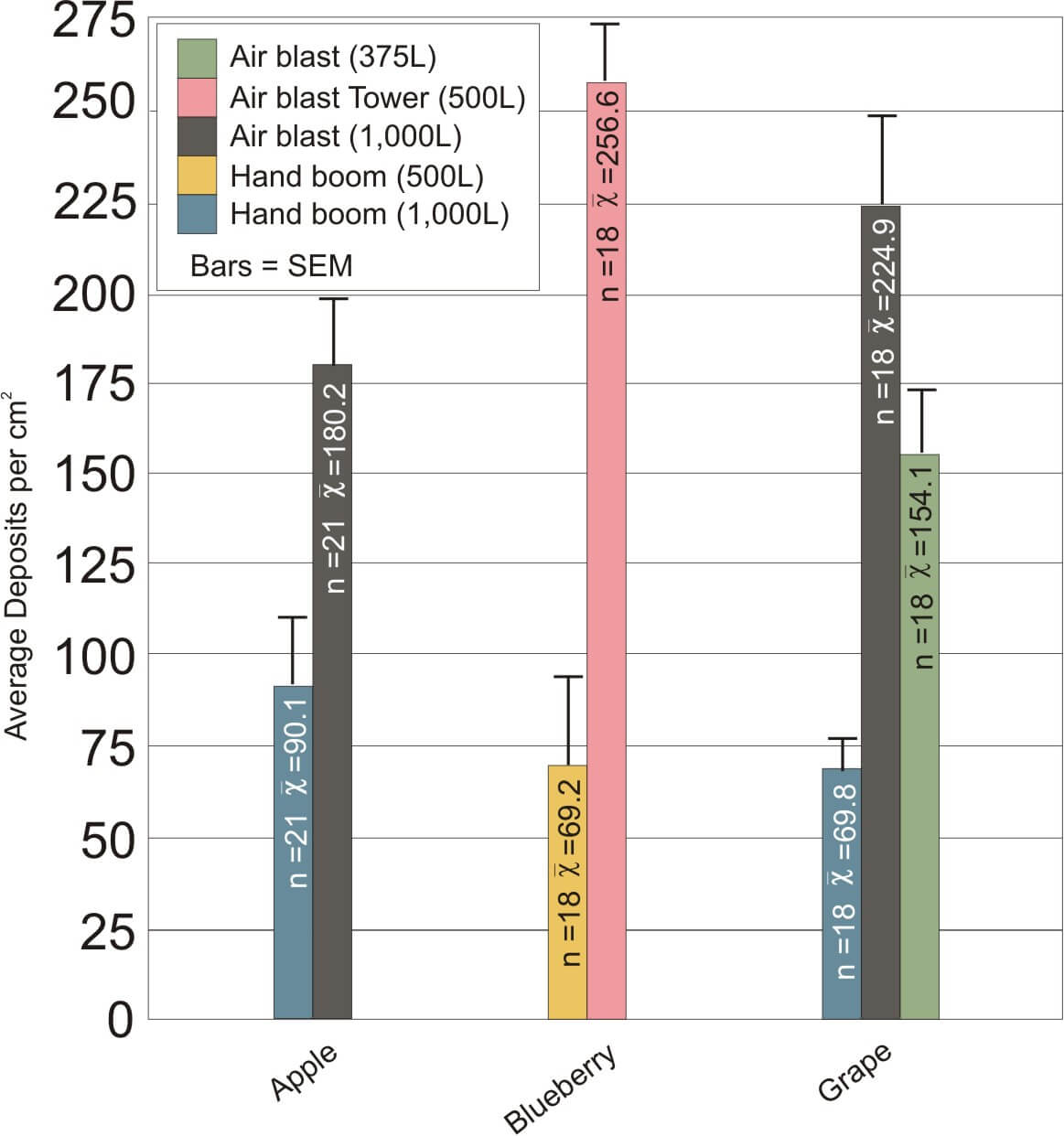
    Sprayers were calibrated to emit the same volume per planted area via hollow-cone nozzles. Volumes selected were based on typical application volumes for Pristine or Captan (commonly sprayed in Canada). While there is no standardized protocol (and there should be) we followed typical practices of 500L/ha for grapes, blueberry and apples until plant growth warrants higher carrier volumes. At that point, many researchers go up to 1,000 L/ha. Coverage was quantified by collecting and digitally scanning water-sensitive papers to calculate overall percent coverage (see graph) and droplet density (average droplets per square centimeter – see graph).

    Overall percent coverage
    Droplet density

    Conclusion

    In all cases, airblast applications deposit > %50 more spray than a hand boom. In the case of grape, you’ll note there are three bars. This is because spraying 1,000 L/ha with the airblast sprayer drenched the targets (it was late in the season and the canopy was sparse), making it impossible to discern droplet density. When we reduced the output to  375 L/ha, we were able to register droplet density, which was still significantly higher than that produced by the hand boom at 1,000 L/ha. This raises significant questions about the validity of efficacy and residue studies performed with hand booms when growers apply the same products using airblast sprayers.

    When this data was shared at extension conferences, it was sometimes noted that many researchers choose to spray the target until it is drenched, ensuring the dose administered to the crop reflects what was intended. This does not, however, invalidate the fact that a growers spray equipment and practices are significantly different, and the dose and spray distribution they achieve will not reflect the original research.

    The recommendation is that researchers use the same equipment to test products as the growers use to apply them. But, recognizing the difficulties associated with performing small plot experiments with full-sized airblast sprayers, an alternative is needed. That topic will be addressed in part two of this article.

    Horticultural Crops Ontario, the grower co-operators and former OMAFRA summer student Carly Decker are gratefully acknowledged for making this research possible.