Tag: maintenance

  • Sprayer Wheel Maintenance

    Sprayer Wheel Maintenance

    This article was co-written with Murray Thiessen, Consulting Agricultural Mechanic.

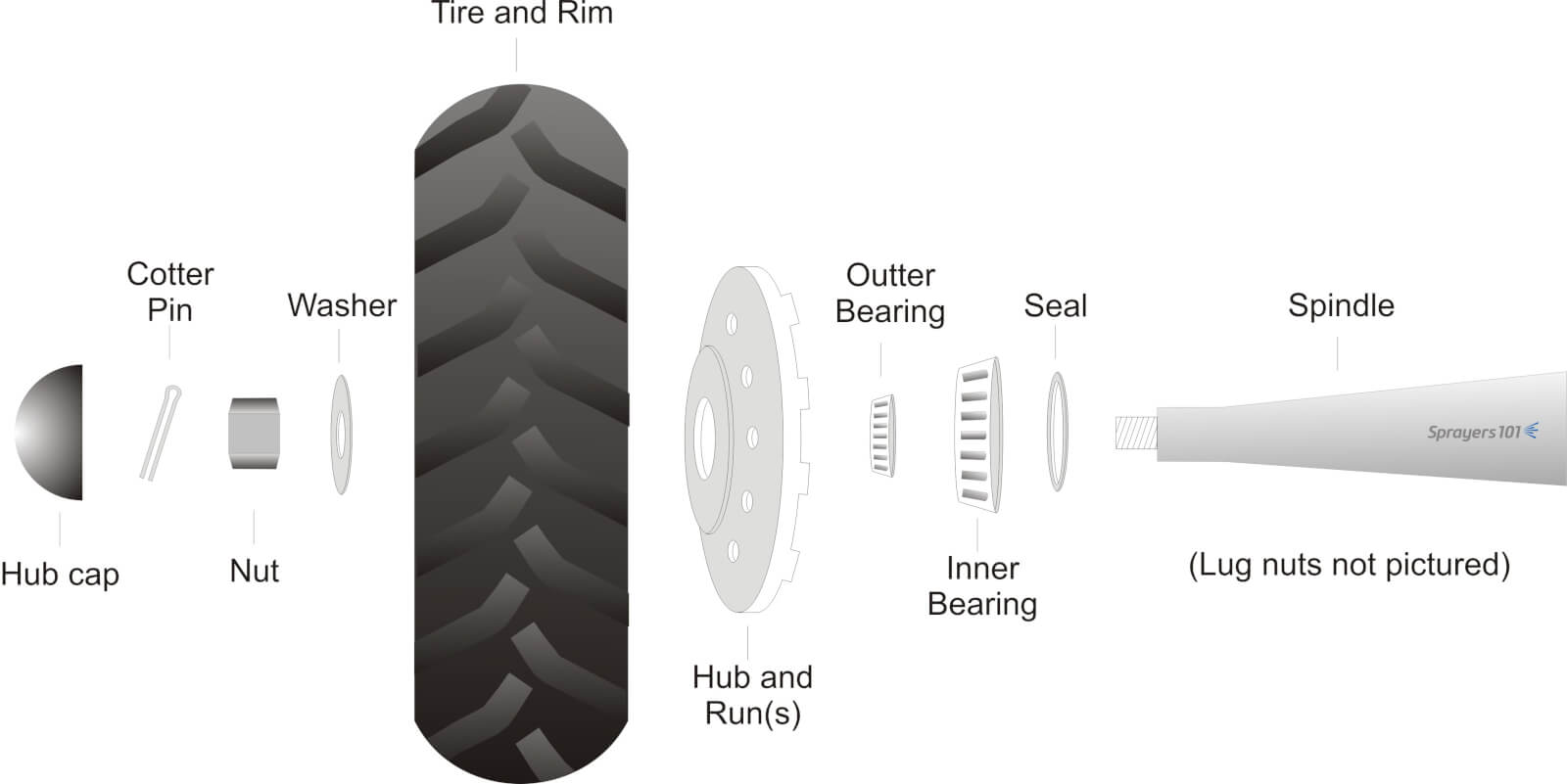
    Sprayer wheel assemblies should be cleaned and inspected as part of regular annual maintenance. Wheel bearing maintenance before long-term storage may prevent water from corroding the bearings. The exploded diagram details the parts found in a typical trailed air-assist sprayer wheel assembly.
    Exploded diagram of typical airblast sprayer wheel assembly.
    Exploded diagram of typical airblast sprayer wheel assembly.

    The following procedure was performed on a 2012 Durand-Wayland sprayer by Mr. Murray Thiessen, Consulting Agricultural Mechanic and renowned “Sprayer Whisperer”. The steps are applicable to most sprayer makes and models. The entire process should take approximately half-an-hour per wheel.

    Step 1

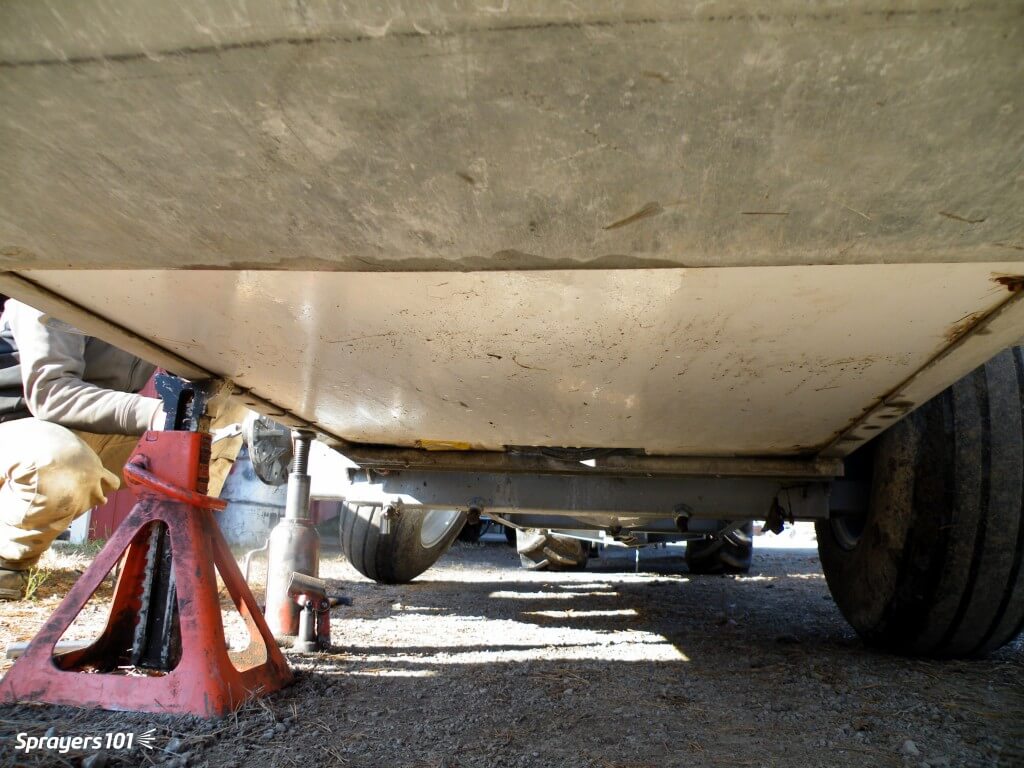
    Empty the sprayer and park it in a well-lit, level spot. Un-hitch the tractor and raise one side of the sprayer using a bottle or floor jack to clear the wheel. Secure the sprayer with a jack stand.
    Raise with one jack, secure with another.
    Raise with one jack, secure with another.

    Step 2

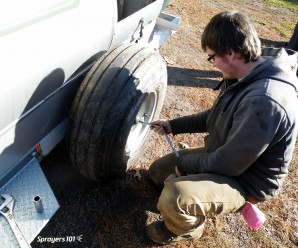
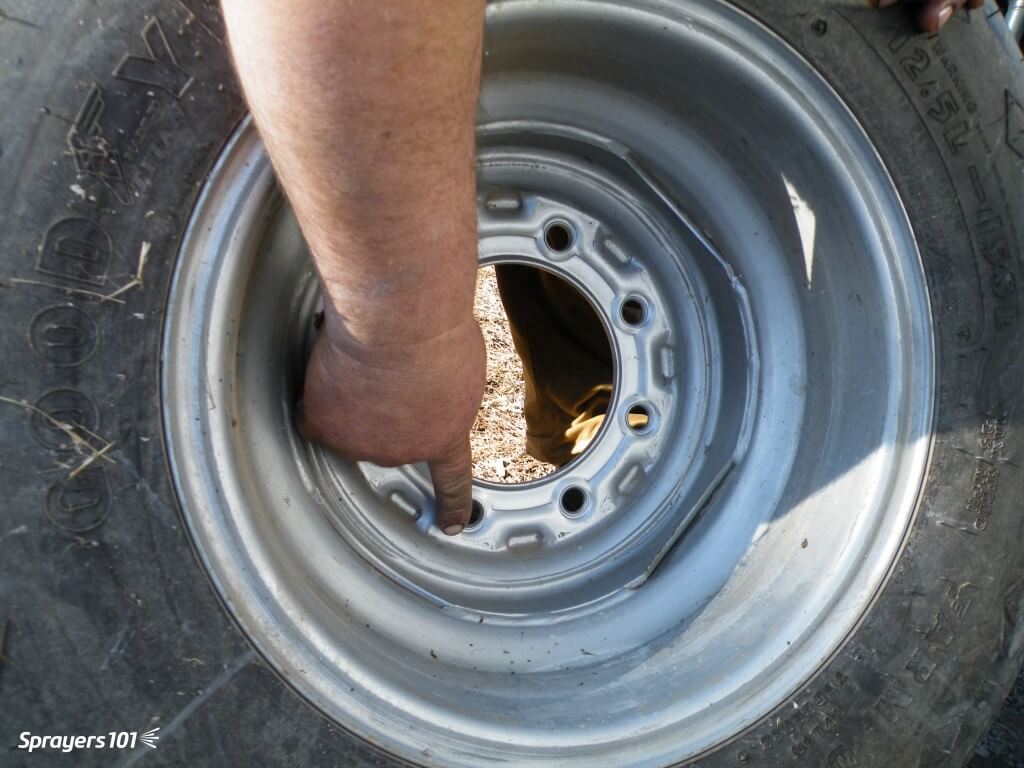
    Remove the lug nuts and take the wheel off the hub. Do not remove the wheel and hub together because it is heavy and you might bang the delicate seal on the spindle. Check the wheel rim for signs of corrosion or distortion (often caused by either loose or over-tightened lug nuts). Check the tread for wear or cuts and check the tire pressure.
    Remove the lug nuts and take the wheel off the hub.
    Remove the lug nuts and take the wheel off the hub.

    Step 3

    Remove the hub cap and pull out the cotter pin. Then remove the nut and washer that hold the hub on the spindle. Put all the small parts in a plastic container with some de-greaser (e.g. Varsol) to clean the parts and keep them from getting lost.
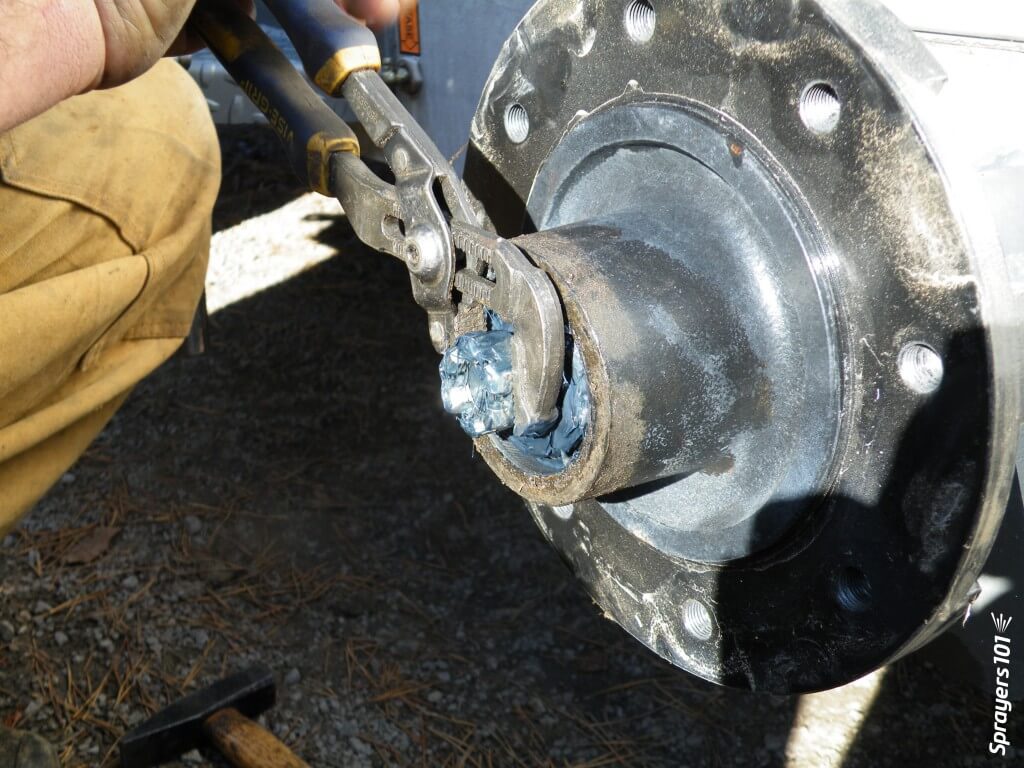
    Remove the nut and washer that hold the hub on the spindle.
    Remove the nut and washer that hold the hub on the spindle.

    Step 4

    Knock out the seal and hub bearing and put them in the plastic container. Unless it is damaged, there should be no need to remove the bearing cup (or race) from the hub. The seal is designed to keep dirt out of the assembly, not to keep grease from escaping. Be sure to note which way it is facing. The seal is often ruined during disassembly; have a replacement on hand.
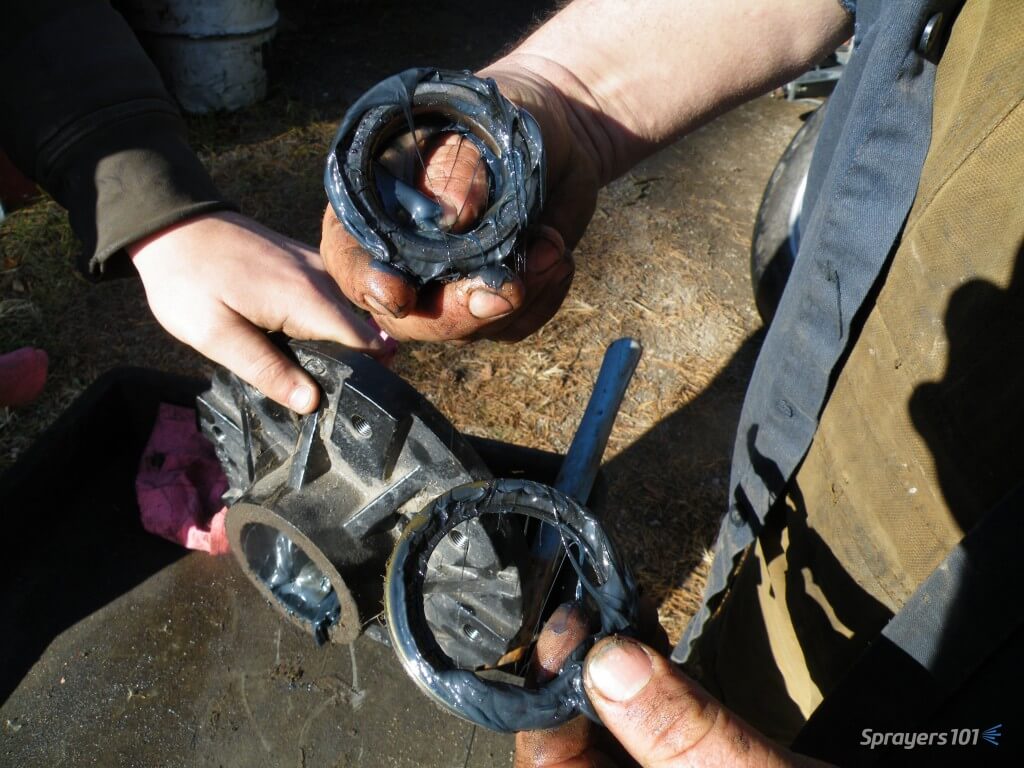
    Knock out the seal and hub bearing.
    Knock out the seal and hub bearing.

    Step 5

    Clean the old grease out of the hub. This hub has too much and it has filled much of the air space (or cavity) within the hub. That air space is provided so grease is not forced out as the hub heats up, and so dirt is not pulled in as the hub cools. Note the colour of the grease – if it is black and stains your hands, it has burned because too much grease has caused overheating. Look for evidence of dirt or water in the bearing, which indicates seal failure.
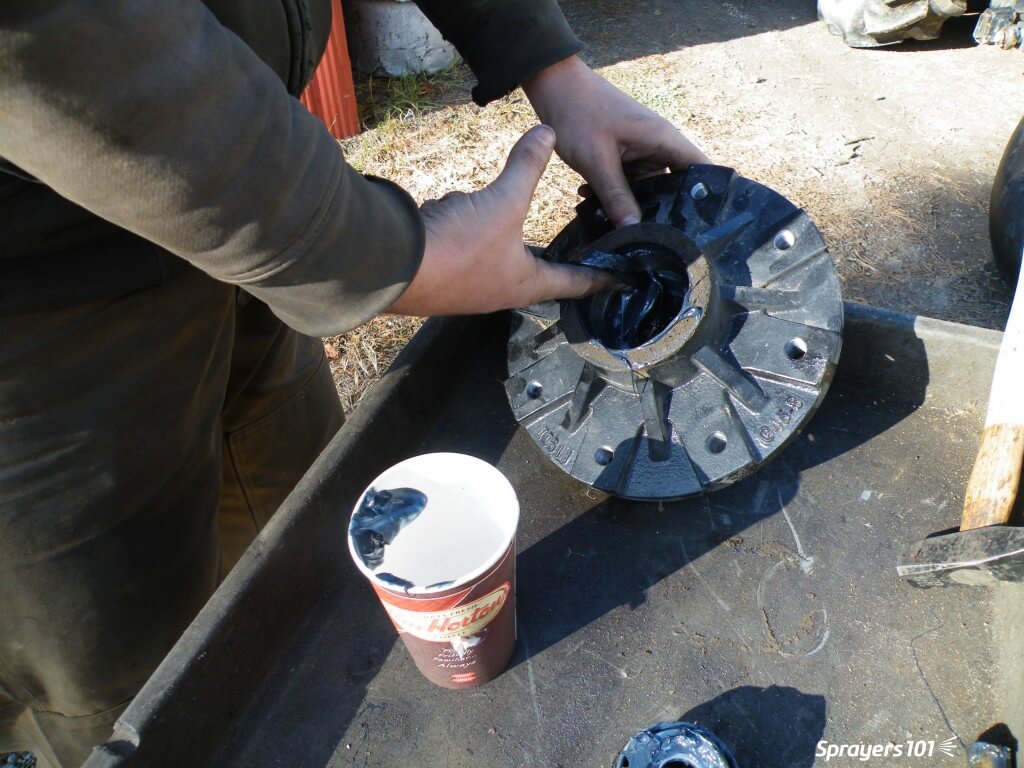
    Clean the old grease out of the hub.
    Clean the old grease out of the hub.

    Step 6

    Wipe dirt from the spindle. Never pressure-wash wheels when they are on the spindles because the spray drives dirt and water past the seal and into the hub. Inspect the sealing surface of the spindle for damage or wear.
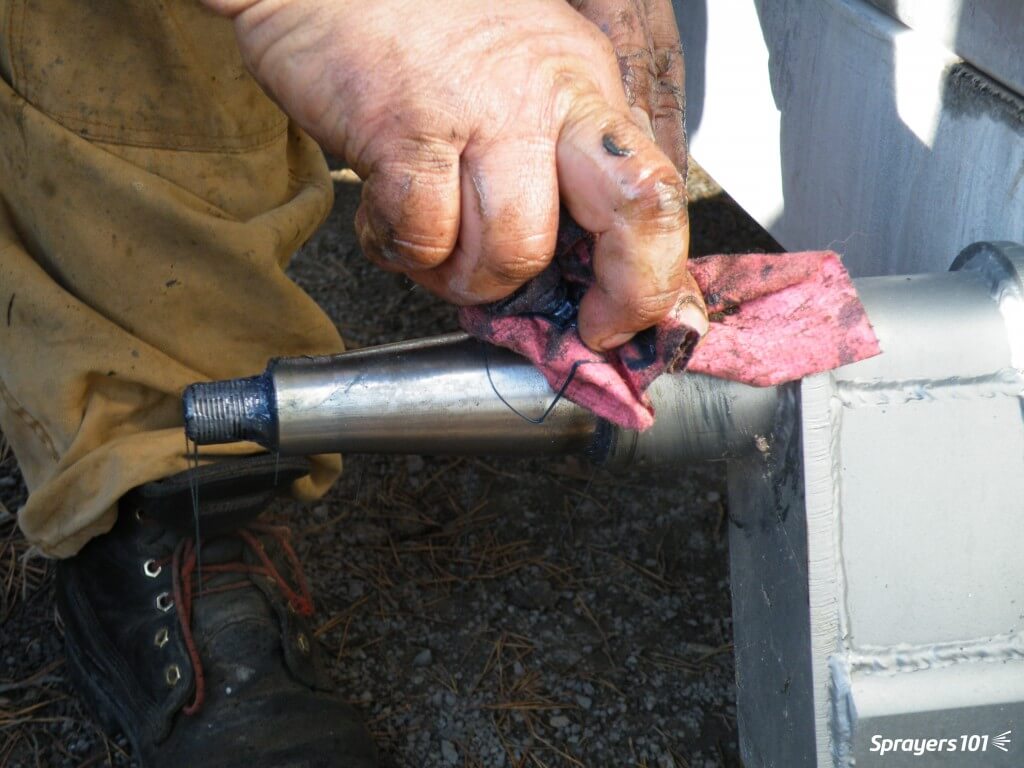
    Wipe dirt from the spindle.
    Wipe dirt from the spindle.

    Step 7

    Clean the seal thoroughly. Seals are easily damaged and may need replacement.
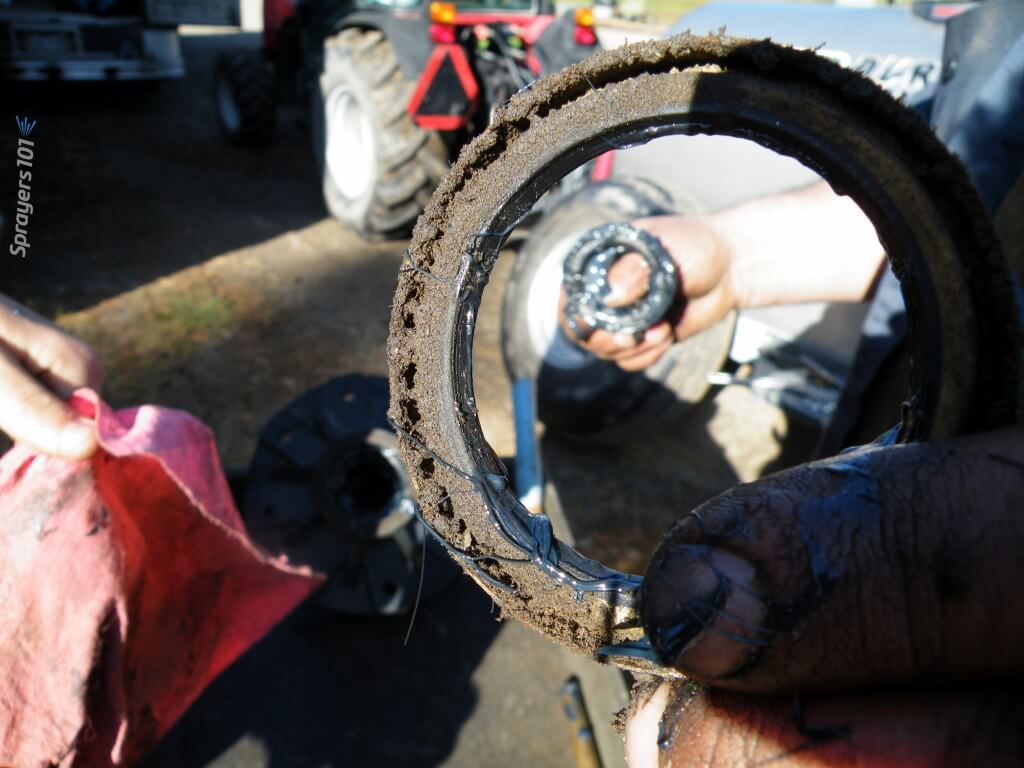
    Clean the seal thoroughly.
    Clean the seal thoroughly.

    Step 8

    Clean the hub bearing. Compressed air is a good way to get all the old grease out, but do not spin the bearing with the air.
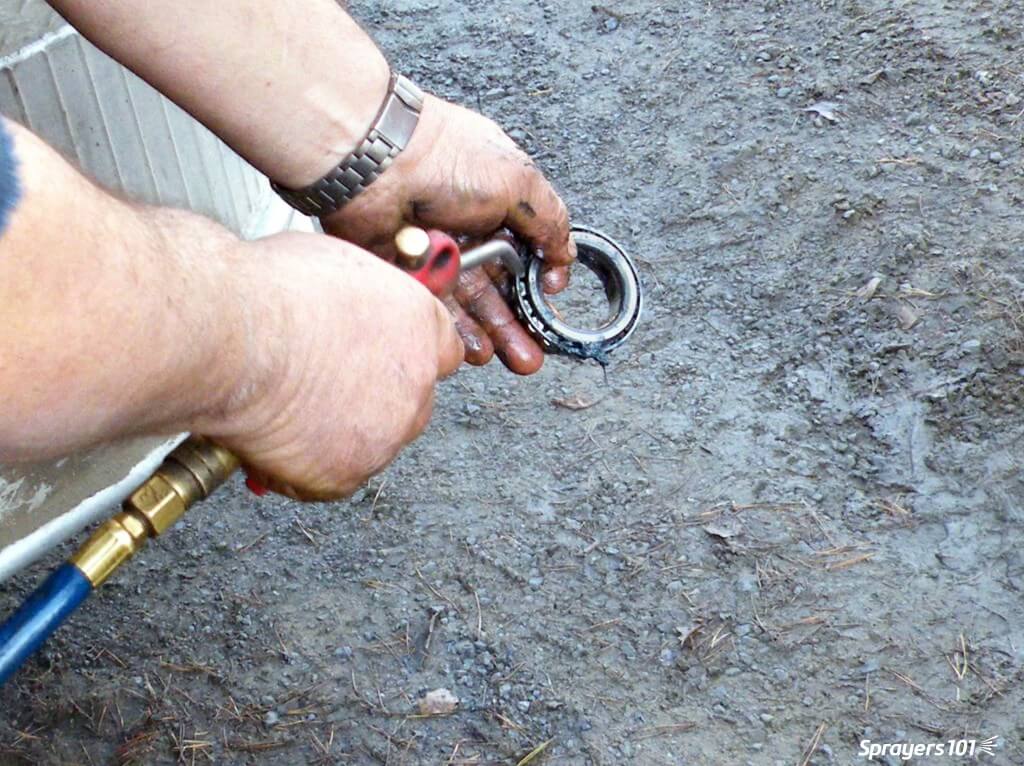
    Clean the hub bearing.
    Clean the hub bearing.

    Step 9

    Look for scratching, pitting or blue metal (indicating heat). This scorch mark indicates the bearing was moving on the spindle, and the friction created heat. Agricultural wheel bearings do not fit tight to the spindles. If there is too much clearance, the bearing race will turn on the spindle where it is not supposed to.
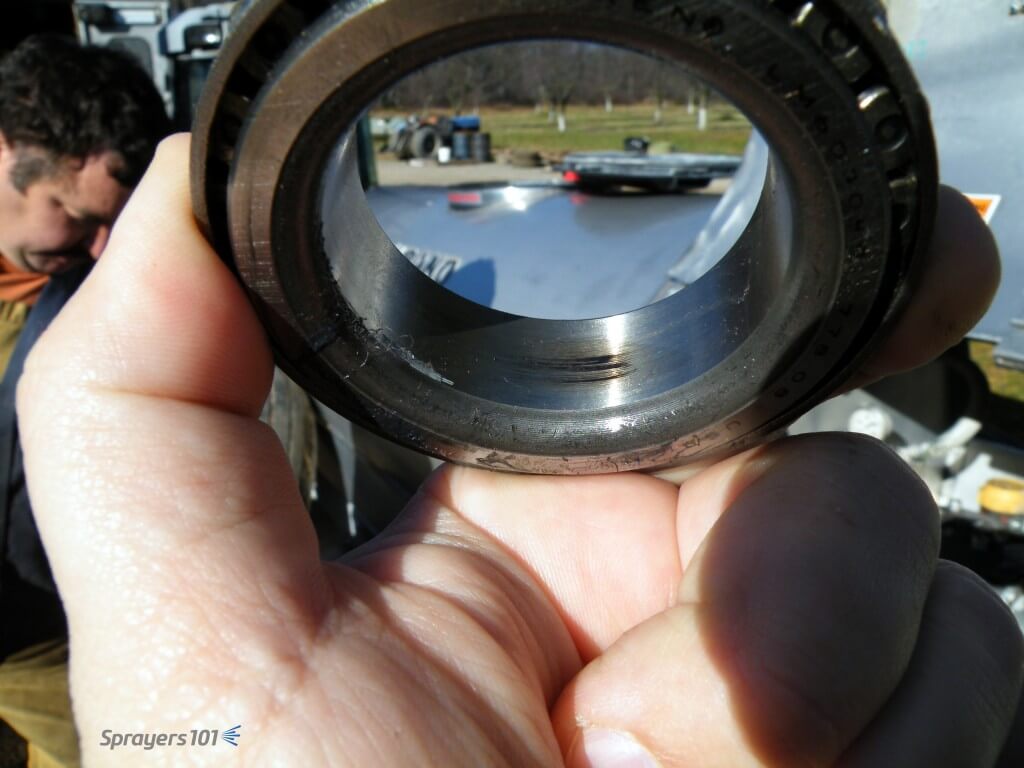
    Look for scratching, pitting or blue metal (indicating heat).
    Look for scratching, pitting or blue metal (indicating heat).

    Step 10

    Repack the bearings, reassemble the hub and re-grease the hub. Bearings should only be ~40% full. Too much grease creates heat and does not let the bearing roll properly. Too little increases friction. No matter which grease you choose to use, never combine greases; they may not be chemically compatible.
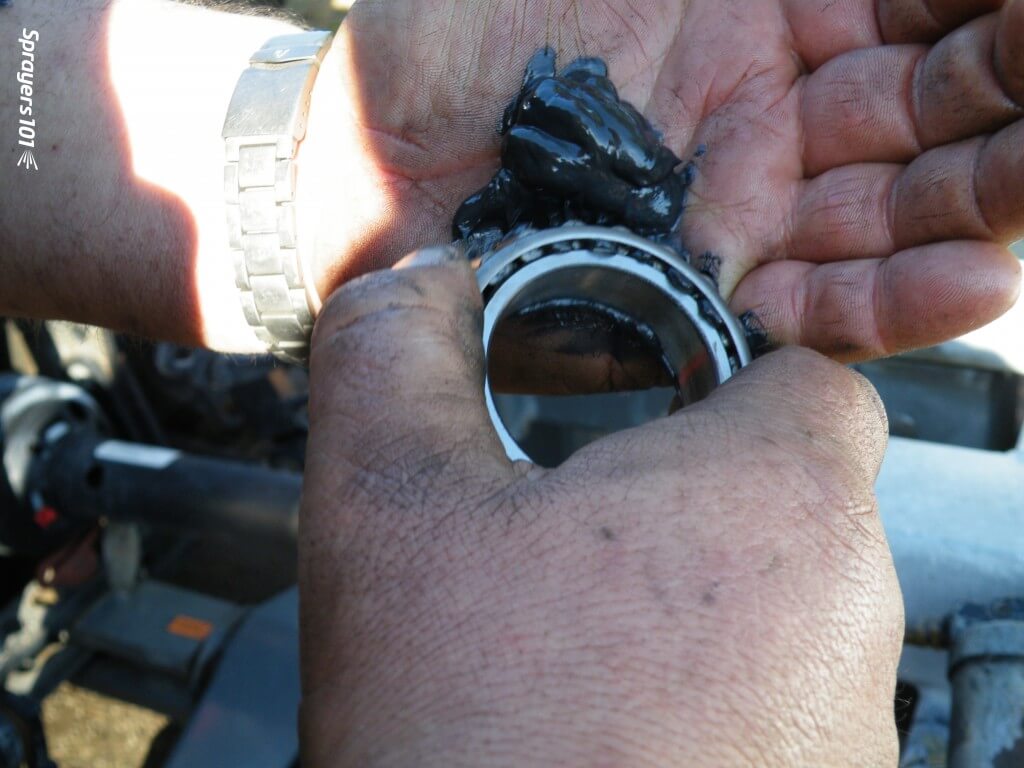
    Re-pack and reassemble.
    Re-pack and reassemble.

    Step 11

    Mount the hub tightly on the spindle. Replace the washer, cotter pin, nut and cap. There is no need to bend the arms of a cotter pin all the way back – it weakens the metal. Just bend one arm to 90° and cut off the excess. Use anti-seize on the wheel pilot to make the rim easier to remove next time.
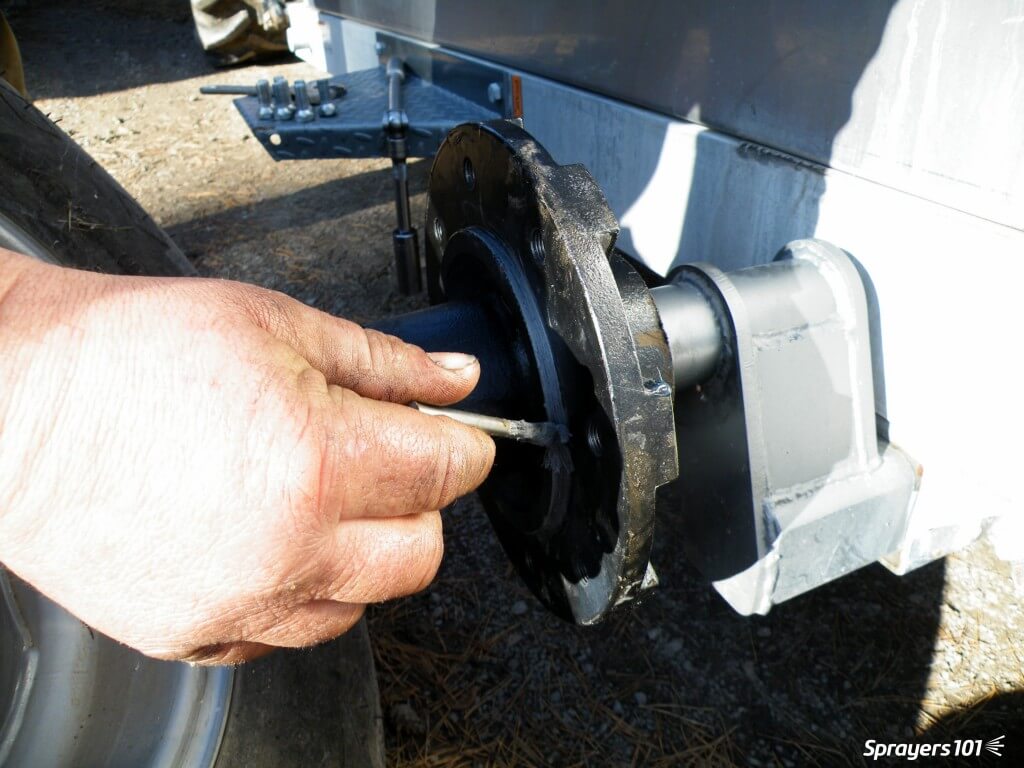
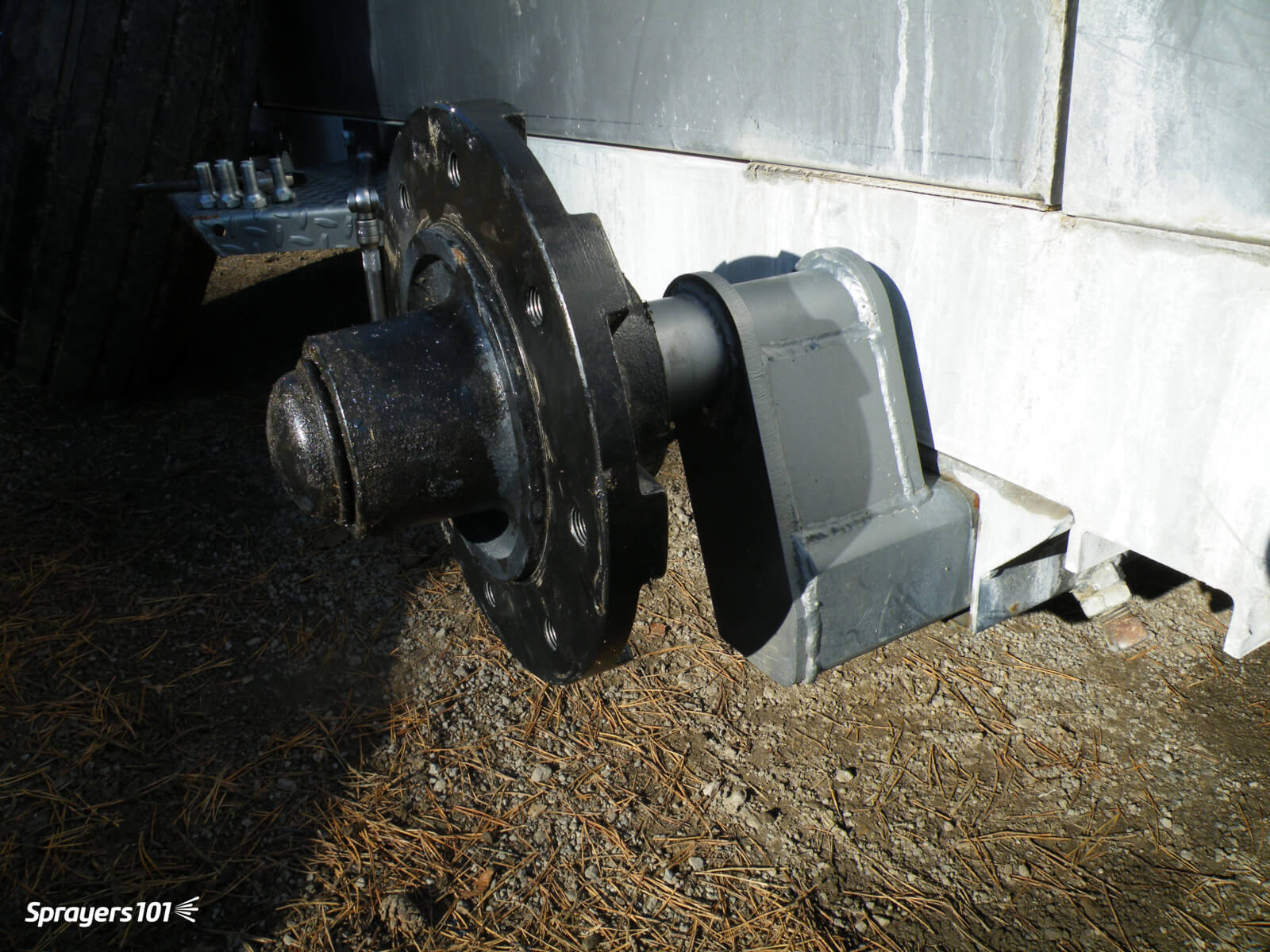
    Mount the hub tightly on the spindle.
    Mount the hub tightly on the spindle.
    Some airblast sprayers (such as this Durand-Wayland) have wheel assemblies that can be rotated to four different positions in the chassis. This will raise or lower the sprayer to better align it with the tractor hitch and PTO shaft.
    Some airblast sprayers (such as this Durand-Wayland) have wheel assemblies that can be rotated to four different positions in the chassis. This will raise or lower the sprayer to better align it with the tractor hitch and PTO shaft.

    Step 12

    Replace the wheel and rim. Do not grease the lug nuts or they might loosen. Over- or under-torqueing lug nuts can cause damage. Look in the manual for your correct torque and consider using a torque wrench. Tighten the nuts in a star-shaped pattern – not sequentially.
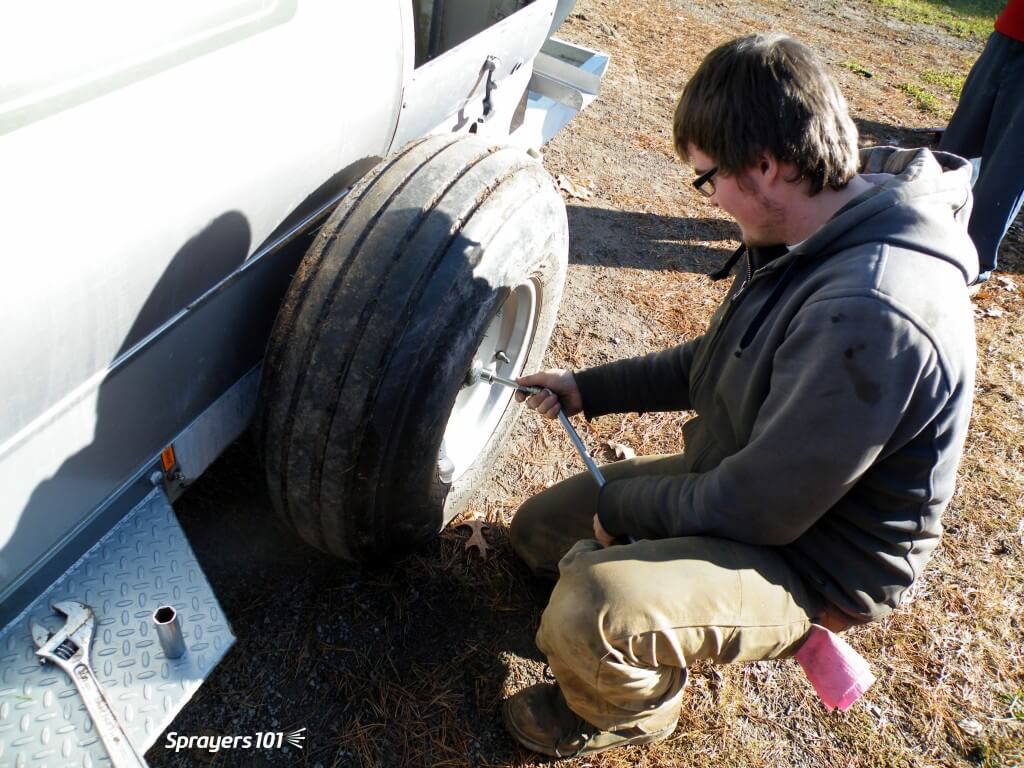
    Replace the wheel and rim.
    Replace the wheel and rim.
  • Airblast Maintenance Inspection – the Morning Walkaround

    Airblast Maintenance Inspection – the Morning Walkaround

    An airblast sprayer inspection is part of preventative maintenance. This daily activity identifies small problems before they become big ones. You can do it at the filling station, so it’s fairly convenient.

    Don’t think of it as stealing time from your spray day… it’s part of your spray day. Don’t skip it. If time is tight there are many other ways to improve your work rate.

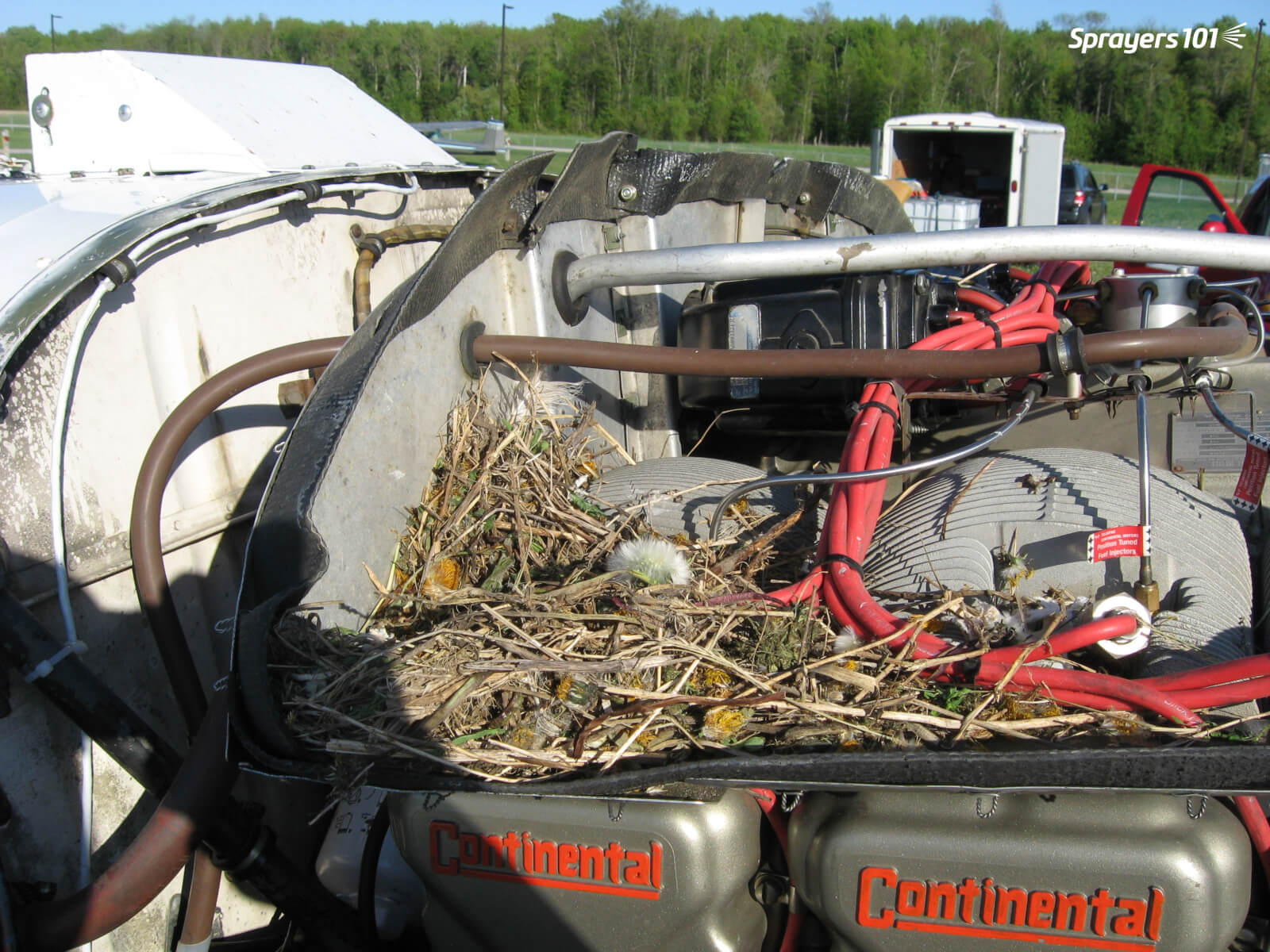
    This spray plane was left on the runway with the engine exposed for less than four hours. When the owners returned they found a precocious bird had built a nest. Perform regular sprayer inspections – you never know what you’ll find! Photo Credit – S. Richard, New Brunswick.
    This spray plane was left on the runway with the engine exposed for less than four hours. When the owners returned they found a precocious bird had built a nest! Perform regular sprayer inspections – you never know what you’ll find. Photo Credit – S. Richard, New Brunswick.

    Note: Always wear appropriate personal protective equipment (as indicated on the product label), including hearing protection.

    Inspection steps

    Follow this generic inspection process. If your sprayer manufacturer or manager advises additional steps, be sure to perform them.

    Before filling

    1. Work with a rinsed sprayer parked on level ground (e.g. the filling station).

    2. Check lines/hoses and fittings for signs of wear or cracking. Leaks or bulging may only become apparent under pressure (see Test spray).

    3. Filters, screens, strainers and nozzles are clean and unbroken. Leaks may only become apparent under pressure (see Test spray).

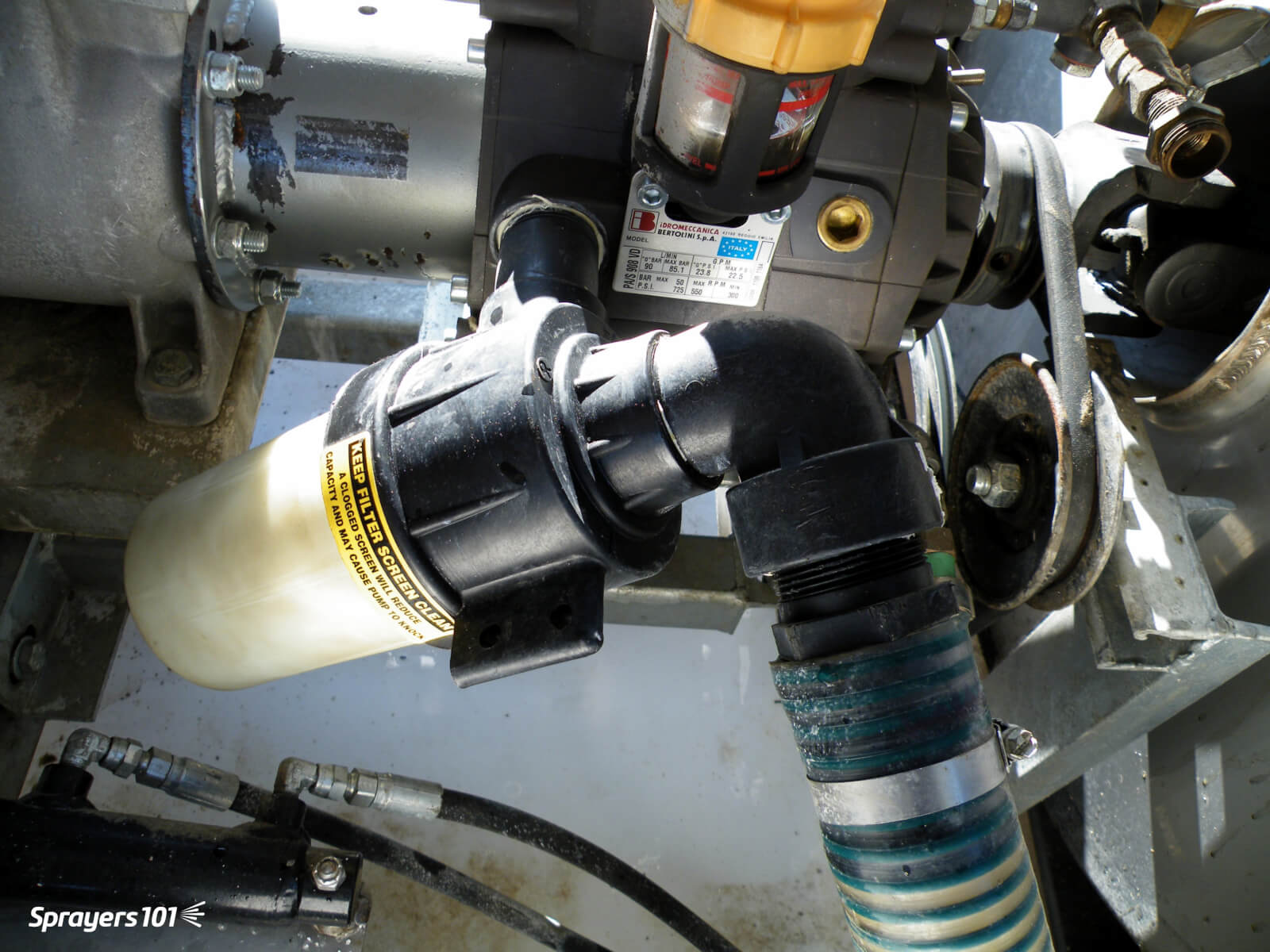
    As a plastic suction filter ages, it can warp or become brittle. When this happens, the O-ring may no longer sit correctly and the unit may allow air to be drawn into the lines. They should be cleaned and inspected after every spray-day.
    As a plastic suction filter ages, it can warp or become brittle. When this happens, the O-ring may no longer sit correctly and the unit may allow air to be drawn into the lines. They should be cleaned and inspected when the sprayer is rinsed.

    4. Engage each nozzle shut-off valve or nozzle body flip position. They can seize or loosen with time.

    Begin filling

    5. Begin filling the sprayer 1/2 full with water.

    6. For PTO-driven sprayers, confirm universal joint(s), sprayer-tractor hitch and all connections are clean, lubricated and secure.

    7. Check that all guards (e.g. PTO shaft shield) are in place and intact.

    8. Ensure fan blades are unbroken and scraped clean. Intake grill(s) must also be clean and unbroken.

    9. When 1/2 full, stop filling and check tire pressure (tractor and sprayer).

    Test spray

    For multi-row sprayers, you may have to move the sprayer off the fill pad for the test spray; it’s easier with the air off, if possible. Perform the following steps:

    10. Open the manifold valve to fill the lines and begin spraying clean water.

    11. Ensure each nozzle sprays correctly. Get out of the cab to inspect, don’t just shoulder-check. This gives the opportunity to double-check for line-bulges and leaks.

    12. Ensure the agitation / bypass system is functioning properly.

    13. Check that the tank is secure on the chassis and both crack and leak-free.

    Complete filling

    Continue filling. Once the sprayer is back up to 1/2 full, mix products per usual. If your sprayer manufacturer advises contrary or additional steps for a sprayer inspection, be sure to perform them.

    Checklist

    Sprayer inspections become repetitive, so it’s easy to accidentally miss things. Have you ever driven home while preoccupied, only to discover you don’t remember how you got there? Download our checklist to keep you engaged and to help ensure accuracy. Consider printing and laminating it for repeated use with a dry-erase marker.

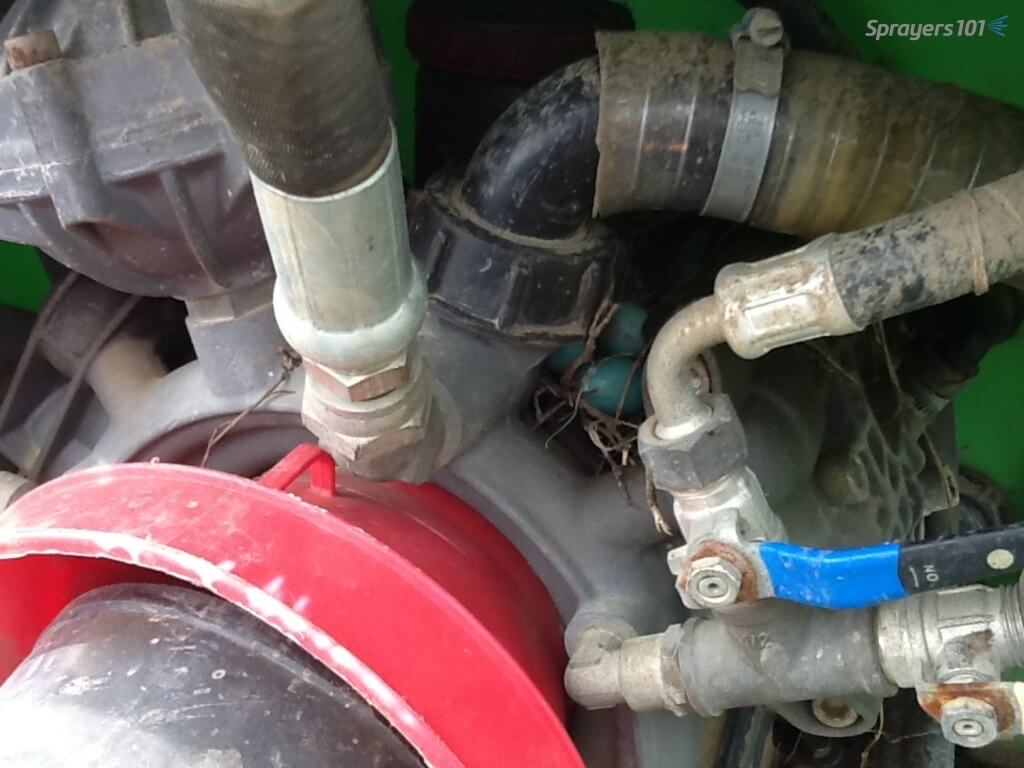
    You never know what you’ll find during an inspection. I found a robin’s nest hidden on this vineyard sprayer’s pump.”
    You never know what you’ll find during an inspection. I found a robin’s nest hidden on this vineyard sprayer’s pump.

    Anyone that operates heavy machinery should perform a preventative maintenance inspection before using the equipment. It’s no different for airblast sprayer operators; embrace the daily walkaround.

  • Plumbing Projects That Make Spraying Easier and Safer

    Plumbing Projects That Make Spraying Easier and Safer

    Some of our biggest struggles in spraying involve the start and end of each spray day.

    When starting a new field after the sprayer is cleaned, we need to prime the boom. If it’s full of water, that water has to be purged and the question is always for how long and where to do this (pro tip at bottom of article).

    At the end of the day, we should ideally clean the sprayer. During that process, we may struggle with waste disposal, including large rinsate amounts, and course, the uncertainty of whether the job is actually done (since clean water looks exactly the same as contaminated water).

    If not cleaning the entire sprayer plumbing, we should at least rinse the boom, even if we’re returning to the same product the following day. It can prevent future problems.

    These tasks are complicated by the increasingly convoluted plumbing featured on modern sprayers. Ask someone to explain their sprayer’s plumbing system to you one day. It’s a long story! A bright spot is the well-engineered, compact, and accessible Agrifac system.

    Fortunately, virtually any sprayer can be modified to suit your needs. Let’s talk about a few ideas for a winter project:

    1. Boom flush. It’s good practice to flush clean water through your boom at the end of spraying even if the main tank remains full of product. Some sprayers have an air purge system to eliminate liquid from the plumbing and that is a great feature. A water flush should follow that purge so that any residual pesticide is diluted and removed before it can dry on and become hard to remove later.  First you’ll need a clean water tank on the sprayer (150 gal is enough). Second, plumb a feed so that this clean tank can be the sole source of the water supplied to the solution pump. Select this source, shut return lines down or off, and pump clean water through boom.  Sprayers that have an auto-rinse cycle will likely be able to draw clean water, but may not be able to push it to the boom, directing it to the wash-down nozzles instead. Check to see what’s possible, and make the changes you need.
    2. Clean water pump. Installing a second pump dedicated to the clean water tank has several advantages. We’ve talked about continuous rinsing before, here, and here, as a way to dilute the tank remainder faster. It requires installation of a second pump dedicated to clean water. Additionally, give this pump the option to deliver water to the boom, not just the wash-down nozzles. Now it can be used to rinse water through the boom. The main challenge is to obtain a pump capacity that can match the needs of the boom and/or the wash-down nozzles.
    3. Boom ends. We’ve mentioned this part of the boom many times. Boom ends must be flushed regularly to get rid of product and possibly debris that gets stuck there. A simple way to achieve this is to use the Express Nozzle Body End Caps from Hypro. These bleed air continuously, and also prevent accumulation of dead-end contamination. They do need to be flushed, and this can be done by pulling a plug or rotating the turret to an open (no nozzle ) position.
    1. Recirculating boom. This is a significant change, but worth considering. Conventional plumbed booms are separated into five to 13 sections. Each has two ends at which the spray stops and where air and contamination can accumulate (see point #3). Each section feed has a shutoff valve.  Once the spray mixture leaves the pump and bypass valve, it is committed to leaving the sprayer.  In a recirculating boom, the boom becomes a part of the tank and the liquid can return to the tank if desired. Spray is pressurized at one or both ends, and valve positions determine its flow. Sectional control is achieved with individual nozzle shutoff, air or electric.
      1. Three advantages:
        (a) the boom can be primed with new product without spraying. The surplus goes back to the tank.
        (b) the boom can be flushed with water without spraying while material is still in tank, and without spilling anything on the ground. Again, the surplus goes back to the tank.
        (c)  high resolution sectional control with individual nozzle shutoff is a byproduct of this design. Fast response, high res, saves money.
    2. Steel lines. Steel cleans easier than plastic, and this material makes a lot of sense for booms. But it also makes sense for the boom feeds, currently handled by black rubber hose.  This hose is a literal black box. We can’t see inside it, and we don’t know if and where potential contamination resides. It has considerable surface area. Consider replacing portions of your feed lines with steel. The boom is the obvious candidate. Aside from easier cleanout, it also helps with faster nozzle shutoff because it doesn’t expand with pressure.

    A word about dumping the tank on the ground. It’s a bad practice for many reasons. Let’s examine just one of those. When you spray a product at 10 gpa, you actually cover each square meter with about 10 mL, or 1/3 oz, of spray mix. When you flush your boom ends on the ground, you’re probably dropping 2 or 3 gallons in the same area. That’s 1000 times the label rate at each boom end, 10 to 26 times per boom. If you dump your tank remainder and all the hoses, say 20 or 30 gallons, that’s 10,000 times the label rate if it covers 1 sq meter. That’s leaching, runoff, residual potential, and not a good story.

    Many of the changes we outlined above help prevent that from being necessary.

    Pro Tip: To find out how much water your plumbing (from the pump to the boom ends) holds, do this: After cleaning with water and before spraying an EC formulation (white milky appearance in tank, some crop oils are ECs) reset your sprayed gallons on your rate controller. Start spraying and watch for the last nozzle on your furthest and longest section to spray white. Stop spraying and check your sprayed gallons. That’s your volume. No matter the size of nozzle or application volume, it stays constant. To be sure the boom is primed with a new mix, spray until those gallons are reached and you’re set.

  • Hydraulic Fittings: A Galling Metallurgical State of Affairs

    Hydraulic Fittings: A Galling Metallurgical State of Affairs

    So it’s been a long spraying season and as you perform your annual maintenance you grudgingly admit that the hoses have given their all. Before you run out to get more of the same, give some thought to the hydraulic fittings (i.e. hose adaptors and couplers). Many feel that stainless steel (SS) is the best choice for hydraulic fittings: It must be, because it’s certainly the shiniest and most expensive choice! But before you opt for stainless, here are a few things you should know.

    SS requires surface oxidization to resist corrosion. Oxidation forms a protective barrier called a “passivation layer”, but it’s susceptible to mechanical damage. It can be penetrated as abrasive powders flow past. The layer will reform when it dries, only to be sanded off again during the next spray. The wear is on-going. If the newly-exposed SS remains submerged in a liquid, the passivation layer will not reform. Without it, SS surfaces corrode at a high rate, and in extreme cases SS will even corrode inside of itself and become a hollow shell.

    When two pieces of stainless steel are forced together, the passivation layer gets scraped off, allowing parts to gall (or ‘weld’). In fact, any similar metals in physical contact will naturally gall to each other, but stainless steel is especially susceptible. When disassembled, the ‘welded’ material must be torn apart. This destructive galling can be reduced with lubrication during assembly and avoided altogether by mating dissimilar materials (e.g. bronze and stainless steel). Technically, mating different types of stainless steels (e.g. martensitic against austenitic) could work, but it is possible that two different alloys electrically connected in a humid environment may act as a voltaic pile and corrode even faster. This is probably a moot point because many do not have access to different SS alloys when choosing fittings.

    Sometimes we see black or galvanized pipe fittings on sprayers, but I don’t recommend either. Galvanizing is only slightly better than black pipe and since the threads are cut after being galvanized the threads are essentially black pipe, anyway.

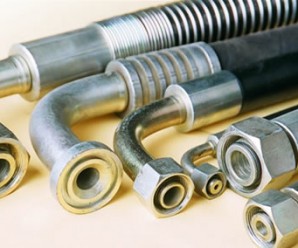
    So what about plated steel fittings? They’re available with swivels and can seal on faces and seats (rather than on the thread – which is much easier to assemble and disassemble). They can be crimped onto the hoses, eliminating the need for hose clamps that fail or snag and cut the operator. (As a related aside, hydraulic hose is not really compatible with most spray products – the steel wire inside the rubber begins to corrode and unexpected failure is common. Even when spraying above 200 psi there are better high pressure-rated choices than hydraulic hose.) Mechanically, these fittings are a great option, but unfortunately the plating is designed for oil, not pesticide. Within a year they rust internally and seize up. To add insult to injury, the flaking rust is notorious for plugging nozzles.

    A better choice is brass (or even bronze) fittings (e.g. pipe, SAE 45° and hose barb). Just like the crimped plated steel fittings, brass SAE 45° fittings can swivel and seal on seats and they are easily assembled and disassembled over many seasons. Brass fittings are more costly than black or galvanized pipe but cost less than hydraulic or SS fittings. Conveniently, they’re available at most hardware stores.

    While brass may be the best metal material for the sprayer fittings, I feel that plastic is the most economical and in many applications is superior to metal. But, that’s a topic for a follow-up article. So, before you spring for SS hydraulic fittings, consider cheaper and more effective alternatives like brass or plastic. And, if only for the sake of your mechanic, please don’t over tighten fittings. It is unnecessary and causes endless damage and frustration.

  • The 2015 in Review: 8 Points Evaluation of Your Spray Program – Tips with Tom #12

    The 2015 in Review: 8 Points Evaluation of Your Spray Program – Tips with Tom #12

    During post-harvest down-time, it’s important to take a much needed breather.
    Then, before you know it’ll be time to start the shop projects and equipment maintenance for next year, if you haven’t started already. Before you get started, though, Tom Wolf has a handy list of things to evaluate, clean up, fix or replace on the sprayer.

    In this final installment of Tips with Tom, Wolf runs through key areas of the sprayer that could potentially use upgrading or just maintenance, plus lists some quality parameters that could be improved for next year that may take some footwork through the busy winter season.