Tag: cleanout

  • Storing Pesticide Mix Overnight

    Storing Pesticide Mix Overnight

    Not being able to finish a tank due to weather or any other reason happens to just about everyone. Is it OK to simply leave the sprayer as is, and resume spraying later after some agitation?

    In many cases, the answer is yes. Most pesticide mixtures are stable in short term storage. On resuming spraying, an agitation could be all that’s needed to get back to where you started a day or so earlier.

    But there are three important exceptions.

    When the active ingredient is formulated as a suspension. Suspensions are typically wettable powders and flowables, and rely on a clay carrier to distribute the active in the tank. Because clay is denser than water, these formulations settle out quickly after agitation stops. Sure, they can be brought back into suspension with vigorous agitation. But in lines and booms, boom ends and screens, dislodging a settled clay carrier is much more difficult. It’s also hard to tell if the cleaning has been successful because the problem spots are hidden.

    The best solution is to flush the spray boom with water before materials can settle and lodge. A visual inspection where access is possible, such as strainer bowls and boom ends, is part of the process to ensure the formulated product has been removed.

    Learn to identify which formulations are suspensions. There’s lots of jargon out there. Look for terms such as DC, DF, DG, DS, F, Gr, SP. Even EC formulations are suspensions (oil in water) and require agitation.

    When the active ingredient is chemically unstable. Some pesticides can degrade in the tank, usually due to alkaline (high pH) hydrolysis. The effect is very pesticide specific, but in general, insecticides (particularly organophosphates and carbamates) are more susceptible than other pesticides. This fact sheet by Michigan State University describes the impact of pH on a the half-life of a large number of pesticides.

    Note that in the examples in the MSU fact sheets, pesticide half lives are typically days and weeks, and only rarely hours. Also note that while high pH is most often problematic, low pH can lead to faster breakdown in a small number of products.

    Ensuring tank mix stability requires a pH meter or paper, and possibly a pH modifier such as citric acid. But do your research first! Here’s an article on pH and water quality.

    When the tank previously contained a product known to harm the current crop. This situation is most common and most difficult to address. Some examples from western Canada are Group 2 modes of action sprayed prior to a canola crop. Why are Group 2 products implicated?  Many are formulated as dry products on a clay base, and these can settle in boom ends, adhere to tank walls, or get stuck on screens. Their solubility is pH dependent, as we explain in this article.

    Canola is particularly sensitive to this mode of action, and the most common canola herbicides, Liberty and glyphosate, are formulated with strong detergents that act as tank cleaners.

    Even when applicators think that their tank is clean, they can’t actually be sure and can’t do much about it at that stage. The stripping of tiny amounts of residue off the tank walls, filter screens, or plumbing, can happen during a mid-day stop or an overnight break.  Applicators eventually find out that this happened, usually about two weeks after spraying.

    Our advice is:

    After spraying a herbicide to which a subsequent crop may be sensitive, with the classic case being a Group 2 and moving to canola, be extra diligent with cleaning and pay attention to the tank walls, all screens, and boom ends.

    The best way to solve issues is to avoid them in the first place. If the weather looks unsettled and may interrupt your spray operation, consider mixing smaller batches that can be sprayed out completely even if conditions change quickly. This allows you to rinse the tank and spray water through the boom, thus avoiding a contamination problem developing overnight.

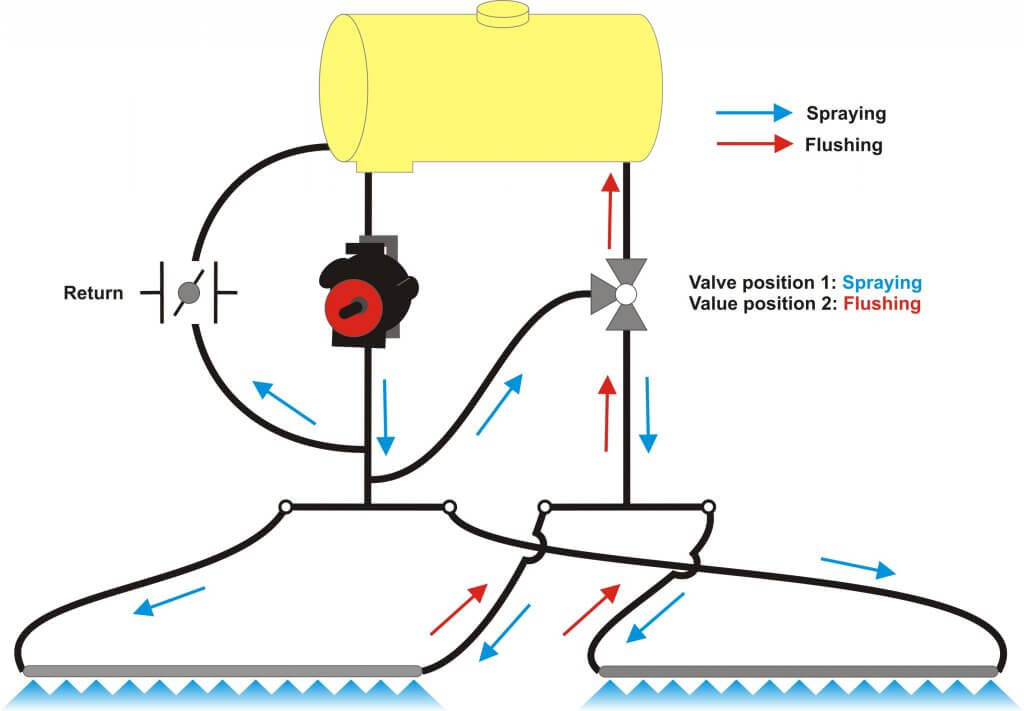
    If that’s not possible, at least do not let a tank mix sit in the boom overnight. Instead, use your clean water tank to push water through the boom prior to storage and double check the screens. The following day, prime the boom with your tank mix as usual and resume spraying the crop.

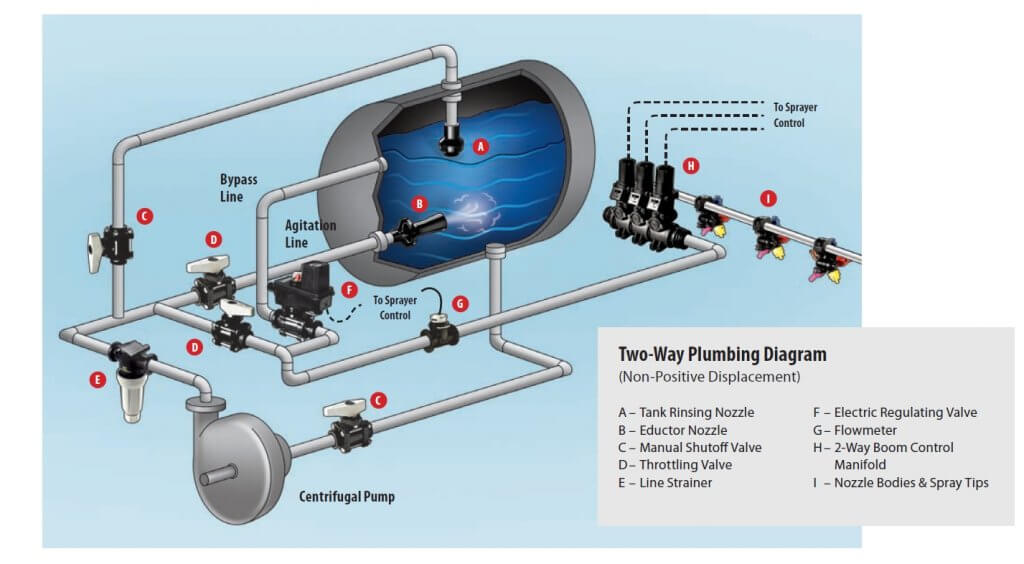
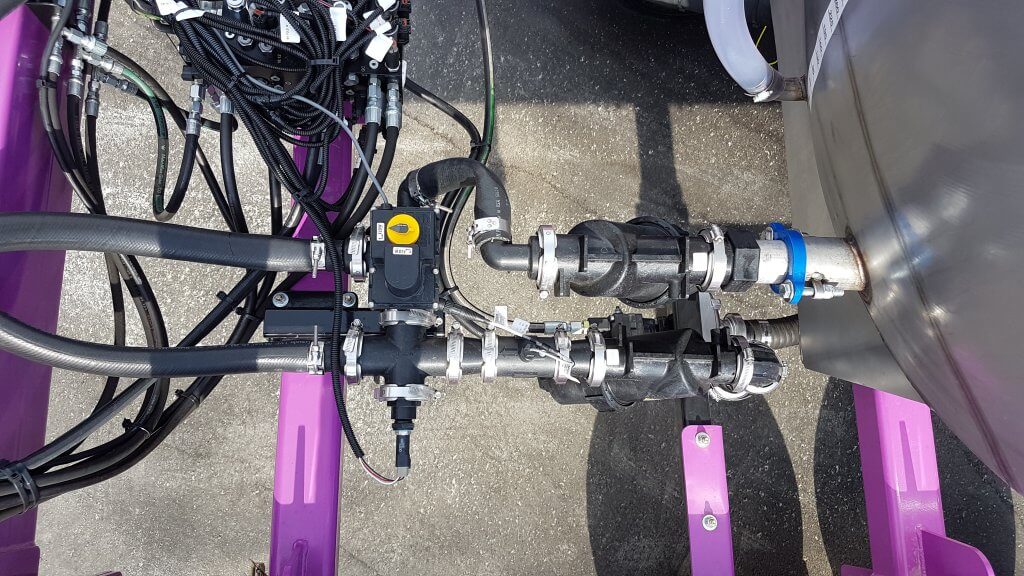
    If you’re not sure that your sprayer can draw from the clean water tank and push through the booms (the wash-down nozzles are, after all, the intended destination for that water), decipher your system and add the necessary valves that make this possible.

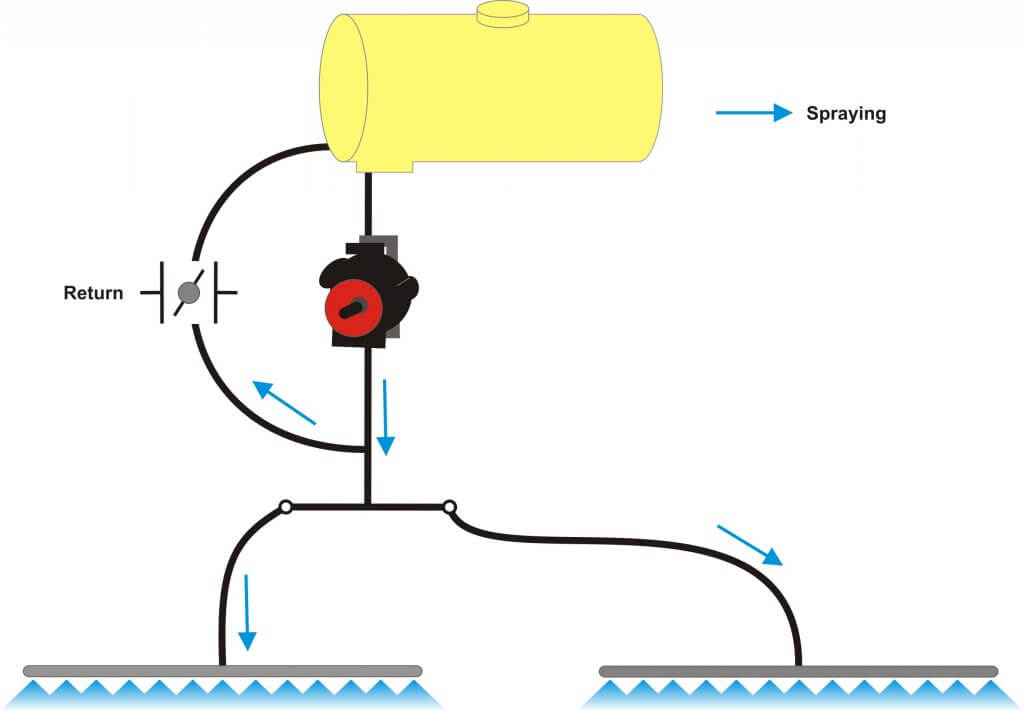
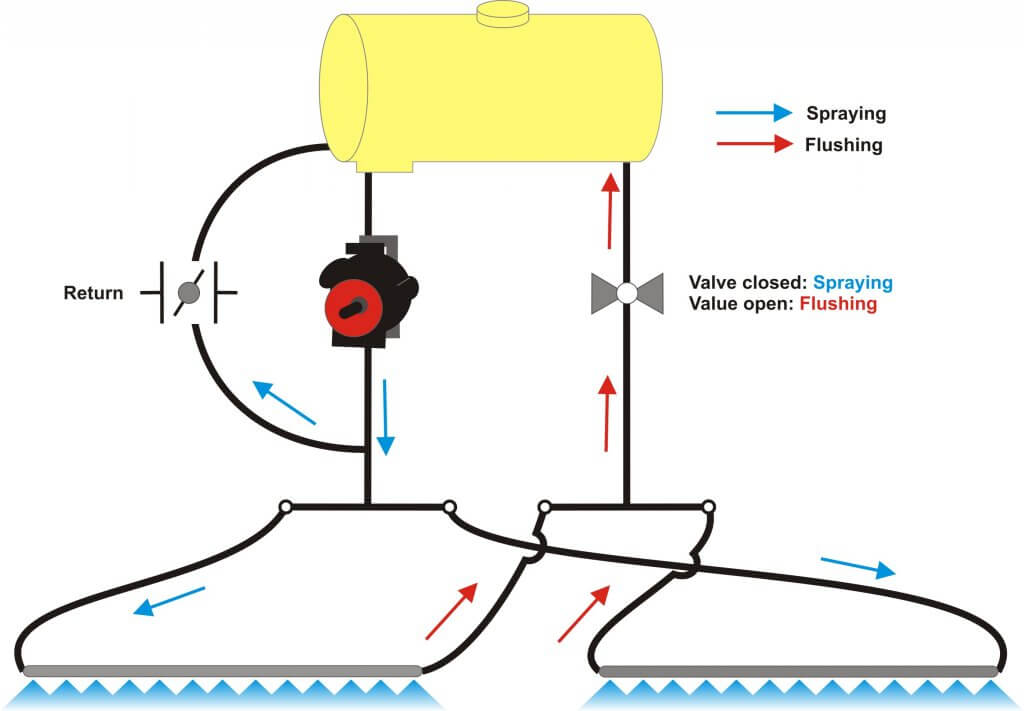
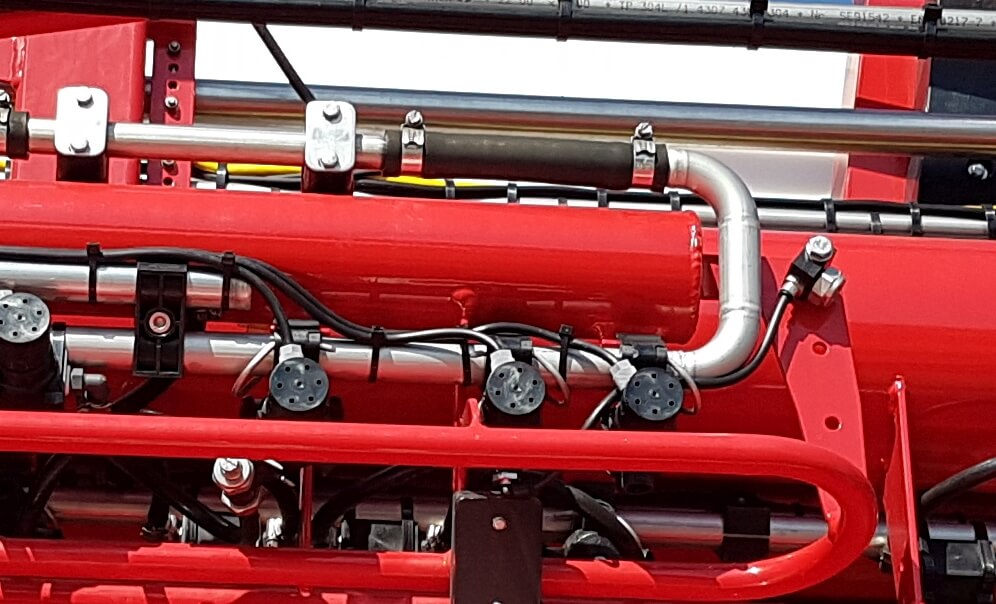
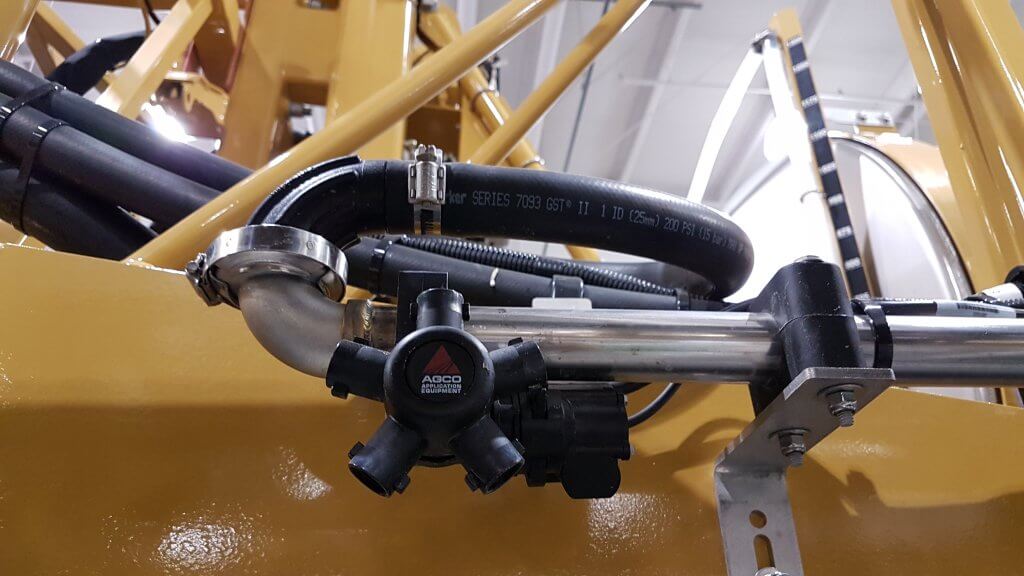
    A useful design that helps flush and prime a boom quickly is the recirculating boom offered by some aftermarket boom manufacturers. These booms are also more common on European sprayers. A nice feature of such designs is that the tank contents can be pumped through the entire boom assembly without actually spraying. This ensures that the boom is primed without any soil contamination. It also dilutes whatever residue there may be in the boom plumbing with the entire tank, likely reducing its concentration enough to be of little concern.

    An additional feature of recirculating booms is that many offer stainless steel tubing throughout most of their feed and return length, minimizing the black rubber hose products that often adsorb, and later release, herbicide contamination.

    Even if a wholesale boom or sprayer change is impractical, consider switching to steel boom lines and tanks tank to minimize residue carryover.

    As is often the case in the spraying business, prevention is easier and less costly than solving a big problem later. Spray mix storage is one of those examples where a small amount of extra effort at the beginning can pay big dividends later.

  • Debunking Sprayer Myths

    Debunking Sprayer Myths

    Reproduced from an article written by Angela Lovell for Grainews, 2014

    “The fundamental challenge of spraying is that it’s a compromise game,” said Tom Wolf of Agrimetrix Research and Training. “As operators and advisors we need to always balance the opposite needs of coverage, efficacy and drift.”

    Wolf, in a presentation at the recent Manitoba Agronomists Conference in Winnipeg, sees a trend towards more fungicide use on farms across western Canada and technology that purports to make application more efficient. These trends include wider booms, faster speed capability, complex monitors, auto boom heights and bigger tanks.

    As much as technology is a great thing, it’s still the operator that is the single most important part of any spray operation, so it’s important to make sure that he or she isn’t going out to the field with any conventional beliefs that simply aren’t correct.

    The challenge with spraying is to control pests without harming you neighbour’s crops or the environment and over the years Tom Wolf has developed some pretty good ideas about how to do that and has had to dispel more than one popular myth about spraying.

    Myth # 1: More pressure forces the spray into the canopy.

    “There’s an element of truth to this but it’s forcing spray downward is the least thing that pressure does,” says Wolf. Spray pressure is primarily used to change spray flow rate. If you increase the pressure you will need to travel faster to allow the carrier volume to stay constant, and faster travel speed actually works against canopy penetration. Another important change is that spray quality will become finer with higher pressure. Finally, droplet velocity will initially increase, but even at higher pressure, small droplets still move slowly by the time they reach the canopy. “If you want to force a fine spray into the canopy, the best way to do that is to lower your boom, slow down, and increase the carrier volume,” says Wolf.

    Myth # 2: Higher water volumes lead to run off.

    There are two things that govern run off; droplet size and surface morphology of the leaf surface. “Anyone who says that anything more than 3 gallons/acre runs off the leaf surface is not telling you the whole picture,” says Wolf. “We’ve been unable to induce runoff from up to 200 US gpa in our tests, even using hard-to-wet grasses like green foxtail. Don’t be afraid of water. It’s a very good way of covering the canopies. Water gives you flexibility to use coarser sprays and that allows you to spray when it’s windier.”

    Myth # 3: Spray drift is no issue for fungicides and insecticides

    Aquatic organisms are extremely sensitive to most fungicides and insecticides. We might not see this effect, but it has a definite impact on our environment. It’s important to observe the buffer zones shown on product labels, which can vary depending on the product, the application method and the specific environment.

    Myth # 4: Faster travel speeds save time and boost productivity

    Wolf suggests evaluating this on a field by field basis. At faster speeds you lose control of the spray cloud and the finest droplets will go wherever the wind goes. Other problems with higher speeds are canopy penetration, pattern uniformity and pressure management. If you have an 800 gallon tank with an 80 ft boom and you are going 12 mph at 10 gallons/ac and your fill rate is 50 gallons per minute you are going to do about 84 acres/hour not including turns. If you go faster – 18 mph – you can do 110 acres/hour. But if you increase your fill speed, thereby decreasing the time spent filling you can increase productivity just as much. If you also increase your boom width you also increase productivity. “All I am asking is you don’t just look at travel speed to improve your productivity,” says Wolf.

    Myth # 5: Double nozzles produce more droplets and improve coverage

    “It’s the droplet size and water volume that drives the droplet numbers produced. It doesn’t matter how many nozzles produce this size,” says Wolf. Although some double nozzles produce finer droplets and therefore improve coverage, others actually produce coarse sprays which may decrease coverage. Pay attention to droplet size first – nozzle manufacturers publish spray qualities from their products. You can increase coverage from a single nozzle simply by increasing the spray pressure so yo produce a finer spray.

    Myth # 6: Calm early mornings have the lowest drift risk

    This is one of the biggest myths out there, says Wolf, and it’s all because of a condition called an inversion, which usually occur during clear nights, and which linger into the early morning hours. Under normal sunny daytime conditions, air currents rise, fall and disperse spray clouds rapidly but under inversion conditions they don’t. This can lead to severe drift issues, even significant distances away from the treated field.

    Under sunny daytime conditions, air temperature cools with height and that allows for thermal turbulence to disperse the spray cloud. On clear nights, the temperature increases with height (the opposite temperature profile, therefore called an “inversion”), and this prevents air from mixing. As a result, the spray cloud will not disperse.

    Assume that the atmosphere is inverted on clear summer nights, extending into a few hours after sunrise. Producers should never spray when an inversion is present, and a good indication might be if fog or smoke hangs in the air and not dispersing.

    Myth # 7: A rate controller calibrates the sprayer

    “Even with a $400,000 sprayer, the rate controller still relies on a single flow meter that sits at the back of the sprayer and measures the total flow to the boom. The operator has no idea where that total flow is going,” says Wolf. As a result, there is still no substitute for individual nozzle calibration. There are various new tools on the market to assist with that but they still need to be done individually.

    Myth # 8: If I mess up agronomic decisions, I can correct that with a good spray application

    A spray application has to be on time to be truly effective, says Wolf. In efficacy studies where yeield was measured, spraying herbicides “on time” (=early) produced a yield advantage over spraying just one week later, even with a spray quality that was so coarse that it resulted in relatively poor weed control. “If it’s breezy, use a low drift nozzle. This allows you the opportunity to spray on time,” he adds.

    Myth # 9: Ammonia is a good general purpose tank cleaner

    Ammonia raises pH and some chemicals like sulfonylurea products dissolve better at a higher pH. But if you have an oily emulsifiable concentrate (EC) formulation, either as a product or adjuvant, a soapy cleanout product will be needed. “Liberty exposes poor tank cleanout because the adjuvant in Liberty is such an excellent cleaner,” says Wolf. After use of an oily product, the use of a wetting agent such as AgSurf will assist in removing oily residue and many soap-based commercial cleaners are available.

    Myth # 10: There is an optimal nozzle that does it all

    “Right now a sprayer costs approximately 100,000 times more than the nozzle and the nozzle is still the part that makes you happy or sad,” says Wolf. “If we inverted the investment trend and said ‘let’s build a better atomizer’ there would be an optimal nozzle right now. But although we’ve made progress with low-drift nozzles recently, the industry still looks for inexpensive, simple ways to atmozie sprays.”

    Spray quality is the language that is used when selecting nozzles. All manufacturers publish spray quality charts for their nozzles that also give recommended pressures to produce different spray qualities using a particular nozzle type. Spray qualities are colour coded and generally speaking the hotter (redder) the colour code the more drift-prone (finer) the spray. There are many nozzle choices and designs and typically grassy targets and contact products require nozzles that will produce Medium to Coarse spray quality. For broadleaf targets and systemic products a Coarse to Very Coarse spray quality can be used successfully. Selecting the right nozzle to produce the quality of spray required is important, says Wolf who recommends Coarse as a general purpose spray quality.

  • Cleaning Your Sprayer

    Cleaning Your Sprayer

    We all know the importance of cleaning out a sprayer. It protects a sensitive crop. It protects people working with the sprayer. It protects the sprayer and its components. But cleaning the sprayer is a pain. Here are some tips to make it easier.

    Some herbicide label instructions are cumbersome, requiring many flushes with full tanks of water. Many applicators look for shortcuts and hope they get away with it. It doesn’t have to be guesswork. The following is a checklist that may help.

    Be Prepared

    A few supplies can help ensure a clean sprayer tank.

    • A defoaming agent saves water and time
    • A cleaning agent (commercial products, or simple household ammonia) is useful, and recommended, for Group 2 products except the imidazolinones.
    • A supply of clean water, preferably with its own pump, and a pressurized spray hose helps clean the sprayer inside and out.
    • A wash-down nozzle (whose flow requirements can be met by the clean water pump) can automate the tank wash-down.
    • A bucket and brush for rinsing screens is very useful.

    Products to Watch:

    The products most frequently implicated in sprayer contamination are two members of the Group 2 modes of action: the sulfonyl ureas (e.g., thifensulfuron (Refine) and tribenuron (Express)), and the triazolopyrimidines (e.g., florasulam (Frontline, PrePass) and pyroxsulam (Simplicity)). Since these herbicides dissolve better at higher pH, proper cleanout usually requires ammonia, a weak base that raises the solution pH. The third member of Group 2 products, the imidazolinones (imazethapyr (Pursuit), imazamox (Solo, Odyssey), imazamethabenz (Assert), imazamox (Ares,  Adrenalin, Altitude or Viper)), tend not be implicated in as many residue issues, and don’t require ammonia for cleanout.

    Be Prompt and Thorough

    Remove pesticide from mixing and spray equipment immediately after spraying – it makes the job easier. The main areas of concern are the tank wall, sump, plumbing (including boom ends), and filters. First, spray the tank completely empty while still in the field. It’s sometimes OK to cover previously sprayed areas – all herbicides must be crop-safe at twice the label rate to be registered by the PMRA. Take care with residual products that may create problems down the road. Reduce the rate or choose a fallow field to be certain. Second, add 10 x the sump’s remnant of clean water, circulate, ensuring agitation is on, and spray it out in the field as well. Repeat. These two rinsing steps will take care of the majority of the cleaning and won’t take very long. The less remaining volume there is in your tank after the pump draws air, the less water is needed to dilute this remainder to an acceptable concentration. Having a clean water tank on the sprayer and a wash-down nozzle makes this job easier.

    Visual Inspection

    Herbicide residue may precipitate out of solution in some parts of the sprayer or plumbing. A thorough visual inspection can identify these problem areas and ensure that they are cleaned properly.

    Tank Wall

    Removal of residues from tank walls is best accomplished with a direct, pressurized spray. Make sure all parts of the wall have been in contact with clean water. Use a wash-down nozzle if it provides complete and vigorous coverage of the interior tank surface.

    Sump

    Empty the sump as completely as possible by spraying it out. Any spray liquid or herbicide concentrate remaining in the sump area will be re-circulated in the sprayer. The only way to remove any remaining herbicide is through dilution by repeatedly adding water, and leaving as small a remainder as possible.

    Plumbing and Boom

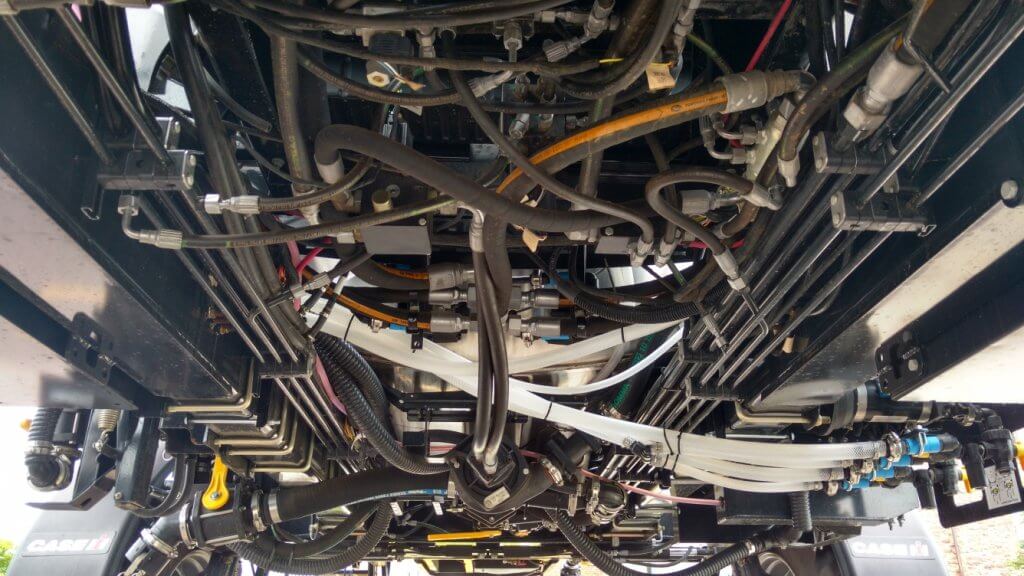
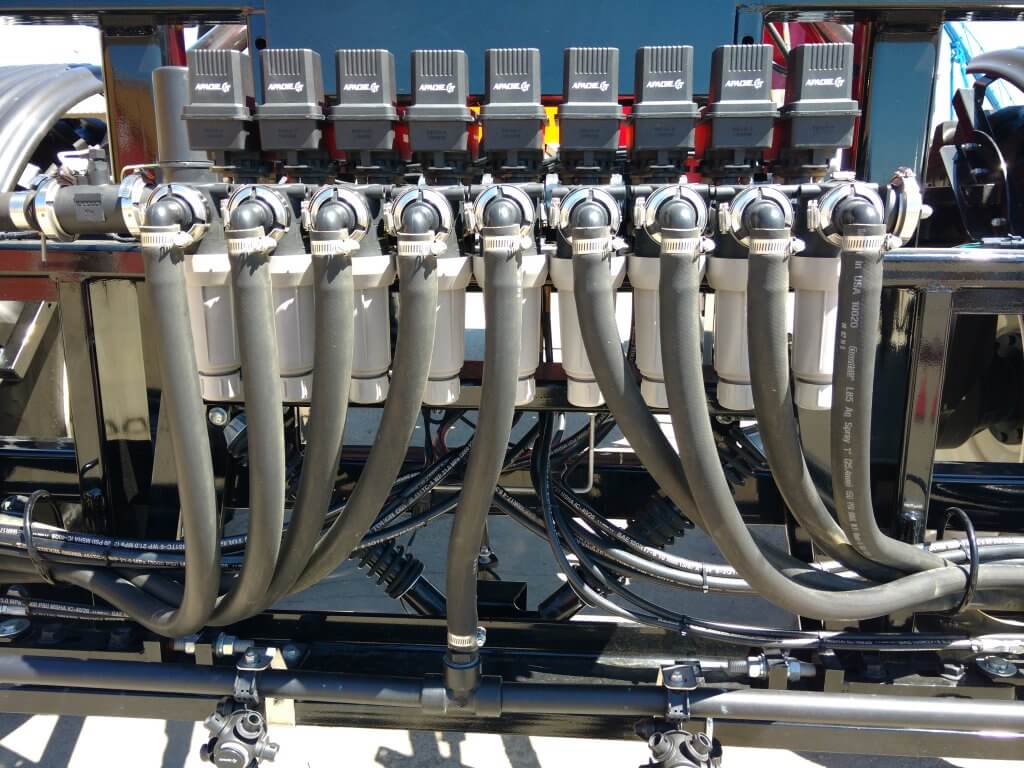
    Plumbing can be a significant reservoir of herbicide residue. Removal from plumbing can be achieved by pumping clean water through the boom while ensuring that all return and agitation lines also receive clean water and all residue is flushed out. This may require opening and closing various valves several times, and repeating the process with new batches of clean water. Boom ends can extend up to 6” beyond the last nozzle at each end of each boom section. These ends must be flushed to removed trapped residue. A useful product that does this automatically is the Pentair Hypro Express Nozzle Body End Cap, or better yet, consider recirculating booms.

    Dilution

    The most effective use of a volume of rinse water is to divide it equally across several repeat washes. Assuming a 10 gallon sump remainder, three washes with 30 gal each are as effective as two washes with 70 gallons each, and equal a single 600 gal wash.

    It’s even more efficient to use a separate clean water pump, introducing clean water as the rinsate is sprayed out. This saves water and time, and results in even more dilution.

    Filters

    Nozzle screens and in-line filters can be a significant reservoir for undiluted or undissolved herbicide and are one of the most overlooked parts of sprayer decontamination. Remove all filters and nozzle screens and thoroughly clean these with fresh water. Run clean water through plumbing leading to the screens.

    Nozzle Bodies

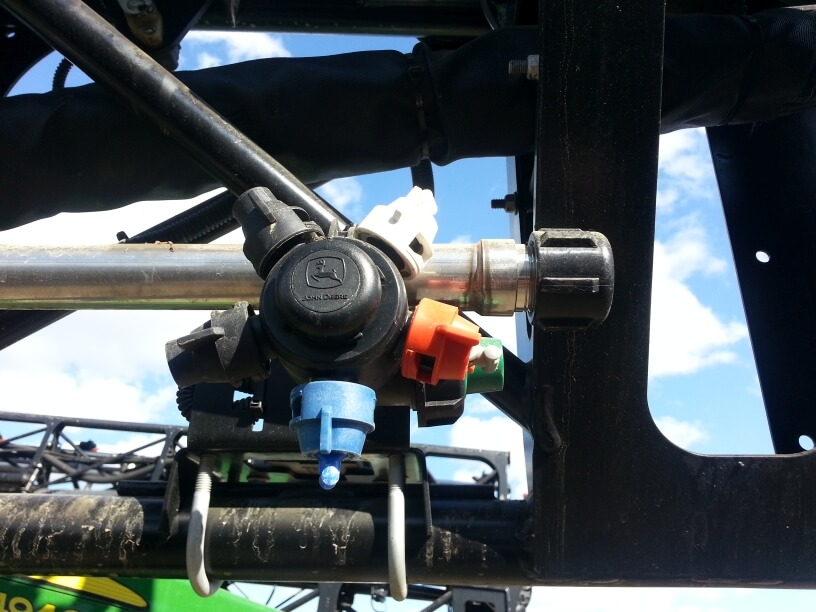
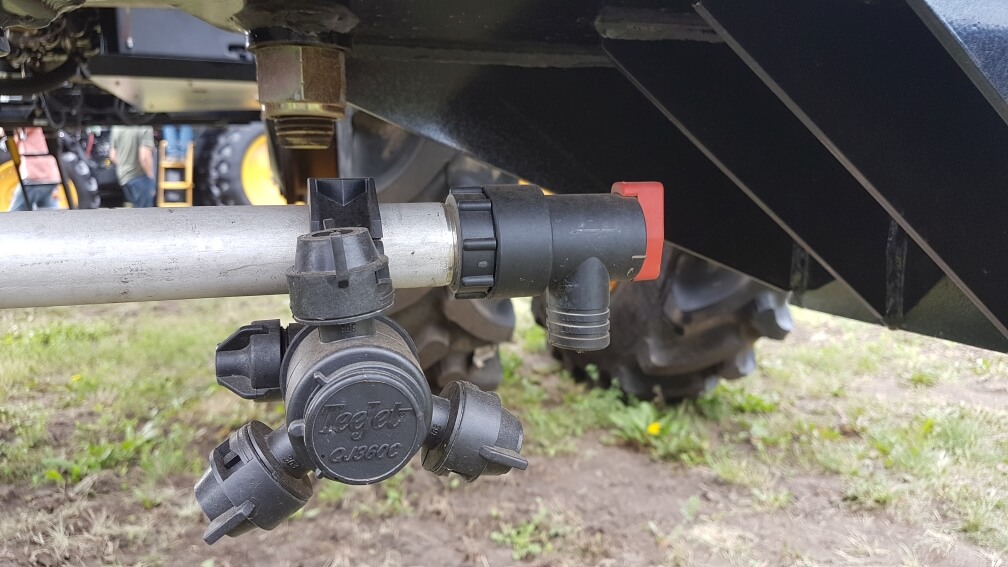
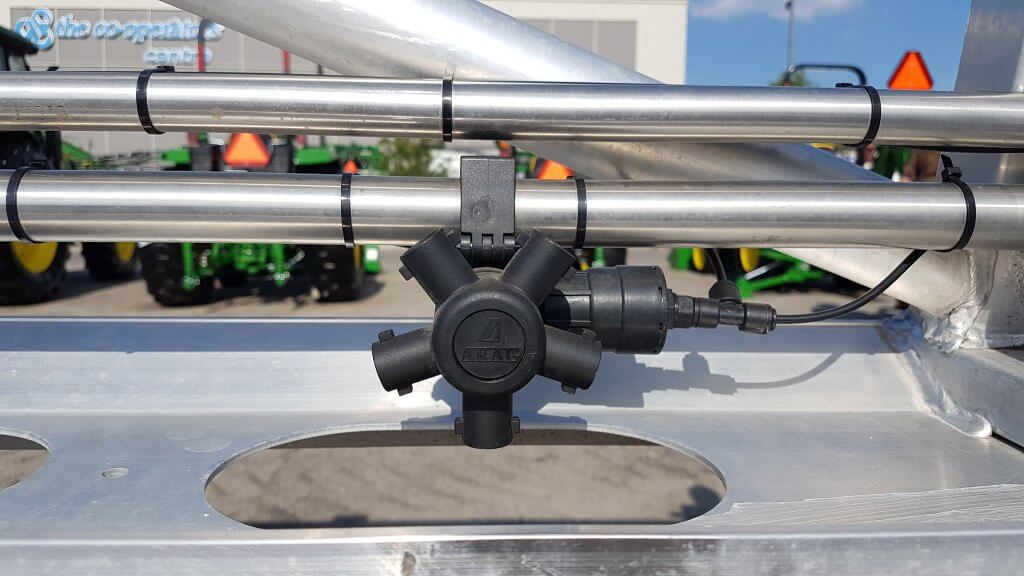
    Nozzle bodies can harbour herbicide mixture. When cleaning a spray boom, rotate through all nozzles in a multiple body to ensure clean water reaches all parts of these assemblies. Remove screens that may have been used with herbicide.

    Tank Cleaning Adjuvants

    Adjuvants such as ammonia can assist the tank decontamination process, especially with sulfonyl urea and triazolopyrimidine-containing products. Ammonia does not neutralize herbicides, but it does raise the pH of the cleaning solution which helps sulfonyl urea herbicides dissolve. When decontaminating after an oily (EC) formulation, the use of a wetting agent such as AgSurf will assist in removing oily residue that may trap SU herbicide on tank and hose material. Commercial tank cleaning products that contain ingredients for removing persistent deposits are available.

    Tank and Boom Material

    Both plastic and stainless steel are common tank and wet boom materials, and both can be cleaned using the above procedures.  However, stainless steel is easier to clean, and this means that less time may be required. Consider the choice of materials a productivity factor in your next purchase or upgrade decision.

    Rinsate Disposal

    Always spray out the tank in the field. Do not drain the tank while stationary unless you are certain it is free of pesticide and that you are away from sensitive areas and waterways. Consider a continuous rinse system. Consider building a biobed for safe disposal of dilute pesticide waste.

    Sprayer cleanout will probably never be the easiest job on the farm. But looking at it in a smarter way can prevent frustration and save time.