How to Succeed with a Soil Drench Application in Strawberries

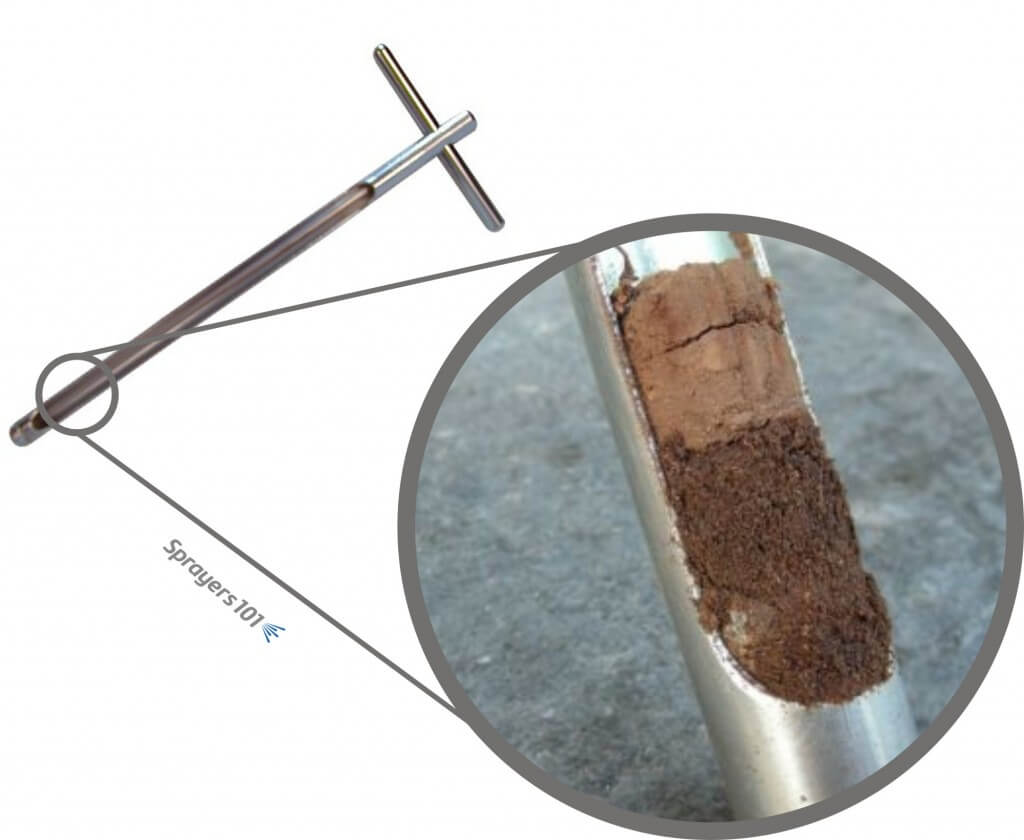
The soil probe. See how far water infiltrates soil by taking core samples.

In 2016, Ontario berry growers were surveyed to determine the typical spray volume they used to apply unspecified crop protection products. For strawberry growers (day-neutral and June-bearing), the results spanned 50 to 1,000 L/ha (~5 gpa to ~100 gpa). In an earlier survey (2013), respondents specified 250 to 650 L/ha (~26.5 to 70 gpa) for […]

Read More… from How to Succeed with a Soil Drench Application in Strawberries

The Economics of Spot Sprays

At first glance, spot sprays are a no-brainer. Why spray a whole field when you can save product by spraying just the weeds? But then the first commercial green-on-green systems introduced user fees, complicating the cost equation. Companies sell the hardware, and charge a fee for use of their detection algorithms. Currently, costs range from […]

Read More… from The Economics of Spot Sprays

Greeneye makes impressive debut

Green-on-green sprayer competes with Blue River and Bilberry One distinguishing feature of the new agriculture is the rapid development of new technologies. Ideas move from concept to implementation at record pace, helped by an influx of talent and capital into this profitable sector. Greeneye Technology is an example of this pace. Founded by entrepreneurs who […]

Read More… from Greeneye makes impressive debut

Evaluating wheat head coverage from two new nozzles

We’ve written extensively about angled flat fan nozzles and their ideal operating parameters (i.e. pressure, boom height, droplet size, volume and travel speed) for spraying wheat heads. Generally, coverage on the sprayer-approach side of a wheat head (aka the advance side) is easier to achieve because droplets from a conventional flat fan geometry tend to […]

Read More… from Evaluating wheat head coverage from two new nozzles

Avoiding Skips from PWM Sprayers

Does this sound familiar? “This year was the first year we used a growth regulator on our wheat. After heading, we noticed a wavy pattern of different plant heights between 30 and 45° to the operating direction. It was only a couple inches difference and was difficult to photograph. We sprayed 12 gpa at 9 […]

Read More… from Avoiding Skips from PWM Sprayers