Tag: berry

  • Crop-Adapted Spraying in Highbush Blueberry: Nine years of pesticide savings

    Crop-Adapted Spraying in Highbush Blueberry: Nine years of pesticide savings

    This case study is taking place on a 15 acre highbush blueberry operation in southern Ontario. In 2016, considerable pressure from spotted-wing drosophila (SWD) prompted the growers to make changes to their crop management practices and their spray program. They employed a three-pronged approach to improving crop protection:

    1. Significant changes to canopy management and picking / culling practices
    2. Investing in a new sprayer
    3. Adopting the Crop-Adapted Spraying (CAS) method of dose expression

    We have been tracking pesticide use, water use and yield compared to historic values. We also monitored spotted-wing drosophila catches both in crop and in wild hosts along the border of the operation for three years.

    Canopy Management

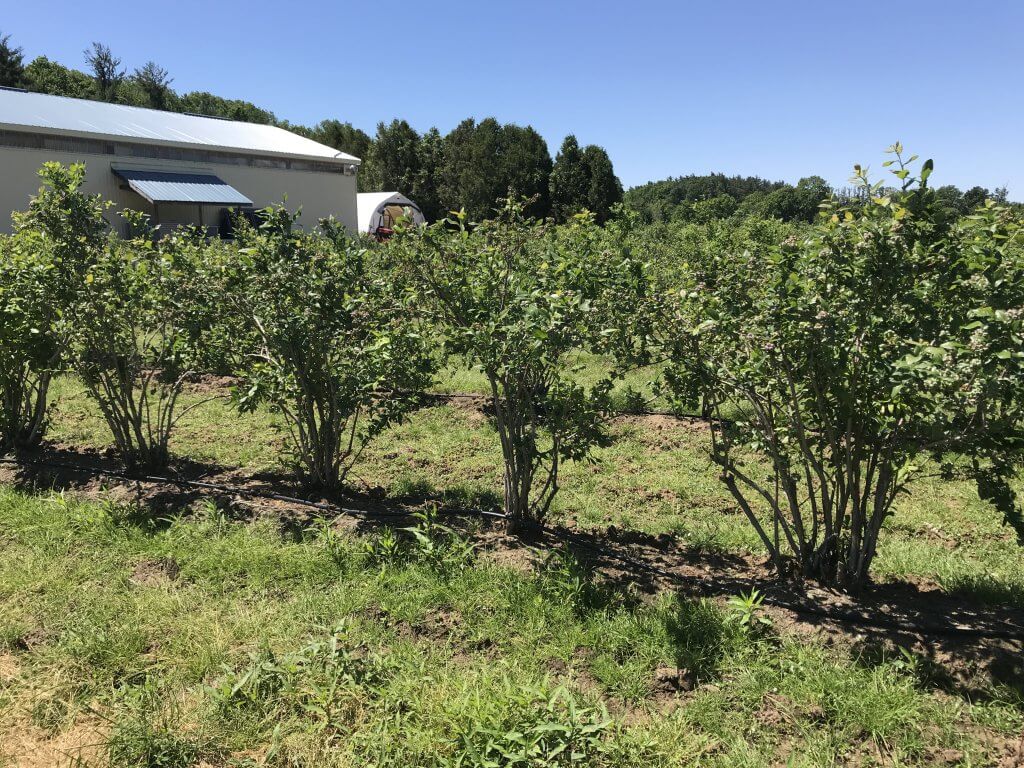
    In 2016 the operation made the following changes to their canopy management practices:

    • They performed their first-ever heavy pruning and planned to to maintain an ideal crop density by removing ~30% plant material annually. This more-or-less took place.
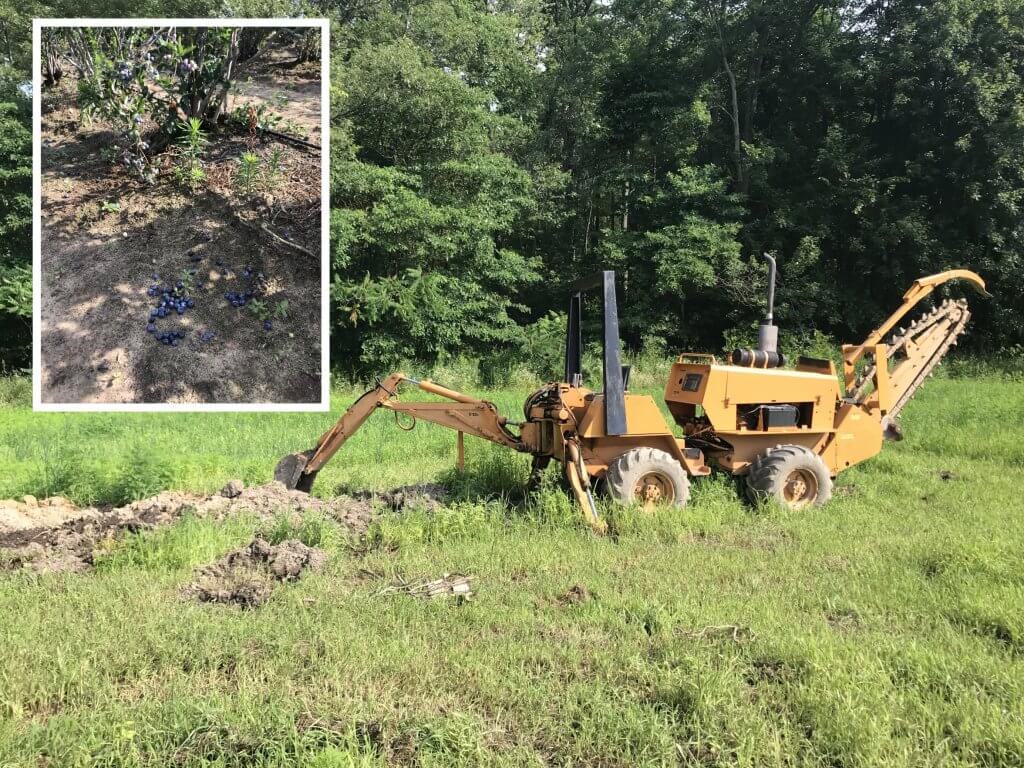
    • They regularly collected and buried culled and dropped berries.
    • They picked cleanly and more frequently.
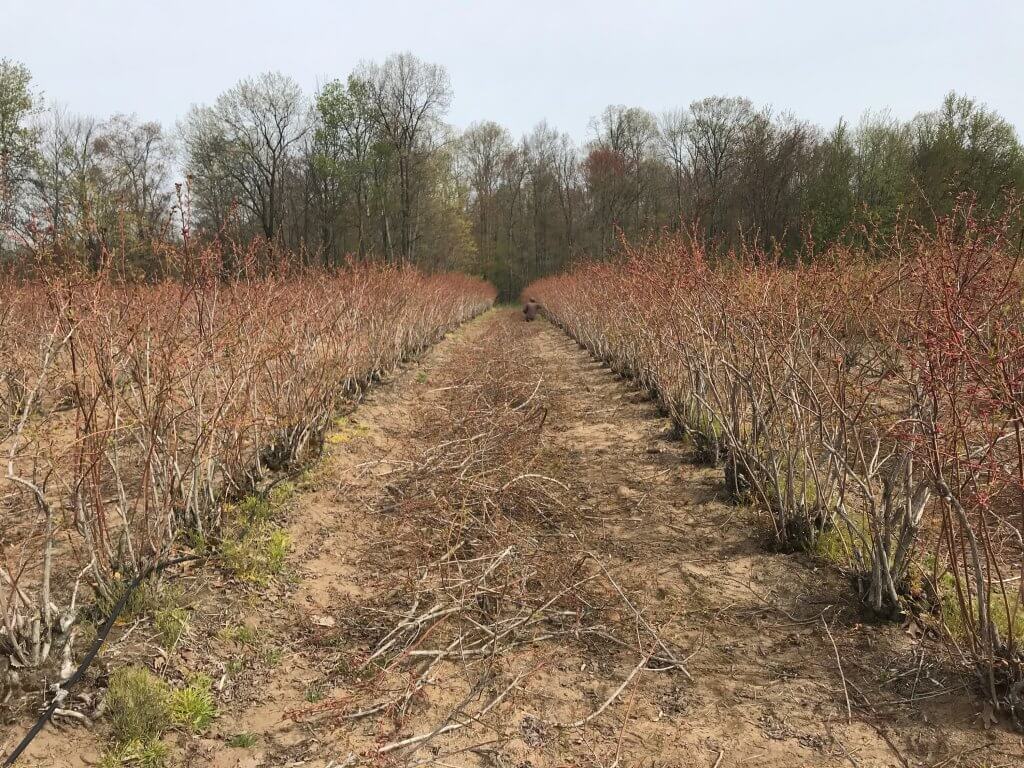
    Heavy pruning in 2016.
    Most years, bushes were pruned ~30% to maintain an ideal size and shape.
    Pickers were educated in how to pick cleanly and dropped / culled fruit was collected and buried.

    There were initial concerns that such dramatic pruning would reduce production per acre and require trellising to prevent berries weighing down the smaller bushes. However, in 2017 (and thereafter) they found that the quality of the berries was greatly improved and noted fewer hours spent culling berries during packing. Financially, the growers felt they came out ahead.

    Application Technology

    In 2018 they replaced their old, inefficient KWH sprayer with a low profile axial with conventional hydraulic nozzles to permit greater control of the spray. The KWH design was intended for standard fruit trees. It produced >100 mph air and an Extremely Fine spray quality and was therefore a bad fit with the planting architecture and canopy morphology of highbush blueberry.

    They considered a cannon-style sprayer hoping to spray multiple rows in a single pass but given the desire for improved coverage and reduced waste, they elected to drive every row using a low-profile axial.
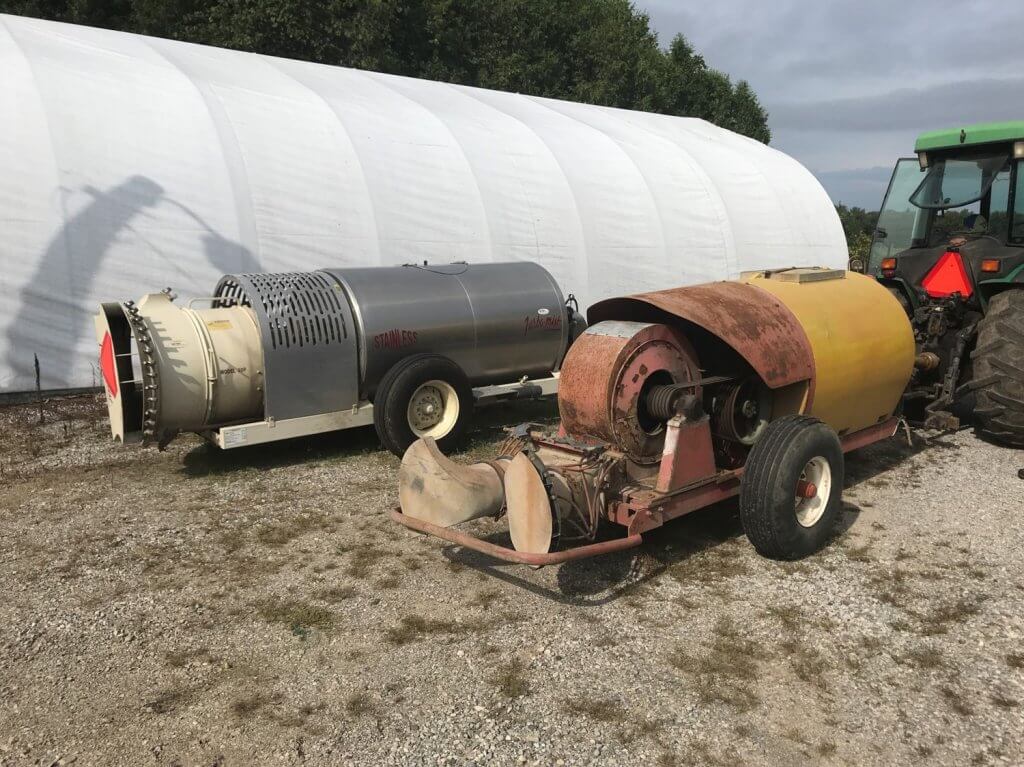
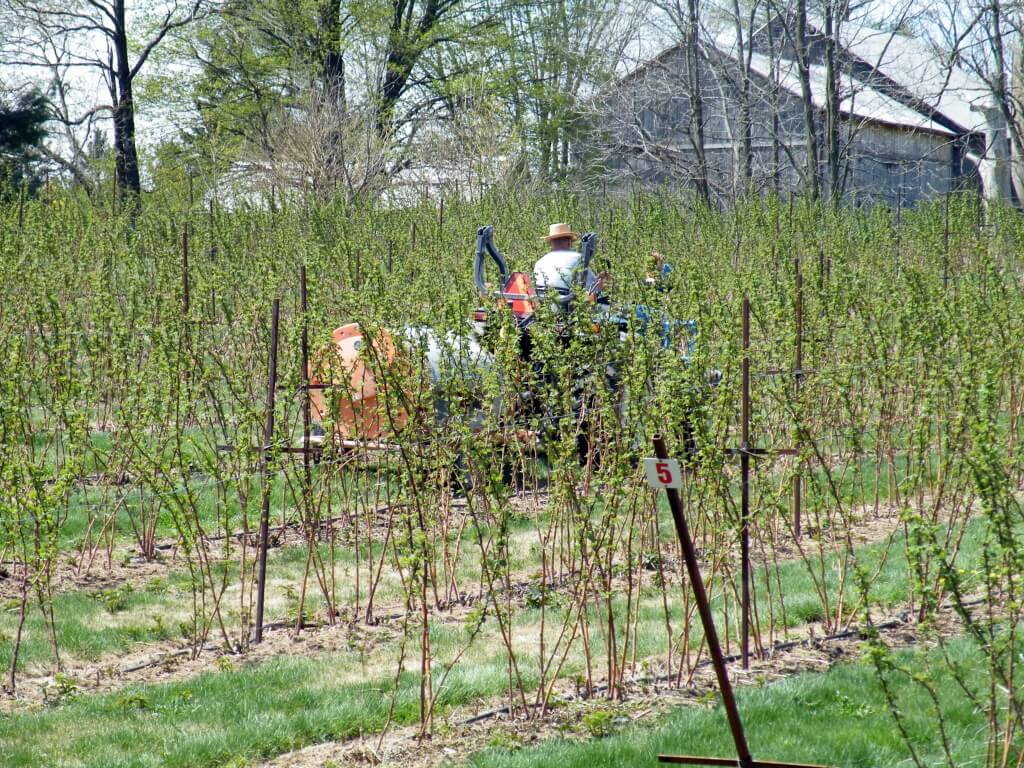
    Fore: An old KWH air shear sprayer. Rear: Low profile axial sprayer with conventional hydraulic nozzles.

    The new sprayer was more reliable, quieter, and more fuel efficient. Further, the old sprayer leaked and the air-shear nozzles did not respond when shut down at the end of rows. Eliminating these sources of waste represented a savings of ~20% of the spray volume traditionally used per acre.

    Crop-Adapted Spraying

    The redundancy inherent to product label rates for three-dimensional perennial crops has long been recognized. In response, rate adjustment (or dose expression) methods have been developed to improve the fit between rate and canopy coverage (e.g. Tree-Row Volume, PACE+, DOSAVIÑA). Each has value, but their adoption has been slow because they are region- or crop-specific and they can sometimes be quite complicated.

    CAS lends structure and repeatably to the informal rate adjustment methods already used to spray three-dimensional perennial crops (e.g. Making pro rata changes by engaging/disengaging nozzles in response to canopy height or altering travel speed in response to canopy density).

    The CAS method relies on the use of water sensitive paper to confirm a minimal coverage threshold of 85 deposits per cm2 as well as 10-15% area covered throughout a minimum of 80% of the canopy. Using this protocol, we calibrated air energy and direction, travel speed and liquid flow distribution. This process is covered in detail here and in the new edition of Airblast101. In that first year we reassessed coverage every few weeks between April and June using water-sensitive paper.

    Spray volume / Pesticide

    By matching the sprayer calibration to a well-managed canopy, the growers were able to go from ~1,000 L/ha to ~400 L/ha of spray mix. The ratio of formulated product-to-carrier remained the same, but less spray was warranted per acre. Stated differently, the grower mixed the spray tanks per usual, but drove further on a tank.

    This also saved an estimated 15 hours of filling/spraying time per year, which translates to reduced operator fatigue and exposure as well as reduced manhours and equipment hours.

    The decision of what and when to apply was at the growers’ discretion. Chemistry was rotated and applications were made according to IPM in early morning (if there were no active pollinators) to avoid potential drift due to thermal inversions. The following image shows what those papers looked like in June of the first year.
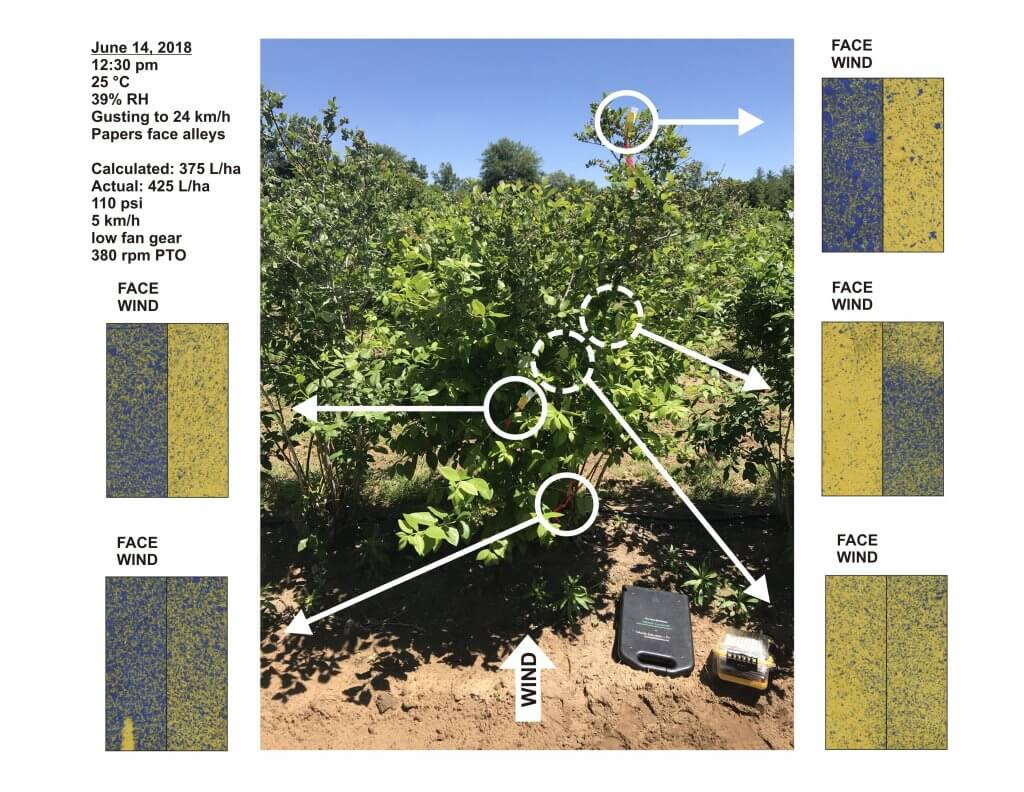
    Example of water sensitive paper coverage on a windy day (worst case scenario) in June, 2018.

    Note how little spray escapes the target rows in the following video. The wind was too high for spraying, but we were only using water and saw it as an opportunity to test a worst-case scenario. Air-induction hollow cones were used in the top nozzle position on each side so droplets were large enough to fall back to ground if they missed the top of the canopies.

    SWD monitoring

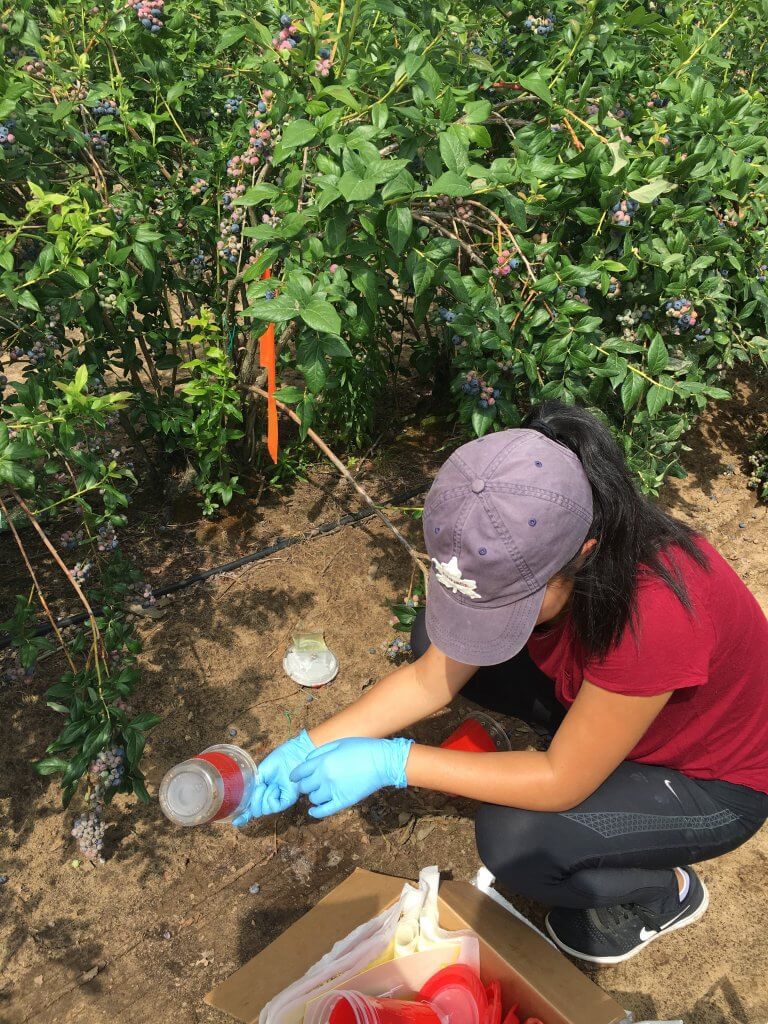
    SWD represents a serious economic threat to blueberry operations. Traps were placed in the operation (three in the crop and one in an unmanaged wild host along a treeline) and monitored weekly. Traps were also placed in surrounding horticultural operations which were employing standard pest control practices. This not only provided regional information about SWD activity but allowed us to compare the level of SWD control from the Crop-Adapted Spraying approach.

    • In 2018 the comparison included up to 16 other sites that were berry and tender fruit.
    • In 2019 the comparison included 10-12 sites (depending on the week) and they were berry and tender fruit sites.
    • In 2020 the comparison included 4 other sites (blueberries, raspberries and cherries).
    2020 & 2021 – Covid 19 and Heavy Rain

    In agriculture, every year is an adventure, but 2020 and 2021 were exceptionally difficult and the circumstances should be considered when deciphering the results. Covid-19 has had a significant impact on global agriculture.

    In 2020, fearing a reduction in the availability of seasonal labour, the operation pruned their bushes heavily. This was done to reduce the yield in order to make harvest manageable.

    In 2021, labour was once again secure. Given the heavy pruning the year previously there was no need to prune again, so the crops densified. This coincided with abnormally high levels of precipitation to create significant anthracnose issues. Additional fungicide applications took place that raised costs, but the grower maintained CAS-optimized rates and sprayer settings.

    Quantitative Results

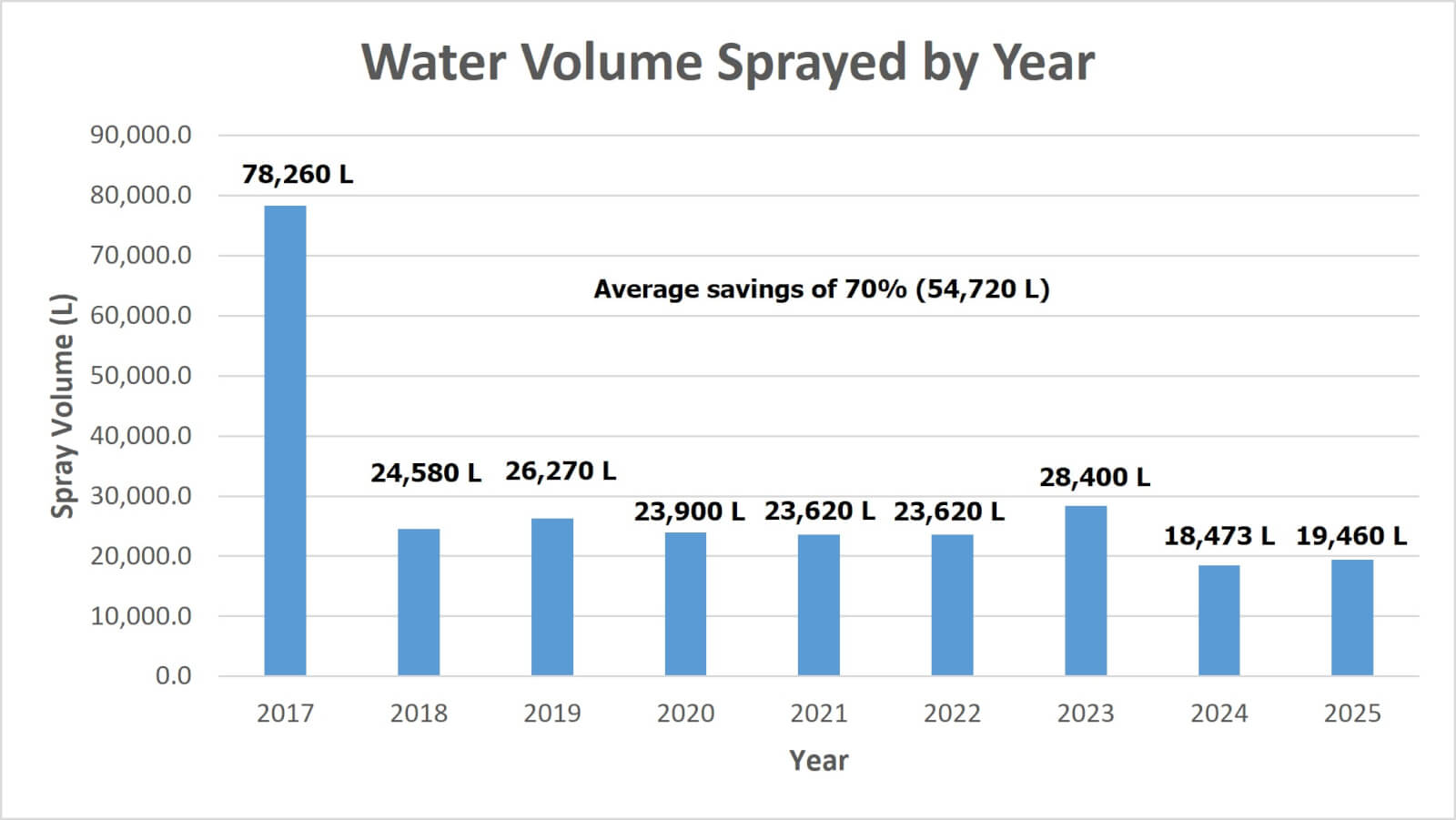
    Prior to replacing their sprayer, and adopting CAS, the operation sprayed about 78,260 L/yr. Their average savings in spray volume (water) has been 54,720 L/yr, or 70%.
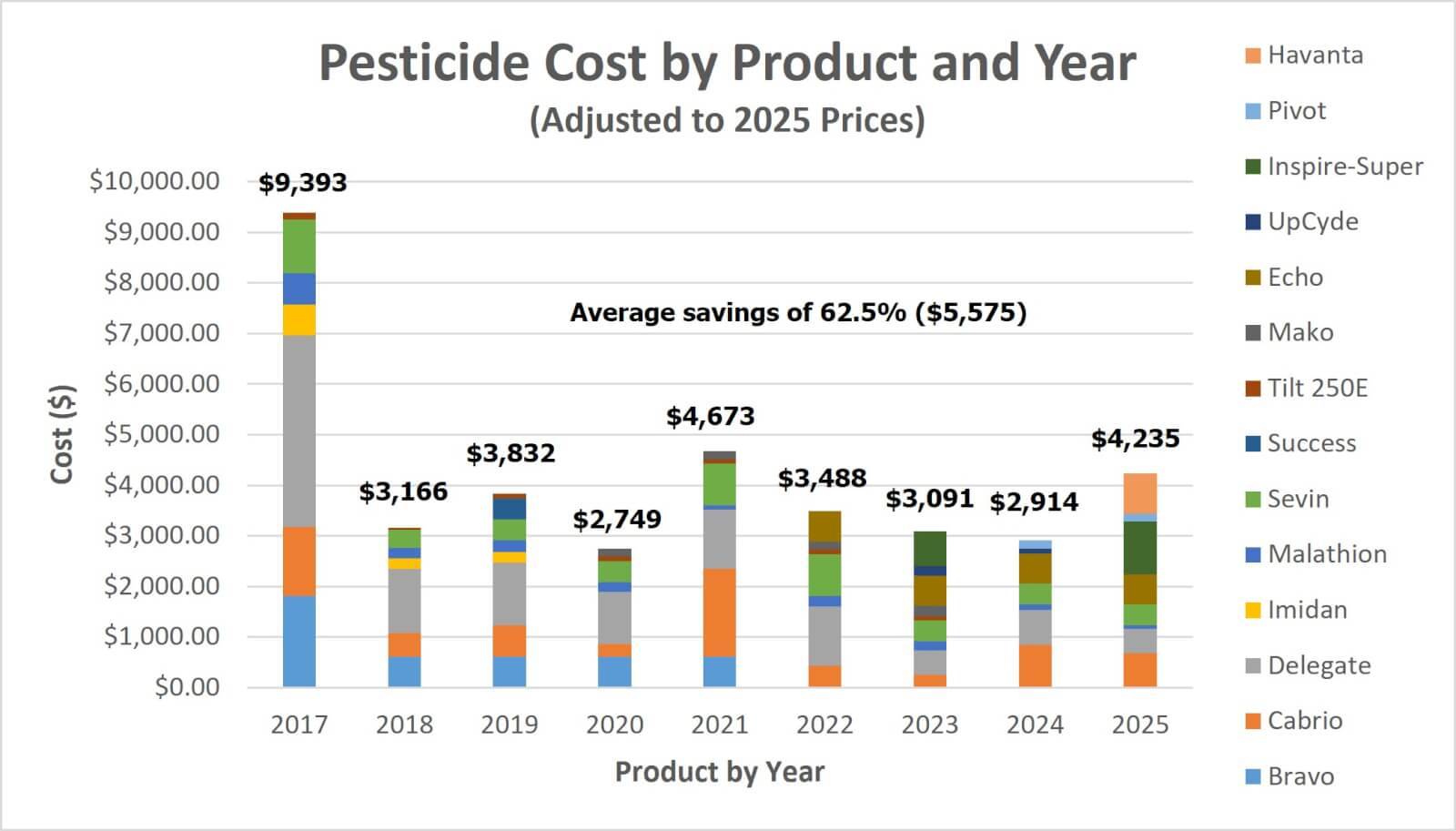
    In terms of pesticide savings, we compare each year to the 2017 baseline. In order to make for a fair comparison, we update pesticide prices each year using current costs. Therefore, the 2017 total has increased by about $2,600.00 (wow). Their average savings represents $5,575.00 CAD/yr or 62.5%.
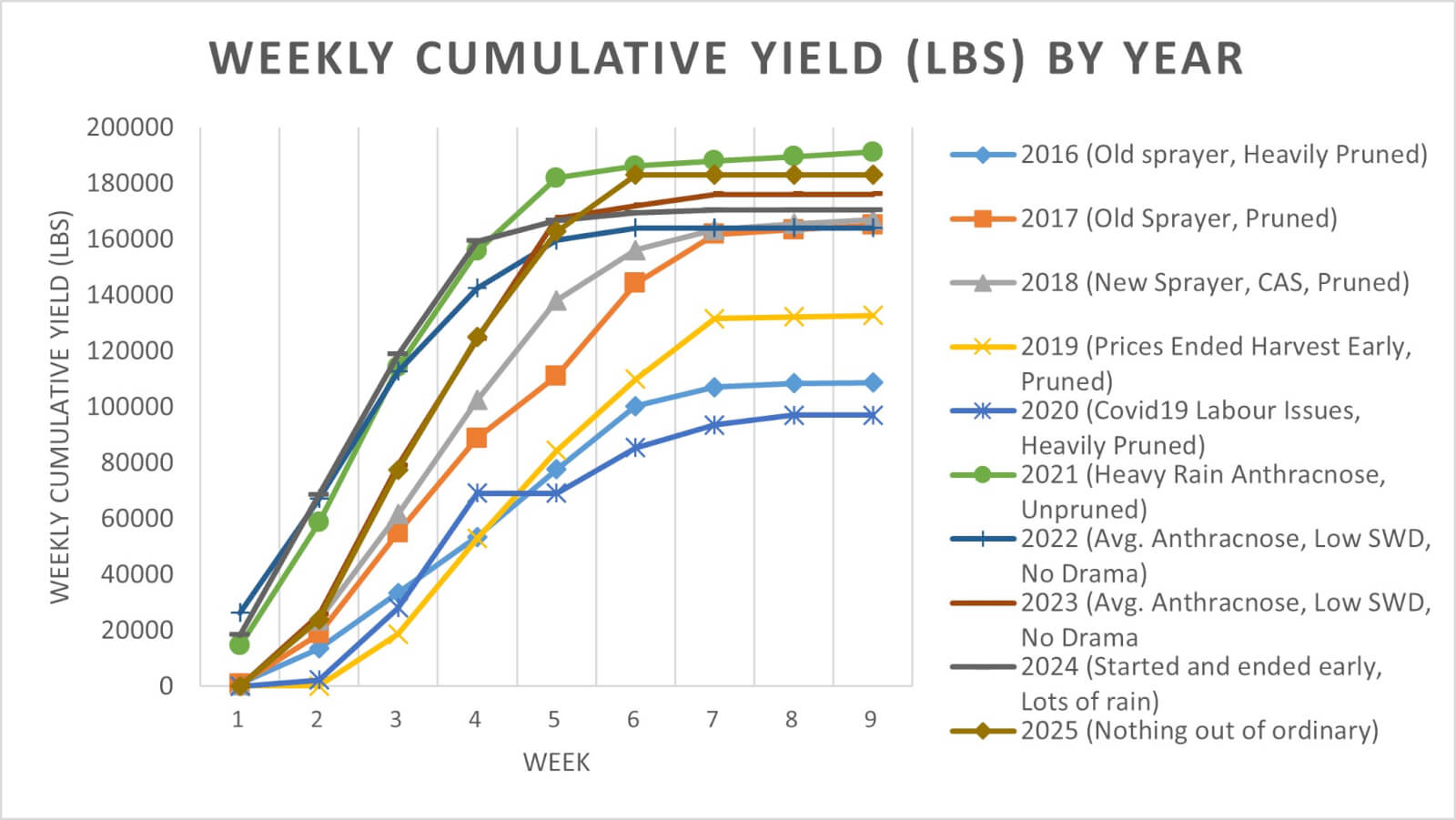
    Yield is more difficult to interpret due to mitigating circumstances in 2019 and 2020:

    • In 2016, prior to any changes, they harvested 12,076 flats (about 9lb of fruit each).
    • In 2017, following the canopy management changes, harvest increased to 18,335 flats (~50% increase).
    • In 2018, using CAS, harvest was essentially unchanged compared to 2017, which was excellent.
    • In 2019, harvest started a month late compared to previous years. Further, blueberry prices were low, and the operation elected to stop harvesting a month early. However, when those issues are factored in, the harvest was comparable.
    • 2020 was particularly challenging for agriculture and with the possibility of reduced labour due to the pandemic, the operation elected to prune heavily and reduce their yield.
    • 2021 saw unpruned bushes (following the heavy pruning in 2020) and abnormally high levels or precipitation which created anthracnose issues. As a result, more applications were made than any other year on record, but maintained the CAS-optimized rates and sprayer settings.
    • 2022 was (thankfully) fairly typical. Low SWD, average anthracnose and no drama.
    • 2023 was very much like 2022 with low SWD, average anthracnose and no drama.
    • 2024 saw a LOT of rain. The season started and ended early, but yields were par. “Pivot” replaced “Tilt”.
    • 2025 was pretty average all things considered. No drama whatsoever. “Inspire-Super” was added to product list.
    Trap counts for SWD were only performed during three years of the CAS study, so we are only able to present 2018-2020 data. It should also be noted that while the presence of SWD in an operation represents an impact on yield, there is not necessarily a correlation between the number of SWD captured the amount of damage.
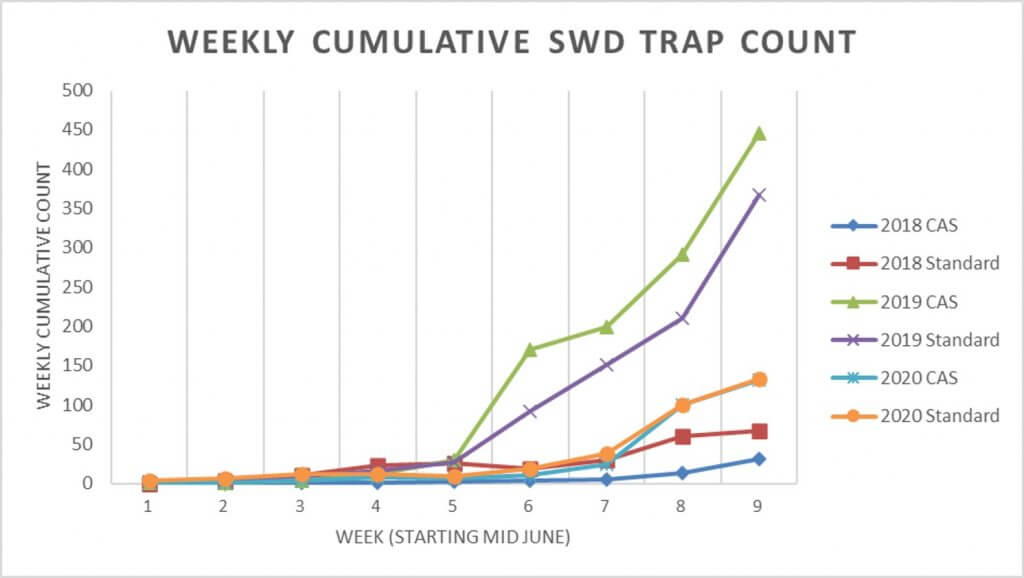
    In 2018 and 2020, average counts were higher in the surrounding operations employing standard practices (STD) compared to the CAS trial. In 2019, average counts were higher in the CAS trial. When total average counts are compared, the difference is negligible. Berries were tested regularly by the growers and the damage due to SWD was within acceptable limits. It should also be noted growers monitored and reported satisfactory disease control throughout the study.

    We have not applied any statistical rigor, but the trend suggests that the level of control provided by the CAS method was comparable to conventional methods. This conforms with our previous results in Ontario apple orchards and similar evaluations of optimized application methods world wide.

    Qualitative results

    Beyond the quantifiable results, the growers reported qualitative benefits:

    • Customers of the U-pick portion of the operation regularly enquire about pesticides. The operation’s reduction in pesticide use became a positive speaking point and aligned with the grower’s philosophy about reduced environmental pesticide loads.
    • While many blueberry growers experienced a market shortage of certain fungicides in 2018, this operation returned unused product to the distributor.
    • Growers reported less early-season disease damage, which saved considerable time on the packing line because there was less fruit to cull. Disease levels rose to typical levels later in the season, but there was still a net savings in labour.

    Conclusion

    The success enjoyed in this berry operation was a result of several canopy management and crop protection changes. This is a situation where the whole equaled more than the sum of its parts – it could only be achieved by making holistic changes to the operation. At the end of three years the growers themselves stated:

    “Based on my experience losing multiple crops to SWD, I can say with absolute certainty it works. <The results are> superior to what I expected. What we are doing is successful.”

    Here’s a narrated PowerPoint presentation of this study (includes data up to 2020):

    The monitoring portion of this project was funded by Niagara Peninsula Fruit and Vegetable Growers Association, Ontario Grape and Wine Research and Ontario Tender Fruit Growers in collaboration with private consultants.

  • How to Succeed with a Soil Drench Application in Strawberries

    How to Succeed with a Soil Drench Application in Strawberries

    In 2016, Ontario berry growers were surveyed to determine the typical spray volume they used to apply unspecified crop protection products. For strawberry growers (day-neutral and June-bearing), the results spanned 50 to 1,000 L/ha (~5 gpa to ~100 gpa). In an earlier survey (2013), respondents specified 250 to 650 L/ha (~26.5 to 70 gpa) for fungicides, herbicides and insecticides. Miticide applications were as high as 750 L/ha (80 gpa).

    This rather wide span of carrier volumes shouldn’t be surprising. No matter the horticultural cropping system, the choice of carrier volume reflects the operation’s unique pressures and priorities. These variables include, but aren’t limited to, operation size, spray equipment, crop varieties/staging, geography, and pest profiles. The ultimate goal is to achieve threshold coverage (i.e. efficacy) while maximizing productivity.

    However, even the highest carrier volume reported did not reach the volumes required for those crop protection products intended to drench the soil. These products can span a range of 1,200 to 2,000 L/ha (~128 to 214 gpa). Experienced matted-row strawberry growers employ different methods to apply soil drenches, and we will discuss them later in the article. But first let’s address three common factors that must be considered:

    Know the target

    If (for example) the target is white grubs in the root zone, or phytopthora root rot, then the spray should be focused at the base of the plant in a banded application. Performing a broadcast application that covers the alleys as well as the plant rows may represent wasted spray. Knowing the target can help make the most efficient use of carrier.

    Know the soil

    Soil that is compressed or has high clay content won’t soak up water as quickly as drier, looser or sandier soil. If the beds are raised and resist absorption, much of the volume will run off into the alleys. This may not be desirable if the target is the raised bed itself. The following basic water movement principles come from the Manitoba Agriculture, Food and Rural Initiatives Soil Management Guide.

    • Water flows more quickly through large pores (sandy soils) than small pores (clay soils); water is held more tightly in small pores (clay soils) than in large pores (sandy soils).
    • Water moves from wet areas to dry areas (not necessarily by gravity) due to forces of adhesion and cohesion. This is called matric flow.
    • Water will not move from small soil pores to large soil pores unless conditions are saturated.

    Know the weather forecast

    Spraying on a hot, dry day means a higher rate of evaporation. As the carrier evaporates, the product will have less opportunity to infiltrate the soil. Conversely, applying product just before a heavy rain can result in a much diluted product being rinsed too deeply into the soil and beyond the target area.

    Consider that one millimetre of rain on one hectare of land is 10,000 litres. That seems like a lot, but how deeply does it infiltrate into soil? One way to know is to use calculations based on soil porosity and bulk density. From these calculations it can be generalized that 25 mm of rain will infiltrate 45 mm into dry, sandy soil, but only 32 mm into dry clay soil. Remember, that 25 mm of rain represents 250,000 L/ha!

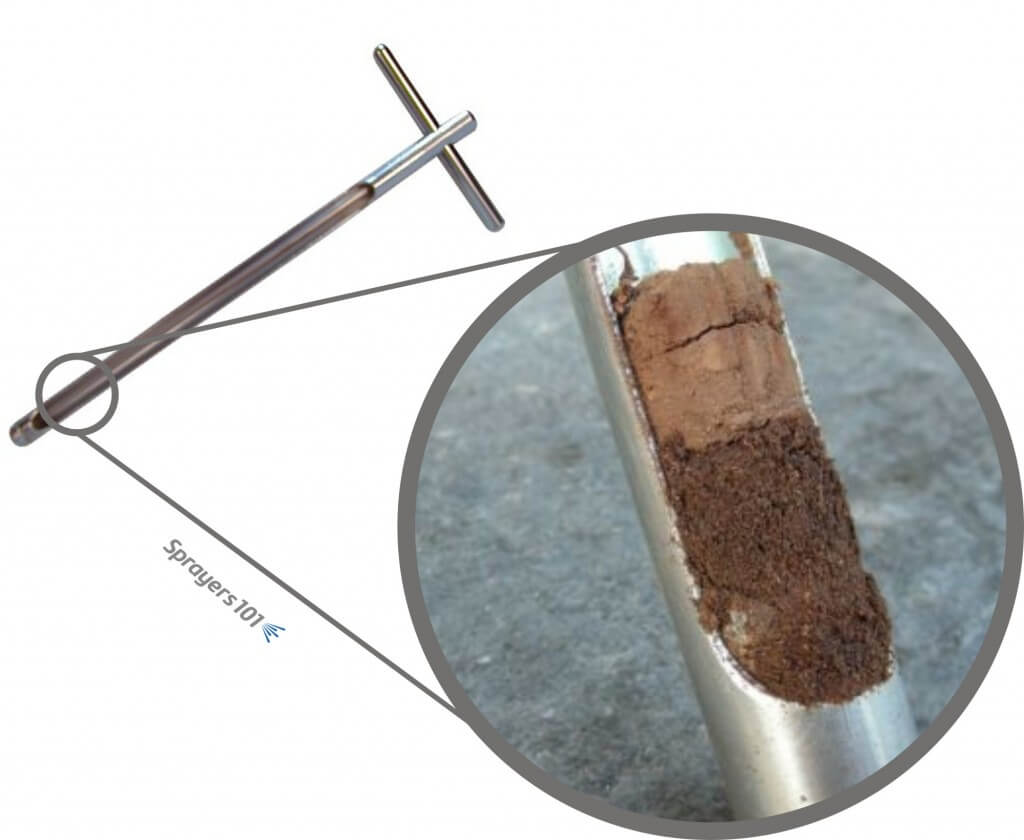
    Perhaps the best way to know how far water will infiltrate the soil is to use a soil probe (aka soil sample tube). They can be purchased from local dealers for about $100.00 CAD, or they could be borrowed from whomever provides soil sampling services in the area. For the best results, perform this test in multiple locations in the field.

    The soil probe. See how far water infiltrates soil by taking core samples.
    The soil probe. See how far water infiltrates soil by taking core samples.

    So what methods do strawberry growers employ to apply a drench? Here are the top three:

    1. Slow down

    Some growers elect to use their existing sprayer setup, but they slow down to get more volume on per hectare. For example, if the grower normally applies 500 L/ha (53.4 gpa) driving at 5 km/h (3.1 mph) they would have to drive 1.25 km/h (0.78 mph) to achieve the 2,000 L/ha some labels require. If the sprayer tank held 1,500 litres (~400 US gallons) that would mean doing 0.75 hectares (1.9 acres) to a tank compared to the normal 3 hectares (7.5 acres). That would be four times as long, without considering the time for the extra refills.

    Alternately, but related to slowing down, is double-pass spraying. In this case the tank is mixed at half-rate and the operator makes a pass through the field. Then, a second half-rate tank is applied immediately afterwards, ideally driving from the opposite direction. This effectively gives a full rate of product in a higher volume of water.

    2. Re-nozzle

    When slowing down is not enough (or not an option), some growers elect to re-nozzle. It may be tempting to increase the operating pressure to increase output on existing nozzles, but that makes finer droplets which tend to drift off target. The largest hollow-cone nozzles will only emit ~870 L/ha at 5.0 km/h (93 gpa at 3.1 mph) and that’s at 125 psi, which many trailed sprayers cannot manage. Further, many labels indicate a need for Coarse droplets in a drench, and hollow cones cannot produce such large droplets.

    There are a limited number of flat fan nozzles that can achieve sufficiently high rates, and even then they must be used at slightly slower travel speeds. For example, the TeeJet AI11008 used at 70 psi will apply 145 gpa (~ 1,350 L/ha) with a Very Coarse spray quality at 4 mph (6.4 km/h). Driving slower can rise those volumes considerably. Alternately, streamer nozzles (e.g. TeeJet’s 5 or 7 hole StreamJets) require lower pressures (up to 60 psi) to emit as much as 2,310 L/ha at 5.0 km/h (247 gpa at 3.1 mph). The grower can maintain their travel speed, but will still have to refill more often.

    3. “Wash In” the spray

    Still another choice is to apply the product using the existing sprayer set-up, using a typical carrier volume, just prior to a rain event or sprinkler (not drip line) irrigation. For example, if the grower normally applies 500 L/ha (53.5 gpa), they would continue to do so. If the grower is relying on rain to wash the product in, it should be sufficient precipitation to move the product to the desired soil depth. Where sprinklers are an option, this can be controlled, and the depth of infiltration tested with a soil probe. Washing in the spray should take place as soon after application as possible to ensure the product is distributed evenly into the soil.

    Thanks to Pam Fisher, former OMAFRA Berry Crop Specialist, and Anne Verhallen, former OMAFRA Soil Management Specialist, for their contributions to this article.

  • Disease Control in Berry Crops

    Disease Control in Berry Crops

    In the spring of 2016, the Ontario Berry Growers Association (OBGA) conducted a survey of its membership to poll how fungicides were being applied. The results were very interesting.

    Fungicide basics

    Generally, fungicides registered for berry crops are contact products, so coverage and timing are very important. The fungicide has to be distributed evenly on the target before disease has a chance to infect the crop. That means the sprayer operator must be aware of the susceptibility of the crop to the level of disease pressure to ensure timing is appropriate. While kickback and post-application distribution of pesticide residue is sometimes possible, sprayer operators should not rely on it. The following table outlines application recommendations for a fungicide commonly used in Ontario. It combines labelled information and provincial recommendations and is representative of most fungicides.

    Summer-fruiting and Fall-bearing Raspberry / Blackberry Highbush Blueberry Day-neutral and June-bearing Strawberry
    Labelled rate 2.5 kg/ha 2.25 kg in 1,000 L/ha2.75-4.25 kg in 1,000 L/ha
    Diseases (Labelled and Ontario provincial recommendations) Anthracnose fruit rot, Spur blight, Leaf spot, Botrytis grey mouldAnthracnose fruit rot, Shoot blight (Mummy berry), Botrytis twig and/or blossom blightCommon leaf spot, Botrytis grey mold
    Crop staging Bloom, Pre-harvest, HarvestFirst bloom, Fruit ripeningFlower bud, First bloom, 7-10 days after bloom, Pre-harvest, Through to fall
    As of 2016

    The spray target

    The applicator reading the recommendations should be considering the best way to get the fungicide to the target. But, what is the target, and what is the best way to apply it? It seems the recommendations raise as many questions as they answer:

    • With the possible exception of blueberry, this fungicide can be applied through much of the growing season (especially when it’s been a wet season). That means the crop staging is highly variable.
    • The primary target is blossoms, but depending on the disease, leaves and stems are also important.
    • The label states a volume of carrier (i.e. 1,000 L/ha) for strawberry and blueberry, but not the cane fruit. It does not specify highbush blueberry versus the sessile, ground cover variety.

    So, this means is the sprayer operator has to spray crops with highly variable physiology (e.g. bush, cane or sessile row crops), onto very different targets (e.g. leaves, canes, stems, flowers) throughout much of the season as the crop canopies grow and fill. This is a very challenging spray application. It would be wrong to suggest a single spray quality, water volume or sprayer set-up to efficiently accomplish all these goals (more on that later). The first consideration is the application equipment itself.

    The application equipment

    Berry growers employ a variety of sprayers to protect berries. Without considering models or optional features, there are three fundamentally different styles: Airblast, backpack and boom. According to the survey, the following table shows which sprayers are used in which berry crop in Ontario. Approximately 60 growers responded, and many grow more than one variety of berry and use more than one style of sprayer.

    Jacto airblast in raspberry
    Jacto airblast in raspberry
    Airblast SprayerBackpack or Wand SprayerVert. or Hor. Boom SprayerTotal
    Highbush blueberry 8109
    Day-neutral Strawberry 302124
    June-bearing Strawberry503237
    Raspberries & Blackberries211729
    Total37260

    So, generally, cane and bush berries are sprayed using airblast sprayers and strawberries using horizontal booms. The survey didn’t specify features such as air-assist on booms, or whether or not those booms are trailed or self-propelled. The type of, and features on, any given sprayer dictate the limits of what an operator can adjust to improve coverage.

    Water volume

    Respondents also reported on how much carrier (i.e. water) they used to spray fungicide on their crops. Given Canada’s propensity to report volumes in many different forms, I have converted all values into the most common units: L/ha, US g/ac and the dreaded L/ac:

    nL/ha ± std (max./min.) US g/ac ± std (max./min.) L/ac ± std (max./min.)
    Highbush Blueberries7534.2 ± 340.1 (1,000/150)57.1 ± 36.4  (106.9/16)216.2 ± 138 (404.7/60.7)
    Day-neutral Strawberries22418.5 ± 192.2 (1,000/224.5)44.7 ± 20.6 (106.9/24)169.4 ± 77.8 (404.7/90.8)
    June-bearing Strawberries33403.1 ± 235.1 (1,000/50)43.1 ± 25.1 (106.9/5.3)163.1 ± 95.1 (404.7/20.2)
    Raspberries & Blackberries27450.1 ± 279.4 (1,200/50)48.1 ± 29.9 (128.3/5.3)182.1 ± 113.1 (485.6/20.2)
    Trailed horizontal boom in strawberry
    Trailed horizontal boom in strawberry

    There appears to be a lot of variability in the volumes applied, but on the whole, very few are using the 1,000 l/ha indicated in the fungicide recommendations. The ~430 l/ha overall average is no surprise; labelled volumes are quite often higher than what sprayer operators use. In some cases, high label volumes are warranted because the product requires a “drench” application to totally saturate the target, or to penetrate very dense canopies. Conversely, a high label volume might reflect outdated practices if that label hasn’t kept up with current cropping methods or application technology. Sometimes label volumes are suspiciously large, round numbers that suggest they are intended to encompass a worst-case scenario (e.g. a large, unmanaged crop with high disease pressure and a less-than-accurate spray application). In the particular case of crops sprayed with an airblast sprayer, it is very difficult for a label to accurately predict an appropriate volume due to the variability in crop size, density and plant spacing. This has led to methods to interpret labels, such as crop-adapted spraying.

    The disparity between label language and grower practices is not entirely the fault of the label. Most sprayer operators don’t want to carry a lot of water because more refills prolong the spray day. In situations where the crop has reached a critical disease threshold, or bad weather has compressed the spray window, sprayer operators sometimes reduce the volumes in the belief that “getting something on” trumps “good coverage”. Perhaps that’s true, but insufficient volumes greatly reduce coverage. This can be further exacerbated when operators do not account for the increase in crop size and density over the season, or the impact of hot dry weather on droplet evaporation.

    Improving coverage

    So, is there an ideal sprayer set up and volume? As previously alluded, the variability in crop staging, crop morphology, target location and spray equipment make a single recommendation impossible. But that doesn’t mean there aren’t diagnostic tools and a few simple rules to help a sprayer operator determine a volume to suit their particular needs. Much can be accomplished with these three things:

    • Water-sensitive paper
    • A modest selection of nozzles and a nozzle catalogue
    • An open-minded sprayer operator willing to spend a little time and reconsider traditional practices
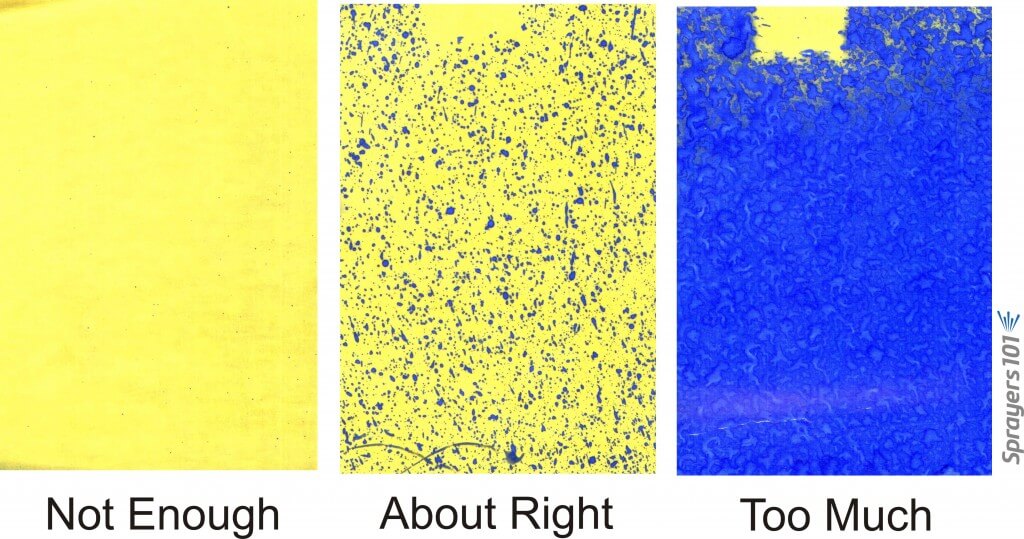
    Rule-of-thumb fungicide coverage on water-sensitive paper.
    Rule-of-thumb fungicide coverage on water-sensitive paper.

    Water-sensitive paper is placed in the canopy, oriented to represent the target (e.g. leaf, bloom, etc.). It is important to put multiple papers in at least three plants to ensure the coverage reflects a typical application. The paper changes colour when it’s sprayed and this provides valuable and immediate feedback. Did the spray go where it was supposed to go and did it distribute throughout the target? If so, then the operator now knows that they can safely focus on timing rather than targeting. If not, a little diagnosis is required:

    1. Were targets completely drenched? If so, there is too much coverage. Operators can drive faster (if possible, and as long as it doesn’t create drift), reduce operating pressure (if possible, and as long as the nozzle is still operating in the middle of its registered range), or change nozzles to lower rates (as long as spray quality is constant).

    2 .Were targets only partially covered, as if a leaf obstructed part of the target and created a shadow? This mutual-shading is the bane of spraying dense canopies. One possible solution lies in understanding droplet behaviour: Coarser sprays generally mean fewer droplets and they move in straight lines. Therefore, when they hit a target, they might splatter or run-off, but typically their journey is over. If the spray is too Coarse, a slightly Finer spray quality increases droplet counts and may help droplets navigate around obstacles and adhere to more surfaces. Sprays that are too Fine will not penetrate dense canopies without some form of air assist. They slow very quickly and tend to drift and evaporate before they get deep enough into a canopy to do any good. A Medium droplet size is a good compromise because it produces some Fines and some Coarser drops – the best of both worlds.

    Increasing volumes and reconsidering spray quality often helps, but there might be other options. If using air assist, there are tests that can confirm the air volume and direction are appropriate. Another solution might lie in canopy management (where pruning bushes and canes can help spray penetration immensely). Still another might lie in the use of adjuvants to improve droplet spread on the target.

    3. Were targets missed entirely, or coverage is consistent but sparse? The operator is likely not using enough water, and/or the spray quality is too fine. It has been demonstrated time and again that higher volumes improve coverage, but operators can try any of the options listed previously for partially-obstructed coverage. All the reasoning is the same.

    Conclusion

    Spraying fungicides effectively requires an attentive sprayer operator. Timing and product choice are very important, but when it is time to spray the sprayer operator should diagnose coverage with water-sensitive paper, and be willing to make changes to the sprayer set-up to reflect changing conditions. Thanks to the OBGA for sharing the survey data.

  • When is Fungicide Coverage Critical? Always!

    When is Fungicide Coverage Critical? Always!

    Introduction

    A local strawberry producer was just beginning his harvest when the entire field was suddenly stricken with anthracnose. He would have done almost anything to save it, but he could only watch in frustration as the disease quickly devastated his crop. While he was telling me this story, he was wringing his hands; I’m sure he didn’t realize he was doing it. It had been more than a month since the crop was lost and he was obviously still very upset. Let’s put on our deerstalker hats and consider what might have caused the trouble.

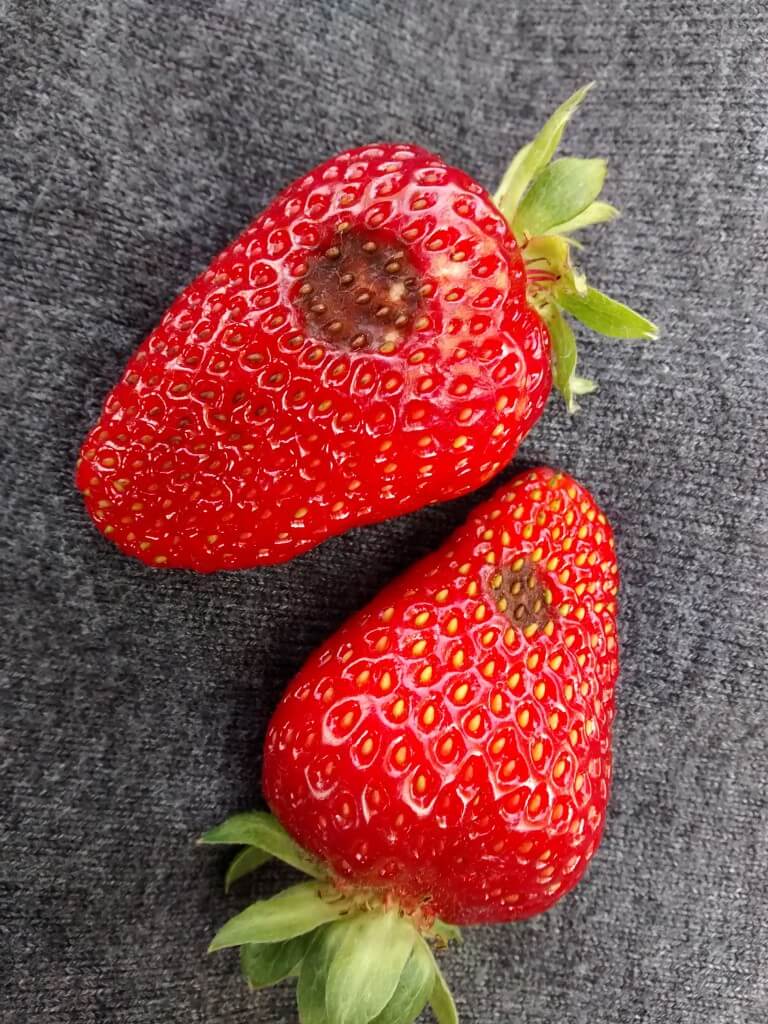
    Strawberry anthracnose. Photo by Pam Fisher, OMAFRA.
    Strawberry anthracnose. Photo by Pam Fisher, former berry specialist with OMAFRA.

    Most of the fungicides we apply in horticulture are protectants, not curatives. What that means is that the fungicide has to be in place before disease has a chance to take hold. Once it establishes a beachhead, you can typically only hold it at bay, not eradicate it. So, if you’re guilty of waiting too long between fungicide applications, the problems may have already begun. This is exacerbated when you don’t achieve the necessary spray coverage. Put the two together and mix in rainy and warm conditions and diseases like anthracnose can spread at alarming speed.

    Method

    I focus on the sprayer part of disease management, so I have to assume that inoculum is being controlled as much as possible (e.g. culling infected plants, drip irrigation, etc.). I asked the grower about his sprayer and his spraying schedule. He admitted to pushing the limits between fungicide applications, and being uncertain about the spray coverage he was achieving with his conventional flat fan nozzles.

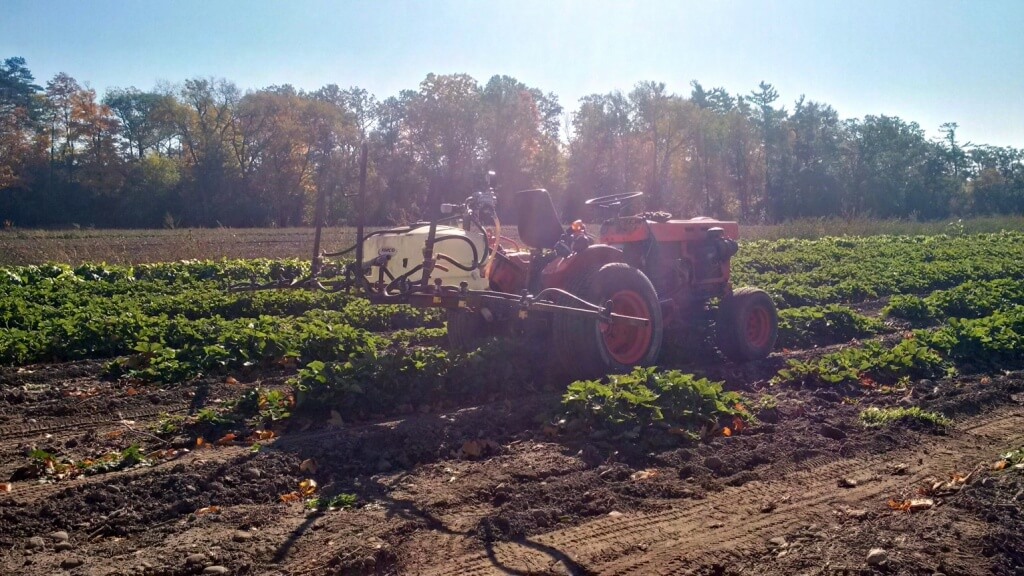
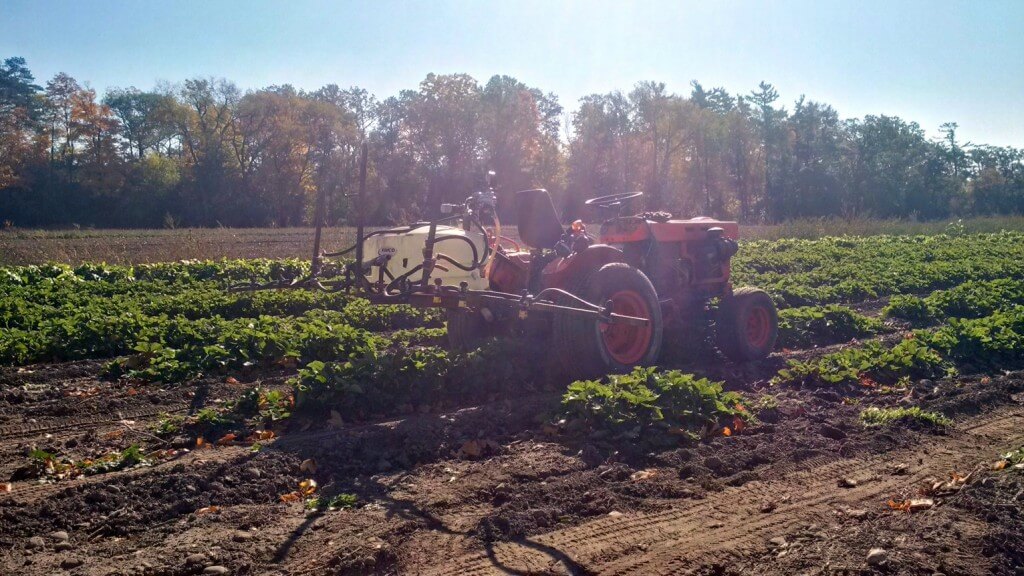
    Strawberry Sprayer
    Strawberry Sprayer

    In cases like this I try to find gentle ways of introducing the idea of using more water, increasing the frequency of applications, or buying new nozzles, because there is time and expense involved and many growers don’t want to hear that. However, when I started my soft sell routine, he looked me straight in the eye and said he’d lost tens of thousands of dollars in revenue so a few nozzles or a couple more applications were not a pressing concern. There’s a point in any endeavour when you’ve committed so much time and money that you’ll do pretty much anything to see it come to fruition (pun intended). He was willing to do whatever it took. This was my kind of guy.

    So, in preparation for next year, we diagnosed spray coverage from five different sprayer set ups. Let me point out, as I always do, that spray coverage analysis does not necessarily extend to control. They correlate well, but if you aren’t using the right product or your timing is off, even the best coverage won’t help you. Caveats aside, here’s what we tested:

    Setup1:

    Broadcast application using a horizontal boom with TeeJet Twinjet 8006’s at 8.3 bar (120 psi) on 50 cm (20 in) centres. We calculated a nozzle rate of 3.9 L/min (1.03 gpm), so at 5.0 km/h (3.1 mph) that’s 923 L/ha (98.7 g/ac).

    Setup 2:

    Banded application on a horizontal boom equipped with a row kits suspending three TeeJet XR 8002’s at 8.3 bar (120 psi). We angled the two side nozzles so the fans were not perpendicular or parallel with ground. This kept more spray on the raised row and out of the alleys. The swath covered 50 cm (18 in) and we calculated a nozzle rate of 1.29 L/min (0.34 gpm), so at 5.0 km/h (3.1 mph) that’s 1,016 L/ha (108.6 g/ac).

    Setup 3:

    Banded application on a horizontal boom equipped with a row kits suspending three TeeJet XR 8002’s at 6.2 bar (90 psi). We angled the two side nozzles so the fans were not perpendicular or parallel with ground. This kept more spray on the raised row and out of the alleys. The swath covered 50 cm (18 in) and we calculated a nozzle rate of 1.14 L/min (0.3 gpm), so at 5.0 km/h (3.1 mph) that’s 896 L/ha (95.8 g/ac).

    Setup 4:

    Broadcast application using a horizontal boom with TeeJet Twinjet 8004’s at 6.2 bar (90 psi) on 38 cm (15 in) centres. We calculated a nozzle rate of 2.27 L/min (0.6 gpm) so at 5.0 km/h (3.1 mph) that’s 717 L/ha (76.5 g/ac).

    Set up 5:

    Broadcast application using a horizontal boom with TeeJet Twinjet 8006’s at 6.2 bar (90 psi) on 38 cm (15 in) centres. We calculated a nozzle rate of 3.4 L/min (0.9 gpm) so at 5.0 km/h (3.1 mph) that’s 1,076 L/ha (115 g/ac).

    Protocol and Conditions

    It was late September, so the weather was a cool 8 °C, humidity was low and winds averaged 5 to 15 km/h. We timed our passes to correspond with lighter wind wherever possible. Three sets of water-sensitive paper were placed in a single row, but only one pass was made per sprayer setup. One paper was placed at the top of the canopy which is always very easy to hit, so we oriented it sensitive-face-down. The second paper was placed midway down the canopy, oriented facing up. The final paper was also oriented facing up, but placed at the very bottom of the canopy, more or less on the ground. Collectively, we spanned the depth of the canopy.

    Following each application, papers were collected for digital analysis using “DepositScan” which determines the percent of the paper covered with spray, and the droplet density. Both of these factors contribute to overall coverage. This wasn’t intended to be a rigorous experiment, so the means are presented here with standard error for the sake of comparison. There was no statistical analysis. In the case of papers located face-down, when only trace amounts of spray were discernible they were assigned a percent coverage of 1% and droplet density of 25 droplets/cm2.

    Results

    A few observations before we get to the results. Research has demonstrated that row kits and higher volumes improve spray coverage, and that’s why we tried banding the applications using row kits in Setups 2 and 3. However, this grower didn’t use GPS to plant his rows, and while they weren’t too crooked, they made it challenging to apply in a band. Further, there is some concern that a banded application would miss any inoculum in the alleys. These are important points to factor in when considering methods to control disease.

    The keen reader might notice we sprayed using pressures that exceed the manufacturer’s recommendations. In fact, none of these tips were rated over 60 psi and I used a formula to calculate their output at our high pressures. I have been heard to say (many times) never to exceed the manufacturer’s rates because it makes a mess out of the spray quality: droplets get much finer and pressure does not cause finer drops to penetrate a dense canopy. Better to switch to larger nozzles and stay within the pressures indicated on the manufacturer’s rate tables. I maintain that assertion. However, the grower was assured by fellow growers and custom applicators that this was the way to go and he wanted to try it. So, that’s where Setups 1, 4 and 5 came from.

    Be aware that a small sprayer like the one in this study needs considerable pump capacity to support such high pressure and flow to the boom and maintain effective agitation. For more information on pumps, check out this article.

    The following table expresses the coverage obtained by setup:

    Set upPaper PositionMean % Coverage (±SE)Mean Deposits/cm2 (±SE)
    Setup 1 – Broadcast XR 8006’s on 20” centres at 120 psi for 98.7 gpaTop1.0 ± 025.0 ± 0
    Middle23.6 ± 4.5253.5 ± 72.9
    Bottom15.2 ± 2.1423.2 ± 35.3
    Setup 2 – Three banded XR 8002’s at 120 psi for 108.6 gpaTop2.1 ± 1.178.9 ± 53.9
    Middle54.8 ± 12.1275.2 ± 145.3
    Bottom29.1 ± 2.7544.5 ± 70.4
    Setup 3 – Three banded XR 8002’s at 90 psi for 95.8 gpaTop7.4 ± 5.9134.4 ± 52.2
    Middle31.6 ± 15.9203.6 ± 108.5
    Bottom8.1 ± 3.9224.4 ± 102.3
    Setup 4 – Broadcast Twinjet 8004’s on 15” centres at 90 psi for 76.5 gpaTop1.0 ± 025.0 ± 0
    Middle33.3 ± 5.0240.7 ± 70.9
    Bottom12.9 ± 6.0263.9 ± 95.2
    Setup 5 – Broadcast Twinjet 8006’s on 15” centres at 90 psi for 115 gpaTop2.3 ± 1.3105.6 ± 80.6
    Middle48.9 ± 5.5194.3 ± 25.6
    Bottom19.5 ± 10.3246.8 ± 40.4

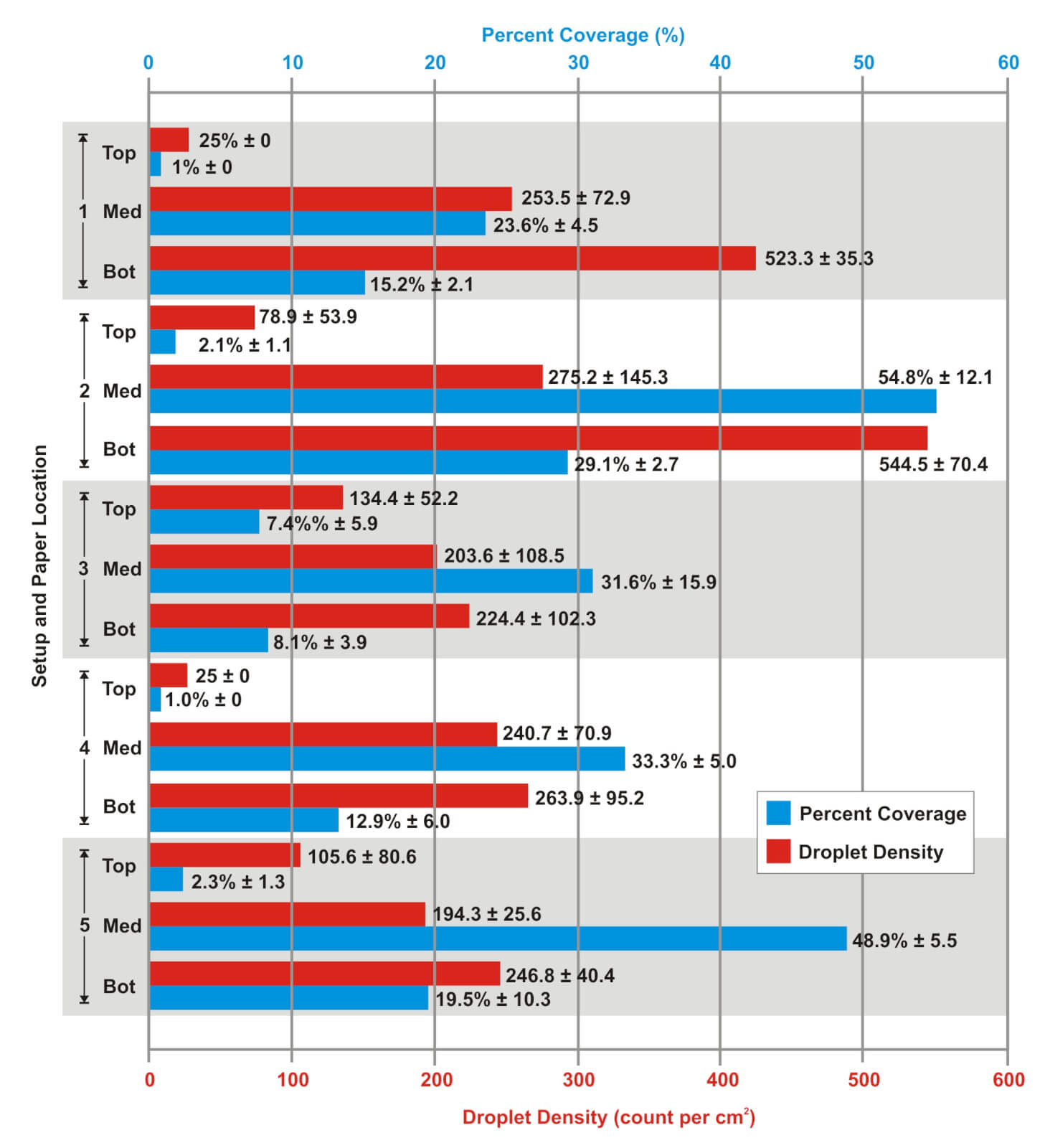
    The results may be easier to compare and contrast in the following graph.

    Strawberry coverage results for all five setups.
    Strawberry coverage results for all five setups.

    Observations

    According to the results, Setup 2 appeared to provide the best overall coverage. This is no surprise given that it was the second highest volume and employed a row kit. This corresponds with findings that have been published elsewhere. However, the excessively high pressure did create a lot of drift and the row kit didn’t always line up with the planted row. Further still, there’s the potential for missing anything that might harbour inoculum in the alleys, like runners. This setup wasn’t appropriate for this particular situation.

    The second-best overall coverage was obtained from Setup 5. This represented the highest volume, and a preferably lower pressure on twinjets, which may have allowed the spray to penetrate the canopy from multiple angles. This broadcast application is more reliable for hitting meandering rows and covers the alleys as well. So, the grower plans to employ this setup for the 2016 season, spraying at shorter intervals and confirming his coverage with water-sensitive paper. Let’s hope it works out.

    End-of-Season Update

    The grower that volunteered his time to this study has reported that his strawberries at the end of the 2016 season were absolutely beautiful. Granted, it is always difficult to draw a direct correlation between sprayer calibration and control. For example, 2016 was a very dry growing season and disease pressure was lower than in 2015. Nevertheless, spray coverage plays an important role in crop protection and our work to improve sprayer performance definitely played it’s part. His success is great news!