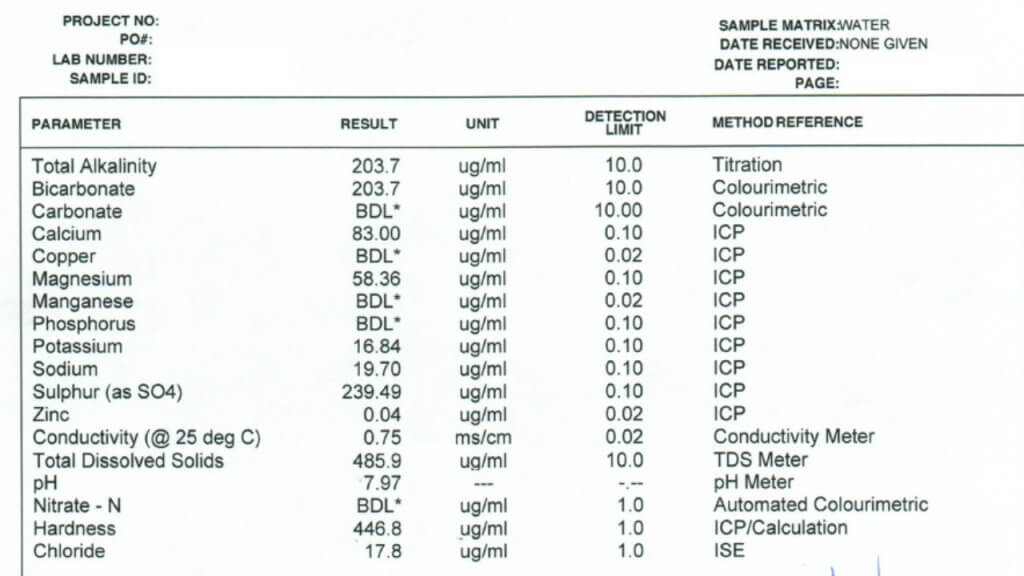
How to interpret a water quality test result

It’s common advice: Test your water before using it as a spray carrier. You dutifully sample the well or dugout and await lab results. And what comes back is a whole lot of numbers. How to make sense of it all? All three of these tests report a large number of properties and identify specific […]

Read More… from How to interpret a water quality test result

Circulating Spray Mix Through a Tank-Rinse Nozzle Maintains Nematode Concentration

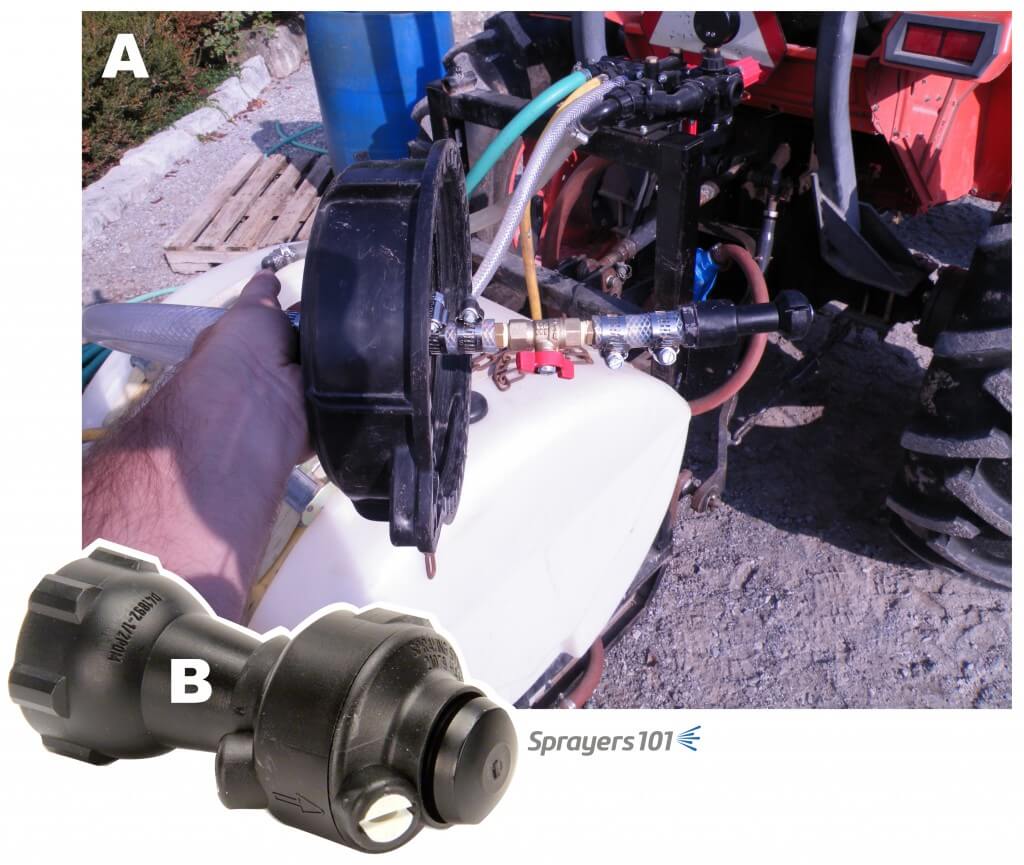
(A) Tank-rinse assembly mounted through tank lid with a flow-regulating valve. (B) Close up of tank-rinse nozzle.

This article was co-written with Jennifer Llewellyn, former OMAFA Nursery Crop Specialist With more and more bio-rational products on the market, crop protection methods may require reassessment. Certain products require exacting water quality, cannot tolerate residues, and have half-lives that are both time- and temperature-critical. We’ve been getting questions about sprayer compatibility with some of […]

Read More… from Circulating Spray Mix Through a Tank-Rinse Nozzle Maintains Nematode Concentration

CTS for airblast sprayers – A learning process

As Canadian farmers begin to adopt closed transfer systems (CTS), growing pains are to be expected. Instructions for installation and use are primarily European and field-sprayer centric. We’ve seen precious little in the way of practical advice for incorporating CTS into airblast operations. This is a “live” article which we’ll update periodically. We encourage readers […]

Read More… from CTS for airblast sprayers – A learning process

The Real Story behind pH and Water Hardness

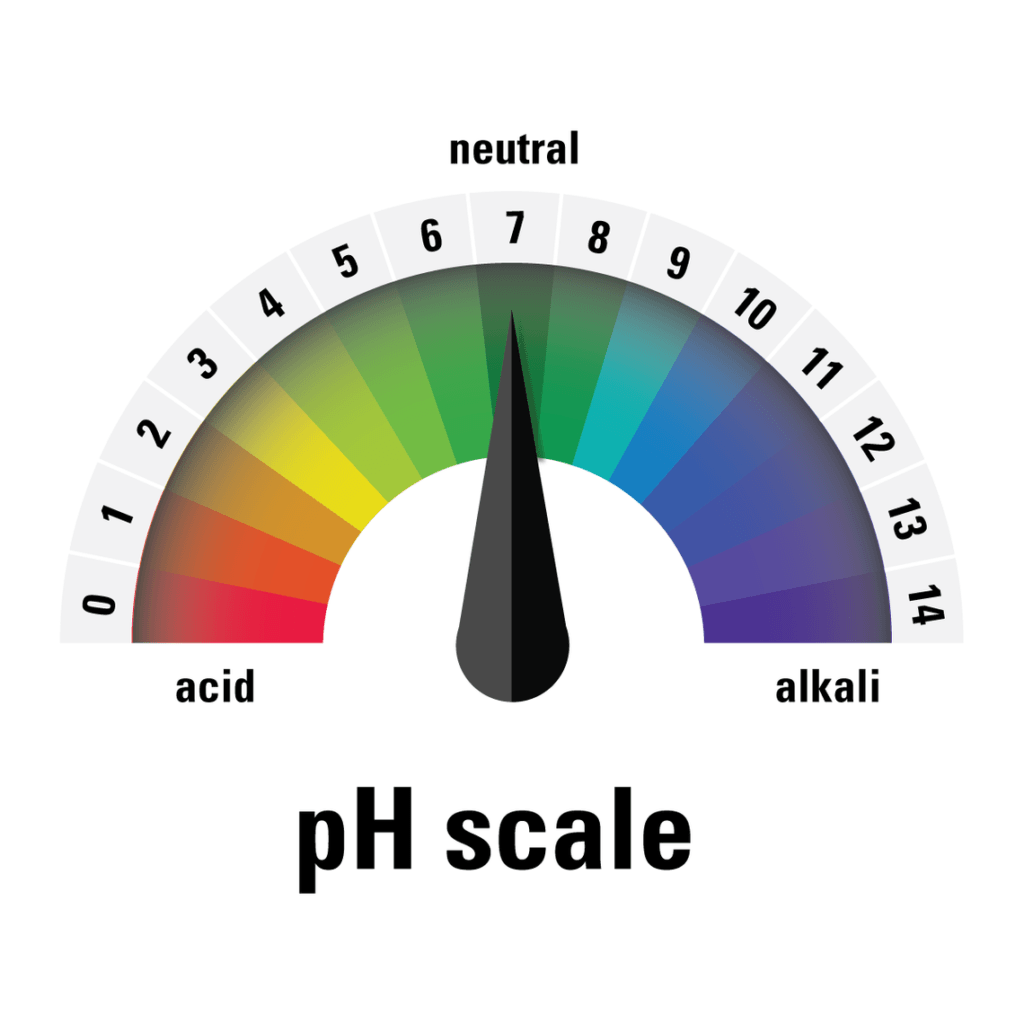
Editor’s Note: Changes and updates have been made to this article since its original publication in 2019. Introduction The quality of water being used in the spray tank to act as the carrier for your pesticides can have significant effects on how well those pesticides will work. So it may be surprising that very few […]

Read More… from The Real Story behind pH and Water Hardness