The following question arrived from one of our prairie clients last week:
“A retailer is promoting the use of hollow cone nozzles to be used on field sprayers (20” spacing) to apply fungicides which he claims out-perform any regular and twin fan tips. Claims:
create an extra fine droplet for maximum coverage on the canopy
use less water, less time spent filling
apply at 3.5 gpa
add vegetable oil to reduce drift
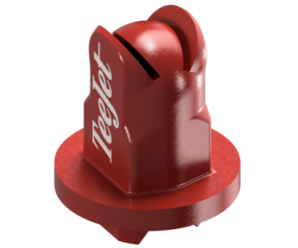
“So his direction to a specific customer was to use the TEEJET CONEJET TXA8001VK nozzle at 80 psi – travelling at 10 – 12 mph to achieve a 3.4 gpa application rate with a ‘very fine’ droplet size.
“What are your thoughts?”
Here’s how I answered (edited for clarity):
That recommendation sounds familiar – it originates from a consultant with experience in South America, where this idea is promoted to improve (aerial) spray productivity.
I fundamentally disagree with his approach. Adopting and promoting it is not only illegal (contravenes every modern label’s water volume and spray quality requirements), it also puts a generation’s worth of stewardship efforts on drift management at risk.
To be balanced, let’s explore the attractiveness of this approach. Finer sprays do provide superior coverage and save water. Every child knows this. Finer sprays also go places in the canopy where the coarser sprays can’t, for example very dense lentil canopies.
Over the years, we’ve explored the performance of fine fungicide sprays in canola, pulses, and cereals in research trials with the U of S and AAFC. To our surprise, droplet size played only a small role in fungicide performance. Water volume was much more important. Droplet size management with pressure through a low-drift nozzle was enough to get the best disease control.
The main drawbacks of very fine sprays are:
The fine droplets evaporate to dryness very quickly, in seconds. As they shrink, their drift potential is increased even more, and once dry, the remaining particles work much less well. The proponent corrects for this by adding an oily adjuvant as an evaporation retardant. With oil, the fines remain liquid much longer. Although many products become more effective this way, they also become more phytotoxic and less safe for the applicator and bystander. Completely off label, completely risky for crop safety, unknown effects on MRLs, extremely unsafe for the environment and humans. Remember when people dissolved 2,4-D ester in diesel, back in the 40s and 50s and sprayed it with their brass 6501 tips? That’s what this is.
Cone nozzles are designed for airblast sprayers and do not produce good pattern overlaps for boom sprayers. The proponent of this method actually recommends that the boom be raised to overcome the bad patterns and to (believe it or not) simulate aerial application. If this were done, the spray would be re-distributed by air-currents and come down wherever the wind blows it. Probably far away. The concept of on-target, uniform application, the practice that makes product use acceptable, and the thing we try to achieve with flat fans at a low boom height, is completely lost.
Producers will not have the support of pesticide manufacturers should a performance issue arise. Even worse, if regulators find out about this off-label practice, significant fines (fines for fines, get it?) can be charged under the Pest Control Products Act.
Airborne spray drift with an air-induced spray like the AirMix, GuardianAir, AIXR and the like, applying 10 gpa, is about 1% of the applied amount, measured at 5 m downwind of the downwind edge of the swath in a 20 km/h wind. We’ve never measured hollow cone drift from a boom sprayer, but when we used a flat fan at 5 gpa, drift increased to about 8% of applied. I’d guess a high pressure hollow cone would easily double or triple that. Illegal and irresponsible.
Travel and boom turbulence is a part of faster travel speeds. This would affect the finer droplets much more than the coarser ones, as we can imagine. It’s similar to drift. With a low-drift spray, the proportion of the total spray volume that is “fine”, say less than 150 microns, is about 5%. For a very fine hollow cone, it might by 50 to 75%. So a much greater proportion of the sprayed dosage would be susceptible to uncontrollable movement. This could be good, when turbulence redirects the spray to places that are unreachable by larger droplets. Or it could be bad, as turbulence pushes droplets away from an important target, creating a miss. On balance, bad. Very bad.
These types of recommendations are concocted by people who want to tell a unique story that is popular with some. Their approach differentiates them from the rest of the crowd, an old and effective marketing trick. But these proponents do not have the best interests of the industry in mind.
Our individual and collective agricultural practices must be respectful of others. Of safety. Of the law. Of the environment. We have lots of opportunities to make shortcuts…nobody’s watching most of the time. But that doesn’t make it right. It’s certainly not in ag’s long-term interest.
When considering our agricultural practices, imagine describing them to a young non-farming person. Can you justify your actions? Do your practices make you proud? If not, you have work to do.
Here’s a task: If your boom sprayer has nozzles that produce very fine sprays, take them off and throw them in the garbage. Might sound radical, but it’s the right thing to do.
Low drift nozzles have become the standard way to apply pesticides from a boom sprayer. In order to use them properly, we need to understand how they are designed and how they are intended to work.
Sprayer nozzles have three functions on a sprayer.
Metering flow
Atomizing liquid
Distributing liquid uniformly
Accurate metering of the flow is done through precise machining or molding of the nozzle.
Atomization of a liquid occurs by imposing some sort of force on the liquid that causes it to break up from a stream or a sheet into droplets of the desired spray quality.
Distribution is done by generating a pattern that, in combination with adjacent nozzles, produces similar dosages in appropriate droplet sizes and densities, along the target area.
All three of these functions are confirmed by the nozzle manufacturer, but the properties are likely to change with wear.
Atomization
Atomization forces could be air-shear (used in some aircraft, airblast, or twin-fluid nozzles), centrifugal energy (used in rotary atomizers), electrical energy (used in some electrostatic sprayers), or hydraulic pressure (used in the most common nozzles, the flat fan or hollow-cone tips).
Typically, the higher the applied energy, the greater the break-up of the spray. More air-shear resulting from faster aircraft or fan speeds, faster rotation of a cage, or more hydraulic pressure all have similar effects: they create finer sprays.
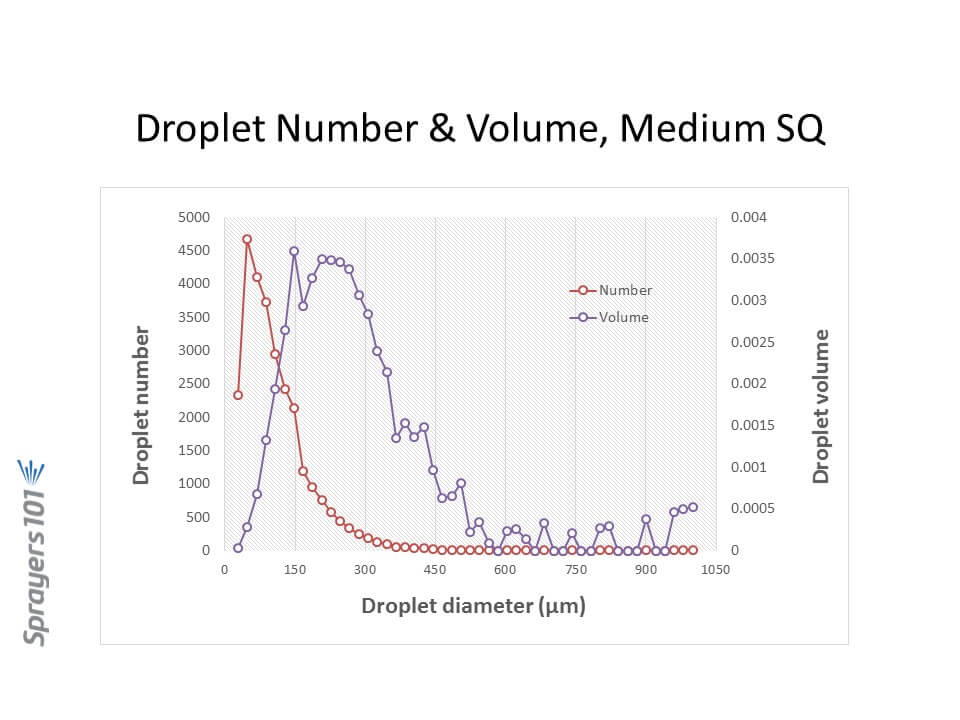
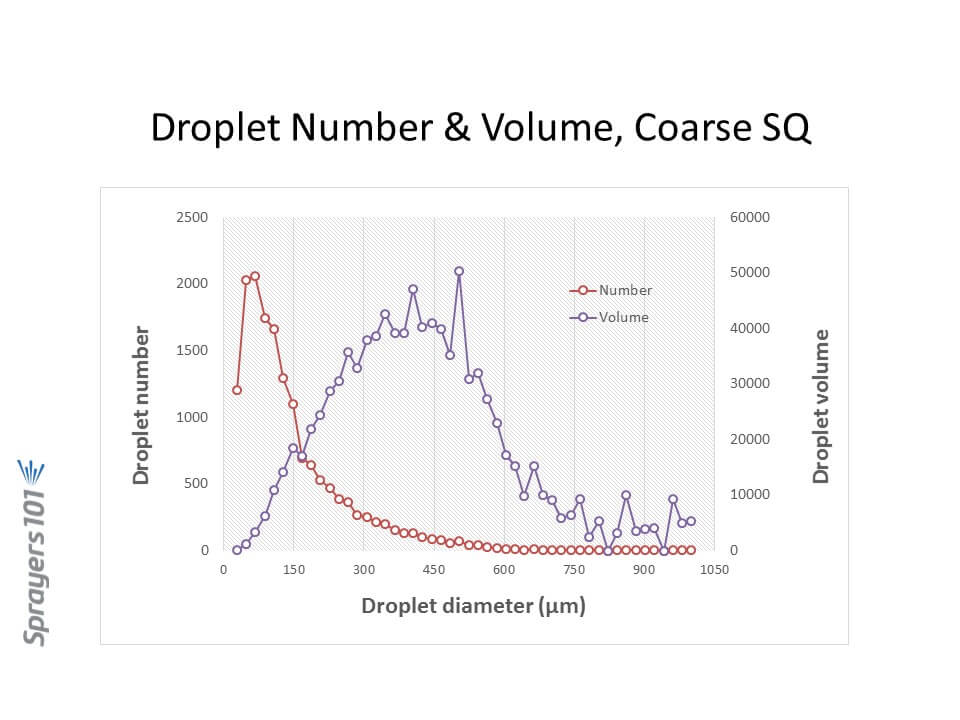
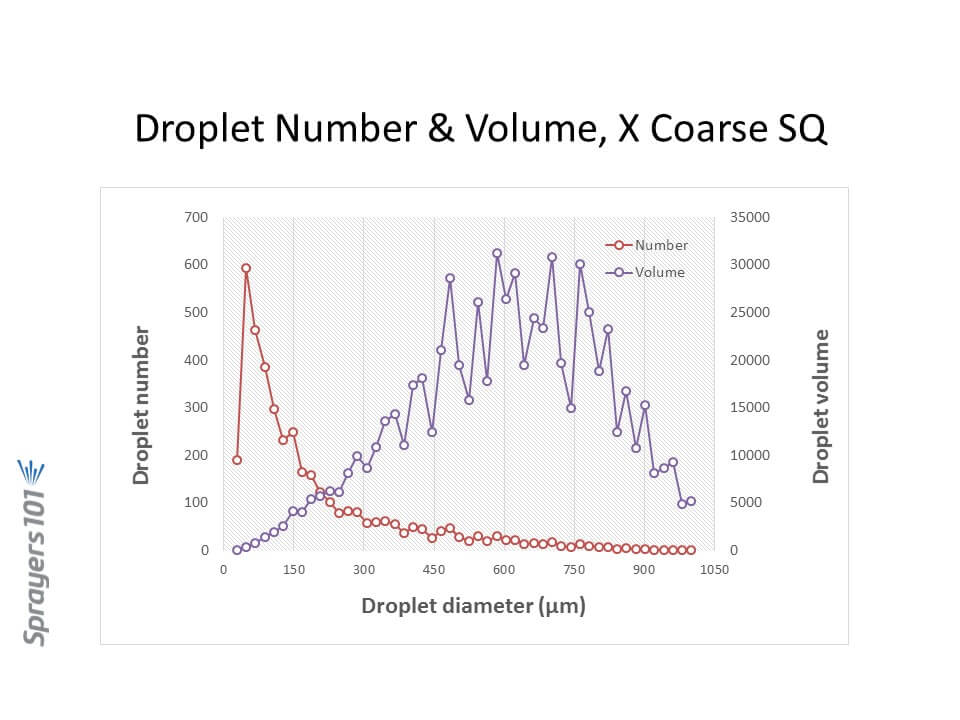
Most nozzles produce polydisperse sprays, comprised of a large number of different droplet sizes. For hydraulic flat fan nozzles, droplets ranging from 5 to 2000 µm can be produced. The exact distribution of the volume in these droplet sizes depends on the nozzle design, the spray liquid, and the pressure. Here are three examples, representing approximately Medium, Coarse, and Extremely Coarse sprays.
Droplet size distribution by number and volume from a Medium spray. Note the majority of the droplets are small, but the majority of the volume (dose) is in somewhat larger droplets.
Droplet size distribution by number and volume from a Coarse spray. Like in the Medium spray, the majority of the droplets are small although there is fewer of them. The majority of the volume is in intermediate sized droplets.
Droplet size distribution by number and volume from a Very Coarse spray. While the majority of the droplets are small as in the finer sprays, their overall number is sharply reduced from the finer sprays. The volume is now in the largest droplet sizes.
Let’s focus on hydraulic nozzles, by far the most common in agriculture.
Spray Pressure
Spray pressure is a useful tool for controlling droplet size from any hydraulic nozzle. Need a finer spray? Add pressure. It is also the basis for the age-old recommendation that lower pressures are a good tool for reducing drift.
We impose practical limits on the upper and lower range of recommended pressures based on several other factors, chief among them the spray pattern.
Spray patterns of a certain width, or angle, are required for proper pattern overlap. The convention is to space hydraulic nozzles at 15 or 20 inch intervals along a boom, and operate them at about 20” above the target. Boom height values will depend on the fan angle of the nozzle and the degree of overlap required. For low-drift flat fan tips, a minimum 100% overlap is best. With 100% overlap, the spray pattern width at target height is twice the nozzle spacing. With this approach, at any point under the boom, the target receives droplets from the closest two nozzle patterns.
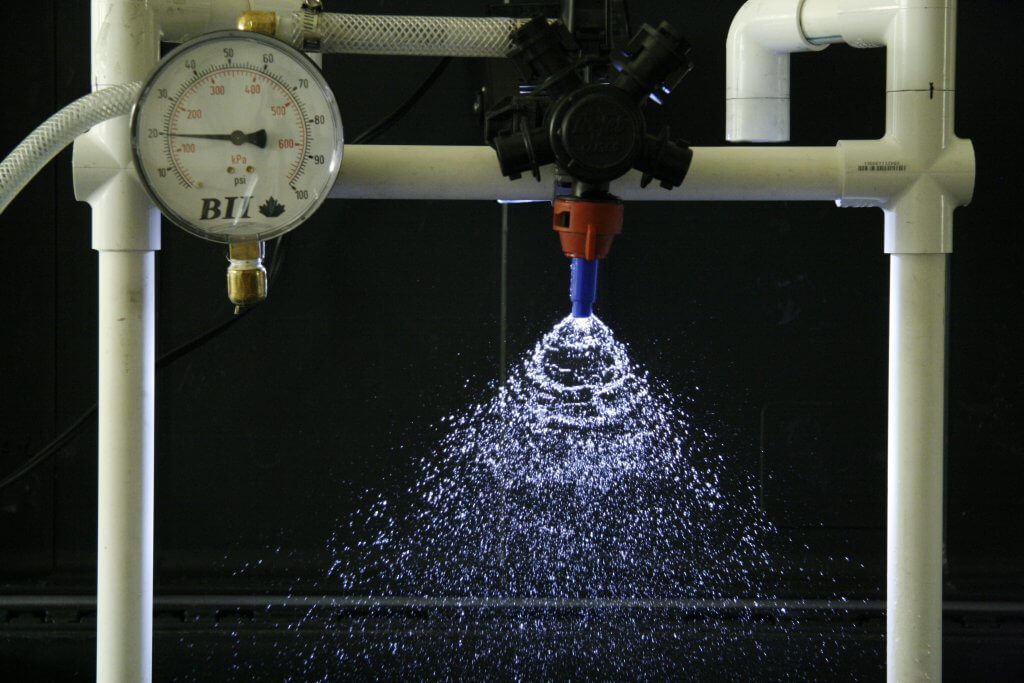
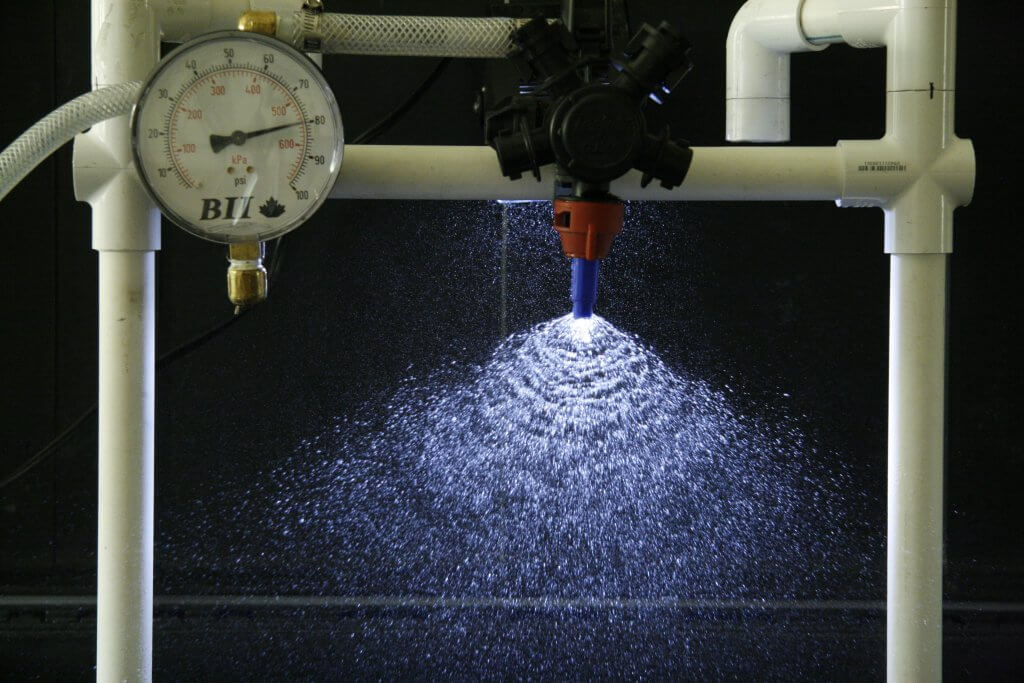
Pattern angles are published by manufacturers, but in practice, angles often differ from those values and can vary with spray formulation. Importantly, they tend to become narrower at lower pressures. The exact pressure at which this happens depends on the tip design, but experience shows that pressures below 20 psi for conventional nozzles, and 30 to 40 psi for low-drift nozzles, result in poor (too narrow) patterns. Narrow patterns reduce overlap, resulting in poor distribution.
TeeJet AI11003 at 20 psiTeeJet AI 11003 at 80 psi
We might also limit pressures at the upper end, based on drift potential. Most conventional flat fan nozzles, for example, drift excessively at pressures above 60 psi or so, hence that limit.
Low Drift Nozzles
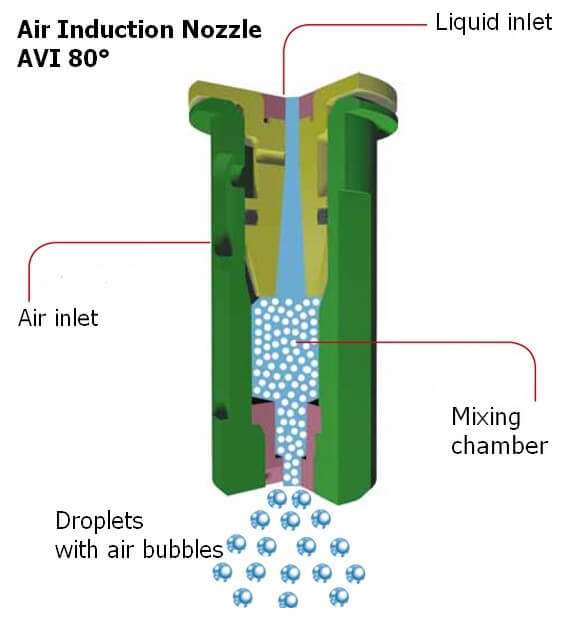
Low drift nozzles were quickly adopted by applicators due to their ability to reduce drift and thereby widen the window of safe spray application. They work by using a two-stage design (often called “pre-orifice”) to reduce the internal operating pressure of the tip. The pre-orifice, the original liquid inlet, is round and sized for the nominal flow of the tip. The exit orifice is eliptical in shape and has a larger flow capacity than the pre-orifice, by about 1.2-fold to 2.5-fold. The larger exit creates an internal pressure drop, so the pattern formation produces larger droplets as though the operating pressure had been reduced. Most modern low-drift tips also introduce air into the nozzle via a built-in venturi. This further suppresses the formation of driftable droplets and introduces air into the interior of the nozzle, adding some pressure back to the system.. The Albuz AVI nozzle schematic below explains the venturi design.
Cross-section of the Albuz AVI venturi nozzle.
The tapered channel inside the nozzle is a venturi, which draws air into the nozzle via integrated ports. When low-drift nozzles are operated beside conventional nozzles at the same pressure, low-drift nozzles produce much fewer driftable fines, and also more larger droplets.
But while the two-stage design is useful for managing drift, it also conceals the actual operating pressure of the exit orifice in these tips. The exit orifice is important – it is the part of the nozzle that does the atomizing and that forms the pattern.
Let’s illustrate the pressure inside a low-drift tip by operating an air-induced low-drift nozzle at 60 psi. This nozzle has a pre-orifice size of 03 (0.3 US gpm at 40 psi, blue) and an exit orifice size of 06 (0.6 US gpm at 40 psi, grey). The operator sees 60 psi on the gauge. What is the exit orifice pressure?
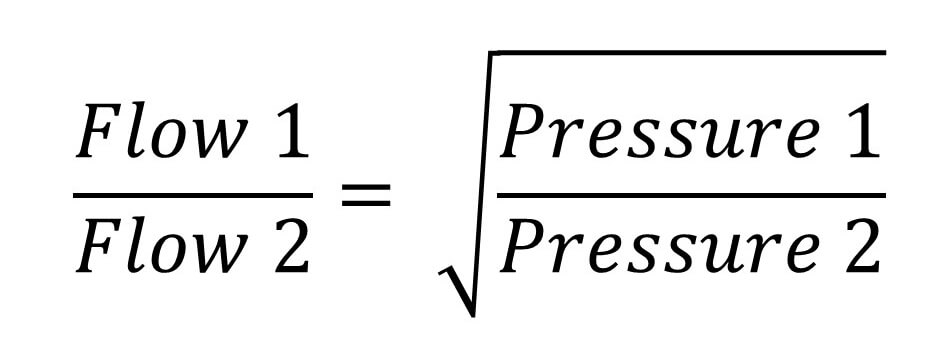
The exit tip has twice the flow-rate of the pre-orifice, and therefore operates at one quarter the pressure, or 15 psi. Recall the square-root relationship between flow rate and pressure.
The relationship between spray pressure and flow rate. Doubling the flow rate requires a quadrupling of pressure
That’s not the whole story. The internal venturi is drawing additional air into the nozzle chamber, and depending on the operating pressure, this could be from 5 to 15 psi. The amount added depends on the specific nozzle, its flow rate, and its pressure. Let’s add 10 psi in this case. The exit tip is actually at 25 psi.
Now let’s assume the pressure gauge reads 40 psi, and that the venturi generates 5 psi additional pressure. The actual exit orifice pressure is now only 15 psi. This is at the lower limit at which a spray is atomized, and at which a good pattern can form.
Our general recommendation with venturi-style low-drift tips has been to avoid pressures below 30 or 40 psi for that reason. We’re trying to prevent the spray becoming too coarse for adequate coverage, and also to prevent the spray pattern from collapsing.
The upside of this design is that the same principle allows for much higher-pressure operation without creating excessive drift. These types of nozzle can, in fact, be operated at 70 to 90 psi without becoming very drift-prone because the pressure at which the spray liquid is atomized is likely only 30 or 40 psi (the actual exit pressure and drift potential will depend on the nozzle and the formulation).
Speed Range
A low-drift nozzle with a pressure operating range from 30 to 90 psi (i.e., 3-fold) would have a flow rate range of 1.73 (i.e., the square root of 3 due to the square root relationship of flow rate and spray pressure). This means that the fastest travel speed (at 90 psi) would be 1.73 times the slowest travel speed (at 30 psi).
A conventional nozzle operating between 20 and 60 psi would have the same travel speed range. So why don’t we just do that? The main reason is that the two-stage design lowers the overall amount of drift substantially, something a conventional nozzle can’t achieve even at very low pressures.
A second reason is that even at high pressures, a two-stage design will likely drift less than an conventional nozzle. This is still the case if the conventional nozzle is operating at low pressures. Any spray quality chart comparing spray qualities of conventional and low-drift tips will demonstrate that.
Pulse Width Modulation
PWM uses a solenoid to intermittently shut off nozzle flow, between 10 and 100 times per second (Hz) depending on the manufacturer. This has implications for nozzle design because the nozzle must not leak liquid during the brief off-cycle. If it does, the small amount of liquid leaving the nozzle will not only not atomize properly, it will also cause a pressure drop within the nozzle which must be replenished with the next on-pulse. This will mean the on-pulse will operate at a lower initial pressure, affecting pattern development and atomization. For this reason, venturi-style low-drift nozzles have not been recommended with PWM. The venturi provides an alternate exit for air or liquid, compromising nozzle performance.
And yet, some venturi style nozzles do, in fact, produce acceptable patterns with PWM according to the nozzle manufacturers. This goes to show that nozzle design can continue to evolve to provide the best in drift reduction technology with PWM. Design for PWM suitability should be at the top of nozzle manufacturers’ agendas.
Nozzle design continues to evolve. But in the foreseeable future, spray pressure will continue to control pattern width and droplet size. That’s why understanding the pressure limits of any specific nozzle type, and maintaining pressure within those limits, is so important in any spray operation.
This article is reproduced, with permission, from Ohio State University Extension’s factsheet FABE-528.
Although nozzles are some of the least expensive components of a sprayer, they hold a high value in their ability to influence sprayer performance.
Nozzles meter the amount of liquid sprayed per unit area, controlling application rate, as well as variability of spray over the width of the sprayer boom. Nozzles also influence droplet size, affecting both target coverage and spray drift risk.
Nozzles come in a wide variety of types and sizes. The best nozzle for a given application will maximize efficacy, minimize spray drift, and allow compliance with label requirements such as application rate (gallons per acre) and spray droplet size. Selecting the best nozzle requires careful consideration of all the factors listed below:
Mode of action of chemical (spray coverage requirement)
Systemic
Contact
Application type (broadcast, band, directed, air assisted)
Target crop (field crops, vegetables, vineyard, shrubs and trees, etc.)
Spray drift risk
Nozzle Size
Each nozzle type is designed for a specific type of target and application. For example, a nozzle designed for broadcast spraying is not good for spraying pesticides over a narrow band. Luckily, most nozzle manufacturers’ catalogues have charts showing which nozzle type will be best for a specific job. Check the websites of nozzle manufacturers to reach their catalogues. For more information, contact your county Extension office.
Nozzle manufacturers’ catalogs provide tables and charts showing application rates (gallons per acre or gpa), given a nozzle’s flow rate (gallons per minute or gpm) delivered at various pressures (psi) and travel speeds (mph). These tables are useful tools for selecting the appropriate nozzles, pressure and speed to spray chemicals at application rates prescribed by product labels. However, the charts are only for a limited number of travel speed and nozzle spacing situations. There may be situations where the charts will not provide information associated with your sprayer setup (nozzle spacing) and operating conditions (travel speed and spray pressure). The Apps developed by most of the major nozzle manufacturers can provide you the exact nozzle flow rate required for any given set of application parameters, and identify a specific set of nozzle recommendations for the given application parameters.
To find these Apps, simply visit the App Store in your smart phone or tablet and do a search under “Spray Nozzle Calculator”, or some other key words related to nozzle size selection. You may also want to do a search under the name of the nozzle company from which you are interested in buying the nozzles. However, some Apps are not user friendly and sometimes they do not take into account the droplet size requirements when recommending nozzles. Although the Apps and tables in catalogues may expedite the nozzle size selection process, it is best to understand the procedure and the maths nozzle manufacturers use to generate the values listed in tables and to recommend nozzles in their Apps. The procedure used by the nozzle manufacturers to generate numbers in tables and in their Apps is explained below. By following the steps mentioned below, you should be able to determine the exact nozzle flow rate (gpm) required for your spray application parameters.
Once the exact nozzle flow rate is determined, you can then look at the catalogue to select the nozzle that will provide you the flow rate at a practical pressure setting.
Steps to select the proper nozzle size:
The following steps must be taken to determine the nozzle flow rate (gpm):
Select the application rate in gallons per acre (gpa). This is a management decision you will have to make based on pesticide label recommendations, field conditions and water supply.
Select a practical and safe ground speed in miles per hour (mph).
Determine the spray width per nozzle (W). For broadcast applications, W = nozzle spacing (distance between two nozzles on the boom) in inches. For band spraying, W = band width in inches. For directed spraying, W = row spacing in inches (or band width) divided by the number of nozzles per row (or band).
Determine the flow rate (gpm) required from each nozzle by using the following equation: gpm = (gpa x mph x W) / 5,940(5,940 is a constant to convert gpa, mph and inches to gpm).
Select a nozzle size from the manufacturer’s catalogue that will give the flow rate (gpm) determined in Step 4 when the nozzle is operated within the recommended pressure range. If a nozzle of this size is not available, change the travel speed in the equation above and determine the new flow rate required.
An Example
For example: You want to spray a pre-emergence herbicide at 15 gpa, at a speed of 8 mph. The distance between the nozzles on the boom is 20 inches. The herbicide label requires a spray quality of “Medium.” What should be the flow rate of the nozzle you will choose?
gpm = (gpa × mph × W) ÷ 5,940
Since this is a broadcast application (pre-emergence), W is the distance between nozzles (W = 20″). Filling in the variables yields the following calculation:
gpm = (15 gpa × 8 mph × 20 in) ÷ 5,940 = 0.4 gpm
This means, to apply 15 gpa at a speed of 8 mph with this sprayer setup, we need to select a nozzle with a flow rate of 0.4 gpm.
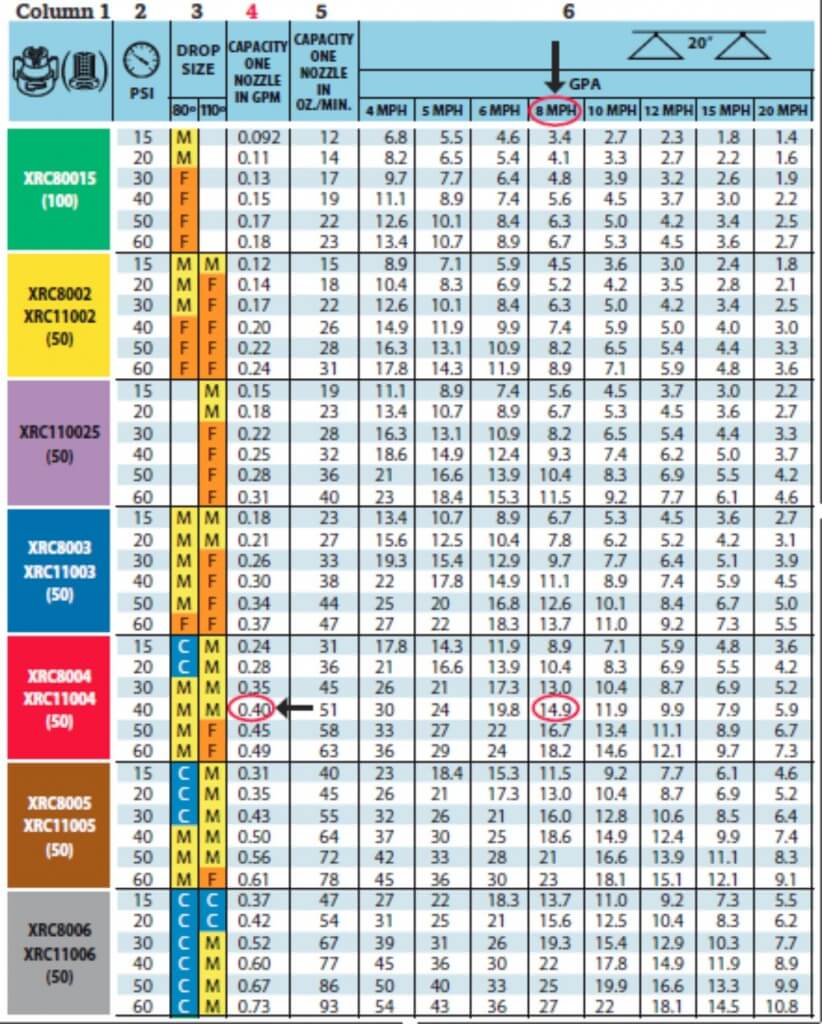
Now, we go to the nozzle catalogue, and find a nozzle that will give us a flow rate of 0.4 gpm, while operating the sprayer at an applicable pressure and travelling at 8 mph. Catalogues have charts for each nozzle, similar to the one shown on the next page. The first column gives the color code of the nozzle (which indicates flow rate), nozzle ID number, and the appropriate filter type for the nozzle. Column 2 gives the pressure range at which the nozzle should be operated. Column 3 gives the spray quality, a measure of spray droplet size (fine, medium, coarse, etc.) produced at different pressure settings. Columns 4 and 5 give the flow rate of nozzles in gallons per minute and ounces per minute, respectively, at different pressure settings. Column 6 gives gallons per acre application rate at different travel speed settings.
First, we need to find the best type of nozzle for our application. In their catalog, the nozzle manufacturer recommends a flat-fan pattern type nozzle for broadcast application of pre-emergence herbicides. Then we find a chart associated with the nozzle type recommended.
The chart shown happens to be for that type of a nozzle. Now we proceed with the process to determine the appropriate size of the nozzle.
Example of a typical nozzle rate table.
In our example above, the equation in Step 4 resulted with a flow rate of 0.4 gpm. Now, we look at Column 4 (gpm per nozzle) to determine the nozzle that provides us 0.4 gpm. Using the chart, we see that the nozzles XRC8004 or XRC11004 (shown in red) provide 0.4 gpm flow rate at 40 psi operating pressure. This nozzle also happens to provide Medium (designated with “M”) spray quality as recommended on the herbicide label. Under these operating conditions, this sprayer should apply 15 gpa at 8 mph as we expected. The validation of this is also evident on the chart. If you look at Column 6, choose 8 mph ground speed, the nozzle we selected will spray approximately 15 gallons per acre (14.9 gpa shown on the chart) at 8 mph travel speed and 40 psi spray pressure.
There may be multiple numbers of nozzles that can satisfy the 0.4 gpm flow rate requirements. However, they may not satisfy the desired spray quality and/or desired travel speed. It may be necessary to adjust pressure and/or travel speed according to nozzle selection. For example, the Brown XRC8005 nozzle is capable of producing 0.4 gpm, and achieving 15 gpa at 8 mph, if the spray pressure is reduced to about 25 psi. Similar calculations can be made using the equation below to come up with other GPM (flow rate) and PSI (pressure) combinations to satisfy the required 15 gpa application rate:
(GPM₁ ÷ GPM₂) = (√PSI₁ ÷ √PSI₂)
In this example, reducing the pressure to 25 psi alters the spray quality to “Coarse,” violating the label recommendation. When changing pressure is not an appropriate choice, the only other practical option is to change the travel speed. There is an inverse linear relationship between the travel speed (mph) and the application rate (gpa). The relationship is expressed by the equation:
Using the relationship above, we can determine that increasing the travel speed to 9.9 mph and keeping the sprayer operating at 40 psi will yield 15 gpa, as described below. The chart shown earlier indicates when using XRC11005, GPA₁ = 18.6 at 8 mph (MPH₁) at 40 psi. We want to find out what the new travel speed (MPH₂) should be to achieve 15 gpa (GPA₂). Using the equation above:
However, increasing travel speed to 9.9 mph may not be practical or safe. When changes to pressure or travel speed as dictated by the equations above are neither practical nor safe, it may be necessary to select a different nozzle.
In this example, it looks like the best nozzles to use for our application situation are XRC8004 or XRC11004, both providing 0.4 gpm at 40 psi. The only difference between these two nozzles is in the angle of spray pattern: one produces an 80 degree fan pattern (XRC8004), while the other one (XRC11004) produces a 110 degree fan pattern. Due to the difference in the angle of the spray pattern, each of these nozzles require different boom heights to obtain proper overlap between two adjacent nozzles.
Calibrate the sprayer
Selecting the right type and size of a nozzle is not sufficient to end up with accurate, effective and efficient application of chemicals sprayed. Changes in ground conditions (tilled, un-tilled, grass, wet, dry), and the topography of the field sprayed (flat, sloped) will affect the ground speed which is one of the variables used in determining the correct nozzle size. Nozzle orifices wear out with time causing larger flow rates and distorted spray patterns than when they were new. The gpm flow rate values given in catalogues or in Apps are based on spraying water only. Spraying solutions with higher densities than water (most spray solutions are) will affect the flow rates of nozzles at the same spray pressure. For the reasons mentioned above, sprayers should be calibrated frequently, especially when the field conditions change, to determine the actual application rate.
Calibration is easy, and there are many ways to do it. regardless of the method chose, three measurements will be taken:
actual ground speed,
the distance between nozzles, and
nozzle flow rate for a given length of time.
One easy method is explained in an OSU Extension Publication (AEX 520) listed in the references at the end of this article.
Keep several types of nozzles on the boom
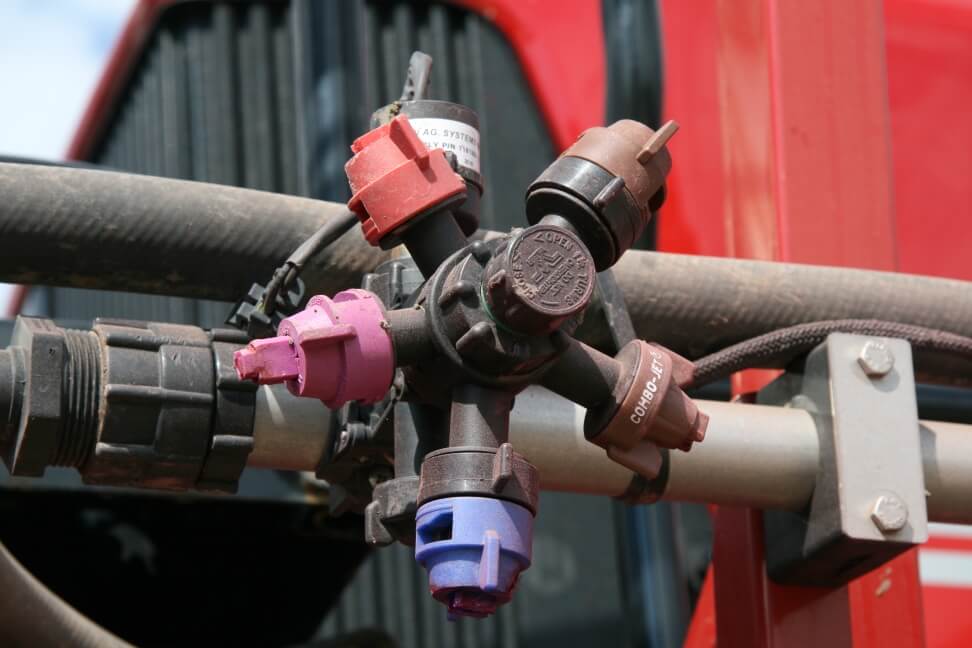
Remember that one specific type of nozzle will not be best for all applications. For this reason, it is best to have several types and sizes of nozzles on the boom so that you can switch to the “best” nozzle choice for a given spraying job. As shown in the pictures below, there are various types of sprayer components and setups you can buy to configure your boom so the new set up allows you to easily switch from one nozzle to another instantly.
Keep spray drift in mind when selecting nozzles
One of the major problems challenging pesticide applicators is spray drift, which is defined as movement of pesticides by wind from the application site to an off target site. Drift is influenced by many factors which are discussed in detail in two OSU Extension publications (Bulletin 816 and AEX-525) listed in the references at the end of this article. Equipment, especially the nozzles, used to spray pesticides play a significant role in generating as well as reducing spray drift. In nozzle catalogues, you can see a number of different nozzles of the same type, in terms of spray pattern. For example, one can find nozzles within the same “flat-fan” category classified as “low-drift.” Research conducted at Ohio State and elsewhere clearly indicate that nozzles labelled as “low-drift” significantly reduce spray drift as discussed in OSU Extension publication AEX-523 (listed in the references below). If drift is, or becomes a concern, it may be best to switch from a conventional flat-fan nozzle to a “low-drift” flat-fan nozzle with the same flow rate. Therefore, it is best to have more than one type of a “flat-fan” pattern nozzle on the boom.
Summary and conclusions
Nozzles are typically the least costly items on a sprayer, but they play a key role in the final outcome from a spraying job: achieving maximum efficacy from the pesticide applied while reducing the off-target (drift) movement of pesticides to minimum. Pesticides work well if the rates on labels are achieved during application. This can be achieved only if the right nozzle type and the proper size of the nozzles are on the sprayer, and the sprayer is operated properly.
Although the Apps and tables in catalogs may expedite the nozzle size selection process, it is best to understand the process and the math nozzle manufacturers use to generate the values listed in tables, and to generate nozzle recommendations in their Apps. This procedure, explained in this publication, hopefully will help you to determine the exact nozzle flow rate (gpm) required for your spray application parameters, while highlighting some other important parameters such as spray pressure, droplet size, spray coverage on the target, and drift, all of which should be given serious consideration when selecting the best nozzle for a spraying job.
Acknowledgments
The author thanks Mary Griffith, Agriculture and Natural Resources Extension Educator, OSU Extension; Dr. Larry C. Brown, Professor and Extension Specialist, Department of Food, Agricultural and Biological Engineering, The Ohio State University; and Dr. Robert “Bobby” Grisso, Professor and Associate Director, Virginia Cooperative Extension, Virginia Tech University, Department of Biological Systems Engineering; for reviewing this publication and for their editorial contributions.
References
Ozkan, E. Calibrating boom sprayers. Ohio State University Extension publication AEX-520, Columbus, Ohio.
Ozkan, E. New nozzles for spray drift reduction. Ohio State University Extension publication AEX-523, Columbus, Ohio.
Ozkan, E. and R.C. Derksen. Effectiveness of Turbodrop® and Turbo Teejet® nozzles in drift reduction. Ohio State University Extension publication AEX-524, Columbus, Ohio.
Ozkan, E. and H. Zhu. Effect of Major Variables on Drift Distances of Spray Droplets. Ohio State University Extension publication AEX-525, Columbus, Ohio.
The introduction of dicamba and 2,4-D tolerance traits in corn and soybeans was accompanied by an unprecedented emphasis on spray drift management by the registrants. Product label statements for 2,4-D choline and the new formulations of dicamba emphasize spray drift control to a greater degree than previous products.
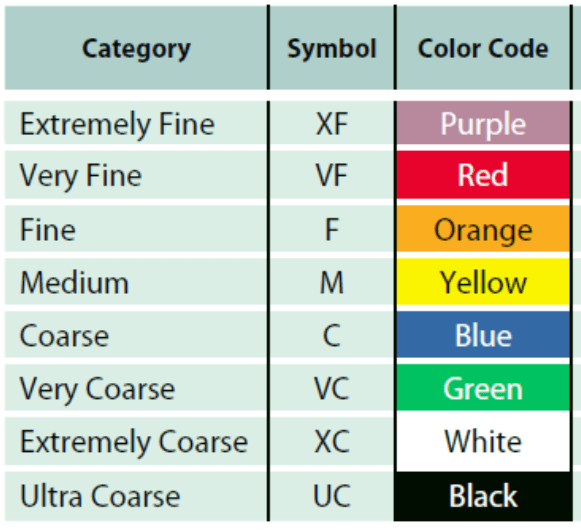
In Canada, labels make prominent reference to the appropriate “spray quality”, a term referring to an internationally standardized droplet size classification (ASABE S572.2). In this standard, the droplet size spectrum produced by a nozzle is communicated using terms such as “Medium”, “Coarse”, “Very Coarse” etc., and used to describe the potential for spray coverage and spray drift. Spray qualities are colour coded for easy recognition.
An example of this label language is shown for Enlist Duo below:
“Droplet Size: Apply as a coarse to extremely coarse spray (ASABE S572 Standard). Use drift reducing nozzle tips in accordance with manufacturer directions that produce a droplet classification of coarse to extremely coarse to significantly reduce the potential for drift.”
Although spray qualities are voluntarily measured and published by most nozzle manufacturers, their appearance on the label makes their use a legal requirement. This is because the Pest Management Regulatory Agency (PMRA) conducts a risk assessment which assumes, in this case, that a Coarse spray quality supports certain calculated buffer zones (15 m in this case) to protect sensitive ecosystems from Enlist Duo damage.
The use of coarser sprays can be used to reduce this buffer zone somewhat, in accordance with an on-line “Site-Specific Buffer Zone Calculator” published by the PMRA.
The challenge for applicators will be to determine the spray quality of their current application method. Here’s a relatively simple three-step process to find out.
Step 1: Identify the nozzles currently on the sprayer.
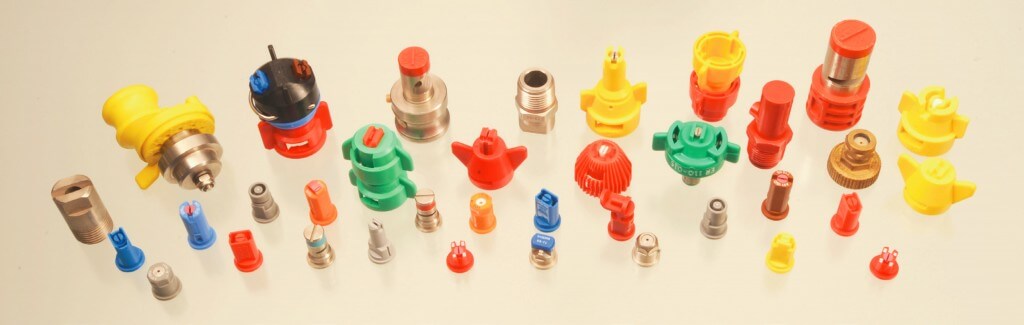
It seems basic, but it’s surprising how many applicators can not name their spray nozzle. If unsure, closely inspect the nozzle, looking for the manufacturer’s name, the nozzle model, and its flow rate. Most nozzles will have this information printed right on them. Here are pictures of the most common nozzles. Can’t find the info? Have a look at this article for websites with pictures.
Major manufacturers include Hypro (John Deere via private label), Agrotop (marketed by Greenleaf in North America), Hardi, Lechler, TeeJet, Wilger, and Billericay Farm Systems (Air Bubble Jet). Manufacturers produce many models, but most are easily identified by a series of letters and numbers. For example, all nozzles will be offered in several fan angles (80º and 110º are most common), and flow rates (in US gpm).
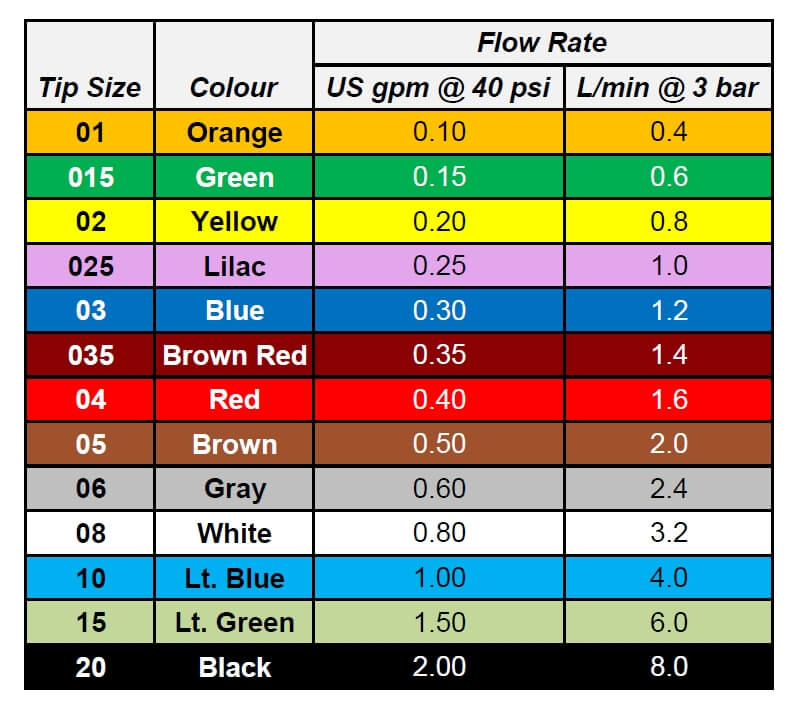
To be more helpful, flow rates are colour coded according to an international standard. This table shows the colours and lists flow in US units in (gpm at 40 psi) and metric (L/min at 3 bar).
The combination of series of letters or numbers shown on nozzles follows a relatively consistent pattern: Fan angle and flow rate arranged as 11003 or 03-110. In this case, the nozzle produces a 110 degree fan and has a flow rate of 0.3 US gpm. The use of US gpm at 40 psi to designate flow rate is an international standard.
The nozzle model is frequently inserted into this stamp, and is manufacturer specific. For example, TeeJet may include “AIXR” in its stamp, and Agrotop may include “TDXL”. Hardi’s MiniDrift is abbreviated MD. Some nozzles may not list their fan angle. Others (Air Bubble Jet) are blank, creating a mystic aura of superiority. Others leave the information printed on the nozzle cap.
A bit of experience is very helpful, especially with John Deere nozzles, where the nomenclature inexplicably eliminates the first digit of the 110 or 120 degree fan angle. So the JD 11004 is labelled “1004”. That’s a bit like saying “my truck sas a 50 engine”, when you mean it has a 350. How’s a city person supposed to know you don’t mean the trusty old 250 straight 6?
Step 2: Obtain spray quality information on the nozzle.
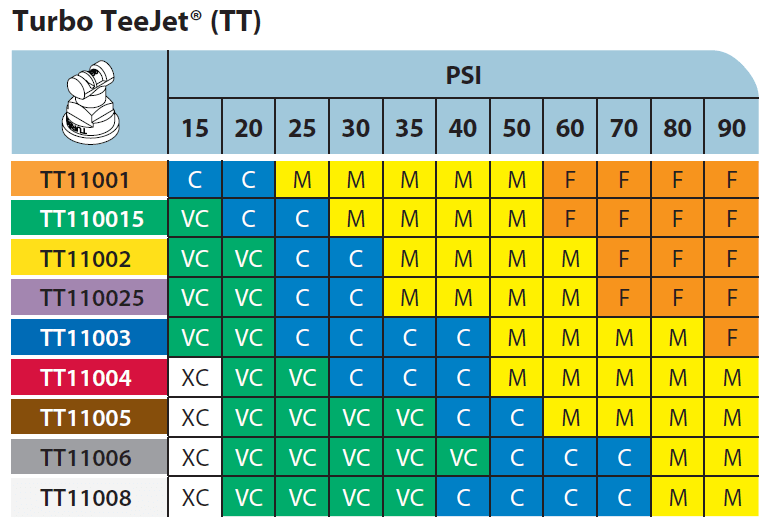
Most manufacturers publish the recommended pressure range and the spray quality of their nozzles. This information can be found in their product catalogues, or on their websites, or in smartphone apps.
Although the designation of Spray Quality is governed by an international standard that is designed to standardize droplet sizing among various labs, we do see some variation in results. Part of this is due to the continued evolution of the standard, requiring manufacturers to re-do some tests, or at least re-analyze their data. For example, ASABE S572.3 was released in conjunction with ISO25358 which changed the boundaries for the coarser sprays. These changes are beginning to be seen in the newer catalogues.
Another problem is that testing is done with plain water. It is well known that the use of certain formulations or adjuvants can affect spray quality. Currently, the standard does not address these effects, and data should be used with some caution.
Step 3: Identify the expected pressure for a given travel speed and water volume.
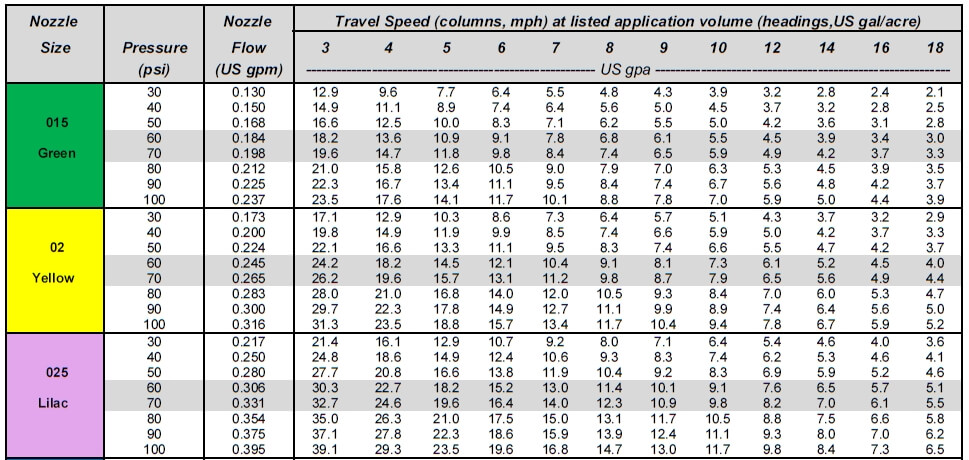
The same catalogues or websites that publish spray quality also produce charts that list the expected spray pressures at various travel speeds and water volumes.
Becoming familiar with using these charts enables the applicator to predict the spray pressure the nozzle will be operating at. For example, if an applicator intends to apply 10 gpa using a yellow (02) nozzle, this table shows the following: The nozzle will be operating at 30 psi at 5 mph, at 40 psi at 6 mph, at 60 psi at 7 mph, at 70 psi at 8 mph, and at 90 psi at 9 mph. The applicator should know the nozzle’s spray quality at each of those pressures.
Nozzle sizing follows a slightly different procedure for Pulse-Width-Modulation (PWM) systems, requiring the nozzle to be over-sized about 30% or so. Since the majority of new sprayer sales now include PWM, we’ve prepared a special article just for this system here.
Travel speed and/or spray volume should be adjusted to ensure the sprayer operates at a pressure which creates the desired spray quality. In other words, the pressure gauge should be used as a speedometer. If the nozzle model or size doesn’t produce the desired results, the applicator should consider changing nozzles. Once the right combination of factors has been determined, the spray pressures that created the label-required spray quality should be noted. From that point, the applicator can choose travel speeds that maintain the necessary pressure range.
Summary
It is up to applicators and industry representatives to ensure that herbicide products are applied according to label requirements. We expect significant scrutiny on spray drift from new products and need to ensure that proper application methods are used at all times. It’s important that everyone understands just how to do it.
Dr. Scott Bretthauer (U. Illinois) gives a nice summary in this video by Precision Labs:
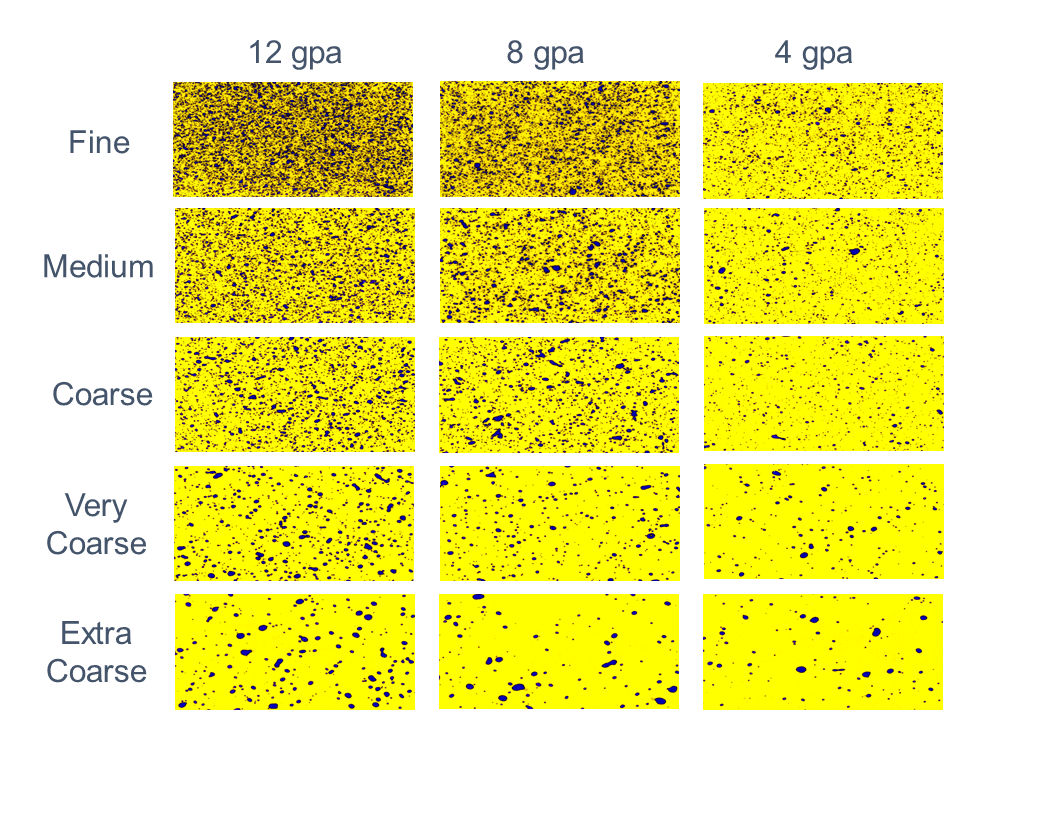
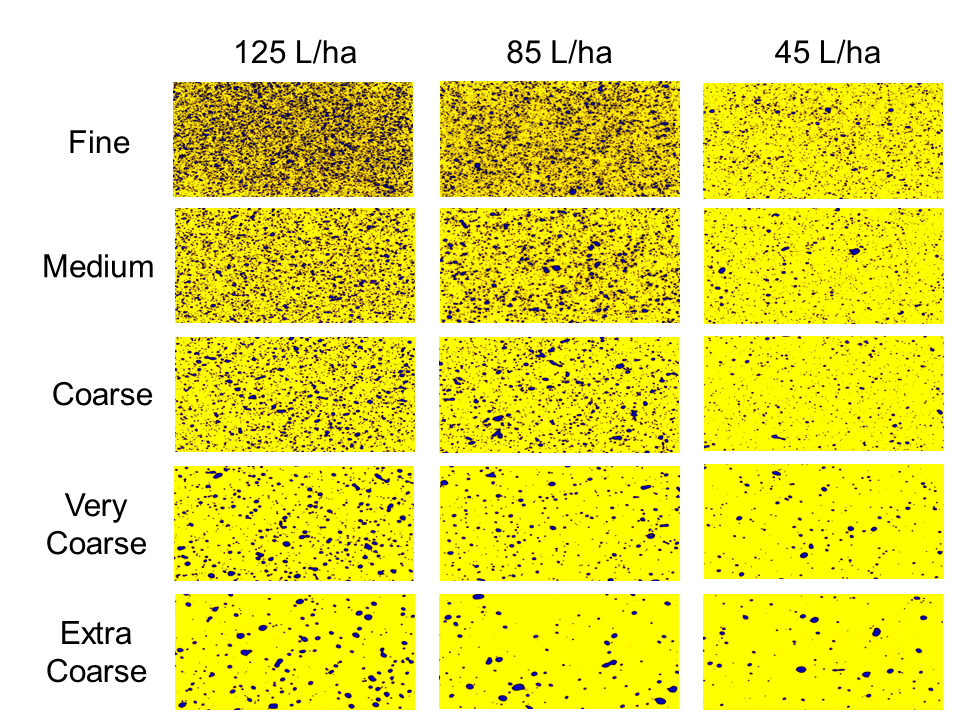
We often write about how valuable water sensitive paper can be to visualize and assess the coverage we’re getting from a specific application method. A handy reference is this matrix that combines both factors. Print it and use it in the field to compare what your application method is doing to these relative standards. On average, you will want to see deposits similar to those in the middle of the matrix.