Tag: dicamba

  • Ten Tips for Spraying in the Wind

    Ten Tips for Spraying in the Wind

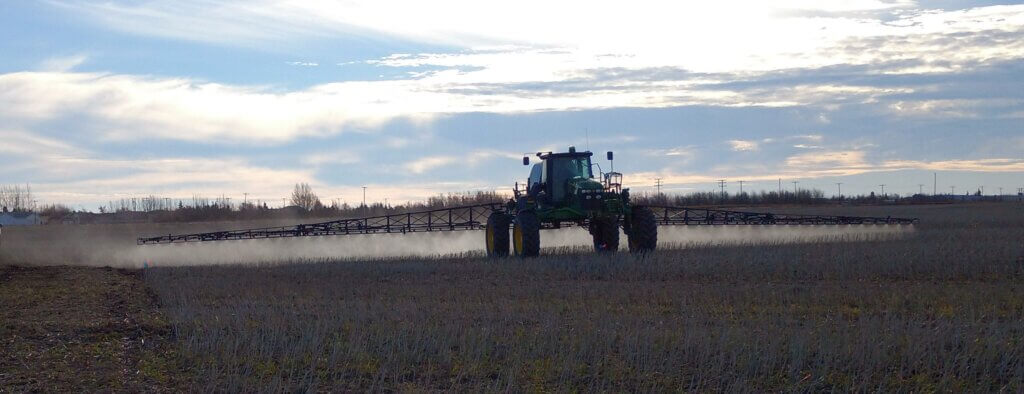
    Choosing the right time to spray can be tricky. Our gut tells us that spraying when it’s windy is wrong.  The experts tell us that spraying when it’s calm is wrong. So when can you actually spray?

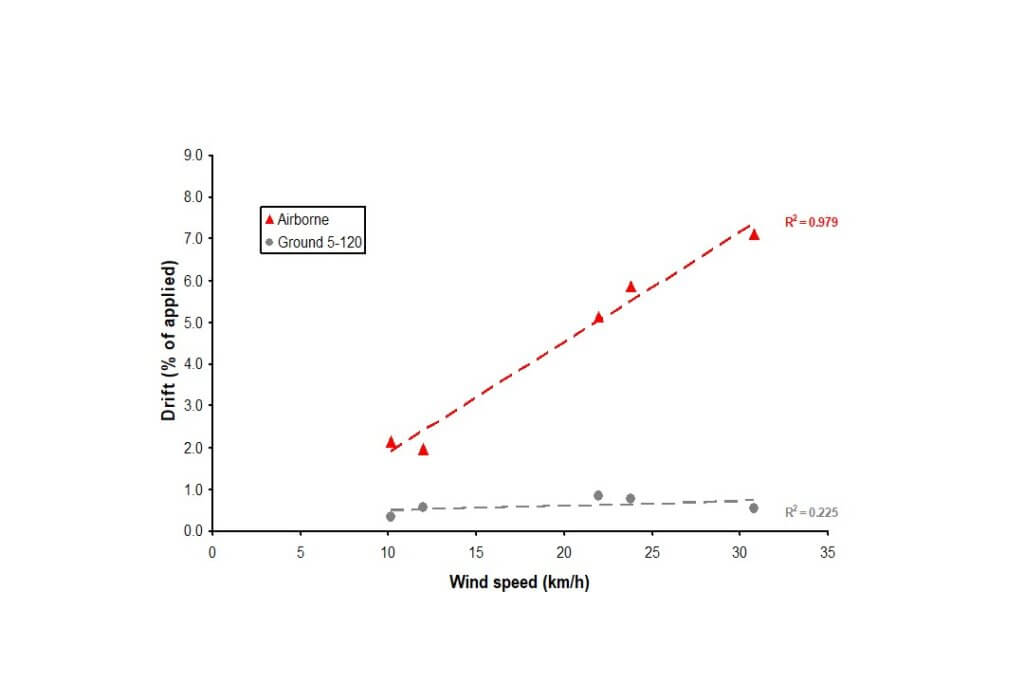
    I’ve always advised my clients to spray in some wind, because it has a few advantages. The main one is that wind helps disperse the spray upward and downward, diluting the spray cloud fairly rapidly. Another advantage is that winds tend to be reasonably steady in their direction and velocity (or at least that can be forecast), so downwind areas can be identified and potential impacts are known or predictable. It helps if it’s sunny, because that improves the dispersion of the cloud even more.

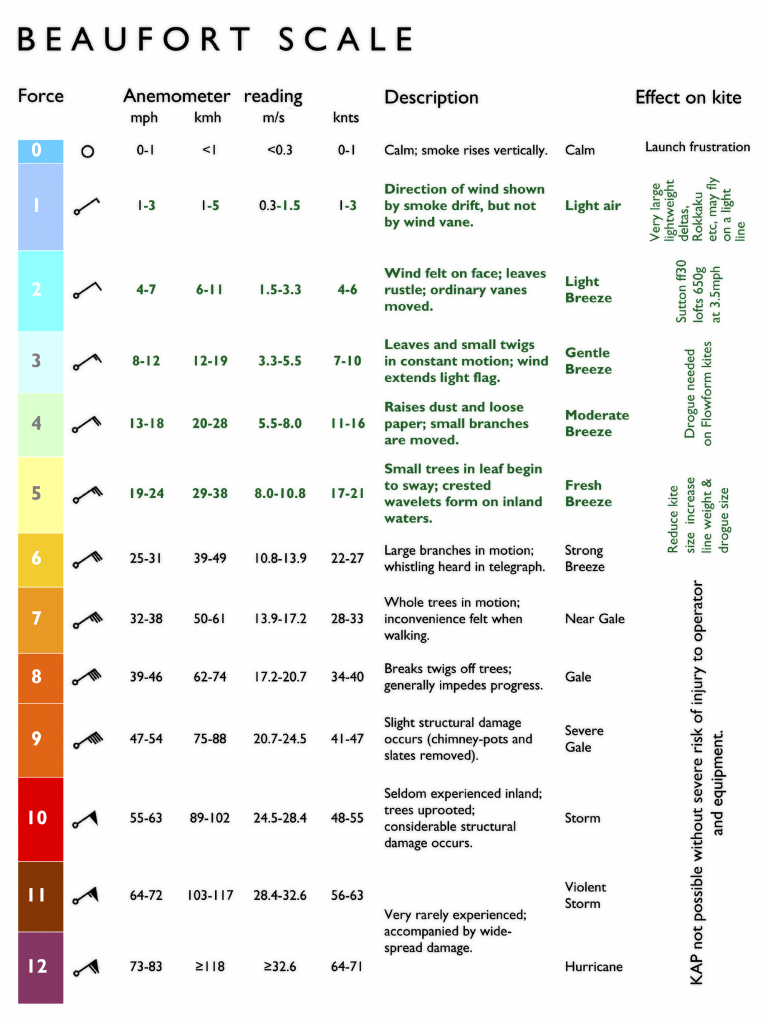
    First, let’s define “windy”. The classic wind scale is the Beaufort Scale, intended for the sea, but also used on land. The upper limit for spraying is probably Force 3 or Force 4, with upper limits of 20 – 25 km/h or so.  The Beaufort Scale calls these “Gentle or Moderate Breezes” (they had to save the alarming words for hurricanes), and the scale provides good visual clues such as what wind does to flags, leaves, or dust.
    Beaufort Scale-1

    Spraying under breezy conditions can be done fairly safely if you follow specific steps. The idea is to understand what the risks are and to manage them.

    The cornerstone is to use a low-drift spray and match it to a pesticide that will work well with larger droplets. But there are other important aspects to consider. Below are the top ten to think about:

    • Choose a herbicide that can handle large droplets. Glyphosate products are well suited to coarse droplets. But glyphosate commonly has contact actives in the mix, members of Group 6, 14, and 15, and these are less likely to perform well with big droplets than those that contain Group 2 and 4 mixes. Actives with soil activity also have more tolerance for larger droplets.
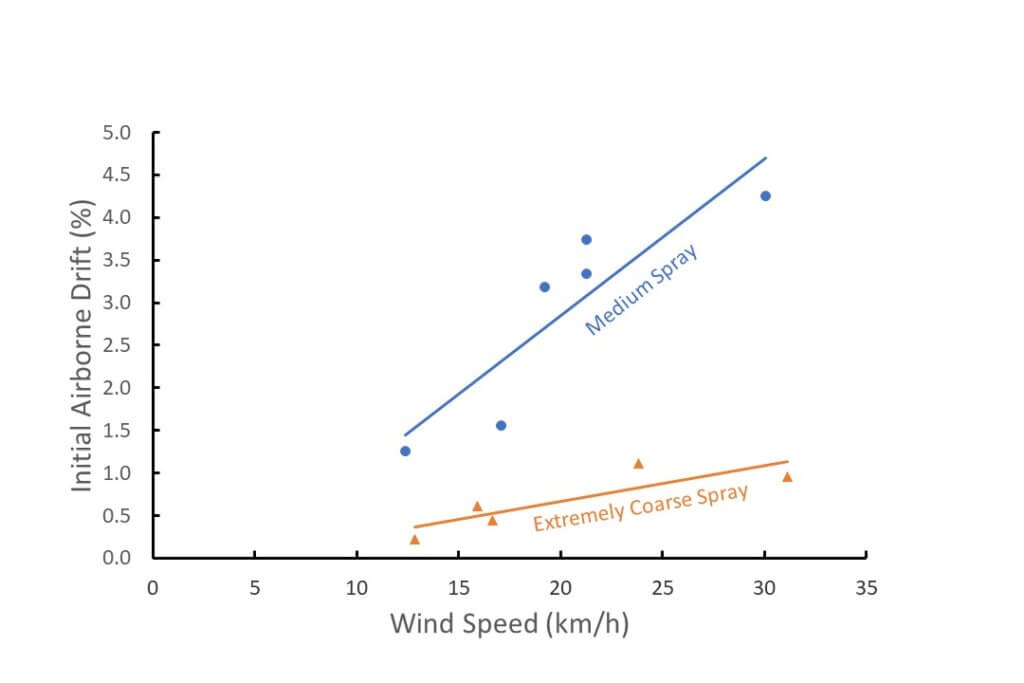
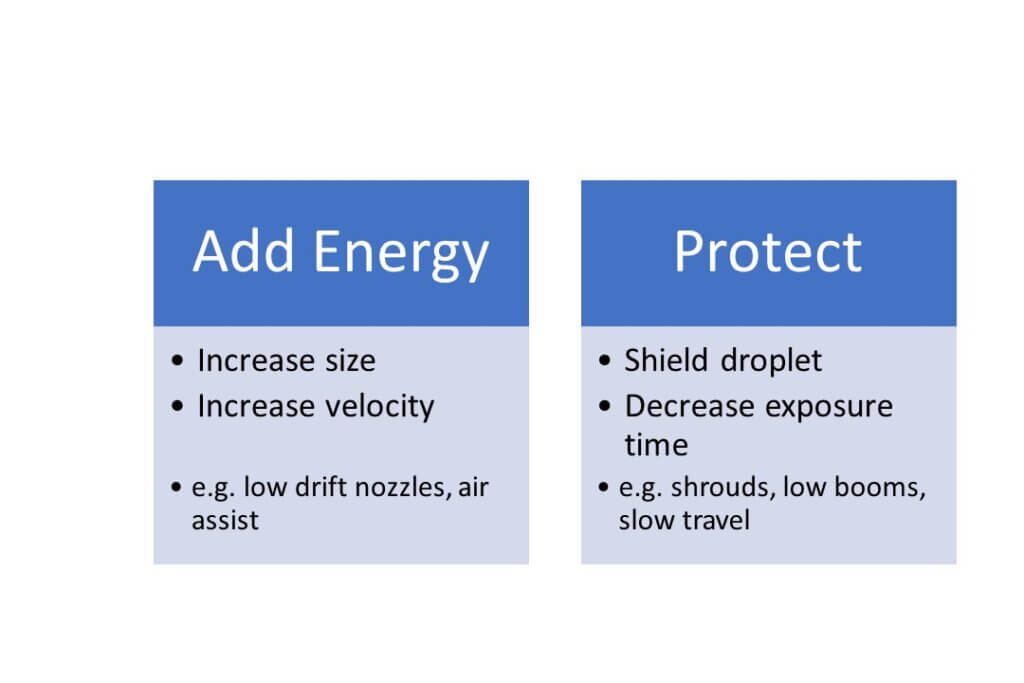
    • Use a low-drift nozzle and operate it so it produces a Coarse (C) to Very Coarse (VC) spray quality, as described by the manufacturer. Dicamba labels call for Extremely Coarse (XC) to Ultra-Coarse (UC) sprays, and Enlist requires at least Coarse. To achieve these you may need to purchase new nozzles. Low-pressure air-induced nozzles operated at about 50 – 60 psi will generally be very low-drift, but lower drift models are available. If you need a finer spray, produce it either by increasing the pressure or moving to a finer tip. Do this when the weather improves, for contact modes of action.
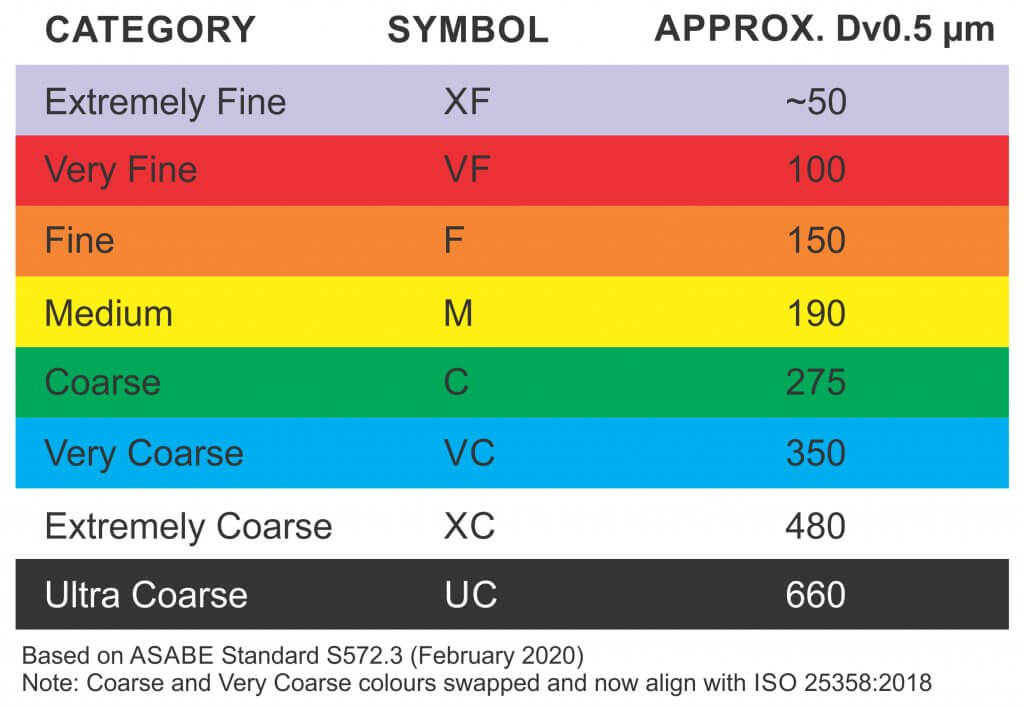
    The name, symbol and range of droplet sizes used to describe the median droplet diameter produced by nozzles according to ASABE S572.3
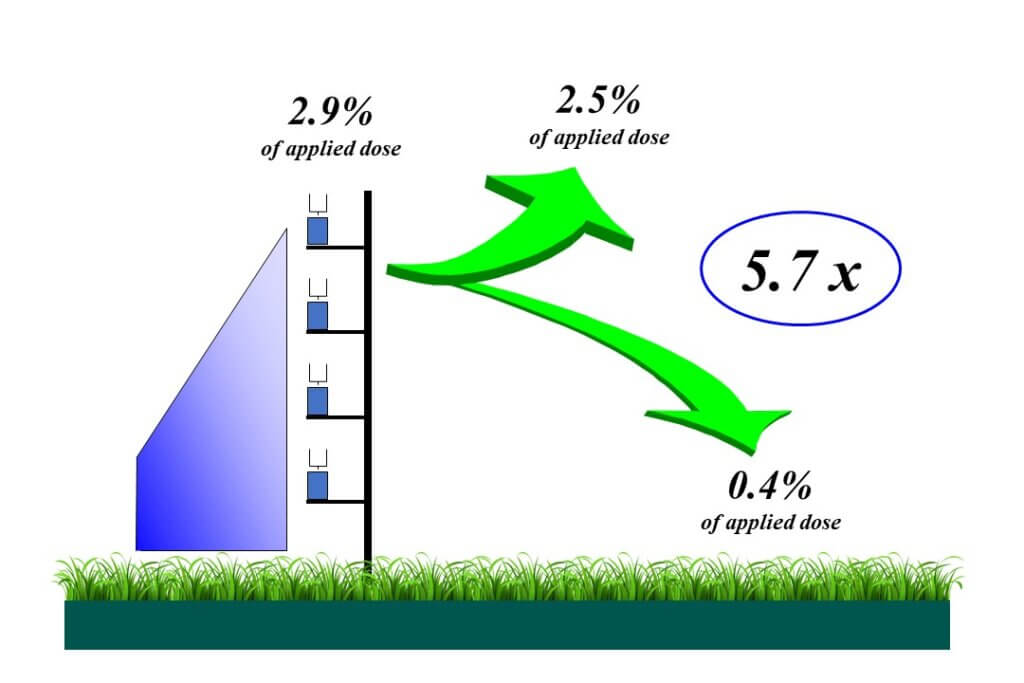
    • Keep your boom low. Lowering the boom ranks as the second-most effective way to reduce drift, after coarser sprays. But there’s a limit. For low-drift sprays, you need at least 100% overlap (more for PWM), which is for the edge of one nozzle pattern to spray into the centre of the adjacent pattern. In other words, the spray pattern should be twice as wide as your nozzle spacing at target height.  For most nozzles, a boom height of close to 20 inches is enough to achieve this overlap. That’s pretty low by current standards from suspended booms on self-propelled sprayers, so being too low for a good pattern will only happen due to boom sway.
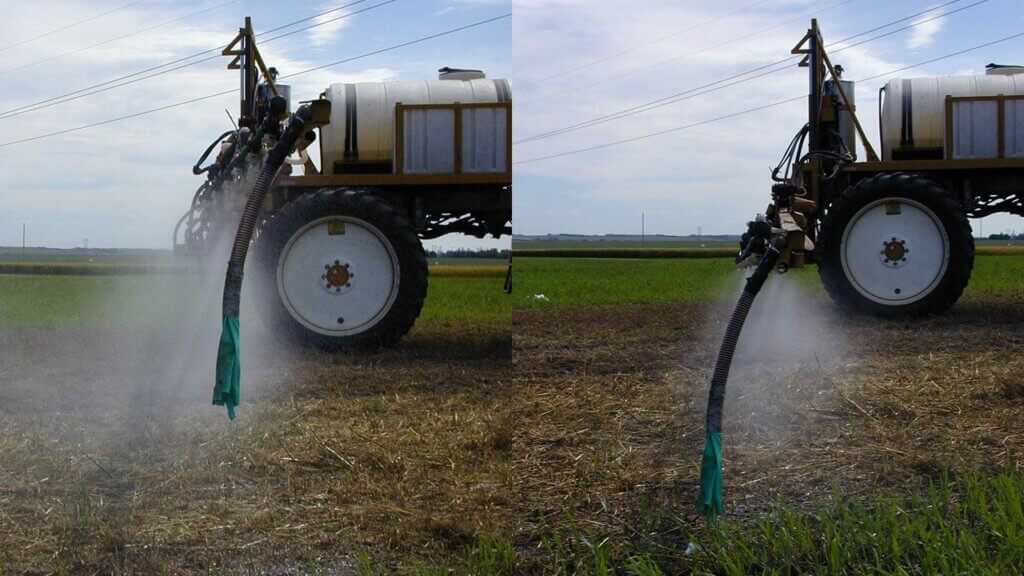
    • Maintain reasonably slow travel speeds. These reduce the amount of fine droplets that hang behind the spray boom, reduce turbulence from sprayer wheels, and they also make low booms more practical. An added bonus is less dust generation.
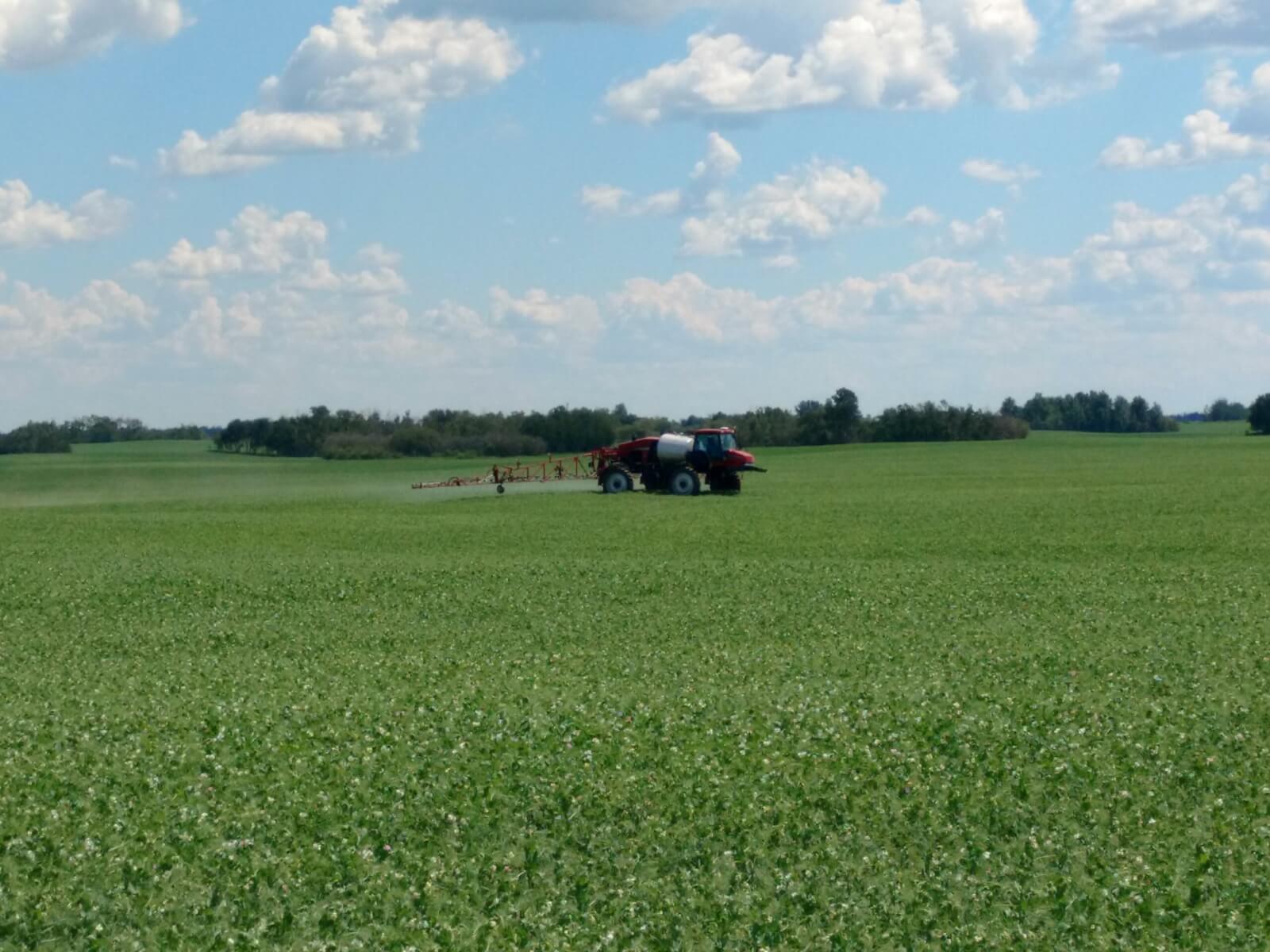
    • Know what’s downwind and what harms it. Survey the fields on all sides of the parcel you’re treating. When you have a choice, avoid spraying fields that have sensitive areas downwind such as water, shelterbelts, pastures, people, etc. If you can’t avoid being upwind of these areas, make sure you check and obey the buffer zone restrictions on the label. These will also give you an idea if the product can cause harm in water or on land, or both.
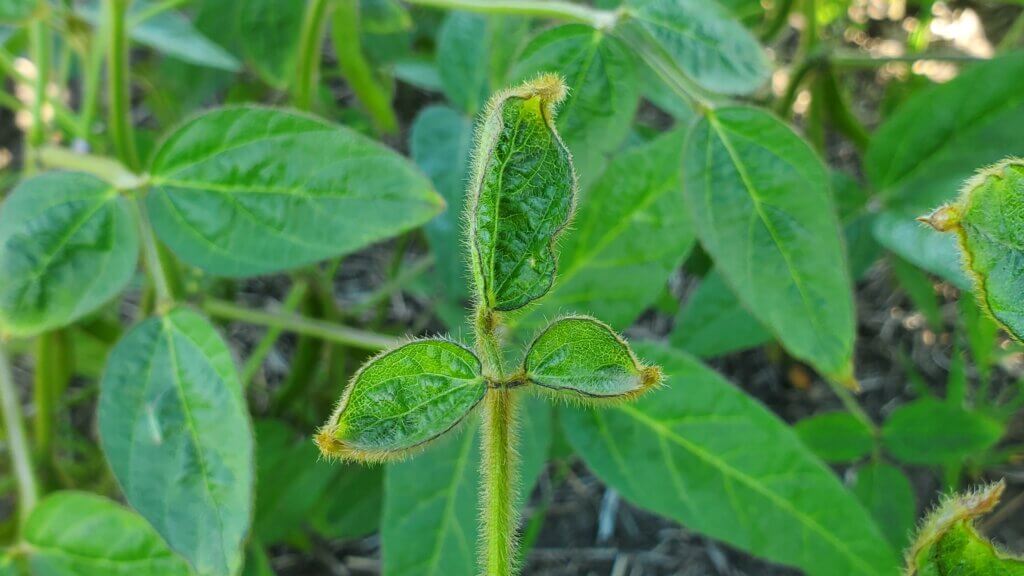
    • Consider a dicamba tip for special situations, even if you don’t use dicamba. If you’re in a situation where quitting and waiting is a poor option, these tips allow you to finish the job with minimal drift risk and with only slight reductions in product performance due to poor coverage.
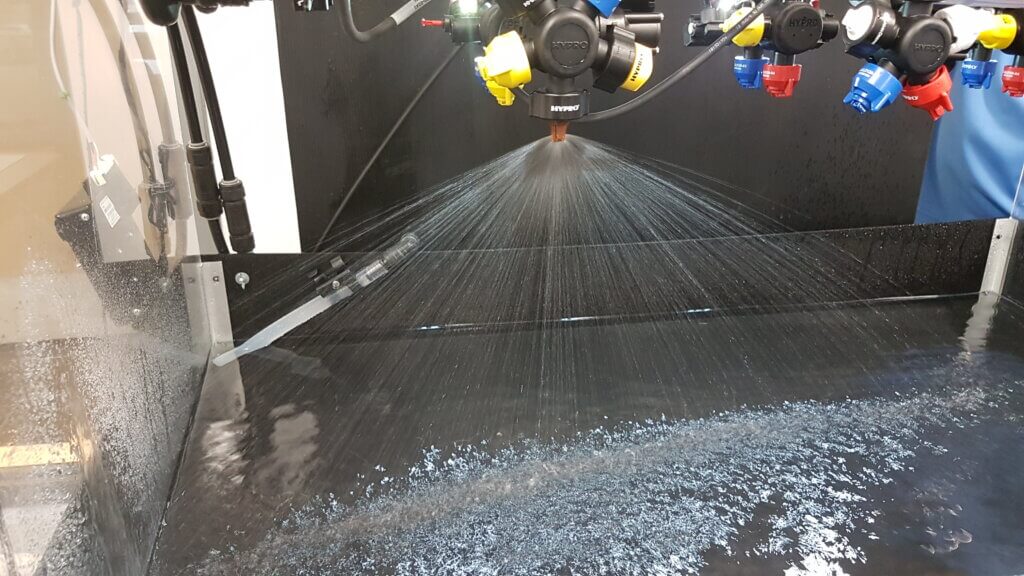
    • Use a low-drift adjuvant. Specific products such as Interlock or Valid have been shown to reduce driftable fines (<150 microns) by between 40 – 60%, without adding significant volume in coarser droplets. The response will depend on the nozzle and the tank mix, but can be very noticeable.
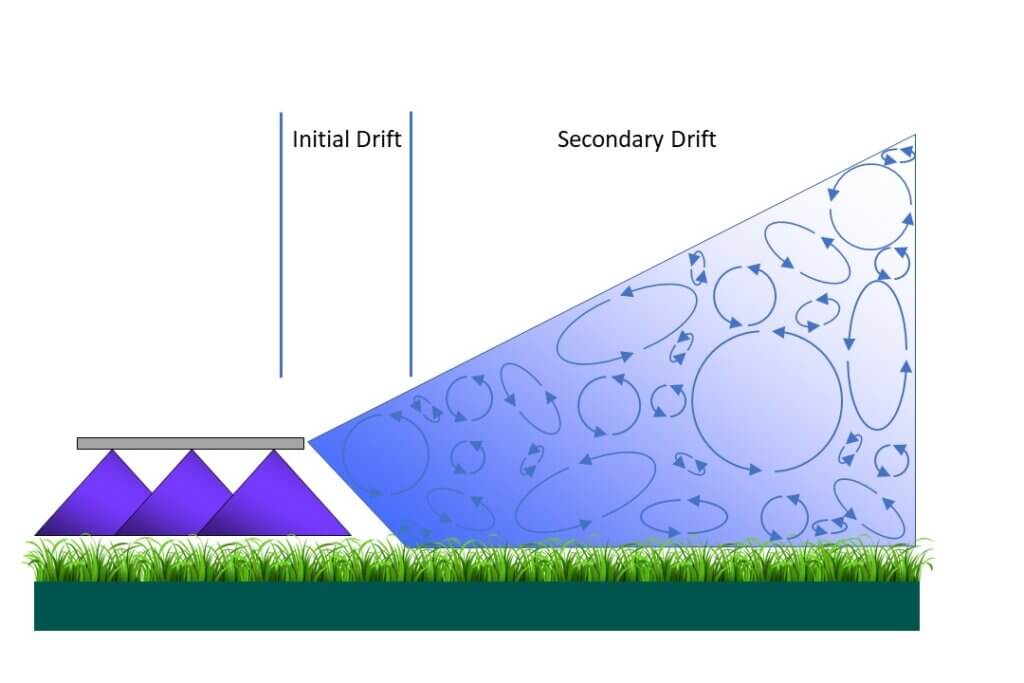
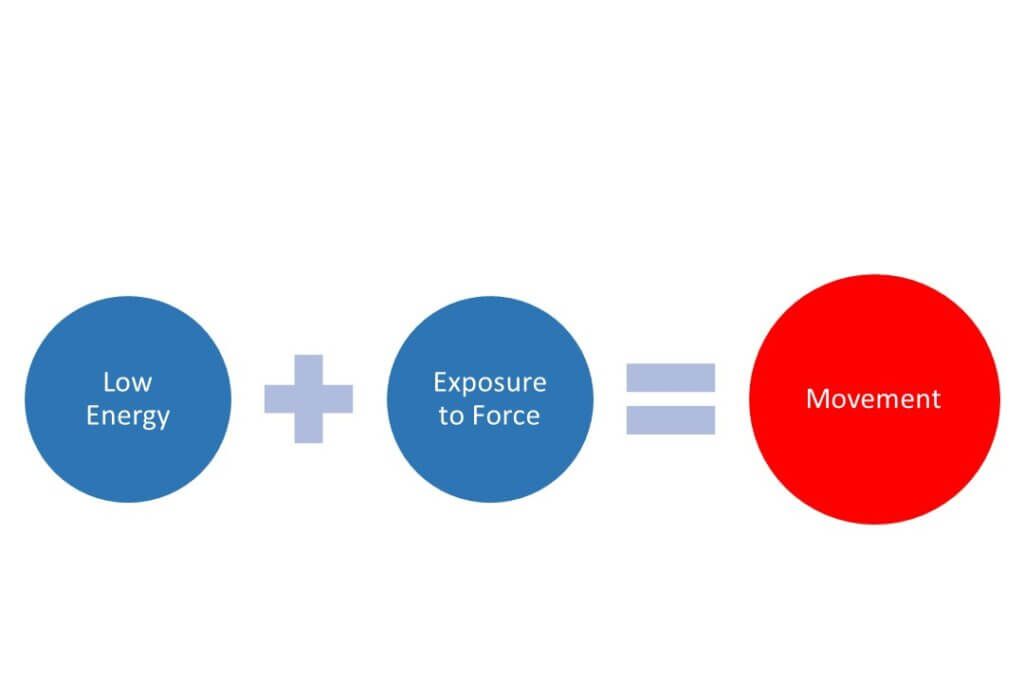
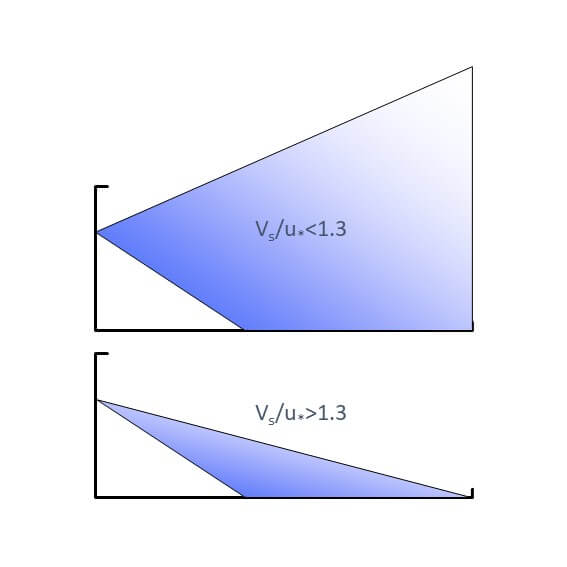
    • Study drift and how it forms and moves. It’s about more than wind speed and droplet size. Knowledge in this area can help you work out the best strategies.
    • Invest in productivity. You may not need it every day, but on occasions when you have a small window to avoid bad weather, it pays dividends.
    • If you feel that drift is unavoidable and someone might be impacted by it, talk to those people first. It’s one of the most important things you can do.

    Keeping pesticide sprays on target continues to be one of our top responsibilities.
  • Testing the Effectiveness of Sprayer Rinsing Methods using Dicamba

    Testing the Effectiveness of Sprayer Rinsing Methods using Dicamba

    This work was performed with Mike Cowbrough, Weed Management Specialist (Field Crops) with OMAFA.

    The unprecedented number of dicamba drift complaints in the United States has proven to be a polarizing issue in the agriculture community. The debate continues as to the relative influence of contributing factors.

    The sensitivity of soybeans to trace amounts of dicamba has been known for more than 50 years (Wax et al. 1969). Research has shown that less than 0.2% of the highest recommended use rate can cause a 10% yield loss in non dicamba-tolerant soybean (Robinson et al., 2013). Many horticulture and ornamental crops are equally sensitive to low doses of dicamba.

    Relative volumes of Callisto (33% field rate), Roundup (6% field rate) and Xtend (0.16% field rate) known to cause 10% yield loss in conventional soybean.

    The inherent volatility of the active, and its subsequent potential for off-target movement, is also well known. Research has shown that XtendiMax, Engenia and FeXapan are far less volatile than their predecessors. However, research has also shown that there is some degree of volatilization for 36 hours following application, peaking 6-12 hours after treatment (Mueler, 2017). Studies by Jacobson et al. (2014) showed dicamba present in the air 60-72 hours after treatment.

    While sensitivity and volatility are suspected of being the primary culprits, there are other factors that contributed to the estimated 3.6 million acres of soybean reported damaged in the United States in 2017 (Bradley, 2017):

    • inappropriate sprayer set-up,
    • physical drift,
    • the use of older dicamba chemistries, and
    • contamination of filling or spray equipment (aka carry-over)

    The Experiment

    In 2017, we decided to learn more about sprayer contamination. The following is a summary of the labelled cleaning protocol. It’s noted that rinsate disposal must comply with local regulations:

    1. Drain sprayer immediately after use.
    2. Flush all inner surfaces with water.
    3. Fill sprayer with an ammonia-based solution and soak overnight.
    4. Concurrently, remove and soak strainers, screens and nozzles.
    5. Circulate solution for 15 minutes and flush through the boom for one minute.
    6. Drain sprayer, replace strainers, screens and nozzles, and flush once more with water.

    This thorough protocol is not unique to dicamba, and historically has not been followed by sprayer operators. Instead, operators choose cleaning methods that reflect the risk of damage and the time and effort required to clean the sprayer. The majority flush with water, may or may not perform serial rinses and may or may not address dead end plumbing. Where possible, operators schedule sprays that present the least potential for carry-over damage (e.g. moving into corn following soybean). There is no way to know for certain that the sprayer is sufficiently cleaned.

    Sprayer

    Our research sprayer had a tank capacity of 60 L and was calibrated to deliver a spray volume of 15 gallons per acre. RoundUp Xtend was added at the highest labeled rate of 2 L/acre (consisting of glyphosate at 1,200 gae/ha and dicamba at 600 gae/ha). We reserved the solution for reuse by collecting spray in jugs.

    Rinses

    Serial rinse

    On a typical sprayer, the capacity of the clean water tank is ~10% that of the product tank. To perform a triple rinse, the operator introduces 1/3 of that volume to the product tank through a washdown nozzle, circulates for 10 minutes, and then sprays the product tank empty. This is repeated two more times to empty the clean water tank.

    Our intent was to scale the process in the same ratio using the research sprayer. That would mean using a 6 L volume of clean water to represent 10% of the 60 L product tank. It follows that we would have to perform three, 2 L rinses.

    However, that was insufficient volume to engage the pump and still provide enough rinsate to spray in our trials. We calculated the minimum required volume to be 8 L per rinse. We circulated for 5 minutes through a washdown nozzle. Following our third rinse, we noted that the rinsate still smelled of dicamba, and elected to run a fourth 8 L rinse. Rinsate was collected from multiple nozzles spaced evenly along the boom.

    We then opened the suction filter and the two line filters and poured the remaining solution into a bucket. We topped the volume up to 8 L with clean water and scrubbed the filters with a brush.

    Continuous rinse

    The continuous rinse process continually introduces clean water via the washdown nozzle via a dedicated pump. Concurrently, the product pump sprays from the nozzles and circulates via the agitation/bypass line. We used 32 L of clean water (a volume equivalent to that used in the serial rinse) and collected rinsate in four, 8 L volumes.

    Rinsate was collected from multiple nozzles spaced evenly along the boom. We then opened the suction filter and the two line filters and poured the remaining solution into a bucket. We topped the volume up to 8 L with clean water and scrubbed the filters with a brush.

    Continuous rinse using 1% ammonia solution

    We followed the continuous rinse process, as previously described, in order to collect the filter residue.

    Possible artifacts

    The limitations involved in scaling down introduce two potential artifacts to this experiment. First, the ratio of clean water to product volume is high compared to typical practices for both rinses. We estimate the volume remaining in the sprayer when “empty” did not exceed 4 L.

    Second, continuous rinsing was sampled in batches, which means the fourth and final volume collected represents an average of the active remaining in the system rather than the final concentration. As such, it would likely be more concentrated than what truly remained in the sprayer.

    Application

    Rinsate was applied to glyphosate tolerant soybean on 30” rows. Rinsate was applied at 20 gpa using a handboom with AIXR 11002 nozzles. Ontario locations were Ridgetown, Elora, Winchester and Woodstock.

    Results

    Crop Injury

    Regardless of rinse procedure, crop injury was greatest after the first rinse cycle and diminished after each subsequent cycle (Table 1). The first half of the continuous rinse procedure caused greater injury than the serial rinse, but injury was equivalent for the final half. Crop injury was less when rinsate was applied to soybeans at an early vegetative stage (V2) compared to when rinsate was applied to soybeans at later vegetative stages (V5-V6) or the early reproductive stage (R1).

    Table 1: Visual Injury (%) of soybean 14 days after the application of rinsate that was collected from two different sprayer cleanout procedures.

    TreatmentEloraRidgetownWinchesterWoodstock
    % Visual Injury at 14 days after application
    Crop stage at applicationV5V2V6R1
    Weed-Free Control0000
    RU Xtend100100100100
    Serial Rinse # 110075100100
    Continuous Rinse # 1 (25% water)10095100100
    Serial Rinse # 275659090
    Continuous Rinse # 2 (50% water)85709595
    Serial Rinse # 355506075
    Continuous Rinse  # 3 (75% water)55506075
    Serial Rinse # 425102535
    Continuous Rinse # 4 (100% water)25102535
    Filters – Serial Rinse15301025
    Filters – Continuous Rinse15301025
    Filters – Continuous with 1% ammonia25452035

    We were surprised to observe dicamba injury even in the final stages of both rinse procedures. This reinforces how sensitive soybeans are to low doses of dicamba and demonstrates the importance of following the labelled water – ammonia – water sequence.

    When comparing damage from filter residue (following a continuous rinse) the rinsate extracted using a 1% ammonia solution was more injurious than rinsate from plain water. Cundiff et al. (2017) found no difference between the use of water or water-and-ammonia when cleaning out a sprayer. We speculate that the ammonia was more effective at removing dicamba from the sprayer, or it increased the residue’s potency.

    Soybean yield

    Yield losses appeared to mirror visual injury; as dicamba injury decreased, so did soybean yield loss. Yield losses were observed following application of all rinsate treatments, which is understandable given that dicamba injury also occurred following the application of all rinsate treatments.

    Yield losses were greater in the first half of the continuous rinse protocol, but were par with the serial rinse for the second half (Table 2). Yield losses were observed following the application of rinsate collected from filters, demonstrating the importance of following a thorough sprayer decontamination that addresses dead-end plumbing, filters and nozzles.

    Table 2: Yield (% of weed-free control) of soybean following the application of rinsate that was collected from two different sprayer cleanout procedures.

    TreatmentEloraRidgetownWinchesterAverage
    Yield (% of weed-free control)
    Crop Stage at applicationV5V2V6V2-V6
    Weed-Free Control100100100100
    RU Xtend0000
    Serial Rinse # 1044115
    Continuous Rinse # 1 (25% water)01304
    Serial Rinse # 233651036
    Continuous Rinse # 2 (50% water)2261328
    Serial Rinse # 374896676
    Continuous Rinse  # 3 (75% water)72895776
    Serial Rinse # 486968689
    Continuous Rinse # 4 (100% water)86978289
    Filters – Serial Rinse939610096
    Filters – Continuous Rinse87979593
    Filters – Continuous with 1% ammonia79859285

    Other observations

    1- Dicamba injury delayed soybean maturity and date of harvest by over 14 days at the Elora site. Delayed maturity was observed at the Winchester locations as well.

    2- Heavy rainfall shortly after the application of rinsate at the Winchester location caused water ponding. Since dicamba is very water soluble, crop injury and yield loss was higher in areas in the trial where water ponded after application.

    3- Dicamba injury appeared to accentuate other stress symptoms at the Elora site, specifically potash deficiency. In the absence of dicamba injury, soybean plants did not exhibit potash deficiency symptoms.

    Take Home

    • Continuous rinsing was as effective as four low-volume rinses.
    • Plots sprayed with the cleanest water rinsate (both protocols) averaged 11% lower yields than unsprayed plots.
    • Filter rinsate (following continuous rinse with water) resulted in an average 7% yield loss.
    • Filter rinsate (following continuous rinse with 1% ammonia) resulted in an average 15% yield loss.

    Citations

    • Bradley, K. 2017. “A Final Report on Dicamba-injured Soybean Acres”. University of Missouri Integrated Pest Management online. https://ipm.missouri.edu/IPCM/2017/10/final_report_dicamba_injured_soybean/
    • Cundiff, G.T., Reynolds, D.B. and T.C. Mueller. 2017. Evaluation of dicamba persistence among various agricultural hose types and cleanout procedures using soybean (Glycine max) as a bio-indicator. Weed Science. 65(2), pp. 305-316.
    • Jacobson, B., Urbanczyk-Wochniak, E., Mueth., M.G., Riter, L.S., Sall, J.H., South, S. and Carver, L. 2014. “Field Volatility of Dicamba Formulation MON 119096 Following a Post-Emerge Applciation Under Field Conditions in Texas”. Monsanto Report Number MSL0027193.
    • Mueller, T. 2017. “Effect of adding Roundup PowerMax to Engenia on vapor losses under field conditions” (Presentation).
    • Robinson, A.P., Simpson, D.M. and W.G. Johnson. 2013. Response of glyphosate-tolerant soybean yield components to dicamba. Weed Science. 61(4), pp. 526-536.
    • Wax, L.M., Knuth L.A., and Slife F.W. 1969. Response of soybean to 2,4-D, dicamba, and picloram. Weed Sci 17, pp. 388-393.
  • The Misplay of our Generation

    The Misplay of our Generation

    We tend to overestimate the effect of a technology in the short run and underestimate the effect in the long run.

    –Amara’s Law of Computing

    We tend to overestimate the effect of a stewardship mistake in the short run and underestimate the effect in the long run.

    –Wolf’s Adaptation of Amara’s Law to Agricultural Stewardship

    August 9, 2017

    Since June of 2017, we’ve been hearing reports of widespread dicamba damage symptoms in soybeans throughout the US mid-south and midwest. It appears that millions of acres could ultimately be affected, and yield impacts are unknown at this time.

    For those new to the issue, dicamba is a broadleaf herbicide in the Group 4 mode of action group, a benzoic acid. It’s an important tool for herbicide resistance management for weeds like palmer amaranth (Amaranthus palmeri) and waterhemp (A. tuberculatus), populations of which have become resistant to Group 2 (ALS inhibitors), Group 5 (triazines), Group 9 (glyphosate), Group 14 (PPO inhibitors) and Group 27 (HPPD inhibitors) in some places.

    Dicamba is a volatile herbicide, discovered in 1942 and first registered in the US in 1967. Its primary use was in corn and other cereal crops, lawns, and rights of way, at comparatively low doses, and relatively early in the season.

    Calling a pesticide volatile means it can evaporate after application, either from a liquid or a dry deposit, for hours or sometimes days after application. The resulting vapor cloud can move unpredictably, depending on atmospheric conditions, and affect plants long distances away. Higher temperatures increase vapor loss.

    Starting this year, dicamba-tolerant soybeans and cotton (Xtend varieties) were sprayed with new lower-volatility formulations of dicamba, XtendiMax, Engenia, and FeXapan, to control certain broadleaf weeds (including the Amaranth species above) without harming the soybeans. Problem is, dicamba can harm non-Xtend soybeans and other plants, even at very low doses. And these registrations were for applications that occurred later in the season, at higher doses than before.

    I usually don’t get involved in people’s decision about whether to spray, or what to spray. But I do get involved when it comes down to how to spray. That’s my job. The real question to me is “can this product be used safely in cotton and soybeans?” Right now, the jury’s out on that one.

    In my business, our guiding principles are what some people have called the “Three Es of Application”, Efficacy, Efficiency, & Environment.

    We use sprays to control pests. That’s the only reason. We have to apply them so that they work, or else it’s a wasted effort. That’s the efficacy part. We also need to use our resources, time, money, etc., efficiently so the whole process doesn’t bankrupt us and we have time left for other important tasks.  That’s efficiency. And finally, we need to protect the environment, and that means making sure the product lands where it’s intended.

    None of these three priorities trumps the others. All need to be met to the best degree possible. And due to ever-changing conditions, we will typically change our approach to emphasize one or two of these three over the others, to have a working system.

    Simply put, pesticides belong on target surfaces covered by the swath of the sprayer, and nowhere else. If they do move elsewhere (something we’ve come to view as inevitable), regulators conduct risk assessments to ensure that this movement does not result in harm. If harm is possible, mitigating tools such as application timing, product rate, spray method, and buffer zones may be imposed. If those tools aren’t enough to ensure safety, regulators deny product registration. That’s their job.

    But even if no harm is done by trespass, the products still need to be on-target. That’s stewardship. It’s a principle whose adherence gives license for a technology to be used. It gives others faith in our competence. Practicing this principle when it’s easy prepares us for hard times.

    I respect our regulatory process, and know it to be increasingly conservative with regards to risk the less data there are. I worked for the PMRA (the Canadian pesticide regulatory agency) as an application expert for five years. I know the system isn’t perfect and can make mistakes.  I know the system can be political. Usually it’s by being too careful. With dicamba, it looks like the opposite happened.

    The reason we’re seeing dicamba leaf cupping everywhere isn’t because all applicators suddenly forgot how to spray. They didn’t suddenly get reckless. They didn’t wilfully ignore all the training that the dicamba manufacturers and state and provincial governments developed in preparation for the product launch.

    Instead, dicamba drift reports arose from a combination of extreme sensitivity and easily identified symptoms, as well as an unexpected (by some) amount of vapor drift. Even good applications appeared to create problems. Despite warnings from local experts, regulators and registrants didn’t see it coming.

    Experienced agronomists have suggested that the observed dicamba trespass of 2017 implicates both temperature inversions and vapor drift. And although the new product labels advise against spraying under inversion conditions, they don’t say a word about vapor drift, the conditions that give rise to it, or how to protect against its occurrence. Not one word. I’ve searched the XtendimaxEngenia and FeXapan labels. Nada.

    Seems that the regulators and registrants felt confident enough in the reduced volatility of dicamba, based on their internal empirical data and modeling, that they didn’t need to mention it on the label. Calling that a mistake is an understatement.

    I’d call it the biggest spray application misplay I’ve ever seen.

    A part of the problem may be the enormous scale on which this new use of dicamba was introduced, over 25 million acres of Xtend crops. Scale-up errors are common in many industries. Emergent properties related to scale can’t readily be predicted by empirical data and models. Especially when the underlying data are scant.

    So what to do? The continued success of agriculture depends to continued access to safe crop production tools. Irresponsible use threatens that. And by irresponsible use, I don’t just mean application. I also mean registration, promotion, sale, and support. The whole stewardship package.

    When problems occur, we need to be quick on our feet to acknowledge them, to support those affected, and to try to understand the cause and prevent the situation from continuing or getting worse.

    The current industry response appears to be the exact opposite. What I’ve seen is full of denial, downplaying, innuendo, blaming, and entrenchment.

    Why is such an important issue in pesticide stewardship handled so poorly?

    The immediate victims of this situation are the producers that depend on new technologies. But the long-term victim is agriculture as a whole. The lack of humility and leadership by many of the proponents of this technology, those with no small financial stake in its continued use, hurts not just them, but all of us involved in farming. This is not stewardship. It’s not license. It’s short sighted and reckless.

    Over my career, spray application has generally become safer for the operator and the environment. A big part of our success has been the adoption of low-drift nozzles, the de-facto standard for modern pesticide application. The development of less toxic and less persistent pesticides has also been very important. We can avoid a lot of problems with good chemistry. I’ve been proud to tell this story.

    I want to stay proud of our story. And in this case, that requires admitting to mistakes that were made and taking corrective action that is in the best interest of our entire industry. Agriculture will persist longer than company brands and titles. It takes priority.

    It’s still too early to fully understand all the reasons for the widespread dicamba damage. But it’s not too soon to say that much of this could have been prevented with a smaller rollout, with greater collaboration with government and university experts during registration, and with more honest information on dicamba volatility on product labels. Call it Volatility Humility.

    We’ll all pay for the mistakes that were made. We’ll likely have more stringent and expensive registration protocols. More restrictive application parameters. Strained relationships. More distrust of agriculture.

    And as always, an ounce of sweet prevention would have been much better than the pounds of bitter cure that will surely be required to make this right.

  • Flag the Technology – Matching Herbicide to Genetics

    Flag the Technology – Matching Herbicide to Genetics

    We like to keep things simple ’round here and this poka-yoke from Arkansas is both simple and effective. What’s a poka-yoke?

    Poka-Yoke”: a Japanese term that means “mistake-proofing”. It’s a mechanism that helps an equipment operator avoid (yokeru) mistakes (poka) by preventing, correcting, or drawing attention to human errors as they occur. Thanks, Wikipedia.

    The problem

    An aerial applicator has to spray a lot of fields. They consult their work orders, the plane is loaded, they spray and repeat. However, depending on which herbicide trait was introduced to which crop, accidents can happen. Imagine the mess when you spray a crop with glyphosate… and it isn’t a glyphosate-tolerant crop? This problem promises to become more of an issue as we introduce glyphosate+2,4-D and glyphosate+dicamba-tolerant crops. It may look like the right soybean plant, but you DO NOT want to mess up by spraying the wrong chemistry on the wrong genetics! You think a bit of residue in the lines can cause trouble…

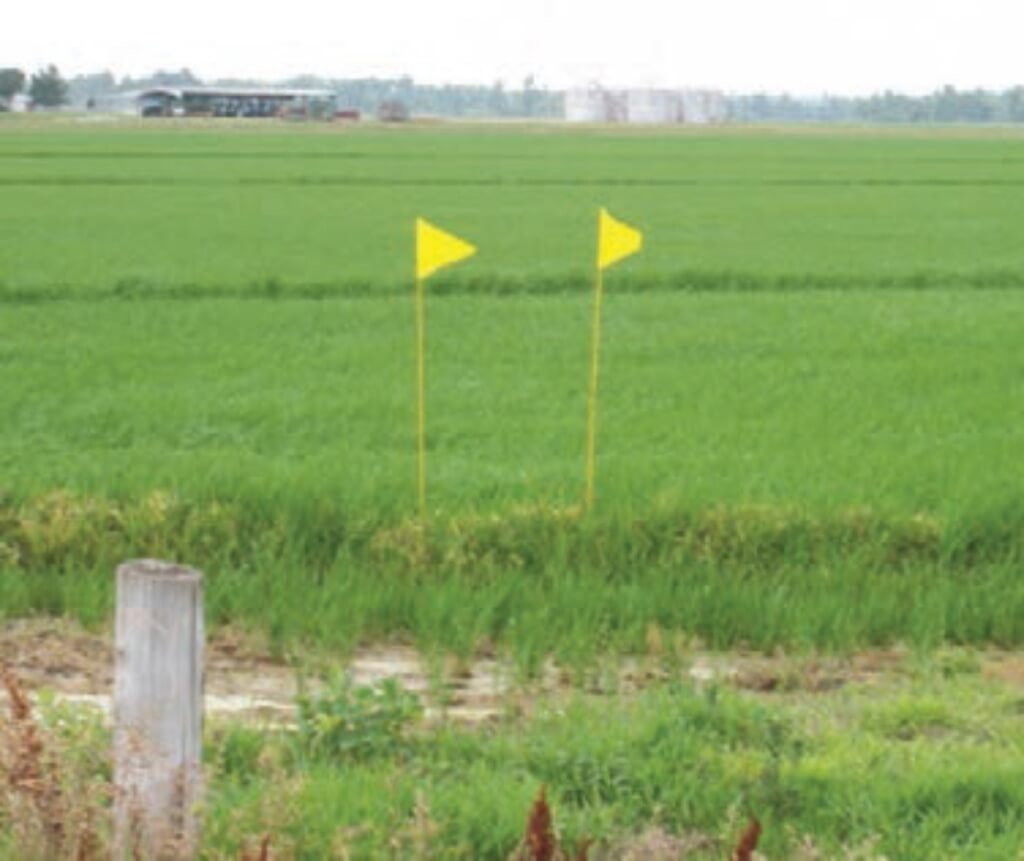
    Yellow flags designate this field as a Clearfield rice field (Photo from UofA FSA2162)
    Yellow flags designate this field as a Clearfield rice field (Photo from UofA FSA2162)

    The solution

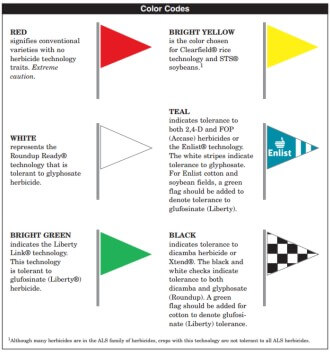
    In 2011 the University of Arkansas came up with a “quick and inexpensive” way to prevent this from happening. They used six-foot, colour-coded bicycle flags. Each colour or pattern represented a specific herbicide tolerance, as shown here. Aerial operators were given a copy of this visual key and the growers placed a couple of appropriate flags at the edge of the field on the approach vector at planting.

    The result

    Aerial applicators got one final check before they started to spray… just in case. In 2014 the innovative people behind this concept reported that it prevented countless acres of accidentally-damaged crops. Several (honest) aerial operators admitted to pulling up just before they started to spray because they realized there was a mismatch between what was in their tank and what the field was supposed to receive.

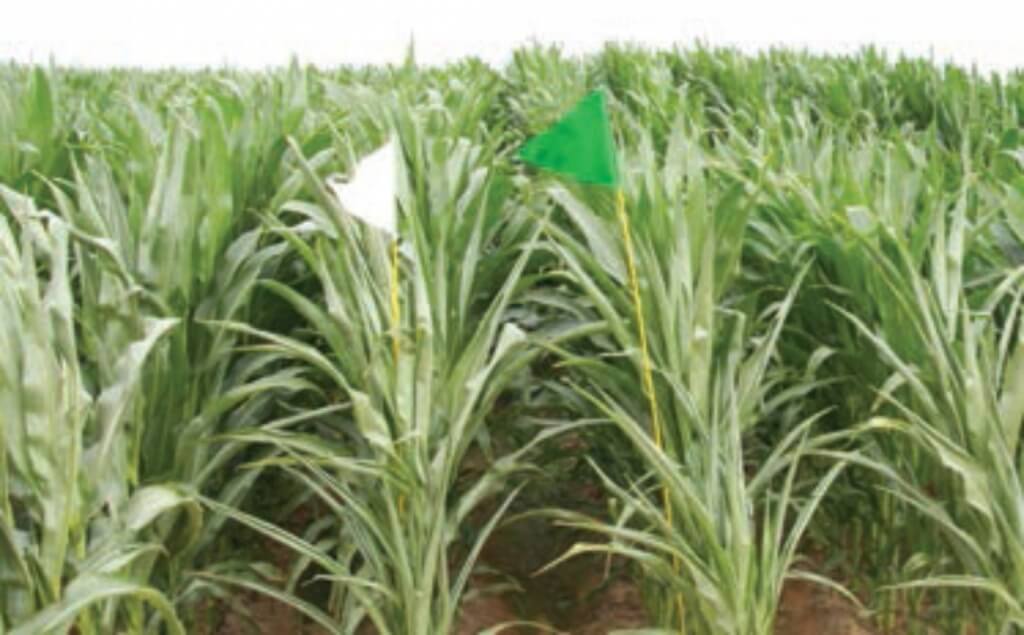
    Corn field with glyphosate (white) and glufosinate (bright green) stacked technology. (Photo from UofA FSA2162)
    Corn field with glyphosate (white) and glufosinate (bright green) stacked technology. (Photo from UofA FSA2162)

    The challenge

    This is the kind of elegant, simple tool that we all should be using for ground rigs as well as aerial sprayers as we begin to plant more crops with stacked traits. Canada, the US, Australia, anyone using these genetics, could benefit. We should consider adopting this method, complying with Arkansas’ existing colour scheme and adding to it as required. Seed companies and agrichemical companies should find a way to bundle the flags with the chemicals and seeds for the buyer.

    Read more about the Flag the Technology method from this University of Arkansas factsheet.

    …and one more time with gusto: “poka-yoke“.